| Devotion to Our Lady |
|
DAILY THOUGHTS FOR THE CHRISTMAS SEASON
DOUBLE DAY ARTICLE : Monday February 4th & Tuesday February 5th
Article 22
Christmas Is Over! What Now? Where Now?
This article is currently being written. Sections will be posted as they are completed. Please check back later.
Article 22
Christmas Is Over! What Now? Where Now?
This article is currently being written. Sections will be posted as they are completed. Please check back later.
Like a Fish Out of Water―Like a Christmas Tree in a Dumpster
Things come and go! Things pass us by! Things are forgotten! Things―after all―are just things! Even Our Lord tells us to leave every thing for His sake: “And behold one came and said to Jesus: ‘Good master! What good shall I do that I may have life everlasting?’ … Jesus saith to him: ‘If thou wilt be perfect, go sell what thou hast, and give to the poor, and thou shalt have treasure in Heaven, and come follow Me!’ And when the young man had heard this word, he went away sad: for he had great possessions … Then Peter answering, said to him: ‘Behold we have left all things, and have followed Thee! What therefore shall we have?’ And Jesus said to them: ‘Amen, I say to you, that you, who have followed Me, and every one that hath left house, or brethren, or sisters, or father, or mother, or wife, or children, or lands for My Name’s sake, shall receive an hundredfold, and shall possess life everlasting!” (Matthew 19:16-29).
Christmas―with all its “things”―has gone! Many of the “things” we enjoyed―the parties, the people, the seasonal food and entertainment, etc.―are no longer there! They are mere memories―some pleasant, some unpleasant―of the hybrid secular-spiritual Christmas activities now long-gone! For some, Christmas ended the day after Christmas Day; others the end came on New Year’s Day; for the ‘quasi-religious’ or ‘half-spiritual’ it lasted until the Epiphany (January 6th); for the seemingly fanatical (according to worldly opinion) the end came with the Baptism of Our Lord (January 13th); for the real weirdos (according to worldly opinion) the Christmas Tree and decorations and lights in the garden stayed up until the feast of the Presentation of Our Lord in the Temple and the Purification of Our Lady (February 2nd).
Misinformed Mistaken Catholics
There are some misinformed, well-intentioned, but nevertheless half-baked, pseudo-liturgucal Catholics who think that an early Septuagesima Sunday bumps the Christmas season out of the door (the earliest date on which Septuagesima Sunday can occur, as it again will in 2026, is January 18th with Ash Wednesday occurring on February 4th and Easter Sunday falling on March 22nd in a non-leap year―but they are sadly mistaken! The FORTY-DAYS of Christmas mean exactly that―40 days and no less. That is why we have the Preface of the Nativity resurface for the feast of the Presentation of Our Lord in the Temple and the Purification of Our Lady on February 2nd. The celebrated Church liturgist, Dom Gueranger, clearly points this out in his Liturgical Year. The Septuagesima Season is like a serious of road signs telling us that the next exit is approaching and that this next exit will lead us into the Season of Lent.
Digested and Infested?
Hopefully, Christmas was not just about food and drink, parties, fun and entertainment. Our speaks of such things as ending up in the “privy” [privy = restroom / bathroom / toilet bowel]. “Do you not understand, that whatsoever entereth into the mouth, goeth into the belly, and is cast out into the privy? But the things which proceed out of the mouth, come forth from the heart, and those things defile a man. For from the heart come forth evil thoughts, murders, adulteries, fornications, thefts, false testimonies, blasphemies!” (Matthew 15:17-19). “Every thing, from without, entering into a man cannot defile him―because it entereth not into his heart, but goeth into the belly, and goeth out into the privy … But the things which come out from a man, they defile a man. For from within out of the heart of men proceed evil thoughts, adulteries, fornications, murders, thefts, covetousness, wickedness, deceit, lasciviousness, an evil eye, blasphemy, pride, foolishness. All these evil things come from within, and defile a man!” (Mark 7:18-23).
From the above, we see that we are what we eat and that the material, physical, biological food that we eat―end up in the “privy”, for what goes in, must come out. The same is true for the non-material, non-physical, non-biological food that we eat―which is all the things that we look at, listen to and then think about―for as Christ said: “Not in bread alone doth man live, but in every word that proceedeth from the mouth of God!” (Matthew 4:4). The word of God is the natural, nutritional, wholesome, organic ‘food’ for our minds and hearts. However, the world also serves-up its own version of ‘food’ which is not so natural, nutritional or wholesome! If this is the ‘food’ that we have been ‘eating’, ‘chewing-over’ and ‘digesting’ during the Christmas season, then it is hardly surprising that our hearts have become toxic and, as Our Lord says, “from the heart come forth evil thoughts, murders, adulteries, fornications, covetousness, thefts, false testimonies, blasphemies, wickedness, deceit, lasciviousness, an evil eye, pride and foolishness!”
Flee the Festive Fleas
Did we flee the festive fleas this festive season? Or were we caught in a worldly web and secular swamp? The word of God feeds nourishing food when it says: “What fellowship hath light with darkness? And what concord hath Christ with Belial? Or what part hath the faithful with the unbeliever? And what agreement hath the temple of God with idols? For you are the temple of the living God! As God saith: ‘I will dwell in them, and walk among them; and I will be their God, and they shall be My people!’ Wherefore, ‘Go out from among them, and be ye separate!’ saith the Lord” (2 Corinthians 6:14-17). Christmas is a time festive fleas that we need to flee―if you failed, then it should be a case of “once bitten, twice shy”―in other words, learn from your Christmas mistakes so that there are no retakes. God only suffers so many retakes before He has had enough―as evidenced by this Scriptural analogy by Our Lord: “He spoke also this parable: ‘A certain man had a fig tree planted in his vineyard, and he came seeking fruit on it, and found none. And he said to the dresser of the vineyard: “Behold, for these three years I come seeking fruit on this fig tree, and I find none! Cut it done therefore! Why cumbereth it the ground?” But he answering, said to him: “Lord, let it alone this year also, until I dig about it, and dung it! And if, happily, it bear fruit: but if not, then after that thou shalt cut it down!”’” (Luke 13:6-9).
What has been the fruit of our Christmas? It should not need saying that it is a spiritual Christmas, not a secular Christmas, that is the object of the question! Has it been another fruitless one? Our Lord comes each year seeking fruit―what meager offerings do we have to show from our Advent toil and Christmas soil? What fruit has grown from Advent and Christmas? Most certainly we reflect upon what our secular Christmas was like when we take down the Christmas decorations and pack-away (or throw out, or perhaps burn) our Christmas Tree!
Yet do we take spiritual stock, and not just secular stock, of our Christmas season? For example, was Christmas much more Christ orientated this year? Was it much more prayerful than usual? Were the social events peppered and spiced with sufficient prayers? Did we say a Rosary with all the guests? Did we sing Christmas carols? Were the meals sanctified by prayers and short readings from Scripture or some other appropriate spiritual book? Were the conversations such as Our Lord and Our Lady would have pleased to partake of? Was the ‘dress-code’ Christian or was it stretching the boundaries and skirting the realms of secular immodesty? Were extra Masses attended? Extra Rosaries recited? Christmas meditations made? All of these points are valuable checkpoints or assessments that help us to gauge the spiritual temperature of our soul and the souls of those with whom we mix.
The words of Scripture are applicable and appropriate for evaluating our Christmas ‘performance’―can it be said that we are like him “who hath been tried thereby, and made perfect―he shall have glory everlasting. He that could have transgressed and hath not transgressed; and who could do evil things, and hath not done them!” (Ecclesiasticus 31:10). As the secular song sings: “I’m dreaming of a white Christmas!” ― but was our Christmas white spiritually? Was it spotless? Was is sinless? Or was it stained? If stained―then how much was it stained? How was it stained? What could and should have been done to prevent the stain and, instead, to produce a spiritually “White Christmas”? “Thou shalt be perfect and without spot before the Lord thy God” (Deuteronomy 18:13).
Such a review should help us preview our upcoming Lent. If we have failed during Christmas―and emerged festively flea-bitten―then we are like to have a lousy Lent with its leeches of lukewarmness. Unless we take ourselves in hand in the short time that is left, then another failure will follow upon this current or past failure. As they say in team sports: “You are only as good as your last game!” Similarly, it is our latest performance that measures our standard. We are creatures of habit―and if we cannot spend a festive season spiritually, then we are even less likely to spend a penitential season spiritually. At best, we may be “one-day-wonders” or “two-day-doers”―doing penance only on Ash Wednesday and Good Friday, while all the other days of Lent end up being ‘normal’ days!
No “Time-Off” With God!
Philosophically, we say “God is pure act.” However, this does not mean God is “an act” or “an actor”! In philosophy there is a distinction between “potency” and “act”―in simplified layman’s terminology, you could rephrase that into “potential” and “actuality.” We thus speak of a “seed” being a “tree” in “potential”―but when that seed has passed through all its various stages of growth, then we no longer call that “seed” a “seed” or a “potential tree”, but is “actually a tree”―it has achieved or ‘act-chieved’ its “potential” (potency) and is now an “actual tree” (a tree ‘in act’).
God has no potential to become something else―either something better or something worse―otherwise He would not be an all-perfect God. If He could become worse―then that would mean He would no longer be God (all-perfect). If He could become better―then He would not yet be God (all-perfect). Hence, God is “pure act”―total perfection, total power, total achievement―He has it all: “The works of God are perfect and all His ways … God is without any iniquity, He is just and right!” (Deuteronomy 32:4).
Our Potential―Our Actuality
We are all “saints in potency” or “potential saints”― this is the will of God, “Who will have all men to be saved, and to come to the knowledge of the truth” (1 Timothy 2:4). “Is it my will that a sinner should die, saith the Lord God, and not that he should be converted from his ways, and live? … As I live, saith the Lord God, I desire not the death of the wicked, but that the wicked turn from his way, and live. Turn ye, turn ye from your evil ways: and why will you die?” (Ezechiel 18:23; 33:11). God is holy―He is holy in act; but we are only potentially holy―holy in potency. God cannot fluctuate in His holiness―for He is the pinnacle of holiness, He is perfect holiness. We, however, being merely potentially holy, fluctuate in our holiness from day to day, from hour to hour, even from minute to minute―like the wind that blows and gusts at different speeds. We have the potential for being saved and we have the potential for being damned. Our Lord showed this to St. Teresa of Avila, when he showed her the potential crown that awaited her in Heaven and her potential place in Hell.
We do well to reflect a little on the winds blowing in the life of St. Teresa of Avila, winds that almost blew her into Hell. Here is an account from the book on St. Teresa of Avila by Fr. Francis Xavier Weninger, written in 1876:
“Through the natural levity and forgetfulness of childhood, it happened that Teresa, after the death of her mother, gradually left off her devout reading, and, instead of it, fell upon worldly books. She also became very intimate with one of her cousins, who was much addicted to vanity. This caused her to grow cold in her devotion; she no longer found pleasure in prayer, but became idle and vain―without, however, losing the innocence of her heart. When her pious father became aware of the change, he sent her into an Augustinian convent, where she soon came to the knowledge of her fault, and bitterly repented of it. That she did not fall into greater spiritual danger, she always ascribed to the special favor of the Divine Mother. She again began to read devout books, and, thus, brought back her former pious zeal, which had almost entirely died out, since she had spent so much time in reading romances. Soon after, she became dangerously sick, and her father took her home again. During her illness, she recognized, more thoroughly than before, the vanity of the world, and was filled with an intense desire to leave it entirely and to serve God in the religious state. Her father was greatly opposed to this; but she secretly fled to the convent of the Carmelite Nuns, near Avila. This took place when she was in her twentieth year. But no sooner had she left her father's house, than she felt so ardent a desire to return to it, that she trembled in all her limbs. Looking upon this as a temptation of Satan, she courageously continued her way, and when she had arrived at the Convent, an entire change suddenly took place within her; her sorrow and dread became joy and comfort. Thus did the Almighty recompense her self-control.
“Teresa began her novitiate with great zeal, continued in it, and ended by taking upon herself the usual vows. Some time later, however, she once more lost her fervor in the service of God, because she conversed too long and too often with people of the world―and thus neglected her prayers and lost her love for devout exercises. One day, going into church to pray, her eyes fell upon a picture of Our Savior representing Him covered with wounds. At the same moment, her inmost soul was deeply moved by the thought that Christ had suffered so much for her, and that she had hitherto been so ungrateful and disobedient to Him. Her heart became so filled with grief, that it seemed to her as if it would break. Hence, sinking down before the image, she began to weep bitterly over her inconstancy, and said, with the most perfect trust: ‘Lord, I will not rise from the ground, until Thou hast bestowed sufficient strength on me, not to sin in future, but to serve Thee faithfully and with my whole heart!’ This short, but fervent, prayer of Teresa was heard by the Almighty. Her heart was suddenly and forever changed―all affection for human beings was banished from it; her love of God and her delight in prayer and other spiritual exercises renewed, and the resolution taken to continue, henceforth, in the same. From that hour, Teresa vacillated no more in the service of God, but persevered, with uninterrupted and daily increasing zeal, in the path of virtue and perfection.
“God afterwards revealed to her that she owed her conversion to the intercession of St. Joseph and of the Blessed Virgin; hence she sought also to obtain the grace of perseverance by their aid. To this end, she represented frequently to herself the example of St. Magdalen and St. Augustine, and thus animated herself against a relapse. She repented daily, most bitterly, of the faults of her past life and endeavored to atone for them―by wearing rough penitential garments, by scourging herself, and by other penances―although, according to the words of her confessors, she had not been guilty of great sin. One day, God showed her a terrible place in Hell, saying that she would have been precipitated into it, if she had continued in her frivolous conversations at the convent-gate with people of the world, and in her neglect of devotional exercises.”
The Blowing of Winds of the World and God
The wind is found to blow throughout Holy Scripture! We speak of the “winds of change”―well, God has used winds to try and bring about a change amongst His people. Sometimes it is an “ill wind”―at other times a “good wind.” We read how, during the Exodus from Egypt, God used the winds to save the fleeing Israelites, and also to destroy the pursuing Egyptians, while also later using the winds to feed the millions of fleeing Israelites in the desert:
“And the Lord said to Moses: ‘Lift thou up thy rod, and stretch forth thy hand over the sea, and divide it: that the children of Israel may go through the midst of the sea on dry ground. And I will harden the heart of the Egyptians to pursue you: and I will be glorified in Pharao, and in all his host, and in his chariots, and in his horsemen … And when Moses had stretched forth his hand over the sea, the Lord took it away by a strong and burning wind blowing all the night, and turned it into dry ground: and the water was divided. And the children of Israel went in through the midst of the sea dried up: for the water was as a wall on their right hand and on their left. And the Egyptians pursuing went in after them, and all Pharao’s horses, his chariots and horsemen through the midst of the sea … The enemy said: ‘I will pursue and overtake, I will divide the spoils, my soul shall have its fill: I will draw my sword, my hand shall slay them!’ Thy wind blew and the sea covered them―they sunk as lead in the mighty waters” (Exodus 14:15-23; 15:9-10).
“And the Lord had commanded the clouds from above, and had opened the doors of heaven. And had rained down manna upon them [the Israelites] to eat, and had given them the bread of heaven. Man ate the bread of angels! He sent them provisions in abundance! He removed the south wind from heaven: and by His power brought in the southwest wind. And He rained upon them flesh as dust: and feathered fowls like as the sand of the sea. And they fell in the midst of their camp, round about their pavilions. So they did eat, and were filled exceedingly” (Psalm 77:23-29).
We read of a “burning wind” (Ezechiel 17:10) as well as “a wind bring dew” (Daniel 3:50). We read of the wicked being “scattered into every wind” (Ezechiel 17:21) and being “carried away by the wind: and there was no place found for them” (Daniel 2:35). “For the hope of the wicked is as dust, which is blown away with the wind, and as a thin froth which is dispersed by the storm: and a smoke that is scattered abroad by the wind: and as the remembrance of a guest of one day that passeth by” (Wisdom 5:15).
We see that when Jonas fled from the will of God, “the Lord sent a great wind into the sea: and a great tempest was raised in the sea, and the ship was in danger to be broken” (Jonas 1:4). We also read of God punishing with a hot desert wind: “The Lord will bring a burning wind that shall rise from the desert, and it shall dry up springs, and shall make fountains desolate” (Osee 13:15). “Moses stretched forth his rod upon the land of Egypt and the Lord brought a burning wind all that day and night―and, when it was morning, the burning wind raised the locusts and they came up over the whole land of Egypt” (Exodus 10:13-14).
Elsewhere, God seeks to use the “winds of change”, seeking to reform and change thy wayward Chosen People: “‘I struck you with a burning wind, yet you returned not to Me!’ saith the Lord” (Amos 4:9). “‘I struck you with a blasting wind, and all the works of your hand, … yet there was none among you that returned to Me!’ saith the Lord” (Aggeus 2:18).
When the Apostles were crossing the lake in a boat, “there arose a great storm of wind, and the waves beat into the ship, so that the ship was filled. And Jesus was in the hinder part of the ship, sleeping upon a pillow; and they awake Him, and say to Him: ‘Master! Doth it not concern Thee that we perish?’ And rising up, He rebuked the wind, and said to the sea: ‘Peace, be still!’ And the wind ceased: and there was made a great calm. And He said to them: ‘Why are you fearful? Have you not Faith yet?’ And they feared exceedingly and they said one to another: ‘Who is this, thinkest thou, that both wind and sea obey Him?’” (Mark 4:37-40).
“And when He had dismissed them, He went up to the mountain to pray. And when it was late, the ship was in the midst of the sea, and Himself alone on the land. And seeing them laboring in rowing, for the wind was against them, and about the fourth watch of the night, He cometh to them walking upon the sea, and He would have passed by them. But they, seeing Him walking upon the sea, thought it was an apparition, and they cried out. For they all saw Him and were troubled. And immediately He spoke with them, and said to them: ‘Have a good heart, it is I, fear ye not!’ And He went up to them into the ship, and the wind ceased: and they were far more astonished within themselves: For they understood not concerning the loaves; for their heart was blinded. And when they had passed over, they came into the land of Genesareth, and set to the shore. And when they were gone out of the ship, immediately they knew Him” (Mark 6:46-54).
“He that wavereth is like a wave of the sea, which is moved and carried about by the wind” (James 1:6). There are many who, as they say, “go with the wind” or follow the latest current―be it right or wrong―they just follow the crowd, the majority, the general trend. This is not the way of Heaven nor the way to Heaven―as Our Lord Himself points out:
“And when they went their way, Jesus began to say to the multitudes concerning John [the Baptist]: ‘What went you out into the desert to see? A reed shaken with the wind? But what went you out to see? A man clothed in soft garments? Behold they that are clothed in soft garments, are in the houses of kings! But what went you out to see? A prophet? Yea I tell you, and more than a prophet! For this is he of whom it is written: “Behold I send My angel before Thy face, who shall prepare Thy way before Thee.” Amen I say to you, there hath not risen among them that are born of women a greater than John the Baptist: yet he that is the lesser in the Kingdom of Heaven is greater than he. And from the days of John the Baptist until now, the Kingdom of Heaven suffereth violence, and the violent bear it away!’” (Matthew 11:7-12). In a sense, we must be a violent wind that blows in opposition to the “winds of the world”, the “winds of fashion”, the “winds of power, fame, riches, pleasures and materialism.” We are called to holiness and sanctity, prayer and penance, to the cross and mortification―not to fun and pleasure, riches and honors, comfort and self-indulgence.
Which Wind Blows More Strongly For You?
The winds of the world are powerful and relentless―they are always blowing “in your face” seeking to make you “go with the flow” and not fight the wind. Yet Our Lord’s wind is a different wind―it calls us to oppose the world, to walk in face of the world, to walk against the winds of the world. “If the world hate you, know ye, that it hath hated Me before you … If you had been of the world, the world would love its own: but because you are not of the world, but I have chosen you out of the world, therefore the world hateth you” (John 15:19). “Love not the world, nor the things which are in the world. If any man love the world, the charity of the Father is not in him. For all that is in the world, is the concupiscence of the flesh, and the concupiscence of the eyes, and the pride of life, which is not of the Father, but is of the world” (1 John 2:15-16). “Be you, therefore, perfect―as also your heavenly Father is perfect!” (Matthew 5:48). “Fear the Lord, and serve Him with a perfect and most sincere heart” (Josue 24:14). “The disciple is not above his master―but everyone shall be perfect, if he be as his master” (Luke 6:40). It the duty and role of every pope, bishop and priest, every parent and teacher, “to prepare unto the Lord a perfect people” (Luke 1:17).
One such priest, who encouraged perfection in others, was Fr. Achille Galiardi (1537–1607), an ascetic writer and spiritual director; and a member of the Society of Jesus (the Jesuits). Gagliardi was born at Padua, Italy. After a brilliant career at the University of Padua, Gagliardi entered the Society of Jesus in 1559. He taught philosophy at the Roman College, theology at Padua and Milan, and successfully directed several houses of his Jesuit order in Northern Italy. He displayed indefatigable zeal in preaching, giving retreats and directing congregations, and was held in great esteem as a theologian and spiritual guide by the Archbishop of Milan, St. Charles Borromeo, whom he accompanied on his pastoral visitations, and at whose request he published his popular handbook of religion, Catechism of the Catholic Faith (Milan, 1584). Gagliardi is the author of various works on asceticism and mysticism. In one of those works, he writes:
“All perfection is founded upon only two principles, by means of which, with due attention to the daily actions suited to our state, we shall certainly arrive at the summit and fullness of it. The first principle is a very low esteem for all created things, but, above all, for ourselves. This low esteem should show itself, in practice, by renouncing ourselves and all creatures; in our hearts, by a firm resolution; and in our lives, in such ways as may be suitable, especially by manifesting contentment and cheerfulness when the Lord takes from us any good. The second principle is a very high esteem of God, which may be easily acquired by the light of faith, as He is Omnipotent, the Supreme Good and our End; as also because He has loved us so much, and is ever present with us, and guides us in all things, both as to nature and grace, and, in particular, has called us and leads us by a special vocation to a lofty perfection. From this esteem there must certainly arise in us a great submission of will, and of every power and faculty, to His greater glory, without any mingling of our own interest, though it be ever so holy. At the same time, there will be great conformity with the Divine Will, which will be the actual measure of all our designs, affections, and works. In this manner, the soul arrives at union—not, indeed, at the mystic union of raptures, elevations of the spirit, and vehement affections; but the solid, real, and practical union of a will, thoroughly conformed to the Divine Will, by the perfect love which works out all things in God and for God, without special lights. Of this, all are capable; and all, with certainty, though not without crosses, can arrive at it” (Fr. Achille Gagliardi).
Are You Seeking Perfection?
We sometimes forget―sometimes deliberately forget―that it is only perfection that opens the gates of Heaven. Somehow, we vainly imagine that Heaven will be full of two kinds of people―saints and non-saints―living in different levels of housing! Heaven is ONLY for saints―if you do not want to be a saint, nor intend to be saint, then you are not going to Heaven―it is as simple as that. “There shall not enter into it any thing defiled, or that worketh abomination or maketh a lie” (Apocalypse 21:27). “For I tell you, that unless your justice abound more than that of the Scribes and Pharisees, you shall not enter into the Kingdom of Heaven!” (Matthew 5:20). “Thou shalt be perfect and without spot before the Lord thy God” (Deuteronomy 18:13).
Fr. Garrigou-Lagrange (1877-1964), who taught Ascetical and Mystical Theology from 1917 at the Angelicum, the elite Dominican seminary in Rome is one of the best and authoritative guides along the paths that lead to Heaven. As early as 1917, a special professorship in Ascetical and Mystical Theology had been created for him at the Angelicum―the first of its kind anywhere in the world. His great achievement was to synthesize the highly abstract writings of St. Thomas Aquinas with the experiential writings of St. John of the Cross―showing how they are in perfect harmony with each other. St. Thomas describes the spiritual life from the point of view, so to speak, of God, analyzing the manifold graces that He gives to the soul to bring it into union with Himself; whereas St. John of the Cross describes the same process from the point of view of man, showing the attitudes that a faithful soul should adopt at various stages of the spiritual journey. It must have been particularly pleasing for Fr. Garrigou-Lagrange when St. John of the Cross, whose orthodoxy had once been doubted by some writers, was declared a Doctor of the Church by Pope Pius XI.
The other great theme of Fr. Garrigou-Lagrange’s spiritual theology was the universality of God’s call to the mystical life―meaning that everyone is called to the mystical life. He argued convincingly that, while the more dramatic mystical phenomena such as visions and locutions are obviously reserved to a few, all the baptized are invited, not just to a life of virtue, but to a life of close union with God in prayer. This union is, in the most proper sense of the word, mystical―since it is founded on the gifts of the Holy Ghost and on our sharing in God’s own life by sanctifying grace. He went so far as to say that the transforming union―as described by such saints as St. John of the Cross and St. Teresa of Avila―was simply the full flowering of the grace of baptism. At the same time, Fr. Garrigou-Lagrange’s writings contain useful warnings against abusing this doctrine, for he often points out that any so-called ‘mysticism’ that is not based on the practice of the virtues and on meditation on Christ and His Passion is an illusion.
Fr. Garrigou-Lagrange on Christian Perfection
Here are the words of Fr. Gariigou-Lagrange himself, taken from his Three Ages of the Interior Life:
“The one thing necessary which Jesus spoke of, to Martha and Mary (Luke 10:41), consists in hearing the word of God and living by it. The interior life thus conceived is something far more profound and more necessary in us than intellectual life or the cultivation of the sciences, than artistic or literary life, than social or political life. Unfortunately, some great scholars, mathematicians, physicists, and astronomers have no interior life, so to speak, but devote themselves to the study of their science as if God did not exist. In their moments of solitude they have no intimate conversation with Him. Their life appears to be, in certain respects, the search for the true and the good, in a more or less definite and restricted domain, but it is so tainted with self-love and intellectual pride, that we may legitimately question whether it will bear fruit for eternity. Many artists, literary men, and statesmen never rise above this level of purely human activity which is, in short, quite exterior. Do the depths of their souls live by God? It would seem not.
“This shows that the interior life, or the life of the soul with God, well deserves to be called ‘the one thing necessary’, since by it we tend to our last end and assure our salvation. This last must not be too widely separated from progressive sanctification, for it is the very way of salvation. There are those who seem to think that it is sufficient to be saved and that it is not necessary to be a saint. It is clearly not necessary to be a saint who performs miracles and whose sanctity is officially recognized by the Church. To be saved, we must take the way of salvation, which is identical with that of sanctity. There will be only saints in Heaven, whether they enter there immediately after death, or after purification in Purgatory. No one enters Heaven unless he has that sanctity which consists in perfect purity of soul. Every sin—though it should be venial—must be effaced, and the punishment due to sin must be borne or remitted, in order that a soul may enjoy forever the vision of God; see Him as He sees Himself; and love Him as He loves Himself. Should a soul enter Heaven before the total remission of its sins, it could not remain there and it would cast itself into Purgatory to be purified.
“The interior life of a just man who tends toward God and who already lives by Him is indeed the one thing necessary. To be a saint, neither intellectual culture nor great exterior activity is a requisite; it suffices that we live profoundly by God. This truth is evident in the saints of the early Church; several of those saints were poor people, even slaves. It is evident also in St. Francis, St. Benedict Joseph Labre, in the Curé of Ars, and many others. They all had a deep understanding of these words of our Savior: “For what doth it profit a man, if he gain the whole world, and suffer the loss of his own soul?” (Matthew 16:26). If people sacrifice so many things to save the life of the body, which must ultimately die, what should we not sacrifice to save the life of our soul, which is to last forever? Ought not man to love his soul more than his body? “Or what exchange shall a man give for his soul?” Our Lord adds in Matthew 16:26. “One thing is necessary,” He tells us in Luke 10:41.
“Jesus entered into a certain town and a certain woman, named Martha, received Him into her house. And she had a sister called Mary, who, sitting also at the Lord’s feet, heard His word. But Martha was busy with much serving. Who stood and said: ‘Lord! Hast Thou no care that my sister hath left me alone to serve? Speak to her, therefore, that she help me!’ And the Lord answering, said to her: ‘Martha! Martha! Thou art careful and art troubled about many things! But one thing is necessary! Mary hath chosen the best part, which shall not be taken away from her!’” (Luke 10:38-42).
“To save our soul, one thing alone is necessary―to hear the word of God and to live by it. Therein lies the best part, which will not be taken away from a faithful soul, even though it should lose everything else” (Fr. Gariigou-Lagrange, Three Ages of the Interior Life).
Sanctity is not Smilingly Sitting on the Sunny Terrace Slowly Sipping Wine
Saints sitting sipping wine on terraces? Strange thought, huh? Well, yes and no! If you take “wine” symbolically as being the love of God, and take “terraces” as terrifying or terrible levels that we must attain, then maybe there is some truth to the idea! Maybe the following account can explain it better.
The Venerable Sister Mary Villani had the following vision. On the Feast of St. Francis, for whom she had a particular devotion, this Saint appeared to her and led her to a lofty place, more beautiful than any she had ever seen. To reach it, one was obliged to ascend four very high terraces, which signified, as the Saint revealed to her, the four degrees of perfection.
With great difficulty she ascended, by his help, the first terrace; and he explained to her that this was the first state of perfection, called purity of conscience, which borders on angelic purity. In it the soul becomes like that of a little child, enjoys a pure and holy tranquility, never thinks evil of others, nor interests itself in what does not belong to its own position.
From there he brought her up to the second terrace, telling her that whoever had arrived at purity of conscience becomes capable of prayer and of true love, which is the inseparable fruit of prayer. Here he enumerated to her the properties of true love, which is pure, simple, unselfish and founded upon the truth of God, who can give Himself only to souls already possessed of purity.
Reaction Time!
What’s your reaction to the above? Ouch! Ugh! Aargh! Yuk! Yikes! Whoa! Not for me! Thanks, but no thanks! No way, José! See you some other day! That would be the reaction of most folk, for they are so attached to their passions, the world, its comforts and ease, its entertainment and fun, that something like the above mentioned “terraces” terrify them, turn them off, turn them away from the only way they are going to get to Heaven―which is by arriving at the state of a real and perfect union with God. Heaven is an expensive place to get to! Salvation is serious and strenuous work―not an afterthought or side-effect of a worldly life. The price and the effort put-off most people―and that is why most souls are lost and end up taking the cheap and effortless lodgings being offered by Hell.
How true are the words of Holy Scripture, which say: “The Lord hath looked down from heaven upon the children of men, to see if there be any that understand and seek God. They are all gone aside, they are become unprofitable together: there is none that doth good, no not one! They are corrupt, and are become abominable in their ways: there is none that doth good, no not one! Their throat is an open sepulcher; with their tongues they acted deceitfully; the poison of asps is under their lips! Their mouth is full of cursing and bitterness; their feet are swift to shed blood! Destruction and unhappiness in their ways, and the way of peace they have not known! There is no fear of God before their eyes!” (Psalm 13:1-4).
Perhaps one of the greatest and most tragic mysteries of life is the fact that Christ has made it possible for all to be saved―yet only a minority avail themselves of the offer. You could call it “damned foolishness”― “The perverse are hard to be corrected, and the number of fools is infinite!” (Ecclesiastes 1:15). Man has the nerve and audacity to refuse the terms of salvation offered by God and insists upon his own terms! Those “man-made” terms invariably include being allowed to enjoy life in this world to the full, paying little or nothing by way of penance for sin, a “one-hour-working-week” or “one-hour-worshiping-week”, automatic forgiveness of sin regardless of the gravity or frequency, a right to an eternal rent-free or mortgage-free property in Heaven upon retirement from this world, free health-care, free-security, free food and drink, freedom from any and all suffering, etc. ― and to ‘buy’ that package, what does man offer? A paltry, pathetic, pitiful pittance! If we were treated by others―like we treat God―then those ‘others’ would have long disappeared from our list of nearest and dearest! God is treated like a doormat, a wallflower, a trashcan, a fuddy-duddy sugar-daddy, a second-rate low-on-the-list get-around-to-Him-later ‘thing’! “Be not deceived! God is not mocked!” (Galatians 6:7).
Abuse of Rights
Ever since the French Revolution we have had an escalation of talk on the “Rights of Man” and ever-increasing legislation on “Human Rights.” There are, of course, certain “Human Rights”―but while the French Revolution and the ceaseless revolutions that have been the French Revolutions “domino-effect”, have focused on “The Rights of Man” and “Human Rights”―they have also trampled upon the “Rights of God” and “Divine Rights”! Yes, we have a massive worldwide problem of child abuse, family member abuse, worker abuse, and all the other “you-name-it-we-do-it” abuses that exist. Yet who stops to think about an even worse kind of abuse that is also universal and which is practiced much more than these other abuses? What abuse is that? God abuse! The greater or more precious or more pure a thing is―the greater is the sin of abuse against it. What is greater than God? An abuse of a child―even though it is heinous―is nowhere near as serious as an abuse of God! As the Church teaches―the greatest and gravest sins man can commit are those that sin against God.
Yes―whatever we do to others, we do indirectly to Him: “Amen I say to you, as long as you did it to one of these My least brethren, you did it to Me! ... Amen I say to you, as long as you did it not to one of these least, neither did you do it to Me!” (Matthew 25:40, 45). We have all abused God―on most days and many times a day―do we exercise the same indignation, anger, outrage and cries for justice against ourselves as we do against those have abused children, wives, husbands, brothers, sisters, workers, priests and religious? Far from it! We think little of our abuse and pay little for our abuse of God! “God hath given him place for penance, and he abuseth it unto pride!” (Job 24:23). Let us not plead innocence―“If we say that we have no sin, we deceive ourselves, and the truth is not in us … If we say that we have not sinned, we make Him a liar, and His word is not in us” (1 John 1:8-10). “For all have sinned!” (Romans 3:23). “I mourn many of them that sinned before, and have not done penance for the [sins] that they have committed!” (2 Corinthians 12:21). “I waited and listened―no man speaketh what is good, there is none that doth penance for his sin, saying: ‘What have I done?’ They are all turned to their own course, as a horse rushing to the battle” (Jeremias 8:6)―or as a horse rushing headlong into Hell!
A Hyped-Up Cosmetic World
Despite all the hype and propaganda about how good our world is and how much everyone cares for each other and how much freedom and equality there is in the world today―the words of Our Lady slice through all the hype and propaganda, when she says: “Were I to show you all the sins committed on a single day, you would surely die of grief. These are grave times. The world is thoroughly upset because it is in a worse condition than at the time of the deluge. Materialism marches on ever fomenting bloody strifes and fratricidal struggles. All is hanging on a slender thread. When that thread shall snap, Divine Justice shall pounce upon the world and execute its dreadful, purging designs. All the nations shall be punished because sins, like a muddy river, are now covering all the Earth … Mankind is obscured by a thick fog, as a result of the many grievous sins, which are well nigh covering the whole Earth. Today, more than ever, men are, resisting the calls from Heaven, and are blaspheming God, while wallowing in the mire of sin!” (Our Lady to Blessed Elena Aiello, in 1955 and 1956). How much worse has the world become since the 1950s? Incredibly worse!
Thus, in 1973, Our Lady warned at Akita, Japan: “Many men in this world afflict the Lord ... In order that the world might know His anger, the Heavenly Father is preparing to inflict a great chastisement on all mankind ... As I told you, if men do not repent and better themselves, the Father will inflict a terrible punishment on all humanity. It will be a punishment greater than the deluge, such as one never seen before. Fire will fall from the sky and will wipe out a great part of humanity, the good as well as the bad, sparing neither priests nor faithful. The survivors will find themselves so desolate that they will envy the dead ... The thought of the loss of so many souls is the cause of my sadness. If sins increase in number and gravity, there will be no longer pardon for them.”
Why the Doom and Gloom?
You may be tempted to say with the Liberal Pope John XXIII, the words he used upon opening the ill-fated Second Vatican Council―“It sometimes happens that We hear certain opinions which disturb Us—opinions expressed by people who, though fired with a commendable zeal for religion, are lacking in sufficient prudence and judgment in their evaluation of events. They can see nothing but calamity and disaster in the present state of the world. They say over and over that this modern age of ours, in comparison with past ages, is definitely deteriorating. One would think from their attitude that history, that great teacher of life, had taught them nothing. They seem to imagine that in the days of the earlier councils everything was as it should be, so far as doctrine and morality and the Church's rightful liberty were concerned. We feel that We must disagree with these prophets of doom, who are always forecasting worse disasters, as though the end of the world were at hand!” (Pope John XXIII, Opening of the Second Vatican Council, October 11th, 1962).
Pope John XXIII then proceeded to paint a rosy-picture of the state of the world: “Present indications are that the human family is on the threshold of a new era … What is needed at the present time is a new enthusiasm, a new joy and serenity of mind, in the unreserved acceptance, by all, of the entire Christian Faith, without forfeiting that accuracy and precision in its presentation, which characterized the proceedings of the Council of Trent and the First Vatican Council. What is needed―and what everyone imbued with a truly Christian, Catholic and apostolic spirit craves today―is that this doctrine shall be more widely known, more deeply understood, and more penetrating in its effects on men's moral lives. What is needed is that this certain and immutable doctrine, to which the faithful owe obedience, be studied afresh and reformulated in contemporary terms … Here we are assembled in this Vatican Basilica at a turning-point in the history of the Church … For with the opening of this Council a new day is dawning on the Church, bathing her in radiant splendor. It is yet the dawn, but the sun in its rising has already set our hearts aglow. All around is the fragrance of holiness and joy!” (Pope John XXIII, Opening of the Second Vatican Council, October 11th, 1962).
In 1963, less than 8 months after opening the Second Vatican Council (which ran from 1962 to 1965), Pope John XXIII died―reputedly saying on his deathbed: “Stop the Council! Stop the Council!” His successor, Pope Paul VI, would later say that “from some fissure the smoke of Satan has entered the temple of God” (June 29th, 1972). Then, five years later, Paul VI reiterates the same frightening admission: “The tail of the devil is functioning in the disintegration of the Catholic world. The darkness of Satan has entered and spread throughout the Catholic Church even to its summit. Apostasy, the loss of the Faith, is spreading throughout the world and into the highest levels within the Church” (Address on the Sixtieth Anniversary of the Fatima Apparitions, October 13th, 1977. Pope Paul was dead 10 months later). So much for Pope John XXIII’s optimism and criticism of the prophets of doom―one of whom is, of course, Our Lady, whose messages over the years have not exactly been joyous and uplifting!
Sweet Success or Bitter Better?
Without doubt, since the Second Vatican Council, we have increasingly entered and penetrated an era of sugary spiritual sweetness. Most of the talk is about the love and mercy of God―while talk about His justice and punishments has become taboo, akin to being a “hate-crime”! Paradoxically, the Mother of Mercy, the sweet Mother of God, has been talking about the exact opposite―hers is not a sugary sweet spiritual message, but a bitter message. If anyone looks at her messages of recent times―Quito, La Salette, Fatima, Akita, which span around 400 years―then Our Lady has been progressively been stepping-up the bitterness and withdrawing the sweetness. Some private revelations report that she has ceased asking for mercy from God, but is now asking for justice! Whether we choose to believe those revelations or not, it certainly fits in with her warning, just over 45 years ago, at Akita, Japan: “If sins increase in number and gravity, there will be no longer pardon for them.” In all of Our Lady’s apparitions and messages, she has not promised to be more and more loving if we sin more and more―but quite the contrary. The picture she paints is terrifying―yet most people choose to ignore those terrifying messages.
Sr. Lucia of Fatima hit the nail on the head in 1957, when she revealed to Fr. Fuentes: “Father, the Blessed Virgin is very sad, because no one heeds her message; neither the good nor the bad. The good continue on the road of goodness with their life of virtue and apostolate without paying mind to this Message―they do not unite their lives to the message of Fatima. Sinners, the bad, because of their sins, do not see God’s chastisement about to fall upon them presently, also keep following the road of evil through sin, ignoring the Message, because they do not see the terrible chastisement about to befall them. But, Father, you must believe me that God is going to punish the world and chastise it in a tremendous way!” (Sr. Lucia of Fatima to Fr. Fuentes, December 26th, 1957).
Oh well, what the hell! Only 322 more days to the next Christmas! Pass me a donut and put an extra spoonful of sugar in my tea! For “a spoonful of sugar helps the medicine go down”―or so sings Julie Andrews in the musical Mary Poppins! That’s the “Mary” that most people prefer! Heaven’s “Mary” has lost her sweetness―according to the tastes of most people!
Things come and go! Things pass us by! Things are forgotten! Things―after all―are just things! Even Our Lord tells us to leave every thing for His sake: “And behold one came and said to Jesus: ‘Good master! What good shall I do that I may have life everlasting?’ … Jesus saith to him: ‘If thou wilt be perfect, go sell what thou hast, and give to the poor, and thou shalt have treasure in Heaven, and come follow Me!’ And when the young man had heard this word, he went away sad: for he had great possessions … Then Peter answering, said to him: ‘Behold we have left all things, and have followed Thee! What therefore shall we have?’ And Jesus said to them: ‘Amen, I say to you, that you, who have followed Me, and every one that hath left house, or brethren, or sisters, or father, or mother, or wife, or children, or lands for My Name’s sake, shall receive an hundredfold, and shall possess life everlasting!” (Matthew 19:16-29).
Christmas―with all its “things”―has gone! Many of the “things” we enjoyed―the parties, the people, the seasonal food and entertainment, etc.―are no longer there! They are mere memories―some pleasant, some unpleasant―of the hybrid secular-spiritual Christmas activities now long-gone! For some, Christmas ended the day after Christmas Day; others the end came on New Year’s Day; for the ‘quasi-religious’ or ‘half-spiritual’ it lasted until the Epiphany (January 6th); for the seemingly fanatical (according to worldly opinion) the end came with the Baptism of Our Lord (January 13th); for the real weirdos (according to worldly opinion) the Christmas Tree and decorations and lights in the garden stayed up until the feast of the Presentation of Our Lord in the Temple and the Purification of Our Lady (February 2nd).
Misinformed Mistaken Catholics
There are some misinformed, well-intentioned, but nevertheless half-baked, pseudo-liturgucal Catholics who think that an early Septuagesima Sunday bumps the Christmas season out of the door (the earliest date on which Septuagesima Sunday can occur, as it again will in 2026, is January 18th with Ash Wednesday occurring on February 4th and Easter Sunday falling on March 22nd in a non-leap year―but they are sadly mistaken! The FORTY-DAYS of Christmas mean exactly that―40 days and no less. That is why we have the Preface of the Nativity resurface for the feast of the Presentation of Our Lord in the Temple and the Purification of Our Lady on February 2nd. The celebrated Church liturgist, Dom Gueranger, clearly points this out in his Liturgical Year. The Septuagesima Season is like a serious of road signs telling us that the next exit is approaching and that this next exit will lead us into the Season of Lent.
Digested and Infested?
Hopefully, Christmas was not just about food and drink, parties, fun and entertainment. Our speaks of such things as ending up in the “privy” [privy = restroom / bathroom / toilet bowel]. “Do you not understand, that whatsoever entereth into the mouth, goeth into the belly, and is cast out into the privy? But the things which proceed out of the mouth, come forth from the heart, and those things defile a man. For from the heart come forth evil thoughts, murders, adulteries, fornications, thefts, false testimonies, blasphemies!” (Matthew 15:17-19). “Every thing, from without, entering into a man cannot defile him―because it entereth not into his heart, but goeth into the belly, and goeth out into the privy … But the things which come out from a man, they defile a man. For from within out of the heart of men proceed evil thoughts, adulteries, fornications, murders, thefts, covetousness, wickedness, deceit, lasciviousness, an evil eye, blasphemy, pride, foolishness. All these evil things come from within, and defile a man!” (Mark 7:18-23).
From the above, we see that we are what we eat and that the material, physical, biological food that we eat―end up in the “privy”, for what goes in, must come out. The same is true for the non-material, non-physical, non-biological food that we eat―which is all the things that we look at, listen to and then think about―for as Christ said: “Not in bread alone doth man live, but in every word that proceedeth from the mouth of God!” (Matthew 4:4). The word of God is the natural, nutritional, wholesome, organic ‘food’ for our minds and hearts. However, the world also serves-up its own version of ‘food’ which is not so natural, nutritional or wholesome! If this is the ‘food’ that we have been ‘eating’, ‘chewing-over’ and ‘digesting’ during the Christmas season, then it is hardly surprising that our hearts have become toxic and, as Our Lord says, “from the heart come forth evil thoughts, murders, adulteries, fornications, covetousness, thefts, false testimonies, blasphemies, wickedness, deceit, lasciviousness, an evil eye, pride and foolishness!”
Flee the Festive Fleas
Did we flee the festive fleas this festive season? Or were we caught in a worldly web and secular swamp? The word of God feeds nourishing food when it says: “What fellowship hath light with darkness? And what concord hath Christ with Belial? Or what part hath the faithful with the unbeliever? And what agreement hath the temple of God with idols? For you are the temple of the living God! As God saith: ‘I will dwell in them, and walk among them; and I will be their God, and they shall be My people!’ Wherefore, ‘Go out from among them, and be ye separate!’ saith the Lord” (2 Corinthians 6:14-17). Christmas is a time festive fleas that we need to flee―if you failed, then it should be a case of “once bitten, twice shy”―in other words, learn from your Christmas mistakes so that there are no retakes. God only suffers so many retakes before He has had enough―as evidenced by this Scriptural analogy by Our Lord: “He spoke also this parable: ‘A certain man had a fig tree planted in his vineyard, and he came seeking fruit on it, and found none. And he said to the dresser of the vineyard: “Behold, for these three years I come seeking fruit on this fig tree, and I find none! Cut it done therefore! Why cumbereth it the ground?” But he answering, said to him: “Lord, let it alone this year also, until I dig about it, and dung it! And if, happily, it bear fruit: but if not, then after that thou shalt cut it down!”’” (Luke 13:6-9).
What has been the fruit of our Christmas? It should not need saying that it is a spiritual Christmas, not a secular Christmas, that is the object of the question! Has it been another fruitless one? Our Lord comes each year seeking fruit―what meager offerings do we have to show from our Advent toil and Christmas soil? What fruit has grown from Advent and Christmas? Most certainly we reflect upon what our secular Christmas was like when we take down the Christmas decorations and pack-away (or throw out, or perhaps burn) our Christmas Tree!
Yet do we take spiritual stock, and not just secular stock, of our Christmas season? For example, was Christmas much more Christ orientated this year? Was it much more prayerful than usual? Were the social events peppered and spiced with sufficient prayers? Did we say a Rosary with all the guests? Did we sing Christmas carols? Were the meals sanctified by prayers and short readings from Scripture or some other appropriate spiritual book? Were the conversations such as Our Lord and Our Lady would have pleased to partake of? Was the ‘dress-code’ Christian or was it stretching the boundaries and skirting the realms of secular immodesty? Were extra Masses attended? Extra Rosaries recited? Christmas meditations made? All of these points are valuable checkpoints or assessments that help us to gauge the spiritual temperature of our soul and the souls of those with whom we mix.
The words of Scripture are applicable and appropriate for evaluating our Christmas ‘performance’―can it be said that we are like him “who hath been tried thereby, and made perfect―he shall have glory everlasting. He that could have transgressed and hath not transgressed; and who could do evil things, and hath not done them!” (Ecclesiasticus 31:10). As the secular song sings: “I’m dreaming of a white Christmas!” ― but was our Christmas white spiritually? Was it spotless? Was is sinless? Or was it stained? If stained―then how much was it stained? How was it stained? What could and should have been done to prevent the stain and, instead, to produce a spiritually “White Christmas”? “Thou shalt be perfect and without spot before the Lord thy God” (Deuteronomy 18:13).
Such a review should help us preview our upcoming Lent. If we have failed during Christmas―and emerged festively flea-bitten―then we are like to have a lousy Lent with its leeches of lukewarmness. Unless we take ourselves in hand in the short time that is left, then another failure will follow upon this current or past failure. As they say in team sports: “You are only as good as your last game!” Similarly, it is our latest performance that measures our standard. We are creatures of habit―and if we cannot spend a festive season spiritually, then we are even less likely to spend a penitential season spiritually. At best, we may be “one-day-wonders” or “two-day-doers”―doing penance only on Ash Wednesday and Good Friday, while all the other days of Lent end up being ‘normal’ days!
No “Time-Off” With God!
Philosophically, we say “God is pure act.” However, this does not mean God is “an act” or “an actor”! In philosophy there is a distinction between “potency” and “act”―in simplified layman’s terminology, you could rephrase that into “potential” and “actuality.” We thus speak of a “seed” being a “tree” in “potential”―but when that seed has passed through all its various stages of growth, then we no longer call that “seed” a “seed” or a “potential tree”, but is “actually a tree”―it has achieved or ‘act-chieved’ its “potential” (potency) and is now an “actual tree” (a tree ‘in act’).
God has no potential to become something else―either something better or something worse―otherwise He would not be an all-perfect God. If He could become worse―then that would mean He would no longer be God (all-perfect). If He could become better―then He would not yet be God (all-perfect). Hence, God is “pure act”―total perfection, total power, total achievement―He has it all: “The works of God are perfect and all His ways … God is without any iniquity, He is just and right!” (Deuteronomy 32:4).
Our Potential―Our Actuality
We are all “saints in potency” or “potential saints”― this is the will of God, “Who will have all men to be saved, and to come to the knowledge of the truth” (1 Timothy 2:4). “Is it my will that a sinner should die, saith the Lord God, and not that he should be converted from his ways, and live? … As I live, saith the Lord God, I desire not the death of the wicked, but that the wicked turn from his way, and live. Turn ye, turn ye from your evil ways: and why will you die?” (Ezechiel 18:23; 33:11). God is holy―He is holy in act; but we are only potentially holy―holy in potency. God cannot fluctuate in His holiness―for He is the pinnacle of holiness, He is perfect holiness. We, however, being merely potentially holy, fluctuate in our holiness from day to day, from hour to hour, even from minute to minute―like the wind that blows and gusts at different speeds. We have the potential for being saved and we have the potential for being damned. Our Lord showed this to St. Teresa of Avila, when he showed her the potential crown that awaited her in Heaven and her potential place in Hell.
We do well to reflect a little on the winds blowing in the life of St. Teresa of Avila, winds that almost blew her into Hell. Here is an account from the book on St. Teresa of Avila by Fr. Francis Xavier Weninger, written in 1876:
“Through the natural levity and forgetfulness of childhood, it happened that Teresa, after the death of her mother, gradually left off her devout reading, and, instead of it, fell upon worldly books. She also became very intimate with one of her cousins, who was much addicted to vanity. This caused her to grow cold in her devotion; she no longer found pleasure in prayer, but became idle and vain―without, however, losing the innocence of her heart. When her pious father became aware of the change, he sent her into an Augustinian convent, where she soon came to the knowledge of her fault, and bitterly repented of it. That she did not fall into greater spiritual danger, she always ascribed to the special favor of the Divine Mother. She again began to read devout books, and, thus, brought back her former pious zeal, which had almost entirely died out, since she had spent so much time in reading romances. Soon after, she became dangerously sick, and her father took her home again. During her illness, she recognized, more thoroughly than before, the vanity of the world, and was filled with an intense desire to leave it entirely and to serve God in the religious state. Her father was greatly opposed to this; but she secretly fled to the convent of the Carmelite Nuns, near Avila. This took place when she was in her twentieth year. But no sooner had she left her father's house, than she felt so ardent a desire to return to it, that she trembled in all her limbs. Looking upon this as a temptation of Satan, she courageously continued her way, and when she had arrived at the Convent, an entire change suddenly took place within her; her sorrow and dread became joy and comfort. Thus did the Almighty recompense her self-control.
“Teresa began her novitiate with great zeal, continued in it, and ended by taking upon herself the usual vows. Some time later, however, she once more lost her fervor in the service of God, because she conversed too long and too often with people of the world―and thus neglected her prayers and lost her love for devout exercises. One day, going into church to pray, her eyes fell upon a picture of Our Savior representing Him covered with wounds. At the same moment, her inmost soul was deeply moved by the thought that Christ had suffered so much for her, and that she had hitherto been so ungrateful and disobedient to Him. Her heart became so filled with grief, that it seemed to her as if it would break. Hence, sinking down before the image, she began to weep bitterly over her inconstancy, and said, with the most perfect trust: ‘Lord, I will not rise from the ground, until Thou hast bestowed sufficient strength on me, not to sin in future, but to serve Thee faithfully and with my whole heart!’ This short, but fervent, prayer of Teresa was heard by the Almighty. Her heart was suddenly and forever changed―all affection for human beings was banished from it; her love of God and her delight in prayer and other spiritual exercises renewed, and the resolution taken to continue, henceforth, in the same. From that hour, Teresa vacillated no more in the service of God, but persevered, with uninterrupted and daily increasing zeal, in the path of virtue and perfection.
“God afterwards revealed to her that she owed her conversion to the intercession of St. Joseph and of the Blessed Virgin; hence she sought also to obtain the grace of perseverance by their aid. To this end, she represented frequently to herself the example of St. Magdalen and St. Augustine, and thus animated herself against a relapse. She repented daily, most bitterly, of the faults of her past life and endeavored to atone for them―by wearing rough penitential garments, by scourging herself, and by other penances―although, according to the words of her confessors, she had not been guilty of great sin. One day, God showed her a terrible place in Hell, saying that she would have been precipitated into it, if she had continued in her frivolous conversations at the convent-gate with people of the world, and in her neglect of devotional exercises.”
The Blowing of Winds of the World and God
The wind is found to blow throughout Holy Scripture! We speak of the “winds of change”―well, God has used winds to try and bring about a change amongst His people. Sometimes it is an “ill wind”―at other times a “good wind.” We read how, during the Exodus from Egypt, God used the winds to save the fleeing Israelites, and also to destroy the pursuing Egyptians, while also later using the winds to feed the millions of fleeing Israelites in the desert:
“And the Lord said to Moses: ‘Lift thou up thy rod, and stretch forth thy hand over the sea, and divide it: that the children of Israel may go through the midst of the sea on dry ground. And I will harden the heart of the Egyptians to pursue you: and I will be glorified in Pharao, and in all his host, and in his chariots, and in his horsemen … And when Moses had stretched forth his hand over the sea, the Lord took it away by a strong and burning wind blowing all the night, and turned it into dry ground: and the water was divided. And the children of Israel went in through the midst of the sea dried up: for the water was as a wall on their right hand and on their left. And the Egyptians pursuing went in after them, and all Pharao’s horses, his chariots and horsemen through the midst of the sea … The enemy said: ‘I will pursue and overtake, I will divide the spoils, my soul shall have its fill: I will draw my sword, my hand shall slay them!’ Thy wind blew and the sea covered them―they sunk as lead in the mighty waters” (Exodus 14:15-23; 15:9-10).
“And the Lord had commanded the clouds from above, and had opened the doors of heaven. And had rained down manna upon them [the Israelites] to eat, and had given them the bread of heaven. Man ate the bread of angels! He sent them provisions in abundance! He removed the south wind from heaven: and by His power brought in the southwest wind. And He rained upon them flesh as dust: and feathered fowls like as the sand of the sea. And they fell in the midst of their camp, round about their pavilions. So they did eat, and were filled exceedingly” (Psalm 77:23-29).
We read of a “burning wind” (Ezechiel 17:10) as well as “a wind bring dew” (Daniel 3:50). We read of the wicked being “scattered into every wind” (Ezechiel 17:21) and being “carried away by the wind: and there was no place found for them” (Daniel 2:35). “For the hope of the wicked is as dust, which is blown away with the wind, and as a thin froth which is dispersed by the storm: and a smoke that is scattered abroad by the wind: and as the remembrance of a guest of one day that passeth by” (Wisdom 5:15).
We see that when Jonas fled from the will of God, “the Lord sent a great wind into the sea: and a great tempest was raised in the sea, and the ship was in danger to be broken” (Jonas 1:4). We also read of God punishing with a hot desert wind: “The Lord will bring a burning wind that shall rise from the desert, and it shall dry up springs, and shall make fountains desolate” (Osee 13:15). “Moses stretched forth his rod upon the land of Egypt and the Lord brought a burning wind all that day and night―and, when it was morning, the burning wind raised the locusts and they came up over the whole land of Egypt” (Exodus 10:13-14).
Elsewhere, God seeks to use the “winds of change”, seeking to reform and change thy wayward Chosen People: “‘I struck you with a burning wind, yet you returned not to Me!’ saith the Lord” (Amos 4:9). “‘I struck you with a blasting wind, and all the works of your hand, … yet there was none among you that returned to Me!’ saith the Lord” (Aggeus 2:18).
When the Apostles were crossing the lake in a boat, “there arose a great storm of wind, and the waves beat into the ship, so that the ship was filled. And Jesus was in the hinder part of the ship, sleeping upon a pillow; and they awake Him, and say to Him: ‘Master! Doth it not concern Thee that we perish?’ And rising up, He rebuked the wind, and said to the sea: ‘Peace, be still!’ And the wind ceased: and there was made a great calm. And He said to them: ‘Why are you fearful? Have you not Faith yet?’ And they feared exceedingly and they said one to another: ‘Who is this, thinkest thou, that both wind and sea obey Him?’” (Mark 4:37-40).
“And when He had dismissed them, He went up to the mountain to pray. And when it was late, the ship was in the midst of the sea, and Himself alone on the land. And seeing them laboring in rowing, for the wind was against them, and about the fourth watch of the night, He cometh to them walking upon the sea, and He would have passed by them. But they, seeing Him walking upon the sea, thought it was an apparition, and they cried out. For they all saw Him and were troubled. And immediately He spoke with them, and said to them: ‘Have a good heart, it is I, fear ye not!’ And He went up to them into the ship, and the wind ceased: and they were far more astonished within themselves: For they understood not concerning the loaves; for their heart was blinded. And when they had passed over, they came into the land of Genesareth, and set to the shore. And when they were gone out of the ship, immediately they knew Him” (Mark 6:46-54).
“He that wavereth is like a wave of the sea, which is moved and carried about by the wind” (James 1:6). There are many who, as they say, “go with the wind” or follow the latest current―be it right or wrong―they just follow the crowd, the majority, the general trend. This is not the way of Heaven nor the way to Heaven―as Our Lord Himself points out:
“And when they went their way, Jesus began to say to the multitudes concerning John [the Baptist]: ‘What went you out into the desert to see? A reed shaken with the wind? But what went you out to see? A man clothed in soft garments? Behold they that are clothed in soft garments, are in the houses of kings! But what went you out to see? A prophet? Yea I tell you, and more than a prophet! For this is he of whom it is written: “Behold I send My angel before Thy face, who shall prepare Thy way before Thee.” Amen I say to you, there hath not risen among them that are born of women a greater than John the Baptist: yet he that is the lesser in the Kingdom of Heaven is greater than he. And from the days of John the Baptist until now, the Kingdom of Heaven suffereth violence, and the violent bear it away!’” (Matthew 11:7-12). In a sense, we must be a violent wind that blows in opposition to the “winds of the world”, the “winds of fashion”, the “winds of power, fame, riches, pleasures and materialism.” We are called to holiness and sanctity, prayer and penance, to the cross and mortification―not to fun and pleasure, riches and honors, comfort and self-indulgence.
Which Wind Blows More Strongly For You?
The winds of the world are powerful and relentless―they are always blowing “in your face” seeking to make you “go with the flow” and not fight the wind. Yet Our Lord’s wind is a different wind―it calls us to oppose the world, to walk in face of the world, to walk against the winds of the world. “If the world hate you, know ye, that it hath hated Me before you … If you had been of the world, the world would love its own: but because you are not of the world, but I have chosen you out of the world, therefore the world hateth you” (John 15:19). “Love not the world, nor the things which are in the world. If any man love the world, the charity of the Father is not in him. For all that is in the world, is the concupiscence of the flesh, and the concupiscence of the eyes, and the pride of life, which is not of the Father, but is of the world” (1 John 2:15-16). “Be you, therefore, perfect―as also your heavenly Father is perfect!” (Matthew 5:48). “Fear the Lord, and serve Him with a perfect and most sincere heart” (Josue 24:14). “The disciple is not above his master―but everyone shall be perfect, if he be as his master” (Luke 6:40). It the duty and role of every pope, bishop and priest, every parent and teacher, “to prepare unto the Lord a perfect people” (Luke 1:17).
One such priest, who encouraged perfection in others, was Fr. Achille Galiardi (1537–1607), an ascetic writer and spiritual director; and a member of the Society of Jesus (the Jesuits). Gagliardi was born at Padua, Italy. After a brilliant career at the University of Padua, Gagliardi entered the Society of Jesus in 1559. He taught philosophy at the Roman College, theology at Padua and Milan, and successfully directed several houses of his Jesuit order in Northern Italy. He displayed indefatigable zeal in preaching, giving retreats and directing congregations, and was held in great esteem as a theologian and spiritual guide by the Archbishop of Milan, St. Charles Borromeo, whom he accompanied on his pastoral visitations, and at whose request he published his popular handbook of religion, Catechism of the Catholic Faith (Milan, 1584). Gagliardi is the author of various works on asceticism and mysticism. In one of those works, he writes:
“All perfection is founded upon only two principles, by means of which, with due attention to the daily actions suited to our state, we shall certainly arrive at the summit and fullness of it. The first principle is a very low esteem for all created things, but, above all, for ourselves. This low esteem should show itself, in practice, by renouncing ourselves and all creatures; in our hearts, by a firm resolution; and in our lives, in such ways as may be suitable, especially by manifesting contentment and cheerfulness when the Lord takes from us any good. The second principle is a very high esteem of God, which may be easily acquired by the light of faith, as He is Omnipotent, the Supreme Good and our End; as also because He has loved us so much, and is ever present with us, and guides us in all things, both as to nature and grace, and, in particular, has called us and leads us by a special vocation to a lofty perfection. From this esteem there must certainly arise in us a great submission of will, and of every power and faculty, to His greater glory, without any mingling of our own interest, though it be ever so holy. At the same time, there will be great conformity with the Divine Will, which will be the actual measure of all our designs, affections, and works. In this manner, the soul arrives at union—not, indeed, at the mystic union of raptures, elevations of the spirit, and vehement affections; but the solid, real, and practical union of a will, thoroughly conformed to the Divine Will, by the perfect love which works out all things in God and for God, without special lights. Of this, all are capable; and all, with certainty, though not without crosses, can arrive at it” (Fr. Achille Gagliardi).
Are You Seeking Perfection?
We sometimes forget―sometimes deliberately forget―that it is only perfection that opens the gates of Heaven. Somehow, we vainly imagine that Heaven will be full of two kinds of people―saints and non-saints―living in different levels of housing! Heaven is ONLY for saints―if you do not want to be a saint, nor intend to be saint, then you are not going to Heaven―it is as simple as that. “There shall not enter into it any thing defiled, or that worketh abomination or maketh a lie” (Apocalypse 21:27). “For I tell you, that unless your justice abound more than that of the Scribes and Pharisees, you shall not enter into the Kingdom of Heaven!” (Matthew 5:20). “Thou shalt be perfect and without spot before the Lord thy God” (Deuteronomy 18:13).
Fr. Garrigou-Lagrange (1877-1964), who taught Ascetical and Mystical Theology from 1917 at the Angelicum, the elite Dominican seminary in Rome is one of the best and authoritative guides along the paths that lead to Heaven. As early as 1917, a special professorship in Ascetical and Mystical Theology had been created for him at the Angelicum―the first of its kind anywhere in the world. His great achievement was to synthesize the highly abstract writings of St. Thomas Aquinas with the experiential writings of St. John of the Cross―showing how they are in perfect harmony with each other. St. Thomas describes the spiritual life from the point of view, so to speak, of God, analyzing the manifold graces that He gives to the soul to bring it into union with Himself; whereas St. John of the Cross describes the same process from the point of view of man, showing the attitudes that a faithful soul should adopt at various stages of the spiritual journey. It must have been particularly pleasing for Fr. Garrigou-Lagrange when St. John of the Cross, whose orthodoxy had once been doubted by some writers, was declared a Doctor of the Church by Pope Pius XI.
The other great theme of Fr. Garrigou-Lagrange’s spiritual theology was the universality of God’s call to the mystical life―meaning that everyone is called to the mystical life. He argued convincingly that, while the more dramatic mystical phenomena such as visions and locutions are obviously reserved to a few, all the baptized are invited, not just to a life of virtue, but to a life of close union with God in prayer. This union is, in the most proper sense of the word, mystical―since it is founded on the gifts of the Holy Ghost and on our sharing in God’s own life by sanctifying grace. He went so far as to say that the transforming union―as described by such saints as St. John of the Cross and St. Teresa of Avila―was simply the full flowering of the grace of baptism. At the same time, Fr. Garrigou-Lagrange’s writings contain useful warnings against abusing this doctrine, for he often points out that any so-called ‘mysticism’ that is not based on the practice of the virtues and on meditation on Christ and His Passion is an illusion.
Fr. Garrigou-Lagrange on Christian Perfection
Here are the words of Fr. Gariigou-Lagrange himself, taken from his Three Ages of the Interior Life:
“The one thing necessary which Jesus spoke of, to Martha and Mary (Luke 10:41), consists in hearing the word of God and living by it. The interior life thus conceived is something far more profound and more necessary in us than intellectual life or the cultivation of the sciences, than artistic or literary life, than social or political life. Unfortunately, some great scholars, mathematicians, physicists, and astronomers have no interior life, so to speak, but devote themselves to the study of their science as if God did not exist. In their moments of solitude they have no intimate conversation with Him. Their life appears to be, in certain respects, the search for the true and the good, in a more or less definite and restricted domain, but it is so tainted with self-love and intellectual pride, that we may legitimately question whether it will bear fruit for eternity. Many artists, literary men, and statesmen never rise above this level of purely human activity which is, in short, quite exterior. Do the depths of their souls live by God? It would seem not.
“This shows that the interior life, or the life of the soul with God, well deserves to be called ‘the one thing necessary’, since by it we tend to our last end and assure our salvation. This last must not be too widely separated from progressive sanctification, for it is the very way of salvation. There are those who seem to think that it is sufficient to be saved and that it is not necessary to be a saint. It is clearly not necessary to be a saint who performs miracles and whose sanctity is officially recognized by the Church. To be saved, we must take the way of salvation, which is identical with that of sanctity. There will be only saints in Heaven, whether they enter there immediately after death, or after purification in Purgatory. No one enters Heaven unless he has that sanctity which consists in perfect purity of soul. Every sin—though it should be venial—must be effaced, and the punishment due to sin must be borne or remitted, in order that a soul may enjoy forever the vision of God; see Him as He sees Himself; and love Him as He loves Himself. Should a soul enter Heaven before the total remission of its sins, it could not remain there and it would cast itself into Purgatory to be purified.
“The interior life of a just man who tends toward God and who already lives by Him is indeed the one thing necessary. To be a saint, neither intellectual culture nor great exterior activity is a requisite; it suffices that we live profoundly by God. This truth is evident in the saints of the early Church; several of those saints were poor people, even slaves. It is evident also in St. Francis, St. Benedict Joseph Labre, in the Curé of Ars, and many others. They all had a deep understanding of these words of our Savior: “For what doth it profit a man, if he gain the whole world, and suffer the loss of his own soul?” (Matthew 16:26). If people sacrifice so many things to save the life of the body, which must ultimately die, what should we not sacrifice to save the life of our soul, which is to last forever? Ought not man to love his soul more than his body? “Or what exchange shall a man give for his soul?” Our Lord adds in Matthew 16:26. “One thing is necessary,” He tells us in Luke 10:41.
“Jesus entered into a certain town and a certain woman, named Martha, received Him into her house. And she had a sister called Mary, who, sitting also at the Lord’s feet, heard His word. But Martha was busy with much serving. Who stood and said: ‘Lord! Hast Thou no care that my sister hath left me alone to serve? Speak to her, therefore, that she help me!’ And the Lord answering, said to her: ‘Martha! Martha! Thou art careful and art troubled about many things! But one thing is necessary! Mary hath chosen the best part, which shall not be taken away from her!’” (Luke 10:38-42).
“To save our soul, one thing alone is necessary―to hear the word of God and to live by it. Therein lies the best part, which will not be taken away from a faithful soul, even though it should lose everything else” (Fr. Gariigou-Lagrange, Three Ages of the Interior Life).
Sanctity is not Smilingly Sitting on the Sunny Terrace Slowly Sipping Wine
Saints sitting sipping wine on terraces? Strange thought, huh? Well, yes and no! If you take “wine” symbolically as being the love of God, and take “terraces” as terrifying or terrible levels that we must attain, then maybe there is some truth to the idea! Maybe the following account can explain it better.
The Venerable Sister Mary Villani had the following vision. On the Feast of St. Francis, for whom she had a particular devotion, this Saint appeared to her and led her to a lofty place, more beautiful than any she had ever seen. To reach it, one was obliged to ascend four very high terraces, which signified, as the Saint revealed to her, the four degrees of perfection.
With great difficulty she ascended, by his help, the first terrace; and he explained to her that this was the first state of perfection, called purity of conscience, which borders on angelic purity. In it the soul becomes like that of a little child, enjoys a pure and holy tranquility, never thinks evil of others, nor interests itself in what does not belong to its own position.
From there he brought her up to the second terrace, telling her that whoever had arrived at purity of conscience becomes capable of prayer and of true love, which is the inseparable fruit of prayer. Here he enumerated to her the properties of true love, which is pure, simple, unselfish and founded upon the truth of God, who can give Himself only to souls already possessed of purity.
Reaction Time!
What’s your reaction to the above? Ouch! Ugh! Aargh! Yuk! Yikes! Whoa! Not for me! Thanks, but no thanks! No way, José! See you some other day! That would be the reaction of most folk, for they are so attached to their passions, the world, its comforts and ease, its entertainment and fun, that something like the above mentioned “terraces” terrify them, turn them off, turn them away from the only way they are going to get to Heaven―which is by arriving at the state of a real and perfect union with God. Heaven is an expensive place to get to! Salvation is serious and strenuous work―not an afterthought or side-effect of a worldly life. The price and the effort put-off most people―and that is why most souls are lost and end up taking the cheap and effortless lodgings being offered by Hell.
How true are the words of Holy Scripture, which say: “The Lord hath looked down from heaven upon the children of men, to see if there be any that understand and seek God. They are all gone aside, they are become unprofitable together: there is none that doth good, no not one! They are corrupt, and are become abominable in their ways: there is none that doth good, no not one! Their throat is an open sepulcher; with their tongues they acted deceitfully; the poison of asps is under their lips! Their mouth is full of cursing and bitterness; their feet are swift to shed blood! Destruction and unhappiness in their ways, and the way of peace they have not known! There is no fear of God before their eyes!” (Psalm 13:1-4).
Perhaps one of the greatest and most tragic mysteries of life is the fact that Christ has made it possible for all to be saved―yet only a minority avail themselves of the offer. You could call it “damned foolishness”― “The perverse are hard to be corrected, and the number of fools is infinite!” (Ecclesiastes 1:15). Man has the nerve and audacity to refuse the terms of salvation offered by God and insists upon his own terms! Those “man-made” terms invariably include being allowed to enjoy life in this world to the full, paying little or nothing by way of penance for sin, a “one-hour-working-week” or “one-hour-worshiping-week”, automatic forgiveness of sin regardless of the gravity or frequency, a right to an eternal rent-free or mortgage-free property in Heaven upon retirement from this world, free health-care, free-security, free food and drink, freedom from any and all suffering, etc. ― and to ‘buy’ that package, what does man offer? A paltry, pathetic, pitiful pittance! If we were treated by others―like we treat God―then those ‘others’ would have long disappeared from our list of nearest and dearest! God is treated like a doormat, a wallflower, a trashcan, a fuddy-duddy sugar-daddy, a second-rate low-on-the-list get-around-to-Him-later ‘thing’! “Be not deceived! God is not mocked!” (Galatians 6:7).
Abuse of Rights
Ever since the French Revolution we have had an escalation of talk on the “Rights of Man” and ever-increasing legislation on “Human Rights.” There are, of course, certain “Human Rights”―but while the French Revolution and the ceaseless revolutions that have been the French Revolutions “domino-effect”, have focused on “The Rights of Man” and “Human Rights”―they have also trampled upon the “Rights of God” and “Divine Rights”! Yes, we have a massive worldwide problem of child abuse, family member abuse, worker abuse, and all the other “you-name-it-we-do-it” abuses that exist. Yet who stops to think about an even worse kind of abuse that is also universal and which is practiced much more than these other abuses? What abuse is that? God abuse! The greater or more precious or more pure a thing is―the greater is the sin of abuse against it. What is greater than God? An abuse of a child―even though it is heinous―is nowhere near as serious as an abuse of God! As the Church teaches―the greatest and gravest sins man can commit are those that sin against God.
Yes―whatever we do to others, we do indirectly to Him: “Amen I say to you, as long as you did it to one of these My least brethren, you did it to Me! ... Amen I say to you, as long as you did it not to one of these least, neither did you do it to Me!” (Matthew 25:40, 45). We have all abused God―on most days and many times a day―do we exercise the same indignation, anger, outrage and cries for justice against ourselves as we do against those have abused children, wives, husbands, brothers, sisters, workers, priests and religious? Far from it! We think little of our abuse and pay little for our abuse of God! “God hath given him place for penance, and he abuseth it unto pride!” (Job 24:23). Let us not plead innocence―“If we say that we have no sin, we deceive ourselves, and the truth is not in us … If we say that we have not sinned, we make Him a liar, and His word is not in us” (1 John 1:8-10). “For all have sinned!” (Romans 3:23). “I mourn many of them that sinned before, and have not done penance for the [sins] that they have committed!” (2 Corinthians 12:21). “I waited and listened―no man speaketh what is good, there is none that doth penance for his sin, saying: ‘What have I done?’ They are all turned to their own course, as a horse rushing to the battle” (Jeremias 8:6)―or as a horse rushing headlong into Hell!
A Hyped-Up Cosmetic World
Despite all the hype and propaganda about how good our world is and how much everyone cares for each other and how much freedom and equality there is in the world today―the words of Our Lady slice through all the hype and propaganda, when she says: “Were I to show you all the sins committed on a single day, you would surely die of grief. These are grave times. The world is thoroughly upset because it is in a worse condition than at the time of the deluge. Materialism marches on ever fomenting bloody strifes and fratricidal struggles. All is hanging on a slender thread. When that thread shall snap, Divine Justice shall pounce upon the world and execute its dreadful, purging designs. All the nations shall be punished because sins, like a muddy river, are now covering all the Earth … Mankind is obscured by a thick fog, as a result of the many grievous sins, which are well nigh covering the whole Earth. Today, more than ever, men are, resisting the calls from Heaven, and are blaspheming God, while wallowing in the mire of sin!” (Our Lady to Blessed Elena Aiello, in 1955 and 1956). How much worse has the world become since the 1950s? Incredibly worse!
Thus, in 1973, Our Lady warned at Akita, Japan: “Many men in this world afflict the Lord ... In order that the world might know His anger, the Heavenly Father is preparing to inflict a great chastisement on all mankind ... As I told you, if men do not repent and better themselves, the Father will inflict a terrible punishment on all humanity. It will be a punishment greater than the deluge, such as one never seen before. Fire will fall from the sky and will wipe out a great part of humanity, the good as well as the bad, sparing neither priests nor faithful. The survivors will find themselves so desolate that they will envy the dead ... The thought of the loss of so many souls is the cause of my sadness. If sins increase in number and gravity, there will be no longer pardon for them.”
Why the Doom and Gloom?
You may be tempted to say with the Liberal Pope John XXIII, the words he used upon opening the ill-fated Second Vatican Council―“It sometimes happens that We hear certain opinions which disturb Us—opinions expressed by people who, though fired with a commendable zeal for religion, are lacking in sufficient prudence and judgment in their evaluation of events. They can see nothing but calamity and disaster in the present state of the world. They say over and over that this modern age of ours, in comparison with past ages, is definitely deteriorating. One would think from their attitude that history, that great teacher of life, had taught them nothing. They seem to imagine that in the days of the earlier councils everything was as it should be, so far as doctrine and morality and the Church's rightful liberty were concerned. We feel that We must disagree with these prophets of doom, who are always forecasting worse disasters, as though the end of the world were at hand!” (Pope John XXIII, Opening of the Second Vatican Council, October 11th, 1962).
Pope John XXIII then proceeded to paint a rosy-picture of the state of the world: “Present indications are that the human family is on the threshold of a new era … What is needed at the present time is a new enthusiasm, a new joy and serenity of mind, in the unreserved acceptance, by all, of the entire Christian Faith, without forfeiting that accuracy and precision in its presentation, which characterized the proceedings of the Council of Trent and the First Vatican Council. What is needed―and what everyone imbued with a truly Christian, Catholic and apostolic spirit craves today―is that this doctrine shall be more widely known, more deeply understood, and more penetrating in its effects on men's moral lives. What is needed is that this certain and immutable doctrine, to which the faithful owe obedience, be studied afresh and reformulated in contemporary terms … Here we are assembled in this Vatican Basilica at a turning-point in the history of the Church … For with the opening of this Council a new day is dawning on the Church, bathing her in radiant splendor. It is yet the dawn, but the sun in its rising has already set our hearts aglow. All around is the fragrance of holiness and joy!” (Pope John XXIII, Opening of the Second Vatican Council, October 11th, 1962).
In 1963, less than 8 months after opening the Second Vatican Council (which ran from 1962 to 1965), Pope John XXIII died―reputedly saying on his deathbed: “Stop the Council! Stop the Council!” His successor, Pope Paul VI, would later say that “from some fissure the smoke of Satan has entered the temple of God” (June 29th, 1972). Then, five years later, Paul VI reiterates the same frightening admission: “The tail of the devil is functioning in the disintegration of the Catholic world. The darkness of Satan has entered and spread throughout the Catholic Church even to its summit. Apostasy, the loss of the Faith, is spreading throughout the world and into the highest levels within the Church” (Address on the Sixtieth Anniversary of the Fatima Apparitions, October 13th, 1977. Pope Paul was dead 10 months later). So much for Pope John XXIII’s optimism and criticism of the prophets of doom―one of whom is, of course, Our Lady, whose messages over the years have not exactly been joyous and uplifting!
Sweet Success or Bitter Better?
Without doubt, since the Second Vatican Council, we have increasingly entered and penetrated an era of sugary spiritual sweetness. Most of the talk is about the love and mercy of God―while talk about His justice and punishments has become taboo, akin to being a “hate-crime”! Paradoxically, the Mother of Mercy, the sweet Mother of God, has been talking about the exact opposite―hers is not a sugary sweet spiritual message, but a bitter message. If anyone looks at her messages of recent times―Quito, La Salette, Fatima, Akita, which span around 400 years―then Our Lady has been progressively been stepping-up the bitterness and withdrawing the sweetness. Some private revelations report that she has ceased asking for mercy from God, but is now asking for justice! Whether we choose to believe those revelations or not, it certainly fits in with her warning, just over 45 years ago, at Akita, Japan: “If sins increase in number and gravity, there will be no longer pardon for them.” In all of Our Lady’s apparitions and messages, she has not promised to be more and more loving if we sin more and more―but quite the contrary. The picture she paints is terrifying―yet most people choose to ignore those terrifying messages.
Sr. Lucia of Fatima hit the nail on the head in 1957, when she revealed to Fr. Fuentes: “Father, the Blessed Virgin is very sad, because no one heeds her message; neither the good nor the bad. The good continue on the road of goodness with their life of virtue and apostolate without paying mind to this Message―they do not unite their lives to the message of Fatima. Sinners, the bad, because of their sins, do not see God’s chastisement about to fall upon them presently, also keep following the road of evil through sin, ignoring the Message, because they do not see the terrible chastisement about to befall them. But, Father, you must believe me that God is going to punish the world and chastise it in a tremendous way!” (Sr. Lucia of Fatima to Fr. Fuentes, December 26th, 1957).
Oh well, what the hell! Only 322 more days to the next Christmas! Pass me a donut and put an extra spoonful of sugar in my tea! For “a spoonful of sugar helps the medicine go down”―or so sings Julie Andrews in the musical Mary Poppins! That’s the “Mary” that most people prefer! Heaven’s “Mary” has lost her sweetness―according to the tastes of most people!
DOUBLE DAY ARTICLE: Saturday February 2nd & Sunday February 3rd
Article 21
Good Success For Rotten Failures!
Article 21
Good Success For Rotten Failures!
Which First? The Good News or Bad News?
As the proverbial saying goes: “I have some good news and some bad news! Which do you want first?” Okay, let’s get the bad stuff out of the way and end on a good note! The bad news is that we are in one Hell of mess, with most souls messing up their lives and ending up in Hell. The majority of those who were baptized hoping for a successful journey through life to Heaven, on the contrary, turn-out to be miserable failures and are well on the way to Hell or are already rotting in Hell. Let us not fool ourselves or create a “Disney-Faith” with happy endings! The outlook, or prognosis, for souls today is even worse than it used to be! As Our Lady warned the mystic and stigmatist nun, Blessed Elena Aiello: “People are offending God too much! If I were to show you all the sins committed on a single day, you would surely die of horror and sorrow! These are grave times! All is hanging on a slender thread. When that thread shall snap, Divine Justice shall pounce upon the world and execute its dreadful, purging designs. All the nations shall be punished because sins, like a muddy river, are now covering all the Earth.” You cannot get worse news than that! The number of souls being lost is not getting less and less, but more and more with every successive generation that is born into this increasingly corrupt world [proof here].
“So what’s the good news?” you ask. The good news is Our Lady of Good Success! God has given us Our Lady as the successful antidote to today’s plague of damnation! Our Lady is God’s firefighter―the Fire Chief, or Fire Marshall―chosen to put out the fires of Hell in the world, and the fires of passion and sin in souls.
Meaning of “Good Success”
Besides being the more universally recognized feast of the Purification of the Blessed Virgin Mary, February 2nd is also the feast of Our Lady of Good Success―which is of Spanish origins. In English, the term “Good Success” conjures up the image of success in some kind of material enterprise. However, this is not the original Spanish meaning of the term. In Spanish, the invocation of “good success” refers to the successful development of the gestation of Christ in Mary’s womb, from His Conception to His Birth. The invocation of “good success” was understood by the faithful in its first meaning as a simple plea for safe childbirth. Since, through the Sacrament of Baptism, we are members of the Mystical Body of Christ, we could also broadly apply the term “good success” to our successful period of ‘gestation’ on Earth before being successfully born into Heaven on the day we die. This idea is nothing new―for St. Louis de Montfort quotes St. Augustine of Hippo as saying that while we live in this world, we are, as it were, spiritually in the womb of Mary until she gives birth to us in Heaven after this life: “St. Augustine, surpassing himself, and going beyond all I have yet said, affirms that all the predestinate, in order to be conformed to the image of the Son of God, are in this world hidden in the womb of the most holy Virgin, where they are guarded, nourished, brought up and made to grow by that good Mother until she has brought them forth to glory after death, which is properly the day of their birth, as the Church calls the death of the just” (St. Louis de Montfort, True Devotion to Mary, §33).
What greater success could you want? What greater thing is there than salvation? As Our Lord said: “For what doth it profit a man, if he gain the whole world, and suffer the loss of his own soul? Or what exchange shall a man give for his soul?” (Matthew 16:26). You will currently find in Hell many rich people, many famous people, many kings and queens, princes and princesses, lords and ladies, sports stars and movie stars, inventors and entrepreneurs, bankers and businessmen, etc. What did such a life profit them if, after death, they were born into Hell and not Heaven? They are not the successes people on Earth thought them to be―they are miserable, rotten, forgotten failures! What should have been a good and successful birth into Heaven, resulted in a miserable miscarriage or abortion to Hell.
It is interesting―providential, actually―that the February 2nd feast of Our Lady of Good Success closes the Christmas season (the 40 days of Christmas beginning on December 25th, when she delivered Christ into this world, and ending on February 2nd). You could say that the feast of Our Lady of Good Success is a ‘successful’ end to ‘Christmas gestation’ or Christmas season― symbolic of Our Lady wishing to successfully see us through our ‘gestation’ here on Earth by giving birth to us, or delivering us, into Heaven. Yet, as the saintly priest Simeon prophesies, when taking the Infant Jesus in his arms at His presentation in the Temple: “And Simeon said to Mary, His mother: ‘Behold this Child is set for the fall and for the resurrection of many in Israel, and for a sign which shall be contradicted! And thy own soul a sword shall pierce!’” (Luke 2:34-35). Not all will be saved―and this is the painful sword that pierces Our Lady’s soul.
What Kind of Success?
Few people, however, think upon or primarily desire this form of “good success”―for most, “good success” is associated with earthly well-being. Hence, this earthly or worldly view of “good success” was readily and frequently extended to the invocation of Mary's meditation and intercession in times of personal need―such as regaining health from sickness, protection and safe-keeping during travel, the right choice in marriage, planting crops, seeking employment, help in some business venture, etc. The expression was more understood in the sense of good success in various undertakings. For example, its popularity in the Spanish seafaring regions of Catalonia, Isle of Gomera and Granada, indicates a connection with maritime travel. Sailors would ask Mary for a safe return to port. The extended meaning can also be that of a holy death. In short, sucesso, meaning success or luck, refers to well-being and safety where strictly human means find no issue.
It can seem strange that such an important devotion has been almost unknown, outside of Ecuador, for so long a time. But there is a supernatural explanation for this. The Mother of God told Mother Mariana, at various times, that only after three centuries of mysterious silence would the message of the apparitions become known. Our Lady linked the spread of this devotion to a miraculous and extraordinary intervention she would make for the restoration of the Catholic Church, when the crisis would be so great that almost all would seem lost. Our Lady also promised to give her good success to those who had recourse to her under this invocation during these difficult times. Thus, in a very special way, this prophecy is for our days.
Where Did Our Lady of Good Success Come From?
In 1607 Pope Paul V gave the name, “Virgin of Good Success” to a statue―miraculously found by two Spanish Brothers of the Order of Minims―for the Service of the Sick. After the death of Brother Bernandine de Obregón, its founder, Gabriel de Fontaned, was elected to be his successor. Accompanied by Guillermo de Rigosa, the new Superior set off for Rome, to plead the case for official approval of their Religious Order before the Pope himself. As they were passing through the town of Traigueras (in Catalonia), they were caught in a storm, so severe, that it made them fear for their lives. In their fear, they prayed to Our Lady for shelter and help. Seeing a light in the distant mountains, they left the path and climbed toward it, in order to seek shelter. They found a cave carved like a polished stone and fragrant with flowers that enshrined a very beautiful statue of Our Lady, carrying her Divine Son in her left arm, a scepter in her right hand, and a precious jeweled crown on her head. The dress was simple, but elegant. They fell to their knees to venerate the beautiful statue, and wondered how she came to be in this remote place.
The next day, they traveled to the closest villages and towns, to make inquiries. None of the inhabitants, not even the oldest, who knew the history of everyone and everything in the area, had ever heard of the cave or the statue. Thus, the Brothers, by default, became the owners of the holy statue, offering her their warmest thanks and choosing her as their special patroness. With this amiable and powerful companion, they continued on their journey to Rome.
Arriving there, they told the Holy Father what had happened, and Pope Paul V not only acknowledged the supernatural nature of that discovery, but, upon accepting and confirming the new Religious Order, he placed it under the protection of the same Virgin represented in the statue, to whom he gave the name of the “Virgin of Good Success.”
The statue was enshrined in the Royal Hospital of Madrid, and quickly became famous for the many graces and favors it gained from Heaven. In 1641, King Philip III ordered the construction of the splendid sanctuary for the statue in the Puerta del Sol in Madrid. With the passing of time, as the devotion spread, the statue was copied and placed in various places, sometimes under a different invocation. Today there are a number of localities in Spain where this image is venerated: Orduña, La Puebla de Gordon, Tudela, Abla, among others.
Meanwhile, unbeknown to the Pope, on the other side of the ocean, in the New World, the Blessed Virgin Mary chose to favor the Convent of the Immaculate Conception, in Quito, Ecuador, in a very special way by means of this particular title. In a 1599 apparition to Mother Mariana de Jesus Torres, the Blessed Virgin appeared and asked that a statue be made of her, under the title of “Good Success.” She should be made just as she appeared to her there, with the Child Jesus in her right arm, and the Abbess’ crosier and the keys of the Convent in her right hand. She should be placed above the Abbess chair in the upper choir because she desired to be Abbess of that Convent until the end of time. And so the Virgin of Good Success of Quito appears with the crosier in her right hand, instead of the scepter that she carries in Madrid. The Sisters of the Convent of the Immaculate Conception of Quito have always had a great love for their heavenly Abbess. The Statue of the Virgin of Good Success has been loved and venerated by the people of Quito for almost three centuries.
What Success Are YOU Looking For?
Most people―when thinking of success―immediately aim at success in something that concerns their life on Earth. It may not be sinful success they are seeking, but it is often not the critical success that should be sought―as Our Lord said: “For what doth it profit a man, if he gain the whole world, and suffer the loss of his own soul? Or what exchange shall a man give for his soul?” (Matthew 16:26). Our Lord adds: “Lay not up to yourselves treasures on Earth: where the rust, and moth consume, and where thieves break through and steal. But lay up to yourselves treasures in Heaven: where neither the rust nor moth doth consume, and where thieves do not break through, nor steal. For where thy treasure is, there is thy heart also!” (Matthew 6:19-21). If we are living a life that seeks Heaven, then it must necessarily be a life of mortification, sacrifice and a relinquishing of the things of this world. To the good, young, rich man, who asked Jesus what he must do to be saved “and said to Jesus: ‘Good master! What good shall I do that I may have life everlasting?’ “Jesus saith to him: ‘If thou wilt be perfect, go sell what thou hast, and give to the poor, and thou shalt have treasure in Heaven: and come follow Me!’ And when the young man had heard this word, he went away sad: for he had great possessions. Then Jesus said to His disciples: ‘Amen, I say to you, that a rich man shall hardly enter into the Kingdom of Heaven. And again I say to you: It is easier for a camel to pass through the eye of a needle, than for a rich man to enter into the Kingdom of Heaven!’” (Matthew 19:16-24). Try telling that to most Catholics today―it will as much chance of flying like a lead balloon!
Detoxify Your Delusions and Illusions
If you are looking for the kind of success that most people are looking for, then you are looking down a dead-end and you merely increase your chance of ‘successfully’ ending-up in Hell (or should that be “ending-down in Hell”?). “For what doth it profit a man, if he gain the whole world, and suffer the loss of his own soul? Or what exchange shall a man give for his soul?” (Matthew 16:26). “Lay not up to yourselves treasures on Earth … But lay up to yourselves treasures in Heaven!” (Matthew 6:19-21). This is not what most people like or want to hear―perhaps it is not what you would like to hear! However, you need to hear it! For you―like most other Catholics―have forgotten (or deliberately ignore) the unchanging truth that the world and its ways is an enemy of God. If you are susceptible to such illusions and delusions, then you need to read the following two paragraphs again and again and again―until it detoxifies you of your illusions and delusions. Remember, dear friend, most Catholics end up being damned―you need to seriously reflect upon the reasons why this happens. One of the most fundamental reasons is their friendship with and love of the world. So read these following words of God again and again:
“The prince of this world [the devil] cometh, and in Me he hath not anything!” (John 14:30). “My kingdom is not of this world. If My kingdom were of this world, My servants would certainly strive that I should not be delivered to the Jews: but now My kingdom is not from hence!” (John 18:36). To the wordlings He says: “You are from beneath, I am from above. You are of this world, I am not of this world!” (John 8:23). To His followers He says: “If you had been of the world, the world would love its own: but because you are not of the world, but I have chosen you out of the world, therefore the world hateth you!” (John 15:19). “If the world hate you, know ye, that it hath hated Me before you!” (John 15:18). “The world hateth Me because I give testimony of it, that the works of the world are evil!” (John 7:7). “I will ask the Father, and He shall give you another Paraclete, that He may abide with you for ever. The Spirit of truth, Whom the world cannot receive, because it seeth Him not, nor knoweth Him!” (John 14:16-17). “He that received the seed among thorns, is he that heareth the word [of God], and the cares of this world and the deceitfulness of riches choketh up the word [of God], and he becometh fruitless!” (Matthew 13:22). “Lay not up to yourselves treasures on Earth―But lay up to yourselves treasures in Heaven― For where thy treasure is, there is thy heart also … No man can serve two masters. For either he will hate the one, and love the other: or he will sustain the one, and despise the other. You cannot serve God and mammon!” (Matthew 6:19-24). “He that loveth his life [in this world] shall lose it; and he that hateth his life in this world, keepeth it unto life eternal!” (John 12:25).
Holy Scripture adds: “Our wrestling is not against flesh and blood; but against principalities and powers, against the rulers of the world of this darkness, against the spirits of wickedness in the high places!” (Ephesians 6:12). “Be not conformed to this world” (Romans 12:2) … “That we be not condemned with this world!” (1 Corinthians 11:32). “For all that is in the world, is the concupiscence of the flesh, and the concupiscence of the eyes, and the pride of life, which is not of the Father, but is of the world!” (1 John 2:16). “The god of this world hath blinded the minds of unbelievers, that the light of the Gospel of the glory of Christ, Who is the image of God, should not shine unto them” (2 Corinthians 4:4). “Who gave Himself for our sins, that he might deliver us from this present wicked world!” (Galatians 1:4). “We are blasphemed [by the world], and we are made as the refuse of this world, the off-scouring of all―even until now!” (1 Corinthians 4:13). “The world is crucified to me, and I to the world!” (Galatians 6:14). “If then you be dead with Christ from the elements of this world, why do you still act as though living in the world?” (Colossians 2:20). “Adulterers! Know you not that the friendship of this world is the enemy of God? Whosoever therefore will be a friend of this world, becometh an enemy of God!” (James 4:4). “We have received not the spirit of this world, but the Spirit that is of God; that we may know the things that are given us from God! … Use this world, as if [you] used it not: for the fashion of this world passeth away!” (1 Corinthians 2:12; 7:31). “Keep yourself unspotted from this world!” (James 1:27). “For we brought nothing into this world: and certainly we can carry nothing out!” (1 Timothy 6:7). “Love not the world, nor the things which are in the world. If any man love the world, the charity of the Father is not in him!” (1 John 2:15). “Bear not the yoke with unbelievers. For what participation hath justice with injustice? Or what fellowship hath light with darkness? And what concord hath Christ with Belial? Or what part hath the faithful with the unbeliever? And what agreement hath the temple of God with idols? For you are the temple of the living God; as God saith: ‘I will dwell in them, and walk among them; and I will be their God, and they shall be My people!’ Wherefore, ‘Go out from among them, and be ye separate!’ saith the Lord” (2 Corinthians 6:14-17). “And he said to them: ‘You are from beneath, I am from above! You are of this world, I am not of this world!” (John 8:23).
Turn Your Attitude and Life Around Before It Is Too Late!
Most probably you―like most Catholics―underestimate the danger that surrounds your chances of salvation. You―like most Catholics―are probably light years away from Holy Scripture’s command of “With fear and trembling work out your salvation” (Philippians 2:12). You probably fear and tremble more about lack of worldly success than you fear and tremble being unsuccessful in your journey to Heaven―which you probably imagine to automatically achieve with no problems. You―like most Catholics―blot out of your mind the truth that most Catholic souls end up being damned―not just since the Second Vatican Council, but ever since the beginnings of the Church―and so you sweep under the carpet or throw into the trash-can such quotes that might wake you up to that unpleasant truth. Your reasoning being that if you ignore that truth, it might go away! This is precisely what Holy Scripture foretold for our days―the so-called “End Times” or “Last Days” that Our Lady of Fatima told Lucia that we had entered:
St. Peter warns: “Knowing this first―that in the last days there shall come deceitful scoffers, walking after their own lusts!” (2 Peter 3:3). To which St. Paul adds: “Know also this, that, in the last days, shall come dangerous times. Men shall be lovers of themselves, covetous, haughty, proud, blasphemers, disobedient to parents, ungrateful, wicked, without affection, without peace, slanderers, incontinent, unmerciful, without kindness, traitors, stubborn, puffed up, and lovers of pleasures more than of God! Having an appearance indeed of godliness―but denying the power thereof. Now these avoid! … Preach the word! Be insistent in season, out of season! Reprove, entreat, rebuke in all patience and doctrine! For there shall be a time, when they will not endure sound doctrine; but, according to their own desires, they will heap to themselves teachers having itching ears [itching for novelties]―and will indeed turn away their hearing from the truth, but will be turned unto fables!” (2 Timothy 3:1-5; 4:2-4).
Be Not Like The Many, But Like The Few!
St. Ignatius of Loyola, the author of the magnificent Spiritual Exercises, laments: “Few souls understand what God would accomplish in them, if they were to abandon themselves unreservedly to Him and if they were to allow His grace to mold them accordingly!” (St. Ignatius of Loyola). Please do not be fooled by the path of the “many”―seek, rather, to follow the path of the “few”―for, as Our Lord says: “Many are called, but few are chosen!” (Matthew 22:14) … “And a certain man said to Him: ‘Lord! Are they few that are saved?’ But He said to them: ‘Strive to enter by the narrow gate; for many, I say to you, shall seek to enter, and shall not be able!’ … ‘Enter ye in at the narrow gate: for wide is the gate, and broad is the way that leadeth to destruction, and many there are who go in thereat. How narrow is the gate, and strait is the way that leadeth to life: and few there are that find it! … Not everyone that saith to Me: ‘Lord! Lord!’ shall enter into the Kingdom of Heaven: but he that doth the will of My Father Who is in Heaven, he shall enter into the Kingdom of Heaven. Many will say to Me in that day: ‘Lord! Lord! Have not we prophesied in Thy Name, and cast out devils in Thy Name, and done many miracles in Thy Name?’ And then will I profess unto them: ‘I never knew you! Depart from Me!’” (Luke 13:23-24; Matthew 7:13-23).
This is why the saints says such things as:
► POPE ST. GREGORY THE GREAT (540-604), Doctor and Father of the Church: “There are many who arrive at the Faith, but few who are led into the heavenly kingdom. Behold how many are gathered here for today’s Feast-Day: we fill the church from wall to wall. Yet who knows how few they are who shall be numbered in that chosen company of the Elect?” (Gregory: “On the Gospels,” Homily 19, Sunday Sermons of the Great Fathers).
► ST. JEROME (347-420), Doctor and Father of the Church: “So that you will better appreciate the meaning of Our Lord’s words, and perceive more clearly how few the Elect are, note that Christ did not say that those who walked in the path to Heaven are few in number, but that there were few who found that narrow way. It is as though the Savior intended to say: ‘The path leading to Heaven is so narrow and so rough, so overgrown, so dark and difficult to discern, that there are many who never find it their whole life long. And those who do find it, are constantly exposed to the danger of deviating from it, of mistaking their way, and unwittingly wandering away from it, because it is so irregular and overgrown!’ … Many begin well, but there are few who persevere!” (St. Jerome, “Commentary on St. Matthew”).
► ST. AUGUSTINE (354-430), Doctor and Father of the Church: ““Take care not to resemble the many, whose knowledge of God’s will only condemns them to more severe punishment” (St. Augustine). “It is certain that few are saved” (Sermon 111; also Against Cresconius). “Not all, nor even a majority, are saved! ... They are, indeed, many, if regarded by themselves, but they are few in comparison with the far larger number of those who shall be punished with the devil! The Lord called the world a ‘field’ and all the faithful who draw near to Him ‘wheat.’ All throughout the field, and around the threshing-floor, there is both wheat and chaff. But the greater part is chaff; the lesser part is wheat, for which is prepared a barn not a fire ... The good, also, are many ―but, in comparison with the wicked, the good are few. Many are the grains of wheat―but, compared with the chaff, the grains are few … Beyond all doubt, the elect are few! … It is certain that few are saved! … If you wish to imitate the many, then you shall not be among the few who shall enter in by the narrow gate! … The Apostle commands us to rejoice―but in the Lord, not in the world! For, you see, as Scripture says, whoever wishes to be a friend of this world, will be counted as God’s enemy. Just as a man cannot serve two masters, so, too, nobody can rejoice both in the world and in the Lord!” (St. Augustine, Sermon 224:1).
► ST. ANSELM (1033-1109), Doctor of the Church: “If thou wouldst be certain of being in the number of the elect, strive to be one of the few, not of the many. And if thou wouldst be quite sure of thy salvation, strive to be among the fewest of the few … Do not follow the great majority of mankind, but follow those who enter upon the narrow way, who renounce the world, who give themselves to prayer, and who never relax their efforts by day or by night, that they may attain everlasting blessedness” (Fr. Martin Von Cochem, The Four Last Things, p. 221. Anselm, Sunday Sermons of the Great Fathers).
► ST. THOMAS AQUINAS (1235-1274), Doctor of the Church: “There are a select few who are saved” (Summa Theologica, Ia, q.23, art.7, ad 3.) “Since their eternal happiness, consisting in the vision of God, exceeds the common state of nature, and especially in so far as this is deprived of grace through the corruption of Original Sin, those who are saved are in the minority. In this especially, however, appears the mercy of God, that He has chosen some for that salvation, from which, in accordance with the common course and tendency of nature, very many fall short” (Summa Theologica, Ia, q.23, art.8, ad.3).
► ST. TERESA OF AVILA (1515-1582), Doctor of the Church: “I had the greatest sorrow for the many souls that condemned themselves to Hell ... I saw souls falling into Hell like snowflakes!”
► ST. JOHN OF THE CROSS (1524-1591), Doctor of the Church: “Behold how many there are who are called, and how few who are chosen! And behold, if you have no care for yourself, your perdition is more certain than your amendment, especially since the way that leads to eternal life is so narrow!”
► ST. ROBERT BELLARMINE (1542-1621), Doctor of the Church: “It is granted to few to recognize the true Church amid the darkness of so many schisms and heresies, and to fewer still so to love the truth, which they have seen, as to fly to its embrace.”
► ST. ALPHONSUS MARIA LIGUORI (1696-1787), Doctor of the Church: “In the Great Deluge in the days of Noe, nearly all mankind perished, eight persons alone being saved in the Ark. In our days, a deluge―not of water, but of sins―continually inundates the Earth, and, out of this deluge, very few escape! Scarcely anyone is saved! … Everyone desires to be saved, but the greater part is lost … In fact, the Elect are much fewer than the damned, for the reprobate are much more numerous than the Elect … He who abuses too much the mercy of God will be abandoned by Him … The saved are few, but we must live with the few if we would be saved with the few. O God, too few indeed they are! Yet amongst those few I wish to be!”
► ST. JOHN MARIE VIANNEY, THE CURÉ OF ARS (1786-1859): “The number of the saved is as few as the number of grapes left after the vineyard-pickers have passed … Shall we all be saved? Shall we go to Heaven? Alas, my children, we do not know at all! But I tremble when I see so many souls lost these days. See, they fall into Hell as leaves fall from the trees at the approach of winter! … We shall find out at the day of judgment that the greater number of Christians who are lost were damned because they did not know their own religion!”
► ST. JOHN NEUMANN (1811-1860): “Despite the assurances that God did not create any man for Hell, and that He wishes all men to be saved, it remains equally true that only few will be saved; that only few will go to Heaven; and that the greater part of mankind will be lost forever!”
► ST. LEONARD OF PART MAURICE (1676-1751): “What did Our Lord answer the curious man in the Gospel who asked Him: ‘Lord, is it only a few to be saved’ Did He keep silence? Did He answer hesitatingly? Did He conceal His thoughts, for fear of frightening the crowd? No! Questioned by only ONE man, He addresses ALL of those present. He says to them: ‘You ask Me if there are only few who are saved? Here is My answer: Strive to enter by the narrow gate―for many, I tell you, will seek to enter and will not be able!’ Who is speaking here? It is the Son of God, Eternal Truth, who on another occasion says even more clearly: ‘Many are called, but few are chosen!’ He does not say that all are called and that out of all men, few are chosen, but that many are called; which means, as Saint Gregory explains, that, out of all men, many are called to the True Faith, but, out of them, few are saved. Brothers, these are the words of Our Lord Jesus Christ. Are they clear? They are true! Tell me now if it is possible for you to have Faith in your heart and not tremble!”
Tremble to Heaven―Not Tremble to Hell!
“With fear and trembling work out your salvation” (Philippians 2:12). God does not say: “With fear and trembling prepare for Hell!” but “With fear and trembling work your way to Heaven!” For God, “Who will have all men to be saved, and to come to the knowledge of the truth” (1 Timothy 2:4), does not want your damnation, but your salvation. “For I desire not the death of him that dieth, saith the Lord God, return ye and live!” (Ezechiel 18:32). “If your sins be as scarlet, they shall be made as white as snow: and if they be red as crimson, they shall be white as wool” (Isaias 1:18). However, that salvation is to be on His terms and not on you terms! It is His wishes that matter and not your wishful thinking! “Not everyone that saith to Me: ‘Lord! Lord!’ shall enter into the Kingdom of Heaven: but he that doth the will of My Father Who is in Heaven, he shall enter into the Kingdom of Heaven. Many will say to Me in that day: ‘Lord! Lord! Have not we prophesied in Thy Name, and cast out devils in Thy Name, and done many miracles in Thy Name?’ And then will I profess unto them: ‘I never knew you! Depart from Me!’” (Matthew 7:21-23). “Why call you Me, ‘Lord! Lord!’ and do not the things which I say?” (Luke 6:46).
As Christmas ends, the road to Heaven begins. Christ became man in order to make us like gods―He came to Earth to call us to Heaven. As the saints say: “The only-begotten Son of God, wanting to make us sharers in His divinity, assumed our nature, so that He, made man, might make men gods” (St. Thomas Aquinas, Opusc., 57:1-4). “Since the God infused Himself into perishable humanity for this purpose, namely, that by this communion with Deity, mankind might at the same time be deified … For just as He, in Himself, assimilated His own human nature to the power of the Godhead, so, also, will He lead each person to union with the Godhead, if they do nothing unworthy of union with the Divine” (St. Gregory of Nyssa). Which is why Pope St. Leo the Great, a Father and Doctor of the Church, says: “Christian, recognize your dignity and, now that you share in God’s own nature, do not return to your former base condition by sinning. Remember Who is your Head and of Whose Body you are a member. Never forget that you have been rescued from the power of darkness and brought into the light of the Kingdom of God.”
We Have Lost Something Great!
The problem today is that we no longer recognize the great dignity of being a Christian, nor do we recognize the great gravity of sin. Both Traditional and even Liberal, Modernist popes have complained about the loss of a sense of sin among Catholics in our modern days. In an October 1946 Radio Message to the participants in the National Catechetical Congress of the United States―in Boston, Massachusetts, USA―Pope Pius XII spoke a prophetic word: “Perhaps the greatest sin in the world today is that men have begun to lose the sense of sin.” Pope Pius XII said this in the wake of the horrors of World War II and John Paul II, Benedict and Francis have all repeated it.
Pope John Paul II, on March 14th, 2005, in a message to the head of the Apostolic Penitentiary, wrote: “We live in a society that seems to have lost the sense of God and of sin. Christ's invitation to conversion is all the more urgent!”
In his Angelus message on March 13th, 2011, the first Sunday of Lent, Pope Benedict XVI said: “The word ‘sin’ is not accepted by many, because it presupposes a religious vision of the world and of man. In effect this is correct: If we eliminate God from the horizon of the world, we cannot speak of sin. Just as when the sun is hidden the shadows disappear and the shadows appear only if the sun is there, so, too, the eclipse of God necessarily brings the eclipse of sin. Thus the meaning of sin ― which is a different thing from ‘guilt feelings’ as these are understood in psychology ― is only grasped in discovering the meaning of God ... God’s response to moral evil is to oppose sin and save the sinner. God does not tolerate evil … He does not wish the death of the sinner, but desires that the sinner covert and live.”
In a homily on January 31st, 2014, Pope Francis also echoed Pope Pius XII’s statement and lament: “When the Kingdom of God is lessened, when the Kingdom of God decreases, one of the signs is that the sense of sin is lost … When we lose the sense of sin, when we let the Kingdom of God crumble … It would be good for us to pray today, that the Lord gives us the grace to not lose the sense of sin, so that the Kingdom of God doesn't crumble!”
We have truly lost something great―the sense of how great an evil sin actually is. The gravity of sin is much downplayed and God is looked upon as a spiritual ‘car-wash-attendant’ at the local confessional (‘car-wash’) drive-thru! It’s no big deal―the ‘car-wash’ or ‘soul-wash’ only takes a minute and is pretty cheap too! Only a few Hail Mary’s and you’re done!
St. Francis de Sales mentions that before confessing our sins, we should “repent and make a firm resolution of amendment―it is an abuse to confess any sin whatever, be it mortal or venial, without intending to put it altogether away, which is the express object of confession” (Introduction To The Devout Life," Part 2, Chapter 19). Without the necessary dispositions of (1) sorrow for sin, and (2) a firm purpose and plan for amending our sinful life, our confession is in vain. The stains remain! Hence, St. Alphonus writes: “The preacher should, likewise, often speak against bad confessions, in which sins are concealed through shame. This is an evil not of rare occurrence, but frequent, especially in small country districts, which consigns innumerable souls to Hell. Hence it is very useful to mention, from time to time, some example of souls that were damned by willfully concealing sins in confession.” (Sunday Sermons of St. Alphonsus Liguori, Introduction). The loss of sense of sin is but one step away from the loss of soul!
As the proverbial saying goes: “I have some good news and some bad news! Which do you want first?” Okay, let’s get the bad stuff out of the way and end on a good note! The bad news is that we are in one Hell of mess, with most souls messing up their lives and ending up in Hell. The majority of those who were baptized hoping for a successful journey through life to Heaven, on the contrary, turn-out to be miserable failures and are well on the way to Hell or are already rotting in Hell. Let us not fool ourselves or create a “Disney-Faith” with happy endings! The outlook, or prognosis, for souls today is even worse than it used to be! As Our Lady warned the mystic and stigmatist nun, Blessed Elena Aiello: “People are offending God too much! If I were to show you all the sins committed on a single day, you would surely die of horror and sorrow! These are grave times! All is hanging on a slender thread. When that thread shall snap, Divine Justice shall pounce upon the world and execute its dreadful, purging designs. All the nations shall be punished because sins, like a muddy river, are now covering all the Earth.” You cannot get worse news than that! The number of souls being lost is not getting less and less, but more and more with every successive generation that is born into this increasingly corrupt world [proof here].
“So what’s the good news?” you ask. The good news is Our Lady of Good Success! God has given us Our Lady as the successful antidote to today’s plague of damnation! Our Lady is God’s firefighter―the Fire Chief, or Fire Marshall―chosen to put out the fires of Hell in the world, and the fires of passion and sin in souls.
Meaning of “Good Success”
Besides being the more universally recognized feast of the Purification of the Blessed Virgin Mary, February 2nd is also the feast of Our Lady of Good Success―which is of Spanish origins. In English, the term “Good Success” conjures up the image of success in some kind of material enterprise. However, this is not the original Spanish meaning of the term. In Spanish, the invocation of “good success” refers to the successful development of the gestation of Christ in Mary’s womb, from His Conception to His Birth. The invocation of “good success” was understood by the faithful in its first meaning as a simple plea for safe childbirth. Since, through the Sacrament of Baptism, we are members of the Mystical Body of Christ, we could also broadly apply the term “good success” to our successful period of ‘gestation’ on Earth before being successfully born into Heaven on the day we die. This idea is nothing new―for St. Louis de Montfort quotes St. Augustine of Hippo as saying that while we live in this world, we are, as it were, spiritually in the womb of Mary until she gives birth to us in Heaven after this life: “St. Augustine, surpassing himself, and going beyond all I have yet said, affirms that all the predestinate, in order to be conformed to the image of the Son of God, are in this world hidden in the womb of the most holy Virgin, where they are guarded, nourished, brought up and made to grow by that good Mother until she has brought them forth to glory after death, which is properly the day of their birth, as the Church calls the death of the just” (St. Louis de Montfort, True Devotion to Mary, §33).
What greater success could you want? What greater thing is there than salvation? As Our Lord said: “For what doth it profit a man, if he gain the whole world, and suffer the loss of his own soul? Or what exchange shall a man give for his soul?” (Matthew 16:26). You will currently find in Hell many rich people, many famous people, many kings and queens, princes and princesses, lords and ladies, sports stars and movie stars, inventors and entrepreneurs, bankers and businessmen, etc. What did such a life profit them if, after death, they were born into Hell and not Heaven? They are not the successes people on Earth thought them to be―they are miserable, rotten, forgotten failures! What should have been a good and successful birth into Heaven, resulted in a miserable miscarriage or abortion to Hell.
It is interesting―providential, actually―that the February 2nd feast of Our Lady of Good Success closes the Christmas season (the 40 days of Christmas beginning on December 25th, when she delivered Christ into this world, and ending on February 2nd). You could say that the feast of Our Lady of Good Success is a ‘successful’ end to ‘Christmas gestation’ or Christmas season― symbolic of Our Lady wishing to successfully see us through our ‘gestation’ here on Earth by giving birth to us, or delivering us, into Heaven. Yet, as the saintly priest Simeon prophesies, when taking the Infant Jesus in his arms at His presentation in the Temple: “And Simeon said to Mary, His mother: ‘Behold this Child is set for the fall and for the resurrection of many in Israel, and for a sign which shall be contradicted! And thy own soul a sword shall pierce!’” (Luke 2:34-35). Not all will be saved―and this is the painful sword that pierces Our Lady’s soul.
What Kind of Success?
Few people, however, think upon or primarily desire this form of “good success”―for most, “good success” is associated with earthly well-being. Hence, this earthly or worldly view of “good success” was readily and frequently extended to the invocation of Mary's meditation and intercession in times of personal need―such as regaining health from sickness, protection and safe-keeping during travel, the right choice in marriage, planting crops, seeking employment, help in some business venture, etc. The expression was more understood in the sense of good success in various undertakings. For example, its popularity in the Spanish seafaring regions of Catalonia, Isle of Gomera and Granada, indicates a connection with maritime travel. Sailors would ask Mary for a safe return to port. The extended meaning can also be that of a holy death. In short, sucesso, meaning success or luck, refers to well-being and safety where strictly human means find no issue.
It can seem strange that such an important devotion has been almost unknown, outside of Ecuador, for so long a time. But there is a supernatural explanation for this. The Mother of God told Mother Mariana, at various times, that only after three centuries of mysterious silence would the message of the apparitions become known. Our Lady linked the spread of this devotion to a miraculous and extraordinary intervention she would make for the restoration of the Catholic Church, when the crisis would be so great that almost all would seem lost. Our Lady also promised to give her good success to those who had recourse to her under this invocation during these difficult times. Thus, in a very special way, this prophecy is for our days.
Where Did Our Lady of Good Success Come From?
In 1607 Pope Paul V gave the name, “Virgin of Good Success” to a statue―miraculously found by two Spanish Brothers of the Order of Minims―for the Service of the Sick. After the death of Brother Bernandine de Obregón, its founder, Gabriel de Fontaned, was elected to be his successor. Accompanied by Guillermo de Rigosa, the new Superior set off for Rome, to plead the case for official approval of their Religious Order before the Pope himself. As they were passing through the town of Traigueras (in Catalonia), they were caught in a storm, so severe, that it made them fear for their lives. In their fear, they prayed to Our Lady for shelter and help. Seeing a light in the distant mountains, they left the path and climbed toward it, in order to seek shelter. They found a cave carved like a polished stone and fragrant with flowers that enshrined a very beautiful statue of Our Lady, carrying her Divine Son in her left arm, a scepter in her right hand, and a precious jeweled crown on her head. The dress was simple, but elegant. They fell to their knees to venerate the beautiful statue, and wondered how she came to be in this remote place.
The next day, they traveled to the closest villages and towns, to make inquiries. None of the inhabitants, not even the oldest, who knew the history of everyone and everything in the area, had ever heard of the cave or the statue. Thus, the Brothers, by default, became the owners of the holy statue, offering her their warmest thanks and choosing her as their special patroness. With this amiable and powerful companion, they continued on their journey to Rome.
Arriving there, they told the Holy Father what had happened, and Pope Paul V not only acknowledged the supernatural nature of that discovery, but, upon accepting and confirming the new Religious Order, he placed it under the protection of the same Virgin represented in the statue, to whom he gave the name of the “Virgin of Good Success.”
The statue was enshrined in the Royal Hospital of Madrid, and quickly became famous for the many graces and favors it gained from Heaven. In 1641, King Philip III ordered the construction of the splendid sanctuary for the statue in the Puerta del Sol in Madrid. With the passing of time, as the devotion spread, the statue was copied and placed in various places, sometimes under a different invocation. Today there are a number of localities in Spain where this image is venerated: Orduña, La Puebla de Gordon, Tudela, Abla, among others.
Meanwhile, unbeknown to the Pope, on the other side of the ocean, in the New World, the Blessed Virgin Mary chose to favor the Convent of the Immaculate Conception, in Quito, Ecuador, in a very special way by means of this particular title. In a 1599 apparition to Mother Mariana de Jesus Torres, the Blessed Virgin appeared and asked that a statue be made of her, under the title of “Good Success.” She should be made just as she appeared to her there, with the Child Jesus in her right arm, and the Abbess’ crosier and the keys of the Convent in her right hand. She should be placed above the Abbess chair in the upper choir because she desired to be Abbess of that Convent until the end of time. And so the Virgin of Good Success of Quito appears with the crosier in her right hand, instead of the scepter that she carries in Madrid. The Sisters of the Convent of the Immaculate Conception of Quito have always had a great love for their heavenly Abbess. The Statue of the Virgin of Good Success has been loved and venerated by the people of Quito for almost three centuries.
What Success Are YOU Looking For?
Most people―when thinking of success―immediately aim at success in something that concerns their life on Earth. It may not be sinful success they are seeking, but it is often not the critical success that should be sought―as Our Lord said: “For what doth it profit a man, if he gain the whole world, and suffer the loss of his own soul? Or what exchange shall a man give for his soul?” (Matthew 16:26). Our Lord adds: “Lay not up to yourselves treasures on Earth: where the rust, and moth consume, and where thieves break through and steal. But lay up to yourselves treasures in Heaven: where neither the rust nor moth doth consume, and where thieves do not break through, nor steal. For where thy treasure is, there is thy heart also!” (Matthew 6:19-21). If we are living a life that seeks Heaven, then it must necessarily be a life of mortification, sacrifice and a relinquishing of the things of this world. To the good, young, rich man, who asked Jesus what he must do to be saved “and said to Jesus: ‘Good master! What good shall I do that I may have life everlasting?’ “Jesus saith to him: ‘If thou wilt be perfect, go sell what thou hast, and give to the poor, and thou shalt have treasure in Heaven: and come follow Me!’ And when the young man had heard this word, he went away sad: for he had great possessions. Then Jesus said to His disciples: ‘Amen, I say to you, that a rich man shall hardly enter into the Kingdom of Heaven. And again I say to you: It is easier for a camel to pass through the eye of a needle, than for a rich man to enter into the Kingdom of Heaven!’” (Matthew 19:16-24). Try telling that to most Catholics today―it will as much chance of flying like a lead balloon!
Detoxify Your Delusions and Illusions
If you are looking for the kind of success that most people are looking for, then you are looking down a dead-end and you merely increase your chance of ‘successfully’ ending-up in Hell (or should that be “ending-down in Hell”?). “For what doth it profit a man, if he gain the whole world, and suffer the loss of his own soul? Or what exchange shall a man give for his soul?” (Matthew 16:26). “Lay not up to yourselves treasures on Earth … But lay up to yourselves treasures in Heaven!” (Matthew 6:19-21). This is not what most people like or want to hear―perhaps it is not what you would like to hear! However, you need to hear it! For you―like most other Catholics―have forgotten (or deliberately ignore) the unchanging truth that the world and its ways is an enemy of God. If you are susceptible to such illusions and delusions, then you need to read the following two paragraphs again and again and again―until it detoxifies you of your illusions and delusions. Remember, dear friend, most Catholics end up being damned―you need to seriously reflect upon the reasons why this happens. One of the most fundamental reasons is their friendship with and love of the world. So read these following words of God again and again:
“The prince of this world [the devil] cometh, and in Me he hath not anything!” (John 14:30). “My kingdom is not of this world. If My kingdom were of this world, My servants would certainly strive that I should not be delivered to the Jews: but now My kingdom is not from hence!” (John 18:36). To the wordlings He says: “You are from beneath, I am from above. You are of this world, I am not of this world!” (John 8:23). To His followers He says: “If you had been of the world, the world would love its own: but because you are not of the world, but I have chosen you out of the world, therefore the world hateth you!” (John 15:19). “If the world hate you, know ye, that it hath hated Me before you!” (John 15:18). “The world hateth Me because I give testimony of it, that the works of the world are evil!” (John 7:7). “I will ask the Father, and He shall give you another Paraclete, that He may abide with you for ever. The Spirit of truth, Whom the world cannot receive, because it seeth Him not, nor knoweth Him!” (John 14:16-17). “He that received the seed among thorns, is he that heareth the word [of God], and the cares of this world and the deceitfulness of riches choketh up the word [of God], and he becometh fruitless!” (Matthew 13:22). “Lay not up to yourselves treasures on Earth―But lay up to yourselves treasures in Heaven― For where thy treasure is, there is thy heart also … No man can serve two masters. For either he will hate the one, and love the other: or he will sustain the one, and despise the other. You cannot serve God and mammon!” (Matthew 6:19-24). “He that loveth his life [in this world] shall lose it; and he that hateth his life in this world, keepeth it unto life eternal!” (John 12:25).
Holy Scripture adds: “Our wrestling is not against flesh and blood; but against principalities and powers, against the rulers of the world of this darkness, against the spirits of wickedness in the high places!” (Ephesians 6:12). “Be not conformed to this world” (Romans 12:2) … “That we be not condemned with this world!” (1 Corinthians 11:32). “For all that is in the world, is the concupiscence of the flesh, and the concupiscence of the eyes, and the pride of life, which is not of the Father, but is of the world!” (1 John 2:16). “The god of this world hath blinded the minds of unbelievers, that the light of the Gospel of the glory of Christ, Who is the image of God, should not shine unto them” (2 Corinthians 4:4). “Who gave Himself for our sins, that he might deliver us from this present wicked world!” (Galatians 1:4). “We are blasphemed [by the world], and we are made as the refuse of this world, the off-scouring of all―even until now!” (1 Corinthians 4:13). “The world is crucified to me, and I to the world!” (Galatians 6:14). “If then you be dead with Christ from the elements of this world, why do you still act as though living in the world?” (Colossians 2:20). “Adulterers! Know you not that the friendship of this world is the enemy of God? Whosoever therefore will be a friend of this world, becometh an enemy of God!” (James 4:4). “We have received not the spirit of this world, but the Spirit that is of God; that we may know the things that are given us from God! … Use this world, as if [you] used it not: for the fashion of this world passeth away!” (1 Corinthians 2:12; 7:31). “Keep yourself unspotted from this world!” (James 1:27). “For we brought nothing into this world: and certainly we can carry nothing out!” (1 Timothy 6:7). “Love not the world, nor the things which are in the world. If any man love the world, the charity of the Father is not in him!” (1 John 2:15). “Bear not the yoke with unbelievers. For what participation hath justice with injustice? Or what fellowship hath light with darkness? And what concord hath Christ with Belial? Or what part hath the faithful with the unbeliever? And what agreement hath the temple of God with idols? For you are the temple of the living God; as God saith: ‘I will dwell in them, and walk among them; and I will be their God, and they shall be My people!’ Wherefore, ‘Go out from among them, and be ye separate!’ saith the Lord” (2 Corinthians 6:14-17). “And he said to them: ‘You are from beneath, I am from above! You are of this world, I am not of this world!” (John 8:23).
Turn Your Attitude and Life Around Before It Is Too Late!
Most probably you―like most Catholics―underestimate the danger that surrounds your chances of salvation. You―like most Catholics―are probably light years away from Holy Scripture’s command of “With fear and trembling work out your salvation” (Philippians 2:12). You probably fear and tremble more about lack of worldly success than you fear and tremble being unsuccessful in your journey to Heaven―which you probably imagine to automatically achieve with no problems. You―like most Catholics―blot out of your mind the truth that most Catholic souls end up being damned―not just since the Second Vatican Council, but ever since the beginnings of the Church―and so you sweep under the carpet or throw into the trash-can such quotes that might wake you up to that unpleasant truth. Your reasoning being that if you ignore that truth, it might go away! This is precisely what Holy Scripture foretold for our days―the so-called “End Times” or “Last Days” that Our Lady of Fatima told Lucia that we had entered:
St. Peter warns: “Knowing this first―that in the last days there shall come deceitful scoffers, walking after their own lusts!” (2 Peter 3:3). To which St. Paul adds: “Know also this, that, in the last days, shall come dangerous times. Men shall be lovers of themselves, covetous, haughty, proud, blasphemers, disobedient to parents, ungrateful, wicked, without affection, without peace, slanderers, incontinent, unmerciful, without kindness, traitors, stubborn, puffed up, and lovers of pleasures more than of God! Having an appearance indeed of godliness―but denying the power thereof. Now these avoid! … Preach the word! Be insistent in season, out of season! Reprove, entreat, rebuke in all patience and doctrine! For there shall be a time, when they will not endure sound doctrine; but, according to their own desires, they will heap to themselves teachers having itching ears [itching for novelties]―and will indeed turn away their hearing from the truth, but will be turned unto fables!” (2 Timothy 3:1-5; 4:2-4).
Be Not Like The Many, But Like The Few!
St. Ignatius of Loyola, the author of the magnificent Spiritual Exercises, laments: “Few souls understand what God would accomplish in them, if they were to abandon themselves unreservedly to Him and if they were to allow His grace to mold them accordingly!” (St. Ignatius of Loyola). Please do not be fooled by the path of the “many”―seek, rather, to follow the path of the “few”―for, as Our Lord says: “Many are called, but few are chosen!” (Matthew 22:14) … “And a certain man said to Him: ‘Lord! Are they few that are saved?’ But He said to them: ‘Strive to enter by the narrow gate; for many, I say to you, shall seek to enter, and shall not be able!’ … ‘Enter ye in at the narrow gate: for wide is the gate, and broad is the way that leadeth to destruction, and many there are who go in thereat. How narrow is the gate, and strait is the way that leadeth to life: and few there are that find it! … Not everyone that saith to Me: ‘Lord! Lord!’ shall enter into the Kingdom of Heaven: but he that doth the will of My Father Who is in Heaven, he shall enter into the Kingdom of Heaven. Many will say to Me in that day: ‘Lord! Lord! Have not we prophesied in Thy Name, and cast out devils in Thy Name, and done many miracles in Thy Name?’ And then will I profess unto them: ‘I never knew you! Depart from Me!’” (Luke 13:23-24; Matthew 7:13-23).
This is why the saints says such things as:
► POPE ST. GREGORY THE GREAT (540-604), Doctor and Father of the Church: “There are many who arrive at the Faith, but few who are led into the heavenly kingdom. Behold how many are gathered here for today’s Feast-Day: we fill the church from wall to wall. Yet who knows how few they are who shall be numbered in that chosen company of the Elect?” (Gregory: “On the Gospels,” Homily 19, Sunday Sermons of the Great Fathers).
► ST. JEROME (347-420), Doctor and Father of the Church: “So that you will better appreciate the meaning of Our Lord’s words, and perceive more clearly how few the Elect are, note that Christ did not say that those who walked in the path to Heaven are few in number, but that there were few who found that narrow way. It is as though the Savior intended to say: ‘The path leading to Heaven is so narrow and so rough, so overgrown, so dark and difficult to discern, that there are many who never find it their whole life long. And those who do find it, are constantly exposed to the danger of deviating from it, of mistaking their way, and unwittingly wandering away from it, because it is so irregular and overgrown!’ … Many begin well, but there are few who persevere!” (St. Jerome, “Commentary on St. Matthew”).
► ST. AUGUSTINE (354-430), Doctor and Father of the Church: ““Take care not to resemble the many, whose knowledge of God’s will only condemns them to more severe punishment” (St. Augustine). “It is certain that few are saved” (Sermon 111; also Against Cresconius). “Not all, nor even a majority, are saved! ... They are, indeed, many, if regarded by themselves, but they are few in comparison with the far larger number of those who shall be punished with the devil! The Lord called the world a ‘field’ and all the faithful who draw near to Him ‘wheat.’ All throughout the field, and around the threshing-floor, there is both wheat and chaff. But the greater part is chaff; the lesser part is wheat, for which is prepared a barn not a fire ... The good, also, are many ―but, in comparison with the wicked, the good are few. Many are the grains of wheat―but, compared with the chaff, the grains are few … Beyond all doubt, the elect are few! … It is certain that few are saved! … If you wish to imitate the many, then you shall not be among the few who shall enter in by the narrow gate! … The Apostle commands us to rejoice―but in the Lord, not in the world! For, you see, as Scripture says, whoever wishes to be a friend of this world, will be counted as God’s enemy. Just as a man cannot serve two masters, so, too, nobody can rejoice both in the world and in the Lord!” (St. Augustine, Sermon 224:1).
► ST. ANSELM (1033-1109), Doctor of the Church: “If thou wouldst be certain of being in the number of the elect, strive to be one of the few, not of the many. And if thou wouldst be quite sure of thy salvation, strive to be among the fewest of the few … Do not follow the great majority of mankind, but follow those who enter upon the narrow way, who renounce the world, who give themselves to prayer, and who never relax their efforts by day or by night, that they may attain everlasting blessedness” (Fr. Martin Von Cochem, The Four Last Things, p. 221. Anselm, Sunday Sermons of the Great Fathers).
► ST. THOMAS AQUINAS (1235-1274), Doctor of the Church: “There are a select few who are saved” (Summa Theologica, Ia, q.23, art.7, ad 3.) “Since their eternal happiness, consisting in the vision of God, exceeds the common state of nature, and especially in so far as this is deprived of grace through the corruption of Original Sin, those who are saved are in the minority. In this especially, however, appears the mercy of God, that He has chosen some for that salvation, from which, in accordance with the common course and tendency of nature, very many fall short” (Summa Theologica, Ia, q.23, art.8, ad.3).
► ST. TERESA OF AVILA (1515-1582), Doctor of the Church: “I had the greatest sorrow for the many souls that condemned themselves to Hell ... I saw souls falling into Hell like snowflakes!”
► ST. JOHN OF THE CROSS (1524-1591), Doctor of the Church: “Behold how many there are who are called, and how few who are chosen! And behold, if you have no care for yourself, your perdition is more certain than your amendment, especially since the way that leads to eternal life is so narrow!”
► ST. ROBERT BELLARMINE (1542-1621), Doctor of the Church: “It is granted to few to recognize the true Church amid the darkness of so many schisms and heresies, and to fewer still so to love the truth, which they have seen, as to fly to its embrace.”
► ST. ALPHONSUS MARIA LIGUORI (1696-1787), Doctor of the Church: “In the Great Deluge in the days of Noe, nearly all mankind perished, eight persons alone being saved in the Ark. In our days, a deluge―not of water, but of sins―continually inundates the Earth, and, out of this deluge, very few escape! Scarcely anyone is saved! … Everyone desires to be saved, but the greater part is lost … In fact, the Elect are much fewer than the damned, for the reprobate are much more numerous than the Elect … He who abuses too much the mercy of God will be abandoned by Him … The saved are few, but we must live with the few if we would be saved with the few. O God, too few indeed they are! Yet amongst those few I wish to be!”
► ST. JOHN MARIE VIANNEY, THE CURÉ OF ARS (1786-1859): “The number of the saved is as few as the number of grapes left after the vineyard-pickers have passed … Shall we all be saved? Shall we go to Heaven? Alas, my children, we do not know at all! But I tremble when I see so many souls lost these days. See, they fall into Hell as leaves fall from the trees at the approach of winter! … We shall find out at the day of judgment that the greater number of Christians who are lost were damned because they did not know their own religion!”
► ST. JOHN NEUMANN (1811-1860): “Despite the assurances that God did not create any man for Hell, and that He wishes all men to be saved, it remains equally true that only few will be saved; that only few will go to Heaven; and that the greater part of mankind will be lost forever!”
► ST. LEONARD OF PART MAURICE (1676-1751): “What did Our Lord answer the curious man in the Gospel who asked Him: ‘Lord, is it only a few to be saved’ Did He keep silence? Did He answer hesitatingly? Did He conceal His thoughts, for fear of frightening the crowd? No! Questioned by only ONE man, He addresses ALL of those present. He says to them: ‘You ask Me if there are only few who are saved? Here is My answer: Strive to enter by the narrow gate―for many, I tell you, will seek to enter and will not be able!’ Who is speaking here? It is the Son of God, Eternal Truth, who on another occasion says even more clearly: ‘Many are called, but few are chosen!’ He does not say that all are called and that out of all men, few are chosen, but that many are called; which means, as Saint Gregory explains, that, out of all men, many are called to the True Faith, but, out of them, few are saved. Brothers, these are the words of Our Lord Jesus Christ. Are they clear? They are true! Tell me now if it is possible for you to have Faith in your heart and not tremble!”
Tremble to Heaven―Not Tremble to Hell!
“With fear and trembling work out your salvation” (Philippians 2:12). God does not say: “With fear and trembling prepare for Hell!” but “With fear and trembling work your way to Heaven!” For God, “Who will have all men to be saved, and to come to the knowledge of the truth” (1 Timothy 2:4), does not want your damnation, but your salvation. “For I desire not the death of him that dieth, saith the Lord God, return ye and live!” (Ezechiel 18:32). “If your sins be as scarlet, they shall be made as white as snow: and if they be red as crimson, they shall be white as wool” (Isaias 1:18). However, that salvation is to be on His terms and not on you terms! It is His wishes that matter and not your wishful thinking! “Not everyone that saith to Me: ‘Lord! Lord!’ shall enter into the Kingdom of Heaven: but he that doth the will of My Father Who is in Heaven, he shall enter into the Kingdom of Heaven. Many will say to Me in that day: ‘Lord! Lord! Have not we prophesied in Thy Name, and cast out devils in Thy Name, and done many miracles in Thy Name?’ And then will I profess unto them: ‘I never knew you! Depart from Me!’” (Matthew 7:21-23). “Why call you Me, ‘Lord! Lord!’ and do not the things which I say?” (Luke 6:46).
As Christmas ends, the road to Heaven begins. Christ became man in order to make us like gods―He came to Earth to call us to Heaven. As the saints say: “The only-begotten Son of God, wanting to make us sharers in His divinity, assumed our nature, so that He, made man, might make men gods” (St. Thomas Aquinas, Opusc., 57:1-4). “Since the God infused Himself into perishable humanity for this purpose, namely, that by this communion with Deity, mankind might at the same time be deified … For just as He, in Himself, assimilated His own human nature to the power of the Godhead, so, also, will He lead each person to union with the Godhead, if they do nothing unworthy of union with the Divine” (St. Gregory of Nyssa). Which is why Pope St. Leo the Great, a Father and Doctor of the Church, says: “Christian, recognize your dignity and, now that you share in God’s own nature, do not return to your former base condition by sinning. Remember Who is your Head and of Whose Body you are a member. Never forget that you have been rescued from the power of darkness and brought into the light of the Kingdom of God.”
We Have Lost Something Great!
The problem today is that we no longer recognize the great dignity of being a Christian, nor do we recognize the great gravity of sin. Both Traditional and even Liberal, Modernist popes have complained about the loss of a sense of sin among Catholics in our modern days. In an October 1946 Radio Message to the participants in the National Catechetical Congress of the United States―in Boston, Massachusetts, USA―Pope Pius XII spoke a prophetic word: “Perhaps the greatest sin in the world today is that men have begun to lose the sense of sin.” Pope Pius XII said this in the wake of the horrors of World War II and John Paul II, Benedict and Francis have all repeated it.
Pope John Paul II, on March 14th, 2005, in a message to the head of the Apostolic Penitentiary, wrote: “We live in a society that seems to have lost the sense of God and of sin. Christ's invitation to conversion is all the more urgent!”
In his Angelus message on March 13th, 2011, the first Sunday of Lent, Pope Benedict XVI said: “The word ‘sin’ is not accepted by many, because it presupposes a religious vision of the world and of man. In effect this is correct: If we eliminate God from the horizon of the world, we cannot speak of sin. Just as when the sun is hidden the shadows disappear and the shadows appear only if the sun is there, so, too, the eclipse of God necessarily brings the eclipse of sin. Thus the meaning of sin ― which is a different thing from ‘guilt feelings’ as these are understood in psychology ― is only grasped in discovering the meaning of God ... God’s response to moral evil is to oppose sin and save the sinner. God does not tolerate evil … He does not wish the death of the sinner, but desires that the sinner covert and live.”
In a homily on January 31st, 2014, Pope Francis also echoed Pope Pius XII’s statement and lament: “When the Kingdom of God is lessened, when the Kingdom of God decreases, one of the signs is that the sense of sin is lost … When we lose the sense of sin, when we let the Kingdom of God crumble … It would be good for us to pray today, that the Lord gives us the grace to not lose the sense of sin, so that the Kingdom of God doesn't crumble!”
We have truly lost something great―the sense of how great an evil sin actually is. The gravity of sin is much downplayed and God is looked upon as a spiritual ‘car-wash-attendant’ at the local confessional (‘car-wash’) drive-thru! It’s no big deal―the ‘car-wash’ or ‘soul-wash’ only takes a minute and is pretty cheap too! Only a few Hail Mary’s and you’re done!
St. Francis de Sales mentions that before confessing our sins, we should “repent and make a firm resolution of amendment―it is an abuse to confess any sin whatever, be it mortal or venial, without intending to put it altogether away, which is the express object of confession” (Introduction To The Devout Life," Part 2, Chapter 19). Without the necessary dispositions of (1) sorrow for sin, and (2) a firm purpose and plan for amending our sinful life, our confession is in vain. The stains remain! Hence, St. Alphonus writes: “The preacher should, likewise, often speak against bad confessions, in which sins are concealed through shame. This is an evil not of rare occurrence, but frequent, especially in small country districts, which consigns innumerable souls to Hell. Hence it is very useful to mention, from time to time, some example of souls that were damned by willfully concealing sins in confession.” (Sunday Sermons of St. Alphonsus Liguori, Introduction). The loss of sense of sin is but one step away from the loss of soul!
DOUBLE DAY ARTICLE : Thursday January 31st & Friday February 1st
Article 20
Your Blessed Candle Won't Work Without This!
Article 20
Your Blessed Candle Won't Work Without This!
Presumptive Catholics
Catholics can very easily fall into a state of presumption―almost a superstitious presumption―when it comes to certain blessed objects or religious exercises. Take, for example, the Brown Scapular of Our Lady of Mount Carmel with the attached promise that whosoever dies wearing the Scapular will not suffer the fires of Hell. We would do well to pay attention to the words of Fr. Kilian Lynch (born 1902) the former Superior General of the Carmelites from 1947 to 1959, who, in a booklet on the Brown Scapular, quotes St. Alphonus Liguori:
“Let us not conclude, however, that the Scapular is endowed with some kind of supernatural power, which will save us, no matter what we do, or how much we sin. We might apply here what St. Alphonsus says about devotion to Mary in general: ‘When we declare that it is impossible for a servant of Mary to be lost, we do not mean those who, by their devotion to Mary, think themselves warranted to sin freely. We state that these reckless people, because of their presumption, deserve to be treated with rigor and not with kindness. We speak here of the servants of Mary who, to the fidelity with which they honor and invoke her, join the desire to amend their lives. I hold it morally impossible that these be lost.’ A perverse, sinful will can defeat the suppliant omnipotence of the Mother of mercy. Even Christ had to admit defeat, for He extended His crucified hands all day to an unbelieving and contradicting people, that refused to return to the forgiving embrace of His Sacred Heart. How often would He have gathered His chosen children into His Sacred Heart and they would not! But if we turn to Our Lady, she will turn her eyes of mercy towards us and show us the fruit of her womb. It is clear, from the words of St. Alphonsus, that a certain measure of fidelity is required on the part of those who wish to gain the special love and protection of Our Lady” (Fr. Kilian Lynch, Superior General of the Carmelites from 1947-1959, taken from The Scapular of Carmel).
Nevertheless, there are thousands―perhaps millions―of Catholics who wear the Brown Scapular almost superstitiously and most definitely presumptuously, imagining that they can do what they want, live as they want, sin as much as they want, because, somehow, the Brown Scapular will ‘guarantee’ them salvation!
Presumption Defined
This is how the old Catholic Encyclopedia, using the arguments and teachings of St. Thomas Aquinas, and the moral theologians Fr. Slater and Fr. Davis, defines the sin of presumption: “Presumption (Latin ‘praesumere’, ‘to take before’, ‘to take for granted’) is here considered as a vice opposed to the Theological Virtue of Hope. It may also be regarded as a product of pride. It may be defined as the condition of a soul which―because of a badly regulated reliance on God’s mercy and power―hopes for salvation without doing anything to deserve it, or hopes for pardon of his sins without repenting of them. Presumption is said to offend against hope by excess, as despair offends by defect. The learned theologian Suarez ("De spe", disp. 2a, sect. 3, n. 2) enumerates five ways in which one may be guilty of presumption, as follows:
(1) by hoping to obtain by one's natural powers, unaided, what is definitely supernatural―namely, eternal bliss or the recovery of God’s friendship after grievous sin;
(2) a person might look to have his sins forgiven without adequate penance (this, likewise, if it were based on a seriously entertained conviction, would seem to carry with it the taint of heresy);
(3) a man might expect some special assistance from Almighty God for the perpetration of crime (this would be blasphemous as well as presumptuous);
(4) one might aspire to certain extraordinary supernatural excellencies, but without any conformity to the determinations of God's providence. Thus one might aspire to equal in blessedness the Mother of God;
(5) finally, there is the transgression of those who, whilst they continue to lead a life of sin, are as confident of a happy issue as if they had not lost their baptismal innocence.” (Article from the Catholic Encyclopedia, under the entry “Presumption”).
The Baltimore Catechism, in reply to the question―“What is Presumption?”―replies: “Presumption is a rash expectation of salvation without making proper use of the necessary means to obtain it. We can be guilty of presumption:
(1) By putting off confession when in a state of mortal sin;
(2) By delaying the amendment of our lives and repentance for past sins;
(3) By being indifferent about the number of times we yield to any temptation after we have first yielded and broken our resolution to resist it;
(4) By thinking we can avoid sin without avoiding its near occasion;
(5) By relying too much on ourselves and neglecting to follow the advice of our confessor in regard to the sins we confess.
The Steps to Presumption
The sin of presumption starts out with committing small sins presuming that God will forgive them. But over time our conscience will become dulled to sin and we will be led to presume that God will forgive our mortal sins. However, at that point, because of our presumption, we will be missing the necessary condition for the forgiveness of mortal sins―sorrow for our sin. Once that sorrow for sin has been neutralized and paralyzed, then no amount of confessions can forgive something we are not really sorry about. Confession becomes a mere sterile and futile exercise―which, though we think we are being forgiven, is actually deepening our guilt and leading us deeper into Hell.
One wonders how sincere a person’s love for God is when he is so readily willing to sin simply because God is forgiving. God cannot be fooled. He reads hearts and knows our sincerity. To decide to sin is to offend God. To decide to sin because one knows that he can be forgiven is to sin twice. The act of presumption is sinning twice, because (1) we think, say, do or omit doing something that we know is sinful, and (2) we presume that God is always merciful and then sin with the expectation that He has to forgive us. This is to use and abuse God―reducing Him to a mere utility at the service of our whim. It is making a mockery of His Passion and Death.
However, this sin of presumption is not only applicable to an expectation of the forgiveness of our deliberate sins―presumption can also apply to an expectation of favors from God without really deserving them. It is in this category that we can place a presumptuous wearing of the Brown Scapular and a presumptuous expectation of being protected by blessed candles during the “Three Days of Darkness.” We should often remind ourselves of the words of Holy Scripture that tell us: “Be not deceived, God is not mocked! For what things a man shall sow, those also shall he reap! For he that soweth in his flesh, of the flesh also shall reap corruption! But he that soweth in the spirit, of the spirit shall reap life everlasting!” (Galatians 6:7-8). “With fear and trembling work out your salvation” (Philippians 2:12). “Not everyone that saith to Me: ‘Lord! Lord!’ shall enter into the Kingdom of Heaven―but he that doth the will of My Father Who is in Heaven, he shall enter into the Kingdom of Heaven. Many will say to Me in that day: ‘Lord! Lord! Have not we prophesied in Thy Name, and cast out devils in Thy Name, and done many miracles in Thy Name?’ And then will I profess unto them: ‘I never knew you! Depart from Me!’” (Matthew 7:21-23). “Why call you Me, ‘Lord! Lord!’ and do not the things which I say?” (Luke 6:46).
St. Thomas Aquinas tells us that presumption arises from pride and vainglory, inasmuch as it is prideful to presume that God would never punish or exclude us, regardless of our sins. Since presumption arises from pride, the way to combat presumption is by exercising humility.
Presumptive Pandemic or Plague of Presumption
It can be said―without presumption (if you pardon the pun)―that we are currently experiencing an epidemic, or pandemic, plague of presumption―almost everyone has caught it! Its fatality can be seen by uncountable numbers of souls being damned daily! Statistics tell us that, on average, 3 people die every 2 seconds―and Holy Scripture, the saints and even Sr. Lucia of Fatima, tell us that most souls end up being damned. Nobody in Hell presumed they would end up there―they presumed, for the most part, that they would end up in Heaven (or be reincarnated, or whatever other crazy idea they held). Just, as they say, “Hell is full of good intentions”―you can also say that “Hell is full of false or failed presumptions.” As Holy Scripture warns us: “In all thy works remember thy last end, and thou shalt never sin!” (Ecclesiasticus 7:40).
The problem arises from making God too small, too cheap, too unimportant. Some souls want and expect God to be a handy cosmic washing machine, that will clean them from their sins anytime they need. But, God is much more than that! God is God! “Be not deceived, God is not mocked! For what things a man shall sow, those also shall he reap! For he that soweth in his flesh, of the flesh also shall reap corruption! But he that soweth in the spirit, of the spirit shall reap life everlasting!” (Galatians 6:7-8). God is also a Father. God wants a relationship and this means he wants a relationship with you―He does not want to be used and abused. That means you have to invest in this relationship, cultivate this relationship, preserver this relationship and not just use Him for your selfish needs.
Mistakenly Presuming a State of Grace
There are many souls―perhaps too many souls―who mistakenly and rashly presume that they are in a state of sanctifying grace, when, in actual fact, they are in a state of mortal sin and lacking sanctifying grace. There is nothing more precious and essential in our spiritual lives than sanctifying grace. If we die without sanctifying grace in our souls, then our destination and fate is most certainly Hell. Furthermore―and in relation to the current series of articles on the “Three Days of Darkness”―even if you have the required blessed candle or blessed candles in your possession when the “Three Days of Darkness” occurs, you WILL NOT BE ABLE TO LIGHT THE CANDLE if you are not in a state of sanctifying grace―that is what the prophecies concerning the “Three Days of Darkness” tell us.
St. Alphonus writes: “The preacher should, likewise, often speak against bad confessions, in which sins are concealed through shame. This is an evil not of rare occurrence, but frequent, especially in small country districts, which consigns innumerable souls to Hell. Hence it is very useful to mention, from time to time, some example of souls that were damned by willfully concealing sins in confession.” (Sunday Sermons of St. Alphonsus Liguori, Introduction).
How Easy Is Losing Grace? As Easy As Hell!
If there is an area of dangerous complacency among Catholics today, then it is on the subject of “being in a state of grace.” Most Catholics “presume” that they are in a “state of grace”―but then why do most Catholics end up in Hell? Need proof? Read more here! It is impossible to end up in Hell if you die in a “state of grace”―meaning, that you die with sanctifying grace present within your soul and not expelled through mortal sin. Who the hell in Hell thought they’d end up in Hell? Very few! Yet Hell is not a place for the few, but the majority! If you pardon the ‘French’―why the hell are they in Hell? Because they couldn’t give a damn about sin! Sin was treated lightly and now they pay heavily! Sin was “no big deal”―now the devils and other damned souls rub their noses in how big-a-deal it really was! On Earth, they loved themselves and loved sin―now, in Hell, they hate those sins, hate themselves and hate everyone else in Hell there with them! As the saying goes: “Marry in haste, repent at leisure!” or “Act in haste, repent at leisure!” ― similarly, “Sin in haste, repent at leisure!”
There is nothing easier than sin! Nothing cheaper than sin! Sin is accessible to everyone and it is free! Roll-up! Roll-up! Come and get your share of sin! Plenty for everybody! No one left behind! No one goes short! You will not go away disappointed! It is guaranteed―nobody will go away sinless! Sins of all sizes, shapes, colors and flavors are on offer! In-your-face sins! Subtle sins! Under-your-skin sins! Fast-track sins! Take-your-time sins! Eating sins! Drinking sins! Smoking sins! Fashion sins! Sporting sins! Sexual sins! Talking sins! Thinking sins! Looking sins! Driving sins! Doing-nothing sins! Doing-too-much sins! Sleeping sins! Buying sins! Selling sins! You will find a sin that fits you and your tastes and needs perfectly! Sins for the old and the young, for men and women, for all races and cultures, for all occasions and needs! Public sins, secret sins, serious sins and funny sins! Sins to make you laugh and sins to make you cry! Old sins, new sins, traditional sins and the latest sins! Sins for the body and sins for the mind! Sins for individuals and sins for groups! Sin has never been simpler! Sin has never been sweeter! Sin has never been so social! Everyone is doing it! Don’t miss out on the fun! Get your sin today! You can find on the smartphone, the laptop, the tablet, the computer and the TV! It is found in all the stores, supermarkets, streets, schools, work places and homes! Get yours today! You will ask yourself: “How did I ever live without it?” Join in the fun with everyone else―start sinning today!
Universal Sin Requires Universal Punishment
Sin is universal and ubiquitous―turn whichever way you want, go wherever you want―you will encounter sin. Already back in the 1950s, Our Lord and Our Lady warned the mystic and stigmatist nun, Blessed Elena Aiello, of the incredible number of sins being committed and of the terrible punishments that would arise because of those sins: “People are offending God too much! If I were to show you all the sins committed on a single day, you would surely die of horror and sorrow! These are grave times! The whole world is in turmoil because it is in a worse condition than at the time of the deluge. Materialism marches on ever fomenting bloody strifes and fratricidal struggles. Clear signs portend that peace is in danger. That scourge, like the shadow of a dark cloud, is now moving across mankind: only my power, as Mother of God, is preventing the outbreak of the storm. All is hanging on a slender thread. When that thread shall snap, Divine Justice shall pounce upon the world and execute its dreadful, purging designs. All the nations shall be punished because sins, like a muddy river, are now covering all the Earth.”
The Prophecies of Our Lord and Our Lady to Blessed Elena Aiello (1895-1961)
It well worth our while―in the hope of stirring us to some healthy “fear and trembling”, as in “With fear and trembling work out your salvation” (Philippians 2:12)―to consider at length some of prophecies made by Our Lord and Our Lady to Blessed Elena Aiello during the 1950s and early 1960s―Elena died in 1961. The general tone of those messages/prophecies is one of severe warning concerning the continual escalation of sin to a level where, already back in the 1950s, the world was in a worse state than it was during the time of Noe and the Great Flood. The purpose of reviewing those messages/prophecies here, is to show the likelihood of most of the Catholic world having lost the state of sanctifying grace and of the equal likelihood of very few Catholics who still remain in a state of grace, actually “not giving a damn” about the terrible state of the world. The result of that fatal chemical mixture can clearly be seen in the following words of Our Lord and Our Lady―as related by Blessed Elena Aiello herself. We follow them in the chronological order in which they took place.
Good Friday, April 7th, 1950
Our Blessed Mother said to Sister Elena Aiello: “The Church will be in labor, but the forces of Hell cannot prevail! You must suffer for the Pope and Christ, and thus Christ will be safe on Earth; and the Pope, with his redemptive word, will, in part, save the world.” The Madonna then came closer, and with a sad expression, showed me the flames of Hell. She said: “Satan reigns and triumphs on Earth! See how the souls are falling into Hell. See how high the flames are, and the souls who fall into them like flakes of snow, looking like transparent embers! How many sparks! How many cries of hate, and of despair! How much pain! See how many priestly souls! Look at the sign of their consecration in their transparent hands! (In the palms of their hands the sign of the cross, in more vivid fire, could clearly be seen!) What torture, my daughter, in my maternal Heart! Great is my sorrow to see that men do not change! The justice of the Father requires reparation — otherwise many will be lost! See how Russia will burn!” Before my eyes there extended an immense field covered with flames and smoke, in which souls were submerged as if in a sea of fire. “And all this fire,” concluded the Madonna, “is not that which will fall from the hands of men, but will be hurled directly from the Angels (at the time of the great chastisement or purification that will come upon the Earth). Therefore I ask prayers, penance and sacrifice, so I may act as Mediatrix for my Son in order to save souls.”
Good Friday, April 16th, 1954
Upon initiating the usual sufferings, about the hour of 1:00 p.m., Jesus appeared to me, covered with wounds and bleeding, saying to me: “Behold My child, see to what ends the sins of man have reduced Me. The world has lowered itself in overflowing corruption. The governments of the people have risen like demons incarnated, and, while they speak of peace they prepare for war with the most devastating implements to destroy peoples and nations. Men have become ungrateful to My Sacred Heart, and abusing My Mercy, have transformed the Earth into a scene of crime.”
“Numerous scandals are bringing souls to ruin―particularly through the corruption of youth. Stirred up, and unrestrained in the enjoyment of the pleasures of the world, they have degraded their souls in corruption and sin. The bad example of parents trains the family in scandal and infidelity, instead of virtue and prayer, which is almost dead on the lips of many. Stained and withered is the fountain of faith and sanctity the home.”
“The wills of men do not change. They live in their obstinacy of sin. More severe are the scourges and plagues to recall them to the way of God; but men still become furious, like wounded beasts, and harden their hearts against the Grace of God. The world is no longer worthy of pardon, but only of fire, destruction and death. There must be more prayers and penances from the souls faithful to Me, in order to appease the just wrath of God, and to temperate the just sentence of punishment, suspended on Earth by the intercession of My Beloved Mother, who is also the Mother of all men.”
“Oh how sad is My Heart to see that men do not convert or respond to so many calls of love and grief, manifested by My Beloved Mother to erring men! Roaming in darkness, they continue to live in sin, and further away from God! But the scourge of fire is near, to purify the Earth of the iniquities of the wicked. The justice of God requires reparation for the many offenses and misdeeds that cover the Earth, and which can no longer be compromised. Men are obstinate in their guilt, and do not return to God.”
“The Church is opposed, and the priests are despised, because of the bad ones who give scandal. Help Me, by suffering, to repair for so many offenses, and thus save, at least in part, humanity precipitated in a swamp of corruption and death. Make it known to all men that, repentant, they must return to God, and, in doing so, may hope for pardon, and be saved from the just vengeance of a scorned God.”
In so saying Our Lord God disappeared. Then the Madonna appeared to me. She was dressed in black, with seven swords piercing Her Immaculate Heart. Coming closer, with an expression of profound sorrow, and with tears on her cheeks, she spoke to me, saying:
“Listen attentively, and reveal to all! My Heart is sad for so many sufferings in an impending world in ruin. The justice of Our Father is most offended. Men live in their obstinacy of sin. The wrath of God is near. Soon the world will be afflicted with great calamities, bloody revolutions, frightful hurricanes, and the overflowing of streams and the seas.”
“Cry out until the priests of God lend their ears to my voice, to advise men that the time is near at hand, and if men do not return to God with prayers and penances, the world will be overturned in a new and more terrible war. Arms most deadly will destroy peoples and nations! The dictators of the Earth, specimens infernal, will demolish the churches and desecrate the Holy Eucharist, and will destroy things most dear. In this impious war, much will be destroyed of that which has been built by the hands of man.”
“Clouds with lightning flashes of fire in the sky and a tempest of fire shall fall upon the world. This terrible scourge, never before seen in the history of humanity, will last seventy hours. Godless persons will be crushed and wiped out. Many will be lost because they remain in their obstinacy of sin. Then shall be seen the power of light over the power of darkness.”
“Be not silent, my daughter, because the hours of darkness, of abandonment, are near. I am bending over the world, holding in suspension the justice of God. Otherwise these things would already have now come to pass. Prayers and penances are necessary because men must return to God and to My Immaculate Heart—the Mediatrix of men to God, and thus the world will, at least in part, be saved. Cry out these things to all, like the very echo of my voice. Let this be known to all, because it will help save many souls, and prevent much destruction in the Church and in the world.”
Good Friday, April 8th, 1955
The Blessed Mother, lovely and majestic, but with tears on her cheeks, spoke: “My daughter, it is thy Mother speaking to thee, Listen attentively, and make known all that I tell thee, because men, in spite of repeated warnings, are not returning to God. They refuse grace, and are not listening to my voice. You must have no doubt about what I am making known to you, because my words are very clear, and you must transmit them to all.”
“Dark and frightful days are approaching! Mankind is obscured by a thick fog, as a result of the many grievous sins, which are almost covering the whole Earth. Today, more than ever, men are, resisting the calls from Heaven, and are blaspheming God, while wallowing in the mire of sin.”
“My daughter, look upon my Heart pierced by the thorns of so many sins; my face, disfigured by sorrow; my eyes, filled with tears. The cause of such great sadness is the sight of so many souls going to Hell, and because the Church is wounded ― inwardly and outwardly.”
“The rulers of nations make so much ado and speak of peace. But instead, the whole world will soon be at war, and all mankind will he plunged into sorrow, because the justice of God will not be delayed in fulfilling its course, and these events are near. Tremendous will be the upheaval of the whole world, because men — as at the time of the Deluge — have lost God’s way, and are ruled by the spirit of Satan.”
“Priests must unite by prayers and penance. They must hasten to spread the devotion to the Two Hearts. The hour of my triumph is close at hand. The victory will be accomplished through the love and mercy of the Heart of My Son, and of My Immaculate Heart the Mediatrix between men and God, by accepting this invitation, and by uniting their tears to those of My Sorrowful Heart, priests and religious will obtain great graces for the salvation of poor sinners.”
“Launch forth into the world a message to make known to all that the scourge is near at hand! The justice of God is weighing upon the world. Mankind, defiled in the mire, soon will be washed in its own blood, by disease; by famine; by earthquakes; by cloudbursts, tornadoes, floods, and terrible storms; and by war. But men ignore all these warnings, and are unwilling to be convinced that my tears (Weeping Madonna of Sicily?), are plain signs to serve notice that tragic events are hanging over the world, and that the hours of great trials are at hand.”
“If men do not amend their ways, a terrifying scourge of fire will come down from Heaven upon all the nations of the world, and men will be punished according to the debts contracted with Divine justice. There will be frightful moments for all, because Heaven will be joined with the Earth, and all the un-Godly people will be destroyed, some nations will be purified, while others will disappear entirely.”
“You are to transmit these warnings to all, in order that the new generation will know that men had been warned in time to turn to God by doing penance, and thus could have avoided these punishments.”
“But when will all this come about?” I asked Our Lady. “My daughter,” answered the Blessed Mother, “the time is not far off. When men least expect it, the course of Divine Justice will be accomplished. My Heart is so big for poor sinners, and I make use of every possible means that they may be saved. Look at this mantle, how big it is. If I were not bent over the Earth to cover all with my maternal love, the tempest of fire would have already broken upon the nations of the world! This is the mantle of mercy for all those who, having repented, come back to My Immaculate Heart. See? The right hand holds the mantle to cover and to save poor sinners, while with the left hand I hold back the Divine Justice, so that the time of Mercy may still be prolonged.”
Feast of the Immaculate Conception ― December 8th, 1956
Our Blessed Mother speaks: “The world today is honoring me, but my Motherly Heart is bleeding, because the enemy is at our doors! Men are offending God too much! If I were to show you the number of sins committed in a single day, you would die of horror and sorrow! The sins that distress God the most, are those of the souls who should perfume the air with the fragrance of their virtues. Instead, they contaminate (by their sinful lives) those who come near them.”
“The times are grievous. The whole world is in turmoil, because it has become worse than at the time of the deluge! Everything is in suspense, like a thread; when this thread breaks, the justice of God will fall like a thunderbolt and will complete its terrible course of purification. Italy, my daughter, will be humiliated, purified in blood, and must suffer much, because many are the sins of this beloved country, seat of the Vicar of Christ. You cannot imagine what will happen! In those sad days there will be much anguish and weeping. There will be a great revolution, and streets will be red with blood. The Pope will suffer much, and all this suffering will be like an agony, which will shorten his earthly pilgrimage. His successor will guide the boat in the tempest. However the punishment of the impious will not be delayed. That day will be most fearful in the world! The Earth will tremble, all humanity will be shaken! The wicked and the obstinate will perish in the tremendous severity of the justice of the Lord.”
“Launch at once a message into the world, to advise men to return to God by prayers and penances, and to come with confidence to my Immaculate Heart. My intercession must be shown, because I am the Mother of God, of the just, and of sinners. Through prayer and penance, my mercy will be able to hold back the hand of God’s justice.”
Prophecies of 1959
Jesus, dripping with blood and with painful and suffering look, said: “Do you wish to unite with Me in My agony? See how much I suffer! The sins of men have reduced me to this! What bitterness is poured into this Heart, pierced by many souls, who instead of loving me with sacrifices, and in flight from sinful vanities of the corrupt world, commit much iniquity. Help me to suffer by consoling My grieved Heart, and make reparation for the many sins. O My beloved bride, if you knew the pain that My Heart suffers from the loss of so many souls! Satan travels victorious over all the sinful Earth. I need generous souls to appease the outraged justice of the Father, because the world is headed for imminent ruin. The hours of darkness are near!”
Then, the Madonna appeared to me, sad and shedding tears. She said: “This great mantle which you see, is the expression of my mercy for covering sinners and for saving them. Men, instead, cover themselves with even more filth, and do not want to confess their real faults. Therefore, the justice of God will pass over the sinful world to purify humanity for so many sins, openly committed and hidden, especially those which corrupt youth.”
“In order to save souls, I wish that there be propagated in the world the consecration to the Immaculate Heart of Mary, Mediatrix of men, devoted to the Mercy of God, and to the Queen of the Universe. The world will be once more afflicted with great calamity; with bloody revolutions; with great earthquakes; with famines; with epidemics; with fearful hurricanes; and with floods from rivers and seas. But if men do not return to God, purifying fire will fall from the Heavens, like snowstorms, on all peoples, and a great part of humanity will be destroyed!”
“No longer do men speak according to the true spirit of the Gospel. The immorality of the times has reached a peak. But men do not listen to my motherly warnings, so the world must soon be purified. Russia will march upon all the nations of Europe, particularly Italy, and will raise her flag over the dome of St. Peter’s. Italy will be severely tried by a great revolution, and Rome will be purified in blood for its many sins, especially those of impurity! The flock is about to be dispersed and the Pope must suffer greatly.”
“The only valid means for placating Divine Justice is to pray and do penance, returning to God with sincere sorrow for the faults committed, and then the chastisement of Divine Justice will be mitigated by mercy. Humanity will never find peace, if it does not return to my Immaculate Heart as Mother of Mercy, and Mediatrix of men; and to the Heart of my Son Jesus!”
Good Friday — 1960
The Madonna speaks: “How youth lives in perdition! How many innocent souls find themselves enwrapped in a chain of scandals. The world has become as a flooded valley, overflowing with filth and mud. Some of the most difficult trials of Divine Justice are yet to come, before the deluge of fire. I, for a long time, have advised men in many ways, but they do not listen to my maternal appeals, and they continue to walk the paths of perdition. But soon terrifying manifestations will be seen, which will make even the most obdurate sinners tremble! Great calamities will come upon the world, which will bring confusion, tears, struggles and pain. Great earthquakes will swallow up entire cities and countries, and will bring epidemics, famine, and terrible destruction especially where the sons of darkness are!” (pagan or anti-God nations).
"In these tragic hours, the world has need of prayers and penance, because the Pope, the priests, and the Church are in danger. If we do not pray, Russia will march upon all of Europe, and particularly upon Italy, bringing much more ruin and havoc! Hence the priests must be in the front line of defense of the Church, by example and sanctity in life, for materialism is breaking forth in all nations and evil prevails over good. The rulers of the people do not understand this, because they do not have the Christian spirit; in their blindness, do not see the truth. In Italy, some leaders like rapacious wolves in sheep’s’ clothing, while calling themselves Christians — open the door to materialism, and, fostering dishonest actions, will bring Italy to ruin; but many of them, too, will fall in confusion.”
“Propagate the devotions to my Immaculate Heart, of Mother of Mercy, Mediatrix of men, who believe in the mercy of God, and of the Queen of the Universe. I will manifest my partiality for Italy, which will be preserved from the fire, but the skies will be covered with dense darkness, and the Earth will be shaken by fearful earthquakes which will open deep abysses. Provinces and cities will be destroyed, and all will cry out that the end of the world has come! Even Rome will be punished according to justice for its many and serious sins, because here sin has reached its peak. Pray, and lose no time, lest it be too late; since dense darkness surrounds the Earth and the enemy is at the doors!”
Feast of the Immaculate Heart ― August 22nd, 1960
The Madonna speaks: “The hour of the justice of God is close, and will be terrible! Tremendous scourges are impending over the world, and various nations are struck by epidemics, famines, great earthquakes, terrific hurricanes, with overflowing rivers and seas, which bring ruin and death. If the people do not recognize in these scourges (of nature) the warnings of Divine Mercy, and do not return to God with truly Christian living, another terrible war will come from the East to the West. Russia with her secret armies will battle America and will overrun Europe. The River Rhine will be overflowing with corpses and blood. Italy, also, will be harassed by a great revolution, and the Pope will suffer terribly.”
“Spread the devotion to my Immaculate Heart, in order that many souls maybe conquered by my love and that many sinners may return to my Maternal Heart. Do not fear, for I will accompany with my maternal protection my faithful ones, and all those who accept my urgent warnings, and they — especially by the recitations of my Rosary — will be saved.”
“Satan goes furiously through this disordered world, and soon will show all his might. But, because of my Immaculate Heart, the triumph of Light will not delay in its triumph over the power of darkness, and the world, finally, will have tranquility and peace.”
Good Friday, March 23rd, 1961
The Madonna speaks: “My daughter, the scourge is near. Much is spoken of peace, but all the world will soon be at war, and the streets will be stained with blood! No gleam of light is seen in the world, because men live in the darkness of error, and the enormous weight of sin angers the justice of God. All nations will be punished, because sin has spread all over the world! Tremendous will be the punishments, because man has arrived at an insupportable contest with his God and Father, and has exasperated His infinite Goodness!”
“My heart bleeds for Italy also, which will be safe only in part for the Pope! Oh!, what grief to see the representative of Christ on Earth hated, persecuted, outraged! He, who is the Spiritual Father of the people, the defender of the Faith and of truth, whose face, radiant with light, shines upon the world, is greatly hated. He, who personifies Christ on Earth, doing good for all, becomes thus outraged with impunity! Many iniquitous and wicked leaders of the people, who live and drag along with them their people outside the laws of God, showing themselves in sheep’s clothing, while being rapacious wolves, have ruined society, stirring it up against God and His Church.”
“How can the world be saved, from the disaster that is about to crash down upon the misleading nations, if man does not repent of his errors and failings? The only salvation is a complete repentance and return to God, and a true devotion to my Immaculate Heart, particularly in the daily recitation of my Rosary.”
“Once there was the chastisement by water, but if there is not a returning to God, there will come the chastisement by fire, which will cover the streets of the world with blood.”
"My daughter, cry out loudly, and let it be known to all, that, if they do not return to God, Italy too, will only in part be safe for the Pope. My heart of Mother, and Mediatrix of men, close to the mercy of God, invites, with many manifestations and many signs, the people to penance and to pardon. But they respond with a storm of hate, blasphemies and sacrilegious profanations, as if blinded by an infernal rage. I wish prayers and penance, in order that I may again obtain mercy and salvation for many souls — otherwise they will be lost.”
Good Friday — 1961
The Sorrowful Madonna speaks: “People pay no attention to my motherly warnings, and thus the world is falling headlong evermore into an abyss of iniquity. Nations shall be convulsed by terrible disasters, causing destruction and death. Russia, spurred on by Satan, will seek to dominate the whole world and, by bloody revolutions, will propagate her false teachings throughout all the nations, especially in Italy. The Church will be persecuted and the Pope and the priests shall suffer much.”
Sister Elena Aiello speaks: “Oh, what a horrible vision I see! A great revolution is going on in Rome! They are entering the Vatican. The Pope is all alone; he s praying. They are holding the Pope. They take him by force. They knock him down to the floor. They are tying him. Oh, God! Oh God! They are kicking him. What a horrible scene! How dreadful! Our Blessed Mother is drawing near. Like corpses those evil men fall down to the floor. Our Lady helps the Pope to his feet and, taking him by the arm, she covers him with her mantle saying: “Fear not!”
Catholics can very easily fall into a state of presumption―almost a superstitious presumption―when it comes to certain blessed objects or religious exercises. Take, for example, the Brown Scapular of Our Lady of Mount Carmel with the attached promise that whosoever dies wearing the Scapular will not suffer the fires of Hell. We would do well to pay attention to the words of Fr. Kilian Lynch (born 1902) the former Superior General of the Carmelites from 1947 to 1959, who, in a booklet on the Brown Scapular, quotes St. Alphonus Liguori:
“Let us not conclude, however, that the Scapular is endowed with some kind of supernatural power, which will save us, no matter what we do, or how much we sin. We might apply here what St. Alphonsus says about devotion to Mary in general: ‘When we declare that it is impossible for a servant of Mary to be lost, we do not mean those who, by their devotion to Mary, think themselves warranted to sin freely. We state that these reckless people, because of their presumption, deserve to be treated with rigor and not with kindness. We speak here of the servants of Mary who, to the fidelity with which they honor and invoke her, join the desire to amend their lives. I hold it morally impossible that these be lost.’ A perverse, sinful will can defeat the suppliant omnipotence of the Mother of mercy. Even Christ had to admit defeat, for He extended His crucified hands all day to an unbelieving and contradicting people, that refused to return to the forgiving embrace of His Sacred Heart. How often would He have gathered His chosen children into His Sacred Heart and they would not! But if we turn to Our Lady, she will turn her eyes of mercy towards us and show us the fruit of her womb. It is clear, from the words of St. Alphonsus, that a certain measure of fidelity is required on the part of those who wish to gain the special love and protection of Our Lady” (Fr. Kilian Lynch, Superior General of the Carmelites from 1947-1959, taken from The Scapular of Carmel).
Nevertheless, there are thousands―perhaps millions―of Catholics who wear the Brown Scapular almost superstitiously and most definitely presumptuously, imagining that they can do what they want, live as they want, sin as much as they want, because, somehow, the Brown Scapular will ‘guarantee’ them salvation!
Presumption Defined
This is how the old Catholic Encyclopedia, using the arguments and teachings of St. Thomas Aquinas, and the moral theologians Fr. Slater and Fr. Davis, defines the sin of presumption: “Presumption (Latin ‘praesumere’, ‘to take before’, ‘to take for granted’) is here considered as a vice opposed to the Theological Virtue of Hope. It may also be regarded as a product of pride. It may be defined as the condition of a soul which―because of a badly regulated reliance on God’s mercy and power―hopes for salvation without doing anything to deserve it, or hopes for pardon of his sins without repenting of them. Presumption is said to offend against hope by excess, as despair offends by defect. The learned theologian Suarez ("De spe", disp. 2a, sect. 3, n. 2) enumerates five ways in which one may be guilty of presumption, as follows:
(1) by hoping to obtain by one's natural powers, unaided, what is definitely supernatural―namely, eternal bliss or the recovery of God’s friendship after grievous sin;
(2) a person might look to have his sins forgiven without adequate penance (this, likewise, if it were based on a seriously entertained conviction, would seem to carry with it the taint of heresy);
(3) a man might expect some special assistance from Almighty God for the perpetration of crime (this would be blasphemous as well as presumptuous);
(4) one might aspire to certain extraordinary supernatural excellencies, but without any conformity to the determinations of God's providence. Thus one might aspire to equal in blessedness the Mother of God;
(5) finally, there is the transgression of those who, whilst they continue to lead a life of sin, are as confident of a happy issue as if they had not lost their baptismal innocence.” (Article from the Catholic Encyclopedia, under the entry “Presumption”).
The Baltimore Catechism, in reply to the question―“What is Presumption?”―replies: “Presumption is a rash expectation of salvation without making proper use of the necessary means to obtain it. We can be guilty of presumption:
(1) By putting off confession when in a state of mortal sin;
(2) By delaying the amendment of our lives and repentance for past sins;
(3) By being indifferent about the number of times we yield to any temptation after we have first yielded and broken our resolution to resist it;
(4) By thinking we can avoid sin without avoiding its near occasion;
(5) By relying too much on ourselves and neglecting to follow the advice of our confessor in regard to the sins we confess.
The Steps to Presumption
The sin of presumption starts out with committing small sins presuming that God will forgive them. But over time our conscience will become dulled to sin and we will be led to presume that God will forgive our mortal sins. However, at that point, because of our presumption, we will be missing the necessary condition for the forgiveness of mortal sins―sorrow for our sin. Once that sorrow for sin has been neutralized and paralyzed, then no amount of confessions can forgive something we are not really sorry about. Confession becomes a mere sterile and futile exercise―which, though we think we are being forgiven, is actually deepening our guilt and leading us deeper into Hell.
One wonders how sincere a person’s love for God is when he is so readily willing to sin simply because God is forgiving. God cannot be fooled. He reads hearts and knows our sincerity. To decide to sin is to offend God. To decide to sin because one knows that he can be forgiven is to sin twice. The act of presumption is sinning twice, because (1) we think, say, do or omit doing something that we know is sinful, and (2) we presume that God is always merciful and then sin with the expectation that He has to forgive us. This is to use and abuse God―reducing Him to a mere utility at the service of our whim. It is making a mockery of His Passion and Death.
However, this sin of presumption is not only applicable to an expectation of the forgiveness of our deliberate sins―presumption can also apply to an expectation of favors from God without really deserving them. It is in this category that we can place a presumptuous wearing of the Brown Scapular and a presumptuous expectation of being protected by blessed candles during the “Three Days of Darkness.” We should often remind ourselves of the words of Holy Scripture that tell us: “Be not deceived, God is not mocked! For what things a man shall sow, those also shall he reap! For he that soweth in his flesh, of the flesh also shall reap corruption! But he that soweth in the spirit, of the spirit shall reap life everlasting!” (Galatians 6:7-8). “With fear and trembling work out your salvation” (Philippians 2:12). “Not everyone that saith to Me: ‘Lord! Lord!’ shall enter into the Kingdom of Heaven―but he that doth the will of My Father Who is in Heaven, he shall enter into the Kingdom of Heaven. Many will say to Me in that day: ‘Lord! Lord! Have not we prophesied in Thy Name, and cast out devils in Thy Name, and done many miracles in Thy Name?’ And then will I profess unto them: ‘I never knew you! Depart from Me!’” (Matthew 7:21-23). “Why call you Me, ‘Lord! Lord!’ and do not the things which I say?” (Luke 6:46).
St. Thomas Aquinas tells us that presumption arises from pride and vainglory, inasmuch as it is prideful to presume that God would never punish or exclude us, regardless of our sins. Since presumption arises from pride, the way to combat presumption is by exercising humility.
Presumptive Pandemic or Plague of Presumption
It can be said―without presumption (if you pardon the pun)―that we are currently experiencing an epidemic, or pandemic, plague of presumption―almost everyone has caught it! Its fatality can be seen by uncountable numbers of souls being damned daily! Statistics tell us that, on average, 3 people die every 2 seconds―and Holy Scripture, the saints and even Sr. Lucia of Fatima, tell us that most souls end up being damned. Nobody in Hell presumed they would end up there―they presumed, for the most part, that they would end up in Heaven (or be reincarnated, or whatever other crazy idea they held). Just, as they say, “Hell is full of good intentions”―you can also say that “Hell is full of false or failed presumptions.” As Holy Scripture warns us: “In all thy works remember thy last end, and thou shalt never sin!” (Ecclesiasticus 7:40).
The problem arises from making God too small, too cheap, too unimportant. Some souls want and expect God to be a handy cosmic washing machine, that will clean them from their sins anytime they need. But, God is much more than that! God is God! “Be not deceived, God is not mocked! For what things a man shall sow, those also shall he reap! For he that soweth in his flesh, of the flesh also shall reap corruption! But he that soweth in the spirit, of the spirit shall reap life everlasting!” (Galatians 6:7-8). God is also a Father. God wants a relationship and this means he wants a relationship with you―He does not want to be used and abused. That means you have to invest in this relationship, cultivate this relationship, preserver this relationship and not just use Him for your selfish needs.
Mistakenly Presuming a State of Grace
There are many souls―perhaps too many souls―who mistakenly and rashly presume that they are in a state of sanctifying grace, when, in actual fact, they are in a state of mortal sin and lacking sanctifying grace. There is nothing more precious and essential in our spiritual lives than sanctifying grace. If we die without sanctifying grace in our souls, then our destination and fate is most certainly Hell. Furthermore―and in relation to the current series of articles on the “Three Days of Darkness”―even if you have the required blessed candle or blessed candles in your possession when the “Three Days of Darkness” occurs, you WILL NOT BE ABLE TO LIGHT THE CANDLE if you are not in a state of sanctifying grace―that is what the prophecies concerning the “Three Days of Darkness” tell us.
St. Alphonus writes: “The preacher should, likewise, often speak against bad confessions, in which sins are concealed through shame. This is an evil not of rare occurrence, but frequent, especially in small country districts, which consigns innumerable souls to Hell. Hence it is very useful to mention, from time to time, some example of souls that were damned by willfully concealing sins in confession.” (Sunday Sermons of St. Alphonsus Liguori, Introduction).
How Easy Is Losing Grace? As Easy As Hell!
If there is an area of dangerous complacency among Catholics today, then it is on the subject of “being in a state of grace.” Most Catholics “presume” that they are in a “state of grace”―but then why do most Catholics end up in Hell? Need proof? Read more here! It is impossible to end up in Hell if you die in a “state of grace”―meaning, that you die with sanctifying grace present within your soul and not expelled through mortal sin. Who the hell in Hell thought they’d end up in Hell? Very few! Yet Hell is not a place for the few, but the majority! If you pardon the ‘French’―why the hell are they in Hell? Because they couldn’t give a damn about sin! Sin was treated lightly and now they pay heavily! Sin was “no big deal”―now the devils and other damned souls rub their noses in how big-a-deal it really was! On Earth, they loved themselves and loved sin―now, in Hell, they hate those sins, hate themselves and hate everyone else in Hell there with them! As the saying goes: “Marry in haste, repent at leisure!” or “Act in haste, repent at leisure!” ― similarly, “Sin in haste, repent at leisure!”
There is nothing easier than sin! Nothing cheaper than sin! Sin is accessible to everyone and it is free! Roll-up! Roll-up! Come and get your share of sin! Plenty for everybody! No one left behind! No one goes short! You will not go away disappointed! It is guaranteed―nobody will go away sinless! Sins of all sizes, shapes, colors and flavors are on offer! In-your-face sins! Subtle sins! Under-your-skin sins! Fast-track sins! Take-your-time sins! Eating sins! Drinking sins! Smoking sins! Fashion sins! Sporting sins! Sexual sins! Talking sins! Thinking sins! Looking sins! Driving sins! Doing-nothing sins! Doing-too-much sins! Sleeping sins! Buying sins! Selling sins! You will find a sin that fits you and your tastes and needs perfectly! Sins for the old and the young, for men and women, for all races and cultures, for all occasions and needs! Public sins, secret sins, serious sins and funny sins! Sins to make you laugh and sins to make you cry! Old sins, new sins, traditional sins and the latest sins! Sins for the body and sins for the mind! Sins for individuals and sins for groups! Sin has never been simpler! Sin has never been sweeter! Sin has never been so social! Everyone is doing it! Don’t miss out on the fun! Get your sin today! You can find on the smartphone, the laptop, the tablet, the computer and the TV! It is found in all the stores, supermarkets, streets, schools, work places and homes! Get yours today! You will ask yourself: “How did I ever live without it?” Join in the fun with everyone else―start sinning today!
Universal Sin Requires Universal Punishment
Sin is universal and ubiquitous―turn whichever way you want, go wherever you want―you will encounter sin. Already back in the 1950s, Our Lord and Our Lady warned the mystic and stigmatist nun, Blessed Elena Aiello, of the incredible number of sins being committed and of the terrible punishments that would arise because of those sins: “People are offending God too much! If I were to show you all the sins committed on a single day, you would surely die of horror and sorrow! These are grave times! The whole world is in turmoil because it is in a worse condition than at the time of the deluge. Materialism marches on ever fomenting bloody strifes and fratricidal struggles. Clear signs portend that peace is in danger. That scourge, like the shadow of a dark cloud, is now moving across mankind: only my power, as Mother of God, is preventing the outbreak of the storm. All is hanging on a slender thread. When that thread shall snap, Divine Justice shall pounce upon the world and execute its dreadful, purging designs. All the nations shall be punished because sins, like a muddy river, are now covering all the Earth.”
The Prophecies of Our Lord and Our Lady to Blessed Elena Aiello (1895-1961)
It well worth our while―in the hope of stirring us to some healthy “fear and trembling”, as in “With fear and trembling work out your salvation” (Philippians 2:12)―to consider at length some of prophecies made by Our Lord and Our Lady to Blessed Elena Aiello during the 1950s and early 1960s―Elena died in 1961. The general tone of those messages/prophecies is one of severe warning concerning the continual escalation of sin to a level where, already back in the 1950s, the world was in a worse state than it was during the time of Noe and the Great Flood. The purpose of reviewing those messages/prophecies here, is to show the likelihood of most of the Catholic world having lost the state of sanctifying grace and of the equal likelihood of very few Catholics who still remain in a state of grace, actually “not giving a damn” about the terrible state of the world. The result of that fatal chemical mixture can clearly be seen in the following words of Our Lord and Our Lady―as related by Blessed Elena Aiello herself. We follow them in the chronological order in which they took place.
Good Friday, April 7th, 1950
Our Blessed Mother said to Sister Elena Aiello: “The Church will be in labor, but the forces of Hell cannot prevail! You must suffer for the Pope and Christ, and thus Christ will be safe on Earth; and the Pope, with his redemptive word, will, in part, save the world.” The Madonna then came closer, and with a sad expression, showed me the flames of Hell. She said: “Satan reigns and triumphs on Earth! See how the souls are falling into Hell. See how high the flames are, and the souls who fall into them like flakes of snow, looking like transparent embers! How many sparks! How many cries of hate, and of despair! How much pain! See how many priestly souls! Look at the sign of their consecration in their transparent hands! (In the palms of their hands the sign of the cross, in more vivid fire, could clearly be seen!) What torture, my daughter, in my maternal Heart! Great is my sorrow to see that men do not change! The justice of the Father requires reparation — otherwise many will be lost! See how Russia will burn!” Before my eyes there extended an immense field covered with flames and smoke, in which souls were submerged as if in a sea of fire. “And all this fire,” concluded the Madonna, “is not that which will fall from the hands of men, but will be hurled directly from the Angels (at the time of the great chastisement or purification that will come upon the Earth). Therefore I ask prayers, penance and sacrifice, so I may act as Mediatrix for my Son in order to save souls.”
Good Friday, April 16th, 1954
Upon initiating the usual sufferings, about the hour of 1:00 p.m., Jesus appeared to me, covered with wounds and bleeding, saying to me: “Behold My child, see to what ends the sins of man have reduced Me. The world has lowered itself in overflowing corruption. The governments of the people have risen like demons incarnated, and, while they speak of peace they prepare for war with the most devastating implements to destroy peoples and nations. Men have become ungrateful to My Sacred Heart, and abusing My Mercy, have transformed the Earth into a scene of crime.”
“Numerous scandals are bringing souls to ruin―particularly through the corruption of youth. Stirred up, and unrestrained in the enjoyment of the pleasures of the world, they have degraded their souls in corruption and sin. The bad example of parents trains the family in scandal and infidelity, instead of virtue and prayer, which is almost dead on the lips of many. Stained and withered is the fountain of faith and sanctity the home.”
“The wills of men do not change. They live in their obstinacy of sin. More severe are the scourges and plagues to recall them to the way of God; but men still become furious, like wounded beasts, and harden their hearts against the Grace of God. The world is no longer worthy of pardon, but only of fire, destruction and death. There must be more prayers and penances from the souls faithful to Me, in order to appease the just wrath of God, and to temperate the just sentence of punishment, suspended on Earth by the intercession of My Beloved Mother, who is also the Mother of all men.”
“Oh how sad is My Heart to see that men do not convert or respond to so many calls of love and grief, manifested by My Beloved Mother to erring men! Roaming in darkness, they continue to live in sin, and further away from God! But the scourge of fire is near, to purify the Earth of the iniquities of the wicked. The justice of God requires reparation for the many offenses and misdeeds that cover the Earth, and which can no longer be compromised. Men are obstinate in their guilt, and do not return to God.”
“The Church is opposed, and the priests are despised, because of the bad ones who give scandal. Help Me, by suffering, to repair for so many offenses, and thus save, at least in part, humanity precipitated in a swamp of corruption and death. Make it known to all men that, repentant, they must return to God, and, in doing so, may hope for pardon, and be saved from the just vengeance of a scorned God.”
In so saying Our Lord God disappeared. Then the Madonna appeared to me. She was dressed in black, with seven swords piercing Her Immaculate Heart. Coming closer, with an expression of profound sorrow, and with tears on her cheeks, she spoke to me, saying:
“Listen attentively, and reveal to all! My Heart is sad for so many sufferings in an impending world in ruin. The justice of Our Father is most offended. Men live in their obstinacy of sin. The wrath of God is near. Soon the world will be afflicted with great calamities, bloody revolutions, frightful hurricanes, and the overflowing of streams and the seas.”
“Cry out until the priests of God lend their ears to my voice, to advise men that the time is near at hand, and if men do not return to God with prayers and penances, the world will be overturned in a new and more terrible war. Arms most deadly will destroy peoples and nations! The dictators of the Earth, specimens infernal, will demolish the churches and desecrate the Holy Eucharist, and will destroy things most dear. In this impious war, much will be destroyed of that which has been built by the hands of man.”
“Clouds with lightning flashes of fire in the sky and a tempest of fire shall fall upon the world. This terrible scourge, never before seen in the history of humanity, will last seventy hours. Godless persons will be crushed and wiped out. Many will be lost because they remain in their obstinacy of sin. Then shall be seen the power of light over the power of darkness.”
“Be not silent, my daughter, because the hours of darkness, of abandonment, are near. I am bending over the world, holding in suspension the justice of God. Otherwise these things would already have now come to pass. Prayers and penances are necessary because men must return to God and to My Immaculate Heart—the Mediatrix of men to God, and thus the world will, at least in part, be saved. Cry out these things to all, like the very echo of my voice. Let this be known to all, because it will help save many souls, and prevent much destruction in the Church and in the world.”
Good Friday, April 8th, 1955
The Blessed Mother, lovely and majestic, but with tears on her cheeks, spoke: “My daughter, it is thy Mother speaking to thee, Listen attentively, and make known all that I tell thee, because men, in spite of repeated warnings, are not returning to God. They refuse grace, and are not listening to my voice. You must have no doubt about what I am making known to you, because my words are very clear, and you must transmit them to all.”
“Dark and frightful days are approaching! Mankind is obscured by a thick fog, as a result of the many grievous sins, which are almost covering the whole Earth. Today, more than ever, men are, resisting the calls from Heaven, and are blaspheming God, while wallowing in the mire of sin.”
“My daughter, look upon my Heart pierced by the thorns of so many sins; my face, disfigured by sorrow; my eyes, filled with tears. The cause of such great sadness is the sight of so many souls going to Hell, and because the Church is wounded ― inwardly and outwardly.”
“The rulers of nations make so much ado and speak of peace. But instead, the whole world will soon be at war, and all mankind will he plunged into sorrow, because the justice of God will not be delayed in fulfilling its course, and these events are near. Tremendous will be the upheaval of the whole world, because men — as at the time of the Deluge — have lost God’s way, and are ruled by the spirit of Satan.”
“Priests must unite by prayers and penance. They must hasten to spread the devotion to the Two Hearts. The hour of my triumph is close at hand. The victory will be accomplished through the love and mercy of the Heart of My Son, and of My Immaculate Heart the Mediatrix between men and God, by accepting this invitation, and by uniting their tears to those of My Sorrowful Heart, priests and religious will obtain great graces for the salvation of poor sinners.”
“Launch forth into the world a message to make known to all that the scourge is near at hand! The justice of God is weighing upon the world. Mankind, defiled in the mire, soon will be washed in its own blood, by disease; by famine; by earthquakes; by cloudbursts, tornadoes, floods, and terrible storms; and by war. But men ignore all these warnings, and are unwilling to be convinced that my tears (Weeping Madonna of Sicily?), are plain signs to serve notice that tragic events are hanging over the world, and that the hours of great trials are at hand.”
“If men do not amend their ways, a terrifying scourge of fire will come down from Heaven upon all the nations of the world, and men will be punished according to the debts contracted with Divine justice. There will be frightful moments for all, because Heaven will be joined with the Earth, and all the un-Godly people will be destroyed, some nations will be purified, while others will disappear entirely.”
“You are to transmit these warnings to all, in order that the new generation will know that men had been warned in time to turn to God by doing penance, and thus could have avoided these punishments.”
“But when will all this come about?” I asked Our Lady. “My daughter,” answered the Blessed Mother, “the time is not far off. When men least expect it, the course of Divine Justice will be accomplished. My Heart is so big for poor sinners, and I make use of every possible means that they may be saved. Look at this mantle, how big it is. If I were not bent over the Earth to cover all with my maternal love, the tempest of fire would have already broken upon the nations of the world! This is the mantle of mercy for all those who, having repented, come back to My Immaculate Heart. See? The right hand holds the mantle to cover and to save poor sinners, while with the left hand I hold back the Divine Justice, so that the time of Mercy may still be prolonged.”
Feast of the Immaculate Conception ― December 8th, 1956
Our Blessed Mother speaks: “The world today is honoring me, but my Motherly Heart is bleeding, because the enemy is at our doors! Men are offending God too much! If I were to show you the number of sins committed in a single day, you would die of horror and sorrow! The sins that distress God the most, are those of the souls who should perfume the air with the fragrance of their virtues. Instead, they contaminate (by their sinful lives) those who come near them.”
“The times are grievous. The whole world is in turmoil, because it has become worse than at the time of the deluge! Everything is in suspense, like a thread; when this thread breaks, the justice of God will fall like a thunderbolt and will complete its terrible course of purification. Italy, my daughter, will be humiliated, purified in blood, and must suffer much, because many are the sins of this beloved country, seat of the Vicar of Christ. You cannot imagine what will happen! In those sad days there will be much anguish and weeping. There will be a great revolution, and streets will be red with blood. The Pope will suffer much, and all this suffering will be like an agony, which will shorten his earthly pilgrimage. His successor will guide the boat in the tempest. However the punishment of the impious will not be delayed. That day will be most fearful in the world! The Earth will tremble, all humanity will be shaken! The wicked and the obstinate will perish in the tremendous severity of the justice of the Lord.”
“Launch at once a message into the world, to advise men to return to God by prayers and penances, and to come with confidence to my Immaculate Heart. My intercession must be shown, because I am the Mother of God, of the just, and of sinners. Through prayer and penance, my mercy will be able to hold back the hand of God’s justice.”
Prophecies of 1959
Jesus, dripping with blood and with painful and suffering look, said: “Do you wish to unite with Me in My agony? See how much I suffer! The sins of men have reduced me to this! What bitterness is poured into this Heart, pierced by many souls, who instead of loving me with sacrifices, and in flight from sinful vanities of the corrupt world, commit much iniquity. Help me to suffer by consoling My grieved Heart, and make reparation for the many sins. O My beloved bride, if you knew the pain that My Heart suffers from the loss of so many souls! Satan travels victorious over all the sinful Earth. I need generous souls to appease the outraged justice of the Father, because the world is headed for imminent ruin. The hours of darkness are near!”
Then, the Madonna appeared to me, sad and shedding tears. She said: “This great mantle which you see, is the expression of my mercy for covering sinners and for saving them. Men, instead, cover themselves with even more filth, and do not want to confess their real faults. Therefore, the justice of God will pass over the sinful world to purify humanity for so many sins, openly committed and hidden, especially those which corrupt youth.”
“In order to save souls, I wish that there be propagated in the world the consecration to the Immaculate Heart of Mary, Mediatrix of men, devoted to the Mercy of God, and to the Queen of the Universe. The world will be once more afflicted with great calamity; with bloody revolutions; with great earthquakes; with famines; with epidemics; with fearful hurricanes; and with floods from rivers and seas. But if men do not return to God, purifying fire will fall from the Heavens, like snowstorms, on all peoples, and a great part of humanity will be destroyed!”
“No longer do men speak according to the true spirit of the Gospel. The immorality of the times has reached a peak. But men do not listen to my motherly warnings, so the world must soon be purified. Russia will march upon all the nations of Europe, particularly Italy, and will raise her flag over the dome of St. Peter’s. Italy will be severely tried by a great revolution, and Rome will be purified in blood for its many sins, especially those of impurity! The flock is about to be dispersed and the Pope must suffer greatly.”
“The only valid means for placating Divine Justice is to pray and do penance, returning to God with sincere sorrow for the faults committed, and then the chastisement of Divine Justice will be mitigated by mercy. Humanity will never find peace, if it does not return to my Immaculate Heart as Mother of Mercy, and Mediatrix of men; and to the Heart of my Son Jesus!”
Good Friday — 1960
The Madonna speaks: “How youth lives in perdition! How many innocent souls find themselves enwrapped in a chain of scandals. The world has become as a flooded valley, overflowing with filth and mud. Some of the most difficult trials of Divine Justice are yet to come, before the deluge of fire. I, for a long time, have advised men in many ways, but they do not listen to my maternal appeals, and they continue to walk the paths of perdition. But soon terrifying manifestations will be seen, which will make even the most obdurate sinners tremble! Great calamities will come upon the world, which will bring confusion, tears, struggles and pain. Great earthquakes will swallow up entire cities and countries, and will bring epidemics, famine, and terrible destruction especially where the sons of darkness are!” (pagan or anti-God nations).
"In these tragic hours, the world has need of prayers and penance, because the Pope, the priests, and the Church are in danger. If we do not pray, Russia will march upon all of Europe, and particularly upon Italy, bringing much more ruin and havoc! Hence the priests must be in the front line of defense of the Church, by example and sanctity in life, for materialism is breaking forth in all nations and evil prevails over good. The rulers of the people do not understand this, because they do not have the Christian spirit; in their blindness, do not see the truth. In Italy, some leaders like rapacious wolves in sheep’s’ clothing, while calling themselves Christians — open the door to materialism, and, fostering dishonest actions, will bring Italy to ruin; but many of them, too, will fall in confusion.”
“Propagate the devotions to my Immaculate Heart, of Mother of Mercy, Mediatrix of men, who believe in the mercy of God, and of the Queen of the Universe. I will manifest my partiality for Italy, which will be preserved from the fire, but the skies will be covered with dense darkness, and the Earth will be shaken by fearful earthquakes which will open deep abysses. Provinces and cities will be destroyed, and all will cry out that the end of the world has come! Even Rome will be punished according to justice for its many and serious sins, because here sin has reached its peak. Pray, and lose no time, lest it be too late; since dense darkness surrounds the Earth and the enemy is at the doors!”
Feast of the Immaculate Heart ― August 22nd, 1960
The Madonna speaks: “The hour of the justice of God is close, and will be terrible! Tremendous scourges are impending over the world, and various nations are struck by epidemics, famines, great earthquakes, terrific hurricanes, with overflowing rivers and seas, which bring ruin and death. If the people do not recognize in these scourges (of nature) the warnings of Divine Mercy, and do not return to God with truly Christian living, another terrible war will come from the East to the West. Russia with her secret armies will battle America and will overrun Europe. The River Rhine will be overflowing with corpses and blood. Italy, also, will be harassed by a great revolution, and the Pope will suffer terribly.”
“Spread the devotion to my Immaculate Heart, in order that many souls maybe conquered by my love and that many sinners may return to my Maternal Heart. Do not fear, for I will accompany with my maternal protection my faithful ones, and all those who accept my urgent warnings, and they — especially by the recitations of my Rosary — will be saved.”
“Satan goes furiously through this disordered world, and soon will show all his might. But, because of my Immaculate Heart, the triumph of Light will not delay in its triumph over the power of darkness, and the world, finally, will have tranquility and peace.”
Good Friday, March 23rd, 1961
The Madonna speaks: “My daughter, the scourge is near. Much is spoken of peace, but all the world will soon be at war, and the streets will be stained with blood! No gleam of light is seen in the world, because men live in the darkness of error, and the enormous weight of sin angers the justice of God. All nations will be punished, because sin has spread all over the world! Tremendous will be the punishments, because man has arrived at an insupportable contest with his God and Father, and has exasperated His infinite Goodness!”
“My heart bleeds for Italy also, which will be safe only in part for the Pope! Oh!, what grief to see the representative of Christ on Earth hated, persecuted, outraged! He, who is the Spiritual Father of the people, the defender of the Faith and of truth, whose face, radiant with light, shines upon the world, is greatly hated. He, who personifies Christ on Earth, doing good for all, becomes thus outraged with impunity! Many iniquitous and wicked leaders of the people, who live and drag along with them their people outside the laws of God, showing themselves in sheep’s clothing, while being rapacious wolves, have ruined society, stirring it up against God and His Church.”
“How can the world be saved, from the disaster that is about to crash down upon the misleading nations, if man does not repent of his errors and failings? The only salvation is a complete repentance and return to God, and a true devotion to my Immaculate Heart, particularly in the daily recitation of my Rosary.”
“Once there was the chastisement by water, but if there is not a returning to God, there will come the chastisement by fire, which will cover the streets of the world with blood.”
"My daughter, cry out loudly, and let it be known to all, that, if they do not return to God, Italy too, will only in part be safe for the Pope. My heart of Mother, and Mediatrix of men, close to the mercy of God, invites, with many manifestations and many signs, the people to penance and to pardon. But they respond with a storm of hate, blasphemies and sacrilegious profanations, as if blinded by an infernal rage. I wish prayers and penance, in order that I may again obtain mercy and salvation for many souls — otherwise they will be lost.”
Good Friday — 1961
The Sorrowful Madonna speaks: “People pay no attention to my motherly warnings, and thus the world is falling headlong evermore into an abyss of iniquity. Nations shall be convulsed by terrible disasters, causing destruction and death. Russia, spurred on by Satan, will seek to dominate the whole world and, by bloody revolutions, will propagate her false teachings throughout all the nations, especially in Italy. The Church will be persecuted and the Pope and the priests shall suffer much.”
Sister Elena Aiello speaks: “Oh, what a horrible vision I see! A great revolution is going on in Rome! They are entering the Vatican. The Pope is all alone; he s praying. They are holding the Pope. They take him by force. They knock him down to the floor. They are tying him. Oh, God! Oh God! They are kicking him. What a horrible scene! How dreadful! Our Blessed Mother is drawing near. Like corpses those evil men fall down to the floor. Our Lady helps the Pope to his feet and, taking him by the arm, she covers him with her mantle saying: “Fear not!”
DOUBLE DAY ARTICLE : Tuesday January 29th & Wednesday January 30th
Article 19
What to Know About the Candles for the Three Days of Darkness
This article is currently being written. Sections will be posted as they are completed. Please check back later.
Article 19
What to Know About the Candles for the Three Days of Darkness
This article is currently being written. Sections will be posted as they are completed. Please check back later.
Seeing the Light About Candles!
You might object: “Candles protecting people during the so-called “Three Days of Darkness”? You’ve gotta be crazy! Even believing in the “Three Days of Darkness” is a bit of a stretch of the imagination! Now you’re asking me to believe that a crummy candle is going to work all kinds of miracles! That’s the icing on the cake of insanity! You’re nuts!”
If that is you viewpoint and your objection, then perhaps you need to question your own sanity, your own depth of knowledge and your own intelligence! Since modern man has been greatly “dumbed-down” and, into the bargain, possesses only a shallow knowledge regarding the Faith, then it is hardly surprising that modern man largely disbeliefs the supernatural while deifying the natural. He lives only by the artificial ‘light’ of human intelligence or artificial intelligence, while mocking and rejecting the designs and power of the Supreme Intelligence―which is God. “The things that are impossible with men, are possible with God!” (Luke 18:27).
These poor, “dumbed-down”, faithless and incredulous modern minded persons are “foolish people, and without understanding: who have eyes, and see not: and ears, and hear not” (Jeremias 5:21). “But the Lord is the true God! He is the living God, and the everlasting king, at His wrath the Earth shall tremble, and the nations shall not be able to abide His threatening. Thus then shall you say to them: ‘The gods that have not made Heaven and Earth, let them perish from the Earth, and from among those places that are under Heaven. He that maketh the Earth by His power, that prepareth the world by His wisdom, and stretcheth out the heavens by His knowledge! At His voice He giveth a multitude of waters in the heaven, and lifteth up the clouds from the ends of the Earth! He maketh lightnings for rain, and bringeth forth the wind out of His treasures!’” (Jeremias 10:10-13).
These idiots of the modern technological era―who pride themselves on their artificial knowledge and cheap Dishonors Degree in Search-Engineology from the University of Google or University of Bing, whose memory is as long as the hyphen on their computer keyboard, and whose intelligence is as deep as their ultra-thin tablet or smartphone―fail to recall the wondrous miracles God has worked through the instrumentality of the most basic and cheap elements of His creation.
Man thinks he is wise in being able to make firearms―but God stops a bullet with piece of blessed wool! Man thinks he is wise and intelligent in designing an Atom Bomb, a Nuclear Bomb, a Nuclear Missile, etc. ― but a few blessed beads on a chain can overcome the destructive force of those man-made weapons! Man thinks he is wise and intelligent by the bringing about tremendous advances in the field of medicine, but they fail to cure blindness, paralysis, cancers and many other diseases―whereas mere water can achieve what these wise and intelligent doctors fail to achieve. Of what things are we referring to―blessed wool, beads on chains, water? We are referring to the Brown Scapular of Our Lady of Mount Carmel; to the Holy Rosary and to the miraculous waters of Lourdes. In addition to those, we could mention a whole host of similar things―such as the Bread that becomes Flesh, or the Wine that becomes Blood, in the Holy Eucharist; or the many different kinds of blessed medals that have brought about miracles; or blessed water as in Holy Water, Easter Water or Epiphany Water; or blessed statues and images; or blessed candles!
Learning From the Prayers Used to Bless Candles
Since the subject of this article is that of candles in general, and candles in relation to the “Three Days of Darkness”―let us then examine the text of the blessings used by Holy Mother Church in relation to candles. There are basically three forms of blessing that the Church uses for candles―one is a general blessing outside of the Holy Sacrifice of Mass and which is used on any day of year; the second is the “St. Blaise Blessing” of candles, which candles are then used to impart a blessing of throats; the third is a blessing that is used only in the Sacrifice of the Mass and only on Candlemas Day (February 2nd), which is the same day as the feast of the Presentation of the Infant Jesus in the Temple and the Purification of the Blessed Virgin Mary. The name “Candlemas” originates―as you can well imagine―from the fact that “Candles” are blessed at “Mass” and are held lighted during Mass―at the Gospel and from the Sanctus to the Communion, hence “Candle-Mass” or “Candlemas”.
In addition to these blessings of candles, we also have the blessing of Paschal Candle on the Vigil of Easter. In the Catholic Encyclopedia―under the entries “Pascal Candle” and “Candles”―we read: “The blessing of the Paschal Candle, which is a column of wax of exceptional size, usually fixed in a great candlestick specially destined for that purpose, is a notable feature of the service on Holy Saturday. The blessing is performed by the deacon, wearing a white dalmatic. A long Eucharistic prayer, the ‘Præconium Paschali’ or ‘Exultet’, is chanted by him, and in the course of this chanting the candle is first ornamented with five grains of incense and then lighted with the newly blessed fire. At a later stage in the service, during the blessing of the font, the same candle is plunged three times into the water with the words: ‘May the power of the Holy Spirit come down into the fullness of this fountain.’
“The use of a multitude of candles and lamps was undoubtedly a prominent feature of the celebration of the Easter vigil, dating, we may believe, almost from Apostolic times. Eusebius (Vita Constant., IV, xxii) speaks of the ‘pillars of wax’ with which Constantine transformed night into day, and Prudentius, and other authors, have left eloquent descriptions of the brilliance within the churches … The [is a] close association of lighted candles with the baptismal ceremony, which took place on Easter Eve and which no doubt occasioned the description of that sacrament as photismos (illumination), shows that the Christian symbolism of blessed candles was already making itself felt at that early date. This conclusion is further confirmed by the language of the Exultet, still sung in our day on Holy Saturday for the blessing of the paschal candle. It is highly probable that St. Jerome himself composed such a ‘praeconium’, and in this the idea of the supposed virginity of bees is insisted on, and the wax is therefore regarded as typifying in a most appropriate way the flesh of Jesus Christ born of a Virgin Mother. From this has sprung the further conception that the wick symbolizes more particularly the soul of Jesus Christ and the flame the Divinity which absorbs and dominates both. Thus the great Paschal Candle represents Christ, ‘the true light’, and the smaller candles are typical of each individual Christian, who strives to reproduce Christ in his life. This symbolism we may say is still accepted in the Church at large” (Catholic Encyclopedia, under entries of “Paschal Candle” and “Candles”).
#1: Generic Candle Blessing Used Throughout the Year
The following prayer is taken from the Roman Ritual―the book of Sacraments, Blessings and Exorcisms―used by the priests of Holy Mother Church. It speaks of God giving a power to the candles that are being blessed―especially a power over darkness and the spirits of darkness:
“Lord Jesus Christ, Son of the living God, bless + these candles at our lowly request. Endow them, Lord, by the power of the Holy + Cross, with a blessing from on high, You who gave them to mankind, in order to dispel darkness. Let the blessing that they receive from the Sign of the Holy + Cross be so effectual that, wherever they are lighted or placed, the princes of darkness may depart in trembling from all these places, and flee in fear, along with all their legions, and never more dare to disturb or molest those who serve you, the almighty God, who live and reign forever and ever. Amen.”
#2: Special Candle Blessing Used on the Feast of St. Blaise (February 3rd)
The Blessing of the Throats is a sacramental of the Catholic Church, celebrated on February 3rd, the feast day of St. Blaise of Sebaste, who was the bishop of Sebaste in Armenia, during the fourth century. Very little is known about his life. According to various accounts he was a physician before becoming a bishop. He helped spread the Faith throughout in the Middle Ages because he was reputed to have miraculously cured a little boy, who nearly died because of a fishbone in his throat. Details regarding the miraculous healing of the boy vary. One account relates that the miracle occurred during the journey to take Blaise to prison when he placed his hand on the boy's head and prayed; another that the miracle happened while Blaise was in prison when he picked up two candles provided to him and formed a cross around the boy's throat. Hence, the use of candles for the blessing of throats, stems from the fact that Blaise used candles to cure the sick boy while in prison. Another reason of why candles are used, finds its origins to an old woman’s pig being miraculously rescued from a wolf by Saint Blaise, after which she would visit him in prison, bringing him food and candles to bring him light in his dark cell. From the eighth century he has been invoked on behalf of the sick, especially those afflicted with illnesses of the throat. In Germany and in other places, the blessing of throats is given with lighted candles, which are inserted into a specially made candle holder with cups to gather the spilling melted wax. It is also sometimes given on the evening of Candlemas (the previous day, February 2nd), sometimes even on the proximate Sunday, when more people will be in attendance at Mass than on St. Blaise’s proper feast day (February 3rd). The prayer for the blessing of the candles is as follows:
“O God most powerful and most kind, Who didst create all the different things in the world by the Word alone, and Whose will it was that this Word, by Which all things were made, should become incarnate for the remaking of mankind; Thou Who art great and limitless, worthy of reverence and praise, the worker of wonders; for Whose sake the glorious Martyr and Bishop, St. Blaise, joyfully gained the palm of martyrdom, never shrinking from any kind of torture in confessing his Faith in Thee; Thou Who didst give to him, amongst other gifts, the prerogative of curing, by Thy power, every ailment of men’s throats; humbly we beg Thee, in Thy majesty, not to look upon our guilt, but, pleased by his merits and prayers, in Thine awe-inspiring kindness, to bless this wax created by Thee and to sanctify it, pouring into it Thy grace; so that all who, in good Faith, shall have their throats touched by this wax, may be freed from every ailment of their throats, through the merit of his suffering, and, in good health and spirits, may give thanks to Thee in Thy holy Church and praise Thy glorious Name, which is blessed for ever and ever. Through our Lord, Jesus Christ, Thy Son, Who with Thee lives and reigns, in the unity of the Holy Spirit, God, world without end. Amen.”
#3: Special Candle Blessing Used on the Feast of Candlesmas (February 3rd)
Candlesmas Day is actually the feast of the Presentation of the Infant Jesus in the Temple and the Purification of the Blessed Virgin Mary. It is called Candlemas Day because of the candles that are blessed and used at Mass on that day. Candles are blessed by the recitation of five special prayers before Mass. Then the candles are distributed to the faithful and a procession with the lighted candles follows. The candles are then extinguished, but again re-lit for the Gospel, and once again re-lit for the period between Sanctus and Communion. Here are the five prayers that are used to bless the candles:
1. Blessing of Candles
1ST PRAYER: “O holy Lord Father almighty, eternal God, Who didst create all things out of nothing, and, by Thy command, didst cause this liquid to become perfect wax by the labor of bees; and on this day didst fulfill the petition of the just man Simeon; we humbly beseech Thee, that by the invocation of Thy most Holy Name, and by the intercession of Blessed Mary ever Virgin, whose feast is this day devoutly celebrated, and by the prayers of all Thy saints, Thou wouldst vouchsafed to bless + and sanctify + these candles for the use of men, and the health of their bodies and souls, whether on land or on sea; and wouldst hear from Thy holy Heaven, and from the throne of Thy Majesty, the voices of this Thy people, who desire to carry them in their hands with honor, and to praise Thee with hymns, whom Thou has redeemed with the precious Blood of Thy Son; Who lives and reigns with Thee in the unity of the Holy Ghost, God, world without end. Amen.”
2ND PRAYER: “O almighty and everlasting God, Who on this day didst present in Thy holy Temple Thy only-begotten Son to be received in the arms of holy Simeon; we humbly implore Thy clemency, that Thou wouldst vouchsafe to bless + sanctify + and kindle with the light of heavenly benediction these candles, which we Thy servants desire to receive and to carry lighted to magnify Thy Name; that by offering them to Thee, the Lord our God, being worthily inflamed with the holy fire of Thy most sweet charity, we may deserve to be presented in the holy Temple of Thy glory. Though the same our Lord, Who lives and reigns with Thee in the unity of the Holy Ghost, God, world without end. Amen.”
3RD PRAYER: “O Lord Jesus Christ, the true Light, who enlightenest every man who cometh into this world, pour forth Thy blessing + upon these candles, and sanctify + them with the light of Thy grace; and mercifully grant that, as these lights enkindled with visible fire dispel the darkness of night, so may our hearts, illumined by invisible fire, that is, by the brightness of the Holy Spirit, that we may be free from the blindness of every sin; that the eye of our minds being purified, we may be able to discern what is pleasing to Thee and profitable to our salvation; so that, after the perilous darkness of this life, we may deserve to arrive at never-failing light. Through Thee, Christ Jesus, Savior of the world, Who in perfect Trinity livest and reignest God, world without end. Amen.”
4TH PRAYER: “O almighty, everlasting God, Who didst command the purest oil to be prepared by Thy servant Moses to keep lamps burning continually before Thee; graciously pour forth the grace of Thy blessing + upon these candles; that they may so afford us light outwardly, that, by Thy gift, the light of Thy Spirit may never be lacking interiorly in our minds. Through our Lord Jesus Christ Who lives and reigns with Thee in the unity of the same Holy Spirit, God, world without end. Amen.”
5TH PRAYER: “O Lord Jesus Christ, Who, appearing this day among men in the substance of our flesh, wast presented by Thy parents in the Temple; Whom the venerable and aged Simeon, enlightened by the light of Thy Spirit, recognized, received into his arms and blessed: mercifully grant that, enlightened and taught by the grace of the same Holy Spirit, we may truly acknowledge Thee, and faithfully love Thee; Who, with God the Father, in the unity of the same Holy Spirit, livest and reignest God, world without end. Amen.”
Here the priest sprinkles the candles, three times, with holy water while saying the following Antiphon, without chant nor psalm, and he then incenses the candles three times. The Antiphon, Asperges Me Domine, is taken from Psalm 50: “Thou shalt sprinkle me, O Lord, with hyssop, and I shall be cleansed; Thou shalt wash me, and I shall be made whiter than snow.”
2. Distribution of Candles
Then follows the Distribution of Candles. The priest receives or takes a candle for himself, and then distributes the other blessed candles to the rest of the clergy in turn, and then to the laity, who kiss―first the candle, then the priest’s hand.
When the distribution begins, the choir sings as follows:
Antiphon from Luke 2:32: A light to the revelation of the Gentiles, and the glory of Thy people Israel.
This antiphon is repeated after each verse of the following Canticle: Nunc Dimittis (Luke 2:29-32).
Versicle: Now Thou dost dismiss Thy servant, O Lord, according to Thy word in peace.
Antiphon: A light to the revelation of the Gentiles, and the glory of Thy people Israel.
Versicle: Because my eyes have seen Thy salvation.
Antiphon: A light to the revelation of the Gentiles, and the glory of Thy people Israel.
Versicle: Which Thou hast prepared before the face of all peoples.
Antiphon: A light to the revelation of the Gentiles, and the glory of Thy people Israel..
Versicle: Glory be to the Father, and to the Son: and to the Holy Ghost.
Antiphon: A light to the revelation of the Gentiles, and the glory of Thy people Israel.
Versicle: As it was in the beginning, is now, and ever shall be: world without end. Amen.
Antiphon: A light to the revelation of the Gentiles, and the glory of Thy people Israel.
After the distribution the following Antiphon is sung:
Antiphon: Arise, O Lord, help us, and deliver us, for Thy Name’s sake.
Psalm verse: We have heard, O God, with our ears: our fathers have declared to us.
Versicle: Glory be to the Father, and to the Son: and to the Holy Ghost. As it was in the beginning, is now, and ever shall be: world without end. Amen.
Antiphon. Arise, O Lord, help us, and deliver us, for Thy Name’s sake.
The priest then says:
Let us pray. We beseech Thee, O Lord, hearken unto Thy people, and grant that by the light of Thy grace, we may inwardly attain to those things which Thou grantest us outwardly to venerate by this yearly observance. Through Christ our Lord. Amen.
3. The Procession with Lighted Blessed Candles
Here the priest puts incense into the thurible and the Deacon says:
Versicle: Let us proceed in peace!
Response: In the Name of Christ. Amen.
All carry lighted candles in their hands; the following Antiphons from the Greek liturgy are sung:
Antiphon 1: O Sion, adorn thy bridal chamber, and welcome Christ the King: embrace Mary, for she, who is the very gate of Heaven, brings to Thee the glorious King of the new light. Remaining ever Virgin, in her arms she bears her Son, begotten before the day-star, whom Simeon, receiving into his arms, declared unto all peoples to be the Lord of life and of death and the Savior of the world.
Antiphon 2: (Luke 2, 26-29). Simeon received an answer from the Holy Ghost, that he should not see death before he had seen the Christ of the Lord; and when they brought the Child into the Temple, he took Him into his arms, and blessed God, and said: “Now doesn’t Thou dismiss Thy servant, O Lord, in peace.”
Versicle: When His parents brought in the Child Jesus, to do for Him according to the custom of the law, he took Him in his arms.
When the Procession re-entered the church, the choir sings:
Responsory: They offered for Him to the Lord a pair of turtle-doves or two young pigeons,
Response: As it is written in the Law of the Lord.
Versicle: After the days of the purification of Mary, according to the Law of Moses, were fulfilled, they carried Jesus to Jerusalem to present Him to the Lord.
Response: As it is written in the Law of the Lord.
Versicle: Glory be to the Father, and to the Son, and to the Holy Ghost.
Response: As it is written in the Law of the Lord.
4. Then follows the Holy Sacrifice of the Mass
As the Holy Sacrifice of the Mass begins, the candles are extinguished, but they are re-lit for the reading of the Holy Gospel, after which they are once again extinguished. Then, at the Sanctus of the Mass, they are once again re-lit and remain lit throughout the whole Canon of the Mass up to the Communion, at which point they are extinguished for the final time.
Dom Gueranger, in his excellent multi-volumed liturgical masterpiece, The Liturgical Year, writes the following concerning the blessing of candles on February 2nd (Candlemas Day):
“Formerly, the faithful looked upon it as an honor to be permitted to bring their wax tapers to the Church, on this Feast of the Purification, that they might be blessed together with those which were to be carried in the procession by the Priests and sacred Ministers; and the same custom is still observed in some congregations. It would be well if Pastors were to encourage this practice, retaining it where it exists, or establishing it where it is not known. There has been such a systematic effort made to destroy, or at least to impoverish, the exterior rites and practices of religion, that we find, throughout the world, thousands of Christians who have been insensibly made strangers to those admirable sentiments of faith, which the Church alone, in her Liturgy, can give to the body of the faithful. Thus, we shall be telling many what they have never heard before, when we inform them that the Church blesses the Candles, not only to be carried in the Procession, which forms part of the ceremony today (February 2nd), but also for the use of the faithful, inasmuch as they draw, upon such as use them with respect, whether on sea or on land, as the Church says in the Prayer, special blessings from heaven. These blest Candles ought also to be lit near the bed of the dying Christian, as a symbol of the immortality merited for us by Christ, and of the protection of Our Blessed Lady.”
You might object: “Candles protecting people during the so-called “Three Days of Darkness”? You’ve gotta be crazy! Even believing in the “Three Days of Darkness” is a bit of a stretch of the imagination! Now you’re asking me to believe that a crummy candle is going to work all kinds of miracles! That’s the icing on the cake of insanity! You’re nuts!”
If that is you viewpoint and your objection, then perhaps you need to question your own sanity, your own depth of knowledge and your own intelligence! Since modern man has been greatly “dumbed-down” and, into the bargain, possesses only a shallow knowledge regarding the Faith, then it is hardly surprising that modern man largely disbeliefs the supernatural while deifying the natural. He lives only by the artificial ‘light’ of human intelligence or artificial intelligence, while mocking and rejecting the designs and power of the Supreme Intelligence―which is God. “The things that are impossible with men, are possible with God!” (Luke 18:27).
These poor, “dumbed-down”, faithless and incredulous modern minded persons are “foolish people, and without understanding: who have eyes, and see not: and ears, and hear not” (Jeremias 5:21). “But the Lord is the true God! He is the living God, and the everlasting king, at His wrath the Earth shall tremble, and the nations shall not be able to abide His threatening. Thus then shall you say to them: ‘The gods that have not made Heaven and Earth, let them perish from the Earth, and from among those places that are under Heaven. He that maketh the Earth by His power, that prepareth the world by His wisdom, and stretcheth out the heavens by His knowledge! At His voice He giveth a multitude of waters in the heaven, and lifteth up the clouds from the ends of the Earth! He maketh lightnings for rain, and bringeth forth the wind out of His treasures!’” (Jeremias 10:10-13).
These idiots of the modern technological era―who pride themselves on their artificial knowledge and cheap Dishonors Degree in Search-Engineology from the University of Google or University of Bing, whose memory is as long as the hyphen on their computer keyboard, and whose intelligence is as deep as their ultra-thin tablet or smartphone―fail to recall the wondrous miracles God has worked through the instrumentality of the most basic and cheap elements of His creation.
Man thinks he is wise in being able to make firearms―but God stops a bullet with piece of blessed wool! Man thinks he is wise and intelligent in designing an Atom Bomb, a Nuclear Bomb, a Nuclear Missile, etc. ― but a few blessed beads on a chain can overcome the destructive force of those man-made weapons! Man thinks he is wise and intelligent by the bringing about tremendous advances in the field of medicine, but they fail to cure blindness, paralysis, cancers and many other diseases―whereas mere water can achieve what these wise and intelligent doctors fail to achieve. Of what things are we referring to―blessed wool, beads on chains, water? We are referring to the Brown Scapular of Our Lady of Mount Carmel; to the Holy Rosary and to the miraculous waters of Lourdes. In addition to those, we could mention a whole host of similar things―such as the Bread that becomes Flesh, or the Wine that becomes Blood, in the Holy Eucharist; or the many different kinds of blessed medals that have brought about miracles; or blessed water as in Holy Water, Easter Water or Epiphany Water; or blessed statues and images; or blessed candles!
Learning From the Prayers Used to Bless Candles
Since the subject of this article is that of candles in general, and candles in relation to the “Three Days of Darkness”―let us then examine the text of the blessings used by Holy Mother Church in relation to candles. There are basically three forms of blessing that the Church uses for candles―one is a general blessing outside of the Holy Sacrifice of Mass and which is used on any day of year; the second is the “St. Blaise Blessing” of candles, which candles are then used to impart a blessing of throats; the third is a blessing that is used only in the Sacrifice of the Mass and only on Candlemas Day (February 2nd), which is the same day as the feast of the Presentation of the Infant Jesus in the Temple and the Purification of the Blessed Virgin Mary. The name “Candlemas” originates―as you can well imagine―from the fact that “Candles” are blessed at “Mass” and are held lighted during Mass―at the Gospel and from the Sanctus to the Communion, hence “Candle-Mass” or “Candlemas”.
In addition to these blessings of candles, we also have the blessing of Paschal Candle on the Vigil of Easter. In the Catholic Encyclopedia―under the entries “Pascal Candle” and “Candles”―we read: “The blessing of the Paschal Candle, which is a column of wax of exceptional size, usually fixed in a great candlestick specially destined for that purpose, is a notable feature of the service on Holy Saturday. The blessing is performed by the deacon, wearing a white dalmatic. A long Eucharistic prayer, the ‘Præconium Paschali’ or ‘Exultet’, is chanted by him, and in the course of this chanting the candle is first ornamented with five grains of incense and then lighted with the newly blessed fire. At a later stage in the service, during the blessing of the font, the same candle is plunged three times into the water with the words: ‘May the power of the Holy Spirit come down into the fullness of this fountain.’
“The use of a multitude of candles and lamps was undoubtedly a prominent feature of the celebration of the Easter vigil, dating, we may believe, almost from Apostolic times. Eusebius (Vita Constant., IV, xxii) speaks of the ‘pillars of wax’ with which Constantine transformed night into day, and Prudentius, and other authors, have left eloquent descriptions of the brilliance within the churches … The [is a] close association of lighted candles with the baptismal ceremony, which took place on Easter Eve and which no doubt occasioned the description of that sacrament as photismos (illumination), shows that the Christian symbolism of blessed candles was already making itself felt at that early date. This conclusion is further confirmed by the language of the Exultet, still sung in our day on Holy Saturday for the blessing of the paschal candle. It is highly probable that St. Jerome himself composed such a ‘praeconium’, and in this the idea of the supposed virginity of bees is insisted on, and the wax is therefore regarded as typifying in a most appropriate way the flesh of Jesus Christ born of a Virgin Mother. From this has sprung the further conception that the wick symbolizes more particularly the soul of Jesus Christ and the flame the Divinity which absorbs and dominates both. Thus the great Paschal Candle represents Christ, ‘the true light’, and the smaller candles are typical of each individual Christian, who strives to reproduce Christ in his life. This symbolism we may say is still accepted in the Church at large” (Catholic Encyclopedia, under entries of “Paschal Candle” and “Candles”).
#1: Generic Candle Blessing Used Throughout the Year
The following prayer is taken from the Roman Ritual―the book of Sacraments, Blessings and Exorcisms―used by the priests of Holy Mother Church. It speaks of God giving a power to the candles that are being blessed―especially a power over darkness and the spirits of darkness:
“Lord Jesus Christ, Son of the living God, bless + these candles at our lowly request. Endow them, Lord, by the power of the Holy + Cross, with a blessing from on high, You who gave them to mankind, in order to dispel darkness. Let the blessing that they receive from the Sign of the Holy + Cross be so effectual that, wherever they are lighted or placed, the princes of darkness may depart in trembling from all these places, and flee in fear, along with all their legions, and never more dare to disturb or molest those who serve you, the almighty God, who live and reign forever and ever. Amen.”
#2: Special Candle Blessing Used on the Feast of St. Blaise (February 3rd)
The Blessing of the Throats is a sacramental of the Catholic Church, celebrated on February 3rd, the feast day of St. Blaise of Sebaste, who was the bishop of Sebaste in Armenia, during the fourth century. Very little is known about his life. According to various accounts he was a physician before becoming a bishop. He helped spread the Faith throughout in the Middle Ages because he was reputed to have miraculously cured a little boy, who nearly died because of a fishbone in his throat. Details regarding the miraculous healing of the boy vary. One account relates that the miracle occurred during the journey to take Blaise to prison when he placed his hand on the boy's head and prayed; another that the miracle happened while Blaise was in prison when he picked up two candles provided to him and formed a cross around the boy's throat. Hence, the use of candles for the blessing of throats, stems from the fact that Blaise used candles to cure the sick boy while in prison. Another reason of why candles are used, finds its origins to an old woman’s pig being miraculously rescued from a wolf by Saint Blaise, after which she would visit him in prison, bringing him food and candles to bring him light in his dark cell. From the eighth century he has been invoked on behalf of the sick, especially those afflicted with illnesses of the throat. In Germany and in other places, the blessing of throats is given with lighted candles, which are inserted into a specially made candle holder with cups to gather the spilling melted wax. It is also sometimes given on the evening of Candlemas (the previous day, February 2nd), sometimes even on the proximate Sunday, when more people will be in attendance at Mass than on St. Blaise’s proper feast day (February 3rd). The prayer for the blessing of the candles is as follows:
“O God most powerful and most kind, Who didst create all the different things in the world by the Word alone, and Whose will it was that this Word, by Which all things were made, should become incarnate for the remaking of mankind; Thou Who art great and limitless, worthy of reverence and praise, the worker of wonders; for Whose sake the glorious Martyr and Bishop, St. Blaise, joyfully gained the palm of martyrdom, never shrinking from any kind of torture in confessing his Faith in Thee; Thou Who didst give to him, amongst other gifts, the prerogative of curing, by Thy power, every ailment of men’s throats; humbly we beg Thee, in Thy majesty, not to look upon our guilt, but, pleased by his merits and prayers, in Thine awe-inspiring kindness, to bless this wax created by Thee and to sanctify it, pouring into it Thy grace; so that all who, in good Faith, shall have their throats touched by this wax, may be freed from every ailment of their throats, through the merit of his suffering, and, in good health and spirits, may give thanks to Thee in Thy holy Church and praise Thy glorious Name, which is blessed for ever and ever. Through our Lord, Jesus Christ, Thy Son, Who with Thee lives and reigns, in the unity of the Holy Spirit, God, world without end. Amen.”
#3: Special Candle Blessing Used on the Feast of Candlesmas (February 3rd)
Candlesmas Day is actually the feast of the Presentation of the Infant Jesus in the Temple and the Purification of the Blessed Virgin Mary. It is called Candlemas Day because of the candles that are blessed and used at Mass on that day. Candles are blessed by the recitation of five special prayers before Mass. Then the candles are distributed to the faithful and a procession with the lighted candles follows. The candles are then extinguished, but again re-lit for the Gospel, and once again re-lit for the period between Sanctus and Communion. Here are the five prayers that are used to bless the candles:
1. Blessing of Candles
1ST PRAYER: “O holy Lord Father almighty, eternal God, Who didst create all things out of nothing, and, by Thy command, didst cause this liquid to become perfect wax by the labor of bees; and on this day didst fulfill the petition of the just man Simeon; we humbly beseech Thee, that by the invocation of Thy most Holy Name, and by the intercession of Blessed Mary ever Virgin, whose feast is this day devoutly celebrated, and by the prayers of all Thy saints, Thou wouldst vouchsafed to bless + and sanctify + these candles for the use of men, and the health of their bodies and souls, whether on land or on sea; and wouldst hear from Thy holy Heaven, and from the throne of Thy Majesty, the voices of this Thy people, who desire to carry them in their hands with honor, and to praise Thee with hymns, whom Thou has redeemed with the precious Blood of Thy Son; Who lives and reigns with Thee in the unity of the Holy Ghost, God, world without end. Amen.”
2ND PRAYER: “O almighty and everlasting God, Who on this day didst present in Thy holy Temple Thy only-begotten Son to be received in the arms of holy Simeon; we humbly implore Thy clemency, that Thou wouldst vouchsafe to bless + sanctify + and kindle with the light of heavenly benediction these candles, which we Thy servants desire to receive and to carry lighted to magnify Thy Name; that by offering them to Thee, the Lord our God, being worthily inflamed with the holy fire of Thy most sweet charity, we may deserve to be presented in the holy Temple of Thy glory. Though the same our Lord, Who lives and reigns with Thee in the unity of the Holy Ghost, God, world without end. Amen.”
3RD PRAYER: “O Lord Jesus Christ, the true Light, who enlightenest every man who cometh into this world, pour forth Thy blessing + upon these candles, and sanctify + them with the light of Thy grace; and mercifully grant that, as these lights enkindled with visible fire dispel the darkness of night, so may our hearts, illumined by invisible fire, that is, by the brightness of the Holy Spirit, that we may be free from the blindness of every sin; that the eye of our minds being purified, we may be able to discern what is pleasing to Thee and profitable to our salvation; so that, after the perilous darkness of this life, we may deserve to arrive at never-failing light. Through Thee, Christ Jesus, Savior of the world, Who in perfect Trinity livest and reignest God, world without end. Amen.”
4TH PRAYER: “O almighty, everlasting God, Who didst command the purest oil to be prepared by Thy servant Moses to keep lamps burning continually before Thee; graciously pour forth the grace of Thy blessing + upon these candles; that they may so afford us light outwardly, that, by Thy gift, the light of Thy Spirit may never be lacking interiorly in our minds. Through our Lord Jesus Christ Who lives and reigns with Thee in the unity of the same Holy Spirit, God, world without end. Amen.”
5TH PRAYER: “O Lord Jesus Christ, Who, appearing this day among men in the substance of our flesh, wast presented by Thy parents in the Temple; Whom the venerable and aged Simeon, enlightened by the light of Thy Spirit, recognized, received into his arms and blessed: mercifully grant that, enlightened and taught by the grace of the same Holy Spirit, we may truly acknowledge Thee, and faithfully love Thee; Who, with God the Father, in the unity of the same Holy Spirit, livest and reignest God, world without end. Amen.”
Here the priest sprinkles the candles, three times, with holy water while saying the following Antiphon, without chant nor psalm, and he then incenses the candles three times. The Antiphon, Asperges Me Domine, is taken from Psalm 50: “Thou shalt sprinkle me, O Lord, with hyssop, and I shall be cleansed; Thou shalt wash me, and I shall be made whiter than snow.”
2. Distribution of Candles
Then follows the Distribution of Candles. The priest receives or takes a candle for himself, and then distributes the other blessed candles to the rest of the clergy in turn, and then to the laity, who kiss―first the candle, then the priest’s hand.
When the distribution begins, the choir sings as follows:
Antiphon from Luke 2:32: A light to the revelation of the Gentiles, and the glory of Thy people Israel.
This antiphon is repeated after each verse of the following Canticle: Nunc Dimittis (Luke 2:29-32).
Versicle: Now Thou dost dismiss Thy servant, O Lord, according to Thy word in peace.
Antiphon: A light to the revelation of the Gentiles, and the glory of Thy people Israel.
Versicle: Because my eyes have seen Thy salvation.
Antiphon: A light to the revelation of the Gentiles, and the glory of Thy people Israel.
Versicle: Which Thou hast prepared before the face of all peoples.
Antiphon: A light to the revelation of the Gentiles, and the glory of Thy people Israel..
Versicle: Glory be to the Father, and to the Son: and to the Holy Ghost.
Antiphon: A light to the revelation of the Gentiles, and the glory of Thy people Israel.
Versicle: As it was in the beginning, is now, and ever shall be: world without end. Amen.
Antiphon: A light to the revelation of the Gentiles, and the glory of Thy people Israel.
After the distribution the following Antiphon is sung:
Antiphon: Arise, O Lord, help us, and deliver us, for Thy Name’s sake.
Psalm verse: We have heard, O God, with our ears: our fathers have declared to us.
Versicle: Glory be to the Father, and to the Son: and to the Holy Ghost. As it was in the beginning, is now, and ever shall be: world without end. Amen.
Antiphon. Arise, O Lord, help us, and deliver us, for Thy Name’s sake.
The priest then says:
Let us pray. We beseech Thee, O Lord, hearken unto Thy people, and grant that by the light of Thy grace, we may inwardly attain to those things which Thou grantest us outwardly to venerate by this yearly observance. Through Christ our Lord. Amen.
3. The Procession with Lighted Blessed Candles
Here the priest puts incense into the thurible and the Deacon says:
Versicle: Let us proceed in peace!
Response: In the Name of Christ. Amen.
All carry lighted candles in their hands; the following Antiphons from the Greek liturgy are sung:
Antiphon 1: O Sion, adorn thy bridal chamber, and welcome Christ the King: embrace Mary, for she, who is the very gate of Heaven, brings to Thee the glorious King of the new light. Remaining ever Virgin, in her arms she bears her Son, begotten before the day-star, whom Simeon, receiving into his arms, declared unto all peoples to be the Lord of life and of death and the Savior of the world.
Antiphon 2: (Luke 2, 26-29). Simeon received an answer from the Holy Ghost, that he should not see death before he had seen the Christ of the Lord; and when they brought the Child into the Temple, he took Him into his arms, and blessed God, and said: “Now doesn’t Thou dismiss Thy servant, O Lord, in peace.”
Versicle: When His parents brought in the Child Jesus, to do for Him according to the custom of the law, he took Him in his arms.
When the Procession re-entered the church, the choir sings:
Responsory: They offered for Him to the Lord a pair of turtle-doves or two young pigeons,
Response: As it is written in the Law of the Lord.
Versicle: After the days of the purification of Mary, according to the Law of Moses, were fulfilled, they carried Jesus to Jerusalem to present Him to the Lord.
Response: As it is written in the Law of the Lord.
Versicle: Glory be to the Father, and to the Son, and to the Holy Ghost.
Response: As it is written in the Law of the Lord.
4. Then follows the Holy Sacrifice of the Mass
As the Holy Sacrifice of the Mass begins, the candles are extinguished, but they are re-lit for the reading of the Holy Gospel, after which they are once again extinguished. Then, at the Sanctus of the Mass, they are once again re-lit and remain lit throughout the whole Canon of the Mass up to the Communion, at which point they are extinguished for the final time.
Dom Gueranger, in his excellent multi-volumed liturgical masterpiece, The Liturgical Year, writes the following concerning the blessing of candles on February 2nd (Candlemas Day):
“Formerly, the faithful looked upon it as an honor to be permitted to bring their wax tapers to the Church, on this Feast of the Purification, that they might be blessed together with those which were to be carried in the procession by the Priests and sacred Ministers; and the same custom is still observed in some congregations. It would be well if Pastors were to encourage this practice, retaining it where it exists, or establishing it where it is not known. There has been such a systematic effort made to destroy, or at least to impoverish, the exterior rites and practices of religion, that we find, throughout the world, thousands of Christians who have been insensibly made strangers to those admirable sentiments of faith, which the Church alone, in her Liturgy, can give to the body of the faithful. Thus, we shall be telling many what they have never heard before, when we inform them that the Church blesses the Candles, not only to be carried in the Procession, which forms part of the ceremony today (February 2nd), but also for the use of the faithful, inasmuch as they draw, upon such as use them with respect, whether on sea or on land, as the Church says in the Prayer, special blessings from heaven. These blest Candles ought also to be lit near the bed of the dying Christian, as a symbol of the immortality merited for us by Christ, and of the protection of Our Blessed Lady.”

ABOVE: A 100% beeswax candle that burns for 90 hours (4 days = 96 hours).
CLICK HERE FOR WEBSITE |
The Material of the Candles
Let us listen to the mind of Holy Mother Church on what material must be used for the making of candles. The Catholic Encyclopedia tells us: “For mystical reasons the Church prescribes that the candles used at Mass and at other liturgical functions be made of beeswax (Congregation of Sacred Rites, September 4th, 1875). The pure wax extracted by bees from flowers, symbolizes the pure flesh of Christ received from His Virgin Mother, the wick signifies the soul of Christ, and the flame represents His divinity. Although the two latter properties (wicks and flames) are found in all kinds of candles, the first property (pure wax) is proper of beeswax candles only. It is, however, not necessary that they be made of beeswax without any admixture. "The Paschal Candle and the candles used at Mass should be made ‘ex cera apum saltem in maxima parte’ (mostly of beeswax), but the other candles ‘in majori vel notabili quantitate ex eadem cera’ (containing a notable percentage of beeswax) (Congregation of Sacred Rites, December 14th, 1904) ... Candles made wholly of any other material, such as tallow, stearine, paraffin, etc., are forbidden (Congregation of Sacred Rites, December 10th, 1857; September 4th, 1875). The Congregation of Sacred Rites (September 7th, 1850) made an exception for the missionaries of Oceania, who, on account of the impossibility of obtaining wax candles, are allowed to use sperm-whale candles. “Without an Apostolic indult it is not allowable, and it constitutes a grievous offense to celebrate Mass without any light (Congregation of Sacred Rites, September 7th, 1850), even for the purpose of giving Holy Viaticum, or of enabling the people to comply with their duty of assisting at Mass on Sundays and holy days. In these, and similar cases of necessity it is the common opinion that Mass may be celebrated with tallow candles or oil lamps. It is not permitted to begin Mass before the candles are lighted, nor are they to be extinguished until the end of Mass. If the candles go out before the Consecration, and cannot be again lighted, most authors say that Mass should be discontinued; if this happens after the Consecration, Mass should not be interrupted, although some authors say that if they can possibly be lighted again within fifteen minutes the celebrant ought to interrupt Mass for this space of time” (Catholic Encyclopedia, under entry of “Candles, Altar”). |
So What Does All This Teach Us?
The words of the various prayers for the blessing of candles―both the general and special blessings―clearly teach us about the purpose and power of the blessed candle. “Endow these candles, O Lord, by the power of the Holy Cross, with a blessing from on high, Thou Who gave them to mankind, in order to dispel darkness. Let the blessing that they receive from the Sign of the Holy Cross be so effectual that, wherever they are lighted or placed, the princes of darkness may depart in trembling from all these places, and flee in fear, along with all their legions, and never more dare to disturb or molest those who serve you, the almighty God … Bless and sanctify these candles for the use of men, and the health of their bodies and souls … so that all may be freed from every ailment, and, in good health and spirits, may give thanks to Thee … Being worthily inflamed with the holy fire of Thy most sweet charity … as these lights enkindled with visible fire dispel the darkness of night, so may our hearts, illumined by invisible fire, that is, by the brightness of the Holy Spirit, that we may be free from the blindness of every sin; that the eye of our minds being purified, we may be able to discern what is pleasing to Thee and profitable to our salvation; so that, after the perilous darkness of this life, we may deserve to arrive at never-failing light … Graciously pour forth the grace of Thy blessing upon these candles; that they may so afford us light outwardly, that the light of Thy Spirit may never be lacking interiorly in our minds … mercifully grant that, enlightened and taught by the grace of the same Holy Spirit, we may truly acknowledge Thee, and faithfully love Thee.”
The Omnipresent Candle!
At the end of the Baptismal ceremony, the newly baptized person (infant / child / adult) is given a lighted candle while the priest says to the person: “Take this burning candle as a reminder to keep your baptismal innocence. Obey God’s commandments, so that when Our Lord comes for the joyous wedding feast, you may go forth to meet Him with all the saints in the halls of Heaven, and be happy with Him forevermore.”
The candle also makes an appearance at the ordination to the priesthood. After the Offertory antiphon of the Ordination Mass, the bishop puts on his miter and sits in front of the middle of the altar. The newly-ordained priests come to the altar, and, two by two, kneel before the bishop and present him with the lighted candle that each newly-ordained priest is holding.
Candles are absolutely necessary for the celebration of Mass. They are absolutely necessary at Benediction of the Blessed Sacrament and during processions with the Blessed Sacrament, as on the feast of Corpus Christi. They are also required during the sick calls a priest makes in order to give the Sacraments―Holy Communion and Extreme-Unction.
Speaking of processions, one is reminded of the candlelight processions at the shrine of Lourdes in France, where millions of candles have continuously burned at the Grotto since February 25th, 1858. On that day, St. Bernadette arrived at the Grotto holding a burning blessed candle, which she held in her hand, still burning, until the end of the apparition. Before she left, the Blessed Virgin Mary asked St. Bernadette to leave the candle burning in the Grotto. Since then, the candles offered by the pilgrims remain there, burning day and night. Each year, 700 tons of candles burn at the Grotto in Lourdes!
One of the other many apparitions of Our Lady at Lourdes―that of April 7th, 1858―is especially remarkable for the now well-known phenomenon of the lighted candle. Dr. Dozous gives us an account of what then took place. He at first saw Bernadette kneeling in rapt attitude with her rosary in her hands. Then he saw her begin her customary ascent on her knees to the spot beneath the wild rosebush. For some reason or another she stopped short in this ascent and brought the lighted taper in her right hand beneath the open fingers of her left one. The flame sped upward through the open fingers of her left hand, and with all the greater rapidity owing to a brisk wind blowing at the time. A good number of people saw what was going on, and Bernadette would certainly have been saved from what was considered imminent danger had not Dr. Dozous interfered. The medical doctor would not allow her to be touched or spoken to. He took out his watch and noticed that she remained in the same attitude for a quarter of an hour with the flame passing through her fingers and seeming to leave them uninjured. At the end of about a quarter of an hour she continued her ascent up the rock. When all was over and she had come back to her place, and the inward light had faded from her face, the doctor asked to look at her left hand. He took the hand she held out to him and examined it carefully. There was upon it no sign of the action of fire. He asked for the taper she had held, lighted it, and put the flame for a moment close to her fingers. He did the same thing more than once. Each time Bernadette quickly drew her hand away, exclaiming: “You are burning me!”
Regardless of what you think about the “Three Days of Darkness”, having a blessed candle at home is both a wise and a practical custom. It is an age-old Catholic tradition to light a blessed candle or several candles at home during storms or other calamitous events of a threatening nature. Likewise, it is traditional custom to light a candle or candles at the bedside of a seriously sick or dying family member. To have a blessed candle―or, even better, many blessed candles―in the home, is a good thing. If the “Three Days of Darkness” occur in your lifetime, then you are prepared. If they do not take place, you do not lose anything by having a blessed candle in your possession―for it is a sacramental of the Church, and, as such, a source of grace. On the contrary, you can only benefit from having a blessed candle. You can use it in times of sickness or even death; you can use it in times of civil unrest and danger; or use it during violent storms or earthquakes or floods.
The words of the various prayers for the blessing of candles―both the general and special blessings―clearly teach us about the purpose and power of the blessed candle. “Endow these candles, O Lord, by the power of the Holy Cross, with a blessing from on high, Thou Who gave them to mankind, in order to dispel darkness. Let the blessing that they receive from the Sign of the Holy Cross be so effectual that, wherever they are lighted or placed, the princes of darkness may depart in trembling from all these places, and flee in fear, along with all their legions, and never more dare to disturb or molest those who serve you, the almighty God … Bless and sanctify these candles for the use of men, and the health of their bodies and souls … so that all may be freed from every ailment, and, in good health and spirits, may give thanks to Thee … Being worthily inflamed with the holy fire of Thy most sweet charity … as these lights enkindled with visible fire dispel the darkness of night, so may our hearts, illumined by invisible fire, that is, by the brightness of the Holy Spirit, that we may be free from the blindness of every sin; that the eye of our minds being purified, we may be able to discern what is pleasing to Thee and profitable to our salvation; so that, after the perilous darkness of this life, we may deserve to arrive at never-failing light … Graciously pour forth the grace of Thy blessing upon these candles; that they may so afford us light outwardly, that the light of Thy Spirit may never be lacking interiorly in our minds … mercifully grant that, enlightened and taught by the grace of the same Holy Spirit, we may truly acknowledge Thee, and faithfully love Thee.”
The Omnipresent Candle!
At the end of the Baptismal ceremony, the newly baptized person (infant / child / adult) is given a lighted candle while the priest says to the person: “Take this burning candle as a reminder to keep your baptismal innocence. Obey God’s commandments, so that when Our Lord comes for the joyous wedding feast, you may go forth to meet Him with all the saints in the halls of Heaven, and be happy with Him forevermore.”
The candle also makes an appearance at the ordination to the priesthood. After the Offertory antiphon of the Ordination Mass, the bishop puts on his miter and sits in front of the middle of the altar. The newly-ordained priests come to the altar, and, two by two, kneel before the bishop and present him with the lighted candle that each newly-ordained priest is holding.
Candles are absolutely necessary for the celebration of Mass. They are absolutely necessary at Benediction of the Blessed Sacrament and during processions with the Blessed Sacrament, as on the feast of Corpus Christi. They are also required during the sick calls a priest makes in order to give the Sacraments―Holy Communion and Extreme-Unction.
Speaking of processions, one is reminded of the candlelight processions at the shrine of Lourdes in France, where millions of candles have continuously burned at the Grotto since February 25th, 1858. On that day, St. Bernadette arrived at the Grotto holding a burning blessed candle, which she held in her hand, still burning, until the end of the apparition. Before she left, the Blessed Virgin Mary asked St. Bernadette to leave the candle burning in the Grotto. Since then, the candles offered by the pilgrims remain there, burning day and night. Each year, 700 tons of candles burn at the Grotto in Lourdes!
One of the other many apparitions of Our Lady at Lourdes―that of April 7th, 1858―is especially remarkable for the now well-known phenomenon of the lighted candle. Dr. Dozous gives us an account of what then took place. He at first saw Bernadette kneeling in rapt attitude with her rosary in her hands. Then he saw her begin her customary ascent on her knees to the spot beneath the wild rosebush. For some reason or another she stopped short in this ascent and brought the lighted taper in her right hand beneath the open fingers of her left one. The flame sped upward through the open fingers of her left hand, and with all the greater rapidity owing to a brisk wind blowing at the time. A good number of people saw what was going on, and Bernadette would certainly have been saved from what was considered imminent danger had not Dr. Dozous interfered. The medical doctor would not allow her to be touched or spoken to. He took out his watch and noticed that she remained in the same attitude for a quarter of an hour with the flame passing through her fingers and seeming to leave them uninjured. At the end of about a quarter of an hour she continued her ascent up the rock. When all was over and she had come back to her place, and the inward light had faded from her face, the doctor asked to look at her left hand. He took the hand she held out to him and examined it carefully. There was upon it no sign of the action of fire. He asked for the taper she had held, lighted it, and put the flame for a moment close to her fingers. He did the same thing more than once. Each time Bernadette quickly drew her hand away, exclaiming: “You are burning me!”
Regardless of what you think about the “Three Days of Darkness”, having a blessed candle at home is both a wise and a practical custom. It is an age-old Catholic tradition to light a blessed candle or several candles at home during storms or other calamitous events of a threatening nature. Likewise, it is traditional custom to light a candle or candles at the bedside of a seriously sick or dying family member. To have a blessed candle―or, even better, many blessed candles―in the home, is a good thing. If the “Three Days of Darkness” occur in your lifetime, then you are prepared. If they do not take place, you do not lose anything by having a blessed candle in your possession―for it is a sacramental of the Church, and, as such, a source of grace. On the contrary, you can only benefit from having a blessed candle. You can use it in times of sickness or even death; you can use it in times of civil unrest and danger; or use it during violent storms or earthquakes or floods.
Monday January 28th
Article 18
What the Prophecies Actually Say About The Three Days of Darkness
Article 18
What the Prophecies Actually Say About The Three Days of Darkness
The Actual Prophecies
Today, we will begin to look at the various post-Biblical prophecies, those that are nearer our time, about the “Three Days of Darkness.” The most spectacular aspect of the Act of God will be the three days of darkness over the whole Earth. The Three Days have been announced by many saints and mystics.
From Italy we have Blessed Anna-Maria Taigi (1769-1837), Blessed Elizabeth Canori-Mora (1774–1825), St. Casper del Bufalo (1786-1836), Sister Rosa-Colomba Asdente (1781-1847), Palma Maria d’ Oria (died 1863).
From France we have Blessed Sister Mary of Jesus Crucified of Pau, (1846-1878); Père Jean Lamy or Fr. John Edward Lamy (1855-1931) a mystic and founder of the Religious Congregation of the Servants of Jesus and Mary; Sister Marie Baourdi, a Carmelite; Marie Martel, Marie-Julie Jahenny (1850-1941).
From Germany we have St. Hildegard (1098-1179).
From Austria we have Johann Friede (Austria, 1204-1257).
This list is not exhaustive; many more Saints and mystics, such as St. Columba (died 597) have announced the “Three Days of Darkness”.
Prophecies and Credentials
Let us then have a look at the various prophecies on the “Three Days of Darkness”―especially those prophecies that come from the Saints, the Blesseds, the Venerables and Servants of God, giving a short biography of their lives, so as to show it that it was no “crazy guy off the street” that made these prophecies.
(1) Blessed Anna-Maria Taigi (1769-1837, Italy)
Though an ordinary housewife and mother, Blessed Anna-Maria Taigi led an exemplary spiritual and Christian life that gained her the reputation as one of the greatest saints of all time. She experienced frequent ecstasies, performed miraculous cures, read hearts, foretold deaths, and predicted the coming of future events. She foretold the first two world wars that wreaked havoc in the twentieth century. Eighteen years after her death, her body remained supple and incorrupt. Amid praises, Pope Benedict XV beatified her on May 20th, 1920.
The following is her revelation about Three Days of Darkness:
“God will send two punishments: one will be in the form of wars, revolutions and other evils; it shall originate on Earth. The other will be sent from Heaven. There shall come, over the whole Earth, an intense darkness lasting three days and three nights. Nothing can be seen, and the air will be laden with pestilence, which will claim mainly, but not only, the enemies of religion. It will be impossible to use any man-made lighting during this darkness, except blessed candles. He, who out of curiosity, opens his window to look out, or leaves his home, will fall dead on the spot. During these three days, people should remain in their homes, pray the Rosary and beg God for mercy.”
“All the enemies of the Church, whether known or unknown, will perish over the whole Earth during that universal darkness, with the exception of a few whom God will soon convert. The air shall be infected by demons who will appear under all sorts of hideous forms.”
“Religion shall be persecuted, and priests massacred Churches shall be closed, but only for a short time. The Holy Father shall be obliged to leave Rome. After the three days of darkness, St. Peter and St. Paul, having come down from Heaven, will preach in the whole world and designate a new Pope. A great light will flash from their bodies and will settle upon the cardinal who is to become Pope. Christianity, then, will spread throughout the world. He is the Holy Pontiff, chosen by God to withstand the storm. At the end, he will have the gift of miracles, and his name shall be praised over the whole Earth. Whole nations will come back to the Church and the face of the Earth will be renewed. Russia, England, and China will come into the Church.” (from Yves Dupont’s Catholic Prophecy, 1973).
(2) Blessed Elizabeth Canori-Mora (1774–1825, Italy)
Blessed Elizabeth Canori-Mora was born in 1774 and lived in Italy until her saintly death in 1825. Thanks to her confessor, her revelations were preserved in hundreds of pages of her own writings. Today, the Trinitarian Fathers at San Carlino, Rome hold her manuscripts for safekeeping in their archives. These writings were meticulously examined at length as a safeguard against doctrinal errors when Blessed Pope Pius IX authorized Elizabeth Canori Mora’s cause for canonization to proceed. The ecclesiastical censor commissioned by the Holy See released his official judgment on November 5th, 1900. It stated “there is nothing against faith and good customs, and no doctrinal innovation or deviation was found.” Elizabeth Canori Mora was beatified—pronounced “Blessed”—in 1994.
Some of her prophecies are as follows:
Here is an extract from Fr. Culleton, who, in his book The Prophets and Our Times, relates the following prophecy: “...The sky was covered with clouds, so dense and dismal, that it was impossible to look at them without dismay... The avenging arm of God will strike the wicked, and in his mighty power he will punish their pride and presumption. God will employ the powers of Hell for the extermination of these impious and heretical persons, who desire to overthrow the Church and destroy its foundation. ....Innumerable legions of demons shall overrun the Earth and shall execute the orders of Divine Justice ... Nothing on the Earth shall be spared. After this frightful punishment I saw the heavens opening, and St. Peter coming down again upon Earth―he was vested in his pontifical robes, and surrounded by a great number of angels, who were chanting hymns in his honor, and they proclaimed him as sovereign of the Earth. I saw also St. Paul descending upon the Earth. By God’s command, he traversed the Earth and chained the demons, whom he brought before St. Peter, who commanded them to return into Hell, whence they had come.”
“Then a great light appeared upon the Earth which was the sign of the reconciliation of God with man. The angels conducted before the throne of the prince of the Apostles the small flock that had remained faithful to Jesus Christ. These good and zealous Christians testified to him the most profound respect, praising God and thanking the Apostles for having delivered them from the common destruction, and for having protected the Church of Jesus Christ, by not permitting her to be infected with the false maxims of the world. St. Peter then chose the new pope. The Church was again organized ...” (Prophecy of Blessed Elizabeth Canori-Mora)
At Christmas, in 1816, Blessed Elizabeth saw Our Lady, who appeared extremely sad. Upon inquiring why, Our Lady answered: “Behold, my daughter, such great ungodliness.” Blessed Elizabeth then saw “apostates brazenly trying to rip her most holy Son from her arms. Confronted with such an outrage, the Mother of God ceased to ask mercy for the world, and instead requested justice from the Eternal Father. Clothed in His inexorable Justice and full of indignation, he turned to the world.
“At that moment all nature went into convulsions, the world lost its normal order and was filled with the most terrible calamity imaginable. This will be something so deplorable and atrocious that it will reduce the world to the ultimate depths of desolation.”
On the feast of Saints Peter and Paul, June 29th, 1820, she saw St. Peter descending from Heaven, robed in papal vestments and surrounded by a legion of angels. With his crosier he drew great cross over the face of the Earth, separating it into four quadrants. In each of these quadrants, he then brought forth a tree, sprouting with new life. Each tree was in the shape of a cross and enveloped in magnificent light. All the good laity and religious fled for protection underneath these trees and were spared from the tremendous chastisement. “Woe! Woe to those unobservant religious who despise their Holy Rules. They will all perish in the terrible chastisement, together with all who give themselves to debauchery and follow the false maxims of their deplorable contemporary philosophy!
“The sky took on a morbid blue color which terrified everyone who looked at it. A dark wind blew everywhere. An impassioned and mournful shrieking filled the air, like the terrible roar of a fierce lion, and resounded all over the Earth in blood curdling echoes. All men and animals brimmed with terror. The entire world convulsed and everyone pitilessly slaughtered one another… When this bloody fight will arrive, the vengeful hand of God will weigh upon these fated ones and with His omnipotence He will chastise the proud for their rashness and shameless insolence. God will use the powers of darkness to exterminate these sectarian, iniquitous and criminal men, who plot to eradicate the Catholic Church, our Holy Mother, by tearing Her up by Her deepest roots, and casting Her on the ground.”
(3) St. Casper de Bufalo (Italy, 1786-1836)
St. Caspar del Bufalo was the Founder of the Missioners of the Precious Blood. Caspa was born in Rome in 1786, and was ordained a priest in 1808. Shortly after this, Rome was taken by Napoleon’s army, and he, with most of the clergy, was exiled for refusing to renounce his allegiance to the Holy See. He returned after the fall of Napoleon to find a wide scope for work, as Rome had for nearly five years been almost entirely without priests and Sacraments. In 1814, he founded the Congregation of the Most Precious Blood. The houses of the congregation were opened to young clergy, who wished to be trained specially as missioners. In his lifetime, their work covered the whole of Italy.
St. Caspar Del Bufalo’s biographer gives us a graphic account of a mission, describing its successive stages. Some of his methods were distinctly dramatic, e.g. the missioners took the discipline (scourging themselves) in the public plazza, which always resulted in many conversions. On the last day, forbidden firearms, obscene books, and anything else that might offend Almighty God, were publicly burnt. A cross was erected in memoriam of the mission, a solemn Te Deum sung, and the missioners went away quietly.
His last mission was preached in Rome at the Chiesa Nuova during the cholera outbreak of 1836. Feeling his strength failing, he returned at once to Albano, and made every preparation for death. He suffered terribly from cold, and at night from parching thirst, but he would not take anything to drink, so that he might be able to celebrate Mass. After the feast of St. Francis Xavier he went to Rome to die. On December 19th, the doctor forbade him to say Mass; he received the last sacraments on December 28th, and he died the same day. Various miracles had been worked by Fr. Caspar during his lifetime, and after his death many graces were obtained by his intercession. He was canonized in 1954.
Desmond Birch, in his book Trial, Tribulation & Triumph, quotes the following prophecy of St. Caspar: “The death of the impenitent persecutors of the Church will take place during the Three Days of Darkness. He who outlives the darkness and the fear of these three days, will think that he is alone on Earth, because the whole world will be covered with cadavers (corpses).”
(4) Palma Maria (Italy, 19th century)
Palma Maria was an Italian woman, born in 1825. Widowed at the age of 28, she received the stigmata in her hands, feet and side on May 3rd, 1865. She lived only on the Holy Eucharist for the last ten years of her life. Palma Maria made many prophecies concerning local events, but she also had this to say on the “Three Days of Darkness”, indicating that they will come at the end of a period of great tribulation for the Church:
“There shall be Three Days of Darkness. Not one demon shall be left in Hell … The atmosphere will be infected by innumerable devils, who shall cause the death of large multitudes of unbelievers and wicked men … They shall all come out—either to excite the wicked, or to dishearten the just. This shall be frightful! Frightful! But a grand cross shall appear and the triumph of the Church will make people quickly forget all evils.
“Blessed candles alone shall be able to give light and preserve the faithful Catholics from this impending scourge. Supernatural prodigies shall appear in the heavens. There is to be a short but furious war, during which the enemies of religion and of mankind shall be universally destroyed. A general purification of the world, and the universal triumph of the Church are to follow.”
(5) Blessed Elena Aiello (Italy, 1895-1961)
Blessed Elena Aiello was an Italian Catholic nun. Elena lived in an exemplary Christian family. Her extremely devout family, never were given over to the practice of any vanity, or entertained anything of a worldly fashion. At a very young age, Elena lived a devout life and performed penances. Having contracted severe illness while still a child, she prayed to Our Lady of Pompei, promising her that she would become a nun if she was cured. And, in fact, Our Lady of Pompei appeared to her during the night and assured her that she would be healed ― which she was.
In 1920, she joined the Sisters of the Most Precious Blood. Before entering, she was prophetically told that she would not last in this Order, because God had other plans in store for her. While in the Order, she almost immediately contracted an intestinal pain and a severe pain on the left shoulder. Eventually her shoulder became one solid black mass. She was eventually operated on without any anesthetic, while holding a small wooden cross and looking at a picture of Our Lady of Sorrows. The physician, well-intentioned, but inept, in addition to cutting flesh, also cut nerves that caused her lockjaw and a vomiting spell for 40 days.
What she feared would happen, did happen―she was asked to leave the convent and return home. Elena’s shoulder was getting worse. In fact, the doctor told her that gangrene was already setting in. After praying to St. Rita, she had a vision of St. Rita, who told her that she would be cured, but the pain in her shoulder would remain―because she had to suffer for the sins of the world.
Next on the list of sufferings was to be a mystical crown of thorns and the stigmata. On a First Friday, Our Lord appeared to her in a white garment and wearing a crown of thorns. On being assured of her consent, Our Lord removed the crown from His Head and placed it on Elena’s head. Then a large quantity of blood started to flow. Our Lord told her that He wished her to suffer for the conversion of sinners and for the many sins of impurity. He wanted her to be a victim in order to appease Divine Justice.
A few Fridays later, she was given the stigmata. Her body was now one mass of wounds, blood and pain. Yet God is also merciful—after some time in this horrendous suffering, through the intercession of St. Rita, she was miraculously cured of her cancer.
She was now free to try again in her pursuit of a religious vocation, and, through a miraculous apparition of St. Thérèse of Lisieux, she was shown a house that would serve as a convent and she herself would be the foundress of a religious order.
On Good Friday, April 16th, 1954, Blessed Elena Aiello received the following message from Our Lady: “Clouds with lightning rays of fire and a tempest of fire will pass over the whole world, and the punishment will be the most terrible ever known in the history of mankind. It will last 70 hours [three days]. The wicked will be crushed and eliminated. Many will be lost―because they will have stubbornly remained in their sins. Then they will feel the force of light over darkness. The hours of darkness are near” (from Public and Private Prophecies About the Last Times).
(6) Marie-Julie Jahenny (France, 1850-1941)
Marie-Julie Jahenny was a Breton mystic and stigmatist. She was born in a large peasant family, and later joined the Third Order of Saint Francis. During her life, she reported several apparitions of the Blessed Virgin Mary and Jesus Christ, through which she received prophecies about the end of the world, the Great Catholic Monarch, punishment for the sins of the people, the destruction of Paris through civil war, the Three Days of Darkness, and the coming of Antichrist. From the age of twenty-three until her death, she bore the stigmata. According to the testimony of witnesses, she experienced supernatural attacks from the devil, had the gift of prophecy and miracles.
Marie-Julie predicted numerous chastisements for sin, that would fall, first on France, then spread to the rest of the world. These include: earthquakes; unprecedented destruction through storms; failed harvests; unknown plagues that would spread rapidly, plus the cures for them; a “Blood Rain” that would fall for seven weeks; civil war in France that apparently would be started by conspirators in the government; the persecution of the Catholic Church with the total closure of all churches and religious houses, persecution and slaughter of Christians; the destruction of Paris; a Single Day of Darkness that would come shortly before the Three Days of Darkness. The coming of the Great Monarch would also be announced by signs in the sky. She also had visions of the Angelic Pontiff, who would reign at the same time of the Great Monarch, and that both these great leaders were destined to restore the Catholic Church. Her house has been transformed into a sanctuary, which bears her name, in Blain, near Nantes, where she is buried in the cemetery.
Revelations of Marie-Julie Jahenny regarding “The Warning” (June 15th, 1882)
Before the “Three Days of Darkness” actually occur, God will send a “Day of Warning” which will be similar to the “Three Days of Darkness.” Jesus said to Marie-Julie Jahenny: “I forewarn you that a day will be found and it is already appointed when there will be little sun, few stars, and no light to take a step outside of your homes, the refuges of My people. The days will be beginning to increase. It will not be at the height of summer, nor during the longer days of the year, but when the days are still short. It will not be at the end of the year, but during the first months that I shall give My clear warnings. That [single] day of darkness and lightning will be the first that I shall send to convert the impious, and to see if a great number will return to Me, before the Great Storm which will closely follow … From one night to the next, the thunder will not cease to rumble. The fire from the lightning will do a lot of damage, even in the closed homes where someone will be living in sin. My children, that first day will not take away anything from the three others (the Three Day of Darkness) already pointed out and described.”
Revelations of Marie-Julie Jahenny regarding the “Three Days of Darkness” (December 8th, 1882 & January 4th, 1884)
The prophecy continues: “The wind will howl and roar. Lightning and thunderbolts of an unprecedented magnitude will strike the Earth. The whole Earth will shake, heavenly bodies will be disturbed―this will be the beginning of the Three Days. Every Demon, every evil spirit will be released from Hell and allowed to roam the Earth. Terrifying apparitions will take place. Many will die from sheer fright. Fire will rain forth from the sky, all large cities will be destroyed, poisonous gases will fill the air, cries and lamentations everywhere. The unbelievers will burn in the open like withered grass. The entire Earth will be afflicted; it will look like a huge graveyard.”
“As soon as you notice these signs, go indoors, lock all doors and windows, cover the windows and block air vents and cracks around windows and doors. Do not answer calls from outside, do not look at the windows, or you will die on the spot: keep your eyes down to make sure you do not see the windows; the Wrath of God is mighty and no one should attempt to behold it. Light blessed wax candles; nothing else will burn, but the candles will not be extinguished once lit. Nothing will put them out in the houses of the faithful, but they will not burn in the houses of the godless. Sprinkle holy water about the house and especially in the vicinity of doors and windows: the devils fear holy water. Bless yourself with it and anoint your five senses with it: eyes, ears, nose, mouth, hands, feet, and forehead. Keep on hand a sufficient supply of drinking water and, if possible, food also. Kneel down and pray incessantly with outstretched arms, or prostrate on the floor. Make acts of contrition, Faith, Hope, and Charity. Above all say the Rosary and meditate on the Sorrowful mysteries.”
“Some people, especially children, will be taken up to Heaven beforehand, to spare them the horror of these days. People caught outdoors will die instantly. Three-quarters of the human race will be exterminated, more men than women. No one will escape the terror of these days. The Earth will become like a vast cemetery. The bodies of the wicked and the just will cover the ground. Three-quarters of the population of the globe will disappear” (December 8th, 1882).
“The crisis will explode suddenly; the punishments will be shared by all and will succeed one another without interruption ...the three days of darkness will begin on a Thursday, Friday and Saturday. Days of the Most Holy Sacrament, of the Cross and Our Lady ... three days less one night. The defenders of the Faith will be protected from Heaven” (January 4th, 1884).
(7) Sr. Mary of Jesus Crucified of Pau (France, died 1878)
Sr. Mary of Jesus Crucified stated that: “During a darkness, lasting three days, the people given to evil will perish so that only one-fourth of mankind will survive.”
(8) The Ecstatic of Tours (in France, 1800s)
All we know of The Ecstatic of Tours is that she was a French nun. In 1882 using her nom de plume (pen name), her spiritual director published her revelations in a book called La Veille de la Victoire du Christ (On the eve of the Victory of Christ). The following prophecies were made in 1872-1873 and are taken from Yves Dupont’s book, Catholic Prophecy (p. 37):
“Before the war breaks out again, food will be scarce and expensive. There will be little work for the workers, and fathers will hear their children crying for food. There will be earthquakes and signs in the sun. Toward the end, darkness will cover the Earth.”
(9) Fr. Constant Louis-Marie Pel (1876-1966)
Father Constant Louis Marie Pel is not a name well-known among the souls gifted by God, with a knowledge of how God is going to set today’s world straight, but, for those who knew him, he was a priest very close to God. A doctor in theology, a seminary professor, a founder of a convent for women and of a seminary for men, with a great devotion to the Sacred Heart of Jesus and to the Immaculate Heart of Mary, he was a personal friend of St. Padre Pio, who said of him to some French pilgrims in San Giovanni Rotondo, “Why do you come to see me when you have so great a Saint in France?”
Fr. Pel would spend nights on his feet in church with his forehead leaning against the Tabernacle, conversing with God in a permanent ecstasy. He died in a car accident just after The Second Vatican Council, but not before a seminarian, one of his spiritual sons, had been able to note down his repeating again of a prophecy he had made around twenty years earlier, dating from 1945, concerning the chastisement which will strike France in particular. Here it is in an abbreviated form:
“My son,” said Fr. Pel, “know that with the sins of the world increasing in horror as this age wears on, great punishments from God will come down on the world and no continent will be spared by the Wrath of God. France being guilty of apostasy and denying its vocation will be severely chastised. East of a line stretching from Bordeaux in the south-west to Lille in the north-east, everything will be laid waste and set on fire by peoples invading from the east, and also by great flaming meteorites falling in a rain of fire upon all the Earth and upon these regions especially. Revolution, war, epidemics, plagues, chemical poison gases, violent earthquakes and the re-awakening of France’s extinct volcanoes will destroy everything ...
“France to the west of that line will be less affected ... because of the Faith rooted in the Vendée and in Brittany . . . but any of God’s worst enemies, seeking refuge there from the worldwide cataclysm, will be found out, wherever they hide, and put to death by devils, because the Wrath of the Lord is just and holy. Thick darkness, caused by the war, gigantic fires and fragments of burning stars, falling for three days and nights will cause the sun to disappear, and only candles blessed on Candlemas Day (February 2nd) will give light in the hands of believers, but the godless will not see this miraculous light, because they have darkness in their souls.
“In this way, my son, three quarters of mankind will be destroyed, and in certain parts of France survivors will have to go 60 miles to find another live human being ... Several nations will disappear off the face of the map ... A France thus purified, will become the renewed ‘Eldest Daughter of the Church,’ because all the Cains and Judases will have disappeared in this ‘Judgment upon the Nations.’” This Judgment is not yet the end of times, but so great is the punishment due to the sins of the nations, that Our Lord told Fr. Pel that the desolation at world’s end will be lesser.
(10) Johann Friede (Austria, 1204-1257)
According to a vision received by Johann Friede, an Austrian monk of the Order of St. John, several extraordinary phenomena will give warning that the present order of civilization is about to end:
“When the great time will come, in which mankind will face its last, hard trial, it will be foreshadowed by striking changes in nature; the alteration between cold and heat will become more intensive; storms will have more catastrophic effects; Earthquakes will destroy greater regions; and the seas will overflow many lowlands. Not all of it will be the result of natural causes, but man will penetrate into the bowels of the Earth and will reach into the clouds, gambling with its own existence. Before the powers of destruction will succeed in their design, the universe will be thrown into disorder …
“The nebula of the Greater Bear will arrive in the vicinity of Earth ... and will fill the space of five hundred suns at the horizon. It will more and more cover up the light of the sun until the days will be like nights at full moon ... By this time mankind will be stricken with terror. Birds will be like reptiles and will not use their wings. Animals of the ground, in fear and alarm, will raise such a clamor that it will make human hearts tremble. Men will flee their homes, in order not to see the weird occurrence. Finally, complete darkness will set in and last for three days and three nights.
“During this time, men, deprived of the power of light, will fall into a slumber-like sleep, from which many will not awaken, especially those who have no spark of spiritual life. When the sun will again rise and emerge, the Earth will be covered with a blanket of ashes like snow in winter, except that the ashes will have the color of sulfur. Damp fog will ascend from the ground, illuminated by igneous gases.
“Of mankind there will be more dead than there have been casualties in all wars. In the homes of the children of light, the Book of the Apocalypse will be read, and, in the palaces of the Church, they will await the arrival of the great comet. On the seventh day after the return of light, Earth will have absorbed the ashes and formed such a fertility as has not been experienced ever before.”
Summary
Even though Holy Scripture does not speak specifically about the “Three Days of Darkness” that are to come, we have nevertheless seen that Scripture speak of “Three Days of Darkness” in the past—namely, just prior to the Exodus of the Israelites from Egypt, where the ninth plague that God sent was one of “Three Days of Darkness” (Exodus 10:22).
God speaks of something resembling the “Three Days of Darkness” when He announces through the prophet Ezechiel: “Therefore, thus saith the Lord God: ‘I will spread out my net over thee with the multitude of many people, and I will draw thee up in my net. And I will throw thee out on the land, I will cast thee away into the open field: and I will cause all the fowls of the air to dwell upon thee, and I will fill the beasts of all the Earth with thee. And I will lay thy flesh upon the mountains, and will fill thy hills with thy corruption, and I will water the Earth with thy stinking blood upon the mountains, and the valleys shall be filled with thee. And I will cover the heavens, when thou shalt be put out, and I will make the stars thereof dark: I will cover the sun with a cloud, and the moon shall not give her light. I will make all the lights of Heaven to mourn over thee: and I will cause darkness upon thy land” (Ezechiel 32:3-8).
A similar message does God send through His prophet Isaias: “Behold, the day of the Lord shall come, a cruel day, and full of indignation, and of wrath, and fury, to lay the land desolate, and to destroy the sinners thereof out of it. For the stars of Heaven, and their brightness shall not display their light: the sun shall be darkened in his rising, and the moon shall not shine with her light. And I will visit the evils of the world, and against the wicked for their iniquity” (Isaias 13:9-11).
Our Lord implicitly refers to something like days of darkness in His apocalyptic prophecies for our days, when He says: “And immediately after the tribulation of those days, the sun shall be darkened and the moon shall not give her light, and the stars shall fall from Heaven, and the powers of Heaven shall be moved” (Matthew 24:29). He also says “Jonas was in the whale’s belly three days and three nights” (Matthew 12:40)—and there was no light for Jonas during his personal “Three Days of Darkness.”
Our Lady’s prophecies of later times also vaguely hint at something like the “Three Days of Darkness”—when she says: “The sun is darkening; only Faith will survive. Now is the time; the abyss is opening. Here is the King of Kings of darkness, here is the Beast with his subjects … For a while the Church will yield to large persecution, a time of darkness and the Church will witness a frightful crisis” (Our Lady of La Salette).
Furthermore, at Fatima, Our Lady, in a sense, played with the sun—showing thereby that, for Heaven, nothing is impossible. Our Lady predicted that God would work a great miracle on October 13th, 1917 to prove the authenticity of her apparitions. A tremendous prodigy happened on that day just as Our Lady had promised. For four minutes, the noontime sun spun around giving off various colors, one after the other. If a person, at Fatima that day, had on a white shirt — it would turn red, green and blue as the sun spun around. It stopped and started again for four more minutes, this time giving off even more beautiful colors. Then it stopped again. Then it started again. This time it detached itself from its regular position and began to zigzag in the sky. It “danced” for about four minutes, then started to plummet to the Earth. It looked like it was the end of the world. Many people fell on their knees to ask for mercy of God. The sun then returned to its original position in the sky. It was witnessed by over 70,000 people who all, both believers and unbelievers, came away acknowledging that a great miracle had occurred. Several learned men present testified: “I have seen it but I cannot explain it.”
Likewise, the above prophets—ranging from Saints, to Blesseds, to Venerables or just holy Catholics—have testified to the “Three Days of Darkness.” Like the learned men at Fatima, we have to say: “I have seen the testimonies and though I do not fully understand how this can be, I nevertheless believe!”
Today, we will begin to look at the various post-Biblical prophecies, those that are nearer our time, about the “Three Days of Darkness.” The most spectacular aspect of the Act of God will be the three days of darkness over the whole Earth. The Three Days have been announced by many saints and mystics.
From Italy we have Blessed Anna-Maria Taigi (1769-1837), Blessed Elizabeth Canori-Mora (1774–1825), St. Casper del Bufalo (1786-1836), Sister Rosa-Colomba Asdente (1781-1847), Palma Maria d’ Oria (died 1863).
From France we have Blessed Sister Mary of Jesus Crucified of Pau, (1846-1878); Père Jean Lamy or Fr. John Edward Lamy (1855-1931) a mystic and founder of the Religious Congregation of the Servants of Jesus and Mary; Sister Marie Baourdi, a Carmelite; Marie Martel, Marie-Julie Jahenny (1850-1941).
From Germany we have St. Hildegard (1098-1179).
From Austria we have Johann Friede (Austria, 1204-1257).
This list is not exhaustive; many more Saints and mystics, such as St. Columba (died 597) have announced the “Three Days of Darkness”.
Prophecies and Credentials
Let us then have a look at the various prophecies on the “Three Days of Darkness”―especially those prophecies that come from the Saints, the Blesseds, the Venerables and Servants of God, giving a short biography of their lives, so as to show it that it was no “crazy guy off the street” that made these prophecies.
(1) Blessed Anna-Maria Taigi (1769-1837, Italy)
Though an ordinary housewife and mother, Blessed Anna-Maria Taigi led an exemplary spiritual and Christian life that gained her the reputation as one of the greatest saints of all time. She experienced frequent ecstasies, performed miraculous cures, read hearts, foretold deaths, and predicted the coming of future events. She foretold the first two world wars that wreaked havoc in the twentieth century. Eighteen years after her death, her body remained supple and incorrupt. Amid praises, Pope Benedict XV beatified her on May 20th, 1920.
The following is her revelation about Three Days of Darkness:
“God will send two punishments: one will be in the form of wars, revolutions and other evils; it shall originate on Earth. The other will be sent from Heaven. There shall come, over the whole Earth, an intense darkness lasting three days and three nights. Nothing can be seen, and the air will be laden with pestilence, which will claim mainly, but not only, the enemies of religion. It will be impossible to use any man-made lighting during this darkness, except blessed candles. He, who out of curiosity, opens his window to look out, or leaves his home, will fall dead on the spot. During these three days, people should remain in their homes, pray the Rosary and beg God for mercy.”
“All the enemies of the Church, whether known or unknown, will perish over the whole Earth during that universal darkness, with the exception of a few whom God will soon convert. The air shall be infected by demons who will appear under all sorts of hideous forms.”
“Religion shall be persecuted, and priests massacred Churches shall be closed, but only for a short time. The Holy Father shall be obliged to leave Rome. After the three days of darkness, St. Peter and St. Paul, having come down from Heaven, will preach in the whole world and designate a new Pope. A great light will flash from their bodies and will settle upon the cardinal who is to become Pope. Christianity, then, will spread throughout the world. He is the Holy Pontiff, chosen by God to withstand the storm. At the end, he will have the gift of miracles, and his name shall be praised over the whole Earth. Whole nations will come back to the Church and the face of the Earth will be renewed. Russia, England, and China will come into the Church.” (from Yves Dupont’s Catholic Prophecy, 1973).
(2) Blessed Elizabeth Canori-Mora (1774–1825, Italy)
Blessed Elizabeth Canori-Mora was born in 1774 and lived in Italy until her saintly death in 1825. Thanks to her confessor, her revelations were preserved in hundreds of pages of her own writings. Today, the Trinitarian Fathers at San Carlino, Rome hold her manuscripts for safekeeping in their archives. These writings were meticulously examined at length as a safeguard against doctrinal errors when Blessed Pope Pius IX authorized Elizabeth Canori Mora’s cause for canonization to proceed. The ecclesiastical censor commissioned by the Holy See released his official judgment on November 5th, 1900. It stated “there is nothing against faith and good customs, and no doctrinal innovation or deviation was found.” Elizabeth Canori Mora was beatified—pronounced “Blessed”—in 1994.
Some of her prophecies are as follows:
Here is an extract from Fr. Culleton, who, in his book The Prophets and Our Times, relates the following prophecy: “...The sky was covered with clouds, so dense and dismal, that it was impossible to look at them without dismay... The avenging arm of God will strike the wicked, and in his mighty power he will punish their pride and presumption. God will employ the powers of Hell for the extermination of these impious and heretical persons, who desire to overthrow the Church and destroy its foundation. ....Innumerable legions of demons shall overrun the Earth and shall execute the orders of Divine Justice ... Nothing on the Earth shall be spared. After this frightful punishment I saw the heavens opening, and St. Peter coming down again upon Earth―he was vested in his pontifical robes, and surrounded by a great number of angels, who were chanting hymns in his honor, and they proclaimed him as sovereign of the Earth. I saw also St. Paul descending upon the Earth. By God’s command, he traversed the Earth and chained the demons, whom he brought before St. Peter, who commanded them to return into Hell, whence they had come.”
“Then a great light appeared upon the Earth which was the sign of the reconciliation of God with man. The angels conducted before the throne of the prince of the Apostles the small flock that had remained faithful to Jesus Christ. These good and zealous Christians testified to him the most profound respect, praising God and thanking the Apostles for having delivered them from the common destruction, and for having protected the Church of Jesus Christ, by not permitting her to be infected with the false maxims of the world. St. Peter then chose the new pope. The Church was again organized ...” (Prophecy of Blessed Elizabeth Canori-Mora)
At Christmas, in 1816, Blessed Elizabeth saw Our Lady, who appeared extremely sad. Upon inquiring why, Our Lady answered: “Behold, my daughter, such great ungodliness.” Blessed Elizabeth then saw “apostates brazenly trying to rip her most holy Son from her arms. Confronted with such an outrage, the Mother of God ceased to ask mercy for the world, and instead requested justice from the Eternal Father. Clothed in His inexorable Justice and full of indignation, he turned to the world.
“At that moment all nature went into convulsions, the world lost its normal order and was filled with the most terrible calamity imaginable. This will be something so deplorable and atrocious that it will reduce the world to the ultimate depths of desolation.”
On the feast of Saints Peter and Paul, June 29th, 1820, she saw St. Peter descending from Heaven, robed in papal vestments and surrounded by a legion of angels. With his crosier he drew great cross over the face of the Earth, separating it into four quadrants. In each of these quadrants, he then brought forth a tree, sprouting with new life. Each tree was in the shape of a cross and enveloped in magnificent light. All the good laity and religious fled for protection underneath these trees and were spared from the tremendous chastisement. “Woe! Woe to those unobservant religious who despise their Holy Rules. They will all perish in the terrible chastisement, together with all who give themselves to debauchery and follow the false maxims of their deplorable contemporary philosophy!
“The sky took on a morbid blue color which terrified everyone who looked at it. A dark wind blew everywhere. An impassioned and mournful shrieking filled the air, like the terrible roar of a fierce lion, and resounded all over the Earth in blood curdling echoes. All men and animals brimmed with terror. The entire world convulsed and everyone pitilessly slaughtered one another… When this bloody fight will arrive, the vengeful hand of God will weigh upon these fated ones and with His omnipotence He will chastise the proud for their rashness and shameless insolence. God will use the powers of darkness to exterminate these sectarian, iniquitous and criminal men, who plot to eradicate the Catholic Church, our Holy Mother, by tearing Her up by Her deepest roots, and casting Her on the ground.”
(3) St. Casper de Bufalo (Italy, 1786-1836)
St. Caspar del Bufalo was the Founder of the Missioners of the Precious Blood. Caspa was born in Rome in 1786, and was ordained a priest in 1808. Shortly after this, Rome was taken by Napoleon’s army, and he, with most of the clergy, was exiled for refusing to renounce his allegiance to the Holy See. He returned after the fall of Napoleon to find a wide scope for work, as Rome had for nearly five years been almost entirely without priests and Sacraments. In 1814, he founded the Congregation of the Most Precious Blood. The houses of the congregation were opened to young clergy, who wished to be trained specially as missioners. In his lifetime, their work covered the whole of Italy.
St. Caspar Del Bufalo’s biographer gives us a graphic account of a mission, describing its successive stages. Some of his methods were distinctly dramatic, e.g. the missioners took the discipline (scourging themselves) in the public plazza, which always resulted in many conversions. On the last day, forbidden firearms, obscene books, and anything else that might offend Almighty God, were publicly burnt. A cross was erected in memoriam of the mission, a solemn Te Deum sung, and the missioners went away quietly.
His last mission was preached in Rome at the Chiesa Nuova during the cholera outbreak of 1836. Feeling his strength failing, he returned at once to Albano, and made every preparation for death. He suffered terribly from cold, and at night from parching thirst, but he would not take anything to drink, so that he might be able to celebrate Mass. After the feast of St. Francis Xavier he went to Rome to die. On December 19th, the doctor forbade him to say Mass; he received the last sacraments on December 28th, and he died the same day. Various miracles had been worked by Fr. Caspar during his lifetime, and after his death many graces were obtained by his intercession. He was canonized in 1954.
Desmond Birch, in his book Trial, Tribulation & Triumph, quotes the following prophecy of St. Caspar: “The death of the impenitent persecutors of the Church will take place during the Three Days of Darkness. He who outlives the darkness and the fear of these three days, will think that he is alone on Earth, because the whole world will be covered with cadavers (corpses).”
(4) Palma Maria (Italy, 19th century)
Palma Maria was an Italian woman, born in 1825. Widowed at the age of 28, she received the stigmata in her hands, feet and side on May 3rd, 1865. She lived only on the Holy Eucharist for the last ten years of her life. Palma Maria made many prophecies concerning local events, but she also had this to say on the “Three Days of Darkness”, indicating that they will come at the end of a period of great tribulation for the Church:
“There shall be Three Days of Darkness. Not one demon shall be left in Hell … The atmosphere will be infected by innumerable devils, who shall cause the death of large multitudes of unbelievers and wicked men … They shall all come out—either to excite the wicked, or to dishearten the just. This shall be frightful! Frightful! But a grand cross shall appear and the triumph of the Church will make people quickly forget all evils.
“Blessed candles alone shall be able to give light and preserve the faithful Catholics from this impending scourge. Supernatural prodigies shall appear in the heavens. There is to be a short but furious war, during which the enemies of religion and of mankind shall be universally destroyed. A general purification of the world, and the universal triumph of the Church are to follow.”
(5) Blessed Elena Aiello (Italy, 1895-1961)
Blessed Elena Aiello was an Italian Catholic nun. Elena lived in an exemplary Christian family. Her extremely devout family, never were given over to the practice of any vanity, or entertained anything of a worldly fashion. At a very young age, Elena lived a devout life and performed penances. Having contracted severe illness while still a child, she prayed to Our Lady of Pompei, promising her that she would become a nun if she was cured. And, in fact, Our Lady of Pompei appeared to her during the night and assured her that she would be healed ― which she was.
In 1920, she joined the Sisters of the Most Precious Blood. Before entering, she was prophetically told that she would not last in this Order, because God had other plans in store for her. While in the Order, she almost immediately contracted an intestinal pain and a severe pain on the left shoulder. Eventually her shoulder became one solid black mass. She was eventually operated on without any anesthetic, while holding a small wooden cross and looking at a picture of Our Lady of Sorrows. The physician, well-intentioned, but inept, in addition to cutting flesh, also cut nerves that caused her lockjaw and a vomiting spell for 40 days.
What she feared would happen, did happen―she was asked to leave the convent and return home. Elena’s shoulder was getting worse. In fact, the doctor told her that gangrene was already setting in. After praying to St. Rita, she had a vision of St. Rita, who told her that she would be cured, but the pain in her shoulder would remain―because she had to suffer for the sins of the world.
Next on the list of sufferings was to be a mystical crown of thorns and the stigmata. On a First Friday, Our Lord appeared to her in a white garment and wearing a crown of thorns. On being assured of her consent, Our Lord removed the crown from His Head and placed it on Elena’s head. Then a large quantity of blood started to flow. Our Lord told her that He wished her to suffer for the conversion of sinners and for the many sins of impurity. He wanted her to be a victim in order to appease Divine Justice.
A few Fridays later, she was given the stigmata. Her body was now one mass of wounds, blood and pain. Yet God is also merciful—after some time in this horrendous suffering, through the intercession of St. Rita, she was miraculously cured of her cancer.
She was now free to try again in her pursuit of a religious vocation, and, through a miraculous apparition of St. Thérèse of Lisieux, she was shown a house that would serve as a convent and she herself would be the foundress of a religious order.
On Good Friday, April 16th, 1954, Blessed Elena Aiello received the following message from Our Lady: “Clouds with lightning rays of fire and a tempest of fire will pass over the whole world, and the punishment will be the most terrible ever known in the history of mankind. It will last 70 hours [three days]. The wicked will be crushed and eliminated. Many will be lost―because they will have stubbornly remained in their sins. Then they will feel the force of light over darkness. The hours of darkness are near” (from Public and Private Prophecies About the Last Times).
(6) Marie-Julie Jahenny (France, 1850-1941)
Marie-Julie Jahenny was a Breton mystic and stigmatist. She was born in a large peasant family, and later joined the Third Order of Saint Francis. During her life, she reported several apparitions of the Blessed Virgin Mary and Jesus Christ, through which she received prophecies about the end of the world, the Great Catholic Monarch, punishment for the sins of the people, the destruction of Paris through civil war, the Three Days of Darkness, and the coming of Antichrist. From the age of twenty-three until her death, she bore the stigmata. According to the testimony of witnesses, she experienced supernatural attacks from the devil, had the gift of prophecy and miracles.
Marie-Julie predicted numerous chastisements for sin, that would fall, first on France, then spread to the rest of the world. These include: earthquakes; unprecedented destruction through storms; failed harvests; unknown plagues that would spread rapidly, plus the cures for them; a “Blood Rain” that would fall for seven weeks; civil war in France that apparently would be started by conspirators in the government; the persecution of the Catholic Church with the total closure of all churches and religious houses, persecution and slaughter of Christians; the destruction of Paris; a Single Day of Darkness that would come shortly before the Three Days of Darkness. The coming of the Great Monarch would also be announced by signs in the sky. She also had visions of the Angelic Pontiff, who would reign at the same time of the Great Monarch, and that both these great leaders were destined to restore the Catholic Church. Her house has been transformed into a sanctuary, which bears her name, in Blain, near Nantes, where she is buried in the cemetery.
Revelations of Marie-Julie Jahenny regarding “The Warning” (June 15th, 1882)
Before the “Three Days of Darkness” actually occur, God will send a “Day of Warning” which will be similar to the “Three Days of Darkness.” Jesus said to Marie-Julie Jahenny: “I forewarn you that a day will be found and it is already appointed when there will be little sun, few stars, and no light to take a step outside of your homes, the refuges of My people. The days will be beginning to increase. It will not be at the height of summer, nor during the longer days of the year, but when the days are still short. It will not be at the end of the year, but during the first months that I shall give My clear warnings. That [single] day of darkness and lightning will be the first that I shall send to convert the impious, and to see if a great number will return to Me, before the Great Storm which will closely follow … From one night to the next, the thunder will not cease to rumble. The fire from the lightning will do a lot of damage, even in the closed homes where someone will be living in sin. My children, that first day will not take away anything from the three others (the Three Day of Darkness) already pointed out and described.”
Revelations of Marie-Julie Jahenny regarding the “Three Days of Darkness” (December 8th, 1882 & January 4th, 1884)
The prophecy continues: “The wind will howl and roar. Lightning and thunderbolts of an unprecedented magnitude will strike the Earth. The whole Earth will shake, heavenly bodies will be disturbed―this will be the beginning of the Three Days. Every Demon, every evil spirit will be released from Hell and allowed to roam the Earth. Terrifying apparitions will take place. Many will die from sheer fright. Fire will rain forth from the sky, all large cities will be destroyed, poisonous gases will fill the air, cries and lamentations everywhere. The unbelievers will burn in the open like withered grass. The entire Earth will be afflicted; it will look like a huge graveyard.”
“As soon as you notice these signs, go indoors, lock all doors and windows, cover the windows and block air vents and cracks around windows and doors. Do not answer calls from outside, do not look at the windows, or you will die on the spot: keep your eyes down to make sure you do not see the windows; the Wrath of God is mighty and no one should attempt to behold it. Light blessed wax candles; nothing else will burn, but the candles will not be extinguished once lit. Nothing will put them out in the houses of the faithful, but they will not burn in the houses of the godless. Sprinkle holy water about the house and especially in the vicinity of doors and windows: the devils fear holy water. Bless yourself with it and anoint your five senses with it: eyes, ears, nose, mouth, hands, feet, and forehead. Keep on hand a sufficient supply of drinking water and, if possible, food also. Kneel down and pray incessantly with outstretched arms, or prostrate on the floor. Make acts of contrition, Faith, Hope, and Charity. Above all say the Rosary and meditate on the Sorrowful mysteries.”
“Some people, especially children, will be taken up to Heaven beforehand, to spare them the horror of these days. People caught outdoors will die instantly. Three-quarters of the human race will be exterminated, more men than women. No one will escape the terror of these days. The Earth will become like a vast cemetery. The bodies of the wicked and the just will cover the ground. Three-quarters of the population of the globe will disappear” (December 8th, 1882).
“The crisis will explode suddenly; the punishments will be shared by all and will succeed one another without interruption ...the three days of darkness will begin on a Thursday, Friday and Saturday. Days of the Most Holy Sacrament, of the Cross and Our Lady ... three days less one night. The defenders of the Faith will be protected from Heaven” (January 4th, 1884).
(7) Sr. Mary of Jesus Crucified of Pau (France, died 1878)
Sr. Mary of Jesus Crucified stated that: “During a darkness, lasting three days, the people given to evil will perish so that only one-fourth of mankind will survive.”
(8) The Ecstatic of Tours (in France, 1800s)
All we know of The Ecstatic of Tours is that she was a French nun. In 1882 using her nom de plume (pen name), her spiritual director published her revelations in a book called La Veille de la Victoire du Christ (On the eve of the Victory of Christ). The following prophecies were made in 1872-1873 and are taken from Yves Dupont’s book, Catholic Prophecy (p. 37):
“Before the war breaks out again, food will be scarce and expensive. There will be little work for the workers, and fathers will hear their children crying for food. There will be earthquakes and signs in the sun. Toward the end, darkness will cover the Earth.”
(9) Fr. Constant Louis-Marie Pel (1876-1966)
Father Constant Louis Marie Pel is not a name well-known among the souls gifted by God, with a knowledge of how God is going to set today’s world straight, but, for those who knew him, he was a priest very close to God. A doctor in theology, a seminary professor, a founder of a convent for women and of a seminary for men, with a great devotion to the Sacred Heart of Jesus and to the Immaculate Heart of Mary, he was a personal friend of St. Padre Pio, who said of him to some French pilgrims in San Giovanni Rotondo, “Why do you come to see me when you have so great a Saint in France?”
Fr. Pel would spend nights on his feet in church with his forehead leaning against the Tabernacle, conversing with God in a permanent ecstasy. He died in a car accident just after The Second Vatican Council, but not before a seminarian, one of his spiritual sons, had been able to note down his repeating again of a prophecy he had made around twenty years earlier, dating from 1945, concerning the chastisement which will strike France in particular. Here it is in an abbreviated form:
“My son,” said Fr. Pel, “know that with the sins of the world increasing in horror as this age wears on, great punishments from God will come down on the world and no continent will be spared by the Wrath of God. France being guilty of apostasy and denying its vocation will be severely chastised. East of a line stretching from Bordeaux in the south-west to Lille in the north-east, everything will be laid waste and set on fire by peoples invading from the east, and also by great flaming meteorites falling in a rain of fire upon all the Earth and upon these regions especially. Revolution, war, epidemics, plagues, chemical poison gases, violent earthquakes and the re-awakening of France’s extinct volcanoes will destroy everything ...
“France to the west of that line will be less affected ... because of the Faith rooted in the Vendée and in Brittany . . . but any of God’s worst enemies, seeking refuge there from the worldwide cataclysm, will be found out, wherever they hide, and put to death by devils, because the Wrath of the Lord is just and holy. Thick darkness, caused by the war, gigantic fires and fragments of burning stars, falling for three days and nights will cause the sun to disappear, and only candles blessed on Candlemas Day (February 2nd) will give light in the hands of believers, but the godless will not see this miraculous light, because they have darkness in their souls.
“In this way, my son, three quarters of mankind will be destroyed, and in certain parts of France survivors will have to go 60 miles to find another live human being ... Several nations will disappear off the face of the map ... A France thus purified, will become the renewed ‘Eldest Daughter of the Church,’ because all the Cains and Judases will have disappeared in this ‘Judgment upon the Nations.’” This Judgment is not yet the end of times, but so great is the punishment due to the sins of the nations, that Our Lord told Fr. Pel that the desolation at world’s end will be lesser.
(10) Johann Friede (Austria, 1204-1257)
According to a vision received by Johann Friede, an Austrian monk of the Order of St. John, several extraordinary phenomena will give warning that the present order of civilization is about to end:
“When the great time will come, in which mankind will face its last, hard trial, it will be foreshadowed by striking changes in nature; the alteration between cold and heat will become more intensive; storms will have more catastrophic effects; Earthquakes will destroy greater regions; and the seas will overflow many lowlands. Not all of it will be the result of natural causes, but man will penetrate into the bowels of the Earth and will reach into the clouds, gambling with its own existence. Before the powers of destruction will succeed in their design, the universe will be thrown into disorder …
“The nebula of the Greater Bear will arrive in the vicinity of Earth ... and will fill the space of five hundred suns at the horizon. It will more and more cover up the light of the sun until the days will be like nights at full moon ... By this time mankind will be stricken with terror. Birds will be like reptiles and will not use their wings. Animals of the ground, in fear and alarm, will raise such a clamor that it will make human hearts tremble. Men will flee their homes, in order not to see the weird occurrence. Finally, complete darkness will set in and last for three days and three nights.
“During this time, men, deprived of the power of light, will fall into a slumber-like sleep, from which many will not awaken, especially those who have no spark of spiritual life. When the sun will again rise and emerge, the Earth will be covered with a blanket of ashes like snow in winter, except that the ashes will have the color of sulfur. Damp fog will ascend from the ground, illuminated by igneous gases.
“Of mankind there will be more dead than there have been casualties in all wars. In the homes of the children of light, the Book of the Apocalypse will be read, and, in the palaces of the Church, they will await the arrival of the great comet. On the seventh day after the return of light, Earth will have absorbed the ashes and formed such a fertility as has not been experienced ever before.”
Summary
Even though Holy Scripture does not speak specifically about the “Three Days of Darkness” that are to come, we have nevertheless seen that Scripture speak of “Three Days of Darkness” in the past—namely, just prior to the Exodus of the Israelites from Egypt, where the ninth plague that God sent was one of “Three Days of Darkness” (Exodus 10:22).
God speaks of something resembling the “Three Days of Darkness” when He announces through the prophet Ezechiel: “Therefore, thus saith the Lord God: ‘I will spread out my net over thee with the multitude of many people, and I will draw thee up in my net. And I will throw thee out on the land, I will cast thee away into the open field: and I will cause all the fowls of the air to dwell upon thee, and I will fill the beasts of all the Earth with thee. And I will lay thy flesh upon the mountains, and will fill thy hills with thy corruption, and I will water the Earth with thy stinking blood upon the mountains, and the valleys shall be filled with thee. And I will cover the heavens, when thou shalt be put out, and I will make the stars thereof dark: I will cover the sun with a cloud, and the moon shall not give her light. I will make all the lights of Heaven to mourn over thee: and I will cause darkness upon thy land” (Ezechiel 32:3-8).
A similar message does God send through His prophet Isaias: “Behold, the day of the Lord shall come, a cruel day, and full of indignation, and of wrath, and fury, to lay the land desolate, and to destroy the sinners thereof out of it. For the stars of Heaven, and their brightness shall not display their light: the sun shall be darkened in his rising, and the moon shall not shine with her light. And I will visit the evils of the world, and against the wicked for their iniquity” (Isaias 13:9-11).
Our Lord implicitly refers to something like days of darkness in His apocalyptic prophecies for our days, when He says: “And immediately after the tribulation of those days, the sun shall be darkened and the moon shall not give her light, and the stars shall fall from Heaven, and the powers of Heaven shall be moved” (Matthew 24:29). He also says “Jonas was in the whale’s belly three days and three nights” (Matthew 12:40)—and there was no light for Jonas during his personal “Three Days of Darkness.”
Our Lady’s prophecies of later times also vaguely hint at something like the “Three Days of Darkness”—when she says: “The sun is darkening; only Faith will survive. Now is the time; the abyss is opening. Here is the King of Kings of darkness, here is the Beast with his subjects … For a while the Church will yield to large persecution, a time of darkness and the Church will witness a frightful crisis” (Our Lady of La Salette).
Furthermore, at Fatima, Our Lady, in a sense, played with the sun—showing thereby that, for Heaven, nothing is impossible. Our Lady predicted that God would work a great miracle on October 13th, 1917 to prove the authenticity of her apparitions. A tremendous prodigy happened on that day just as Our Lady had promised. For four minutes, the noontime sun spun around giving off various colors, one after the other. If a person, at Fatima that day, had on a white shirt — it would turn red, green and blue as the sun spun around. It stopped and started again for four more minutes, this time giving off even more beautiful colors. Then it stopped again. Then it started again. This time it detached itself from its regular position and began to zigzag in the sky. It “danced” for about four minutes, then started to plummet to the Earth. It looked like it was the end of the world. Many people fell on their knees to ask for mercy of God. The sun then returned to its original position in the sky. It was witnessed by over 70,000 people who all, both believers and unbelievers, came away acknowledging that a great miracle had occurred. Several learned men present testified: “I have seen it but I cannot explain it.”
Likewise, the above prophets—ranging from Saints, to Blesseds, to Venerables or just holy Catholics—have testified to the “Three Days of Darkness.” Like the learned men at Fatima, we have to say: “I have seen the testimonies and though I do not fully understand how this can be, I nevertheless believe!”
DOUBLE DAY ARTICLE : Saturday January 26th & Sunday January 27th
Article 17
Candlemas Candles & The Three Days of Darkness
Article 17
Candlemas Candles & The Three Days of Darkness
Crazy Theories?
Huh? What’s this? Another crazy end of the world story? Three Days of Darkness? Is that even Catholic teaching? Where in the Bible does it speak of “Three Days of Darkness”? Isn’t this just Private Revelation stuff? We don’t have to believe Private Revelation, do we? So why waste time on this stuff? Since we are on the threshold of three feasts that either explicitly or implicitly deal with Private Revelation―St. John Bosco and his visions (feast January 31st), Our Lady of Good Success of Quito, Ecuador (feast February 2nd―which is also the feast of Candlemas), and Our Lady of Lourdes (feast February 11th)―and since the “Three Days of Darkness” is largely to do with Private Revelation―then it is no vain and empty exercise to examine Private Revelation in general and the Three Days of Darkness in particular.
Let’s deal with the Private Revelation objection first―for a detailed coverage on the topic, click here. Private revelations (i.e. apparitions and locutions―with or without prophecies) are those which have been recorded since the death of Christ and His Apostles. Divine Revelations which were recorded up to the death of Christ and His Apostles, are known as Public, Biblical, or Scriptural revelations. This form of Divine Revelation (called Divine Public Revelation) ended with the death of the last of the Apostles, i.e. St. John the Apostle and Evangelist, around 100 AD.
Private revelations do not belong to the deposit of Faith and, as such, are not binding upon our Faith. Nevertheless, it is an indisputable fact that Almighty God often speaks to His servants in an unmistakable manner. Many Catholic devotions are based solely on private revelations: the Holy Rosary, the Sacred Heart, and the Brown Scapular are cases in point. In more recent centuries, devotion to Our Lady of Fatima was accepted and encouraged by the Church―with a succession of popes visiting Fatima, speaking of Fatima and making some kind of public consecration that is related to Fatima. There is ample evidence that revelations have taken place throughout the centuries right up to the present time, and it is likely that some are taking place at this very moment.
The Importance of Prophecies
Saint Paul said: “Follow after charity, be zealous for spiritual gifts; but rather that you may prophesy. He that prophesieth, speaketh to men unto edification, and exhortation, and comfort. He that speaketh in a tongue, edifieth himself: but he that prophesieth, edifieth the church. I would not have you all to speak with tongues, but rather to prophesy. For greater is he that prophesieth, than he that speaketh with tongues” (1 Corinthians 14:1-5).
Indeed, prophecies are for our edification! They cast a light on many problems—they warn us against errors; they prepare us for dangers to come; and they are a manifestation of the power of God. At the same time, they are an encouragement and a consolation. The current crisis in the Church and in the world was predicted long ago, but the final victory of the Christian forces is also predicted; and this is both an encouragement and a consolation.
The Protestant Reformation in the 16th century, the so-called Age of Enlightenment in the 18th century, and the rise of democracy in the 20th, were all predicted and called “deadly errors.” The Enlightenment, as a matter of fact, was described as the beginning of an age of spiritual darkness―something that is self-evident today to those who still think about these things.
Different Kinds of Divine Revelation
There are two kinds of Divine Revelation:
(1) DIVINE PUBLIC REVELATION―This is a universal revelation (meaning that they are meant for everybody), which is contained in the Bible, or in the deposit of teachings coming from Apostolic tradition, and transmitted down through the ages by the Church. Divine Public Revelation ended with the preaching of the Apostles, the last of whom (St. John) died in the early 100’s A.D., and this Divine Public Revelation must be believed by all;
(2) DIVINE PRIVATE REVELATIONS―These are private and particular revelations, which are constantly occurring among Christians. They are contained neither in the Bible, nor in the deposit of Apostolic Tradition. The Church does not oblige us to believe in them, but it is prudent not to reject them lightly when they are affirmed by saints.
Nevertheless it is certain that many saints were deceived and that their revelations contradict one another. Revelations and visions are subject to many illusions. Hence the need for prudence and caution, so as not to be caught up in the fatal and dangerous mixture of curiosity and naivety, which can make us plunge, unreservedly and incautiously, into those things that are beyond our natural experience and understanding. We see this caution in the fact that Maximin, at La Salette, threw stones at the apparition of Our Lady, due to his fear and natural suspicion. Likewise with St. Bernadette, at Lourdes, who, after seeing the apparition, brought much holy water with her the next time, and ‘soaked’ Our Lady with it as a result of her natural fear and suspicion. Also, Lucia, at Fatima, who had decided to stop going to the place where the apparitions were taking place―due to her suspicions as to the origins of the apparition, thinking it might be coming from the devil.
What is the Purpose or Goal of Private Revelation?
The function of Divine Private Revelation is merely re-focus our minds on what is contained in Divine Public Revelation. It may make us do something that we should be doing, but are no longer doing; or it may command us to cease doing what we should not be doing, but have started to do through either malice or weakness. Thus at Lourdes and Fatima, Our Lady reminds us by Private Revelation, what is already contained in Public Revelation, namely, the need for prayer and penance: “Pray without ceasing” (1 Thessalonians 5:17) … “We ought always to pray, and not to faint” (Luke 18:1) … “Unless you shall do penance, you shall all likewise perish” (Luke 13:3). Therefore, Our Lady is adding nothing new, but simply reminding us what is commanded by Divine Public Revelation, in this case in the form of Holy Scripture.
The above example is clear and incontestable; for prayer and penance are both clearly mentioned and commanded in the pages of Holy Scripture. However, what are we to think of Private Revelations that command things that are not so clear―such as devotion to the Sacred Heart; devotion to the Immaculate Heart of Mary; devotion to the Sorrowful Heart of Mary; devotion to the Holy Rosary, etc.? These things are not seen in Scripture, nor are they commanded by Scripture.
True, they are not explicitly mentioned in Scripture, but they are there implicitly. Theology can arrive at conclusions that are certain by combing two or more principles—much as mathematics does. If you know that 1+1=2 and 2+2=4, then you know for certain that there has to be a number in between 2 and 4, which is the result of 1+1+1 or 1+2. That number is 3―you can call it what I want to call it, but it exists—for certain it exists. In this way the Church has arrived at many conclusions that have been embodied into the teaching of the Church. She has even pronounced dogmas on that same principle, such as the Immaculate Conception, which is not found explicitly anywhere in Holy Scripture. Yet when the Church pronounced the dogma in 1854, Our Lady appeared at Lourdes in 1858 and, in that Private Revelation, confirmed what the Church had done, by calling herself the Immaculate Conception. Similarly with the Person of Christ, being one Person with two natures: the divine nature and the human nature. We do not find that definition anywhere in Holy Scripture, but it is theologically reasoned and deduced from those principles and truths that are found in Holy Scripture.
So What About This “Three Days of Darkness” Stuff?
What on earth could be the connection between candles, the feast of Candlemas (February 2nd) and the so-called “Three Days of Darkness”? You accept the blessing candles. You accept the feast of Candlemas (called “Candlesmas” because of the blessing of candles during the Mass for the feast of the Presentation of Jesus in the Temple and the Purification of Mary). Do I accept the “Three Days of Darkness”? Much like St. Thomas Aquinas would do—which is what we all should do—let us look at the objections first and not try to run or hide from them. Let us look at the sources and then make some necessary distinctions as we try come to a conclusion.
There are some people who almost make a religion out of it―making and selling “Three Days of Darkness Kits”. There are others who dismiss it out of hand as being nonsense. What are we to think of these so-called “Three Days of Darkness”? Is there anything in the Bible (Divine Public Revelation) about it?
Three Groups Sitting in Darkness
Holy Scripture repeatedly speaks of a people sat in darkness―“The people that sat in darkness, hath seen great light: and to them that sat in the region of the shadow of death, light is sprung up” (Matthew 4:16) “Such as sat in darkness and in the shadow of death: bound in want and in iron” (Psalm 106:10). “The people that walked in darkness, have seen a great light: to them that dwelt in the region of the shadow of death, light is risen” (Isaias 9:2).
First of all, there are rabid objectors to the Catholic Faith who are not worth listening to and not worth wasting our breathe upon—these are outright enemies of the Church who will denigrate, ridicule, slander, question, dispute and cast doubt over as many teachings of the Catholic Faith and her actions as they can get away with. The fact that most Catholic today are grossly “dumbed-down” and know very little of their Faith, let alone having and understanding of it, makes their work very easy indeed. “Let their eyes be darkened that they see not” (Psalms 68:24). “And the prophecy of Isaias is fulfilled in them, who saith: ‘By hearing you shall hear, and shall not understand: and seeing you shall see, and shall not perceive!’” (Matthew 13:14).
Secondly, there are rational objectors—some of them Catholic, others non-Catholic—who also question, dispute and cast doubt over many teachings and actions of the Church, but they are less likely to be sensationalist, nor rabid, nor illogical in their doubts, disputes or attacks. Some may be in good faith, others in bad faith. The current day Rationalists, Modernists and Liberals in the Church fall into this category. They have grown to place more and more faith in science and human reason rather than in God. This Rationalism makes oneself the authority in judging truth—which leads to subjectivism and subjective truth. Truth becomes what I think it is, what I would like it to be, what favors my position, what brings me most advantage, etc. “Let their eyes be darkened that they see not” (Psalms 68:24) … “because seeing they see not, and hearing they hear not, neither do they understand” (Matthew 13:13). “And the prophecy of Isaias is fulfilled in them, who saith: ‘By hearing you shall hear, and shall not understand: and seeing you shall see, and shall not perceive!’” (Matthew 13:14).
Thirdly, there are those who are neither Rationalists, Modernists, nor Liberals, but sincere faithful members of the Catholic Church, who want to believe and do what is right—but who do not always know what is true and what ought to be done. Often this is due to a negligence on their part, in not studying the Faith sufficiently—which, had they done so, would eliminate many of the dilemmas they face. “Let their eyes be darkened that they see not” (Psalms 68:24) … “because seeing they see not, and hearing they hear not, neither do they understand” (Matthew 13:13). “And the prophecy of Isaias is fulfilled in them, who saith: ‘By hearing you shall hear, and shall not understand: and seeing you shall see, and shall not perceive!’” (Matthew 13:14).
All of these people—given any teaching or aspect of the Catholic Church and its actions, customs and practices, will have questions, incertitude, doubts, gaps in knowledge, misconceptions, etc., that should be addressed. The rabid objectors need to be put down and dismissed. The Rationalists, Modernists and Liberals need to be answered and proven wrong (in cases where they are wrong, for rarely is someone wrong in absolutely everything—just as nobody is right in absolutely everything). While the sincere Catholics needs to be enlightened—both as to the dangers of the two previous groups, as well as in their ignorance, doubt and misconceptions ― “because seeing they see not, and hearing they hear not, neither do they understand” (Matthew 13:13). “And the prophecy of Isaias is fulfilled in them, who saith: ‘By hearing you shall hear, and shall not understand: and seeing you shall see, and shall not perceive!’” (Matthew 13:14).
Is There Any Biblical Reference to the “Three Days of Darkness”?
“All things are hard―man cannot explain them by word. The eye is not filled with seeing, neither is the ear filled with hearing. What is it that hath been? The same thing that shall be! What is it that hath been done? The same that shall be done! Nothing under the sun is new, neither is any man able to say: ‘Behold this is new!’ for it hath already gone before in the ages that were before us. There is no remembrance of former things!” (Ecclesiastes1:8-11). Surprisingly, there as has already been a situation, reported in Holy Scripture, where three days of darkness was used by God as a form punishment. Huh? Where? It happened during the time of Moses, just before the Exodus from Egypt, when God sent ten plagues or punishments upon the Pharao and Egypt, to force his hand and break his stubborn will in refusing to let the Israelites leave Egypt―it was the ninth plague which was three days of darkness:
“And the Lord said to Moses: ‘Stretch out they hand towards Heaven: and may there be darkness upon the land of Egypt, so thick that it may be felt!’ And Moses stretch forth his hand towards Heaven: and there came horrible darkness in all the land of Egypt for three days. No man saw his brother, nor moved himself out of the place where he was: but wheresoever the children of Israel dwelt there was light” (Exodus 10:21-23). This shows a precedent for the “Three Days of Darkness”.
Once the Israelites left Egypt and were being pursued by the Egyptian soldiers, God again used darkness as weapon before destroying His enemies: “And the children of Israel cried to the Lord: and He put darkness between you and the Egyptians, and brought the sea upon them, and covered them” (Josue 24:7).
In another section of the Old Testament, Isaias the prophet also spoke of a day of darkness: “For behold darkness shall cover the Earth … Behold, the day of the Lord shall come, a cruel day, and full of indignation, and of wrath, and fury, to lay the land desolate, and to destroy the sinners thereof out of it. For the stars of Heaven, and their brightness shall not display their light: the sun shall be darkened in his rising, and the moon shall not shine with her light. And I will visit the evils of the world, and against the wicked for their iniquity: and I will make the pride of infidels to cease, and will bring down the arrogance of the mighty … I form the light, and create darkness, I make peace, and create evil: I the Lord that do all these things … Go, my people, enter into thy chambers, shut thy doors upon thee, hide thyself a little for a moment, until the indignation pass away! For behold the Lord will come out of His place, to visit the iniquity of the inhabitants of the Earth against Him!” (Isaias 60:2; 13: 9-11; 45:7; 26:20-21).
We see the Book of Job refer to darkness and the removal of light as a form of punishment that God inflicts on sinners: “Let that day be turned into darkness and let not the light shine upon it. Let darkness, and the shadow of death cover it, let a mist overspread it, and let it be wrapped up in bitterness” (Job 3:4-5) … “Shall not the light of the wicked be extinguished and the flame of his fire not shine? The light shall be dark in his tabernacle, and the lamp that is over him, shall be put out ... He shall drive him out of light into darkness, and shall remove him out of the world. Let the memory of him perish from the Earth and let not his name be renowned in the streets. His seed shall not subsist, nor his offspring among his people, nor any remnants in his country. They that come after him shall be astonished at his day, and horror shall fall upon them that went before. These men are the tabernacles of the wicked, and this the place of him that knoweth not God!” (Job 18:5-6; 17-21).
Coming to the New Testament, we have the “Three Hours of Darkness” that enveloped the whole world at the moment Our Lord died on the cross on Mount Calvary. Three of the Gospel writers mention this fact: “Now from the sixth hour there was darkness over the whole Earth, until the ninth hour” (Matthew 27:45) … “And when the sixth hour was come, there was darkness over the whole Earth until the ninth hour” (Mark 15:33) … “And it was almost the sixth hour; and there was darkness over all the Earth until the ninth hour” (Luke 23:44). Our Lord speaks of a time of darkness during the end times: “And immediately after the tribulation of those days, the sun shall be darkened and the moon shall not give her light, and the stars shall fall from heaven, and the powers of heaven shall be moved!” (Matthew 24:29).
That of which Our Lord speaks, is also echoed in the Book of the Apoclaypse: “And they cried with a loud voice, saying: ‘How long, O Lord dost Thou not judge and revenge our blood on them that dwell on the Earth? … And I saw, when he had opened the sixth seal, behold there was a great earthquake, and the sun became black as sackcloth of hair and the whole moon became as blood. And the stars from Heaven fell upon the Earth … and every mountain and the islands were moved out of their places. And the kings of the Earth, and the princes, and tribunes, and the rich, and the strong, and every bondman, and every freeman, hid themselves in the dens and in the rocks of mountains: and they say to the mountains and the rocks: ‘Fall upon us, and hide us from the face of Him that sitteth upon the throne and from the wrath of the Lamb!’ For the great day of their wrath is come, and who shall be able to stand?” (Apocalypse 6:10-17).
Again, a precedent for the “Three Days of Darkness”, showing that God is liable to operate in this way, that it is nothing new, and God does not change His ways―“with Whom there is no change, nor shadow of alteration!” (James 1:17).
These and even more Scriptural references, provide a platform of reality and not mere fancy for the prophecies and revelations about days of darkness that would be made—by the saints, the blessed, the venerables, and mystics—after New Testament times and relating to our times.
An Example of Mental Darkness and Misconception
Before proceeding to a more thorough and detailed examination of the prophecies concerning the “Three Days of Darkness”, let us look how the mind can be darkened by misconceptions, misinterpretations and misrepresentations. Take for example the subject of Hell. There are some who hold that Hell does not exist. Others say that it exists, but that it is not permanent. While some say that it exists and that it is permanent.
The Church teaches, as a dogma of Faith, that Hell exists and that it is permanent. “The souls of those who die in the condition of personal grievous sin enter Hell. (De fide) … The punishment of Hell lasts for all eternity. (De fide). The Council of Lyons I stated: ‘If anyone without repentance dies in mortal sin, without a doubt he is tortured forever by the flames of eternal Hell’ [Denzinger §457] (Denzinger, Sources of Catholic Dogma).
Yet reputable theologians also teach that the fires of Purgatory are the same fires as those of Hell. St. Thomas Aquinas, quoting Pope St. Gregory the Great and St. Augustine, writes: “Gregory says [The quotation is from St. Augustine (The City of God, 1:8)]: ‘Even as in the same fire gold glistens and straw smokes, so in the same fire the sinner burns and the elect is cleansed.’ Therefore the fire of Purgatory is the same as the fire of Hell” (Summa Theologica, Supplement, Appendix 2, art. 2).
That it is the same fire that burns in Purgatory as in Hell is also testified to by Private Revelation—yes, we all know that Private Revelation is not dogma and does not hold the same obligations of belief, but I dare anyone to appear before God and reject the private revelations He has permitted and made! We shall not go into any detail here—a cursory glance at Fr. Schouppe’s two books on Hell and Purgatory will give you more than a clear insight into the private revelations of souls that have been allowed by God to appear and attest to the fires that burn them in both Purgatory and Hell.
Some of those revelations state—as many theologians also believe—that the fires of Purgatory are the same as the fires of Hell (that is to say in lowest, deepest parts of Purgatory). From this it is easy to see how some misinformed, irrational, superficial souls could come up with the idea that Hell is only temporary—because they look only at the aspect of fire and not place. To them being in the lowest, deepest confines of Purgatory is like being in Hell, only that this ‘Hell’ ends sooner or later. The truth is that the fires of Hell cease to burn them in Purgatory because they are in Purgatory and not Hell.
These misconceptions, misinterpretations and misrepresentations can come forth from both a weak-minded but well-intentioned soul, or they can emanate from a string-minded but evil-intentioned soul. From this digression, let us proceed to the “Three Days of Darkness” to see if we can find some light at the end of the tunnel. Like St. Thomas Aquinas would do—which is what we all should do—let us first look at the objections or doubts and not try to run or hide from them.
Wikipedia in the Dark?
Let us first of all, in order to deal with objections, take the opinion given by Wikipedia, which is a non-Catholic source, which quite often (though not always) will show a bias against solid and ancient Catholic teaching, favoring more rational, Liberal or Modernistic interpretations. Its article on the subject reads thus:
“The Three Days of Darkness is an eschatological prophecy (based on private revelation) within Roman Catholicism which parallels the Ten Plagues against Egypt in the Book of Exodus.
“Just as God punished the Egyptians with plagues including the “three days of darkness”, the theory states that God will chastise the world with darkness at the end of time. The Earth will be enveloped by darkness lasting three days and three nights, the only light source that can be seen being blessed candles. Various Catholic visionaries agree that the faithful should stay within their homes during this period as most of the Earth’s inhabitants shall die.
“Many Catholic seers and mystics such as Saints Hildegard of Bingen, Gaspar del Bufalo, Padre Pio, Anna Maria Taigi, Elisabeth Canori Mora, Mariam Baouardi (Mary of Jesus Crucified), Rosa-Colomba Asdente, Palma d’Oria, Père Lamy, Marie Martel, and Marie Julie Jahenny, have prophesied the Three Days of Darkness. However it is not endorsed by the Holy See.
“Blessed Anna Maria Taigi (1769–1837) is the most known seer of the Three Days of Darkness and describes the event in this way: “There shall come over the whole earth an intense darkness lasting three days and three nights. Nothing can be seen, and the air will be laden with pestilence which will claim mainly, but not only, the enemies of religion. It will be impossible to use any man-made lighting during this darkness, except blessed candles. He, who out of curiosity, opens his window to look out, or leaves his home, will fall dead on the spot. During these three days, people should remain in their homes, pray the Rosary and beg God for mercy. All the enemies of the Church, whether known or unknown, will perish over the whole earth during that universal darkness, with the exception of a few whom God will soon convert. The air shall be infected by demons who will appear under all sorts of hideous forms.”
“Marie-Julie Jahenny (1850-1941), known as the “Breton Stigmatist”, expanded upon the story of the Three Days of Darkness, saying that it will occur on a Thursday, Friday and Saturday when all of Hell will be let loose to strike at those outside their homes and those without a lit blessed candle of 100% pure wax.
Adherents of the Three Days of Darkness are usually traditionalist Catholics or sedevacantists. The latter group hopes that a “true pope” will be miraculously designated by an apparition of Saint Peter and Saint Paul; this tangential belief assumes that the most recent pontiffs of the Church are in fact “antipopes.” There is also controversy over whether the twentieth-century saint and stigmatist, Saint [Padre] Pio [of Pietrelcina], endorsed and taught on the future Three Days of Darkness as the authenticity of the alleged words of Saint Pio are disputed.” (End of Wikipedia article).
The “Three Ways of Darkness” by Wikipedia
The Wikipedia article very subtly denigrates and casts doubt upon the prophecies about the “Three Day of Darkness.” It must be said that whoever wrote the article has the honesty to state some of the facts (but an article that would lie about the facts would lose its credibility), but then casts doubt upon the veracity of the matter—“The Three Days of Darkness is an eschatological prophecy (based on private revelation) within Roman Catholicism … This belief is not endorsed by the Holy See … There is also controversy over whether the twentieth-century saint and stigmatist, Saint [Padre] Pio [of Pietrelcina], endorsed and taught on the future Three Days of Darkness as the authenticity of the alleged words of Saint Pio are disputed ... Adherents of the Three Days of Darkness are usually traditionalist Catholics or sedevacantists.”
1. First of all it pits the “Three Days of Darkness” against the approbation of the Church, saying: This belief is not endorsed by the Holy See.” Yet it fails to mention that neither does the Church condemn the “Three Days of Darkness.” It is much like canonizing a saint—the Church may judge it too early to canonize somebody, but neither does it say the opposite. Or, for example, speaking of the fires of Purgatory, the Church does not make it a dogma, but it does forbid theologians of speaking of the fires of Purgatory—for the Church holds the teaching to be probably true, though not dogmatically true. To say that the Church does not endorse the “Three Days of Darkness”, does not mean the Church rejects the “Three Days of Darkness.” Subtle and clever sowing of doubt here!
2. Another way the article discredits “Three Days of Darkness” is the very crafty way it resorts to discreditation or guilt by association with ‘undesirables’—in this case “traditionalist Catholics or sedevacantists [those who think there is no current valid pope]”—which implies that you are like them by implication in believing in the “Three Days of Darkness.” However, this ignores all the generations before today’s “traditional Catholics” (which fails to mention that all Catholics of bygone years were traditional Catholics for centuries before our current Modernism came around) and fails to mention that thousands of Catholics, way before the current problem sedevacantism, also adhered to the “Three Days of Darkness” – saints and theologians included.
3. Then the Wikipedia article goes on to cast doubt upon the authenticity of St. Padre Pio positively endorsing the “Three Days of Darkness” and stops there—without referring to the authenticity of many of other saints and blessed who DO ENDORSE the “Three Days of Darkness.” Though the authenticity of St. Padre Pio may be in question, that is not the case for the other saints and blesseds—but following this line of reasoning, it is tantamount to saying: “If St. Padre did not endorse the ‘Three Days of Darkness’—even though many think he did—then automatically you must doubt all the other saints and blesseds too!” This is like saying, because one person is wrong, everyone must be wrong; or if a person is wrong once, they must automatically be always wrong; or if one person did not say something, nobody must have said it. Ridiculous!
Another Objection from a Catholic Priest
There is a website, named ‘Brother Priests”, run by a Catholic priest, Fr. Joel Sember, who studied at St. John Vianney Seminary, Mundelein Seminary and the North American College, before being ordained a priest for the Diocese of Green Bay (WI), United States on June 30th, 2007. Fr. Joel Sember has a License degree in Moral Theology from the Pontifical University Santa Croce in Rome. He is pastor of three parishes in the Diocese of Green Bay, WI.
There is an article on his website that also denigrates and casts doubt over the “Three Days of Darkness”—and where he rhetorically asks “What should Catholics think?” before putting down and ridiculing any such belief in the “Three Days of Darkness.” Here are some key objections which we will proceed to answer immediately within the text of the comments shown in red print:
“An end-times prophecy about three days of darkness is making the rounds of Catholic circles. This prophecy states that God’s last act of judgment on Earth will be three days and three nights of total darkness. No light will shine during this time except blessed wax candles, and the enemies of the Church will die.”
[COMMENT: Wrong! The prophecy DOES NOT state that it will be “God’s last act of judgment on Earth” but that it will bring to an end the Minor Tribulation or Minor Apostasy, after which God will triumph and there will be peace on Earth with God being wonderfully served and worshiped. If the writer cannot get his facts write in the opening paragraph, then where else is erring?]
“According to some web searches I did, this same prophecy also makes the rounds in New-Age circles—although without the references to the Church of course. On the internet you can find a purported Mayan legend about a time when the sun did not rise and there were three days of darkness until the people’s prayers brought the sun back.”
[COMMENT: Here again there is an attempt to denigrate using the “guilt by association” method—by linking Catholic prophecy to New Age and pagan Mayan sources. In that case, following his “guilt by association” method, we can cast doubt on many aspects and teachings of the Catholic Faith just because Protestants or other religions believe the same thing—for example worshiping on Sundays rather than the Sabbath (nowhere in the Bible does it say we have to worship on Sunday). ].
“The Catholic version is far more terrifying than the New-Age version. The prophecy is attributed to Blessed Anna-Maria Taigi. I have not done any research to establish whether she really wrote this [COMMENT: Again subtle doubt casting. Have you done any research to see if Christ really existed, that Our Lady really existed and into what they said, or Julius Caesar, or Aristotle existed and verified what they did or did not say, etc.―but you still believe that they existed and accept what they are reported to have said], but here is the passage that you can find on the internet:
“God will send two punishments: one will be in the form of wars, revolutions and other evils; it shall originate on Earth. The other will be sent from Heaven. There shall come over the whole Earth an intense darkness lasting three days and three nights. Nothing can be seen, and the air will be laden with pestilence which will claim mainly, but not only, the enemies of religion. It will be impossible to use any man-made lighting during this darkness, except blessed wax candles. He, who out of curiosity, opens his window to look out, or leaves his home, will fall dead on the spot. During these three days, people should remain in their homes, pray the Rosary and beg God for mercy.
“All the enemies of the Church, whether known or unknown, will perish over the whole Earth during that universal darkness, with the exception of a few whom God will soon convert. The air shall be infected by demons who will appear under all sorts of hideous forms.”
“This is the mild version of the prophecy. More serious versions tell you that all Hell will roam the Earth during those three days, and just looking out a window will be fatal. You are warned to buy thick drapes or black plastic to cover all your windows. Also, it is said that, during the three days, you will hear people banging on your door and you will think that people you love are out in the darkness, but do not open the door, because it will really be the demons trying to get you.”
[COMMENT: Here again we have a subtle form of ridicule and denigration that seeks to make the reader disbelieve that God could be brutal. If you do not believe that, then simply read the Old Testament and look at the ‘brutality’ God commanded in retribution for sin! Read chapter 26 of Leviticus. Read about how God slaughtered many unfaithful Israelites in the desert during the Exodus! Read about the Babylonian Captivity! Oh, that is the Old Testament, you may say! Well look at the New Testament and see how God destroyed Jerusalem with its Temple in 70 AD―which was prophesied by Christ―where the city was razed to the ground and over a million Jews were slaughtered (men, women and children), and where some of the Jews were eating their own babies during the long siege, due to a lack of food. Pretty brutal, eh? And prophesied by Christ! So the brutality of the forthcoming chastisement should not surprise us!]
“What should Catholics think about this prophecy? They should think that it is probably wrong! There is no Scriptural support for the idea that darkness will be the last punishment of mankind." [COMMENT: Again, who says it is last punishment of mankind? Only you! Facts wrong again!].
“Although there are several Scriptures which talk about the sun being darkened in the last days, the darkness is never the last and final judgment, but it is only a sign of the judgment that is coming. This is true in the references in Matthew, Revelation, and the prophets. In Exodus 10:21-29, the only passage in the Bible that refers to three days of darkness, the darkness is the penultimate plague unleashed against Egypt. The last and final plague was the death of the firstborn."
[COMMENT: Again, wrong assumption and insinuation—the “Three Days of Darkness” will not be “the last and final” punishment. This is a good example of how to build castles on sand. As St. Thomas Aquinas says, if you are little off-course in the beginning of your journey, then after many hours you will be way off-course and a long way from your intended destination.].
"The clearest reference in Scripture to the final judgment of the Earth [COMMENT: once again, the “Three Days of Darkness is not the final judgement] says that this judgment will happen by fire. Revelation 20:7-10 says this:
“When the thousand years are over, Satan will be released from his prison and will go out to deceive the nations in the four corners of the earth—Gog and Magog—and to gather them for battle. In number they are like the sand on the seashore. They marched across the breadth of the earth and surrounded the camp of God’s people, the city he loves. But fire came down from Heaven and devoured them.”
“Someone could claim that the fire, that comes down from Heaven, is really an intense darkness laden with pestilence and swarming with demons, but that does not make any sense. [COMMENT: If you reject the notion of true fire coming down from Heaven, then is Our Lady in error or lying when she says: “Without virginity, it would be necessary for fire from Heaven to rain down upon these lands in order to purify them” (Quito) … “Water and fire will give the Earth’s globe convulsions … The fire of Heaven will fall and consume three cities ... Water and fire will purge the Earth and consume all the works of man’s pride” (La Salette) … “Fire will fall from the sky and will wipe out a great part of humanity” (Akita).].
“Second, the more you think about the prophecy, the less sense it makes. This is supposed to be God’s final act of punishment [No! It is not!] against evildoers and enemies of the Church, but many evil people are going to be spared [COMMENT: where do you get “many”? Some perhaps, but not many, and certainly not the majority], so that they can be converted by the Church after the great chastisement. Also, many good and holy persons will be among the dead, according to this prophecy.”
“In Exodus, the Israelites were spared the darkness and the death of their firstborn, and these plagues only fell on Egyptians. This time God must be a lot more angry, because only the just people who stay in their homes, do not look out the windows, and light blessed candles will be spared.”
[COMMENT: Here the author is being sarcastic—but God is more angry, as stated by Our Lady of Akita: “Many men in this world afflict the Lord … In order that the world might know His anger, the Heavenly Father is preparing to inflict a great chastisement on all mankind … if men do not repent and better themselves, the Father will inflict a terrible punishment on all humanity. It will be a punishment greater than the deluge, such as one never seen before.”].
“This prophecy – and particularly the swarms of demons in the sky – seems to reflect the devil’s way of thinking and doing things much more than God’s way of doing things.”
[COMMENT: If you reject the “swarms of demons”, then please explain Our Lady’s words at Quito, La Salette—or are those bogus too? “The passions will erupt and there will be a total corruption of morals, for Satan will reign almost completely … This night will be most horrible, for, humanly speaking, evil will seem to triumph … This apparent triumph of Satan will bring enormous sufferings” (Quito) … “Lucifer, together with a large number of demons, will be unloosed from Hell; they will put an end to Faith little by little, even in those dedicated to God … the spirits of darkness will spread everywhere a universal slackening of all that concerns the service of God … They will have great power over nature: there will be churches built to serve these spirits. People will be transported from one place to another by these evil spirits, even priests” (La Salette).].
“Endnote: you should be careful to read the fine print. Most of the internet sites promoting this prophecy are connected to individuals and groups which believe that the Catholic Church is in apostasy right now and most Masses are not valid [COMMENT: Here again there is an attempt to denigrate using the “guilt by association” method―connecting the “Three Days of Darkness” prophecies to radical groups]. Apostasy in the Catholic Church is the devil’s favorite end-time prophecy [COMMENT: Then you are condemning some of the greatest saints and mystics of the Church. Furthermore, you condemn Cardinal Manning, who wrote: “The writers of the Church tell us that in the latter days the city of Rome will probably become apostate from the Church and Vicar of Jesus Christ; and that Rome will again be punished, for he will depart from it; and the judgment of God will fall on the place from which he once reigned over the nations of the world …. Rome shall apostatize from the Faith and drive away the Vicar of Christ, and return to its ancient paganism.” And what of the current day cardinals who say that apostasy will start at the top?], something the devil has been dreaming about since 33 AD (the devil, like many politicians, believes that if you repeat something often enough it becomes true). During the Protestant Reformation he was telling everyone that the Pope in Rome was the Antichrist. The “alternate” version of the Third Secret of Fatima, the one supposedly hidden by the Vatican, proclaims that the papacy will be in apostasy and the true Faith will not be preserved in Rome, but only in Portugal. Whenever you find people believing that the Catholic Church has become or will become unfaithful to Christ, the devil is not far away."
[COMMENT: Was Our Lord the devil in disguise when He said: “The Son of man, when He cometh, shall He find, think you, Faith on Earth?” (Luke 18:8). Was St. Paul the devil in disguise when he wrote that with most of the 2 to 3 million Israelites in the desert, during the time of the Exodus, God was not well pleased? During the Arian heresy, most of the Church was unfaithful to the dogma of Christ being true God, denying that the Son is of one essence, nature, or substance with God. Hence the famous quote of St. Jerome, who complained that nearly all the world had become Arian!]
The above ‘put-down’ of the “Three Days of Darkness” prophecies, written by the Catholic priest, is the typical denigrating and ridiculing attack that comes from the pens of many Modernists, Rationalists and Liberals within the Church itself. This requires vigilance and repudiation when encountered―for, as Our Lord said: “They are blind, and leaders of the blind. And if the blind lead the blind, both will fall into the pit!” (Matthew 15:14).
Sifting the Prophecies
A lot has been written about the “Three Days of Darkness”—some of it exaggerated and sensational, some not—so one needs to sift through the material carefully for fear of falling into serious doctrinal errors. This separation of the chaff from the wheat is a difficult task.
Huh? What’s this? Another crazy end of the world story? Three Days of Darkness? Is that even Catholic teaching? Where in the Bible does it speak of “Three Days of Darkness”? Isn’t this just Private Revelation stuff? We don’t have to believe Private Revelation, do we? So why waste time on this stuff? Since we are on the threshold of three feasts that either explicitly or implicitly deal with Private Revelation―St. John Bosco and his visions (feast January 31st), Our Lady of Good Success of Quito, Ecuador (feast February 2nd―which is also the feast of Candlemas), and Our Lady of Lourdes (feast February 11th)―and since the “Three Days of Darkness” is largely to do with Private Revelation―then it is no vain and empty exercise to examine Private Revelation in general and the Three Days of Darkness in particular.
Let’s deal with the Private Revelation objection first―for a detailed coverage on the topic, click here. Private revelations (i.e. apparitions and locutions―with or without prophecies) are those which have been recorded since the death of Christ and His Apostles. Divine Revelations which were recorded up to the death of Christ and His Apostles, are known as Public, Biblical, or Scriptural revelations. This form of Divine Revelation (called Divine Public Revelation) ended with the death of the last of the Apostles, i.e. St. John the Apostle and Evangelist, around 100 AD.
Private revelations do not belong to the deposit of Faith and, as such, are not binding upon our Faith. Nevertheless, it is an indisputable fact that Almighty God often speaks to His servants in an unmistakable manner. Many Catholic devotions are based solely on private revelations: the Holy Rosary, the Sacred Heart, and the Brown Scapular are cases in point. In more recent centuries, devotion to Our Lady of Fatima was accepted and encouraged by the Church―with a succession of popes visiting Fatima, speaking of Fatima and making some kind of public consecration that is related to Fatima. There is ample evidence that revelations have taken place throughout the centuries right up to the present time, and it is likely that some are taking place at this very moment.
The Importance of Prophecies
Saint Paul said: “Follow after charity, be zealous for spiritual gifts; but rather that you may prophesy. He that prophesieth, speaketh to men unto edification, and exhortation, and comfort. He that speaketh in a tongue, edifieth himself: but he that prophesieth, edifieth the church. I would not have you all to speak with tongues, but rather to prophesy. For greater is he that prophesieth, than he that speaketh with tongues” (1 Corinthians 14:1-5).
Indeed, prophecies are for our edification! They cast a light on many problems—they warn us against errors; they prepare us for dangers to come; and they are a manifestation of the power of God. At the same time, they are an encouragement and a consolation. The current crisis in the Church and in the world was predicted long ago, but the final victory of the Christian forces is also predicted; and this is both an encouragement and a consolation.
The Protestant Reformation in the 16th century, the so-called Age of Enlightenment in the 18th century, and the rise of democracy in the 20th, were all predicted and called “deadly errors.” The Enlightenment, as a matter of fact, was described as the beginning of an age of spiritual darkness―something that is self-evident today to those who still think about these things.
Different Kinds of Divine Revelation
There are two kinds of Divine Revelation:
(1) DIVINE PUBLIC REVELATION―This is a universal revelation (meaning that they are meant for everybody), which is contained in the Bible, or in the deposit of teachings coming from Apostolic tradition, and transmitted down through the ages by the Church. Divine Public Revelation ended with the preaching of the Apostles, the last of whom (St. John) died in the early 100’s A.D., and this Divine Public Revelation must be believed by all;
(2) DIVINE PRIVATE REVELATIONS―These are private and particular revelations, which are constantly occurring among Christians. They are contained neither in the Bible, nor in the deposit of Apostolic Tradition. The Church does not oblige us to believe in them, but it is prudent not to reject them lightly when they are affirmed by saints.
Nevertheless it is certain that many saints were deceived and that their revelations contradict one another. Revelations and visions are subject to many illusions. Hence the need for prudence and caution, so as not to be caught up in the fatal and dangerous mixture of curiosity and naivety, which can make us plunge, unreservedly and incautiously, into those things that are beyond our natural experience and understanding. We see this caution in the fact that Maximin, at La Salette, threw stones at the apparition of Our Lady, due to his fear and natural suspicion. Likewise with St. Bernadette, at Lourdes, who, after seeing the apparition, brought much holy water with her the next time, and ‘soaked’ Our Lady with it as a result of her natural fear and suspicion. Also, Lucia, at Fatima, who had decided to stop going to the place where the apparitions were taking place―due to her suspicions as to the origins of the apparition, thinking it might be coming from the devil.
What is the Purpose or Goal of Private Revelation?
The function of Divine Private Revelation is merely re-focus our minds on what is contained in Divine Public Revelation. It may make us do something that we should be doing, but are no longer doing; or it may command us to cease doing what we should not be doing, but have started to do through either malice or weakness. Thus at Lourdes and Fatima, Our Lady reminds us by Private Revelation, what is already contained in Public Revelation, namely, the need for prayer and penance: “Pray without ceasing” (1 Thessalonians 5:17) … “We ought always to pray, and not to faint” (Luke 18:1) … “Unless you shall do penance, you shall all likewise perish” (Luke 13:3). Therefore, Our Lady is adding nothing new, but simply reminding us what is commanded by Divine Public Revelation, in this case in the form of Holy Scripture.
The above example is clear and incontestable; for prayer and penance are both clearly mentioned and commanded in the pages of Holy Scripture. However, what are we to think of Private Revelations that command things that are not so clear―such as devotion to the Sacred Heart; devotion to the Immaculate Heart of Mary; devotion to the Sorrowful Heart of Mary; devotion to the Holy Rosary, etc.? These things are not seen in Scripture, nor are they commanded by Scripture.
True, they are not explicitly mentioned in Scripture, but they are there implicitly. Theology can arrive at conclusions that are certain by combing two or more principles—much as mathematics does. If you know that 1+1=2 and 2+2=4, then you know for certain that there has to be a number in between 2 and 4, which is the result of 1+1+1 or 1+2. That number is 3―you can call it what I want to call it, but it exists—for certain it exists. In this way the Church has arrived at many conclusions that have been embodied into the teaching of the Church. She has even pronounced dogmas on that same principle, such as the Immaculate Conception, which is not found explicitly anywhere in Holy Scripture. Yet when the Church pronounced the dogma in 1854, Our Lady appeared at Lourdes in 1858 and, in that Private Revelation, confirmed what the Church had done, by calling herself the Immaculate Conception. Similarly with the Person of Christ, being one Person with two natures: the divine nature and the human nature. We do not find that definition anywhere in Holy Scripture, but it is theologically reasoned and deduced from those principles and truths that are found in Holy Scripture.
So What About This “Three Days of Darkness” Stuff?
What on earth could be the connection between candles, the feast of Candlemas (February 2nd) and the so-called “Three Days of Darkness”? You accept the blessing candles. You accept the feast of Candlemas (called “Candlesmas” because of the blessing of candles during the Mass for the feast of the Presentation of Jesus in the Temple and the Purification of Mary). Do I accept the “Three Days of Darkness”? Much like St. Thomas Aquinas would do—which is what we all should do—let us look at the objections first and not try to run or hide from them. Let us look at the sources and then make some necessary distinctions as we try come to a conclusion.
There are some people who almost make a religion out of it―making and selling “Three Days of Darkness Kits”. There are others who dismiss it out of hand as being nonsense. What are we to think of these so-called “Three Days of Darkness”? Is there anything in the Bible (Divine Public Revelation) about it?
Three Groups Sitting in Darkness
Holy Scripture repeatedly speaks of a people sat in darkness―“The people that sat in darkness, hath seen great light: and to them that sat in the region of the shadow of death, light is sprung up” (Matthew 4:16) “Such as sat in darkness and in the shadow of death: bound in want and in iron” (Psalm 106:10). “The people that walked in darkness, have seen a great light: to them that dwelt in the region of the shadow of death, light is risen” (Isaias 9:2).
First of all, there are rabid objectors to the Catholic Faith who are not worth listening to and not worth wasting our breathe upon—these are outright enemies of the Church who will denigrate, ridicule, slander, question, dispute and cast doubt over as many teachings of the Catholic Faith and her actions as they can get away with. The fact that most Catholic today are grossly “dumbed-down” and know very little of their Faith, let alone having and understanding of it, makes their work very easy indeed. “Let their eyes be darkened that they see not” (Psalms 68:24). “And the prophecy of Isaias is fulfilled in them, who saith: ‘By hearing you shall hear, and shall not understand: and seeing you shall see, and shall not perceive!’” (Matthew 13:14).
Secondly, there are rational objectors—some of them Catholic, others non-Catholic—who also question, dispute and cast doubt over many teachings and actions of the Church, but they are less likely to be sensationalist, nor rabid, nor illogical in their doubts, disputes or attacks. Some may be in good faith, others in bad faith. The current day Rationalists, Modernists and Liberals in the Church fall into this category. They have grown to place more and more faith in science and human reason rather than in God. This Rationalism makes oneself the authority in judging truth—which leads to subjectivism and subjective truth. Truth becomes what I think it is, what I would like it to be, what favors my position, what brings me most advantage, etc. “Let their eyes be darkened that they see not” (Psalms 68:24) … “because seeing they see not, and hearing they hear not, neither do they understand” (Matthew 13:13). “And the prophecy of Isaias is fulfilled in them, who saith: ‘By hearing you shall hear, and shall not understand: and seeing you shall see, and shall not perceive!’” (Matthew 13:14).
Thirdly, there are those who are neither Rationalists, Modernists, nor Liberals, but sincere faithful members of the Catholic Church, who want to believe and do what is right—but who do not always know what is true and what ought to be done. Often this is due to a negligence on their part, in not studying the Faith sufficiently—which, had they done so, would eliminate many of the dilemmas they face. “Let their eyes be darkened that they see not” (Psalms 68:24) … “because seeing they see not, and hearing they hear not, neither do they understand” (Matthew 13:13). “And the prophecy of Isaias is fulfilled in them, who saith: ‘By hearing you shall hear, and shall not understand: and seeing you shall see, and shall not perceive!’” (Matthew 13:14).
All of these people—given any teaching or aspect of the Catholic Church and its actions, customs and practices, will have questions, incertitude, doubts, gaps in knowledge, misconceptions, etc., that should be addressed. The rabid objectors need to be put down and dismissed. The Rationalists, Modernists and Liberals need to be answered and proven wrong (in cases where they are wrong, for rarely is someone wrong in absolutely everything—just as nobody is right in absolutely everything). While the sincere Catholics needs to be enlightened—both as to the dangers of the two previous groups, as well as in their ignorance, doubt and misconceptions ― “because seeing they see not, and hearing they hear not, neither do they understand” (Matthew 13:13). “And the prophecy of Isaias is fulfilled in them, who saith: ‘By hearing you shall hear, and shall not understand: and seeing you shall see, and shall not perceive!’” (Matthew 13:14).
Is There Any Biblical Reference to the “Three Days of Darkness”?
“All things are hard―man cannot explain them by word. The eye is not filled with seeing, neither is the ear filled with hearing. What is it that hath been? The same thing that shall be! What is it that hath been done? The same that shall be done! Nothing under the sun is new, neither is any man able to say: ‘Behold this is new!’ for it hath already gone before in the ages that were before us. There is no remembrance of former things!” (Ecclesiastes1:8-11). Surprisingly, there as has already been a situation, reported in Holy Scripture, where three days of darkness was used by God as a form punishment. Huh? Where? It happened during the time of Moses, just before the Exodus from Egypt, when God sent ten plagues or punishments upon the Pharao and Egypt, to force his hand and break his stubborn will in refusing to let the Israelites leave Egypt―it was the ninth plague which was three days of darkness:
“And the Lord said to Moses: ‘Stretch out they hand towards Heaven: and may there be darkness upon the land of Egypt, so thick that it may be felt!’ And Moses stretch forth his hand towards Heaven: and there came horrible darkness in all the land of Egypt for three days. No man saw his brother, nor moved himself out of the place where he was: but wheresoever the children of Israel dwelt there was light” (Exodus 10:21-23). This shows a precedent for the “Three Days of Darkness”.
Once the Israelites left Egypt and were being pursued by the Egyptian soldiers, God again used darkness as weapon before destroying His enemies: “And the children of Israel cried to the Lord: and He put darkness between you and the Egyptians, and brought the sea upon them, and covered them” (Josue 24:7).
In another section of the Old Testament, Isaias the prophet also spoke of a day of darkness: “For behold darkness shall cover the Earth … Behold, the day of the Lord shall come, a cruel day, and full of indignation, and of wrath, and fury, to lay the land desolate, and to destroy the sinners thereof out of it. For the stars of Heaven, and their brightness shall not display their light: the sun shall be darkened in his rising, and the moon shall not shine with her light. And I will visit the evils of the world, and against the wicked for their iniquity: and I will make the pride of infidels to cease, and will bring down the arrogance of the mighty … I form the light, and create darkness, I make peace, and create evil: I the Lord that do all these things … Go, my people, enter into thy chambers, shut thy doors upon thee, hide thyself a little for a moment, until the indignation pass away! For behold the Lord will come out of His place, to visit the iniquity of the inhabitants of the Earth against Him!” (Isaias 60:2; 13: 9-11; 45:7; 26:20-21).
We see the Book of Job refer to darkness and the removal of light as a form of punishment that God inflicts on sinners: “Let that day be turned into darkness and let not the light shine upon it. Let darkness, and the shadow of death cover it, let a mist overspread it, and let it be wrapped up in bitterness” (Job 3:4-5) … “Shall not the light of the wicked be extinguished and the flame of his fire not shine? The light shall be dark in his tabernacle, and the lamp that is over him, shall be put out ... He shall drive him out of light into darkness, and shall remove him out of the world. Let the memory of him perish from the Earth and let not his name be renowned in the streets. His seed shall not subsist, nor his offspring among his people, nor any remnants in his country. They that come after him shall be astonished at his day, and horror shall fall upon them that went before. These men are the tabernacles of the wicked, and this the place of him that knoweth not God!” (Job 18:5-6; 17-21).
Coming to the New Testament, we have the “Three Hours of Darkness” that enveloped the whole world at the moment Our Lord died on the cross on Mount Calvary. Three of the Gospel writers mention this fact: “Now from the sixth hour there was darkness over the whole Earth, until the ninth hour” (Matthew 27:45) … “And when the sixth hour was come, there was darkness over the whole Earth until the ninth hour” (Mark 15:33) … “And it was almost the sixth hour; and there was darkness over all the Earth until the ninth hour” (Luke 23:44). Our Lord speaks of a time of darkness during the end times: “And immediately after the tribulation of those days, the sun shall be darkened and the moon shall not give her light, and the stars shall fall from heaven, and the powers of heaven shall be moved!” (Matthew 24:29).
That of which Our Lord speaks, is also echoed in the Book of the Apoclaypse: “And they cried with a loud voice, saying: ‘How long, O Lord dost Thou not judge and revenge our blood on them that dwell on the Earth? … And I saw, when he had opened the sixth seal, behold there was a great earthquake, and the sun became black as sackcloth of hair and the whole moon became as blood. And the stars from Heaven fell upon the Earth … and every mountain and the islands were moved out of their places. And the kings of the Earth, and the princes, and tribunes, and the rich, and the strong, and every bondman, and every freeman, hid themselves in the dens and in the rocks of mountains: and they say to the mountains and the rocks: ‘Fall upon us, and hide us from the face of Him that sitteth upon the throne and from the wrath of the Lamb!’ For the great day of their wrath is come, and who shall be able to stand?” (Apocalypse 6:10-17).
Again, a precedent for the “Three Days of Darkness”, showing that God is liable to operate in this way, that it is nothing new, and God does not change His ways―“with Whom there is no change, nor shadow of alteration!” (James 1:17).
These and even more Scriptural references, provide a platform of reality and not mere fancy for the prophecies and revelations about days of darkness that would be made—by the saints, the blessed, the venerables, and mystics—after New Testament times and relating to our times.
An Example of Mental Darkness and Misconception
Before proceeding to a more thorough and detailed examination of the prophecies concerning the “Three Days of Darkness”, let us look how the mind can be darkened by misconceptions, misinterpretations and misrepresentations. Take for example the subject of Hell. There are some who hold that Hell does not exist. Others say that it exists, but that it is not permanent. While some say that it exists and that it is permanent.
The Church teaches, as a dogma of Faith, that Hell exists and that it is permanent. “The souls of those who die in the condition of personal grievous sin enter Hell. (De fide) … The punishment of Hell lasts for all eternity. (De fide). The Council of Lyons I stated: ‘If anyone without repentance dies in mortal sin, without a doubt he is tortured forever by the flames of eternal Hell’ [Denzinger §457] (Denzinger, Sources of Catholic Dogma).
Yet reputable theologians also teach that the fires of Purgatory are the same fires as those of Hell. St. Thomas Aquinas, quoting Pope St. Gregory the Great and St. Augustine, writes: “Gregory says [The quotation is from St. Augustine (The City of God, 1:8)]: ‘Even as in the same fire gold glistens and straw smokes, so in the same fire the sinner burns and the elect is cleansed.’ Therefore the fire of Purgatory is the same as the fire of Hell” (Summa Theologica, Supplement, Appendix 2, art. 2).
That it is the same fire that burns in Purgatory as in Hell is also testified to by Private Revelation—yes, we all know that Private Revelation is not dogma and does not hold the same obligations of belief, but I dare anyone to appear before God and reject the private revelations He has permitted and made! We shall not go into any detail here—a cursory glance at Fr. Schouppe’s two books on Hell and Purgatory will give you more than a clear insight into the private revelations of souls that have been allowed by God to appear and attest to the fires that burn them in both Purgatory and Hell.
Some of those revelations state—as many theologians also believe—that the fires of Purgatory are the same as the fires of Hell (that is to say in lowest, deepest parts of Purgatory). From this it is easy to see how some misinformed, irrational, superficial souls could come up with the idea that Hell is only temporary—because they look only at the aspect of fire and not place. To them being in the lowest, deepest confines of Purgatory is like being in Hell, only that this ‘Hell’ ends sooner or later. The truth is that the fires of Hell cease to burn them in Purgatory because they are in Purgatory and not Hell.
These misconceptions, misinterpretations and misrepresentations can come forth from both a weak-minded but well-intentioned soul, or they can emanate from a string-minded but evil-intentioned soul. From this digression, let us proceed to the “Three Days of Darkness” to see if we can find some light at the end of the tunnel. Like St. Thomas Aquinas would do—which is what we all should do—let us first look at the objections or doubts and not try to run or hide from them.
Wikipedia in the Dark?
Let us first of all, in order to deal with objections, take the opinion given by Wikipedia, which is a non-Catholic source, which quite often (though not always) will show a bias against solid and ancient Catholic teaching, favoring more rational, Liberal or Modernistic interpretations. Its article on the subject reads thus:
“The Three Days of Darkness is an eschatological prophecy (based on private revelation) within Roman Catholicism which parallels the Ten Plagues against Egypt in the Book of Exodus.
“Just as God punished the Egyptians with plagues including the “three days of darkness”, the theory states that God will chastise the world with darkness at the end of time. The Earth will be enveloped by darkness lasting three days and three nights, the only light source that can be seen being blessed candles. Various Catholic visionaries agree that the faithful should stay within their homes during this period as most of the Earth’s inhabitants shall die.
“Many Catholic seers and mystics such as Saints Hildegard of Bingen, Gaspar del Bufalo, Padre Pio, Anna Maria Taigi, Elisabeth Canori Mora, Mariam Baouardi (Mary of Jesus Crucified), Rosa-Colomba Asdente, Palma d’Oria, Père Lamy, Marie Martel, and Marie Julie Jahenny, have prophesied the Three Days of Darkness. However it is not endorsed by the Holy See.
“Blessed Anna Maria Taigi (1769–1837) is the most known seer of the Three Days of Darkness and describes the event in this way: “There shall come over the whole earth an intense darkness lasting three days and three nights. Nothing can be seen, and the air will be laden with pestilence which will claim mainly, but not only, the enemies of religion. It will be impossible to use any man-made lighting during this darkness, except blessed candles. He, who out of curiosity, opens his window to look out, or leaves his home, will fall dead on the spot. During these three days, people should remain in their homes, pray the Rosary and beg God for mercy. All the enemies of the Church, whether known or unknown, will perish over the whole earth during that universal darkness, with the exception of a few whom God will soon convert. The air shall be infected by demons who will appear under all sorts of hideous forms.”
“Marie-Julie Jahenny (1850-1941), known as the “Breton Stigmatist”, expanded upon the story of the Three Days of Darkness, saying that it will occur on a Thursday, Friday and Saturday when all of Hell will be let loose to strike at those outside their homes and those without a lit blessed candle of 100% pure wax.
Adherents of the Three Days of Darkness are usually traditionalist Catholics or sedevacantists. The latter group hopes that a “true pope” will be miraculously designated by an apparition of Saint Peter and Saint Paul; this tangential belief assumes that the most recent pontiffs of the Church are in fact “antipopes.” There is also controversy over whether the twentieth-century saint and stigmatist, Saint [Padre] Pio [of Pietrelcina], endorsed and taught on the future Three Days of Darkness as the authenticity of the alleged words of Saint Pio are disputed.” (End of Wikipedia article).
The “Three Ways of Darkness” by Wikipedia
The Wikipedia article very subtly denigrates and casts doubt upon the prophecies about the “Three Day of Darkness.” It must be said that whoever wrote the article has the honesty to state some of the facts (but an article that would lie about the facts would lose its credibility), but then casts doubt upon the veracity of the matter—“The Three Days of Darkness is an eschatological prophecy (based on private revelation) within Roman Catholicism … This belief is not endorsed by the Holy See … There is also controversy over whether the twentieth-century saint and stigmatist, Saint [Padre] Pio [of Pietrelcina], endorsed and taught on the future Three Days of Darkness as the authenticity of the alleged words of Saint Pio are disputed ... Adherents of the Three Days of Darkness are usually traditionalist Catholics or sedevacantists.”
1. First of all it pits the “Three Days of Darkness” against the approbation of the Church, saying: This belief is not endorsed by the Holy See.” Yet it fails to mention that neither does the Church condemn the “Three Days of Darkness.” It is much like canonizing a saint—the Church may judge it too early to canonize somebody, but neither does it say the opposite. Or, for example, speaking of the fires of Purgatory, the Church does not make it a dogma, but it does forbid theologians of speaking of the fires of Purgatory—for the Church holds the teaching to be probably true, though not dogmatically true. To say that the Church does not endorse the “Three Days of Darkness”, does not mean the Church rejects the “Three Days of Darkness.” Subtle and clever sowing of doubt here!
2. Another way the article discredits “Three Days of Darkness” is the very crafty way it resorts to discreditation or guilt by association with ‘undesirables’—in this case “traditionalist Catholics or sedevacantists [those who think there is no current valid pope]”—which implies that you are like them by implication in believing in the “Three Days of Darkness.” However, this ignores all the generations before today’s “traditional Catholics” (which fails to mention that all Catholics of bygone years were traditional Catholics for centuries before our current Modernism came around) and fails to mention that thousands of Catholics, way before the current problem sedevacantism, also adhered to the “Three Days of Darkness” – saints and theologians included.
3. Then the Wikipedia article goes on to cast doubt upon the authenticity of St. Padre Pio positively endorsing the “Three Days of Darkness” and stops there—without referring to the authenticity of many of other saints and blessed who DO ENDORSE the “Three Days of Darkness.” Though the authenticity of St. Padre Pio may be in question, that is not the case for the other saints and blesseds—but following this line of reasoning, it is tantamount to saying: “If St. Padre did not endorse the ‘Three Days of Darkness’—even though many think he did—then automatically you must doubt all the other saints and blesseds too!” This is like saying, because one person is wrong, everyone must be wrong; or if a person is wrong once, they must automatically be always wrong; or if one person did not say something, nobody must have said it. Ridiculous!
Another Objection from a Catholic Priest
There is a website, named ‘Brother Priests”, run by a Catholic priest, Fr. Joel Sember, who studied at St. John Vianney Seminary, Mundelein Seminary and the North American College, before being ordained a priest for the Diocese of Green Bay (WI), United States on June 30th, 2007. Fr. Joel Sember has a License degree in Moral Theology from the Pontifical University Santa Croce in Rome. He is pastor of three parishes in the Diocese of Green Bay, WI.
There is an article on his website that also denigrates and casts doubt over the “Three Days of Darkness”—and where he rhetorically asks “What should Catholics think?” before putting down and ridiculing any such belief in the “Three Days of Darkness.” Here are some key objections which we will proceed to answer immediately within the text of the comments shown in red print:
“An end-times prophecy about three days of darkness is making the rounds of Catholic circles. This prophecy states that God’s last act of judgment on Earth will be three days and three nights of total darkness. No light will shine during this time except blessed wax candles, and the enemies of the Church will die.”
[COMMENT: Wrong! The prophecy DOES NOT state that it will be “God’s last act of judgment on Earth” but that it will bring to an end the Minor Tribulation or Minor Apostasy, after which God will triumph and there will be peace on Earth with God being wonderfully served and worshiped. If the writer cannot get his facts write in the opening paragraph, then where else is erring?]
“According to some web searches I did, this same prophecy also makes the rounds in New-Age circles—although without the references to the Church of course. On the internet you can find a purported Mayan legend about a time when the sun did not rise and there were three days of darkness until the people’s prayers brought the sun back.”
[COMMENT: Here again there is an attempt to denigrate using the “guilt by association” method—by linking Catholic prophecy to New Age and pagan Mayan sources. In that case, following his “guilt by association” method, we can cast doubt on many aspects and teachings of the Catholic Faith just because Protestants or other religions believe the same thing—for example worshiping on Sundays rather than the Sabbath (nowhere in the Bible does it say we have to worship on Sunday). ].
“The Catholic version is far more terrifying than the New-Age version. The prophecy is attributed to Blessed Anna-Maria Taigi. I have not done any research to establish whether she really wrote this [COMMENT: Again subtle doubt casting. Have you done any research to see if Christ really existed, that Our Lady really existed and into what they said, or Julius Caesar, or Aristotle existed and verified what they did or did not say, etc.―but you still believe that they existed and accept what they are reported to have said], but here is the passage that you can find on the internet:
“God will send two punishments: one will be in the form of wars, revolutions and other evils; it shall originate on Earth. The other will be sent from Heaven. There shall come over the whole Earth an intense darkness lasting three days and three nights. Nothing can be seen, and the air will be laden with pestilence which will claim mainly, but not only, the enemies of religion. It will be impossible to use any man-made lighting during this darkness, except blessed wax candles. He, who out of curiosity, opens his window to look out, or leaves his home, will fall dead on the spot. During these three days, people should remain in their homes, pray the Rosary and beg God for mercy.
“All the enemies of the Church, whether known or unknown, will perish over the whole Earth during that universal darkness, with the exception of a few whom God will soon convert. The air shall be infected by demons who will appear under all sorts of hideous forms.”
“This is the mild version of the prophecy. More serious versions tell you that all Hell will roam the Earth during those three days, and just looking out a window will be fatal. You are warned to buy thick drapes or black plastic to cover all your windows. Also, it is said that, during the three days, you will hear people banging on your door and you will think that people you love are out in the darkness, but do not open the door, because it will really be the demons trying to get you.”
[COMMENT: Here again we have a subtle form of ridicule and denigration that seeks to make the reader disbelieve that God could be brutal. If you do not believe that, then simply read the Old Testament and look at the ‘brutality’ God commanded in retribution for sin! Read chapter 26 of Leviticus. Read about how God slaughtered many unfaithful Israelites in the desert during the Exodus! Read about the Babylonian Captivity! Oh, that is the Old Testament, you may say! Well look at the New Testament and see how God destroyed Jerusalem with its Temple in 70 AD―which was prophesied by Christ―where the city was razed to the ground and over a million Jews were slaughtered (men, women and children), and where some of the Jews were eating their own babies during the long siege, due to a lack of food. Pretty brutal, eh? And prophesied by Christ! So the brutality of the forthcoming chastisement should not surprise us!]
“What should Catholics think about this prophecy? They should think that it is probably wrong! There is no Scriptural support for the idea that darkness will be the last punishment of mankind." [COMMENT: Again, who says it is last punishment of mankind? Only you! Facts wrong again!].
“Although there are several Scriptures which talk about the sun being darkened in the last days, the darkness is never the last and final judgment, but it is only a sign of the judgment that is coming. This is true in the references in Matthew, Revelation, and the prophets. In Exodus 10:21-29, the only passage in the Bible that refers to three days of darkness, the darkness is the penultimate plague unleashed against Egypt. The last and final plague was the death of the firstborn."
[COMMENT: Again, wrong assumption and insinuation—the “Three Days of Darkness” will not be “the last and final” punishment. This is a good example of how to build castles on sand. As St. Thomas Aquinas says, if you are little off-course in the beginning of your journey, then after many hours you will be way off-course and a long way from your intended destination.].
"The clearest reference in Scripture to the final judgment of the Earth [COMMENT: once again, the “Three Days of Darkness is not the final judgement] says that this judgment will happen by fire. Revelation 20:7-10 says this:
“When the thousand years are over, Satan will be released from his prison and will go out to deceive the nations in the four corners of the earth—Gog and Magog—and to gather them for battle. In number they are like the sand on the seashore. They marched across the breadth of the earth and surrounded the camp of God’s people, the city he loves. But fire came down from Heaven and devoured them.”
“Someone could claim that the fire, that comes down from Heaven, is really an intense darkness laden with pestilence and swarming with demons, but that does not make any sense. [COMMENT: If you reject the notion of true fire coming down from Heaven, then is Our Lady in error or lying when she says: “Without virginity, it would be necessary for fire from Heaven to rain down upon these lands in order to purify them” (Quito) … “Water and fire will give the Earth’s globe convulsions … The fire of Heaven will fall and consume three cities ... Water and fire will purge the Earth and consume all the works of man’s pride” (La Salette) … “Fire will fall from the sky and will wipe out a great part of humanity” (Akita).].
“Second, the more you think about the prophecy, the less sense it makes. This is supposed to be God’s final act of punishment [No! It is not!] against evildoers and enemies of the Church, but many evil people are going to be spared [COMMENT: where do you get “many”? Some perhaps, but not many, and certainly not the majority], so that they can be converted by the Church after the great chastisement. Also, many good and holy persons will be among the dead, according to this prophecy.”
“In Exodus, the Israelites were spared the darkness and the death of their firstborn, and these plagues only fell on Egyptians. This time God must be a lot more angry, because only the just people who stay in their homes, do not look out the windows, and light blessed candles will be spared.”
[COMMENT: Here the author is being sarcastic—but God is more angry, as stated by Our Lady of Akita: “Many men in this world afflict the Lord … In order that the world might know His anger, the Heavenly Father is preparing to inflict a great chastisement on all mankind … if men do not repent and better themselves, the Father will inflict a terrible punishment on all humanity. It will be a punishment greater than the deluge, such as one never seen before.”].
“This prophecy – and particularly the swarms of demons in the sky – seems to reflect the devil’s way of thinking and doing things much more than God’s way of doing things.”
[COMMENT: If you reject the “swarms of demons”, then please explain Our Lady’s words at Quito, La Salette—or are those bogus too? “The passions will erupt and there will be a total corruption of morals, for Satan will reign almost completely … This night will be most horrible, for, humanly speaking, evil will seem to triumph … This apparent triumph of Satan will bring enormous sufferings” (Quito) … “Lucifer, together with a large number of demons, will be unloosed from Hell; they will put an end to Faith little by little, even in those dedicated to God … the spirits of darkness will spread everywhere a universal slackening of all that concerns the service of God … They will have great power over nature: there will be churches built to serve these spirits. People will be transported from one place to another by these evil spirits, even priests” (La Salette).].
“Endnote: you should be careful to read the fine print. Most of the internet sites promoting this prophecy are connected to individuals and groups which believe that the Catholic Church is in apostasy right now and most Masses are not valid [COMMENT: Here again there is an attempt to denigrate using the “guilt by association” method―connecting the “Three Days of Darkness” prophecies to radical groups]. Apostasy in the Catholic Church is the devil’s favorite end-time prophecy [COMMENT: Then you are condemning some of the greatest saints and mystics of the Church. Furthermore, you condemn Cardinal Manning, who wrote: “The writers of the Church tell us that in the latter days the city of Rome will probably become apostate from the Church and Vicar of Jesus Christ; and that Rome will again be punished, for he will depart from it; and the judgment of God will fall on the place from which he once reigned over the nations of the world …. Rome shall apostatize from the Faith and drive away the Vicar of Christ, and return to its ancient paganism.” And what of the current day cardinals who say that apostasy will start at the top?], something the devil has been dreaming about since 33 AD (the devil, like many politicians, believes that if you repeat something often enough it becomes true). During the Protestant Reformation he was telling everyone that the Pope in Rome was the Antichrist. The “alternate” version of the Third Secret of Fatima, the one supposedly hidden by the Vatican, proclaims that the papacy will be in apostasy and the true Faith will not be preserved in Rome, but only in Portugal. Whenever you find people believing that the Catholic Church has become or will become unfaithful to Christ, the devil is not far away."
[COMMENT: Was Our Lord the devil in disguise when He said: “The Son of man, when He cometh, shall He find, think you, Faith on Earth?” (Luke 18:8). Was St. Paul the devil in disguise when he wrote that with most of the 2 to 3 million Israelites in the desert, during the time of the Exodus, God was not well pleased? During the Arian heresy, most of the Church was unfaithful to the dogma of Christ being true God, denying that the Son is of one essence, nature, or substance with God. Hence the famous quote of St. Jerome, who complained that nearly all the world had become Arian!]
The above ‘put-down’ of the “Three Days of Darkness” prophecies, written by the Catholic priest, is the typical denigrating and ridiculing attack that comes from the pens of many Modernists, Rationalists and Liberals within the Church itself. This requires vigilance and repudiation when encountered―for, as Our Lord said: “They are blind, and leaders of the blind. And if the blind lead the blind, both will fall into the pit!” (Matthew 15:14).
Sifting the Prophecies
A lot has been written about the “Three Days of Darkness”—some of it exaggerated and sensational, some not—so one needs to sift through the material carefully for fear of falling into serious doctrinal errors. This separation of the chaff from the wheat is a difficult task.
DOUBLE DAY ARTICLE : Thursday January 24th & Friday January 25th
Article 16
What's On Your Menu? Wine or Whine?
This article is currently being written. Sections will be posted as they are completed. Please check back later.
Article 16
What's On Your Menu? Wine or Whine?
This article is currently being written. Sections will be posted as they are completed. Please check back later.
What’s Your Tipple?
The verb, “to tipple” means “to drink alcohol, especially by habit, continuously in small amounts, or to excess.” The noun “tipple” means “an alcoholic, or intoxicating, or inebriating drink.” For the Catholic Church, on the Sacramental level, wine is the element used for the Holy Eucharist―since it was chosen and instituted by Christ Himself. Even on a secular level, wine enjoys great popularity―though beer is by far the most consumed alcoholic beverage in the world. For those who like to sip on trivia, let us open a bottle of stats on the consumption of alcohol.
The ratio of beer consumption, in relation to wine, is that two bottles of beer are consumed for every glass of wine. As regards beer, around 50 billion gallons (50,000 million gallons or 400,000 million pints) or 187 billion liters (187,000 million liters) being drunk worldwide each year. Of course, the largest countries consume more beer in total―with China consuming most, followed by the USA, Brazil and Russia. From the perspective of which country’s inhabitants consume the most beer per head―the Czechs consume most (a lot of bouncing Czechs!), followed by Austrians, Germans, Estonians and Poles. Distributing those 50 billion gallons of beer among every human being―man, woman, child and baby―would result in a figure of around 7 gallons or 56 pints per person per year―which is just over a pint per week.
As regards wine―6.5 billion gallons (6,500 million gallons or 52,000 million pints or 420,000 million standard glasses of wine) or 24 billion liters (24,000 million liters) are consumed worldwide each year. If you were to distribute that wine consumption among every man, woman, child and baby on Earth, then that 6.5 billion gallons would be roughly 1 gallon of wine per person per year, or around 64 glasses of wine per year, or roughly just over a glass of wine per week. The USA is the largest wine market in the world, followed by France, Italy, Germany and the United Kingdom. From the perspective of which country’s inhabitants consume the most wine per head―the Vatican is way ahead of any other country in “per-head-consumption”, followed by Andorra, France, Slovenia and Croatia.
Tipple and Topple
Of course, many drink no alcohol at all and many drink too much. Holy Scripture tell us that “Wine was created from the beginning to make men joyful, and not to make them drunk!” (Ecclesiasticus 31:35)―but who reads Holy Scripture any more? Instead, the philosophy of most “tipplers” is: “Come, therefore, and let us enjoy the good things that are present, and let us fill ourselves with costly wine!” (Wisdom 2:6-7) and “Come, let us take wine and be filled with drunkenness ― and it shall be as today, so also tomorrow, and much more!” (Isaias 56:12). Always topping-up your tipple leads to too much tippling and sends the tipsy soul toppling!
The principle behind why people tipple is simple! Multiple people cannot grapple with things that cripple and crumple their goals, or cause a ripple and trample on their desire for a smooth-running life. The simple staple and principal principle, with which to topple what seems to cripple, is, without scruple, to reach for a favorite tipple, or indulge in a multiple tipple, or even a triple tipple! To tipple with no scruple is to topple the example that Christ gave to every disciple.
Wined, Dined and Whined
Even though God has given us wine “that wine may cheer the heart of man” (Psalm 103:15) and Scripture says: “Give strong drink to them that are sad: and wine to them that are grieved in mind” (Proverbs 31:6), nevertheless, reliance on wine and taking too much wine will incline us to whine. Wine blinds the mind and loosens the tongue. When overly wined and dined, you will invariably find, like all mankind, that your soul is undermined, by losing sobriety of mind and to truth you become blind, and your tongue you no longer bind when it starts to unwind, and you are readily inclined to be unkind and unrefined. Truth is sidelined, misdefined or redefined; facts are streamlined, confined or with fables entwined and combined; imagination is unconfined; grievances are underlined and headlined; self is enshrined and neighbor maligned; and when all is said and done, and our guardian angel, who all the while stood behind, has to remind us that by being overly wined and dined, we have done nothing but whined and maligned.
Wine has always been a problem due man’s readiness to abuse God’s creation. We even see St. Paul, in his letter to Titus, telling him to teach sobriety to those under him―both old and young, male and female―for wine loosens the tongue: “Speak thou the things that become sound doctrine―teaching that the aged men be sober! … The aged women, in like manner, not given to much wine, not false accusers, but to be discreet and sober! … Young men, in like manner, exhort that they be sober!” (Titus 2:1-6
Moses a Stutterer and the Israelite a Mutterer
Speaking of speech and talking of tongues, it is interesting to recall two interesting facts about the characters of the Exodus. The first is that Moses had a speech impediment―he is thought to have been a stutterer. The Israelites, God’s Chosen People, also had a speech impediment of sorts―they were mutterers, or complainers, or whiners and whingers.
Most commentators of Holy Scripture, interpreting the following passage, agree on the assumption that Moses was a stutterer. When God chose Moses to lead the Israelites, “Moses said: ‘I beseech Thee, Lord, I am not eloquent from yesterday and the day before! And since Thou hast spoken to Thy servant, I have even more impediment and slowness of tongue!’ The Lord said to him: ‘Who made man’s mouth? Or who made the dumb and the deaf, the seeing and the blind? Did not I? Go, therefore, and I will be in thy mouth: and I will teach thee what thou shalt speak!’ But Moses said: ‘I beseech Thee, Lord, send whom Thou wilt send!’ [but not me]. The Lord being angry at Moses, said: ‘Aaron the Levite is thy brother, I know that he is eloquent! Behold he cometh forth to meet thee, and seeing thee shall be glad at heart. Speak to him, and put My words in his mouth: and I will be in thy mouth, and in his mouth, and will show you what you must do!’” (Exodus 4:10-15).
God did not care about Moses’ tongue or speech problems―He looked to the heart. The heart matters more than the lips―as God Himself would point out in both the Old and New Testaments: “And the Lord said: ‘Forasmuch as this people draw near Me with their mouth, and with their lips glorify Me, but their heart is far from Me!’” (Isaias 29:13). In the New Testament, Our Lord speaks to the Scribes and Pharisees, saying: “Well did Isaias prophesy of you hypocrites, as it is written: ‘This people honoureth Me with their lips, but their heart is far from Me!’” (Mark 7:6). God wants “a heart to worship Him, and to do His will with a great heart, and a willing mind” (2 Machabees 1:3).
The hearts of the vast majority of Israelites―unlike the heart Moses―their “heart was not perfect with the Lord” (3 Kings 11:4). As Our Lord pointed out, quoting from the Old Testament: “For the heart of this people is grown gross, and with their ears they have been dull of hearing, and their eyes they have shut: lest at any time they should see with their eyes, and hear with their ears, and understand with their heart, and be converted, and I should heal them” (Matthew 13:15). St. Paul, in speaking of the Chosen People of the Exodus under Moses, writes: “For I would not have you ignorant, brethren, that our fathers were all under the cloud, and all passed through the sea. And all in Moses were baptized, in the cloud, and in the sea; and did all eat the same spiritual food, and all drank the same spiritual drink; and they drank of the spiritual rock that followed them, and the rock was [a symbol of] Christ. But with most of them God was not well pleased―for they were overthrown in the desert!” (1 Corinthians 10:1-5).
Whiners and Whingers, Moaners and Groaners, Murmures and Mutterers
God was not pleased with His Chosen People because the hearts of the Israelites were hearts of whiners and whingers, groaners and moaners, murmurers and mutterers. “And the people murmured against Moses, saying: ‘What shall we drink?’ … And all the congregation of the children of Israel murmured against Moses and Aaron in the wilderness … And Moses said: ‘The Lord hath heard your murmurings, with which you have murmured against Him―for what are we? Your murmuring is not against us, but against the Lord!’” (Exodus 15:24; 16:2, 8). “There arose a murmuring of the people against the Lord, as it were repining at their fatigue. And when the Lord heard it He was angry. And the fire of the Lord being kindled against them, devoured them that were at the uttermost part of the camp” (Numbers 11:1). “The Lord, He hath heard your murmuring against the Lord” (Exodus 16:7). “Your murmuring is not against us, but against the Lord!” (Exodus 16:8). “I will make to cease from Me the murmurings of the children of Israel, wherewith they murmur!” (Numbers 17:5).
When the Moses and the Chosen People first arrived at the borders of the Promised Land, the Israelites refused to enter the Promised Land―for they were afraid of the inhabitants and the battle they would have to undertake to conquer the Promised Land (it seems they wanted it all “on a plate”): “And all the children of Israel murmured against Moses and Aaron, saying: ‘Would God that we had died in Egypt and would God we may die in this vast wilderness, and that the Lord may not bring us into this [Promised] Land, lest we fall by the sword, and our wives and children be led away captives. Is it not better to return into Egypt?” (Numbers 14:2-3).
God was incensed at this rebellion and refusal to enter the Promised Land on His terms: “And the Lord spoke to Moses and Aaron, saying: ‘How long doth this wicked multitude murmur against Me? I have heard the murmurings of the children of Israel. Say therefore to them: “As I live, saith the Lord: According as you have spoken in My hearing, so will I do to you! In the wilderness shall your carcasses lie! All you that were numbered from twenty years old and upward, and have murmured against Me, shall not enter into the land, over which I lifted up My hand to make you dwell therein―except Caleb and Josue. But your children―of whom you said, that they should be a prey to the enemies―will I bring in: that they may see the land which you have despised. Your carcasses shall lie in the wilderness. Your children shall wander in the desert forty years, and shall bear your fornication, until the carcasses of their fathers be consumed in the desert, according to the number of the forty days, wherein you viewed the land: year shall be counted for a day. And forty years you shall receive your iniquities, and shall know My revenge! For as I have spoken, so will I do to all this wicked multitude, that hath risen up together against me: in this wilderness shall it faint away and die!”’” (Numbers 14:26-35).
This ‘desert-death-sentence’ was never forgotten by the Israelites, as we see it mentioned many times, both in the Old and New Testaments: “They must remember how our father Abraham was tempted, and being proved by many tribulations, was made the friend of God. So Isaac, so Jacob, so Moses, and all that have pleased God, passed through many tribulations, remaining faithful. But they that did not receive the trials with the fear of the Lord, but uttered their impatience and the reproach of their murmuring against the Lord, were destroyed by the destroyer, and perished by serpents!” (Judith 8:22-25). “He brought them out, doing wonders and signs in the land of Egypt, and in the Red Sea, and in the desert forty years ... Whom our fathers would not obey; but thrust him away, and in their hearts turned back into Egypt” (Acts 7:36-40). “With most of them God was not well pleased: for they were overthrown in the desert. Now these things were done in a figure of us, that we should not covet evil things as they also coveted. Neither become ye idolaters, as some of them, as it is written: ‘The people sat down to eat and drink, and rose up to play.’ Neither let us commit fornication, as some of them committed fornication, and there fell in one day three and twenty thousand. Neither let us tempt Christ: as some of them tempted, and perished by the serpents. Neither do you murmur: as some of them murmured, and were destroyed by the destroyer. Now all these things happened to them in figure: and they are written for our correction, upon whom the ends of the world are come” (1 Corinthians 10:5-11).
“Therefore keep yourselves from murmuring, which profiteth nothing, and refrain your tongue from detraction, for an obscure speech shall not go for nought: and the mouth that belieth, killeth the soul!” (Wisdom 1:11).
An Example for Our Correction
As St. Paul writes: “Now all these things happened to them in figure: and they are written for our correction!” (1 Corinthians 10:5-11). What goes around, comes around ― there is nothing new under the sun―the sun never ceases to rise and shine and murmurers never cease to arise and whine. The murmurers among the Chosen People of old―the Israelites―have been replaced by murmurers amongst the New Testament ‘Chosen People’―the Catholics.
St. Paul says that the history of the Israelites is “written for our correction.” We should learn―not only from our own mistakes―but also from the mistakes of others. As they say, “If you do not learn your history, you will be forced to learn it by repeating it!” If souls in the past have damned themselves―then let us learn from their mistakes and avoid them in the future. If God punished the rebellious murmuring and muttering, whining and whinging, of the Chosen People with death, it is a sure sign that God will not take our murmuring and whining very lightly. “May the complaints of the rebellious children of Israel cease from Me, lest they die!” (Numbers 17:10).
Stiff-Necked, Murmuring, Rebellious People
On the mountain, when giving Moses the Ten Commandments, “the Lord spoke to Moses, saying: ‘Go, get thee down! Thy people, which thou hast brought out of the land of Egypt, hath sinned! They have quickly strayed from the way which thou didst show them, and they have made to themselves a molten calf, and have adored it, and sacrificing victims to it, have said: ‘These are thy gods, O Israel, that have brought thee out of the land of Egypt!’ And again the Lord said to Moses: ‘See that this people is stiff-necked! Let me alone, that My wrath may be kindled against them, and that I may destroy them, and I will make of thee a great nation!’” (Exodus 32:7-10).
Moses later reminds the Israelites that God was prepared to give them the Promised Land―not because they deserved it, but in spite of their continual dissatisfaction with the ways of God, their murmurings, complaints, rebelliousness and sins, and because the pagan inhabitants of the Promised Land had stirred-up the wrath of God by their wickedness. Thus Moses says: “Know that the Lord thy God giveth thee not this excellent land [the Promised Land] in possession (as a reward] for thy justices―for thou art a very stiff-necked people! Remember, and forget not, how thou provoked the Lord thy God to wrath in the wilderness. From the day that thou camest out of Egypt unto this place, thou hast always strove against the Lord. For in Horeb also thou didst provoke Him, and He was angry, and would have destroyed thee! … When I went up into the mountain to receive the tablets of stone [The Ten Commandments], written with the finger of God, the Lord said to me: ‘Arise, and go down from hence quickly! For thy people, which thou hast brought out of Egypt, have quickly forsaken the way that thou hast shown them, and have made to themselves a molten idol!’ And again the Lord said to me: ‘I see that this people is stiff-necked! Let Me alone that I may destroy them, and abolish their name from under Heaven, and set thee over a nation that is greater and stronger than this!’ And when I came down from the burning mountain and saw that you had sinned against the Lord your God, and had made to yourselves a molten calf, and had quickly forsaken His way, which He had shown you, I cast the tablets out of my hands, and broke them in your sight. And I fell down before the Lord, as before―forty days and nights neither eating bread, nor drinking water―for all your sins, which you had committed against the Lord, and had provoked him to wrath, for I feared His indignation and anger, wherewith being moved against you, He would have destroyed you. And He was exceedingly angry against Aaron also, and would have destroyed him, and I prayed in like manner for him. And your sin, that you had committed―that is, the calf―I took, and burned it with fire, and, breaking it into pieces until it was as small as dust, I threw it into the torrent, which cometh down from the mountain. At the burning, also, and at the place of temptation, and at the graves of lust―you provoked the Lord. And when He sent you [into the Promised Land] saying: ‘Go up, and possess the land that I have given you!’ and you slighted the commandment of the Lord your God, and did not believe Him, neither would you listen to His voice―but were always rebellious from the day that I began to know you. And I lay prostrate before the Lord, for forty days and nights, in which I humbly besought Him that He would not destroy you as He had threatened!” (Deuteronomy 9:6-25).
How many priests, teachers and parents could not say―to those under their charge―the following words of Moses, which he addressed to the Chosen People: “For I know thy obstinacy, and thy most stiff neck! While I am yet living, and going in with you, you have always been rebellious against the Lord! How much more when I shall be dead? … For I know that, after my death, you will do wickedly, and will quickly turn aside from the way that I have commanded you! Evils shall come upon you in the latter times, when you shall do evil in the sight of the Lord, to provoke Him by the works of your hands” (Deuteronomy 31:27-29).
Our Lady Echoes the Same
Already back in 1946, Our Lady warned: “If my people do not wish to submit themselves, I am forced to let go of the Hand of my Son! It is so heavy and weighs me down so much, that I can no longer keep hold of it! I have suffered all of the time for all of you! If I do not wish my Son to abandon you, I must take it upon myself to pray for this continually! And all of you think little of this! In vain you will pray! In vain you will act! You will never be able to make up for the trouble I have taken over for all of you!” (Our Lady of La Salette, 1846).
In one of her apparitions to the mystic, stigmatic and prophetess, Blessed Elena Aiello (1895-1961), Our Lady warned: “People are offending God too much. Were I to show you all the sins committed on a single day, you would surely die of grief! These are grave times. The world is totally overturned, because it is in a worse condition than at the time of the deluge. Materialism marches on ever fomenting bloody strifes and fratricidal struggles. Clear signs show that peace is in danger. That scourge, like the shadow of a dark cloud, is now moving across mankind! Only my power, as Mother of God, is preventing the outbreak of the storm. All is hanging on a slender thread! When that thread shall snap, Divine Justice shall pounce upon the world and execute its dreadful, purging designs! All the nations shall be punished because sins, like a muddy river, are now covering all the Earth. The powers of evil are getting ready to strike furiously in every part of the globe. Tragic events are in store for the future. For quite a while, and in many a way, I have warned the world. The nation’s rulers do indeed understand the gravity of these dangers, but they refuse to acknowledge that it is necessary for all people to practice a truly Christian life to counteract that scourge. Oh, what torture I feel in my heart, on beholding mankind so engrossed in all kinds of things and completely ignoring the most important duty of their reconciliation with God! The time is not far off now, when the whole world shall be greatly disturbed. A great deal of blood of just and innocent people as well as saintly priests will be poured out. The Church shall suffer very much and hatred will be at its very peak.”
Our Lady would reiterate that same warning less than twenty years later, at Akita, in Japan: ““Many men in this world afflict the Lord. In order that the world might know His anger, the Heavenly Father is preparing to inflict a great chastisement on all mankind. With my Son I have intervened so many times to appease the wrath of the Father. I have prevented the coming of calamities by offering Him the sufferings of the Son on the Cross … As I told you, if men do not repent and better themselves, the Father will inflict a terrible punishment on all humanity. It will be a punishment greater than the deluge, such as one never seen before. Fire will fall from the sky and will wipe out a great part of humanity, the good as well as the bad, sparing neither priests nor faithful. The survivors will find themselves so desolate that they will envy the dead ... If sins increase in number and gravity, there will be no longer pardon for them!” (Our Lady of Akita, 1973).
To the Venerable Mary of Agreda, Our Lady said: “If any disagreeable accident or injury should happen, which affects thee alone, accept it gladly, without so much as moving thy lips in self-defense, or making any complaints. Let not thy carnal love disturb thee when others fall sick, although they be those that you love or need most―for thereby many souls, both in the world and in religion, lose the merit of their labors. The sorrow they have at the sight of sickness or danger in their friends, disturbs their composure and, under the pretense of compassion, they begin to complain and refuse to submit themselves to the dispositions of Divine Providence. In this most perverse and unhappy state, mortals cannot complain of the most high and equitable Providence of the Lord, Who offers to all and everyone His fatherly mercy, and points out to them both the way of life and the way of death. The damned will have none but themselves to blame, if afterwards, when there is no more time, they shall be uselessly dismayed with what―in an opportune time―they could and should have known. If in their short and passing life―which is given to them in order to merit the eternal―they close their eyes and ears to the truth and to the light, and if they listen to the demon, giving themselves up to all the promptings of his malice; if they thus abuse the goodness and clemency of the Lord, what can they then allege as being their excuse? If they do not know how to pardon an injury and for the slightest offense and meditate the direst vengeance; if, for the sake of increasing their property, they pervert the entire order of reason and of natural brotherhood; if, for a passing delight, they forget the eternal pains, and if, in addition to all this, they despise the warnings, helps and admonitions sent to them by God, to inspire them with the fear of damnation and to inspire them to avoid it, how can they afterwards complain and find fault with the Divine Mercy for being damned? Let then mortals, who have sinned against God, undeceive themselves― without penance there shall be no grace, without reform no pardon, without pardon no glory!” (Our Lady to the Ven. Mary of Agreda, The Mystical City of God).
Our Lady adds: “Seek also to guard thyself from another very common mistake: namely, that by which men, instead of acknowledging that all the goods of body and soul belong to the Lord, nevertheless appropriate all of them to themselves and consider them so much their own, so that they not only refuse to offer them freely to their Creator, but even, if at any time they must part with them, complain and are aggrieved over their loss, as if they had been injured or as if God had treated them unjustly. With such a disorderly affection parents tend to love their children, and children their parents, married men their wives, and wives their husbands, and all of them, thus love their possessions, honor, health and other temporal goods, likewise many souls so love even the spiritual goods―and they go so far in this disorderly love, that they have no limit to their sorrow when they lose them. Though it be impossible to recover them, they live in unrest and dejection, passing from the disorder of their sensible affection to the disorder of their reason and to unjust complaint. Hence they not only dare to condemn the rulings of divine Providence and lose the merit of sacrificing what is the Lord’s―but they wish to have it understood, that they esteem the possession of these temporary and passing goods as their highest aim, and that, if they were permitted, they would live many ages in contentment with these mere apparent and perishing things.” (Our Lady to the Ven. Mary of Agreda, The Mystical City of God).
Our Lady continues: “Those that do not obey willingly―when any adverse circumstance turns up in what is commanded―will immediately be cast down, afflicted and disturbed, and, in order to justify their impatience, they will blame the one that commands, and complain about him―either to his superiors or to others―as if he that commands were responsible for the unfavorable accidents that might happen to the subordinate, or as if he had it in his power to direct the government of the whole world, according to the wishes of his subject. Indeed, many times God, in reward for complete submission, raises hindrances in order that, the one who obeys may increase his merit and crown, at other times God punishes those who show any repugnance in obeying, by withholding full success in the matter―and all these accidents can in no way be blamed upon the superior who commands. The Lord simply said: ‘He who hears you, and who obeys you, hears and obeys Me’ (Luke 10:16). The effort connected with obedience always falls to the benefit of those who obey―and if they do not profit by their obedience, it is no fault of the one that commands. I made no complaints against Saint Peter for his asking me to come from Ephesus to Jerusalem―although I suffered so much on the voyage―but I asked pardon from him for not having fulfilled his command more promptly. If any disagreeable accident or injury should happen, which affects thee alone, accept it gladly, without so much as moving thy lips in self-defense, or making any complaints. Whatever is an injury to God do thou reprehend, without mixing up any of thy own grievances with those of His Majesty; for thou shouldst never find any cause for self-defense, but always be ready to defend the honor of God. But neither in the one nor the other, allow thyself to be moved by disorderly anger and passion.” (Our Lady to the Ven. Mary of Agreda, The Mystical City of God).
Trustful Surrender to Divine Providence
Wine is a symbol of charity and the Holy Ghost. If we are led by a love of God (charity) and the spirit of the Holy Ghost― “God is charity” (1 John 4:8)―then this will be the only wine we will need, and we will have no time to whine, nor any inclination to whine―for we will see the Hand of God in everything that happens. We will have abandoned ourselves to His Divine Providence. To finish on that note, here are some extracts from that incredibly inspiring book Trustful Surrender to Divine Providence:
“We are not forbidden to wish for money, material well‑being and whatever is necessary to maintain us in our position in life, but we must wish for these things in their proper order. If we want our desires in this respect to be met without fail we must first of all ask for the larger things, so that, while granting them He may also add the smaller ones. We can take an example from the case of Solomon. God gave him the choice of whatever he desired and he asked for wisdom, which was needful for him to carry out his kingly duties. He did not ask for riches or glory. His prudence gained for him both what he asked for and what he did not ask for. Because thou hast asked this thing, and hast not asked for thyself long life or riches ... behold I have done for thee according to thy words―I will willingly grant you wisdom because you have asked me for it, but I will give you long life, honor and riches as well because you did not ask for any of them―Yea, and the things also which thou didst not ask, to wit, riches and glory” (Trustful Surrender to Divine Providence).
“If then this is the order God observes in the distribution of His benefits, we must not be surprised if our prayers have so far been unsuccessful. I confess that I am often moved to pity when I see the eagerness of some people in giving alms, making vows of pilgrimage and fasting, or having Masses said for the success of their temporal affairs. I am afraid the prayers they say and get said are of little use. They should make their offerings and vow their pilgrimages to obtain from God the amendment of their lives, the gift of Christian patience, contempt for the things of the world and detachment from creatures. Then afterwards they could pray for return of health or success in business. God would then answer these prayers, or rather He would anticipate them; it would be enough to know their desires for Him to fulfill them. Until we have obtained these first graces, anything else may be harmful to us and, in fact, usually is so. That is the reason why we are refused. We murmur and accuse God of not keeping His promises. But our God is a Father of kindness who prefers to put up with our complaints and criticisms rather than stop them by gifts which would be fatal to us” (Trustful Surrender to Divine Providence).
“What has been said of benefits can also be said of the ills from which we wish to be delivered. I do not desire wealth, a person will say, but I would be satisfied with not having to suffer hardship. I leave fame and reputation to those who want it, but I would like at least not to be an object of scorn. I can do without pleasures, but I cannot support pain; I have prayed and begged God to lessen it but He will not hear me. It is not surprising. You have secret ills far greater than the ills you complain of, but you do not ask Him to deliver you from them. If for this purpose you had said half the prayers you have said to be healed from your outward ills, God would have delivered you from both a long time since. Poverty serves to keep you humble while your nature is proud, the scorn of the world to free you from your attachment to it, illness to keep you from the pleasure‑seeking which would be your ruin. It would be hating you, not loving you, to take away your cross before giving you the virtues you lack. If God found some desire in you for these virtues He would give you them without delay, and it would be unnecessary for you to ask for the other things” (Trustful Surrender to Divine Providence).
“Let us now listen to Our Savior Himself, Who came down from Heaven to teach us by His word and example. In an excess of zeal Peter tries to turn Him aside from His purpose of submitting to His passion and prevent the soldiers laying their bands on Him. But Jesus said to him: ‘Shall I not drink the cup that the Father has given Me?’ In fact He attributed the suffering and ignominy of His passion not to the Jews who accused Him, not to Judas who betrayed Him, nor to Pilate who condemned Him, nor to the soldiers who ill‑treated and crucified Him, nor to the devil who incited them all, though they were the immediate causes of His sufferings, but to God, and to God, not considered as a strict judge, but as a loving and beloved Father” (Trustful Surrender to Divine Providence).
“Let us never then attribute our losses, our disappointments, our afflictions, our humiliations to the devil or to men, but to God as their real source. ‘To act otherwise’ says St. Dorothy, ‘would be to do the same as a dog who vents his anger on the stone instead of putting the blame on the hand that threw it at him.’ So let us be careful not to say ‘So-and-so is the cause of my misfortune!’ Your misfortunes are the work, not of this or that person, but of God. And what should give you reassurance is that God, the sovereign good, is guided in all His actions by His most profound wisdom for holy and supernatural purposes” (Trustful Surrender to Divine Providence).
“St. Augustine says: ‘All that happens to us in this world against our will (whether due to men or to other causes) happens to us only by the will of God, by the disposal of Providence, by His orders and under His guidance; and If, from the frailty of our understanding, we cannot grasp the reason for some event, let us attribute it to Divine Providence, show Him respect by accepting it from His hand, believe firmly that He does not send it us without cause’” (Trustful Surrender to Divine Providence).
“Replying to the murmurs and complaints of the Jews, who attributed their captivity and sufferings to misfortune and causes other than the will of God, the prophet Jeremias says to them: ‘Who is he that hath commanded a thing to be done, when the Lord commandeth it not? Do not both evil and good proceed out of the mouth of the Highest? Why doth a living man murmur, a man suffering for his sins? Let us search our ways, and seek, and return to the Lord. Let us lift up our hearts with our hands to the Lord in the heavens, saying, “We have done wickedly and provoked thee to wrath; therefore thou art inexorable!”’ (Lamentations 3:37-42). Are not these words clear enough? We should take them to heart for our own good. Let us be careful to attribute everything to the will of God and believe that all is guided by His paternal hand” (Trustful Surrender to Divine Providence).
The verb, “to tipple” means “to drink alcohol, especially by habit, continuously in small amounts, or to excess.” The noun “tipple” means “an alcoholic, or intoxicating, or inebriating drink.” For the Catholic Church, on the Sacramental level, wine is the element used for the Holy Eucharist―since it was chosen and instituted by Christ Himself. Even on a secular level, wine enjoys great popularity―though beer is by far the most consumed alcoholic beverage in the world. For those who like to sip on trivia, let us open a bottle of stats on the consumption of alcohol.
The ratio of beer consumption, in relation to wine, is that two bottles of beer are consumed for every glass of wine. As regards beer, around 50 billion gallons (50,000 million gallons or 400,000 million pints) or 187 billion liters (187,000 million liters) being drunk worldwide each year. Of course, the largest countries consume more beer in total―with China consuming most, followed by the USA, Brazil and Russia. From the perspective of which country’s inhabitants consume the most beer per head―the Czechs consume most (a lot of bouncing Czechs!), followed by Austrians, Germans, Estonians and Poles. Distributing those 50 billion gallons of beer among every human being―man, woman, child and baby―would result in a figure of around 7 gallons or 56 pints per person per year―which is just over a pint per week.
As regards wine―6.5 billion gallons (6,500 million gallons or 52,000 million pints or 420,000 million standard glasses of wine) or 24 billion liters (24,000 million liters) are consumed worldwide each year. If you were to distribute that wine consumption among every man, woman, child and baby on Earth, then that 6.5 billion gallons would be roughly 1 gallon of wine per person per year, or around 64 glasses of wine per year, or roughly just over a glass of wine per week. The USA is the largest wine market in the world, followed by France, Italy, Germany and the United Kingdom. From the perspective of which country’s inhabitants consume the most wine per head―the Vatican is way ahead of any other country in “per-head-consumption”, followed by Andorra, France, Slovenia and Croatia.
Tipple and Topple
Of course, many drink no alcohol at all and many drink too much. Holy Scripture tell us that “Wine was created from the beginning to make men joyful, and not to make them drunk!” (Ecclesiasticus 31:35)―but who reads Holy Scripture any more? Instead, the philosophy of most “tipplers” is: “Come, therefore, and let us enjoy the good things that are present, and let us fill ourselves with costly wine!” (Wisdom 2:6-7) and “Come, let us take wine and be filled with drunkenness ― and it shall be as today, so also tomorrow, and much more!” (Isaias 56:12). Always topping-up your tipple leads to too much tippling and sends the tipsy soul toppling!
The principle behind why people tipple is simple! Multiple people cannot grapple with things that cripple and crumple their goals, or cause a ripple and trample on their desire for a smooth-running life. The simple staple and principal principle, with which to topple what seems to cripple, is, without scruple, to reach for a favorite tipple, or indulge in a multiple tipple, or even a triple tipple! To tipple with no scruple is to topple the example that Christ gave to every disciple.
Wined, Dined and Whined
Even though God has given us wine “that wine may cheer the heart of man” (Psalm 103:15) and Scripture says: “Give strong drink to them that are sad: and wine to them that are grieved in mind” (Proverbs 31:6), nevertheless, reliance on wine and taking too much wine will incline us to whine. Wine blinds the mind and loosens the tongue. When overly wined and dined, you will invariably find, like all mankind, that your soul is undermined, by losing sobriety of mind and to truth you become blind, and your tongue you no longer bind when it starts to unwind, and you are readily inclined to be unkind and unrefined. Truth is sidelined, misdefined or redefined; facts are streamlined, confined or with fables entwined and combined; imagination is unconfined; grievances are underlined and headlined; self is enshrined and neighbor maligned; and when all is said and done, and our guardian angel, who all the while stood behind, has to remind us that by being overly wined and dined, we have done nothing but whined and maligned.
Wine has always been a problem due man’s readiness to abuse God’s creation. We even see St. Paul, in his letter to Titus, telling him to teach sobriety to those under him―both old and young, male and female―for wine loosens the tongue: “Speak thou the things that become sound doctrine―teaching that the aged men be sober! … The aged women, in like manner, not given to much wine, not false accusers, but to be discreet and sober! … Young men, in like manner, exhort that they be sober!” (Titus 2:1-6
Moses a Stutterer and the Israelite a Mutterer
Speaking of speech and talking of tongues, it is interesting to recall two interesting facts about the characters of the Exodus. The first is that Moses had a speech impediment―he is thought to have been a stutterer. The Israelites, God’s Chosen People, also had a speech impediment of sorts―they were mutterers, or complainers, or whiners and whingers.
Most commentators of Holy Scripture, interpreting the following passage, agree on the assumption that Moses was a stutterer. When God chose Moses to lead the Israelites, “Moses said: ‘I beseech Thee, Lord, I am not eloquent from yesterday and the day before! And since Thou hast spoken to Thy servant, I have even more impediment and slowness of tongue!’ The Lord said to him: ‘Who made man’s mouth? Or who made the dumb and the deaf, the seeing and the blind? Did not I? Go, therefore, and I will be in thy mouth: and I will teach thee what thou shalt speak!’ But Moses said: ‘I beseech Thee, Lord, send whom Thou wilt send!’ [but not me]. The Lord being angry at Moses, said: ‘Aaron the Levite is thy brother, I know that he is eloquent! Behold he cometh forth to meet thee, and seeing thee shall be glad at heart. Speak to him, and put My words in his mouth: and I will be in thy mouth, and in his mouth, and will show you what you must do!’” (Exodus 4:10-15).
God did not care about Moses’ tongue or speech problems―He looked to the heart. The heart matters more than the lips―as God Himself would point out in both the Old and New Testaments: “And the Lord said: ‘Forasmuch as this people draw near Me with their mouth, and with their lips glorify Me, but their heart is far from Me!’” (Isaias 29:13). In the New Testament, Our Lord speaks to the Scribes and Pharisees, saying: “Well did Isaias prophesy of you hypocrites, as it is written: ‘This people honoureth Me with their lips, but their heart is far from Me!’” (Mark 7:6). God wants “a heart to worship Him, and to do His will with a great heart, and a willing mind” (2 Machabees 1:3).
The hearts of the vast majority of Israelites―unlike the heart Moses―their “heart was not perfect with the Lord” (3 Kings 11:4). As Our Lord pointed out, quoting from the Old Testament: “For the heart of this people is grown gross, and with their ears they have been dull of hearing, and their eyes they have shut: lest at any time they should see with their eyes, and hear with their ears, and understand with their heart, and be converted, and I should heal them” (Matthew 13:15). St. Paul, in speaking of the Chosen People of the Exodus under Moses, writes: “For I would not have you ignorant, brethren, that our fathers were all under the cloud, and all passed through the sea. And all in Moses were baptized, in the cloud, and in the sea; and did all eat the same spiritual food, and all drank the same spiritual drink; and they drank of the spiritual rock that followed them, and the rock was [a symbol of] Christ. But with most of them God was not well pleased―for they were overthrown in the desert!” (1 Corinthians 10:1-5).
Whiners and Whingers, Moaners and Groaners, Murmures and Mutterers
God was not pleased with His Chosen People because the hearts of the Israelites were hearts of whiners and whingers, groaners and moaners, murmurers and mutterers. “And the people murmured against Moses, saying: ‘What shall we drink?’ … And all the congregation of the children of Israel murmured against Moses and Aaron in the wilderness … And Moses said: ‘The Lord hath heard your murmurings, with which you have murmured against Him―for what are we? Your murmuring is not against us, but against the Lord!’” (Exodus 15:24; 16:2, 8). “There arose a murmuring of the people against the Lord, as it were repining at their fatigue. And when the Lord heard it He was angry. And the fire of the Lord being kindled against them, devoured them that were at the uttermost part of the camp” (Numbers 11:1). “The Lord, He hath heard your murmuring against the Lord” (Exodus 16:7). “Your murmuring is not against us, but against the Lord!” (Exodus 16:8). “I will make to cease from Me the murmurings of the children of Israel, wherewith they murmur!” (Numbers 17:5).
When the Moses and the Chosen People first arrived at the borders of the Promised Land, the Israelites refused to enter the Promised Land―for they were afraid of the inhabitants and the battle they would have to undertake to conquer the Promised Land (it seems they wanted it all “on a plate”): “And all the children of Israel murmured against Moses and Aaron, saying: ‘Would God that we had died in Egypt and would God we may die in this vast wilderness, and that the Lord may not bring us into this [Promised] Land, lest we fall by the sword, and our wives and children be led away captives. Is it not better to return into Egypt?” (Numbers 14:2-3).
God was incensed at this rebellion and refusal to enter the Promised Land on His terms: “And the Lord spoke to Moses and Aaron, saying: ‘How long doth this wicked multitude murmur against Me? I have heard the murmurings of the children of Israel. Say therefore to them: “As I live, saith the Lord: According as you have spoken in My hearing, so will I do to you! In the wilderness shall your carcasses lie! All you that were numbered from twenty years old and upward, and have murmured against Me, shall not enter into the land, over which I lifted up My hand to make you dwell therein―except Caleb and Josue. But your children―of whom you said, that they should be a prey to the enemies―will I bring in: that they may see the land which you have despised. Your carcasses shall lie in the wilderness. Your children shall wander in the desert forty years, and shall bear your fornication, until the carcasses of their fathers be consumed in the desert, according to the number of the forty days, wherein you viewed the land: year shall be counted for a day. And forty years you shall receive your iniquities, and shall know My revenge! For as I have spoken, so will I do to all this wicked multitude, that hath risen up together against me: in this wilderness shall it faint away and die!”’” (Numbers 14:26-35).
This ‘desert-death-sentence’ was never forgotten by the Israelites, as we see it mentioned many times, both in the Old and New Testaments: “They must remember how our father Abraham was tempted, and being proved by many tribulations, was made the friend of God. So Isaac, so Jacob, so Moses, and all that have pleased God, passed through many tribulations, remaining faithful. But they that did not receive the trials with the fear of the Lord, but uttered their impatience and the reproach of their murmuring against the Lord, were destroyed by the destroyer, and perished by serpents!” (Judith 8:22-25). “He brought them out, doing wonders and signs in the land of Egypt, and in the Red Sea, and in the desert forty years ... Whom our fathers would not obey; but thrust him away, and in their hearts turned back into Egypt” (Acts 7:36-40). “With most of them God was not well pleased: for they were overthrown in the desert. Now these things were done in a figure of us, that we should not covet evil things as they also coveted. Neither become ye idolaters, as some of them, as it is written: ‘The people sat down to eat and drink, and rose up to play.’ Neither let us commit fornication, as some of them committed fornication, and there fell in one day three and twenty thousand. Neither let us tempt Christ: as some of them tempted, and perished by the serpents. Neither do you murmur: as some of them murmured, and were destroyed by the destroyer. Now all these things happened to them in figure: and they are written for our correction, upon whom the ends of the world are come” (1 Corinthians 10:5-11).
“Therefore keep yourselves from murmuring, which profiteth nothing, and refrain your tongue from detraction, for an obscure speech shall not go for nought: and the mouth that belieth, killeth the soul!” (Wisdom 1:11).
An Example for Our Correction
As St. Paul writes: “Now all these things happened to them in figure: and they are written for our correction!” (1 Corinthians 10:5-11). What goes around, comes around ― there is nothing new under the sun―the sun never ceases to rise and shine and murmurers never cease to arise and whine. The murmurers among the Chosen People of old―the Israelites―have been replaced by murmurers amongst the New Testament ‘Chosen People’―the Catholics.
St. Paul says that the history of the Israelites is “written for our correction.” We should learn―not only from our own mistakes―but also from the mistakes of others. As they say, “If you do not learn your history, you will be forced to learn it by repeating it!” If souls in the past have damned themselves―then let us learn from their mistakes and avoid them in the future. If God punished the rebellious murmuring and muttering, whining and whinging, of the Chosen People with death, it is a sure sign that God will not take our murmuring and whining very lightly. “May the complaints of the rebellious children of Israel cease from Me, lest they die!” (Numbers 17:10).
Stiff-Necked, Murmuring, Rebellious People
On the mountain, when giving Moses the Ten Commandments, “the Lord spoke to Moses, saying: ‘Go, get thee down! Thy people, which thou hast brought out of the land of Egypt, hath sinned! They have quickly strayed from the way which thou didst show them, and they have made to themselves a molten calf, and have adored it, and sacrificing victims to it, have said: ‘These are thy gods, O Israel, that have brought thee out of the land of Egypt!’ And again the Lord said to Moses: ‘See that this people is stiff-necked! Let me alone, that My wrath may be kindled against them, and that I may destroy them, and I will make of thee a great nation!’” (Exodus 32:7-10).
Moses later reminds the Israelites that God was prepared to give them the Promised Land―not because they deserved it, but in spite of their continual dissatisfaction with the ways of God, their murmurings, complaints, rebelliousness and sins, and because the pagan inhabitants of the Promised Land had stirred-up the wrath of God by their wickedness. Thus Moses says: “Know that the Lord thy God giveth thee not this excellent land [the Promised Land] in possession (as a reward] for thy justices―for thou art a very stiff-necked people! Remember, and forget not, how thou provoked the Lord thy God to wrath in the wilderness. From the day that thou camest out of Egypt unto this place, thou hast always strove against the Lord. For in Horeb also thou didst provoke Him, and He was angry, and would have destroyed thee! … When I went up into the mountain to receive the tablets of stone [The Ten Commandments], written with the finger of God, the Lord said to me: ‘Arise, and go down from hence quickly! For thy people, which thou hast brought out of Egypt, have quickly forsaken the way that thou hast shown them, and have made to themselves a molten idol!’ And again the Lord said to me: ‘I see that this people is stiff-necked! Let Me alone that I may destroy them, and abolish their name from under Heaven, and set thee over a nation that is greater and stronger than this!’ And when I came down from the burning mountain and saw that you had sinned against the Lord your God, and had made to yourselves a molten calf, and had quickly forsaken His way, which He had shown you, I cast the tablets out of my hands, and broke them in your sight. And I fell down before the Lord, as before―forty days and nights neither eating bread, nor drinking water―for all your sins, which you had committed against the Lord, and had provoked him to wrath, for I feared His indignation and anger, wherewith being moved against you, He would have destroyed you. And He was exceedingly angry against Aaron also, and would have destroyed him, and I prayed in like manner for him. And your sin, that you had committed―that is, the calf―I took, and burned it with fire, and, breaking it into pieces until it was as small as dust, I threw it into the torrent, which cometh down from the mountain. At the burning, also, and at the place of temptation, and at the graves of lust―you provoked the Lord. And when He sent you [into the Promised Land] saying: ‘Go up, and possess the land that I have given you!’ and you slighted the commandment of the Lord your God, and did not believe Him, neither would you listen to His voice―but were always rebellious from the day that I began to know you. And I lay prostrate before the Lord, for forty days and nights, in which I humbly besought Him that He would not destroy you as He had threatened!” (Deuteronomy 9:6-25).
How many priests, teachers and parents could not say―to those under their charge―the following words of Moses, which he addressed to the Chosen People: “For I know thy obstinacy, and thy most stiff neck! While I am yet living, and going in with you, you have always been rebellious against the Lord! How much more when I shall be dead? … For I know that, after my death, you will do wickedly, and will quickly turn aside from the way that I have commanded you! Evils shall come upon you in the latter times, when you shall do evil in the sight of the Lord, to provoke Him by the works of your hands” (Deuteronomy 31:27-29).
Our Lady Echoes the Same
Already back in 1946, Our Lady warned: “If my people do not wish to submit themselves, I am forced to let go of the Hand of my Son! It is so heavy and weighs me down so much, that I can no longer keep hold of it! I have suffered all of the time for all of you! If I do not wish my Son to abandon you, I must take it upon myself to pray for this continually! And all of you think little of this! In vain you will pray! In vain you will act! You will never be able to make up for the trouble I have taken over for all of you!” (Our Lady of La Salette, 1846).
In one of her apparitions to the mystic, stigmatic and prophetess, Blessed Elena Aiello (1895-1961), Our Lady warned: “People are offending God too much. Were I to show you all the sins committed on a single day, you would surely die of grief! These are grave times. The world is totally overturned, because it is in a worse condition than at the time of the deluge. Materialism marches on ever fomenting bloody strifes and fratricidal struggles. Clear signs show that peace is in danger. That scourge, like the shadow of a dark cloud, is now moving across mankind! Only my power, as Mother of God, is preventing the outbreak of the storm. All is hanging on a slender thread! When that thread shall snap, Divine Justice shall pounce upon the world and execute its dreadful, purging designs! All the nations shall be punished because sins, like a muddy river, are now covering all the Earth. The powers of evil are getting ready to strike furiously in every part of the globe. Tragic events are in store for the future. For quite a while, and in many a way, I have warned the world. The nation’s rulers do indeed understand the gravity of these dangers, but they refuse to acknowledge that it is necessary for all people to practice a truly Christian life to counteract that scourge. Oh, what torture I feel in my heart, on beholding mankind so engrossed in all kinds of things and completely ignoring the most important duty of their reconciliation with God! The time is not far off now, when the whole world shall be greatly disturbed. A great deal of blood of just and innocent people as well as saintly priests will be poured out. The Church shall suffer very much and hatred will be at its very peak.”
Our Lady would reiterate that same warning less than twenty years later, at Akita, in Japan: ““Many men in this world afflict the Lord. In order that the world might know His anger, the Heavenly Father is preparing to inflict a great chastisement on all mankind. With my Son I have intervened so many times to appease the wrath of the Father. I have prevented the coming of calamities by offering Him the sufferings of the Son on the Cross … As I told you, if men do not repent and better themselves, the Father will inflict a terrible punishment on all humanity. It will be a punishment greater than the deluge, such as one never seen before. Fire will fall from the sky and will wipe out a great part of humanity, the good as well as the bad, sparing neither priests nor faithful. The survivors will find themselves so desolate that they will envy the dead ... If sins increase in number and gravity, there will be no longer pardon for them!” (Our Lady of Akita, 1973).
To the Venerable Mary of Agreda, Our Lady said: “If any disagreeable accident or injury should happen, which affects thee alone, accept it gladly, without so much as moving thy lips in self-defense, or making any complaints. Let not thy carnal love disturb thee when others fall sick, although they be those that you love or need most―for thereby many souls, both in the world and in religion, lose the merit of their labors. The sorrow they have at the sight of sickness or danger in their friends, disturbs their composure and, under the pretense of compassion, they begin to complain and refuse to submit themselves to the dispositions of Divine Providence. In this most perverse and unhappy state, mortals cannot complain of the most high and equitable Providence of the Lord, Who offers to all and everyone His fatherly mercy, and points out to them both the way of life and the way of death. The damned will have none but themselves to blame, if afterwards, when there is no more time, they shall be uselessly dismayed with what―in an opportune time―they could and should have known. If in their short and passing life―which is given to them in order to merit the eternal―they close their eyes and ears to the truth and to the light, and if they listen to the demon, giving themselves up to all the promptings of his malice; if they thus abuse the goodness and clemency of the Lord, what can they then allege as being their excuse? If they do not know how to pardon an injury and for the slightest offense and meditate the direst vengeance; if, for the sake of increasing their property, they pervert the entire order of reason and of natural brotherhood; if, for a passing delight, they forget the eternal pains, and if, in addition to all this, they despise the warnings, helps and admonitions sent to them by God, to inspire them with the fear of damnation and to inspire them to avoid it, how can they afterwards complain and find fault with the Divine Mercy for being damned? Let then mortals, who have sinned against God, undeceive themselves― without penance there shall be no grace, without reform no pardon, without pardon no glory!” (Our Lady to the Ven. Mary of Agreda, The Mystical City of God).
Our Lady adds: “Seek also to guard thyself from another very common mistake: namely, that by which men, instead of acknowledging that all the goods of body and soul belong to the Lord, nevertheless appropriate all of them to themselves and consider them so much their own, so that they not only refuse to offer them freely to their Creator, but even, if at any time they must part with them, complain and are aggrieved over their loss, as if they had been injured or as if God had treated them unjustly. With such a disorderly affection parents tend to love their children, and children their parents, married men their wives, and wives their husbands, and all of them, thus love their possessions, honor, health and other temporal goods, likewise many souls so love even the spiritual goods―and they go so far in this disorderly love, that they have no limit to their sorrow when they lose them. Though it be impossible to recover them, they live in unrest and dejection, passing from the disorder of their sensible affection to the disorder of their reason and to unjust complaint. Hence they not only dare to condemn the rulings of divine Providence and lose the merit of sacrificing what is the Lord’s―but they wish to have it understood, that they esteem the possession of these temporary and passing goods as their highest aim, and that, if they were permitted, they would live many ages in contentment with these mere apparent and perishing things.” (Our Lady to the Ven. Mary of Agreda, The Mystical City of God).
Our Lady continues: “Those that do not obey willingly―when any adverse circumstance turns up in what is commanded―will immediately be cast down, afflicted and disturbed, and, in order to justify their impatience, they will blame the one that commands, and complain about him―either to his superiors or to others―as if he that commands were responsible for the unfavorable accidents that might happen to the subordinate, or as if he had it in his power to direct the government of the whole world, according to the wishes of his subject. Indeed, many times God, in reward for complete submission, raises hindrances in order that, the one who obeys may increase his merit and crown, at other times God punishes those who show any repugnance in obeying, by withholding full success in the matter―and all these accidents can in no way be blamed upon the superior who commands. The Lord simply said: ‘He who hears you, and who obeys you, hears and obeys Me’ (Luke 10:16). The effort connected with obedience always falls to the benefit of those who obey―and if they do not profit by their obedience, it is no fault of the one that commands. I made no complaints against Saint Peter for his asking me to come from Ephesus to Jerusalem―although I suffered so much on the voyage―but I asked pardon from him for not having fulfilled his command more promptly. If any disagreeable accident or injury should happen, which affects thee alone, accept it gladly, without so much as moving thy lips in self-defense, or making any complaints. Whatever is an injury to God do thou reprehend, without mixing up any of thy own grievances with those of His Majesty; for thou shouldst never find any cause for self-defense, but always be ready to defend the honor of God. But neither in the one nor the other, allow thyself to be moved by disorderly anger and passion.” (Our Lady to the Ven. Mary of Agreda, The Mystical City of God).
Trustful Surrender to Divine Providence
Wine is a symbol of charity and the Holy Ghost. If we are led by a love of God (charity) and the spirit of the Holy Ghost― “God is charity” (1 John 4:8)―then this will be the only wine we will need, and we will have no time to whine, nor any inclination to whine―for we will see the Hand of God in everything that happens. We will have abandoned ourselves to His Divine Providence. To finish on that note, here are some extracts from that incredibly inspiring book Trustful Surrender to Divine Providence:
“We are not forbidden to wish for money, material well‑being and whatever is necessary to maintain us in our position in life, but we must wish for these things in their proper order. If we want our desires in this respect to be met without fail we must first of all ask for the larger things, so that, while granting them He may also add the smaller ones. We can take an example from the case of Solomon. God gave him the choice of whatever he desired and he asked for wisdom, which was needful for him to carry out his kingly duties. He did not ask for riches or glory. His prudence gained for him both what he asked for and what he did not ask for. Because thou hast asked this thing, and hast not asked for thyself long life or riches ... behold I have done for thee according to thy words―I will willingly grant you wisdom because you have asked me for it, but I will give you long life, honor and riches as well because you did not ask for any of them―Yea, and the things also which thou didst not ask, to wit, riches and glory” (Trustful Surrender to Divine Providence).
“If then this is the order God observes in the distribution of His benefits, we must not be surprised if our prayers have so far been unsuccessful. I confess that I am often moved to pity when I see the eagerness of some people in giving alms, making vows of pilgrimage and fasting, or having Masses said for the success of their temporal affairs. I am afraid the prayers they say and get said are of little use. They should make their offerings and vow their pilgrimages to obtain from God the amendment of their lives, the gift of Christian patience, contempt for the things of the world and detachment from creatures. Then afterwards they could pray for return of health or success in business. God would then answer these prayers, or rather He would anticipate them; it would be enough to know their desires for Him to fulfill them. Until we have obtained these first graces, anything else may be harmful to us and, in fact, usually is so. That is the reason why we are refused. We murmur and accuse God of not keeping His promises. But our God is a Father of kindness who prefers to put up with our complaints and criticisms rather than stop them by gifts which would be fatal to us” (Trustful Surrender to Divine Providence).
“What has been said of benefits can also be said of the ills from which we wish to be delivered. I do not desire wealth, a person will say, but I would be satisfied with not having to suffer hardship. I leave fame and reputation to those who want it, but I would like at least not to be an object of scorn. I can do without pleasures, but I cannot support pain; I have prayed and begged God to lessen it but He will not hear me. It is not surprising. You have secret ills far greater than the ills you complain of, but you do not ask Him to deliver you from them. If for this purpose you had said half the prayers you have said to be healed from your outward ills, God would have delivered you from both a long time since. Poverty serves to keep you humble while your nature is proud, the scorn of the world to free you from your attachment to it, illness to keep you from the pleasure‑seeking which would be your ruin. It would be hating you, not loving you, to take away your cross before giving you the virtues you lack. If God found some desire in you for these virtues He would give you them without delay, and it would be unnecessary for you to ask for the other things” (Trustful Surrender to Divine Providence).
“Let us now listen to Our Savior Himself, Who came down from Heaven to teach us by His word and example. In an excess of zeal Peter tries to turn Him aside from His purpose of submitting to His passion and prevent the soldiers laying their bands on Him. But Jesus said to him: ‘Shall I not drink the cup that the Father has given Me?’ In fact He attributed the suffering and ignominy of His passion not to the Jews who accused Him, not to Judas who betrayed Him, nor to Pilate who condemned Him, nor to the soldiers who ill‑treated and crucified Him, nor to the devil who incited them all, though they were the immediate causes of His sufferings, but to God, and to God, not considered as a strict judge, but as a loving and beloved Father” (Trustful Surrender to Divine Providence).
“Let us never then attribute our losses, our disappointments, our afflictions, our humiliations to the devil or to men, but to God as their real source. ‘To act otherwise’ says St. Dorothy, ‘would be to do the same as a dog who vents his anger on the stone instead of putting the blame on the hand that threw it at him.’ So let us be careful not to say ‘So-and-so is the cause of my misfortune!’ Your misfortunes are the work, not of this or that person, but of God. And what should give you reassurance is that God, the sovereign good, is guided in all His actions by His most profound wisdom for holy and supernatural purposes” (Trustful Surrender to Divine Providence).
“St. Augustine says: ‘All that happens to us in this world against our will (whether due to men or to other causes) happens to us only by the will of God, by the disposal of Providence, by His orders and under His guidance; and If, from the frailty of our understanding, we cannot grasp the reason for some event, let us attribute it to Divine Providence, show Him respect by accepting it from His hand, believe firmly that He does not send it us without cause’” (Trustful Surrender to Divine Providence).
“Replying to the murmurs and complaints of the Jews, who attributed their captivity and sufferings to misfortune and causes other than the will of God, the prophet Jeremias says to them: ‘Who is he that hath commanded a thing to be done, when the Lord commandeth it not? Do not both evil and good proceed out of the mouth of the Highest? Why doth a living man murmur, a man suffering for his sins? Let us search our ways, and seek, and return to the Lord. Let us lift up our hearts with our hands to the Lord in the heavens, saying, “We have done wickedly and provoked thee to wrath; therefore thou art inexorable!”’ (Lamentations 3:37-42). Are not these words clear enough? We should take them to heart for our own good. Let us be careful to attribute everything to the will of God and believe that all is guided by His paternal hand” (Trustful Surrender to Divine Providence).
DOUBLE DAY ARTICLE : Tuesday January 22nd & Wednesday January 23rd
Article 15
Does Your Family Need a "Cana Change"?
Article 15
Does Your Family Need a "Cana Change"?
Water into Wine, Anyone?
Who wouldn’t want their water turning into wine?!! That would save you some money and make for a merrier Christmas season! Perhaps not? We are always searching for merriment and fun―we are always thinking: “If the Lord be favorable, He will bring us into it, and give us a land flowing with milk and honey” (Numbers 14:8). We are tempted to say: “Come therefore, and let us enjoy the good things that are present, and let us fill ourselves with costly wine!” (Wisdom 2:6-7) and “Come, let us take wine and be filled with drunkenness―and it shall be as today, so also tomorrow, and much more!” (Isaias 56:12). Even though God has given us wine “that wine may cheer the heart of man” (Psalm 103:15) and Scripture says: “Give strong drink to them that are sad: and wine to them that are grieved in mind” (Proverbs 31:6), nevertheless, "wine is a luxurious thing and drunkenness riotous―whosoever is delighted therewith shall not be wise!” (Proverbs 20:1). “Who hath woe? Whose father hath woe? Who hath contentions? Who falls into pits? Who hath wounds without cause? Who hath redness of eyes? Surely they that pass their time in wine, and study to drink of their cups!” (Proverbs 23:29-30). "They eat the bread of wickedness, and drink the wine of iniquity” (Proverbs 4:17). “Wine and women make wise men fall off” (Ecclesiasticus 19:2). “Wine hath destroyed very many!” (Ecclesiasticus 31:30). “Wine was created from the beginning to make men joyful, and not to make them drunk!” (Ecclesiasticus 31:35).
The Bitterness Fruits of Wine
Holy Scripture gives us some examples of this: “And Holofernes was made merry on her occasion, and drank exceeding much wine, so much as he had never drunk in his life” [Judith 12:20)―with the result that Judith cut-off his head while he was in his drunken stupor. We also see calamity befall the children of Job while they were partying: “Now upon a certain day when his sons and daughters were eating and drinking wine in the house of their eldest brother, there came a messenger to Job, and said: ‘Thy sons and daughters were eating and drinking wine, in the house of their elder brother, and a violent wind came on a sudden from the side of the desert, and shook the four corners of the house, and it fell upon thy children and they are dead, and I alone have escaped to tell thee!’” (Job 1:13-19).
As Scripture says: “Thou hast shown Thy people hard things; Thou hast made us drink wine of sorrow!” (Psalm 59:5). “For in the hand of the Lord there is a cup of strong wine, full of mixture. And He hath poured it out from this to that―but the dregs thereof are not emptied―all the sinners of the Earth shall drink” (Psalm 74:9). “These have been ignorant through wine, and through drunkenness have erred … they have been ignorant through drunkenness, they are swallowed up with wine, they have gone astray in drunkenness, they have not known Him that seeth” (Isaias 28:7). “Wine shall deceive them!” (Osee 9:2). “Babylon hath been a golden cup that made all the Earth drunk―the nations have drunk of her wine, and therefore they have staggered!” (Jeremias 51:7). “They drank wine, and praised their gods of gold, and of silver, of brass, of iron, and of wood, and of stone” (Daniel 5:4). “Awake, ye that are drunk, and weep, and mourn all ye that take delight in drinking sweet wine!” (Joel 1:5). “Woe to you that rise up early in the morning to follow drunkenness, and to drink till the evening, to be inflamed with wine! Woe to you that are mighty to drink wine, and stout men at drunkenness … There shall be a crying for wine in the streets―all mirth is forsaken: the joy of the Earth is gone away! Woe to the crown of pride, to the drunkards … staggering with wine! … Be not drunk with wine, and stagger not with drunkenness” (Isaias 5:11, 22; 24:11; 28:1; 29:9). “For thus saith the Lord of hosts the God of Israel: ‘Take the cup of wine of this fury at My hand―and thou shalt make all the nations to drink thereof, unto which I shall send thee!” (Jeremias 25:15). “He shall drink of the wine of the wrath of God, and shall be tormented with fire and brimstone in the sight of the holy angels, and in the sight of the Lamb” (Apocalypse 14:10).
Spare Your Soul―Be Sparing With Wine!
Sinners often find―even in this life―that the sweetness of sin quickly turns in bitterness and sorrow. Likewise, the sweetness of wine can also turn to bitterness and sorrow. “It is hurtful to drink always wine” (2 Machabees 15:40). To spare ourselves much sorrow, we should be sparing with the amount of wine we drink. “Wine and music rejoice the heart, but the love of wisdom is above them both” (Ecclesiasticus 40:20). “Be not drunk with wine, wherein is luxury; but be ye filled with the Holy Spirit!” (Ephesians 5:18). “I thought in my heart, to withdraw my flesh from wine, so that I might turn my mind to wisdom, and might avoid folly” (Ecclesiastes 2:3). “How sufficient is a little wine for a man who is well taught … for wine hath destroyed very many … Wine drunk to excess shall rebuke the hearts of the proud. Wine taken with sobriety is equal life to men―if thou drink it moderately, thou shalt be sober … Wine drunken with moderation is the joy of the soul and the heart. Sober drinking is health to soul and body. Wine drunken with excess raiseth quarrels and wrath, and many ruins. Wine drunken with excess is bitterness of the soul. The heat of drunkenness is the stumbling-block of the fool, lessening strength and causing wounds” (Ecclesiasticus 31:22-40). “Be not drunk with wine, and stagger not with drunkenness” (Isaias 29:9). “Use a little wine” (1 Timothy 5:23).
The Symbolism of Wine
Wine―of itself―is not sinful. Our Lord Himself drank wine and chose wine as the substance that He would transform into His Precious Blood. Wine is a creation that is good―but, like all good things, it can be abused. Like everything else that God has created―having a positive and negative aspects―wine also has a positive and a negative aspect. Wine can bring joy to the heart or disgrace to a person. In Holy Scripture, wine is sometimes a symbol of charity―especially since God―who is charity itself (1 John 4:8)―chose wine to be transformed or transubstantiated into His Body, Blood, Soul and Divinity. Even though both the transubstantiated Bread and Wine, contain the entire Body, Blood, Soul and Divinity of Christ―commonly, the Bread is associated with Christ’s Body and the Wine is associated with Christ’s Blood―which Blood He shed for love of us: “Greater love than this no man hath, that a man lay down his life for his friends” (John 15:13)―hence we see the connection of Wine, Blood, Death and Love.
Closely connected to this love or charity―you could almost say as an offshoot of love and charity―you have the secondary spiritual symbols that wine offers: (1) The Doctrine or Teaching of God, (2) Our Spiritual Life, (3) God’s relationship with His Chosen People, (4) Marriage, (5) Prosperity, (6) The Judgment of God, and (7) God’s Salvation. More on these later.
In secular literature, wine often symbolizes happiness and friendship―which is an extension of this symbolism of charity. In the ancient Near East, with its scarcity of water, wine was a necessity rather than a luxury, so it came to symbolize sustenance and life. Noe planted a vineyard as soon as the flood receded. It is also a symbol of transformation, as grapes undergo transformation when they are fermented.
What is Wine?
To better understand all the symbolism, we need to understand better what wine is and how it is made―especially how it was made traditionally before the advent of modern technology. Very simplistically―or in a nutshell― wine is the fermented juice of crushed grapes. This is merely a “chapter heading” and needs to be dissected and explained step-by-step.
Wine, traditionally, is the central symbol for transformation. We can often see in Nature―as though in a mirror―the ongoing processes of growth, renewal, and transformation in our lives. Wine is a mirror held up to nature, in which we see ourselves reflected and in which we can learn about ourselves. The process of winemaking is that of transformation, a result of breaking wholes into parts and integrating parts into wholes, grapes into wine. The grape transforms itself simply by being broken by man, because it cannot transform itself into wine without that exterior intervention of man―just as we cannot transform ourselves spiritually with the outside or external intervention of Christ: “I am the true vine; and My Father is the husbandman. Every branch in Me, that beareth not fruit, He will take away: and every one that beareth fruit, He will purge it, that it may bring forth more fruit. Abide in Me, and I in you. As the branch cannot bear fruit of itself, unless it abide in the vine, so neither can you, unless you abide in Me. I am the vine―you the branches. He that abideth in Me, and I in him, the same beareth much fruit―for without Me you can do nothing” (John 15:1-5).
Without the skill, attention and care of the ‘holy trinity’of the viticulturist (the grower and harvester of grapes), oenologist (the wine ‘scientist’) and winemaker (the one who transforms the grapes into wine) ―which reflects and symbolizes the Holy Trinity of God the Father, Son and Holy Ghost―the system would evolve into a fermented product, the quality of which would have little effect in satisfying. This expertise is based on artistry and scientific knowledge of the phenomena that occur in this complex environment that sees grapes being transformed into wine.
What most people do not realize is that the grape, which will eventually become wine, is made up mainly of water. Grapes consist of the flesh, peel, and seeds. The flesh is the main component of grapes (about 80 - 85% of the weight) and is the substance from which the wine originates. Of all the components of the flesh of the grape, the main component is water, which accounts for around 70% to 75% of the flesh. This is very similar to the percentage of water that makes up the flesh of the human body. It is important to know that the transformation of the grape into wine does not entail a full destruction of the water of the grape. The end product―wine―is composed of a huge percentage of water, along with alcohol and other sugars, acids, enzymes, and other nutrients. Yet wine is not water mixed with this other ingredients, wine is a substance in and of itself, really different to water.
Very broadly speaking, you could say that wine has two natures in one substance―just as there are two natures in one person in Jesus Christ―the nature of water and the nature of wine. Wine is 70% to 75% water―but it is not water, but wine. Christ is man and Christ is God. We are by our nature, human―yet supernaturally, by our Baptism, we are divinized―not that we actually become God, but we have God living in us by his sanctifying grace and we are made adopted children of God. St. Athanasius of Alexandria, St. Augustine, St. Thomas Aquinas and many other saints, said that Christ became man in order to make us like God―as Christ Himself said: “Be you therefore perfect, as also your heavenly Father is perfect!” (Matthew 5:48).
O Christian! Know Your Dignity!
It is on the feast of Christmas that the Church has us read those immortal words of Pope St. Leo the Great: “Christian, recognize your dignity and, now that you share in God’s own nature, do not return to your former base condition by sinning. Remember Who is your Head and of Whose Body you are a member. Never forget that you have been rescued from the power of darkness and brought into the light of the Kingdom of God.”
You could say that man is mere water and Christ is God―and that Christ comes to change water into wine and man into a godlike creature. You could further compare water and wine to servants and friends―in the sense that the servant is merely served water, but friends are served with wine. Our Lord Himself says: “I will not now call you servants … but I have called you friends” (John 15:15)―He transforms from merely being His servants into being His friends, just as He transforms water into wine at Cana. This is a kind of “divinization” (theosis) of which St. Peter refers to, when he say that “you may be made partakers of the divine nature” (2 Peter 1:4). It is is dignity that most Catholics fail to grasp and fail to manifest in their lives―preferring, instead, to ‘prostitute’ themselves or commit ‘adultery’ with the world, the enemy of God: “Thou hast broken My yoke, thou hast burst My bands, and thou saidst: ‘I will not serve!’ For on every high hill, and under every green tree thou didst prostitute thyself!” (Jeremias 2:20). “Adulterers! Know you not that the friendship of this world is the enemy of God? Whosoever therefore will be a friend of this world, becometh an enemy of God!” (James 4:4). “Love not the world, nor the things which are in the world! If any man love the world, the charity of the Father is not in him!” (1 John 2:15). “I know you―that you have not the love of God in you!” (John 5:42). Most Catholics love the world far, far more than they love God―just look at the hours sacrificed to worldly activities. You are far more likely to see a Catholic with a smartphone in hand than with Rosary in hand―yet St. Padre Pio could not bear to be separated from his Rosary beads and would feel lost without them, just like modern Catholics cannot bear to be separated from their smartphones and would feel lost without them.
We Need Changing From Water into Wine
Water represents our humanity and wine represents the Divinity. God became man in order to make us godlike. Christ wants to ‘divinize’ us―to elevate us to godly, godlike level.
● St. Irenaeus, Bishop of Lyons (130–202) said that God had “become what we are, that He might bring us to be even what He is Himself.”
● St. Clement of Alexandria (150–215) wrote: “The Word of God became a man so that you might learn, from a man, how to become a god.”
● St. Athanasius, Bishop of Alexandria (296–373) stated: “The Word was made flesh in order that we might be made gods. ... Just as the Lord, putting on the body, became a man, so also we men are both deified through His flesh, and henceforth inherit everlasting life ... For the Son of God became man so that we might become gods.”
● St. Augustine of Hippo (354–430) said: “He Himself, that justifies, also deifies, for by justifying He makes sons of God. ‘For He has given them power to become the sons of God’ [Augustine is referring to John 1:12]. If then we have been made sons of god, we have also been made gods … To make human beings gods, He, who was God, was made man.”
● St. Irenaeus (130-200) says: “The Word of God, our Lord Jesus Christ, Who did, through His transcendent love, become what we are, so that He might bring us to be even what He is Himself …
God has adopted this course out of His pure benevolence, and … He declares, ‘I have said, “Ye are gods; and all of you are sons of the Most High.’”
● St. Clement of Alexandria (150-215) states: “The Word of God became man, that thou mayest learn from man how man may become God.”
● St. Athanasius of Alexandria (296-373) writes: “He was God, and then became man, to deify us … For as the Lord, putting on the body, became man, so we men are deified by the Word as being taken to Him through His flesh … For He was made man, that we might be made gods.”
● St. Gregory of Nazianzus (329-390) implores mankind to “become gods for (God’s) sake, since (God) became man for our sake.”
● St. Gregory of Nyssa (335-395) says: “Since the God infused Himself into perishable humanity for this purpose, namely, that by this communion with Deity, mankind might at the same time be deified … For just as He, in Himself, assimilated His own human nature to the power of the Godhead, so, also, will He lead each person to union with the Godhead, if they do nothing unworthy of union with the Divine.”
● St. Augustine of Hippo (354-430) states: “‘For He hath given them power to become the sons of God’(John 1:12). If we have been made sons of God, we have also been made gods.”
● Maximus the Confessor (590-663) explains: “Nothing in theosis (divinization of man) is the product of human nature, for nature cannot comprehend God. It is only the mercy of God that has the capacity to endow theosis (divinization of man) unto the existing... In theosis (divinization of man), man (made in the image of God) becomes likened to God, he rejoices in all the plenitude that does not belong to him by nature, because the grace of the Spirit triumphs within him, and because God acts in him.”
● St. Thomas Aquinas (1225-1274) writes: “The only-begotten Son of God, wanting to make us sharers in His divinity, assumed our nature, so that He, made man, might make men gods” (Opusc., 57:1-4).
● St. Basil of Caesarea (330-379) stated that “becoming like gods is the highest goal of all.”
Once again let us read those immortal words of Pope St. Leo the Great: “Christian, recognize your dignity and, now that you share in God’s own nature, do not return to your former base condition by sinning. Remember Who is your Head and of Whose Body you are a member. Never forget that you have been rescued from the power of darkness and brought into the light of the Kingdom of God.”
Do You Want to Be Godlike?
St. Louis de Montfort, in his book The Secret of Mary, writes: “Chosen soul, living image of God and redeemed by the Precious Blood of Jesus Christ, God wants you to become holy like Him in this life, and glorious like Him in the next (Matthew 5:48). It is certain that growth in the holiness of God is your vocation. All your thoughts, words, actions, everything you suffer or undertake, must lead you towards that end. Otherwise you are resisting God, in not doing the work for which He created you and for which He is even now keeping you in being. What a marvelous transformation is possible! Dust into light, uncleanness into purity, sinfulness into holiness, creature into Creator, man into God! A marvelous work, I repeat, so difficult in itself, and even impossible for a mere creature to bring about, for only God can accomplish it by giving His grace abundantly and in an extraordinary manner. The very creation of the universe is not as great an achievement as this.”
But is that what you want and desire? Is that what your family members want and desire? Is that what you talk about? Is that what you plan for? Sadly, for most Catholics, it is not a priority! Worse still―it is a repugnant thought! It is something that means having to stop being worldly―and that is the last thing on Earth that most people are prepared to do! Nothing has really changed since Old Testament times: “The Lord hath looked down from heaven upon the children of men, to see if there be any that understand and seek God. They are all gone aside, they are become unprofitable together: there is none that doth good, no not one. Their throat is an open sepulcher―with their tongues they acted deceitfully; the poison of asps is under their lips. Their mouth is full of cursing and bitterness; their feet are swift to shed blood. Destruction and unhappiness in their ways and the way of peace they have not known! There is no fear of God before their eyes! They are corrupt, and are become abominable in their ways: there is none that doth good, no not one!” (Psalm 13:1-3). The truth of those verses is borne-out by the fact that most souls are being lost [see here]―as we are told by the majority of well-respected theologians and also the saints.
Why is this? Why this tragic loss of most souls? Because those souls did not want to be deified―they did not want to be godly, godlike, God-centered. They did not want to live for God, but chose to live for themselves―accepting of the Faith only what fitted their preferences and agenda. Taking the parts they liked, while leaving aside or ignoring the parts they didn’t like. They watered-down or ignored the command on how God should be love: “that he should be loved with the whole heart, and with the whole understanding, and with the whole soul, and with the whole strength!” (Mark 12:33). They only partially love God―the rest goes to self and the world. They are lovers of God and lovers of mammon ― something that Christ said CANNOT be done: “No man can serve two masters! For either he will hate the one, and love the other: or he will sustain the one, and despise the other. You cannot serve God and mammon!” (Matthew 6:24)―but who the heck cares about that anymore? Very few!
Salvation Starts in the Mind and Heart
Ideas and thoughts have consequences. Salvation or damnation are the consequence of our initial thoughts, ideas and desires. Just as you cannot serve God and mammon―neither can you be damned and saved. You cannot walk in opposite directions at the same time. “Enter ye in at the narrow gate―for wide is the gate, and broad is the way that leadeth to destruction, and many there are who go in thereat! How narrow is the gate, and strait is the way that leadeth to life: and few there are that find it!” (Matthew 7:13-14). Most Catholics cannot be brought around to a strong conviction of the truth of these words of Our Lord―they will only see the truth of those words once they die and appear before Him for judgment. Then, unfortunately, most will hear Him say: “Not everyone that saith to Me: ‘Lord! Lord!’ shall enter into the Kingdom of Heaven: but he that doth the will of My Father Who is in Heaven, he shall enter into the Kingdom of Heaven. Many will say to Me in that day: ‘Lord! Lord! Have not we prophesied in Thy Name, and cast out devils in Thy Name, and done many miracles in Thy Name?’ And then will I profess unto them: ‘I never knew you! Depart from Me!’” (Matthew 7:21-23). “Then you shall begin to say: ‘We have eaten and drunk in thy presence, and thou hast taught in our streets!’ And He shall say to you: ‘I know you not, whence you are! Depart from Me, all ye workers of iniquity!’ There shall be weeping and gnashing of teeth, when you shall see Abraham and Isaac and Jacob, and all the prophets, in the kingdom of God, and you yourselves thrust out” (Luke 13:26-28). “Why call you Me, ‘Lord! Lord!’ and do not the things which I say?” (Luke 6:46).
Until there is a change or transformation of the mind and heart of an individual―a change that aligns the mind and heart to the direction God wants it to take―then there is little or no chance of salvation. It is as simple as that! It might seem brutal―but “Be not deceived, God is not mocked! For what things a man shall sow, those also shall he reap! For he that soweth in his flesh, of the flesh also shall reap corruption! But he that soweth in the spirit, of the spirit shall reap life everlasting!” (Galatians 6:7-8). Of course―due to human respect and a desire to please people―these truths are rarely, if ever, preached today. Instead, priests, teachers and parents focus solely on the mercy of God―which, it is true, is the greatest of His works―but it does not exclude His justice. If Our Lady―the sweet and gentle Mother of Mercy―can say at Akita, Japan, in 1973: “If sins increase in number and gravity, there will be no longer pardon for them!”―then why do we not hear the same thoughts, ideas and truths coming from the mouths of priests, teachers and parents? Why deform the truths of our Faith just because they are uncomfortable?
If Our Lady―at La Salette, Fatima and Akita, and the Angel at Fatima―tell us that “The chiefs, the leaders of the people of God, have neglected prayer and penance! … Pray! Pray a great deal! Offer prayers unceasingly, and sacrifice yourselves to the Most High! … Pray the Rosary every day! … Continue to pray the Rosary every day! … Pray, pray very much! … Be faithful and fervent in prayer! … Continue always to pray the Rosary every day! … Pray very much the prayers of the Rosary! … Pray very much for the Pope, Bishops, and Priests! … Pray for sinners! … Pray with fervor! … Continue to pray very much—very much!”―why, then, is that we pray so little? Why is it that only 2 out of 100 Catholics in the USA pray the Rosary daily? Why is it that priests, teachers and parents pray so little themselves―and allow those under their charge to pray so little? Is that a love of God? Is that obedience to Christ’s will, who Himself said “that we ought always to pray, and not to faint” (Luke 18:1)―which is echoed by the Holy Spirit, the Author of Scripture, Who says through St. Paul: “Pray without ceasing!” (1 Thessalonians 5:17). Is there anything better to do than pray? “You bet there is!” will be the answer of most Catholics.
We Need a Change of Mind and Heart―Our Water Changed into Wine
There will no change in things until there is a change of heart and what the heart loves. There will no change in the salvation-damnation ratio until there is a change of mind and heart. There will be no change in the devil’s monopoly over souls until there is a change of mind and heart. There will no change in direction until there is a change of mind and heart. If you want your family to go to Heaven and achieve salvation―then you need to bring about a change of mind and heart. If you regularly see your family members with the smartphone in their hands more than Rosary in hand, then you need to bring about a change of mind and heart. You need a miracle! One heck of a miracle! Only God can perform miracles―so you need God―and you will only reach God by prayer, much prayer, and that needs a change of mind, heart and habits on your part.
God is willing to help―as He has said in Holy Scripture: “Cast away from you all your transgressions, by which you have transgressed, and make to yourselves a new heart, and a new spirit! … And I will give you a new heart, and put a new spirit within you―and I will take away the stony heart out of your flesh, and will give you a heart of flesh!” (Ezechiel 18:31; 36:26) … “That they [you] may not become like their [your] fathers, a perverse and exasperating generation. A generation that set not their heart aright: and whose spirit was not faithful to God” (Psalm 77:8).
Those last words― “A perverse and exasperating generation. A generation that set not their heart aright: and whose spirit was not faithful to God”―are terrifying words and terrifyingly true for today! Can you really say that we are a generation whose hearts are set on God? Can you really say that the current Catholic generation is a generation whose spirit is faithful to God? It would total insanity to think so! So where are you? Where is your family? What’s the spiritual temperature of your family compared to the worldly temperature of your family? What preoccupies your family the most? What topics of conversation prevail? How many hours are consecrated to the spiritual side of things and how many hours are sacrificed to worldly, material and humanistic things? Are you glued to the tabernacle or the TV? Do you visit others more than you visit Christ? Do you rely more on others than you rely on Christ? Do you talk more of others than you talk of Christ?
“You are of God, little children … Greater is He that is in you, than he that is in the world. They are of the world: therefore of the world they speak, and the world heareth them ... Charity is of God. And every one that loveth, is born of God and knoweth God. He that loveth not, knoweth not God―for God is charity … Love not the world, nor the things which are in the world! If any man love the world, the charity of the Father is not in him!” (1 John 4:4-8; 2:15).
From Water to Wine to Blood
As one of the ten plagues sent by God upon Pharao and Egypt, Moses was told to command Aaron to stretch his rod over the waters in order to change the waters into blood. At Cana, Our Lord changes water into wine. At the Last Supper, Our Lord changes wine into blood. Thus we have three elements―water, wine and blood. Water becomes wine; water becomes blood; and wine becomes blood. These three elements and these three changes, remind us of the changes that we must make in our lives. The three elements―water, wine and blood―remind us of the three levels or stages of the spiritual life that EVERYONE must pass through―the Way of Beginners (water)―the Way of Proficients (wine)―the Way of the Perfect (blood). The Beginner must be changed into someone more Proficient, but then the Proficient soul must be changed into a Perfect soul before gaining admittance into Heaven. We can also link the three stages to three levels of relationship―the servant, the friend and the spouse―in that we give our water to servants, we give our wine to our friends, but we lay down our lives and give our blood for the spouse. Heaven is a mystical marriage that is higher than the level of a friendship and above the level of a servant.
Are we progressing through those three levels? Do we know anything about those three levels? Are we studying those levels? They are the road-map to Heaven! If you don’t want to use the map, if you refuse to study it―what kind of message does that send to God? The most obvious answer is that it is a sign that the person doesn’t really give a damn about Heaven and how to get there! At best, it is an indication that the person expects to exempted from studying the route and exempted from being obliged to pass through those stages! It is an indication that the person wants to do as they please while still expecting to be allowed into Heaven! It is an indication that the person expects Heaven at the end of a life that loved the world! Is there any real wonder that most souls are lost?
Are we progressing through those three levels? Do we know anything about those three levels? Are we studying those levels? They are the road-map to Heaven! If you don’t want to use the map, if you refuse to study it―what kind of message does that send to God? The most obvious answer is that it is a sign that the person doesn’t really give a damn about Heaven and how to get there! At best, it is an indication that the person expects to exempted from studying the route and exempted from being obliged to pass through those stages! It is an indication that the person wants to do as they please while still expecting to be allowed into Heaven! It is an indication that the person expects Heaven at the end of a life that loved the world! Is there any real wonder that most souls are lost?
The first level―that of water or that of a servant―requires that we first of all be in a habitual state of sanctifying grace (water is a symbol of grace). The first level requires that we wash ourselves of all mortal sin (the symbol of water again) by confession and penance: “Unless you shall do penance, you shall all likewise perish!” (Luke 13:3).
The second level―that of wine or that of a friend―requires that we manifest a love towards God, not just by keeping His commandments: “If you love Me, keep My commandments” (John 14:15), but by much communication with God through prayer: “Pray without ceasing!” (1 Thessalonians 5:17)―for it is only natural to want to talk with those who are our friends. Furthermore, we seek to avoid offending our friends in any way whatsoever―which means seeking to avoid offending God with not just mortal sins, but even eliminating venial sins. On top of that, we tend to think about our friends a lot―which means practicing spiritual reading and meditation on a regular basis.
The third level―that of blood or that of spouse or family―requires a constant union with God and a readiness to suffer much for His sake: “Then shall they deliver you up to be afflicted, and shall put you to death: and you shall be hated by all nations for My Name’s sake” (Matthew 24:9). As the spiritual masters tell us―there are very, very few who reach this level of union with God in this life. It is not that it is impossible―but it is just that most people just don’t want to go that far―it is no fun, it is repulsive, it is totally undesirable.
There are many books written on the three ways of the spiritual life (the three levels, three stages that we must pass through to get to Heaven)―but nobody buys them, and of the few that do buy them, even fewer actually study them seriously. The consequences are there to be seen!
At Cana, we all three levels―servants (of the married couple), friends (invited to the wedding, and Our Lord with His Apostles) and family ties (the married couple and Our Lord and His Holy Mother, Mary). It is not the servants who manage to get Our Lord to perform the miracle; it is not the Apostles who get Our Lord to perform the miracle―it is family, Our Lady, that gets Our Lord to perform the miracle. In other words, it is the pinnacle of love, the apex of love, the maturity of love that moves Our Lord―for Our Lady loves Him more than the Apostles, and more than anyone else at the wedding. Likewise, if our family needs a miracle of change, a miracle of grace, a change of heart and mind―then there had better be someone in that family who loves God a lot, who is prepared to pray to Him a lot and beg Him a lot, who is prepared to suffer a lot and sacrifice a lot in order to persuade God to perform the miracle of grace that will give the family a new heart and a new spirit. Without that new heart and spirit, you will be going nowhere fast. Our Lord wants more than mere lip-service―which is all too common―He wants ‘heart-service’, which is extremely rare, just as rare as the number of souls who end up being saved. ANYONE can be saved―but they have to want it, really want it, and if they really want it, then they have to want to do what will achieve it―for, as the philosophical axiom states: “He who desires the end (goal, target), must also necessarily desire the means to the end (goal, target).” Of course, everyone desires Heaven (the end, goal, target), but very few desire to take the means required to achieve that end―they somehow think that they will stumble into Heaven one day, haphazardly, without having made and followed a plan.
How on Earth can someone persuade today’s youth (and even the not so young) that following the world is a bad idea? Who on Earth has even the remotest chance of success in undertaking such a seemingly impossible task? We must be tempted to cry out with the Apostles in despair! “And when they had heard this, the disciples wondered very much, saying: ‘Who then can be saved?’ And Jesus beholding, said to them: ‘With men this is impossible―but with God all things are possible” (Matthew 19:25-26). What is required is serious and persevering prayer and penance―for this kind of devil can only be cast-out by serious prayer and penance: “But this kind is not cast out but by prayer and fasting!” (Matthew 17:20). You must be prepared to fight for His cause, knowing that Jesus foretold division in every family: “Think ye, that I am come to give peace on Earth? I tell you, no; but separation! For there shall be from henceforth five in one house divided: three against two, and two against three. The father shall be divided against the son, and the son against his father, the mother against the daughter, and the daughter against the mother, the mother-in-law against her daughter-in-law, and the daughter-in-law against her mother-in-law!” (Luke 12:51-53).
“Not everyone that saith to Me: ‘Lord! Lord!’ shall enter into the Kingdom of Heaven: but he that doth the will of My Father Who is in Heaven, he shall enter into the Kingdom of Heaven. Many will say to Me in that day: ‘Lord! Lord! Have not we prophesied in Thy Name, and cast out devils in Thy Name, and done many miracles in Thy Name?’ And then will I profess unto them: ‘I never knew you! Depart from Me!’” (Matthew 7:21-23). “Then you shall begin to say: ‘We have eaten and drunk in thy presence, and thou hast taught in our streets!’ And He shall say to you: ‘I know you not, whence you are! Depart from Me, all ye workers of iniquity!’ There shall be weeping and gnashing of teeth, when you shall see Abraham and Isaac and Jacob, and all the prophets, in the kingdom of God, and you yourselves thrust out” (Luke 13:26-28). “Why call you Me, ‘Lord! Lord!’ and do not the things which I say?” (Luke 6:46).
Who wouldn’t want their water turning into wine?!! That would save you some money and make for a merrier Christmas season! Perhaps not? We are always searching for merriment and fun―we are always thinking: “If the Lord be favorable, He will bring us into it, and give us a land flowing with milk and honey” (Numbers 14:8). We are tempted to say: “Come therefore, and let us enjoy the good things that are present, and let us fill ourselves with costly wine!” (Wisdom 2:6-7) and “Come, let us take wine and be filled with drunkenness―and it shall be as today, so also tomorrow, and much more!” (Isaias 56:12). Even though God has given us wine “that wine may cheer the heart of man” (Psalm 103:15) and Scripture says: “Give strong drink to them that are sad: and wine to them that are grieved in mind” (Proverbs 31:6), nevertheless, "wine is a luxurious thing and drunkenness riotous―whosoever is delighted therewith shall not be wise!” (Proverbs 20:1). “Who hath woe? Whose father hath woe? Who hath contentions? Who falls into pits? Who hath wounds without cause? Who hath redness of eyes? Surely they that pass their time in wine, and study to drink of their cups!” (Proverbs 23:29-30). "They eat the bread of wickedness, and drink the wine of iniquity” (Proverbs 4:17). “Wine and women make wise men fall off” (Ecclesiasticus 19:2). “Wine hath destroyed very many!” (Ecclesiasticus 31:30). “Wine was created from the beginning to make men joyful, and not to make them drunk!” (Ecclesiasticus 31:35).
The Bitterness Fruits of Wine
Holy Scripture gives us some examples of this: “And Holofernes was made merry on her occasion, and drank exceeding much wine, so much as he had never drunk in his life” [Judith 12:20)―with the result that Judith cut-off his head while he was in his drunken stupor. We also see calamity befall the children of Job while they were partying: “Now upon a certain day when his sons and daughters were eating and drinking wine in the house of their eldest brother, there came a messenger to Job, and said: ‘Thy sons and daughters were eating and drinking wine, in the house of their elder brother, and a violent wind came on a sudden from the side of the desert, and shook the four corners of the house, and it fell upon thy children and they are dead, and I alone have escaped to tell thee!’” (Job 1:13-19).
As Scripture says: “Thou hast shown Thy people hard things; Thou hast made us drink wine of sorrow!” (Psalm 59:5). “For in the hand of the Lord there is a cup of strong wine, full of mixture. And He hath poured it out from this to that―but the dregs thereof are not emptied―all the sinners of the Earth shall drink” (Psalm 74:9). “These have been ignorant through wine, and through drunkenness have erred … they have been ignorant through drunkenness, they are swallowed up with wine, they have gone astray in drunkenness, they have not known Him that seeth” (Isaias 28:7). “Wine shall deceive them!” (Osee 9:2). “Babylon hath been a golden cup that made all the Earth drunk―the nations have drunk of her wine, and therefore they have staggered!” (Jeremias 51:7). “They drank wine, and praised their gods of gold, and of silver, of brass, of iron, and of wood, and of stone” (Daniel 5:4). “Awake, ye that are drunk, and weep, and mourn all ye that take delight in drinking sweet wine!” (Joel 1:5). “Woe to you that rise up early in the morning to follow drunkenness, and to drink till the evening, to be inflamed with wine! Woe to you that are mighty to drink wine, and stout men at drunkenness … There shall be a crying for wine in the streets―all mirth is forsaken: the joy of the Earth is gone away! Woe to the crown of pride, to the drunkards … staggering with wine! … Be not drunk with wine, and stagger not with drunkenness” (Isaias 5:11, 22; 24:11; 28:1; 29:9). “For thus saith the Lord of hosts the God of Israel: ‘Take the cup of wine of this fury at My hand―and thou shalt make all the nations to drink thereof, unto which I shall send thee!” (Jeremias 25:15). “He shall drink of the wine of the wrath of God, and shall be tormented with fire and brimstone in the sight of the holy angels, and in the sight of the Lamb” (Apocalypse 14:10).
Spare Your Soul―Be Sparing With Wine!
Sinners often find―even in this life―that the sweetness of sin quickly turns in bitterness and sorrow. Likewise, the sweetness of wine can also turn to bitterness and sorrow. “It is hurtful to drink always wine” (2 Machabees 15:40). To spare ourselves much sorrow, we should be sparing with the amount of wine we drink. “Wine and music rejoice the heart, but the love of wisdom is above them both” (Ecclesiasticus 40:20). “Be not drunk with wine, wherein is luxury; but be ye filled with the Holy Spirit!” (Ephesians 5:18). “I thought in my heart, to withdraw my flesh from wine, so that I might turn my mind to wisdom, and might avoid folly” (Ecclesiastes 2:3). “How sufficient is a little wine for a man who is well taught … for wine hath destroyed very many … Wine drunk to excess shall rebuke the hearts of the proud. Wine taken with sobriety is equal life to men―if thou drink it moderately, thou shalt be sober … Wine drunken with moderation is the joy of the soul and the heart. Sober drinking is health to soul and body. Wine drunken with excess raiseth quarrels and wrath, and many ruins. Wine drunken with excess is bitterness of the soul. The heat of drunkenness is the stumbling-block of the fool, lessening strength and causing wounds” (Ecclesiasticus 31:22-40). “Be not drunk with wine, and stagger not with drunkenness” (Isaias 29:9). “Use a little wine” (1 Timothy 5:23).
The Symbolism of Wine
Wine―of itself―is not sinful. Our Lord Himself drank wine and chose wine as the substance that He would transform into His Precious Blood. Wine is a creation that is good―but, like all good things, it can be abused. Like everything else that God has created―having a positive and negative aspects―wine also has a positive and a negative aspect. Wine can bring joy to the heart or disgrace to a person. In Holy Scripture, wine is sometimes a symbol of charity―especially since God―who is charity itself (1 John 4:8)―chose wine to be transformed or transubstantiated into His Body, Blood, Soul and Divinity. Even though both the transubstantiated Bread and Wine, contain the entire Body, Blood, Soul and Divinity of Christ―commonly, the Bread is associated with Christ’s Body and the Wine is associated with Christ’s Blood―which Blood He shed for love of us: “Greater love than this no man hath, that a man lay down his life for his friends” (John 15:13)―hence we see the connection of Wine, Blood, Death and Love.
Closely connected to this love or charity―you could almost say as an offshoot of love and charity―you have the secondary spiritual symbols that wine offers: (1) The Doctrine or Teaching of God, (2) Our Spiritual Life, (3) God’s relationship with His Chosen People, (4) Marriage, (5) Prosperity, (6) The Judgment of God, and (7) God’s Salvation. More on these later.
In secular literature, wine often symbolizes happiness and friendship―which is an extension of this symbolism of charity. In the ancient Near East, with its scarcity of water, wine was a necessity rather than a luxury, so it came to symbolize sustenance and life. Noe planted a vineyard as soon as the flood receded. It is also a symbol of transformation, as grapes undergo transformation when they are fermented.
What is Wine?
To better understand all the symbolism, we need to understand better what wine is and how it is made―especially how it was made traditionally before the advent of modern technology. Very simplistically―or in a nutshell― wine is the fermented juice of crushed grapes. This is merely a “chapter heading” and needs to be dissected and explained step-by-step.
Wine, traditionally, is the central symbol for transformation. We can often see in Nature―as though in a mirror―the ongoing processes of growth, renewal, and transformation in our lives. Wine is a mirror held up to nature, in which we see ourselves reflected and in which we can learn about ourselves. The process of winemaking is that of transformation, a result of breaking wholes into parts and integrating parts into wholes, grapes into wine. The grape transforms itself simply by being broken by man, because it cannot transform itself into wine without that exterior intervention of man―just as we cannot transform ourselves spiritually with the outside or external intervention of Christ: “I am the true vine; and My Father is the husbandman. Every branch in Me, that beareth not fruit, He will take away: and every one that beareth fruit, He will purge it, that it may bring forth more fruit. Abide in Me, and I in you. As the branch cannot bear fruit of itself, unless it abide in the vine, so neither can you, unless you abide in Me. I am the vine―you the branches. He that abideth in Me, and I in him, the same beareth much fruit―for without Me you can do nothing” (John 15:1-5).
Without the skill, attention and care of the ‘holy trinity’of the viticulturist (the grower and harvester of grapes), oenologist (the wine ‘scientist’) and winemaker (the one who transforms the grapes into wine) ―which reflects and symbolizes the Holy Trinity of God the Father, Son and Holy Ghost―the system would evolve into a fermented product, the quality of which would have little effect in satisfying. This expertise is based on artistry and scientific knowledge of the phenomena that occur in this complex environment that sees grapes being transformed into wine.
What most people do not realize is that the grape, which will eventually become wine, is made up mainly of water. Grapes consist of the flesh, peel, and seeds. The flesh is the main component of grapes (about 80 - 85% of the weight) and is the substance from which the wine originates. Of all the components of the flesh of the grape, the main component is water, which accounts for around 70% to 75% of the flesh. This is very similar to the percentage of water that makes up the flesh of the human body. It is important to know that the transformation of the grape into wine does not entail a full destruction of the water of the grape. The end product―wine―is composed of a huge percentage of water, along with alcohol and other sugars, acids, enzymes, and other nutrients. Yet wine is not water mixed with this other ingredients, wine is a substance in and of itself, really different to water.
Very broadly speaking, you could say that wine has two natures in one substance―just as there are two natures in one person in Jesus Christ―the nature of water and the nature of wine. Wine is 70% to 75% water―but it is not water, but wine. Christ is man and Christ is God. We are by our nature, human―yet supernaturally, by our Baptism, we are divinized―not that we actually become God, but we have God living in us by his sanctifying grace and we are made adopted children of God. St. Athanasius of Alexandria, St. Augustine, St. Thomas Aquinas and many other saints, said that Christ became man in order to make us like God―as Christ Himself said: “Be you therefore perfect, as also your heavenly Father is perfect!” (Matthew 5:48).
O Christian! Know Your Dignity!
It is on the feast of Christmas that the Church has us read those immortal words of Pope St. Leo the Great: “Christian, recognize your dignity and, now that you share in God’s own nature, do not return to your former base condition by sinning. Remember Who is your Head and of Whose Body you are a member. Never forget that you have been rescued from the power of darkness and brought into the light of the Kingdom of God.”
You could say that man is mere water and Christ is God―and that Christ comes to change water into wine and man into a godlike creature. You could further compare water and wine to servants and friends―in the sense that the servant is merely served water, but friends are served with wine. Our Lord Himself says: “I will not now call you servants … but I have called you friends” (John 15:15)―He transforms from merely being His servants into being His friends, just as He transforms water into wine at Cana. This is a kind of “divinization” (theosis) of which St. Peter refers to, when he say that “you may be made partakers of the divine nature” (2 Peter 1:4). It is is dignity that most Catholics fail to grasp and fail to manifest in their lives―preferring, instead, to ‘prostitute’ themselves or commit ‘adultery’ with the world, the enemy of God: “Thou hast broken My yoke, thou hast burst My bands, and thou saidst: ‘I will not serve!’ For on every high hill, and under every green tree thou didst prostitute thyself!” (Jeremias 2:20). “Adulterers! Know you not that the friendship of this world is the enemy of God? Whosoever therefore will be a friend of this world, becometh an enemy of God!” (James 4:4). “Love not the world, nor the things which are in the world! If any man love the world, the charity of the Father is not in him!” (1 John 2:15). “I know you―that you have not the love of God in you!” (John 5:42). Most Catholics love the world far, far more than they love God―just look at the hours sacrificed to worldly activities. You are far more likely to see a Catholic with a smartphone in hand than with Rosary in hand―yet St. Padre Pio could not bear to be separated from his Rosary beads and would feel lost without them, just like modern Catholics cannot bear to be separated from their smartphones and would feel lost without them.
We Need Changing From Water into Wine
Water represents our humanity and wine represents the Divinity. God became man in order to make us godlike. Christ wants to ‘divinize’ us―to elevate us to godly, godlike level.
● St. Irenaeus, Bishop of Lyons (130–202) said that God had “become what we are, that He might bring us to be even what He is Himself.”
● St. Clement of Alexandria (150–215) wrote: “The Word of God became a man so that you might learn, from a man, how to become a god.”
● St. Athanasius, Bishop of Alexandria (296–373) stated: “The Word was made flesh in order that we might be made gods. ... Just as the Lord, putting on the body, became a man, so also we men are both deified through His flesh, and henceforth inherit everlasting life ... For the Son of God became man so that we might become gods.”
● St. Augustine of Hippo (354–430) said: “He Himself, that justifies, also deifies, for by justifying He makes sons of God. ‘For He has given them power to become the sons of God’ [Augustine is referring to John 1:12]. If then we have been made sons of god, we have also been made gods … To make human beings gods, He, who was God, was made man.”
● St. Irenaeus (130-200) says: “The Word of God, our Lord Jesus Christ, Who did, through His transcendent love, become what we are, so that He might bring us to be even what He is Himself …
God has adopted this course out of His pure benevolence, and … He declares, ‘I have said, “Ye are gods; and all of you are sons of the Most High.’”
● St. Clement of Alexandria (150-215) states: “The Word of God became man, that thou mayest learn from man how man may become God.”
● St. Athanasius of Alexandria (296-373) writes: “He was God, and then became man, to deify us … For as the Lord, putting on the body, became man, so we men are deified by the Word as being taken to Him through His flesh … For He was made man, that we might be made gods.”
● St. Gregory of Nazianzus (329-390) implores mankind to “become gods for (God’s) sake, since (God) became man for our sake.”
● St. Gregory of Nyssa (335-395) says: “Since the God infused Himself into perishable humanity for this purpose, namely, that by this communion with Deity, mankind might at the same time be deified … For just as He, in Himself, assimilated His own human nature to the power of the Godhead, so, also, will He lead each person to union with the Godhead, if they do nothing unworthy of union with the Divine.”
● St. Augustine of Hippo (354-430) states: “‘For He hath given them power to become the sons of God’(John 1:12). If we have been made sons of God, we have also been made gods.”
● Maximus the Confessor (590-663) explains: “Nothing in theosis (divinization of man) is the product of human nature, for nature cannot comprehend God. It is only the mercy of God that has the capacity to endow theosis (divinization of man) unto the existing... In theosis (divinization of man), man (made in the image of God) becomes likened to God, he rejoices in all the plenitude that does not belong to him by nature, because the grace of the Spirit triumphs within him, and because God acts in him.”
● St. Thomas Aquinas (1225-1274) writes: “The only-begotten Son of God, wanting to make us sharers in His divinity, assumed our nature, so that He, made man, might make men gods” (Opusc., 57:1-4).
● St. Basil of Caesarea (330-379) stated that “becoming like gods is the highest goal of all.”
Once again let us read those immortal words of Pope St. Leo the Great: “Christian, recognize your dignity and, now that you share in God’s own nature, do not return to your former base condition by sinning. Remember Who is your Head and of Whose Body you are a member. Never forget that you have been rescued from the power of darkness and brought into the light of the Kingdom of God.”
Do You Want to Be Godlike?
St. Louis de Montfort, in his book The Secret of Mary, writes: “Chosen soul, living image of God and redeemed by the Precious Blood of Jesus Christ, God wants you to become holy like Him in this life, and glorious like Him in the next (Matthew 5:48). It is certain that growth in the holiness of God is your vocation. All your thoughts, words, actions, everything you suffer or undertake, must lead you towards that end. Otherwise you are resisting God, in not doing the work for which He created you and for which He is even now keeping you in being. What a marvelous transformation is possible! Dust into light, uncleanness into purity, sinfulness into holiness, creature into Creator, man into God! A marvelous work, I repeat, so difficult in itself, and even impossible for a mere creature to bring about, for only God can accomplish it by giving His grace abundantly and in an extraordinary manner. The very creation of the universe is not as great an achievement as this.”
But is that what you want and desire? Is that what your family members want and desire? Is that what you talk about? Is that what you plan for? Sadly, for most Catholics, it is not a priority! Worse still―it is a repugnant thought! It is something that means having to stop being worldly―and that is the last thing on Earth that most people are prepared to do! Nothing has really changed since Old Testament times: “The Lord hath looked down from heaven upon the children of men, to see if there be any that understand and seek God. They are all gone aside, they are become unprofitable together: there is none that doth good, no not one. Their throat is an open sepulcher―with their tongues they acted deceitfully; the poison of asps is under their lips. Their mouth is full of cursing and bitterness; their feet are swift to shed blood. Destruction and unhappiness in their ways and the way of peace they have not known! There is no fear of God before their eyes! They are corrupt, and are become abominable in their ways: there is none that doth good, no not one!” (Psalm 13:1-3). The truth of those verses is borne-out by the fact that most souls are being lost [see here]―as we are told by the majority of well-respected theologians and also the saints.
Why is this? Why this tragic loss of most souls? Because those souls did not want to be deified―they did not want to be godly, godlike, God-centered. They did not want to live for God, but chose to live for themselves―accepting of the Faith only what fitted their preferences and agenda. Taking the parts they liked, while leaving aside or ignoring the parts they didn’t like. They watered-down or ignored the command on how God should be love: “that he should be loved with the whole heart, and with the whole understanding, and with the whole soul, and with the whole strength!” (Mark 12:33). They only partially love God―the rest goes to self and the world. They are lovers of God and lovers of mammon ― something that Christ said CANNOT be done: “No man can serve two masters! For either he will hate the one, and love the other: or he will sustain the one, and despise the other. You cannot serve God and mammon!” (Matthew 6:24)―but who the heck cares about that anymore? Very few!
Salvation Starts in the Mind and Heart
Ideas and thoughts have consequences. Salvation or damnation are the consequence of our initial thoughts, ideas and desires. Just as you cannot serve God and mammon―neither can you be damned and saved. You cannot walk in opposite directions at the same time. “Enter ye in at the narrow gate―for wide is the gate, and broad is the way that leadeth to destruction, and many there are who go in thereat! How narrow is the gate, and strait is the way that leadeth to life: and few there are that find it!” (Matthew 7:13-14). Most Catholics cannot be brought around to a strong conviction of the truth of these words of Our Lord―they will only see the truth of those words once they die and appear before Him for judgment. Then, unfortunately, most will hear Him say: “Not everyone that saith to Me: ‘Lord! Lord!’ shall enter into the Kingdom of Heaven: but he that doth the will of My Father Who is in Heaven, he shall enter into the Kingdom of Heaven. Many will say to Me in that day: ‘Lord! Lord! Have not we prophesied in Thy Name, and cast out devils in Thy Name, and done many miracles in Thy Name?’ And then will I profess unto them: ‘I never knew you! Depart from Me!’” (Matthew 7:21-23). “Then you shall begin to say: ‘We have eaten and drunk in thy presence, and thou hast taught in our streets!’ And He shall say to you: ‘I know you not, whence you are! Depart from Me, all ye workers of iniquity!’ There shall be weeping and gnashing of teeth, when you shall see Abraham and Isaac and Jacob, and all the prophets, in the kingdom of God, and you yourselves thrust out” (Luke 13:26-28). “Why call you Me, ‘Lord! Lord!’ and do not the things which I say?” (Luke 6:46).
Until there is a change or transformation of the mind and heart of an individual―a change that aligns the mind and heart to the direction God wants it to take―then there is little or no chance of salvation. It is as simple as that! It might seem brutal―but “Be not deceived, God is not mocked! For what things a man shall sow, those also shall he reap! For he that soweth in his flesh, of the flesh also shall reap corruption! But he that soweth in the spirit, of the spirit shall reap life everlasting!” (Galatians 6:7-8). Of course―due to human respect and a desire to please people―these truths are rarely, if ever, preached today. Instead, priests, teachers and parents focus solely on the mercy of God―which, it is true, is the greatest of His works―but it does not exclude His justice. If Our Lady―the sweet and gentle Mother of Mercy―can say at Akita, Japan, in 1973: “If sins increase in number and gravity, there will be no longer pardon for them!”―then why do we not hear the same thoughts, ideas and truths coming from the mouths of priests, teachers and parents? Why deform the truths of our Faith just because they are uncomfortable?
If Our Lady―at La Salette, Fatima and Akita, and the Angel at Fatima―tell us that “The chiefs, the leaders of the people of God, have neglected prayer and penance! … Pray! Pray a great deal! Offer prayers unceasingly, and sacrifice yourselves to the Most High! … Pray the Rosary every day! … Continue to pray the Rosary every day! … Pray, pray very much! … Be faithful and fervent in prayer! … Continue always to pray the Rosary every day! … Pray very much the prayers of the Rosary! … Pray very much for the Pope, Bishops, and Priests! … Pray for sinners! … Pray with fervor! … Continue to pray very much—very much!”―why, then, is that we pray so little? Why is it that only 2 out of 100 Catholics in the USA pray the Rosary daily? Why is it that priests, teachers and parents pray so little themselves―and allow those under their charge to pray so little? Is that a love of God? Is that obedience to Christ’s will, who Himself said “that we ought always to pray, and not to faint” (Luke 18:1)―which is echoed by the Holy Spirit, the Author of Scripture, Who says through St. Paul: “Pray without ceasing!” (1 Thessalonians 5:17). Is there anything better to do than pray? “You bet there is!” will be the answer of most Catholics.
We Need a Change of Mind and Heart―Our Water Changed into Wine
There will no change in things until there is a change of heart and what the heart loves. There will no change in the salvation-damnation ratio until there is a change of mind and heart. There will be no change in the devil’s monopoly over souls until there is a change of mind and heart. There will no change in direction until there is a change of mind and heart. If you want your family to go to Heaven and achieve salvation―then you need to bring about a change of mind and heart. If you regularly see your family members with the smartphone in their hands more than Rosary in hand, then you need to bring about a change of mind and heart. You need a miracle! One heck of a miracle! Only God can perform miracles―so you need God―and you will only reach God by prayer, much prayer, and that needs a change of mind, heart and habits on your part.
God is willing to help―as He has said in Holy Scripture: “Cast away from you all your transgressions, by which you have transgressed, and make to yourselves a new heart, and a new spirit! … And I will give you a new heart, and put a new spirit within you―and I will take away the stony heart out of your flesh, and will give you a heart of flesh!” (Ezechiel 18:31; 36:26) … “That they [you] may not become like their [your] fathers, a perverse and exasperating generation. A generation that set not their heart aright: and whose spirit was not faithful to God” (Psalm 77:8).
Those last words― “A perverse and exasperating generation. A generation that set not their heart aright: and whose spirit was not faithful to God”―are terrifying words and terrifyingly true for today! Can you really say that we are a generation whose hearts are set on God? Can you really say that the current Catholic generation is a generation whose spirit is faithful to God? It would total insanity to think so! So where are you? Where is your family? What’s the spiritual temperature of your family compared to the worldly temperature of your family? What preoccupies your family the most? What topics of conversation prevail? How many hours are consecrated to the spiritual side of things and how many hours are sacrificed to worldly, material and humanistic things? Are you glued to the tabernacle or the TV? Do you visit others more than you visit Christ? Do you rely more on others than you rely on Christ? Do you talk more of others than you talk of Christ?
“You are of God, little children … Greater is He that is in you, than he that is in the world. They are of the world: therefore of the world they speak, and the world heareth them ... Charity is of God. And every one that loveth, is born of God and knoweth God. He that loveth not, knoweth not God―for God is charity … Love not the world, nor the things which are in the world! If any man love the world, the charity of the Father is not in him!” (1 John 4:4-8; 2:15).
From Water to Wine to Blood
As one of the ten plagues sent by God upon Pharao and Egypt, Moses was told to command Aaron to stretch his rod over the waters in order to change the waters into blood. At Cana, Our Lord changes water into wine. At the Last Supper, Our Lord changes wine into blood. Thus we have three elements―water, wine and blood. Water becomes wine; water becomes blood; and wine becomes blood. These three elements and these three changes, remind us of the changes that we must make in our lives. The three elements―water, wine and blood―remind us of the three levels or stages of the spiritual life that EVERYONE must pass through―the Way of Beginners (water)―the Way of Proficients (wine)―the Way of the Perfect (blood). The Beginner must be changed into someone more Proficient, but then the Proficient soul must be changed into a Perfect soul before gaining admittance into Heaven. We can also link the three stages to three levels of relationship―the servant, the friend and the spouse―in that we give our water to servants, we give our wine to our friends, but we lay down our lives and give our blood for the spouse. Heaven is a mystical marriage that is higher than the level of a friendship and above the level of a servant.
Are we progressing through those three levels? Do we know anything about those three levels? Are we studying those levels? They are the road-map to Heaven! If you don’t want to use the map, if you refuse to study it―what kind of message does that send to God? The most obvious answer is that it is a sign that the person doesn’t really give a damn about Heaven and how to get there! At best, it is an indication that the person expects to exempted from studying the route and exempted from being obliged to pass through those stages! It is an indication that the person wants to do as they please while still expecting to be allowed into Heaven! It is an indication that the person expects Heaven at the end of a life that loved the world! Is there any real wonder that most souls are lost?
Are we progressing through those three levels? Do we know anything about those three levels? Are we studying those levels? They are the road-map to Heaven! If you don’t want to use the map, if you refuse to study it―what kind of message does that send to God? The most obvious answer is that it is a sign that the person doesn’t really give a damn about Heaven and how to get there! At best, it is an indication that the person expects to exempted from studying the route and exempted from being obliged to pass through those stages! It is an indication that the person wants to do as they please while still expecting to be allowed into Heaven! It is an indication that the person expects Heaven at the end of a life that loved the world! Is there any real wonder that most souls are lost?
The first level―that of water or that of a servant―requires that we first of all be in a habitual state of sanctifying grace (water is a symbol of grace). The first level requires that we wash ourselves of all mortal sin (the symbol of water again) by confession and penance: “Unless you shall do penance, you shall all likewise perish!” (Luke 13:3).
The second level―that of wine or that of a friend―requires that we manifest a love towards God, not just by keeping His commandments: “If you love Me, keep My commandments” (John 14:15), but by much communication with God through prayer: “Pray without ceasing!” (1 Thessalonians 5:17)―for it is only natural to want to talk with those who are our friends. Furthermore, we seek to avoid offending our friends in any way whatsoever―which means seeking to avoid offending God with not just mortal sins, but even eliminating venial sins. On top of that, we tend to think about our friends a lot―which means practicing spiritual reading and meditation on a regular basis.
The third level―that of blood or that of spouse or family―requires a constant union with God and a readiness to suffer much for His sake: “Then shall they deliver you up to be afflicted, and shall put you to death: and you shall be hated by all nations for My Name’s sake” (Matthew 24:9). As the spiritual masters tell us―there are very, very few who reach this level of union with God in this life. It is not that it is impossible―but it is just that most people just don’t want to go that far―it is no fun, it is repulsive, it is totally undesirable.
There are many books written on the three ways of the spiritual life (the three levels, three stages that we must pass through to get to Heaven)―but nobody buys them, and of the few that do buy them, even fewer actually study them seriously. The consequences are there to be seen!
At Cana, we all three levels―servants (of the married couple), friends (invited to the wedding, and Our Lord with His Apostles) and family ties (the married couple and Our Lord and His Holy Mother, Mary). It is not the servants who manage to get Our Lord to perform the miracle; it is not the Apostles who get Our Lord to perform the miracle―it is family, Our Lady, that gets Our Lord to perform the miracle. In other words, it is the pinnacle of love, the apex of love, the maturity of love that moves Our Lord―for Our Lady loves Him more than the Apostles, and more than anyone else at the wedding. Likewise, if our family needs a miracle of change, a miracle of grace, a change of heart and mind―then there had better be someone in that family who loves God a lot, who is prepared to pray to Him a lot and beg Him a lot, who is prepared to suffer a lot and sacrifice a lot in order to persuade God to perform the miracle of grace that will give the family a new heart and a new spirit. Without that new heart and spirit, you will be going nowhere fast. Our Lord wants more than mere lip-service―which is all too common―He wants ‘heart-service’, which is extremely rare, just as rare as the number of souls who end up being saved. ANYONE can be saved―but they have to want it, really want it, and if they really want it, then they have to want to do what will achieve it―for, as the philosophical axiom states: “He who desires the end (goal, target), must also necessarily desire the means to the end (goal, target).” Of course, everyone desires Heaven (the end, goal, target), but very few desire to take the means required to achieve that end―they somehow think that they will stumble into Heaven one day, haphazardly, without having made and followed a plan.
How on Earth can someone persuade today’s youth (and even the not so young) that following the world is a bad idea? Who on Earth has even the remotest chance of success in undertaking such a seemingly impossible task? We must be tempted to cry out with the Apostles in despair! “And when they had heard this, the disciples wondered very much, saying: ‘Who then can be saved?’ And Jesus beholding, said to them: ‘With men this is impossible―but with God all things are possible” (Matthew 19:25-26). What is required is serious and persevering prayer and penance―for this kind of devil can only be cast-out by serious prayer and penance: “But this kind is not cast out but by prayer and fasting!” (Matthew 17:20). You must be prepared to fight for His cause, knowing that Jesus foretold division in every family: “Think ye, that I am come to give peace on Earth? I tell you, no; but separation! For there shall be from henceforth five in one house divided: three against two, and two against three. The father shall be divided against the son, and the son against his father, the mother against the daughter, and the daughter against the mother, the mother-in-law against her daughter-in-law, and the daughter-in-law against her mother-in-law!” (Luke 12:51-53).
“Not everyone that saith to Me: ‘Lord! Lord!’ shall enter into the Kingdom of Heaven: but he that doth the will of My Father Who is in Heaven, he shall enter into the Kingdom of Heaven. Many will say to Me in that day: ‘Lord! Lord! Have not we prophesied in Thy Name, and cast out devils in Thy Name, and done many miracles in Thy Name?’ And then will I profess unto them: ‘I never knew you! Depart from Me!’” (Matthew 7:21-23). “Then you shall begin to say: ‘We have eaten and drunk in thy presence, and thou hast taught in our streets!’ And He shall say to you: ‘I know you not, whence you are! Depart from Me, all ye workers of iniquity!’ There shall be weeping and gnashing of teeth, when you shall see Abraham and Isaac and Jacob, and all the prophets, in the kingdom of God, and you yourselves thrust out” (Luke 13:26-28). “Why call you Me, ‘Lord! Lord!’ and do not the things which I say?” (Luke 6:46).
DOUBLE DAY ARTICLE : Friday January 18th & Saturday January 19th
Article 14
Deserters, Desserts & Deserts
Article 14
Deserters, Desserts & Deserts
What a Complicated Language! What a Complicated Life!
Are you more of a “Desert Father” or Dessert Mother”? Do you prefer to live in a desert, or to live among desserts? If you choose to desert your calling, are you prepared for your just desserts? What a complicated language English can be! What a difference an “s” makes! What a difference a change of accentuation makes! Desert, desert and dessert! Dry, cowardly and sweet! What’s your preference? What is God’s preference? Which one are you desiring? Do you feel like you want a dessert or do you want to desert?
For those confused by the terms of our complicated English language’s― Desert, desert and dessert―let the dictionary clarify matters.
●The noun “desert” (with the accent being placed on the “de”) means “arid land with usually sparse vegetation and little water; a desolate or forbidding area.” It can be used figuratively too, as in “lost in a desert of doubt.”
● The adjective “desert” (with the accent being placed on the “de”) means “desolate, sparsely occupied, or unoccupied” as in “a desert island.”
● The verb “to desert” (with the accent being placed on the “sert”) means “to withdraw from something, somewhere or someone, to abandon or leave, usually without any intention to return; to leave in the lurch; to quit one’s allegiance, or service, without leave or justification and without intent to return” as in “to desert from the army” or “to desert the wife and children” or “to desert the Faith” or “to abandon military service without a leave of absence.”
● This leads to the noun “deserter” (with the accent being placed on the “sert”) as meaning “someone who deserts or abandons something, somewhere or someone” as in “soldier was a deserter from the army.” This leads to the expression of “getting your just deserts” meaning “getting a deserved reward or punishment.”
● Punishment, of course, is not so sweet―whereas rewards are always sweet―which leads to the similarly spelled word “desert” usually used in the plural “deserts” (with the accent being placed on the “sert”) which means “a reward or a punishment that is deserved.” This particular sense of “desert” that appears in “just deserts”―ultimately derived from the Old French verb “deservir” meaning “to deserve.” And so, the idiom―”to get/receive one’s just deserts”―means “to be punished or rewarded in a manner appropriate to one’s actions or behavior.” The expression “just deserts”―often following the words “get one’s…” “have one’s…” “receive one’s…” or “meet with one’s just deserts”―has been used in English since the 1300s, and is still popular today.
God’s Desert, Deserters, and Just Deserts
The desert―as in “arid land with usually sparse vegetation and little water; a desolate or forbidding area”―plays a major part in God’s providence. We see Our Lord retreating to the desert for forty days and forty nights―to spend time in prayer and fasting. This is reminiscent of the forty years the Israelites spent wandering in the desert as a penance for their infidelity and disobedience to God. God had commanded Moses to lead the Israelites out of Egypt to the land God had promised Abraham―the so-called “Promised Land”. “Moses and Aaron went and said to Pharao: ‘Thus saith the Lord God of Israel: “Let My people go that they may sacrifice to Me in the desert!”’” (Exodus 5:1). “And when Pharao had sent out the people, the Lord led them―not by the way of the land of the Philistines which is near: thinking lest perhaps they would repent [at having left Egypt], if they should see wars arise against them, and would return into Egypt―but He led them by the way of the desert, which is by the Red Sea” (Exodus 13:17-18). Yet when God had finally led them to the borders of the “Promised Land”, the Israelites refused to enter―because they were overly frightened by the size of the inhabitants and the formidable dangers of trying to conquer the “Promised Land”, while at the same time failing to trust God’s Providence.
As a result for this balking (baulking) at the border, God decided to punish them, saying: “Your children shall wander in the desert forty years, and shall bear your fornication, until the carcasses of their fathers be consumed in the desert” (Numbers 14:33). Why? God later reveals: “The house of Israel provoked Me in the desert: they walked not in My statutes, and they cast away My judgments, and they grievously violated My Sabbaths. I said, therefore, that I would pour out My indignation upon them in the desert, and would consume them!” (Ezechiel 20:13). Thus, for their disobedience and infidelity, the Israelites were condemned to wander throughout the desert wilderness for forty years―until all of the original generation that departed Egypt had died in the desert―only then would God allow them a “second bite at the cherry” of the Promised Land. “And after they came out of the Red Sea, they abode in the deserts of Mount Sinai, in which never man could dwell, or son of man rested. There bitter fountains were made sweet for them to drink, and for forty years they received food from Heaven. Wheresoever they went in without bow and arrow, and without shield and sword, their God fought for them and overcame. And there was no one that triumphed over this people, but when they departed from the worship of the Lord their God. But as often as, beside their own God, they worshipped any other, they were given to spoil, and to the sword, and to reproach. And as often as they were penitent for having revolted from the worship of their God, the God of Heaven gave them power to resist” (Judith 5:14-19).
From this forty year ‘sentence’ or punishment for their sins, we have not only Our Lord doing penance (for us) by praying and fasting in the desert for forty days and forty nights―but, from both those events, we have our forty days of penance that we call “Lent”―during which we should be praying and fasting for our disobedience and infidelities. For by doing penance, we will avoid getting our “just deserts” and arrive at our own version of the Promised Land―which is Heaven. If we fail to do our penance, then we will either perish in Hell― “Unless you shall do penance, you shall all likewise perish” (Luke 13:3)―or do incredibly greater penance in Purgatory―either way we will get our “just deserts.”
A Desert Invitation
This brings us to the noun “desert”―the above defined “arid land with usually sparse vegetation and little water; a desolate or forbidding area.” That definition broadly defines the lifestyle that we need to follow in order to get to Heaven. It is not by having much by way of possessions that we will get to Heaven, but it is more a case of doing without things that will get us Heaven―as Our Lord said to the rich young man: “‘ If thou wilt be perfect, go sell what thou hast, and give to the poor, and thou shalt have treasure in Heaven: and come follow Me!’ And when the young man had heard this word, he went away sad: for he had great possessions. Then Jesus said to His disciples: ‘Amen, I say to you, that a rich man shall hardly enter into the Kingdom of Heaven. And again I say to you: It is easier for a camel to pass through the eye of a needle, than for a rich man to enter into the Kingdom of Heaven!’ “ (Matthew 19:21-24). We, like the rich young man who went away sad after hearing those words, want lots of sweet desserts rather than dry barren deserts―but the sweet desserts are like a soft candy with a hard center (Hell), whereas the desert path is like a hard candy with a soft center (Heaven). As Our Lord says: “For whosoever will [want to] save his life, shall lose it: and whosoever shall lose his life for My sake and the Gospel, shall save it” (Mark 8:35).
Desert Prophets―Desert People
There is something about the desert, or the imagery of the desert, that points to God. We see Moses encounter God in the desert: “Now Moses fed the sheep of Jethro his father-in-law, the priest of Madian, and he drove the flock to the inner parts of the desert, and came to the mountain of God, Horeb― and the Lord appeared to him in a flame of fire out of the midst of a bush” (Exodus 3:1-2). Notice that the “mountain of God” was in “inner parts of the desert”―not the inner parts of the city! To find God, we must leave the “city” of the world (worldliness) and separate ourselves from its “citizens” (the worldly). “Bear not the yoke with unbelievers. For what participation hath justice with injustice? Or what fellowship hath light with darkness? And what concord hath Christ with Belial? Or what part hath the faithful with the unbeliever? And what agreement hath the temple of God with idols? For you are the temple of the living God―as God saith: ‘I will dwell in them, and walk among them; and I will be their God, and they shall be My people!’ Wherefore: ‘Go out from among them, and be ye separate!’ saith the Lord” (2 Corinthians 6:14-17).
We have a problem with that! We do not want to separate ourselves from the pleasant, comfortable, entertaining, glitzy, well-stocked world! We are quite happy with its mammon and our ‘mammonicity’ ! Yet God wishes to lead us away from the world, through a desert, to Heaven. It is only in the ‘desert’ ―without things of the world―that we can draw close to God.
We see this separation from the world―symbolized by Egypt―demanded and commanded by God in the Old Testament, where God demanded the Exodus of Israelites from Egypt: “Moses and Aaron went and said to Pharao: ‘Thus saith the Lord God of Israel: “Let My people go that they may sacrifice to Me in the desert”’” (Exodus 5:1). It was only when they were in the desert that God began to work stupendous daily miracles for the Israelites―where the words of the Our Father, “Give us this day our daily bread”, were stupendously achieved by God by miraculously feeding anywhere from 4 to 6 million Israelites DAILY with manna, for forty years! Just stop and think about that for a moment in a way you have never really thought about it before―imagine the number of trucks that would be required to “ship-in” daily food supplies for 4 to 6 million people! God did without trucks!
Desert Preparatory School
Wilderness life hones the nature of its captives, until the true substance is exposed, be it good or evil. It is not a place for the foolhardy, or the faint-hearted― “and the number of fools is infinite” (Ecclesiastes 1:15). However, for just a few persons, the Wilderness becomes a place of communion―for there is another wind that blows amongst the hidden canyons and dry river beds. Just as the Eagle waits to feel the breath of the desert beneath his wing tips, God’s prophets retreat to the wilderness to await communion with the Winds of His Spirit. “The voice of the Lord is upon the waters; the God of majesty hath thundered; the Lord is upon many waters. The voice of the Lord is in power; the voice of the Lord in magnificence. The voice of the Lord breaketh the cedars … The voice of the Lord shaketh the desert and the Lord shall shake the desert of Cades” (Psalm 28:3-8).
The wilderness was the realm in which fiery Old Testament Prophets―such as Moses, Elias, Eliseus, St. John the Baptist and others―lived and moved in the power of the Spirit of God. They mounted up, with wings as Eagles, soaring into the unknown realms of God’s will and Word. The rugged, arid conditions of the wilderness became the molding ground for prophets. Alone, in solitude, away from the bustle of the cities and the world, they wandered through deserts, forests and mountains, awaiting God’s command. Each was the chosen ‘mouthpiece’ of God, and when they spoke it was always in the Name of God, saying: “Thus saith the Lord” to their generation.
For the most part, God’s Prophets have been men of the wilderness, men of the desert. At some point in their peculiar ministries they have withdrawn from the world to go into the wilderness―away from civilization and worldliness. You could say that they deserted the world for the desert! There, in the rugged desolate country, they were set apart by God for a special work. In the wilderness Almighty God fashions the character of His servants, making them obedient vessels, detached vessels, who, in season and out of season, are ready for the Masters use. They become ‘prisoners of the Lord’ . They go to the desert, not to escape reality, but to find reality.
Desert School of Moses
You have heard the saying: “Life begins at forty”―well, the life of Moses was a “Life lived in forties”!
► Moses’ Forty Year Lower-School Training From Year 1 to 40―Moses was born the son of a Hebrew slave, and survived the Pharao’s command of having Hebrew males slain, by being hidden in a basket among the river’s rushes, then being found, rescued, saved and eventually adopted by Pharao’s daughter (Exodus 2:1-10). He was given the best education, training and preparation that Egypt could offer (Acts 7:22). In keeping with education given to Egyptian royalty, he was probably tutored by retired military and political leaders. It must have seemed, to all who knew him, that Moses’ first 40 years prepared him for leadership and fame. However, one day, Moses, now a grown man, was watching his own Hebrew people work in bondage to the Egyptians (Exodus 2:11-14). He saw an Egyptian beating a Hebrew, and rushed to his defense and killed the Egyptian. When Moses buried the Egyptian’s body in the sands of Egypt, he also buried his own promising future as a prince. Moses’ deed became known, and he fled Egypt into the desert, in disgrace. The Prince of Egypt became a fugitive and a pauper.
► Moses’ Forty Year Middle-School Training From Year 41 to 80―We all know about Moses leading the Israelites out of Egypt and into the desert wilderness for forty years―but how many of you remember that, prior to that mission, Moses was also shepherd in the desert for forty years. He went from being the prince of Egypt and a revolutionary with a dream―to having to flee the city for killing an Egyptian and being a mere nobody in the desert. After fleeing to the safety of the desert, Moses met the seven daughters of the priest of Madian, who were watering their father’s flock (Exodus 2:15-22). Moses married one of the seven daughters and went to work for his father-in-law as a shepherd. Forty years passed, and Moses’ life in Egypt became a distant memory. The last thing on Moses’ mind would have been returning to the scene of his crime, in order to be used as a mighty man of God, delivering his people from slavery. During that forty year stint in the desert, Moses encountered God on the day at the burning bush on Mount Horeb, and his life changed forever. “Now Moses fed the sheep of Jethro his father-in-law, the priest of Madian, and he drove the flock to the inner parts of the desert, and came to the mountain of God, Horeb― and the Lord appeared to him in a flame of fire out of the midst of a bush” (Exodus 3:1-2).
God had a plan for Moses. Moses felt that the job description God had in mind for him ― miracle worker, deliverer and savior of his people ― was beyond his capabilities. He began to make excuses. In spite of Moses’ arguments, God did not let him off the hook. Moses did not want to go back to a place where his wanted poster hung on every bulletin board. Moses had no desire to be a mighty man of God. He just wanted to be left alone. But God did not leave Moses alone. God had arranged, by His Providence, for Moses to carefully shepherd sheep for 40 years―this was his apprenticeship for leading Israel out of Egypt and slavery.
During this second period of his life―forty years in desert―Moses must have had a lot of questions and a lot of doubts! He also had a lot of humility thrust upon him by God. While he may have felt that he was doing nothing with his life, God was busy―on the outside and on the inside, or (1) physically/materially and (2) spiritually/supernaturally.
On the outside, or physically/materially, God was busy preparing Moses to know what life was like in the desert, which would come in pretty handy when he spent the next forty years of life wandering around there―remember, Moses had no clue as to how long he would have to live in the desert shepherding sheep. The survivalist things he learned about finding water, safe sleeping locations, wildlife, plant life ― you name it ― would be invaluable when he would given the task of later shepherding, not sheep, but several million Israelites. Moses had no clue that was learning all this for some future purpose, but he was― “For My thoughts are not your thoughts: nor your ways My ways, saith the Lord. For as the heavens are exalted above the earth, so are My ways exalted above your ways, and My thoughts above your thoughts” (Isaias 55:8-9).
On the inside, God was also busy. He was busy helping Moses become the sort of person would could walk into the court of the most powerful man in the known world and say “Let my people go.” He was preparing him to be the kind of person who could deal with the impatience and belly-aching of a newly liberated people. He was preparing him to be someone who knew what it was like to depend on the work of God and work confidently under Him―and Moses didn’t even know he was being tutored and prepared! He was becoming someone in the desert, and he thought he was just ‘down-on-his-luck’ shepherding sheep. Moses did not anticipate that he would be leading the ‘sheep’ of Israel.
► Moses’ Forty Year High-School Training From Year 81 to 120―This is probably the best known and remembered period of Moses’ life―the Exodus from Egypt and the forty years of wandering in the desert. Upon Moses’ return to Egypt, the Hebrews quickly accepted him as their leader. Now that Moses has entered ‘High School’ , God starts to turn-on the miracles. We will see the miracles throughout the 10 Plagues and then the numerous daily miracles of all kinds during the Exodus and the entire desert wanderings. You would have thought that if God set Moses a task, then God would have smoothed the path ahead and made it easy with guaranteed success―but Moses, and his brother Aaron, didn’ t meet with instant success. When they told the Pharao of Egypt that God had commanded: “Let My people go!” to worship and sacrifice to the Lord in the desert (Exodus 5:1), Pharao laughed-off Moses and Aaron and told them that he had never heard of the God of Moses. In fact, Egyptian kings considered themselves to be gods, so this demand to release the Hebrews from slavery, so that they could worship their God, may have been taken as a slap in Pharao’s face. In response, Pharao increased the workload of the Hebrew slaves.
God worked through Moses to bring 10 plagues upon Egypt, the last of which finally persuaded Pharao to let the children of Israel go. We can more deeply appreciate Pharao’s reluctance to let the Israelites go when we read that 600,000 Hebrew men left Egypt in the Exodus. Such an Exodus was not only a blow to the pride of the Egyptians, but had long-range implications for their economy. 600,000 men worked as slave labor supporting Egyptian industry. Together with women and children, the total number of Hebrews leaving Egypt would have been several million people. One thing we often overlook here is that God did not lead adults into the harsh desert life of the wilderness, but infants and children of all ages too!
The Exodus was only the beginning of the third period of 40 years in Moses’ life. The dramatic, miraculous and monumental intervention of God at the Red Sea is high drama. Having let the Israelites go, Pharao had second thoughts and dispatched his army to once again enslave the Hebrews. God used the waters of the Red Sea to both, lead the Israelites to safety by parting them and also drowning the Egyptian warriors who followed in hot pursuit. However, when God had led them to the borders of the Promised Land, the Israelites―in fear of its inhabitants―refused to enter and conquer it as God had commanded. Therefore, God determined, because of the lack of faith and constant rebellion of Israel, that the Israelites would have to wander through the desert wilderness for 40 years. It was a time of wandering and backtracking, of ‘remedial school’, of lessons learned, of frustration, of testing and trial.
Moses’ authority was constantly challenged during the 40 years in the wilderness. He was confronted by many “Back-to-Egypt” committees, who told him how good slavery was, compared to his leadership. There must have been times when Moses yearned for his life as an anonymous shepherd, leading animals, instead of being a high-profile deliverer, leading people. These 40 years in the wilderness were a struggle for survival, with problems of food and water, internal division and strife, murmurings and rebellion against Moses’ leadership, and battles with enemies. Moses did not escape unscathed, and an act of frustration, on his part, resulted in God denying him the opportunity to enter the Promised Land. At the end of the 40 years in the wilderness, just before the children of Israel crossed over the River Jordan into the Promised Land, Moses died (Deuteronomy 34:5-8).
Desert School of St. John the Baptist
For most people, the various kinds of wilderness (dense forests, deserts and mountains) are only for the adventurous and brave in spirit. The wilderness can be vicious to all forms of life ― human, animal and plant ― and in it, only the most hardy can survive. This reminds us of the words of Our Lord: “Many are called, but few are chosen!” (Matthew 22:14) and “The Kingdom of Heaven suffereth violence, and the violent bear it away!” (Matthew 11:12). No soft disguises of civilization can survive here. As Our Lord said of St. John the Baptist―the desert prophet―”What went you out into the desert to see? A reed shaken with the wind? But what went you out to see? A man clothed in soft garments? Behold they that are clothed in soft garments, costly clothing and live delicately, are in the houses of kings. But what went you out to see? A prophet? Yea, I tell you, and more than a prophet! For this is he of whom it is written: ‘Behold I send My angel before Thy face, who shall prepare thy way before Thee!’ Amen I say to you, there hath not risen among them that are born of women a greater than John the Baptist―yet he that is the lesser in the Kingdom of Heaven is greater than he! And from the days of John the Baptist until now, the Kingdom of Heaven suffereth violence, and the violent bear it away!” (Matthew 11:7-12; Luke 7:24).
St. John the Baptist is thought to have spent almost 30 years in the desert, for we read in Holy Scripture: “And the child [John the Baptist] grew, and was strengthened in spirit; and was in the deserts until the day of his manifestation to Israel” (Luke 1:80). Then we read of “the day of his manifestation to Israel” when Holy Scripture states: “And in those days cometh John the Baptist preaching in the desert of Judea. And saying: ‘Do penance! For the Kingdom of Heaven is at hand!’ For this is he, that was spoken of by Isaias the prophet, saying: ‘A voice of one crying in the desert: “Prepare ye the way of the Lord, make straight His paths!”’ And the same John had his garment of camels’ hair, and a leather girdle about his loins; and his meat was locusts and wild honey. Then went out to him Jerusalem and all Judea, and all the country about Jordan and were baptized by him in the Jordan, confessing their sins” (Matthew 3:1-6).
Our Lord and the Desert
Our Lord Himself also sought the desert life and the wilderness: “Then Jesus was led by the Spirit into the desert, to be tempted by the devil. And when He had fasted forty days and forty nights, He was hungry” (Matthew 4:1-2). “And Jesus, being full of the Holy Ghost, was led by the Spirit into the desert, for the space of forty days; and was tempted by the devil. And He ate nothing in those days; and when they were ended, He was hungry” (Luke 4:1-2). This shows the desert as also being a battleground―where we battle the temptations coming from the devil, the world and our own passions. Our Lord, from the very first weeks and months of His existence upon Earth, had already been driven into the desert by having to flee to Egypt from the murderous intentions of King Herod. He would, throughout the three years of His Public Ministry, often live in the wilderness, or at least with a place He could call “home”―moving from one place to another: “Jesus saith to him: ‘The foxes have holes, and the birds of the air nests―but the Son of man hath not where to lay His head!’ “ (Matthew 8:20). He also promised a great reward to those who would leave their homes and follow Him: “And everyone that hath left house, or brethren, or sisters, or father, or mother, or wife, or children, or lands for My Name’s sake and for the Gospel, shall receive an hundredfold, and shall possess life everlasting” (Matthew 19:29; Mark 10:29).
Desert Punishment for Deserters
God also vows to desert [abandon] us if we desert [abandon] Him and His commandments: “If you will not hear Me, nor do all My commandments, If you despise My laws, and contemn My judgments so as not to do those things which are appointed by Me, and to make void My covenant … I also will do these things to you―I will quickly visit you with poverty and burning heat, which shall waste your eyes, and consume your lives. You shall sow your seed in vain … I will bring your cities to be a wilderness, and I will make your sanctuaries desolate, and will receive no more your sweet odors. And I will destroy your land, and your enemies shall be astonished at it, when they shall be the inhabitants thereof. And I will scatter you among the Gentiles, and I will draw out the sword after you, and your land shall be like a desert, and your cities destroyed!” (Leviticus 26:14-16, 31-33). What God threatened, God also did: “And the Lord being angry against Israel, led them about through the desert for forty years―until the whole generation, that had done evil in His sight, was consumed” (Numbers 32:13). “How often did they provoke Him in the desert, and move Him to wrath in the place without water?” (Psalm 77:40). “And they coveted their desire in the desert: and they tempted God in the place without water” (Psalm 105:14). “And He lifted up His hand over them, to overthrow them in the desert” (Psalm 105:26). “So I lifted up My Hand over them in the desert, not to bring them into the land which I had given them, flowing with milk and honey, the best of all lands!” (Ezechiel 20:15).
Likewise with the great, splendid, opulent, wealthy and powerful pagan city of BABYLON: “The design of the Lord against Babylon shall awake, to make the land of Babylon desert and uninhabitable” (Jeremias 51:29). ). “O how is the hammer of the whole Earth broken and destroyed! O how is Babylon turned into a desert among the nations!” (Jeremias 50:23). Likewise with mighty EGYPT: “And all the inhabitants of Egypt shall know that I am the Lord. Therefore thus saith the Lord God: Behold, I will bring the sword upon thee: and cut off man and beast out of thee. And the land of Egypt shall become a desert, and a wilderness: and they shall know that I am the Lord … And I will make the land of Egypt desolate in the midst of the lands that are desolate, and the cities thereof in the midst of the cities that are destroyed, and they shall be desolate for forty years―and I will scatter the Egyptians among the nations, and will disperse them through the countries. At the end of forty years I will gather the Egyptians from the people among whom they had been scattered. And I will bring back the captivity of Egypt, in the land of their nativity, and they shall be there a low kingdom. It shall be the lowest among other kingdoms, and it shall no more be exalted over the nations, and I will diminish them that they shall rule no more over the nations” (Ezechiel 29:6-15). Likewise with JERUSALEM, who had rejected and crucified the Son of God, God would totally destroy the city and its inhabitants (over 1 million) in 70 AD, when the Roman armies laid siege to the city and then totally destroyed it―sparing only a few, who were taken away as slaves. “The city of thy sanctuary is become a desert, Sion is made a desert, Jerusalem is desolate!” (Isaias 64:10). “For the days shall come upon thee, and thy enemies shall cast a trench about thee, and compass thee round, and straiten thee on every side, and beat thee flat to the ground, and thy children who are in thee: and they shall not leave in thee a stone upon a stone: because thou hast not known the time of thy visitation” (Luke 19:43-44).
Yet even though God punished, He also showed mercy during the time of punishment: “Yet My Eye spared them, so that I destroyed them not: neither did I consume them in the desert!” (Ezechiel 20:17).“Yet Thou, in Thy many mercies, didst not leave them in the desert: the pillar of the cloud departed not from them by day to lead them in the way, and the pillar of fire by night to show them the way by which they should go. And Thou gavest them Thy good Spirit to teach them, and Thy manna thou didst not withhold from their mouth, and Thou gavest them water for their thirst. Forty years didst Thou feed them in the desert, and nothing was wanting to them―their garments did not grow old and their shoes were not worn out” (2 Esdras 9:19-21).
Even Moses did not escape the anger of God, for God punishes the doubts and disobedience of Moses by refusing to let Moses enter the Promised Land―he would see it, but not enter it because God would take Moses’ life at the border: “Because you trespassed against Me in the midst of the children of Israel, at the waters of contradiction in Cades, in the desert of Sin; and you did not sanctify Me among the children of Israel. Thou shalt see the land before thee, which I will give to the children of Israel, but thou shalt not enter into it!” (Deuteronomy 31:51-52).
God’s Voice is Clearer in the Desert
We notice that the prophets were called into the desert to hear the Word of God: “And the Lord spoke to Moses in the desert of Sinai …” (Numbers 1:1). “As the Lord had commanded Moses ... in the desert of Sinai” (Numbers 1:19). “And the Lord spoke to Moses in the desert of Sinai …” (Numbers 3:14). “The Lord spoke to Moses in the desert of Sinai” (Numbers 9:1). Even when the Israelites were in the desert―Moses went into seclusion in order to speak to and listen to God. He went into the ‘desert of the desert’, so to speak, into the heart of the desert―he went into the “inner parts of the desert … and the Lord appeared to him in a flame of fire, out of the midst of a bush” (Exodus 3:1-2). The prophets “found grace in the desert” (Jeremias 31:2). God says: “I knew thee in the desert―in the land of the wilderness!” (Osee 13:5).
The Machabees and the Desert
When Juda and its chief city, Jerusalem, were being Hellenized (made worldly) by the Greeks, Mathathias and other like minded Jews left the city for the desert: “And Mathathias cried out in the city with a loud voice, saying: ‘Everyone that hath zeal for the law, and maintaineth the testament, let him follow me!’ So he, and his sons fled into the mountains, and left all that they had in the city. Then many that sought after judgment and justice, went down into the desert. And they abode there―they and their children, and their wives, and their cattle―because afflictions increased upon them” (1 Machabees 2:27-30). “Judas Machabeus had withdrawn himself into a desert place, and there lived amongst wild beasts in the mountains with his company: and they continued feeding on herbs, that they might not be partakers of the pollution” (2 Machabees 5:27). The pagan culturization (Hellenization) of Jerusalem, was, in a sense, the “abomination of desolation” spoken of by the prophets: “The sacrifice shall fall and there shall be in the temple the abomination of desolation―and the desolation shall continue even to the consummation, and to the end … They shall defile the sanctuary of strength, and shall take away the continual sacrifice, and they shall place there the abomination unto desolation” (Daniel 9:27; 11:31). Today, we are living our own “abomination of desolation” under Liberalism and Modernism.
Few Love the Desert of the Lord
It is in the ‘desert’―away from the noise and distractions of the world―that we can hear the voice of God, our Creator and our Owner. Yet there are few who wish to enter the wilderness of this desert: “I will take up weeping and lamentation, mourning for the beautiful places of the desert, because they are burnt up―for that there is not a man that passeth through them and they have not heard the voice of the owner … they are gone away and departed” (Jeremias 9:10). In other words, most persons have deserted the desert into which the Spirit of God wishes to lead them, preferring, instead, the sweet desserts of the world. The see the world as being the “Land of milk and honey” and complain at having to be pulled-away from it, like a baby crying when the mother stops nursing: “Thou hast brought us out of a land that flowed with milk and honey, to kill us in the desert” (Numbers 16:13).
God complains about the lack of devotion shown to Him by the Israelites during the forty years of desert wandering―lamenting the fact that few sacrifices were offered to Him during that time, whereas they were far more involved with idolatry than with God, who looked upon God, not as light but as darkness, not desiring God, but preferring idolatry―which is our case, today: “Alas! Alas! Woe to them that desire the day of the Lord: to what end is it for you? The day of the Lord is [seen as] darkness and not light! Shall not the day of the Lord be darkness, and not light: and obscurity, and no brightness in it? I hate and have rejected your festivities! And if you offer Me holocausts and your gifts―I will not receive them! Take away from me the noise of thy songs! I will not hear the canticles of thy harp! Did you offer victims and sacrifices to me in the desert for forty years, O house of Israel? [No, they did not―only very few]. But you carried a tabernacle for your Moloch and the image of your idols, the star of your god, which you made to yourselves” (Amos 5:18-26).
The Moloch of the Modern World
In case you didn’t know―Moloch was one of the false gods that Israel would worship during its periods of apostasy. Moloch is the biblical name of a Canaanite god associated with child sacrifice. The ancients would heat-up with fire this bronze statue of Moloch, until it was glowing, then they would take their newborn babies, place them on the arms of the idol, and watch them burn to death. You cannot fail to compare that to today’s abortion massacre and contraception, to the sacrifice of children by these ancient pagans. Those babies who do make it into this world, are then sacrificed to other idols of materialism, entertainment, electronic idols such as the TV, laptop, tablet, smartphone, i-pods, mp3 and mp4 players, etc. ―all of which are idolized and to whom many hours are sacrificed. In doing so, the Faith of these children is ‘burnt to death’ by the countless hours spent in the fires of worldliness and entertainment.
That entertainment has made its way into the liturgy of the Church―with the Sacrifice of the Mass being changed from the once reverent and spiritual sacrifice that it used to be, into a vernacular, secular, humanistic, man-centered, wishy-washy imitation. This brings to mind the prophetic warning words of Our Lord concerning the modern-day “abomination of desolation” in the “holy place”:
St. Matthew reports Our Lord as saying: “When therefore you shall see the abomination of desolation, which was spoken of by Daniel the prophet, standing in the holy place―he that readeth, let him understand. Then they that are in Judea, let them flee to the mountains. And he that is on the house-top, let him not come down to take anything out of his house. And he that is in the field, let him not go back to take his coat. And woe to them that are with child, and that give suck in those days. But pray that your flight be not in the winter, or on the Sabbath. For there shall be then great tribulation, such as hath not been from the beginning of the world until now, neither shall be. And unless those days had been shortened, no flesh should be saved: but for the sake of the elect those days shall be shortened. Then if any man shall say to you: ‘Lo here is Christ!’ or there, do not believe him. For there shall arise false Christs and false prophets, and shall show great signs and wonders, insomuch as to deceive―if possible―even the elect. Behold I have told it to you, beforehand” (Matthew 24:16-25).
St. Mark also gives his account of the same subject: “And when you shall see the abomination of desolation, standing where it ought not: he that readeth let him understand: then let them that are in Judea, flee unto the mountains. And let him that is on the housetop, not go down into the house, nor enter therein to take anything out of the house. And let him that shall be in the field, not turn back to take up his garment. And woe to them that are with child, and that give suck in those days. But pray ye, that these things happen not in winter. For in those days shall be such tribulations, as were not from the beginning of the creation until now, and neither shall be. And unless the Lord had shortened the days, no flesh should be saved―but for the sake of the elect, which He hath chosen, He hath shortened the days. And then if any man shall say to you: ‘Lo, here is Christ! Lo, He is here!’―do not believe! For there will rise up false Christs and false prophets, and they shall show signs and wonders, to seduce―if it were possible―even the elect. Take you heed therefore; behold I have foretold you all things. But in those days, after that tribulation, the sun shall be darkened, and the moon shall not give her light. And the stars of heaven shall be falling down, and the powers that are in heaven, shall be moved” (Mark 13:14-25).
Fleeing the World into Your Own Spiritual Desert
The desert is a place devoid of vegetation and water―the spiritual desert to which we should flee is a ‘desert’ devoid of worldliness. The following verses need little explanation―they are self-evident: “In a desert land―where there is no way and no water―have I come before Thee, to see Thy power and Thy glory!” (Psalm 62:3). “The voice of one crying in the desert: ‘Prepare ye the way of the Lord! Make straight in the wilderness the paths of our God!’” (Isaias 40:3). “They went through wildernesses that were not inhabited, and in desert places they pitched their tents” (Wisdom 11:2). “The Lord therefore will comfort … and He will make your desert as a place of pleasure, and your wilderness as the garden of the Lord. Joy and gladness shall be found therein” (Isaias 51:3). For God “led His people through the desert―for His mercy endureth for ever” (Psalms 135:16). “Thus saith the Lord: ‘I have remembered thee, pitying thy soul, when thou followedst Me in the desert, in a land that is not sown [with the Word of God]” (Jeremias 2:2).
Another St. John and the Desert
The word “nada”―meaning “nothing” in English―is used to summarize the whole doctrine of St. John of the Cross. The core of St. John of the Cross’ teaching is “nada, nada, nada!” The reputation St. John of the Cross has of being a “hard to follow” guide, comes from his insistence on this doctrine of the “nada.”
St. John left us a sketch to summarize his whole doctrine. The sketch is of Mount Carmel itself. To climb the mountain, he drew up paths. Along these paths are both the spiritual and the natural goods that one encounters on the road to eternal life. But all these paths lead to nowhere―except one path. He drew a narrow path, right in the middle of the sketch, leading one straight to the summit of the mountain. He wrote “and on this path is NOTHING (nada), NOTHING (nada), NOTHING (nada), and still at the summit NOTHING!”
In St. John’s spirituality, “nada” is only a means to an end, not the end in itself. Basically, it means that “nothing, nothing, nothing” other than God will define us ― since God alone is the true spring of life and source of all goodness and love. True holiness leads to humility, knowing that all is grace and gift, and life is not about me, nor about the world and things of the world! St. John shows us how God seeks to strip our ego when we start trying to make ourselves the center of our lives. It flows from the recognition that everything comes from God for the benefit of all humanity. All true conversion comes down to acknowledging that “life is not about me!” It is only through emptying ourselves―of ourselves and the things of this world―that we can see that what is impossible for us, is possible only through God. This emptying of ourselves is the same as making a desert for ourselves―where self-interest and worldly interest are uprooted, destroyed and sacrificed to God.
In the Ascent of Mount Carmel, Chapters 2 and 3, St. John wrote why he used the analogy of darkness to explain his doctrine―darkness could be said to be a ‘desert’―in the sense that it is the absence of the ‘vegetation’ and ‘water’ of light. The first reason is that the way to God is dark. Our journey is illumined by Faith alone (or should be illumined by Faith and not worldliness). The second reason is that the experience of God is darkness to the senses. The purification and purgation―necessary for our transformation―are experienced as darkness by our senses. They are painful to us because they imply detachment and withdrawal from things that are not purely giving God glory. When God begins to draw the soul out from the state of beginners to lead it to the state of proficients, the sensible part of the soul experiences difficulties and confusion, because God is now strengthening the spirit or soul. This is experienced as pure darkness. The third reason is that God―as the goal of our journey―is Himself darkness to our intellect. We cannot fully comprehend God, or the ways of God. Our intellect is finite and cannot possible grasp something infinite. Everything is experienced as pure darkness, the objects of Faith and Hope are now cast into the dark and can no longer shed light to the intellect. At this point, only the WILL to believe, to hope and to love remains―much like in a desert journey, the WILL to survive and go on, is of major importance, even though survival seems impossible to the mind and our hopes.
The Desert of a True Faith
Crossing a desert is no fun! Learning the Faith is no fun! For many Catholics, learning about the Faith is just about as dry and waterless as a desert! Just as little vegetation and water is found in a desert, many persons find little of interest and very little ‘mouth-watering’ elements to the Faith―it is dry and makes them “hot under the collar”! There may be some ‘juicy’ bits in the lives of the saints―like an oasis in a desert―but the rest is as dry as the desert sands and as irritating as desert sand in the eye.
Nevertheless, Our Lord invites us to pull away from our busy tasks, all the hustle and bustle, all the comings and going, so as to join Him in a desert place: “And the Apostles coming together unto Jesus, related to Him all things that they had done and taught. And He said to them: ‘Come apart into a desert place, and rest a little!’ For there were many coming and going: and they had not so much as time to eat. And going up into a ship, they went into a desert place apart” (Mark 6:30-32). “When it was day, going out, He went into a desert place, and the multitudes sought Him, and came unto Him” Luke 4:42). “And He retired into the desert, and prayed” (Luke 5:16).
Holy Scripture reiterates this same idea of separating ourselves from the world and non-believers, so as to be with God: “Bear not the yoke with unbelievers! For what participation hath justice with injustice? Or what fellowship hath light with darkness? And what concord hath Christ with Belial? Or what part hath the faithful with the unbeliever? And what agreement hath the temple of God with idols? For you are the temple of the living God; as God saith: ‘I will dwell in them, and walk among them; and I will be their God, and they shall be My people!’ Wherefore: ‘Go out from among them and be ye separate!’ saith the Lord” (2 Corinthians 6:14-17). These words conjure an image of leaving the worldly city behind for the desert where God is to be found in detachment from all the worldly and material things.
The Nearer We Get to God, the More Desert-Like Everything Becomes
As we draw closer and closer to God, the darker and more foreboding the road becomes―as it goes deeper and deeper into the nothingness of the desert. Fr. Garrigou-Lagrange, who, for many decades, taught Ascetical and Mystical Theology at the Angelicum university in Rome, writes: “Then there opens up a very deserted road, which is wholly somber and solitary. On this road God takes back all that He has given. Man is then so completely abandoned to himself, that he no longer knows anything of God. He reaches a state of such anguish that he no longer knows whether he is on the right road ... and this becomes so painful to him, that this vast world seems too narrow to him. He has no longer any feeling of his God, he no longer knows anything about Him, and everything else displeases him. It is as if he were fastened between two walls, with a sword behind him and a sharp lance in front of him.”
St. Teresa, in The Interior Castle, speaks of this purification, but does not distinguish as clearly as St. John of the Cross does, what essentially constitutes it from the sufferings which quite often accompany it, and which she herself experienced, as we see from her autobiography―Life. In The Interior Castle she writes:
“O my God, how many troubles both interior and exterior must one suffer before entering the seventh mansion! Sometimes, while pondering over this I fear that, were they known beforehand, human infirmity could scarcely bear the thought nor resolve to encounter them, however great might appear the gain … They really seem to have lost everything. I shall not enumerate these trials in their proper order, but will describe them as they come to my memory, beginning with the least severe. This is an outcry raised against such a person by those amongst whom she lives … They say she wants to pass for a saint, that she goes to extremes in piety to deceive the world … Persons she thought were her friends desert her, making the most bitter remarks of all. They take it much to heart that her soul is ruined―she is manifestly deluded―it is all the devil’s work―she will share the fate of so-and-so who was lost through him ... They make a thousand scoffing remarks of the same sort.
“I know someone who feared she would be unable to find any priest who would hear her confession, to such a pass did things come ... The worst of it is, these troubles do not blow over but last all her life … How few think well of her in comparison with the many who hate her! ... Experience has shown the mind that men are as ready to speak well as ill of others, so it attaches no more importance to the one than to the other ... [Later] the soul is rather strengthened than depressed by its trials, experience having taught it the great advantages derived from them. It does not think men offend God by persecuting it, but that He permits them to do so for its greater gain ...
“Our Lord now usually sends severe bodily infirmity ... Yet, the rest would seem trifling in comparison could I relate the interior torments met with here, but they are impossible to describe. Let us first speak of the trial of meeting with so timorous and inexperienced a. confessor that nothing seems safe to him; he dreads and suspects everything but the commonplace, especially in a soul in which he detects any imperfection, for he thinks people on whom God bestows such favors must be angels, which is impossible while we live in our bodies. He at once ascribes everything to the devil or melancholy...
“One of the severe trials of these souls, especially if they have lived wicked lives, is their belief that God permits them to be deceived in punishment for their sins. While actually receiving these graces they feel secure and cannot but suppose that these favors proceed from the Spirit of God; but this state lasts a very short time, while the remembrance of their misdeeds is ever before them, so that when, as is sure to happen, they discover any faults in themselves, these torturing thoughts return. The soul is quieted for a time when the confessor reassures it, although it returns later on to its former apprehensions; but when he augments its fears, they become almost unbearable. Especially is this the case when such spiritual dryness ensues that the mind feels as if it never had thought of God nor ever will be able to do so. When men speak of Him, they seem to be talking of some person heard of long ago.
“All this is nothing without the further pain of thinking we cannot make our confessors understand the case and are deceiving them ... She believes all that the imagination, which now has the upper hand, puts before her mind, besides crediting the falsehoods suggested to her by the devil, whom doubtless Our Lord gives leave to tempt her... In short, there is no other remedy in such a tempest except to wait for the mercy of God who, unexpectedly, by some casual word or unforeseen circumstance, suddenly dispels all these sorrows … It praises our Lord God, like one who has come out victorious from a dangerous battle, for it was He who won the victory. The soul is fully conscious that the conquest was not its own as all weapons of self-defense appeared to be in the enemies’ hands. Thus it realizes its weakness and how little man can help himself if God forsake him” (St. Teresa of Avila, The Interior Castle, Sixth Mansion, chapter 1).
Just Deserts Are Inescapable
Everyone will get their just deserts for the life they have lived. God is not mocked! “Be not deceived, God is not mocked! For what things a man shall sow, those also shall he reap. For he that soweth in his flesh, of the flesh also shall reap corruption. But he that soweth in the spirit, of the spirit shall reap life everlasting” (Galtaians 6:7-8). “Is it My will that a sinner should die, saith the Lord God, and not that he should be converted from his ways, and live? … But if the just man turn himself away from his justice, and do iniquity according to all the abominations which the wicked man useth to work, shall he live? all his justices which he hath done, shall not be remembered: in the prevarication, by which he hath prevaricated, and in his sin, which he hath committed, in them he shall die. And you have said: ‘The way of the Lord is not right!’ Hear ye, therefore, O house of Israel [O Catholics]! Is it My way that is not right, and are not rather your ways perverse? For when the just turneth himself away from his justice, and committeth iniquity, he shall die therein: in the injustice that he hath wrought he shall die. And when the wicked turneth himself away from his wickedness, which he hath wrought, and doeth judgment, and justice: he shall save his soul alive! … And the children of Israel [the children of the Catholic Church] say: ‘The way of the Lord is not right!’ Are not my ways right, O house of Israel [O Catholic], and are not rather your ways perverse? Therefore will I judge every man according to his ways, O house of Israel [O Catholic], saith the Lord God. Be converted, and do penance for all your iniquities: and iniquity shall not be your ruin. Cast away from you all your transgressions, by which you have transgressed, and make to yourselves a new heart, and a new spirit: and why will you die, O house of Israel [O Catholic]? For I desire not the death of him that dieth, saith the Lord God, return ye and live.” (Ezechiel 18:23-32).
Most Catholics―most of us―have created our own version of the Catholic Faith: tweaking and stretching, trimming and editing, adding to or subtracting from, blurring and fudging, half-ignoring and partially learning, deliberately forgetting or reinterpreting the truths that have been taught for almost 2,000 years by Christ and His Church. Our Lord Himself said: “Do not think that I am come to destroy the law, or the prophets. I am not come to destroy, but to fulfill. Amen I say unto you, till Heaven and Earth pass, one jot, or one tittle shall not pass of the law, till all be fulfilled ... And it is easier for Heaven and Earth to pass, than one tittle of the law to fall! … Why do transgress the commandment of God for your own tradition?” (Matthew 5:17-18; 15:3; Luke 16:17). “Not everyone that saith to Me: ‘Lord! Lord!’ shall enter into the Kingdom of Heaven: but he that doth the will of My Father Who is in Heaven, he shall enter into the Kingdom of Heaven!” (Matthew 7:21). “And why call you Me, ‘Lord! Lord!’ and do not the things which I say?” (Luke 6:46).
“And a certain man said to Him: ‘Lord! Are they few that are saved?’ But He said to them: ‘Strive to enter by the narrow gate; for many, I say to you, shall seek to enter, and shall not be able. But when the master of the house shall be gone in, and shall shut the door, you shall begin to stand without, and knock at the door, saying: ‘Lord! Open to us!’ And he, answering, shall say to you: ‘I know you not, whence you are!’ Then you shall begin to say: ‘We have eaten and drunk in thy presence, and thou hast taught in our streets!” And he shall say to you: ‘I know you not, whence you are! Depart from Me, all ye workers of iniquity!’ There shall be weeping and gnashing of teeth, when you shall see Abraham and Isaac and Jacob, and all the prophets, in the Kingdom of God, and you yourselves thrust out!’” (Luke 13:23-28).
“Let them alone! They are blind and leaders of the blind. And if the blind lead the blind, both will fall into the pit” (Matthew 15:14).
And as Jesus says: “Not everyone that saith to Me: ‘Lord! Lord!’ shall enter into the Kingdom of Heaven: but he that doth the will of My Father Who is in Heaven, he shall enter into the Kingdom of Heaven. Many will say to Me in that day: ‘Lord! Lord! Have not we prophesied in Thy Name, and cast out devils in Thy Name, and done many miracles in Thy Name?’ And then will I profess unto them: ‘I never knew you! Depart from Me!’” (Matthew 7:21-23).
“Enter ye in at the narrow gate: for wide is the gate, and broad is the way that leadeth to destruction, and many there are who go in thereat. How narrow is the gate, and strait is the way that leadeth to life: and few there are that find it! Beware of false prophets, who come to you in the clothing of sheep, but inwardly they are ravening wolves. By their fruits you shall know them. Do men gather grapes of thorns, or figs of thistles? [What are fruits of the modern approach of the Church since the Second Vatican Council? A massive falling away from the Faith! A spiritual desert!] Even so every good tree bringeth forth good fruit, and the evil tree bringeth forth evil fruit. A good tree cannot bring forth evil fruit, neither can an evil tree bring forth good fruit. Every tree that bringeth not forth good fruit, shall be cut down, and shall be cast into the fire. Wherefore by their fruits you shall know them. Not everyone that saith to Me: ‘Lord! Lord!’ shall enter into the Kingdom of Heaven: but he that doth the will of My Father, Who is in Heaven, he shall enter into the Kingdom of Heaven. Many will say to Me in that day: ‘Lord! Lord! Have not we prophesied in Thy Name, and cast out devils in Thy Name, and done many miracles in Thy Name?’ And then will I profess unto them: ‘I never knew you! Depart from Me, you that work iniquity!’ Everyone, therefore, that heareth these My words, and doth them, shall be likened to a wise man that built his house upon a rock, and the rain fell, and the floods came, and the winds blew, and they beat upon that house, and it fell not, for it was founded on a rock. And every one that heareth these My words, and doth them not, shall be like a foolish man that built his house upon the sand, and the rain fell, and the floods came, and the winds blew, and they beat upon that house, and it fell, and great was the fall thereof!” (Matthew 7:13-27).
Don’t play with the Faith! Don’t be selective with the Faith―or you may find that you are not selected by God! “For many are called, but few are chosen!” (Matthew 22:14). “God is not mocked!” (Galatians 6:7).
Are you more of a “Desert Father” or Dessert Mother”? Do you prefer to live in a desert, or to live among desserts? If you choose to desert your calling, are you prepared for your just desserts? What a complicated language English can be! What a difference an “s” makes! What a difference a change of accentuation makes! Desert, desert and dessert! Dry, cowardly and sweet! What’s your preference? What is God’s preference? Which one are you desiring? Do you feel like you want a dessert or do you want to desert?
For those confused by the terms of our complicated English language’s― Desert, desert and dessert―let the dictionary clarify matters.
●The noun “desert” (with the accent being placed on the “de”) means “arid land with usually sparse vegetation and little water; a desolate or forbidding area.” It can be used figuratively too, as in “lost in a desert of doubt.”
● The adjective “desert” (with the accent being placed on the “de”) means “desolate, sparsely occupied, or unoccupied” as in “a desert island.”
● The verb “to desert” (with the accent being placed on the “sert”) means “to withdraw from something, somewhere or someone, to abandon or leave, usually without any intention to return; to leave in the lurch; to quit one’s allegiance, or service, without leave or justification and without intent to return” as in “to desert from the army” or “to desert the wife and children” or “to desert the Faith” or “to abandon military service without a leave of absence.”
● This leads to the noun “deserter” (with the accent being placed on the “sert”) as meaning “someone who deserts or abandons something, somewhere or someone” as in “soldier was a deserter from the army.” This leads to the expression of “getting your just deserts” meaning “getting a deserved reward or punishment.”
● Punishment, of course, is not so sweet―whereas rewards are always sweet―which leads to the similarly spelled word “desert” usually used in the plural “deserts” (with the accent being placed on the “sert”) which means “a reward or a punishment that is deserved.” This particular sense of “desert” that appears in “just deserts”―ultimately derived from the Old French verb “deservir” meaning “to deserve.” And so, the idiom―”to get/receive one’s just deserts”―means “to be punished or rewarded in a manner appropriate to one’s actions or behavior.” The expression “just deserts”―often following the words “get one’s…” “have one’s…” “receive one’s…” or “meet with one’s just deserts”―has been used in English since the 1300s, and is still popular today.
God’s Desert, Deserters, and Just Deserts
The desert―as in “arid land with usually sparse vegetation and little water; a desolate or forbidding area”―plays a major part in God’s providence. We see Our Lord retreating to the desert for forty days and forty nights―to spend time in prayer and fasting. This is reminiscent of the forty years the Israelites spent wandering in the desert as a penance for their infidelity and disobedience to God. God had commanded Moses to lead the Israelites out of Egypt to the land God had promised Abraham―the so-called “Promised Land”. “Moses and Aaron went and said to Pharao: ‘Thus saith the Lord God of Israel: “Let My people go that they may sacrifice to Me in the desert!”’” (Exodus 5:1). “And when Pharao had sent out the people, the Lord led them―not by the way of the land of the Philistines which is near: thinking lest perhaps they would repent [at having left Egypt], if they should see wars arise against them, and would return into Egypt―but He led them by the way of the desert, which is by the Red Sea” (Exodus 13:17-18). Yet when God had finally led them to the borders of the “Promised Land”, the Israelites refused to enter―because they were overly frightened by the size of the inhabitants and the formidable dangers of trying to conquer the “Promised Land”, while at the same time failing to trust God’s Providence.
As a result for this balking (baulking) at the border, God decided to punish them, saying: “Your children shall wander in the desert forty years, and shall bear your fornication, until the carcasses of their fathers be consumed in the desert” (Numbers 14:33). Why? God later reveals: “The house of Israel provoked Me in the desert: they walked not in My statutes, and they cast away My judgments, and they grievously violated My Sabbaths. I said, therefore, that I would pour out My indignation upon them in the desert, and would consume them!” (Ezechiel 20:13). Thus, for their disobedience and infidelity, the Israelites were condemned to wander throughout the desert wilderness for forty years―until all of the original generation that departed Egypt had died in the desert―only then would God allow them a “second bite at the cherry” of the Promised Land. “And after they came out of the Red Sea, they abode in the deserts of Mount Sinai, in which never man could dwell, or son of man rested. There bitter fountains were made sweet for them to drink, and for forty years they received food from Heaven. Wheresoever they went in without bow and arrow, and without shield and sword, their God fought for them and overcame. And there was no one that triumphed over this people, but when they departed from the worship of the Lord their God. But as often as, beside their own God, they worshipped any other, they were given to spoil, and to the sword, and to reproach. And as often as they were penitent for having revolted from the worship of their God, the God of Heaven gave them power to resist” (Judith 5:14-19).
From this forty year ‘sentence’ or punishment for their sins, we have not only Our Lord doing penance (for us) by praying and fasting in the desert for forty days and forty nights―but, from both those events, we have our forty days of penance that we call “Lent”―during which we should be praying and fasting for our disobedience and infidelities. For by doing penance, we will avoid getting our “just deserts” and arrive at our own version of the Promised Land―which is Heaven. If we fail to do our penance, then we will either perish in Hell― “Unless you shall do penance, you shall all likewise perish” (Luke 13:3)―or do incredibly greater penance in Purgatory―either way we will get our “just deserts.”
A Desert Invitation
This brings us to the noun “desert”―the above defined “arid land with usually sparse vegetation and little water; a desolate or forbidding area.” That definition broadly defines the lifestyle that we need to follow in order to get to Heaven. It is not by having much by way of possessions that we will get to Heaven, but it is more a case of doing without things that will get us Heaven―as Our Lord said to the rich young man: “‘ If thou wilt be perfect, go sell what thou hast, and give to the poor, and thou shalt have treasure in Heaven: and come follow Me!’ And when the young man had heard this word, he went away sad: for he had great possessions. Then Jesus said to His disciples: ‘Amen, I say to you, that a rich man shall hardly enter into the Kingdom of Heaven. And again I say to you: It is easier for a camel to pass through the eye of a needle, than for a rich man to enter into the Kingdom of Heaven!’ “ (Matthew 19:21-24). We, like the rich young man who went away sad after hearing those words, want lots of sweet desserts rather than dry barren deserts―but the sweet desserts are like a soft candy with a hard center (Hell), whereas the desert path is like a hard candy with a soft center (Heaven). As Our Lord says: “For whosoever will [want to] save his life, shall lose it: and whosoever shall lose his life for My sake and the Gospel, shall save it” (Mark 8:35).
Desert Prophets―Desert People
There is something about the desert, or the imagery of the desert, that points to God. We see Moses encounter God in the desert: “Now Moses fed the sheep of Jethro his father-in-law, the priest of Madian, and he drove the flock to the inner parts of the desert, and came to the mountain of God, Horeb― and the Lord appeared to him in a flame of fire out of the midst of a bush” (Exodus 3:1-2). Notice that the “mountain of God” was in “inner parts of the desert”―not the inner parts of the city! To find God, we must leave the “city” of the world (worldliness) and separate ourselves from its “citizens” (the worldly). “Bear not the yoke with unbelievers. For what participation hath justice with injustice? Or what fellowship hath light with darkness? And what concord hath Christ with Belial? Or what part hath the faithful with the unbeliever? And what agreement hath the temple of God with idols? For you are the temple of the living God―as God saith: ‘I will dwell in them, and walk among them; and I will be their God, and they shall be My people!’ Wherefore: ‘Go out from among them, and be ye separate!’ saith the Lord” (2 Corinthians 6:14-17).
We have a problem with that! We do not want to separate ourselves from the pleasant, comfortable, entertaining, glitzy, well-stocked world! We are quite happy with its mammon and our ‘mammonicity’ ! Yet God wishes to lead us away from the world, through a desert, to Heaven. It is only in the ‘desert’ ―without things of the world―that we can draw close to God.
We see this separation from the world―symbolized by Egypt―demanded and commanded by God in the Old Testament, where God demanded the Exodus of Israelites from Egypt: “Moses and Aaron went and said to Pharao: ‘Thus saith the Lord God of Israel: “Let My people go that they may sacrifice to Me in the desert”’” (Exodus 5:1). It was only when they were in the desert that God began to work stupendous daily miracles for the Israelites―where the words of the Our Father, “Give us this day our daily bread”, were stupendously achieved by God by miraculously feeding anywhere from 4 to 6 million Israelites DAILY with manna, for forty years! Just stop and think about that for a moment in a way you have never really thought about it before―imagine the number of trucks that would be required to “ship-in” daily food supplies for 4 to 6 million people! God did without trucks!
Desert Preparatory School
Wilderness life hones the nature of its captives, until the true substance is exposed, be it good or evil. It is not a place for the foolhardy, or the faint-hearted― “and the number of fools is infinite” (Ecclesiastes 1:15). However, for just a few persons, the Wilderness becomes a place of communion―for there is another wind that blows amongst the hidden canyons and dry river beds. Just as the Eagle waits to feel the breath of the desert beneath his wing tips, God’s prophets retreat to the wilderness to await communion with the Winds of His Spirit. “The voice of the Lord is upon the waters; the God of majesty hath thundered; the Lord is upon many waters. The voice of the Lord is in power; the voice of the Lord in magnificence. The voice of the Lord breaketh the cedars … The voice of the Lord shaketh the desert and the Lord shall shake the desert of Cades” (Psalm 28:3-8).
The wilderness was the realm in which fiery Old Testament Prophets―such as Moses, Elias, Eliseus, St. John the Baptist and others―lived and moved in the power of the Spirit of God. They mounted up, with wings as Eagles, soaring into the unknown realms of God’s will and Word. The rugged, arid conditions of the wilderness became the molding ground for prophets. Alone, in solitude, away from the bustle of the cities and the world, they wandered through deserts, forests and mountains, awaiting God’s command. Each was the chosen ‘mouthpiece’ of God, and when they spoke it was always in the Name of God, saying: “Thus saith the Lord” to their generation.
For the most part, God’s Prophets have been men of the wilderness, men of the desert. At some point in their peculiar ministries they have withdrawn from the world to go into the wilderness―away from civilization and worldliness. You could say that they deserted the world for the desert! There, in the rugged desolate country, they were set apart by God for a special work. In the wilderness Almighty God fashions the character of His servants, making them obedient vessels, detached vessels, who, in season and out of season, are ready for the Masters use. They become ‘prisoners of the Lord’ . They go to the desert, not to escape reality, but to find reality.
Desert School of Moses
You have heard the saying: “Life begins at forty”―well, the life of Moses was a “Life lived in forties”!
► Moses’ Forty Year Lower-School Training From Year 1 to 40―Moses was born the son of a Hebrew slave, and survived the Pharao’s command of having Hebrew males slain, by being hidden in a basket among the river’s rushes, then being found, rescued, saved and eventually adopted by Pharao’s daughter (Exodus 2:1-10). He was given the best education, training and preparation that Egypt could offer (Acts 7:22). In keeping with education given to Egyptian royalty, he was probably tutored by retired military and political leaders. It must have seemed, to all who knew him, that Moses’ first 40 years prepared him for leadership and fame. However, one day, Moses, now a grown man, was watching his own Hebrew people work in bondage to the Egyptians (Exodus 2:11-14). He saw an Egyptian beating a Hebrew, and rushed to his defense and killed the Egyptian. When Moses buried the Egyptian’s body in the sands of Egypt, he also buried his own promising future as a prince. Moses’ deed became known, and he fled Egypt into the desert, in disgrace. The Prince of Egypt became a fugitive and a pauper.
► Moses’ Forty Year Middle-School Training From Year 41 to 80―We all know about Moses leading the Israelites out of Egypt and into the desert wilderness for forty years―but how many of you remember that, prior to that mission, Moses was also shepherd in the desert for forty years. He went from being the prince of Egypt and a revolutionary with a dream―to having to flee the city for killing an Egyptian and being a mere nobody in the desert. After fleeing to the safety of the desert, Moses met the seven daughters of the priest of Madian, who were watering their father’s flock (Exodus 2:15-22). Moses married one of the seven daughters and went to work for his father-in-law as a shepherd. Forty years passed, and Moses’ life in Egypt became a distant memory. The last thing on Moses’ mind would have been returning to the scene of his crime, in order to be used as a mighty man of God, delivering his people from slavery. During that forty year stint in the desert, Moses encountered God on the day at the burning bush on Mount Horeb, and his life changed forever. “Now Moses fed the sheep of Jethro his father-in-law, the priest of Madian, and he drove the flock to the inner parts of the desert, and came to the mountain of God, Horeb― and the Lord appeared to him in a flame of fire out of the midst of a bush” (Exodus 3:1-2).
God had a plan for Moses. Moses felt that the job description God had in mind for him ― miracle worker, deliverer and savior of his people ― was beyond his capabilities. He began to make excuses. In spite of Moses’ arguments, God did not let him off the hook. Moses did not want to go back to a place where his wanted poster hung on every bulletin board. Moses had no desire to be a mighty man of God. He just wanted to be left alone. But God did not leave Moses alone. God had arranged, by His Providence, for Moses to carefully shepherd sheep for 40 years―this was his apprenticeship for leading Israel out of Egypt and slavery.
During this second period of his life―forty years in desert―Moses must have had a lot of questions and a lot of doubts! He also had a lot of humility thrust upon him by God. While he may have felt that he was doing nothing with his life, God was busy―on the outside and on the inside, or (1) physically/materially and (2) spiritually/supernaturally.
On the outside, or physically/materially, God was busy preparing Moses to know what life was like in the desert, which would come in pretty handy when he spent the next forty years of life wandering around there―remember, Moses had no clue as to how long he would have to live in the desert shepherding sheep. The survivalist things he learned about finding water, safe sleeping locations, wildlife, plant life ― you name it ― would be invaluable when he would given the task of later shepherding, not sheep, but several million Israelites. Moses had no clue that was learning all this for some future purpose, but he was― “For My thoughts are not your thoughts: nor your ways My ways, saith the Lord. For as the heavens are exalted above the earth, so are My ways exalted above your ways, and My thoughts above your thoughts” (Isaias 55:8-9).
On the inside, God was also busy. He was busy helping Moses become the sort of person would could walk into the court of the most powerful man in the known world and say “Let my people go.” He was preparing him to be the kind of person who could deal with the impatience and belly-aching of a newly liberated people. He was preparing him to be someone who knew what it was like to depend on the work of God and work confidently under Him―and Moses didn’t even know he was being tutored and prepared! He was becoming someone in the desert, and he thought he was just ‘down-on-his-luck’ shepherding sheep. Moses did not anticipate that he would be leading the ‘sheep’ of Israel.
► Moses’ Forty Year High-School Training From Year 81 to 120―This is probably the best known and remembered period of Moses’ life―the Exodus from Egypt and the forty years of wandering in the desert. Upon Moses’ return to Egypt, the Hebrews quickly accepted him as their leader. Now that Moses has entered ‘High School’ , God starts to turn-on the miracles. We will see the miracles throughout the 10 Plagues and then the numerous daily miracles of all kinds during the Exodus and the entire desert wanderings. You would have thought that if God set Moses a task, then God would have smoothed the path ahead and made it easy with guaranteed success―but Moses, and his brother Aaron, didn’ t meet with instant success. When they told the Pharao of Egypt that God had commanded: “Let My people go!” to worship and sacrifice to the Lord in the desert (Exodus 5:1), Pharao laughed-off Moses and Aaron and told them that he had never heard of the God of Moses. In fact, Egyptian kings considered themselves to be gods, so this demand to release the Hebrews from slavery, so that they could worship their God, may have been taken as a slap in Pharao’s face. In response, Pharao increased the workload of the Hebrew slaves.
God worked through Moses to bring 10 plagues upon Egypt, the last of which finally persuaded Pharao to let the children of Israel go. We can more deeply appreciate Pharao’s reluctance to let the Israelites go when we read that 600,000 Hebrew men left Egypt in the Exodus. Such an Exodus was not only a blow to the pride of the Egyptians, but had long-range implications for their economy. 600,000 men worked as slave labor supporting Egyptian industry. Together with women and children, the total number of Hebrews leaving Egypt would have been several million people. One thing we often overlook here is that God did not lead adults into the harsh desert life of the wilderness, but infants and children of all ages too!
The Exodus was only the beginning of the third period of 40 years in Moses’ life. The dramatic, miraculous and monumental intervention of God at the Red Sea is high drama. Having let the Israelites go, Pharao had second thoughts and dispatched his army to once again enslave the Hebrews. God used the waters of the Red Sea to both, lead the Israelites to safety by parting them and also drowning the Egyptian warriors who followed in hot pursuit. However, when God had led them to the borders of the Promised Land, the Israelites―in fear of its inhabitants―refused to enter and conquer it as God had commanded. Therefore, God determined, because of the lack of faith and constant rebellion of Israel, that the Israelites would have to wander through the desert wilderness for 40 years. It was a time of wandering and backtracking, of ‘remedial school’, of lessons learned, of frustration, of testing and trial.
Moses’ authority was constantly challenged during the 40 years in the wilderness. He was confronted by many “Back-to-Egypt” committees, who told him how good slavery was, compared to his leadership. There must have been times when Moses yearned for his life as an anonymous shepherd, leading animals, instead of being a high-profile deliverer, leading people. These 40 years in the wilderness were a struggle for survival, with problems of food and water, internal division and strife, murmurings and rebellion against Moses’ leadership, and battles with enemies. Moses did not escape unscathed, and an act of frustration, on his part, resulted in God denying him the opportunity to enter the Promised Land. At the end of the 40 years in the wilderness, just before the children of Israel crossed over the River Jordan into the Promised Land, Moses died (Deuteronomy 34:5-8).
Desert School of St. John the Baptist
For most people, the various kinds of wilderness (dense forests, deserts and mountains) are only for the adventurous and brave in spirit. The wilderness can be vicious to all forms of life ― human, animal and plant ― and in it, only the most hardy can survive. This reminds us of the words of Our Lord: “Many are called, but few are chosen!” (Matthew 22:14) and “The Kingdom of Heaven suffereth violence, and the violent bear it away!” (Matthew 11:12). No soft disguises of civilization can survive here. As Our Lord said of St. John the Baptist―the desert prophet―”What went you out into the desert to see? A reed shaken with the wind? But what went you out to see? A man clothed in soft garments? Behold they that are clothed in soft garments, costly clothing and live delicately, are in the houses of kings. But what went you out to see? A prophet? Yea, I tell you, and more than a prophet! For this is he of whom it is written: ‘Behold I send My angel before Thy face, who shall prepare thy way before Thee!’ Amen I say to you, there hath not risen among them that are born of women a greater than John the Baptist―yet he that is the lesser in the Kingdom of Heaven is greater than he! And from the days of John the Baptist until now, the Kingdom of Heaven suffereth violence, and the violent bear it away!” (Matthew 11:7-12; Luke 7:24).
St. John the Baptist is thought to have spent almost 30 years in the desert, for we read in Holy Scripture: “And the child [John the Baptist] grew, and was strengthened in spirit; and was in the deserts until the day of his manifestation to Israel” (Luke 1:80). Then we read of “the day of his manifestation to Israel” when Holy Scripture states: “And in those days cometh John the Baptist preaching in the desert of Judea. And saying: ‘Do penance! For the Kingdom of Heaven is at hand!’ For this is he, that was spoken of by Isaias the prophet, saying: ‘A voice of one crying in the desert: “Prepare ye the way of the Lord, make straight His paths!”’ And the same John had his garment of camels’ hair, and a leather girdle about his loins; and his meat was locusts and wild honey. Then went out to him Jerusalem and all Judea, and all the country about Jordan and were baptized by him in the Jordan, confessing their sins” (Matthew 3:1-6).
Our Lord and the Desert
Our Lord Himself also sought the desert life and the wilderness: “Then Jesus was led by the Spirit into the desert, to be tempted by the devil. And when He had fasted forty days and forty nights, He was hungry” (Matthew 4:1-2). “And Jesus, being full of the Holy Ghost, was led by the Spirit into the desert, for the space of forty days; and was tempted by the devil. And He ate nothing in those days; and when they were ended, He was hungry” (Luke 4:1-2). This shows the desert as also being a battleground―where we battle the temptations coming from the devil, the world and our own passions. Our Lord, from the very first weeks and months of His existence upon Earth, had already been driven into the desert by having to flee to Egypt from the murderous intentions of King Herod. He would, throughout the three years of His Public Ministry, often live in the wilderness, or at least with a place He could call “home”―moving from one place to another: “Jesus saith to him: ‘The foxes have holes, and the birds of the air nests―but the Son of man hath not where to lay His head!’ “ (Matthew 8:20). He also promised a great reward to those who would leave their homes and follow Him: “And everyone that hath left house, or brethren, or sisters, or father, or mother, or wife, or children, or lands for My Name’s sake and for the Gospel, shall receive an hundredfold, and shall possess life everlasting” (Matthew 19:29; Mark 10:29).
Desert Punishment for Deserters
God also vows to desert [abandon] us if we desert [abandon] Him and His commandments: “If you will not hear Me, nor do all My commandments, If you despise My laws, and contemn My judgments so as not to do those things which are appointed by Me, and to make void My covenant … I also will do these things to you―I will quickly visit you with poverty and burning heat, which shall waste your eyes, and consume your lives. You shall sow your seed in vain … I will bring your cities to be a wilderness, and I will make your sanctuaries desolate, and will receive no more your sweet odors. And I will destroy your land, and your enemies shall be astonished at it, when they shall be the inhabitants thereof. And I will scatter you among the Gentiles, and I will draw out the sword after you, and your land shall be like a desert, and your cities destroyed!” (Leviticus 26:14-16, 31-33). What God threatened, God also did: “And the Lord being angry against Israel, led them about through the desert for forty years―until the whole generation, that had done evil in His sight, was consumed” (Numbers 32:13). “How often did they provoke Him in the desert, and move Him to wrath in the place without water?” (Psalm 77:40). “And they coveted their desire in the desert: and they tempted God in the place without water” (Psalm 105:14). “And He lifted up His hand over them, to overthrow them in the desert” (Psalm 105:26). “So I lifted up My Hand over them in the desert, not to bring them into the land which I had given them, flowing with milk and honey, the best of all lands!” (Ezechiel 20:15).
Likewise with the great, splendid, opulent, wealthy and powerful pagan city of BABYLON: “The design of the Lord against Babylon shall awake, to make the land of Babylon desert and uninhabitable” (Jeremias 51:29). ). “O how is the hammer of the whole Earth broken and destroyed! O how is Babylon turned into a desert among the nations!” (Jeremias 50:23). Likewise with mighty EGYPT: “And all the inhabitants of Egypt shall know that I am the Lord. Therefore thus saith the Lord God: Behold, I will bring the sword upon thee: and cut off man and beast out of thee. And the land of Egypt shall become a desert, and a wilderness: and they shall know that I am the Lord … And I will make the land of Egypt desolate in the midst of the lands that are desolate, and the cities thereof in the midst of the cities that are destroyed, and they shall be desolate for forty years―and I will scatter the Egyptians among the nations, and will disperse them through the countries. At the end of forty years I will gather the Egyptians from the people among whom they had been scattered. And I will bring back the captivity of Egypt, in the land of their nativity, and they shall be there a low kingdom. It shall be the lowest among other kingdoms, and it shall no more be exalted over the nations, and I will diminish them that they shall rule no more over the nations” (Ezechiel 29:6-15). Likewise with JERUSALEM, who had rejected and crucified the Son of God, God would totally destroy the city and its inhabitants (over 1 million) in 70 AD, when the Roman armies laid siege to the city and then totally destroyed it―sparing only a few, who were taken away as slaves. “The city of thy sanctuary is become a desert, Sion is made a desert, Jerusalem is desolate!” (Isaias 64:10). “For the days shall come upon thee, and thy enemies shall cast a trench about thee, and compass thee round, and straiten thee on every side, and beat thee flat to the ground, and thy children who are in thee: and they shall not leave in thee a stone upon a stone: because thou hast not known the time of thy visitation” (Luke 19:43-44).
Yet even though God punished, He also showed mercy during the time of punishment: “Yet My Eye spared them, so that I destroyed them not: neither did I consume them in the desert!” (Ezechiel 20:17).“Yet Thou, in Thy many mercies, didst not leave them in the desert: the pillar of the cloud departed not from them by day to lead them in the way, and the pillar of fire by night to show them the way by which they should go. And Thou gavest them Thy good Spirit to teach them, and Thy manna thou didst not withhold from their mouth, and Thou gavest them water for their thirst. Forty years didst Thou feed them in the desert, and nothing was wanting to them―their garments did not grow old and their shoes were not worn out” (2 Esdras 9:19-21).
Even Moses did not escape the anger of God, for God punishes the doubts and disobedience of Moses by refusing to let Moses enter the Promised Land―he would see it, but not enter it because God would take Moses’ life at the border: “Because you trespassed against Me in the midst of the children of Israel, at the waters of contradiction in Cades, in the desert of Sin; and you did not sanctify Me among the children of Israel. Thou shalt see the land before thee, which I will give to the children of Israel, but thou shalt not enter into it!” (Deuteronomy 31:51-52).
God’s Voice is Clearer in the Desert
We notice that the prophets were called into the desert to hear the Word of God: “And the Lord spoke to Moses in the desert of Sinai …” (Numbers 1:1). “As the Lord had commanded Moses ... in the desert of Sinai” (Numbers 1:19). “And the Lord spoke to Moses in the desert of Sinai …” (Numbers 3:14). “The Lord spoke to Moses in the desert of Sinai” (Numbers 9:1). Even when the Israelites were in the desert―Moses went into seclusion in order to speak to and listen to God. He went into the ‘desert of the desert’, so to speak, into the heart of the desert―he went into the “inner parts of the desert … and the Lord appeared to him in a flame of fire, out of the midst of a bush” (Exodus 3:1-2). The prophets “found grace in the desert” (Jeremias 31:2). God says: “I knew thee in the desert―in the land of the wilderness!” (Osee 13:5).
The Machabees and the Desert
When Juda and its chief city, Jerusalem, were being Hellenized (made worldly) by the Greeks, Mathathias and other like minded Jews left the city for the desert: “And Mathathias cried out in the city with a loud voice, saying: ‘Everyone that hath zeal for the law, and maintaineth the testament, let him follow me!’ So he, and his sons fled into the mountains, and left all that they had in the city. Then many that sought after judgment and justice, went down into the desert. And they abode there―they and their children, and their wives, and their cattle―because afflictions increased upon them” (1 Machabees 2:27-30). “Judas Machabeus had withdrawn himself into a desert place, and there lived amongst wild beasts in the mountains with his company: and they continued feeding on herbs, that they might not be partakers of the pollution” (2 Machabees 5:27). The pagan culturization (Hellenization) of Jerusalem, was, in a sense, the “abomination of desolation” spoken of by the prophets: “The sacrifice shall fall and there shall be in the temple the abomination of desolation―and the desolation shall continue even to the consummation, and to the end … They shall defile the sanctuary of strength, and shall take away the continual sacrifice, and they shall place there the abomination unto desolation” (Daniel 9:27; 11:31). Today, we are living our own “abomination of desolation” under Liberalism and Modernism.
Few Love the Desert of the Lord
It is in the ‘desert’―away from the noise and distractions of the world―that we can hear the voice of God, our Creator and our Owner. Yet there are few who wish to enter the wilderness of this desert: “I will take up weeping and lamentation, mourning for the beautiful places of the desert, because they are burnt up―for that there is not a man that passeth through them and they have not heard the voice of the owner … they are gone away and departed” (Jeremias 9:10). In other words, most persons have deserted the desert into which the Spirit of God wishes to lead them, preferring, instead, the sweet desserts of the world. The see the world as being the “Land of milk and honey” and complain at having to be pulled-away from it, like a baby crying when the mother stops nursing: “Thou hast brought us out of a land that flowed with milk and honey, to kill us in the desert” (Numbers 16:13).
God complains about the lack of devotion shown to Him by the Israelites during the forty years of desert wandering―lamenting the fact that few sacrifices were offered to Him during that time, whereas they were far more involved with idolatry than with God, who looked upon God, not as light but as darkness, not desiring God, but preferring idolatry―which is our case, today: “Alas! Alas! Woe to them that desire the day of the Lord: to what end is it for you? The day of the Lord is [seen as] darkness and not light! Shall not the day of the Lord be darkness, and not light: and obscurity, and no brightness in it? I hate and have rejected your festivities! And if you offer Me holocausts and your gifts―I will not receive them! Take away from me the noise of thy songs! I will not hear the canticles of thy harp! Did you offer victims and sacrifices to me in the desert for forty years, O house of Israel? [No, they did not―only very few]. But you carried a tabernacle for your Moloch and the image of your idols, the star of your god, which you made to yourselves” (Amos 5:18-26).
The Moloch of the Modern World
In case you didn’t know―Moloch was one of the false gods that Israel would worship during its periods of apostasy. Moloch is the biblical name of a Canaanite god associated with child sacrifice. The ancients would heat-up with fire this bronze statue of Moloch, until it was glowing, then they would take their newborn babies, place them on the arms of the idol, and watch them burn to death. You cannot fail to compare that to today’s abortion massacre and contraception, to the sacrifice of children by these ancient pagans. Those babies who do make it into this world, are then sacrificed to other idols of materialism, entertainment, electronic idols such as the TV, laptop, tablet, smartphone, i-pods, mp3 and mp4 players, etc. ―all of which are idolized and to whom many hours are sacrificed. In doing so, the Faith of these children is ‘burnt to death’ by the countless hours spent in the fires of worldliness and entertainment.
That entertainment has made its way into the liturgy of the Church―with the Sacrifice of the Mass being changed from the once reverent and spiritual sacrifice that it used to be, into a vernacular, secular, humanistic, man-centered, wishy-washy imitation. This brings to mind the prophetic warning words of Our Lord concerning the modern-day “abomination of desolation” in the “holy place”:
St. Matthew reports Our Lord as saying: “When therefore you shall see the abomination of desolation, which was spoken of by Daniel the prophet, standing in the holy place―he that readeth, let him understand. Then they that are in Judea, let them flee to the mountains. And he that is on the house-top, let him not come down to take anything out of his house. And he that is in the field, let him not go back to take his coat. And woe to them that are with child, and that give suck in those days. But pray that your flight be not in the winter, or on the Sabbath. For there shall be then great tribulation, such as hath not been from the beginning of the world until now, neither shall be. And unless those days had been shortened, no flesh should be saved: but for the sake of the elect those days shall be shortened. Then if any man shall say to you: ‘Lo here is Christ!’ or there, do not believe him. For there shall arise false Christs and false prophets, and shall show great signs and wonders, insomuch as to deceive―if possible―even the elect. Behold I have told it to you, beforehand” (Matthew 24:16-25).
St. Mark also gives his account of the same subject: “And when you shall see the abomination of desolation, standing where it ought not: he that readeth let him understand: then let them that are in Judea, flee unto the mountains. And let him that is on the housetop, not go down into the house, nor enter therein to take anything out of the house. And let him that shall be in the field, not turn back to take up his garment. And woe to them that are with child, and that give suck in those days. But pray ye, that these things happen not in winter. For in those days shall be such tribulations, as were not from the beginning of the creation until now, and neither shall be. And unless the Lord had shortened the days, no flesh should be saved―but for the sake of the elect, which He hath chosen, He hath shortened the days. And then if any man shall say to you: ‘Lo, here is Christ! Lo, He is here!’―do not believe! For there will rise up false Christs and false prophets, and they shall show signs and wonders, to seduce―if it were possible―even the elect. Take you heed therefore; behold I have foretold you all things. But in those days, after that tribulation, the sun shall be darkened, and the moon shall not give her light. And the stars of heaven shall be falling down, and the powers that are in heaven, shall be moved” (Mark 13:14-25).
Fleeing the World into Your Own Spiritual Desert
The desert is a place devoid of vegetation and water―the spiritual desert to which we should flee is a ‘desert’ devoid of worldliness. The following verses need little explanation―they are self-evident: “In a desert land―where there is no way and no water―have I come before Thee, to see Thy power and Thy glory!” (Psalm 62:3). “The voice of one crying in the desert: ‘Prepare ye the way of the Lord! Make straight in the wilderness the paths of our God!’” (Isaias 40:3). “They went through wildernesses that were not inhabited, and in desert places they pitched their tents” (Wisdom 11:2). “The Lord therefore will comfort … and He will make your desert as a place of pleasure, and your wilderness as the garden of the Lord. Joy and gladness shall be found therein” (Isaias 51:3). For God “led His people through the desert―for His mercy endureth for ever” (Psalms 135:16). “Thus saith the Lord: ‘I have remembered thee, pitying thy soul, when thou followedst Me in the desert, in a land that is not sown [with the Word of God]” (Jeremias 2:2).
Another St. John and the Desert
The word “nada”―meaning “nothing” in English―is used to summarize the whole doctrine of St. John of the Cross. The core of St. John of the Cross’ teaching is “nada, nada, nada!” The reputation St. John of the Cross has of being a “hard to follow” guide, comes from his insistence on this doctrine of the “nada.”
St. John left us a sketch to summarize his whole doctrine. The sketch is of Mount Carmel itself. To climb the mountain, he drew up paths. Along these paths are both the spiritual and the natural goods that one encounters on the road to eternal life. But all these paths lead to nowhere―except one path. He drew a narrow path, right in the middle of the sketch, leading one straight to the summit of the mountain. He wrote “and on this path is NOTHING (nada), NOTHING (nada), NOTHING (nada), and still at the summit NOTHING!”
In St. John’s spirituality, “nada” is only a means to an end, not the end in itself. Basically, it means that “nothing, nothing, nothing” other than God will define us ― since God alone is the true spring of life and source of all goodness and love. True holiness leads to humility, knowing that all is grace and gift, and life is not about me, nor about the world and things of the world! St. John shows us how God seeks to strip our ego when we start trying to make ourselves the center of our lives. It flows from the recognition that everything comes from God for the benefit of all humanity. All true conversion comes down to acknowledging that “life is not about me!” It is only through emptying ourselves―of ourselves and the things of this world―that we can see that what is impossible for us, is possible only through God. This emptying of ourselves is the same as making a desert for ourselves―where self-interest and worldly interest are uprooted, destroyed and sacrificed to God.
In the Ascent of Mount Carmel, Chapters 2 and 3, St. John wrote why he used the analogy of darkness to explain his doctrine―darkness could be said to be a ‘desert’―in the sense that it is the absence of the ‘vegetation’ and ‘water’ of light. The first reason is that the way to God is dark. Our journey is illumined by Faith alone (or should be illumined by Faith and not worldliness). The second reason is that the experience of God is darkness to the senses. The purification and purgation―necessary for our transformation―are experienced as darkness by our senses. They are painful to us because they imply detachment and withdrawal from things that are not purely giving God glory. When God begins to draw the soul out from the state of beginners to lead it to the state of proficients, the sensible part of the soul experiences difficulties and confusion, because God is now strengthening the spirit or soul. This is experienced as pure darkness. The third reason is that God―as the goal of our journey―is Himself darkness to our intellect. We cannot fully comprehend God, or the ways of God. Our intellect is finite and cannot possible grasp something infinite. Everything is experienced as pure darkness, the objects of Faith and Hope are now cast into the dark and can no longer shed light to the intellect. At this point, only the WILL to believe, to hope and to love remains―much like in a desert journey, the WILL to survive and go on, is of major importance, even though survival seems impossible to the mind and our hopes.
The Desert of a True Faith
Crossing a desert is no fun! Learning the Faith is no fun! For many Catholics, learning about the Faith is just about as dry and waterless as a desert! Just as little vegetation and water is found in a desert, many persons find little of interest and very little ‘mouth-watering’ elements to the Faith―it is dry and makes them “hot under the collar”! There may be some ‘juicy’ bits in the lives of the saints―like an oasis in a desert―but the rest is as dry as the desert sands and as irritating as desert sand in the eye.
Nevertheless, Our Lord invites us to pull away from our busy tasks, all the hustle and bustle, all the comings and going, so as to join Him in a desert place: “And the Apostles coming together unto Jesus, related to Him all things that they had done and taught. And He said to them: ‘Come apart into a desert place, and rest a little!’ For there were many coming and going: and they had not so much as time to eat. And going up into a ship, they went into a desert place apart” (Mark 6:30-32). “When it was day, going out, He went into a desert place, and the multitudes sought Him, and came unto Him” Luke 4:42). “And He retired into the desert, and prayed” (Luke 5:16).
Holy Scripture reiterates this same idea of separating ourselves from the world and non-believers, so as to be with God: “Bear not the yoke with unbelievers! For what participation hath justice with injustice? Or what fellowship hath light with darkness? And what concord hath Christ with Belial? Or what part hath the faithful with the unbeliever? And what agreement hath the temple of God with idols? For you are the temple of the living God; as God saith: ‘I will dwell in them, and walk among them; and I will be their God, and they shall be My people!’ Wherefore: ‘Go out from among them and be ye separate!’ saith the Lord” (2 Corinthians 6:14-17). These words conjure an image of leaving the worldly city behind for the desert where God is to be found in detachment from all the worldly and material things.
The Nearer We Get to God, the More Desert-Like Everything Becomes
As we draw closer and closer to God, the darker and more foreboding the road becomes―as it goes deeper and deeper into the nothingness of the desert. Fr. Garrigou-Lagrange, who, for many decades, taught Ascetical and Mystical Theology at the Angelicum university in Rome, writes: “Then there opens up a very deserted road, which is wholly somber and solitary. On this road God takes back all that He has given. Man is then so completely abandoned to himself, that he no longer knows anything of God. He reaches a state of such anguish that he no longer knows whether he is on the right road ... and this becomes so painful to him, that this vast world seems too narrow to him. He has no longer any feeling of his God, he no longer knows anything about Him, and everything else displeases him. It is as if he were fastened between two walls, with a sword behind him and a sharp lance in front of him.”
St. Teresa, in The Interior Castle, speaks of this purification, but does not distinguish as clearly as St. John of the Cross does, what essentially constitutes it from the sufferings which quite often accompany it, and which she herself experienced, as we see from her autobiography―Life. In The Interior Castle she writes:
“O my God, how many troubles both interior and exterior must one suffer before entering the seventh mansion! Sometimes, while pondering over this I fear that, were they known beforehand, human infirmity could scarcely bear the thought nor resolve to encounter them, however great might appear the gain … They really seem to have lost everything. I shall not enumerate these trials in their proper order, but will describe them as they come to my memory, beginning with the least severe. This is an outcry raised against such a person by those amongst whom she lives … They say she wants to pass for a saint, that she goes to extremes in piety to deceive the world … Persons she thought were her friends desert her, making the most bitter remarks of all. They take it much to heart that her soul is ruined―she is manifestly deluded―it is all the devil’s work―she will share the fate of so-and-so who was lost through him ... They make a thousand scoffing remarks of the same sort.
“I know someone who feared she would be unable to find any priest who would hear her confession, to such a pass did things come ... The worst of it is, these troubles do not blow over but last all her life … How few think well of her in comparison with the many who hate her! ... Experience has shown the mind that men are as ready to speak well as ill of others, so it attaches no more importance to the one than to the other ... [Later] the soul is rather strengthened than depressed by its trials, experience having taught it the great advantages derived from them. It does not think men offend God by persecuting it, but that He permits them to do so for its greater gain ...
“Our Lord now usually sends severe bodily infirmity ... Yet, the rest would seem trifling in comparison could I relate the interior torments met with here, but they are impossible to describe. Let us first speak of the trial of meeting with so timorous and inexperienced a. confessor that nothing seems safe to him; he dreads and suspects everything but the commonplace, especially in a soul in which he detects any imperfection, for he thinks people on whom God bestows such favors must be angels, which is impossible while we live in our bodies. He at once ascribes everything to the devil or melancholy...
“One of the severe trials of these souls, especially if they have lived wicked lives, is their belief that God permits them to be deceived in punishment for their sins. While actually receiving these graces they feel secure and cannot but suppose that these favors proceed from the Spirit of God; but this state lasts a very short time, while the remembrance of their misdeeds is ever before them, so that when, as is sure to happen, they discover any faults in themselves, these torturing thoughts return. The soul is quieted for a time when the confessor reassures it, although it returns later on to its former apprehensions; but when he augments its fears, they become almost unbearable. Especially is this the case when such spiritual dryness ensues that the mind feels as if it never had thought of God nor ever will be able to do so. When men speak of Him, they seem to be talking of some person heard of long ago.
“All this is nothing without the further pain of thinking we cannot make our confessors understand the case and are deceiving them ... She believes all that the imagination, which now has the upper hand, puts before her mind, besides crediting the falsehoods suggested to her by the devil, whom doubtless Our Lord gives leave to tempt her... In short, there is no other remedy in such a tempest except to wait for the mercy of God who, unexpectedly, by some casual word or unforeseen circumstance, suddenly dispels all these sorrows … It praises our Lord God, like one who has come out victorious from a dangerous battle, for it was He who won the victory. The soul is fully conscious that the conquest was not its own as all weapons of self-defense appeared to be in the enemies’ hands. Thus it realizes its weakness and how little man can help himself if God forsake him” (St. Teresa of Avila, The Interior Castle, Sixth Mansion, chapter 1).
Just Deserts Are Inescapable
Everyone will get their just deserts for the life they have lived. God is not mocked! “Be not deceived, God is not mocked! For what things a man shall sow, those also shall he reap. For he that soweth in his flesh, of the flesh also shall reap corruption. But he that soweth in the spirit, of the spirit shall reap life everlasting” (Galtaians 6:7-8). “Is it My will that a sinner should die, saith the Lord God, and not that he should be converted from his ways, and live? … But if the just man turn himself away from his justice, and do iniquity according to all the abominations which the wicked man useth to work, shall he live? all his justices which he hath done, shall not be remembered: in the prevarication, by which he hath prevaricated, and in his sin, which he hath committed, in them he shall die. And you have said: ‘The way of the Lord is not right!’ Hear ye, therefore, O house of Israel [O Catholics]! Is it My way that is not right, and are not rather your ways perverse? For when the just turneth himself away from his justice, and committeth iniquity, he shall die therein: in the injustice that he hath wrought he shall die. And when the wicked turneth himself away from his wickedness, which he hath wrought, and doeth judgment, and justice: he shall save his soul alive! … And the children of Israel [the children of the Catholic Church] say: ‘The way of the Lord is not right!’ Are not my ways right, O house of Israel [O Catholic], and are not rather your ways perverse? Therefore will I judge every man according to his ways, O house of Israel [O Catholic], saith the Lord God. Be converted, and do penance for all your iniquities: and iniquity shall not be your ruin. Cast away from you all your transgressions, by which you have transgressed, and make to yourselves a new heart, and a new spirit: and why will you die, O house of Israel [O Catholic]? For I desire not the death of him that dieth, saith the Lord God, return ye and live.” (Ezechiel 18:23-32).
Most Catholics―most of us―have created our own version of the Catholic Faith: tweaking and stretching, trimming and editing, adding to or subtracting from, blurring and fudging, half-ignoring and partially learning, deliberately forgetting or reinterpreting the truths that have been taught for almost 2,000 years by Christ and His Church. Our Lord Himself said: “Do not think that I am come to destroy the law, or the prophets. I am not come to destroy, but to fulfill. Amen I say unto you, till Heaven and Earth pass, one jot, or one tittle shall not pass of the law, till all be fulfilled ... And it is easier for Heaven and Earth to pass, than one tittle of the law to fall! … Why do transgress the commandment of God for your own tradition?” (Matthew 5:17-18; 15:3; Luke 16:17). “Not everyone that saith to Me: ‘Lord! Lord!’ shall enter into the Kingdom of Heaven: but he that doth the will of My Father Who is in Heaven, he shall enter into the Kingdom of Heaven!” (Matthew 7:21). “And why call you Me, ‘Lord! Lord!’ and do not the things which I say?” (Luke 6:46).
“And a certain man said to Him: ‘Lord! Are they few that are saved?’ But He said to them: ‘Strive to enter by the narrow gate; for many, I say to you, shall seek to enter, and shall not be able. But when the master of the house shall be gone in, and shall shut the door, you shall begin to stand without, and knock at the door, saying: ‘Lord! Open to us!’ And he, answering, shall say to you: ‘I know you not, whence you are!’ Then you shall begin to say: ‘We have eaten and drunk in thy presence, and thou hast taught in our streets!” And he shall say to you: ‘I know you not, whence you are! Depart from Me, all ye workers of iniquity!’ There shall be weeping and gnashing of teeth, when you shall see Abraham and Isaac and Jacob, and all the prophets, in the Kingdom of God, and you yourselves thrust out!’” (Luke 13:23-28).
“Let them alone! They are blind and leaders of the blind. And if the blind lead the blind, both will fall into the pit” (Matthew 15:14).
And as Jesus says: “Not everyone that saith to Me: ‘Lord! Lord!’ shall enter into the Kingdom of Heaven: but he that doth the will of My Father Who is in Heaven, he shall enter into the Kingdom of Heaven. Many will say to Me in that day: ‘Lord! Lord! Have not we prophesied in Thy Name, and cast out devils in Thy Name, and done many miracles in Thy Name?’ And then will I profess unto them: ‘I never knew you! Depart from Me!’” (Matthew 7:21-23).
“Enter ye in at the narrow gate: for wide is the gate, and broad is the way that leadeth to destruction, and many there are who go in thereat. How narrow is the gate, and strait is the way that leadeth to life: and few there are that find it! Beware of false prophets, who come to you in the clothing of sheep, but inwardly they are ravening wolves. By their fruits you shall know them. Do men gather grapes of thorns, or figs of thistles? [What are fruits of the modern approach of the Church since the Second Vatican Council? A massive falling away from the Faith! A spiritual desert!] Even so every good tree bringeth forth good fruit, and the evil tree bringeth forth evil fruit. A good tree cannot bring forth evil fruit, neither can an evil tree bring forth good fruit. Every tree that bringeth not forth good fruit, shall be cut down, and shall be cast into the fire. Wherefore by their fruits you shall know them. Not everyone that saith to Me: ‘Lord! Lord!’ shall enter into the Kingdom of Heaven: but he that doth the will of My Father, Who is in Heaven, he shall enter into the Kingdom of Heaven. Many will say to Me in that day: ‘Lord! Lord! Have not we prophesied in Thy Name, and cast out devils in Thy Name, and done many miracles in Thy Name?’ And then will I profess unto them: ‘I never knew you! Depart from Me, you that work iniquity!’ Everyone, therefore, that heareth these My words, and doth them, shall be likened to a wise man that built his house upon a rock, and the rain fell, and the floods came, and the winds blew, and they beat upon that house, and it fell not, for it was founded on a rock. And every one that heareth these My words, and doth them not, shall be like a foolish man that built his house upon the sand, and the rain fell, and the floods came, and the winds blew, and they beat upon that house, and it fell, and great was the fall thereof!” (Matthew 7:13-27).
Don’t play with the Faith! Don’t be selective with the Faith―or you may find that you are not selected by God! “For many are called, but few are chosen!” (Matthew 22:14). “God is not mocked!” (Galatians 6:7).
DOUBLE DAY ARTICLE : Wednesday January 16th & Thursday January 17th
Article 13
Do You Love Like This?
Article 13
Do You Love Like This?
Are You Suffering From PFD? Do You Have a PHD?
“Huh? PFD? Don’t you mean PDF?” No, not PDF, but PFD! Most of us are familiar with Adode’s PDF format for electronic computer files―PDF meaning “Portable Document Format”―but we are speaking of PFD, meaning “Post-Festal Depression.” Or one could ask: “Do you have a PHD? Are you a PHD?” No, not “Doctor of Philosophy” as in Ph.D―but PHD, meaning “Post Holiday Depression”.
Christmas―like alcohol and drugs―after an initial “high”, leads to a “low.” The secular “Forty Days of Fun” (more or less, from Thanksgiving Day to New Year’s Day) gives way to “Forty Days of Depression.” It’s a let-down for many. After weeks, maybe even months, of decorating, shopping and wrapping, baking, visiting and being visited, the whole thing is over in a day or two―like an expensive firework which fizzles-out in a few seconds. Suddenly, the exterior lights and displays, that seemed so essential to get up in the garden and on the house, now looks just wrong. The tree is dropping needles and stands there like a ‘wall-flower’ at a party―reminding us of the past, but pointless in the present. The house that was so sparkling clean before Christmas, now decidedly needs a good vacuuming. How did that happen? Yeah! Kids and dogs and visitors are a household demolition derby. If that wasn’t enough, you’re trying to make peace with the fact that a relative or friend gave you soap for Christmas when you gave them an expensive woolen sweater and the uncle you spent so much agonizing time making a vegan dish for, decided not to even stop by. It’s hard to stay in that twinkly holiday mood when it feels so “over.” Some people get depressed as the “Forty Days of Fun” approach, for they dread having to see their family around the winter holidays and don't enjoy Christmas shopping and the colder weather, while others feel more depressed after the holidays are over, since they have to go back to the same routine, among other haunting realities. Christmas rarely meets its lofty expectations and the disappointment of the anti-climax can be genuinely profound.
This depression or sadness is not that unusual. Some studies show as many as 25% of Americans (1 in 4) suffer from low-grade to full-blown depression after the holidays. The hype and excitement―hopes and expectations―for seasonal jolliness, buoy up many in the build-up to the “Big Day”. Despite everything, we retain a sense of hope that Christmas will somehow make things better. But then expectations hit reality. Relatives aren’t always kind. Gifts aren’t given and received in the spirit intended. Words are exchanged that were unexpected and unwelcome. The fantasy―that maybe this year will be different―is dashed yet again. It’s hard, for even the most resilient, not to feel a letdown. For those who are prone to depression anyway, the weeks after a holiday can feel like the emotional rug has been pulled out from them.
From Being a “Somebody” to Being a “Nobody”
We tend to have our schedules filled with social events from Thanksgiving Day all throughout the month of December, only to have virtually nothing on the calendar in the month of January. So, we go from being social butterflies and the focus of attention to being homebodies and nobodies. If you enjoyed and looked forward to socializing it most likely felt good and fulfilling to you. Getting out and being with people, may have helped you to feel wanted, loved, and important. You may have had the opportunity to meet new people, make new friends or reacquaint yourself with old ones. A change in social calendar from a hyped-up, high-tempo, high-expectation, highly-enjoyable social calendar, to a calendar that suddenly lacks social events and activities, can lead many to loneliness, boredom and a feeling of isolation.
A British psychologist writes: “After Christmas it’s back to business as usual―and perhaps worse if we had hopes around Christmas which were not fulfilled? This might be made worse nowadays by social media images of ‘successful’ Christmases, leading some people to appraise their own situation more negatively: other people are doing better than me, it’s not fair etc. Of course, for many, there are financial pressures which come home with force after the Christmas season. I guess the overall message is―‘don’t believe other people’s Facebook pictures’―and maybe―‘stand by for a crash after Christmas.’”
The “Forty Days of Fun” Were No Fun At All!
However, it is not only the absence of activities and fun that can leave persons depressed after the Festive Season or “Forty Days of Fun.” It may well be that those “Forty Days of Fun” were no fun at all! We often spend much more time with family and friends during the holidays. Spending time with family can leave us with mixed feelings. Sometimes we feel let down by our interactions with family members and disappointed with the way they behaved towards us and/or treated us. This can lead to sadness and its own kind of mourning. At other times, we might experience tremendous joy at being with family members and then miss them terribly when they have gone home.
Holidays tend to bring up memories of those no longer with us, or those with whom we no longer have a relationship. The loss might be because of death, divorce, or distance. Holidays can make us feel like we're going through the mourning process all over again.
January is a dark, cold month where people tend to hibernate. So you may feel stuck at home. Additionally, it’s a month that can bring lots of snow leading to cancellations and the inability to go out as often as you may want. If you traveled or moved around a lot during the holidays, you may be tired now that they are over. Fatigue can cause us to feel run down and bring on sadness. You may have taken days off from work and so had time to rest and relax and now are back to work every day. Taking time off means that work was not done and you may be left with a pile of work to get through that can seem overwhelming. You may have overindulged in food and/or drink during the holidays and now when you get on the scale you feel guilty, inadequate, and/or weak. Maybe, with all the extra drink and intoxication, you said and did things that you now regret and need to confess―which sours the whole festive experience. Perhaps you’re disappointed by the holidays. It wasn’t what you had hoped for and now feel let down that they’re over. Above are some of the reasons why the end of the secular over-hyped holiday season from Thanksgiving Day to New Year’s Day may cause sadness, even depression in some.
Here are some short extracts from various secular sources on the Post-Christmas Syndrome.
“After the much shortened secular Christmas Season―anywhere from 1 day to 1 week―comes the “Difficult Season” or “Depressive Season”―the week after Christmas. It’s a mini-season of limbo, an awkward in-between time, and people have different ways of dealing with it. Some are still running on fumes from the emotional high that opening presents and seeing family brought. They may even try to extend the holiday an extra week, with varying degrees of success.
“Many people await and greet the New Year with excitement―often over-hyped and over-expectant, dreaming and speaking of all kinds of unrealistic scenarios and hopes. Yet there are also many who find themselves suffering from the post-holiday blues. This is understandable: the holiday season is a time of family gatherings and festive parties, which all comes to an abrupt halt right after the calendar page turns to the next year. Instead of all the merriment, we have to deal with fatigue, going back to work after taking time off, taking down those cheerful decorations, and stress from paying for all the gifts we’ve given. Others are dealing with the disappointment of another year gone by, another December 25th come and gone without really living up to the hype, and a lingering feeling of emptiness after the last gift is unwrapped. Others feel guilty for over-indulging in holiday sweets and treats and are on a week-long “shame fest”. They are already starting to make those New Year’s resolutions. Additionally, the long, cold, dark days of winter, can lead some people to experience "seasonal affective disorder" (SAD). If you think about it, it’s no wonder many of us experience some depression after the holidays!
“The symptoms of the post-holiday blues period are similar to those of “regular” depression – headaches, insomnia and trouble sleeping, anxiety, weight gain or loss, and agitation. In general, depression related to the holidays is short-lived, though, lasting just a few weeks into the New Year. For some people, however, it can be long-lasting and overwhelming.”
Confessions of a Fizzed-Out Festive Firework or Socialite
Here is just one account―minus the saddening bad-language―from a typical young person, a high-schooler, and their Christmas Confusion and Post-Christmas Collapse. One is tempted to think that it is not only secular pagans who feel and act this way, but that many a Catholic would have admit to similarities in their own life―more or less.
“I've always loved the holidays with a fierceness! I love the gorgeous sea of twinkling lights that beautifully soften the hard city streets. My heart soars into the brilliant winter sky as I strut down Fifth Avenue in my platform boots and take in the over-the-top, creative displays in the department store windows. I'm a sucker for anything dramatic, like the unapologetic campiness of gaudy Christmas decor. I love an excuse to rock bright red lipstick with a flaming red manicure and oxblood red pumps. And most of all, I LOVE a really badass holiday party. (Don't tempt me with a decorative cheese board, kittens.) ‘Tis the season to get super-sloshed and gushy with old friends. ‘Tis the season to do both of my favorite things — eat chocolate cake and drink champagne. This Christmas season, I did it RIGHT. I got drunk in a tulle party dress. I decorated a tree (a meditative healing process for us visually inclined creative types). And despite being sorely hungover, I still woke up in pink pastel silk pajamas on Christmas morning, which provided me the perfect falsified sense of “togetherness” that my hot mess of a self craves.
“Even Christmas Day was magical. It was an endless party. My style icon mother decorated the table with large silver swans and lit a slew of black candles. I guiltlessly ate all the Christmas cookies and stayed up gossiping with my best friend from high school. And then came December 26th: I woke up with an all-consuming wave of relentless sadness. My glittery perspective had abruptly faded. As I did my morning scroll through Facebook and saw all the smiling “happy” families, for some reason, I felt like crying. Like what the heck are you trying to prove? No amount of matching holiday sweaters and Christmas ornaments are going to hide the fact that your 17-year-old is snorting drugs and your wife is having an affair with your gardener. And then came the engagement pictures. Suddenly, all the pretty diamond rings made me feel like screaming! Don't do it! Your life will be over! You’re going to get pregnant and move to the suburbs and give up all your dreams! Your life will be empty and sexless, a never-ending stream of soccer vans, and xanax, and martinis! Pretty soon, you won't recognize your own face in the mirror! You know―a totally normal reaction.
“Why was I feeling so triggered just 24 hours after the elation of Christmas? Maybe the holidays are akin to a dirty drug: They make you feel sky high in the moment but are followed by a brutal, hardcore comedown. I wasn't surprised to find out most of my friends are knee-deep in the post-holiday blues as well. I had dinner with a few of my best friends last night, and we were all in a dark state of being. The dinner was silent and sad. So why are we so blue after Christmas? What is IT? IT'S THE COMEDOWN. The holidays are “cheerful.” The presents, the parties, the cocktails ― they all distract us from our everyday issues. But once the temporary material high of Christmas subsides, we are left with the same problems, fears and anxieties we had before. Christmas is like putting a little Band-Aid over the gaping wound: It covers up the ugliness and makes it look pretty. But a Band-Aid doesn't last forever. We get an adrenaline rush over our new toys and sparkly manicures — but those aren't enough to really make us happy. Once the nail polish chips, we realize it's just cold miserable winter. And now there's nothing left to look forward to. When will we even get time off work again? We crash from our Christmas highs and feel the sting again. It's the morning after Christmas, and I'm scrolling through Instagram. It's one big show-off about who has what. This one is engaged. That one is in love. This one has babies. They seem to say: “Merry Christmas from my perfect family to your messed up family!” The holidays hold up a mirror to exactly what we don't have. Love. Money. A happy family with matching Christmas sweaters. Now we are just fat, and hungover, and cold! I love the holidays because my vices are totally justified. I can have as much booze and sugar and cheese plates as I so please. What the heck is a gym? Hand me the honey-soaked Brie, and get me a large glass of wine, thankyouverymuch.
“Now it's December 26th, and I can’t zip up my jeans. My face feels puffy, and I can see my cheeks in my peripheral vision. I hate myself. I'm cold. I'm hungover. And I have a sinking feeling it's going to be a long, dismal winter! We are so broke! It’s the time of reckless spending. And now our bank accounts are drained, and we are left with nothing. The thing to remember is this: We might be feeling broke, bloated, single and alone, but none of that really means anything at all in the grand scheme of things. Money and a new quilted Chanel bag with a gold chain might make us feel good for a hot second, but it's not real happiness. The bloat that's stopping us from fitting into our clothes will subside once we get back into our routines (and who says a few extra pounds are SO BAD anyway?). And a relationship with another person will never make us feel whole if we don't feel whole already. The relationship you cultivate with yourself is the one you should be working on. And I bet some of those newly engaged bitches don't have the deep connection to themselves that you have. So let's get through the post-holiday depression together. Let's remember these blues are like anything else — temporary.”
From Temporary Christmas ‘Blues’ to Eternal ‘Blues’
Sadly, those ‘temporary’ blues will turn into eternal blues one day―unless there is a fundamental change of from the above all too common secular approach to life to a more God-centered and spiritual perspective on life. It is a safe-bet to say that, for most Catholics (especially the young), Christmas was far secular than it was spiritual. It was more of a “The people sat down to eat and drink, and rose up to play” (1 Corinthians 10:7)―rather than “the people sat down to read the Word of God and knelt down to pray”! Their motto and purpose in life is summed up by Holy Scripture: “They are delighted with the vanity of evil” (Ecclesiasticus 17:29). Evil means an absence of a good that should be present in something, but is not present―Christ should be present in Christmas, but isn’t or is only partially present, and vain exchange the presence of Christ for the presence of worldly things. Christmas becomes a vain thing―the word “vain” coming from the Latin word “vanus”, meaning “empty”.
The typical vain, or empty, person is epitomized as follows―a kind of a “I told you so!” admonition concerning the vain secular allurements of Christmas: “I said in my heart: ‘I will go and abound with delights, and enjoy good things!’ And I saw that this also was vanity!” (Ecclesiastes 2:1). “The bewitching of vanity obscureth good things” (Wisdom 4:12). “The Lord knoweth the thoughts of men, that they are vain” (Psalm 93:11). “All men are vain, in whom there is not the knowledge of God” (Wisdom 13:1). "He that lacks understanding thinketh vain things” (Ecclesiasticus 16:23). “Vain are the sons of men!” (Psalm 61:10). “They are gone far from Me and have walked after vanity, and are become vain!” (Jeremias 2:5). “Their heart is vain!” (Psalm 5:10). “And their days were consumed in vanity” (Psalm 77:33). “They that are vain observe vanities!” (Jonas 2:9). “They see vain things” (Ezechiel 13:6). “Seeing vain things and loving dreams!” (Isaias 56:10). “The people meditate vain things” (Acts 4:25). “They have spoken vain things―everyone to his neighbor!” (Psalms 11:3). “Why do you speak vain things?” (Job 27:12). “They walk in vain where there is no way!” (Job 12:24). “Lifted up without cause with vain hopes” (2 Machabees 7:34). “Their works are vain! Their idols are wind and vanity!” (Isaias 41:29). “They are vain things and a ridiculous work … They are vain works, and worthy to be laughed at! They shall perish!” (Jeremias 10:15; 51:18).
“O ye sons of men, how long will you be dull of heart? Why do you love vanity?” (Psalm 4:3). “Shun profane and vain babblings―for they grow much towards ungodliness” (2 Timothy 2:16). “And turn not aside after vain things which shall never profit you, nor deliver you, because they are vain!” (1 Kings 2:21). “Beauty is vain” (Proverbs 31:30). “Youth and pleasure are vain!” (Ecclesiastes 11:10). “The hopes of a man that is void of understanding are vain and deceitful: and dreams lift up fools” (Ecclesiasticus 34:1). “Vanity of vanities―all is vanity!” (Ecclesiastes 1:2). “We have been seduced by vanity!” (2 Esdras 1:7).
When Moods Sink, Listen to a ‘Shrink’
Seduced by the dreams and hopes of a secular “White Christmas”, many people can quickly descend into a “Blue Christmas” or “After Christmas Blues”. As an Australian psychologist writes: “The terms post-holiday ‘blues’, or post-holiday ‘depression’ are so dramatic … What we experience is a post-holiday normalization. It’s an adjustment following a changing life circumstance … What goes up, must come down … Think of your emotions as a rubber-band, that’s been stretched-out-tight during the holiday season. After the parties are over, the gifts unwrapped, and the food digested―you let go of the emotional rubber band, and it snaps back, sometimes with a vicious sting. The sting isn’t a bad thing if you understand it for what it is … Other big events, like weddings, which seem so exciting in the planning stages, also leave people feeling disappointed afterward. Similarly, Olympic athletes struggle with depression after participating in their big event and vacationers have trouble coming back to work after a break … Instead of resisting disappointment, accept it. Reflect on what you expected and what you experienced, try to identify the gap between the two, and move on. If you reject reality, and keep on wishing things had gone differently, you may end up in a cycle of ups and downs, surges of hope followed by crashes of disappointment repeated each year.”
But we do reject reality! We are forever dreaming and hoping for, anticipating and expecting a better outcome―some kind of a personal paradise on Earth―when the only real Paradise is Heaven, not Earth. “We have been seduced by vanity!” (2 Esdras 1:7). We are out of touch with God’s reality―instead, we live our own ‘reality’ like a young child will live in the ‘reality’ of his or her own imagination, where everything is imagined to be real. “The hopes of a man―that is void of understanding―are vain and deceitful: and dreams lift up fools” (Ecclesiasticus 34:1). The reality is what Our Lady told St. Bernadette at Lourdes: “I do not promise to make you happy in this life, but in the next life!” These words merely echo the words of her Divine Son, who said to His Apostles at the Last Supper: “Amen, amen I say to you, that you shall lament and weep, but the world shall rejoice; and you shall be made sorrowful, but your sorrow shall be turned into joy!”―not on Earth, but in Heaven (John 16:20).
White Christmas or Right Christmas?
Sometimes Christmastime can be a sinful time. It is that Christmas sinfulness that can add fuel to the Post-Christmas Depression. Rather than a “White Christmas” or a “Pure Christmas”, Christmases can end up being a “Red Christmas” or a “Scarlet Christmas” that needs the “white-washing” of confession―as in: “If your sins be as scarlet, they shall be made as white as snow: and if they be red as crimson, they shall be white as wool” (Isaias 1:18). For your contemplation and perhaps amusement―though is sin ever amusing, except at the time we commit it?―here is a parody on the lyrics of famous secular ‘Christmas carol’―written by Irving Berlin and popularized by Bing Crosby―entitled: “I’m Dreaming of a White Christmas.”
“Huh? PFD? Don’t you mean PDF?” No, not PDF, but PFD! Most of us are familiar with Adode’s PDF format for electronic computer files―PDF meaning “Portable Document Format”―but we are speaking of PFD, meaning “Post-Festal Depression.” Or one could ask: “Do you have a PHD? Are you a PHD?” No, not “Doctor of Philosophy” as in Ph.D―but PHD, meaning “Post Holiday Depression”.
Christmas―like alcohol and drugs―after an initial “high”, leads to a “low.” The secular “Forty Days of Fun” (more or less, from Thanksgiving Day to New Year’s Day) gives way to “Forty Days of Depression.” It’s a let-down for many. After weeks, maybe even months, of decorating, shopping and wrapping, baking, visiting and being visited, the whole thing is over in a day or two―like an expensive firework which fizzles-out in a few seconds. Suddenly, the exterior lights and displays, that seemed so essential to get up in the garden and on the house, now looks just wrong. The tree is dropping needles and stands there like a ‘wall-flower’ at a party―reminding us of the past, but pointless in the present. The house that was so sparkling clean before Christmas, now decidedly needs a good vacuuming. How did that happen? Yeah! Kids and dogs and visitors are a household demolition derby. If that wasn’t enough, you’re trying to make peace with the fact that a relative or friend gave you soap for Christmas when you gave them an expensive woolen sweater and the uncle you spent so much agonizing time making a vegan dish for, decided not to even stop by. It’s hard to stay in that twinkly holiday mood when it feels so “over.” Some people get depressed as the “Forty Days of Fun” approach, for they dread having to see their family around the winter holidays and don't enjoy Christmas shopping and the colder weather, while others feel more depressed after the holidays are over, since they have to go back to the same routine, among other haunting realities. Christmas rarely meets its lofty expectations and the disappointment of the anti-climax can be genuinely profound.
This depression or sadness is not that unusual. Some studies show as many as 25% of Americans (1 in 4) suffer from low-grade to full-blown depression after the holidays. The hype and excitement―hopes and expectations―for seasonal jolliness, buoy up many in the build-up to the “Big Day”. Despite everything, we retain a sense of hope that Christmas will somehow make things better. But then expectations hit reality. Relatives aren’t always kind. Gifts aren’t given and received in the spirit intended. Words are exchanged that were unexpected and unwelcome. The fantasy―that maybe this year will be different―is dashed yet again. It’s hard, for even the most resilient, not to feel a letdown. For those who are prone to depression anyway, the weeks after a holiday can feel like the emotional rug has been pulled out from them.
From Being a “Somebody” to Being a “Nobody”
We tend to have our schedules filled with social events from Thanksgiving Day all throughout the month of December, only to have virtually nothing on the calendar in the month of January. So, we go from being social butterflies and the focus of attention to being homebodies and nobodies. If you enjoyed and looked forward to socializing it most likely felt good and fulfilling to you. Getting out and being with people, may have helped you to feel wanted, loved, and important. You may have had the opportunity to meet new people, make new friends or reacquaint yourself with old ones. A change in social calendar from a hyped-up, high-tempo, high-expectation, highly-enjoyable social calendar, to a calendar that suddenly lacks social events and activities, can lead many to loneliness, boredom and a feeling of isolation.
A British psychologist writes: “After Christmas it’s back to business as usual―and perhaps worse if we had hopes around Christmas which were not fulfilled? This might be made worse nowadays by social media images of ‘successful’ Christmases, leading some people to appraise their own situation more negatively: other people are doing better than me, it’s not fair etc. Of course, for many, there are financial pressures which come home with force after the Christmas season. I guess the overall message is―‘don’t believe other people’s Facebook pictures’―and maybe―‘stand by for a crash after Christmas.’”
The “Forty Days of Fun” Were No Fun At All!
However, it is not only the absence of activities and fun that can leave persons depressed after the Festive Season or “Forty Days of Fun.” It may well be that those “Forty Days of Fun” were no fun at all! We often spend much more time with family and friends during the holidays. Spending time with family can leave us with mixed feelings. Sometimes we feel let down by our interactions with family members and disappointed with the way they behaved towards us and/or treated us. This can lead to sadness and its own kind of mourning. At other times, we might experience tremendous joy at being with family members and then miss them terribly when they have gone home.
Holidays tend to bring up memories of those no longer with us, or those with whom we no longer have a relationship. The loss might be because of death, divorce, or distance. Holidays can make us feel like we're going through the mourning process all over again.
January is a dark, cold month where people tend to hibernate. So you may feel stuck at home. Additionally, it’s a month that can bring lots of snow leading to cancellations and the inability to go out as often as you may want. If you traveled or moved around a lot during the holidays, you may be tired now that they are over. Fatigue can cause us to feel run down and bring on sadness. You may have taken days off from work and so had time to rest and relax and now are back to work every day. Taking time off means that work was not done and you may be left with a pile of work to get through that can seem overwhelming. You may have overindulged in food and/or drink during the holidays and now when you get on the scale you feel guilty, inadequate, and/or weak. Maybe, with all the extra drink and intoxication, you said and did things that you now regret and need to confess―which sours the whole festive experience. Perhaps you’re disappointed by the holidays. It wasn’t what you had hoped for and now feel let down that they’re over. Above are some of the reasons why the end of the secular over-hyped holiday season from Thanksgiving Day to New Year’s Day may cause sadness, even depression in some.
Here are some short extracts from various secular sources on the Post-Christmas Syndrome.
“After the much shortened secular Christmas Season―anywhere from 1 day to 1 week―comes the “Difficult Season” or “Depressive Season”―the week after Christmas. It’s a mini-season of limbo, an awkward in-between time, and people have different ways of dealing with it. Some are still running on fumes from the emotional high that opening presents and seeing family brought. They may even try to extend the holiday an extra week, with varying degrees of success.
“Many people await and greet the New Year with excitement―often over-hyped and over-expectant, dreaming and speaking of all kinds of unrealistic scenarios and hopes. Yet there are also many who find themselves suffering from the post-holiday blues. This is understandable: the holiday season is a time of family gatherings and festive parties, which all comes to an abrupt halt right after the calendar page turns to the next year. Instead of all the merriment, we have to deal with fatigue, going back to work after taking time off, taking down those cheerful decorations, and stress from paying for all the gifts we’ve given. Others are dealing with the disappointment of another year gone by, another December 25th come and gone without really living up to the hype, and a lingering feeling of emptiness after the last gift is unwrapped. Others feel guilty for over-indulging in holiday sweets and treats and are on a week-long “shame fest”. They are already starting to make those New Year’s resolutions. Additionally, the long, cold, dark days of winter, can lead some people to experience "seasonal affective disorder" (SAD). If you think about it, it’s no wonder many of us experience some depression after the holidays!
“The symptoms of the post-holiday blues period are similar to those of “regular” depression – headaches, insomnia and trouble sleeping, anxiety, weight gain or loss, and agitation. In general, depression related to the holidays is short-lived, though, lasting just a few weeks into the New Year. For some people, however, it can be long-lasting and overwhelming.”
Confessions of a Fizzed-Out Festive Firework or Socialite
Here is just one account―minus the saddening bad-language―from a typical young person, a high-schooler, and their Christmas Confusion and Post-Christmas Collapse. One is tempted to think that it is not only secular pagans who feel and act this way, but that many a Catholic would have admit to similarities in their own life―more or less.
“I've always loved the holidays with a fierceness! I love the gorgeous sea of twinkling lights that beautifully soften the hard city streets. My heart soars into the brilliant winter sky as I strut down Fifth Avenue in my platform boots and take in the over-the-top, creative displays in the department store windows. I'm a sucker for anything dramatic, like the unapologetic campiness of gaudy Christmas decor. I love an excuse to rock bright red lipstick with a flaming red manicure and oxblood red pumps. And most of all, I LOVE a really badass holiday party. (Don't tempt me with a decorative cheese board, kittens.) ‘Tis the season to get super-sloshed and gushy with old friends. ‘Tis the season to do both of my favorite things — eat chocolate cake and drink champagne. This Christmas season, I did it RIGHT. I got drunk in a tulle party dress. I decorated a tree (a meditative healing process for us visually inclined creative types). And despite being sorely hungover, I still woke up in pink pastel silk pajamas on Christmas morning, which provided me the perfect falsified sense of “togetherness” that my hot mess of a self craves.
“Even Christmas Day was magical. It was an endless party. My style icon mother decorated the table with large silver swans and lit a slew of black candles. I guiltlessly ate all the Christmas cookies and stayed up gossiping with my best friend from high school. And then came December 26th: I woke up with an all-consuming wave of relentless sadness. My glittery perspective had abruptly faded. As I did my morning scroll through Facebook and saw all the smiling “happy” families, for some reason, I felt like crying. Like what the heck are you trying to prove? No amount of matching holiday sweaters and Christmas ornaments are going to hide the fact that your 17-year-old is snorting drugs and your wife is having an affair with your gardener. And then came the engagement pictures. Suddenly, all the pretty diamond rings made me feel like screaming! Don't do it! Your life will be over! You’re going to get pregnant and move to the suburbs and give up all your dreams! Your life will be empty and sexless, a never-ending stream of soccer vans, and xanax, and martinis! Pretty soon, you won't recognize your own face in the mirror! You know―a totally normal reaction.
“Why was I feeling so triggered just 24 hours after the elation of Christmas? Maybe the holidays are akin to a dirty drug: They make you feel sky high in the moment but are followed by a brutal, hardcore comedown. I wasn't surprised to find out most of my friends are knee-deep in the post-holiday blues as well. I had dinner with a few of my best friends last night, and we were all in a dark state of being. The dinner was silent and sad. So why are we so blue after Christmas? What is IT? IT'S THE COMEDOWN. The holidays are “cheerful.” The presents, the parties, the cocktails ― they all distract us from our everyday issues. But once the temporary material high of Christmas subsides, we are left with the same problems, fears and anxieties we had before. Christmas is like putting a little Band-Aid over the gaping wound: It covers up the ugliness and makes it look pretty. But a Band-Aid doesn't last forever. We get an adrenaline rush over our new toys and sparkly manicures — but those aren't enough to really make us happy. Once the nail polish chips, we realize it's just cold miserable winter. And now there's nothing left to look forward to. When will we even get time off work again? We crash from our Christmas highs and feel the sting again. It's the morning after Christmas, and I'm scrolling through Instagram. It's one big show-off about who has what. This one is engaged. That one is in love. This one has babies. They seem to say: “Merry Christmas from my perfect family to your messed up family!” The holidays hold up a mirror to exactly what we don't have. Love. Money. A happy family with matching Christmas sweaters. Now we are just fat, and hungover, and cold! I love the holidays because my vices are totally justified. I can have as much booze and sugar and cheese plates as I so please. What the heck is a gym? Hand me the honey-soaked Brie, and get me a large glass of wine, thankyouverymuch.
“Now it's December 26th, and I can’t zip up my jeans. My face feels puffy, and I can see my cheeks in my peripheral vision. I hate myself. I'm cold. I'm hungover. And I have a sinking feeling it's going to be a long, dismal winter! We are so broke! It’s the time of reckless spending. And now our bank accounts are drained, and we are left with nothing. The thing to remember is this: We might be feeling broke, bloated, single and alone, but none of that really means anything at all in the grand scheme of things. Money and a new quilted Chanel bag with a gold chain might make us feel good for a hot second, but it's not real happiness. The bloat that's stopping us from fitting into our clothes will subside once we get back into our routines (and who says a few extra pounds are SO BAD anyway?). And a relationship with another person will never make us feel whole if we don't feel whole already. The relationship you cultivate with yourself is the one you should be working on. And I bet some of those newly engaged bitches don't have the deep connection to themselves that you have. So let's get through the post-holiday depression together. Let's remember these blues are like anything else — temporary.”
From Temporary Christmas ‘Blues’ to Eternal ‘Blues’
Sadly, those ‘temporary’ blues will turn into eternal blues one day―unless there is a fundamental change of from the above all too common secular approach to life to a more God-centered and spiritual perspective on life. It is a safe-bet to say that, for most Catholics (especially the young), Christmas was far secular than it was spiritual. It was more of a “The people sat down to eat and drink, and rose up to play” (1 Corinthians 10:7)―rather than “the people sat down to read the Word of God and knelt down to pray”! Their motto and purpose in life is summed up by Holy Scripture: “They are delighted with the vanity of evil” (Ecclesiasticus 17:29). Evil means an absence of a good that should be present in something, but is not present―Christ should be present in Christmas, but isn’t or is only partially present, and vain exchange the presence of Christ for the presence of worldly things. Christmas becomes a vain thing―the word “vain” coming from the Latin word “vanus”, meaning “empty”.
The typical vain, or empty, person is epitomized as follows―a kind of a “I told you so!” admonition concerning the vain secular allurements of Christmas: “I said in my heart: ‘I will go and abound with delights, and enjoy good things!’ And I saw that this also was vanity!” (Ecclesiastes 2:1). “The bewitching of vanity obscureth good things” (Wisdom 4:12). “The Lord knoweth the thoughts of men, that they are vain” (Psalm 93:11). “All men are vain, in whom there is not the knowledge of God” (Wisdom 13:1). "He that lacks understanding thinketh vain things” (Ecclesiasticus 16:23). “Vain are the sons of men!” (Psalm 61:10). “They are gone far from Me and have walked after vanity, and are become vain!” (Jeremias 2:5). “Their heart is vain!” (Psalm 5:10). “And their days were consumed in vanity” (Psalm 77:33). “They that are vain observe vanities!” (Jonas 2:9). “They see vain things” (Ezechiel 13:6). “Seeing vain things and loving dreams!” (Isaias 56:10). “The people meditate vain things” (Acts 4:25). “They have spoken vain things―everyone to his neighbor!” (Psalms 11:3). “Why do you speak vain things?” (Job 27:12). “They walk in vain where there is no way!” (Job 12:24). “Lifted up without cause with vain hopes” (2 Machabees 7:34). “Their works are vain! Their idols are wind and vanity!” (Isaias 41:29). “They are vain things and a ridiculous work … They are vain works, and worthy to be laughed at! They shall perish!” (Jeremias 10:15; 51:18).
“O ye sons of men, how long will you be dull of heart? Why do you love vanity?” (Psalm 4:3). “Shun profane and vain babblings―for they grow much towards ungodliness” (2 Timothy 2:16). “And turn not aside after vain things which shall never profit you, nor deliver you, because they are vain!” (1 Kings 2:21). “Beauty is vain” (Proverbs 31:30). “Youth and pleasure are vain!” (Ecclesiastes 11:10). “The hopes of a man that is void of understanding are vain and deceitful: and dreams lift up fools” (Ecclesiasticus 34:1). “Vanity of vanities―all is vanity!” (Ecclesiastes 1:2). “We have been seduced by vanity!” (2 Esdras 1:7).
When Moods Sink, Listen to a ‘Shrink’
Seduced by the dreams and hopes of a secular “White Christmas”, many people can quickly descend into a “Blue Christmas” or “After Christmas Blues”. As an Australian psychologist writes: “The terms post-holiday ‘blues’, or post-holiday ‘depression’ are so dramatic … What we experience is a post-holiday normalization. It’s an adjustment following a changing life circumstance … What goes up, must come down … Think of your emotions as a rubber-band, that’s been stretched-out-tight during the holiday season. After the parties are over, the gifts unwrapped, and the food digested―you let go of the emotional rubber band, and it snaps back, sometimes with a vicious sting. The sting isn’t a bad thing if you understand it for what it is … Other big events, like weddings, which seem so exciting in the planning stages, also leave people feeling disappointed afterward. Similarly, Olympic athletes struggle with depression after participating in their big event and vacationers have trouble coming back to work after a break … Instead of resisting disappointment, accept it. Reflect on what you expected and what you experienced, try to identify the gap between the two, and move on. If you reject reality, and keep on wishing things had gone differently, you may end up in a cycle of ups and downs, surges of hope followed by crashes of disappointment repeated each year.”
But we do reject reality! We are forever dreaming and hoping for, anticipating and expecting a better outcome―some kind of a personal paradise on Earth―when the only real Paradise is Heaven, not Earth. “We have been seduced by vanity!” (2 Esdras 1:7). We are out of touch with God’s reality―instead, we live our own ‘reality’ like a young child will live in the ‘reality’ of his or her own imagination, where everything is imagined to be real. “The hopes of a man―that is void of understanding―are vain and deceitful: and dreams lift up fools” (Ecclesiasticus 34:1). The reality is what Our Lady told St. Bernadette at Lourdes: “I do not promise to make you happy in this life, but in the next life!” These words merely echo the words of her Divine Son, who said to His Apostles at the Last Supper: “Amen, amen I say to you, that you shall lament and weep, but the world shall rejoice; and you shall be made sorrowful, but your sorrow shall be turned into joy!”―not on Earth, but in Heaven (John 16:20).
White Christmas or Right Christmas?
Sometimes Christmastime can be a sinful time. It is that Christmas sinfulness that can add fuel to the Post-Christmas Depression. Rather than a “White Christmas” or a “Pure Christmas”, Christmases can end up being a “Red Christmas” or a “Scarlet Christmas” that needs the “white-washing” of confession―as in: “If your sins be as scarlet, they shall be made as white as snow: and if they be red as crimson, they shall be white as wool” (Isaias 1:18). For your contemplation and perhaps amusement―though is sin ever amusing, except at the time we commit it?―here is a parody on the lyrics of famous secular ‘Christmas carol’―written by Irving Berlin and popularized by Bing Crosby―entitled: “I’m Dreaming of a White Christmas.”
|
ORIGINAL LYRICS
I'm dreaming of a white Christmas Just like the ones I used to know Where the treetops glisten and children listen To hear sleigh bells in the snow I'm dreaming of a white Christmas With every Christmas card I write May your days be merry and bright And may all your Christmases be white |
PARODY
I'm dreaming of a right Christmas Not like the ones I used to know With lots of drinking and flirtatious winking And gossip that slays folk with gusto I'm dreaming of a right Christmas Not like those parties through the night With lots of transgressions requiring confessions So our soul may once again be white |
Disappointment From Loving the Wrong Things!
Hopefully people can learn from failed Christmases for future Christmases. Not that Christmas can ever be a 100% success―it wasn’t for Jesus, Mary and Joseph, and it won’t be for us! We can make the best planned blueprint, but it will always leave us with the ‘blues’ after Christmas―that is how God wants it, or, as Our Lady said to St. Bernadette: “I do not promise to make you happy in this life, but in the next life!” We waste our time seeking paradise on Earth or total happiness in our Christmases. The devil―unhappiness personified―will make his way into all Christmas celebrations, accompanied by the uninvited, but perennial gatecrasher―Original Sin―and will always ensure that some sins, mortal or venial, will rear their ugly head throughout Christmas. This is often a result of our loving the wrong things during Christmas―namely, loving the world and our flesh. As God said to Cain, after God had rejected his sacrifice (as God rejects many of our Christmases): “Why is thy countenance fallen? If thou do well, shalt thou not receive? But if ill, shall not sin forthwith be present at the door? But the lust thereof shall be under thee!”(Genesis 4:6-7).
No doubt, many Catholics fell foul this Christmas of the command: “Love not the world, nor the things which are in the world! If any man love the world, the charity of the Father is not in him!” (1 John 2:15). “Adulterers! Know you not that the friendship of this world is the enemy of God? Whosoever therefore will be a friend of this world, becometh an enemy of God!” (James 4:4). Sadly, that “adultery” of loving the world more than God, was committed by most Catholics over Christmas! If only we could learn from our past infidelities―but we don’t, we continue along the same line year after year, having made-up our own version of the Faith, with all its compromises, indiscretions and betrayals. We tell ourselves that it is impossible to “love the Lord thy God with thy whole heart, and with thy whole soul, and with all thy strength, and with all thy mind” (Luke 10:27)―so we satisfy ourselves with a partial love of God, which becomes less and less rather than more and more, to the point where our Christmases (and all religious celebrations) become more and more secular―with the religious aspect being almost like sprinkling the meal with teeny-weeny bit of salt.
The Unfaithful Faithful
The ultimate sins are sins against God, which include sins against Faith, Hope and Charity (the God focused Theological Virtues). The ominous words of Our Lord—“The Son of man, when He cometh, shall He find, think you, Faith on Earth?”—ring true today. Looking at Catholic youth, 80% of young Catholics are no longer Catholic by the time they turn 23. This is an American statistic—yet it holds true in varying degrees all around the world. They Catholic youth is dying on its feet. In August of 2106, the American national weekly Catholic newspaper, Our Sunday Visitor, published an article entitled: “Young People Are Leaving The Faith. Here's Why!” in which it reported:
“Young Catholics are leaving the Faith. Multiple national surveys indicate that only about two-thirds or fewer millennials (those born in 1982 or later), who were raised Catholic, remain Catholic as adults. The Center for Applied Research in the Apostolate (CARA) recently conducted two national studies that provide some new insight into these losses. Some young Catholics have told CARA that they are leaving the Faith for science, believing that Catholicism is incompatible with what they are learning in high school or at the university level. CARA’s research indicates that this phenomenon may be more common now than in the past because those raised Catholic today are significantly less likely than previous generations to have attended Catholics schools where religion and science are taught side by side. The interviews with youth and young adults who had left the Catholic Faith revealed that the typical age for this decision to leave was made at 13. Nearly two-thirds of those surveyed, 63% (more than 6 in 10), said they stopped being Catholic between the ages of 10 and 17. Another 23% (more than 1 in 5) say they left the Faith before the age of 10. Those who leave are just as likely to be male as they are female, and their demographics generally mirror those of all young Catholics their age. One in 5 answered in a manner that reflected that they no longer believed in God or religion. No other reason was provided as frequently. Some others had changed faiths when their parents did (16% or 1 in 6) or independently selected another religion (15% or 1 in 7)). Eleven percent said they were opposed to the Catholic Church or the concept of organized religion. No other reason was given by at least 1 in 10 respondents. Only 13% (around 1 in 8) said they were ever likely to return to the Catholic Church. Half of the young former Catholics self-identify today as atheists, agnostics or those without a religious affiliation” (Our Sunday Visitor, August 27th, 2016).
The Pew Research Center says that “Catholicism has suffered the greatest net loss in the process of religious change. Many people who leave the Catholic Church do so for religious reasons; two-thirds of former Catholics who have become unaffiliated say they left the Catholic faith because they stopped believing in its teachings, as do half of former Catholics who are now Protestant. Fewer than three-in-ten former Catholics, however, say the clergy sexual abuse scandal factored into their decision to leave Catholicism.”
The Unfaithful Clergy
A 2002 Los Angeles Times nationwide poll of 1,854 priests (responding) reported that 9% of priests identified themselves as homosexual, and further 6% percent as "somewhere in between but more on the homosexual side."
Anonymous studies have also suggested a prevalence of homosexual leanings in the Roman Catholic priesthood.
Studies by Wolf and Sipe from the early 1990s suggest that the percentage of priests in the Catholic Church, who admitted to being gay or were in homosexual relationships, was well above the national average for the United States of America.
Elizabeth Stuart, a former convener of the Catholic Caucus of the Lesbian and Gay Christian movement claimed, "It has been estimated that at least 33 percent of all priests in the Roman Catholic Church in the United States are homosexual."
According to the Boston Globe, anecdotal press reports from anonymous sources suggest that the incidence of homosexuality in the Roman Catholic priesthood is much higher than in the general population. A NBC report on chastity and the clergy found that "anywhere from 23 percent to 58 percent" of the Catholic clergy have a homosexual orientation. In one court case it was claimed that around 70% of US Catholic bishops were homosexuals.
True or exaggerated, it still makes one wonder about Our Lady’s words at La Salette: “The priests, ministers of my Son, the priests, by their wicked lives, by their irreverence and their impiety in the celebration of the Holy Mysteries, by their love of money, their love of honors and pleasures, the priests have become cesspools of impurity. Yes, the priests are asking for vengeance, and vengeance is hanging over their heads. Woe to the priests and to those dedicated to God who, by their unfaithfulness and their wicked lives, are crucifying my Son again! The sins of those dedicated to God cry out towards Heaven and call for vengeance, and now vengeance is at their door.”
No Heart For Religion, Little Love for God
USA PRIESTS: After skyrocketing from about 27,000 in 1930 to 58,000 in 1965, the number of priests in the United States dropped to 45,000 in 2002. Right now there are more priests aged 80 to 84 than there are aged 30 to 34. By 2020, there will be about 31,000 priests―and only 15,000 will be under the age of 70.
USA SEMINARIANS: Between 1965 and 2002, the number of seminarians dropped from 49,000 to 4,700―a 90% decrease. Without any students, seminaries across the country have been sold or shuttered. There were 596 seminaries in 1965, and only 200 in 2002.
USA SISTERS: 180,000 sisters were the backbone of the Catholic education and health systems in 1965. In 2002, there were 75,000 sisters, with an average age of 68. By 2020, the number of sisters will drop to 40,000―and of these, only 21,000 will be aged 70 or under. In 1965, 104,000 sisters were teaching, while in 2002 there were only 8,200 teachers.
USA BROTHERS: The number of professed brothers decreased from about 12,000 in 1965 to 5,700 in 2002, with a further drop to 3,100 projected for 2020.
USA RELIGIOUS ORDERS: The religious orders will soon be virtually non-existent in the United States. For example, in 1965 there were 5,277 Jesuit priests and 3,559 seminarians; in 2000 there were 3,172 priests and 38 seminarians. There were 2,534 OFM Franciscan priests and 2,251 seminarians in 1965; in 2000 there were 1,492 priests and 60 seminarians. There were 2,434 Christian Brothers in 1965 and 912 seminarians; in 2000 there were 959 Brothers and 7 seminarians. There were 1,148 Redemptorist priests in 1965 and 1,128 seminarians; in 2000 there were 349 priests and 24 seminarians. Every major religious order in the United States mirrors these statistics.
The love of God is dying, as is shown by the lack of desire amongst youth to respond to God’s call to a vocation. St. John Bosco was of the opinion that God called around 1 in 4 persons to a religious vocation—either priest, brother, monk, sister or nun. Today, we would call it a miracle if 1 in 400 responded to the call.
USA RATIO OF VOCATIONS TO LAITY: The USA has a Catholic population of around 75 million Catholics (rounded-off) of which 38,809 are diocesan and religious-order priests; 49,480 Religious Sisters and Nuns; and 4,225 Brothers and Monks―giving a combined priest and religious vocation of 92,514. This gives a ratio of 1:810 or 1 priest/religious to 810 laity. A far cry from St. John Bosco’s 1:4 or 1 out 4 having a vocation!
Back in 1965 (not a bed of roses by any means, since Liberalism, Modernism and Materialism were rampant already then), there was a USA Catholic population of 49 million, out of which 58,632 were diocesan and religious-order priests; 179,954 were Religious Sisters and Nuns; and 12,271 were 5 Brothers and Monks―giving a combined priest and religious vocation of 250,857. This gave a ratio of 1:810 or 1 priest/religious to 195 laity.
Thus we see a USA drop in vocations from 1 in 195 persons in 1965 to a terrible 1 in 810 persons today―and it will get worse!
WORLDWIDE RATIO OF VOCATIONS TO LAITY: Back in 1965 (not a bed of roses by any means), worldwide there were, nevertheless almost half-a-million priests (419,000 combined total for secular and religious priests) and just over 1 million religious (79,408 monks and brothers; and 1,004,304 or just over 1 million nuns and sisters) ―which gave a combined priest and religious vocations of 1,502,712 from a total Catholic population of 653 million. This gave a worldwide ratio of 1:435 (1 out of 435) in relation to vocations to laity.
Today in 2019, almost 55 years later, we have a much larger Catholic world population of 1,285 million Catholics (almost doubled since 1965), but slightly less priests (415,000) and far less vocations to the religious life (monks, brothers, nuns, sisters) with the present day number being a mere 670,320 Religious Sisters and Nuns and 54,229 Religious Brothers and Monks―which totals just over 700,000―giving a combined priest and religious vocation of 1,139,549. This gives a worldwide ratio of 1:1127 or 1 priest/religious to 1,127 laity.
At What Cost? What Are The Consequences?
Some will say: “So, what’s the big deal? So we have a few less vocations! So what? Life must go one! It’s not the end of the world!” Unfortunately, such a viewpoint is a very naturalistic, worldly, humanistic viewpoint! Furthermore, it is a very ignorant viewpoint! How so? Well, let Our Lady explain it to you: “Woe to the world should it lack monasteries and convents! Men do not comprehend their importance, for, if they understood, they would do all in their power to multiply them, because in them can be found the remedy for all physical and moral evils ... No one on the face of the Earth is aware whence comes the salvation of souls, the conversion of great sinners, the end of great scourges, the fertility of the land, the end of pestilence and wars, and the harmony between nations. All this is due to the prayers that rise up from monasteries and convents. Oh, if mortals only understood how to appreciate the time given to them, and would take advantage of each moment of their lives, how different the world would be! And a considerable number of souls would not fall to their eternal perdition! But this contempt is the fundamental cause for their downfall!” (Our Lady of Good Success).
Why the Fall in Vocations?
Well―straight off the bat―it’s not God’s fault! God “will have all men to be saved, and to come to the knowledge of the truth” (1 Timothy 2:4)―take note that the word “will” means “wants” and not that God WILL save everyone. “God hath sent His only begotten Son into the world, that we may live by Him” (1 John 4:9) … “The Father hath sent His Son to be the Savior of the world” (1 John 4:14) … “God sent not His Son into the world to judge the world, but that the world may be saved by Him” (John 3:17) … “In Him was life, and the life was the light of men. And the light shineth in darkness, and the darkness did not comprehend it … He was in the world, and the world was made by Him, and the world knew Him not. He came unto His own, and His own received Him not!” (John 1:4-11).
That tragedy is also borne-out by the quotes: “Many are called, but few are chosen! … Not everyone that saith to Me: ‘Lord! Lord!’ shall enter into the Kingdom of Heaven: but he that doth the will of My Father Who is in Heaven, he shall enter into the Kingdom of Heaven. Many will say to Me in that day: ‘Lord! Lord! Have not we prophesied in Thy Name, and cast out devils in Thy Name, and done many miracles in Thy Name?’ And then will I profess unto them: ‘I never knew you! Depart from Me!’” (Matthew 22:14; 7:21-23).
What is “the will of My Father Who is in Heaven”? “‘If thou wilt be perfect, go sell what thou hast, and give to the poor, and thou shalt have treasure in Heaven―and come follow Me!’ And when the young man had heard this word, he went away sad: for he had great possessions. Then Jesus said to His disciples: ‘Amen, I say to you, that a rich man shall hardly enter into the Kingdom of Heaven. And again I say to you: It is easier for a camel to pass through the eye of a needle, than for a rich man to enter into the Kingdom of Heaven!’” (Matthew 19:21-24).
God Calls―We Don’t Listen
Today (according to St. John Bosco and some other saints), most of the 1 in 4 who are probably called by God to a priestly or religious vocation, have too many possessions, too many worldly interests, too many worldly hobbies, too many worldly ambitions―and so when they hear this calling, they go away sad, for they have a great many possessions and personal interests at heart―but not the will of God at heart! They will, of course, protest to the contrary that they do have God’s will at heart―but it is merely on their lips and goes not further: “This people honoureth Me with their lips: but their heart is far from Me” (Matthew 15:8). “Why call you Me, ‘Lord! Lord!’ and do not the things which I say?” (Luke 6:46). Or, why do you call Him: “Lord! Lord!” but refuse to answer Him when He calls you? The Lord says: “If you love Me, keep My commandments … He that hath My commandments, and keepeth them; he it is that loveth Me. And he that loveth Me, shall be loved of My Father: and I will love him, and will manifest Myself to him … If any one love Me, he will keep My word, and My Father will love him, and We will come to him, and will make our abode with him … He that loveth Me not, keepeth not My words ... You are My friends, if you do the things that I command you … If you keep My commandments, you shall abide in My love; as I also have kept My Father’s commandments and do abide in His love” (John 14:15-24; 15:10-14).
'Aborted' and 'Contracepted' Vocations
A priestly or religious vocation is not a personal preference, nor a parental wish―Our Lord clearly says: “You have not chosen Me―but I have chosen you and have appointed you” (John 15:16). Nevertheless, the seeds of vocations are planted in the home from the earliest―or should be! Yes, of course, God can throw a lightning bolt out of the blue and turn a sinner into a saint, or a Saul into a Paul, a persecutor into a disciple―but usually, in the lives of saints, we read of a holy example being given at home from the earliest of years. Parents will have to answer to God one day―why they failed to prepare the future vocation from the child’s earliest days! The “Cain Excuse” won’t count or carry any weight: “Am I my brother’s keeper?” (Genesis 4:9).
How many vocations have been “contracepted away” or “aborted”? Or, just as culpably, how many vocations were “spiritually aborted” or “miscarried” even after the child was born, by the introduction of the toxins of worldliness into the ‘womb’ of the family home? Or by parents ‘grooming’ their child for the vocation they wanted them to have in life: in business, or in music, or in the arts, or in sports, or marriage, etc. ― with little or no consideration for what God might be expecting from their children. Some parents even vehemently oppose their children if they show an inclination for a religious vocation―they see it as a waste of time and a waste of a life.
A priestly or religious vocation is the greatest calling one can have in life―yet many parents do not look upon in this way. Due to their indifference or even outright opposition to the possibility of their child having a vocation, they neglect to raise and form the child in a manner that would be necessary for the vocation to be successful and come to fruition. In this way, they ‘abort’ or ‘contracept’―so to speak―the child’s vocation. The vocation is “miscarried” by the general lack of spirituality in most parents, which, instead, is replaced by materialism and worldliness to a greater or lesser degree. A vocation has almost no chance of survival―even before it starts―much like an aborted baby. By feeding their children large amounts of ‘junk food’ (worldly activities), they provoke the eventual ‘miscarriage’ of the vocation that God had intended. Some parents do this in ignorance (‘miscarriage’), others deliberately (‘abortion’)―but the result is the same: a lost vocation, a killed vocation, a dead vocation. That is what is depressing! That is what should be depressing a lot of folk today! But it isn’t―they are depressed because the Christmas fun has ended and Lent is around the corner!
Hopefully people can learn from failed Christmases for future Christmases. Not that Christmas can ever be a 100% success―it wasn’t for Jesus, Mary and Joseph, and it won’t be for us! We can make the best planned blueprint, but it will always leave us with the ‘blues’ after Christmas―that is how God wants it, or, as Our Lady said to St. Bernadette: “I do not promise to make you happy in this life, but in the next life!” We waste our time seeking paradise on Earth or total happiness in our Christmases. The devil―unhappiness personified―will make his way into all Christmas celebrations, accompanied by the uninvited, but perennial gatecrasher―Original Sin―and will always ensure that some sins, mortal or venial, will rear their ugly head throughout Christmas. This is often a result of our loving the wrong things during Christmas―namely, loving the world and our flesh. As God said to Cain, after God had rejected his sacrifice (as God rejects many of our Christmases): “Why is thy countenance fallen? If thou do well, shalt thou not receive? But if ill, shall not sin forthwith be present at the door? But the lust thereof shall be under thee!”(Genesis 4:6-7).
No doubt, many Catholics fell foul this Christmas of the command: “Love not the world, nor the things which are in the world! If any man love the world, the charity of the Father is not in him!” (1 John 2:15). “Adulterers! Know you not that the friendship of this world is the enemy of God? Whosoever therefore will be a friend of this world, becometh an enemy of God!” (James 4:4). Sadly, that “adultery” of loving the world more than God, was committed by most Catholics over Christmas! If only we could learn from our past infidelities―but we don’t, we continue along the same line year after year, having made-up our own version of the Faith, with all its compromises, indiscretions and betrayals. We tell ourselves that it is impossible to “love the Lord thy God with thy whole heart, and with thy whole soul, and with all thy strength, and with all thy mind” (Luke 10:27)―so we satisfy ourselves with a partial love of God, which becomes less and less rather than more and more, to the point where our Christmases (and all religious celebrations) become more and more secular―with the religious aspect being almost like sprinkling the meal with teeny-weeny bit of salt.
The Unfaithful Faithful
The ultimate sins are sins against God, which include sins against Faith, Hope and Charity (the God focused Theological Virtues). The ominous words of Our Lord—“The Son of man, when He cometh, shall He find, think you, Faith on Earth?”—ring true today. Looking at Catholic youth, 80% of young Catholics are no longer Catholic by the time they turn 23. This is an American statistic—yet it holds true in varying degrees all around the world. They Catholic youth is dying on its feet. In August of 2106, the American national weekly Catholic newspaper, Our Sunday Visitor, published an article entitled: “Young People Are Leaving The Faith. Here's Why!” in which it reported:
“Young Catholics are leaving the Faith. Multiple national surveys indicate that only about two-thirds or fewer millennials (those born in 1982 or later), who were raised Catholic, remain Catholic as adults. The Center for Applied Research in the Apostolate (CARA) recently conducted two national studies that provide some new insight into these losses. Some young Catholics have told CARA that they are leaving the Faith for science, believing that Catholicism is incompatible with what they are learning in high school or at the university level. CARA’s research indicates that this phenomenon may be more common now than in the past because those raised Catholic today are significantly less likely than previous generations to have attended Catholics schools where religion and science are taught side by side. The interviews with youth and young adults who had left the Catholic Faith revealed that the typical age for this decision to leave was made at 13. Nearly two-thirds of those surveyed, 63% (more than 6 in 10), said they stopped being Catholic between the ages of 10 and 17. Another 23% (more than 1 in 5) say they left the Faith before the age of 10. Those who leave are just as likely to be male as they are female, and their demographics generally mirror those of all young Catholics their age. One in 5 answered in a manner that reflected that they no longer believed in God or religion. No other reason was provided as frequently. Some others had changed faiths when their parents did (16% or 1 in 6) or independently selected another religion (15% or 1 in 7)). Eleven percent said they were opposed to the Catholic Church or the concept of organized religion. No other reason was given by at least 1 in 10 respondents. Only 13% (around 1 in 8) said they were ever likely to return to the Catholic Church. Half of the young former Catholics self-identify today as atheists, agnostics or those without a religious affiliation” (Our Sunday Visitor, August 27th, 2016).
The Pew Research Center says that “Catholicism has suffered the greatest net loss in the process of religious change. Many people who leave the Catholic Church do so for religious reasons; two-thirds of former Catholics who have become unaffiliated say they left the Catholic faith because they stopped believing in its teachings, as do half of former Catholics who are now Protestant. Fewer than three-in-ten former Catholics, however, say the clergy sexual abuse scandal factored into their decision to leave Catholicism.”
The Unfaithful Clergy
A 2002 Los Angeles Times nationwide poll of 1,854 priests (responding) reported that 9% of priests identified themselves as homosexual, and further 6% percent as "somewhere in between but more on the homosexual side."
Anonymous studies have also suggested a prevalence of homosexual leanings in the Roman Catholic priesthood.
Studies by Wolf and Sipe from the early 1990s suggest that the percentage of priests in the Catholic Church, who admitted to being gay or were in homosexual relationships, was well above the national average for the United States of America.
Elizabeth Stuart, a former convener of the Catholic Caucus of the Lesbian and Gay Christian movement claimed, "It has been estimated that at least 33 percent of all priests in the Roman Catholic Church in the United States are homosexual."
According to the Boston Globe, anecdotal press reports from anonymous sources suggest that the incidence of homosexuality in the Roman Catholic priesthood is much higher than in the general population. A NBC report on chastity and the clergy found that "anywhere from 23 percent to 58 percent" of the Catholic clergy have a homosexual orientation. In one court case it was claimed that around 70% of US Catholic bishops were homosexuals.
True or exaggerated, it still makes one wonder about Our Lady’s words at La Salette: “The priests, ministers of my Son, the priests, by their wicked lives, by their irreverence and their impiety in the celebration of the Holy Mysteries, by their love of money, their love of honors and pleasures, the priests have become cesspools of impurity. Yes, the priests are asking for vengeance, and vengeance is hanging over their heads. Woe to the priests and to those dedicated to God who, by their unfaithfulness and their wicked lives, are crucifying my Son again! The sins of those dedicated to God cry out towards Heaven and call for vengeance, and now vengeance is at their door.”
No Heart For Religion, Little Love for God
USA PRIESTS: After skyrocketing from about 27,000 in 1930 to 58,000 in 1965, the number of priests in the United States dropped to 45,000 in 2002. Right now there are more priests aged 80 to 84 than there are aged 30 to 34. By 2020, there will be about 31,000 priests―and only 15,000 will be under the age of 70.
USA SEMINARIANS: Between 1965 and 2002, the number of seminarians dropped from 49,000 to 4,700―a 90% decrease. Without any students, seminaries across the country have been sold or shuttered. There were 596 seminaries in 1965, and only 200 in 2002.
USA SISTERS: 180,000 sisters were the backbone of the Catholic education and health systems in 1965. In 2002, there were 75,000 sisters, with an average age of 68. By 2020, the number of sisters will drop to 40,000―and of these, only 21,000 will be aged 70 or under. In 1965, 104,000 sisters were teaching, while in 2002 there were only 8,200 teachers.
USA BROTHERS: The number of professed brothers decreased from about 12,000 in 1965 to 5,700 in 2002, with a further drop to 3,100 projected for 2020.
USA RELIGIOUS ORDERS: The religious orders will soon be virtually non-existent in the United States. For example, in 1965 there were 5,277 Jesuit priests and 3,559 seminarians; in 2000 there were 3,172 priests and 38 seminarians. There were 2,534 OFM Franciscan priests and 2,251 seminarians in 1965; in 2000 there were 1,492 priests and 60 seminarians. There were 2,434 Christian Brothers in 1965 and 912 seminarians; in 2000 there were 959 Brothers and 7 seminarians. There were 1,148 Redemptorist priests in 1965 and 1,128 seminarians; in 2000 there were 349 priests and 24 seminarians. Every major religious order in the United States mirrors these statistics.
The love of God is dying, as is shown by the lack of desire amongst youth to respond to God’s call to a vocation. St. John Bosco was of the opinion that God called around 1 in 4 persons to a religious vocation—either priest, brother, monk, sister or nun. Today, we would call it a miracle if 1 in 400 responded to the call.
USA RATIO OF VOCATIONS TO LAITY: The USA has a Catholic population of around 75 million Catholics (rounded-off) of which 38,809 are diocesan and religious-order priests; 49,480 Religious Sisters and Nuns; and 4,225 Brothers and Monks―giving a combined priest and religious vocation of 92,514. This gives a ratio of 1:810 or 1 priest/religious to 810 laity. A far cry from St. John Bosco’s 1:4 or 1 out 4 having a vocation!
Back in 1965 (not a bed of roses by any means, since Liberalism, Modernism and Materialism were rampant already then), there was a USA Catholic population of 49 million, out of which 58,632 were diocesan and religious-order priests; 179,954 were Religious Sisters and Nuns; and 12,271 were 5 Brothers and Monks―giving a combined priest and religious vocation of 250,857. This gave a ratio of 1:810 or 1 priest/religious to 195 laity.
Thus we see a USA drop in vocations from 1 in 195 persons in 1965 to a terrible 1 in 810 persons today―and it will get worse!
WORLDWIDE RATIO OF VOCATIONS TO LAITY: Back in 1965 (not a bed of roses by any means), worldwide there were, nevertheless almost half-a-million priests (419,000 combined total for secular and religious priests) and just over 1 million religious (79,408 monks and brothers; and 1,004,304 or just over 1 million nuns and sisters) ―which gave a combined priest and religious vocations of 1,502,712 from a total Catholic population of 653 million. This gave a worldwide ratio of 1:435 (1 out of 435) in relation to vocations to laity.
Today in 2019, almost 55 years later, we have a much larger Catholic world population of 1,285 million Catholics (almost doubled since 1965), but slightly less priests (415,000) and far less vocations to the religious life (monks, brothers, nuns, sisters) with the present day number being a mere 670,320 Religious Sisters and Nuns and 54,229 Religious Brothers and Monks―which totals just over 700,000―giving a combined priest and religious vocation of 1,139,549. This gives a worldwide ratio of 1:1127 or 1 priest/religious to 1,127 laity.
At What Cost? What Are The Consequences?
Some will say: “So, what’s the big deal? So we have a few less vocations! So what? Life must go one! It’s not the end of the world!” Unfortunately, such a viewpoint is a very naturalistic, worldly, humanistic viewpoint! Furthermore, it is a very ignorant viewpoint! How so? Well, let Our Lady explain it to you: “Woe to the world should it lack monasteries and convents! Men do not comprehend their importance, for, if they understood, they would do all in their power to multiply them, because in them can be found the remedy for all physical and moral evils ... No one on the face of the Earth is aware whence comes the salvation of souls, the conversion of great sinners, the end of great scourges, the fertility of the land, the end of pestilence and wars, and the harmony between nations. All this is due to the prayers that rise up from monasteries and convents. Oh, if mortals only understood how to appreciate the time given to them, and would take advantage of each moment of their lives, how different the world would be! And a considerable number of souls would not fall to their eternal perdition! But this contempt is the fundamental cause for their downfall!” (Our Lady of Good Success).
Why the Fall in Vocations?
Well―straight off the bat―it’s not God’s fault! God “will have all men to be saved, and to come to the knowledge of the truth” (1 Timothy 2:4)―take note that the word “will” means “wants” and not that God WILL save everyone. “God hath sent His only begotten Son into the world, that we may live by Him” (1 John 4:9) … “The Father hath sent His Son to be the Savior of the world” (1 John 4:14) … “God sent not His Son into the world to judge the world, but that the world may be saved by Him” (John 3:17) … “In Him was life, and the life was the light of men. And the light shineth in darkness, and the darkness did not comprehend it … He was in the world, and the world was made by Him, and the world knew Him not. He came unto His own, and His own received Him not!” (John 1:4-11).
That tragedy is also borne-out by the quotes: “Many are called, but few are chosen! … Not everyone that saith to Me: ‘Lord! Lord!’ shall enter into the Kingdom of Heaven: but he that doth the will of My Father Who is in Heaven, he shall enter into the Kingdom of Heaven. Many will say to Me in that day: ‘Lord! Lord! Have not we prophesied in Thy Name, and cast out devils in Thy Name, and done many miracles in Thy Name?’ And then will I profess unto them: ‘I never knew you! Depart from Me!’” (Matthew 22:14; 7:21-23).
What is “the will of My Father Who is in Heaven”? “‘If thou wilt be perfect, go sell what thou hast, and give to the poor, and thou shalt have treasure in Heaven―and come follow Me!’ And when the young man had heard this word, he went away sad: for he had great possessions. Then Jesus said to His disciples: ‘Amen, I say to you, that a rich man shall hardly enter into the Kingdom of Heaven. And again I say to you: It is easier for a camel to pass through the eye of a needle, than for a rich man to enter into the Kingdom of Heaven!’” (Matthew 19:21-24).
God Calls―We Don’t Listen
Today (according to St. John Bosco and some other saints), most of the 1 in 4 who are probably called by God to a priestly or religious vocation, have too many possessions, too many worldly interests, too many worldly hobbies, too many worldly ambitions―and so when they hear this calling, they go away sad, for they have a great many possessions and personal interests at heart―but not the will of God at heart! They will, of course, protest to the contrary that they do have God’s will at heart―but it is merely on their lips and goes not further: “This people honoureth Me with their lips: but their heart is far from Me” (Matthew 15:8). “Why call you Me, ‘Lord! Lord!’ and do not the things which I say?” (Luke 6:46). Or, why do you call Him: “Lord! Lord!” but refuse to answer Him when He calls you? The Lord says: “If you love Me, keep My commandments … He that hath My commandments, and keepeth them; he it is that loveth Me. And he that loveth Me, shall be loved of My Father: and I will love him, and will manifest Myself to him … If any one love Me, he will keep My word, and My Father will love him, and We will come to him, and will make our abode with him … He that loveth Me not, keepeth not My words ... You are My friends, if you do the things that I command you … If you keep My commandments, you shall abide in My love; as I also have kept My Father’s commandments and do abide in His love” (John 14:15-24; 15:10-14).
'Aborted' and 'Contracepted' Vocations
A priestly or religious vocation is not a personal preference, nor a parental wish―Our Lord clearly says: “You have not chosen Me―but I have chosen you and have appointed you” (John 15:16). Nevertheless, the seeds of vocations are planted in the home from the earliest―or should be! Yes, of course, God can throw a lightning bolt out of the blue and turn a sinner into a saint, or a Saul into a Paul, a persecutor into a disciple―but usually, in the lives of saints, we read of a holy example being given at home from the earliest of years. Parents will have to answer to God one day―why they failed to prepare the future vocation from the child’s earliest days! The “Cain Excuse” won’t count or carry any weight: “Am I my brother’s keeper?” (Genesis 4:9).
How many vocations have been “contracepted away” or “aborted”? Or, just as culpably, how many vocations were “spiritually aborted” or “miscarried” even after the child was born, by the introduction of the toxins of worldliness into the ‘womb’ of the family home? Or by parents ‘grooming’ their child for the vocation they wanted them to have in life: in business, or in music, or in the arts, or in sports, or marriage, etc. ― with little or no consideration for what God might be expecting from their children. Some parents even vehemently oppose their children if they show an inclination for a religious vocation―they see it as a waste of time and a waste of a life.
A priestly or religious vocation is the greatest calling one can have in life―yet many parents do not look upon in this way. Due to their indifference or even outright opposition to the possibility of their child having a vocation, they neglect to raise and form the child in a manner that would be necessary for the vocation to be successful and come to fruition. In this way, they ‘abort’ or ‘contracept’―so to speak―the child’s vocation. The vocation is “miscarried” by the general lack of spirituality in most parents, which, instead, is replaced by materialism and worldliness to a greater or lesser degree. A vocation has almost no chance of survival―even before it starts―much like an aborted baby. By feeding their children large amounts of ‘junk food’ (worldly activities), they provoke the eventual ‘miscarriage’ of the vocation that God had intended. Some parents do this in ignorance (‘miscarriage’), others deliberately (‘abortion’)―but the result is the same: a lost vocation, a killed vocation, a dead vocation. That is what is depressing! That is what should be depressing a lot of folk today! But it isn’t―they are depressed because the Christmas fun has ended and Lent is around the corner!
Tuesday January 15th
Article 12
Love Your Way To Heaven!
Article 12
Love Your Way To Heaven!
Love is Powerful, But Love is Tough!
One act of perfect love of God can wipe away, not just all the guilt of sin, but also all the debt of punishment due to sin, whether in this life or in Purgatory—no matter how much one has sinned! Yet that act of perfect love―though not impossible―is not easy. It's hard to love! It’s hard to love properly! It’s hard to love in the proper perspective or proper order of love! There is a lot of ‘love’ going around―but it is the wrong kind of love. These days love doesn't seem to come naturally any more—if it ever did. We love the persons, places and things of this world more than we love God—or at least our love for them is more vehement than is our love of God.
This is shown and proved by the disproportionate time we spend on persons, in places and on things in comparison to the meager time we spend on God, or with God. The many daily hours with smart-phone in hand, greatly exceeds the few minutes spent with a Rosary in hand. The many hours spent reading texts, e-mails, secular internet articles and social media posts, far exceeds the time spent reading the Bible, the Catechism or some other spiritual or doctrinal book. The many hours spent speaking to others, far exceeds the little amount of time spent speaking to God. Even our love of self is greater than our love of God.
As Our Lord warned us, towards the End Times, evil would be so rampant that charity would grow cold: “And because iniquity hath abounded, the charity of many shall grow cold” (Matthew 24:12). Let’s face it―when it comes to the world, it’s a case of “I’m lovin’ it!” But when it comes to God― “My heart’s not in it!” Let us not pretend that we love God “with our whole heart, and with our whole soul, and with our whole mind, and with our whole strength” (Mark 12:30)―and that we “Seek first the Kingdom of God” (Luke 12:31)―because we don’t! Of course, we protest with our lips that we do love God―but Our Lord says: “Well did Isaias prophesy of you hypocrites, as it is written: ‘This people honoureth Me with their lips, but their heart is far from Me!’” (Mark 7:6).
Thou Shalt Love!
To refuse to love, is to disobey God. Thou shalt love—or else. The Crisis of Faith in our minds and thinking today, manifests itself as a Crisis of Love in our hearts and wills. Believing less, we love less; not believing, we can't love; not loving, we stop believing. All God’s lesser commandments depend on His command to love. To disobey it, disqualifies us for all other tests―whereas obeying it, automatically leads us to do everything God wants us to do, and to avoid everything He doesn't want us to do. It eliminates all quibbling, squabbling and arguing, it dispels all minor confusions and hesitations. It makes life rough and tough, but it also makes life exceedingly meaningful and, ultimately, very rewarding.
Tempted to Give Up Loving!
The vast majority of us give up loving with our hearts and relegate love to a mere lip-service or ‘lip-love’, but not a ‘heart-love’. Love is meant to be tried and tested and must not become tired and rested. "For the Lord tries you, that it may appear whether you love Him with all your heart, and with all your soul—or not" (Deuteronomy 13:3). For those who don’t give up trying to love, everything gradually (or even suddenly) becomes relevant. If we persist in trying to love God, we find that idleness, boredom, tiredness and rest are luxuries we can’t afford. There isn’t time.
Whoever says loving is easy either lies or hasn’t really tried it, or both. Loving is the most difficult achievement that man―in his fallen state, after Original Sin―could possibly tackle; yet his eternal life and salvation depends on it. It's so difficult that God Himself had to come down eventually and show us how to love― and that wasn’t easy for Him either―because we hadn't the heart for it. As things developed, He had to give us that too― “I will give you a new heart, and put a new spirit within you: and I will take away the stony heart out of your flesh, and will give you a heart of flesh!” (Ezechiel 36:26).
Hard To Let Oneself Be Loved
If loving is hard, allowing himself to be loved seems to be even harder for modern man. He finds it almost impossible to believe he is loved, that anybody really wants him. This requires Faith, he discovers. His receiving mechanisms are so deranged, that he cannot humbly and gratefully accept the free gift of love even when it is offered. Psychiatrists’ offices are filled with people, who sincerely feel themselves so rejected—even when they are not—that they can no longer function as healthy human beings.
Your Just a ....!
Who can blame them? From the cradle we’re told we’re a nuisance, a pest, trouble, a pain-in-the-neck: some of us by our very mothers, who look upon our birth as little more than an obstacle to self‑fulfillment in a brave new world. Others have fathers who resent having to support them. Nursery schools and academia are filled with young outcasts. If current statistics are to be believed, more children are conceived out of wedlock than in marriage—and of those conceived out of wedlock, many never see the light of day as they are aborted. There is modern man’s love for you!
Lucky to be Born
Even so, there are some lucky ones, who are conceived and born despite the dangers that threatened them and have successfully run the gauntlet of contraceptive traps, slaps, loops, jellies, misinformation and propaganda. Somehow they were spared the ministrations of assorted vasectomists, abortionists, zero population planners, programmed gynecologists and fetal researchers who had (like God) only one message to deliver, but in reverse: “We don’t want you! Maybe a few selected others, but not you!”
They are quite specific in any given case. It’s personal, and we take it personally. “Not only we don’t want you,” we are told, “but ideally, we don’t want you even to be, not for one moment. Abortions are messy. Contraception is the real answer, because we don’t want you to have life at all. WE HATE YOU! And we hate irresponsible people who clutter the world with you!” Have you ever stopped to consider that there are more babies that are either “contracepted” or aborted than there are babies actually conceived and born! How many billions have been robbed of a chance of seeing God in Heaven! That is modern-day love!
Obstacle Course
Whoever manages to be born and reaches maturity, must then face other tests. They must survive child engineering of all descriptions, perverted history texts and scientism, impure sex education, volleys of adult literature and art, mutilated worship—and already, in dark corners, sterilization of the unfit and euthanasia, all implemented by the technological craft harnessed to the goals of the concentration camp.
Most Destined to Be Killed
If the plans of the New World Order people are to be believed, then abortion is not good enough for controlling the population numbers—they now want to drastically reduce the world population, with as many as 11-out-of-12 people being eliminated! There is modern man’s love for you! Even Our Lady’s prophecies speak of the vast majority of people being killed! Are you the holder of the lucky lottery ticket that will make you the lucky one out of twelve? Probably not! But then Heaven is a nicer place to live than Earth, even if it means sitting in the lobby of Purgatory, until a room becomes available in Heaven!
God is Love ... But There is No God!
That our neighbor doesn’t love us, is only too evident in the vast majority of our human encounters, but this is the lesser blow to our hearts. There are crazed philosophers who labor to acquaint us with what, down deep, we are bitterly tempted to suspect: that God doesn’t want us either! Could a God, Who loves us, make us live in such a world? He must hate us!
That’s silly, they tell us. How could God hate you? God is dead! Whether He loves us or not, is a mere academic and pointless thought, because He doesn’t exist, and never did. He was invented by us, you idiots. He is us. Why don’t you grow up and admit it? Be mature! Grow up! Stand on your own feet for a change!
Only God Can Help
Only God could help at a time like this. Only He can tell us He is alive and loves us, because, at this point in history, we don’t dare believe anyone else. We have been so fed on lies, so betrayed by those responsible for us, no one less than God could restore our Faith, not only in Him but faith and confidence in ourselves. Our trust in man is gone. The credibility gap devours everything he tells us. He’s too treacherous, too unreliable. We’re exhorted on all sides to “open ourselves to one another in mutual trust,” but, we who have been betrayed, know better. We are “closed” and wary. We wouldn’t trust our own grandmothers―in some cases with very good reason.
You Will Be Hated by the World
Well, let’s not feel guilty about it. Like us, God has been rejected. He warned us of a loveless world: “For they will deliver you up in councils (parish? national? ecumenical?), and they will scourge you in their synagogues ... Brother shall deliver brother to death, and the father the son: and the children shall rise up against their parents and shall put them to death … Then shall they deliver you up to be afflicted, and shall put you to death: and you shall be hated by all nations for My Name’s sake … If the world hate you, know ye, that it hath hated Me before you … Me it hateth: because I give testimony of it, that the works thereof are evil!” (Matthew 10:17, 21-22; 24:9; John 15:18; 7:7).
While on Earth, God Himself reached the same conclusion concerning the hearts of men, and said so: “Beware of men,” He told His disciples. When He was born as man, there was no room for Him at the inn in Bethlehem, and, in His maturity, He was rejected in His own temple in Jerusalem, eventually put to death outside its walls. Before that had come a time when He could no longer walk openly among His own people (John 11:54). Often He had to hide, as He does even now. He “wouldn’t trust Himself to them, because He knew what was in man” (John 2:23‑25). He told us plainly, “One is good: God” (Matthew 19:17).
Trust in God, Follow God!
In the final analysis the only man who can be trusted is in fact God, and He must be trusted and believed in utterly. “You believe in God, believe also in Me ... And where I go you know, and the way you know” (John 14:1-4). “Follow Me!” (Matthew 16:24).
Patiently He explained the outrageous task that lay before us, how, all the while never trusting our fellow man, we must nevertheless love our fellow man—to the point of laying down our life for him. All the while being wise as serpents, we must be innocent as doves, prepared to forgive our fellow man seventy-times-seven-times for what he does to us, will continue to do to us, and will do to us ever more viciously the more perfectly we follow Christ. What’s hard about liking people who like us? As He himself noted, that’s easy! “If you love them that love you, what reward shall you have? Do not even the publicans this?” (Matthew 5:46).
Yet our main love, our chief love, should be God―and not any person, place or thing in this life: “Thou shalt love the Lord thy God with thy whole heart and with thy whole soul and with thy whole mind. This is the greatest and the first commandment. And the second is like to this: Thou shalt love thy neighbor as thyself,” as well as you can.
Love is Not in Feelings
Or, as someone else cynically put it, you shall love your crooked neighbor with your crooked heart. Whether we like it or not, “On these two commandments depend the whole law and the prophets” (Matthew 22:37‑40). Luckily, love isn’t a function of the feelings, for God never commands the impossible. Love is an operation of the will, directed by the intellect. The feelings can go along or not―they can do as they please. If they do go along, then so much the better; if not, too bad for them, not us. Wanting to love, doing the works of love―that is what it is to love. Feelings are not a true measure of love, nor are feelings a guarantee that love is or is not present.
In order to show us exactly how this is done in real life, God led us personally, step by step, from Bethlehem to Egypt to Nazareth, to Calvary and to Heaven. “Learn of Me,” He said, “because I am meek and humble of heart” (Matthew 11:29). “As I have loved you, you also love one another” (John 13:34). To us―knowing what we do know about Calvary and all that led up to it―this is preposterous! Especially for people with heart conditions! You’d have to have the heart of God to do that sort of thing, really to do it. And that brings us to the heart of the matter.
We Need a New Heart!
That’s why He promised us centuries ago through His prophet Ezechiel that in the last days He would replace our calcified hearts with a heart of flesh, in order to love so impossibly. He knew we didn’t have the heart for it, and that we would have to acquire a brand new heart:
“And I will give you a new heart, and put a new spirit within you: and I will take away the stony heart out of your flesh, and will give you a heart of flesh” (Ezechiel 36:26). Ezechiel couldn’t have known what we know now, that the heart of flesh, that God intended to give us, was nothing less than His own―not just the Sacred Heart of Jesus, but the Sacred and Eucharistic Heart of Jesus. With God’s heart in our breasts we can love as God loves, and do His will.
Heart and Health
The heart is at the heart of our well-being and existence. If the heart is weak, then that weakness will eventually extend itself to our entire being, directly or indirectly. Even our intellectual life will suffer indirectly, as the heart pumps blood to brain, and the brain needs much oxygen to function well, and that oxygen is carried by the blood the heart is supposed to pump. The same is true of our spiritual life. If our ‘spiritual’ heart is healthy, then the healthier will be our entire spiritual life. “Soundness of heart is the life of the flesh” (Proverbs 14:30). That healthy heart refers to the love in our ‘heart’.
Love is the Health of the Heart
The heart of our spiritual life is love. Love is and has to be the soul of all that we do.”Let all your things be done in charity” (1 Corinthians 16:14). “If I speak with the tongues of men, and of angels, and have not charity, I am become as sounding brass, or a tinkling cymbal. And if I should have prophecy and should know all mysteries, and all knowledge, and if I should have all faith, so that I could remove mountains, and have not charity, I am nothing. And if I should distribute all my goods to feed the poor, and if I should deliver my body to be burned, and have not charity, it profiteth me nothing” (1 Corinthians 13:1-3). Therefore, once again: “Let all your things be done in charity” (1 Corinthians 16:14).
God is Love
God Himself is Charity, He is Charity Itself: “God is charity” (1 John 4:8). This charity God has shown to a world that has not deserved or merited it—it is not as though we had something first, that necessitated God to repay. “Who hath first given to Him, and recompense shall be made him?” (Romans 11:35). In fact, the world, by its sins, was more deserving of punishment and damnation than it was deserving of God’s charity! Yet that did not extinguish the charity of God.
Who Loved First?
“For God so loved the world, as to give His only begotten Son; that whosoever believeth in Him, may not perish, but may have life everlasting” (John 3:16). “God, Who is rich in mercy, for His exceeding charity wherewith He loved us, even when we were dead in sins, hath quickened us together in Christ, by Whose grace you are saved” (Ephesians 2:4-5). “In this is charity: not as though we had loved God, but because He hath first loved us, and sent His Son to be a propitiation for our sins” (1 John 4:10). “In this we have known the charity of God, because He hath laid down His life for us” (1 John 3:16). “Let us therefore love God, because God first hath loved us” (1 John 4:19). “This only take care of with all diligence, that you love the Lord your God” (Josue 23:11). “That Christ may dwell by faith in your hearts; that being rooted and founded in charity” (Ephesians 3:17). “The charity of God is poured forth in our hearts, by the Holy Ghost, Who is given to us” (Romans 5:5). “Follow after charity” (1 Corinthians 14:1). “For the charity of Christ presseth us” (2 Corinthians 5:14).
Heart Failure
Yet, despite this great and undeserved love of God, we have failed, on the whole, to fully appreciate and return that love. St. Thomas Aquinas teaches us that love is reciprocal—it is not just “give”; it is not just “take”; but it is a case of “give and take.” St. Augustine says (De Catech. Rud. iv): “Nothing will incite another more to love you, than that you love him first: for he must have a hard heart, indeed, who not only refuses to love, but declines to return love already given.” Yet this is precisely our guilt, as Our Lord would say to St. Margaret Mary:
“My Divine Heart is so inflamed with love for men, and for you in particular that, being unable any longer to contain within Itself the flames of Its burning Charity, It must needs spread them abroad by your means, and manifest Itself to them (mankind) in order to enrich them with the precious graces of sanctification and salvation necessary to withdraw them from the abyss of perdition.
“Behold the Heart which has so loved men that it has spared nothing, even to exhausting and consuming Itself, in order to testify Its love; and in return, I receive from the greater part only ingratitude, by their irreverence and sacrilege, and by the coldness and contempt they have for Me in this Sacrament of Love. But what I feel most keenly is that it is hearts which are consecrated to Me, that treat Me thus.”
Heart Full of Junk
If we eat certain wrong foods, they will eventually provoke heart failure and a heart attack. The following quote is from the American Heart Association (AHA) or should that be Aha!
“Added sugar was not a significant component of the human diet until the advent of modern food-processing methods. Since then, the intake of sugar has risen steadily. The average US sugar utilization per capita on the basis of food disappearance data was 120 lbs per year in 1970, and it reached 150 lbs per year in 1995 (almost half-a-pound per day) … Sugar has no nutritional value other than to provide calories. To improve the overall nutrient density of the diet and to help reduce the intake of excess calories, individuals should be sure foods high in added sugar are not displacing foods with essential nutrients or increasing calorie intake.” Their studies and research go on to irrefutably link a high sugar intake with cardio-vascular disease.
The World Serves Junk for the Soul
Similarly, if we replace the good ‘spiritual food’ that our ‘spiritual’ hearts were made for, with the highly sweetened junk ‘food’ offered by the world, we will eventually suffer a ‘spiritual-cardiac-arrest’! By highly sweetened junk food we mean the pleasures, amusements, distractions and fun that world offers, which is meant to displace the spirit of prayer, mortification and sacrifice that Heaven wants us to feed our souls upon.
Holy Scripture tells us this: “Love not the world, nor the things which are in the world. If any man love the world, the charity of the Father is not in him” (1 John 2:15). “Know you not that the friendship of this world is the enemy of God? Whosoever therefore will be a friend of this world, becometh an enemy of God!” (James 4:4). “The charity of God appeared towards us, because God hath sent His only begotten Son into the world, that we may live by Him” (1 John 4:9). However, “He came unto His own, and His own received Him not” (John 1:11). How well has He been received by us?
Good Daily Food
This charity we can find daily in Holy Communion, through which “God hath sent His only begotten Son into the world, that we may live by Him.” But, sadly, He is not wanted nor received in Holy Communion―“He came unto His own, and His own received Him not.” Instead, souls seek out and stuff themselves upon the vanities of the world—the word “vanity” comes from the Latin word “vanus” which means “empty, fruitless, futile, idle, ineffectual, useless, vain.” Holy Scripture ask us the question: “Why do you love vanity” (Psalm 4:3). The Imitation of Christ, adds:
“For what would it profit us to know the whole Bible by heart and the principles of all the philosophers if we live without grace and the love of God? Vanity of vanities and all is vanity, except to love God and serve Him alone. This is the greatest wisdom—to seek the Kingdom of Heaven through contempt of the world. It is vanity, therefore, to seek and trust in riches that perish. It is vanity also to court honor and to be puffed up with pride. It is vanity to follow the lusts of the body and to desire things for which severe punishment later must come. It is vanity to wish for long life and to care little about a well-spent life. It is vanity to be concerned with the present only and not to make provision for things to come. It is vanity to love what passes quickly and not to look ahead where eternal joy abides.” (Book 1, chapter 1).
Change of Heart Needed
“O children, how long will you love childishness, and fools covet those things which are hurtful to themselves, and the unwise hate knowledge?” (Proverbs 1:22).”No servant can serve two masters: for either he will hate the one, and love the other; or he will hold to the one, and despise the other. You cannot serve God and mammon!” (Luke 16:13). “Know the God of thy father, and serve Him with a perfect heart, and a willing mind―for the Lord searcheth all hearts, and understandeth all the thoughts of minds. If thou seek Him, thou shalt find Him: but if thou forsake Him, He will cast thee off for ever!” (1 Paralipomenon 28:9).
Many “are faithless, companions of thieves―they all love bribes, the run after rewards” (Isaias 1:23). “There is not a more wicked thing than to love money―for such a one setteth even his own soul to sale” (Ecclesiasticus 10:10). “For what shall it profit a man, if he gain the whole world, and suffer the loss of his soul?”(Mark 8:36). “He that received the seed (the word of God) among thorns, is he that heareth the word, and the care of this world and the deceitfulness of riches choketh up the word, and he becometh fruitless” (Matthew 13:22). “For the desire of money is the root of all evils; by which, some coveting, have erred from the Faith, and have entangled themselves in many sorrows” (1 Timothy 6:10). “Better is a little to the just, than the great riches of the wicked” (Psalm 36:16). “Behold these are sinners; and yet abounding in the world they have obtained riches” (Psalm 72:12). “If riches abound, set not your heart upon them” (Psalm 61:11).
Other Pleasures Causing Spiritual Cardiac-Arrest
“Challenge not them that love wine: for wine hath destroyed very many” (Ecclesiasticus 31:30). “And when the sons of Babylon were come to her to the bed of love, they defiled her with their fornications, and she was polluted by them, and her soul was glutted with them” (Ezechiel 23:17). “But as for them whose heart walketh after their scandals and abominations, I will lay their way upon their head, saith the Lord God” (Ezechiel 11:21). “Wherefore God gave them up to the desires of their heart, unto uncleanness, to dishonor their own bodies among themselves” (Romans 1:24). “And because iniquity hath abounded, the charity of many shall grow cold” (Matthew 24:12).
A New Heart
Have you lost heart? Have you lost your love? “But I have somewhat against thee, because thou hast left thy first charity!”(Apocalypse 2:4). “Justify not thyself before God, for He knoweth the heart!” (Ecclesiasticus 7:5). “The imagination and thought of man’s heart are prone to evil from his youth” (Genesis 8:21). “Who can say: ‘My heart is clean, I am pure from sin!’?” (Proverbs 20:9). “Be mindful therefore from whence thou art fallen: and do penance, and do the first works! Or else I come to thee, and will move thy candlestick out of its place, except thou do penance!” (Apocalypse 2:4-5). “Return to the Lord thy God, with all thy heart, and with all thy soul!” (Deuteronomy 30:10).”Not serving to the eye, as it were pleasing men, but, as the servants of Christ doing the will of God from the heart!” (Ephesians 6:6). “Covet ye therefore My words, and love them, and you shall have instruction!” (Wisdom 6:12).
“Create a clean heart in me, O God: and renew a right spirit within my bowels” (Psalm 50:12). “And I will give you a new heart, and put a new spirit within you: and I will take away the stony heart out of your flesh, and will give you a heart of flesh” (Ezechiel 36:26). “God hath softened my heart, and the Almighty hath troubled me” (Job 23:16). “A contrite and humbled heart, O God, Thou wilt not despise” (Psalm 50:19). “God gave unto him another heart” (1 Kings 10:9).
Let us take the words of God to heart! Let us beg Him to give us new heart! Let us admit that our present hearts are more often than not like stone, cold and hard! He who can change bread into His Flesh, can also change our hearts of stone into hearts of flesh. Ask, and you shall receive!
One act of perfect love of God can wipe away, not just all the guilt of sin, but also all the debt of punishment due to sin, whether in this life or in Purgatory—no matter how much one has sinned! Yet that act of perfect love―though not impossible―is not easy. It's hard to love! It’s hard to love properly! It’s hard to love in the proper perspective or proper order of love! There is a lot of ‘love’ going around―but it is the wrong kind of love. These days love doesn't seem to come naturally any more—if it ever did. We love the persons, places and things of this world more than we love God—or at least our love for them is more vehement than is our love of God.
This is shown and proved by the disproportionate time we spend on persons, in places and on things in comparison to the meager time we spend on God, or with God. The many daily hours with smart-phone in hand, greatly exceeds the few minutes spent with a Rosary in hand. The many hours spent reading texts, e-mails, secular internet articles and social media posts, far exceeds the time spent reading the Bible, the Catechism or some other spiritual or doctrinal book. The many hours spent speaking to others, far exceeds the little amount of time spent speaking to God. Even our love of self is greater than our love of God.
As Our Lord warned us, towards the End Times, evil would be so rampant that charity would grow cold: “And because iniquity hath abounded, the charity of many shall grow cold” (Matthew 24:12). Let’s face it―when it comes to the world, it’s a case of “I’m lovin’ it!” But when it comes to God― “My heart’s not in it!” Let us not pretend that we love God “with our whole heart, and with our whole soul, and with our whole mind, and with our whole strength” (Mark 12:30)―and that we “Seek first the Kingdom of God” (Luke 12:31)―because we don’t! Of course, we protest with our lips that we do love God―but Our Lord says: “Well did Isaias prophesy of you hypocrites, as it is written: ‘This people honoureth Me with their lips, but their heart is far from Me!’” (Mark 7:6).
Thou Shalt Love!
To refuse to love, is to disobey God. Thou shalt love—or else. The Crisis of Faith in our minds and thinking today, manifests itself as a Crisis of Love in our hearts and wills. Believing less, we love less; not believing, we can't love; not loving, we stop believing. All God’s lesser commandments depend on His command to love. To disobey it, disqualifies us for all other tests―whereas obeying it, automatically leads us to do everything God wants us to do, and to avoid everything He doesn't want us to do. It eliminates all quibbling, squabbling and arguing, it dispels all minor confusions and hesitations. It makes life rough and tough, but it also makes life exceedingly meaningful and, ultimately, very rewarding.
Tempted to Give Up Loving!
The vast majority of us give up loving with our hearts and relegate love to a mere lip-service or ‘lip-love’, but not a ‘heart-love’. Love is meant to be tried and tested and must not become tired and rested. "For the Lord tries you, that it may appear whether you love Him with all your heart, and with all your soul—or not" (Deuteronomy 13:3). For those who don’t give up trying to love, everything gradually (or even suddenly) becomes relevant. If we persist in trying to love God, we find that idleness, boredom, tiredness and rest are luxuries we can’t afford. There isn’t time.
Whoever says loving is easy either lies or hasn’t really tried it, or both. Loving is the most difficult achievement that man―in his fallen state, after Original Sin―could possibly tackle; yet his eternal life and salvation depends on it. It's so difficult that God Himself had to come down eventually and show us how to love― and that wasn’t easy for Him either―because we hadn't the heart for it. As things developed, He had to give us that too― “I will give you a new heart, and put a new spirit within you: and I will take away the stony heart out of your flesh, and will give you a heart of flesh!” (Ezechiel 36:26).
Hard To Let Oneself Be Loved
If loving is hard, allowing himself to be loved seems to be even harder for modern man. He finds it almost impossible to believe he is loved, that anybody really wants him. This requires Faith, he discovers. His receiving mechanisms are so deranged, that he cannot humbly and gratefully accept the free gift of love even when it is offered. Psychiatrists’ offices are filled with people, who sincerely feel themselves so rejected—even when they are not—that they can no longer function as healthy human beings.
Your Just a ....!
Who can blame them? From the cradle we’re told we’re a nuisance, a pest, trouble, a pain-in-the-neck: some of us by our very mothers, who look upon our birth as little more than an obstacle to self‑fulfillment in a brave new world. Others have fathers who resent having to support them. Nursery schools and academia are filled with young outcasts. If current statistics are to be believed, more children are conceived out of wedlock than in marriage—and of those conceived out of wedlock, many never see the light of day as they are aborted. There is modern man’s love for you!
Lucky to be Born
Even so, there are some lucky ones, who are conceived and born despite the dangers that threatened them and have successfully run the gauntlet of contraceptive traps, slaps, loops, jellies, misinformation and propaganda. Somehow they were spared the ministrations of assorted vasectomists, abortionists, zero population planners, programmed gynecologists and fetal researchers who had (like God) only one message to deliver, but in reverse: “We don’t want you! Maybe a few selected others, but not you!”
They are quite specific in any given case. It’s personal, and we take it personally. “Not only we don’t want you,” we are told, “but ideally, we don’t want you even to be, not for one moment. Abortions are messy. Contraception is the real answer, because we don’t want you to have life at all. WE HATE YOU! And we hate irresponsible people who clutter the world with you!” Have you ever stopped to consider that there are more babies that are either “contracepted” or aborted than there are babies actually conceived and born! How many billions have been robbed of a chance of seeing God in Heaven! That is modern-day love!
Obstacle Course
Whoever manages to be born and reaches maturity, must then face other tests. They must survive child engineering of all descriptions, perverted history texts and scientism, impure sex education, volleys of adult literature and art, mutilated worship—and already, in dark corners, sterilization of the unfit and euthanasia, all implemented by the technological craft harnessed to the goals of the concentration camp.
Most Destined to Be Killed
If the plans of the New World Order people are to be believed, then abortion is not good enough for controlling the population numbers—they now want to drastically reduce the world population, with as many as 11-out-of-12 people being eliminated! There is modern man’s love for you! Even Our Lady’s prophecies speak of the vast majority of people being killed! Are you the holder of the lucky lottery ticket that will make you the lucky one out of twelve? Probably not! But then Heaven is a nicer place to live than Earth, even if it means sitting in the lobby of Purgatory, until a room becomes available in Heaven!
God is Love ... But There is No God!
That our neighbor doesn’t love us, is only too evident in the vast majority of our human encounters, but this is the lesser blow to our hearts. There are crazed philosophers who labor to acquaint us with what, down deep, we are bitterly tempted to suspect: that God doesn’t want us either! Could a God, Who loves us, make us live in such a world? He must hate us!
That’s silly, they tell us. How could God hate you? God is dead! Whether He loves us or not, is a mere academic and pointless thought, because He doesn’t exist, and never did. He was invented by us, you idiots. He is us. Why don’t you grow up and admit it? Be mature! Grow up! Stand on your own feet for a change!
Only God Can Help
Only God could help at a time like this. Only He can tell us He is alive and loves us, because, at this point in history, we don’t dare believe anyone else. We have been so fed on lies, so betrayed by those responsible for us, no one less than God could restore our Faith, not only in Him but faith and confidence in ourselves. Our trust in man is gone. The credibility gap devours everything he tells us. He’s too treacherous, too unreliable. We’re exhorted on all sides to “open ourselves to one another in mutual trust,” but, we who have been betrayed, know better. We are “closed” and wary. We wouldn’t trust our own grandmothers―in some cases with very good reason.
You Will Be Hated by the World
Well, let’s not feel guilty about it. Like us, God has been rejected. He warned us of a loveless world: “For they will deliver you up in councils (parish? national? ecumenical?), and they will scourge you in their synagogues ... Brother shall deliver brother to death, and the father the son: and the children shall rise up against their parents and shall put them to death … Then shall they deliver you up to be afflicted, and shall put you to death: and you shall be hated by all nations for My Name’s sake … If the world hate you, know ye, that it hath hated Me before you … Me it hateth: because I give testimony of it, that the works thereof are evil!” (Matthew 10:17, 21-22; 24:9; John 15:18; 7:7).
While on Earth, God Himself reached the same conclusion concerning the hearts of men, and said so: “Beware of men,” He told His disciples. When He was born as man, there was no room for Him at the inn in Bethlehem, and, in His maturity, He was rejected in His own temple in Jerusalem, eventually put to death outside its walls. Before that had come a time when He could no longer walk openly among His own people (John 11:54). Often He had to hide, as He does even now. He “wouldn’t trust Himself to them, because He knew what was in man” (John 2:23‑25). He told us plainly, “One is good: God” (Matthew 19:17).
Trust in God, Follow God!
In the final analysis the only man who can be trusted is in fact God, and He must be trusted and believed in utterly. “You believe in God, believe also in Me ... And where I go you know, and the way you know” (John 14:1-4). “Follow Me!” (Matthew 16:24).
Patiently He explained the outrageous task that lay before us, how, all the while never trusting our fellow man, we must nevertheless love our fellow man—to the point of laying down our life for him. All the while being wise as serpents, we must be innocent as doves, prepared to forgive our fellow man seventy-times-seven-times for what he does to us, will continue to do to us, and will do to us ever more viciously the more perfectly we follow Christ. What’s hard about liking people who like us? As He himself noted, that’s easy! “If you love them that love you, what reward shall you have? Do not even the publicans this?” (Matthew 5:46).
Yet our main love, our chief love, should be God―and not any person, place or thing in this life: “Thou shalt love the Lord thy God with thy whole heart and with thy whole soul and with thy whole mind. This is the greatest and the first commandment. And the second is like to this: Thou shalt love thy neighbor as thyself,” as well as you can.
Love is Not in Feelings
Or, as someone else cynically put it, you shall love your crooked neighbor with your crooked heart. Whether we like it or not, “On these two commandments depend the whole law and the prophets” (Matthew 22:37‑40). Luckily, love isn’t a function of the feelings, for God never commands the impossible. Love is an operation of the will, directed by the intellect. The feelings can go along or not―they can do as they please. If they do go along, then so much the better; if not, too bad for them, not us. Wanting to love, doing the works of love―that is what it is to love. Feelings are not a true measure of love, nor are feelings a guarantee that love is or is not present.
In order to show us exactly how this is done in real life, God led us personally, step by step, from Bethlehem to Egypt to Nazareth, to Calvary and to Heaven. “Learn of Me,” He said, “because I am meek and humble of heart” (Matthew 11:29). “As I have loved you, you also love one another” (John 13:34). To us―knowing what we do know about Calvary and all that led up to it―this is preposterous! Especially for people with heart conditions! You’d have to have the heart of God to do that sort of thing, really to do it. And that brings us to the heart of the matter.
We Need a New Heart!
That’s why He promised us centuries ago through His prophet Ezechiel that in the last days He would replace our calcified hearts with a heart of flesh, in order to love so impossibly. He knew we didn’t have the heart for it, and that we would have to acquire a brand new heart:
“And I will give you a new heart, and put a new spirit within you: and I will take away the stony heart out of your flesh, and will give you a heart of flesh” (Ezechiel 36:26). Ezechiel couldn’t have known what we know now, that the heart of flesh, that God intended to give us, was nothing less than His own―not just the Sacred Heart of Jesus, but the Sacred and Eucharistic Heart of Jesus. With God’s heart in our breasts we can love as God loves, and do His will.
Heart and Health
The heart is at the heart of our well-being and existence. If the heart is weak, then that weakness will eventually extend itself to our entire being, directly or indirectly. Even our intellectual life will suffer indirectly, as the heart pumps blood to brain, and the brain needs much oxygen to function well, and that oxygen is carried by the blood the heart is supposed to pump. The same is true of our spiritual life. If our ‘spiritual’ heart is healthy, then the healthier will be our entire spiritual life. “Soundness of heart is the life of the flesh” (Proverbs 14:30). That healthy heart refers to the love in our ‘heart’.
Love is the Health of the Heart
The heart of our spiritual life is love. Love is and has to be the soul of all that we do.”Let all your things be done in charity” (1 Corinthians 16:14). “If I speak with the tongues of men, and of angels, and have not charity, I am become as sounding brass, or a tinkling cymbal. And if I should have prophecy and should know all mysteries, and all knowledge, and if I should have all faith, so that I could remove mountains, and have not charity, I am nothing. And if I should distribute all my goods to feed the poor, and if I should deliver my body to be burned, and have not charity, it profiteth me nothing” (1 Corinthians 13:1-3). Therefore, once again: “Let all your things be done in charity” (1 Corinthians 16:14).
God is Love
God Himself is Charity, He is Charity Itself: “God is charity” (1 John 4:8). This charity God has shown to a world that has not deserved or merited it—it is not as though we had something first, that necessitated God to repay. “Who hath first given to Him, and recompense shall be made him?” (Romans 11:35). In fact, the world, by its sins, was more deserving of punishment and damnation than it was deserving of God’s charity! Yet that did not extinguish the charity of God.
Who Loved First?
“For God so loved the world, as to give His only begotten Son; that whosoever believeth in Him, may not perish, but may have life everlasting” (John 3:16). “God, Who is rich in mercy, for His exceeding charity wherewith He loved us, even when we were dead in sins, hath quickened us together in Christ, by Whose grace you are saved” (Ephesians 2:4-5). “In this is charity: not as though we had loved God, but because He hath first loved us, and sent His Son to be a propitiation for our sins” (1 John 4:10). “In this we have known the charity of God, because He hath laid down His life for us” (1 John 3:16). “Let us therefore love God, because God first hath loved us” (1 John 4:19). “This only take care of with all diligence, that you love the Lord your God” (Josue 23:11). “That Christ may dwell by faith in your hearts; that being rooted and founded in charity” (Ephesians 3:17). “The charity of God is poured forth in our hearts, by the Holy Ghost, Who is given to us” (Romans 5:5). “Follow after charity” (1 Corinthians 14:1). “For the charity of Christ presseth us” (2 Corinthians 5:14).
Heart Failure
Yet, despite this great and undeserved love of God, we have failed, on the whole, to fully appreciate and return that love. St. Thomas Aquinas teaches us that love is reciprocal—it is not just “give”; it is not just “take”; but it is a case of “give and take.” St. Augustine says (De Catech. Rud. iv): “Nothing will incite another more to love you, than that you love him first: for he must have a hard heart, indeed, who not only refuses to love, but declines to return love already given.” Yet this is precisely our guilt, as Our Lord would say to St. Margaret Mary:
“My Divine Heart is so inflamed with love for men, and for you in particular that, being unable any longer to contain within Itself the flames of Its burning Charity, It must needs spread them abroad by your means, and manifest Itself to them (mankind) in order to enrich them with the precious graces of sanctification and salvation necessary to withdraw them from the abyss of perdition.
“Behold the Heart which has so loved men that it has spared nothing, even to exhausting and consuming Itself, in order to testify Its love; and in return, I receive from the greater part only ingratitude, by their irreverence and sacrilege, and by the coldness and contempt they have for Me in this Sacrament of Love. But what I feel most keenly is that it is hearts which are consecrated to Me, that treat Me thus.”
Heart Full of Junk
If we eat certain wrong foods, they will eventually provoke heart failure and a heart attack. The following quote is from the American Heart Association (AHA) or should that be Aha!
“Added sugar was not a significant component of the human diet until the advent of modern food-processing methods. Since then, the intake of sugar has risen steadily. The average US sugar utilization per capita on the basis of food disappearance data was 120 lbs per year in 1970, and it reached 150 lbs per year in 1995 (almost half-a-pound per day) … Sugar has no nutritional value other than to provide calories. To improve the overall nutrient density of the diet and to help reduce the intake of excess calories, individuals should be sure foods high in added sugar are not displacing foods with essential nutrients or increasing calorie intake.” Their studies and research go on to irrefutably link a high sugar intake with cardio-vascular disease.
The World Serves Junk for the Soul
Similarly, if we replace the good ‘spiritual food’ that our ‘spiritual’ hearts were made for, with the highly sweetened junk ‘food’ offered by the world, we will eventually suffer a ‘spiritual-cardiac-arrest’! By highly sweetened junk food we mean the pleasures, amusements, distractions and fun that world offers, which is meant to displace the spirit of prayer, mortification and sacrifice that Heaven wants us to feed our souls upon.
Holy Scripture tells us this: “Love not the world, nor the things which are in the world. If any man love the world, the charity of the Father is not in him” (1 John 2:15). “Know you not that the friendship of this world is the enemy of God? Whosoever therefore will be a friend of this world, becometh an enemy of God!” (James 4:4). “The charity of God appeared towards us, because God hath sent His only begotten Son into the world, that we may live by Him” (1 John 4:9). However, “He came unto His own, and His own received Him not” (John 1:11). How well has He been received by us?
Good Daily Food
This charity we can find daily in Holy Communion, through which “God hath sent His only begotten Son into the world, that we may live by Him.” But, sadly, He is not wanted nor received in Holy Communion―“He came unto His own, and His own received Him not.” Instead, souls seek out and stuff themselves upon the vanities of the world—the word “vanity” comes from the Latin word “vanus” which means “empty, fruitless, futile, idle, ineffectual, useless, vain.” Holy Scripture ask us the question: “Why do you love vanity” (Psalm 4:3). The Imitation of Christ, adds:
“For what would it profit us to know the whole Bible by heart and the principles of all the philosophers if we live without grace and the love of God? Vanity of vanities and all is vanity, except to love God and serve Him alone. This is the greatest wisdom—to seek the Kingdom of Heaven through contempt of the world. It is vanity, therefore, to seek and trust in riches that perish. It is vanity also to court honor and to be puffed up with pride. It is vanity to follow the lusts of the body and to desire things for which severe punishment later must come. It is vanity to wish for long life and to care little about a well-spent life. It is vanity to be concerned with the present only and not to make provision for things to come. It is vanity to love what passes quickly and not to look ahead where eternal joy abides.” (Book 1, chapter 1).
Change of Heart Needed
“O children, how long will you love childishness, and fools covet those things which are hurtful to themselves, and the unwise hate knowledge?” (Proverbs 1:22).”No servant can serve two masters: for either he will hate the one, and love the other; or he will hold to the one, and despise the other. You cannot serve God and mammon!” (Luke 16:13). “Know the God of thy father, and serve Him with a perfect heart, and a willing mind―for the Lord searcheth all hearts, and understandeth all the thoughts of minds. If thou seek Him, thou shalt find Him: but if thou forsake Him, He will cast thee off for ever!” (1 Paralipomenon 28:9).
Many “are faithless, companions of thieves―they all love bribes, the run after rewards” (Isaias 1:23). “There is not a more wicked thing than to love money―for such a one setteth even his own soul to sale” (Ecclesiasticus 10:10). “For what shall it profit a man, if he gain the whole world, and suffer the loss of his soul?”(Mark 8:36). “He that received the seed (the word of God) among thorns, is he that heareth the word, and the care of this world and the deceitfulness of riches choketh up the word, and he becometh fruitless” (Matthew 13:22). “For the desire of money is the root of all evils; by which, some coveting, have erred from the Faith, and have entangled themselves in many sorrows” (1 Timothy 6:10). “Better is a little to the just, than the great riches of the wicked” (Psalm 36:16). “Behold these are sinners; and yet abounding in the world they have obtained riches” (Psalm 72:12). “If riches abound, set not your heart upon them” (Psalm 61:11).
Other Pleasures Causing Spiritual Cardiac-Arrest
“Challenge not them that love wine: for wine hath destroyed very many” (Ecclesiasticus 31:30). “And when the sons of Babylon were come to her to the bed of love, they defiled her with their fornications, and she was polluted by them, and her soul was glutted with them” (Ezechiel 23:17). “But as for them whose heart walketh after their scandals and abominations, I will lay their way upon their head, saith the Lord God” (Ezechiel 11:21). “Wherefore God gave them up to the desires of their heart, unto uncleanness, to dishonor their own bodies among themselves” (Romans 1:24). “And because iniquity hath abounded, the charity of many shall grow cold” (Matthew 24:12).
A New Heart
Have you lost heart? Have you lost your love? “But I have somewhat against thee, because thou hast left thy first charity!”(Apocalypse 2:4). “Justify not thyself before God, for He knoweth the heart!” (Ecclesiasticus 7:5). “The imagination and thought of man’s heart are prone to evil from his youth” (Genesis 8:21). “Who can say: ‘My heart is clean, I am pure from sin!’?” (Proverbs 20:9). “Be mindful therefore from whence thou art fallen: and do penance, and do the first works! Or else I come to thee, and will move thy candlestick out of its place, except thou do penance!” (Apocalypse 2:4-5). “Return to the Lord thy God, with all thy heart, and with all thy soul!” (Deuteronomy 30:10).”Not serving to the eye, as it were pleasing men, but, as the servants of Christ doing the will of God from the heart!” (Ephesians 6:6). “Covet ye therefore My words, and love them, and you shall have instruction!” (Wisdom 6:12).
“Create a clean heart in me, O God: and renew a right spirit within my bowels” (Psalm 50:12). “And I will give you a new heart, and put a new spirit within you: and I will take away the stony heart out of your flesh, and will give you a heart of flesh” (Ezechiel 36:26). “God hath softened my heart, and the Almighty hath troubled me” (Job 23:16). “A contrite and humbled heart, O God, Thou wilt not despise” (Psalm 50:19). “God gave unto him another heart” (1 Kings 10:9).
Let us take the words of God to heart! Let us beg Him to give us new heart! Let us admit that our present hearts are more often than not like stone, cold and hard! He who can change bread into His Flesh, can also change our hearts of stone into hearts of flesh. Ask, and you shall receive!
THE FEAST OF THE HOLY FAMILY
DOUBLE DAY ARTICLE : Sunday January 13th & Monday January 14th
Article 11
Happy Families! Holy Families! Is It Possible?
DOUBLE DAY ARTICLE : Sunday January 13th & Monday January 14th
Article 11
Happy Families! Holy Families! Is It Possible?
Everyone Wants Happiness
You may be familiar with the lyrics of an old song, entitled: I Want To Be Happy―written by Irving Caesar for the 1925 musical No, No, Nanette, and sung by many artists since then.
“I want to be happy
But I won’t be happy
Till I make you happy, too
“Life’s really worth living
When we are mirth-giving
Why can’t I give some to you?
“When skies are gray
And you say you are blue
I’ll send the sun smiling through
“I want to be happy
But I won’t be happy
Till I make you happy, too”
There is nothing wrong with wanting to be happy! In fact, there would be something wrong with us if we did not want to be happy! St. Thomas Aquinas tells us that God made man for happiness and that it is natural for everyone to seek happiness. Quoting St. Augustine, St. Thomas Aquinas, in his Summa Theologica (Ia-IIae, questions 3 to 5), states: “Those things are to be enjoyed which make us happy.” St. Thomas then goes on to say:
“Every man desires happiness. For the general notion of happiness consists in the perfect good. But since good is the object of the will [sometimes called “heart”], the perfect good of a man is that which entirely satisfies his will [heart]. Consequently to desire happiness is nothing else than to desire that one’s will [heart] be satisfied. And this everyone desires. Secondly we may speak of happiness according to its specific notion, as to that in which it consists―the Supreme Good [God]. And thus all do not know happiness; because they know not in what thing the general notion of happiness is found [they seek happiness in earthly things]. And consequently, in this respect, not all desire it” (Summa Theologica, Ia-IIae, q. 5, article 8).
“All men agree in desiring the last end, which is happiness. All agree in desiring the last end―since all desire the fulfillment of their perfection, and it is precisely this fulfillment in which the last end consists. But as to the thing in which gives this fulfillment, all men are not agreed as to their last end―since some desire riches as their consummate good; some desire pleasure; others desire something else. Thus, to every taste, the sweet is pleasant―but to some, the sweetness of wine is most pleasant, to others, the sweetness of honey, or of something similar. Yet that sweet is absolutely the best of all pleasant things, in which he, who has the best taste, takes most pleasure. Those who sin, turn away from that in which their last end really consists―but they do not turn away from the intention of obtaining the last end, but in their intention they mistakenly seek in other things” (Summa Theologica, Ia-IIae, q. 1, article 7).
“The Apostle Paul says (1 Corinthians 9:24): ‘So run that you may obtain the prize!’ Happiness is the goal or prize of the spiritual race … Our end is twofold. First, there is the thing itself which we desire to attain. Secondly there is the attainment or possession, the use or enjoyment of the thing desired … In the second way, man’s last end is nothing else than the attainment or enjoyment of the last end. Now the last end is called happiness … Happiness is called man’s supreme good, because it is the attainment or enjoyment of the supreme good … Man’s last end is God, Who alone by His infinite goodness can perfectly satisfy man's will … God is happiness by His Essence … In the present state of life, perfect happiness cannot be attained by man … Man’s happiness in this life is imperfect … In the present life, we fall short of perfect happiness … But God has promised us perfect happiness … For man’s happiness consists essentially in his being united to God … Eternal life is the last end … Happiness is the attainment of the last end … Man is not perfectly happy, so long as something remains for him to desire and seek … Final and perfect happiness can consist in nothing else than the vision of the Divine Essence … Happiness is nothing else but the attainment of the Sovereign Good … The very sight of God causes delight” (Summa Theologica, Ia-IIae, questions 3 to 5).
Can We Be Happy in This Life?
St. Thomas first of all states: “It would seem that Happiness can be had in this life. For what is said by many cannot be altogether false. Now many say that Happiness can be had in this life.” To this, St. Thomas then answers: “It is written (Job 14:1): ‘Man born of a woman, living for a short time, is filled with many miseries.’ But happiness excludes misery. Therefore man cannot be happy in this life. I answer that, a certain participation in happiness can be had in this life―but perfect and true happiness cannot be had in this life. This may be seen from a twofold consideration. First, from the general notion of happiness. For since happiness is the possession and enjoyment of a perfect and sufficient good, it excludes every evil, and fulfills every desire. But in this life every evil cannot be excluded. For this present life is subject to many unavoidable evils; to ignorance on the part of the intellect; to inordinate affection on the part of the appetite, and to many sufferings on the part of the body. Likewise, neither can the desire for good be satisfied in this life. For man naturally desires the good, which he has, to be ever present. Now the goods of the present life pass away; since life itself passes away, which we naturally desire to have, and would wish to live for ever, for man naturally shrinks from death. Therefore it is impossible to have true Happiness in this life. Secondly, from a consideration of the specific nature of Happiness, viz. the vision of God, which man cannot obtain in this life. Hence it is evident that nobody can attain true and perfect happiness in this life. Men esteem that there is some kind of happiness to be had in this life, on account of a certain likeness to true happiness. And thus they do not fail altogether in their estimate, but true happiness cannot be found in this life” (Summa Theologica, Ia-IIae, q. 5, article 3).
Bodily Happiness is Not the Ultimate Happiness
St. Thomas explains, to the consternation of our present body-worshiping world, that bodily happiness is not our true and ultimate happiness: “Happiness does not consist in bodily good … However, perfection of the body is necessary, lest it hinder the mind from being lifted up … the body might prove a hindrance thereto … because, if the body is difficult and burdensome to govern, and its desires weigh upon the soul, the mind is turned away from that vision of the highest Heaven” (Summa Theologica, Ia-IIae, q. 4, article 7).
In fact Our Lord tells us to mortify and punish the body if it gets in the way of getting to Heaven: “And if thy right eye scandalize thee, pluck it out and cast it from thee. For it is better for thee that one of thy members should perish, rather than that thy whole body be cast into Hell! And if thy right hand scandalize thee, cut it off, and cast it from thee: for it is better for thee that one of thy members should perish, rather than that thy whole body be cast into Hell!” (Matthew 5:29-30).
Material Happiness is Not the Ultimate Happiness
St. Thomas then points out that our true and ultimate happiness does not consist in material goods, things and possessions: “Our Lord said (Matthew 5:12): ‘Your reward is very great in Heaven!’ It is written in Psalm 72:25: ‘For what have I in Heaven? And, besides Thee, what do I desire upon Warth?’ As though to say: ‘I desire nothing but this—It is good for me to adhere to my God!’ Therefore nothing further external is necessary for happiness. For imperfect happiness, such as can be had in this life, external goods are necessary … For man needs, in this life, the necessaries of the body … On the other hand, such goods as these are in no way necessary for perfect happiness, which consists in seeing God. Suchlike external goods are required either for the support of the animal body; or for certain operations which belong to human life, which we perform by means of the animal body. However, perfect Happiness consists in seeing God. Consequently these external goods are in no way necessary for that happiness, since they are ordained to the animal-like life and not a spiritual life. These goods that serve for the animal life, are incompatible with that spiritual life―wherein perfect happiness consists. It is not material Heaven that is described as the reward of the saints, but a Heaven raised on the height of spiritual goods.” (Summa Theologica, Ia-IIae, q. 4, article 7).
Friends and Family Do Not Constitute Ultimate Happiness
St. Thomas then says: “It would seem that friends are necessary for Happiness!” and then goes on to reply: “If we speak of the happiness of this life, the happy man needs friends, not, indeed, to make use of them; nor to delight in them; but for the purpose that he may delight in seeing them do good; and again that he may be helped by them in his own good work. For in order that man may do well―whether in the works of the active life, or in those of the contemplative life―he needs the fellowship of friends. But if we speak of perfect happiness―which will be in our heavenly Fatherland―the fellowship of friends is not essential to happiness; since man has the entire fullness of his happiness in God. The glory, which is essential to happiness, is that which man has, not with fellow man, but with God. If there were but one soul enjoying God, it would be happy, though having no neighbor to love” (Summa Theologica, Ia-IIae, q. 4, article 8).
We see Our Lord also refer to this indirectly and directly when He says the following. (1) Indirectly: “Seek ye therefore first the kingdom of God, and His justice … Thou shalt love the Lord thy God with thy whole heart, and with thy whole soul, and with thy whole mind. This is the greatest and the first commandment. And the second is like to this: Thou shalt love thy neighbor as thyself” (Matthew 6:33; 22:37-39); and (2) directly, when He says: “The brother also shall deliver up the brother to death, and the father the son: and the children shall rise up against their parents, and shall put them to death. And you shall be hated by all men for My Name’s sake … He that loveth father or mother more than Me, is not worthy of Me; and he that loveth son or daughter more than Me, is not worthy of Me!” (Matthew 10:21-22, 37).
Degrees of Happiness
St. Thomas then questions whether one person’s happiness can exceed another person’s happiness, saying: “Happiness is the supreme good. But nothing can surpass the supreme. Therefore one man’s happiness cannot be surpassed by another’s.” That sounds logical and fair―but St. Thomas replies: “It is written (John 14:2): ‘In My Father’s house there are many mansions’― the dignity of eternal life is given according to merit ... The many mansions signify happiness in the different degrees of enjoyment ... Therefore there are different degrees of happiness, and happiness is not equally in all. Happiness implies two things, namely, (1) the last end itself, i.e. the Sovereign Good [God]; and the attainment or enjoyment of that same Good [God]. As to that Good itself, Which is the object and cause of happiness, one happiness cannot be greater than another, since there is but one Sovereign Good, namely, God, by enjoying Whom, men are made happy. But as to the attainment or enjoyment of this Good, one man can be happier than another; because the more a man enjoys this Good, the happier he is. Now, that one man enjoys God more than another, happens through his being better disposed, or ordered to the enjoyment of Him. And in this sense one man can be happier than another” (Summa Theologica, Ia-IIae, q. 5, article 2).
We Need God’s Help to Find Perfect Happiness
St. Thomas points out that even though we can attain some imperfect earthly happiness by our own power, “Final Happiness prepared for the saints, surpasses the intellect and will of man; for the Apostle Paul says (1 Corinthians 2:9): ‘Eye hath not seen, nor ear heard, neither hath it entered into the heart of man, what things God hath prepared for them that love Him.’ Therefore man cannot attain Happiness by his natural powers. Imperfect happiness that can be achieved in this life, and can be acquired by man by his natural powers. But man’s perfect Happiness consists in the vision of the Divine Essence. Now the vision of God surpasses the nature, not only of man, but also of every creature. Every knowledge of every created being, falls short of the vision of the God, which infinitely surpasses all created things. Consequently, neither man, nor any creature, can attain final happiness by his natural powers” (Summa Theologica, Ia-IIae, q. 5, article 5).
Happy Families?
This brings us―on this feast of the Holy Family―to the question of “Happy Families”―or happiness in the family. Bearing in mind all of the above, it seems pretty certain that―just as there cannot be true happiness, only imperfect and partial happiness, in this life―there cannot be a true and total happiness within any family, but only a partial and imperfect happiness. Secondly, it must be borne in mind that there will be differing degrees of happiness in each family―depending upon how much they place their happiness in spiritual things or in earthly things. The following words of Our Lord and Holy Scripture bear this out:
Happiness requires unity and peace―“I pray for them: I pray not for the world, but for them whom Thou hast given Me … that they may be one, as we also are … That they all may be one, as thou, Father, in me, and I in thee; that they also may be one in us” (John 17:9-11, 21)―yet Our Lord knows that His prayer will not be answered due our stubborn preference of other happinesses to the happiness He wishes to give us. His terms of happiness will not bring unity, but will cause division―even among families: “Everyone, therefore, that shall confess Me before men, I will also confess him before My Father Who is in Heaven. But he that shall deny Me before men, I will also deny him before My Father Who is in Heaven. Do not think that I came to send peace upon Earth―I came not to send peace, but the sword! For I came to set a man at variance against his father, and the daughter against her mother, and the daughter-in-law against her mother-in-law. And a man’s enemies shall be they of his own household. He that loveth father or mother more than Me, is not worthy of Me; and he that loveth son or daughter more than Me, is not worthy of Me!” (Matthew 10:32-37). “Think ye, that I am come to give peace on Earth? I tell you, no―but separation! For there shall be from henceforth five in one house divided―three against two, and two against three. The father shall be divided against the son, and the son against his father, the mother against the daughter, and the daughter against the mother, the mother-in-law against her daughter-in-law, and the daughter-in-law against her mother-in-law!” (Luke 12:51-53). Not a lot of happiness there! Yet that is not Our Lord’s fault, but the fault of those who will not accept His form and His terms and His kind of happiness.
You Cannot Be Happy If You Are Not Holy
You could almost say that happiness and holiness are flip sides of the same coin. The closer we draw to God―Who is our Supreme Good and Supreme Happiness―the holier we become; and the holier we become, then the happier we become, because we are, by holiness, drawing closer and closer to our Supreme Good and Supreme Happiness―hence the increase in happiness. “O taste and see that the Lord is sweet!” (Psalm 33:9) … “The Lord is sweet to all: and his tender mercies are over all his works” (Psalm 144:9). What is sweeter than mercy? What makes us sinners happier than mercy? What else will we pine for on our deathbed, other than mercy? What else is the happiness of Heaven, other than the effect and result of mercy? How do we obtain that mercy? By holiness? What is holiness? The love of God! We are happy when we are loved and we are happy when we love―and mercy comes to those who love: “Many sins are forgiven her, because she hath loved much!” (Luke 7:47). “Charity covereth a multitude of sins!” (1 Peter 4:8). “Charity covereth all sins” (Proverbs 10:12). “We should be holy and unspotted in His sight in charity” (Ephesians 1:4).
Holiness and Happiness
At this time of the year, we celebrate the feast of the Holy Family. They were not only a holy family, but also a happy family! Now, of course, as St. Thomas Aquinas said―nobody can be totally or perfectly happy in this life―but that happiness can be growing, just as our holiness must be growing. While we live on this Earth, we are capable of growing in both holiness and happiness with each hour and each day. Be careful not to make the mistake of asking yourself first whether you are holy and, second, whether you are happy. Both are stupid questions, getting you nowhere. It is only sham saints who are forever wondering how holy they are; the real ones forget about themselves in their desire to please God. In the same way, it is only people who are not very happy who question their happiness. Instead, let us seek the general direction in which both holiness and happiness are to be found.
Get This Straight! Stay on the Narrow Road to Happiness and Holiness!
If you are actively seeking and expecting to find ultimate happiness in this life―then you are either blind, ignorant or a fool! If you are neglecting to seek your ultimate happiness in God― then you are either blind, ignorant or a fool! In either case, you risk not only being blind, ignorant and foolish―but you also risk being damned! “The number of fools is infinite!” (Ecclesiastes 1:15). So too is the number of the damned! If you are running in the wrong direction, then you need to change direction! “Enter ye in at the narrow gate―for wide is the gate, and broad is the way that leadeth to destruction, and many there are who go in thereat! How narrow is the gate, and strait is the way that leadeth to life: and few there are that find it!” (Matthew 7:13-14). If you feel comfortable being like the majority―then you are blind, ignorant and foolish―and you also risk being damned with majority! Tough words? Truth is tough! When the going gets tough―the tough get going―they get going in the right direction, no matter how tough it feels or might be! “The Kingdom of Heaven suffereth violence, and the violent bear it away!” (Matthew 11:12). “Know you not that they that run in the race, all run indeed, but only one receiveth the prize? So run that you may obtain!” (1 Corinthians 9:24). The majority do not win the prize! Heaven is not won by majority! Holiness is not attained by the majority! Happiness is not found by the majority! Are you with the majority or the minority? “Many are called, but few are chosen!” (Matthew 22:14).
“Not every one that saith to Me: ‘Lord! Lord!’ shall enter into the Kingdom of Heaven: but he that doth the will of My Father Who is in Heaven, he shall enter into the Kingdom of Heaven. Many will say to Me in that day: ‘Lord! Lord! Have not we prophesied in Thy Name, and cast out devils in Thy Name, and done many miracles in Thy Name?’ And then will I profess unto them: ‘I never knew you! Depart from Me, you that work iniquity!’ Every one therefore that heareth these My words, and doth them, shall be likened to a wise man that built his house upon a rock, and the rain fell, and the floods came, and the winds blew, and they beat upon that house, and it fell not, for it was founded on a rock. And every one that heareth these My words, and doth them not, shall be like a foolish man that built his house upon the sand, and the rain fell, and the floods came, and the winds blew, and they beat upon that house, and it fell, and great was the fall thereof!” (Matthew 7:21-27).
Asbestos Souls―Fireproofed Towards Hell
We, however, have become so impervious and Liberal in our interpretation of God’s Mercy and Justice, that we are more in tune with the following ideas of a Liberal priest, who was interviewing Sr. Lucia of Fatima, more so than be attuned to the truth. The following is a rare interview with Sister Lucia by Father Lombardi. It was recorded in the Vatican weekly “Osservatore della Domenica” on February 7th, 1954.
Fr. Lombardi: “Tell me, is the ‘Better World Movement’ a response of the Church to the words spoken to Our Lady?”
Lucia: “Father, there is certainly a great need for this renewal. If it is not done, and taking into account the present development of humanity, only a limited number of the human race will be saved.”
Fr. Lombardi: “Do you really believe that many will go to Hell? I hope that God will save the greater part of humanity!” [He had just written a book entitled: Salvation for Those Without Faith]
Lucia: “Father! Many will be lost!”
Fr. Lombardi: “It is true that the world is full of evil, but there is always a hope of salvation!”
Lucia: “No Father! Many will be lost!”
Father Lombardi remembered that Lucia had seen Hell and added: “Her words disturbed me. I returned to Italy with that grave warning impressed on my heart!”
Alas, if only families today―living in a far more sinful world than Fr. Lombardi experienced in 1954―would only take that grave warning and impress it upon their hearts! Sadly, however, most priests today have the same mentality as Fr. Lombardi had―thus there are no warning-sirens being sounded in the parishes and the pulpits, and everyone lounges around in a complacency like the proverbial frog in the slowly heated pan of water in which it eventually boils to death. It has become almost taboo to speak of Hell and damnation―but, as Our Lady of Good Success said at Quito: “During this epoch the Church will find herself attacked by terrible assaults from the Masonic sect, and corruption of morals, unbridled luxury and extravagance, an impious press and secular education. The vices of impurity, blasphemy and sacrilege will dominate in this time of depraved desolation … The Christian spirit will rapidly decay, extinguishing the precious light of Faith, until it reaches the point that there will be an almost total and general corruption of morals, and those who should speak out will be silent” (Our Lady of Good Success).
More Scared of Speaking on Hell Than Scared of Hell Itself
That silence is deafening! Popes are silent on these matters―Hell and damnation. Bishops and priests are likewise silent for the most part. Teachers are silent on these things in their schools. Parents are silent on these matters in their homes. The silence is only broken by the screams when the soul finds itself condemned to what everyone was silent about! Heck! Even a seven-year-old girl―St. Jacinta Marto of Fatima―was shocked by the silence on these matters. Sr. Lucia of Fatima reveals some of the comments her cousin Jacinta, after Our Lady had showed them a vision of Hell and revealed to them the vast numbers that are condemned there. In her memoirs, Sr. Lucia writes:
“Our Lady showed us a great sea of fire which seemed to be under the Earth. Plunged in this fire were demons and souls in human form, like transparent burning embers, all blackened or burnished bronze, floating about in the conflagration, now raised into the air by the flames that issued from within themselves together with great clouds of smoke, now falling back on every side like sparks in a huge fire, without weight or equilibrium, and amid shrieks and groans of pain and despair, which horrified us and made us tremble with fear. The demons could be distinguished by their terrifying and repellent likeness to frightful and unknown animals, all black and transparent. This vision lasted but an instant. How can we ever be grateful enough to our kind heavenly Mother, who had already prepared us by promising, in the first Apparition, to take us to Heaven. Otherwise, I think we would have died of fear and terror.” (Sr. Lucia of Fatima, Fatima in Lucia’s Own Words).
Lucia continues: “Some people, even the most devout, refuse to speak to children about Hell, in case it would frighten them. Yet God did not hesitate to show Hell to three children, one of whom was only six years old, knowing well that they would be horrified to the point of, I would almost dare to say, withering away with fear. Jacinta often sat thoughtfully on the ground or on a rock, and exclaimed: ‘Oh, Hell! Hell! How sorry I am for the souls who go to Hell! And the people down there, burning alive, like wood in the fire!’ Then, shuddering, she knelt down with her hands joined, and recited the prayer that Our Lady had taught us: “O my Jesus! Forgive us, save us from the fire of Hell. Lead all souls to Heaven, especially those who are most in need.” Jacinta remained on her knees like this for long periods of time, saying the same prayer over and over again. From time to time, like someone awaking from sleep, she called out to her brother or myself: ‘Francisco! Francisco! Are you praying with me? We must pray very much, to save souls from Hell! So many go there! So many!’ At other times, she asked: “Why doesn’t Our Lady show Hell to sinners? If they saw it, they would not sin, so as to avoid going there! You must tell Our Lady to show Hell to all the people. You’ll see how they will be converted!’ Afterwards, unsatisfied, she asked me: ‘Why didn’t you tell Our Lady to show Hell to those people?’ Suddenly, she would seize hold of me and say: ‘I’m going to Heaven, but you are staying here. If Our Lady lets you, tell everybody what Hell is like, so that they won’t commit any more sins and not go to Hell!’ At other times, after thinking for a while, she said: ‘So many people falling into Hell! So many people in Hell!’” (Sr. Lucia of Fatima, Fatima in Lucia’s Own Words).
Already, in the previous century, Blessed Pope Pius IX was dissatisfied with the small amount of attention that was being given to the doctrine and dogma of Hell. He himself would often preach about Hell and strongly insisted that priests preach much more frequently on the subject of Hell. This strong recommendation ought to be all the more applicable today―in view of Our Lady having shown the three children of Fatima a vision of Hell. Popes, bishops, priest, teachers and above all parents, should not be afraid to address the topic today. Better to speak about it and avoid it―than to not speak about it but to find out about it by going there after death!
Think What the Hell You Want! But Hell Needs Speaking About!
If you will excuse the “French”―but you can think what the Hell you want on the matter, nevertheless, Hell needs to be spoken about. Hell, no! It needs to be shouted about from the rooftops! If Our Lady chooses to show LITTLE CHILDREN a vision of Hell―and take note of the word “SHOW”, for “SHOW” is something more than just “SPEAK ABOUT”―then, excuse the “French” again, why the Hell are we so quiet and silent about it? Most people cannot possibly equate or connect speaking about Hell and the idea of happiness. Yet can you imagine a greater happiness than that of avoiding Hell? But you will not avoid Hell by an avoidance of talking about it! Dangers are there to be talked about―not ignored! A happy and holy family is family that is not afraid to talk about Hell. The only one who is truly and effectively happy about not speaking about Hell, is the devil. Speaking about the Hell, about what leads to Hell and what can help us avoid Hell, is a sane and healthy occupation and obligation for everyone. Our Lady has given us both a reason and a spark to do so. Through the three children of Fatima, Our Lady has made us focus on Hell and the fact that most souls go there; secondly, she insisted that we pray on Hell many times a day, by telling us to add, after EACH decade of the Rosary, a prayer about Hell: “O my Jesus, forgive us our sins, save us from the fires of Hell, …” That little prayer―said many times a day―should be a spark that enkindles in us a desire to speak about the fires of Hell and how to avoid them!
A Desire for Heaven
The simplest way to avoid Hell, is to have a strong desire for Heaven. To have a strong desire for Heaven means to have a strong desire to be a saint. To have a strong desire to be a saint is to take the all the means that are available that lead to sanctity―because, as the philosophical axiom says: “He who desires the end (or goal or target), must necessarily desire the means that lead to that end (goal or target).” If you want to be healthy, you must eat things that make you healthy and do things that make you healthy. Cold clear logical truth―and common sense. If you want to avoid Hell, you must do spiritually healthy (or Hell-flee) things.
You cannot eat junk food and maintain health. You cannot avoid exercise and maintain strength. Junk food poisons the body and lack of exercise atrophies the muscles. The words of the world are junk food, whereas the Word of God is healthy food―what are you feeding yourself and your family the most? You are what you eat―you become what you eat. “Not in bread alone doth man live, but in every word that proceedeth from the mouth of God” (Matthew 4:4). “They are of the world: therefore of the world they speak, and the world heareth them. We are of God. He that knoweth God, heareth us” (1 John 4:5-6). “We have received not the spirit of this world, but the Spirit that is of God; that we may know the things that are given us from God” (1 Corinthians 2:12). What is the main topic of conversation in your home and with your friends, relatives, work-colleagues or fellow students? “But I say unto you, that every idle word that men shall speak, they shall render an account for it in the day of judgment!” Matthew 12:36). “But our conversation is in Heaven; from whence also we look for the Savior, our Lord Jesus Christ!” (Philippians 3:20). “Let your conversation be worthy of the Gospel of Christ!” (Philippians 1:27). “Be you also, in all manner of conversation, holy!” (1 Peter 1:15).
“The day of the Lord shall come as a thief, in which the heavens shall pass away with great violence, and the elements shall be melted with heat, and the earth and the works which are in it, shall be burnt up. Seeing then that all these things are to be dissolved, what manner of people ought you to be in holy conversation and godliness? Looking for and hastening unto the coming of the day of the Lord, by which the heavens being on fire shall be dissolved, and the elements shall melt with the burning heat? But we look for new heavens and a new Earth according to His promises, in which justice dwelleth. Wherefore, dearly beloved, waiting for these things, be diligent that you may be found, before Him, unspotted and blameless in peace” (2 Peter 3:10-14).
“Lay not up to yourselves treasures on Earth: where the rust, and moth consume, and where thieves break through and steal. But lay up to yourselves treasures in Heaven: where neither the rust nor moth doth consume, and where thieves do not break through, nor steal. For where thy treasure is, there is thy heart also. No man can serve two masters. For either he will hate the one, and love the other: or he will sustain the one, and despise the other. You cannot serve God and mammon. Therefore I say to you, be not solicitous for your life, what you shall eat, nor for your body, what you shall put on. Is not the life more than the meat: and the body more than the clothing? Behold the birds of the air, for they neither sow, nor do they reap, nor gather into barns: and your heavenly Father feedeth them! Are not you of much more value than they? And which of you by taking thought, can add to his stature by one cubit? And for clothing why are you solicitous? Consider the lilies of the field, how they grow: they labor not, neither do they spin. But I say to you, that not even Solomon in all his glory was arrayed as one of these. And if the grass of the field, which is today, and tomorrow is cast into the oven, God doth so clothe―how much more you, O ye of little faith? Be not solicitous therefore, saying: ‘What shall we eat?’ or ‘What shall we drink?’ or ‘With what shall we be clothed?’ For after all these things do the heathens seek. For your Father knoweth that you have need of all these things. Seek ye therefore first the kingdom of God, and His justice, and all these things shall be added unto you!” (Matthew 6:19-33).
You may be familiar with the lyrics of an old song, entitled: I Want To Be Happy―written by Irving Caesar for the 1925 musical No, No, Nanette, and sung by many artists since then.
“I want to be happy
But I won’t be happy
Till I make you happy, too
“Life’s really worth living
When we are mirth-giving
Why can’t I give some to you?
“When skies are gray
And you say you are blue
I’ll send the sun smiling through
“I want to be happy
But I won’t be happy
Till I make you happy, too”
There is nothing wrong with wanting to be happy! In fact, there would be something wrong with us if we did not want to be happy! St. Thomas Aquinas tells us that God made man for happiness and that it is natural for everyone to seek happiness. Quoting St. Augustine, St. Thomas Aquinas, in his Summa Theologica (Ia-IIae, questions 3 to 5), states: “Those things are to be enjoyed which make us happy.” St. Thomas then goes on to say:
“Every man desires happiness. For the general notion of happiness consists in the perfect good. But since good is the object of the will [sometimes called “heart”], the perfect good of a man is that which entirely satisfies his will [heart]. Consequently to desire happiness is nothing else than to desire that one’s will [heart] be satisfied. And this everyone desires. Secondly we may speak of happiness according to its specific notion, as to that in which it consists―the Supreme Good [God]. And thus all do not know happiness; because they know not in what thing the general notion of happiness is found [they seek happiness in earthly things]. And consequently, in this respect, not all desire it” (Summa Theologica, Ia-IIae, q. 5, article 8).
“All men agree in desiring the last end, which is happiness. All agree in desiring the last end―since all desire the fulfillment of their perfection, and it is precisely this fulfillment in which the last end consists. But as to the thing in which gives this fulfillment, all men are not agreed as to their last end―since some desire riches as their consummate good; some desire pleasure; others desire something else. Thus, to every taste, the sweet is pleasant―but to some, the sweetness of wine is most pleasant, to others, the sweetness of honey, or of something similar. Yet that sweet is absolutely the best of all pleasant things, in which he, who has the best taste, takes most pleasure. Those who sin, turn away from that in which their last end really consists―but they do not turn away from the intention of obtaining the last end, but in their intention they mistakenly seek in other things” (Summa Theologica, Ia-IIae, q. 1, article 7).
“The Apostle Paul says (1 Corinthians 9:24): ‘So run that you may obtain the prize!’ Happiness is the goal or prize of the spiritual race … Our end is twofold. First, there is the thing itself which we desire to attain. Secondly there is the attainment or possession, the use or enjoyment of the thing desired … In the second way, man’s last end is nothing else than the attainment or enjoyment of the last end. Now the last end is called happiness … Happiness is called man’s supreme good, because it is the attainment or enjoyment of the supreme good … Man’s last end is God, Who alone by His infinite goodness can perfectly satisfy man's will … God is happiness by His Essence … In the present state of life, perfect happiness cannot be attained by man … Man’s happiness in this life is imperfect … In the present life, we fall short of perfect happiness … But God has promised us perfect happiness … For man’s happiness consists essentially in his being united to God … Eternal life is the last end … Happiness is the attainment of the last end … Man is not perfectly happy, so long as something remains for him to desire and seek … Final and perfect happiness can consist in nothing else than the vision of the Divine Essence … Happiness is nothing else but the attainment of the Sovereign Good … The very sight of God causes delight” (Summa Theologica, Ia-IIae, questions 3 to 5).
Can We Be Happy in This Life?
St. Thomas first of all states: “It would seem that Happiness can be had in this life. For what is said by many cannot be altogether false. Now many say that Happiness can be had in this life.” To this, St. Thomas then answers: “It is written (Job 14:1): ‘Man born of a woman, living for a short time, is filled with many miseries.’ But happiness excludes misery. Therefore man cannot be happy in this life. I answer that, a certain participation in happiness can be had in this life―but perfect and true happiness cannot be had in this life. This may be seen from a twofold consideration. First, from the general notion of happiness. For since happiness is the possession and enjoyment of a perfect and sufficient good, it excludes every evil, and fulfills every desire. But in this life every evil cannot be excluded. For this present life is subject to many unavoidable evils; to ignorance on the part of the intellect; to inordinate affection on the part of the appetite, and to many sufferings on the part of the body. Likewise, neither can the desire for good be satisfied in this life. For man naturally desires the good, which he has, to be ever present. Now the goods of the present life pass away; since life itself passes away, which we naturally desire to have, and would wish to live for ever, for man naturally shrinks from death. Therefore it is impossible to have true Happiness in this life. Secondly, from a consideration of the specific nature of Happiness, viz. the vision of God, which man cannot obtain in this life. Hence it is evident that nobody can attain true and perfect happiness in this life. Men esteem that there is some kind of happiness to be had in this life, on account of a certain likeness to true happiness. And thus they do not fail altogether in their estimate, but true happiness cannot be found in this life” (Summa Theologica, Ia-IIae, q. 5, article 3).
Bodily Happiness is Not the Ultimate Happiness
St. Thomas explains, to the consternation of our present body-worshiping world, that bodily happiness is not our true and ultimate happiness: “Happiness does not consist in bodily good … However, perfection of the body is necessary, lest it hinder the mind from being lifted up … the body might prove a hindrance thereto … because, if the body is difficult and burdensome to govern, and its desires weigh upon the soul, the mind is turned away from that vision of the highest Heaven” (Summa Theologica, Ia-IIae, q. 4, article 7).
In fact Our Lord tells us to mortify and punish the body if it gets in the way of getting to Heaven: “And if thy right eye scandalize thee, pluck it out and cast it from thee. For it is better for thee that one of thy members should perish, rather than that thy whole body be cast into Hell! And if thy right hand scandalize thee, cut it off, and cast it from thee: for it is better for thee that one of thy members should perish, rather than that thy whole body be cast into Hell!” (Matthew 5:29-30).
Material Happiness is Not the Ultimate Happiness
St. Thomas then points out that our true and ultimate happiness does not consist in material goods, things and possessions: “Our Lord said (Matthew 5:12): ‘Your reward is very great in Heaven!’ It is written in Psalm 72:25: ‘For what have I in Heaven? And, besides Thee, what do I desire upon Warth?’ As though to say: ‘I desire nothing but this—It is good for me to adhere to my God!’ Therefore nothing further external is necessary for happiness. For imperfect happiness, such as can be had in this life, external goods are necessary … For man needs, in this life, the necessaries of the body … On the other hand, such goods as these are in no way necessary for perfect happiness, which consists in seeing God. Suchlike external goods are required either for the support of the animal body; or for certain operations which belong to human life, which we perform by means of the animal body. However, perfect Happiness consists in seeing God. Consequently these external goods are in no way necessary for that happiness, since they are ordained to the animal-like life and not a spiritual life. These goods that serve for the animal life, are incompatible with that spiritual life―wherein perfect happiness consists. It is not material Heaven that is described as the reward of the saints, but a Heaven raised on the height of spiritual goods.” (Summa Theologica, Ia-IIae, q. 4, article 7).
Friends and Family Do Not Constitute Ultimate Happiness
St. Thomas then says: “It would seem that friends are necessary for Happiness!” and then goes on to reply: “If we speak of the happiness of this life, the happy man needs friends, not, indeed, to make use of them; nor to delight in them; but for the purpose that he may delight in seeing them do good; and again that he may be helped by them in his own good work. For in order that man may do well―whether in the works of the active life, or in those of the contemplative life―he needs the fellowship of friends. But if we speak of perfect happiness―which will be in our heavenly Fatherland―the fellowship of friends is not essential to happiness; since man has the entire fullness of his happiness in God. The glory, which is essential to happiness, is that which man has, not with fellow man, but with God. If there were but one soul enjoying God, it would be happy, though having no neighbor to love” (Summa Theologica, Ia-IIae, q. 4, article 8).
We see Our Lord also refer to this indirectly and directly when He says the following. (1) Indirectly: “Seek ye therefore first the kingdom of God, and His justice … Thou shalt love the Lord thy God with thy whole heart, and with thy whole soul, and with thy whole mind. This is the greatest and the first commandment. And the second is like to this: Thou shalt love thy neighbor as thyself” (Matthew 6:33; 22:37-39); and (2) directly, when He says: “The brother also shall deliver up the brother to death, and the father the son: and the children shall rise up against their parents, and shall put them to death. And you shall be hated by all men for My Name’s sake … He that loveth father or mother more than Me, is not worthy of Me; and he that loveth son or daughter more than Me, is not worthy of Me!” (Matthew 10:21-22, 37).
Degrees of Happiness
St. Thomas then questions whether one person’s happiness can exceed another person’s happiness, saying: “Happiness is the supreme good. But nothing can surpass the supreme. Therefore one man’s happiness cannot be surpassed by another’s.” That sounds logical and fair―but St. Thomas replies: “It is written (John 14:2): ‘In My Father’s house there are many mansions’― the dignity of eternal life is given according to merit ... The many mansions signify happiness in the different degrees of enjoyment ... Therefore there are different degrees of happiness, and happiness is not equally in all. Happiness implies two things, namely, (1) the last end itself, i.e. the Sovereign Good [God]; and the attainment or enjoyment of that same Good [God]. As to that Good itself, Which is the object and cause of happiness, one happiness cannot be greater than another, since there is but one Sovereign Good, namely, God, by enjoying Whom, men are made happy. But as to the attainment or enjoyment of this Good, one man can be happier than another; because the more a man enjoys this Good, the happier he is. Now, that one man enjoys God more than another, happens through his being better disposed, or ordered to the enjoyment of Him. And in this sense one man can be happier than another” (Summa Theologica, Ia-IIae, q. 5, article 2).
We Need God’s Help to Find Perfect Happiness
St. Thomas points out that even though we can attain some imperfect earthly happiness by our own power, “Final Happiness prepared for the saints, surpasses the intellect and will of man; for the Apostle Paul says (1 Corinthians 2:9): ‘Eye hath not seen, nor ear heard, neither hath it entered into the heart of man, what things God hath prepared for them that love Him.’ Therefore man cannot attain Happiness by his natural powers. Imperfect happiness that can be achieved in this life, and can be acquired by man by his natural powers. But man’s perfect Happiness consists in the vision of the Divine Essence. Now the vision of God surpasses the nature, not only of man, but also of every creature. Every knowledge of every created being, falls short of the vision of the God, which infinitely surpasses all created things. Consequently, neither man, nor any creature, can attain final happiness by his natural powers” (Summa Theologica, Ia-IIae, q. 5, article 5).
Happy Families?
This brings us―on this feast of the Holy Family―to the question of “Happy Families”―or happiness in the family. Bearing in mind all of the above, it seems pretty certain that―just as there cannot be true happiness, only imperfect and partial happiness, in this life―there cannot be a true and total happiness within any family, but only a partial and imperfect happiness. Secondly, it must be borne in mind that there will be differing degrees of happiness in each family―depending upon how much they place their happiness in spiritual things or in earthly things. The following words of Our Lord and Holy Scripture bear this out:
Happiness requires unity and peace―“I pray for them: I pray not for the world, but for them whom Thou hast given Me … that they may be one, as we also are … That they all may be one, as thou, Father, in me, and I in thee; that they also may be one in us” (John 17:9-11, 21)―yet Our Lord knows that His prayer will not be answered due our stubborn preference of other happinesses to the happiness He wishes to give us. His terms of happiness will not bring unity, but will cause division―even among families: “Everyone, therefore, that shall confess Me before men, I will also confess him before My Father Who is in Heaven. But he that shall deny Me before men, I will also deny him before My Father Who is in Heaven. Do not think that I came to send peace upon Earth―I came not to send peace, but the sword! For I came to set a man at variance against his father, and the daughter against her mother, and the daughter-in-law against her mother-in-law. And a man’s enemies shall be they of his own household. He that loveth father or mother more than Me, is not worthy of Me; and he that loveth son or daughter more than Me, is not worthy of Me!” (Matthew 10:32-37). “Think ye, that I am come to give peace on Earth? I tell you, no―but separation! For there shall be from henceforth five in one house divided―three against two, and two against three. The father shall be divided against the son, and the son against his father, the mother against the daughter, and the daughter against the mother, the mother-in-law against her daughter-in-law, and the daughter-in-law against her mother-in-law!” (Luke 12:51-53). Not a lot of happiness there! Yet that is not Our Lord’s fault, but the fault of those who will not accept His form and His terms and His kind of happiness.
You Cannot Be Happy If You Are Not Holy
You could almost say that happiness and holiness are flip sides of the same coin. The closer we draw to God―Who is our Supreme Good and Supreme Happiness―the holier we become; and the holier we become, then the happier we become, because we are, by holiness, drawing closer and closer to our Supreme Good and Supreme Happiness―hence the increase in happiness. “O taste and see that the Lord is sweet!” (Psalm 33:9) … “The Lord is sweet to all: and his tender mercies are over all his works” (Psalm 144:9). What is sweeter than mercy? What makes us sinners happier than mercy? What else will we pine for on our deathbed, other than mercy? What else is the happiness of Heaven, other than the effect and result of mercy? How do we obtain that mercy? By holiness? What is holiness? The love of God! We are happy when we are loved and we are happy when we love―and mercy comes to those who love: “Many sins are forgiven her, because she hath loved much!” (Luke 7:47). “Charity covereth a multitude of sins!” (1 Peter 4:8). “Charity covereth all sins” (Proverbs 10:12). “We should be holy and unspotted in His sight in charity” (Ephesians 1:4).
Holiness and Happiness
At this time of the year, we celebrate the feast of the Holy Family. They were not only a holy family, but also a happy family! Now, of course, as St. Thomas Aquinas said―nobody can be totally or perfectly happy in this life―but that happiness can be growing, just as our holiness must be growing. While we live on this Earth, we are capable of growing in both holiness and happiness with each hour and each day. Be careful not to make the mistake of asking yourself first whether you are holy and, second, whether you are happy. Both are stupid questions, getting you nowhere. It is only sham saints who are forever wondering how holy they are; the real ones forget about themselves in their desire to please God. In the same way, it is only people who are not very happy who question their happiness. Instead, let us seek the general direction in which both holiness and happiness are to be found.
Get This Straight! Stay on the Narrow Road to Happiness and Holiness!
If you are actively seeking and expecting to find ultimate happiness in this life―then you are either blind, ignorant or a fool! If you are neglecting to seek your ultimate happiness in God― then you are either blind, ignorant or a fool! In either case, you risk not only being blind, ignorant and foolish―but you also risk being damned! “The number of fools is infinite!” (Ecclesiastes 1:15). So too is the number of the damned! If you are running in the wrong direction, then you need to change direction! “Enter ye in at the narrow gate―for wide is the gate, and broad is the way that leadeth to destruction, and many there are who go in thereat! How narrow is the gate, and strait is the way that leadeth to life: and few there are that find it!” (Matthew 7:13-14). If you feel comfortable being like the majority―then you are blind, ignorant and foolish―and you also risk being damned with majority! Tough words? Truth is tough! When the going gets tough―the tough get going―they get going in the right direction, no matter how tough it feels or might be! “The Kingdom of Heaven suffereth violence, and the violent bear it away!” (Matthew 11:12). “Know you not that they that run in the race, all run indeed, but only one receiveth the prize? So run that you may obtain!” (1 Corinthians 9:24). The majority do not win the prize! Heaven is not won by majority! Holiness is not attained by the majority! Happiness is not found by the majority! Are you with the majority or the minority? “Many are called, but few are chosen!” (Matthew 22:14).
“Not every one that saith to Me: ‘Lord! Lord!’ shall enter into the Kingdom of Heaven: but he that doth the will of My Father Who is in Heaven, he shall enter into the Kingdom of Heaven. Many will say to Me in that day: ‘Lord! Lord! Have not we prophesied in Thy Name, and cast out devils in Thy Name, and done many miracles in Thy Name?’ And then will I profess unto them: ‘I never knew you! Depart from Me, you that work iniquity!’ Every one therefore that heareth these My words, and doth them, shall be likened to a wise man that built his house upon a rock, and the rain fell, and the floods came, and the winds blew, and they beat upon that house, and it fell not, for it was founded on a rock. And every one that heareth these My words, and doth them not, shall be like a foolish man that built his house upon the sand, and the rain fell, and the floods came, and the winds blew, and they beat upon that house, and it fell, and great was the fall thereof!” (Matthew 7:21-27).
Asbestos Souls―Fireproofed Towards Hell
We, however, have become so impervious and Liberal in our interpretation of God’s Mercy and Justice, that we are more in tune with the following ideas of a Liberal priest, who was interviewing Sr. Lucia of Fatima, more so than be attuned to the truth. The following is a rare interview with Sister Lucia by Father Lombardi. It was recorded in the Vatican weekly “Osservatore della Domenica” on February 7th, 1954.
Fr. Lombardi: “Tell me, is the ‘Better World Movement’ a response of the Church to the words spoken to Our Lady?”
Lucia: “Father, there is certainly a great need for this renewal. If it is not done, and taking into account the present development of humanity, only a limited number of the human race will be saved.”
Fr. Lombardi: “Do you really believe that many will go to Hell? I hope that God will save the greater part of humanity!” [He had just written a book entitled: Salvation for Those Without Faith]
Lucia: “Father! Many will be lost!”
Fr. Lombardi: “It is true that the world is full of evil, but there is always a hope of salvation!”
Lucia: “No Father! Many will be lost!”
Father Lombardi remembered that Lucia had seen Hell and added: “Her words disturbed me. I returned to Italy with that grave warning impressed on my heart!”
Alas, if only families today―living in a far more sinful world than Fr. Lombardi experienced in 1954―would only take that grave warning and impress it upon their hearts! Sadly, however, most priests today have the same mentality as Fr. Lombardi had―thus there are no warning-sirens being sounded in the parishes and the pulpits, and everyone lounges around in a complacency like the proverbial frog in the slowly heated pan of water in which it eventually boils to death. It has become almost taboo to speak of Hell and damnation―but, as Our Lady of Good Success said at Quito: “During this epoch the Church will find herself attacked by terrible assaults from the Masonic sect, and corruption of morals, unbridled luxury and extravagance, an impious press and secular education. The vices of impurity, blasphemy and sacrilege will dominate in this time of depraved desolation … The Christian spirit will rapidly decay, extinguishing the precious light of Faith, until it reaches the point that there will be an almost total and general corruption of morals, and those who should speak out will be silent” (Our Lady of Good Success).
More Scared of Speaking on Hell Than Scared of Hell Itself
That silence is deafening! Popes are silent on these matters―Hell and damnation. Bishops and priests are likewise silent for the most part. Teachers are silent on these things in their schools. Parents are silent on these matters in their homes. The silence is only broken by the screams when the soul finds itself condemned to what everyone was silent about! Heck! Even a seven-year-old girl―St. Jacinta Marto of Fatima―was shocked by the silence on these matters. Sr. Lucia of Fatima reveals some of the comments her cousin Jacinta, after Our Lady had showed them a vision of Hell and revealed to them the vast numbers that are condemned there. In her memoirs, Sr. Lucia writes:
“Our Lady showed us a great sea of fire which seemed to be under the Earth. Plunged in this fire were demons and souls in human form, like transparent burning embers, all blackened or burnished bronze, floating about in the conflagration, now raised into the air by the flames that issued from within themselves together with great clouds of smoke, now falling back on every side like sparks in a huge fire, without weight or equilibrium, and amid shrieks and groans of pain and despair, which horrified us and made us tremble with fear. The demons could be distinguished by their terrifying and repellent likeness to frightful and unknown animals, all black and transparent. This vision lasted but an instant. How can we ever be grateful enough to our kind heavenly Mother, who had already prepared us by promising, in the first Apparition, to take us to Heaven. Otherwise, I think we would have died of fear and terror.” (Sr. Lucia of Fatima, Fatima in Lucia’s Own Words).
Lucia continues: “Some people, even the most devout, refuse to speak to children about Hell, in case it would frighten them. Yet God did not hesitate to show Hell to three children, one of whom was only six years old, knowing well that they would be horrified to the point of, I would almost dare to say, withering away with fear. Jacinta often sat thoughtfully on the ground or on a rock, and exclaimed: ‘Oh, Hell! Hell! How sorry I am for the souls who go to Hell! And the people down there, burning alive, like wood in the fire!’ Then, shuddering, she knelt down with her hands joined, and recited the prayer that Our Lady had taught us: “O my Jesus! Forgive us, save us from the fire of Hell. Lead all souls to Heaven, especially those who are most in need.” Jacinta remained on her knees like this for long periods of time, saying the same prayer over and over again. From time to time, like someone awaking from sleep, she called out to her brother or myself: ‘Francisco! Francisco! Are you praying with me? We must pray very much, to save souls from Hell! So many go there! So many!’ At other times, she asked: “Why doesn’t Our Lady show Hell to sinners? If they saw it, they would not sin, so as to avoid going there! You must tell Our Lady to show Hell to all the people. You’ll see how they will be converted!’ Afterwards, unsatisfied, she asked me: ‘Why didn’t you tell Our Lady to show Hell to those people?’ Suddenly, she would seize hold of me and say: ‘I’m going to Heaven, but you are staying here. If Our Lady lets you, tell everybody what Hell is like, so that they won’t commit any more sins and not go to Hell!’ At other times, after thinking for a while, she said: ‘So many people falling into Hell! So many people in Hell!’” (Sr. Lucia of Fatima, Fatima in Lucia’s Own Words).
Already, in the previous century, Blessed Pope Pius IX was dissatisfied with the small amount of attention that was being given to the doctrine and dogma of Hell. He himself would often preach about Hell and strongly insisted that priests preach much more frequently on the subject of Hell. This strong recommendation ought to be all the more applicable today―in view of Our Lady having shown the three children of Fatima a vision of Hell. Popes, bishops, priest, teachers and above all parents, should not be afraid to address the topic today. Better to speak about it and avoid it―than to not speak about it but to find out about it by going there after death!
Think What the Hell You Want! But Hell Needs Speaking About!
If you will excuse the “French”―but you can think what the Hell you want on the matter, nevertheless, Hell needs to be spoken about. Hell, no! It needs to be shouted about from the rooftops! If Our Lady chooses to show LITTLE CHILDREN a vision of Hell―and take note of the word “SHOW”, for “SHOW” is something more than just “SPEAK ABOUT”―then, excuse the “French” again, why the Hell are we so quiet and silent about it? Most people cannot possibly equate or connect speaking about Hell and the idea of happiness. Yet can you imagine a greater happiness than that of avoiding Hell? But you will not avoid Hell by an avoidance of talking about it! Dangers are there to be talked about―not ignored! A happy and holy family is family that is not afraid to talk about Hell. The only one who is truly and effectively happy about not speaking about Hell, is the devil. Speaking about the Hell, about what leads to Hell and what can help us avoid Hell, is a sane and healthy occupation and obligation for everyone. Our Lady has given us both a reason and a spark to do so. Through the three children of Fatima, Our Lady has made us focus on Hell and the fact that most souls go there; secondly, she insisted that we pray on Hell many times a day, by telling us to add, after EACH decade of the Rosary, a prayer about Hell: “O my Jesus, forgive us our sins, save us from the fires of Hell, …” That little prayer―said many times a day―should be a spark that enkindles in us a desire to speak about the fires of Hell and how to avoid them!
A Desire for Heaven
The simplest way to avoid Hell, is to have a strong desire for Heaven. To have a strong desire for Heaven means to have a strong desire to be a saint. To have a strong desire to be a saint is to take the all the means that are available that lead to sanctity―because, as the philosophical axiom says: “He who desires the end (or goal or target), must necessarily desire the means that lead to that end (goal or target).” If you want to be healthy, you must eat things that make you healthy and do things that make you healthy. Cold clear logical truth―and common sense. If you want to avoid Hell, you must do spiritually healthy (or Hell-flee) things.
You cannot eat junk food and maintain health. You cannot avoid exercise and maintain strength. Junk food poisons the body and lack of exercise atrophies the muscles. The words of the world are junk food, whereas the Word of God is healthy food―what are you feeding yourself and your family the most? You are what you eat―you become what you eat. “Not in bread alone doth man live, but in every word that proceedeth from the mouth of God” (Matthew 4:4). “They are of the world: therefore of the world they speak, and the world heareth them. We are of God. He that knoweth God, heareth us” (1 John 4:5-6). “We have received not the spirit of this world, but the Spirit that is of God; that we may know the things that are given us from God” (1 Corinthians 2:12). What is the main topic of conversation in your home and with your friends, relatives, work-colleagues or fellow students? “But I say unto you, that every idle word that men shall speak, they shall render an account for it in the day of judgment!” Matthew 12:36). “But our conversation is in Heaven; from whence also we look for the Savior, our Lord Jesus Christ!” (Philippians 3:20). “Let your conversation be worthy of the Gospel of Christ!” (Philippians 1:27). “Be you also, in all manner of conversation, holy!” (1 Peter 1:15).
“The day of the Lord shall come as a thief, in which the heavens shall pass away with great violence, and the elements shall be melted with heat, and the earth and the works which are in it, shall be burnt up. Seeing then that all these things are to be dissolved, what manner of people ought you to be in holy conversation and godliness? Looking for and hastening unto the coming of the day of the Lord, by which the heavens being on fire shall be dissolved, and the elements shall melt with the burning heat? But we look for new heavens and a new Earth according to His promises, in which justice dwelleth. Wherefore, dearly beloved, waiting for these things, be diligent that you may be found, before Him, unspotted and blameless in peace” (2 Peter 3:10-14).
“Lay not up to yourselves treasures on Earth: where the rust, and moth consume, and where thieves break through and steal. But lay up to yourselves treasures in Heaven: where neither the rust nor moth doth consume, and where thieves do not break through, nor steal. For where thy treasure is, there is thy heart also. No man can serve two masters. For either he will hate the one, and love the other: or he will sustain the one, and despise the other. You cannot serve God and mammon. Therefore I say to you, be not solicitous for your life, what you shall eat, nor for your body, what you shall put on. Is not the life more than the meat: and the body more than the clothing? Behold the birds of the air, for they neither sow, nor do they reap, nor gather into barns: and your heavenly Father feedeth them! Are not you of much more value than they? And which of you by taking thought, can add to his stature by one cubit? And for clothing why are you solicitous? Consider the lilies of the field, how they grow: they labor not, neither do they spin. But I say to you, that not even Solomon in all his glory was arrayed as one of these. And if the grass of the field, which is today, and tomorrow is cast into the oven, God doth so clothe―how much more you, O ye of little faith? Be not solicitous therefore, saying: ‘What shall we eat?’ or ‘What shall we drink?’ or ‘With what shall we be clothed?’ For after all these things do the heathens seek. For your Father knoweth that you have need of all these things. Seek ye therefore first the kingdom of God, and His justice, and all these things shall be added unto you!” (Matthew 6:19-33).
THE EPIPHANY CONSEQUENCES
DOUBLE DAY ARTICLE : Friday January 11th & Saturday January 12th
Article 10
Without These, You're a Goner!
This article is still being written. Sections will be posted as they are completed. Please check back later.
DOUBLE DAY ARTICLE : Friday January 11th & Saturday January 12th
Article 10
Without These, You're a Goner!
This article is still being written. Sections will be posted as they are completed. Please check back later.
Hope You’re Lovin’ It!
What’s life like? Hope you’re lovin’ it! There is more to that than meets the eye―just as there is more to life than meets the eye! In the previous article Faith was the focus of attention―without Faith the supernatural life will simply not take-off. Faith is the ‘space-rocket-launcher’ for the supernatural or spiritual life―it is meant to lift us above the things of this world, to thrust us out of the gravitational pull of the world and direct us towards Heaven. Our Lord and Holy Scripture repeatedly tell us of that fundamental requirement. “For whatsoever is born of God, overcometh the world: and this is the victory which overcometh the world―our Faith … Lay not up to yourselves treasures on Earth … But lay up to yourselves treasures in Heaven … For where thy treasure is, there is thy heart also ... Love not the world, nor the things which are in the world. If any man love the world, the charity of the Father is not in him! … Adulterers! Know you not that the friendship of this world is the enemy of God? Whosoever therefore will be a friend of this world, becometh an enemy of God!” (1 John 5:4; Matthew 6:19-24; 1 John 2:15; James 4:4).
But Faith is merely a beginning and not an end in itself. Belief in God and knowledge of God is merely a starting point―Faith is a seed that must grow and lead to other things: “What shall it profit, my brethren, if a man say he hath Faith, but hath not works? Shall Faith be able to save him? Faith, if it have not works, is dead in itself ... Thou believest that there is one God. Thou dost well―but the devils also believe and tremble! But wilt thou know, O vain man, that faith without works is dead? … Do you see that by works a man is justified; and not by Faith only? … For even as the body without the spirit is dead; so also Faith without works is dead” (James 2:14-26).
Where Does Faith Lead?
What then does Faith require? What does Faith beget? What does Faith lead to? What are these “works” of the Faith? What should Faith produce? Hope you’re lovin’ this! That is the answer―Hope and Love, or Hope and Charity. Faith is the platform or springboard for the other two theological virtues of Hope and Charity: “Now there remain Faith, Hope, and Charity, these three―but the greatest of these is Charity” (1 Corinthians 13:13). They are all brothers or sisters, but the ‘oldest’ or chief among them is Charity―for “God is Charity” (1 John 4:8). These are to be nurtured and protected―for without them, you place one foot in Hell. Lose your Faith and you will lose your soul― “Without faith it is impossible to please God. For he that cometh to God, must believe that He exists and is a rewarder to them that seek Him” (Hebrews 11:6). Lose your Faith and you will fall into despair and lose your soul through despair―“For evil men have no hope of things to come, and the lamp of the wicked shall be put out” (Proverbs 24:20).
Faith reveals to us God's supernatural plan for our lives. With Faith we know that the ultimate purpose and fulfillment of each human person lies in the attainment of Heaven. Once we have this knowledge, it is time to begin working towards that objective. That's where the theological virtue of Hope enters the picture. Hope is the virtue whereby the individual strives for Heaven as something which is possible, but not yet guaranteed.
There are, then, three conditions needed for the virtue of hope: firstly, an active pursuit of God and Heaven; secondly, a realization that the attainment of Heaven is possible, (after all, if it wasn't possible to get to Heaven, why would anyone even try to get there?); thirdly, a realization that failing to attain Heaven is also possible, (after all, if getting to Heaven was guaranteed, why would you have to try to get there?).
Don't Kill What Gives You Life!
The Church teaches that the virtue of Charity, even though it is not identical with Sanctifying Grace, nevertheless is inseparably connected with Sanctifying Grace―it is clear that both must stand or fall together, hence the expressions “to fall from grace” and “to lose charity” are equivalent. It is an article of faith (Council of Trent, Session VI, canon xxviii, chap. xv) that the theological virtue of Faith may survive the commission of mortal sin, and Faith can only be extinguished by its diametrical opposite, namely, infidelity. It may be regarded as a matter of Church teaching that the theological virtue of Hope also survives the commission of mortal sin, unless this Hope should be utterly killed by its extreme opposite, namely despair, though probably the theological virtue of Hope is not destroyed by it second opposite―presumption. However, presumption―which is an over-exaggerated reliance on the mercy of God―can still easily lead to damnation, because, by the repeated commission of sin, the soul becomes an addict of sin―an addiction that it is hard to cure. Or the other side of presumption is thinking oneself to be much better and holier than one really is, only to find out after death that one has not "made the grade" and is damned instead.
Besides, Holy Scripture warns: “Be not without fear about sin forgiven, and add not sin upon sin!” (Ecclesiasticus 5:5), for when Our Lord forgives the woman caught in adultery, He warns her: “Go and sin no more!” (John 8:11) and to the man He cured by the poolside from many years of infirmity, Our Lord also warns: “Behold thou art made whole: sin no more, lest some worse thing happen to thee!” (John 5:14). Our Lord wants to hope in His mercy, but He will refuse His mercy if we misuse or abuse His mercy. “Be not deceived! God is not mocked! For what things a man shall sow, those also shall he reap. For he that soweth in his flesh, of the flesh also shall reap corruption. But he that soweth in the spirit, of the spirit shall reap life everlasting!” (Galatians 6:7-8). Most Catholics abuse the mercy of God and that is one reason why most souls are lost. They mock God and they mock the Sacrament of Confession―treating it like a revolving door, without making energetic attempts to amend their life―they sin freely, confess on Sunday and go back to sin on Monday, without much or any pangs of conscience. They want the best of both worlds―the ‘fun’ of sin during the week and Holy Communion on Sunday. “Be not deceived! God is not mocked!” (Galatians 6:7).
What’s life like? Hope you’re lovin’ it! There is more to that than meets the eye―just as there is more to life than meets the eye! In the previous article Faith was the focus of attention―without Faith the supernatural life will simply not take-off. Faith is the ‘space-rocket-launcher’ for the supernatural or spiritual life―it is meant to lift us above the things of this world, to thrust us out of the gravitational pull of the world and direct us towards Heaven. Our Lord and Holy Scripture repeatedly tell us of that fundamental requirement. “For whatsoever is born of God, overcometh the world: and this is the victory which overcometh the world―our Faith … Lay not up to yourselves treasures on Earth … But lay up to yourselves treasures in Heaven … For where thy treasure is, there is thy heart also ... Love not the world, nor the things which are in the world. If any man love the world, the charity of the Father is not in him! … Adulterers! Know you not that the friendship of this world is the enemy of God? Whosoever therefore will be a friend of this world, becometh an enemy of God!” (1 John 5:4; Matthew 6:19-24; 1 John 2:15; James 4:4).
But Faith is merely a beginning and not an end in itself. Belief in God and knowledge of God is merely a starting point―Faith is a seed that must grow and lead to other things: “What shall it profit, my brethren, if a man say he hath Faith, but hath not works? Shall Faith be able to save him? Faith, if it have not works, is dead in itself ... Thou believest that there is one God. Thou dost well―but the devils also believe and tremble! But wilt thou know, O vain man, that faith without works is dead? … Do you see that by works a man is justified; and not by Faith only? … For even as the body without the spirit is dead; so also Faith without works is dead” (James 2:14-26).
Where Does Faith Lead?
What then does Faith require? What does Faith beget? What does Faith lead to? What are these “works” of the Faith? What should Faith produce? Hope you’re lovin’ this! That is the answer―Hope and Love, or Hope and Charity. Faith is the platform or springboard for the other two theological virtues of Hope and Charity: “Now there remain Faith, Hope, and Charity, these three―but the greatest of these is Charity” (1 Corinthians 13:13). They are all brothers or sisters, but the ‘oldest’ or chief among them is Charity―for “God is Charity” (1 John 4:8). These are to be nurtured and protected―for without them, you place one foot in Hell. Lose your Faith and you will lose your soul― “Without faith it is impossible to please God. For he that cometh to God, must believe that He exists and is a rewarder to them that seek Him” (Hebrews 11:6). Lose your Faith and you will fall into despair and lose your soul through despair―“For evil men have no hope of things to come, and the lamp of the wicked shall be put out” (Proverbs 24:20).
Faith reveals to us God's supernatural plan for our lives. With Faith we know that the ultimate purpose and fulfillment of each human person lies in the attainment of Heaven. Once we have this knowledge, it is time to begin working towards that objective. That's where the theological virtue of Hope enters the picture. Hope is the virtue whereby the individual strives for Heaven as something which is possible, but not yet guaranteed.
There are, then, three conditions needed for the virtue of hope: firstly, an active pursuit of God and Heaven; secondly, a realization that the attainment of Heaven is possible, (after all, if it wasn't possible to get to Heaven, why would anyone even try to get there?); thirdly, a realization that failing to attain Heaven is also possible, (after all, if getting to Heaven was guaranteed, why would you have to try to get there?).
Don't Kill What Gives You Life!
The Church teaches that the virtue of Charity, even though it is not identical with Sanctifying Grace, nevertheless is inseparably connected with Sanctifying Grace―it is clear that both must stand or fall together, hence the expressions “to fall from grace” and “to lose charity” are equivalent. It is an article of faith (Council of Trent, Session VI, canon xxviii, chap. xv) that the theological virtue of Faith may survive the commission of mortal sin, and Faith can only be extinguished by its diametrical opposite, namely, infidelity. It may be regarded as a matter of Church teaching that the theological virtue of Hope also survives the commission of mortal sin, unless this Hope should be utterly killed by its extreme opposite, namely despair, though probably the theological virtue of Hope is not destroyed by it second opposite―presumption. However, presumption―which is an over-exaggerated reliance on the mercy of God―can still easily lead to damnation, because, by the repeated commission of sin, the soul becomes an addict of sin―an addiction that it is hard to cure. Or the other side of presumption is thinking oneself to be much better and holier than one really is, only to find out after death that one has not "made the grade" and is damned instead.
Besides, Holy Scripture warns: “Be not without fear about sin forgiven, and add not sin upon sin!” (Ecclesiasticus 5:5), for when Our Lord forgives the woman caught in adultery, He warns her: “Go and sin no more!” (John 8:11) and to the man He cured by the poolside from many years of infirmity, Our Lord also warns: “Behold thou art made whole: sin no more, lest some worse thing happen to thee!” (John 5:14). Our Lord wants to hope in His mercy, but He will refuse His mercy if we misuse or abuse His mercy. “Be not deceived! God is not mocked! For what things a man shall sow, those also shall he reap. For he that soweth in his flesh, of the flesh also shall reap corruption. But he that soweth in the spirit, of the spirit shall reap life everlasting!” (Galatians 6:7-8). Most Catholics abuse the mercy of God and that is one reason why most souls are lost. They mock God and they mock the Sacrament of Confession―treating it like a revolving door, without making energetic attempts to amend their life―they sin freely, confess on Sunday and go back to sin on Monday, without much or any pangs of conscience. They want the best of both worlds―the ‘fun’ of sin during the week and Holy Communion on Sunday. “Be not deceived! God is not mocked!” (Galatians 6:7).
THE EPIPHANY CONSEQUENCES
DOUBLE DAY ARTICLE : Wednesday January 9th & Thursday January 10th
Article 9
Do This and You Will Avoid This!
DOUBLE DAY ARTICLE : Wednesday January 9th & Thursday January 10th
Article 9
Do This and You Will Avoid This!
What Do You Fear Most?
Fear is a passion that God has implanted in the soul. Fear is a healthy thing! Fear is an alarm that warns us. It is healthy fear that makes us afraid of fire, electricity, guns, war, imprisonment, disease, etc. Without those fears we could end up in serious trouble. Do you fear? What do you fear? We all fear? What do you fear the most? We could produce a long list of fears―fear of failure, fear of rejection, fear of persecution, fear of being killed, etc. Holy Scripture tells us not to have vain or empty fears: “There have they trembled for fear, where there was no fear!” (Psalm 13:5). Our Lord, God Himself, says: “Be not afraid of them who kill the body, and after that have no more that they can do. I will show you Whom you shall fear! Fear ye Him, who after He hath killed, hath power to cast into Hell. Yea, I say to you, fear Him!” (Luke 12:5). “Give place to the fear of the most High―for the fear of God is all wisdom!” (Ecclesiasticus 19:18). “Let all the Earth fear the Lord, and let all the inhabitants of the world be in awe of him!” (Psalm 32:8). “Fear the Lord, all ye His saints―for there is no want to them that fear Him!” (Psalm 33:10). “Follow the Lord your God, and fear Him, and keep His commandments, and hear His voice” (Deuteronomy 13:4). “Fear the Lord your God, and He shall deliver you out of the hand of all your enemies” (4 Kings 17:39).
For any sane person, fear of Hell has to be the greatest fear of all. Those who profess they have no fears―much like the “No Fear” T-shirts that used to be popular―are either insane or they are liars. St. Thomas Aquinas says that the courageous person is not a person without fear, but a person who acts in face of that fear and despite that fear.
Fear is a Gift
You may think it strange―but fear is a gift! Don’t you recall that one of the “Gifts of the Holy Ghost” is called “The Fear of the Lord”? As said in the previous paragraph―fear is a passion that God has implanted in the soul. The problem is that we can disconnect, override, silence, ignore, rewire or reprogram that gift of fear to suit our preferences and thus endanger our well-being and, ultimately, jeopardize our eternal salvation. “Better safe than sorry” has been replaced with “Enjoy now and say sorry later!” a kind of a “Buy now, pay later!” approach to risky things. We tune-out the warnings that God’s implanted gift of fear is making and indulge in what we should actually be fearing!
Fear of Losing Human Respect
Too many people fear upsetting their fellow human beings, more than they fear upsetting God! “They have not called upon God―there have they trembled for fear, where there was no fear. For God hath scattered the bones of them that please men―they have been confounded, because God hath despised them” (Psalm 52:6). This fear of human opinion more than the opinion of God, is like fearing the sting of an insect more than being burnt to death. The greatest evil in the world is not what we vainly imagine it to be―the greatest evil in the world is sin! Our catechisms tell us that: “Sin is the only evil upon Earth” … “Mortal sin is a great evil, the greatest evil in the world, a greater evil than disease, poverty, or war, because it separates us from God … [venial sin] is second only in evil consequences to mortal sin” (The Catechism Explained, Spirago-Clarke; My Catholic Faith, Bishop Morrow, STD).
Is that what we think? Is that what we teach our children and students? “From his infancy he taught him to fear God, and to abstain from all sin” (Tobias 1:10). “Behold the fear of the Lord―that is wisdom! And to depart from evil, is understanding” (Job 28:28). “Serve ye the Lord with fear and rejoice unto him with trembling!” (Psalm 2:11). “With fear and trembling work out your salvation!” (Philippians 2:12). “With fear and trembling give ye glory to Him and extol the eternal King of worlds in your works” (Tobias 13:6). “Fear ye Him who hath power to cast into Hell. Yea, I say to you, fear Him!” (Luke 12:5).
Fear and Faith
“The fear of God is the beginning of his love―and the beginning of faith is to be fast joined unto it” (Ecclesiasticus 25:16). As already stated, Faith is linked to a knowledge and understanding of God and the things of God. “And the Spirit of the Lord shall rest upon him: the spirit of wisdom, and of understanding, and the spirit of knowledge” (Isaias 11:2). Wisdom is the height or pinnacle of this knowledge and understanding―it brings everything together: “Wisdom shall distribute knowledge and understanding” (Ecclesiasticus 1:24). “In the treasures of wisdom is understanding, and religiousness of knowledge―but to sinners wisdom is an abomination” (Ecclesiasticus 1:26). “The fear of the Lord is the beginning of wisdom” (Psalms 110:10). “The fear of the Lord is the religiousness of knowledge” (Ecclesiasticus 1:17). “The fear of the Lord is the beginning of wisdom. Fools despise wisdom and instruction” (Proverbs 1:7). “As a house that is destroyed, so is wisdom to a fool; and the knowledge of the unwise is as words without sense” (Ecclesiasticus 21:21).
When we fear something, we seek to find out more about it so as to be able to maintain our safety and security in face of the thing we fear. Fear of fire has led to the study of fire―so as to be able to use fire in a safe way. Fear of certain dangerous animals has led to a study of those animals―so that we can act safely and prudently when we encounter them. Fear of the Lord should lead to a study of God―so that we do not jeopardize our eternal safety and salvation. Yet, only too sadly, the following verse is obviously applicable to the vast majority of Catholics: “The Lord hath looked down from Heaven upon the children of men, to see if there be any that understand and seek God. They are all gone aside, they are become unprofitable together!” (Psalm 13:2-3). “The way of knowledge they have not known!” (Baruch 3:20). “There is no knowledge of God in the land! … My people have been silent, because they had no knowledge: because thou hast rejected knowledge, I will reject thee!” (Osee 4:1, 6). “For My foolish people have not known Me! They are foolish and senseless children! They are wise to do evil, but to do good they have no knowledge!” (Jeremias 4:22). “The wicked are void of knowledge” (Proverbs 29:7). “Neither reason, nor wisdom, nor knowledge shall be in Hell, whither thou art hastening” (Ecclesiastes 9:10). “The Lord chose not them, neither did they find the way of knowledge―therefore did they perish!” (Baruch 3:27).
Just Think About It!
God is the most important entity in our life―or is supposed to be! Eternity after this life is worth far more than a measly, paltry, insignificant 70 or 80 or 90 years in this life―or should be! Just as knowing how to read and write is more important than knowing how to shell a pea-pod―so, too, is knowledge about God, Heaven and how to get to Heaven much more important than even the most revered knowledge on Earth, such as knowledge of medicine for example― “For what doth it profit a man, if he gain the whole world, and suffer the loss of his own soul? Or what exchange shall a man give for his soul?” says Our Lord (Matthew 16:26). “He that lacks understanding thinketh vain things; and the foolish and erring man, thinketh foolish things!” (Ecclesiasticus 16:23). “The people devised vain things … and counteth it a glory to make vain things” (Psalm 2:1; Wisdom 15:9). “They have spoken vain things, everyone to his neighbor” (Psalm 11:3). “They are all ignorant: seeing vain things, sleeping and loving dreams!” (Isaias 56:10). “Turn not aside after vain things which shall never profit you, nor deliver you, because they are vain!” (1 Kings 12:21). “But wilt thou know, O vain man, that Faith without works is dead?” (James 2:20). “The childish shall possess folly, but the prudent shall look for knowledge” (Proverbs 14:18). “Let thy heart apply itself to instruction: and thy ears to words of knowledge!” (Proverbs 23:12). “Knowledge is a fountain of life to him that possesseth it: the instruction of fools is foolishness” (Proverbs 16:22). “A wise heart shall acquire knowledge: and the ear of the wise seeketh instruction” (Proverbs 18:15). “Cease not, O my son, to hear instruction, and be not ignorant of the words of knowledge” (Proverbs 19:27). “Then shalt thou understand the fear of the Lord, and shalt find the knowledge of God” (Proverbs 2:5).
Use It or Lose It
The Church teaches that Faith is one of the theological virtues. And a virtue, says St. Thomas Aquinas, is a habit―and a habit is a power or capacity that gets stronger when it is exercised and it atrophies (weakens and wastes away) when it is not exercised. So Faith is like a spiritual muscle. We were born with muscles. Some people choose to develop them; others do not. The way you develop them is to exercise them regularly and to do so against ever increasing resistance. More weight on the bar may mean pain and strain, but it ultimately leads to stronger muscles.
Most people received their Faith at their Baptism, but rarely exercised it since then, and so have failed to strengthen it. They are like the man in the parable of the talents who, when he was given his talent, went away and buried it. He lost that talent―for it was taken away from him because of his neglect in using it. “Faith without works is dead!” (James 2:20). The first work is to tend to the Faith, to nourish it, water it, feed it, cultivate it, make it grow. We to God: “Give us this day our daily bread!” Yet God replies to us: “Not in bread alone doth man live, but in every word that proceedeth from the mouth of God!” (Matthew 4:4). Feed your Faith with the ‘bread’ of the Word of God―or watch your Faith aptrophy, weaken, waste-away and die―just like the Faith of most Catholics is dying today. Once again, following and obeying the command: “Preach the word―be insistent in season, out of season: reprove, entreat, rebuke in all patience and doctrine” (2 Timothy 4:2), it must be said that most Catholic souls are lost―and this weakening and wasting-away of the Faith is a major contributory factor to their damnation―for “without Faith it is impossible to please God!” (Hebrews 11:6).
We might be tempted to ask: “How anyone could walk away from God and the Church if he truly understood Their immensity of love and power?” For the wayward we can beseech God to “lead all souls to Heaven, especially those most in need of Thy mercy,” hopeful that the mitigating factors―which affected their bad judgment, and not the bad judgment itself―will receive God’s wrath. God, after all, “desires all men to be saved and to come to the knowledge of the truth” (1 Timothy 2:4). All gifts can be misused, discarded, or lost. The gift of divine Faith bestowed in Baptism can become lost through lack of use, but it can never be discarded completely. This should give hope to us who pray for ― and worry about ― the wayward, that they somehow may yet heed the words of St. Leo the Great before it is too late: “Christian, recognize your dignity and, now that you share in God’s own nature, do not return to your former base condition by sinning. Remember who is your head and of whose body you are a member. Never forget that you have been rescued from the power of darkness and brought into the light of the Kingdom of God.”
Watching Your Faith Wither and Die
Since Faith can increase through human acts, believers can also hinder and even extinguish Faith in their souls through acts contrary to God’s will. Faith needs Charity to flourish―Charity is the life, or soul, or spirit of all virtues. With every sin we commit, charity is weakened ― or, if the sin is mortal, Charity can be wiped-out completely from our souls. When we sin, we choose the love of ourselves over the love of God―we prefer our will to God’s will. Repentance aims to put the love of God back in the first place. If we choose not to repent, the love of God begins to wither and die in our hearts. When the believer does not love God for God’s own sake, the acts of Faith become less intense and satisfying. In many cases, these acts of Faith eventually cease entirely so that the virtue ― the practice ― of Faith becomes lost. What is left for those who have lost the Faith, according to St. Thomas, is “lifeless Faith,” an objective seed, forever present through Baptism, yet latent, lifeless, not growing. This seed lays dormant within the unwilling subjects, yet it has the potential to grow again, if watered once more by the love of God―which can only happen by the restoration of sanctifying grace which drives out the poison of mortal sin and heals its mortal wound.
Of course, many other factors in addition to sin can contribute to the loss of Faith: poor (or non-existent) catechesis, a fiercely secular culture, public hostility toward Catholicism, traumatic harm or loss, scandal caused by the sins of believers. Yet, at root, Faith has a deeply personal orientation that hinges ultimately on our own free acceptance ― or rejection ― of God’s invitation. What will happen in eternity to those who have lost the Faith? Only God knows. Yet Hell is the most likely outcome for the vast majority, except those who, by a miraculous grace of God, repent before dying.
Your Faith Without Works Is Dead
“What shall it profit, my brethren, if a man say he hath Faith, but hath not works? Shall Faith be able to save him? Faith, if it have not works, is dead in itself. But some man will say: ‘Thou hast Faith, and I have works!’ Show me thy Faith without works; and I will show thee, by works, my Faith. Thou believest that there is one God. Thou dost well―but the devils also believe and tremble. But wilt thou know, O vain man, that faith without works is dead? … Do you see that by works a man is justified; and not by Faith only? … For even as the body without the spirit is dead; so also Faith without works is dead” (James 2:14-26).
The only way Faith grows is to be challenged. So it is acceptable, commendable and necessary to pray for an increase of Faith. But if you ask for an increase in Faith, know that this means giving Our Lord permission to put more weight on the bar. When he does, you have got to be willing to take a deep breath and lift. For, as St. Paul says: “God did not give us a spirit of timidity, but a spirit of power and love and self-control” (2 Timothy 1:8).
Spiritual Strength and Muscle
Different levels of Faith, like different levels of competition in a sport with different divisions ranging from the top division to the bottom division, or like school, where classes range from Kindergarten to 12th Grade. At every level everyone is required to “put in a shift” or do their daily workload. We grow in knowledge, or skill, or strength, by frequent exercise and increasing the challenges we face intellectually, skill-wise, athletically or muscularly. “No pain, no gain” as they say.
In our supernatural birth, through Baptism, we are all given the gift of supernatural Faith. In the Sacrament of Confirmation, we were given the right to special actual graces of strength for combating human respect and for confessing our Faith in the face of all. Confirmation adds a special grace of strength to the grace of Baptism, that we may, with generosity, profess our Faith in face of all enemies, in spite of human respect, that keeps so many from the practice of their religious duties. This is why the Gifts of the Holy Ghost―already given us in Baptism―are conferred again or strengthened in Confirmation, for the special purpose of enlightening our Faith, of rendering it more vivid, more discerning, and of strengthening our will against sin.
Some Christians choose to develop this muscle and some do not. You exercise it by making acts of Faith both in prayer and in action. Before each Holy Sacrifice of the Mass, make an act of Faith in Our Lord’s true Presence―His presence by sanctifying grace in His people; His presence by a hypostatic union with his ordained priest through Holy Orders; His presence in the Word of God, and most especially in the Sacrament of His most Precious Body and Blood, Soul and Divinity in the Holy Eucharist. When faced with trials, try to get a hold and a grip of your dismay and fear, and make an act of Faith in God, Who has always brought you through troubled waters and knows exactly what He is doing. When faced with intimidating insurmountable problems, try walk forward despite the feeling that you may not do quite as well as David did facing his Goliath.
Feeding and Exercising the Faith
Physical health is largely dependent upon a healthy diet and frequent serious exercise. The same is true for a healthy Faith―we must feed it with healthy nourishment and frequently exercise it by “works” that will keep our Faith alive― “Faith without works is dead” (James 2:20). “Be not deceived, God is not mocked! For what things a man shall sow, those also shall he reap. For he that soweth in his flesh, of the flesh also shall reap corruption. But he that soweth in the spirit, of the spirit shall reap life everlasting!” (Galatians 6:7-8). “The Lord hath looked down from Heaven upon the children of men, to see if there be any that understand and seek God. They are all gone aside, they are become unprofitable together!” (Psalm 13:2-3). “The way of knowledge they have not known!” (Baruch 3:20). “There is no knowledge of God in the land! … My people have been silent, because they had no knowledge. Because thou hast rejected knowledge, I will reject thee!” (Osee 4:1, 6).
Listen and Learn
God is ignored and there lies the problem. We prefer to listen to the vanities of the world, rather than the truths of the Faith. God speaks to us through Holy Scripture, warning us: “Listen to Me, my son, and learn the discipline of understanding, and pay attention to My words in thy heart!” (Ecclesiasticus 16:24). “Hear ye, wise men, My words, and ye learned, listen to Me!” (Job 34:2). “Learn of Me … and you shall find rest to your souls” (Matthew 11:29). “Learn not according to the ways of the Gentiles!” (Jeremias 10:2). “They are of the world―therefore of the world they speak, and the world heareth them! We are of God! He that knoweth God, heareth us! He that is not of God, heareth us not! By this we know the spirit of truth, and the spirit of error!” (1 John 4:5-6). “Put off the old man―who is corrupted according to the desire of error―and be renewed in the spirit of your mind! And put on the new man, who is created in justice and holiness of truth ... Let no evil speech proceed from your mouth; but that which is good, to the edification of Faith!” (Ephesians 4:22-29).
Growing a Living Faith
Faith is likewise the foundation of the spiritual life. This simile is intended, to show that sanctity is like an edifice, vast and lofty, the basis of which is Faith. Now, the deeper the foundations, the higher the edifice may rise without danger to its stability. Hence, it is important to strengthen the Faith of souls, so that, upon this solid foundation, there may rise the temple of Christian perfection.
Faith is the root of sanctity. Roots seek in the soil for the minerals and chemicals necessary for nutrition and growth in a tree; so, Faith sinking its roots into the furthest recesses of the soul, and feeding there on divine truths, furnishes perfection with a rich, life-giving sap. Roots, if deep, lend solidity to the tree they sustain, so the soul, imbedded in a deep Faith, withstands spiritual storms. Hence, deep Faith is of capital importance in order to attain a high degree of perfection.
Feeding and Exercising the Virtue of Faith
Fr. Tanquerey, in his book The Spiritual Life, points out the essential ways in which we can grow and strengthen our Faith:
“It is evident that in order to grow in Faith, we must rely on prayer and our own personal efforts. Under this twofold influence, Faith will become more enlightened, simple, strong and active. We shall apply this principle to the various stages of the spiritual life.
“Beginners should strive to strengthen their Faith.
● They should thank God for this great gift, which is the foundation of all others, and with their whole soul they repeat the words of St. Paul: “Thanks be to God for his unspeakable gift”
● They should thank Him all the more at the sight of so many unbelievers round about them.
● They should pray for the grace to preserve this gift in spite of all the dangers that beset it, and implore God’s help for
the conversion of unbelievers, heretics and apostates.
● With humble submission and with a firm conviction they should make acts of Faith, saying with the Apostles: “Increase our Faith!”
“Moreover, to prayer they should add study or the reading of books calculated to enlighten and strengthen their Faith. Much reading is done in our day, yet how few even among intelligent Christians read serious books on religion and spirituality! What a mistake! Men wish, to know all things, except the one thing necessary.
They should avoid carefully whatever could trouble their Faith:
(1) those dangerous writings, wherein the truths of Faith are either attacked, ridiculed or called into question. Most of the books that appear in our day, not only doctrinal works, but novels and plays as well [nowadays we must add TV and internet], contain open or covert attacks against our Faith. Unless we be on our guard, we are liable to drink in little by little the poison of unbelief or, at least, to, lose the purity, of Faith, and a time may come when, shaken by hesitation and doubt, we no longer know how to resist. In this matter we must respect the wise prescriptions of the Church, made known to us in her catalogue of bad or dangerous books, and not make light of them on the plea that we are immune to the danger. In truth we are never immune. Balmes, one of the great defenders of the Church, gifted with a keen mind and a well-balanced judgment, and obliged as he was to read heretical books in order to refute them, used to say to his friends:
“You know how deeply rooted within me are orthodox sentiments and doctrines. Notwithstanding, I never read a forbidden book without feeling the need of going to the Bible, the Imitation of Christ, or Louis of Granada, for strength against unbelief. What will become of our foolish youth, which in its inexperience dares read everything without the necessary safeguards? The mere thought of it fills me with horror.” For the same good reason no doubt we must avoid the conversations and discourses of unbelievers.
“They should read the Gospel with loving attention, happy to follow Jesus step by step, to relish His maxims, to contemplate His examples in order to imitate them. Jesus becomes the center of their thoughts: they seek Him in their readings and in their labor, desiring to know Him better so that they may love Him more.
“They should accustom themselves to see all things, to judge all things from the point of view of Faith, (1) They see the Hand of the Creator in all His works, and they hear all creatures repeat the refrain: “He made us, and not we ourselves.” Hence, it is God Whom they admire everywhere. (2) The persons that surround them are to them so many images of God, children of the same Heavenly Father, brethren in Christ Jesus. (3) Events, which at times are so baffling to unbelievers, are interpreted by them in the light of the great principle that all is ordained in behalf of the elect, and that good and evil are dispensed with a view to our salvation and perfection.
Above all, they strive to be led in all things according to the principles of Faith, (1) Their judgments are based upon the maxims of the Gospel, not upon those of the world; (2) Their words are inspired by the Christian spirit, not by the spirit of the world, for they conform their words to their judgments and thus triumph over human respect; (3) Their actions become more and more Christ-like for they delight in considering Our Lord as their model, and thus escape being carried away by the examples of worldlings. In short, they live a life of Faith” (Fr. Tanquerey, The Spiritual Life).
The bottom-line to remember is this. You have been given the Faith like a seed that has been planted in a field. The sower of the seed of Faith―God―expects fruit. “My Father is the husbandman [farmer]. Every branch in Me, that beareth not fruit, He will take away: and every one that beareth fruit, he will purge it, that it may bring forth more fruit!” (John 15:1-2). A tree is meant to grow continually and each year to bear more fruit than the previous year. We hardly grow at all in our Faith―and our Faith bears little fruit. For many, their Faith was more fruitful when they were children rather than adults―they have gone backwards, not forwards. “He spoke also this parable: ‘A certain man had a fig tree planted in his vineyard, and he came seeking fruit on it, and found none. And he said to the dresser of the vineyard: “Behold, for these three years I come seeking fruit on this fig tree, and I find none! Cut it done therefore! Why cumbereth it the ground?” But he answering, said to him: “Lord, let it alone this year also, until I dig about it, and dung it. And if happily it bear fruit: but if not, then after that thou shalt cut it down!”’” (Luke 13:6-9). God expects fruit―not infantile fruit, not immature fruit, but mature fruit, ripe fruit, and plentiful fruit―year after year. We are cheating God out of the vast majority of produce that He expects from us! “Be not deceived! God is not mocked! For what things a man shall sow, those also shall he reap. For he that soweth in his flesh, of the flesh also shall reap corruption. But he that soweth in the spirit, of the spirit shall reap life everlasting” (Galatians 6:7-8).
Resurrecting a Lifeless Faith
The Council of Trent stated that “Faith is the beginning, the basis and the root of all justification” and by that very fact, of sanctification. Holy Scripture states: “Without Faith it is impossible to please God” (Hebrews 11:6). “If you believe not … you shall die in your sin!” (John 8:24). Faith is the root of our salvation―and if we insanely chop down the tree of salvation by committing mortal sin and thereby cut and sever the life-giving sap of Sanctifying Grace and kill Charity in the soul, thankfully and mercifully, God has made things in such a manner that Faith can still remain as a root, even though the tree of Charity and Sanctifying Grace has been chopped down and burnt in the fire of passion. The surviving roots of Faith (and Hope), make it possible to resurrect the seemingly lifeless Faith and re-grow the tree of Charity with its life-giving sap of Sanctifying Grace. However, if the roots are weak then the tree will be weak―it will not be able to withstand the ravages of parasites and the elements of nature, such as winds, storms, winter, etc. Likewise, if our spiritual roots―the Faith―are weak, then our Hope in God and our Love of God will be proportionately weak as a result, and we will be less able to resist the ravages of the devil, the world and our flesh with its concupiscences.
The above quotes are only too true―“Without Faith it is impossible to please God” (Hebrews 11:6). “If you believe not … you shall die in your sin!” (John 8:24). If most souls are being lost, then it is patently obvious that the root of the problem is the weakness in the roots of the Faith. The Faith is not being fed nor exercised―instead, the mind, heart and soul is being fed worldliness, entertainment, vain topics and useless information. The “daily bread” we are giving ourselves is mainly the junk ‘food’ from the world rather than the ‘bread’ of Heaven (the Word of God and the Holy Eucharist)―“Not in bread alone doth man live, but in every word that proceedeth from the mouth of God!” (Matthew 4:4).
As you sow, so shall you reap. Too many Catholics waste their own time and other people’s time talking and gossiping about who said what and who went where and who wore what and who didn’t do this or that. They are more interested in sports, fashions, movies, social media or talking about chem-trails, dead whales, fishy tales of thousands of dead fish, or birds dropping out of the skies―all of which might be interesting but it is also pointless in relation to the Faith and saving your soul. “Seek first the kingdom of God and His justice!” says Our Lord (Matthew 6:33)―and not the latest news, scandals, sports results, fashions, etc. It is amazing how many persons are well-versed on these matters, but are pretty ignorant of the Faith and things to do with the spiritual life. Their Faith does not even know all the Ten Commandments, nor could they tell you what are chief stages that must be crossed on the way to Heaven and the characteristics or signs of each stage! You would think that someone who wants to go to Heaven would want to study the road map on how to get there and the dangers that could be encountered on the road! But no! They will “wing-it” somehow with their infantile knowledge of the Faith!
What an insult to God! To be placed behind lesser things like TVs, computers, smartphones, movies, social media, music, sports, fashions, etc. The endless hours that are given to these things, in relation to the few minutes given to God, are without doubt a massive insult to Him. They do not “seek first the Kingdom of God”―but they seek these other things first and half-ignore their Creator, their Provider, their Protector and their Judge. They do not feed on the Word of God, but on the words of the world. They are adamant and stubborn in serving mammon and God, when Jesus Himself said: “You cannot serve God and mammon!” (Matthew 6:24)―and we wonder why most souls are lost!
That is what weakens and produces a comatose Faith―a lifeless Faith, a vegetative state of Faith, a zombie-like Faith, a Faith which is still present but is paralyzed and ineffective, a Faith that will not lead to salvation, but will follow the vast majority into damnation. A Faith that is lukewarm and thus merits the condemnation of God: “I know thy works, that thou art neither cold, nor hot! I would thou wert cold, or hot! But because thou art lukewarm, and neither cold, nor hot, I will begin to vomit thee out of My mouth!” (Apocalypse 3:14-15). Why on earth don’t people see this? Why, for heaven’s sake, will they not wake-up from their spiritual coma? Why the hell can’t they see that they are on the road to Hell? Though―in theory―anyone can still come out of the coma of a lifeless Faith, in practice very few do. This is evident from the fact that the vast majority of souls are lost. It is not God’s fault they are lost― “The soul that sinneth, the same shall die! … Is it My will that a sinner should die, saith the Lord God, and not that he should be converted from his ways, and live? … If the wicked do penance for all his sins which he hath committed, and keep all My commandments, and do judgment, and justice―then living he shall live, and shall not die. I will not remember all his iniquities that he hath done: in his justice which he hath wrought, he shall live!” (Ezechiel 18:20-23).
But there are no takers of the offer! Rather than do penance, they indulge themselves more and more! Rather than pray more, they play more! They ignore the words of Our Lord―“Could you not watch one hour with Me?”―and watch several hours of TV instead. Rather than turn to God for guidance, they turn to Artificial Intelligence agents such as Google’s “Assistant” or Apple’s “Siri” or Amazon’s “Alexa.” When the average American can spend an average of over four hours watching TV daily, and over four hours checking and using the smartphone daily, and additional time on idle chit-chat or hobbies―then they have one heck of Judgment Day awaiting them in the court of God who states: “Love not the world, nor the things which are in the world. If any man love the world, the charity of the Father is not in him! … Adulterers! Know you not that the friendship of this world is the enemy of God? Whosoever therefore will be a friend of this world, becometh an enemy of God!” (1 John 2:15; James 4:4). “The desire of money [or the things that money gets you] is the root of all evils; which some coveting have erred from the faith, and have entangled themselves in many sorrows” (1 Timothy 6:10).
You Must Die to the World to Resurrect a Lifeless Faith
Our Lord raised several persons from the dead―but not many. Likewise, not many souls with a “lifeless Faith” end up resurrecting their comatose Faith. We cannot be both worldly and godly. Holy Scripture says: “If then you be dead with Christ from the elements of this world, why do you still behave as though living in the world?” (Colossians 2:20). Christ Himself says to the worldly Jews: “You are from beneath, I am from above! You are of this world, I am not of this world! … My kingdom is not of this world!” (John 8:23;18:36). Of His followers, Christ says: “They are not of the world; as I also am not of the world!” (John 17:14). Christ is not of this world and He says His followers must not be of this world―so why the heck are Christians so obsessed with this world? Christ calls everyone―not wishing to exclude anyone―but most people exclude themselves by their refusal to accept Christ’s “game-plan.” The world “hath blinded their eyes, and hardened their heart, that they should not see with their eyes, nor understand with their heart, and be converted, and I should heal them” (John 12:40) … “O foolish people, and without understanding―who have eyes, and see not; and ears, and hear not!” (Jeremias 5:21)―their eyes and ears are glued to the TV, computer and smartphone, but not to God.
“He that loveth his life shall lose it; and he that hateth his life in this world, keepeth it unto life eternal!” (John 12:5). “Know you not that all we, who are baptized in Christ Jesus, are baptized in His death? For we are buried together with Hhim by Baptism into death―that as Christ is risen from the dead, by the glory of the Father, so we also may walk in newness of life. For if we have been planted together in the likeness of His death, we shall be also in the likeness of His resurrection. Knowing this, that our old man is crucified with Him, so that the body of sin may be destroyed, to the end that we may serve sin no longer. Now if we be dead with Christ, we believe that we shall live also together with Christ. Knowing that Christ rising again from the dead, dieth now no more, death shall no more have dominion over Him. For in that He died to sin, He died once; but in that He liveth, He liveth unto God. So do you also reckon, that you are dead to sin, but alive unto God!” (Romans 6:3-11). “Therefore, if you be risen with Christ, seek the things that are above; where Christ is sitting at the right hand of God! Mind the things that are above, not the things that are upon the Earth. For you are dead; and your life is hid with Christ in God” (Colossians 3:1-3). “Now we have received not the spirit of this world, but the Spirit that is of God; that we may know the things that are given us from God” (1 Corinthians 2:12).
The Faith of most people weakens and becomes comatose because most people do not want to die to the world and refuse to die to the world, because they enjoy the world, wanting to be a part of the world and its enjoyment. “They are of the world: therefore of the world they speak, and the world heareth them” (1 John 4:5). “The wisdom of this world is foolishness with God … Be not conformed to this world … that we be not condemned with this world” (1 Corinthians 3:19; Romans 12:2; 1 Corinthians 11:32). “The care of this world and the deceitfulness of riches choketh up the word of God, and it becometh fruitless” (Matthew 13:22). Most of what the world offers is dangerous― and “he that loveth danger shall perish in it!” (Ecclesiasticus 3:27)―which is why most souls are damned. “Unless you shall do penance, you shall all likewise perish” (Luke 13:3)―but the world and its enjoyments are the total opposite of penance. The world is all about fun, enjoyment, entertainment, indulgence, comfort, ease, pleasure, etc. ― all of which rot the roots of the Faith. “God forbid that I should glory, save in the cross of our Lord Jesus Christ; by whom the world is crucified to me, and I to the world” (Galatians 6:14). “The word of the cross, to them indeed that perish, is foolishness; but to them that are saved, that is, to us, it is the power of God” (1 Corinthians 1:18).
As St. Alphonsus Liguori says in his sermon for Septuagesima Sunday: “Christians believe in death, judgment, Hell, and Paradise―but they live as if they believed them not, as if these truths of Faith were fables or the inventions of human genius. Many live as it they were never to die, or as if they had not to give God an account of their life, or as if there were neither Hell nor a Heaven. Perhaps they do not believe in them? They believe―but do not reflect on them; and thus they are lost! They take all possible care of worldly affairs, but attend not to the salvation of their souls” (St. Alphonsus, Sunday Sermons, Septuagesima Sunday).
The Faith could loosely be compared to a rocket launcher that is meant to give us sufficient thrust to get ourselves out of the gravitational pull and orbit of this world. Yet that rocket launcher has to have a powerful thrust in order to do so―likewise, our Faith has to powerful to make us leave the gravitational pull and orbit of this world. A weak Faith will not be able to achieve this. Furthermore, the rocket launcher needs sufficient fuel that will last all throughout its mission―the Faith needs to be fueled constantly by our prayers, readings, studies, meditations and spiritual thoughts. The way most Catholics are ‘built’ these days, they have neither the power nor the fuel needed to get out of the gravitational pull of this world.
Fear is a passion that God has implanted in the soul. Fear is a healthy thing! Fear is an alarm that warns us. It is healthy fear that makes us afraid of fire, electricity, guns, war, imprisonment, disease, etc. Without those fears we could end up in serious trouble. Do you fear? What do you fear? We all fear? What do you fear the most? We could produce a long list of fears―fear of failure, fear of rejection, fear of persecution, fear of being killed, etc. Holy Scripture tells us not to have vain or empty fears: “There have they trembled for fear, where there was no fear!” (Psalm 13:5). Our Lord, God Himself, says: “Be not afraid of them who kill the body, and after that have no more that they can do. I will show you Whom you shall fear! Fear ye Him, who after He hath killed, hath power to cast into Hell. Yea, I say to you, fear Him!” (Luke 12:5). “Give place to the fear of the most High―for the fear of God is all wisdom!” (Ecclesiasticus 19:18). “Let all the Earth fear the Lord, and let all the inhabitants of the world be in awe of him!” (Psalm 32:8). “Fear the Lord, all ye His saints―for there is no want to them that fear Him!” (Psalm 33:10). “Follow the Lord your God, and fear Him, and keep His commandments, and hear His voice” (Deuteronomy 13:4). “Fear the Lord your God, and He shall deliver you out of the hand of all your enemies” (4 Kings 17:39).
For any sane person, fear of Hell has to be the greatest fear of all. Those who profess they have no fears―much like the “No Fear” T-shirts that used to be popular―are either insane or they are liars. St. Thomas Aquinas says that the courageous person is not a person without fear, but a person who acts in face of that fear and despite that fear.
Fear is a Gift
You may think it strange―but fear is a gift! Don’t you recall that one of the “Gifts of the Holy Ghost” is called “The Fear of the Lord”? As said in the previous paragraph―fear is a passion that God has implanted in the soul. The problem is that we can disconnect, override, silence, ignore, rewire or reprogram that gift of fear to suit our preferences and thus endanger our well-being and, ultimately, jeopardize our eternal salvation. “Better safe than sorry” has been replaced with “Enjoy now and say sorry later!” a kind of a “Buy now, pay later!” approach to risky things. We tune-out the warnings that God’s implanted gift of fear is making and indulge in what we should actually be fearing!
Fear of Losing Human Respect
Too many people fear upsetting their fellow human beings, more than they fear upsetting God! “They have not called upon God―there have they trembled for fear, where there was no fear. For God hath scattered the bones of them that please men―they have been confounded, because God hath despised them” (Psalm 52:6). This fear of human opinion more than the opinion of God, is like fearing the sting of an insect more than being burnt to death. The greatest evil in the world is not what we vainly imagine it to be―the greatest evil in the world is sin! Our catechisms tell us that: “Sin is the only evil upon Earth” … “Mortal sin is a great evil, the greatest evil in the world, a greater evil than disease, poverty, or war, because it separates us from God … [venial sin] is second only in evil consequences to mortal sin” (The Catechism Explained, Spirago-Clarke; My Catholic Faith, Bishop Morrow, STD).
Is that what we think? Is that what we teach our children and students? “From his infancy he taught him to fear God, and to abstain from all sin” (Tobias 1:10). “Behold the fear of the Lord―that is wisdom! And to depart from evil, is understanding” (Job 28:28). “Serve ye the Lord with fear and rejoice unto him with trembling!” (Psalm 2:11). “With fear and trembling work out your salvation!” (Philippians 2:12). “With fear and trembling give ye glory to Him and extol the eternal King of worlds in your works” (Tobias 13:6). “Fear ye Him who hath power to cast into Hell. Yea, I say to you, fear Him!” (Luke 12:5).
Fear and Faith
“The fear of God is the beginning of his love―and the beginning of faith is to be fast joined unto it” (Ecclesiasticus 25:16). As already stated, Faith is linked to a knowledge and understanding of God and the things of God. “And the Spirit of the Lord shall rest upon him: the spirit of wisdom, and of understanding, and the spirit of knowledge” (Isaias 11:2). Wisdom is the height or pinnacle of this knowledge and understanding―it brings everything together: “Wisdom shall distribute knowledge and understanding” (Ecclesiasticus 1:24). “In the treasures of wisdom is understanding, and religiousness of knowledge―but to sinners wisdom is an abomination” (Ecclesiasticus 1:26). “The fear of the Lord is the beginning of wisdom” (Psalms 110:10). “The fear of the Lord is the religiousness of knowledge” (Ecclesiasticus 1:17). “The fear of the Lord is the beginning of wisdom. Fools despise wisdom and instruction” (Proverbs 1:7). “As a house that is destroyed, so is wisdom to a fool; and the knowledge of the unwise is as words without sense” (Ecclesiasticus 21:21).
When we fear something, we seek to find out more about it so as to be able to maintain our safety and security in face of the thing we fear. Fear of fire has led to the study of fire―so as to be able to use fire in a safe way. Fear of certain dangerous animals has led to a study of those animals―so that we can act safely and prudently when we encounter them. Fear of the Lord should lead to a study of God―so that we do not jeopardize our eternal safety and salvation. Yet, only too sadly, the following verse is obviously applicable to the vast majority of Catholics: “The Lord hath looked down from Heaven upon the children of men, to see if there be any that understand and seek God. They are all gone aside, they are become unprofitable together!” (Psalm 13:2-3). “The way of knowledge they have not known!” (Baruch 3:20). “There is no knowledge of God in the land! … My people have been silent, because they had no knowledge: because thou hast rejected knowledge, I will reject thee!” (Osee 4:1, 6). “For My foolish people have not known Me! They are foolish and senseless children! They are wise to do evil, but to do good they have no knowledge!” (Jeremias 4:22). “The wicked are void of knowledge” (Proverbs 29:7). “Neither reason, nor wisdom, nor knowledge shall be in Hell, whither thou art hastening” (Ecclesiastes 9:10). “The Lord chose not them, neither did they find the way of knowledge―therefore did they perish!” (Baruch 3:27).
Just Think About It!
God is the most important entity in our life―or is supposed to be! Eternity after this life is worth far more than a measly, paltry, insignificant 70 or 80 or 90 years in this life―or should be! Just as knowing how to read and write is more important than knowing how to shell a pea-pod―so, too, is knowledge about God, Heaven and how to get to Heaven much more important than even the most revered knowledge on Earth, such as knowledge of medicine for example― “For what doth it profit a man, if he gain the whole world, and suffer the loss of his own soul? Or what exchange shall a man give for his soul?” says Our Lord (Matthew 16:26). “He that lacks understanding thinketh vain things; and the foolish and erring man, thinketh foolish things!” (Ecclesiasticus 16:23). “The people devised vain things … and counteth it a glory to make vain things” (Psalm 2:1; Wisdom 15:9). “They have spoken vain things, everyone to his neighbor” (Psalm 11:3). “They are all ignorant: seeing vain things, sleeping and loving dreams!” (Isaias 56:10). “Turn not aside after vain things which shall never profit you, nor deliver you, because they are vain!” (1 Kings 12:21). “But wilt thou know, O vain man, that Faith without works is dead?” (James 2:20). “The childish shall possess folly, but the prudent shall look for knowledge” (Proverbs 14:18). “Let thy heart apply itself to instruction: and thy ears to words of knowledge!” (Proverbs 23:12). “Knowledge is a fountain of life to him that possesseth it: the instruction of fools is foolishness” (Proverbs 16:22). “A wise heart shall acquire knowledge: and the ear of the wise seeketh instruction” (Proverbs 18:15). “Cease not, O my son, to hear instruction, and be not ignorant of the words of knowledge” (Proverbs 19:27). “Then shalt thou understand the fear of the Lord, and shalt find the knowledge of God” (Proverbs 2:5).
Use It or Lose It
The Church teaches that Faith is one of the theological virtues. And a virtue, says St. Thomas Aquinas, is a habit―and a habit is a power or capacity that gets stronger when it is exercised and it atrophies (weakens and wastes away) when it is not exercised. So Faith is like a spiritual muscle. We were born with muscles. Some people choose to develop them; others do not. The way you develop them is to exercise them regularly and to do so against ever increasing resistance. More weight on the bar may mean pain and strain, but it ultimately leads to stronger muscles.
Most people received their Faith at their Baptism, but rarely exercised it since then, and so have failed to strengthen it. They are like the man in the parable of the talents who, when he was given his talent, went away and buried it. He lost that talent―for it was taken away from him because of his neglect in using it. “Faith without works is dead!” (James 2:20). The first work is to tend to the Faith, to nourish it, water it, feed it, cultivate it, make it grow. We to God: “Give us this day our daily bread!” Yet God replies to us: “Not in bread alone doth man live, but in every word that proceedeth from the mouth of God!” (Matthew 4:4). Feed your Faith with the ‘bread’ of the Word of God―or watch your Faith aptrophy, weaken, waste-away and die―just like the Faith of most Catholics is dying today. Once again, following and obeying the command: “Preach the word―be insistent in season, out of season: reprove, entreat, rebuke in all patience and doctrine” (2 Timothy 4:2), it must be said that most Catholic souls are lost―and this weakening and wasting-away of the Faith is a major contributory factor to their damnation―for “without Faith it is impossible to please God!” (Hebrews 11:6).
We might be tempted to ask: “How anyone could walk away from God and the Church if he truly understood Their immensity of love and power?” For the wayward we can beseech God to “lead all souls to Heaven, especially those most in need of Thy mercy,” hopeful that the mitigating factors―which affected their bad judgment, and not the bad judgment itself―will receive God’s wrath. God, after all, “desires all men to be saved and to come to the knowledge of the truth” (1 Timothy 2:4). All gifts can be misused, discarded, or lost. The gift of divine Faith bestowed in Baptism can become lost through lack of use, but it can never be discarded completely. This should give hope to us who pray for ― and worry about ― the wayward, that they somehow may yet heed the words of St. Leo the Great before it is too late: “Christian, recognize your dignity and, now that you share in God’s own nature, do not return to your former base condition by sinning. Remember who is your head and of whose body you are a member. Never forget that you have been rescued from the power of darkness and brought into the light of the Kingdom of God.”
Watching Your Faith Wither and Die
Since Faith can increase through human acts, believers can also hinder and even extinguish Faith in their souls through acts contrary to God’s will. Faith needs Charity to flourish―Charity is the life, or soul, or spirit of all virtues. With every sin we commit, charity is weakened ― or, if the sin is mortal, Charity can be wiped-out completely from our souls. When we sin, we choose the love of ourselves over the love of God―we prefer our will to God’s will. Repentance aims to put the love of God back in the first place. If we choose not to repent, the love of God begins to wither and die in our hearts. When the believer does not love God for God’s own sake, the acts of Faith become less intense and satisfying. In many cases, these acts of Faith eventually cease entirely so that the virtue ― the practice ― of Faith becomes lost. What is left for those who have lost the Faith, according to St. Thomas, is “lifeless Faith,” an objective seed, forever present through Baptism, yet latent, lifeless, not growing. This seed lays dormant within the unwilling subjects, yet it has the potential to grow again, if watered once more by the love of God―which can only happen by the restoration of sanctifying grace which drives out the poison of mortal sin and heals its mortal wound.
Of course, many other factors in addition to sin can contribute to the loss of Faith: poor (or non-existent) catechesis, a fiercely secular culture, public hostility toward Catholicism, traumatic harm or loss, scandal caused by the sins of believers. Yet, at root, Faith has a deeply personal orientation that hinges ultimately on our own free acceptance ― or rejection ― of God’s invitation. What will happen in eternity to those who have lost the Faith? Only God knows. Yet Hell is the most likely outcome for the vast majority, except those who, by a miraculous grace of God, repent before dying.
Your Faith Without Works Is Dead
“What shall it profit, my brethren, if a man say he hath Faith, but hath not works? Shall Faith be able to save him? Faith, if it have not works, is dead in itself. But some man will say: ‘Thou hast Faith, and I have works!’ Show me thy Faith without works; and I will show thee, by works, my Faith. Thou believest that there is one God. Thou dost well―but the devils also believe and tremble. But wilt thou know, O vain man, that faith without works is dead? … Do you see that by works a man is justified; and not by Faith only? … For even as the body without the spirit is dead; so also Faith without works is dead” (James 2:14-26).
The only way Faith grows is to be challenged. So it is acceptable, commendable and necessary to pray for an increase of Faith. But if you ask for an increase in Faith, know that this means giving Our Lord permission to put more weight on the bar. When he does, you have got to be willing to take a deep breath and lift. For, as St. Paul says: “God did not give us a spirit of timidity, but a spirit of power and love and self-control” (2 Timothy 1:8).
Spiritual Strength and Muscle
Different levels of Faith, like different levels of competition in a sport with different divisions ranging from the top division to the bottom division, or like school, where classes range from Kindergarten to 12th Grade. At every level everyone is required to “put in a shift” or do their daily workload. We grow in knowledge, or skill, or strength, by frequent exercise and increasing the challenges we face intellectually, skill-wise, athletically or muscularly. “No pain, no gain” as they say.
In our supernatural birth, through Baptism, we are all given the gift of supernatural Faith. In the Sacrament of Confirmation, we were given the right to special actual graces of strength for combating human respect and for confessing our Faith in the face of all. Confirmation adds a special grace of strength to the grace of Baptism, that we may, with generosity, profess our Faith in face of all enemies, in spite of human respect, that keeps so many from the practice of their religious duties. This is why the Gifts of the Holy Ghost―already given us in Baptism―are conferred again or strengthened in Confirmation, for the special purpose of enlightening our Faith, of rendering it more vivid, more discerning, and of strengthening our will against sin.
Some Christians choose to develop this muscle and some do not. You exercise it by making acts of Faith both in prayer and in action. Before each Holy Sacrifice of the Mass, make an act of Faith in Our Lord’s true Presence―His presence by sanctifying grace in His people; His presence by a hypostatic union with his ordained priest through Holy Orders; His presence in the Word of God, and most especially in the Sacrament of His most Precious Body and Blood, Soul and Divinity in the Holy Eucharist. When faced with trials, try to get a hold and a grip of your dismay and fear, and make an act of Faith in God, Who has always brought you through troubled waters and knows exactly what He is doing. When faced with intimidating insurmountable problems, try walk forward despite the feeling that you may not do quite as well as David did facing his Goliath.
Feeding and Exercising the Faith
Physical health is largely dependent upon a healthy diet and frequent serious exercise. The same is true for a healthy Faith―we must feed it with healthy nourishment and frequently exercise it by “works” that will keep our Faith alive― “Faith without works is dead” (James 2:20). “Be not deceived, God is not mocked! For what things a man shall sow, those also shall he reap. For he that soweth in his flesh, of the flesh also shall reap corruption. But he that soweth in the spirit, of the spirit shall reap life everlasting!” (Galatians 6:7-8). “The Lord hath looked down from Heaven upon the children of men, to see if there be any that understand and seek God. They are all gone aside, they are become unprofitable together!” (Psalm 13:2-3). “The way of knowledge they have not known!” (Baruch 3:20). “There is no knowledge of God in the land! … My people have been silent, because they had no knowledge. Because thou hast rejected knowledge, I will reject thee!” (Osee 4:1, 6).
Listen and Learn
God is ignored and there lies the problem. We prefer to listen to the vanities of the world, rather than the truths of the Faith. God speaks to us through Holy Scripture, warning us: “Listen to Me, my son, and learn the discipline of understanding, and pay attention to My words in thy heart!” (Ecclesiasticus 16:24). “Hear ye, wise men, My words, and ye learned, listen to Me!” (Job 34:2). “Learn of Me … and you shall find rest to your souls” (Matthew 11:29). “Learn not according to the ways of the Gentiles!” (Jeremias 10:2). “They are of the world―therefore of the world they speak, and the world heareth them! We are of God! He that knoweth God, heareth us! He that is not of God, heareth us not! By this we know the spirit of truth, and the spirit of error!” (1 John 4:5-6). “Put off the old man―who is corrupted according to the desire of error―and be renewed in the spirit of your mind! And put on the new man, who is created in justice and holiness of truth ... Let no evil speech proceed from your mouth; but that which is good, to the edification of Faith!” (Ephesians 4:22-29).
Growing a Living Faith
Faith is likewise the foundation of the spiritual life. This simile is intended, to show that sanctity is like an edifice, vast and lofty, the basis of which is Faith. Now, the deeper the foundations, the higher the edifice may rise without danger to its stability. Hence, it is important to strengthen the Faith of souls, so that, upon this solid foundation, there may rise the temple of Christian perfection.
Faith is the root of sanctity. Roots seek in the soil for the minerals and chemicals necessary for nutrition and growth in a tree; so, Faith sinking its roots into the furthest recesses of the soul, and feeding there on divine truths, furnishes perfection with a rich, life-giving sap. Roots, if deep, lend solidity to the tree they sustain, so the soul, imbedded in a deep Faith, withstands spiritual storms. Hence, deep Faith is of capital importance in order to attain a high degree of perfection.
Feeding and Exercising the Virtue of Faith
Fr. Tanquerey, in his book The Spiritual Life, points out the essential ways in which we can grow and strengthen our Faith:
“It is evident that in order to grow in Faith, we must rely on prayer and our own personal efforts. Under this twofold influence, Faith will become more enlightened, simple, strong and active. We shall apply this principle to the various stages of the spiritual life.
“Beginners should strive to strengthen their Faith.
● They should thank God for this great gift, which is the foundation of all others, and with their whole soul they repeat the words of St. Paul: “Thanks be to God for his unspeakable gift”
● They should thank Him all the more at the sight of so many unbelievers round about them.
● They should pray for the grace to preserve this gift in spite of all the dangers that beset it, and implore God’s help for
the conversion of unbelievers, heretics and apostates.
● With humble submission and with a firm conviction they should make acts of Faith, saying with the Apostles: “Increase our Faith!”
“Moreover, to prayer they should add study or the reading of books calculated to enlighten and strengthen their Faith. Much reading is done in our day, yet how few even among intelligent Christians read serious books on religion and spirituality! What a mistake! Men wish, to know all things, except the one thing necessary.
They should avoid carefully whatever could trouble their Faith:
(1) those dangerous writings, wherein the truths of Faith are either attacked, ridiculed or called into question. Most of the books that appear in our day, not only doctrinal works, but novels and plays as well [nowadays we must add TV and internet], contain open or covert attacks against our Faith. Unless we be on our guard, we are liable to drink in little by little the poison of unbelief or, at least, to, lose the purity, of Faith, and a time may come when, shaken by hesitation and doubt, we no longer know how to resist. In this matter we must respect the wise prescriptions of the Church, made known to us in her catalogue of bad or dangerous books, and not make light of them on the plea that we are immune to the danger. In truth we are never immune. Balmes, one of the great defenders of the Church, gifted with a keen mind and a well-balanced judgment, and obliged as he was to read heretical books in order to refute them, used to say to his friends:
“You know how deeply rooted within me are orthodox sentiments and doctrines. Notwithstanding, I never read a forbidden book without feeling the need of going to the Bible, the Imitation of Christ, or Louis of Granada, for strength against unbelief. What will become of our foolish youth, which in its inexperience dares read everything without the necessary safeguards? The mere thought of it fills me with horror.” For the same good reason no doubt we must avoid the conversations and discourses of unbelievers.
“They should read the Gospel with loving attention, happy to follow Jesus step by step, to relish His maxims, to contemplate His examples in order to imitate them. Jesus becomes the center of their thoughts: they seek Him in their readings and in their labor, desiring to know Him better so that they may love Him more.
“They should accustom themselves to see all things, to judge all things from the point of view of Faith, (1) They see the Hand of the Creator in all His works, and they hear all creatures repeat the refrain: “He made us, and not we ourselves.” Hence, it is God Whom they admire everywhere. (2) The persons that surround them are to them so many images of God, children of the same Heavenly Father, brethren in Christ Jesus. (3) Events, which at times are so baffling to unbelievers, are interpreted by them in the light of the great principle that all is ordained in behalf of the elect, and that good and evil are dispensed with a view to our salvation and perfection.
Above all, they strive to be led in all things according to the principles of Faith, (1) Their judgments are based upon the maxims of the Gospel, not upon those of the world; (2) Their words are inspired by the Christian spirit, not by the spirit of the world, for they conform their words to their judgments and thus triumph over human respect; (3) Their actions become more and more Christ-like for they delight in considering Our Lord as their model, and thus escape being carried away by the examples of worldlings. In short, they live a life of Faith” (Fr. Tanquerey, The Spiritual Life).
The bottom-line to remember is this. You have been given the Faith like a seed that has been planted in a field. The sower of the seed of Faith―God―expects fruit. “My Father is the husbandman [farmer]. Every branch in Me, that beareth not fruit, He will take away: and every one that beareth fruit, he will purge it, that it may bring forth more fruit!” (John 15:1-2). A tree is meant to grow continually and each year to bear more fruit than the previous year. We hardly grow at all in our Faith―and our Faith bears little fruit. For many, their Faith was more fruitful when they were children rather than adults―they have gone backwards, not forwards. “He spoke also this parable: ‘A certain man had a fig tree planted in his vineyard, and he came seeking fruit on it, and found none. And he said to the dresser of the vineyard: “Behold, for these three years I come seeking fruit on this fig tree, and I find none! Cut it done therefore! Why cumbereth it the ground?” But he answering, said to him: “Lord, let it alone this year also, until I dig about it, and dung it. And if happily it bear fruit: but if not, then after that thou shalt cut it down!”’” (Luke 13:6-9). God expects fruit―not infantile fruit, not immature fruit, but mature fruit, ripe fruit, and plentiful fruit―year after year. We are cheating God out of the vast majority of produce that He expects from us! “Be not deceived! God is not mocked! For what things a man shall sow, those also shall he reap. For he that soweth in his flesh, of the flesh also shall reap corruption. But he that soweth in the spirit, of the spirit shall reap life everlasting” (Galatians 6:7-8).
Resurrecting a Lifeless Faith
The Council of Trent stated that “Faith is the beginning, the basis and the root of all justification” and by that very fact, of sanctification. Holy Scripture states: “Without Faith it is impossible to please God” (Hebrews 11:6). “If you believe not … you shall die in your sin!” (John 8:24). Faith is the root of our salvation―and if we insanely chop down the tree of salvation by committing mortal sin and thereby cut and sever the life-giving sap of Sanctifying Grace and kill Charity in the soul, thankfully and mercifully, God has made things in such a manner that Faith can still remain as a root, even though the tree of Charity and Sanctifying Grace has been chopped down and burnt in the fire of passion. The surviving roots of Faith (and Hope), make it possible to resurrect the seemingly lifeless Faith and re-grow the tree of Charity with its life-giving sap of Sanctifying Grace. However, if the roots are weak then the tree will be weak―it will not be able to withstand the ravages of parasites and the elements of nature, such as winds, storms, winter, etc. Likewise, if our spiritual roots―the Faith―are weak, then our Hope in God and our Love of God will be proportionately weak as a result, and we will be less able to resist the ravages of the devil, the world and our flesh with its concupiscences.
The above quotes are only too true―“Without Faith it is impossible to please God” (Hebrews 11:6). “If you believe not … you shall die in your sin!” (John 8:24). If most souls are being lost, then it is patently obvious that the root of the problem is the weakness in the roots of the Faith. The Faith is not being fed nor exercised―instead, the mind, heart and soul is being fed worldliness, entertainment, vain topics and useless information. The “daily bread” we are giving ourselves is mainly the junk ‘food’ from the world rather than the ‘bread’ of Heaven (the Word of God and the Holy Eucharist)―“Not in bread alone doth man live, but in every word that proceedeth from the mouth of God!” (Matthew 4:4).
As you sow, so shall you reap. Too many Catholics waste their own time and other people’s time talking and gossiping about who said what and who went where and who wore what and who didn’t do this or that. They are more interested in sports, fashions, movies, social media or talking about chem-trails, dead whales, fishy tales of thousands of dead fish, or birds dropping out of the skies―all of which might be interesting but it is also pointless in relation to the Faith and saving your soul. “Seek first the kingdom of God and His justice!” says Our Lord (Matthew 6:33)―and not the latest news, scandals, sports results, fashions, etc. It is amazing how many persons are well-versed on these matters, but are pretty ignorant of the Faith and things to do with the spiritual life. Their Faith does not even know all the Ten Commandments, nor could they tell you what are chief stages that must be crossed on the way to Heaven and the characteristics or signs of each stage! You would think that someone who wants to go to Heaven would want to study the road map on how to get there and the dangers that could be encountered on the road! But no! They will “wing-it” somehow with their infantile knowledge of the Faith!
What an insult to God! To be placed behind lesser things like TVs, computers, smartphones, movies, social media, music, sports, fashions, etc. The endless hours that are given to these things, in relation to the few minutes given to God, are without doubt a massive insult to Him. They do not “seek first the Kingdom of God”―but they seek these other things first and half-ignore their Creator, their Provider, their Protector and their Judge. They do not feed on the Word of God, but on the words of the world. They are adamant and stubborn in serving mammon and God, when Jesus Himself said: “You cannot serve God and mammon!” (Matthew 6:24)―and we wonder why most souls are lost!
That is what weakens and produces a comatose Faith―a lifeless Faith, a vegetative state of Faith, a zombie-like Faith, a Faith which is still present but is paralyzed and ineffective, a Faith that will not lead to salvation, but will follow the vast majority into damnation. A Faith that is lukewarm and thus merits the condemnation of God: “I know thy works, that thou art neither cold, nor hot! I would thou wert cold, or hot! But because thou art lukewarm, and neither cold, nor hot, I will begin to vomit thee out of My mouth!” (Apocalypse 3:14-15). Why on earth don’t people see this? Why, for heaven’s sake, will they not wake-up from their spiritual coma? Why the hell can’t they see that they are on the road to Hell? Though―in theory―anyone can still come out of the coma of a lifeless Faith, in practice very few do. This is evident from the fact that the vast majority of souls are lost. It is not God’s fault they are lost― “The soul that sinneth, the same shall die! … Is it My will that a sinner should die, saith the Lord God, and not that he should be converted from his ways, and live? … If the wicked do penance for all his sins which he hath committed, and keep all My commandments, and do judgment, and justice―then living he shall live, and shall not die. I will not remember all his iniquities that he hath done: in his justice which he hath wrought, he shall live!” (Ezechiel 18:20-23).
But there are no takers of the offer! Rather than do penance, they indulge themselves more and more! Rather than pray more, they play more! They ignore the words of Our Lord―“Could you not watch one hour with Me?”―and watch several hours of TV instead. Rather than turn to God for guidance, they turn to Artificial Intelligence agents such as Google’s “Assistant” or Apple’s “Siri” or Amazon’s “Alexa.” When the average American can spend an average of over four hours watching TV daily, and over four hours checking and using the smartphone daily, and additional time on idle chit-chat or hobbies―then they have one heck of Judgment Day awaiting them in the court of God who states: “Love not the world, nor the things which are in the world. If any man love the world, the charity of the Father is not in him! … Adulterers! Know you not that the friendship of this world is the enemy of God? Whosoever therefore will be a friend of this world, becometh an enemy of God!” (1 John 2:15; James 4:4). “The desire of money [or the things that money gets you] is the root of all evils; which some coveting have erred from the faith, and have entangled themselves in many sorrows” (1 Timothy 6:10).
You Must Die to the World to Resurrect a Lifeless Faith
Our Lord raised several persons from the dead―but not many. Likewise, not many souls with a “lifeless Faith” end up resurrecting their comatose Faith. We cannot be both worldly and godly. Holy Scripture says: “If then you be dead with Christ from the elements of this world, why do you still behave as though living in the world?” (Colossians 2:20). Christ Himself says to the worldly Jews: “You are from beneath, I am from above! You are of this world, I am not of this world! … My kingdom is not of this world!” (John 8:23;18:36). Of His followers, Christ says: “They are not of the world; as I also am not of the world!” (John 17:14). Christ is not of this world and He says His followers must not be of this world―so why the heck are Christians so obsessed with this world? Christ calls everyone―not wishing to exclude anyone―but most people exclude themselves by their refusal to accept Christ’s “game-plan.” The world “hath blinded their eyes, and hardened their heart, that they should not see with their eyes, nor understand with their heart, and be converted, and I should heal them” (John 12:40) … “O foolish people, and without understanding―who have eyes, and see not; and ears, and hear not!” (Jeremias 5:21)―their eyes and ears are glued to the TV, computer and smartphone, but not to God.
“He that loveth his life shall lose it; and he that hateth his life in this world, keepeth it unto life eternal!” (John 12:5). “Know you not that all we, who are baptized in Christ Jesus, are baptized in His death? For we are buried together with Hhim by Baptism into death―that as Christ is risen from the dead, by the glory of the Father, so we also may walk in newness of life. For if we have been planted together in the likeness of His death, we shall be also in the likeness of His resurrection. Knowing this, that our old man is crucified with Him, so that the body of sin may be destroyed, to the end that we may serve sin no longer. Now if we be dead with Christ, we believe that we shall live also together with Christ. Knowing that Christ rising again from the dead, dieth now no more, death shall no more have dominion over Him. For in that He died to sin, He died once; but in that He liveth, He liveth unto God. So do you also reckon, that you are dead to sin, but alive unto God!” (Romans 6:3-11). “Therefore, if you be risen with Christ, seek the things that are above; where Christ is sitting at the right hand of God! Mind the things that are above, not the things that are upon the Earth. For you are dead; and your life is hid with Christ in God” (Colossians 3:1-3). “Now we have received not the spirit of this world, but the Spirit that is of God; that we may know the things that are given us from God” (1 Corinthians 2:12).
The Faith of most people weakens and becomes comatose because most people do not want to die to the world and refuse to die to the world, because they enjoy the world, wanting to be a part of the world and its enjoyment. “They are of the world: therefore of the world they speak, and the world heareth them” (1 John 4:5). “The wisdom of this world is foolishness with God … Be not conformed to this world … that we be not condemned with this world” (1 Corinthians 3:19; Romans 12:2; 1 Corinthians 11:32). “The care of this world and the deceitfulness of riches choketh up the word of God, and it becometh fruitless” (Matthew 13:22). Most of what the world offers is dangerous― and “he that loveth danger shall perish in it!” (Ecclesiasticus 3:27)―which is why most souls are damned. “Unless you shall do penance, you shall all likewise perish” (Luke 13:3)―but the world and its enjoyments are the total opposite of penance. The world is all about fun, enjoyment, entertainment, indulgence, comfort, ease, pleasure, etc. ― all of which rot the roots of the Faith. “God forbid that I should glory, save in the cross of our Lord Jesus Christ; by whom the world is crucified to me, and I to the world” (Galatians 6:14). “The word of the cross, to them indeed that perish, is foolishness; but to them that are saved, that is, to us, it is the power of God” (1 Corinthians 1:18).
As St. Alphonsus Liguori says in his sermon for Septuagesima Sunday: “Christians believe in death, judgment, Hell, and Paradise―but they live as if they believed them not, as if these truths of Faith were fables or the inventions of human genius. Many live as it they were never to die, or as if they had not to give God an account of their life, or as if there were neither Hell nor a Heaven. Perhaps they do not believe in them? They believe―but do not reflect on them; and thus they are lost! They take all possible care of worldly affairs, but attend not to the salvation of their souls” (St. Alphonsus, Sunday Sermons, Septuagesima Sunday).
The Faith could loosely be compared to a rocket launcher that is meant to give us sufficient thrust to get ourselves out of the gravitational pull and orbit of this world. Yet that rocket launcher has to have a powerful thrust in order to do so―likewise, our Faith has to powerful to make us leave the gravitational pull and orbit of this world. A weak Faith will not be able to achieve this. Furthermore, the rocket launcher needs sufficient fuel that will last all throughout its mission―the Faith needs to be fueled constantly by our prayers, readings, studies, meditations and spiritual thoughts. The way most Catholics are ‘built’ these days, they have neither the power nor the fuel needed to get out of the gravitational pull of this world.
THE EPIPHANY CONSEQUENCES
TRIPLE DAY ARTICLE : Sunday January 6th & Monday January 7th & Tuesday January 8th
Article 8
Making Resolutions with the Resolute Kings!
TRIPLE DAY ARTICLE : Sunday January 6th & Monday January 7th & Tuesday January 8th
Article 8
Making Resolutions with the Resolute Kings!
Wise Resolutions Lead to Kingly Rewards!
If you ever become discouraged or despondent about things in life, or even despairing of eternal life, then the story of the Magi, or Three Wise Men, or Three Kings, is just what the heavenly Doctor ordered! Here are three pagans―who should really have not a hope of salvation―who end up finding Christ before most others founds Him, who became saints and martyrs, and now enjoy His presence in Heaven! Their resolution to follow the miraculous star brought eternal dividends!
After having found Christ, their lives were changed. The Magi returned to the East, to Persia and later were baptized there by Saint Thomas the Apostle, in the year 40. All three of the Magi were martyred for the Catholic Faith. Their names are now, and should always be called, Saint Gaspar (Caspar), Saint Melchior and Saint Balthasar. The bodies of Saint Gaspar (Caspar), Saint Melchior and Saint Balthasar were first brought to Constantinople, and then to Milan, and in the twelfth century they were placed in the Cathedral of Cologne, in Germany.
Resolute Wise Men
If we really stop to consider what happens in the lives of the “Three Wise Men” or “Three Kings”, then we shall clearly see the strength and magnitude of the resolutions they took in following the strange star―we would have said they embarked upon “a wild-goose-chase.” First of all, they did not even know where on earth they were going! Yet they went! Are we on “a wild-goose-chase”? No! We seek Heaven―but we won’t get to Heaven staying where are and staying as we are! We need to get going! We need to change! Even if you are hoping for Purgatory, you are insane! Who deliberately wants to throw themselves into a fire? Only someone who is insane!
Secondly, we have to take into account the inherent dangers of traveling in those days. The “Pax Romana” of Emperor Augustus (27 BC to AD 14) enabled people to travel fairly safely in certain areas during that time. However, travel was still difficult as well as dangerous. The Romans built the best roads of ancient times. Roman roads were built to make it easier for the Roman army to move freely through the territories it conquered. As the Roman Empire grew, roads were built from the southern Jordan Valley across Asia Minor, throughout Europe, and even in remote places like northern Britain. Some Roman roads were made of large flat stones. The roads were wide enough for chariots and wagons going in different directions to pass each other. From BC 300 to AD 300, the Romans had built a marvelous network of over 250,000 miles of roads throughout their newly conquered empire, primarily for military purposes, of which 50,000 to 60,000 miles were paved roads. Yet those roads were rare in the wilderness. Our Lord spoke of broad, wide roads that led to Hell, in opposition to the narrow straight road that led to Heaven. God led His Chosen People to the Promised Land by taking them “off-the-beaten” path or regular road, and into the wilderness.
The Magi were thought to have come from what we call the Persian region. Their journey would mean traveling across much wilderness. People traveled through the wilderness only when they were obligated, because wilderness travel was difficult and dangerous. In fact, virtually all travel in Biblical times was difficult and dangerous―with many possible complications and risks being present even during an ordinary travel day. These difficulties and dangers only increased in the wilderness. Since the wilderness trails were more lightly traveled, the path became less distinct and easier to lose―and the wilderness was no place to get lost. Even where the trail was more easily identified, it was rough. The forms of local road maintenance known to Biblical era travelers―straightening, leveling and removing of stones―were typically not done on wilderness trails. They were simply more difficult to walk or ride.
When contemplating a wilderness journey, it was vital to think ahead about provisions, water and potential accidents and dangers. There were isolated “caravan stations” or “inns”, but these were widely scattered and supplies at such places were never guaranteed. So it was necessary to plan for and carry food, fodder for pack animals, and medicine and weaponry for the entire trip. Finally, and most importantly, people needed to think about hydration. Water stops had to be carefully planned and possible alternatives had to be considered in case the expected water supply had dried up.
Wilderness travel was not just difficult―it was also dangerous. A fall could result in sprained or broken limbs. Under even the best circumstances, this kind of injury would slow the pace of travel, increasing the time one was exposed to all the other threats. Travel under the relentless heat of the afternoon sun, could easily lead to dehydration. Wild animals, reptiles and insects put travelers at risk―Moses spoke of the venomous snakes and scorpions of the wilderness. There were other larger predatory animals that threatened the life of travelers―as did other human beings. Jesus spoke about robbers on the wilderness stretches on the road from Jerusalem to Jericho, who beat, robbed and even killed travelers. While traveling along local roads in Biblical times, there was a greater chance of being able to travel with fellow travelers―thus increasing security. This was not true of travel in the wilderness. The wilderness is outside of the parameters of the city, outside the daily comfort zone of regular life.
That road into the wilderness must be taken if we are to get to Heaven―we must leave behind the parameters or boundaries of the world and the worldly, we must leave behind our daily worldly comfort zone, take up our cross of difficulty and head out into the wilderness in search of Our Lord. As Our Lord Himself warns: “Many are called, but few are chosen! … Narrow is the gate, and strait is the way that leadeth to life: and few there are that find it!” (Matthew 22:14; 7:14). St. John the Baptist spent his life in the wilderness―and Our Lord said of him: “Jesus began to say to the multitudes concerning John: ‘What went you out into the desert to see? A reed shaken with the wind? But what went you out to see? A man clothed in soft garments? Behold they that are clothed in soft garments, are in the houses of kings. But what went you out to see? A prophet? Yea, I tell you, and more than a prophet! For this is he of whom it is written: “Behold I send My angel before Thy face, who shall prepare Thy way before thee.” Amen I say to you, there hath not risen among them that are born of women a greater than John the Baptist!” (Matthew 11:7-11).
Wise to Follow the Light
The Magi―or “Three Wise Men”, or “Three Kings”―followed the star that had appeared to them. What is a star? A star is light―it shines, it gives off light. Our Lord calls Himself the “Light of the World” and St. John calls Our Lord the “Light of the World”―Our Lord is the star who calls us to follow Him into the wilderness: “Again therefore, Jesus spoke to them, saying: ‘I am the Light of the world! He that followeth Me, walketh not in darkness, but shall have the light of life”
(John 8:12), whereas St. John says at the start of his Gospel: “In the beginning was the Word, and the Word was with God, and the Word was God. All things were made by Him: and without Him was made nothing that was made. In Him was life, and the life was the light of men. And the light shineth in darkness, and the darkness did not comprehend it … That was the true light, which enlighteneth every man that cometh into this world. He was in the world, and the world was made by Him, and the world knew Him not. He came unto His own, and His own received Him not. But as many as received Him, He gave them power to be made the sons of God!” (John 1:1-12).
The “Three Wise Men” were, in a sense, wiser the Jews―for they “saw the light” as they say: “We have seen His star in the east, and are come to adore Him!” (Matthew 2:2). Have you “seen the light”? Or does Our Lord have to say to you: “Having eyes, see you not? And having ears, hear you not? Neither do you remember?” (Mark 8:18). Sadly, as St. John writes: “The light shineth in darkness, and the darkness did not comprehend it … He came unto His own, and His own received Him not!” Instead of seeing His light, we see the light on our smartphones and we adore them! We see the light on our computers, laptops and tablets and we adore them! We see the light flickering on our TV screens and we adore it! But “the true light, which enlighteneth every man that cometh into this world” we do not see and we do not adore―or, at least, we do not adore enough. We, almost like King Herod, see Jesus as a threat to worldly comfort and pleasures. Thus, like Herod, we pretend that we wish to go and adore Him, but in reality―though we won’t admit it to ourselves―we seek to kill Him, or at least kill His influence over our worldliness. As the Matins of the Feast of the Epiphany say: “Give unto the Lord, O ye sons of God, worship the Lord in His holy courts … Bring to the Lord glory and honor! Bring to the Lord glory to His Name! Adore ye the Lord in His holy court!” Yet we do not do this―instead we honor the things of this world more than Him, we glory more in the things of this world than Him, we adore the things of this world more than Him.
Three Kings―Three Gifts―Three Virtues―Three Resolutions
The “Three Kings” could be said to represent the “Three Kingly Virtues” by which we come to God―Faith, Hope and Charity. These are the three general “umbrella” virtues under which all our actions, interactions and reactions with God are grouped. Furthermore, you could, broadly speaking, connect these three virtues to the three gifts of gold, frankincense and myrrh.
The gold, of course, being the greatest of the three theological virtues―charity, which is primarily a love of God, secondarily a love of neighbor because of God: “There remain faith, hope, and charity, these three: but the greatest of these is charity” (1 Corinthians 13:13). We speak of “hearts of gold”―meaning, of course, charitable hearts. “As silver is tried by fire, and gold in the furnace―so the Lord trieth the hearts” (Proverbs 17:3). “As gold in the furnace he hath proved them” (Wisdom 3:6).
The frankincense is symbolic of prayer and hope― “The smoke of the incense of the prayers of the saints ascended up before God” (Apocalypse 8:4) and we pray for what we have not: “We are saved by hope. But hope that is seen, is not hope. For what a man seeth, why doth he hope for? We hope for that which we see not, we wait for it with patience!” (Romans 8:24-25)―likewise, we do not pray for what we already have, we pray in hope for the things we do not have. “I cried to Thee [through prayer], O Lord. I said: ‘Thou art my hope!’” (Psalm 141:6). “O God, hear the voice [prayer] of them that have no other hope, and deliver us!” (Esther 14:19). “Fear the Lord, hope in Him, and mercy shall come to you!” (Ecclesiasticus 2:9). “Hope … through your prayers” (Philemon 1:22).
The myrrh is a symbol of suffering and faith. We need the eyes of faith to see the purpose of suffering. “And they brought Jesus into the place called Golgotha, and they gave Him to drink wine mingled with myrrh” (Mark 15:22-23). Holy Scripture speaks of myrrh being used for the embalmment of Jesus’ dead body: “Joseph of Arimathea came therefore, and took the body of Jesus. And Nicodemus also came, bringing a mixture of myrrh and aloes, about an hundred pound weight. They took therefore the body of Jesus, and bound it in linen cloths, with the spices, as the manner of the Jews is to bury” (John 19:38-40). We can link faith with suffering as indicated by the following Scriptural passages:
“Purifying their hearts by faith” (Acts 15:9). “That the trial of your faith―much more precious than gold which is tried by the fire―may be found unto praise and glory and honor at the appearing of Jesus Christ” (1 Peter 1:7). “By faith, Abraham, when he was tried, offered up Isaac, his only begotten son” (Hebrews 11:17). Hence Holy Scripture exhorts us to have “faith in His blood [suffering]” (Romans 3:25) and “to continue in the faith since through many tribulations we must enter into the kingdom of God” (Acts 14:21) and to “stand fast in the faith, do manfully, and be strengthened” (1 Corinthians 16:13) in all tribulations and sufferings. “In all things taking the shield of faith, wherewith you may be able to extinguish all the fiery darts of the most wicked one” (Ephesians 6:16). “Fight the good fight of faith” (1 Timothy 6:12), “having on the breastplate of faith” (1 Thessalonians 5:8), “with one mind laboring together for the faith” (Philippians 1:27). “I have fought a good fight, I have kept the faith!” (2 Timothy 4:7). “Without faith it is impossible to please God” (Hebrews 11:6), likewise without suffering (the cross) it is impossible to please God: “If any man will come after Me, let him deny himself, and take up his cross daily, and follow Me!” (Luke 9:23), “and he that taketh not up his cross, and followeth Me, is not worthy of Me!” (Matthew 10:38).
Offering God Your Gifts
Pope St. Leo the Great, in his homily on the Epiphany, says: “As they also opened their treasures and presented unto Him mystic and symbolic gifts, so let us strive to open our hearts to Him, and offer Him from thence some worthy offering.” Our Lady, in speaking to the Venerable Mary of Agreda, said: “Thou also canst make such an offering … Thy ceaseless offering, however, must be love, which is the gold; continual prayer, which is the incense; and the patient acceptance of labors and true mortifications, which is the myrrh” (The Mystical City of God, Ven. Mary of Agreda, Vol. 2, The Incarnation).
The gifts that we can offer, are as explained above―gold, frankincense and myrrh, or charity, hope and faith, or the love of God, love of prayer and love of suffering.
The Gold of Charity and Love of God and Neighbor
The gold of charity which is first and foremost a love of God, and secondarily a love of neighbor. This is the most precious gift we can offer and the best resolution that we can make and take. “The greatest of these is charity” (1 Corinthians 13:13) … “Love the Lord thy God with thy whole heart, and with thy whole soul, and with thy whole mind. This is the greatest and the first commandment! And the second is like to this: Thou shalt love thy neighbor as thyself” (Matthew 22:37-39).
Without this charity or love of God, whatever we may do is absolutely useless, as Holy Scripture points out: “If I speak with the tongues of men, and of angels, and have not charity―then I am become as sounding brass, or a tinkling cymbal. And if I should have prophecy and should know all mysteries, and all knowledge, and if I should have all faith, so that I could remove mountains, and have not charity―then I am nothing. And if I should distribute all my goods to feed the poor, and if I should deliver my body to be burned, and have not charity―then it profiteth me nothing!” (1 Corinthians 13:1-3).
Then, for us dummies, to whom the word “charity” is a kind of nebulous and mysterious word, Holy Scripture goes on to paint a picture of charity in action: “Charity is patient, is kind: charity envieth not, dealeth not perversely; is not puffed up; is not ambitious, seeketh not her own, is not provoked to anger, thinketh no evil; rejoiceth not in iniquity, but rejoiceth with the truth; beareth all things, believeth all things, hopeth all things, endureth all things” (1 Corinthians 13:4-7). Charity, as St. Thomas Aquinas says, is the soul or spirit of all other virtues―just as a body without a soul is a corpse, so too are the other virtues ‘corpses’ if they are not performed out of a love of God, because of God, for God―in charity. Thus, Holy Scripture calls charity the ‘spiritual glue’ that makes all the virtues ‘hang together’ or keeps them ‘glued together’― “Above all these things, have charity, which is the bond of perfection!” (Colossians 3:14).
Therefore, this should be our foundational resolution―not only for the New Year, but for life―to acquire a true charity and to grow in true charity. Without that true charity, everything collapses―and despite what we may otherwise do, we become mere “nothings, tinkling cymbals and hollow brass.” There will more written in the future on how to acquire and grow in true charity―for now it suffices to drill and drum into our thick skulls and hard hearts the absolute need for a true charity if we have any chance of paying our debts for sin and saving our souls: “For charity covereth a multitude of sins” (1 Peter 4:8) and, as St. Thomas Aquinas says: “Charity is the life of the soul, even as the soul is the life of the body” (Summa Theologica, IIa-IIae, q. 23, art. 2). The more intense our charity is, the more it increases our holiness and the more it pays the debt for past sins. Without charity, you cannot enter Heaven―for “God is charity” (1 John 4:8). If “Faith without works is dead” (James 2:20), then works without charity are also ‘dead’―they may get an earthly reward or earthly praise, but they will not obtain a heavenly reward or heavenly praise. Don’t kid or fool yourself on the level of your charity! We imagine ourselves to be far better than we really are! As Our Lord says: “Well did Isaias prophesy of you hypocrites, as it is written: ‘This people honoureth Me with their lips, but their heart is far from Me!’” (Mark 7:6).
The Frankincense of Hope and Prayer
Frankincense is a symbol of prayer―as pointed out by Holy Scripture itself: “The smoke of the incense of the prayers of the saints ascended up before God” (Apocalypse 8:4). We do not pray for what we have, but we pray for what we have not―just as we usually do not buy what we already have, but what we do not yet have. Therefore, by praying for something, we are expressing a hope of getting something.
Speaking of the Three Magi Kings, St. Thomas Aquinas says: “Moreover, they offer gifts in keeping with Christ’s greatness: ... they offer up incense as to God, because it is used in the Divine Sacrifice ... We offer God incense, which signifies fervor in prayer, if our constant prayers mount up to God with an odor of sweetness.” (St. Thomas Aquinas, Summa Theologica). Our Lord and Holy Scripture also insist upon “constant prayers”― “And Jesus spoke also a parable to them, that we ought always to pray, and not to faint” (Luke 18:1) … “Pray without ceasing!” (1 Thessalonians 5:17) … “Prayer was made without ceasing” (Acts 12:5). The problem is that most people cannot wait for prayer to cease! They don’t like to pray and they do not pray much! Praying more is the last resolution they want to make and take!
Even in our modern times, Heaven still requires much prayer. Our Lady, in her modern day apparitions―from Fatima onwards―insists strongly that we pray much. “If my people do not wish to submit themselves, I am forced to let go of the hand of my Son! It is so heavy and weighs me down so much, that I can no longer keep hold of it! I have suffered all of the time for all of you! If I do not wish my Son to abandon you, I must take it upon myself to pray for this continually! And all of you think little of this! In vain you will pray! In vain you will act! You will never be able to make up for the trouble I have taken over for all of you! … The chiefs, the leaders of the people of God, have neglected prayer” (Our Lady of La Salette).
To the three children at Fatima―Lucia, Francisco and Jacinta―the Angel, when he suddenly appeared while they were playing, chided them, saying: “What are you doing? Pray! Pray a great deal! Offer prayers unceasingly … to the Most High!” Our Lady of Fatima told them: “Pray the Rosary every day!” Only 2% of Catholics do pray the Rosary daily. She added: “Pray! Pray very much!” Most Catholics pray very little. At Akita, in 1917, Our Lady insisted: “Pray very much for the Pope, Bishops, and Priests!” Most Catholics hardly ever pray for the Pope, Bishops and Priests―and most definitely they do not “Pray very much!”
The few Catholics who do pray somewhat―pray somewhat badly, fitting the following description given by St. Louis de Montfort: “In order to pray well, it is not enough to give expression to our petitions, but we must also pray with great attention, for God listens more to the voice of the heart than that of the mouth. To be guilty of willful distractions during prayer would show a great lack of respect and reverence; it would make our Rosaries unfruitful and make us guilty of sin. How can we expect God to listen to us if we ourselves do not pay attention to what we are saying? How can we expect him to be pleased if, while in the presence of his tremendous majesty, we give in to distractions, like a child running after a butterfly? People who do that forfeit God’s blessing, which is changed into a curse for having treated the things of God disrespectfully: ‘Cursed be the one who does God’s work negligently’ (Jeremias 48:10).
“Take great care to avoid the two pitfalls that most people fall into during the Rosary. The first is the danger of not asking for any graces at all, so that if some good people were asked their Rosary intention they would not know what to say. So, whenever you say your Rosary, be sure to ask for some special grace or virtue, or strength to overcome some sin. The second fault commonly committed in saying the Rosary is to have no intention other than that of getting it over with as quickly as possible. This is because so many look upon the Rosary as a burden, which weighs heavily upon them when it has not been said, especially when we have promised to say it regularly or have been told to say it as a penance more or less against our will. It is sad to see how most people say the Rosary. They say it astonishingly fast, slipping over part of the words. We could not possibly expect anyone, even the most important person, to think that a slipshod address of this kind was a compliment, and yet we imagine that Jesus and Mary will be honored by it! Small wonder, then, that the most sacred prayers of our holy religion seem to bear no fruit, and that, after saying thousands of Rosaries, we are still no better than we were before” (St. Louis de Montfort, The Secret of the Rosary).
The Myrrh of Faith and Suffering
It takes Faith to see through and penetrate the surface of suffering. It takes Faith to understand suffering. It takes Faith to suffer. The martyrs had that strong Faith that saw them suffer tortures and death, knowing, through Faith, that a better life awaited them on the other side of suffering. It took Faith for Our Lady and the other disciples of Our Lord, to see through the incongruous contradictions of His Passion and Death, and to see the purpose, wisdom and beauty in His sufferings. To those without the Faith or with a weak Faith, His death was a failure. This was the case with two of Jesus’ disciples, who, after the death of Christ, were depressed as they walked away from Jerusalem on the road to Emmaus. Our Lord appeared to them―unrecognized―and chided them: “O foolish, and slow of heart to believe in all things which the prophets have spoken. Ought not Christ to have suffered these things, and so to enter into His glory?” (Luke 24:25-26).
The only way to Heaven is the way of the cross―there is no other way―and it takes the eyes of Faith to see that, especially in this pleasure-soaked materialistic fun-loving world of today. Our Lord makes this unmistakably clear when He says: “If any man will come after Me, let him deny himself, and take up his cross daily, and follow Me!” (Luke 9:23). “And he that taketh not up his cross, and followeth Me, is not worthy of Me” Matthew 10:38). It is the cross, and faith in the cross, that pays for our sins: “Why hath a living man murmured―man suffering for his sins?” (Lamentations 3:39). “By faith sins are purged away” (Proverbs 15:27).
The problem is that we do not want the cross―thus, implicitly, we do not want our sins purged! We do not have the eyes of faith that are needed in order to see the blessing of the cross―which is why we curse the cross and murmur and moan and groan when it comes knocking at our door. The whole world is geared to avoid crosses and caters for comfort! We have been lulled to sleep by this universal attitude, so that the cross is no longer a friend, but a foe! “For many walk, of whom I have told you often―and now tell you weeping―that they are enemies of the cross of Christ; whose end is destruction; whose God is their belly; and whose glory is in their shame; who mind earthly things!” (Philippians 3:18-19). “For the word of the cross, to them indeed that perish, is foolishness; but to them that are saved, that is, to us, it is the power of God” (1 Corinthians 1:18). No longer does anyone cry out with St. Paul: “So that I may live to God: with Christ I am nailed to the cross” (Galatians 2:19). “God forbid that I should glory, save in the cross of our Lord Jesus Christ; by whom the world is crucified to me, and I to the world” (Galatians 6:14). “Let us run by patience to the fight proposed to us―looking on Jesus, the author and finisher of faith, Who endured the cross, despising the shame, and now sitteth on the right hand of the throne of God” (Hebrews 12:1-2). “Become not slothful, but followers of them, who through faith and patience shall inherit the promises!” (Hebrews 6:12). “That the trial of your faith may be found unto praise and glory and honor at the appearing of Jesus Christ” (1 Peter 1:7). “Knowing that the trying of your faith worketh patience!” (James 1:3). “This is the victory which overcometh the world, our faith!” (1 John 5:4)―and it is faith that is victorious over suffering.
Mixing the Gifts Together
Notice that the “Three Kings” or “Three Wise Men” came together all at the same time as a group and not individually and on different days. Similarly, the Three Theological Virtues are interconnected and rely upon each other. The theological Virtue of Faith pertains to a knowledge and understanding of God and the things of God. Without Faith, there can be no theological Virtue of Hope―for we cannot hope in something if we know nothing about it: you cannot hope that a particular medicine will cure your illness if you do not know about the existence and powers of that medicine in the first place. Likewise with the theological Virtue of Charity―you cannot love what you do not know and the more you know about God the more you will be inspired to love Him, the less you know about God will produce a much lesser love of God.
You could say that these three theological Virtues―Faith, Hope and Charity―are like three parts of the body that work together in producing a result. All analogies are imperfect and limp at some point, but, for example, you could compare the brain to the soul, and the eyes read about food and its nutritional benefits in order to supply the brain with this information and knowledge; the eyes also search out food looking for it here, there and everywhere; the arms and hands reach out hopefully to try and lay a hold on that food and prepare and transport the food to the mouth; the mouth chews the food over and over, tastes, enjoys and loves it before swallowing it. . “O taste and see that the Lord is sweet! Blessed is the man that hopeth in Him!” (Psalm 33:9).
First Things First
As they say―“Put the first things first!” God comes above all things― “Seek ye first the kingdom of God and His justice … Thou shalt love the Lord thy God with thy whole heart, and with thy whole soul, and with thy whole mind. This is the greatest and the first commandment … Hope in the Name of the Lord, and lean upon God” (Matthew 6:33; 22:37-38; Isaias 50:10). How many have made resolutions, for this coming year, to know God more, to seek God more, to hope and rely on God more and to love God more? Those are the most important things that we can and should do in our lives. The paltry, flimsy, material and self-centered New Year’s resolutions, that most people make, are insignificant to those supernatural resolutions. The earthly resolutions might save you some money, some time, give you some health, wealth or happiness―but the supernatural resolutions can save your soul and give you eternal treasures, joy and happiness. There is just no comparison between them.
This article has merely stated the fact of the matter―that the most important resolutions are the spiritual or supernatural resolutions―and, that among them, the spiritual resolutions that bear directly upon God are both the most important and the most profitable. The next article will show you how to embark on an efficient program that will both cement and increase the fruit produced by those resolutions. Your “three gifts” of Faith, Hope and Charity―gifts that God gave you at your Baptism―are potentially ultra-powerful and ultra-rich, powerful and rich enough to purchase you eternal life, perpetual happiness and your salvation. The fact that most souls are damned shows that these “three gifts” have largely been unused, misused or abused. Don’t fall into the same trap!
If you ever become discouraged or despondent about things in life, or even despairing of eternal life, then the story of the Magi, or Three Wise Men, or Three Kings, is just what the heavenly Doctor ordered! Here are three pagans―who should really have not a hope of salvation―who end up finding Christ before most others founds Him, who became saints and martyrs, and now enjoy His presence in Heaven! Their resolution to follow the miraculous star brought eternal dividends!
After having found Christ, their lives were changed. The Magi returned to the East, to Persia and later were baptized there by Saint Thomas the Apostle, in the year 40. All three of the Magi were martyred for the Catholic Faith. Their names are now, and should always be called, Saint Gaspar (Caspar), Saint Melchior and Saint Balthasar. The bodies of Saint Gaspar (Caspar), Saint Melchior and Saint Balthasar were first brought to Constantinople, and then to Milan, and in the twelfth century they were placed in the Cathedral of Cologne, in Germany.
Resolute Wise Men
If we really stop to consider what happens in the lives of the “Three Wise Men” or “Three Kings”, then we shall clearly see the strength and magnitude of the resolutions they took in following the strange star―we would have said they embarked upon “a wild-goose-chase.” First of all, they did not even know where on earth they were going! Yet they went! Are we on “a wild-goose-chase”? No! We seek Heaven―but we won’t get to Heaven staying where are and staying as we are! We need to get going! We need to change! Even if you are hoping for Purgatory, you are insane! Who deliberately wants to throw themselves into a fire? Only someone who is insane!
Secondly, we have to take into account the inherent dangers of traveling in those days. The “Pax Romana” of Emperor Augustus (27 BC to AD 14) enabled people to travel fairly safely in certain areas during that time. However, travel was still difficult as well as dangerous. The Romans built the best roads of ancient times. Roman roads were built to make it easier for the Roman army to move freely through the territories it conquered. As the Roman Empire grew, roads were built from the southern Jordan Valley across Asia Minor, throughout Europe, and even in remote places like northern Britain. Some Roman roads were made of large flat stones. The roads were wide enough for chariots and wagons going in different directions to pass each other. From BC 300 to AD 300, the Romans had built a marvelous network of over 250,000 miles of roads throughout their newly conquered empire, primarily for military purposes, of which 50,000 to 60,000 miles were paved roads. Yet those roads were rare in the wilderness. Our Lord spoke of broad, wide roads that led to Hell, in opposition to the narrow straight road that led to Heaven. God led His Chosen People to the Promised Land by taking them “off-the-beaten” path or regular road, and into the wilderness.
The Magi were thought to have come from what we call the Persian region. Their journey would mean traveling across much wilderness. People traveled through the wilderness only when they were obligated, because wilderness travel was difficult and dangerous. In fact, virtually all travel in Biblical times was difficult and dangerous―with many possible complications and risks being present even during an ordinary travel day. These difficulties and dangers only increased in the wilderness. Since the wilderness trails were more lightly traveled, the path became less distinct and easier to lose―and the wilderness was no place to get lost. Even where the trail was more easily identified, it was rough. The forms of local road maintenance known to Biblical era travelers―straightening, leveling and removing of stones―were typically not done on wilderness trails. They were simply more difficult to walk or ride.
When contemplating a wilderness journey, it was vital to think ahead about provisions, water and potential accidents and dangers. There were isolated “caravan stations” or “inns”, but these were widely scattered and supplies at such places were never guaranteed. So it was necessary to plan for and carry food, fodder for pack animals, and medicine and weaponry for the entire trip. Finally, and most importantly, people needed to think about hydration. Water stops had to be carefully planned and possible alternatives had to be considered in case the expected water supply had dried up.
Wilderness travel was not just difficult―it was also dangerous. A fall could result in sprained or broken limbs. Under even the best circumstances, this kind of injury would slow the pace of travel, increasing the time one was exposed to all the other threats. Travel under the relentless heat of the afternoon sun, could easily lead to dehydration. Wild animals, reptiles and insects put travelers at risk―Moses spoke of the venomous snakes and scorpions of the wilderness. There were other larger predatory animals that threatened the life of travelers―as did other human beings. Jesus spoke about robbers on the wilderness stretches on the road from Jerusalem to Jericho, who beat, robbed and even killed travelers. While traveling along local roads in Biblical times, there was a greater chance of being able to travel with fellow travelers―thus increasing security. This was not true of travel in the wilderness. The wilderness is outside of the parameters of the city, outside the daily comfort zone of regular life.
That road into the wilderness must be taken if we are to get to Heaven―we must leave behind the parameters or boundaries of the world and the worldly, we must leave behind our daily worldly comfort zone, take up our cross of difficulty and head out into the wilderness in search of Our Lord. As Our Lord Himself warns: “Many are called, but few are chosen! … Narrow is the gate, and strait is the way that leadeth to life: and few there are that find it!” (Matthew 22:14; 7:14). St. John the Baptist spent his life in the wilderness―and Our Lord said of him: “Jesus began to say to the multitudes concerning John: ‘What went you out into the desert to see? A reed shaken with the wind? But what went you out to see? A man clothed in soft garments? Behold they that are clothed in soft garments, are in the houses of kings. But what went you out to see? A prophet? Yea, I tell you, and more than a prophet! For this is he of whom it is written: “Behold I send My angel before Thy face, who shall prepare Thy way before thee.” Amen I say to you, there hath not risen among them that are born of women a greater than John the Baptist!” (Matthew 11:7-11).
Wise to Follow the Light
The Magi―or “Three Wise Men”, or “Three Kings”―followed the star that had appeared to them. What is a star? A star is light―it shines, it gives off light. Our Lord calls Himself the “Light of the World” and St. John calls Our Lord the “Light of the World”―Our Lord is the star who calls us to follow Him into the wilderness: “Again therefore, Jesus spoke to them, saying: ‘I am the Light of the world! He that followeth Me, walketh not in darkness, but shall have the light of life”
(John 8:12), whereas St. John says at the start of his Gospel: “In the beginning was the Word, and the Word was with God, and the Word was God. All things were made by Him: and without Him was made nothing that was made. In Him was life, and the life was the light of men. And the light shineth in darkness, and the darkness did not comprehend it … That was the true light, which enlighteneth every man that cometh into this world. He was in the world, and the world was made by Him, and the world knew Him not. He came unto His own, and His own received Him not. But as many as received Him, He gave them power to be made the sons of God!” (John 1:1-12).
The “Three Wise Men” were, in a sense, wiser the Jews―for they “saw the light” as they say: “We have seen His star in the east, and are come to adore Him!” (Matthew 2:2). Have you “seen the light”? Or does Our Lord have to say to you: “Having eyes, see you not? And having ears, hear you not? Neither do you remember?” (Mark 8:18). Sadly, as St. John writes: “The light shineth in darkness, and the darkness did not comprehend it … He came unto His own, and His own received Him not!” Instead of seeing His light, we see the light on our smartphones and we adore them! We see the light on our computers, laptops and tablets and we adore them! We see the light flickering on our TV screens and we adore it! But “the true light, which enlighteneth every man that cometh into this world” we do not see and we do not adore―or, at least, we do not adore enough. We, almost like King Herod, see Jesus as a threat to worldly comfort and pleasures. Thus, like Herod, we pretend that we wish to go and adore Him, but in reality―though we won’t admit it to ourselves―we seek to kill Him, or at least kill His influence over our worldliness. As the Matins of the Feast of the Epiphany say: “Give unto the Lord, O ye sons of God, worship the Lord in His holy courts … Bring to the Lord glory and honor! Bring to the Lord glory to His Name! Adore ye the Lord in His holy court!” Yet we do not do this―instead we honor the things of this world more than Him, we glory more in the things of this world than Him, we adore the things of this world more than Him.
Three Kings―Three Gifts―Three Virtues―Three Resolutions
The “Three Kings” could be said to represent the “Three Kingly Virtues” by which we come to God―Faith, Hope and Charity. These are the three general “umbrella” virtues under which all our actions, interactions and reactions with God are grouped. Furthermore, you could, broadly speaking, connect these three virtues to the three gifts of gold, frankincense and myrrh.
The gold, of course, being the greatest of the three theological virtues―charity, which is primarily a love of God, secondarily a love of neighbor because of God: “There remain faith, hope, and charity, these three: but the greatest of these is charity” (1 Corinthians 13:13). We speak of “hearts of gold”―meaning, of course, charitable hearts. “As silver is tried by fire, and gold in the furnace―so the Lord trieth the hearts” (Proverbs 17:3). “As gold in the furnace he hath proved them” (Wisdom 3:6).
The frankincense is symbolic of prayer and hope― “The smoke of the incense of the prayers of the saints ascended up before God” (Apocalypse 8:4) and we pray for what we have not: “We are saved by hope. But hope that is seen, is not hope. For what a man seeth, why doth he hope for? We hope for that which we see not, we wait for it with patience!” (Romans 8:24-25)―likewise, we do not pray for what we already have, we pray in hope for the things we do not have. “I cried to Thee [through prayer], O Lord. I said: ‘Thou art my hope!’” (Psalm 141:6). “O God, hear the voice [prayer] of them that have no other hope, and deliver us!” (Esther 14:19). “Fear the Lord, hope in Him, and mercy shall come to you!” (Ecclesiasticus 2:9). “Hope … through your prayers” (Philemon 1:22).
The myrrh is a symbol of suffering and faith. We need the eyes of faith to see the purpose of suffering. “And they brought Jesus into the place called Golgotha, and they gave Him to drink wine mingled with myrrh” (Mark 15:22-23). Holy Scripture speaks of myrrh being used for the embalmment of Jesus’ dead body: “Joseph of Arimathea came therefore, and took the body of Jesus. And Nicodemus also came, bringing a mixture of myrrh and aloes, about an hundred pound weight. They took therefore the body of Jesus, and bound it in linen cloths, with the spices, as the manner of the Jews is to bury” (John 19:38-40). We can link faith with suffering as indicated by the following Scriptural passages:
“Purifying their hearts by faith” (Acts 15:9). “That the trial of your faith―much more precious than gold which is tried by the fire―may be found unto praise and glory and honor at the appearing of Jesus Christ” (1 Peter 1:7). “By faith, Abraham, when he was tried, offered up Isaac, his only begotten son” (Hebrews 11:17). Hence Holy Scripture exhorts us to have “faith in His blood [suffering]” (Romans 3:25) and “to continue in the faith since through many tribulations we must enter into the kingdom of God” (Acts 14:21) and to “stand fast in the faith, do manfully, and be strengthened” (1 Corinthians 16:13) in all tribulations and sufferings. “In all things taking the shield of faith, wherewith you may be able to extinguish all the fiery darts of the most wicked one” (Ephesians 6:16). “Fight the good fight of faith” (1 Timothy 6:12), “having on the breastplate of faith” (1 Thessalonians 5:8), “with one mind laboring together for the faith” (Philippians 1:27). “I have fought a good fight, I have kept the faith!” (2 Timothy 4:7). “Without faith it is impossible to please God” (Hebrews 11:6), likewise without suffering (the cross) it is impossible to please God: “If any man will come after Me, let him deny himself, and take up his cross daily, and follow Me!” (Luke 9:23), “and he that taketh not up his cross, and followeth Me, is not worthy of Me!” (Matthew 10:38).
Offering God Your Gifts
Pope St. Leo the Great, in his homily on the Epiphany, says: “As they also opened their treasures and presented unto Him mystic and symbolic gifts, so let us strive to open our hearts to Him, and offer Him from thence some worthy offering.” Our Lady, in speaking to the Venerable Mary of Agreda, said: “Thou also canst make such an offering … Thy ceaseless offering, however, must be love, which is the gold; continual prayer, which is the incense; and the patient acceptance of labors and true mortifications, which is the myrrh” (The Mystical City of God, Ven. Mary of Agreda, Vol. 2, The Incarnation).
The gifts that we can offer, are as explained above―gold, frankincense and myrrh, or charity, hope and faith, or the love of God, love of prayer and love of suffering.
The Gold of Charity and Love of God and Neighbor
The gold of charity which is first and foremost a love of God, and secondarily a love of neighbor. This is the most precious gift we can offer and the best resolution that we can make and take. “The greatest of these is charity” (1 Corinthians 13:13) … “Love the Lord thy God with thy whole heart, and with thy whole soul, and with thy whole mind. This is the greatest and the first commandment! And the second is like to this: Thou shalt love thy neighbor as thyself” (Matthew 22:37-39).
Without this charity or love of God, whatever we may do is absolutely useless, as Holy Scripture points out: “If I speak with the tongues of men, and of angels, and have not charity―then I am become as sounding brass, or a tinkling cymbal. And if I should have prophecy and should know all mysteries, and all knowledge, and if I should have all faith, so that I could remove mountains, and have not charity―then I am nothing. And if I should distribute all my goods to feed the poor, and if I should deliver my body to be burned, and have not charity―then it profiteth me nothing!” (1 Corinthians 13:1-3).
Then, for us dummies, to whom the word “charity” is a kind of nebulous and mysterious word, Holy Scripture goes on to paint a picture of charity in action: “Charity is patient, is kind: charity envieth not, dealeth not perversely; is not puffed up; is not ambitious, seeketh not her own, is not provoked to anger, thinketh no evil; rejoiceth not in iniquity, but rejoiceth with the truth; beareth all things, believeth all things, hopeth all things, endureth all things” (1 Corinthians 13:4-7). Charity, as St. Thomas Aquinas says, is the soul or spirit of all other virtues―just as a body without a soul is a corpse, so too are the other virtues ‘corpses’ if they are not performed out of a love of God, because of God, for God―in charity. Thus, Holy Scripture calls charity the ‘spiritual glue’ that makes all the virtues ‘hang together’ or keeps them ‘glued together’― “Above all these things, have charity, which is the bond of perfection!” (Colossians 3:14).
Therefore, this should be our foundational resolution―not only for the New Year, but for life―to acquire a true charity and to grow in true charity. Without that true charity, everything collapses―and despite what we may otherwise do, we become mere “nothings, tinkling cymbals and hollow brass.” There will more written in the future on how to acquire and grow in true charity―for now it suffices to drill and drum into our thick skulls and hard hearts the absolute need for a true charity if we have any chance of paying our debts for sin and saving our souls: “For charity covereth a multitude of sins” (1 Peter 4:8) and, as St. Thomas Aquinas says: “Charity is the life of the soul, even as the soul is the life of the body” (Summa Theologica, IIa-IIae, q. 23, art. 2). The more intense our charity is, the more it increases our holiness and the more it pays the debt for past sins. Without charity, you cannot enter Heaven―for “God is charity” (1 John 4:8). If “Faith without works is dead” (James 2:20), then works without charity are also ‘dead’―they may get an earthly reward or earthly praise, but they will not obtain a heavenly reward or heavenly praise. Don’t kid or fool yourself on the level of your charity! We imagine ourselves to be far better than we really are! As Our Lord says: “Well did Isaias prophesy of you hypocrites, as it is written: ‘This people honoureth Me with their lips, but their heart is far from Me!’” (Mark 7:6).
The Frankincense of Hope and Prayer
Frankincense is a symbol of prayer―as pointed out by Holy Scripture itself: “The smoke of the incense of the prayers of the saints ascended up before God” (Apocalypse 8:4). We do not pray for what we have, but we pray for what we have not―just as we usually do not buy what we already have, but what we do not yet have. Therefore, by praying for something, we are expressing a hope of getting something.
Speaking of the Three Magi Kings, St. Thomas Aquinas says: “Moreover, they offer gifts in keeping with Christ’s greatness: ... they offer up incense as to God, because it is used in the Divine Sacrifice ... We offer God incense, which signifies fervor in prayer, if our constant prayers mount up to God with an odor of sweetness.” (St. Thomas Aquinas, Summa Theologica). Our Lord and Holy Scripture also insist upon “constant prayers”― “And Jesus spoke also a parable to them, that we ought always to pray, and not to faint” (Luke 18:1) … “Pray without ceasing!” (1 Thessalonians 5:17) … “Prayer was made without ceasing” (Acts 12:5). The problem is that most people cannot wait for prayer to cease! They don’t like to pray and they do not pray much! Praying more is the last resolution they want to make and take!
Even in our modern times, Heaven still requires much prayer. Our Lady, in her modern day apparitions―from Fatima onwards―insists strongly that we pray much. “If my people do not wish to submit themselves, I am forced to let go of the hand of my Son! It is so heavy and weighs me down so much, that I can no longer keep hold of it! I have suffered all of the time for all of you! If I do not wish my Son to abandon you, I must take it upon myself to pray for this continually! And all of you think little of this! In vain you will pray! In vain you will act! You will never be able to make up for the trouble I have taken over for all of you! … The chiefs, the leaders of the people of God, have neglected prayer” (Our Lady of La Salette).
To the three children at Fatima―Lucia, Francisco and Jacinta―the Angel, when he suddenly appeared while they were playing, chided them, saying: “What are you doing? Pray! Pray a great deal! Offer prayers unceasingly … to the Most High!” Our Lady of Fatima told them: “Pray the Rosary every day!” Only 2% of Catholics do pray the Rosary daily. She added: “Pray! Pray very much!” Most Catholics pray very little. At Akita, in 1917, Our Lady insisted: “Pray very much for the Pope, Bishops, and Priests!” Most Catholics hardly ever pray for the Pope, Bishops and Priests―and most definitely they do not “Pray very much!”
The few Catholics who do pray somewhat―pray somewhat badly, fitting the following description given by St. Louis de Montfort: “In order to pray well, it is not enough to give expression to our petitions, but we must also pray with great attention, for God listens more to the voice of the heart than that of the mouth. To be guilty of willful distractions during prayer would show a great lack of respect and reverence; it would make our Rosaries unfruitful and make us guilty of sin. How can we expect God to listen to us if we ourselves do not pay attention to what we are saying? How can we expect him to be pleased if, while in the presence of his tremendous majesty, we give in to distractions, like a child running after a butterfly? People who do that forfeit God’s blessing, which is changed into a curse for having treated the things of God disrespectfully: ‘Cursed be the one who does God’s work negligently’ (Jeremias 48:10).
“Take great care to avoid the two pitfalls that most people fall into during the Rosary. The first is the danger of not asking for any graces at all, so that if some good people were asked their Rosary intention they would not know what to say. So, whenever you say your Rosary, be sure to ask for some special grace or virtue, or strength to overcome some sin. The second fault commonly committed in saying the Rosary is to have no intention other than that of getting it over with as quickly as possible. This is because so many look upon the Rosary as a burden, which weighs heavily upon them when it has not been said, especially when we have promised to say it regularly or have been told to say it as a penance more or less against our will. It is sad to see how most people say the Rosary. They say it astonishingly fast, slipping over part of the words. We could not possibly expect anyone, even the most important person, to think that a slipshod address of this kind was a compliment, and yet we imagine that Jesus and Mary will be honored by it! Small wonder, then, that the most sacred prayers of our holy religion seem to bear no fruit, and that, after saying thousands of Rosaries, we are still no better than we were before” (St. Louis de Montfort, The Secret of the Rosary).
The Myrrh of Faith and Suffering
It takes Faith to see through and penetrate the surface of suffering. It takes Faith to understand suffering. It takes Faith to suffer. The martyrs had that strong Faith that saw them suffer tortures and death, knowing, through Faith, that a better life awaited them on the other side of suffering. It took Faith for Our Lady and the other disciples of Our Lord, to see through the incongruous contradictions of His Passion and Death, and to see the purpose, wisdom and beauty in His sufferings. To those without the Faith or with a weak Faith, His death was a failure. This was the case with two of Jesus’ disciples, who, after the death of Christ, were depressed as they walked away from Jerusalem on the road to Emmaus. Our Lord appeared to them―unrecognized―and chided them: “O foolish, and slow of heart to believe in all things which the prophets have spoken. Ought not Christ to have suffered these things, and so to enter into His glory?” (Luke 24:25-26).
The only way to Heaven is the way of the cross―there is no other way―and it takes the eyes of Faith to see that, especially in this pleasure-soaked materialistic fun-loving world of today. Our Lord makes this unmistakably clear when He says: “If any man will come after Me, let him deny himself, and take up his cross daily, and follow Me!” (Luke 9:23). “And he that taketh not up his cross, and followeth Me, is not worthy of Me” Matthew 10:38). It is the cross, and faith in the cross, that pays for our sins: “Why hath a living man murmured―man suffering for his sins?” (Lamentations 3:39). “By faith sins are purged away” (Proverbs 15:27).
The problem is that we do not want the cross―thus, implicitly, we do not want our sins purged! We do not have the eyes of faith that are needed in order to see the blessing of the cross―which is why we curse the cross and murmur and moan and groan when it comes knocking at our door. The whole world is geared to avoid crosses and caters for comfort! We have been lulled to sleep by this universal attitude, so that the cross is no longer a friend, but a foe! “For many walk, of whom I have told you often―and now tell you weeping―that they are enemies of the cross of Christ; whose end is destruction; whose God is their belly; and whose glory is in their shame; who mind earthly things!” (Philippians 3:18-19). “For the word of the cross, to them indeed that perish, is foolishness; but to them that are saved, that is, to us, it is the power of God” (1 Corinthians 1:18). No longer does anyone cry out with St. Paul: “So that I may live to God: with Christ I am nailed to the cross” (Galatians 2:19). “God forbid that I should glory, save in the cross of our Lord Jesus Christ; by whom the world is crucified to me, and I to the world” (Galatians 6:14). “Let us run by patience to the fight proposed to us―looking on Jesus, the author and finisher of faith, Who endured the cross, despising the shame, and now sitteth on the right hand of the throne of God” (Hebrews 12:1-2). “Become not slothful, but followers of them, who through faith and patience shall inherit the promises!” (Hebrews 6:12). “That the trial of your faith may be found unto praise and glory and honor at the appearing of Jesus Christ” (1 Peter 1:7). “Knowing that the trying of your faith worketh patience!” (James 1:3). “This is the victory which overcometh the world, our faith!” (1 John 5:4)―and it is faith that is victorious over suffering.
Mixing the Gifts Together
Notice that the “Three Kings” or “Three Wise Men” came together all at the same time as a group and not individually and on different days. Similarly, the Three Theological Virtues are interconnected and rely upon each other. The theological Virtue of Faith pertains to a knowledge and understanding of God and the things of God. Without Faith, there can be no theological Virtue of Hope―for we cannot hope in something if we know nothing about it: you cannot hope that a particular medicine will cure your illness if you do not know about the existence and powers of that medicine in the first place. Likewise with the theological Virtue of Charity―you cannot love what you do not know and the more you know about God the more you will be inspired to love Him, the less you know about God will produce a much lesser love of God.
You could say that these three theological Virtues―Faith, Hope and Charity―are like three parts of the body that work together in producing a result. All analogies are imperfect and limp at some point, but, for example, you could compare the brain to the soul, and the eyes read about food and its nutritional benefits in order to supply the brain with this information and knowledge; the eyes also search out food looking for it here, there and everywhere; the arms and hands reach out hopefully to try and lay a hold on that food and prepare and transport the food to the mouth; the mouth chews the food over and over, tastes, enjoys and loves it before swallowing it. . “O taste and see that the Lord is sweet! Blessed is the man that hopeth in Him!” (Psalm 33:9).
First Things First
As they say―“Put the first things first!” God comes above all things― “Seek ye first the kingdom of God and His justice … Thou shalt love the Lord thy God with thy whole heart, and with thy whole soul, and with thy whole mind. This is the greatest and the first commandment … Hope in the Name of the Lord, and lean upon God” (Matthew 6:33; 22:37-38; Isaias 50:10). How many have made resolutions, for this coming year, to know God more, to seek God more, to hope and rely on God more and to love God more? Those are the most important things that we can and should do in our lives. The paltry, flimsy, material and self-centered New Year’s resolutions, that most people make, are insignificant to those supernatural resolutions. The earthly resolutions might save you some money, some time, give you some health, wealth or happiness―but the supernatural resolutions can save your soul and give you eternal treasures, joy and happiness. There is just no comparison between them.
This article has merely stated the fact of the matter―that the most important resolutions are the spiritual or supernatural resolutions―and, that among them, the spiritual resolutions that bear directly upon God are both the most important and the most profitable. The next article will show you how to embark on an efficient program that will both cement and increase the fruit produced by those resolutions. Your “three gifts” of Faith, Hope and Charity―gifts that God gave you at your Baptism―are potentially ultra-powerful and ultra-rich, powerful and rich enough to purchase you eternal life, perpetual happiness and your salvation. The fact that most souls are damned shows that these “three gifts” have largely been unused, misused or abused. Don’t fall into the same trap!
DOUBLE DAY ARTICLE : Thursday January 3rd & Friday January 4th
Article 7
The Secret to Successful Change!
Article 7
The Secret to Successful Change!
Make or Break Time!
Statistics show that out of the very few people who decide to make a New Year’s resolution, less than 1 in 10 of people achieve their New Year’s resolutions and break free from their bad habits. Even before six weeks have passed, 8 out 10 have failed in their resolutions. Most people don’t even make a New Year’s resolution―for they have long since been accustomed to failing, and so they have even stopped trying or starting!
A lot of New Year’s resolutions are just plain old materialistic, humanistic, hedonistic or even unrealistic. Rarely are they spiritual and supernatural. This choice of materialistic, humanistic or hedonistic resolution seems to beg failure before it even gets going―since it is often against the will of God, or even against His Commandments. If God is not on your side, then you have little chance of success―as Jesus said: “Without Me, you can do nothing!” (John 15:5) and Holy Scripture adds: “Unless the Lord build the house, they labor in vain that build it” (Psalm 126:1).
Does God Even Want New Year’s Resolutions?
Is a “New Year’s Resolution” something worthy of God? Does God even want them? Are they not a “pagan thing” that we should be avoiding? Talking of not being able to anything good without God―“Without Me, you can do nothing!” (John 15:5)―this brings to mind another quote of Our Lord’s, where He “rubs our noses” in the approach and success rate achieved by worldly people: “The children of this world are wiser in their generation than the children of light!” (Luke 16:8). If the worldly are so efficient and successful in the pursuit of worldliness―when they do not even have God on their side―then how much more efficient and successful should we not be in our pursuit of godliness and holiness―since we DO have God on our side? There will be no excuse on the Day of Judgment when God plays back video after video―(because we love to spend so much time in front of the screen)―showing examples of deep thought, meticulous planning, superhuman effort and undying perseverance by worldly folk seeking worldly success. We will be shamefaced at our lackadaisical, half-hearted, lukewarm, hit-and-miss, unmethodical, unplanned and half-serious approach to the Faith, our spiritual life and the acquisition of holiness. Most Catholics are like the lazy man, in the parable of the talents, who buried his talent and did nothing with it!
As for the question of whether or not God wants “New Year’s Resolutions”―it can be said that God does not expect us to make a certain resolution on December 31st or January 1st of each year, but God DOES expect us to have resolutions that bear upon turning away from sin and the acquisition of grace, virtue and holiness. “Cast away the strange gods that are among you [the worldly use of TVs, smartphones, laptops, etc.], and be cleansed and change your garments” (Genesis 35:2). “The Eternal shall humble them! For there is no change with them, and they have not feared God!” (Psalm 54:20). “According to the multitude of them so have they sinned against me: I will change their glory into shame” (Osee 4:7). God awaits a change of heart in sinners―which is what we all are―“giving them time and place whereby they might be changed from their wickedness” (Wisdom 12:20).
Why Do We Fail In Our Resolutions To Change?
Let us go back to Our Lord’s statement “The children of this world are wiser in their generation than the children of light!” (Luke 16:8) and consult those ‘wise’ “children of the world” so that we might apply it to the things that the “children of light” should be doing. What follows will be a compendium of insights and advice intended for the worldly sphere, but modified to apply to supernatural sphere―thus we shall be learning from “the children of this world [who] are wiser in their generation than the children of light!” (Luke 16:8). The sources are taken from a variety of experts in the field of business and psychology. A lot of it is plain common sense―but, judging by the overwhelming failure in trying to make lasting changes, it is plain that common sense is not that common any more. Or, if it does exist, then, as Our Lord says, the will or flesh is weak: “The spirit indeed is willing, but the flesh weak!” (Matthew 26:41).
As one expert writes: “I believe that New Year’s resolutions don’t work [because] most people live in a safe comfort zone, where they have scripted their life with their subconscious mind. The subconscious acts as a recording that repeats the same song over and over again. We might be telling ourselves, all day long, that we want something different from our past―but in vain―our history plays back by default, and we get the same results. Do I need to remind you about the definition of insanity? Doing the same thing and expecting different results? Every one of us could come up with a number of explanations and excuses, but these can be actually boiled down to just a few points. A lot of these resolutions fail because they’re not the right resolutions. And a resolution may be wrong for any one of many reasons. Let’s take a look at the most common reasons why last year’s good intentions didn’t bring the results that we were hoping for. The culprits are as follows, listed in no specific order:
(1) You took little or no account of the intervention of God or the devil.
Putting the experts aside for a moment. Let’s face it―we are far too naturalistic and not supernatural enough. We plod through our daily life oblivious to the presence of the devil, the good angels and the grace of God. Yet if Our Lord’s words are true―“Without Me, you can do nothing!” (John 15:5)―then nothing but failure will result in leaving Our Lord and His grace out of the picture. The most influential reason for our past failures has been the neglect of God in things we do and in the things we seek to change. Any success and all success―in good things―is always the result of God’s grace and providence: “Every best gift and every perfect gift, is from above, coming down from the Father of lights” (James 1:17). “Or what hast thou that thou hast not received? And if thou hast received, why dost thou glory, as if thou hadst not received it?” (1 Corinthians 4:7). God rejected the plans of Gedeon, who managed to raise 32,000 men to fight the 125,000 Madianites, because they would attribute victory to themselves and not to God: “And the Lord said to Gedeon: ‘The people that are with thee are many, and Madian shall not be delivered into their hands―lest Israel should glory against Me, and say: “I was delivered by my own strength”’” (Judges 7:2). Similarly, if there is a chance that we will attribute any changes we achieve to our own skill, strength or will-power―then God will leave us to ourselves and the end result is inevitable! The majority of souls would not be damned if they had only cooperated and worked “with the Lord” than without Him.
(2) Your expectations were not realistic.
It’s great to make resolutions that will challenge you a bit and allow you to grow and learn new things in the process, but taking on too much will only exhaust and dishearten you, making you more likely to give up. “I will go to the gym every day no matter what”, “I will lose 30 lbs in 30 days”, “I will quit all my bad habits for good” and “I will do it all at the same time” ― is just not going to happen. Some of the biggest mistakes people make, he says, are setting goals that are too broad, too big, or too many. These are challenging resolutions on their own; each one of them requires great organization and commitment, and together they are just too much to undertake. It’s important to also realize that fulfilling some resolutions takes a long time and you will not be able to see the results right away, so be prepared for this investment of time and stay motivated until you have reached your goals.
This is also so true in the spiritual life―the devil, once he senses that we may want to change, tries to make us “bite off more than we can chew”. Virtue―it must be remembered―is a balance between excess and neglect. The word “virtue” comes from the Latin word virtus―which means “strength” and strength is not acquired all at once, by trying to lift what is clearly beyond our strength, but by progressively and endlessly and relentlessly lifting more and more weight with each passing week. Our Lord hints at this progressive growth when He speaks of the mustard seed: “Another parable He proposed unto them, saying: ‘The Kingdom of Heaven is like to a grain of mustard seed, which a man took and sowed in his field. Which is the least indeed of all seeds; but when it is grown up, it is greater than all herbs, and becometh a tree, so that the birds of the air come, and dwell in the branches thereof!’” (Matthew 13:31-32).
(3) You didn’t have a realistic plan for achieving your resolution.
Human beings are rational creatures. The word “rational” comes from the Latin noun ratio, which means “reasoning, reckoning, plan, method.” You may have heard of the popular and philosophical axiom: “Ideas have consequences.” Actions follow ideas. If we are doing something, we need to have thought beforehand what it is we are going to do. Many people try bypass this and “act without thinking”―or, as they say: “They walked into a room mouth first” or “They speak before they think.” As human beings, we have the ability to plan ahead, to think things out, to think about and foresee potential problems and difficulties, etc. Our Lord refers to this kind of thinking and planning when He says: “For which of you having a mind to build a tower, doth not first sit down, and reckon the charges that are necessary, whether he have wherewithal to finish it! Lest, after he hath laid the foundation, and is not able to finish it, all that see it begin to mock him, saying: ‘This man began to build, and was not able to finish!’ Or what king, about to go to make war against another king, doth not first sit down, and think whether he be able, with ten thousand, to meet him that, with twenty thousand, cometh against him? Or else, whilst the other is yet afar off, sending an embassy, he desireth conditions of peace” (Luke 14:28-32).
Many people―when making resolutions―are not so much indulging in “planning thinking” as they are “wishful thinking.” It is as though they take Descartes flawed reasoning― “I think, therefore I am” (meaning, if I can think, then I must exist)―to an even greater flawed level of “I think, therefore I can” or “If I can think it, then I can do it!” They want to jump from the platform of an idea into reality, without the necessary planning and work that has to lead from the one to the other. Only God can create by thinking―we must create by thinking, planning and then doing. God is not limited in what He can do―nothing is unrealistic for Him. However, we are limited―both within our own selves and outside our own selves, by the limits in nature and other people. Those limits are real―and we have to be realistic in how we deal with them. Our Lord could jump out of an airplane and wish that He could fly―and it would happen. If we tried that, we would quickly be presented with the reality that we cannot fly, no matter how much we would wish it or say it. Having said that, it must also be remembered that God will help achieve what we think is impossible for us: “And Jesus beholding, said to them: ‘With men this is impossible: but with God all things are possible!’” (Matthew 19:26). However, that brings us back to the earlier point of doing things WITH God, rather than trying to do things WITHOUT God.
(4) You didn’t have the right mindset.
Wanting something and working towards getting it are two fundamentally different things. It can be difficult to focus on fulfilling a resolution when you are not in a good place in your life. For instance, last year you wanted to take on more responsibilities at work, but your mind was constantly preoccupied with troubles at home. Or you decided to quit smoking, but didn’t make an effort to avoid temptations, so, after a week’s time, you relapsed into the old habits. If you are not mentally prepared for all the hard work, distractions, obstacles and setbacks that might be ahead of you, you will most likely fail.
One lifestyle coach says using the word “should” is a bad idea, because it is often associated with guilt, shame and an absence of decision. It also implies that whatever you are planning is a possibility, not a reality. In other words, you're giving yourself an excuse simply by saying you “should” do something, rather than you “will” do something. So, to keep yourself focused, stay away from non-committal words like “should” or “would like to” or “would if”, etc. “Hell is full of good intentions” as they say. The most common factor, amongst the damned, is that they did not have the right mindset for salvation. They ignored or scoffed at the warning: “Many are called, but few are chosen … In fear and trembling work out your salvation!” (Mathew 22: 14; Philippians 2:12). Teams and players that lose focus, end up losing games. Souls that lose focus, end up losing their souls. If Christ tells you to “Seek first the kingdom of God” and “Thou shalt love the Lord thy God with thy whole heart, and with thy whole soul, and with thy whole mind!” (Matthew 6:33; 22:37)―then that should be your main focus in life. For most people, it wasn't―that is why most are damned. They neglected or refused to make the changes that “should” have been made, which they “could” have made “if” they had been properly focused.
(5) Your resolutions were created based on what someone else (or society) was telling you to change.
One expert says: “Many people don’t make their own resolutions out of what’s most meaningful and desirable for them, but they set it out of what other people told them they need to do, out of fear or guilt. So the motivation doesn’t come from within, but comes from the outside, and that doesn’t tend to lead to success.”
This is like trying wear someone else’s shoes or dentures! It might fit them, but it is unlikely to fit you. It is not always a case of “what’s good for the goose is good for the gander”―for “one man’s meat is another man’s poison”! It is similar to reading the prayers composed by others from your prayer book―they rarely fit perfectly, much like clothes “bought off the peg.” Your own personally “tailor-made” resolutions are always a better fit than general popular slogan resolutions that are always bandied around. If your resolution is not a perfect fit, then it will be a perfect failure! Be honest with yourself and figure out what is important and valuable to you so you can set a goal that comes from within.
(6) Your resolutions were too vague and not properly defined.
“I want to travel more”, “I am going to be more responsible” and “I will do my job better” are not very good resolutions. They are too vague and don’t lead to a specific desired outcome. In order for them to yield results, your New Year’s resolutions, and any other goals that you might have, need to be S.M.A.R.T. (specific, measurable, achievable, realistic and time-bound). Not only should you be able to define what you want to achieve, but you should also have a step-by-step plan of how you are going to get there and how you will benchmark your progress. Well-defined resolutions can set a solid foundation for your success later on.
(7) Your time management skills were lacking.
Say you resolved to become more involved in the community by joining your local neighborhood association, regularly attending community meetings, and volunteering for a cause of your choice. You had a goal, a plan and the best of intentions. But then life got busy, and “go to the community meeting” got lost in one of your to-do lists, somewhere between the more pressing “walk the dog” and “get the groceries for dinner” items. Managing your time effectively is not about crossing all the entries off your to-do list; it is about knowing what your priorities are and getting the right things done first.
Our Lord indirectly refers to this mismanagement of time when speaking to Martha about being too busy with secondary things so as to neglect the primary thing―of listening to God’s word: “Now it came to pass as they went, that He entered into a certain town: and a certain woman, named Martha, received Him into her house. And she had a sister called Mary, who, sitting at the Lord’s feet, heard His word. But Martha was busy about much serving. Who stood and said: ‘Lord! Hast Thou no care that my sister hath left me alone to serve? Speak to her, therefore, that she help me!’ And the Lord answering, said to her: ‘Martha! Martha! Thou art careful, and art troubled about many things! But one thing is necessary! Mary hath chosen the best part, which shall not be taken away from her!’” (Luke 10:38-42).
(8) You were living a distracted life.
Even the most minor distractions slow you down, wasting your energy and time – consequently adding more stress to your everyday life – and keep you away from things that you really want. Distractions cause you to miss many opportunities in life. They make you feel busy and tired all the time, and frustrated at the lack of progress despite your best efforts. By eliminating unnecessary distractions from your everyday routines, you will be able to make time for things that really matter to you and get one step closer to fulfilling the promises that you made to yourself.
Our Lord also refers to the distractions of this world as choking the influence of the Word of God: “And He spoke to them many things in parables, saying: ‘Behold the sower went forth to sow. And whilst he soweth some fell by the way side, and the birds of the air came and ate them up. And other some fell upon stony ground, where they had not much earth: and they sprung up immediately, because they had no deepness of earth. And when the sun was up they were scorched: and because they had not root, they withered away. And others fell among thorns: and the thorns grew up and choked them. And others fell upon good ground: and they brought forth fruit, some a hundredfold, some sixtyfold, and some thirtyfold … Hear you therefore the parable of the sower. When any one heareth the word of the kingdom, and understandeth it not, there cometh the wicked one, and catcheth away that which was sown in his heart: this is he that received the seed by the way side. And he that received the seed upon stony ground, is he that heareth the word, and immediately receiveth it with joy. Yet hath he not root in himself, but is only for a time: and when there ariseth tribulation and persecution because of the word, he is presently scandalized. And he that received the seed among thorns, is he that heareth the word, and the cares of this world and the deceitfulness of riches choketh up the word, and he becometh fruitless!’” (Matthew 13:3-23).
MAKING YOUR SUCCESSFUL CHANGES
(1) You Will Be Opposed!
After having looked at the pitfalls and common general reasons for failure―let us begin looking at the steps that will lead to lasting successful change. Be warned, however, that nothing worthwhile is easy and that there will be opposition to your desire and attempts at making changes! “Your adversary the devil, as a roaring lion, goeth about seeking whom he may devour” (1 Peter 5:8). “For our wrestling is not against flesh and blood; but against principalities and powers, against the rulers of the world of this darkness, against the spirits of wickedness in the high places” (Ephesians 6:12).
If you expect change and success without a fight―then go back to sleep and continue dreaming and wake up in Hell with the countless souls who felt the same way! “The life of man upon Earth is a warfare!” (Job 7:1). Our Lord adds: “The Kingdom of Heaven suffereth violence, and the violent bear it away!” (Matthew 11:12). Thus we are told: “Fight the good fight of faith: lay hold on eternal life, whereunto thou art called!” (1 Timothy 6:12). “I therefore so fight, not as one beating the air, but I chastise my body, and bring it into subjection―lest perhaps, when I have preached to others, I myself should become a castaway!” (1 Corinthians 9:27-28). “For many are called, but few are chosen!” (Matthew 22:14).
God has called you to the fight! God has chosen you for Heaven! Yet you must choose whether or not you will fight in order to achieve your calling! Our enemy is the devil, the world and our own flesh. How great is your desire for Heaven? How badly do you want to avoid Hell? Heaven is a cross-walk! Hell is a cake-walk! “Know you not that they that run in the race, all run indeed, but only one receiveth the prize? So run that you may obtain!” (1 Corinthians 9:27-28). Everyone is running the race―but most have taken a wrong-turning! “Enter ye in at the narrow gate! For wide is the gate, and broad is the way that leadeth to destruction, and many there are who go in thereat! How narrow is the gate, and strait is the way that leadeth to life: and few there are that find it!” (Matthew 7:13-14).
There is only one plan that will work, only one path that we can take, only one price that must be paid if we want a ticket to Heaven: “Be perfect, as also your heavenly Father is perfect!” (Matthew 5:48). St. Ignatius of Loyola, the author of the magnificent Spiritual Exercises, laments: “Few souls understand what God would accomplish in them, if they were to abandon themselves unreservedly to Him and if they were to allow His grace to mold them accordingly!” (St. Ignatius of Loyola). St. Alphonsus Liguori adds: “God, as the Apostle Paul says, ‘will have all men to be saved,’ (1 Timothy 2:4); but He also wishes us all to labor for our own salvation, at least by adopting the means of overcoming our enemies, and of obeying Him when He calls us to repentance. Sinners hear the calls of God, but they forget them, and continue to offend Him” (St. Alphonsus Liguori, Sermon for the First Sunday of Lent).
Our Lord—Who, in His own words, is “the way”—points out the way to us: “And Jesus said to all: ‘If any man will come after Me, let him deny himself, and take up his cross daily, and follow Me!’” (Luke 9:23). “And he that taketh not up his cross, and followeth Me, is not worthy of Me!” (Matthew 10:38). Simple, clear, blunt, brutal, stark and uncompromising. Man does not like God's plan—especially modern-man, to whom so many wonderful worldly goods are available, that it almost seems like Heaven-on-Earth! Never before have there been so many 'goodies' and never before have they been so readily available at such an affordable price. Kings of old would make war upon us in order to get their hands on some of our modern-day 'goodies'—they never had horseless chariots (cars), nor planes, nor telephones, nor TV sets, nor computers, nor cameras and video recorders, nor the incredibly wide selection of food and drink available to us, etc., etc. Most of us have far more possessions that these kings of old—and way far more than God Himself, in the person of Our Lord Jesus Christ! All of these possessions create an opposition to any change. We are chained to them. We are slaves of them. We see them as friends, but they are our enemies. “Love not the world, nor the things which are in the world! If any man love the world, the charity of the Father is not in him! For all that is in the world, is the concupiscence of the flesh, and the concupiscence of the eyes, and the pride of life, which is not of the Father, but is of the world!” (1 John 2:15-16).
(2) Getting the Right Mindset
The above quotes need to penetrate our minds and detoxify our hearts. Unless our mindset changes, there will be no lasting change that will be forthcoming. We will end up as being classified as the “also-rans” in the race―and we know where most of the “also-rans” ran to! We don’t want to go there! But we will go there unless we change our minds! Our Lord is ready to help―but it all depends upon our mindset or what our mind and heart is set upon. We see Our Lord failing to change the mindset of a good, well-intentioned, rich young man:
“And behold, a certain rich young man, running up and kneeling before Him, asked Him: ‘Good Master, what shall I do that I may receive life everlasting?’ And Jesus said to him: ‘If thou wilt enter into life, keep the commandments!’ The young man said to Him: ‘All these I have kept from my youth! What is yet wanting to me?’ And Jesus looking on him, loved him, and said to him: ‘One thing is wanting unto thee! If thou wilt be perfect, go sell whatsoever thou hast, and give to the poor, and thou shalt have treasure in Heaven, and come follow Me!’ And when the young man had heard this word, being struck sad at that saying, went away sorrowful: for he was very rich and had great possessions. And Jesus, seeing him become sorrowful, looking round about, said to His disciples: ‘How hardly shall they that have riches, enter into the Kingdom of God! Amen, I say to you, that a rich man shall hardly enter into the Kingdom of Heaven. And again I say to you: It is easier for a camel to pass through the eye of a needle, than for a rich man to enter into the Kingdom of Heaven!’ And the disciples were astonished at His words. But Jesus again answering, said to them: ‘Children, how hard is it for them that trust in riches, to enter into the kingdom of God! It is easier for a camel to pass through the eye of a needle, than for a rich man to enter into the kingdom of God!’ Who wondered the more, saying among themselves: ‘Who then can be saved?’ And Jesus looking on them, said: ‘With men it is impossible; but not with God! For all things are possible with God!’” (combined account of Matthew 19:16-29; Mark 10:17-31; Luke 18:18-25).
What seems impossible to us, is possible to God―as in the case of St. Peter walking on water until he began to fear and doubt due to the increasing waves. Likewise, we might be tempted to fear and doubt due to increased opposition from the triple enemy―the devil, the world and our own weak flesh. “A man’s enemies shall be they of his own household!” (Matthew 10:36). If we are prepared to work with God―despite the difficulties and opposition, which will be in no shortage―then, despite the occasional falls and bruise, we shall start to see change.
Part of having the right mindset means putting God first! Not second, or third, or somewhere else down the line of activities that we will get to once we have time! “Seek ye first the kingdom of God and His justice!” (Luke 12:31). “He that loveth father or mother more than Me, is not worthy of Me; and he that loveth son or daughter more than Me, is not worthy of Me!” (Matthew 10:37).
(3) Being Realistic
This “fast-track”, “one-click”, “overnight-delivery”, “instant-results”, “ready-to-use”, “no hassle” world has made us unfit and incapable of taking on changes that will need a long, sustained, persevering effort. What is the ultimate resolution that everyone should take? The ultimate resolution is simple―to save our souls. Without that, everything else is useless: “For what doth it profit a man, if he gain the whole world, and suffer the loss of his own soul? Or what exchange shall a man give for his soul?” (Matthew 16:26). Salvation―with the changes that need to be made to bring about salvation―is a work of long perseverance: “He that shall persevere unto the end, he shall be saved!” (Matthew 10:22). “No man putting his hand to the plough, and looking back, is fit for the kingdom of God!” (Luke 9:62). Be realistic! You have to be in it for the long-haul! There is no microwaved salvation! There is no “just-add-water-and-stir” salvation! There is no “drive-thru” salvation! No “express-lane” or “fast-track” salvation!
Making changes means making choices―“Lay not up to yourselves treasures on Earth … But lay up to yourselves treasures in Heaven … For where thy treasure is, there is thy heart also ... No man can serve two masters! For either he will hate the one, and love the other: or he will sustain the one, and despise the other. You cannot serve God and mammon!” (Matthew 6:19-24). So make your choice―you cannot have it both ways. Most people refuse to choose just one option―they seek to serve God and mammon, and that is one chief reason why most souls are damned. Be realistic! Do not create your own “wishful-thinking” religion like most people do! Follow God’s instructions without adding your own “two-cents-worth”!
Be realistic and frequently remind yourself that most souls are damned. Not to discourage yourself, but to encourage yourself out of your typical lackadaisical, wishful-thinking, honey-coated approach to salvation. Complacency is a killer and a damner. Teams or athletes that are winners are teams and athletes that are always on their toes, never living on the last victory, but doggedly preparing for the next one. Be realistic! Just as there are very few winners, there are very few souls that are saved. God―your spiritual coach―wants you to be a winner and wants you to be saved, but His training sessions are rugged and hard―they are a “cross-walk” not a “cake-walk”, they give you a piece of the cross and are not “a piece of cake.” “Everyone desires to be saved, but the greater part is lost. The saints are few, but we must live with the few if we would be saved with the few. O God, too few indeed they are; yet among those few I wish to be!” (St. Alphonsus Liguori,). “If you wish to imitate the multitude, then you shall not be among the few who shall enter in by the narrow gate” (St. Augustine, Father of the Church, Sermon 224:1). “Live with the few, if you want to reign with the few!” (St. John Climacus, Father of the Church). Sister Lucia Santos of Fatima said: “Taking into account the behavior of mankind, only a small part of the human race will be saved!” (Lucy: The Secret of Fatima: Fact and Legend, Joaquin Maria Alonso, CMF, p.106). Be realistic! Live like the few if you wished be saved with the few!
(4) Making a Realistic Plan
Not all plans are born equal! Some plans are realistic and other plans are unrealistic. You can imagine where the unrealistic plans lead to and what their outcome ends up being. Planning is the process of thinking about the activities required to achieve a desired goal. Planning is a fundamental property of intelligent behavior. Planning is preparing a sequence of action steps to achieve some specific goal. If a person does it effectively, they can reduce much the necessary time and effort of achieving the goal. A plan is like a map. When following a plan, a person can see how much they have progressed towards their project goal and how far they are from their destination. Our Lord Himself counsels planning: “For which of you having a mind to build a tower, doth not first sit down, and reckon the charges that are necessary, whether he have wherewithal to finish it? Lest, after he hath laid the foundation, and is not able to finish it, all that see it begin to mock him, saying: ‘This man began to build, and was not able to finish!’” (Luke 14:28-30).
The more important a thing or enterprise is, the more essential it is to have a plan. Buildings have plans drawn up by architects. Cars are first planned and designed on paper or on the computer. Doctors have plans for you to follow if you want health. Generals have battle plans made before a battle. Sports coaches have game-plans for important games. Why would we hope to attain salvation―or any major resolution―without a plan? And not just any plan, but a realistic plan. Not just realistic, but detailed as well.
The classic basic planning structure is as follows:
(a) GOALS―Goals are specific accomplishments that must be accomplished in total, or in some combination, in order to achieve some larger, overall result. Thus the overall result is the salvation of the soul―which then has subordinate goals or steps that lead to ultimate salvation. Those subordinate goals might be: (1) Regaining the state of sanctifying grace; (2) Avoiding relapses into mortal sin; (3) Payment for past sins; (4) Strengthening the soul in virtue; (5) Growth in holiness, etc.
(b) STRATEGIES OR ACTIVITIES―These are the methods or processes required in total, or in some combination, to achieve the goals. What methods or processes will you use to achieve the above mentioned subordinate goals? Regaining the state of grace will include: (1) A thorough examination of conscience; (2) A sufficient level of sorrow for those sins; (3) A firm purpose of amending your life; (4) A sincere and totally honest―not fudging or misrepresenting―confession of your sins in the Sacrament of Confession; (5) Taking the medicine of penance afterwards. The other subordinate goals will have their own methods and processes. The avoidance of relapsing into mortal sin would include things like: (1) Frequent sincere prayer begging God for help; (2) Avoiding the persons, places and things that are a source of temptation; (3) Practice of mortification to acquire some spiritual ‘muscle’; (4) Frequent reading on the subjects of Hell and Purgatory to instill into one’s mind and heart the terrible consequences of sin and the price that has to be paid, etc.
(c) OBJECTIVES―Objectives are specific accomplishments (building bricks, if you like) that must be accomplished in total, or in some combination, to achieve the goals in the plan. Objectives are usually “milestones” along the way when implementing the strategies. This means and requires an intelligent ordering of things that will help the process run smoothly and efficiently. You cannot “put the cart before the horse” or put the icing on a cake that does not yet exist. You need to set “milestones” in a logical order―where one success leads to another success; where praying an extra decade eventually leads to praying an extra Rosary, which then leads to praying several extra Rosaries. It is like gradually increasing the amount of weight that you intend to life―working up to a big weight by small additional increments; or running a little further each day as you prepare for a marathon. You schedule these things intelligently and logically, so that they help towards attaining the final goal and do not hinder you from attaining it.
(d) TASKS―Just as there a lots of varied foods, herbs and spices that go into making of a meal, and lots of separate little tasks in preparing that meal, so too does our salvation―or any serious resolution―require the intelligent coordination of a variety of different tasks that work towards the obtaining of the ultimate goal. You could say it is like different departments in a business company that work together for the whole; or different team players in different positions who work together to win the game; or different military groups―army, navy, air-force―that work together to win the war. Each has their own set of specific tasks to accomplish that are coordinated to the good of the whole organization, team or country.
(e) RESOURCES AND BUDGETS―As Our Lord says: “For which of you having a mind to build a tower, doth not first sit down, and reckon the charges that are necessary, whether he have wherewithal to finish it?” (Luke 14:28). We must assess and calculate what our strengths and resources are; who else can help us; budget our time and expenses; calculate a time-frame for each incremental advance; et cetera.
Thus, we ask ourselves: “How much additional time can I allocate to prayer? How much time for reading? Who is likely to be a strong support and encouragement in all of this? Can I afford to purchase supplemental materials that will help me in my resolution? How strong is my will-power usually? Who or what could strengthen my will-power? Who shall I turn to in time of temptation? Who shall I turn to if a I fail and fall? Et cetera…
(5) What Resolutions Should You Make and Take?
As Holy Scripture says: “They are of the world: therefore of the world they speak, and the world heareth them!” (1 John 4:5). By far the largest number of resolutions, that are made, are made from a worldly vantage point―get into physical shape, exercise more, lose weight, eat more healthily, quit smoking, make more money, save more money, spend less money, take up a hobby, spend more time with the family, etc.
The soul is of more importance than the body―though nobody thinks that way anymore―but Our Lord said: “For what doth it profit a man, if he gain the whole world, and suffer the loss of his own soul? Or what exchange shall a man give for his soul?” (Matthew 16:26). The afterlife is more important than this life―the afterlife never ends, but this life will end in a certain number of fleeting years: “In the morning man shall grow up like grass; in the morning he shall flourish and pass away: in the evening he shall fall, grow dry, and wither … My days have declined like a shadow, and I am withered like grass!” (Psalms 89:6; 101:12]. Heaven is more important than Earth―which is why Our Lady said to St. Bernadette at Lourdes: “I do not promise to make you happy in this life, but in the next!” The immaterial is more valuable than the material―which is why we value friendships, wisdom and ‘know-how’ over objects: “Give a man fish and you feed him for a day; teach a man to fish and you feed him for life!” “Blessed is the man that findeth wisdom and is rich in prudence. The purchasing thereof is better than the merchandise of silver, and her fruit than the chiefest and purest gold. She is more precious than all riches: and all the things that are desired, are not to be compared with her … For wisdom is better than all the most precious things: and, whatsoever may be desired, cannot be compared to it” (Proverbs 3:13-15; 8:11).
That does not mean that you should ignore making material or physical improvements―but the soul comes first, Heaven comes first, salvation comes first―if material, physical, worldly things are hindering and have overrun and smothered the spiritual things, then you have taken a catastrophic wrong-turn along the line.
What spiritual resolutions should you take? No doubt you have your own ideas on the matter. This will be dealt with more objectively and at greater length in the next article. For now, drum and drill into your mind the inescapable truth (that has escaped most people) that the spiritual has to come first. The soul has to be given priority over the body. If you fail to do that―then you are doomed: not only doomed to failure in life, but also doomed to failure in the next life.
(6) Avoid Being Vague Like The Plague
People who are vague, often do not know what they are talking about, and so they make things up or use vague phrases to sound plausible-ish. They fill in the gaps of their knowledge with platitudes and generic statements and assumptions.
They have little or no method in organizing and using what little they do know about something, and so end up making contradictory, messy, unclear statements, even though they do have some specific data at hand.
The important things in life demand precision and not vagueness. In building a house, you need to be precise in your designing and precise in your building techniques: cutting to exact lengths and not approximately, measuring with instruments and not just “eyeing-it” or “eye-balling-it”, etc. Precision is required in building computers and micro-chips. Precision is required in accounting. Precision is required in navigation. Precision is required in driving a car, giving directions or in creating a GPS. Precision is required in flying aircraft. Precision is required in explaining your symptoms to the doctor. Precision is required in surgery. Precision is required in dentistry. Precision is required in pharmacy. Precision is required in running CAT-scans, MRIs and X-Rays. Precision is required in some sports. Precision is necessary is human vision. Precision is required in human thought. Precision is required in human speech.
Why then is it, that in the most important matter in our lives, we show the least precision and the most vagueness? That most important matter, of course, is the salvation of our soul. We navigate our way to Heaven (hopefully, Heaven) with the greatest of vagueness― “O, it’s somewhere in that direction!” We build, or attempt to build, our holiness in a haphazard manner, often using building-blocks that won’t fit or are too weak. We do not measure our progress, but merely “eyeball-it” or “guesstimate-it.” We never, or rarely, run a ‘CAT-scan, MRI or X-Ray’ on our lives―and if we do, we give the priest [doctor] only the vaguest idea of our symptoms [sins] in the confessional. Our spiritual vision is blurred. Our spiritual knowledge is like a rusty sieve. Our spiritual conversation is as frequent as saying “Merry Christmas” during the year. Small wonder that most souls are lost― as Our Lord says, blind: “Leave them alone! They are blind and leaders of the blind! And if the blind lead the blind, both will fall into the pit!” (Matthew 15:14).
The ubiquitous and unpleasant drawback with being more precise and less vague with our spiritual life, is that we will begin to see things that we do not like―things that looked better when our vision was blurred and less clear. Such a blinkered approach prefers to “See no evil. Hear no evil. Be aware of no evil. Change no evil!” Such persons are, as Holy Scripture says, deliberately blind and provoking of God: “Son of man, thou dwellest in the midst of a provoking house―who have eyes to see, and see not; and ears to hear, and hear not; for they are a provoking house” (Ezechiel 12:2). “Having eyes, see you not? And having ears, hear you not?” (Mark 8:18).
To avoid being vague, you need to think a little longer about things and write things down―then review your initial plans and tweak and add or modify them after reflection. Learn from the ancient Greek philosophers to constantly bombard your ideas with questions: Why? What? When? Where? With what? With whom? How much? How long? What if? etc. Personality types also affect or condition whether or not we are too vague. The melancholic will plan to the infinite degree―too much at times. Whereas the Choleric and Sanguine find themselves naturally tending towards ignoring the finer details and painting merely with broad-strokes. Phlegmatics―though decent planners when they get going―are nearly impossible to rouse into action.
(7) Manage Your Time―Don’t Waste It On Distractions
If the devil can’t stop you from starting, then he will try to derail you by distractions and mismanagement of time. You need to be firm in your resolutions―they cannot be half-hearted, conditional, “I’ll do it if I can” resolutions, or “Half-a-loaf-is-better-than-none” resolutions! Distractions are not only the chief cause of road accidents and fatalities ― distractions are also the cause of serious accidents on the road to salvation and the cause of damnation! “Let thy eyes look straight on!” (Proverbs 4:25). “Be careful to observe all things that are written in the book of the law of Moses: and turn not aside from them neither to the right hand nor to the left!” (Josue 23:6). “We will not turn aside neither to the right hand nor to the left!” (Deuteronomy 2:27). “For they that are according to the flesh, mind the things that are of the flesh; but they that are according to the spirit, mind the things that are of the spirit” (Romans 8:5). “The light of thy body is thy eye. If thy eye be single, thy whole body shall be lightsome. But if thy eye be evil thy whole body shall be darksome. If then the light that is in thee, be darkness: the darkness itself how great shall it be!” (Matthew 6:22-23). “Mind the things that are above, not the things that are upon the Earth!” (Colossians 3:2).
As Our Lord said: “No man can serve two masters … Lay not up to yourselves treasures on Earth … But lay up to yourselves treasures in Heaven!” (Matthew 6:19-24). Yet those words fall on deaf ears―as Our Lady of Good Success and La Salette predicted: “In these unhappy times, there will be unbridled luxury … The people will think of nothing but amusements!” The devil and the world have produced so many distractions in this modern world, that it is seemingly harder than ever to pull away from them and keep on the straight and narrow road that leads to salvation. It is not surprising that Our Lady of Good Success said: “Woe to the children of these times!” Today’s children are completely addicted to the distractions offered by the world and the prince of this world. They are chained by invisible electronic shackles―the smartphone, laptops, tablets, internet, social media, etc. If St. Padre Pio used to say of the TV― “The devil is in it!” ― then what he say today of all the additional electronic appliances that have been born in the meantime? Modern life has become one big long distraction―it is not that we do not believe in God, we just don’t have time for Him. The time will soon come when we will regret not having had time for God―and we shall plenty of time to reflect upon our neglect―eternity! “Be not deceived! God is not mocked! For what things a man shall sow, those also shall he reap. For he that soweth in his flesh, of the flesh also shall reap corruption. But he that soweth in the spirit, of the spirit shall reap life everlasting” (Galatians 6:7-8).
Statistics show that out of the very few people who decide to make a New Year’s resolution, less than 1 in 10 of people achieve their New Year’s resolutions and break free from their bad habits. Even before six weeks have passed, 8 out 10 have failed in their resolutions. Most people don’t even make a New Year’s resolution―for they have long since been accustomed to failing, and so they have even stopped trying or starting!
A lot of New Year’s resolutions are just plain old materialistic, humanistic, hedonistic or even unrealistic. Rarely are they spiritual and supernatural. This choice of materialistic, humanistic or hedonistic resolution seems to beg failure before it even gets going―since it is often against the will of God, or even against His Commandments. If God is not on your side, then you have little chance of success―as Jesus said: “Without Me, you can do nothing!” (John 15:5) and Holy Scripture adds: “Unless the Lord build the house, they labor in vain that build it” (Psalm 126:1).
Does God Even Want New Year’s Resolutions?
Is a “New Year’s Resolution” something worthy of God? Does God even want them? Are they not a “pagan thing” that we should be avoiding? Talking of not being able to anything good without God―“Without Me, you can do nothing!” (John 15:5)―this brings to mind another quote of Our Lord’s, where He “rubs our noses” in the approach and success rate achieved by worldly people: “The children of this world are wiser in their generation than the children of light!” (Luke 16:8). If the worldly are so efficient and successful in the pursuit of worldliness―when they do not even have God on their side―then how much more efficient and successful should we not be in our pursuit of godliness and holiness―since we DO have God on our side? There will be no excuse on the Day of Judgment when God plays back video after video―(because we love to spend so much time in front of the screen)―showing examples of deep thought, meticulous planning, superhuman effort and undying perseverance by worldly folk seeking worldly success. We will be shamefaced at our lackadaisical, half-hearted, lukewarm, hit-and-miss, unmethodical, unplanned and half-serious approach to the Faith, our spiritual life and the acquisition of holiness. Most Catholics are like the lazy man, in the parable of the talents, who buried his talent and did nothing with it!
As for the question of whether or not God wants “New Year’s Resolutions”―it can be said that God does not expect us to make a certain resolution on December 31st or January 1st of each year, but God DOES expect us to have resolutions that bear upon turning away from sin and the acquisition of grace, virtue and holiness. “Cast away the strange gods that are among you [the worldly use of TVs, smartphones, laptops, etc.], and be cleansed and change your garments” (Genesis 35:2). “The Eternal shall humble them! For there is no change with them, and they have not feared God!” (Psalm 54:20). “According to the multitude of them so have they sinned against me: I will change their glory into shame” (Osee 4:7). God awaits a change of heart in sinners―which is what we all are―“giving them time and place whereby they might be changed from their wickedness” (Wisdom 12:20).
Why Do We Fail In Our Resolutions To Change?
Let us go back to Our Lord’s statement “The children of this world are wiser in their generation than the children of light!” (Luke 16:8) and consult those ‘wise’ “children of the world” so that we might apply it to the things that the “children of light” should be doing. What follows will be a compendium of insights and advice intended for the worldly sphere, but modified to apply to supernatural sphere―thus we shall be learning from “the children of this world [who] are wiser in their generation than the children of light!” (Luke 16:8). The sources are taken from a variety of experts in the field of business and psychology. A lot of it is plain common sense―but, judging by the overwhelming failure in trying to make lasting changes, it is plain that common sense is not that common any more. Or, if it does exist, then, as Our Lord says, the will or flesh is weak: “The spirit indeed is willing, but the flesh weak!” (Matthew 26:41).
As one expert writes: “I believe that New Year’s resolutions don’t work [because] most people live in a safe comfort zone, where they have scripted their life with their subconscious mind. The subconscious acts as a recording that repeats the same song over and over again. We might be telling ourselves, all day long, that we want something different from our past―but in vain―our history plays back by default, and we get the same results. Do I need to remind you about the definition of insanity? Doing the same thing and expecting different results? Every one of us could come up with a number of explanations and excuses, but these can be actually boiled down to just a few points. A lot of these resolutions fail because they’re not the right resolutions. And a resolution may be wrong for any one of many reasons. Let’s take a look at the most common reasons why last year’s good intentions didn’t bring the results that we were hoping for. The culprits are as follows, listed in no specific order:
(1) You took little or no account of the intervention of God or the devil.
Putting the experts aside for a moment. Let’s face it―we are far too naturalistic and not supernatural enough. We plod through our daily life oblivious to the presence of the devil, the good angels and the grace of God. Yet if Our Lord’s words are true―“Without Me, you can do nothing!” (John 15:5)―then nothing but failure will result in leaving Our Lord and His grace out of the picture. The most influential reason for our past failures has been the neglect of God in things we do and in the things we seek to change. Any success and all success―in good things―is always the result of God’s grace and providence: “Every best gift and every perfect gift, is from above, coming down from the Father of lights” (James 1:17). “Or what hast thou that thou hast not received? And if thou hast received, why dost thou glory, as if thou hadst not received it?” (1 Corinthians 4:7). God rejected the plans of Gedeon, who managed to raise 32,000 men to fight the 125,000 Madianites, because they would attribute victory to themselves and not to God: “And the Lord said to Gedeon: ‘The people that are with thee are many, and Madian shall not be delivered into their hands―lest Israel should glory against Me, and say: “I was delivered by my own strength”’” (Judges 7:2). Similarly, if there is a chance that we will attribute any changes we achieve to our own skill, strength or will-power―then God will leave us to ourselves and the end result is inevitable! The majority of souls would not be damned if they had only cooperated and worked “with the Lord” than without Him.
(2) Your expectations were not realistic.
It’s great to make resolutions that will challenge you a bit and allow you to grow and learn new things in the process, but taking on too much will only exhaust and dishearten you, making you more likely to give up. “I will go to the gym every day no matter what”, “I will lose 30 lbs in 30 days”, “I will quit all my bad habits for good” and “I will do it all at the same time” ― is just not going to happen. Some of the biggest mistakes people make, he says, are setting goals that are too broad, too big, or too many. These are challenging resolutions on their own; each one of them requires great organization and commitment, and together they are just too much to undertake. It’s important to also realize that fulfilling some resolutions takes a long time and you will not be able to see the results right away, so be prepared for this investment of time and stay motivated until you have reached your goals.
This is also so true in the spiritual life―the devil, once he senses that we may want to change, tries to make us “bite off more than we can chew”. Virtue―it must be remembered―is a balance between excess and neglect. The word “virtue” comes from the Latin word virtus―which means “strength” and strength is not acquired all at once, by trying to lift what is clearly beyond our strength, but by progressively and endlessly and relentlessly lifting more and more weight with each passing week. Our Lord hints at this progressive growth when He speaks of the mustard seed: “Another parable He proposed unto them, saying: ‘The Kingdom of Heaven is like to a grain of mustard seed, which a man took and sowed in his field. Which is the least indeed of all seeds; but when it is grown up, it is greater than all herbs, and becometh a tree, so that the birds of the air come, and dwell in the branches thereof!’” (Matthew 13:31-32).
(3) You didn’t have a realistic plan for achieving your resolution.
Human beings are rational creatures. The word “rational” comes from the Latin noun ratio, which means “reasoning, reckoning, plan, method.” You may have heard of the popular and philosophical axiom: “Ideas have consequences.” Actions follow ideas. If we are doing something, we need to have thought beforehand what it is we are going to do. Many people try bypass this and “act without thinking”―or, as they say: “They walked into a room mouth first” or “They speak before they think.” As human beings, we have the ability to plan ahead, to think things out, to think about and foresee potential problems and difficulties, etc. Our Lord refers to this kind of thinking and planning when He says: “For which of you having a mind to build a tower, doth not first sit down, and reckon the charges that are necessary, whether he have wherewithal to finish it! Lest, after he hath laid the foundation, and is not able to finish it, all that see it begin to mock him, saying: ‘This man began to build, and was not able to finish!’ Or what king, about to go to make war against another king, doth not first sit down, and think whether he be able, with ten thousand, to meet him that, with twenty thousand, cometh against him? Or else, whilst the other is yet afar off, sending an embassy, he desireth conditions of peace” (Luke 14:28-32).
Many people―when making resolutions―are not so much indulging in “planning thinking” as they are “wishful thinking.” It is as though they take Descartes flawed reasoning― “I think, therefore I am” (meaning, if I can think, then I must exist)―to an even greater flawed level of “I think, therefore I can” or “If I can think it, then I can do it!” They want to jump from the platform of an idea into reality, without the necessary planning and work that has to lead from the one to the other. Only God can create by thinking―we must create by thinking, planning and then doing. God is not limited in what He can do―nothing is unrealistic for Him. However, we are limited―both within our own selves and outside our own selves, by the limits in nature and other people. Those limits are real―and we have to be realistic in how we deal with them. Our Lord could jump out of an airplane and wish that He could fly―and it would happen. If we tried that, we would quickly be presented with the reality that we cannot fly, no matter how much we would wish it or say it. Having said that, it must also be remembered that God will help achieve what we think is impossible for us: “And Jesus beholding, said to them: ‘With men this is impossible: but with God all things are possible!’” (Matthew 19:26). However, that brings us back to the earlier point of doing things WITH God, rather than trying to do things WITHOUT God.
(4) You didn’t have the right mindset.
Wanting something and working towards getting it are two fundamentally different things. It can be difficult to focus on fulfilling a resolution when you are not in a good place in your life. For instance, last year you wanted to take on more responsibilities at work, but your mind was constantly preoccupied with troubles at home. Or you decided to quit smoking, but didn’t make an effort to avoid temptations, so, after a week’s time, you relapsed into the old habits. If you are not mentally prepared for all the hard work, distractions, obstacles and setbacks that might be ahead of you, you will most likely fail.
One lifestyle coach says using the word “should” is a bad idea, because it is often associated with guilt, shame and an absence of decision. It also implies that whatever you are planning is a possibility, not a reality. In other words, you're giving yourself an excuse simply by saying you “should” do something, rather than you “will” do something. So, to keep yourself focused, stay away from non-committal words like “should” or “would like to” or “would if”, etc. “Hell is full of good intentions” as they say. The most common factor, amongst the damned, is that they did not have the right mindset for salvation. They ignored or scoffed at the warning: “Many are called, but few are chosen … In fear and trembling work out your salvation!” (Mathew 22: 14; Philippians 2:12). Teams and players that lose focus, end up losing games. Souls that lose focus, end up losing their souls. If Christ tells you to “Seek first the kingdom of God” and “Thou shalt love the Lord thy God with thy whole heart, and with thy whole soul, and with thy whole mind!” (Matthew 6:33; 22:37)―then that should be your main focus in life. For most people, it wasn't―that is why most are damned. They neglected or refused to make the changes that “should” have been made, which they “could” have made “if” they had been properly focused.
(5) Your resolutions were created based on what someone else (or society) was telling you to change.
One expert says: “Many people don’t make their own resolutions out of what’s most meaningful and desirable for them, but they set it out of what other people told them they need to do, out of fear or guilt. So the motivation doesn’t come from within, but comes from the outside, and that doesn’t tend to lead to success.”
This is like trying wear someone else’s shoes or dentures! It might fit them, but it is unlikely to fit you. It is not always a case of “what’s good for the goose is good for the gander”―for “one man’s meat is another man’s poison”! It is similar to reading the prayers composed by others from your prayer book―they rarely fit perfectly, much like clothes “bought off the peg.” Your own personally “tailor-made” resolutions are always a better fit than general popular slogan resolutions that are always bandied around. If your resolution is not a perfect fit, then it will be a perfect failure! Be honest with yourself and figure out what is important and valuable to you so you can set a goal that comes from within.
(6) Your resolutions were too vague and not properly defined.
“I want to travel more”, “I am going to be more responsible” and “I will do my job better” are not very good resolutions. They are too vague and don’t lead to a specific desired outcome. In order for them to yield results, your New Year’s resolutions, and any other goals that you might have, need to be S.M.A.R.T. (specific, measurable, achievable, realistic and time-bound). Not only should you be able to define what you want to achieve, but you should also have a step-by-step plan of how you are going to get there and how you will benchmark your progress. Well-defined resolutions can set a solid foundation for your success later on.
(7) Your time management skills were lacking.
Say you resolved to become more involved in the community by joining your local neighborhood association, regularly attending community meetings, and volunteering for a cause of your choice. You had a goal, a plan and the best of intentions. But then life got busy, and “go to the community meeting” got lost in one of your to-do lists, somewhere between the more pressing “walk the dog” and “get the groceries for dinner” items. Managing your time effectively is not about crossing all the entries off your to-do list; it is about knowing what your priorities are and getting the right things done first.
Our Lord indirectly refers to this mismanagement of time when speaking to Martha about being too busy with secondary things so as to neglect the primary thing―of listening to God’s word: “Now it came to pass as they went, that He entered into a certain town: and a certain woman, named Martha, received Him into her house. And she had a sister called Mary, who, sitting at the Lord’s feet, heard His word. But Martha was busy about much serving. Who stood and said: ‘Lord! Hast Thou no care that my sister hath left me alone to serve? Speak to her, therefore, that she help me!’ And the Lord answering, said to her: ‘Martha! Martha! Thou art careful, and art troubled about many things! But one thing is necessary! Mary hath chosen the best part, which shall not be taken away from her!’” (Luke 10:38-42).
(8) You were living a distracted life.
Even the most minor distractions slow you down, wasting your energy and time – consequently adding more stress to your everyday life – and keep you away from things that you really want. Distractions cause you to miss many opportunities in life. They make you feel busy and tired all the time, and frustrated at the lack of progress despite your best efforts. By eliminating unnecessary distractions from your everyday routines, you will be able to make time for things that really matter to you and get one step closer to fulfilling the promises that you made to yourself.
Our Lord also refers to the distractions of this world as choking the influence of the Word of God: “And He spoke to them many things in parables, saying: ‘Behold the sower went forth to sow. And whilst he soweth some fell by the way side, and the birds of the air came and ate them up. And other some fell upon stony ground, where they had not much earth: and they sprung up immediately, because they had no deepness of earth. And when the sun was up they were scorched: and because they had not root, they withered away. And others fell among thorns: and the thorns grew up and choked them. And others fell upon good ground: and they brought forth fruit, some a hundredfold, some sixtyfold, and some thirtyfold … Hear you therefore the parable of the sower. When any one heareth the word of the kingdom, and understandeth it not, there cometh the wicked one, and catcheth away that which was sown in his heart: this is he that received the seed by the way side. And he that received the seed upon stony ground, is he that heareth the word, and immediately receiveth it with joy. Yet hath he not root in himself, but is only for a time: and when there ariseth tribulation and persecution because of the word, he is presently scandalized. And he that received the seed among thorns, is he that heareth the word, and the cares of this world and the deceitfulness of riches choketh up the word, and he becometh fruitless!’” (Matthew 13:3-23).
MAKING YOUR SUCCESSFUL CHANGES
(1) You Will Be Opposed!
After having looked at the pitfalls and common general reasons for failure―let us begin looking at the steps that will lead to lasting successful change. Be warned, however, that nothing worthwhile is easy and that there will be opposition to your desire and attempts at making changes! “Your adversary the devil, as a roaring lion, goeth about seeking whom he may devour” (1 Peter 5:8). “For our wrestling is not against flesh and blood; but against principalities and powers, against the rulers of the world of this darkness, against the spirits of wickedness in the high places” (Ephesians 6:12).
If you expect change and success without a fight―then go back to sleep and continue dreaming and wake up in Hell with the countless souls who felt the same way! “The life of man upon Earth is a warfare!” (Job 7:1). Our Lord adds: “The Kingdom of Heaven suffereth violence, and the violent bear it away!” (Matthew 11:12). Thus we are told: “Fight the good fight of faith: lay hold on eternal life, whereunto thou art called!” (1 Timothy 6:12). “I therefore so fight, not as one beating the air, but I chastise my body, and bring it into subjection―lest perhaps, when I have preached to others, I myself should become a castaway!” (1 Corinthians 9:27-28). “For many are called, but few are chosen!” (Matthew 22:14).
God has called you to the fight! God has chosen you for Heaven! Yet you must choose whether or not you will fight in order to achieve your calling! Our enemy is the devil, the world and our own flesh. How great is your desire for Heaven? How badly do you want to avoid Hell? Heaven is a cross-walk! Hell is a cake-walk! “Know you not that they that run in the race, all run indeed, but only one receiveth the prize? So run that you may obtain!” (1 Corinthians 9:27-28). Everyone is running the race―but most have taken a wrong-turning! “Enter ye in at the narrow gate! For wide is the gate, and broad is the way that leadeth to destruction, and many there are who go in thereat! How narrow is the gate, and strait is the way that leadeth to life: and few there are that find it!” (Matthew 7:13-14).
There is only one plan that will work, only one path that we can take, only one price that must be paid if we want a ticket to Heaven: “Be perfect, as also your heavenly Father is perfect!” (Matthew 5:48). St. Ignatius of Loyola, the author of the magnificent Spiritual Exercises, laments: “Few souls understand what God would accomplish in them, if they were to abandon themselves unreservedly to Him and if they were to allow His grace to mold them accordingly!” (St. Ignatius of Loyola). St. Alphonsus Liguori adds: “God, as the Apostle Paul says, ‘will have all men to be saved,’ (1 Timothy 2:4); but He also wishes us all to labor for our own salvation, at least by adopting the means of overcoming our enemies, and of obeying Him when He calls us to repentance. Sinners hear the calls of God, but they forget them, and continue to offend Him” (St. Alphonsus Liguori, Sermon for the First Sunday of Lent).
Our Lord—Who, in His own words, is “the way”—points out the way to us: “And Jesus said to all: ‘If any man will come after Me, let him deny himself, and take up his cross daily, and follow Me!’” (Luke 9:23). “And he that taketh not up his cross, and followeth Me, is not worthy of Me!” (Matthew 10:38). Simple, clear, blunt, brutal, stark and uncompromising. Man does not like God's plan—especially modern-man, to whom so many wonderful worldly goods are available, that it almost seems like Heaven-on-Earth! Never before have there been so many 'goodies' and never before have they been so readily available at such an affordable price. Kings of old would make war upon us in order to get their hands on some of our modern-day 'goodies'—they never had horseless chariots (cars), nor planes, nor telephones, nor TV sets, nor computers, nor cameras and video recorders, nor the incredibly wide selection of food and drink available to us, etc., etc. Most of us have far more possessions that these kings of old—and way far more than God Himself, in the person of Our Lord Jesus Christ! All of these possessions create an opposition to any change. We are chained to them. We are slaves of them. We see them as friends, but they are our enemies. “Love not the world, nor the things which are in the world! If any man love the world, the charity of the Father is not in him! For all that is in the world, is the concupiscence of the flesh, and the concupiscence of the eyes, and the pride of life, which is not of the Father, but is of the world!” (1 John 2:15-16).
(2) Getting the Right Mindset
The above quotes need to penetrate our minds and detoxify our hearts. Unless our mindset changes, there will be no lasting change that will be forthcoming. We will end up as being classified as the “also-rans” in the race―and we know where most of the “also-rans” ran to! We don’t want to go there! But we will go there unless we change our minds! Our Lord is ready to help―but it all depends upon our mindset or what our mind and heart is set upon. We see Our Lord failing to change the mindset of a good, well-intentioned, rich young man:
“And behold, a certain rich young man, running up and kneeling before Him, asked Him: ‘Good Master, what shall I do that I may receive life everlasting?’ And Jesus said to him: ‘If thou wilt enter into life, keep the commandments!’ The young man said to Him: ‘All these I have kept from my youth! What is yet wanting to me?’ And Jesus looking on him, loved him, and said to him: ‘One thing is wanting unto thee! If thou wilt be perfect, go sell whatsoever thou hast, and give to the poor, and thou shalt have treasure in Heaven, and come follow Me!’ And when the young man had heard this word, being struck sad at that saying, went away sorrowful: for he was very rich and had great possessions. And Jesus, seeing him become sorrowful, looking round about, said to His disciples: ‘How hardly shall they that have riches, enter into the Kingdom of God! Amen, I say to you, that a rich man shall hardly enter into the Kingdom of Heaven. And again I say to you: It is easier for a camel to pass through the eye of a needle, than for a rich man to enter into the Kingdom of Heaven!’ And the disciples were astonished at His words. But Jesus again answering, said to them: ‘Children, how hard is it for them that trust in riches, to enter into the kingdom of God! It is easier for a camel to pass through the eye of a needle, than for a rich man to enter into the kingdom of God!’ Who wondered the more, saying among themselves: ‘Who then can be saved?’ And Jesus looking on them, said: ‘With men it is impossible; but not with God! For all things are possible with God!’” (combined account of Matthew 19:16-29; Mark 10:17-31; Luke 18:18-25).
What seems impossible to us, is possible to God―as in the case of St. Peter walking on water until he began to fear and doubt due to the increasing waves. Likewise, we might be tempted to fear and doubt due to increased opposition from the triple enemy―the devil, the world and our own weak flesh. “A man’s enemies shall be they of his own household!” (Matthew 10:36). If we are prepared to work with God―despite the difficulties and opposition, which will be in no shortage―then, despite the occasional falls and bruise, we shall start to see change.
Part of having the right mindset means putting God first! Not second, or third, or somewhere else down the line of activities that we will get to once we have time! “Seek ye first the kingdom of God and His justice!” (Luke 12:31). “He that loveth father or mother more than Me, is not worthy of Me; and he that loveth son or daughter more than Me, is not worthy of Me!” (Matthew 10:37).
(3) Being Realistic
This “fast-track”, “one-click”, “overnight-delivery”, “instant-results”, “ready-to-use”, “no hassle” world has made us unfit and incapable of taking on changes that will need a long, sustained, persevering effort. What is the ultimate resolution that everyone should take? The ultimate resolution is simple―to save our souls. Without that, everything else is useless: “For what doth it profit a man, if he gain the whole world, and suffer the loss of his own soul? Or what exchange shall a man give for his soul?” (Matthew 16:26). Salvation―with the changes that need to be made to bring about salvation―is a work of long perseverance: “He that shall persevere unto the end, he shall be saved!” (Matthew 10:22). “No man putting his hand to the plough, and looking back, is fit for the kingdom of God!” (Luke 9:62). Be realistic! You have to be in it for the long-haul! There is no microwaved salvation! There is no “just-add-water-and-stir” salvation! There is no “drive-thru” salvation! No “express-lane” or “fast-track” salvation!
Making changes means making choices―“Lay not up to yourselves treasures on Earth … But lay up to yourselves treasures in Heaven … For where thy treasure is, there is thy heart also ... No man can serve two masters! For either he will hate the one, and love the other: or he will sustain the one, and despise the other. You cannot serve God and mammon!” (Matthew 6:19-24). So make your choice―you cannot have it both ways. Most people refuse to choose just one option―they seek to serve God and mammon, and that is one chief reason why most souls are damned. Be realistic! Do not create your own “wishful-thinking” religion like most people do! Follow God’s instructions without adding your own “two-cents-worth”!
Be realistic and frequently remind yourself that most souls are damned. Not to discourage yourself, but to encourage yourself out of your typical lackadaisical, wishful-thinking, honey-coated approach to salvation. Complacency is a killer and a damner. Teams or athletes that are winners are teams and athletes that are always on their toes, never living on the last victory, but doggedly preparing for the next one. Be realistic! Just as there are very few winners, there are very few souls that are saved. God―your spiritual coach―wants you to be a winner and wants you to be saved, but His training sessions are rugged and hard―they are a “cross-walk” not a “cake-walk”, they give you a piece of the cross and are not “a piece of cake.” “Everyone desires to be saved, but the greater part is lost. The saints are few, but we must live with the few if we would be saved with the few. O God, too few indeed they are; yet among those few I wish to be!” (St. Alphonsus Liguori,). “If you wish to imitate the multitude, then you shall not be among the few who shall enter in by the narrow gate” (St. Augustine, Father of the Church, Sermon 224:1). “Live with the few, if you want to reign with the few!” (St. John Climacus, Father of the Church). Sister Lucia Santos of Fatima said: “Taking into account the behavior of mankind, only a small part of the human race will be saved!” (Lucy: The Secret of Fatima: Fact and Legend, Joaquin Maria Alonso, CMF, p.106). Be realistic! Live like the few if you wished be saved with the few!
(4) Making a Realistic Plan
Not all plans are born equal! Some plans are realistic and other plans are unrealistic. You can imagine where the unrealistic plans lead to and what their outcome ends up being. Planning is the process of thinking about the activities required to achieve a desired goal. Planning is a fundamental property of intelligent behavior. Planning is preparing a sequence of action steps to achieve some specific goal. If a person does it effectively, they can reduce much the necessary time and effort of achieving the goal. A plan is like a map. When following a plan, a person can see how much they have progressed towards their project goal and how far they are from their destination. Our Lord Himself counsels planning: “For which of you having a mind to build a tower, doth not first sit down, and reckon the charges that are necessary, whether he have wherewithal to finish it? Lest, after he hath laid the foundation, and is not able to finish it, all that see it begin to mock him, saying: ‘This man began to build, and was not able to finish!’” (Luke 14:28-30).
The more important a thing or enterprise is, the more essential it is to have a plan. Buildings have plans drawn up by architects. Cars are first planned and designed on paper or on the computer. Doctors have plans for you to follow if you want health. Generals have battle plans made before a battle. Sports coaches have game-plans for important games. Why would we hope to attain salvation―or any major resolution―without a plan? And not just any plan, but a realistic plan. Not just realistic, but detailed as well.
The classic basic planning structure is as follows:
(a) GOALS―Goals are specific accomplishments that must be accomplished in total, or in some combination, in order to achieve some larger, overall result. Thus the overall result is the salvation of the soul―which then has subordinate goals or steps that lead to ultimate salvation. Those subordinate goals might be: (1) Regaining the state of sanctifying grace; (2) Avoiding relapses into mortal sin; (3) Payment for past sins; (4) Strengthening the soul in virtue; (5) Growth in holiness, etc.
(b) STRATEGIES OR ACTIVITIES―These are the methods or processes required in total, or in some combination, to achieve the goals. What methods or processes will you use to achieve the above mentioned subordinate goals? Regaining the state of grace will include: (1) A thorough examination of conscience; (2) A sufficient level of sorrow for those sins; (3) A firm purpose of amending your life; (4) A sincere and totally honest―not fudging or misrepresenting―confession of your sins in the Sacrament of Confession; (5) Taking the medicine of penance afterwards. The other subordinate goals will have their own methods and processes. The avoidance of relapsing into mortal sin would include things like: (1) Frequent sincere prayer begging God for help; (2) Avoiding the persons, places and things that are a source of temptation; (3) Practice of mortification to acquire some spiritual ‘muscle’; (4) Frequent reading on the subjects of Hell and Purgatory to instill into one’s mind and heart the terrible consequences of sin and the price that has to be paid, etc.
(c) OBJECTIVES―Objectives are specific accomplishments (building bricks, if you like) that must be accomplished in total, or in some combination, to achieve the goals in the plan. Objectives are usually “milestones” along the way when implementing the strategies. This means and requires an intelligent ordering of things that will help the process run smoothly and efficiently. You cannot “put the cart before the horse” or put the icing on a cake that does not yet exist. You need to set “milestones” in a logical order―where one success leads to another success; where praying an extra decade eventually leads to praying an extra Rosary, which then leads to praying several extra Rosaries. It is like gradually increasing the amount of weight that you intend to life―working up to a big weight by small additional increments; or running a little further each day as you prepare for a marathon. You schedule these things intelligently and logically, so that they help towards attaining the final goal and do not hinder you from attaining it.
(d) TASKS―Just as there a lots of varied foods, herbs and spices that go into making of a meal, and lots of separate little tasks in preparing that meal, so too does our salvation―or any serious resolution―require the intelligent coordination of a variety of different tasks that work towards the obtaining of the ultimate goal. You could say it is like different departments in a business company that work together for the whole; or different team players in different positions who work together to win the game; or different military groups―army, navy, air-force―that work together to win the war. Each has their own set of specific tasks to accomplish that are coordinated to the good of the whole organization, team or country.
(e) RESOURCES AND BUDGETS―As Our Lord says: “For which of you having a mind to build a tower, doth not first sit down, and reckon the charges that are necessary, whether he have wherewithal to finish it?” (Luke 14:28). We must assess and calculate what our strengths and resources are; who else can help us; budget our time and expenses; calculate a time-frame for each incremental advance; et cetera.
Thus, we ask ourselves: “How much additional time can I allocate to prayer? How much time for reading? Who is likely to be a strong support and encouragement in all of this? Can I afford to purchase supplemental materials that will help me in my resolution? How strong is my will-power usually? Who or what could strengthen my will-power? Who shall I turn to in time of temptation? Who shall I turn to if a I fail and fall? Et cetera…
(5) What Resolutions Should You Make and Take?
As Holy Scripture says: “They are of the world: therefore of the world they speak, and the world heareth them!” (1 John 4:5). By far the largest number of resolutions, that are made, are made from a worldly vantage point―get into physical shape, exercise more, lose weight, eat more healthily, quit smoking, make more money, save more money, spend less money, take up a hobby, spend more time with the family, etc.
The soul is of more importance than the body―though nobody thinks that way anymore―but Our Lord said: “For what doth it profit a man, if he gain the whole world, and suffer the loss of his own soul? Or what exchange shall a man give for his soul?” (Matthew 16:26). The afterlife is more important than this life―the afterlife never ends, but this life will end in a certain number of fleeting years: “In the morning man shall grow up like grass; in the morning he shall flourish and pass away: in the evening he shall fall, grow dry, and wither … My days have declined like a shadow, and I am withered like grass!” (Psalms 89:6; 101:12]. Heaven is more important than Earth―which is why Our Lady said to St. Bernadette at Lourdes: “I do not promise to make you happy in this life, but in the next!” The immaterial is more valuable than the material―which is why we value friendships, wisdom and ‘know-how’ over objects: “Give a man fish and you feed him for a day; teach a man to fish and you feed him for life!” “Blessed is the man that findeth wisdom and is rich in prudence. The purchasing thereof is better than the merchandise of silver, and her fruit than the chiefest and purest gold. She is more precious than all riches: and all the things that are desired, are not to be compared with her … For wisdom is better than all the most precious things: and, whatsoever may be desired, cannot be compared to it” (Proverbs 3:13-15; 8:11).
That does not mean that you should ignore making material or physical improvements―but the soul comes first, Heaven comes first, salvation comes first―if material, physical, worldly things are hindering and have overrun and smothered the spiritual things, then you have taken a catastrophic wrong-turn along the line.
What spiritual resolutions should you take? No doubt you have your own ideas on the matter. This will be dealt with more objectively and at greater length in the next article. For now, drum and drill into your mind the inescapable truth (that has escaped most people) that the spiritual has to come first. The soul has to be given priority over the body. If you fail to do that―then you are doomed: not only doomed to failure in life, but also doomed to failure in the next life.
(6) Avoid Being Vague Like The Plague
People who are vague, often do not know what they are talking about, and so they make things up or use vague phrases to sound plausible-ish. They fill in the gaps of their knowledge with platitudes and generic statements and assumptions.
They have little or no method in organizing and using what little they do know about something, and so end up making contradictory, messy, unclear statements, even though they do have some specific data at hand.
The important things in life demand precision and not vagueness. In building a house, you need to be precise in your designing and precise in your building techniques: cutting to exact lengths and not approximately, measuring with instruments and not just “eyeing-it” or “eye-balling-it”, etc. Precision is required in building computers and micro-chips. Precision is required in accounting. Precision is required in navigation. Precision is required in driving a car, giving directions or in creating a GPS. Precision is required in flying aircraft. Precision is required in explaining your symptoms to the doctor. Precision is required in surgery. Precision is required in dentistry. Precision is required in pharmacy. Precision is required in running CAT-scans, MRIs and X-Rays. Precision is required in some sports. Precision is necessary is human vision. Precision is required in human thought. Precision is required in human speech.
Why then is it, that in the most important matter in our lives, we show the least precision and the most vagueness? That most important matter, of course, is the salvation of our soul. We navigate our way to Heaven (hopefully, Heaven) with the greatest of vagueness― “O, it’s somewhere in that direction!” We build, or attempt to build, our holiness in a haphazard manner, often using building-blocks that won’t fit or are too weak. We do not measure our progress, but merely “eyeball-it” or “guesstimate-it.” We never, or rarely, run a ‘CAT-scan, MRI or X-Ray’ on our lives―and if we do, we give the priest [doctor] only the vaguest idea of our symptoms [sins] in the confessional. Our spiritual vision is blurred. Our spiritual knowledge is like a rusty sieve. Our spiritual conversation is as frequent as saying “Merry Christmas” during the year. Small wonder that most souls are lost― as Our Lord says, blind: “Leave them alone! They are blind and leaders of the blind! And if the blind lead the blind, both will fall into the pit!” (Matthew 15:14).
The ubiquitous and unpleasant drawback with being more precise and less vague with our spiritual life, is that we will begin to see things that we do not like―things that looked better when our vision was blurred and less clear. Such a blinkered approach prefers to “See no evil. Hear no evil. Be aware of no evil. Change no evil!” Such persons are, as Holy Scripture says, deliberately blind and provoking of God: “Son of man, thou dwellest in the midst of a provoking house―who have eyes to see, and see not; and ears to hear, and hear not; for they are a provoking house” (Ezechiel 12:2). “Having eyes, see you not? And having ears, hear you not?” (Mark 8:18).
To avoid being vague, you need to think a little longer about things and write things down―then review your initial plans and tweak and add or modify them after reflection. Learn from the ancient Greek philosophers to constantly bombard your ideas with questions: Why? What? When? Where? With what? With whom? How much? How long? What if? etc. Personality types also affect or condition whether or not we are too vague. The melancholic will plan to the infinite degree―too much at times. Whereas the Choleric and Sanguine find themselves naturally tending towards ignoring the finer details and painting merely with broad-strokes. Phlegmatics―though decent planners when they get going―are nearly impossible to rouse into action.
(7) Manage Your Time―Don’t Waste It On Distractions
If the devil can’t stop you from starting, then he will try to derail you by distractions and mismanagement of time. You need to be firm in your resolutions―they cannot be half-hearted, conditional, “I’ll do it if I can” resolutions, or “Half-a-loaf-is-better-than-none” resolutions! Distractions are not only the chief cause of road accidents and fatalities ― distractions are also the cause of serious accidents on the road to salvation and the cause of damnation! “Let thy eyes look straight on!” (Proverbs 4:25). “Be careful to observe all things that are written in the book of the law of Moses: and turn not aside from them neither to the right hand nor to the left!” (Josue 23:6). “We will not turn aside neither to the right hand nor to the left!” (Deuteronomy 2:27). “For they that are according to the flesh, mind the things that are of the flesh; but they that are according to the spirit, mind the things that are of the spirit” (Romans 8:5). “The light of thy body is thy eye. If thy eye be single, thy whole body shall be lightsome. But if thy eye be evil thy whole body shall be darksome. If then the light that is in thee, be darkness: the darkness itself how great shall it be!” (Matthew 6:22-23). “Mind the things that are above, not the things that are upon the Earth!” (Colossians 3:2).
As Our Lord said: “No man can serve two masters … Lay not up to yourselves treasures on Earth … But lay up to yourselves treasures in Heaven!” (Matthew 6:19-24). Yet those words fall on deaf ears―as Our Lady of Good Success and La Salette predicted: “In these unhappy times, there will be unbridled luxury … The people will think of nothing but amusements!” The devil and the world have produced so many distractions in this modern world, that it is seemingly harder than ever to pull away from them and keep on the straight and narrow road that leads to salvation. It is not surprising that Our Lady of Good Success said: “Woe to the children of these times!” Today’s children are completely addicted to the distractions offered by the world and the prince of this world. They are chained by invisible electronic shackles―the smartphone, laptops, tablets, internet, social media, etc. If St. Padre Pio used to say of the TV― “The devil is in it!” ― then what he say today of all the additional electronic appliances that have been born in the meantime? Modern life has become one big long distraction―it is not that we do not believe in God, we just don’t have time for Him. The time will soon come when we will regret not having had time for God―and we shall plenty of time to reflect upon our neglect―eternity! “Be not deceived! God is not mocked! For what things a man shall sow, those also shall he reap. For he that soweth in his flesh, of the flesh also shall reap corruption. But he that soweth in the spirit, of the spirit shall reap life everlasting” (Galatians 6:7-8).
DOUBLE DAY ARTICLE : Tuesday January 1st & Wednesday January 2nd
Article 6
So What's New?
Making Changes and Making Them Stick!
This article is currently being written. Sections will be posted as they are completed. Please check back later.
Article 6
So What's New?
Making Changes and Making Them Stick!
This article is currently being written. Sections will be posted as they are completed. Please check back later.
People Love New Things!
It is a well known fact that the Christmas shopping season―which in the USA is usually kicked-off by Black Friday (the day after Thanksgiving Day)―is typically the largest economic stimulus for many nations around the world, as sales increase dramatically in almost all retail areas. The economics of Christmas is significant because Christmas is typically a peak selling season for retailers in many nations around the world. The United States retail industry has generated over three trillion U.S. dollars during the holidays since 2013. These holiday sales―of around 30 to 35 days―generate about 20% of the retail industries total sales for the year. As a result, over 750,000 extra employees are usually hired throughout the United States to compensate for the holiday rush to the stores for all the Christmas “goodies” on offer.
The Top Ten Busiest Holiday Shopping Days for 2018 were:
1st place: Friday, November 23rd – Black Friday
2nd place: Saturday, December 22nd – Super Saturday
3rd place: Saturday, December 15th
4th place: Sunday, December 23rd
5th place: Saturday, November 24th
6th place: Saturday, December 8th
7th place: Friday, December 21st
8th place: Wednesday, December 26th
9th place: Saturday, December 1st
10th place: Saturday, December 29th
As a parody of the Church’s “Holy Days of Obligation”, you could almost give these days the title of “Wholly Shopping Days of Obligation”! The devil can certainly boast of a far greater attendance of worshipers to his ‘temples’ (the stores) than the Church can boast of attendance at Mass!
Goods in Stores Come Before God in Souls
Christmas has become less about God coming to a cave and more about goods coming to the store. People enthusiastically rush to the stores in search of the new “goodies” on offer―as the stores blare-out Christmassy songs like “It’s the Most Wonderful Time of the Year!” However, more enthusiasm is shown for the material side of things than the spiritual side of things. The vast majority of Christmas gifts are secular, material and worldly, with religious gifts being almost non-existent. Obviously, Christ is hard to find during Christmas when He is buried beneath such overwhelming materialism and secularism.
Christmas brings with it an expectation of “newness”―new gifts, new experiences, new entertainment, new ways of having fun. People seek new ‘highs’, new joys, new pleasures. The “new” implies a superiority over the “old.” We excitedly speak of a new car we have bought, or a new restaurant we have found, or a new recipe we have discovered, or a new hobby we have undertaken.
A Love for the Visible Exceeds a Love for the Invisible
The aftertaste of Christmas is usually more about enjoying the gifts that one has received and less about enjoying Christ Whom we received at Christmas―especially in the Holy Eucharist. “Familiarity breeds contempt” as they say―and we are so familiar with the Holy Eucharist that it is not looked upon as the greatest gift that we can be given, but it has become something that “gets in the way” of our version of Christmas―which is essentially all about presents, parties and people. We feel obliged to go to Mass on Christmas Day and New Year’s Day―not because we really want to, but because the Church obliges us to go under pain of mortal sin, by making both those days holy days of obligation. There is nothing “new” about the Mass―it is the “same old” Mass that we always get. This “same old” Mass cannot compete with the “new” things and fun things that await us once we get out of Mass.
Over the last few hundred years, the increasing volume of materialism by way of goods available to mankind―facilitated by advances in technology, industry and ease of trade―the visible goods have become more precious than the invisible goods. Money is more appreciated than grace. Gifts are more appreciated than prayers. A person today will rejoice more over being given some object as a present, more so than a Mass that would be offered for their needs and intentions. Objectively speaking, the Mass is priceless in comparison to some cheap or even not so cheap object given as a gift.
The “New” Drug or The Drug of the “New”
We are fascinated by new things―that is why we seek out new vacation spots, new restaurants, new clothes, new electronic gizmos, new recipes, new “news”, new gossip, new ways of doing things, etc. We all like novelty in one way or another. In fact, our brains are made to be attracted to novelty. Anything that’s new, different or unusual is bound to catch our eye. A new phone, a new working environment, a new friend. Changing our hair color, wearing new clothes, visiting a new place. In fact, we can even be drawn to novelty without being conscious of it.
However, we can quickly find new things to be boring. How many persons―who are initially delighted and enthralled with their presents and new toys―quickly put them aside in the weeks and months that follow Christmas or a birthday? Many!
Modern scientific research―which allows the brain to be scanned during experiments―shows that there is a region in our midbrain, called the substantia nigra/ventral segmental area, or SN/VTA for short. This is essentially the major “novelty center” of the brain, which responds to novel stimuli (new stimulations) by producing the drug dopamine. Researchers Bunzeck and Düzel tested people with an experiment that used fMRI imaging, to see how their brains reacted to novelty. They found that exposure to novelty or new images, produced a release of the drug dopamine in the brain, which makes us want to go exploring in search of a reward. The experiment found that the SN/VTA was activated by novel images—that is, brand new images that hadn’t been seen before. Images that only slightly deviated from more familiar ones, didn’t have the same effect, and neither did images with strongly negative emotional context―such as car crashes, or angry faces.
A second part of the experiment was designed to test whether relative novelty or absolute novelty was required for the SN/VTA to activate and produce the drug dopamine. Images that were slightly more novel to the subject than others (relative novelty) were tested, as were images that were completely novel compared to others (absolute novelty). The SN/VTA only activated when shown absolutely novel stimuli—images that had never been seen before. Other related areas of the brain, still reacted to the images, but the reactions decreased slightly with each showing, as they became more and more familiar due to the repeated presentation of the images. These studies of the brain’s reaction to novelty have shown dopamine levels increasing when exposed to novelty. The brain reacts to novelty by releasing dopamine which makes us want to go exploring in search of a reward. The exposure to “newness” is really a drug like experience!
God Wants a New You
There is nothing inherently wrong with “newness” ― in fact, Holy Scripture puts these words into the mouth of Our Lord: “And He, that sat on the throne, said: ‘Behold, I make all things new!’” (Apocalypse 21:5). This is essentially what God promises in the Old Testament: “I will give you a new heart, and put a new spirit within you: and I will take away the stony heart out of your flesh, and will give you a heart of flesh!” Ezechiel 36:26). “And I will give them one heart, and will put a new spirit in their bowels: and I will take away the stony heart out of their flesh, and will give them a heart of flesh” (Ezechiel 11:19).
St. Paul speaks of our renewal (re-“new”-al) in Christ, saying: “If then any be in Christ a new creature, the old things are passed away, behold all things are made new!” (2 Corinthians 5:17). “Put off, according to former conversation, the old man, who is corrupted according to the desire of error. And be renewed in the spirit of your mind! And put on the new man, who, according to God, is created in justice and holiness of truth!” (Ephesians 4:24-24). “Stripping yourselves of the old man with his deeds, and putting on the new, him who is renewed unto knowledge, according to the image of Him that created him!” (Colossians 3:9-10).
Holy Scripture is full of references to God demanding that we change for the better. One of most well-known ones is from the Book of Ezechiel, where God demands that the sinner change from sinfulness to justice―if he wishes to save his soul and life: “The soul that sinneth, the same shall die … But if the wicked do penance for all his sins which he hath committed, and keep all my commandments, and do judgment, and justice, living he shall live, and shall not die. I will not remember all his iniquities that he hath done: in his justice which he hath wrought, he shall live. Is it My will that a sinner should die, saith the Lord God, and not that he should be converted from his ways, and live? … And you have said: ‘The way of the Lord is not right!’ Hear ye, therefore, O house of Israel: Is it my way that is not right, and are not rather your ways perverse? For when the just turneth himself away from his justice, and committeth iniquity, he shall die therein: in the injustice that he hath wrought he shall die. And when the wicked turneth himself away from his wickedness, which he hath wrought, and doeth judgment, and justice: he shall save his soul alive. Because he considereth and turneth away himself from all his iniquities which he hath wrought, he shall surely live, and not die. And the children of Israel say: ‘The way of the Lord is not right!’ Are not my ways right, O house of Israel, and are not rather your ways perverse? Therefore will I judge every man according to his ways, O house of Israel, saith the Lord God. Be converted, and do penance for all your iniquities: and iniquity shall not be your ruin. Cast away from you all your transgressions, by which you have transgressed, and make to yourselves a new heart, and a new spirit: and why will you die, O house of Israel? For I desire not the death of him that dieth, saith the Lord God, return ye and live!” (Ezechiel 18:20-32).
This goes to prove that God wants the salvation of all souls―for all souls are sinners―but for them to be saved, they must change their sinful ways. The fact that most souls are indeed lost, shows that most souls do not want to change, or take insufficient measures to ensure that the change is a lasting change.
One Thing Never Changes―We Are Failures at Change
God wants us to change―yet we do not change. God wants change―yet He gets no change out of us. We expect others to change―but we seldom change ourselves! New Year’s resolutions come and go―and there is little or no change from them. We no doubt wish to change―but achieving change seems to be an elusive butterfly, or like chasing our own shadow. Can we get to Heaven without changing? It seems unlikely―especially in view of the vast majority of souls that are lost. Hell, they say, is full of good intentions―full of persons who intended to change, who wished to change, who spoke of change, but never changed. God will not change. The entry-fee to Heaven does not change. St. Thomas Aquinas even tells us that nobody can ever change the will of God―because that would imply that God’s initial will was wrong or imperfect or missed something that needed pointing out to Him. No, Aquinas, says that we cannot change the will of God, but we can change our will to match God’s will. In fact, that is what the effect of love is―a union of wills.
So the best New Year’s resolutions are not to change what I want to change, or what I like to change, or what I feel I should change, or make what changes will suit us personally―but the best New Year’s resolutions are to make changes where God wants us to make changes. How do we know what those changes should be? Well, some of those changes are as obvious as the nose on your face―except that we only see our own nose vaguely―unless, of course, we look in a mirror or we have the nose of Pinocchio! So what mirror can we use to see our ‘nose’? The mirror is quite simply the Word of God―which primarily find in Holy Scripture and Tradition, in the writing of the Church Fathers and Doctors, in the Magisterium of the Church, in the writings of classical and traditional (as opposed to Liberal and Modernist) theologians, in the words of Our Lady and Our Lady from the Church approved apparitions, etc. There are plenty of ‘mirrors’ out there into which we can look at ourselves and see what changes need to be made.
Speaking of mirrors, St. James puts it this way: “Wherefore casting away all uncleanness, and abundance of sinfulness, with meekness receive the ingrafted word, which is able to save your souls. But be ye doers of the word, and not hearers only, deceiving your own selves. For if a man be a hearer of the word, and not a doer, he shall be compared to a man beholding his own countenance in a mirror. For he beheld himself, and went his way, and presently forgot what manner of man he was. But he that hath looked into the perfect law of liberty, and hath continued therein, not becoming a forgetful hearer, but a doer of the work; this man shall be blessed in his deed!” (James 1:21-25).
Making Changes & Making Changes That Stick
There are two aspects that need to be looked at―first of all, what changes need to be made; secondly, how can you make those changes ‘stick’ and not fall into failure within a week or two, or a month or two. Repeated failures lead to despondency―which is a major ‘trump card’ that the devil likes to play. Most people have failed so often that they have now given up trying to change―falling into a dangerous debilitating downward spiral of a spiritual “laissez-faire”― a policy or attitude of letting things take their own course, without interfering or trying to change them.
We are surrounded by failures―that is to say, non-changing Catholics, who complacently, comfortably and contentedly are the “same old self” year after year. We feel a certain sense of complacency comparing ourselves to them―a kind of a “everyone’s doing it” attitude―though, in this case, it more of a “nobody is doing it” or “nobody is changing, so why should I?” That kind of logic―or lack of logic―pushed to its ultimate limits and consequences, means: “If everyone else is living in a way that leads to damnation, then I will do the same!” As our parents used to say: “If everyone else jumps over the cliff―will you?” The devil has us fall into a false sense of security before he has us fall into Hell. He craftily has us believe that there is “safety in numbers”―without adding that he safely has the greatest number of souls in Hell!
Let These Words Stick in Your Mind
The following oft-quoted words of Our Lord need to be quoted more and more often: “And a certain man said to Him: ‘Lord! Are they few that are saved?’ But He said to them: ‘Strive to enter by the narrow gate; for many, I say to you, shall seek to enter, and shall not be able. But when the master of the house shall be gone in, and shall shut the door, you shall begin to stand without, and knock at the door, saying: ‘Lord! Open to us!’ And he, answering, shall say to you: ‘I know you not, whence you are!’ Then you shall begin to say: ‘We have eaten and drunk in thy presence, and thou hast taught in our streets!” And he shall say to you: ‘I know you not, whence you are! Depart from Me, all ye workers of iniquity!’ There shall be weeping and gnashing of teeth, when you shall see Abraham and Isaac and Jacob, and all the prophets, in the Kingdom of God, and you yourselves thrust out!’” (Luke 13:23-28).
“Enter ye in at the narrow gate: for wide is the gate, and broad is the way that leadeth to destruction, and many there are who go in thereat. How narrow is the gate, and strait is the way that leadeth to life: and few there are that find it! … Not everyone that saith to Me: ‘Lord! Lord!’ shall enter into the Kingdom of Heaven: but he that doth the will of My Father Who is in Heaven, he shall enter into the Kingdom of Heaven. Many will say to Me in that day: ‘Lord! Lord! Have not we prophesied in Thy Name, and cast out devils in Thy Name, and done many miracles in Thy Name?’ And then will I profess unto them: ‘I never knew you! Depart from Me!’” (Matthew 7:13-23). “And why call you Me, ‘Lord! Lord!’ and do not the things which I say?” (Luke 6:46).
“Everyone therefore that heareth these My words, and doth them, shall be likened to a wise man that built his house upon a rock, and the rain fell, and the floods came, and the winds blew, and they beat upon that house, and it fell not, for it was founded on a rock. And every one that heareth these My words, and doth them not, shall be like a foolish man that built his house upon the sand, and the rain fell, and the floods came, and the winds blew, and they beat upon that house, and it fell, and great was the fall thereof!” (Matthew 7:21-27).
This Is So Depressing!
You may think it is depressing to quote those words over and over again! Yet if change is not forthcoming―what else can you do? Pretend that “no change” is the best way to go? No! You have to say it again and again―as Holy Scripture commands: “Preach the word: be instant in season, out of season: reprove, entreat, rebuke in all patience and doctrine. For there shall be a time, when they will not endure sound doctrine; but, according to their own desires, they will heap to themselves teachers, having itching ears! And will indeed turn away their hearing from the truth, but will be turned unto fables!” (2 Timothy 4:2-4). Our Lady of Good Success―speaking of our times―said: “Many people … will rebel against the spirit of the Catholic Church, impelled by the malice of the devil … and those who should speak out will be silent! The small number of souls, who hidden, will preserve the treasures of the Faith and practice virtue will suffer a cruel, unspeakable and prolonged martyrdom … Moreover, in these unhappy times, there will be unbridled luxury which, acting thus to snare the rest into sin, will conquer innumerable frivolous souls who will be lost. Innocence will almost no longer be found in children, nor modesty in women, and in this supreme moment of need of the Church, those who should speak will fall silent!” (Our Lady of Good Success).
Our Lady does not hesitate to speak words of “doom and gloom” that she knows will be depressing―but she also knows that Hell will far more depressing than her messages. We cannot react to Our Lady’s words like immature teenagers act towards the requests of the parents―ignore the message and the parents are bound to give up in the end, out of exasperation. Not so with Our Lady! At La Salette she warns that the message and the consequences of non-conformity will not go away! “If my people do not wish to submit themselves, I am forced to let go of the hand of my Son! It is so heavy and weighs me down so much, that I can no longer keep hold of it! And all of you think little of this! … Woe to the inhabitants of the Earth! God will exhaust His wrath upon them, and no one will be able to escape so many afflictions together. [They] have neglected prayer and penance, and the devil has bedimmed their intelligence. They have become wandering stars which the old devil will drag along with his tail to make them perish. God will allow the old serpent to cause divisions among those who reign in every society and in every family. God will abandon mankind to itself and will send punishments which will follow one after the other … The society of men is on the eve of the most terrible scourges and of gravest events. Mankind must expect to be ruled with an iron rod and to drink from the chalice of the wrath of God” (Our Lady of La Salette).
Those words were spoken prophetically in 1846―by the time 1973 and Akita rolls around, her “doom and gloom” message hasn’t changed an iota―but is just as foreboding: “Many men in this world afflict the Lord. In order that the world might know His anger, the Heavenly Father is preparing to inflict a great chastisement on all mankind. As I told you, if men do not repent and better themselves, the Father will inflict a terrible punishment on all humanity. It will be a punishment greater than the deluge, such as one never seen before. Fire will fall from the sky and will wipe out a great part of humanity, the good as well as the bad, sparing neither priests nor faithful. The survivors will find themselves so desolate that they will envy the dead. If sins increase in number and gravity, there will be no longer pardon for them.”
Our Lady seeks for a change―but no change is forthcoming. Instead, the world does what she warns the world not to do― “If sins increase in number and gravity, there will be no longer pardon for them!” At Fatima, she also asked for change―both on a global scale and on the level of individuals. Globally, she said that God is already too much offended and that this needs to change― “The war is going to end; but if people do not cease offending God, a worse one will break out … various nations will be annihilated!” Sister Lucia later said that Our Lady made this threat to them, not just once, but many times! As for Our Lady demanding change on an individual level, we note that at Fatima she said that certain persons, who had requested her help, would receive her help―but only on the condition that they changed their lives for the better. “If he is converted, he will be cured during the year” Our Lady said in reference to a sick person.
The Secret to Making Successful Changes
The knack of successful change is a partnership between you and Heaven. Our Lord says that without Him, we can do NOTHING. Yet that does not mean that He will do EVERYTHING for us. Successful change requires cooperation and interaction. The nuts and bolts of successful change will be discussed in the next article.
It is a well known fact that the Christmas shopping season―which in the USA is usually kicked-off by Black Friday (the day after Thanksgiving Day)―is typically the largest economic stimulus for many nations around the world, as sales increase dramatically in almost all retail areas. The economics of Christmas is significant because Christmas is typically a peak selling season for retailers in many nations around the world. The United States retail industry has generated over three trillion U.S. dollars during the holidays since 2013. These holiday sales―of around 30 to 35 days―generate about 20% of the retail industries total sales for the year. As a result, over 750,000 extra employees are usually hired throughout the United States to compensate for the holiday rush to the stores for all the Christmas “goodies” on offer.
The Top Ten Busiest Holiday Shopping Days for 2018 were:
1st place: Friday, November 23rd – Black Friday
2nd place: Saturday, December 22nd – Super Saturday
3rd place: Saturday, December 15th
4th place: Sunday, December 23rd
5th place: Saturday, November 24th
6th place: Saturday, December 8th
7th place: Friday, December 21st
8th place: Wednesday, December 26th
9th place: Saturday, December 1st
10th place: Saturday, December 29th
As a parody of the Church’s “Holy Days of Obligation”, you could almost give these days the title of “Wholly Shopping Days of Obligation”! The devil can certainly boast of a far greater attendance of worshipers to his ‘temples’ (the stores) than the Church can boast of attendance at Mass!
Goods in Stores Come Before God in Souls
Christmas has become less about God coming to a cave and more about goods coming to the store. People enthusiastically rush to the stores in search of the new “goodies” on offer―as the stores blare-out Christmassy songs like “It’s the Most Wonderful Time of the Year!” However, more enthusiasm is shown for the material side of things than the spiritual side of things. The vast majority of Christmas gifts are secular, material and worldly, with religious gifts being almost non-existent. Obviously, Christ is hard to find during Christmas when He is buried beneath such overwhelming materialism and secularism.
Christmas brings with it an expectation of “newness”―new gifts, new experiences, new entertainment, new ways of having fun. People seek new ‘highs’, new joys, new pleasures. The “new” implies a superiority over the “old.” We excitedly speak of a new car we have bought, or a new restaurant we have found, or a new recipe we have discovered, or a new hobby we have undertaken.
A Love for the Visible Exceeds a Love for the Invisible
The aftertaste of Christmas is usually more about enjoying the gifts that one has received and less about enjoying Christ Whom we received at Christmas―especially in the Holy Eucharist. “Familiarity breeds contempt” as they say―and we are so familiar with the Holy Eucharist that it is not looked upon as the greatest gift that we can be given, but it has become something that “gets in the way” of our version of Christmas―which is essentially all about presents, parties and people. We feel obliged to go to Mass on Christmas Day and New Year’s Day―not because we really want to, but because the Church obliges us to go under pain of mortal sin, by making both those days holy days of obligation. There is nothing “new” about the Mass―it is the “same old” Mass that we always get. This “same old” Mass cannot compete with the “new” things and fun things that await us once we get out of Mass.
Over the last few hundred years, the increasing volume of materialism by way of goods available to mankind―facilitated by advances in technology, industry and ease of trade―the visible goods have become more precious than the invisible goods. Money is more appreciated than grace. Gifts are more appreciated than prayers. A person today will rejoice more over being given some object as a present, more so than a Mass that would be offered for their needs and intentions. Objectively speaking, the Mass is priceless in comparison to some cheap or even not so cheap object given as a gift.
The “New” Drug or The Drug of the “New”
We are fascinated by new things―that is why we seek out new vacation spots, new restaurants, new clothes, new electronic gizmos, new recipes, new “news”, new gossip, new ways of doing things, etc. We all like novelty in one way or another. In fact, our brains are made to be attracted to novelty. Anything that’s new, different or unusual is bound to catch our eye. A new phone, a new working environment, a new friend. Changing our hair color, wearing new clothes, visiting a new place. In fact, we can even be drawn to novelty without being conscious of it.
However, we can quickly find new things to be boring. How many persons―who are initially delighted and enthralled with their presents and new toys―quickly put them aside in the weeks and months that follow Christmas or a birthday? Many!
Modern scientific research―which allows the brain to be scanned during experiments―shows that there is a region in our midbrain, called the substantia nigra/ventral segmental area, or SN/VTA for short. This is essentially the major “novelty center” of the brain, which responds to novel stimuli (new stimulations) by producing the drug dopamine. Researchers Bunzeck and Düzel tested people with an experiment that used fMRI imaging, to see how their brains reacted to novelty. They found that exposure to novelty or new images, produced a release of the drug dopamine in the brain, which makes us want to go exploring in search of a reward. The experiment found that the SN/VTA was activated by novel images—that is, brand new images that hadn’t been seen before. Images that only slightly deviated from more familiar ones, didn’t have the same effect, and neither did images with strongly negative emotional context―such as car crashes, or angry faces.
A second part of the experiment was designed to test whether relative novelty or absolute novelty was required for the SN/VTA to activate and produce the drug dopamine. Images that were slightly more novel to the subject than others (relative novelty) were tested, as were images that were completely novel compared to others (absolute novelty). The SN/VTA only activated when shown absolutely novel stimuli—images that had never been seen before. Other related areas of the brain, still reacted to the images, but the reactions decreased slightly with each showing, as they became more and more familiar due to the repeated presentation of the images. These studies of the brain’s reaction to novelty have shown dopamine levels increasing when exposed to novelty. The brain reacts to novelty by releasing dopamine which makes us want to go exploring in search of a reward. The exposure to “newness” is really a drug like experience!
God Wants a New You
There is nothing inherently wrong with “newness” ― in fact, Holy Scripture puts these words into the mouth of Our Lord: “And He, that sat on the throne, said: ‘Behold, I make all things new!’” (Apocalypse 21:5). This is essentially what God promises in the Old Testament: “I will give you a new heart, and put a new spirit within you: and I will take away the stony heart out of your flesh, and will give you a heart of flesh!” Ezechiel 36:26). “And I will give them one heart, and will put a new spirit in their bowels: and I will take away the stony heart out of their flesh, and will give them a heart of flesh” (Ezechiel 11:19).
St. Paul speaks of our renewal (re-“new”-al) in Christ, saying: “If then any be in Christ a new creature, the old things are passed away, behold all things are made new!” (2 Corinthians 5:17). “Put off, according to former conversation, the old man, who is corrupted according to the desire of error. And be renewed in the spirit of your mind! And put on the new man, who, according to God, is created in justice and holiness of truth!” (Ephesians 4:24-24). “Stripping yourselves of the old man with his deeds, and putting on the new, him who is renewed unto knowledge, according to the image of Him that created him!” (Colossians 3:9-10).
Holy Scripture is full of references to God demanding that we change for the better. One of most well-known ones is from the Book of Ezechiel, where God demands that the sinner change from sinfulness to justice―if he wishes to save his soul and life: “The soul that sinneth, the same shall die … But if the wicked do penance for all his sins which he hath committed, and keep all my commandments, and do judgment, and justice, living he shall live, and shall not die. I will not remember all his iniquities that he hath done: in his justice which he hath wrought, he shall live. Is it My will that a sinner should die, saith the Lord God, and not that he should be converted from his ways, and live? … And you have said: ‘The way of the Lord is not right!’ Hear ye, therefore, O house of Israel: Is it my way that is not right, and are not rather your ways perverse? For when the just turneth himself away from his justice, and committeth iniquity, he shall die therein: in the injustice that he hath wrought he shall die. And when the wicked turneth himself away from his wickedness, which he hath wrought, and doeth judgment, and justice: he shall save his soul alive. Because he considereth and turneth away himself from all his iniquities which he hath wrought, he shall surely live, and not die. And the children of Israel say: ‘The way of the Lord is not right!’ Are not my ways right, O house of Israel, and are not rather your ways perverse? Therefore will I judge every man according to his ways, O house of Israel, saith the Lord God. Be converted, and do penance for all your iniquities: and iniquity shall not be your ruin. Cast away from you all your transgressions, by which you have transgressed, and make to yourselves a new heart, and a new spirit: and why will you die, O house of Israel? For I desire not the death of him that dieth, saith the Lord God, return ye and live!” (Ezechiel 18:20-32).
This goes to prove that God wants the salvation of all souls―for all souls are sinners―but for them to be saved, they must change their sinful ways. The fact that most souls are indeed lost, shows that most souls do not want to change, or take insufficient measures to ensure that the change is a lasting change.
One Thing Never Changes―We Are Failures at Change
God wants us to change―yet we do not change. God wants change―yet He gets no change out of us. We expect others to change―but we seldom change ourselves! New Year’s resolutions come and go―and there is little or no change from them. We no doubt wish to change―but achieving change seems to be an elusive butterfly, or like chasing our own shadow. Can we get to Heaven without changing? It seems unlikely―especially in view of the vast majority of souls that are lost. Hell, they say, is full of good intentions―full of persons who intended to change, who wished to change, who spoke of change, but never changed. God will not change. The entry-fee to Heaven does not change. St. Thomas Aquinas even tells us that nobody can ever change the will of God―because that would imply that God’s initial will was wrong or imperfect or missed something that needed pointing out to Him. No, Aquinas, says that we cannot change the will of God, but we can change our will to match God’s will. In fact, that is what the effect of love is―a union of wills.
So the best New Year’s resolutions are not to change what I want to change, or what I like to change, or what I feel I should change, or make what changes will suit us personally―but the best New Year’s resolutions are to make changes where God wants us to make changes. How do we know what those changes should be? Well, some of those changes are as obvious as the nose on your face―except that we only see our own nose vaguely―unless, of course, we look in a mirror or we have the nose of Pinocchio! So what mirror can we use to see our ‘nose’? The mirror is quite simply the Word of God―which primarily find in Holy Scripture and Tradition, in the writing of the Church Fathers and Doctors, in the Magisterium of the Church, in the writings of classical and traditional (as opposed to Liberal and Modernist) theologians, in the words of Our Lady and Our Lady from the Church approved apparitions, etc. There are plenty of ‘mirrors’ out there into which we can look at ourselves and see what changes need to be made.
Speaking of mirrors, St. James puts it this way: “Wherefore casting away all uncleanness, and abundance of sinfulness, with meekness receive the ingrafted word, which is able to save your souls. But be ye doers of the word, and not hearers only, deceiving your own selves. For if a man be a hearer of the word, and not a doer, he shall be compared to a man beholding his own countenance in a mirror. For he beheld himself, and went his way, and presently forgot what manner of man he was. But he that hath looked into the perfect law of liberty, and hath continued therein, not becoming a forgetful hearer, but a doer of the work; this man shall be blessed in his deed!” (James 1:21-25).
Making Changes & Making Changes That Stick
There are two aspects that need to be looked at―first of all, what changes need to be made; secondly, how can you make those changes ‘stick’ and not fall into failure within a week or two, or a month or two. Repeated failures lead to despondency―which is a major ‘trump card’ that the devil likes to play. Most people have failed so often that they have now given up trying to change―falling into a dangerous debilitating downward spiral of a spiritual “laissez-faire”― a policy or attitude of letting things take their own course, without interfering or trying to change them.
We are surrounded by failures―that is to say, non-changing Catholics, who complacently, comfortably and contentedly are the “same old self” year after year. We feel a certain sense of complacency comparing ourselves to them―a kind of a “everyone’s doing it” attitude―though, in this case, it more of a “nobody is doing it” or “nobody is changing, so why should I?” That kind of logic―or lack of logic―pushed to its ultimate limits and consequences, means: “If everyone else is living in a way that leads to damnation, then I will do the same!” As our parents used to say: “If everyone else jumps over the cliff―will you?” The devil has us fall into a false sense of security before he has us fall into Hell. He craftily has us believe that there is “safety in numbers”―without adding that he safely has the greatest number of souls in Hell!
Let These Words Stick in Your Mind
The following oft-quoted words of Our Lord need to be quoted more and more often: “And a certain man said to Him: ‘Lord! Are they few that are saved?’ But He said to them: ‘Strive to enter by the narrow gate; for many, I say to you, shall seek to enter, and shall not be able. But when the master of the house shall be gone in, and shall shut the door, you shall begin to stand without, and knock at the door, saying: ‘Lord! Open to us!’ And he, answering, shall say to you: ‘I know you not, whence you are!’ Then you shall begin to say: ‘We have eaten and drunk in thy presence, and thou hast taught in our streets!” And he shall say to you: ‘I know you not, whence you are! Depart from Me, all ye workers of iniquity!’ There shall be weeping and gnashing of teeth, when you shall see Abraham and Isaac and Jacob, and all the prophets, in the Kingdom of God, and you yourselves thrust out!’” (Luke 13:23-28).
“Enter ye in at the narrow gate: for wide is the gate, and broad is the way that leadeth to destruction, and many there are who go in thereat. How narrow is the gate, and strait is the way that leadeth to life: and few there are that find it! … Not everyone that saith to Me: ‘Lord! Lord!’ shall enter into the Kingdom of Heaven: but he that doth the will of My Father Who is in Heaven, he shall enter into the Kingdom of Heaven. Many will say to Me in that day: ‘Lord! Lord! Have not we prophesied in Thy Name, and cast out devils in Thy Name, and done many miracles in Thy Name?’ And then will I profess unto them: ‘I never knew you! Depart from Me!’” (Matthew 7:13-23). “And why call you Me, ‘Lord! Lord!’ and do not the things which I say?” (Luke 6:46).
“Everyone therefore that heareth these My words, and doth them, shall be likened to a wise man that built his house upon a rock, and the rain fell, and the floods came, and the winds blew, and they beat upon that house, and it fell not, for it was founded on a rock. And every one that heareth these My words, and doth them not, shall be like a foolish man that built his house upon the sand, and the rain fell, and the floods came, and the winds blew, and they beat upon that house, and it fell, and great was the fall thereof!” (Matthew 7:21-27).
This Is So Depressing!
You may think it is depressing to quote those words over and over again! Yet if change is not forthcoming―what else can you do? Pretend that “no change” is the best way to go? No! You have to say it again and again―as Holy Scripture commands: “Preach the word: be instant in season, out of season: reprove, entreat, rebuke in all patience and doctrine. For there shall be a time, when they will not endure sound doctrine; but, according to their own desires, they will heap to themselves teachers, having itching ears! And will indeed turn away their hearing from the truth, but will be turned unto fables!” (2 Timothy 4:2-4). Our Lady of Good Success―speaking of our times―said: “Many people … will rebel against the spirit of the Catholic Church, impelled by the malice of the devil … and those who should speak out will be silent! The small number of souls, who hidden, will preserve the treasures of the Faith and practice virtue will suffer a cruel, unspeakable and prolonged martyrdom … Moreover, in these unhappy times, there will be unbridled luxury which, acting thus to snare the rest into sin, will conquer innumerable frivolous souls who will be lost. Innocence will almost no longer be found in children, nor modesty in women, and in this supreme moment of need of the Church, those who should speak will fall silent!” (Our Lady of Good Success).
Our Lady does not hesitate to speak words of “doom and gloom” that she knows will be depressing―but she also knows that Hell will far more depressing than her messages. We cannot react to Our Lady’s words like immature teenagers act towards the requests of the parents―ignore the message and the parents are bound to give up in the end, out of exasperation. Not so with Our Lady! At La Salette she warns that the message and the consequences of non-conformity will not go away! “If my people do not wish to submit themselves, I am forced to let go of the hand of my Son! It is so heavy and weighs me down so much, that I can no longer keep hold of it! And all of you think little of this! … Woe to the inhabitants of the Earth! God will exhaust His wrath upon them, and no one will be able to escape so many afflictions together. [They] have neglected prayer and penance, and the devil has bedimmed their intelligence. They have become wandering stars which the old devil will drag along with his tail to make them perish. God will allow the old serpent to cause divisions among those who reign in every society and in every family. God will abandon mankind to itself and will send punishments which will follow one after the other … The society of men is on the eve of the most terrible scourges and of gravest events. Mankind must expect to be ruled with an iron rod and to drink from the chalice of the wrath of God” (Our Lady of La Salette).
Those words were spoken prophetically in 1846―by the time 1973 and Akita rolls around, her “doom and gloom” message hasn’t changed an iota―but is just as foreboding: “Many men in this world afflict the Lord. In order that the world might know His anger, the Heavenly Father is preparing to inflict a great chastisement on all mankind. As I told you, if men do not repent and better themselves, the Father will inflict a terrible punishment on all humanity. It will be a punishment greater than the deluge, such as one never seen before. Fire will fall from the sky and will wipe out a great part of humanity, the good as well as the bad, sparing neither priests nor faithful. The survivors will find themselves so desolate that they will envy the dead. If sins increase in number and gravity, there will be no longer pardon for them.”
Our Lady seeks for a change―but no change is forthcoming. Instead, the world does what she warns the world not to do― “If sins increase in number and gravity, there will be no longer pardon for them!” At Fatima, she also asked for change―both on a global scale and on the level of individuals. Globally, she said that God is already too much offended and that this needs to change― “The war is going to end; but if people do not cease offending God, a worse one will break out … various nations will be annihilated!” Sister Lucia later said that Our Lady made this threat to them, not just once, but many times! As for Our Lady demanding change on an individual level, we note that at Fatima she said that certain persons, who had requested her help, would receive her help―but only on the condition that they changed their lives for the better. “If he is converted, he will be cured during the year” Our Lady said in reference to a sick person.
The Secret to Making Successful Changes
The knack of successful change is a partnership between you and Heaven. Our Lord says that without Him, we can do NOTHING. Yet that does not mean that He will do EVERYTHING for us. Successful change requires cooperation and interaction. The nuts and bolts of successful change will be discussed in the next article.
Monday December 31st
Article 5
Years Old Psychology to Avoid New Year Insanity
Article 5
Years Old Psychology to Avoid New Year Insanity
Are You Ready? Are You Preparing?
Another New Year is around the corner! Another New Year that will rapidly become the Old Year! Same old New Year! Same old Old Year! Does anything ever change? Are you preparing for another New Year? How are you preparing? What are you doing? Do you have a party prepared? Do you have balloons and all kinds of other such like glitzy things prepared? Do you have drinks prepared? Is the food prepared? What are you preparing for? What’s the point? What’s the focal point? St. Paul tells us: “Whether you eat or drink, or whatsoever else you do, do all to the glory of God!” (1 Corinthians 10:31). Is the glory of God your focal point on this New Year’s Eve and this New Year’s Day?
New Year Comes Late!
The Church has already beaten the State to the New Year—the New Liturgical Year started with the First Sunday of Advent! However, since many are partying tonight and waiting for the secular “New Year”, let us look at some aspects of the “new” from a spiritual perspective. To do so, let us primarily turn to the Word of God—Holy Scripture—for a look at the “new.” Then, let us look at what "New Year Resolutions" we could make or take, that we won't break or forsake!
Our Lord Comes to Make Things New
There are times when the “old” is better, and there are times when the “new” is necessary. Our Lord Himself came to perfect the old with the new—the Old Testament gave way to the New Testament. Our “old” selves, likewise, need to make way for our “new” selves—re“new”ed by the grace of God. Heaven is often called the “New Jerusalem” —a heavenly Jerusalem that replaces or perfects the earthly Jerusalem. We see this focus on the “new” in the words of Our Lord and the New Testament authors. “But we look for new heavens and a new Earth” (2 Peter 3:13).
Don’t Mix the Old with the New
We cannot make a blend of the world and God; nor can we marry spirituality to materialism: “You cannot serve God and mammon” (Matthew 6:24) … “And what concord hath Christ with Belial?” (2 Corinthians 6:15). “And you, when you were dead in your offences, and sins, wherein in time past you walked according to the course of this world, according to the prince of the power of this air, of the spirit that now worketh on the children of unbelief: in which also we all conversed in time past, in the desires of our flesh, fulfilling the will of the flesh and of our thoughts, and were by nature children of wrath, even as the rest. But God, Who is rich in mercy, even when we were dead in sins, hath quickened us together in Christ, by whose grace you are saved, and hath raised us up together, and hath made us sit together in the heavenly places, through Christ Jesus” (Ephesians 2:1-5).
Purge Out the Old
“And He that sat on the throne, said: ‘Behold, I make all things new!’ And He said to me: ‘Write! For these words are most faithful and true!’” (Apocalypse 21:5). “A new commandment I give unto you” (John 13:34) ... “Purge out the old leaven, that you may be a new paste” (1 Corinthians 5:7). “Put off, according to former conversation, the old man, who is corrupted according to the desire of error and be renewed in the spirit of your mind: and put on the new man, who according to God is created in justice and holiness of truth” (Ephesians 4:22-24). “And putting on the new, him who is renewed unto knowledge, according to the image of Him that created him” (Colossians 3:10). “If then anyone be in Christ a new creature, the old things are passed away, behold all things are made new” (2 Corinthians 5:17). “In saying ‘a new’, He hath made the former old” (Hebrews 8:13).
God wants us to be new creatures, new persons, better creatures, better persons. That is why He came on Earth—the Advent and Christmas liturgy speaks of Our Lord coming to restore, to renew, to recreate what was lost through sin. This is the spirit that we should positively and effectively undertake in the coming New Year—putting on a new man, a new self, created in justice and holiness; becoming a new leaven, renewed in mind and heart, so that we are a new creature in Christ, having put the old ways behind us and having made all things new!
Vintage Year for God
While others toast the New Year with glasses of wine, we should be preparing to give God a special vintage this coming year—not mixing our old cheap wine with the vintage wine that God expects from us: “Neither do they put new wine into old bottles. Otherwise the bottles break, and the wine runs out, and the bottles perish. But new wine they put into new bottles: and both are preserved” (Matthew 9:17). “No man sews a piece of raw cloth to an old garment” (Mark 2:21). “No man puts a piece from a new garment upon an old garment; otherwise the piece taken from the new agrees not with the old” (Luke 5:36).
God Seeks Improvement
All these Scriptural quotes stress or imply the need for improvement—not just “new” for sake of it being “new”, but “new’ in the sense of something better than was there before. In this sense, we go through school learning new things every year and, thereby, our intelligence becomes better. We learn new skills and thereby become better. Our spiritual life should follow the same pattern—each year we should become better due to new things and changes that we have made; much like a tree that each year grows more, becomes stronger and bears more fruit: “The Kingdom of Heaven is like to a grain of mustard seed, which a man took and sowed in his field. Which is the least indeed of all seeds; but when it is grown up, it is greater than all herbs, and becometh a tree, so that the birds of the air come, and dwell in the branches thereof” (Matthew 13:31-32).
The tree or vine should be always improving, as Our Lord points out at the Last Supper: “I am the true vine; and My Father is the husbandman. Every branch in Me, that beareth not fruit, He will take away: and every one that beareth fruit, He will purge it, that it may bring forth more fruit … I am the vine: you the branches: he that abideth in Me, and I in him, the same beareth much fruit. If anyone abide not in Me, he shall be cast forth as a branch, and shall wither, and they shall gather him up, and cast him into the fire, and he burneth” (John 15:1-6).
Fruitless and Loveless
The Apocalypse has even stronger words to say: “I know thy works, that thou art neither cold, nor hot. I would thou wert cold, or hot. But because thou art lukewarm, and neither cold, not hot, I will begin to vomit thee out of My mouth. Because thou sayest: I am rich, and made wealthy, and have need of nothing: and knowest not, that thou art wretched, and miserable, and poor, and blind, and naked. I counsel thee to buy of Me gold fire tried, that thou mayest be made rich; and mayest be clothed in white garments, and that the shame of thy nakedness may not appear; and anoint thy eyes with eye-salve, that thou mayest see” (Apocalypse 3:14-18).
This New Year—Buy the Gold of Charity
Yes, we are spiritually poor, blind and naked, as the Apocalypse just said. Just as the three kings brought three gifts, so do the three persons of the Holy Trinity counsel us to turn to Them for the solution: to buy from Them gold, white garments, and eye-salve. These three are an echo of the three gifts offered to Jesus by the Magi.
The Gold in both cases—the Apocalypse account and that of the Magi—is the gold of charity, which, as we said with the Scriptural quote above, will have grown cold in many souls: “Because iniquity has abounded, the charity of many shall grow cold” (Matthew 24:12). Will this be a cold year in my heart, or will I kindle a fire in my heart towards God: “I am come to cast fire on the Earth; and what will I, but that it be kindled?” (Luke 12:49). Will the fire in my heart grow or burn-out?
This New Year—Cloth Yourself with Suffering
The white garments, spoken of in Apocalypse, correspond to the Myrrh. The Myrrh is a symbol of suffering, being used both as a painkiller and for embalming the dead. The white garments reflect that suffering, as shown by this quote: “These are they who are come out of great tribulation, and have washed their robes, and have made them white in the blood of the Lamb” (Apocalypse 7:14).
This coming New Year, no doubt, will bring increased suffering in an increasingly sinful world—“Be not deceived, God is not mocked” (Galatians 6:7). The world cannot sin with impunity: “For the wages of sin is death” (Romans 6:23). “Sin has reigned to death” (Romans 5:21). “When concupiscence has conceived, it brings forth sin. But sin, when it is completed, begets death” (James 1:15).
This New Year—Use the Eye-Salve of Fervent Prayer
The Eye-Salve, spoken of in Apocalypse, corresponds to the frankincense of prayer, which rises like smoke to Heaven. The blind man is begging and praying to Jesus for his blindness to be removed. “Jesus asked him saying: ‘What wilt thou that I do to thee?’ But he said: ‘Lord, that I may see!’” (Luke 18:41).
His prayer is the eye-salve that removes his blindness. This blindness corresponds to lukewarmness—as Fr. Faber writes: “The diseases and evils of the body are in a great degree typical of the miseries and misfortunes of the soul. If we seek the correlative of lukewarmness, we shall find it in blindness. It is a blindness which does not know even its own self, and does not suspect that it is blind, or that other men see better than itself” (Fr. Faber, Growth in Holiness). Our Lady of Good Success says: “Others are blinded by self-love, not realizing that they are falling into lukewarmness, that immense evil.”
The lukewarm need the ‘eye-salve’ of prayer to save them from the fate of lukewarmness—which is being vomited out from the mouth of God. Let us resolve to use this ‘eye-salve’ regularly and properly this coming New Year! As Our Lord said: “We ought always to pray, and not to faint” (Luke 18:1).
‘Happy’ New Year! Ouch!
Today there is not enough gold, frankincense and myrrh in our lives. We love too little; we pray too little; we suffer too little. That is why we risk having little chance for salvation unless we follow the counsels of the Apocalypse in our apocalyptic times! Love, pray and suffer! This should be our New Year resolution! Have a charitable New Year! Have a prayerful New Year! Have a painful New Year! Ouch!
But that is what Our Lady herself told us: “The children of the holy Church, the children of my Faith, my true followers, they will grow in their love for God!” (Our Lady of La Salette). “Pray, pray very much!” (Our Lady of Fatima). “Are you willing to bear all the sufferings God wills to send you? Then you are going to have much to suffer … Are you suffering a great deal? Don’t lose heart. I will never forsake you!” (Our Lady of Fatima). “I do not promise to make you Happy [New Year] in this life, but in the next!” (Our Lady of Lourdes). Ouch! ‘Happy’ New Year!
Another New Year is around the corner! Another New Year that will rapidly become the Old Year! Same old New Year! Same old Old Year! Does anything ever change? Are you preparing for another New Year? How are you preparing? What are you doing? Do you have a party prepared? Do you have balloons and all kinds of other such like glitzy things prepared? Do you have drinks prepared? Is the food prepared? What are you preparing for? What’s the point? What’s the focal point? St. Paul tells us: “Whether you eat or drink, or whatsoever else you do, do all to the glory of God!” (1 Corinthians 10:31). Is the glory of God your focal point on this New Year’s Eve and this New Year’s Day?
New Year Comes Late!
The Church has already beaten the State to the New Year—the New Liturgical Year started with the First Sunday of Advent! However, since many are partying tonight and waiting for the secular “New Year”, let us look at some aspects of the “new” from a spiritual perspective. To do so, let us primarily turn to the Word of God—Holy Scripture—for a look at the “new.” Then, let us look at what "New Year Resolutions" we could make or take, that we won't break or forsake!
Our Lord Comes to Make Things New
There are times when the “old” is better, and there are times when the “new” is necessary. Our Lord Himself came to perfect the old with the new—the Old Testament gave way to the New Testament. Our “old” selves, likewise, need to make way for our “new” selves—re“new”ed by the grace of God. Heaven is often called the “New Jerusalem” —a heavenly Jerusalem that replaces or perfects the earthly Jerusalem. We see this focus on the “new” in the words of Our Lord and the New Testament authors. “But we look for new heavens and a new Earth” (2 Peter 3:13).
Don’t Mix the Old with the New
We cannot make a blend of the world and God; nor can we marry spirituality to materialism: “You cannot serve God and mammon” (Matthew 6:24) … “And what concord hath Christ with Belial?” (2 Corinthians 6:15). “And you, when you were dead in your offences, and sins, wherein in time past you walked according to the course of this world, according to the prince of the power of this air, of the spirit that now worketh on the children of unbelief: in which also we all conversed in time past, in the desires of our flesh, fulfilling the will of the flesh and of our thoughts, and were by nature children of wrath, even as the rest. But God, Who is rich in mercy, even when we were dead in sins, hath quickened us together in Christ, by whose grace you are saved, and hath raised us up together, and hath made us sit together in the heavenly places, through Christ Jesus” (Ephesians 2:1-5).
Purge Out the Old
“And He that sat on the throne, said: ‘Behold, I make all things new!’ And He said to me: ‘Write! For these words are most faithful and true!’” (Apocalypse 21:5). “A new commandment I give unto you” (John 13:34) ... “Purge out the old leaven, that you may be a new paste” (1 Corinthians 5:7). “Put off, according to former conversation, the old man, who is corrupted according to the desire of error and be renewed in the spirit of your mind: and put on the new man, who according to God is created in justice and holiness of truth” (Ephesians 4:22-24). “And putting on the new, him who is renewed unto knowledge, according to the image of Him that created him” (Colossians 3:10). “If then anyone be in Christ a new creature, the old things are passed away, behold all things are made new” (2 Corinthians 5:17). “In saying ‘a new’, He hath made the former old” (Hebrews 8:13).
God wants us to be new creatures, new persons, better creatures, better persons. That is why He came on Earth—the Advent and Christmas liturgy speaks of Our Lord coming to restore, to renew, to recreate what was lost through sin. This is the spirit that we should positively and effectively undertake in the coming New Year—putting on a new man, a new self, created in justice and holiness; becoming a new leaven, renewed in mind and heart, so that we are a new creature in Christ, having put the old ways behind us and having made all things new!
Vintage Year for God
While others toast the New Year with glasses of wine, we should be preparing to give God a special vintage this coming year—not mixing our old cheap wine with the vintage wine that God expects from us: “Neither do they put new wine into old bottles. Otherwise the bottles break, and the wine runs out, and the bottles perish. But new wine they put into new bottles: and both are preserved” (Matthew 9:17). “No man sews a piece of raw cloth to an old garment” (Mark 2:21). “No man puts a piece from a new garment upon an old garment; otherwise the piece taken from the new agrees not with the old” (Luke 5:36).
God Seeks Improvement
All these Scriptural quotes stress or imply the need for improvement—not just “new” for sake of it being “new”, but “new’ in the sense of something better than was there before. In this sense, we go through school learning new things every year and, thereby, our intelligence becomes better. We learn new skills and thereby become better. Our spiritual life should follow the same pattern—each year we should become better due to new things and changes that we have made; much like a tree that each year grows more, becomes stronger and bears more fruit: “The Kingdom of Heaven is like to a grain of mustard seed, which a man took and sowed in his field. Which is the least indeed of all seeds; but when it is grown up, it is greater than all herbs, and becometh a tree, so that the birds of the air come, and dwell in the branches thereof” (Matthew 13:31-32).
The tree or vine should be always improving, as Our Lord points out at the Last Supper: “I am the true vine; and My Father is the husbandman. Every branch in Me, that beareth not fruit, He will take away: and every one that beareth fruit, He will purge it, that it may bring forth more fruit … I am the vine: you the branches: he that abideth in Me, and I in him, the same beareth much fruit. If anyone abide not in Me, he shall be cast forth as a branch, and shall wither, and they shall gather him up, and cast him into the fire, and he burneth” (John 15:1-6).
Fruitless and Loveless
The Apocalypse has even stronger words to say: “I know thy works, that thou art neither cold, nor hot. I would thou wert cold, or hot. But because thou art lukewarm, and neither cold, not hot, I will begin to vomit thee out of My mouth. Because thou sayest: I am rich, and made wealthy, and have need of nothing: and knowest not, that thou art wretched, and miserable, and poor, and blind, and naked. I counsel thee to buy of Me gold fire tried, that thou mayest be made rich; and mayest be clothed in white garments, and that the shame of thy nakedness may not appear; and anoint thy eyes with eye-salve, that thou mayest see” (Apocalypse 3:14-18).
This New Year—Buy the Gold of Charity
Yes, we are spiritually poor, blind and naked, as the Apocalypse just said. Just as the three kings brought three gifts, so do the three persons of the Holy Trinity counsel us to turn to Them for the solution: to buy from Them gold, white garments, and eye-salve. These three are an echo of the three gifts offered to Jesus by the Magi.
The Gold in both cases—the Apocalypse account and that of the Magi—is the gold of charity, which, as we said with the Scriptural quote above, will have grown cold in many souls: “Because iniquity has abounded, the charity of many shall grow cold” (Matthew 24:12). Will this be a cold year in my heart, or will I kindle a fire in my heart towards God: “I am come to cast fire on the Earth; and what will I, but that it be kindled?” (Luke 12:49). Will the fire in my heart grow or burn-out?
This New Year—Cloth Yourself with Suffering
The white garments, spoken of in Apocalypse, correspond to the Myrrh. The Myrrh is a symbol of suffering, being used both as a painkiller and for embalming the dead. The white garments reflect that suffering, as shown by this quote: “These are they who are come out of great tribulation, and have washed their robes, and have made them white in the blood of the Lamb” (Apocalypse 7:14).
This coming New Year, no doubt, will bring increased suffering in an increasingly sinful world—“Be not deceived, God is not mocked” (Galatians 6:7). The world cannot sin with impunity: “For the wages of sin is death” (Romans 6:23). “Sin has reigned to death” (Romans 5:21). “When concupiscence has conceived, it brings forth sin. But sin, when it is completed, begets death” (James 1:15).
This New Year—Use the Eye-Salve of Fervent Prayer
The Eye-Salve, spoken of in Apocalypse, corresponds to the frankincense of prayer, which rises like smoke to Heaven. The blind man is begging and praying to Jesus for his blindness to be removed. “Jesus asked him saying: ‘What wilt thou that I do to thee?’ But he said: ‘Lord, that I may see!’” (Luke 18:41).
His prayer is the eye-salve that removes his blindness. This blindness corresponds to lukewarmness—as Fr. Faber writes: “The diseases and evils of the body are in a great degree typical of the miseries and misfortunes of the soul. If we seek the correlative of lukewarmness, we shall find it in blindness. It is a blindness which does not know even its own self, and does not suspect that it is blind, or that other men see better than itself” (Fr. Faber, Growth in Holiness). Our Lady of Good Success says: “Others are blinded by self-love, not realizing that they are falling into lukewarmness, that immense evil.”
The lukewarm need the ‘eye-salve’ of prayer to save them from the fate of lukewarmness—which is being vomited out from the mouth of God. Let us resolve to use this ‘eye-salve’ regularly and properly this coming New Year! As Our Lord said: “We ought always to pray, and not to faint” (Luke 18:1).
‘Happy’ New Year! Ouch!
Today there is not enough gold, frankincense and myrrh in our lives. We love too little; we pray too little; we suffer too little. That is why we risk having little chance for salvation unless we follow the counsels of the Apocalypse in our apocalyptic times! Love, pray and suffer! This should be our New Year resolution! Have a charitable New Year! Have a prayerful New Year! Have a painful New Year! Ouch!
But that is what Our Lady herself told us: “The children of the holy Church, the children of my Faith, my true followers, they will grow in their love for God!” (Our Lady of La Salette). “Pray, pray very much!” (Our Lady of Fatima). “Are you willing to bear all the sufferings God wills to send you? Then you are going to have much to suffer … Are you suffering a great deal? Don’t lose heart. I will never forsake you!” (Our Lady of Fatima). “I do not promise to make you Happy [New Year] in this life, but in the next!” (Our Lady of Lourdes). Ouch! ‘Happy’ New Year!
TRIPLE DAY ARTICLE : Friday December 28th & Saturday December 29th & Sunday December 30th
Article 4
The Holy Innocents & The Wholly Guilty?
The Priests, Teachers and Parents Guilty of Abortions
Article 4
The Holy Innocents & The Wholly Guilty?
The Priests, Teachers and Parents Guilty of Abortions
Today’s Massacre of the Holy Innocents
With that subtitle, you are no doubt thinking about the vast number of abortions that are being committed throughout the world―and, in a partial sense, you are right to think that. America has murdered or massacred (aborted) over 60 million babies―or "Holy Innocents"―since abortion found its legal loophole entry into the USA with the Rowe vs. Wade case in 1973. A very conservative estimate puts the number of aborted babies in the United States at around 1 million every year―that translates to around 2,700 USA abortions per day; or 114 per hour, or almost 2 abortions per minute. In the time that it took you to read this one single paragraph, two babies were aborted in the USA alone, while 105 babies were murdered or massacred throughout the world.
Worldwide, since 1980, over 1,500 million babies have been murdered or massacred (aborted). Worldwide, 55 million unborn children are killed every year. Around the world, every day 150,685 children are killed by abortion―which translates to 6,278 every hour; which is 105 every minute, or almost 2 every second. Those are the reported cases―the unreported cases could greatly increase those statistics―and that is the problem, isn’t it, they are mere ‘statistics’ that enter our minds, but fail to move our hearts! In the time that it took you to read this second paragraph, two more babies were aborted in the USA alone, while another 105 babies were murdered or massacred throughout the world―bringing the total to over 200 killed while you read these first two paragraphs! Yet that still remains a mere statistic that might inform the mind, but does little to move the heart.
In 2011, nearly half of pregnancies in the USA were unintended. Unintended pregnancy remains most common among poor women, women of color and women without a high school education. Women living in poverty have a rate of unintended pregnancy five times higher than those with middle or high incomes. Black women are twice as likely to have an unintended pregnancy as white women. Among women with unintended pregnancies, 54% were using no birth control. Another 41% were inconsistently using birth control at the time of conception. 42% percent of women with unintended pregnancy choose to end their pregnancies. Fr. Gabriele Amorth, the recently deceased (2016) chief exorcist of Rome, wrote that he had performed exorcisms on women who became possessed through the sin of abortion. Fr. Amorth writes, “The heinous crime of abortion aggravates this situation; its terrible repercussions are clearly seen during exorcisms, because to liberate a victim who is guilty of abortion usually requires a very long period of time” (Fr. Amorth, An Exorcist: More Stories, p. 63). Other exorcists testify likewise―abortion is a major opening of the door to Satan and possession.
What is Abortion?
What is “abortion”? Abortion is medically defined as “The expulsion of a fetus or embryo from the uterus― whether naturally spontaneous, as in a miscarriage, or artificially induced, as in a surgical or chemical abortion―before the fetus or embryo is able to survive independently, resulting in the termination of a pregnancy, accompanied by, or closely followed by, the death of the fetus or embryo.” In the field of biology, abortion is defined as “The arrest of the development of a seed, fruit, or other organ.”
More Abortions and Miscarriages Than You Think!
It is often treated as a taboo subject, but miscarriages of pregnancy happen a lot. Research shows that most human pregnancies end in miscarriages―you could compare that to the fact that most souls are lost and not saved. Well according to a new paper, they happen a lot more than any of us may realize ― even the women having them. The research has found that more than half of successful fertilizations will end in miscarriage. Geneticist William Richard Rice of the University of California, Santa Barbara, and draws upon many previously conducted studies and health databases for a meta-analysis. Previous research found that somewhere between 10% and 20%, or as many as 1 in 4 known pregnancies end in miscarriage―which is also known medically as “spontaneous abortion”. Obviously that varies by region and socio-economic status―and, furthermore, the risk sharply increases with age. But there is one other very important qualifier to note―many women don’t even know they are pregnant initially; and, since most miscarriages happen in the first 12 weeks of pregnancy, many miscarry without even knowing it is happening. It is these unknown miscarriages that make up the majority, according to Rice. In fact, he found that a woman in her 20s is just as likely to miscarry as carry the fetus to its term. And, because the miscarriage rate only rises with age, the number of miscarriages far outnumber live births, his analysis asserts―much like, as Our Lord and the saints tell us, the number of souls that are lost, far outnumber the number of souls that are saved (click here).
Spiritually―Mary Carries Us In Her Womb
St. Louis de Monfort―quoting St. Augustine―says that while we live in this world, we are, so to speak, in the womb of Mary, awaiting our birth into Heaven the moment we die: “St. Augustine, surpassing himself, and going beyond all I have yet said, affirms that all the predestinate, in order to be conformed to the image of the Son of God, are in this world hidden in the womb of the most holy Virgin, where they are guarded, nourished, brought up and made to grow by that good Mother until she has brought them forth to glory after death, which is properly the day of their birth, as the Church calls the death of the just” (St. Louis de Montfort, True Devotion to Mary, §33). Taking this idea of St. Augustine and St. Louis de Montfort, it can further be said that this birth into Heaven can end up being stopped by a spiritual abortion or a spiritual miscarriage.
Spiritual Abortion
Taking the above medical definition of a physical abortion, we can apply it to what could be called a “spiritual abortion”. What is a spiritual abortion? A spiritual abortion could be defined as “The expulsion or loss of sanctifying grace from the soul― whether through neglect of the sources of grace or by deliberate mortal sin―before the soul is ‘born’ into Heaven, resulting in the termination of the life of God in the soul through sanctifying grace, and resulting in the ultimate loss of soul through damnation.” Taking and adapting the biological definition of “abortion”, and adapting it to the spiritual life, it could be said that “abortion is the arrest of the spiritual development of the soul” which leads to what Fr. Garrigou-Lagrange calls stunted-growth or a stunted soul― “Just as the child who does not grow does not merely remain a child but becomes an idiot, so the beginner who does not enter upon the way of [spiritual] proficien[cy] when he ought to, does not merely remain a beginner, but becomes a stunted soul. It would seem, unhappily, that the great majority of souls do not belong to any of these three categories, of beginners, proficients or perfect, but rather to that of stunted souls! At what stage are we ourselves? This is often a very difficult question to answer, and it would perhaps be vain curiosity to inquire at what point we have arrived in our upward path; but at least we must take care not to mistake the road, not to take a path that leads downwards” (Fr. Garrigou-Lagrange, The Three Conversions of the Spiritual Life).
In his larger work, The Three Ages of the Interior Life, Fr. Garrigou-Lagrange states: “A soul, here on Earth, that is not desirous of growing in charity, would offend God. The road to eternity is not made to be used as a place for rest or sleep, but rather to be traveled. For the traveler―who has not yet reached the obligatory end or term of his pilgrimage―progress is commanded and not only counseled, just as a child must grow, according to the law of nature, under pain of becoming a dwarf, or a deformed being … A child must grow in order to become a man, otherwise he would not remain a child, but would become a deformed dwarf. The same is true in the spiritual life. The law of growth has serious demands. If the divine seed―placed in us by baptism―does not develop, it runs the risk of dying, of being choked out by weeds [abortion], as we read in the Parable of the Sower. In the spiritual life these abnormal souls are certainly not the true mystics, but the retarded and the lukewarm ... Perfection is an end toward which all must tend, each according to his condition. This capital point of spiritual doctrine, forgotten by some modern theologians … It is surprising at times to find among Christians men who have great literary, artistic, or scientific culture, but who have merely a rudimentary and superficial knowledge of the truths of religion, a knowledge mingled with many prejudices and errors. It is a surprising disproportion, which makes them, as it were, spiritual dwarfs ... The beginner who does not become a proficient, as he should, turns out badly or remains a retarded, tepid soul, and, as it were, a spiritual dwarf. As the Fathers, particularly St. Bernard, so often say: ‘He who does not advance, falls back.’ To refuse to become better, is to fall back … (Fr. Garrigou-Lagrange, The Three Ages of the Interior Life).
Satan Seeks to Provoke Spiritual Abortions
Father Gabriele Amorth, whose most recent book is called An Exorcist Explains the Demonic: The Antics of Satan and His Army of Fallen Angels, passed away in 2016 having reached the ripe-old-age of 91 years, having been an exorcist for the last 30 years of his life. While he was still promoting his latest book, he warned that the young are particularly susceptible to the devil’s tricks. He said that disordered ideas about one’s gender, especially in children, are a sign of torment from the devil. He also warned that many of the devil’s “ordinary” temptations are now being passed off as “modern ideas.” He stressed that the devil’s purpose is to “unhinge the principles of the Faith.” Some of these temptations include same-sex marriage, abortion, euthanasia, divorce, and cohabitation. “The loss of a sense of sin―that characterizes our era―helps Satan to act nearly undisturbed and, inducing man to sin, takes man progressively away from the love of God,” Amorth said in his book. One of the biggest tricks the devil uses to make people accept sin, is the popular notion of “everyone does it”―so sin becomes socially acceptable. But Fr. Amorth argued that these sins only serve to “weaken the consciences of men and women and lead them toward closing their hearts, egoism, lack of forgiveness, and doing everything for money, power, and sex. Everything that seduces and enslaves souls leads to their death, which is Satan's objective.” As tempting as these sins might be, Fr. Amorth said that indulging in them comes with a terrible price. You could say that this terrible price is what could be called a “spiritual abortion.” “Today, families are among the most targeted by the ordinary action of Satan,” said Fr. Amorth―which fits perfectly with Sr. Lucia of Fatima’s statement that Our Lady said that Satan’s ‘final battle’ would target the family, the basic building-block of the Church and Society. To fight Satan's deceptions, Fr. Amorth said that married couples must pray together with their children to be capable of equipping their children with God’s armor.
The chief weapon or main piece of armor that we have is the Cross of Christ. If you want to get to Heaven, then you have to tread the Way of the Cross―if you want Our Lady to give birth to you in Heaven, then you must be ready for and be prepared to accept a ‘difficult’ pregnancy in her womb―for she will walk a rocky road. This is what parents need to tell their children―there is no “easy-street” to Heaven, only a “rocky-road” and a “narrow path.” Our Lord is uncompromising in this: “And He [Jesus] said to all: ‘If any man will come after Me, let him deny himself, and take up his cross daily, and follow Me!’” (Luke 9:23). “And he that taketh not up his cross, and followeth Me, is not worthy of Me!” (Matthew 10:38).
Bloodless and Painless and Socially Acceptable Abortion
Abortion used to be a shocking thing―now it is no longer so shocking, as society finds its conscience drugged and warped by the false propaganda surrounding abortion. Abortion has gone from being a shocking fact to a mere statistic―we know it goes, but we are not too concerned about it. This nonchalance and indifference towards abortion has bred an equal nonchalance and indifference to what can be called “spiritual abortions” and “spiritual miscarriages.” We all know―if we have not deliberately buried our heads in the sand and gone into denial―that most souls are lost and damned. Yet this causes no real concern or worry. We cannot come to terms with, or refuse to come to terms with, or totally reject the likelihood or possibility that we and our nearest and dearest could be on the road to Hell. We invent, imagine, concoct and create all kinds of fairy-tales, dreams, wishful thoughts and twisted ideas of the Faith which will somehow anesthetize our conscience or warp and deform the habitual way in which God operates. We totally refuse to accept Scriptural passages such as the following:
“And a certain man said to Him: ‘Lord! Are they few that are saved?’ But He said to them: ‘Strive to enter by the narrow gate; for many, I say to you, shall seek to enter, and shall not be able. But when the master of the house shall be gone in, and shall shut the door, you shall begin to stand without, and knock at the door, saying: ‘Lord! Open to us!’ And he, answering, shall say to you: ‘I know you not, whence you are!’ Then you shall begin to say: ‘We have eaten and drunk in thy presence, and thou hast taught in our streets!” And he shall say to you: ‘I know you not, whence you are! Depart from Me, all ye workers of iniquity!’ There shall be weeping and gnashing of teeth, when you shall see Abraham and Isaac and Jacob, and all the prophets, in the Kingdom of God, and you yourselves thrust out!’” (Luke 13:23-28)―while only accepting and focusing on passages that speak of the love, compassion and mercy of God.
We have essentially become “Protestant” in our way of thinking―taking the sweet bits and throwing into the trash can the bitter bits. Our indifference and nonchalance to the loss of physical life through abortion, and the same indifference and nonchalance being shown to the loss of souls through damnation, produces in us a what the devil would call “the perfect environment” or “perfect conditions” for practicing “spiritual abortions” in our lives. “Spiritual abortions” being the fostering of certain conditions, attitudes, influences and circumstances that favor the loss of a sense of sin and an addiction to those things that will ultimately produce a “spiritual abortion” or “spiritual miscarriage” of sanctifying grace in our souls or the souls of those around us. Arguably, you could say that the vast majority of priests, parents and teachers are unwitting “abortionists” who kill the life of grace in the souls of their parishioners, children and students. Yet this is done so painlessly and bloodlessly, that far from being a terrible crime―which it really is―it is merely viewed as a “normal life” or a “normal way of living” since “everybody is doing it.”
A Loss of the Sense of Sin is the Precursor of Spiritual Abortion
This ‘selectivity’ of Scripture and doctrine―whereby the bitter bits are rejected or hidden, and the sweet bits are retained and exaggerated―has even found its way into the upper echelons of the Church―where the doctrine or teaching of “Universal Salvation” (everyone is saved) is gaining ground in proportion to the increasing numbers of souls who have lost the sense of sin, or are in the process of losing all sense of sin. In one sense, you could say that mortal is equivalent to a “spiritual abortion”―since it kills and destroys the ‘embryo’ or ‘fetus’ of sanctifying grace in our soul, which is needed if we are to be born into Heaven on the day of our death.
Pope Pius XII said during Christmas of 1946: “Perhaps the greatest sin in the world today is that men have begun to lose the sense of sin.” On April 2nd, 1982, John Paul II, having addressed a group of French Bishops on their visit to Rome, unequivocally stated: “It is necessary to recognize the existence of a certain crisis in the Sacrament of Penance. Many people no longer see in what way they have sinned, and even fewer, that they have possibly sinned seriously; above all, they do not see why they should ask forgiveness before a representative of the Church.”
St. Alphonsus Liguori tells us that “The devil does not bring sinners to Hell with their eyes open: he first blinds them with the malice of their own sins. Before we fall into sin, the enemy labors to blind us, that we may not see the evil we do and the ruin we bring upon ourselves by offending God. After we commit sin, he seeks to make us dumb, that, through shame, we may conceal our guilt in confession.” The result? A “spiritual abortion” that produces the “walking dead”!
This is especially true today, since Catholics have lost their sense of sin.
64% of Catholics believe that missing Sunday Mass is NOT a sin.
76% of American Catholics agree that you can be a good Catholic without going to church every Sunday.
65% believe divorce and remarriage is acceptable.
74% believe artificial birth control is acceptable
53% believe abortion is acceptable.
72% of American Catholics aged 18-29 state that homosexuality should be accepted—and those aged over 30 are closely behind at 55%, with 58% of Catholics supporting same-sex marriages.
Yet these Catholics―with their non-Catholic beliefs―are also parents and teachers who are passing-on such toxic and grace-destroying beliefs onto their children and students―which makes them, in effect, “child killers” or “spiritual abortionists.”
Among Catholic Elementary School Teachers:
90% disagree with the Church’s condemnation of birth control
74% disagree with the Church’s condemnation of abortion
73% disagree with the Church’s teaching on Papal Infallibility
37% disagree with the Church teaching on the Real Presence of Jesus Christ in the Holy Eucharist
There are many dogmas and teachings of the Catholic Church that these teachers disagree with, the above mentioned are only a sample of the whole. These are some of the “Shepherds” who are teaching and guiding your children. Now you know why most Catholic elementary school students quit going to Mass after they leave Catholic schools. The figures are far worse at Catholic High Schools and most Universities are a disgrace in what they do and do not teach about our Faith. Today, fewer and fewer believe what they should believe. Many have rejected the traditional teachings of the Church in favor of the world’s Liberal and laxist approach. Ultimately, such teachers―whether teaching from the pulpit, teaching in the school, or teaching in the home―are nothing other than “child-killers” or “spiritual abortionists”!
Child Killers
The Chanaanites would kill and sacrifice their children to false gods. Human sacrifice was a religious practice characteristic of the Aztec civilization, as well as the Maya and the Zapotec. Spanish explorers, soldiers and clergy, who had contact with the Aztecs in the early 16th century, encountered the practice of human sacrifice. Some estimates claim that around 20,000 humans were sacrificed every year. That number pales away into insignificance when compared to the modern-day sacrifices of physically aborted children― where, worldwide, 55 million unborn children are killed every year. Yet even that number―55 million per year―fades into similar insignificance when we consider how many “spiritual abortions” are being committed annually. How many priests, parents and teachers are creating atmospheres that favor and encourage the “spiritual abortion” of grace from the souls of the children and adults entrusted to their care and found in their parishes, homes and schools? It would not be an exaggeration to say that most priests, parents and teachers are practicing “spiritual abortionists”―whether they see it or not, realize it or not, admit it or not. It is not a mere figment of the imagination, but a fact of logic! If most souls are being damned (spiritually aborted), then it is partially due to the influences that have worked upon the soul―and there are no greater influences than those of priests, parents and teachers. If they have neglected to do what can be done to prevent the damnation (“spiritual abortion”) of the souls entrusted to them, then they are aiding and abetting, if not actually performing that “spiritual abortion.”
Provokers of Abortions and Miscarriages
A physical abortion can be either directly and deliberately provoked, or it can it be indirectly and indeliberately provoked. Going to an abortionist is a direct and deliberately way to kill the baby and end the pregnancy. Yet there are indirect ways―sometimes deliberate and sometimes indeliberate―of doing the same thing.
(1) Women who have a chronic condition, such as uncontrolled diabetes, have a higher risk of miscarriage.
(2) Women who smoke during pregnancy have a greater risk of miscarriage than do nonsmokers.
(3) Heavy alcohol use and illicit drug use also increase the risk of miscarriage.
(4) Research on coffee consumption is mixed, but one large-scale study found drinking more than 200mg of caffeine per day (two standard cups) doubles your risk, possibly by restricting blood flow to the placenta.
(5) There are certain foods, vitamins, herbs and spices that, if consumed in large quantities, will provoke a miscarriage.
(6) Being underweight or being overweight has been linked with an increased risk of miscarriage.
(7) Day-to-day exposure to these chemicals (found in many plastics) is linked to an elevated miscarriage rate before 13 weeks, new research finds.
Likewise in the spiritual sphere, by exposing ourselves to certain persons, places or things we can create a state of soul that is likely to lose the grace of God (“spiritual abortion”). Taking the above elements that provoke physical miscarriages, we could loosely and analogically relate them to the following causes, situations or elements that provoke a “spiritual miscarriage” of grace from the soul.
(1) Persons who have a chronic condition, such as uncontrolled worldliness, have a higher risk of a miscarriage of grace.
(2) Persons who are constantly ‘inhaling’ what they see on the TV, internet and social media have a great risk of a miscarriage of grace.
(3) Persons who allow themselves to become addicted to certain illicit behaviors also increase the risk of a miscarriage of grace.
(4) Drinking and swallowing the worldly behavior we are presented with at work, at school, among family, relatives and friends, runs the risk of provoking a miscarriage of grace.
(5) There are certain fashions, music, forms of art and social conventions that will easily lead to a miscarriage of grace.
(6) A lack of spiritual exercise―too little spiritual weight, too few Masses, too few prayers, too little spiritual reading, too little meditation, too little spiritual conversation―all of this contributes towards an eventual miscarriage of grace.
(7) Day-to-day exposure to the non-Catholic media or non-Catholic friends is linked to of a miscarriage of grace.
Priests, parents and teachers―if they are not actively fighting against these provocative things―are by default instrumental in provoking the “spiritual abortions” and “spiritual miscarriages” of grace in those entrusted to their care. Silence on these matters seems to be norm today―thus fulfilling Our Lady’s predictions: “Those who should speak out will be silent” (Our Lady of Good Success). Priests, parents and teachers are afraid of being seen as “too negative”―and so they shy away from “rocking-the-boat” and “go along to get along”―without realizing that they are “going along” with them to the fires of Hell, or, if they are very lucky, a very long and painful experience in the fires of Purgatory. These kinds of priests, parents and teachers are, as Our Lord says, blind: “Leave them alone! They are blind and leaders of the blind! And if the blind lead the blind, both will fall into the pit!” (Matthew 15:14).
These blind priests, parents and teachers deliberately turn a blind-eye (or deaf-ear) to Our Lord’s words: “Why call you Me, ‘Lord! Lord!’ and do not the things which I say?” (Luke 6:46) … “Not everyone that saith to Me: ‘Lord! Lord!’ shall enter into the Kingdom of Heaven: but he that doth the will of My Father, Who is in Heaven, he shall enter into the Kingdom of Heaven. Many will say to me in that day: ‘Lord! Lord! Have not we prophesied in Thy Name, and cast out devils in Thy Name, and done many miracles in Thy Name?’ And then will I profess unto them: ‘I never knew you! Depart from Me, you that work iniquity!’ Everyone therefore that heareth these My words, and doth them, shall be likened to a wise man that built his house upon a rock, and the rain fell, and the floods came, and the winds blew, and they beat upon that house, and it fell not, for it was founded on a rock. And every one that heareth these My words, and doth them not, shall be like a foolish man that built his house upon the sand, and the rain fell, and the floods came, and the winds blew, and they beat upon that house, and it fell, and great was the fall thereof!” (Matthew 7:21-27).
Which Abortion or Which Miscarriage is Worse―the Physical or Spiritual?
Sadly, most people today would rate the physical loss of life as being worse than the spiritual ‘loss of life’―which is to say the loss of eternal life by damnation. It is hard to know what people really think about Hell―or if they even think about Hell at all―but given the increasing preponderance and popularity of the ‘sugar-coated’ doctrine of Universal Salvation (meaning that everyone is saved), it is a fair bet that Hell is far from anyone’s thoughts!
Yet, as our Faith (or what’s left of it) teaches, the soul is more important than the body; that spiritual things matter more than spiritual things; that eternal life is to valued above earthly life; that sin is an even greater evil than mere physical death, or physical catastrophes. The superiority of the soul is first of all proved by the fact that God is a spirit―not needing a material body―and that we are created in the image and likeness of God, with that likeness being found in the fact that we have a soul or spirit. Furthermore, as with God, our soul can continue living without a body (as it does when we die and our soul is separated from the body), whereas the body cannot continue living without the soul and becomes a corpse and quickly rots.
St. Thomas Aquinas, writes: “God is the most noble of beings. Now it is impossible for a body to be the most noble of beings; for a body must be either animate or inanimate; and an animate body is manifestly nobler than any inanimate body. But an animate body is not animate precisely as body; otherwise all bodies would be animate. Therefore its animation depends upon some other thing, as our body depends for its animation on the soul. Hence that by which a body becomes animated [by which Thomas means to say, the soul] must be nobler than the body. Therefore it is impossible that God should be a body” (Summa Theologica, Ia, q. 3).
Wrong Sense of Values―Wrong Hierarchy in Fear
Death of the body―whereby the body’s life or soul is separated from the body―is not to be feared as much as ‘death’ of the soul―whereby the soul’s eternal life in Heaven is taken away by sanctifying grace being separated from the soul. Strictly speaking, even though the soul cannot really die, since it made to be immortal, it can ‘die’ to God and ‘die’ to the life of God’s grace in the soul. This is what we mean by applying the term “death” in relation to the soul―as, for example, when we say a person is “dead in sin” and even Holy Scripture uses this same terminology when it says: “The soul that sinneth, the same shall die!” Ezechiel 18:4).
We fear physical death and injury far more than we far spiritual ‘death’ and injury. This is not only wrong, but it is madness to reverse the true value of things. Our Lord Himself says: “Fear ye not them that kill the body, and are not able to kill the soul: but rather fear Him [God] that can destroy both soul and body in Hell!” (Matthew 10:28). “For what doth it profit a man, if he gain the whole world, and suffer the loss of his own soul? Or what exchange shall a man give for his soul?” (Matthew 16:26).
Our Lord then goes on to relate a parable about the stupidity of the rich man who focused on material things and neglected his soul: “And He spoke a similitude to them, saying: ‘The land of a certain rich man brought forth plenty of fruits. And he thought within himself, saying: “What shall I do, because I have no room where to bestow my fruits?” And he said: “This will I do! I will pull down my barns and will build greater ones; and into them will I gather all things that are grown to me, and my goods. And I will say to my soul: ‘Soul, thou hast much goods laid up for many years! Take thy rest: eat, drink, make good cheer!’” But God said to him: “Thou fool! This night do they require thy soul of thee―and whose shall those things be which thou hast provided?” So is he that layeth up treasure for himself, and is not rich towards God!’ And He said to His disciples: ‘Therefore I say to you, be not solicitous for your life, what you shall eat; nor for your body, what you shall put on. The life is more than the meat, and the body is more than the clothing … O ye of little faith! Seek not you what you shall eat, or what you shall drink―and be not lifted up on high. For all these things do the nations of the world seek … But seek ye first the kingdom of God and His justice, and all these things shall be added unto you” (Luke 12:16-31).
The soul was made by God and it was made for God. Hence God says in the Old Testament: “Behold all souls are mine: as the soul of the father, so also the soul of the son is mine! The soul that sinneth, the same shall die” (Ezechiel 18:4). In the New Testament, Our Lord commands that the soul live up this truth: “Jesus said: ‘Thou shalt love the Lord thy God with thy whole heart, and with thy whole soul, and with thy whole mind. This is the greatest and the first commandment!’” (Matthew 22:37-38).
The Spiritual Starvation and Massacre of the Souls of Children
Very few priests, parents and teachers will protest at not having heard these aforementioned quotes―if there are such persons, they are guilty of grave ignorance of matters that they should know, especially since they are in roles that require the raising, guidance and instruction of souls entrusted to them. Why is it that most souls are damned? They are damned largely because of a grave neglect on the part of priests, parents and teachers in communicating the true value of things. At best, they may teach the truth in THEORY, but when the parishioners, children or students witness the PRACTICAL side of things in the life of the priests, parents and teachers―then another message comes across. This has disastrous consequences, since we are always looking for the cheapest prices in everything and are seeking to expend the least possible effort that we can get away with. Thus the priests, parents and teachers place FAR MORE importance on the material, natural, physical, earthly, temporal side of things than they do on spiritual, supernatural, heavenly and eternal side of things. The former gets most of the attention, the latter gets mere lip service. The priests, parents and teachers show far greater enthusiasm for the material, natural, physical, earthly, temporal side of things, and their indifference, disinterest and lack of enthusiasm is clearly perceptible for the spiritual, supernatural, heavenly and eternal side of things. Thus, as anyone can testify to by their own personal experience, they speak more of material, natural, physical, earthly, temporal things and speak little, or not at all, about spiritual, supernatural, heavenly and eternal things. Consequently, the souls that have been entrusted to their care being to starve, weaken and die in interest towards those spiritual, supernatural, heavenly and eternal things.
St. Thomas Aquinas tells, in his work De Veritate (Of Truth), speaks of the soul having two focal points―one point of focus is on things above― spiritual, supernatural, heavenly and eternal things. The other focus is on things beneath― material, natural, physical, earthly, temporal things. He calls these two focusing powers of the soul, the “higher reason” and the “lower reason”. He writes: “It is called ‘higher reason’ in its reference to higher natures, either as contemplating their nature and truth in themselves, or as receiving from them intelligible character and a kind of model for activity. It is called ‘lower reason’ in so far as it is directed to lower things either to perceive them through contemplation or to manage them through activity.” Once we stop focusing on things above, we end up focusing solely on things below. In a certain sense, this is comparable to the bi-focal ability of our eyes―whereby we can clearly see things in the distance and things close-up. However, by not exercising our eye-muscles to regularly focus on distant, far-away, things―we gradually become “nearsighted” or “myopic”, whereby we can see clearly and sharply see and distinguish things right in front of our nose, but the things in the distance seem blurred and out of focus.
It is of such earthly, temporal, materialistic and worldly souls that God speaks, when He says: “The Lord hath looked down from heaven upon the children of men, to see if there be any that understand and seek God. They are all gone aside, they are become unprofitable together” (Psalm 13:2-3) … “O foolish people, without understanding―who have eyes, and see not; and ears, and hear not!” (Jeremias 5:21). “The perverse are hard to be corrected and the number of fools is infinite!” (Ecclesiastes 1:15). This blindness―be it deliberate or semi-deliberate―is the cause of the damnation and loss of so many souls: “They are blind and leaders of the blind! And if the blind lead the blind, both will fall into the pit!” (Matthew 15:14). Hence, due to the spiritual negligence of priests, parents and teachers, most souls are NOT FORMED correctly and end-up being DEFORMED and blind to the things that could have saved their souls.
One-Track Minds―Tunnel-Vision Catholics
The devil―the prince of this world―has succeeded in making everyone focus more on this world than the world to come. He main goal is to make you focus on the here and now and not the hereafter―to think only of this world and to forget Heaven and Hell. To say that things are not like this―is to be either a liar, or insane. Worldly focus is pretty much the sole focus of most souls. The “main meal” is the world―God is merely a spice that we sprinkle a little bit of onto that meal. One day Catholics and six day worldlings. Sunday Catholics and weekday worldlings. Though even Sunday has become a largely worldly day! People are starved of God―but they are not hungry, because they are being stuffed to the gills with the world. The lifestyles―of these priests, parents and teachers―make a mockery of the words of Holy Scripture: “Love not the world, nor the things which are in the world! If any man love the world, the charity of the Father is not in him!” (1 John 2:15)―who the Hell cares anymore? Hardly anyone. “Adulterers, know you not that the friendship of this world is the enemy of God? Whosoever therefore will be a friend of this world, becometh an enemy of God!” (James 4:4)―Huh? So what! Spiritual adultery through worldliness is fun!
What Gravity on Spiritual Murder or Spiritual Abortion?
If physical murder is punished so severely―what should the punishment for spiritual murder be? To be the direct cause, or even indirect cause, of the damnation of a soul to Hell―is an unfathomable crime. If you physically kill somebody, there still remains the possibility of the person’s soul being saved and enjoying eternal joy in Heaven. However, to cause a soul to go to Hell―that is the ultimate in cruelty, especially if there is blame to be attached to us for having done so. The words of Our Lord can be brought to mind in this regard, when He speaks about scandal. It must be remembered that the word “scandal” comes from the Latin word “scandalum” which means “a stumbling-block; a temptation or inducement to sin; to be the cause of an offense being committed.” Therefore, in its true sense―rather than a mere gasp of shock or embarrassment―a scandal is something that leads another person to commit some kind of offense, to be a cause behind another person committing an offense or sinning.
“Whosoever shall scandalize one of these little ones that believe in me; it were better for him that a millstone were hanged around his neck, and he were cast into the sea! And if thy hand scandalize thee―cut it off! It is better for thee to enter into life, maimed, than having two hands to go into Hell, into unquenchable fire―where their worm dieth not, and the fire is not extinguished! And if thy foot scandalize thee―cut it off! It is better for thee to enter lame into life everlasting, than having two feet, to be cast into the Hell of unquenchable fire―where their worm dieth not, and the fire is not extinguished! And if thy eye scandalize thee, pluck it out! It is better for thee with one eye to enter into the kingdom of God, than having two eyes to be cast into the Hell of fire―where their worm dieth not, and the fire is not extinguished!” (Mark 9:41-47).
Now, few there are who deliberately and maliciously wish and work towards the damnation of another person. Most of it is done indeliberately and indirectly. Yet, even in civil law, grave penalties are attached to persons who indeliberately and indirectly cause the death of fellow human beings.
Criminally Negligent Manslaughter
Manslaughter is a crime in the United States. Definitions vary among jurisdictions, but the U.S. follows the general principle that manslaughter involves causing the death of another person in a manner less culpable than murder, and observes the distinction between voluntary manslaughter and involuntary manslaughter. Criminally negligent manslaughter is variously referred to as criminally negligent homicide in the United States, and gross negligence manslaughter in England and Wales. Criminally negligent manslaughter occurs where death results from serious negligence, or, in some jurisdictions, serious recklessness. Criminally negligent manslaughter occurs where there is an omission to act when there is a duty to do so, or a failure to perform a duty owed, which leads to a death. The existence of the duty is essential, because the law does not impose criminal liability for a failure to act, unless a specific duty is owed to the victim. A high degree of negligence is required to warrant criminal liability. It is most common in the case of professionals who are grossly negligent in the course of their employment. An example is where a doctor fails to notice a patient’s oxygen supply has disconnected and the patient dies. Another example could be leaving a child locked in a car on a hot day. A related concept is that of willful blindness, which is where a defendant intentionally puts themself in a position where the defendant will be unaware of facts which would render them liable.
Involuntary manslaughter usually refers to an unintentional killing that results from recklessness or criminal negligence, or from an unlawful act that is a misdemeanor or low-level felony (such as a DUI―driving under the influence of alcholo or drugs). The usual distinction from voluntary manslaughter is that involuntary manslaughter (sometimes called “criminally negligent homicide”) is a crime in which the victim’s death is unintended. As an illustration, consider the following scenario. Dan comes home to find his wife in bed with Victor. Distraught, Dan heads to a local bar to drown his sorrows. After having many drinks, Dan jumps into his car and drives down the street at twice the posted speed limit. If Dan had killed Victor in a “heat of passion” at the time he discovered him in bed with his wife, then he could be charged with voluntary manslaughter. However, if Dan instead accidentally hit and killed a pedestrian while driving recklessly and intoxicated, he could be charged with involuntary manslaughter.
Conditions for Involuntary Manslaughter (or ‘Soul-Slaughter’)
Three elements must be satisfied in order for someone to be found guilty of involuntary manslaughter:
(1) Someone was killed as a result of the defendant’s actions. (Someone is damned because of our actions)
(2) The act either was inherently dangerous to others, or done with reckless disregard for human life.
(3) The defendant knew, or should have known, his or her conduct was a threat to the lives (or salvation) of others.
Charges of involuntary manslaughter often come in the wake of a deadly car crash caused by a motorist under the influence of alcohol or other drugs. While the motorist never intended to kill anyone, his or her negligence in operating a car while impaired is enough to meet the requirements of the charge. Activities that are entirely legal can also result in involuntary manslaughter charges when carried out irresponsibly or recklessly. For example, if the operator of a dangerous carnival ride recklessly fails to ensure that all passengers are strapped in and people die as a result, the operator could face penalties for involuntary manslaughter.
As noted above, involuntary manslaughter is the unintentional killing of another human. This differs from first or second degree murder in that the killing is accidental―resulting from recklessness, criminal negligence or in the commission of a misdemeanor or low-level felony. However, an unintentional killing committed in the commission of an “inherently dangerous” felony, is treated as first degree murder in most states.
Similarly, involuntary manslaughter often is defined as the unlawful killing of a human without malice aforethought, which is just another way of saying “without criminal intent.” Acts leading up to this charge, but not falling into the category of murder, range from running a red light and accidentally killing a pedestrian to cases of more serious negligence, such as a building manager’s failure to install smoke detectors before the occurrence of a deadly fire.
Spiritual Negligence Leads to Spiritual ‘Manslaughter’ or Soul-slaughter’
Some parents and teachers never gave their children and students a chance! They starved their children and students spiritually―and instead fed them the junk of materialism, entertainment and worldliness. Today they are dead to God, though alive to the world. Just like an embryo forms in the mother’s womb, but then stops developing and dies before any symptoms of pregnancy loss occur―so too do so many children and students stop developing spiritually and die to God and the spiritual life before they even realize what is really happening. A woman who neglects to do the “right things” during pregnancy, is guilty of provoking a miscarriage if one were to happen. The same applies to priests, parents and teachers of those whom God’s Providence has entrusted to them. The souls of those entrusted to them belong to God and it is to God that they will have to answer― “Behold all souls are mine: as the soul of the father, so also the soul of the son is mine!” (Ezechiel 18:4). “Thou made all the children of men” (Psalms 88:48).
How Do We Show Neglect?
There are countless ways by which we are neglectful of the spiritual and eternal welfare of those whom God has entrusted to us and placed in our path. Bear in mind that the soul is of far greater importance than the body. Hence, the spiritual health and welfare of the soul should be placed above the physical health and welfare of the body. The spiritual education of a child or student is of far greater importance than the secular education of a child or student. Of course, we all know this in theory―or it should be hoped that we know this! Yet, in practice, rare is the priest, parent or teacher who puts this theory in practice―and that is why most souls end up being damned. Grave negligence on the part of priests, parents and teachers. That is why our parishes are failing. That is why our schools are failing. That is why our families are failing. That is why Hell is filling and souls are falling into Hell.
Anyone with common-sense should be able to produce a long-list of ways in which are gravely negligent concerning our salvation and the salvation of those entrusted to us―yet common-sense seems not to be very common anymore! Here is a tip of the iceberg of the chief ways we are guilty of spiritual neglect and likely to be guilty of the damnation of others―whether directly or indirectly, deliberately or indeliberately, knowingly or unknowingly:
IN GENERAL
(1) Focusing more on the child’s/student’s secular and material welfare and well-being than on their spiritual welfare and well-being.
(2) Nothing that visibly shows one’s great esteem for the Mass
(3) Ill-use or misuse or abuse of the Sacraments
(4) No visits to the Blessed Sacrament outside of Sunday Mass
(5) No reading of the Bible―either individually or as a family (class)
(6) Little or no study of the many different aspects of the Faith
(7) Little or no mention of God and the Faith throughout the week―conversation being mainly worldly
(8) Little or no prayers said at home (classroom) as a family (class)
(9) No mention or practice of penance and sacrifice in family (class)
(10) No spiritual reading done nor encouraged―individually or as a family (class)
(11) No meditation ever done individually, or as a family (class)
(12) Prayers are said nonchalantly, mechanically, hurriedly, distractedly
(13) No linking or relating of daily events to God and His Providence
(14) Nonchalant and careless use of bad language or worldly talk
(15) Never pointing out that the world is an enemy of God―as also is worldliness
(16) Remaining silent about the bad influences on the child/student: persons, places, things
(17) Not putting checks and brakes on worldly influences: smartphone, computer, TV, music, parties, sports, socials, etc.
(18) Seeking to be the child’s friend rather than God’s trainer to the child
(19) Turning a blind-eye to or excusing the sins and failings of the child/student
(20) General allocation of most of our time to worldly, material, temporal affairs rather than spiritual matters
IN PARTICULAR
Holy Mass
(1) No focus on a solid and sincere preparation by prayer before Mass
(2) No serious thanksgiving after Holy Communion and after Mass―straight off to the parking-lot chats or parish hall for cookies, donuts and coffee. That sends a powerful message to others―the Mass is secondary.
(3) Never any serious reading and studying done of the Mass―which is a massive failing, since the Mass is the greatest thing that we have been given this side of Heaven―but nobody really cares to know more about it and penetrate its wonderful meanings, symbolism and history.
(4) No desire to attend extra Masses on other days of the week―or even attend a second Mass on Sunday. Yet we have all the time in world―many hours being given―for watching TV, playing sports, socials and parties. That also sends a powerful message. Mass is less important than those things.
(5) No real assistance at Mass―distracted, not following the Missal, not praying in other ways―no respectful demeanor, rushed distracted genuflections, improperly dressed, gazing around at other people, etc.
Holy Communion
(1) The general demeanor does not give the impression that you are engaging in the most important action of your whole life―receiving God in the Holy Eucharist. That demeanor is noticed and copied by those who have been entrusted to your care.
(2) Never or rarely talking about the Holy Eucharist outside of Mass―which is grave, since the Holy Eucharist is God’s greatest gift to us―it is God Himself. We talk more about other people than talk about Christ in the Holy Eucharist.
(3) Preferring to visit other places in our free time―such as the mall, the beach, the movie theater, the sports game―rather than visit God Himself in the Blessed Sacrament of the Altar.
(4) No spiritual communions are ever made as a family/class.
(5) No spiritual reading is ever done about the Holy Eucharist―even though we will read social media and internet blogs for hours and hours.
The Holy Rosary
(1) Never meditated―each mystery merely announced. The excuse being that it would take too long to meditate it!
(2) Not really prayed, but merely said―distractedly, hurriedly, disrespectfully, begrudgingly.
(3) Never praying or saying more than the minimum we can get away with―people like St. Padre Pio, who prayed 30 to 50 Rosaries a day, are looked upon as fanatical freaks!
(4) No real intentions are made for the Rosary―which is just like spraying bullets in the air without aiming at a target.
(5) Allowing children to lounge around rather than encouraging them to kneel as they pray.
No Extra Prayers or Family Prayers
(1) No morning prayers as a family―the excuse being everyone has different schedules.
(2) No extra prayers such as a Morning Offering, Grace Before Meals, Grace After Meals, the Angelus, Prayers Before Traveling, etc.
(3) No evening or night prayers as a family―but plenty of time for TV and other things.
(4) No Bible or spiritual reading during meals―even though it could only be for 5 minutes.
(5) Avoidance of family prayer―morning and night prayers, Rosary, etc. ―when visitors come.
No Penance or Sacrifice
(1) The Cross of Christ finds no place in everyday life. Ease and comfort come first. Moans and groans come for the Cross.
(2) No talk of the need for sacrifice and penance is ever brought up―thus the family/class do not see the importance of it. How many times has the parent or teacher reminded everyone of Christ’s warning: “Unless you shall do penance, you shall likewise perish!”
(3) The things that these days can easily lead to damnation―the TV, the internet, the smartphone―are never sacrificed. On the contrary, they are adored and worshiped.
(4) Nobody wants to sacrifice their preferred activities out of a love for God. They are more likely to want to sacrifice the spiritual things rather than the worldly things!
(5) No daily schedule of sacrifice is ever made―which would help to keep the importance of sacrifice and penance readily before everyone’s eyes.
Heavens's Warning!
The above points are merely the tip of the iceberg of the spiritual dysfunction that reigns in 99.9% of parishes, schools and families. When you look at the fact that most souls are lost and damned in Hell, you have to be blind or an idiot not to see the connection. As we sow, so shall we reap! You cannot sow an abundance of worldly seeds and expect to get a spiritual crop! As Holy Scripture warns: “Be not deceived, God is not mocked! For what things a man shall sow, those also shall he reap. For he that soweth in his flesh, of the flesh also shall reap corruption! But he that soweth in the spirit, of the spirit shall reap life everlasting!” (Galatians 6:7-8). “With fear and trembling work out your salvation!” (Philippians 2:12). “And a certain man said to Jesus: ‘Lord, are they few that are saved?’ But Jesus said: “Strive to enter by the narrow gate; for many, I say to you, shall seek to enter, and shall not be able. But when the Master of the house shall be gone in, and shall shut the door, you shall begin to stand without, and knock at the door, saying: “Lord, open to us!” And He, answering, shall say to you: “I know you not, whence you are!” Then you shall begin to say: “We have eaten and drunk in Thy presence, and Thou hast taught in our streets!” And He shall say to you: “I know you not, whence you are! Depart from Me, all ye workers of iniquity!” There shall be weeping and gnashing of teeth, when you shall see Abraham and Isaac and Jacob, and all the prophets, in the kingdom of God, and you yourselves thrust out!’” (Luke 13:23-28). “Not every one that saith to Me: ‘Lord! Lord!’ shall enter into the Kingdom of Heaven: but he that doth the will of My Father Who is in Heaven, he shall enter into the Kingdom of Heaven. Many will say to Me in that day: ‘Lord! Lord! Have not we prophesied in Thy Name, and cast out devils in Thy Name, and done many miracles in Thy Name?’ And then will I profess unto them: ‘I never knew you! Depart from Me, you that work iniquity!’” (Matthew 7:21-23). “And He said to them: ‘You are from beneath, I am from above! You are of this world, I am not of this world!’” (John 8:23). “Love not the world, nor the things which are in the world! If any man love the world, the charity of the Father is not in him!” (1 John 2:15). “Adulterers, know you not that the friendship of this world is the enemy of God? Whosoever therefore will be a friend of this world, becometh an enemy of God!” (James 4:4).
With that subtitle, you are no doubt thinking about the vast number of abortions that are being committed throughout the world―and, in a partial sense, you are right to think that. America has murdered or massacred (aborted) over 60 million babies―or "Holy Innocents"―since abortion found its legal loophole entry into the USA with the Rowe vs. Wade case in 1973. A very conservative estimate puts the number of aborted babies in the United States at around 1 million every year―that translates to around 2,700 USA abortions per day; or 114 per hour, or almost 2 abortions per minute. In the time that it took you to read this one single paragraph, two babies were aborted in the USA alone, while 105 babies were murdered or massacred throughout the world.
Worldwide, since 1980, over 1,500 million babies have been murdered or massacred (aborted). Worldwide, 55 million unborn children are killed every year. Around the world, every day 150,685 children are killed by abortion―which translates to 6,278 every hour; which is 105 every minute, or almost 2 every second. Those are the reported cases―the unreported cases could greatly increase those statistics―and that is the problem, isn’t it, they are mere ‘statistics’ that enter our minds, but fail to move our hearts! In the time that it took you to read this second paragraph, two more babies were aborted in the USA alone, while another 105 babies were murdered or massacred throughout the world―bringing the total to over 200 killed while you read these first two paragraphs! Yet that still remains a mere statistic that might inform the mind, but does little to move the heart.
In 2011, nearly half of pregnancies in the USA were unintended. Unintended pregnancy remains most common among poor women, women of color and women without a high school education. Women living in poverty have a rate of unintended pregnancy five times higher than those with middle or high incomes. Black women are twice as likely to have an unintended pregnancy as white women. Among women with unintended pregnancies, 54% were using no birth control. Another 41% were inconsistently using birth control at the time of conception. 42% percent of women with unintended pregnancy choose to end their pregnancies. Fr. Gabriele Amorth, the recently deceased (2016) chief exorcist of Rome, wrote that he had performed exorcisms on women who became possessed through the sin of abortion. Fr. Amorth writes, “The heinous crime of abortion aggravates this situation; its terrible repercussions are clearly seen during exorcisms, because to liberate a victim who is guilty of abortion usually requires a very long period of time” (Fr. Amorth, An Exorcist: More Stories, p. 63). Other exorcists testify likewise―abortion is a major opening of the door to Satan and possession.
What is Abortion?
What is “abortion”? Abortion is medically defined as “The expulsion of a fetus or embryo from the uterus― whether naturally spontaneous, as in a miscarriage, or artificially induced, as in a surgical or chemical abortion―before the fetus or embryo is able to survive independently, resulting in the termination of a pregnancy, accompanied by, or closely followed by, the death of the fetus or embryo.” In the field of biology, abortion is defined as “The arrest of the development of a seed, fruit, or other organ.”
More Abortions and Miscarriages Than You Think!
It is often treated as a taboo subject, but miscarriages of pregnancy happen a lot. Research shows that most human pregnancies end in miscarriages―you could compare that to the fact that most souls are lost and not saved. Well according to a new paper, they happen a lot more than any of us may realize ― even the women having them. The research has found that more than half of successful fertilizations will end in miscarriage. Geneticist William Richard Rice of the University of California, Santa Barbara, and draws upon many previously conducted studies and health databases for a meta-analysis. Previous research found that somewhere between 10% and 20%, or as many as 1 in 4 known pregnancies end in miscarriage―which is also known medically as “spontaneous abortion”. Obviously that varies by region and socio-economic status―and, furthermore, the risk sharply increases with age. But there is one other very important qualifier to note―many women don’t even know they are pregnant initially; and, since most miscarriages happen in the first 12 weeks of pregnancy, many miscarry without even knowing it is happening. It is these unknown miscarriages that make up the majority, according to Rice. In fact, he found that a woman in her 20s is just as likely to miscarry as carry the fetus to its term. And, because the miscarriage rate only rises with age, the number of miscarriages far outnumber live births, his analysis asserts―much like, as Our Lord and the saints tell us, the number of souls that are lost, far outnumber the number of souls that are saved (click here).
Spiritually―Mary Carries Us In Her Womb
St. Louis de Monfort―quoting St. Augustine―says that while we live in this world, we are, so to speak, in the womb of Mary, awaiting our birth into Heaven the moment we die: “St. Augustine, surpassing himself, and going beyond all I have yet said, affirms that all the predestinate, in order to be conformed to the image of the Son of God, are in this world hidden in the womb of the most holy Virgin, where they are guarded, nourished, brought up and made to grow by that good Mother until she has brought them forth to glory after death, which is properly the day of their birth, as the Church calls the death of the just” (St. Louis de Montfort, True Devotion to Mary, §33). Taking this idea of St. Augustine and St. Louis de Montfort, it can further be said that this birth into Heaven can end up being stopped by a spiritual abortion or a spiritual miscarriage.
Spiritual Abortion
Taking the above medical definition of a physical abortion, we can apply it to what could be called a “spiritual abortion”. What is a spiritual abortion? A spiritual abortion could be defined as “The expulsion or loss of sanctifying grace from the soul― whether through neglect of the sources of grace or by deliberate mortal sin―before the soul is ‘born’ into Heaven, resulting in the termination of the life of God in the soul through sanctifying grace, and resulting in the ultimate loss of soul through damnation.” Taking and adapting the biological definition of “abortion”, and adapting it to the spiritual life, it could be said that “abortion is the arrest of the spiritual development of the soul” which leads to what Fr. Garrigou-Lagrange calls stunted-growth or a stunted soul― “Just as the child who does not grow does not merely remain a child but becomes an idiot, so the beginner who does not enter upon the way of [spiritual] proficien[cy] when he ought to, does not merely remain a beginner, but becomes a stunted soul. It would seem, unhappily, that the great majority of souls do not belong to any of these three categories, of beginners, proficients or perfect, but rather to that of stunted souls! At what stage are we ourselves? This is often a very difficult question to answer, and it would perhaps be vain curiosity to inquire at what point we have arrived in our upward path; but at least we must take care not to mistake the road, not to take a path that leads downwards” (Fr. Garrigou-Lagrange, The Three Conversions of the Spiritual Life).
In his larger work, The Three Ages of the Interior Life, Fr. Garrigou-Lagrange states: “A soul, here on Earth, that is not desirous of growing in charity, would offend God. The road to eternity is not made to be used as a place for rest or sleep, but rather to be traveled. For the traveler―who has not yet reached the obligatory end or term of his pilgrimage―progress is commanded and not only counseled, just as a child must grow, according to the law of nature, under pain of becoming a dwarf, or a deformed being … A child must grow in order to become a man, otherwise he would not remain a child, but would become a deformed dwarf. The same is true in the spiritual life. The law of growth has serious demands. If the divine seed―placed in us by baptism―does not develop, it runs the risk of dying, of being choked out by weeds [abortion], as we read in the Parable of the Sower. In the spiritual life these abnormal souls are certainly not the true mystics, but the retarded and the lukewarm ... Perfection is an end toward which all must tend, each according to his condition. This capital point of spiritual doctrine, forgotten by some modern theologians … It is surprising at times to find among Christians men who have great literary, artistic, or scientific culture, but who have merely a rudimentary and superficial knowledge of the truths of religion, a knowledge mingled with many prejudices and errors. It is a surprising disproportion, which makes them, as it were, spiritual dwarfs ... The beginner who does not become a proficient, as he should, turns out badly or remains a retarded, tepid soul, and, as it were, a spiritual dwarf. As the Fathers, particularly St. Bernard, so often say: ‘He who does not advance, falls back.’ To refuse to become better, is to fall back … (Fr. Garrigou-Lagrange, The Three Ages of the Interior Life).
Satan Seeks to Provoke Spiritual Abortions
Father Gabriele Amorth, whose most recent book is called An Exorcist Explains the Demonic: The Antics of Satan and His Army of Fallen Angels, passed away in 2016 having reached the ripe-old-age of 91 years, having been an exorcist for the last 30 years of his life. While he was still promoting his latest book, he warned that the young are particularly susceptible to the devil’s tricks. He said that disordered ideas about one’s gender, especially in children, are a sign of torment from the devil. He also warned that many of the devil’s “ordinary” temptations are now being passed off as “modern ideas.” He stressed that the devil’s purpose is to “unhinge the principles of the Faith.” Some of these temptations include same-sex marriage, abortion, euthanasia, divorce, and cohabitation. “The loss of a sense of sin―that characterizes our era―helps Satan to act nearly undisturbed and, inducing man to sin, takes man progressively away from the love of God,” Amorth said in his book. One of the biggest tricks the devil uses to make people accept sin, is the popular notion of “everyone does it”―so sin becomes socially acceptable. But Fr. Amorth argued that these sins only serve to “weaken the consciences of men and women and lead them toward closing their hearts, egoism, lack of forgiveness, and doing everything for money, power, and sex. Everything that seduces and enslaves souls leads to their death, which is Satan's objective.” As tempting as these sins might be, Fr. Amorth said that indulging in them comes with a terrible price. You could say that this terrible price is what could be called a “spiritual abortion.” “Today, families are among the most targeted by the ordinary action of Satan,” said Fr. Amorth―which fits perfectly with Sr. Lucia of Fatima’s statement that Our Lady said that Satan’s ‘final battle’ would target the family, the basic building-block of the Church and Society. To fight Satan's deceptions, Fr. Amorth said that married couples must pray together with their children to be capable of equipping their children with God’s armor.
The chief weapon or main piece of armor that we have is the Cross of Christ. If you want to get to Heaven, then you have to tread the Way of the Cross―if you want Our Lady to give birth to you in Heaven, then you must be ready for and be prepared to accept a ‘difficult’ pregnancy in her womb―for she will walk a rocky road. This is what parents need to tell their children―there is no “easy-street” to Heaven, only a “rocky-road” and a “narrow path.” Our Lord is uncompromising in this: “And He [Jesus] said to all: ‘If any man will come after Me, let him deny himself, and take up his cross daily, and follow Me!’” (Luke 9:23). “And he that taketh not up his cross, and followeth Me, is not worthy of Me!” (Matthew 10:38).
Bloodless and Painless and Socially Acceptable Abortion
Abortion used to be a shocking thing―now it is no longer so shocking, as society finds its conscience drugged and warped by the false propaganda surrounding abortion. Abortion has gone from being a shocking fact to a mere statistic―we know it goes, but we are not too concerned about it. This nonchalance and indifference towards abortion has bred an equal nonchalance and indifference to what can be called “spiritual abortions” and “spiritual miscarriages.” We all know―if we have not deliberately buried our heads in the sand and gone into denial―that most souls are lost and damned. Yet this causes no real concern or worry. We cannot come to terms with, or refuse to come to terms with, or totally reject the likelihood or possibility that we and our nearest and dearest could be on the road to Hell. We invent, imagine, concoct and create all kinds of fairy-tales, dreams, wishful thoughts and twisted ideas of the Faith which will somehow anesthetize our conscience or warp and deform the habitual way in which God operates. We totally refuse to accept Scriptural passages such as the following:
“And a certain man said to Him: ‘Lord! Are they few that are saved?’ But He said to them: ‘Strive to enter by the narrow gate; for many, I say to you, shall seek to enter, and shall not be able. But when the master of the house shall be gone in, and shall shut the door, you shall begin to stand without, and knock at the door, saying: ‘Lord! Open to us!’ And he, answering, shall say to you: ‘I know you not, whence you are!’ Then you shall begin to say: ‘We have eaten and drunk in thy presence, and thou hast taught in our streets!” And he shall say to you: ‘I know you not, whence you are! Depart from Me, all ye workers of iniquity!’ There shall be weeping and gnashing of teeth, when you shall see Abraham and Isaac and Jacob, and all the prophets, in the Kingdom of God, and you yourselves thrust out!’” (Luke 13:23-28)―while only accepting and focusing on passages that speak of the love, compassion and mercy of God.
We have essentially become “Protestant” in our way of thinking―taking the sweet bits and throwing into the trash can the bitter bits. Our indifference and nonchalance to the loss of physical life through abortion, and the same indifference and nonchalance being shown to the loss of souls through damnation, produces in us a what the devil would call “the perfect environment” or “perfect conditions” for practicing “spiritual abortions” in our lives. “Spiritual abortions” being the fostering of certain conditions, attitudes, influences and circumstances that favor the loss of a sense of sin and an addiction to those things that will ultimately produce a “spiritual abortion” or “spiritual miscarriage” of sanctifying grace in our souls or the souls of those around us. Arguably, you could say that the vast majority of priests, parents and teachers are unwitting “abortionists” who kill the life of grace in the souls of their parishioners, children and students. Yet this is done so painlessly and bloodlessly, that far from being a terrible crime―which it really is―it is merely viewed as a “normal life” or a “normal way of living” since “everybody is doing it.”
A Loss of the Sense of Sin is the Precursor of Spiritual Abortion
This ‘selectivity’ of Scripture and doctrine―whereby the bitter bits are rejected or hidden, and the sweet bits are retained and exaggerated―has even found its way into the upper echelons of the Church―where the doctrine or teaching of “Universal Salvation” (everyone is saved) is gaining ground in proportion to the increasing numbers of souls who have lost the sense of sin, or are in the process of losing all sense of sin. In one sense, you could say that mortal is equivalent to a “spiritual abortion”―since it kills and destroys the ‘embryo’ or ‘fetus’ of sanctifying grace in our soul, which is needed if we are to be born into Heaven on the day of our death.
Pope Pius XII said during Christmas of 1946: “Perhaps the greatest sin in the world today is that men have begun to lose the sense of sin.” On April 2nd, 1982, John Paul II, having addressed a group of French Bishops on their visit to Rome, unequivocally stated: “It is necessary to recognize the existence of a certain crisis in the Sacrament of Penance. Many people no longer see in what way they have sinned, and even fewer, that they have possibly sinned seriously; above all, they do not see why they should ask forgiveness before a representative of the Church.”
St. Alphonsus Liguori tells us that “The devil does not bring sinners to Hell with their eyes open: he first blinds them with the malice of their own sins. Before we fall into sin, the enemy labors to blind us, that we may not see the evil we do and the ruin we bring upon ourselves by offending God. After we commit sin, he seeks to make us dumb, that, through shame, we may conceal our guilt in confession.” The result? A “spiritual abortion” that produces the “walking dead”!
This is especially true today, since Catholics have lost their sense of sin.
64% of Catholics believe that missing Sunday Mass is NOT a sin.
76% of American Catholics agree that you can be a good Catholic without going to church every Sunday.
65% believe divorce and remarriage is acceptable.
74% believe artificial birth control is acceptable
53% believe abortion is acceptable.
72% of American Catholics aged 18-29 state that homosexuality should be accepted—and those aged over 30 are closely behind at 55%, with 58% of Catholics supporting same-sex marriages.
Yet these Catholics―with their non-Catholic beliefs―are also parents and teachers who are passing-on such toxic and grace-destroying beliefs onto their children and students―which makes them, in effect, “child killers” or “spiritual abortionists.”
Among Catholic Elementary School Teachers:
90% disagree with the Church’s condemnation of birth control
74% disagree with the Church’s condemnation of abortion
73% disagree with the Church’s teaching on Papal Infallibility
37% disagree with the Church teaching on the Real Presence of Jesus Christ in the Holy Eucharist
There are many dogmas and teachings of the Catholic Church that these teachers disagree with, the above mentioned are only a sample of the whole. These are some of the “Shepherds” who are teaching and guiding your children. Now you know why most Catholic elementary school students quit going to Mass after they leave Catholic schools. The figures are far worse at Catholic High Schools and most Universities are a disgrace in what they do and do not teach about our Faith. Today, fewer and fewer believe what they should believe. Many have rejected the traditional teachings of the Church in favor of the world’s Liberal and laxist approach. Ultimately, such teachers―whether teaching from the pulpit, teaching in the school, or teaching in the home―are nothing other than “child-killers” or “spiritual abortionists”!
Child Killers
The Chanaanites would kill and sacrifice their children to false gods. Human sacrifice was a religious practice characteristic of the Aztec civilization, as well as the Maya and the Zapotec. Spanish explorers, soldiers and clergy, who had contact with the Aztecs in the early 16th century, encountered the practice of human sacrifice. Some estimates claim that around 20,000 humans were sacrificed every year. That number pales away into insignificance when compared to the modern-day sacrifices of physically aborted children― where, worldwide, 55 million unborn children are killed every year. Yet even that number―55 million per year―fades into similar insignificance when we consider how many “spiritual abortions” are being committed annually. How many priests, parents and teachers are creating atmospheres that favor and encourage the “spiritual abortion” of grace from the souls of the children and adults entrusted to their care and found in their parishes, homes and schools? It would not be an exaggeration to say that most priests, parents and teachers are practicing “spiritual abortionists”―whether they see it or not, realize it or not, admit it or not. It is not a mere figment of the imagination, but a fact of logic! If most souls are being damned (spiritually aborted), then it is partially due to the influences that have worked upon the soul―and there are no greater influences than those of priests, parents and teachers. If they have neglected to do what can be done to prevent the damnation (“spiritual abortion”) of the souls entrusted to them, then they are aiding and abetting, if not actually performing that “spiritual abortion.”
Provokers of Abortions and Miscarriages
A physical abortion can be either directly and deliberately provoked, or it can it be indirectly and indeliberately provoked. Going to an abortionist is a direct and deliberately way to kill the baby and end the pregnancy. Yet there are indirect ways―sometimes deliberate and sometimes indeliberate―of doing the same thing.
(1) Women who have a chronic condition, such as uncontrolled diabetes, have a higher risk of miscarriage.
(2) Women who smoke during pregnancy have a greater risk of miscarriage than do nonsmokers.
(3) Heavy alcohol use and illicit drug use also increase the risk of miscarriage.
(4) Research on coffee consumption is mixed, but one large-scale study found drinking more than 200mg of caffeine per day (two standard cups) doubles your risk, possibly by restricting blood flow to the placenta.
(5) There are certain foods, vitamins, herbs and spices that, if consumed in large quantities, will provoke a miscarriage.
(6) Being underweight or being overweight has been linked with an increased risk of miscarriage.
(7) Day-to-day exposure to these chemicals (found in many plastics) is linked to an elevated miscarriage rate before 13 weeks, new research finds.
Likewise in the spiritual sphere, by exposing ourselves to certain persons, places or things we can create a state of soul that is likely to lose the grace of God (“spiritual abortion”). Taking the above elements that provoke physical miscarriages, we could loosely and analogically relate them to the following causes, situations or elements that provoke a “spiritual miscarriage” of grace from the soul.
(1) Persons who have a chronic condition, such as uncontrolled worldliness, have a higher risk of a miscarriage of grace.
(2) Persons who are constantly ‘inhaling’ what they see on the TV, internet and social media have a great risk of a miscarriage of grace.
(3) Persons who allow themselves to become addicted to certain illicit behaviors also increase the risk of a miscarriage of grace.
(4) Drinking and swallowing the worldly behavior we are presented with at work, at school, among family, relatives and friends, runs the risk of provoking a miscarriage of grace.
(5) There are certain fashions, music, forms of art and social conventions that will easily lead to a miscarriage of grace.
(6) A lack of spiritual exercise―too little spiritual weight, too few Masses, too few prayers, too little spiritual reading, too little meditation, too little spiritual conversation―all of this contributes towards an eventual miscarriage of grace.
(7) Day-to-day exposure to the non-Catholic media or non-Catholic friends is linked to of a miscarriage of grace.
Priests, parents and teachers―if they are not actively fighting against these provocative things―are by default instrumental in provoking the “spiritual abortions” and “spiritual miscarriages” of grace in those entrusted to their care. Silence on these matters seems to be norm today―thus fulfilling Our Lady’s predictions: “Those who should speak out will be silent” (Our Lady of Good Success). Priests, parents and teachers are afraid of being seen as “too negative”―and so they shy away from “rocking-the-boat” and “go along to get along”―without realizing that they are “going along” with them to the fires of Hell, or, if they are very lucky, a very long and painful experience in the fires of Purgatory. These kinds of priests, parents and teachers are, as Our Lord says, blind: “Leave them alone! They are blind and leaders of the blind! And if the blind lead the blind, both will fall into the pit!” (Matthew 15:14).
These blind priests, parents and teachers deliberately turn a blind-eye (or deaf-ear) to Our Lord’s words: “Why call you Me, ‘Lord! Lord!’ and do not the things which I say?” (Luke 6:46) … “Not everyone that saith to Me: ‘Lord! Lord!’ shall enter into the Kingdom of Heaven: but he that doth the will of My Father, Who is in Heaven, he shall enter into the Kingdom of Heaven. Many will say to me in that day: ‘Lord! Lord! Have not we prophesied in Thy Name, and cast out devils in Thy Name, and done many miracles in Thy Name?’ And then will I profess unto them: ‘I never knew you! Depart from Me, you that work iniquity!’ Everyone therefore that heareth these My words, and doth them, shall be likened to a wise man that built his house upon a rock, and the rain fell, and the floods came, and the winds blew, and they beat upon that house, and it fell not, for it was founded on a rock. And every one that heareth these My words, and doth them not, shall be like a foolish man that built his house upon the sand, and the rain fell, and the floods came, and the winds blew, and they beat upon that house, and it fell, and great was the fall thereof!” (Matthew 7:21-27).
Which Abortion or Which Miscarriage is Worse―the Physical or Spiritual?
Sadly, most people today would rate the physical loss of life as being worse than the spiritual ‘loss of life’―which is to say the loss of eternal life by damnation. It is hard to know what people really think about Hell―or if they even think about Hell at all―but given the increasing preponderance and popularity of the ‘sugar-coated’ doctrine of Universal Salvation (meaning that everyone is saved), it is a fair bet that Hell is far from anyone’s thoughts!
Yet, as our Faith (or what’s left of it) teaches, the soul is more important than the body; that spiritual things matter more than spiritual things; that eternal life is to valued above earthly life; that sin is an even greater evil than mere physical death, or physical catastrophes. The superiority of the soul is first of all proved by the fact that God is a spirit―not needing a material body―and that we are created in the image and likeness of God, with that likeness being found in the fact that we have a soul or spirit. Furthermore, as with God, our soul can continue living without a body (as it does when we die and our soul is separated from the body), whereas the body cannot continue living without the soul and becomes a corpse and quickly rots.
St. Thomas Aquinas, writes: “God is the most noble of beings. Now it is impossible for a body to be the most noble of beings; for a body must be either animate or inanimate; and an animate body is manifestly nobler than any inanimate body. But an animate body is not animate precisely as body; otherwise all bodies would be animate. Therefore its animation depends upon some other thing, as our body depends for its animation on the soul. Hence that by which a body becomes animated [by which Thomas means to say, the soul] must be nobler than the body. Therefore it is impossible that God should be a body” (Summa Theologica, Ia, q. 3).
Wrong Sense of Values―Wrong Hierarchy in Fear
Death of the body―whereby the body’s life or soul is separated from the body―is not to be feared as much as ‘death’ of the soul―whereby the soul’s eternal life in Heaven is taken away by sanctifying grace being separated from the soul. Strictly speaking, even though the soul cannot really die, since it made to be immortal, it can ‘die’ to God and ‘die’ to the life of God’s grace in the soul. This is what we mean by applying the term “death” in relation to the soul―as, for example, when we say a person is “dead in sin” and even Holy Scripture uses this same terminology when it says: “The soul that sinneth, the same shall die!” Ezechiel 18:4).
We fear physical death and injury far more than we far spiritual ‘death’ and injury. This is not only wrong, but it is madness to reverse the true value of things. Our Lord Himself says: “Fear ye not them that kill the body, and are not able to kill the soul: but rather fear Him [God] that can destroy both soul and body in Hell!” (Matthew 10:28). “For what doth it profit a man, if he gain the whole world, and suffer the loss of his own soul? Or what exchange shall a man give for his soul?” (Matthew 16:26).
Our Lord then goes on to relate a parable about the stupidity of the rich man who focused on material things and neglected his soul: “And He spoke a similitude to them, saying: ‘The land of a certain rich man brought forth plenty of fruits. And he thought within himself, saying: “What shall I do, because I have no room where to bestow my fruits?” And he said: “This will I do! I will pull down my barns and will build greater ones; and into them will I gather all things that are grown to me, and my goods. And I will say to my soul: ‘Soul, thou hast much goods laid up for many years! Take thy rest: eat, drink, make good cheer!’” But God said to him: “Thou fool! This night do they require thy soul of thee―and whose shall those things be which thou hast provided?” So is he that layeth up treasure for himself, and is not rich towards God!’ And He said to His disciples: ‘Therefore I say to you, be not solicitous for your life, what you shall eat; nor for your body, what you shall put on. The life is more than the meat, and the body is more than the clothing … O ye of little faith! Seek not you what you shall eat, or what you shall drink―and be not lifted up on high. For all these things do the nations of the world seek … But seek ye first the kingdom of God and His justice, and all these things shall be added unto you” (Luke 12:16-31).
The soul was made by God and it was made for God. Hence God says in the Old Testament: “Behold all souls are mine: as the soul of the father, so also the soul of the son is mine! The soul that sinneth, the same shall die” (Ezechiel 18:4). In the New Testament, Our Lord commands that the soul live up this truth: “Jesus said: ‘Thou shalt love the Lord thy God with thy whole heart, and with thy whole soul, and with thy whole mind. This is the greatest and the first commandment!’” (Matthew 22:37-38).
The Spiritual Starvation and Massacre of the Souls of Children
Very few priests, parents and teachers will protest at not having heard these aforementioned quotes―if there are such persons, they are guilty of grave ignorance of matters that they should know, especially since they are in roles that require the raising, guidance and instruction of souls entrusted to them. Why is it that most souls are damned? They are damned largely because of a grave neglect on the part of priests, parents and teachers in communicating the true value of things. At best, they may teach the truth in THEORY, but when the parishioners, children or students witness the PRACTICAL side of things in the life of the priests, parents and teachers―then another message comes across. This has disastrous consequences, since we are always looking for the cheapest prices in everything and are seeking to expend the least possible effort that we can get away with. Thus the priests, parents and teachers place FAR MORE importance on the material, natural, physical, earthly, temporal side of things than they do on spiritual, supernatural, heavenly and eternal side of things. The former gets most of the attention, the latter gets mere lip service. The priests, parents and teachers show far greater enthusiasm for the material, natural, physical, earthly, temporal side of things, and their indifference, disinterest and lack of enthusiasm is clearly perceptible for the spiritual, supernatural, heavenly and eternal side of things. Thus, as anyone can testify to by their own personal experience, they speak more of material, natural, physical, earthly, temporal things and speak little, or not at all, about spiritual, supernatural, heavenly and eternal things. Consequently, the souls that have been entrusted to their care being to starve, weaken and die in interest towards those spiritual, supernatural, heavenly and eternal things.
St. Thomas Aquinas tells, in his work De Veritate (Of Truth), speaks of the soul having two focal points―one point of focus is on things above― spiritual, supernatural, heavenly and eternal things. The other focus is on things beneath― material, natural, physical, earthly, temporal things. He calls these two focusing powers of the soul, the “higher reason” and the “lower reason”. He writes: “It is called ‘higher reason’ in its reference to higher natures, either as contemplating their nature and truth in themselves, or as receiving from them intelligible character and a kind of model for activity. It is called ‘lower reason’ in so far as it is directed to lower things either to perceive them through contemplation or to manage them through activity.” Once we stop focusing on things above, we end up focusing solely on things below. In a certain sense, this is comparable to the bi-focal ability of our eyes―whereby we can clearly see things in the distance and things close-up. However, by not exercising our eye-muscles to regularly focus on distant, far-away, things―we gradually become “nearsighted” or “myopic”, whereby we can see clearly and sharply see and distinguish things right in front of our nose, but the things in the distance seem blurred and out of focus.
It is of such earthly, temporal, materialistic and worldly souls that God speaks, when He says: “The Lord hath looked down from heaven upon the children of men, to see if there be any that understand and seek God. They are all gone aside, they are become unprofitable together” (Psalm 13:2-3) … “O foolish people, without understanding―who have eyes, and see not; and ears, and hear not!” (Jeremias 5:21). “The perverse are hard to be corrected and the number of fools is infinite!” (Ecclesiastes 1:15). This blindness―be it deliberate or semi-deliberate―is the cause of the damnation and loss of so many souls: “They are blind and leaders of the blind! And if the blind lead the blind, both will fall into the pit!” (Matthew 15:14). Hence, due to the spiritual negligence of priests, parents and teachers, most souls are NOT FORMED correctly and end-up being DEFORMED and blind to the things that could have saved their souls.
One-Track Minds―Tunnel-Vision Catholics
The devil―the prince of this world―has succeeded in making everyone focus more on this world than the world to come. He main goal is to make you focus on the here and now and not the hereafter―to think only of this world and to forget Heaven and Hell. To say that things are not like this―is to be either a liar, or insane. Worldly focus is pretty much the sole focus of most souls. The “main meal” is the world―God is merely a spice that we sprinkle a little bit of onto that meal. One day Catholics and six day worldlings. Sunday Catholics and weekday worldlings. Though even Sunday has become a largely worldly day! People are starved of God―but they are not hungry, because they are being stuffed to the gills with the world. The lifestyles―of these priests, parents and teachers―make a mockery of the words of Holy Scripture: “Love not the world, nor the things which are in the world! If any man love the world, the charity of the Father is not in him!” (1 John 2:15)―who the Hell cares anymore? Hardly anyone. “Adulterers, know you not that the friendship of this world is the enemy of God? Whosoever therefore will be a friend of this world, becometh an enemy of God!” (James 4:4)―Huh? So what! Spiritual adultery through worldliness is fun!
What Gravity on Spiritual Murder or Spiritual Abortion?
If physical murder is punished so severely―what should the punishment for spiritual murder be? To be the direct cause, or even indirect cause, of the damnation of a soul to Hell―is an unfathomable crime. If you physically kill somebody, there still remains the possibility of the person’s soul being saved and enjoying eternal joy in Heaven. However, to cause a soul to go to Hell―that is the ultimate in cruelty, especially if there is blame to be attached to us for having done so. The words of Our Lord can be brought to mind in this regard, when He speaks about scandal. It must be remembered that the word “scandal” comes from the Latin word “scandalum” which means “a stumbling-block; a temptation or inducement to sin; to be the cause of an offense being committed.” Therefore, in its true sense―rather than a mere gasp of shock or embarrassment―a scandal is something that leads another person to commit some kind of offense, to be a cause behind another person committing an offense or sinning.
“Whosoever shall scandalize one of these little ones that believe in me; it were better for him that a millstone were hanged around his neck, and he were cast into the sea! And if thy hand scandalize thee―cut it off! It is better for thee to enter into life, maimed, than having two hands to go into Hell, into unquenchable fire―where their worm dieth not, and the fire is not extinguished! And if thy foot scandalize thee―cut it off! It is better for thee to enter lame into life everlasting, than having two feet, to be cast into the Hell of unquenchable fire―where their worm dieth not, and the fire is not extinguished! And if thy eye scandalize thee, pluck it out! It is better for thee with one eye to enter into the kingdom of God, than having two eyes to be cast into the Hell of fire―where their worm dieth not, and the fire is not extinguished!” (Mark 9:41-47).
Now, few there are who deliberately and maliciously wish and work towards the damnation of another person. Most of it is done indeliberately and indirectly. Yet, even in civil law, grave penalties are attached to persons who indeliberately and indirectly cause the death of fellow human beings.
Criminally Negligent Manslaughter
Manslaughter is a crime in the United States. Definitions vary among jurisdictions, but the U.S. follows the general principle that manslaughter involves causing the death of another person in a manner less culpable than murder, and observes the distinction between voluntary manslaughter and involuntary manslaughter. Criminally negligent manslaughter is variously referred to as criminally negligent homicide in the United States, and gross negligence manslaughter in England and Wales. Criminally negligent manslaughter occurs where death results from serious negligence, or, in some jurisdictions, serious recklessness. Criminally negligent manslaughter occurs where there is an omission to act when there is a duty to do so, or a failure to perform a duty owed, which leads to a death. The existence of the duty is essential, because the law does not impose criminal liability for a failure to act, unless a specific duty is owed to the victim. A high degree of negligence is required to warrant criminal liability. It is most common in the case of professionals who are grossly negligent in the course of their employment. An example is where a doctor fails to notice a patient’s oxygen supply has disconnected and the patient dies. Another example could be leaving a child locked in a car on a hot day. A related concept is that of willful blindness, which is where a defendant intentionally puts themself in a position where the defendant will be unaware of facts which would render them liable.
Involuntary manslaughter usually refers to an unintentional killing that results from recklessness or criminal negligence, or from an unlawful act that is a misdemeanor or low-level felony (such as a DUI―driving under the influence of alcholo or drugs). The usual distinction from voluntary manslaughter is that involuntary manslaughter (sometimes called “criminally negligent homicide”) is a crime in which the victim’s death is unintended. As an illustration, consider the following scenario. Dan comes home to find his wife in bed with Victor. Distraught, Dan heads to a local bar to drown his sorrows. After having many drinks, Dan jumps into his car and drives down the street at twice the posted speed limit. If Dan had killed Victor in a “heat of passion” at the time he discovered him in bed with his wife, then he could be charged with voluntary manslaughter. However, if Dan instead accidentally hit and killed a pedestrian while driving recklessly and intoxicated, he could be charged with involuntary manslaughter.
Conditions for Involuntary Manslaughter (or ‘Soul-Slaughter’)
Three elements must be satisfied in order for someone to be found guilty of involuntary manslaughter:
(1) Someone was killed as a result of the defendant’s actions. (Someone is damned because of our actions)
(2) The act either was inherently dangerous to others, or done with reckless disregard for human life.
(3) The defendant knew, or should have known, his or her conduct was a threat to the lives (or salvation) of others.
Charges of involuntary manslaughter often come in the wake of a deadly car crash caused by a motorist under the influence of alcohol or other drugs. While the motorist never intended to kill anyone, his or her negligence in operating a car while impaired is enough to meet the requirements of the charge. Activities that are entirely legal can also result in involuntary manslaughter charges when carried out irresponsibly or recklessly. For example, if the operator of a dangerous carnival ride recklessly fails to ensure that all passengers are strapped in and people die as a result, the operator could face penalties for involuntary manslaughter.
As noted above, involuntary manslaughter is the unintentional killing of another human. This differs from first or second degree murder in that the killing is accidental―resulting from recklessness, criminal negligence or in the commission of a misdemeanor or low-level felony. However, an unintentional killing committed in the commission of an “inherently dangerous” felony, is treated as first degree murder in most states.
Similarly, involuntary manslaughter often is defined as the unlawful killing of a human without malice aforethought, which is just another way of saying “without criminal intent.” Acts leading up to this charge, but not falling into the category of murder, range from running a red light and accidentally killing a pedestrian to cases of more serious negligence, such as a building manager’s failure to install smoke detectors before the occurrence of a deadly fire.
Spiritual Negligence Leads to Spiritual ‘Manslaughter’ or Soul-slaughter’
Some parents and teachers never gave their children and students a chance! They starved their children and students spiritually―and instead fed them the junk of materialism, entertainment and worldliness. Today they are dead to God, though alive to the world. Just like an embryo forms in the mother’s womb, but then stops developing and dies before any symptoms of pregnancy loss occur―so too do so many children and students stop developing spiritually and die to God and the spiritual life before they even realize what is really happening. A woman who neglects to do the “right things” during pregnancy, is guilty of provoking a miscarriage if one were to happen. The same applies to priests, parents and teachers of those whom God’s Providence has entrusted to them. The souls of those entrusted to them belong to God and it is to God that they will have to answer― “Behold all souls are mine: as the soul of the father, so also the soul of the son is mine!” (Ezechiel 18:4). “Thou made all the children of men” (Psalms 88:48).
How Do We Show Neglect?
There are countless ways by which we are neglectful of the spiritual and eternal welfare of those whom God has entrusted to us and placed in our path. Bear in mind that the soul is of far greater importance than the body. Hence, the spiritual health and welfare of the soul should be placed above the physical health and welfare of the body. The spiritual education of a child or student is of far greater importance than the secular education of a child or student. Of course, we all know this in theory―or it should be hoped that we know this! Yet, in practice, rare is the priest, parent or teacher who puts this theory in practice―and that is why most souls end up being damned. Grave negligence on the part of priests, parents and teachers. That is why our parishes are failing. That is why our schools are failing. That is why our families are failing. That is why Hell is filling and souls are falling into Hell.
Anyone with common-sense should be able to produce a long-list of ways in which are gravely negligent concerning our salvation and the salvation of those entrusted to us―yet common-sense seems not to be very common anymore! Here is a tip of the iceberg of the chief ways we are guilty of spiritual neglect and likely to be guilty of the damnation of others―whether directly or indirectly, deliberately or indeliberately, knowingly or unknowingly:
IN GENERAL
(1) Focusing more on the child’s/student’s secular and material welfare and well-being than on their spiritual welfare and well-being.
(2) Nothing that visibly shows one’s great esteem for the Mass
(3) Ill-use or misuse or abuse of the Sacraments
(4) No visits to the Blessed Sacrament outside of Sunday Mass
(5) No reading of the Bible―either individually or as a family (class)
(6) Little or no study of the many different aspects of the Faith
(7) Little or no mention of God and the Faith throughout the week―conversation being mainly worldly
(8) Little or no prayers said at home (classroom) as a family (class)
(9) No mention or practice of penance and sacrifice in family (class)
(10) No spiritual reading done nor encouraged―individually or as a family (class)
(11) No meditation ever done individually, or as a family (class)
(12) Prayers are said nonchalantly, mechanically, hurriedly, distractedly
(13) No linking or relating of daily events to God and His Providence
(14) Nonchalant and careless use of bad language or worldly talk
(15) Never pointing out that the world is an enemy of God―as also is worldliness
(16) Remaining silent about the bad influences on the child/student: persons, places, things
(17) Not putting checks and brakes on worldly influences: smartphone, computer, TV, music, parties, sports, socials, etc.
(18) Seeking to be the child’s friend rather than God’s trainer to the child
(19) Turning a blind-eye to or excusing the sins and failings of the child/student
(20) General allocation of most of our time to worldly, material, temporal affairs rather than spiritual matters
IN PARTICULAR
Holy Mass
(1) No focus on a solid and sincere preparation by prayer before Mass
(2) No serious thanksgiving after Holy Communion and after Mass―straight off to the parking-lot chats or parish hall for cookies, donuts and coffee. That sends a powerful message to others―the Mass is secondary.
(3) Never any serious reading and studying done of the Mass―which is a massive failing, since the Mass is the greatest thing that we have been given this side of Heaven―but nobody really cares to know more about it and penetrate its wonderful meanings, symbolism and history.
(4) No desire to attend extra Masses on other days of the week―or even attend a second Mass on Sunday. Yet we have all the time in world―many hours being given―for watching TV, playing sports, socials and parties. That also sends a powerful message. Mass is less important than those things.
(5) No real assistance at Mass―distracted, not following the Missal, not praying in other ways―no respectful demeanor, rushed distracted genuflections, improperly dressed, gazing around at other people, etc.
Holy Communion
(1) The general demeanor does not give the impression that you are engaging in the most important action of your whole life―receiving God in the Holy Eucharist. That demeanor is noticed and copied by those who have been entrusted to your care.
(2) Never or rarely talking about the Holy Eucharist outside of Mass―which is grave, since the Holy Eucharist is God’s greatest gift to us―it is God Himself. We talk more about other people than talk about Christ in the Holy Eucharist.
(3) Preferring to visit other places in our free time―such as the mall, the beach, the movie theater, the sports game―rather than visit God Himself in the Blessed Sacrament of the Altar.
(4) No spiritual communions are ever made as a family/class.
(5) No spiritual reading is ever done about the Holy Eucharist―even though we will read social media and internet blogs for hours and hours.
The Holy Rosary
(1) Never meditated―each mystery merely announced. The excuse being that it would take too long to meditate it!
(2) Not really prayed, but merely said―distractedly, hurriedly, disrespectfully, begrudgingly.
(3) Never praying or saying more than the minimum we can get away with―people like St. Padre Pio, who prayed 30 to 50 Rosaries a day, are looked upon as fanatical freaks!
(4) No real intentions are made for the Rosary―which is just like spraying bullets in the air without aiming at a target.
(5) Allowing children to lounge around rather than encouraging them to kneel as they pray.
No Extra Prayers or Family Prayers
(1) No morning prayers as a family―the excuse being everyone has different schedules.
(2) No extra prayers such as a Morning Offering, Grace Before Meals, Grace After Meals, the Angelus, Prayers Before Traveling, etc.
(3) No evening or night prayers as a family―but plenty of time for TV and other things.
(4) No Bible or spiritual reading during meals―even though it could only be for 5 minutes.
(5) Avoidance of family prayer―morning and night prayers, Rosary, etc. ―when visitors come.
No Penance or Sacrifice
(1) The Cross of Christ finds no place in everyday life. Ease and comfort come first. Moans and groans come for the Cross.
(2) No talk of the need for sacrifice and penance is ever brought up―thus the family/class do not see the importance of it. How many times has the parent or teacher reminded everyone of Christ’s warning: “Unless you shall do penance, you shall likewise perish!”
(3) The things that these days can easily lead to damnation―the TV, the internet, the smartphone―are never sacrificed. On the contrary, they are adored and worshiped.
(4) Nobody wants to sacrifice their preferred activities out of a love for God. They are more likely to want to sacrifice the spiritual things rather than the worldly things!
(5) No daily schedule of sacrifice is ever made―which would help to keep the importance of sacrifice and penance readily before everyone’s eyes.
Heavens's Warning!
The above points are merely the tip of the iceberg of the spiritual dysfunction that reigns in 99.9% of parishes, schools and families. When you look at the fact that most souls are lost and damned in Hell, you have to be blind or an idiot not to see the connection. As we sow, so shall we reap! You cannot sow an abundance of worldly seeds and expect to get a spiritual crop! As Holy Scripture warns: “Be not deceived, God is not mocked! For what things a man shall sow, those also shall he reap. For he that soweth in his flesh, of the flesh also shall reap corruption! But he that soweth in the spirit, of the spirit shall reap life everlasting!” (Galatians 6:7-8). “With fear and trembling work out your salvation!” (Philippians 2:12). “And a certain man said to Jesus: ‘Lord, are they few that are saved?’ But Jesus said: “Strive to enter by the narrow gate; for many, I say to you, shall seek to enter, and shall not be able. But when the Master of the house shall be gone in, and shall shut the door, you shall begin to stand without, and knock at the door, saying: “Lord, open to us!” And He, answering, shall say to you: “I know you not, whence you are!” Then you shall begin to say: “We have eaten and drunk in Thy presence, and Thou hast taught in our streets!” And He shall say to you: “I know you not, whence you are! Depart from Me, all ye workers of iniquity!” There shall be weeping and gnashing of teeth, when you shall see Abraham and Isaac and Jacob, and all the prophets, in the kingdom of God, and you yourselves thrust out!’” (Luke 13:23-28). “Not every one that saith to Me: ‘Lord! Lord!’ shall enter into the Kingdom of Heaven: but he that doth the will of My Father Who is in Heaven, he shall enter into the Kingdom of Heaven. Many will say to Me in that day: ‘Lord! Lord! Have not we prophesied in Thy Name, and cast out devils in Thy Name, and done many miracles in Thy Name?’ And then will I profess unto them: ‘I never knew you! Depart from Me, you that work iniquity!’” (Matthew 7:21-23). “And He said to them: ‘You are from beneath, I am from above! You are of this world, I am not of this world!’” (John 8:23). “Love not the world, nor the things which are in the world! If any man love the world, the charity of the Father is not in him!” (1 John 2:15). “Adulterers, know you not that the friendship of this world is the enemy of God? Whosoever therefore will be a friend of this world, becometh an enemy of God!” (James 4:4).
Thursday December 27th
Article 3
Which Direction Did Your Christmas Take?
Was it a "Broadway Christmas"?
Article 3
Which Direction Did Your Christmas Take?
Was it a "Broadway Christmas"?
Broadway Ain’t Heaven
As its name would suggest, “Broadway” is a wide street in New York City that runs the full length of Manhattan, from its southern tip at Bowling Green to its northern tip at Inwood and even on into the Bronx. It is the oldest north-south street in New York City, existing as a Native American path since before the city was first settled and called New Amsterdam. Even though there are many famous sites along the several miles of Broadway, one small stretch comes to mind when most people hear the word “Broadway”. It is the part of Broadway between 42nd and 53rd streets―including Times Square—that is considered the home of the American theater industry.
Although “Broadway” is an important street running through New York City’s Theater District, “Broadway Theater”―commonly known as “Broadway”―actually refers to the seating capacity of the theater, as opposed to the theater’s location. “Broadway” theaters can accommodate an audience of 500 or more; “Off-Broadway” theaters can accommodate 100-499 patrons; “Off-Off-Broadway” theaters seat less than 100 people. “Broadway Theater” is currently presented in the 41 professional theaters―each with 500 or more seats―located in the Theater District and Lincoln Center along Broadway, in Midtown Manhattan, New York City. Along with London’s “West End theatre”, “Broadway Theater” is widely considered to represent the highest level of commercial theater in the English-speaking world. The Theater District is a popular tourist attraction in New York City. The majority of Broadway shows are musicals. Generally, Broadway shows have the largest audiences and highest ticket prices. These are typically the most involved productions, with extensive sets, costumes, etc. A typical Broadway production costs $10 million or more to produce.
This famous section of Broadway is known as the Theater District. You will also often hear it called “The Great White Way.” This nickname came about because Broadway was one of the first streets in the United States to be lit with electric lights. The nickname remains popular today because millions of lights on theater marquees and billboard advertisements still light up the night sky along Broadway. All this lighting makes you think of Christmas lights and how we light up our homes and gardens at this time of year―without really thinking deeply about why on earth we putting up lights in the first place!
You Won’t Find Christ on Broadway!
Strangely enough, Christmas celebrations have become much like “Broadway Theater”―they are “involved productions, with extensive sets, costumes, etc. and the production can cost ‘millions’ to produce! Theater is acting―it is not the real thing, it is not real life, it is its own kind of ‘virtual reality’ or ‘theatrical reality’. The same can be said of Christmas celebrations―they are divorced from reality, they are theatrical, they are a pretense, where everyone “act the part” and “speaks the lines” that the ‘Christmas’ script demands. These theatrical Christmas celebrations might not cost $10 million or more to produce―but they are still expensive productions, with elaborate ‘costumes’ and ‘rituals’ that fit in with the modern day theatrics that go into the making-up of our very own ‘Christmas Play’―which, though it can be superficially entertaining, lacks the reality and depth of the spirit or soul that should animate it―that is to say, it lacks Christ. Today’s Christmas is a “theatrical play” that we “put-on” and “act-out” while trying to “pass-off” our theatrical Christmas for a real Christmas. By now―the evening of December 27th―most people will have been to one or more such like Christmas theatrical productions.
Somehow, these theatrical Christmases have evolved to the point where Christ has almost been “written-out” of the script―where He, at best, gets to be given a “bit-part” or mere “walk-on” role, where He stays in background and says little or nothing, while everyone else holds “center-stage.” You could almost write into the script of a modern-day Christmas, the words and actions of the Christ of old, where He walks into the Temple of Jerusalem, overturns the tables, whips-out the traders and money-changers, saying: “It is written: ‘My house is the house of prayer!’ But you have made it a den of thieves!” (Luke 19:46) … “Well did Isaias prophesy of you hypocrites [actors as in theater], as it is written: ‘This people honoureth Me with their lips, but their heart is far from Me!’” (Mark 7:6).
Our Lady Speaks Off Broadway and of the Narrow Way
In the book, The Mystical City of God, by the Venerable Mary of Agreda, Our Lady speaks to her of the Birth of Our Lord at Bethlehem―far from the “Lights of Broadway”―and gives us a more realistic interpretation of Christmas than found in the theatrical productions of Christmas that we are used to today. It is well worth reading these words slowly and deliberately, so as to allow them to penetrate deeply into our easily satisfied superficial nature, which all too readily skims over the surface of things. First of all, speaking of the rejection she and Joseph encountered upon arriving at Bethlehem, Our Lady says:
“If thou art of a meek and docile heart, these mysteries will stir within thee, sweet sentiments of love and affection toward the Author of such great wonders. Bearing them in mind, from this day on, embrace with new and great esteem the contempt and neglect of the world. What can the world give thee, even when it esteems thee and exalts thee most? And what dost thou lose, if thou despise it? Is its favor not all vanity and deceit? Is it not all a fleeting and momentary shadow, which eludes the grasp of those that chase after it? Hence, if thou hadst all worldly advantage in thy possession, what great feat would it be to despise it as of no value? And if the world does not neglect thee, do thou, on thy own behalf, despise it, in order to remain free and unhampered to enjoy, to the full extent, the plenitude God’s most delightful love and communication. My most holy Son has set me as the teacher and living example of the love of humility and true contempt of worldly vanity and pride. He ordained also for His own glory as well as for my sake that I, His Servant and Mother, should be left without shelter and be turned away by mortals. He also sought destitution and poverty―not because He had any need of them, but in order to teach mortals the shortest and surest way for reaching the heights of divine love and union with God. But the degrading forgetfulness and neglect of men, hinder them from maturing within themselves the fruits of His Redemption.”
Not Broadway, but the Narrow Way
Then, in speaking of the birth of Our Lord, the Blessed Virgin Mary adds:
“If men would keep their heart disengaged and if they would rightly and worthily consider this great mystery of the kindness of the Most High towards men, it would be a powerful means of conducting them in the pathway of life and subjecting them to the love of their Creator and Redeemer. For as men are capable of reasoning, if they would only make use of their freedom to treat this mystery with the reverence due to its greatness, who would be so hardened as not to be moved to tenderness at the sight of their God become man, humiliated in poverty, despised, unknown, entering the world in a cave, lying in a manger surrounded by brute animals, protected only by a poverty-stricken Mother, and cast off by the foolish arrogance of the world? Who will dare to love the vanity and pride, which was openly abhorred and condemned by the Creator of Heaven and Earth in His conduct? No one can despise the humility, poverty and indigence, which the Lord loved and chose for Himself as the very means of teaching the way of eternal life.
“Few there are [are you one of the few?], who stop to consider this truth and example: and, on account of this vile ingratitude, only the few will reap the fruit of these great mysteries. I remind and exhort thee to forget all that is of Earth and lose it out of thy sight; that thou seek nothing, or engage thyself with nothing except what can help thee to withdraw and detach thee from the world and its inhabitants; so that, with a heart freed from all terrestrial affection, thou dispose thyself to celebrate in it the mysteries of the poverty, humility and divine love of the incarnate God. Learn―from my example―the reverence, fear and respect, with which thou must treat Him, remembering how I acted, when I held Him in my arms. Follow my example, whenever thou receive Him in thy heart in the venerable Sacrament of the Holy Eucharist, wherein is contained the same God-Man, who was born of my womb. In this Holy Sacrament thou receivest Him and possessest Him just as really, and He remains in thee just as actually, as I possessed Him and conversed with Him, although in another manner. I desire that thou go even to extremes in this holy reverence and fear; and I wish that thou take notice and be convinced, that in entering into thy heart in the Holy Sacrament, thy God exhorts thee in the same words, which He spoke to me―become like unto Me. His coming down from Heaven onto the Earth, His being born in humility and poverty, His living and dying in it, giving such rare example of the contempt of the world and its deceits― all these things should be for thee like living voices, which thou must heed and inscribe into the interior of thy heart.
“Forgetfulness and inattention― regarding the works of the Redeemer―are as reprehensible as they are common and frequent among mortals. Men do not know of this obligation, because few of them penetrate to the significance of this great blessing, just as there were few who saw the Word at His Birth and thanked Him for His arrival. They are not aware of the cause of their evil state and of their blindness, which neither was, nor is to be, ascribed to the Lord nor to any fault in His love, but to the sins and the bad dispositions of men. If their own bad dispositions would not impede or make them unworthy of this favor, the same light―which was given to the just, to the shepherds and to the kings―would have been given to all or to many. That there should be so few, will make thee understand in what an unhappy condition the world was at the time of the coming of the incarnate Word; and also the unhappiness of the present times, when these mysteries have become so well-known, but the grateful memory of them is become so scarce. Consider the wicked disposition of mortals in the present age, in which the light of the Gospel has been spread out and confirmed by so many miracles wrought by God in His Church. In spite of all this, there are so few who are perfect and who seek to dispose themselves for greater participation in the fruits and benefits of the Redemption. Although the number of fools is so great and the vices are become so measureless, there are those who mistakenly think that the perfect are also numerous! There are fewer than one thinks, and many less than there should be! On account of not being mindful of this truth, many souls either make themselves unworthy or incapable of great blessings, or, if they receive them, grow into a dangerous rudeness and lukewarmness, which offends the Lord very much” (Words of Our Lady to the Venerable Mary of Agreda, The Mystical City of God).
As its name would suggest, “Broadway” is a wide street in New York City that runs the full length of Manhattan, from its southern tip at Bowling Green to its northern tip at Inwood and even on into the Bronx. It is the oldest north-south street in New York City, existing as a Native American path since before the city was first settled and called New Amsterdam. Even though there are many famous sites along the several miles of Broadway, one small stretch comes to mind when most people hear the word “Broadway”. It is the part of Broadway between 42nd and 53rd streets―including Times Square—that is considered the home of the American theater industry.
Although “Broadway” is an important street running through New York City’s Theater District, “Broadway Theater”―commonly known as “Broadway”―actually refers to the seating capacity of the theater, as opposed to the theater’s location. “Broadway” theaters can accommodate an audience of 500 or more; “Off-Broadway” theaters can accommodate 100-499 patrons; “Off-Off-Broadway” theaters seat less than 100 people. “Broadway Theater” is currently presented in the 41 professional theaters―each with 500 or more seats―located in the Theater District and Lincoln Center along Broadway, in Midtown Manhattan, New York City. Along with London’s “West End theatre”, “Broadway Theater” is widely considered to represent the highest level of commercial theater in the English-speaking world. The Theater District is a popular tourist attraction in New York City. The majority of Broadway shows are musicals. Generally, Broadway shows have the largest audiences and highest ticket prices. These are typically the most involved productions, with extensive sets, costumes, etc. A typical Broadway production costs $10 million or more to produce.
This famous section of Broadway is known as the Theater District. You will also often hear it called “The Great White Way.” This nickname came about because Broadway was one of the first streets in the United States to be lit with electric lights. The nickname remains popular today because millions of lights on theater marquees and billboard advertisements still light up the night sky along Broadway. All this lighting makes you think of Christmas lights and how we light up our homes and gardens at this time of year―without really thinking deeply about why on earth we putting up lights in the first place!
You Won’t Find Christ on Broadway!
Strangely enough, Christmas celebrations have become much like “Broadway Theater”―they are “involved productions, with extensive sets, costumes, etc. and the production can cost ‘millions’ to produce! Theater is acting―it is not the real thing, it is not real life, it is its own kind of ‘virtual reality’ or ‘theatrical reality’. The same can be said of Christmas celebrations―they are divorced from reality, they are theatrical, they are a pretense, where everyone “act the part” and “speaks the lines” that the ‘Christmas’ script demands. These theatrical Christmas celebrations might not cost $10 million or more to produce―but they are still expensive productions, with elaborate ‘costumes’ and ‘rituals’ that fit in with the modern day theatrics that go into the making-up of our very own ‘Christmas Play’―which, though it can be superficially entertaining, lacks the reality and depth of the spirit or soul that should animate it―that is to say, it lacks Christ. Today’s Christmas is a “theatrical play” that we “put-on” and “act-out” while trying to “pass-off” our theatrical Christmas for a real Christmas. By now―the evening of December 27th―most people will have been to one or more such like Christmas theatrical productions.
Somehow, these theatrical Christmases have evolved to the point where Christ has almost been “written-out” of the script―where He, at best, gets to be given a “bit-part” or mere “walk-on” role, where He stays in background and says little or nothing, while everyone else holds “center-stage.” You could almost write into the script of a modern-day Christmas, the words and actions of the Christ of old, where He walks into the Temple of Jerusalem, overturns the tables, whips-out the traders and money-changers, saying: “It is written: ‘My house is the house of prayer!’ But you have made it a den of thieves!” (Luke 19:46) … “Well did Isaias prophesy of you hypocrites [actors as in theater], as it is written: ‘This people honoureth Me with their lips, but their heart is far from Me!’” (Mark 7:6).
Our Lady Speaks Off Broadway and of the Narrow Way
In the book, The Mystical City of God, by the Venerable Mary of Agreda, Our Lady speaks to her of the Birth of Our Lord at Bethlehem―far from the “Lights of Broadway”―and gives us a more realistic interpretation of Christmas than found in the theatrical productions of Christmas that we are used to today. It is well worth reading these words slowly and deliberately, so as to allow them to penetrate deeply into our easily satisfied superficial nature, which all too readily skims over the surface of things. First of all, speaking of the rejection she and Joseph encountered upon arriving at Bethlehem, Our Lady says:
“If thou art of a meek and docile heart, these mysteries will stir within thee, sweet sentiments of love and affection toward the Author of such great wonders. Bearing them in mind, from this day on, embrace with new and great esteem the contempt and neglect of the world. What can the world give thee, even when it esteems thee and exalts thee most? And what dost thou lose, if thou despise it? Is its favor not all vanity and deceit? Is it not all a fleeting and momentary shadow, which eludes the grasp of those that chase after it? Hence, if thou hadst all worldly advantage in thy possession, what great feat would it be to despise it as of no value? And if the world does not neglect thee, do thou, on thy own behalf, despise it, in order to remain free and unhampered to enjoy, to the full extent, the plenitude God’s most delightful love and communication. My most holy Son has set me as the teacher and living example of the love of humility and true contempt of worldly vanity and pride. He ordained also for His own glory as well as for my sake that I, His Servant and Mother, should be left without shelter and be turned away by mortals. He also sought destitution and poverty―not because He had any need of them, but in order to teach mortals the shortest and surest way for reaching the heights of divine love and union with God. But the degrading forgetfulness and neglect of men, hinder them from maturing within themselves the fruits of His Redemption.”
Not Broadway, but the Narrow Way
Then, in speaking of the birth of Our Lord, the Blessed Virgin Mary adds:
“If men would keep their heart disengaged and if they would rightly and worthily consider this great mystery of the kindness of the Most High towards men, it would be a powerful means of conducting them in the pathway of life and subjecting them to the love of their Creator and Redeemer. For as men are capable of reasoning, if they would only make use of their freedom to treat this mystery with the reverence due to its greatness, who would be so hardened as not to be moved to tenderness at the sight of their God become man, humiliated in poverty, despised, unknown, entering the world in a cave, lying in a manger surrounded by brute animals, protected only by a poverty-stricken Mother, and cast off by the foolish arrogance of the world? Who will dare to love the vanity and pride, which was openly abhorred and condemned by the Creator of Heaven and Earth in His conduct? No one can despise the humility, poverty and indigence, which the Lord loved and chose for Himself as the very means of teaching the way of eternal life.
“Few there are [are you one of the few?], who stop to consider this truth and example: and, on account of this vile ingratitude, only the few will reap the fruit of these great mysteries. I remind and exhort thee to forget all that is of Earth and lose it out of thy sight; that thou seek nothing, or engage thyself with nothing except what can help thee to withdraw and detach thee from the world and its inhabitants; so that, with a heart freed from all terrestrial affection, thou dispose thyself to celebrate in it the mysteries of the poverty, humility and divine love of the incarnate God. Learn―from my example―the reverence, fear and respect, with which thou must treat Him, remembering how I acted, when I held Him in my arms. Follow my example, whenever thou receive Him in thy heart in the venerable Sacrament of the Holy Eucharist, wherein is contained the same God-Man, who was born of my womb. In this Holy Sacrament thou receivest Him and possessest Him just as really, and He remains in thee just as actually, as I possessed Him and conversed with Him, although in another manner. I desire that thou go even to extremes in this holy reverence and fear; and I wish that thou take notice and be convinced, that in entering into thy heart in the Holy Sacrament, thy God exhorts thee in the same words, which He spoke to me―become like unto Me. His coming down from Heaven onto the Earth, His being born in humility and poverty, His living and dying in it, giving such rare example of the contempt of the world and its deceits― all these things should be for thee like living voices, which thou must heed and inscribe into the interior of thy heart.
“Forgetfulness and inattention― regarding the works of the Redeemer―are as reprehensible as they are common and frequent among mortals. Men do not know of this obligation, because few of them penetrate to the significance of this great blessing, just as there were few who saw the Word at His Birth and thanked Him for His arrival. They are not aware of the cause of their evil state and of their blindness, which neither was, nor is to be, ascribed to the Lord nor to any fault in His love, but to the sins and the bad dispositions of men. If their own bad dispositions would not impede or make them unworthy of this favor, the same light―which was given to the just, to the shepherds and to the kings―would have been given to all or to many. That there should be so few, will make thee understand in what an unhappy condition the world was at the time of the coming of the incarnate Word; and also the unhappiness of the present times, when these mysteries have become so well-known, but the grateful memory of them is become so scarce. Consider the wicked disposition of mortals in the present age, in which the light of the Gospel has been spread out and confirmed by so many miracles wrought by God in His Church. In spite of all this, there are so few who are perfect and who seek to dispose themselves for greater participation in the fruits and benefits of the Redemption. Although the number of fools is so great and the vices are become so measureless, there are those who mistakenly think that the perfect are also numerous! There are fewer than one thinks, and many less than there should be! On account of not being mindful of this truth, many souls either make themselves unworthy or incapable of great blessings, or, if they receive them, grow into a dangerous rudeness and lukewarmness, which offends the Lord very much” (Words of Our Lady to the Venerable Mary of Agreda, The Mystical City of God).




|
Fake Lights―Fake Insights―Fake Joy
It is popular to speak of the “Joy of Christmas”―but is it a real joy or a fake joy? The lights that are strewn around everywhere during Christmas, are not real lights, but false lights. Sure, they give-off light―but it is a man manufactured lights and not ‘real’ light. The ‘Christmas Trees’ are increasingly ‘fake trees’―man manufactured trees, not ‘real’ grown trees. “But now you rejoice in your arrogant plans. All such rejoicing is wicked!” (James 4:16). Today, many are rejoicing that their Christmas was a “success”―but what defines a “successful” Christmas? For almost everybody, “success” is defined on a merely human level, a natural level, a material level―but it is not measured spiritually, supernaturally or divinely. Never have the words of God been more true or more applicable than when they are applied to our manner of judging whether or not our Christmas was a “success”― “For My thoughts are not your thoughts: nor your ways My ways, saith the Lord. For as the Heavens are exalted above the earth, so are My ways exalted above your ways, and My thoughts above your thoughts!” (Isaias 55:8-9). In fact, if anyone tries to inject any serious amount of spirituality into Christmas, then they risk being looked-upon as a “kill-joy” or “party-pooper”! They would risk provoking what could be called the “Saint Stephen Syndrome”―which occurred just before his martyrdom, when, as he spoke to his persecutors and imminent executors of Christ, they plugged their ears so as not hear what he was saying: “And they crying out with a loud voice, stopped their ears, and, with one accord, ran violently upon him. And casting him forth without the city, they stoned him” (Acts 7:56-57). Did you have a “Saint Stephen Christmas” by chance? Sure, there was a lot of rejoicing about the food and drink―compliments to the chef and lots of gluttonous gobbling and guzzling! There may have been lots of rejoicing about the Christmas decorations―some going to incredible lengths to impress―as shown in these photos. If only we put as much time and effort in the real focal point of Christmas―Our Lord Jesus Christ! It goes to show that time and money could well be spent on Christ and promoting Christ at Christmas―if it can be spent on mere decorations! As Our Lord says: “The children of this world are wiser in their generation than the children of light!” (Luke 16:8). Here are some excerpts of what some of the owners of these extravagant Christmas lights have to say: Even Bill admits to wearying of all the Christmas lights after a while. “By the time we’ve set it all up, we’ve had our fill,” the burly father of two sons said with a smile. But he and wife, Olivia, don’t plan to stop anytime soon. After all, you have to get re-energized after your massive holiday lighting display was seen by millions as one of a number of homes across the country vying for a $50,000 prize on Monday night’s season-ending episode of ABC-TV’s “Great Christmas Light Fight.” Bill and Olivia didn’t win the big prize, but that did nothing to stunt their holiday spirit. “We just love Christmas,” Olivia said. The simple declaration was borne out by the home’s lavish interior decorations that feature multiple large, artificial trees festooned with rich red bows and oversized ornaments. Those stand in rich, vintage contrast to the LED-ruled light show outside that runs the gamut from penguins and toys to a gingerbread village scene. “We consider each of our displays vignettes,” Bill said. The couple typically gets started setting up the extensive outdoor lighting display in October in order to be ready by Thanksgiving. However, they had to get busy in September this year after learning they had been chosen to compete on the ABC seasonal show, now in its fourth year. In answer to the eternal question about how long it takes to put everything together, the couple estimates 300 to 350 hours to string an estimated 70,000 or more lights, and erect gingerbread men, toy soldiers, snowmen, reindeer and a large Nativity scene. Another owner, Bob, had the following newspaper coverage of his Christmas lights display: “For the past 15 years Bob turns his house into his “Winter Wonderland.” Bob says it takes a lot of work and money to put up his annual Christmas lighting display, but seeing the happy expressions on visitors' faces makes it worth the effort. Bob turned his house into a festival of lights around Christmas 15 years ago, and every year it gets bigger and better. He said there is a parade of vehicles past his house every night to check out the pulsating display, which includes large, brightly lit snowmen, reindeer, Santas, elves and anything else that evokes Christmas. He even has an actual actor portraying Santa Claus braving the cold to talk to children and hand out goodies. The most impressive display is a video loop inside a large, second-story window which shows Santa walking around the house. Bob adds the final touch by standing outside his house to greet visitors and talk about Christmas. “It’s been a big hit, people seem to really like it,” he said. “These are hard times and this is a way to make people smile. That's my reward.” Bob said he uses about 45,000 lights to create the display, which covers the house and most of his yard. When he started out, he used about 20,000―but “it just continues to grow every year.” He said he starts working on the display the first week of October and keeps it up until the end of first week of January. It takes about seven days to take down. He usually pays between $500 and $600 extra per month in electrical bills for the display, but feels it's worth it.” |
People Prefer a False Light to the True Light
Quite impressive―but the focus is on ‘false’ light and not the true light, which is Christ: “In the beginning was the Word, and the Word was with God, and the Word was God. The same was in the beginning with God. All things were made by Him: and without Him was made nothing that was made. In Him was Life, and the life was the Light of men. And the Light shineth in darkness, and the darkness did not comprehend it. There was a man sent from God, whose name was John [or whatever YOUR name might be!]. This man came for a witness, to give testimony of the Light, that all men might believe through him. He was not the Light, but was to give testimony of the Light. That was the true Light, which enlighteneth every man that cometh into this world. He was in the world, and the world was made by Him, and the world knew Him not. He came unto His own, and His own received Him not. But as many as received Him, He gave them power to be made the sons of God, to them that believe in His Name” (John 1:1-12).
Our Lord is the light of the world―is He the light that enlightened your Christmas? “Again therefore, Jesus spoke to them, saying: ‘I am the Light of the world! He that followeth Me, walketh not in darkness, but shall have the light of life … As long as I am in the world, I am the Light of the world … I am come as a Light into the world; that whosoever believeth in me, may not remain in darkness” (John 8:12; 9:5; 12:46). Yet not only is Jesus the Light of the world―He also calls us, His followers, the light of the world: “You are the light of the world. A city seated on a mountain cannot be hid. Neither do men light a candle and put it under a bushel, but upon a candlestick, that it may shine to all that are in the house. So let your light shine before men, that they may see your good works, and glorify your Father Who is in Heaven!” (Matthew 5:14-16). What kind of light are we shining-forth? Is it a worldly light or a spiritual light? Does our light enable and make people think more of God? Or does our light enable and make people think more of earthly, natural, material, worldly things? Does our light elevate and strengthen the soul or does our light pull-down and weaken the soul?
Nobody Wants the Real Light Anymore
The problem is that nobody really wants real light anymore―meaning spiritual light. We are meant to be living by the “Light of Faith”―but it is easier and more fun to live by the “Fake Light of the World.” Our Lord already hints at that state of affairs when He speaks of the End Times (which we have already entered according to Our Lady of Fatima), saying: “The Son of man, when He cometh, shall He find, think you, Faith on Earth?” (Luke 18:8)―which is echoed and compounded by the words of Our Lady: “Lucifer, together with a large number of demons, will be unloosed from Hell; they will put an end to Faith, little by little, even in those dedicated to God … The Christian spirit will rapidly decay, extinguishing the precious light of Faith, until it reaches the point that there will be an almost total and general corruption of morals … Disorder and the love of carnal pleasures will be spread all over the Earth … Everywhere, as true Faith fades, a false light will brighten the people … People will think of nothing but amusement ... The small number of souls, who hidden, will preserve the treasures of the Faith and practice virtue will suffer a cruel, unspeakable and prolonged martyrdom” (Our Lady of Good Success and La Salette).
Nevertheless, the gargantuan efforts expended by the “mammonizers” of this world, prove that such efforts could also be made in the spiritual field by us―if we really cared and wanted! Once again, those damning and enlightening words of Our Lord must be quoted: “The children of this world are wiser in their generation than the children of light!” (Luke 16:8). There will be little or no room for excuse on the Day of Judgment, when Our Lord will hold up, as an example, the possibility of making efforts on par with the efforts made by “mammonizers” in pursuit of their mammon. How many hours and how much money did we not expend in the pursuit of our ‘perfect’ Christmas―yet, sadly, the perfection we sought was not a spiritual perfection, but a natural, material, physical perfection in the realms of food, drink, decoration, entertainment, organization―that did not seek the glory of God, but our own renown and glory. We sought less the approval of Christ, in our search for approval of our guests or hosts. Christ came out second best―with no extra Rosaries prayed; no extra Masses attended; no extra spiritual Communions made; no extra spiritual reading done; no meditations made; etc. ― while, on the other hand, we prolonged our worldly conversations; prolonged the time spent at the food table; prolonged the time spent in front of the tabernacle of the TV or computer screen or smartphone; and sacrificed sleep, not in order to pray, but to play! Whose birthday was it, anyway?
Broadway? No Way!
Though Christmas has become more and more like a Broadway show, we have to say: “Broadway? No way, José!” Why say “No way!” Did you not hear Our Lord say: “Broad is the way that leadeth to destruction, and many there are who go in thereat!” (Matthew 7:13). Quite frankly, it must be said that the broad way of Christmas has placed many on the broad way that leads to destruction―for they elect to focus on mammon rather than God―and Our Lord said this is impossible: “Lay not up to yourselves treasures on Earth … But lay up to yourselves treasures in Heaven … For where thy treasure is, there is thy heart also … No man can serve two masters! For either he will hate the one, and love the other: or he will sustain the one, and despise the other. You cannot serve God and mammon!” (Matthew 6:19-24). Holy Scripture further condemns this “mammonizing” when it says: “Love not the world, nor the things which are in the world! If any man love the world, the charity of the Father is not in him!” (1 John 2:15). “Adulterers! Know you not that the friendship of this world is the enemy of God? Whosoever therefore will be a friend of this world, becometh an enemy of God!” (James 4:4)―yet how we love the world at Christmas time! We give the world that we owe God: “Jesus said: ‘Thou shalt love the Lord thy God with thy whole heart, and with thy whole soul, and with thy whole mind. This is the greatest and the first commandment!’” (Matthew 22:37-38)―but our whole heart, soul and mind goes towards enjoying a worldly Christmas instead.
Quite impressive―but the focus is on ‘false’ light and not the true light, which is Christ: “In the beginning was the Word, and the Word was with God, and the Word was God. The same was in the beginning with God. All things were made by Him: and without Him was made nothing that was made. In Him was Life, and the life was the Light of men. And the Light shineth in darkness, and the darkness did not comprehend it. There was a man sent from God, whose name was John [or whatever YOUR name might be!]. This man came for a witness, to give testimony of the Light, that all men might believe through him. He was not the Light, but was to give testimony of the Light. That was the true Light, which enlighteneth every man that cometh into this world. He was in the world, and the world was made by Him, and the world knew Him not. He came unto His own, and His own received Him not. But as many as received Him, He gave them power to be made the sons of God, to them that believe in His Name” (John 1:1-12).
Our Lord is the light of the world―is He the light that enlightened your Christmas? “Again therefore, Jesus spoke to them, saying: ‘I am the Light of the world! He that followeth Me, walketh not in darkness, but shall have the light of life … As long as I am in the world, I am the Light of the world … I am come as a Light into the world; that whosoever believeth in me, may not remain in darkness” (John 8:12; 9:5; 12:46). Yet not only is Jesus the Light of the world―He also calls us, His followers, the light of the world: “You are the light of the world. A city seated on a mountain cannot be hid. Neither do men light a candle and put it under a bushel, but upon a candlestick, that it may shine to all that are in the house. So let your light shine before men, that they may see your good works, and glorify your Father Who is in Heaven!” (Matthew 5:14-16). What kind of light are we shining-forth? Is it a worldly light or a spiritual light? Does our light enable and make people think more of God? Or does our light enable and make people think more of earthly, natural, material, worldly things? Does our light elevate and strengthen the soul or does our light pull-down and weaken the soul?
Nobody Wants the Real Light Anymore
The problem is that nobody really wants real light anymore―meaning spiritual light. We are meant to be living by the “Light of Faith”―but it is easier and more fun to live by the “Fake Light of the World.” Our Lord already hints at that state of affairs when He speaks of the End Times (which we have already entered according to Our Lady of Fatima), saying: “The Son of man, when He cometh, shall He find, think you, Faith on Earth?” (Luke 18:8)―which is echoed and compounded by the words of Our Lady: “Lucifer, together with a large number of demons, will be unloosed from Hell; they will put an end to Faith, little by little, even in those dedicated to God … The Christian spirit will rapidly decay, extinguishing the precious light of Faith, until it reaches the point that there will be an almost total and general corruption of morals … Disorder and the love of carnal pleasures will be spread all over the Earth … Everywhere, as true Faith fades, a false light will brighten the people … People will think of nothing but amusement ... The small number of souls, who hidden, will preserve the treasures of the Faith and practice virtue will suffer a cruel, unspeakable and prolonged martyrdom” (Our Lady of Good Success and La Salette).
Nevertheless, the gargantuan efforts expended by the “mammonizers” of this world, prove that such efforts could also be made in the spiritual field by us―if we really cared and wanted! Once again, those damning and enlightening words of Our Lord must be quoted: “The children of this world are wiser in their generation than the children of light!” (Luke 16:8). There will be little or no room for excuse on the Day of Judgment, when Our Lord will hold up, as an example, the possibility of making efforts on par with the efforts made by “mammonizers” in pursuit of their mammon. How many hours and how much money did we not expend in the pursuit of our ‘perfect’ Christmas―yet, sadly, the perfection we sought was not a spiritual perfection, but a natural, material, physical perfection in the realms of food, drink, decoration, entertainment, organization―that did not seek the glory of God, but our own renown and glory. We sought less the approval of Christ, in our search for approval of our guests or hosts. Christ came out second best―with no extra Rosaries prayed; no extra Masses attended; no extra spiritual Communions made; no extra spiritual reading done; no meditations made; etc. ― while, on the other hand, we prolonged our worldly conversations; prolonged the time spent at the food table; prolonged the time spent in front of the tabernacle of the TV or computer screen or smartphone; and sacrificed sleep, not in order to pray, but to play! Whose birthday was it, anyway?
Broadway? No Way!
Though Christmas has become more and more like a Broadway show, we have to say: “Broadway? No way, José!” Why say “No way!” Did you not hear Our Lord say: “Broad is the way that leadeth to destruction, and many there are who go in thereat!” (Matthew 7:13). Quite frankly, it must be said that the broad way of Christmas has placed many on the broad way that leads to destruction―for they elect to focus on mammon rather than God―and Our Lord said this is impossible: “Lay not up to yourselves treasures on Earth … But lay up to yourselves treasures in Heaven … For where thy treasure is, there is thy heart also … No man can serve two masters! For either he will hate the one, and love the other: or he will sustain the one, and despise the other. You cannot serve God and mammon!” (Matthew 6:19-24). Holy Scripture further condemns this “mammonizing” when it says: “Love not the world, nor the things which are in the world! If any man love the world, the charity of the Father is not in him!” (1 John 2:15). “Adulterers! Know you not that the friendship of this world is the enemy of God? Whosoever therefore will be a friend of this world, becometh an enemy of God!” (James 4:4)―yet how we love the world at Christmas time! We give the world that we owe God: “Jesus said: ‘Thou shalt love the Lord thy God with thy whole heart, and with thy whole soul, and with thy whole mind. This is the greatest and the first commandment!’” (Matthew 22:37-38)―but our whole heart, soul and mind goes towards enjoying a worldly Christmas instead.
Wednesday December 26th
Article 2
Where Did He Go?
Article 2
Where Did He Go?
The ABCs of Christmas―Abandoned Babies―Abandoned Christ!
We all abhor the idea of parents who abandon a baby almost immediately after birth. We read of such babies being left on doorsteps or in even worse places. Here is an extract from a website that details such horrors. They report TWELVE of many such incidents―which is a fitting number since it evokes the idea of the TWELVE DAYS OF CHRISTMAS. The purpose and moral behind posting this is quite simply this―the Infant Jesus, whose birth is celebrated on Christmas Day, is often abandoned by most Catholics within hours of their celebrating His birth at Midnight Mass or the morning Mass. He is really an unwanted Child―who “cramps the style” of so many people. Thus, once the Catholic has fulfilled the obligation of “giving birth” at Mass, they cannot get rid of Him quickly enough in the days that follow. Just think back over Christmas Day―how many times did you hear Jesus mentioned outside of Mass? How many religious conversations did you witness during Christmas Day? How long was spent on Jesus and how long was spent on secular activities? The bottom line is―most do not really want Jesus in their life, He is too demanding, too restrictive and not much fun! Here is what the website says on abandoned babies―let it be a thought-provoking read on how easily and readily we abandon the Infant Jesus at Christmas.
“Watching the news these days can be a scary thing. There are horror stories of murders, car accidents, robberies and many other terrible things. A certain kind of story has been popping up frequently. It is a story of newborns being abandoned shortly after coming into this world. These newborns have been found in dumpsters, toilets, bags on the street and a variety of other awful places. Babies being discarded as if they were a worn-out old shoe. The thought of abandoning one's newborn is unfathomable to most. Unfortunately, we live in a world where this is becoming more commonplace and it happens. Many of the people that abandon their newborn babies are too selfish, too messed up on substances to see past themselves, and just want to rid themselves of the inconvenience a baby brings. Some of them are just plain evil and don't see the value in life. What is truly amazing, is the resilience these babies have. No sooner than being born, they face an unspeakable adversity and make it through. Some survived being buried, being thrown away in the cold and the rain, or left in an alleyway. No matter the ways they were abandoned, none is worse than the other. They are all horrible, and it is despicable that this happens.
1. Buried Alive
“During the Spring of 2015, in China, a baby boy was born. For most the birth of a new baby is a happy occasion. Such was not the case for this little boy. He was born with a cleft palate [the roof of the mouth contains an opening into the nose], and due to fever spent four days in the hospital. After being released the parents paid their bill. They told the staff they did not want a birth certificate or any record of the birth of their baby boy. The Grandmothers of the boy hired a man to dispose of the child, for 290 dollars. He placed the baby in a box and left him for 2 days in the wilderness, exposed. Upon returning he thought the boy to be dead and dug a shallow grave. 8 days later a woman was picking herbs and heard a baby crying. She went to the police and they rescued the baby. It had rained during his time being partially buried and he was coughing up mud. He was also covered in bruises and was in critical condition. The hospital staff were able to save him and nursed him back to health. The family was arrested, but the parents were released on bond.”
2. Abandoned In A Purse
“A baby was abandoned in a handbag, at a house on a cold Texas night, back in 2012. The family that found the baby boy, stated that the family cat was acting strangely and sniffing around the back door. When they checked to see if something was there, they heard noises and found a purse. The newborn baby boy had been wrapped in a towel, placed in a pillow case and put in a handbag. The baby still had his umbilical cord attached. Due to the low temperatures, dipping down to the 40s; they believe the baby would not have survived through the night. Thankfully he was found. The family called the police and they took the baby to the hospital. Miraculously, he was in good shape and placed with a foster family.”
3. Found In An Armadillo Burrow
“This story is a little strange, not unlike the rest. This little newborn was found in an armadillo burrow, after being buried in it for at least 24 hours. This story hails from Brazil and happened back in 2006. Local police stumbled across the baby boy, as his head was sticking out of the burrow. The rest of his little body was buried, and flies had begun to congregate on his head. The police retrieved the boy and he still had placenta attached. They thought he was dead. After removing dirt from his mouth, the boy began crying. The police tracked down his mother and never got an explanation as to why she did it. She was the mother to four other children. She even tried lying about the baby being hers, but due to the fact she had just given birth and the baby being buried not far from her house, the police knew it was hers. He was taken to the hospital and treated by staff.”
4. Buried In The Rubble
“This story takes place in December, 2015, in California. According to police, a baby was found buried alive under rubble, near a riverbed. People passing by were able to hear the babies cries and called for help. Upon being found in a crevice, on a bike back, the police stated she was wrapped in a blanket and cold to the touch. Thanks to the help of the good Samaritans, passing by, and calling for help, this little girl got a happy ending to her story. The police had found her in time, and were able to get her to the hospital. The staff was able to treat her and bring her back to health. The police were also able to find the mother and arrest her for abandoning her newborn baby girl.”
5. Trash Chute Survival
“Brooklyn, 2011―a mother threw her newborn baby down a trash chute. From the 8th floor, she sent her own son down a trash chute. The mother was 18 at the time and had hidden her pregnancy from everyone in her building. For whatever reason, she felt the need, not only to hide her pregnancy, but try and kill her baby too. Thankfully, the trash chute was full due to it being overfilled. The baby landed on a cushion of trash and sat there for 12 hours, until being found. A maintenance worker heard crying and found the newborn. The worker then alerted police and the baby was taken to a hospital. Thankfully the baby had no harm done to it, and, upon arriving, the staff said he was only 15 hours old. Thankfully the little boy was placed with his grandmother and his birth mother is not allowed to see him.”
6. Dogs, Babies Best Friend
“In Nairobi, Kenya, a baby was found and saved by a stray dog. The good dog found a newborn baby, in a plastic bag. It is believed the dog found the baby in the forest and brought it, across a busy road, to the shed where she was taking care of her puppies. She was going to care for the little girl as one of her own. The owner of the shed―where the dog and her puppies and the infant were staying―found the baby and took her to the hospital. He stated the baby had tattered clothing on. At the hospital, they determined she weighed 7lbs 4oz. She was in relatively good health, but still required some antibiotics, which she responded well to. The public loved this story and donated lots of baby items to the hospital for her.”
7. Abandoned In Subway Toilet
“A baby was found in the toilet of a Subway sandwich restaurant. The workers told police they noticed a woman leaving the bathroom had blood on her after using the restroom. The 2 co-workers decided to investigate and found a baby in the toilet. They said the scene was very bloody. Upon opening the door they saw the umbilical cord leading to the toilet, and the baby was partially submerged. The placenta was found in the trashcan. The baby was crying, which was a good sign. The workers called 911, and the little boy was determined to be in critical condition. The police were able to find the mother and arrested her on the charge of attempted murder. The little boy thankfully survived and was eventually deemed to be in good health.”
8. Baby Abandoned In A Field
“In October, 2016, police responded to a call about an abandoned newborn. The caller stated that they had found a newborn baby, lying in the grass in an open field. The field was near residential and commercial buildings. The man who found her, said he doesn't normally walk that way at that time of day. How lucky that he did. The baby girl was found naked, with her umbilical cord attached. Thankfully the baby was only about 2-3 hours old and in good physical health. She was taken to a hospital to be checked out, then placed with a foster family. The unfortunate thing is, this is almost common. The police stated that it happens often and is usually due to the fact, that mom has nobody to help her. The mothers are suspected of doing this out of fear, as opposed to malice, or just being selfish.”
9. Walmart Bag Baby
“Just an hour after being born, a baby girl was dumped in a Walmart bag at an apartment complex in Texas. A woman walking her dog around, said the dog smelled something and led her to find the baby girl. She still had her umbilical cord attached. She was taken to Texas Children's Hospital. They found that not only was just a few hours old, she was a premature baby as well. The staff was able to care for her, and, because she had nothing wrong with her, released her to Child Protective Services. In most cases, they try to reunite babies and children with family members. When babies are abandoned, they aren't always able to find family, as was this case with this little girl. She was placed with a loving foster family.”
10. Walmart Restroom Baby
“Here we have another story that links to a Walmart. A baby was found left behind in a restroom at Walmart. The mother gave birth and left the baby behind. The baby was found by employees. They called the police and the newborn was rushed to the hospital, where she was put on a breathing machine. Fortunately, her condition improved and they were able to remove her from the machine after a few days. The baby was placed in State Custody and they were determining where to place her. The mother was arrested on charges of 2nd degree attempted murder. She claims she did not know she was pregnant, and out of fear and shock, abandoned the baby. The mother had previous charges against a child, when she caused the death of a 3-year-old at a daycare.”
11. Abandoned In A Shoebox
“The little baby girl was found by a 14-year-old boy, one Saturday morning. While watching TV, the teenager said he heard crying. Initially, he thought it was a cat. Then, after about 10 minutes, he went outside to check it out. There, on his back patio, in a Nike shoebox, was a newborn baby girl. Unlike a lot of the stories we have heard, someone did care for this baby before abandoning her. The teen opened the box and saw the little girl, who was crying. The baby was dressed in a pink hat and sweater, wrapped in a blanket. Beside her was a bottle of formula. The young man didn't know what to do, so he ran upstairs and alerted a neighbor. The police were called and took the little girl to the hospital. She was given a clean bill of health and authorities gave her to the state, while searching for her family.”
12. Saved By A Cat
“A 12-week old baby boy was found abandoned, by a cat in Russia. Thanks to the big, fluffy kitty lying on him and keeping him warm, his life was saved. The kitty was a homeless cat, that lived on the streets. She is loved by many neighborhood residents and on cold nights is brought into their homes. Thankfully, this was one of those nights. A resident of the building, where the baby was found, said she heard loud meowing and was worried about Masha (the cat). She hurriedly left her apartment and headed downstairs to the cellar. The cellar, described as damp and chilly, where she made her discovery. The sweet neighborhood kitty, once abandoned herself, was lying next to a baby boy, snuggling and keeping him warm. The baby boy was rushed to the hospital and was deemed to be in good health.”
“These stories are had to read and extremely sad. The thought of a helpless newborn, all alone in the world... heartbreaking. Thankfully all the stories here have happy endings. While there are many different reasons for these babies to be abandoned, and some even sad, it still does not excuse abandoning a baby. There are many places that will take an unwanted baby. Churches, firehouses, and adoption agencies. There are also many state-funded organizations that will help mothers find loving homes for their unwanted babies. There are certain parts of the world where abandoned babies are a normal thing. In China, there is a 'hatch'―a room attached to a state-run orphanage, for parents to anonymously leave their unwanted babies. The babies are left in the room, and when the parents leave, the door locks and alarm sounds to alert the staff. The babies commonly left are ones with medical issues. Many of the parents don't have money for treatments. They feel leaving the babies with the state gives them a sliver of hope. Africa is another country that has a problem with babies being abandoned. Cheryl Allen, a South African Baptist Pastor, started the 'baby bin'. The 'baby bin' is similar to the one in China, and one in Europe. Unlike Chine, more babies are brought to the baby bin by police and hospital staff. New mothers have a tendency of leaving the hospital without their newborns. Parents abandoning their babies is obviously not going stop. It is another sad, unfortunate thing that happens in the world we live in. We can only hope that every abandoned baby has a happy ending to their story.”
Does Christmas Have a Happy Ending? Or Is Christmas in Vain?
How does Christmas end for most? Does it have a happy ending? They say “All’s well that ends well”―Well, does Christmas end well or does it end in Hell? Christ at Christmas comes to save―but most are not saved! Whose fault is that? Christ’s? God forbid such a blasphemous thought or statement! Yet the truth remains that Christ’s coming is in vain for the majority who remain vain! What is the meaning of “vain”? Vain comes from the Latin word “vanus”―which means “empty.” When we are “vain” we are, in a sense, filling ourselves with “emptiness.” Vain things are empty things―they do not satisfy or bring profit in the long-run. Thus we say: “I did it in vain”―meaning, there was no profit to what I did. Thus Holy Scripture says: “turn not aside after vain things which shall never profit you, nor deliver you, because they are vain” 1 Kings12:21). Hence, “Unless the Lord build the house, they labor in vain that build it. Unless the Lord keep the city, he watcheth in vain that keepeth it!” (Psalm 126:10). Did you let the Lord build your Christmas? Was the Lord the building-block of your Christmas? If not, your Christmas was in vain. “He came to see me―he spoke vain things” (Psalms 40:7). “Your labor shall be spent in vain, the ground shall not bring forth her increase, nor the trees yield their fruit” (Leviticus 26:20). “I have labored in vain, I have spent my strength without cause and in vain” (Isaias 49:4). “I am wicked, why have I labored in vain?” (Job 9:29).
“The people devised vain [empty] things … their heart is vain [empty] … They have spoken vain [empty] things, everyone to his neighbor … Vain [empty] are the sons of men … The Lord knoweth the thoughts of men, that they are vain [empty]” (Psalm 2:1; 5:10; 11:3; 61:10; 93:11). “Why do you speak vain [empty] things?” (Job 27:12). “Why did the people meditate vain things?” (Acts 4:25). “They that are vain observe vanities” (Jonas 2:9). “Vanity of vanities, said Ecclesiastes, vanity of vanities, and all is vanity!” (Ecclesiastes 1:2). “We have been seduced by vanity!” (2 Esdras 1:7). “Why do you love vanity?” Psalm 4:3). “Pleasures are vain!” (Ecclesiastes 11:10). “Beauty is vain!” (Proverbs 31:30). “Goldsmiths and silversmiths counteth it a glory to make vain things!” (Wisdom 15:9). “Behold they are all in the wrong and their works are vain―their idols are wind and vanity” (Isaias 41:29). “They are vain works, and worthy to be laughed at … They are vain things and a ridiculous work―in the time of their visitation they shall perish … They are gone far from Me, and have walked after vanity, and are become vain” (Jeremias 51:18; 10:15; 2:5). “Behold the man that made not God his helper: But trusted in the abundance of his riches: and prevailed in his vanity!” Psalm 51:9). “A man without grace is like a vain fable” (Ecclesiasticus 20:21). “Shun profane and vain babblings” (2 Timothy 2:16). “Be converted from these vain things, to the living God, who made the Heaven, and the Earth!” (Acts 14:14).
How vain was the Christmas of most people―filled with “profane and vain babblings” which they should have shunned! Filled with “their idols of wind and vanity … vain works worthy to be laughed at!” A Christmas where there was more focus on “vain beauty” and “vain pleasures” and little focus on Christ, Who is beauty itself and the true source of pleasures. Instead, they “made not God their helper: But trusted in the abundance of their riches [presents and gifts]: and prevailed in their vanity!” … “They are gone far from Me, and have walked after vanity, and are become vain!”
December 26th is “Boxing Day”
Americans may have heard of “Boxing Day” but, most likely, know little about it―what it is, its origins and purpose. Boxing Day is a holiday celebrated on December 26th, the day after Christmas Day. It originated in the United Kingdom, and is celebrated in a number of countries that previously formed part of the British Empire. The Oxford English Dictionary gives the earliest attestations from Britain in the 1830s, defining it as “the first week-day after Christmas Day, observed as a holiday, on which postmen, errand-boys, and servants of various kinds, expect to receive a Christmas-box.” The term “Christmas-box” dates back to the 17th century, and, among other things, meant: “A present or gratuity given at Christmas: in Great Britain, usually confined to gratuities given to those who are supposed to have a vague claim upon the donor for services rendered to him as one of the general public by whom they are employed and paid, or as a customer of their legal employer; the undefined theory being that as they have done offices for this person, for which he has not directly paid them, some direct acknowledgement is becoming at Christmas.”
In Britain, it was a custom for tradesmen to collect “Christmas boxes” of money or presents on the first weekday after Christmas as thanks for good service throughout the year. This is mentioned in Samuel Pepys’ diary entry for December 19th, 1663. This custom is linked to an older British tradition: since they would have to wait on their masters on Christmas Day, the servants of the wealthy were allowed the next day to visit their families. The employers would give each servant a box to take home containing gifts, bonuses, and sometimes leftover food.
In the UK, Canada, Australia, Trinidad and Tobago and New Zealand, Boxing Day is primarily known as a shopping holiday, much like Black Friday (the day after Thanksgiving) in the United States. Boxing Day sales are common in Canada, Australia, Trinidad and Tobago and New Zealand. It is a time when shops hold sales, often with dramatic price reductions. For many merchants, Boxing Day has become the day of the year with the greatest revenue. In the UK (a population of 66 million), in 2009 it was estimated that up to 12 million shoppers appeared at the sales―a rise of almost 20% compared to 2008. Many retailers open very early (typically 5 am or even earlier) and offer doorbuster deals and loss leaders to draw people to their stores. It is not uncommon for long lines of shoppers to form early in the morning of December 26th, or even from the night of Christmas Day, hours before the opening of shops holding the big sales, especially at big-box consumer electronics retailers. Many stores have a limited quantity of big draw or deeply discounted items. Many retailers have implemented practices aimed at managing large numbers of shoppers. They may limit entrances, restrict the number of patrons in a store at a time, provide tickets to people at the head of the queue to guarantee them a hot ticket item or canvass queued-up shoppers to inform them of inventory limitations.
In recent years, retailers have expanded deals to “Boxing Week”. While Boxing Day is December 26th, many retailers will run the sales for several days before or after December 26th, often up to New Year’s Eve. Notably, in the recession of late 2008, a record number of retailers were holding early promotions due to a weak economy. Canada’s Boxing Day has often been compared with the American Super Saturday (the Saturday before Christmas) and Black Friday. From 2009 onward, Black Friday deals became more prominent among Canadian retailers, in order to discourage shoppers from crossing the border to the US, when the Canadian and USA dollars were close to parity, and this has lessened the appeal of Boxing Day in Canada somewhat, as it was overtaken by Black Friday in terms of sales in 2013. Boxing Day is not and has never been a shopping holiday in the USA; however, December 26th often starts many retailers’ after-Christmas sales.
Jesus “Boxed” by “Boxing Day”
However, there is also another connotation to “Boxing Day”―a more saddening and cruel “boxing” of babies! Has Jesus been “boxed” within hours of being born? Most Catholics have Him “boxed” and “put-away” within hours of Christmas Day Mass. Jesus is an “unwanted child”―someone who “gets in the way” and threatens to “cramp our style” by preventing us from living as we wish to live.
“Baby Drop-Off Boxes”―One Way to Get Rid of an Unwanted Baby
Abandoning babies is no rare occurrence―it grows in proportion to the increase of a godless and loveless attitude among the population. Without God―Who is charity itself (1 John 4:8)―there is no real love. Certainly no love of God, which is replaced by an inordinate and inflated love of self. Instead of St. John the Baptist’s policy of “He must increase, but I must decrease” (John 3:30), we now have a policy of “He must decrease and I must increase!” This selfishness, or self-love, is manifested by various social tendencies―such as adultery, divorce, contraception, abortion and the abandoning of babies.
A 1998 study was conducted by the Department of Health and Human Services (DHHS) on the topic of infants abandoned in public places. Very little information exists on the individuals who abandon newborn children. Research on neonaticide (the killing of a newborn on the day of its birth), as well as media reports of public abandonment, indicate that individuals who abandon newborns or commit acts of neonaticide are predominately very young, unmarried, physically healthy young women. In what was supposed to be a relatively simple investigation into which states have the highest rates of infant discardment, nothing surrounding this issue was clear cut. Beginning with the definition of “discarded infant,” which the U.S. Department of Health and Human Services defines differently than “abandoned infant.” “Discarded infants” refer specifically to newborns who have been left in public places other than hospitals, without supervision and little chance of survival. The DHSS wanted to know: How often do parents really discard infants? How big of a problem is this in this country? As it turned out, no one really knew. What little information there was, merely seemed to indicate the tip of an iceberg.
The problem eventually gave rise to what have been called “Baby Drop-Off Boxes” where unwanted babies could be anonymously and legally “discarded” without having to face criminal prosecution. By 2000, states began to adopt measures―generally stipulating an age range (between three and thirty days after birth) and specific circumstances―under which infants could be anonymously surrendered. By 2013, the U.S Department of Health and Human Services reported that laws were adopted across all 50 states, although the eligibility involved parties varied by region. To date, all 50 States, the District of Columbia, and Puerto Rico have enacted legislation allowing for a non-criminal discarding of babies at select locations―so as to try and avoid unwanted babies being left in dumpsters or out in the wild to die. The focus of these laws is protecting newborns. In approximately 12 States and Puerto Rico, infants who are 72 hours old or younger, may be abandoned in designated locations. Approximately 19 States accept infants up to 1 month old. Other States specify varying age limits in their statutes.
The first modern “Baby Drop-Off Boxes” or “Baby Bin” was in South Africa in July of 1999 and was installed by Door of Hope Children's Mission (Hole in the Wall) at a small mission church in Berea in Johannesburg. In 1999 the pastor, Cheryl Allen and deacons, learned that a high number of newly born infants were being abandoned. Pastor Allen realized that many of those desperate women and girls may well have acted differently if there had been an alternative. The church made a hole in their wall and a “Baby Bin” was installed allowing for mothers to leave their babies any time, day or night. The moment a baby is placed in the “Baby Bin” care workers on duty receive an electronic signal alerting them. The baby is taken in and the anonymity of the “donor” ensured. By 2013, Door of Hope has received over 1,300 babies.
The second modern “Baby Drop-Off Box” or “Baby Bin” was installed in Germany, in the Altona district of Hamburg, on April 11th, 2000, after a series of cases in 1999 where children were abandoned and found dead from exposure. It consisted of a warm bed in which the child could be placed from outside the building. After a short delay to allow the person who left the child to leave anonymously, a silent alarm was set off which alerted staff.
Today, there are thousands of “Baby Drop-Off Boxes” or “Baby Bins” or “Baby Hatches” throughout the world―with Pakistan alone having more than 300 of them.
Nothing New Under the Sun
“Baby Drop-Off Boxes” or “Baby Bins” also called “Baby Hatches” have existed in one form or another for centuries. The system was quite common in medieval times. From 1198 the first foundling wheels were used in Italy; Pope Innocent III decreed that these should be installed in homes for foundlings so that women could leave their child in secret instead of killing them, a practice clearly evident from the numerous drowned infants found in the Tiber River. A foundling wheel was a cylinder set upright in the outside wall of the building, rather like a revolving door. Mothers placed the child in the cylinder, turned it around so that the baby was inside the church, and then rang a bell to alert caretakers. One example of this type which can still be seen today is in the Santo Spirito hospital at the Vatican City; this wheel was installed in medieval times and used until the 19th century. In Hamburg, Germany, a Dutch merchant set up a wheel in an orphanage in 1709. It closed after only five years in 1714 as the number of babies left there was too high for the orphanage to cope with financially. Other wheels in Germany are known to have existed in Kassel (1764) and Mainz (1811).
In France, foundling wheels (tours d'abandon, meaning “towers of abandonment”) were introduced by Saint Vincent de Paul, who built the first foundling home in 1638, in Paris. Foundling wheels were legalized in an imperial decree of January 19th, 1811, and, at their height, there were 251 in France. However, the number of children left there, rose into the tens of thousands per year, and in 1863 they were closed down and replaced by “admissions offices” where mothers could give up their child anonymously, but could also receive advice. The tours d'abandon were officially abolished in a law of June 27th, 1904. Today in France, women are allowed to give birth anonymously in hospitals (accouchement sous “X”) and leave their baby there.
Born Today―Gone Tomorrow!
What is the point of all the above? The point is that what is done to these unwanted babies in the natural, physical world, is also done to the Christ Child at Christmas in the spiritual and supernatural world. Very often, our attitude towards God can be seen reflected in our attitude to our neighbor―it is not for nothing that Jesus said: “Amen I say to you, as long as you did it to one of these My least brethren, you did it to Me” and “Amen I say to you, as long as you did it not to one of these least, neither did you do it to Me!” (Matthew 25:40 & 45).
The whole of Advent was meant to have been spent as a preparation for coming of Our Lord at Christmas. His coming at Christmas is not meant to be like the coming of the mailman to our doors―where he is only there for a few seconds and then he is gone! Yet that is how most people treat Our Lord at Christmas―like a mailman! Hey! Just deliver and drop-off Your message and graces and be gone! I have no time and no inclination to spend time with You! Merry Christmas, Jesus and goodbye! Thanks for everything! See you next year―don’t call me, I’ll call You! We go to Christmas Mass and come home without Jesus. There was no room for Him at the inn in Bethlehem ― and there is no room for Him in my Twelve Days of Christmas. He is a “one-day-wonder” and a “plaster or porcelain piece” in the nativity scene―and little or no more than that. A ritual to be performed that placates the conscience and pretends a piety, before being abandoned for the real fun things of Christmas.
We will gladly take an extra portion of Christmas food or drink―but there is no extra portion of Christmas prayer. We will gladly sacrifice our sleep for the sake of Christmas fun―but will sacrifice nothing for the Divine Christmas Child. Hour upon hour of watching movies or partying is a painless task, but some hours of extra spiritual reading and praying seems like Hell on Earth! It is no surprise that Jesus said: “The Son of man, when He cometh, shall He find, think you, Faith on Earth?” (Luke 18:8) … “Because iniquity hath abounded, the charity [love of God] of many shall grow cold!” (Matthew 24:12). Just as snow falls from the skies but does not penetrate the ground nor the houses―Christ’s Christmas graces fall from Heaven but do not penetrate our minds and hearts―but remains, like snow, on the surface for we are “surface Christians” or superficial Christians―Christians more by name than by nature.
We can talk a superficial Christmas language with our limited Christmas vocabulary, but we do not really understand the language of Christmas, we do not really understand why Christ comes and what we should do―apart from the usual superficial Christmas things like put up a nativity scene, put up a Christmas tree, send out a few Christmas cards, give out some Christmas presents, go to Christmas Day Mass and sentimentally wish everyone a “Merry Christmas”, before going home to a hybrid Mammon-Christmas. The thought of Twelve Days of Christmas or more to the point, Twelve Spiritual Days of Christmas (never mind the marathon Forty Days of Christmas) leave us at a loss at what the heck can we do for twelve days! Two or three days seems like too much! It is a sad indictment of mankind when the average American can spend four to five hours on their smartphone, or an average of four hours watching TV, or hours browsing websites or social media and barely any time with Our Lord: “What? Could you not watch one hour with Me?” (Matthew 26:40). We have no problem making many social visits―that can last several hours―during the Christmas season, but how many make a ‘social’ visit to Our Lord in the Blessed Sacrament? And if they do―it is not for several hours!
As You Sow―So Shall You Reap
Is it little wonder that there is no progress in holiness, but much progress in worldliness! Little evidence of Christmas devotion, but much display of Christmas emotion! We loath to pray, but love to play! Our Lord was not born to teach us to play, but to pray―as He Himself says: “We ought always to pray, and not to faint!” (Luke 18:1). The three children at Fatima―Lucia, Francisco and Jacinta―were preoccupied with playing when the Angel appeared to them and said: “What are you doing? Pray! Pray a great deal! The Holy Hearts of Jesus and Mary have designs of mercy on you. Offer unceasingly prayers and sacrifice yourselves to the Most High! Make everything you do a sacrifice, and offer it to God as an act of reparation for the sins by which God is offended, and as a petition for the conversion of sinners!” Those words were not spoken to adults, nor monks and nuns―but to three children, aged seven, nine and ten! How far we are from such standards! Yet we are adults, not children! If that is asked of children, then what would be expected of adults?
We all abhor the idea of parents who abandon a baby almost immediately after birth. We read of such babies being left on doorsteps or in even worse places. Here is an extract from a website that details such horrors. They report TWELVE of many such incidents―which is a fitting number since it evokes the idea of the TWELVE DAYS OF CHRISTMAS. The purpose and moral behind posting this is quite simply this―the Infant Jesus, whose birth is celebrated on Christmas Day, is often abandoned by most Catholics within hours of their celebrating His birth at Midnight Mass or the morning Mass. He is really an unwanted Child―who “cramps the style” of so many people. Thus, once the Catholic has fulfilled the obligation of “giving birth” at Mass, they cannot get rid of Him quickly enough in the days that follow. Just think back over Christmas Day―how many times did you hear Jesus mentioned outside of Mass? How many religious conversations did you witness during Christmas Day? How long was spent on Jesus and how long was spent on secular activities? The bottom line is―most do not really want Jesus in their life, He is too demanding, too restrictive and not much fun! Here is what the website says on abandoned babies―let it be a thought-provoking read on how easily and readily we abandon the Infant Jesus at Christmas.
“Watching the news these days can be a scary thing. There are horror stories of murders, car accidents, robberies and many other terrible things. A certain kind of story has been popping up frequently. It is a story of newborns being abandoned shortly after coming into this world. These newborns have been found in dumpsters, toilets, bags on the street and a variety of other awful places. Babies being discarded as if they were a worn-out old shoe. The thought of abandoning one's newborn is unfathomable to most. Unfortunately, we live in a world where this is becoming more commonplace and it happens. Many of the people that abandon their newborn babies are too selfish, too messed up on substances to see past themselves, and just want to rid themselves of the inconvenience a baby brings. Some of them are just plain evil and don't see the value in life. What is truly amazing, is the resilience these babies have. No sooner than being born, they face an unspeakable adversity and make it through. Some survived being buried, being thrown away in the cold and the rain, or left in an alleyway. No matter the ways they were abandoned, none is worse than the other. They are all horrible, and it is despicable that this happens.
1. Buried Alive
“During the Spring of 2015, in China, a baby boy was born. For most the birth of a new baby is a happy occasion. Such was not the case for this little boy. He was born with a cleft palate [the roof of the mouth contains an opening into the nose], and due to fever spent four days in the hospital. After being released the parents paid their bill. They told the staff they did not want a birth certificate or any record of the birth of their baby boy. The Grandmothers of the boy hired a man to dispose of the child, for 290 dollars. He placed the baby in a box and left him for 2 days in the wilderness, exposed. Upon returning he thought the boy to be dead and dug a shallow grave. 8 days later a woman was picking herbs and heard a baby crying. She went to the police and they rescued the baby. It had rained during his time being partially buried and he was coughing up mud. He was also covered in bruises and was in critical condition. The hospital staff were able to save him and nursed him back to health. The family was arrested, but the parents were released on bond.”
2. Abandoned In A Purse
“A baby was abandoned in a handbag, at a house on a cold Texas night, back in 2012. The family that found the baby boy, stated that the family cat was acting strangely and sniffing around the back door. When they checked to see if something was there, they heard noises and found a purse. The newborn baby boy had been wrapped in a towel, placed in a pillow case and put in a handbag. The baby still had his umbilical cord attached. Due to the low temperatures, dipping down to the 40s; they believe the baby would not have survived through the night. Thankfully he was found. The family called the police and they took the baby to the hospital. Miraculously, he was in good shape and placed with a foster family.”
3. Found In An Armadillo Burrow
“This story is a little strange, not unlike the rest. This little newborn was found in an armadillo burrow, after being buried in it for at least 24 hours. This story hails from Brazil and happened back in 2006. Local police stumbled across the baby boy, as his head was sticking out of the burrow. The rest of his little body was buried, and flies had begun to congregate on his head. The police retrieved the boy and he still had placenta attached. They thought he was dead. After removing dirt from his mouth, the boy began crying. The police tracked down his mother and never got an explanation as to why she did it. She was the mother to four other children. She even tried lying about the baby being hers, but due to the fact she had just given birth and the baby being buried not far from her house, the police knew it was hers. He was taken to the hospital and treated by staff.”
4. Buried In The Rubble
“This story takes place in December, 2015, in California. According to police, a baby was found buried alive under rubble, near a riverbed. People passing by were able to hear the babies cries and called for help. Upon being found in a crevice, on a bike back, the police stated she was wrapped in a blanket and cold to the touch. Thanks to the help of the good Samaritans, passing by, and calling for help, this little girl got a happy ending to her story. The police had found her in time, and were able to get her to the hospital. The staff was able to treat her and bring her back to health. The police were also able to find the mother and arrest her for abandoning her newborn baby girl.”
5. Trash Chute Survival
“Brooklyn, 2011―a mother threw her newborn baby down a trash chute. From the 8th floor, she sent her own son down a trash chute. The mother was 18 at the time and had hidden her pregnancy from everyone in her building. For whatever reason, she felt the need, not only to hide her pregnancy, but try and kill her baby too. Thankfully, the trash chute was full due to it being overfilled. The baby landed on a cushion of trash and sat there for 12 hours, until being found. A maintenance worker heard crying and found the newborn. The worker then alerted police and the baby was taken to a hospital. Thankfully the baby had no harm done to it, and, upon arriving, the staff said he was only 15 hours old. Thankfully the little boy was placed with his grandmother and his birth mother is not allowed to see him.”
6. Dogs, Babies Best Friend
“In Nairobi, Kenya, a baby was found and saved by a stray dog. The good dog found a newborn baby, in a plastic bag. It is believed the dog found the baby in the forest and brought it, across a busy road, to the shed where she was taking care of her puppies. She was going to care for the little girl as one of her own. The owner of the shed―where the dog and her puppies and the infant were staying―found the baby and took her to the hospital. He stated the baby had tattered clothing on. At the hospital, they determined she weighed 7lbs 4oz. She was in relatively good health, but still required some antibiotics, which she responded well to. The public loved this story and donated lots of baby items to the hospital for her.”
7. Abandoned In Subway Toilet
“A baby was found in the toilet of a Subway sandwich restaurant. The workers told police they noticed a woman leaving the bathroom had blood on her after using the restroom. The 2 co-workers decided to investigate and found a baby in the toilet. They said the scene was very bloody. Upon opening the door they saw the umbilical cord leading to the toilet, and the baby was partially submerged. The placenta was found in the trashcan. The baby was crying, which was a good sign. The workers called 911, and the little boy was determined to be in critical condition. The police were able to find the mother and arrested her on the charge of attempted murder. The little boy thankfully survived and was eventually deemed to be in good health.”
8. Baby Abandoned In A Field
“In October, 2016, police responded to a call about an abandoned newborn. The caller stated that they had found a newborn baby, lying in the grass in an open field. The field was near residential and commercial buildings. The man who found her, said he doesn't normally walk that way at that time of day. How lucky that he did. The baby girl was found naked, with her umbilical cord attached. Thankfully the baby was only about 2-3 hours old and in good physical health. She was taken to a hospital to be checked out, then placed with a foster family. The unfortunate thing is, this is almost common. The police stated that it happens often and is usually due to the fact, that mom has nobody to help her. The mothers are suspected of doing this out of fear, as opposed to malice, or just being selfish.”
9. Walmart Bag Baby
“Just an hour after being born, a baby girl was dumped in a Walmart bag at an apartment complex in Texas. A woman walking her dog around, said the dog smelled something and led her to find the baby girl. She still had her umbilical cord attached. She was taken to Texas Children's Hospital. They found that not only was just a few hours old, she was a premature baby as well. The staff was able to care for her, and, because she had nothing wrong with her, released her to Child Protective Services. In most cases, they try to reunite babies and children with family members. When babies are abandoned, they aren't always able to find family, as was this case with this little girl. She was placed with a loving foster family.”
10. Walmart Restroom Baby
“Here we have another story that links to a Walmart. A baby was found left behind in a restroom at Walmart. The mother gave birth and left the baby behind. The baby was found by employees. They called the police and the newborn was rushed to the hospital, where she was put on a breathing machine. Fortunately, her condition improved and they were able to remove her from the machine after a few days. The baby was placed in State Custody and they were determining where to place her. The mother was arrested on charges of 2nd degree attempted murder. She claims she did not know she was pregnant, and out of fear and shock, abandoned the baby. The mother had previous charges against a child, when she caused the death of a 3-year-old at a daycare.”
11. Abandoned In A Shoebox
“The little baby girl was found by a 14-year-old boy, one Saturday morning. While watching TV, the teenager said he heard crying. Initially, he thought it was a cat. Then, after about 10 minutes, he went outside to check it out. There, on his back patio, in a Nike shoebox, was a newborn baby girl. Unlike a lot of the stories we have heard, someone did care for this baby before abandoning her. The teen opened the box and saw the little girl, who was crying. The baby was dressed in a pink hat and sweater, wrapped in a blanket. Beside her was a bottle of formula. The young man didn't know what to do, so he ran upstairs and alerted a neighbor. The police were called and took the little girl to the hospital. She was given a clean bill of health and authorities gave her to the state, while searching for her family.”
12. Saved By A Cat
“A 12-week old baby boy was found abandoned, by a cat in Russia. Thanks to the big, fluffy kitty lying on him and keeping him warm, his life was saved. The kitty was a homeless cat, that lived on the streets. She is loved by many neighborhood residents and on cold nights is brought into their homes. Thankfully, this was one of those nights. A resident of the building, where the baby was found, said she heard loud meowing and was worried about Masha (the cat). She hurriedly left her apartment and headed downstairs to the cellar. The cellar, described as damp and chilly, where she made her discovery. The sweet neighborhood kitty, once abandoned herself, was lying next to a baby boy, snuggling and keeping him warm. The baby boy was rushed to the hospital and was deemed to be in good health.”
“These stories are had to read and extremely sad. The thought of a helpless newborn, all alone in the world... heartbreaking. Thankfully all the stories here have happy endings. While there are many different reasons for these babies to be abandoned, and some even sad, it still does not excuse abandoning a baby. There are many places that will take an unwanted baby. Churches, firehouses, and adoption agencies. There are also many state-funded organizations that will help mothers find loving homes for their unwanted babies. There are certain parts of the world where abandoned babies are a normal thing. In China, there is a 'hatch'―a room attached to a state-run orphanage, for parents to anonymously leave their unwanted babies. The babies are left in the room, and when the parents leave, the door locks and alarm sounds to alert the staff. The babies commonly left are ones with medical issues. Many of the parents don't have money for treatments. They feel leaving the babies with the state gives them a sliver of hope. Africa is another country that has a problem with babies being abandoned. Cheryl Allen, a South African Baptist Pastor, started the 'baby bin'. The 'baby bin' is similar to the one in China, and one in Europe. Unlike Chine, more babies are brought to the baby bin by police and hospital staff. New mothers have a tendency of leaving the hospital without their newborns. Parents abandoning their babies is obviously not going stop. It is another sad, unfortunate thing that happens in the world we live in. We can only hope that every abandoned baby has a happy ending to their story.”
Does Christmas Have a Happy Ending? Or Is Christmas in Vain?
How does Christmas end for most? Does it have a happy ending? They say “All’s well that ends well”―Well, does Christmas end well or does it end in Hell? Christ at Christmas comes to save―but most are not saved! Whose fault is that? Christ’s? God forbid such a blasphemous thought or statement! Yet the truth remains that Christ’s coming is in vain for the majority who remain vain! What is the meaning of “vain”? Vain comes from the Latin word “vanus”―which means “empty.” When we are “vain” we are, in a sense, filling ourselves with “emptiness.” Vain things are empty things―they do not satisfy or bring profit in the long-run. Thus we say: “I did it in vain”―meaning, there was no profit to what I did. Thus Holy Scripture says: “turn not aside after vain things which shall never profit you, nor deliver you, because they are vain” 1 Kings12:21). Hence, “Unless the Lord build the house, they labor in vain that build it. Unless the Lord keep the city, he watcheth in vain that keepeth it!” (Psalm 126:10). Did you let the Lord build your Christmas? Was the Lord the building-block of your Christmas? If not, your Christmas was in vain. “He came to see me―he spoke vain things” (Psalms 40:7). “Your labor shall be spent in vain, the ground shall not bring forth her increase, nor the trees yield their fruit” (Leviticus 26:20). “I have labored in vain, I have spent my strength without cause and in vain” (Isaias 49:4). “I am wicked, why have I labored in vain?” (Job 9:29).
“The people devised vain [empty] things … their heart is vain [empty] … They have spoken vain [empty] things, everyone to his neighbor … Vain [empty] are the sons of men … The Lord knoweth the thoughts of men, that they are vain [empty]” (Psalm 2:1; 5:10; 11:3; 61:10; 93:11). “Why do you speak vain [empty] things?” (Job 27:12). “Why did the people meditate vain things?” (Acts 4:25). “They that are vain observe vanities” (Jonas 2:9). “Vanity of vanities, said Ecclesiastes, vanity of vanities, and all is vanity!” (Ecclesiastes 1:2). “We have been seduced by vanity!” (2 Esdras 1:7). “Why do you love vanity?” Psalm 4:3). “Pleasures are vain!” (Ecclesiastes 11:10). “Beauty is vain!” (Proverbs 31:30). “Goldsmiths and silversmiths counteth it a glory to make vain things!” (Wisdom 15:9). “Behold they are all in the wrong and their works are vain―their idols are wind and vanity” (Isaias 41:29). “They are vain works, and worthy to be laughed at … They are vain things and a ridiculous work―in the time of their visitation they shall perish … They are gone far from Me, and have walked after vanity, and are become vain” (Jeremias 51:18; 10:15; 2:5). “Behold the man that made not God his helper: But trusted in the abundance of his riches: and prevailed in his vanity!” Psalm 51:9). “A man without grace is like a vain fable” (Ecclesiasticus 20:21). “Shun profane and vain babblings” (2 Timothy 2:16). “Be converted from these vain things, to the living God, who made the Heaven, and the Earth!” (Acts 14:14).
How vain was the Christmas of most people―filled with “profane and vain babblings” which they should have shunned! Filled with “their idols of wind and vanity … vain works worthy to be laughed at!” A Christmas where there was more focus on “vain beauty” and “vain pleasures” and little focus on Christ, Who is beauty itself and the true source of pleasures. Instead, they “made not God their helper: But trusted in the abundance of their riches [presents and gifts]: and prevailed in their vanity!” … “They are gone far from Me, and have walked after vanity, and are become vain!”
December 26th is “Boxing Day”
Americans may have heard of “Boxing Day” but, most likely, know little about it―what it is, its origins and purpose. Boxing Day is a holiday celebrated on December 26th, the day after Christmas Day. It originated in the United Kingdom, and is celebrated in a number of countries that previously formed part of the British Empire. The Oxford English Dictionary gives the earliest attestations from Britain in the 1830s, defining it as “the first week-day after Christmas Day, observed as a holiday, on which postmen, errand-boys, and servants of various kinds, expect to receive a Christmas-box.” The term “Christmas-box” dates back to the 17th century, and, among other things, meant: “A present or gratuity given at Christmas: in Great Britain, usually confined to gratuities given to those who are supposed to have a vague claim upon the donor for services rendered to him as one of the general public by whom they are employed and paid, or as a customer of their legal employer; the undefined theory being that as they have done offices for this person, for which he has not directly paid them, some direct acknowledgement is becoming at Christmas.”
In Britain, it was a custom for tradesmen to collect “Christmas boxes” of money or presents on the first weekday after Christmas as thanks for good service throughout the year. This is mentioned in Samuel Pepys’ diary entry for December 19th, 1663. This custom is linked to an older British tradition: since they would have to wait on their masters on Christmas Day, the servants of the wealthy were allowed the next day to visit their families. The employers would give each servant a box to take home containing gifts, bonuses, and sometimes leftover food.
In the UK, Canada, Australia, Trinidad and Tobago and New Zealand, Boxing Day is primarily known as a shopping holiday, much like Black Friday (the day after Thanksgiving) in the United States. Boxing Day sales are common in Canada, Australia, Trinidad and Tobago and New Zealand. It is a time when shops hold sales, often with dramatic price reductions. For many merchants, Boxing Day has become the day of the year with the greatest revenue. In the UK (a population of 66 million), in 2009 it was estimated that up to 12 million shoppers appeared at the sales―a rise of almost 20% compared to 2008. Many retailers open very early (typically 5 am or even earlier) and offer doorbuster deals and loss leaders to draw people to their stores. It is not uncommon for long lines of shoppers to form early in the morning of December 26th, or even from the night of Christmas Day, hours before the opening of shops holding the big sales, especially at big-box consumer electronics retailers. Many stores have a limited quantity of big draw or deeply discounted items. Many retailers have implemented practices aimed at managing large numbers of shoppers. They may limit entrances, restrict the number of patrons in a store at a time, provide tickets to people at the head of the queue to guarantee them a hot ticket item or canvass queued-up shoppers to inform them of inventory limitations.
In recent years, retailers have expanded deals to “Boxing Week”. While Boxing Day is December 26th, many retailers will run the sales for several days before or after December 26th, often up to New Year’s Eve. Notably, in the recession of late 2008, a record number of retailers were holding early promotions due to a weak economy. Canada’s Boxing Day has often been compared with the American Super Saturday (the Saturday before Christmas) and Black Friday. From 2009 onward, Black Friday deals became more prominent among Canadian retailers, in order to discourage shoppers from crossing the border to the US, when the Canadian and USA dollars were close to parity, and this has lessened the appeal of Boxing Day in Canada somewhat, as it was overtaken by Black Friday in terms of sales in 2013. Boxing Day is not and has never been a shopping holiday in the USA; however, December 26th often starts many retailers’ after-Christmas sales.
Jesus “Boxed” by “Boxing Day”
However, there is also another connotation to “Boxing Day”―a more saddening and cruel “boxing” of babies! Has Jesus been “boxed” within hours of being born? Most Catholics have Him “boxed” and “put-away” within hours of Christmas Day Mass. Jesus is an “unwanted child”―someone who “gets in the way” and threatens to “cramp our style” by preventing us from living as we wish to live.
“Baby Drop-Off Boxes”―One Way to Get Rid of an Unwanted Baby
Abandoning babies is no rare occurrence―it grows in proportion to the increase of a godless and loveless attitude among the population. Without God―Who is charity itself (1 John 4:8)―there is no real love. Certainly no love of God, which is replaced by an inordinate and inflated love of self. Instead of St. John the Baptist’s policy of “He must increase, but I must decrease” (John 3:30), we now have a policy of “He must decrease and I must increase!” This selfishness, or self-love, is manifested by various social tendencies―such as adultery, divorce, contraception, abortion and the abandoning of babies.
A 1998 study was conducted by the Department of Health and Human Services (DHHS) on the topic of infants abandoned in public places. Very little information exists on the individuals who abandon newborn children. Research on neonaticide (the killing of a newborn on the day of its birth), as well as media reports of public abandonment, indicate that individuals who abandon newborns or commit acts of neonaticide are predominately very young, unmarried, physically healthy young women. In what was supposed to be a relatively simple investigation into which states have the highest rates of infant discardment, nothing surrounding this issue was clear cut. Beginning with the definition of “discarded infant,” which the U.S. Department of Health and Human Services defines differently than “abandoned infant.” “Discarded infants” refer specifically to newborns who have been left in public places other than hospitals, without supervision and little chance of survival. The DHSS wanted to know: How often do parents really discard infants? How big of a problem is this in this country? As it turned out, no one really knew. What little information there was, merely seemed to indicate the tip of an iceberg.
The problem eventually gave rise to what have been called “Baby Drop-Off Boxes” where unwanted babies could be anonymously and legally “discarded” without having to face criminal prosecution. By 2000, states began to adopt measures―generally stipulating an age range (between three and thirty days after birth) and specific circumstances―under which infants could be anonymously surrendered. By 2013, the U.S Department of Health and Human Services reported that laws were adopted across all 50 states, although the eligibility involved parties varied by region. To date, all 50 States, the District of Columbia, and Puerto Rico have enacted legislation allowing for a non-criminal discarding of babies at select locations―so as to try and avoid unwanted babies being left in dumpsters or out in the wild to die. The focus of these laws is protecting newborns. In approximately 12 States and Puerto Rico, infants who are 72 hours old or younger, may be abandoned in designated locations. Approximately 19 States accept infants up to 1 month old. Other States specify varying age limits in their statutes.
The first modern “Baby Drop-Off Boxes” or “Baby Bin” was in South Africa in July of 1999 and was installed by Door of Hope Children's Mission (Hole in the Wall) at a small mission church in Berea in Johannesburg. In 1999 the pastor, Cheryl Allen and deacons, learned that a high number of newly born infants were being abandoned. Pastor Allen realized that many of those desperate women and girls may well have acted differently if there had been an alternative. The church made a hole in their wall and a “Baby Bin” was installed allowing for mothers to leave their babies any time, day or night. The moment a baby is placed in the “Baby Bin” care workers on duty receive an electronic signal alerting them. The baby is taken in and the anonymity of the “donor” ensured. By 2013, Door of Hope has received over 1,300 babies.
The second modern “Baby Drop-Off Box” or “Baby Bin” was installed in Germany, in the Altona district of Hamburg, on April 11th, 2000, after a series of cases in 1999 where children were abandoned and found dead from exposure. It consisted of a warm bed in which the child could be placed from outside the building. After a short delay to allow the person who left the child to leave anonymously, a silent alarm was set off which alerted staff.
Today, there are thousands of “Baby Drop-Off Boxes” or “Baby Bins” or “Baby Hatches” throughout the world―with Pakistan alone having more than 300 of them.
Nothing New Under the Sun
“Baby Drop-Off Boxes” or “Baby Bins” also called “Baby Hatches” have existed in one form or another for centuries. The system was quite common in medieval times. From 1198 the first foundling wheels were used in Italy; Pope Innocent III decreed that these should be installed in homes for foundlings so that women could leave their child in secret instead of killing them, a practice clearly evident from the numerous drowned infants found in the Tiber River. A foundling wheel was a cylinder set upright in the outside wall of the building, rather like a revolving door. Mothers placed the child in the cylinder, turned it around so that the baby was inside the church, and then rang a bell to alert caretakers. One example of this type which can still be seen today is in the Santo Spirito hospital at the Vatican City; this wheel was installed in medieval times and used until the 19th century. In Hamburg, Germany, a Dutch merchant set up a wheel in an orphanage in 1709. It closed after only five years in 1714 as the number of babies left there was too high for the orphanage to cope with financially. Other wheels in Germany are known to have existed in Kassel (1764) and Mainz (1811).
In France, foundling wheels (tours d'abandon, meaning “towers of abandonment”) were introduced by Saint Vincent de Paul, who built the first foundling home in 1638, in Paris. Foundling wheels were legalized in an imperial decree of January 19th, 1811, and, at their height, there were 251 in France. However, the number of children left there, rose into the tens of thousands per year, and in 1863 they were closed down and replaced by “admissions offices” where mothers could give up their child anonymously, but could also receive advice. The tours d'abandon were officially abolished in a law of June 27th, 1904. Today in France, women are allowed to give birth anonymously in hospitals (accouchement sous “X”) and leave their baby there.
Born Today―Gone Tomorrow!
What is the point of all the above? The point is that what is done to these unwanted babies in the natural, physical world, is also done to the Christ Child at Christmas in the spiritual and supernatural world. Very often, our attitude towards God can be seen reflected in our attitude to our neighbor―it is not for nothing that Jesus said: “Amen I say to you, as long as you did it to one of these My least brethren, you did it to Me” and “Amen I say to you, as long as you did it not to one of these least, neither did you do it to Me!” (Matthew 25:40 & 45).
The whole of Advent was meant to have been spent as a preparation for coming of Our Lord at Christmas. His coming at Christmas is not meant to be like the coming of the mailman to our doors―where he is only there for a few seconds and then he is gone! Yet that is how most people treat Our Lord at Christmas―like a mailman! Hey! Just deliver and drop-off Your message and graces and be gone! I have no time and no inclination to spend time with You! Merry Christmas, Jesus and goodbye! Thanks for everything! See you next year―don’t call me, I’ll call You! We go to Christmas Mass and come home without Jesus. There was no room for Him at the inn in Bethlehem ― and there is no room for Him in my Twelve Days of Christmas. He is a “one-day-wonder” and a “plaster or porcelain piece” in the nativity scene―and little or no more than that. A ritual to be performed that placates the conscience and pretends a piety, before being abandoned for the real fun things of Christmas.
We will gladly take an extra portion of Christmas food or drink―but there is no extra portion of Christmas prayer. We will gladly sacrifice our sleep for the sake of Christmas fun―but will sacrifice nothing for the Divine Christmas Child. Hour upon hour of watching movies or partying is a painless task, but some hours of extra spiritual reading and praying seems like Hell on Earth! It is no surprise that Jesus said: “The Son of man, when He cometh, shall He find, think you, Faith on Earth?” (Luke 18:8) … “Because iniquity hath abounded, the charity [love of God] of many shall grow cold!” (Matthew 24:12). Just as snow falls from the skies but does not penetrate the ground nor the houses―Christ’s Christmas graces fall from Heaven but do not penetrate our minds and hearts―but remains, like snow, on the surface for we are “surface Christians” or superficial Christians―Christians more by name than by nature.
We can talk a superficial Christmas language with our limited Christmas vocabulary, but we do not really understand the language of Christmas, we do not really understand why Christ comes and what we should do―apart from the usual superficial Christmas things like put up a nativity scene, put up a Christmas tree, send out a few Christmas cards, give out some Christmas presents, go to Christmas Day Mass and sentimentally wish everyone a “Merry Christmas”, before going home to a hybrid Mammon-Christmas. The thought of Twelve Days of Christmas or more to the point, Twelve Spiritual Days of Christmas (never mind the marathon Forty Days of Christmas) leave us at a loss at what the heck can we do for twelve days! Two or three days seems like too much! It is a sad indictment of mankind when the average American can spend four to five hours on their smartphone, or an average of four hours watching TV, or hours browsing websites or social media and barely any time with Our Lord: “What? Could you not watch one hour with Me?” (Matthew 26:40). We have no problem making many social visits―that can last several hours―during the Christmas season, but how many make a ‘social’ visit to Our Lord in the Blessed Sacrament? And if they do―it is not for several hours!
As You Sow―So Shall You Reap
Is it little wonder that there is no progress in holiness, but much progress in worldliness! Little evidence of Christmas devotion, but much display of Christmas emotion! We loath to pray, but love to play! Our Lord was not born to teach us to play, but to pray―as He Himself says: “We ought always to pray, and not to faint!” (Luke 18:1). The three children at Fatima―Lucia, Francisco and Jacinta―were preoccupied with playing when the Angel appeared to them and said: “What are you doing? Pray! Pray a great deal! The Holy Hearts of Jesus and Mary have designs of mercy on you. Offer unceasingly prayers and sacrifice yourselves to the Most High! Make everything you do a sacrifice, and offer it to God as an act of reparation for the sins by which God is offended, and as a petition for the conversion of sinners!” Those words were not spoken to adults, nor monks and nuns―but to three children, aged seven, nine and ten! How far we are from such standards! Yet we are adults, not children! If that is asked of children, then what would be expected of adults?
Christmas Day, Tuesday December 25th
Article 1
Unto Us A Child Is Born!
(But let us not be childish!)
Article 1
Unto Us A Child Is Born!
(But let us not be childish!)
What on Earth?
What on earth are we of make of this day? Who on earth was born? What on earth is going on? What on earth is He doing here? Where on earth is all this going to lead?
Different persons have conflicting answers to these questions. If you want the answer to them, then go to the Mother. Go to the Mother of God and go to Holy Mother Church. They will tell it as it is! From the Breviary readings from Matins for Christmas Day, we have these words of Pope St. Leo the Great (died 461):
Setting the Tone for the Day
“Dearly beloved brethren, ‘Unto us is born this day a Savior!’ ... Today is Life’s Birthday; the Birthday of that Life, Which, for us dying creatures, taketh away the sting of death, and bringeth the bright promise of the eternal gladness hereafter ... Our Lord, Who is the destroyer of sin and of death, is come to make all free. Rejoice, O thou that art holy, thou drawest nearer to thy crown! Rejoice, O thou that art sinful, thy Savior offereth thee pardon! Rejoice also, O thou Gentile, God calleth thee to life! For the Son of God ... took upon Him the nature of man, that He might reconcile that nature to Him Who made it.”
Pope St. Leo the Great then admonishes us to leave behind worldliness with its sins and corruption, to “put on a new man” as it were: “Therefore, dearly beloved brethren, let us give thanks to God the Father, through His Son, in the Holy Ghost: Who, for His great love wherewith He loved us, hath had mercy on us and, even when we were dead in sins, hath quickened us together with Christ (Ephesians 2:4-5), that in Him we might be a new creature, and a new workmanship. Let us then put off the old man with his deeds (Colossians 3:9); and, having obtained a share in the Sonship of Christ, let us renounce the deeds of the flesh. Learn, O Christian, how great should be thy dignity, who hast been made partaker of the Divine nature (2 Peter 1:4), and fall not again by corrupt conversation into the beggarly elements above which thou art lifted. Remember Whose Body it is Whereof thou art made a member, and Who is its Head (1 Corinthians 6:15). Remember that it is He that hath delivered thee from the power of darkness and hath translated thee into God's light, and God's kingdom” (Colossians 13).
Through the readings from the Mass of the Vigil of Christmas, Holy Mother Church explains to us what on earth is happening regarding the birth of Our Lord, Jesus Christ.
In the morning, at the Vigil Mass of Christmas, the Introit told us that “This day you shall know that the Lord will come and save us.” In the Gospel, Joseph is told by the angel not to fear taking Mary for his wife, for “she shall bring forth a Son, and thou shalt call His name Jesus (Savior), for He shall save His people from their sins.” By the time the day is over and midnight arrives, Holy Mother Church, at the first Mass of Christmas, is telling us: “Why have the people devised vain things … Why do the people utter folly?” (Introit of 1st Mass) ... “Our Savior hath appeared to all men; instructing us, that, denying ungodliness and worldly desires, we should live soberly, and justly, and godly in this world” (Epistle of 1st Mass) ... “Grant that we who rejoice in celebrating the Nativity of our Lord Jesus Christ, may by dignified conversation become worthy to attain fellowship with Him” (Postcommunion of 1st Mass). “Learn, O Christian, how great should be thy dignity, and fall not again by corrupt conversation!” (Matins of Christmas Day, 6th Reading).
By the following morning’s Dawn Mass, Holy Mother Church continues: “...that we may show forth in our actions that which by faith shines in our minds” (Collect of 2nd Mass) ... “that the new birth of Thy only-begotten Son, may set us free, whom the old bondage holds under the yoke of sin” (Collect of 3rd Mass).... “and cleanse us from the stains of our sins” (Secret of the 3rd Mass).
Listen to Your Mother!
The other mother, the Mother of God, in her revelations to the Venerable Mary of Agreda, says the things in speaking of the mystery of Christmas:
“My most holy Son has set me as the teacher and living example of the love of humility and true contempt of worldly vanity and pride … He also sought destitution and poverty … in order to teach mortals the shortest and surest way for reaching the heights of divine love and union with God ... If men would keep their heart disengaged and if they would rightly and worthily consider this great mystery of the kindness of the Most High towards men, if they would only make use of their freedom to treat this mystery with the reverence due to its greatness, who would be so hardened as not to be moved at the sight of their God become man, humiliated in poverty, despised, unknown, entering the world in a cave, lying in a manger surrounded by brute animals, protected only by a poverty-stricken Mother, and cast off by the foolish arrogance of the world?
“Who will dare to love the vanity and pride, which was openly abhorred and condemned by the Creator of Heaven and earth in his conduct? No one can despise the humility, poverty and indigence, which the Lord loved and chose for Himself as the very means of teaching the way of eternal life. Few there are, who stop to consider this truth and example: and on account of this vile ingratitude only the few will reap the fruit of these great mysteries ...
“I remind and exhort thee to forget all that is of earth and lose it out of thy sight; that thou seek nothing, or engage thyself with nothing except what can help thee to withdraw and detach thee from the world and its inhabitants; so that, with a heart freed from all terrestrial affection, thou dispose thyself to celebrate in it the mysteries of the poverty, humility and divine love of the incarnate God ... His coming down from Heaven onto the Earth, His being born in humility and poverty, His living and dying in it, giving such rare example of the contempt of the world and its deceits; the knowledge, which thou hast received concerning His conduct and which thou hast penetrated so deeply by divine intelligence: all these things should be for thee like living voices, which thou must heed and inscribe into the interior of thy heart“ (The Mystical City of God, vol. 2, The Incarnation, Ven. Mary of Agreda).
What’s It All About?
Go around the world and ask the question: “What is a Merry Christmas all about?” and you will get more different or nuanced replies than there are needles on a Christmas tree! Under normal circumstances, it is the mother who knows her child the best. Similarly, it is Holy Mother Church—who gave birth to the feast of Christmas—and the Holy Mother of God—who gave birth Him Whom the word “Christmas” incorporates—it those two ‘Mothers’ who are best suited to tell us what a Merry Christmas is all about.
It is important to understand the purpose of the feast if we are to have some purpose in our celebrations! What on earth are we celebrating? Why on earth are we celebrating? How on earth are we celebrating? Perhaps we have grown so accustomed to merely celebrating, that we no longer see the purpose of our celebrations! In our cerebral blindness, we end up celebrating as though we were the celebrity for whom the celebrations exist!
Mass Measuring Stick
The feast of Christmas has to be important because each and every priest is allowed to celebrate 3 Masses on Christmas Day—the Midnight Mass, the Dawn Mass and the Day Mass. That might not seem extraordinary to most parishioners who see their parish priest celebrate 2 or 3 Masses each Sunday—but that has become an extraordinary necessity in our modern times due to a shortage of priests, and is only allowed by a special indult from the local bishop, it is not the normal practice of the Church. The general rule is one Mass per priest per day—even in these modern times of laxity and “anything goes” rule-bending.
The most modern Canon Law still states:
“A priest is not permitted to celebrate the Eucharist more than once a day except in cases where the law permits him to celebrate or concelebrate more than once on the same day” (Canon 905, §1).
“If there is a shortage of priests, the local ordinary can allow priests to celebrate twice a day for a just cause, or if pastoral necessity requires it, even three times on Sundays and holy days of obligation” (Canon 905, §2).
Yet the 3 Masses per priest on Christmas Day also applies to monastic priests or retired priests, who have no parishes to which they must cater. The only other days that such a privilege of multiple Masses applies are Easter Sunday and the Feast of All Souls.
Christmas Plants the Seed of the Mass
The Holy Sacrifice of the Mass is the greatest treasure that we have on Earth. It is the redeeming Sacrifice of Our Lord Jesus Christ. The Holy Sacrifice of the Mass is an unbloody Calvary each time it is offered. In fact, strictly speaking, it is not the priest who offers or celebrates Mass, but it is Our Lord Jesus Christ Himself who personally offers each and every Mass, using the priest as His instrument. The Holy Eucharist and the Holy Sacrifice of the Mass are intimately connected. The broad term—the Sacrament of the Holy Eucharist—includes two aspects. It has the nature of a sacrament and also the nature of a sacrifice. You could say that they are linked like fruit is to its tree. The Holy Eucharist is the fruit of the Holy Sacrifice of the Mass.
When we examine the persons, the events, the circumstances and symbolism of all that took place at Bethlehem on that first Christmas Day, we clearly see a foreshadowing of both the Holy Sacrifice of the Mass and the Holy Eucharist.
First of all, the word “Bethlehem” means “Town of Bread.” The cave or stable signifies the soul of us sinners—a place for animals—which is what we, in a sense become, when we sin. This symbolism is reinforced by the presence of animals at Our Lord’s birth—traditionally, the ox, the ass, the sheep and the lambs. Our Lord is placed in a manger—an eating trough for animals—which only serves to strengthen this symbolism. He would later say of Himself that He was the Bread that has come down from Heaven and that those who would eat His Flesh and drink His Blood, would gain eternal life. Furthermore, we have the connection between the wood of the crib or manger at Bethlehem, and the wood of cross on Calvary. In the wooden crib or manger, He was tightly bound in swaddling clothes, on Calvary He was firmly nailed to the wooden cross.
Christ-Mass
The fact that each and every priest is allowed to offer 3 Masses on Christmas Day says something about the importance of the Mass and the importance of the day. Why does Our Lord become incarnate—that is to say, why does He become man and take on a human body?--“And the word was made flesh and dwelt amongst us”! Our Lord Himself tells us: “For the Son of man is come to seek and to save that which was lost” (Luke 19:10). “For I am not come to call the just, but sinners” (Matthew 9:13). “I came not to call the just, but sinners to penance” (Luke 5:32). “I lay down My life for My sheep … No man taketh it away from Me: but I lay it down of Myself, and I have power to lay it down: and I have power to take it up again!” (John 10:15, 18). “Greater love than this no man hath, that a man lay down his life for his friends” (John 15:13). “The Son of man shall be betrayed into the hands of men: and they shall kill Him, and the third day He shall rise again!” (Matthew 17:21-22).
Christmas Day or Christmas Die?
The wood of the crib foreshadows the wood of the cross—and both speak of death! King Herod sought to kill Him as a baby—the Chief Priests and Pharisees sought to kill Him as a man. He was symbolically murdered in the infant bodies of the Holy Innocents at Bethlehem—and He was wholly innocent when the murdered Him on Calvary. He brought death to Bethlehem and He brought death to Calvary. Our Lord came to die. He came to die on Calvary. He perpetuated His death on Calvary throughout all ages by the Holy Sacrifice of the Mass. As St. Padre Pio said: “It would be easier for the world to survive without the sun than to do so without the Holy Mass!” Do we really see the importance of the Holy Mass? Do we really see the importance of Christmas? Do we really see the importance of Christ’s Mass?
Christmas is about a new life that foreshadows a death, which will, in turn, bring eternal life. Christ comes to invite us to die to ourselves, so that we can be born into eternal life in a heavenly ‘Bethlehem’--“Amen, amen I say to you, unless the grain of wheat falling into the ground die, it will itself remain alone. But if it dies, it brings forth much fruit. He that loves his life shall lose it; and he that hates his life in this world, keeps it unto life eternal!” (John 12:24-25). “If any man will follow Me, let him deny himself, and take up his cross, and follow Me. For whosoever will save his life, shall lose it: and whosoever shall lose his life for My sake and the Gospel, shall save it. For what shall it profit a man, if he gain the whole world, and suffer the loss of his soul? Or what shall a man give in exchange for his soul?” (Mark 8:34-37).
Boo! Hiss! Boo! That’s a Sour-Faced Christmas!
One man’s meat is another man’s poison! You can see the glass as being half-full or half-empty. It depends upon which way you look at it! Our Lord comes, not to play but to pay! To pay for our sins! He comes not to laugh, but to weep! To weep for our sins! He comes not to bake a cake, but to buy and die! To buy us back from the slavery of sin and the devil! All of that should fill us with joy! “For the Son of man is come to seek and to save that which was lost” (Luke 19:10). He comes to save that which was lost! He comes to save you and me! Yet that is not what most people associate with Christmas! That is not quite the sapid, soppy, slushy, sentimental notion of Christmas that most people have! Is that too radical a view of Christmas? Some may say “Yes! It goes overboard! It’s too grim! Shut up!”
Hmm! Really?
Such an emotional response smacks of St. Peter’s response to Our Lord, when Our Lord foretold the torturous and murderous death He would undergo: “From that time Jesus began to show to His disciples, that He must go to Jerusalem, and suffer many things from the ancients and scribes and chief priests, and be put to death, and the third day rise again. And Peter, taking Him aside, began to rebuke Him, saying: ‘Lord! Be this far from Thee! This shall not happen to Thee!’ Jesus, turning, said to Peter: ‘Get behind Me, Satan! Thou art a scandal unto Me! Because thou savourest not the things that are of God, but the things that are of men!’” (Matthew 16:21-23). Imagine that! Calling Peter “Satan” and telling him he was too human in his thoughts! Tut! Tut! Tut! How dare He be so insulting! Peter only meant well! Ha! Peter meant well, but was doing the work of Hell!
As God said to Isaias, Our Lord could well have said to Peter: “For My thoughts are not your thoughts: nor your ways My ways, saith the Lord. For as the Heavens are exalted above the Earth, so are My ways exalted above your ways, and My thoughts above your thoughts!” (Isaias 55:8-9)―and the same could be said to us regarding our too human notions of Christmas: “For My thoughts about Christmas are not your thoughts about Christmas: nor are your Christmas ways like My Christmas ways, saith the Lord. For as the Heavens are exalted above the Earth, so are My Christmas ways exalted above your Christmas ways, and My thoughts about Christmas above your thoughts about Christmas!”
Let Mother Settle The Question!
So the best thing to do is to let the Church adjudicate and let us hear what the Church, our Holy Mother, says of the feast day that She has begotten and to which She has given birth.
Looking at the Church’s liturgy for Christmas Day—in the Midnight, Dawn and Day Masses, as well the Liturgy of the Hours (a.k.a. the Breviary)—we see the following statements coming from the Church’s mouth, which are all contained in the Christmas Day liturgy:
At the Midnight Mass, the Church speaks not of partying, but of rejecting worldly desires, while also mentioning that Christ is coming to die for us, to “give Himself for us” in order to “redeem us from all iniquity” and sinfulness: “The grace of God our Savior hath appeared to all men; instructing us, that, denying ungodliness and worldly desires, we should live soberly, and justly, and godly in this world! Looking for the blessed hope and coming of the glory of the great God and our Savior Jesus Christ, Who gave himself for us, that He might redeem us from all iniquity, and might cleanse to himself a people acceptable, a pursuer of good works. These things speak, and exhort and rebuke with all authority!” (Midnight Mass, reading from Titus 2:11-15).
Saved From What?
In the Gospel, the angels repeat this same mission of Christ’s—the reason for His coming--“A Savior has been born to you!” A Savior saves. To save from what? Higher taxes? To save from sin! To “redeem from all iniquity” as St. Paul stated. The Savior comes to do an unpleasant task, but a task that brings Him great joy—as He would later say: “I am come into this world that they who see not, may see!” (John 9:39). “For I am come to call sinners!” (Matthew 9:13). “I am come that they may have life, and may have it more abundantly” (John 10:10). “For the Son of man is come to seek and to save that which was lost” (Luke 19:10). That is what the “Savior” is all about! That is what Christmas is all about!
In the same Midnight Mass, the prayer after Communion speaks of living worthily if we want Christ’s companionship. “Grant that we, who joyfully celebrate the birth of our Lord Jesus Christ, may gain His companionship by worthy living.” The prayer from the Dawn Mass also speaks of the need of making ourselves worthy—which means that we are not worthy--“Grant that we may show forth in our deeds that which shines by Faith in our minds”—in other words, let us put an end to the double-life of believing and saying one thing, but then doing the opposite in our actions, deeds and misdeeds.
The prayer from the third Mass of Christmas Day, is even more explicit in what it says: “Grant we beseech Thee, that the new birth of Thine Only-Begotten Son, may deliver us—whom slavery keep under the yoke of sin!”
The Gospel for the third Mass of Christmas Day, is that tragic opener of St. John’s Gospel, which sadly recounts the fact that this Light of the world, that is born today, is doomed to be rejected by many and accepted by few. It paints a serious picture of the two sides of the divide—light and darkness. Few prefer the light, most revel in the darkness:
“In the beginning was the Word, and the Word was with God, and the Word was God. The same was in the beginning with God. All things were made by Him: and without Him was made nothing that was made. In Him was life, and the life was the Light of men. And the light shone in darkness, and the darkness did not comprehend it … That was the true Light, which enlighteneth every man that cometh into this world. He was in the world, and the world was made by Him, and the world knew Him not. He came unto His own, and His own received Him not. But as many as received Him, He gave them power to be made the sons of God, to them that believe in His Name … And the Word was made flesh, and dwelt among us, full of grace and truth!” (John 1:1-14).
Superficial Waterproofed Catholicity
We are really quite superficial Catholics, for we hear or read these words at Mass, but they go in one ear and out the other, as our minds are already focused on the material side of Christmas that’s coming up after Mass is over! Even though at Mass we say: “Lord I am not worthy!” we actually do not consider ourselves to be all that unworthy! We say it, but we don’t really mean it! That is why the reading from Titus, in the Mass at Dawn, washes over our waterproofed soul, like water that flows over a duck’s back: “When the kindness and love of God our Savior appeared, He saved us, not because of righteous things we had done, but because of His mercy. He saved us through the washing of rebirth and renewal by the Holy Spirit, whom He poured out on us generously through Jesus Christ our Savior” (Titus 3:4-6). The previous verse paints a truer picture of us: “We were foolish, disobedient, deceived and enslaved by all kinds of passions and pleasures. We lived in malice and envy, being hated and hating one another” (Titus 3:3).
Christmas is a Sinner’s Delight
Christmas is such a great time of joy because our sinfulness is so great, our debts for sin are enormous, we are, as though, in an abyss. Yet, Christ, “because of His kindness, love and mercy”, comes to give us a chance to cooperate with Him in the saving of our souls. Our abyss of wretchedness is matched by the abyss of His kindness, compassion and mercy: “abyss calls out to abyss” (Psalm 41:8). “The Lord is gracious and merciful: patient and plenteous in mercy! The Lord is sweet to all: and His tender mercies are over all His works!” (Psalm 144:8-9). That is the cause and reason for our joy. If we forget at Christmas, that we are sinners, then we have missed the boat. “The blood of Jesus Christ cleanseth us from all sin. If we say that we have no sin, we deceive ourselves, and the truth is not in us. If we confess our sins, He is faithful and just, to forgive us our sins, and to cleanse us from all iniquity. If we say that we have not sinned, we make Him a liar, and His word is not in us” (1 John 1:7-10).
This same theme is presented by Holy Mother Church in Her prayer of Matins for Christmas Day, where we read an extract from the sermon for Christmas by Pope St. Leo the Great, who says: “Dearly beloved brethren, Unto us is born this day a Savior!’ (Luke 2:11). Let us rejoice! It would be unlawful to be sad to day, for today is Life's Birthday! The Birthday of that Life, Which, for us dying creatures, taketh away the sting of death, and bringeth the bright promise of the eternal gladness hereafter. It would be unlawful for any man to refuse to partake in our rejoicing. All men have an equal share in the great cause of our joy, for, since our Lord, Who is the destroyer of sin and of death, findeth that all are bound under the condemnation, He is come to make all free. Rejoice, O thou that art holy, thou drawest nearer to thy crown! Rejoice, O thou that art sinful, thy Savior offers thee pardon!”
The holy pope, in his Christmas Day sermon, then continues with some words that should put a prudent brake on our tendencies to over-celebrate Christmas in the wrong way—forgetting our pedigree and obligations as Catholics, descending, alas, into the carnal and material indulgence in the many worldly Christmas pleasures that the world dangles before our eyes. Pope St. Leo says: “Let us then put off the old man with his deeds (Colossians 3:9); and, having obtained a share in the Sonship of Christ, let us renounce the deeds of the flesh. Learn, O Christian, how great thou art, who hast been made partaker of the Divine nature (2 Peter 1:4), and fall not again by corrupt conversation into the beggarly elements above which thou art lifted. Remember Whose Body it is Whereof thou art made a member, and Who is its Head (1 Corinthians 6:15). Remember that it is He That hath delivered thee from the power of darkness and hath translated thee into God's light, and God's kingdom.”
What on earth are we of make of this day? Who on earth was born? What on earth is going on? What on earth is He doing here? Where on earth is all this going to lead?
Different persons have conflicting answers to these questions. If you want the answer to them, then go to the Mother. Go to the Mother of God and go to Holy Mother Church. They will tell it as it is! From the Breviary readings from Matins for Christmas Day, we have these words of Pope St. Leo the Great (died 461):
Setting the Tone for the Day
“Dearly beloved brethren, ‘Unto us is born this day a Savior!’ ... Today is Life’s Birthday; the Birthday of that Life, Which, for us dying creatures, taketh away the sting of death, and bringeth the bright promise of the eternal gladness hereafter ... Our Lord, Who is the destroyer of sin and of death, is come to make all free. Rejoice, O thou that art holy, thou drawest nearer to thy crown! Rejoice, O thou that art sinful, thy Savior offereth thee pardon! Rejoice also, O thou Gentile, God calleth thee to life! For the Son of God ... took upon Him the nature of man, that He might reconcile that nature to Him Who made it.”
Pope St. Leo the Great then admonishes us to leave behind worldliness with its sins and corruption, to “put on a new man” as it were: “Therefore, dearly beloved brethren, let us give thanks to God the Father, through His Son, in the Holy Ghost: Who, for His great love wherewith He loved us, hath had mercy on us and, even when we were dead in sins, hath quickened us together with Christ (Ephesians 2:4-5), that in Him we might be a new creature, and a new workmanship. Let us then put off the old man with his deeds (Colossians 3:9); and, having obtained a share in the Sonship of Christ, let us renounce the deeds of the flesh. Learn, O Christian, how great should be thy dignity, who hast been made partaker of the Divine nature (2 Peter 1:4), and fall not again by corrupt conversation into the beggarly elements above which thou art lifted. Remember Whose Body it is Whereof thou art made a member, and Who is its Head (1 Corinthians 6:15). Remember that it is He that hath delivered thee from the power of darkness and hath translated thee into God's light, and God's kingdom” (Colossians 13).
Through the readings from the Mass of the Vigil of Christmas, Holy Mother Church explains to us what on earth is happening regarding the birth of Our Lord, Jesus Christ.
In the morning, at the Vigil Mass of Christmas, the Introit told us that “This day you shall know that the Lord will come and save us.” In the Gospel, Joseph is told by the angel not to fear taking Mary for his wife, for “she shall bring forth a Son, and thou shalt call His name Jesus (Savior), for He shall save His people from their sins.” By the time the day is over and midnight arrives, Holy Mother Church, at the first Mass of Christmas, is telling us: “Why have the people devised vain things … Why do the people utter folly?” (Introit of 1st Mass) ... “Our Savior hath appeared to all men; instructing us, that, denying ungodliness and worldly desires, we should live soberly, and justly, and godly in this world” (Epistle of 1st Mass) ... “Grant that we who rejoice in celebrating the Nativity of our Lord Jesus Christ, may by dignified conversation become worthy to attain fellowship with Him” (Postcommunion of 1st Mass). “Learn, O Christian, how great should be thy dignity, and fall not again by corrupt conversation!” (Matins of Christmas Day, 6th Reading).
By the following morning’s Dawn Mass, Holy Mother Church continues: “...that we may show forth in our actions that which by faith shines in our minds” (Collect of 2nd Mass) ... “that the new birth of Thy only-begotten Son, may set us free, whom the old bondage holds under the yoke of sin” (Collect of 3rd Mass).... “and cleanse us from the stains of our sins” (Secret of the 3rd Mass).
Listen to Your Mother!
The other mother, the Mother of God, in her revelations to the Venerable Mary of Agreda, says the things in speaking of the mystery of Christmas:
“My most holy Son has set me as the teacher and living example of the love of humility and true contempt of worldly vanity and pride … He also sought destitution and poverty … in order to teach mortals the shortest and surest way for reaching the heights of divine love and union with God ... If men would keep their heart disengaged and if they would rightly and worthily consider this great mystery of the kindness of the Most High towards men, if they would only make use of their freedom to treat this mystery with the reverence due to its greatness, who would be so hardened as not to be moved at the sight of their God become man, humiliated in poverty, despised, unknown, entering the world in a cave, lying in a manger surrounded by brute animals, protected only by a poverty-stricken Mother, and cast off by the foolish arrogance of the world?
“Who will dare to love the vanity and pride, which was openly abhorred and condemned by the Creator of Heaven and earth in his conduct? No one can despise the humility, poverty and indigence, which the Lord loved and chose for Himself as the very means of teaching the way of eternal life. Few there are, who stop to consider this truth and example: and on account of this vile ingratitude only the few will reap the fruit of these great mysteries ...
“I remind and exhort thee to forget all that is of earth and lose it out of thy sight; that thou seek nothing, or engage thyself with nothing except what can help thee to withdraw and detach thee from the world and its inhabitants; so that, with a heart freed from all terrestrial affection, thou dispose thyself to celebrate in it the mysteries of the poverty, humility and divine love of the incarnate God ... His coming down from Heaven onto the Earth, His being born in humility and poverty, His living and dying in it, giving such rare example of the contempt of the world and its deceits; the knowledge, which thou hast received concerning His conduct and which thou hast penetrated so deeply by divine intelligence: all these things should be for thee like living voices, which thou must heed and inscribe into the interior of thy heart“ (The Mystical City of God, vol. 2, The Incarnation, Ven. Mary of Agreda).
What’s It All About?
Go around the world and ask the question: “What is a Merry Christmas all about?” and you will get more different or nuanced replies than there are needles on a Christmas tree! Under normal circumstances, it is the mother who knows her child the best. Similarly, it is Holy Mother Church—who gave birth to the feast of Christmas—and the Holy Mother of God—who gave birth Him Whom the word “Christmas” incorporates—it those two ‘Mothers’ who are best suited to tell us what a Merry Christmas is all about.
It is important to understand the purpose of the feast if we are to have some purpose in our celebrations! What on earth are we celebrating? Why on earth are we celebrating? How on earth are we celebrating? Perhaps we have grown so accustomed to merely celebrating, that we no longer see the purpose of our celebrations! In our cerebral blindness, we end up celebrating as though we were the celebrity for whom the celebrations exist!
Mass Measuring Stick
The feast of Christmas has to be important because each and every priest is allowed to celebrate 3 Masses on Christmas Day—the Midnight Mass, the Dawn Mass and the Day Mass. That might not seem extraordinary to most parishioners who see their parish priest celebrate 2 or 3 Masses each Sunday—but that has become an extraordinary necessity in our modern times due to a shortage of priests, and is only allowed by a special indult from the local bishop, it is not the normal practice of the Church. The general rule is one Mass per priest per day—even in these modern times of laxity and “anything goes” rule-bending.
The most modern Canon Law still states:
“A priest is not permitted to celebrate the Eucharist more than once a day except in cases where the law permits him to celebrate or concelebrate more than once on the same day” (Canon 905, §1).
“If there is a shortage of priests, the local ordinary can allow priests to celebrate twice a day for a just cause, or if pastoral necessity requires it, even three times on Sundays and holy days of obligation” (Canon 905, §2).
Yet the 3 Masses per priest on Christmas Day also applies to monastic priests or retired priests, who have no parishes to which they must cater. The only other days that such a privilege of multiple Masses applies are Easter Sunday and the Feast of All Souls.
Christmas Plants the Seed of the Mass
The Holy Sacrifice of the Mass is the greatest treasure that we have on Earth. It is the redeeming Sacrifice of Our Lord Jesus Christ. The Holy Sacrifice of the Mass is an unbloody Calvary each time it is offered. In fact, strictly speaking, it is not the priest who offers or celebrates Mass, but it is Our Lord Jesus Christ Himself who personally offers each and every Mass, using the priest as His instrument. The Holy Eucharist and the Holy Sacrifice of the Mass are intimately connected. The broad term—the Sacrament of the Holy Eucharist—includes two aspects. It has the nature of a sacrament and also the nature of a sacrifice. You could say that they are linked like fruit is to its tree. The Holy Eucharist is the fruit of the Holy Sacrifice of the Mass.
When we examine the persons, the events, the circumstances and symbolism of all that took place at Bethlehem on that first Christmas Day, we clearly see a foreshadowing of both the Holy Sacrifice of the Mass and the Holy Eucharist.
First of all, the word “Bethlehem” means “Town of Bread.” The cave or stable signifies the soul of us sinners—a place for animals—which is what we, in a sense become, when we sin. This symbolism is reinforced by the presence of animals at Our Lord’s birth—traditionally, the ox, the ass, the sheep and the lambs. Our Lord is placed in a manger—an eating trough for animals—which only serves to strengthen this symbolism. He would later say of Himself that He was the Bread that has come down from Heaven and that those who would eat His Flesh and drink His Blood, would gain eternal life. Furthermore, we have the connection between the wood of the crib or manger at Bethlehem, and the wood of cross on Calvary. In the wooden crib or manger, He was tightly bound in swaddling clothes, on Calvary He was firmly nailed to the wooden cross.
Christ-Mass
The fact that each and every priest is allowed to offer 3 Masses on Christmas Day says something about the importance of the Mass and the importance of the day. Why does Our Lord become incarnate—that is to say, why does He become man and take on a human body?--“And the word was made flesh and dwelt amongst us”! Our Lord Himself tells us: “For the Son of man is come to seek and to save that which was lost” (Luke 19:10). “For I am not come to call the just, but sinners” (Matthew 9:13). “I came not to call the just, but sinners to penance” (Luke 5:32). “I lay down My life for My sheep … No man taketh it away from Me: but I lay it down of Myself, and I have power to lay it down: and I have power to take it up again!” (John 10:15, 18). “Greater love than this no man hath, that a man lay down his life for his friends” (John 15:13). “The Son of man shall be betrayed into the hands of men: and they shall kill Him, and the third day He shall rise again!” (Matthew 17:21-22).
Christmas Day or Christmas Die?
The wood of the crib foreshadows the wood of the cross—and both speak of death! King Herod sought to kill Him as a baby—the Chief Priests and Pharisees sought to kill Him as a man. He was symbolically murdered in the infant bodies of the Holy Innocents at Bethlehem—and He was wholly innocent when the murdered Him on Calvary. He brought death to Bethlehem and He brought death to Calvary. Our Lord came to die. He came to die on Calvary. He perpetuated His death on Calvary throughout all ages by the Holy Sacrifice of the Mass. As St. Padre Pio said: “It would be easier for the world to survive without the sun than to do so without the Holy Mass!” Do we really see the importance of the Holy Mass? Do we really see the importance of Christmas? Do we really see the importance of Christ’s Mass?
Christmas is about a new life that foreshadows a death, which will, in turn, bring eternal life. Christ comes to invite us to die to ourselves, so that we can be born into eternal life in a heavenly ‘Bethlehem’--“Amen, amen I say to you, unless the grain of wheat falling into the ground die, it will itself remain alone. But if it dies, it brings forth much fruit. He that loves his life shall lose it; and he that hates his life in this world, keeps it unto life eternal!” (John 12:24-25). “If any man will follow Me, let him deny himself, and take up his cross, and follow Me. For whosoever will save his life, shall lose it: and whosoever shall lose his life for My sake and the Gospel, shall save it. For what shall it profit a man, if he gain the whole world, and suffer the loss of his soul? Or what shall a man give in exchange for his soul?” (Mark 8:34-37).
Boo! Hiss! Boo! That’s a Sour-Faced Christmas!
One man’s meat is another man’s poison! You can see the glass as being half-full or half-empty. It depends upon which way you look at it! Our Lord comes, not to play but to pay! To pay for our sins! He comes not to laugh, but to weep! To weep for our sins! He comes not to bake a cake, but to buy and die! To buy us back from the slavery of sin and the devil! All of that should fill us with joy! “For the Son of man is come to seek and to save that which was lost” (Luke 19:10). He comes to save that which was lost! He comes to save you and me! Yet that is not what most people associate with Christmas! That is not quite the sapid, soppy, slushy, sentimental notion of Christmas that most people have! Is that too radical a view of Christmas? Some may say “Yes! It goes overboard! It’s too grim! Shut up!”
Hmm! Really?
Such an emotional response smacks of St. Peter’s response to Our Lord, when Our Lord foretold the torturous and murderous death He would undergo: “From that time Jesus began to show to His disciples, that He must go to Jerusalem, and suffer many things from the ancients and scribes and chief priests, and be put to death, and the third day rise again. And Peter, taking Him aside, began to rebuke Him, saying: ‘Lord! Be this far from Thee! This shall not happen to Thee!’ Jesus, turning, said to Peter: ‘Get behind Me, Satan! Thou art a scandal unto Me! Because thou savourest not the things that are of God, but the things that are of men!’” (Matthew 16:21-23). Imagine that! Calling Peter “Satan” and telling him he was too human in his thoughts! Tut! Tut! Tut! How dare He be so insulting! Peter only meant well! Ha! Peter meant well, but was doing the work of Hell!
As God said to Isaias, Our Lord could well have said to Peter: “For My thoughts are not your thoughts: nor your ways My ways, saith the Lord. For as the Heavens are exalted above the Earth, so are My ways exalted above your ways, and My thoughts above your thoughts!” (Isaias 55:8-9)―and the same could be said to us regarding our too human notions of Christmas: “For My thoughts about Christmas are not your thoughts about Christmas: nor are your Christmas ways like My Christmas ways, saith the Lord. For as the Heavens are exalted above the Earth, so are My Christmas ways exalted above your Christmas ways, and My thoughts about Christmas above your thoughts about Christmas!”
Let Mother Settle The Question!
So the best thing to do is to let the Church adjudicate and let us hear what the Church, our Holy Mother, says of the feast day that She has begotten and to which She has given birth.
Looking at the Church’s liturgy for Christmas Day—in the Midnight, Dawn and Day Masses, as well the Liturgy of the Hours (a.k.a. the Breviary)—we see the following statements coming from the Church’s mouth, which are all contained in the Christmas Day liturgy:
At the Midnight Mass, the Church speaks not of partying, but of rejecting worldly desires, while also mentioning that Christ is coming to die for us, to “give Himself for us” in order to “redeem us from all iniquity” and sinfulness: “The grace of God our Savior hath appeared to all men; instructing us, that, denying ungodliness and worldly desires, we should live soberly, and justly, and godly in this world! Looking for the blessed hope and coming of the glory of the great God and our Savior Jesus Christ, Who gave himself for us, that He might redeem us from all iniquity, and might cleanse to himself a people acceptable, a pursuer of good works. These things speak, and exhort and rebuke with all authority!” (Midnight Mass, reading from Titus 2:11-15).
Saved From What?
In the Gospel, the angels repeat this same mission of Christ’s—the reason for His coming--“A Savior has been born to you!” A Savior saves. To save from what? Higher taxes? To save from sin! To “redeem from all iniquity” as St. Paul stated. The Savior comes to do an unpleasant task, but a task that brings Him great joy—as He would later say: “I am come into this world that they who see not, may see!” (John 9:39). “For I am come to call sinners!” (Matthew 9:13). “I am come that they may have life, and may have it more abundantly” (John 10:10). “For the Son of man is come to seek and to save that which was lost” (Luke 19:10). That is what the “Savior” is all about! That is what Christmas is all about!
In the same Midnight Mass, the prayer after Communion speaks of living worthily if we want Christ’s companionship. “Grant that we, who joyfully celebrate the birth of our Lord Jesus Christ, may gain His companionship by worthy living.” The prayer from the Dawn Mass also speaks of the need of making ourselves worthy—which means that we are not worthy--“Grant that we may show forth in our deeds that which shines by Faith in our minds”—in other words, let us put an end to the double-life of believing and saying one thing, but then doing the opposite in our actions, deeds and misdeeds.
The prayer from the third Mass of Christmas Day, is even more explicit in what it says: “Grant we beseech Thee, that the new birth of Thine Only-Begotten Son, may deliver us—whom slavery keep under the yoke of sin!”
The Gospel for the third Mass of Christmas Day, is that tragic opener of St. John’s Gospel, which sadly recounts the fact that this Light of the world, that is born today, is doomed to be rejected by many and accepted by few. It paints a serious picture of the two sides of the divide—light and darkness. Few prefer the light, most revel in the darkness:
“In the beginning was the Word, and the Word was with God, and the Word was God. The same was in the beginning with God. All things were made by Him: and without Him was made nothing that was made. In Him was life, and the life was the Light of men. And the light shone in darkness, and the darkness did not comprehend it … That was the true Light, which enlighteneth every man that cometh into this world. He was in the world, and the world was made by Him, and the world knew Him not. He came unto His own, and His own received Him not. But as many as received Him, He gave them power to be made the sons of God, to them that believe in His Name … And the Word was made flesh, and dwelt among us, full of grace and truth!” (John 1:1-14).
Superficial Waterproofed Catholicity
We are really quite superficial Catholics, for we hear or read these words at Mass, but they go in one ear and out the other, as our minds are already focused on the material side of Christmas that’s coming up after Mass is over! Even though at Mass we say: “Lord I am not worthy!” we actually do not consider ourselves to be all that unworthy! We say it, but we don’t really mean it! That is why the reading from Titus, in the Mass at Dawn, washes over our waterproofed soul, like water that flows over a duck’s back: “When the kindness and love of God our Savior appeared, He saved us, not because of righteous things we had done, but because of His mercy. He saved us through the washing of rebirth and renewal by the Holy Spirit, whom He poured out on us generously through Jesus Christ our Savior” (Titus 3:4-6). The previous verse paints a truer picture of us: “We were foolish, disobedient, deceived and enslaved by all kinds of passions and pleasures. We lived in malice and envy, being hated and hating one another” (Titus 3:3).
Christmas is a Sinner’s Delight
Christmas is such a great time of joy because our sinfulness is so great, our debts for sin are enormous, we are, as though, in an abyss. Yet, Christ, “because of His kindness, love and mercy”, comes to give us a chance to cooperate with Him in the saving of our souls. Our abyss of wretchedness is matched by the abyss of His kindness, compassion and mercy: “abyss calls out to abyss” (Psalm 41:8). “The Lord is gracious and merciful: patient and plenteous in mercy! The Lord is sweet to all: and His tender mercies are over all His works!” (Psalm 144:8-9). That is the cause and reason for our joy. If we forget at Christmas, that we are sinners, then we have missed the boat. “The blood of Jesus Christ cleanseth us from all sin. If we say that we have no sin, we deceive ourselves, and the truth is not in us. If we confess our sins, He is faithful and just, to forgive us our sins, and to cleanse us from all iniquity. If we say that we have not sinned, we make Him a liar, and His word is not in us” (1 John 1:7-10).
This same theme is presented by Holy Mother Church in Her prayer of Matins for Christmas Day, where we read an extract from the sermon for Christmas by Pope St. Leo the Great, who says: “Dearly beloved brethren, Unto us is born this day a Savior!’ (Luke 2:11). Let us rejoice! It would be unlawful to be sad to day, for today is Life's Birthday! The Birthday of that Life, Which, for us dying creatures, taketh away the sting of death, and bringeth the bright promise of the eternal gladness hereafter. It would be unlawful for any man to refuse to partake in our rejoicing. All men have an equal share in the great cause of our joy, for, since our Lord, Who is the destroyer of sin and of death, findeth that all are bound under the condemnation, He is come to make all free. Rejoice, O thou that art holy, thou drawest nearer to thy crown! Rejoice, O thou that art sinful, thy Savior offers thee pardon!”
The holy pope, in his Christmas Day sermon, then continues with some words that should put a prudent brake on our tendencies to over-celebrate Christmas in the wrong way—forgetting our pedigree and obligations as Catholics, descending, alas, into the carnal and material indulgence in the many worldly Christmas pleasures that the world dangles before our eyes. Pope St. Leo says: “Let us then put off the old man with his deeds (Colossians 3:9); and, having obtained a share in the Sonship of Christ, let us renounce the deeds of the flesh. Learn, O Christian, how great thou art, who hast been made partaker of the Divine nature (2 Peter 1:4), and fall not again by corrupt conversation into the beggarly elements above which thou art lifted. Remember Whose Body it is Whereof thou art made a member, and Who is its Head (1 Corinthians 6:15). Remember that it is He That hath delivered thee from the power of darkness and hath translated thee into God's light, and God's kingdom.”
DAILY THOUGHTS FOR THE SEASON OF ADVENT
DOUBLE DAY ARTICLE : Sunday December 23rd & Monday December 24th
Article 12
Changing a Christmess into a Christmas
This article is currently being written. Sections will be posted as they are completed. Please check back later.
Article 12
Changing a Christmess into a Christmas
This article is currently being written. Sections will be posted as they are completed. Please check back later.
He Must Increase, but I Must Decrease
Never was a truer word spoken than when St. John the Baptist said of Christ: “He must increase, but I must decrease” (John 3:30). Our modern-day ‘Christian’ world would do well to put St. John the Baptist’s words into real-life, everyday practice―especially since we have lost the spirit of Christ and the spirit of Christmas.
Nine-in-ten Americans (90%) — and 95% of American Christians — say they celebrate Christmas, according to a new Pew Research Center survey. While these figures have generally held steady in recent years, the role of religion in Christmas celebrations appears to be declining. Today, only 46% of Americans say they celebrate Christmas as primarily a religious holiday, which is down from 51% who said this in 2013, with Millennials (those born between 1982 and 2004) less likely than other adults to say they celebrate Christmas in a religious way. Christmas has become more of a cultural holiday than a religious holy day. A majority of U.S. adults (56%) also say religious aspects of Christmas are emphasized less in American society today than in the past―though relatively few persons are bothered by this trend.
Even worse is the fact that belief in the Christmas story is also declining. Most Americans believe that elements of the biblical Christmas story reflect actual historical events, although the percentage expressing this view has dropped noticeably in recent years. Two-thirds (66%) say Jesus was born to a virgin, compared with 73% who said this in 2014; 75% believe he was laid in a manger, down from 81%. Similarly, the shares who say they believe that wise men, guided by a star, brought Jesus gifts — and that an angel appeared to shepherds to announce the birth of Jesus — also have declined. A slim majority of U.S. adults (57%) believe that all four of these things actually happened, down from 65% three years ago. Belief in these events has declined not only among people with no religious affiliation, but among Christians as well. Overall, about one-in-five Americans (19%) now say NONE of these things actually happened.
The Cultural Christmas Virus Has Killed the Religious Spirit
“It’s the most wonderful time of the year!”―the secular Christmas ‘carol’ tells us, whose lyrics epitomize the secular, non-religious attitude that has increasingly crept into Christmas over the years, making it more of a Christmess than a Christmas.
It's the most wonderful time of the year
With the kids jingle belling
And everyone telling you be of good cheer
It's the most wonderful time of the year
It's the hap-happiest season of all
With those holiday greetings and gay happy meetings
When friends come to call
It's the hap-happiest season of all
There'll be parties for hosting
Marshmallows for toasting
And caroling out in the snow
There'll be scary ghost stories
And tales of the glories of
Christmases long, long ago
It's the most wonderful time of the year
There'll be much mistle-toeing
And hearts will be glowing
When loved ones are near
It's the most wonderful time of the year
There'll be parties for hosting
Marshmallows for toasting
And caroling out in the snow
There'll be scary ghost stories
And tales of the glories of
Christmases long, long ago
It's the most wonderful time of the year
There'll be much mistle-toeing
And hearts will be glowing
When love ones are near
It's the most wonderful time
Yes the most wonderful time
Oh the most wonderful time of the year
It’s Time for Christmas―No time for Christ!
It is all so superficial―all feathers and no bird! The ‘bird’, of course, being Christ―or the “Partridge” in a pear tree. The name―Christmas―still remains, but the spirit has long since left. Just like most Catholics are Catholic in name only, so too are most Christmases Christmas in name only. Around the world, Christmas has become the season of getting together, exchanging gifts, sharing meals, and feeling merry. It’s also the time of long-distance traveling, shopping for gifts, and preparing elaborate dinners. For the average adult, getting ready for the most joyous holiday takes up to 66 hours of their time―which is the equivalent of 8 full-time workdays!
The top 3 time-consuming activities are 606 minutes (roughly 10 hours) shopping for gifts; 545 minutes (roughly 9 hours) spent preparing meals; and 530 minutes (almost 9 hours) spent on shopping for food. On average, over 12 hours is spent on the Christmas meal―4½ preparing the various extra Christmas dishes, 4½ hours spent cooking the main Christmas meal and 3½ hours spent enjoying the Christmas meal. Around 3 to 7 hours is spent on decorating the house to set the mood and 11 hours is spent tidying-up and washing-up after the Christmas celebrations.
According to the National Retail Federation, roughly 134 million people plan to shop on Super Saturday. Saturday was expected to be the second busiest day to shop in-stores behind Black Friday. The National Retail Federation said a survey shows 7 percent of holiday shoppers don’t plan to finish their shopping until Christmas Eve.
Another study on Christmas habits shows that one in three Americans (33%) is set to endure ‘Festive Burnout’ before December 25th, according to new research. A study examining the impacts of festive stress saw a third of respondents (35 percent) say they’re burnt out on the holiday season BEFORE Christmas even comes. The fascinating new statistic emerged in a study of 2,000 Americans, which also revealed that 68% of Americans (almost 7-in-10) also consider the holiday season, that special time including Thanksgiving, Hanukkah, and Christmas, to be a “stressful” time.
According to the results of the Christmas survey, “Festive Burnout” will set in for 36% of Americans before mid-December, with a further 17% saying it sets in before December even starts. Crowds and shopping were the biggest contributors to “Festive Burnout” with long lines and constantly hearing holiday music also receiving high marks. Continually being subjected to holiday TV ads is also enough to burn out 36% of Americans.
The study also went on to lay out the average holiday season in terms of what the average American will experience, and it was too real. For instance, the survey showed that the average American will endure three awkward jokes from family members, will get asked three personal questions about their love lives by family members, will get into four arguments with family members, and eat “too much” six times. The “averages” from this study differ a little from the “averages” of the earlier mentioned survey, but essentially it shows the same trend.
► TOP 10 CONTRIBUTORS TO “FESTIVE BURNOUT”
Shopping 65%
Crowds 63%
Long lines 58%
Buying presents 51%
Cooking 48%
Knowing what gifts to buy people 46%
Constantly hearing holiday music 45%
The pressure of making Christmas day special 44%
Constantly seeing holiday commercials on TV 36%
Wrapping presents 34%
► THE AVERAGE ‘HOLIDAY’ SEASON INCLUDES
3 awkward jokes from family members
3 questions about your love life from family members
3 arguments/disagreements with family members
7 conversations reminiscing with family members
3 bad gifts you pretend to like
4 bad night’s sleep
3 screaming/crying kids
4 naps
6 times eating too much
► THE AVERAGE FESTIVE PREP INCLUDES
Shopping – 13 hours and 10 minutes
Cooking – 9 hours and 17 minutes
Planning – 8 hours and 56 minutes
Decorating – 6 hours and 56 minutes
It’s Christmas! Or is it Christmess?
It’s Christmas! Time off work! Gifts to give and receive! Eating and drinking as much as you like! Seeing friends, family, loved ones! The atmosphere of goodwill and cheer! What is there not to like about Christmas? Well, if you’re a “mammonizer”, then this kind of Christmas is “just what the doctor ordered” (or should that be “devil” instead of “doctor”?). It is the characteristic or trait of the devil to reverse the true value of things. So, even though he might not be able to “kick-out” Christ from Christmas―he will at least try to see Christ relegated to a “bit-part” during Christmas. Instead of seeking―as Christ says―the kingdom of God above all things― “Seek ye first the kingdom of God and his justice, and all these things shall be added unto you” (Luke 12:31)―the devil has us seek the “other things” first and Christ last of all, or he seeks to make us give most of our time to the “other things” and less time to Christ. The above lists of how much time people spend on this, that and the other, in preparing for Christmas, are typical of this satanic reversal of values. If we would only spend as much time preparing for CHRIST’S COMING as we spend time preparing for guests coming, then our life, our family, our world would be a lot different to what it is today.
We have―with the silent background help of the devil’s prompting and prodding―made a mess of Christmas, and so it can justly and fittingly be renamed “Christmess” instead of “Christmas”. Our Christmases might still be “Christmases by name” but they have become “Christmesses by nature”. Christ is barely left in our Christmases, hanging, as it were, by a thread like one of baubles on the Christmas tree. The following news report from the British newspaper, The Guardian, epitomizes the “new born” Christmas of today―what is true over there in England, is (or is becoming) equally true in America and in the rest of the world:
“It's as traditional as mince pies to lament how Christmas has declined from the heights of a religious festival to the lows of a secular knees-up. The census figures published last week could be read as supporting this diagnosis: non-religion up, Christianity down. But though it's true that Christmas has changed since the 1980s, and true that it's a good indicator of our shifting religious complexion, it hasn't simply secularized. What's declined is an understanding of Christmas derived from the Reformation of the 16th century. For Reformation-style religion, both Catholic and Protestant, Christianity was a drama of salvation in which each individual played their part. People experienced themselves as helpless sinners who, by throwing themselves on God's mercy, could be saved. Everyone should repent of their sins and be born again as a member of the body of Christ. At stake was eternal life. Within this frame of reference, Christmas was about Christ. It centered on God incarnate, born in a stable to save us from our sins. It was day of repentance and rejoicing: ‘Peace on earth and mercy mild/ God and sinners reconciled.’ Of course, there are still some Christians who celebrate Christmas in this way, but it's not how most people in Britain now do it. They no longer insert their lives into this drama of salvation and no longer worship the Christ-child as the savior of the world. Instead, Christmas has become a ritual celebration of family life. It's a time to gather the scattered family unit, renew bonds and forget grievances. Women often orchestrate the proceedings, attempting through gifts, decorations and food, to engender a spirit of warmth and generosity. It's a drama of kin, not sin. ‘It's all about the children,’ people say” (The Guardian, UK London).
Christmess and Christstress
The more Christ is removed from Christmas, the more stress comes into our Christmess―so that our Christmess quickly degenerates into a Christstress or Christmess-stress. Today, Christmas is often a source of great stress for many. At least one study suggests that it can literally give you a heart attack. Obviously, many people have good reason to not like Christmas, be it estrangement, or loss of their own family or friends, trauma experienced during the festive period (with all the context cues constantly bringing the unpleasant memories flooding back) and so on. But, if you look at the modern manifestation of Christmas, it turns out there are a surprising number of elements that can, and probably do, lead to an increase in stress, rather than the opposite. Christmas comes with it a particular set of environmental features that could easily combine to tick us off, even if we don’t realize it.
For instance, Christmas (in the northern hemisphere) happens in winter, when the days are shorter and the weather is generally poor. There’s a wealth of data to suggest that the loss of daylight has a negative effect upon our mood, so that’s already an issue. However, consider the following: suggested that mood and well-being in the workplace was correlated with exposure to daylight, but also with general illumination and color. It being too dark, or too bright, caused negative moods, suggesting that an environment that’s generally dark but regularly punctuated with bright lights and garish colors would be the worst option for taxing our brains. Now consider the typical Christmas decorations you encounter everywhere.
It’s not just visual either. Many complain about Christmas songs, leading to a surprising amount of coverage. In truth, familiar songs can often be perceived more positively rather than negatively, but some argue this is only true up to a point, after which something becomes annoying and unpleasant. Given how few of them there are and how often they’re played every year, most Christmas songs undoubtedly passed this point long ago. Furthermore, these Christmas songs―as opposed to Christmas Carols―are focused on empty secular things and glorify emptiness, which we instinctively sense and our conscience finds it revolting.
Never was a truer word spoken than when St. John the Baptist said of Christ: “He must increase, but I must decrease” (John 3:30). Our modern-day ‘Christian’ world would do well to put St. John the Baptist’s words into real-life, everyday practice―especially since we have lost the spirit of Christ and the spirit of Christmas.
Nine-in-ten Americans (90%) — and 95% of American Christians — say they celebrate Christmas, according to a new Pew Research Center survey. While these figures have generally held steady in recent years, the role of religion in Christmas celebrations appears to be declining. Today, only 46% of Americans say they celebrate Christmas as primarily a religious holiday, which is down from 51% who said this in 2013, with Millennials (those born between 1982 and 2004) less likely than other adults to say they celebrate Christmas in a religious way. Christmas has become more of a cultural holiday than a religious holy day. A majority of U.S. adults (56%) also say religious aspects of Christmas are emphasized less in American society today than in the past―though relatively few persons are bothered by this trend.
Even worse is the fact that belief in the Christmas story is also declining. Most Americans believe that elements of the biblical Christmas story reflect actual historical events, although the percentage expressing this view has dropped noticeably in recent years. Two-thirds (66%) say Jesus was born to a virgin, compared with 73% who said this in 2014; 75% believe he was laid in a manger, down from 81%. Similarly, the shares who say they believe that wise men, guided by a star, brought Jesus gifts — and that an angel appeared to shepherds to announce the birth of Jesus — also have declined. A slim majority of U.S. adults (57%) believe that all four of these things actually happened, down from 65% three years ago. Belief in these events has declined not only among people with no religious affiliation, but among Christians as well. Overall, about one-in-five Americans (19%) now say NONE of these things actually happened.
The Cultural Christmas Virus Has Killed the Religious Spirit
“It’s the most wonderful time of the year!”―the secular Christmas ‘carol’ tells us, whose lyrics epitomize the secular, non-religious attitude that has increasingly crept into Christmas over the years, making it more of a Christmess than a Christmas.
It's the most wonderful time of the year
With the kids jingle belling
And everyone telling you be of good cheer
It's the most wonderful time of the year
It's the hap-happiest season of all
With those holiday greetings and gay happy meetings
When friends come to call
It's the hap-happiest season of all
There'll be parties for hosting
Marshmallows for toasting
And caroling out in the snow
There'll be scary ghost stories
And tales of the glories of
Christmases long, long ago
It's the most wonderful time of the year
There'll be much mistle-toeing
And hearts will be glowing
When loved ones are near
It's the most wonderful time of the year
There'll be parties for hosting
Marshmallows for toasting
And caroling out in the snow
There'll be scary ghost stories
And tales of the glories of
Christmases long, long ago
It's the most wonderful time of the year
There'll be much mistle-toeing
And hearts will be glowing
When love ones are near
It's the most wonderful time
Yes the most wonderful time
Oh the most wonderful time of the year
It’s Time for Christmas―No time for Christ!
It is all so superficial―all feathers and no bird! The ‘bird’, of course, being Christ―or the “Partridge” in a pear tree. The name―Christmas―still remains, but the spirit has long since left. Just like most Catholics are Catholic in name only, so too are most Christmases Christmas in name only. Around the world, Christmas has become the season of getting together, exchanging gifts, sharing meals, and feeling merry. It’s also the time of long-distance traveling, shopping for gifts, and preparing elaborate dinners. For the average adult, getting ready for the most joyous holiday takes up to 66 hours of their time―which is the equivalent of 8 full-time workdays!
The top 3 time-consuming activities are 606 minutes (roughly 10 hours) shopping for gifts; 545 minutes (roughly 9 hours) spent preparing meals; and 530 minutes (almost 9 hours) spent on shopping for food. On average, over 12 hours is spent on the Christmas meal―4½ preparing the various extra Christmas dishes, 4½ hours spent cooking the main Christmas meal and 3½ hours spent enjoying the Christmas meal. Around 3 to 7 hours is spent on decorating the house to set the mood and 11 hours is spent tidying-up and washing-up after the Christmas celebrations.
According to the National Retail Federation, roughly 134 million people plan to shop on Super Saturday. Saturday was expected to be the second busiest day to shop in-stores behind Black Friday. The National Retail Federation said a survey shows 7 percent of holiday shoppers don’t plan to finish their shopping until Christmas Eve.
Another study on Christmas habits shows that one in three Americans (33%) is set to endure ‘Festive Burnout’ before December 25th, according to new research. A study examining the impacts of festive stress saw a third of respondents (35 percent) say they’re burnt out on the holiday season BEFORE Christmas even comes. The fascinating new statistic emerged in a study of 2,000 Americans, which also revealed that 68% of Americans (almost 7-in-10) also consider the holiday season, that special time including Thanksgiving, Hanukkah, and Christmas, to be a “stressful” time.
According to the results of the Christmas survey, “Festive Burnout” will set in for 36% of Americans before mid-December, with a further 17% saying it sets in before December even starts. Crowds and shopping were the biggest contributors to “Festive Burnout” with long lines and constantly hearing holiday music also receiving high marks. Continually being subjected to holiday TV ads is also enough to burn out 36% of Americans.
The study also went on to lay out the average holiday season in terms of what the average American will experience, and it was too real. For instance, the survey showed that the average American will endure three awkward jokes from family members, will get asked three personal questions about their love lives by family members, will get into four arguments with family members, and eat “too much” six times. The “averages” from this study differ a little from the “averages” of the earlier mentioned survey, but essentially it shows the same trend.
► TOP 10 CONTRIBUTORS TO “FESTIVE BURNOUT”
Shopping 65%
Crowds 63%
Long lines 58%
Buying presents 51%
Cooking 48%
Knowing what gifts to buy people 46%
Constantly hearing holiday music 45%
The pressure of making Christmas day special 44%
Constantly seeing holiday commercials on TV 36%
Wrapping presents 34%
► THE AVERAGE ‘HOLIDAY’ SEASON INCLUDES
3 awkward jokes from family members
3 questions about your love life from family members
3 arguments/disagreements with family members
7 conversations reminiscing with family members
3 bad gifts you pretend to like
4 bad night’s sleep
3 screaming/crying kids
4 naps
6 times eating too much
► THE AVERAGE FESTIVE PREP INCLUDES
Shopping – 13 hours and 10 minutes
Cooking – 9 hours and 17 minutes
Planning – 8 hours and 56 minutes
Decorating – 6 hours and 56 minutes
It’s Christmas! Or is it Christmess?
It’s Christmas! Time off work! Gifts to give and receive! Eating and drinking as much as you like! Seeing friends, family, loved ones! The atmosphere of goodwill and cheer! What is there not to like about Christmas? Well, if you’re a “mammonizer”, then this kind of Christmas is “just what the doctor ordered” (or should that be “devil” instead of “doctor”?). It is the characteristic or trait of the devil to reverse the true value of things. So, even though he might not be able to “kick-out” Christ from Christmas―he will at least try to see Christ relegated to a “bit-part” during Christmas. Instead of seeking―as Christ says―the kingdom of God above all things― “Seek ye first the kingdom of God and his justice, and all these things shall be added unto you” (Luke 12:31)―the devil has us seek the “other things” first and Christ last of all, or he seeks to make us give most of our time to the “other things” and less time to Christ. The above lists of how much time people spend on this, that and the other, in preparing for Christmas, are typical of this satanic reversal of values. If we would only spend as much time preparing for CHRIST’S COMING as we spend time preparing for guests coming, then our life, our family, our world would be a lot different to what it is today.
We have―with the silent background help of the devil’s prompting and prodding―made a mess of Christmas, and so it can justly and fittingly be renamed “Christmess” instead of “Christmas”. Our Christmases might still be “Christmases by name” but they have become “Christmesses by nature”. Christ is barely left in our Christmases, hanging, as it were, by a thread like one of baubles on the Christmas tree. The following news report from the British newspaper, The Guardian, epitomizes the “new born” Christmas of today―what is true over there in England, is (or is becoming) equally true in America and in the rest of the world:
“It's as traditional as mince pies to lament how Christmas has declined from the heights of a religious festival to the lows of a secular knees-up. The census figures published last week could be read as supporting this diagnosis: non-religion up, Christianity down. But though it's true that Christmas has changed since the 1980s, and true that it's a good indicator of our shifting religious complexion, it hasn't simply secularized. What's declined is an understanding of Christmas derived from the Reformation of the 16th century. For Reformation-style religion, both Catholic and Protestant, Christianity was a drama of salvation in which each individual played their part. People experienced themselves as helpless sinners who, by throwing themselves on God's mercy, could be saved. Everyone should repent of their sins and be born again as a member of the body of Christ. At stake was eternal life. Within this frame of reference, Christmas was about Christ. It centered on God incarnate, born in a stable to save us from our sins. It was day of repentance and rejoicing: ‘Peace on earth and mercy mild/ God and sinners reconciled.’ Of course, there are still some Christians who celebrate Christmas in this way, but it's not how most people in Britain now do it. They no longer insert their lives into this drama of salvation and no longer worship the Christ-child as the savior of the world. Instead, Christmas has become a ritual celebration of family life. It's a time to gather the scattered family unit, renew bonds and forget grievances. Women often orchestrate the proceedings, attempting through gifts, decorations and food, to engender a spirit of warmth and generosity. It's a drama of kin, not sin. ‘It's all about the children,’ people say” (The Guardian, UK London).
Christmess and Christstress
The more Christ is removed from Christmas, the more stress comes into our Christmess―so that our Christmess quickly degenerates into a Christstress or Christmess-stress. Today, Christmas is often a source of great stress for many. At least one study suggests that it can literally give you a heart attack. Obviously, many people have good reason to not like Christmas, be it estrangement, or loss of their own family or friends, trauma experienced during the festive period (with all the context cues constantly bringing the unpleasant memories flooding back) and so on. But, if you look at the modern manifestation of Christmas, it turns out there are a surprising number of elements that can, and probably do, lead to an increase in stress, rather than the opposite. Christmas comes with it a particular set of environmental features that could easily combine to tick us off, even if we don’t realize it.
For instance, Christmas (in the northern hemisphere) happens in winter, when the days are shorter and the weather is generally poor. There’s a wealth of data to suggest that the loss of daylight has a negative effect upon our mood, so that’s already an issue. However, consider the following: suggested that mood and well-being in the workplace was correlated with exposure to daylight, but also with general illumination and color. It being too dark, or too bright, caused negative moods, suggesting that an environment that’s generally dark but regularly punctuated with bright lights and garish colors would be the worst option for taxing our brains. Now consider the typical Christmas decorations you encounter everywhere.
It’s not just visual either. Many complain about Christmas songs, leading to a surprising amount of coverage. In truth, familiar songs can often be perceived more positively rather than negatively, but some argue this is only true up to a point, after which something becomes annoying and unpleasant. Given how few of them there are and how often they’re played every year, most Christmas songs undoubtedly passed this point long ago. Furthermore, these Christmas songs―as opposed to Christmas Carols―are focused on empty secular things and glorify emptiness, which we instinctively sense and our conscience finds it revolting.
Saturday December 22nd
Article 11
Putting It All Together
Article 11
Putting It All Together
Time for Christmas! Do You Have Time for Christmas?
Adam lived to the ripe old age of 930 years! Our Lord died aged around 33 years. Our Lady is said to have died in her early to mid-sixties. St. Dominic Savio died aged 14 years. St. Maria Goretti was 11 years old when she was killed. Little Blessed Francisco of Fatima was only 10 years old when he died; Blessed Jacinta, his sister was only 9 years old. The Venerable Anne de Guigné was 10 years old.
Time Waits for No-One
Time waits for nobody. Time is precious. Time means more than money. Time and how it is spent, means the difference between Heaven and Hell. Death is the most untimely thing around. Death respects no one. Even in the forthcoming chastisement of which Our Lady has warned us, time and time again, she says that the good will die with the bad; and neither will priests be spared, but they will die with the laity.
Time is Precious―Time with Christ is Precious
That is why our time is so precious. That is why the Church chose the words of St. Paul to open the season of Advent―the time of mercy―so that we can receive, plant, nurture and grow the spirit of Christ in our souls, and so prepare favorably for the time of our Final Judgment, when the time of mercy will cease, and the time of Justice will have arrived. Those words of St. Paul, that opened Advent for us, were:
“It is now the hour for us to rise from sleep. For now our salvation is nearer than when we believed. The night is passed, and the day is at hand. Let us therefore cast off the works of darkness, and put on the armor of light. Let us walk honestly, as in the day: not in rioting and drunkenness, not in chambering and impurities, not in contention and envy: but put ye on the Lord Jesus Christ” (Romans 13:11-14).
Advent is a time of preparation for the "putting on of the Lord Jesus Christ." It is a time of self-examination, of correction and confession; a time of serious spiritual renewal and rejuvenation, a time of spiritual betterment and improvement, a time of re-assessing our motives and values, a time of preparing the soil of our soul to receive the seed of sanctity that our Savior wants to sow.
Not a Frivolous Time
It is not a frivolous time; it is not a time of worldly worry over the material and social side of Christmas. It was this material preoccupation at the lucrative time of the Emperor Caesar Augustus' census and the 'tourist' swelling of Bethlehem as people returned to register, that blinded the Bethlehemites to the True Treasure that had arrived on their doorsteps disguised as poverty and hidden in Mary's womb.
They thought they were rich, but in reality they were very poor. They thought Mary and Joseph were poor, but they were the richest people in Heaven and earth. They carried the only thing that really matters; the Bethlehemites sought many things but missed the one essential thing.
Clocking-Up the Hours―How Much for Spiritual Things?―How Much for Material Things?
When we total up the man-hours spent on the material and social side of Advent and its successor, Christmas, and then compare it to the man-hours that will have been spent on the spiritual side of Advent and Christmas, then I think most people would have to blush with shame—as they will on Judgment Day. Then the King will say to them:
“Depart from Me, you cursed, into everlasting fire which was prepared for the devil and his angels. For I was hungry, and you gave Me not to eat: I was thirsty, and you gave Me not to drink. I was a stranger, and you took Me not in: naked, and you covered Me not: sick and in prison, and you did not visit Me” (Matthew 25:41-43).
Harsh? Well, Our Lord complained of the lukewarmness, indifference, coldness and sacrilege of many souls to St. Margaret Mary, in his apparitions to her from 1673-1675. And the fruit of lukewarmness is clearly stated in the Book of the Apocalypse:
“I know thy works, that thou art neither cold, nor hot. I would thou wert cold, or hot. But because thou art lukewarm, and neither cold, not hot, I will begin to vomit thee out of my mouth. Because thou sayest: I am rich, and made wealthy, and have need of nothing: and knowest not, that thou art wretched, and miserable, and poor, and blind, and naked. I counsel thee to buy of me gold fire tried, that thou mayest be made rich; and mayest be clothed in white garments, and that the shame of thy nakedness may not appear; and anoint thy eyes with eye-salve, that thou mayest see. Such as I love, I rebuke and chastise. Be zealous therefore, and do penance” (Apocalypse 3:15-19).
Time of Penance
Advent is that time to do penance. The time to heat up our lukewarmness into a fiery zeal; to refocus our blurred indifference into a sharp focus on spiritual matters and our salvation, rather than our relaxation and recreation. So many of the world are so focused on money, wealth, pleasures and treasures that they see enticing them in the distance, that their farsightedness or long-sightedness prevents them from threading the eye of the needle with the thread of their soul. Their spiritual eyesight is all too blurred and they fail, time and time again, year after year, to use Advent well and pass through the eye of the needle. As Our Lord warned us: "It is easier for a camel to pass through the eye of a needle, than for a rich man to enter into the Kingdom of Heaven" (Matthew 19:24).
In fact, it is worth reading the whole passage, for its context is very typical of the Advent-Christmas mentality seen in today's modern world.
“Behold one came and said to Him: ‘Good master, what good shall I do that I may have life everlasting?’ Who said to him: ‘If thou wilt enter into life, keep the commandments.’ ... The young man saith to Him: ‘All these I have kept from my youth, what is yet wanting to me?’ Jesus saith to him: ‘If thou wilt be perfect, go sell what thou hast, and give to the poor, and thou shalt have treasure in Heaven: and come follow Me.’ And when the young man had heard this word, he went away sad: for he had great possessions. Then Jesus said to His disciples: ‘Amen, I say to you, that a rich man shall hardly enter into the Kingdom of Heaven. And again I say to you: It is easier for a camel to pass through the eye of a needle, than for a rich man to enter into the Kingdom of Heaven’” (Matthew 19:16-24).
Time to Spiritually Wake-Up
So, to borrow the Church's other opening line, from the season of Lent, when the Church again quotes St. Paul, saying: "Behold, now is the acceptable time! Behold, now is the time of salvation!" Which dovetails with the words quoted above from St. Paul's Epistle to the Romans for the First Sunday of Advent: “It is now the hour for us to rise from sleep. For now our salvation is nearer than when we believed. The night is passed, and the day is at hand. Let us therefore cast off the works of darkness, and put on the armor of light."
The Light of World cometh, let us not sleep without having prepared our lamps, like the foolish virgins, who were without oil at the crucial time when the Bridegroom came, and, while they were scurrying to buy some, they were locked-out of the feast. Now is the acceptable time, now is the hour to fill the lamps of our souls with the spiritual oil needed to have a truly happy, holy and blessed Christmas. Noe did not build his ark at the last minute, but took much time to build it well. Let us do the same this Advent. Let us not worry about "sitting down to eat and drink, and rising up to play" (Exodus 32:6; 1 Corinthians 10:7), but let us rather "sit down to read and think, and kneel down to pray."
Building an Ark for Christ
How far have we got with building our “Ark of Advent”? An “Ark of Advent” should be a place of refuge from the world’s waters of worldliness. Our Lady is called the “Ark of the Covenant” because she “housed” Our Lord in her womb. Advent is, par excellence, the time of the Divine Maternity, the Motherhood of the Blessed Virgin, as she draws ever closer to giving birth to God's Greatest Gift for fallen human nature. During Advent, we should not lose focus of Our Lady, for without her there is no Christmas; without her, God will not be born into this world. It is here cooperation with God that has brought about the Incarnation—God becoming flesh, becoming man so as to save and redeem mankind.
Will Christ Really be Born in Your Soul―Or Will He Find Your Door Locked?
But for mankind to be saved and redeemed, Christ our Savior has to be born into our souls. Nay, perhaps that one word will be passed over and looked upon as a routine phrase! Christ wants to be born in our souls, our hearts, our minds, our thoughts, our memories, our hopes, our conversations, our daydreams, our home life, our work life, our social life —in other words, everywhere, in everything, in every moment of our day and night!
That is what is meant by the first and greatest commandment: “Thou shalt love the Lord thy God, with thy whole heart, and with thy whole soul, and with thy whole mind, and with thy whole strength. This is the first commandment” (Mark 12:30).
He is Coming! Do You Really Want Him to Come?
The word "Advent" is a compound of two Latin words: "ad" meaning "to" and "venire"meaning "to come", of which the past participle in Latin is "ventus". Therefore we see the word "Advent" meaning "to come to”.
There is no doubt whatsoever that, on the part of Jesus, He truly wants to come to us. He loves us beyond our comprehension and our wildest dreams. There is no problem on the part of Jesus. However, on our side, we have to ask the question: "Do we really want Jesus to come to us?" I mean really, not just theoretically and not just lip-service. Do we really and truly want Jesus in our lives? To drive the point home more clearly and to avoid misconceptions, do we really and truly want Jesus to be our life? Notice the words "be our life", which is different to being "a part of our life." If we want Jesus to be "a part of our life", then we only partially want Him—for some that means on Sundays and prayer times only, for others a little more perhaps, but they place a limit on "how much of Jesus they can take." He wants to be our whole life, not just a part of our life, and that is what is meant by the commandment to love God with our whole mind, heart, soul and strength.
A Partial Christmas or a Total Christmas?
As Our Lord said to Mother Mariana de Jesus Torres (of Our Lady of Good Success fame): “Alas! If men would only realize how greatly I am wounded and displeased with the coldness, indifference, lack of confidence and small spineless imperfections on the part of those who so closely belong to Me ... But I will not tolerate this! Halfway measures are not pleasing to Me! I desire all or nothing! — according to My example, for I gave of Myself to the last drop of Blood and Water from My shattered Body on the Cross. Woe to souls like this! Woe!” (Our Lord to Mother Mariana, Quito Ecuador).
This is just another way of saying: “Thou shalt love the Lord thy God with thy whole heart, and with thy whole soul, and with thy whole mind. This is the greatest and the first commandment!” (Matthew 22:37-38). “Thou shalt love the Lord thy God with thy whole heart, and with thy whole soul, and with thy whole strength” (Deuteronomy 6:5). “What doth the Lord thy God require of thee, but that thou fear the Lord thy God, and walk in His ways, and love Him, and serve the Lord thy God, with all thy heart, and with all thy soul” (Deuteronomy 10:12).
Where is Your Heart?
As we approach the end of Advent and feast of Christmas, we would do well to examine our hearts and reflect upon the following Scriptural verses. God could well ask us: “Is thy heart right as My Heart is with thy heart?” (4 Kings 10:15). “Woe to them that are of a double heart and to the sinner that goeth on the earth two ways!” (Ecclesiasticus 2:14). “A heart that goeth two ways shall not have success!” (Ecclesiasticus 3:28). “If you will not hear, and if you will not lay it to heart, to give glory to My Name, saith the Lord of hosts: I will send poverty upon you, and will curse your blessings, yea I will curse them, because you have not laid it to heart!” (Malachias 2:2). “The heart of this people is grown gross, and with their ears they have been dull of hearing, and their eyes they have shut: lest at any time they should see with their eyes, and hear with their ears, and understand with their heart, and be converted, and I should heal them!” (Matthew 13:15). “This people draw near Me with their mouth, and with their lips glorify Me, but their heart is far from Me!” (Isaias 29:13). “‘Well did Isaias prophesy of you hypocrites, as it is written: ‘This people honoureth Me with their lips, but their heart is far from Me. And in vain do they worship Me!’” (Mark 7:6-9). “In the perverseness of their heart, they have gone after strange gods to serve them and to adore them … whose heart departeth from the Lord” (Jeremias 13:10; 17:5). They “have gone away every man after the inclinations of his own wicked heart, to serve strange gods, and to do evil in the sight of the Lord God” (Baruch 1:22).
“I said in my heart: ‘I will go, and abound with delights, and enjoy good things!’ … And whatsoever my eyes desired, I refused them not; and I withheld not my heart from enjoying every pleasure, and delighting itself in the things … And I saw that this also was vanity” (Ecclesiastes 2:1, 10). “The imagination and thought of man’s heart are prone to evil from his youth!” (Genesis 8:21). “All the thought of their heart was bent upon evil at all times!” (Genesis 6:5). "A perverse heart is abominable to the Lord!” (Proverbs 11:20]). “Who can say: ‘My heart is clean, I am pure from sin!’?” (Proverbs 20:9). “Lay not up to yourselves treasures on Earth … But lay up to yourselves treasures in Heaven … For where thy treasure is, there is thy heart also!” (Matthew 6:19-21). “Follow not the desires of thy heart!” (Ecclesiasticus 5:2). “I will give you a new heart, and put a new spirit within you: and I will take away the stony heart out of your flesh, and will give you a heart of flesh!” (Ezechiel 36:26). “I will give them a heart to know Me, that I am the Lord: and they shall be My people, and I will be their God: because they shall return to Me with their whole heart” (Jeremias 24:7). “My heart is ready, O God, my heart is ready!” (Psalm 56:8). “For Thee my heart hath fainted away! Thou art the God of my heart!” (Psalm 72:26).
What is the Sum Total of Your Faith?
Our Lady also wants Jesus to be our whole life, and she is willing to help give birth to Jesus in our life, so that He may grow and occupy and whole life, just as He did hers. This is, in essence, what St. Louis de Montfort is trying to say in his book, True Devotion to Mary. It is TOTAL consecration, a TOTAL giving of self in return for the TOTAL giving that Christ and His Mother showed towards us poor sinful creatures. The following quotes, taken from different sections of the book, will try to show this picture of Mary as the birth-giver of Jesus in our lives.
"God having willed to commence and to complete His greatest works by the most holy Virgin ever since He created her–we may well think He will not change His conduct in the eternal ages; for He is God, and He changes not, either in His sentiments or in His conduct." (St. Louis de Montfort, True Devotion to Mary).
"It was only through Mary that God the Father gave His Only begotten to the world. Whatever sighs the patriarchs may have sent forth, whatever prayers the prophets and the saints of the Old Law may have offered up to obtain this treasure for full four thousand years, it was only Mary who merited it and found grace before God (Luke 1:30) by the force of her prayers and the eminence of her virtues. The world was unworthy, says St. Augustine, to receive the Son of God directly from the Father’s hands. He gave Him to Mary in order that the world might receive Him through her. The Son of God became man for our salvation; but it was in Mary and by Mary" (St. Louis de Montfort, True Devotion to Mary).
The commentators of Holy Scripture tell us that God waited until the world was in darkness before giving them the Light that was to be Christ. Christ will be born in the darkest time of the year, when the hours of light are very few and darkness rules most of the day. Christ is also born in the middle of the night. Night is symbolical of evil when the evil ones like to do their work under the secrecy of darkness, as Psalm 103 says: "it is night: in it shall all the beasts of the woods go about." ... “I beheld in the vision of the night, and lo, a fourth beast, terrible and exceedingly strong, it had great iron teeth, eating and breaking in pieces, and treading down the rest with its feet” (Daniel 7:7).
The Darkness
Though we look upon Christmas as a season of light, the truth is, the time of the birth of Our Lord Jesus Christ was filled with darkness. Speaking of the future birth of the Christ child, centuries beforehand, Isaias says: “The people that walked in darkness, have seen a great light: to them that dwelt in the region of the shadow of death, light is risen” (Isaias 9:2). It was a time of gloom, anguish, and contempt for religion; a time when the Chosen People of God, once slaves in Egypt and in Babylon, were now enslaved in their own country under Roman rule. God chose a time for the coming of His Son, which would at a low ebb, a time of dejection and despondency, a time of impotence and powerlessness.
Thus, in order understand the full revelation of the light which came into the world, when Christ was born, we need to recognize and understand the darkness into which Our Lord was born. Today, we will consider some aspects of the darkness, aspects not out of God’s control, but rather allowed or ordained by God, so that Christ’s light would radiate all the more brilliantly.
The Absence of God
First, when Christ was born, the word of God had not been heard for four centuries. Malachias is the last book of the word of God in the Old Testament, written in the fifth century BC (The Books of the Maccabees are just books of history, but not prophetical books of the word of God). The Book of Malachias ends with the statement that God would send Elias the prophet as a forerunner for the Messias.
Now since the Messias has two “comings” – the first being His birth in Bethlehem, the second being at the end of time—the first forerunner of the Messias was St. John the Baptist, whereas the forerunner for the second coming is widely held to be Elias himself. But from the time of Malachias’ prophecy, God had been silent until the prophecy was partially fulfilled in St. John the Baptist. And everyone knew it. Listen to some of the Jewish writers of the day who prove that point.
Babylonian Talmud: “After the latter prophets Haggai, Zechariah, and Malachi had died, the Holy Spirit departed from Israel, but they still availed themselves of the voice from Heaven.”
The famous Jewish historian, Flavius Josephus, in his writing Against Apion, says: “From Artaxerxes to our own times a complete history has been written, but has not been deemed worthy of equal credit with the earlier records, because of the failure of the exact succession of the prophets.”
1st Book of Maccabees: “So they tore down the altar and stored the stones in a convenient place on the temple hill until there should come a prophet to tell what to do with them.”
Without the word of God present among them, the people walked in spiritual darkness.
The People of God Slaves of the World
The second aspect of this darkness was that the Chosen People of God were under the oppressive rule of Rome. This is evident from the Gospel of St. Luke (2:1), which records the census taken up by Caesar Augustus. It was a blatant reminder that the people of Israel were owned by another. Likewise, Herod, a descendant of Edom (therefore a Gentile and a non-Jew), ruled in Jerusalem. Long gone were the days of a Davidic king. Soldiers walked the streets of Jerusalem; Roman guards, called to police the city of David.
In some ways, Israel had escaped exile. No longer did they live in Egypt or Babylon. But in many ways, they were exiles in their own country. Even their own temple was built by a foreigner—Herod the Great was a descendant of a rival nation. Political darkness reigned!
Internal Arguments and Fighting
The third aspect of darkness was that the nation of Israel was breaking-up. Four groups in Israel sought and fought to lead the people.
(1) The Pharisees resided in Jerusalem. They attempted to shape religious life in Israel through their traditions. Jesus had many run-ins with these legalistic Jews, who led astray the people of God (cf. Matt 23).
(2) Sadducees opposed the strict legalism of the Pharisees, and only embraced Moses law (the Torah, or the five first books of the Bible: Genesis, Exodus, Leviticus and Deuteronomy). They rejected the resurrection, belief in angels, but still had an influential place in the temple and law courts.
(3) The Essenes, who lived in a commune near Qumran–they were the scribes who penned and preserved the Dead Sea Scrolls–lived an especially pure life. They devoted themselves to God, and prayed for God’s overthrow of Rome.
(4) The Zealots were a band of brothers who did not pray for change so much as they sought violent means of overthrowing Roman rule.
The result of these four competing sects in Judaism led to constant friction, only increased by the oppressive rule of Rome. Riots were common. Tension was unceasing. Darkness permeated Judaism.
What Goes Around Comes Around
Does that bear some resemblance to our day? You bet it does! And just as Mary was needed to bring Christ into their darkness way back then; so too is Mary necessary to bring Christ into our darkness today. Mary came before Jesus over 2,000 years ago; Mary must come again before Jesus in our darkness today. She is the Mother who gives the world her Child, without her, we will receive nothing. That is why we are, by God’s Providence, currently living what is called “The Age of Mary”—which began with Our Lady’s apparitions to St. Catherine Labouré in 1830 and which will ends its period of gestation or pregnancy with the Triumph of the Immaculate Heart of Mary. This is why God wishes to establish, in the world, devotion to her Sorrowful and Immaculate Heart. The knocking on the doors of the houses of Bethlehem is taking place all over again, as Mary seeks entrance into our minds, hearts and lives, in order to give birth to the Light of World into our own pervading darkness. Will we open the door? Will we let her in with her Child? Here is what St. John says of those to whom Christ tried to come over 2,000 years ago:
“In Him was Life, and the Life was the Light of men. And the Light shineth in darkness, and the darkness did not comprehend it … That was the true Light, which enlighteneth every man that cometh into this world. He was in the world, and the world was made by Him, and the world knew Him not. He came unto His own, and His own received Him not” (John 1:4-11).
Yet as the people of Bethlehem were preoccupied with themselves and their poor worldliness, and so refused entrance to Mary, today we find the modern world is doing the same thing. Just as it was around four centuries since the word of God was properly heard among the Israelites, so too we have over four centuries since the Protestant Revolution had been fully born in Europe by the end of the Sixteenth Century and at the start of the 1600’s. Likewise, as the Jews found several factions battling among themselves for the control of the people (Pharisees, Sadducees, Essenes and Zealots), so too we have the Traditionalists, Conservatives, Liberals and Modernists fighting to control the Church today. Similarly, as the Jerusalem saw herself under Roman occupation, the New Jerusalem, the Church, finds herself today occupied also, as, in the words of Pope Paul VI, the smoke of Satan has entered into the Church. Today we have our own darkness as the Jews had theirs 2,000 years ago. What will our response be to the solution that God sends? We will accept it, or carry on doing our own thing and reject it?
Adam lived to the ripe old age of 930 years! Our Lord died aged around 33 years. Our Lady is said to have died in her early to mid-sixties. St. Dominic Savio died aged 14 years. St. Maria Goretti was 11 years old when she was killed. Little Blessed Francisco of Fatima was only 10 years old when he died; Blessed Jacinta, his sister was only 9 years old. The Venerable Anne de Guigné was 10 years old.
Time Waits for No-One
Time waits for nobody. Time is precious. Time means more than money. Time and how it is spent, means the difference between Heaven and Hell. Death is the most untimely thing around. Death respects no one. Even in the forthcoming chastisement of which Our Lady has warned us, time and time again, she says that the good will die with the bad; and neither will priests be spared, but they will die with the laity.
Time is Precious―Time with Christ is Precious
That is why our time is so precious. That is why the Church chose the words of St. Paul to open the season of Advent―the time of mercy―so that we can receive, plant, nurture and grow the spirit of Christ in our souls, and so prepare favorably for the time of our Final Judgment, when the time of mercy will cease, and the time of Justice will have arrived. Those words of St. Paul, that opened Advent for us, were:
“It is now the hour for us to rise from sleep. For now our salvation is nearer than when we believed. The night is passed, and the day is at hand. Let us therefore cast off the works of darkness, and put on the armor of light. Let us walk honestly, as in the day: not in rioting and drunkenness, not in chambering and impurities, not in contention and envy: but put ye on the Lord Jesus Christ” (Romans 13:11-14).
Advent is a time of preparation for the "putting on of the Lord Jesus Christ." It is a time of self-examination, of correction and confession; a time of serious spiritual renewal and rejuvenation, a time of spiritual betterment and improvement, a time of re-assessing our motives and values, a time of preparing the soil of our soul to receive the seed of sanctity that our Savior wants to sow.
Not a Frivolous Time
It is not a frivolous time; it is not a time of worldly worry over the material and social side of Christmas. It was this material preoccupation at the lucrative time of the Emperor Caesar Augustus' census and the 'tourist' swelling of Bethlehem as people returned to register, that blinded the Bethlehemites to the True Treasure that had arrived on their doorsteps disguised as poverty and hidden in Mary's womb.
They thought they were rich, but in reality they were very poor. They thought Mary and Joseph were poor, but they were the richest people in Heaven and earth. They carried the only thing that really matters; the Bethlehemites sought many things but missed the one essential thing.
Clocking-Up the Hours―How Much for Spiritual Things?―How Much for Material Things?
When we total up the man-hours spent on the material and social side of Advent and its successor, Christmas, and then compare it to the man-hours that will have been spent on the spiritual side of Advent and Christmas, then I think most people would have to blush with shame—as they will on Judgment Day. Then the King will say to them:
“Depart from Me, you cursed, into everlasting fire which was prepared for the devil and his angels. For I was hungry, and you gave Me not to eat: I was thirsty, and you gave Me not to drink. I was a stranger, and you took Me not in: naked, and you covered Me not: sick and in prison, and you did not visit Me” (Matthew 25:41-43).
Harsh? Well, Our Lord complained of the lukewarmness, indifference, coldness and sacrilege of many souls to St. Margaret Mary, in his apparitions to her from 1673-1675. And the fruit of lukewarmness is clearly stated in the Book of the Apocalypse:
“I know thy works, that thou art neither cold, nor hot. I would thou wert cold, or hot. But because thou art lukewarm, and neither cold, not hot, I will begin to vomit thee out of my mouth. Because thou sayest: I am rich, and made wealthy, and have need of nothing: and knowest not, that thou art wretched, and miserable, and poor, and blind, and naked. I counsel thee to buy of me gold fire tried, that thou mayest be made rich; and mayest be clothed in white garments, and that the shame of thy nakedness may not appear; and anoint thy eyes with eye-salve, that thou mayest see. Such as I love, I rebuke and chastise. Be zealous therefore, and do penance” (Apocalypse 3:15-19).
Time of Penance
Advent is that time to do penance. The time to heat up our lukewarmness into a fiery zeal; to refocus our blurred indifference into a sharp focus on spiritual matters and our salvation, rather than our relaxation and recreation. So many of the world are so focused on money, wealth, pleasures and treasures that they see enticing them in the distance, that their farsightedness or long-sightedness prevents them from threading the eye of the needle with the thread of their soul. Their spiritual eyesight is all too blurred and they fail, time and time again, year after year, to use Advent well and pass through the eye of the needle. As Our Lord warned us: "It is easier for a camel to pass through the eye of a needle, than for a rich man to enter into the Kingdom of Heaven" (Matthew 19:24).
In fact, it is worth reading the whole passage, for its context is very typical of the Advent-Christmas mentality seen in today's modern world.
“Behold one came and said to Him: ‘Good master, what good shall I do that I may have life everlasting?’ Who said to him: ‘If thou wilt enter into life, keep the commandments.’ ... The young man saith to Him: ‘All these I have kept from my youth, what is yet wanting to me?’ Jesus saith to him: ‘If thou wilt be perfect, go sell what thou hast, and give to the poor, and thou shalt have treasure in Heaven: and come follow Me.’ And when the young man had heard this word, he went away sad: for he had great possessions. Then Jesus said to His disciples: ‘Amen, I say to you, that a rich man shall hardly enter into the Kingdom of Heaven. And again I say to you: It is easier for a camel to pass through the eye of a needle, than for a rich man to enter into the Kingdom of Heaven’” (Matthew 19:16-24).
Time to Spiritually Wake-Up
So, to borrow the Church's other opening line, from the season of Lent, when the Church again quotes St. Paul, saying: "Behold, now is the acceptable time! Behold, now is the time of salvation!" Which dovetails with the words quoted above from St. Paul's Epistle to the Romans for the First Sunday of Advent: “It is now the hour for us to rise from sleep. For now our salvation is nearer than when we believed. The night is passed, and the day is at hand. Let us therefore cast off the works of darkness, and put on the armor of light."
The Light of World cometh, let us not sleep without having prepared our lamps, like the foolish virgins, who were without oil at the crucial time when the Bridegroom came, and, while they were scurrying to buy some, they were locked-out of the feast. Now is the acceptable time, now is the hour to fill the lamps of our souls with the spiritual oil needed to have a truly happy, holy and blessed Christmas. Noe did not build his ark at the last minute, but took much time to build it well. Let us do the same this Advent. Let us not worry about "sitting down to eat and drink, and rising up to play" (Exodus 32:6; 1 Corinthians 10:7), but let us rather "sit down to read and think, and kneel down to pray."
Building an Ark for Christ
How far have we got with building our “Ark of Advent”? An “Ark of Advent” should be a place of refuge from the world’s waters of worldliness. Our Lady is called the “Ark of the Covenant” because she “housed” Our Lord in her womb. Advent is, par excellence, the time of the Divine Maternity, the Motherhood of the Blessed Virgin, as she draws ever closer to giving birth to God's Greatest Gift for fallen human nature. During Advent, we should not lose focus of Our Lady, for without her there is no Christmas; without her, God will not be born into this world. It is here cooperation with God that has brought about the Incarnation—God becoming flesh, becoming man so as to save and redeem mankind.
Will Christ Really be Born in Your Soul―Or Will He Find Your Door Locked?
But for mankind to be saved and redeemed, Christ our Savior has to be born into our souls. Nay, perhaps that one word will be passed over and looked upon as a routine phrase! Christ wants to be born in our souls, our hearts, our minds, our thoughts, our memories, our hopes, our conversations, our daydreams, our home life, our work life, our social life —in other words, everywhere, in everything, in every moment of our day and night!
That is what is meant by the first and greatest commandment: “Thou shalt love the Lord thy God, with thy whole heart, and with thy whole soul, and with thy whole mind, and with thy whole strength. This is the first commandment” (Mark 12:30).
He is Coming! Do You Really Want Him to Come?
The word "Advent" is a compound of two Latin words: "ad" meaning "to" and "venire"meaning "to come", of which the past participle in Latin is "ventus". Therefore we see the word "Advent" meaning "to come to”.
There is no doubt whatsoever that, on the part of Jesus, He truly wants to come to us. He loves us beyond our comprehension and our wildest dreams. There is no problem on the part of Jesus. However, on our side, we have to ask the question: "Do we really want Jesus to come to us?" I mean really, not just theoretically and not just lip-service. Do we really and truly want Jesus in our lives? To drive the point home more clearly and to avoid misconceptions, do we really and truly want Jesus to be our life? Notice the words "be our life", which is different to being "a part of our life." If we want Jesus to be "a part of our life", then we only partially want Him—for some that means on Sundays and prayer times only, for others a little more perhaps, but they place a limit on "how much of Jesus they can take." He wants to be our whole life, not just a part of our life, and that is what is meant by the commandment to love God with our whole mind, heart, soul and strength.
A Partial Christmas or a Total Christmas?
As Our Lord said to Mother Mariana de Jesus Torres (of Our Lady of Good Success fame): “Alas! If men would only realize how greatly I am wounded and displeased with the coldness, indifference, lack of confidence and small spineless imperfections on the part of those who so closely belong to Me ... But I will not tolerate this! Halfway measures are not pleasing to Me! I desire all or nothing! — according to My example, for I gave of Myself to the last drop of Blood and Water from My shattered Body on the Cross. Woe to souls like this! Woe!” (Our Lord to Mother Mariana, Quito Ecuador).
This is just another way of saying: “Thou shalt love the Lord thy God with thy whole heart, and with thy whole soul, and with thy whole mind. This is the greatest and the first commandment!” (Matthew 22:37-38). “Thou shalt love the Lord thy God with thy whole heart, and with thy whole soul, and with thy whole strength” (Deuteronomy 6:5). “What doth the Lord thy God require of thee, but that thou fear the Lord thy God, and walk in His ways, and love Him, and serve the Lord thy God, with all thy heart, and with all thy soul” (Deuteronomy 10:12).
Where is Your Heart?
As we approach the end of Advent and feast of Christmas, we would do well to examine our hearts and reflect upon the following Scriptural verses. God could well ask us: “Is thy heart right as My Heart is with thy heart?” (4 Kings 10:15). “Woe to them that are of a double heart and to the sinner that goeth on the earth two ways!” (Ecclesiasticus 2:14). “A heart that goeth two ways shall not have success!” (Ecclesiasticus 3:28). “If you will not hear, and if you will not lay it to heart, to give glory to My Name, saith the Lord of hosts: I will send poverty upon you, and will curse your blessings, yea I will curse them, because you have not laid it to heart!” (Malachias 2:2). “The heart of this people is grown gross, and with their ears they have been dull of hearing, and their eyes they have shut: lest at any time they should see with their eyes, and hear with their ears, and understand with their heart, and be converted, and I should heal them!” (Matthew 13:15). “This people draw near Me with their mouth, and with their lips glorify Me, but their heart is far from Me!” (Isaias 29:13). “‘Well did Isaias prophesy of you hypocrites, as it is written: ‘This people honoureth Me with their lips, but their heart is far from Me. And in vain do they worship Me!’” (Mark 7:6-9). “In the perverseness of their heart, they have gone after strange gods to serve them and to adore them … whose heart departeth from the Lord” (Jeremias 13:10; 17:5). They “have gone away every man after the inclinations of his own wicked heart, to serve strange gods, and to do evil in the sight of the Lord God” (Baruch 1:22).
“I said in my heart: ‘I will go, and abound with delights, and enjoy good things!’ … And whatsoever my eyes desired, I refused them not; and I withheld not my heart from enjoying every pleasure, and delighting itself in the things … And I saw that this also was vanity” (Ecclesiastes 2:1, 10). “The imagination and thought of man’s heart are prone to evil from his youth!” (Genesis 8:21). “All the thought of their heart was bent upon evil at all times!” (Genesis 6:5). "A perverse heart is abominable to the Lord!” (Proverbs 11:20]). “Who can say: ‘My heart is clean, I am pure from sin!’?” (Proverbs 20:9). “Lay not up to yourselves treasures on Earth … But lay up to yourselves treasures in Heaven … For where thy treasure is, there is thy heart also!” (Matthew 6:19-21). “Follow not the desires of thy heart!” (Ecclesiasticus 5:2). “I will give you a new heart, and put a new spirit within you: and I will take away the stony heart out of your flesh, and will give you a heart of flesh!” (Ezechiel 36:26). “I will give them a heart to know Me, that I am the Lord: and they shall be My people, and I will be their God: because they shall return to Me with their whole heart” (Jeremias 24:7). “My heart is ready, O God, my heart is ready!” (Psalm 56:8). “For Thee my heart hath fainted away! Thou art the God of my heart!” (Psalm 72:26).
What is the Sum Total of Your Faith?
Our Lady also wants Jesus to be our whole life, and she is willing to help give birth to Jesus in our life, so that He may grow and occupy and whole life, just as He did hers. This is, in essence, what St. Louis de Montfort is trying to say in his book, True Devotion to Mary. It is TOTAL consecration, a TOTAL giving of self in return for the TOTAL giving that Christ and His Mother showed towards us poor sinful creatures. The following quotes, taken from different sections of the book, will try to show this picture of Mary as the birth-giver of Jesus in our lives.
"God having willed to commence and to complete His greatest works by the most holy Virgin ever since He created her–we may well think He will not change His conduct in the eternal ages; for He is God, and He changes not, either in His sentiments or in His conduct." (St. Louis de Montfort, True Devotion to Mary).
"It was only through Mary that God the Father gave His Only begotten to the world. Whatever sighs the patriarchs may have sent forth, whatever prayers the prophets and the saints of the Old Law may have offered up to obtain this treasure for full four thousand years, it was only Mary who merited it and found grace before God (Luke 1:30) by the force of her prayers and the eminence of her virtues. The world was unworthy, says St. Augustine, to receive the Son of God directly from the Father’s hands. He gave Him to Mary in order that the world might receive Him through her. The Son of God became man for our salvation; but it was in Mary and by Mary" (St. Louis de Montfort, True Devotion to Mary).
The commentators of Holy Scripture tell us that God waited until the world was in darkness before giving them the Light that was to be Christ. Christ will be born in the darkest time of the year, when the hours of light are very few and darkness rules most of the day. Christ is also born in the middle of the night. Night is symbolical of evil when the evil ones like to do their work under the secrecy of darkness, as Psalm 103 says: "it is night: in it shall all the beasts of the woods go about." ... “I beheld in the vision of the night, and lo, a fourth beast, terrible and exceedingly strong, it had great iron teeth, eating and breaking in pieces, and treading down the rest with its feet” (Daniel 7:7).
The Darkness
Though we look upon Christmas as a season of light, the truth is, the time of the birth of Our Lord Jesus Christ was filled with darkness. Speaking of the future birth of the Christ child, centuries beforehand, Isaias says: “The people that walked in darkness, have seen a great light: to them that dwelt in the region of the shadow of death, light is risen” (Isaias 9:2). It was a time of gloom, anguish, and contempt for religion; a time when the Chosen People of God, once slaves in Egypt and in Babylon, were now enslaved in their own country under Roman rule. God chose a time for the coming of His Son, which would at a low ebb, a time of dejection and despondency, a time of impotence and powerlessness.
Thus, in order understand the full revelation of the light which came into the world, when Christ was born, we need to recognize and understand the darkness into which Our Lord was born. Today, we will consider some aspects of the darkness, aspects not out of God’s control, but rather allowed or ordained by God, so that Christ’s light would radiate all the more brilliantly.
The Absence of God
First, when Christ was born, the word of God had not been heard for four centuries. Malachias is the last book of the word of God in the Old Testament, written in the fifth century BC (The Books of the Maccabees are just books of history, but not prophetical books of the word of God). The Book of Malachias ends with the statement that God would send Elias the prophet as a forerunner for the Messias.
Now since the Messias has two “comings” – the first being His birth in Bethlehem, the second being at the end of time—the first forerunner of the Messias was St. John the Baptist, whereas the forerunner for the second coming is widely held to be Elias himself. But from the time of Malachias’ prophecy, God had been silent until the prophecy was partially fulfilled in St. John the Baptist. And everyone knew it. Listen to some of the Jewish writers of the day who prove that point.
Babylonian Talmud: “After the latter prophets Haggai, Zechariah, and Malachi had died, the Holy Spirit departed from Israel, but they still availed themselves of the voice from Heaven.”
The famous Jewish historian, Flavius Josephus, in his writing Against Apion, says: “From Artaxerxes to our own times a complete history has been written, but has not been deemed worthy of equal credit with the earlier records, because of the failure of the exact succession of the prophets.”
1st Book of Maccabees: “So they tore down the altar and stored the stones in a convenient place on the temple hill until there should come a prophet to tell what to do with them.”
Without the word of God present among them, the people walked in spiritual darkness.
The People of God Slaves of the World
The second aspect of this darkness was that the Chosen People of God were under the oppressive rule of Rome. This is evident from the Gospel of St. Luke (2:1), which records the census taken up by Caesar Augustus. It was a blatant reminder that the people of Israel were owned by another. Likewise, Herod, a descendant of Edom (therefore a Gentile and a non-Jew), ruled in Jerusalem. Long gone were the days of a Davidic king. Soldiers walked the streets of Jerusalem; Roman guards, called to police the city of David.
In some ways, Israel had escaped exile. No longer did they live in Egypt or Babylon. But in many ways, they were exiles in their own country. Even their own temple was built by a foreigner—Herod the Great was a descendant of a rival nation. Political darkness reigned!
Internal Arguments and Fighting
The third aspect of darkness was that the nation of Israel was breaking-up. Four groups in Israel sought and fought to lead the people.
(1) The Pharisees resided in Jerusalem. They attempted to shape religious life in Israel through their traditions. Jesus had many run-ins with these legalistic Jews, who led astray the people of God (cf. Matt 23).
(2) Sadducees opposed the strict legalism of the Pharisees, and only embraced Moses law (the Torah, or the five first books of the Bible: Genesis, Exodus, Leviticus and Deuteronomy). They rejected the resurrection, belief in angels, but still had an influential place in the temple and law courts.
(3) The Essenes, who lived in a commune near Qumran–they were the scribes who penned and preserved the Dead Sea Scrolls–lived an especially pure life. They devoted themselves to God, and prayed for God’s overthrow of Rome.
(4) The Zealots were a band of brothers who did not pray for change so much as they sought violent means of overthrowing Roman rule.
The result of these four competing sects in Judaism led to constant friction, only increased by the oppressive rule of Rome. Riots were common. Tension was unceasing. Darkness permeated Judaism.
What Goes Around Comes Around
Does that bear some resemblance to our day? You bet it does! And just as Mary was needed to bring Christ into their darkness way back then; so too is Mary necessary to bring Christ into our darkness today. Mary came before Jesus over 2,000 years ago; Mary must come again before Jesus in our darkness today. She is the Mother who gives the world her Child, without her, we will receive nothing. That is why we are, by God’s Providence, currently living what is called “The Age of Mary”—which began with Our Lady’s apparitions to St. Catherine Labouré in 1830 and which will ends its period of gestation or pregnancy with the Triumph of the Immaculate Heart of Mary. This is why God wishes to establish, in the world, devotion to her Sorrowful and Immaculate Heart. The knocking on the doors of the houses of Bethlehem is taking place all over again, as Mary seeks entrance into our minds, hearts and lives, in order to give birth to the Light of World into our own pervading darkness. Will we open the door? Will we let her in with her Child? Here is what St. John says of those to whom Christ tried to come over 2,000 years ago:
“In Him was Life, and the Life was the Light of men. And the Light shineth in darkness, and the darkness did not comprehend it … That was the true Light, which enlighteneth every man that cometh into this world. He was in the world, and the world was made by Him, and the world knew Him not. He came unto His own, and His own received Him not” (John 1:4-11).
Yet as the people of Bethlehem were preoccupied with themselves and their poor worldliness, and so refused entrance to Mary, today we find the modern world is doing the same thing. Just as it was around four centuries since the word of God was properly heard among the Israelites, so too we have over four centuries since the Protestant Revolution had been fully born in Europe by the end of the Sixteenth Century and at the start of the 1600’s. Likewise, as the Jews found several factions battling among themselves for the control of the people (Pharisees, Sadducees, Essenes and Zealots), so too we have the Traditionalists, Conservatives, Liberals and Modernists fighting to control the Church today. Similarly, as the Jerusalem saw herself under Roman occupation, the New Jerusalem, the Church, finds herself today occupied also, as, in the words of Pope Paul VI, the smoke of Satan has entered into the Church. Today we have our own darkness as the Jews had theirs 2,000 years ago. What will our response be to the solution that God sends? We will accept it, or carry on doing our own thing and reject it?
DOUBLE DAY ARTICLE : Thursday December 20th, Friday December 21st
Article 10
Truth is Stranger Than Fiction!
Pull Back the Covers and What Do You See?
This article is currently being written. Sections will be posted as they are completed. Please check back later.
Article 10
Truth is Stranger Than Fiction!
Pull Back the Covers and What Do You See?
This article is currently being written. Sections will be posted as they are completed. Please check back later.
Family Ties?
The previous article looked at the big picture of the interconnections or ties between the Communists, Freemasons and the Jews. In this article, we delve a little deeper and look at some families that had their feet in two or all three of those camps. Once again, wherever possible, the information used will be taken from Communist, Freemason or Jewish sources―to avoid any accusation of bias or prejudice or fabrication or conspiracy theorizing (even though conspiracy is one of the most frequent happenings in everyday life, whether it be in family, between families, at work, at school, in business, in politics, in the Church, socially or wherever else. To say there is no conspiracy is to either be a lunatic or a conspirator!
Satan the Granddaddy of Them All
Whichever enemies of the Church you look at―be it open enemies or clandestine enemies or enemies who pretend to be friends―it is Satan behind them all. Everything ultimately boils down to two possible sides―the side of Christ and the side of Satan, just like Heaven and Hell, one of two final destinations everyone is headed towards, regardless of what path or road they take, no matter which ‘bus’, ‘train’ or ‘plane’ they board.
Our Lord is stern and uncompromising when He says: “He that is not with Me, is against Me: and he that gathereth not with Me, scattereth!” (Matthew 12:30). “And Jesus said to the Jews: ‘You are from beneath, I am from above! You are of this world, I am not of this world! Therefore I said to you, that you shall die in your sins. For if you believe not that I am He, you shall die in your sin! … You are of your father the devil, and the desires of your father you will do! … You serpents, generation of vipers, how will you flee from the judgment of Hell?’” (John 8:23-24; 44; Matthew 23:33). To His followers He says: “Thou art blasphemed by them that say they are Jews and are not, but are the synagogue of Satan” (Apocalypse 2:9). “Because thou kept My word, and hast not denied My Name. Behold, I will bring of the synagogue of Satan, who say they are Jews, and are not, but do lie. Behold, I will make them to come and adore before thy feet. And they shall know that I have loved thee!” (Apocalypse 3:8-9). To which Holy Scripture adds: “They provoked Him by strange gods, and, with their abominations, stirred Him up to anger. They sacrificed to devils and not to God―to gods whom they knew not: that were newly come up, whom their fathers worshipped not” (Deuteronomy 32:16-17).
Freemasonry a Tool and Instrument of Satan
In January of 2017, Bishop Athanasius Schneider, a collaborator with Cardinal Burke and an auxiliary bishop of Astana, Kazakhstan, gave a lecture on “Mary, conqueror of all heresies”, in which he warned that Freemasonry is an “instrument of Satan”. Bishop Schneider made this observation in the context of 2017 being the 300th anniversary of the foundation of Freemasonry with the establishment of the first Grand Lodge in London. Bishop Schneider described the past 300 years of Freemasonry as turbulent and hidden, in pursuit of a revolutionary and subversive ambition. He described Freemasonry as a “tool of Satan” that has largely shied away from daylight since its foundation. In his lecture, Bishop Schneider went on to declare that the goal of Freemasonry is to eliminate the entire doctrine of God, especially Catholic doctrine. To achieve this goal the Freemasons have used many associations and societies. According to Bishop Schneider, Freemasonry seeks the dissolution of morality because they are convinced that unless they corrupt morality they cannot defeat the Catholic Church since they cannot defeat it with logical arguments.
Earlier in 2016 Bishop Schneider gave an interview to Daniel Blackman for One Peter Five during which he discussed the subversive influence of Freemasonry, in which he said: “Freemasonry is, in itself, intrinsically not compatible with Christian or Catholic Faith, it is intrinsically not compatible, because the nature of Freemasonry is anti-Christian. They deny Christ, and they deny the objective truths, they promote relativism, which is contrary to the truth, to the Gospel. So they promote the doctrinal errors of the Masonic philosophy. This is incompatible with Christian and Catholic Faith. Freemasonry has also an esoteric [secret and mysterious] aspect, which is not Christian. They have rituals and ceremonies which are esoteric, which they openly admit, and such ceremonials are contrary to the Faith. Their symbols and rituals demonstrate that they are against the divine truths in the Gospel ― these things transmit show that Freemasonry is another religion. I repeat, freemasonry is another religion, it is an anti-Christ religion. Even when they do good works, philanthropy [a desire to improve the material, social, and spiritual welfare of humanity, especially through charitable activities] and so forth―these dangerous things remain. Their philanthropy is not a justification that we can accept Freemasonry, just because of their good philanthropic work. I will never recognize their doctrines and rituals which are against the Divine truths of the Gospel. The Church can never accept this. The Congregation for the Doctrine of the Faith’s 1983 declaration on Freemasonry is still valid. According to this Declaration it is a mortal sin to become a Freemason ― even Pope Francis has not changed this law. This teaching is official and still valid.
“We know that Freemasonry is one of the most powerful influences at all levels of human society. This is manifest and clear. Theoretically, when one is a supporter, a leader in a very influential anti-Christian organization, there is the tendency to infiltrate the organization which is your enemy―it is very logical. So, over many centuries, it is logical that they would have tried and probably succeeded to infiltrate themselves into various levels of the Church ― this is clear to me. It is difficult to demonstrate concretely, to identify, who is a member. It is very difficult and dangerous, because someone may be accused of being a member, then it is proved the person is not a formally a member. It’s because of the secrecy and esotericism of Freemasonry that makes it very difficult. One can assume that a cleric, a priest, bishop, or cardinal, has some connections with the masons by his speech. We hear clerics speaking like Freemasons, clearly, when they open their mouths, they use terms and concepts that are typically Masonic. He could be a member, but you have to prove it, but at least when he speaks he has the spirit of the Freemason, maybe he is not a formal member, but some bishops and cardinals speak clearly with a Masonic spirit. I stress this does not mean they are formally members of the Freemasons.” (Bishop Athanasius Schneider).
Father Gabriel Amorth, the recently deceased (2016) chief exorcist in Rome, said that people may need an exorcism after becoming spiritually possessed, obsessed after taking part in satanic rituals, fortune telling, practicing magic, using astrology and being cursed. On curses he states that: “A curse can originate from such things as maledictions by close relatives, a habit of blaspheming, or membership in Freemasonry.”
Holy Scripture tells us to separate ourselves from all that is not of God: “Bear not the yoke with unbelievers. For what participation hath justice with injustice? Or what fellowship hath light with darkness? And what concord hath Christ with Belial? Or what part hath the faithful with the unbeliever? And what agreement hath the temple of God with idols? For you are the temple of the living God; as God saith: ‘I will dwell in them, and walk among them; and I will be their God, and they shall be My people!’ Wherefore: ‘Go out from among them, and be ye separate!’ saith the Lord” (2 Corinthians 6:14-17).
Satan and Communism
► KARL MARX: After studying the writings Karl Marx, one of the chief inspiration for Communism, there are some who ask: “Was Karl Marx and the rise of Communism influenced by Satan?” In his book, Marx and Satan, Richard Wurmbrand (1909-2001) a looked at the writings of Karl Marx (1818-1883), the founder of Communism. Richard Wurmbrand had a first-hand taste of the brutalities of Communism. Wurmbrand was a Jew living in Romania, when he and his wife converted to Christianity in 1938. After World War II, Romania became part of the Soviet Bloc. During this period, he worked as a Romanian Lutheran pastor in Romania’s underground church, after Romania it was taken over by the Communist USSR in 1944. He took a strong stand against Communism and this resulted in separate prison terms for his beliefs, spending a total of 14 years in prison for preaching Christianity. His wife, Sabina, was imprisoned for three years, including being held in a labor camp and forced to work on building the Donaukanal. The Wurmbrand family was eventually freed to the West after a ransom was paid for Richard's release. During his imprisonments, Wurmbrand was tortured. He was bombarded with constant broadcasts of the glories of Communism and evils of Christianity. After his last release, Wurmbrand moved to the US where he started the organization Voice of the Martyrs to help persecuted Christians. In May 1996, the U.S. Senate’s Internal Security Subcommittee asked Wurmbrand to address them. During his presentation, Wurmbrand took off his shirt to show the 18 scars from the torture he experienced while imprisoned in Romania.
Marx was ethnically Jewish. His maternal grandfather was a Dutch rabbi, while his paternal line had produced rabbis since 1723. Prior to Marx’s birth, his father converted from Judaism to join the state Christian Evangelical Church and Karl Marx and his siblings, were baptized in the Lutheran church. Thus, unknown to many, Karl Marx started out as a Christian. Wurmbrand notes those Christian inclinations in some of Marx’s earliest writings such as his book, The Union of the Faithful with Christ, where the father of Communism wrote: “Through love of Christ, we turn our hearts, at the same time, toward our brethren who are inwardly bound to us and for whom He gave himself in sacrifice.” Those words are in stark contrast to what Marx would later write as he developed his Communistic manifesto, when he told the world: “The idea of God is the keynote of a perverted civilization. It must be destroyed.” Are these sincere words from an honest Christian man? They certainly seem to be. Marx’s comrade, Friedrich Engels, was also a believer, and became a conservative theologian. He wrote against the liberal theologians of his time who criticized the Bible as the absolute word of God, and he also wrote a number of Christian poems and hymns. Why did Marx became a God hater who invented, not only one of the worst tools of oppression to Christianity, but also to all of humanity? Why did Engels become his accomplice? Though it is uncertain when it happened and why it happened, at some point Karl Marx abandoned his Christian faith. The turning point in both of their lives occurred at the universities they attended when they learned of a new “Christian doctrine” called “liberal theology.” Engels was aware of the danger of this theology and even wrote against it, yet in the end was not able to conquer the error.
All we know is that it was a sudden transformation and it took place while he was a young man. It seems like an offense gripped his heart and Karl Marx became a bitter enemy of God. Marx was a prolific writer and, in addition to his writing on Communism, he also wrote poetry and plays. If you study these works, a different picture of Karl Marx begins to emerge — one that speaks to a satanic influence. These writings need to be understood in light of Marx’s grounding in Scripture. He knew exactly what he was saying. In his poem entitled The Player, Marx penned these words: “The hellish vapors rise and fill the brain, till I go mad and my heart is utterly changed. See this sword? The prince of darkness sold it to me.” The poem certainly speaks of a satanic connection to Karl Marx. Not only that, it also ties into the violence and murder that defined much of the Communist oppression.
But it doesn’t stop there In another poem called Invocation of One in Despair, Marx writes:
“So a god has snatched from me my all
In the curse and rack of destiny,
All his worlds are gone beyond recall,
Nothing but revenge is left in me.
“I shall build my throne high overhead.
Cold, tremendous shall its summit be
For its bulwark — superstitious dread.
For its marshal — blackest agony.”
When you combine the worlds “I shall build my throne high overhead” with words from a second poem, where Marx declares himself equal with God:
“Then I will be able to walk triumphantly
Like a god, through the rains of their kingdom
Every word of mine is fire and action.
My breast is equal to that of the Creator.”
You begin to see an unmistakable parallel with words of the prophet Isaias who described the fall of Satan: “And thou [Satan] saidst in thy heart: ‘I will ascend into Heaven! I will exalt my throne above the stars of God! I will sit in the mountain of the covenant, in the sides of the north. I will ascend above the height of the clouds, I will be like the most High!’ But yet thou shalt be brought down to Hell, into the depth of the pit” (Isaias 14:13-15). With his Christian background, Marx knew exactly what he was saying. But the question is where was the impulse to write these words coming from. Were these words simply Marx’s own expressions, or were they words inspired by a satanic force from within? Wurmbrand says further writings of Karl Marx suggest he was involved in satanic black masses, and that others in the early Communistic movement had similar inclinations.
► LEON TROTSKY―a Jew, Freemason and Communist Revolutionary―would take up the flag of Marx and carry-it into the Russian Revolution. Karl Marx died before the Russian Revolution, but Marx’s Communist Manifesto would live on and be the foundation for the revolutionaries in Russia.
► The Jewish Virtual Library website states: “Leon Davidovich Trotsky (1879–1940), born Lev Davidovich Bronstein … was the fifth child of a wealthy, but illiterate, Jewish farmer … Trotsky was named after an uncle who would, later that month, attempt to blow up the imperial (the Tsar’s) railway carriage. Although the family was ethnically Jewish, it was not religious … At the party’s 2nd congress in London in August 1903, with Trotsky and other Iskra editors in attendance (Iskra was a political newspaper of the Russian Social Democratic Labor Party―RSDLP). The Congress discussed the position of the Jewish Bund, which had co-founded the RSDLP in 1898, but wanted to remain autonomous within the Party. In the heat of the debate, Trotsky made a controversial statement to the effect that he and eleven other non-Bund Jewish delegates who had signed an anti-Bund statement ‘while working in the Russian party, regarded and still do regard themselves also as representatives of the Jewish proletariat.’”
Leon Trotsky, a Jew and Freemason and Communist, was one of the chief “movers and shakers” of the Russian Revolution of 1917, wrote in his book, My Life, of his interest in Freemasonry: “During the first few months of my stay in the prison in Odessa, I received no books from the outside, and so I had to be content with the prison library, which was made up mostly of conservative historical and religious magazines, covering several years. I studied them insatiably, and learned, through them, to know all the sects and heresies of ancient and modern times, all the advantages of the orthodox church service, and the best arguments against Catholicism, Protestantism, Tolstoyism, and Darwinism ... The articles dealing with Freemasonry in the theological magazines aroused my interest. ‘Where did this strange movement come from?’ I asked myself … It was during that period that I became interested in Freemasonry. For several months, I avidly studied books on its history … Why had the merchants, artists, bankers, officials, and lawyers, from the first quarter of the seventeenth century on, begun to call themselves Masons and tried to recreate the ritual of the medieval guilds? What was all this strange masquerade about? Gradually the picture grew clearer … In the eighteenth century, Freemasonry became expressive of a militant policy of enlightenment, as in the case of the Illuminati, who were the forerunners of revolution; on its left, it culminated in the Carbonari. Freemasons counted among their members both Louis XVI and the Dr. Guillotin who invented the guillotine. In southern Germany, Freemasonry assumed an openly revolutionary character, whereas at the court of Catherine the Great it was a masquerade reflecting the aristocratic and bureaucratic hierarchy. A Freemason Novikov was exiled to Siberia by a Freemason empress … I got for my studies on Freemasonry an exercise-book with a thousand numbered pages, and entered in it, in tiny characters, excerpts from many books, interspersed with my own reflections on Freemasonry … The way in which my work on Freemasonry had to be carried on, in prison, where literary resources at my disposal were of course very limited, served me in good stead”
(Leon Trotsky, My Life, chapter 8).
Leon Trotsky began to study Freemasonry and the history of the secret societies seriously in 1898, and continued these studies during the two years he spent in prison in Odessa. He took notes amounting to over 1000 pages. The Internationaler Freimaurer-Lexikon ― International Freemason Lexicon (Vienna/Munich, 1932, p. 204) reluctantly admits that Trotsky came to Bolshevism through this study of Freemasonry. Trotsky became a Freemason in a year or two before 1900, and later a high-ranking Illuminatus through his friend Alexander Parvus. Trotsky became a member of the French Masonic lodge, Art et Travail, to which Lenin also belonged, but in addition joined B’nai B’rith, according to the political scientist Karl Steinhauser (“EG - Die Super-UdSSR von morgen” / “EU―the Super Soviet Union of Tomorrow”, Vienna, 1992, p. 162). Leon Trotsky is stated to heave become a member of the Jewish Masonic order, B’nai B’rith in New York, in January 1917, which had previously aided Jewish “revolutionaries” in Russia (Yuri Begunov, Secret Forces in the History of Russia, St. Petersburg, 1995, pp. 138-139). He was already a member of the Misraim-Memphis Freemasonry. With the aid of Alexander Parvus, Trotsky reached the conclusion that the true purpose of Freemasonry was to eliminate the nation states and their cultures and to introduce a Judaised world state. This is also stated in The Secret Initiation into the 33rd Degree: “Freemasonry is nothing more and nothing less than revolution in action, continuous conspiracy.”
Leon Trotsky admits the true aim of Bolshevism ― the mass murder of the Russian people and the imposition of a hellish left-wing tyranny. Trotsky might as well have been Satan himself when he said: “We must turn Russia into a desert populated by white negroes upon whom we shall impose a tyranny such as the most terrible Eastern despots never dreamt of. The only difference is that this will be a left-wing tyranny, not a right-wing tyranny. It will be a red tyranny and not a white one. We mean the word ‘red’ literally, because we shall shed such floods of blood as will make all the human losses suffered in the capitalist wars pale by comparison. The biggest bankers across the ocean will work in the closest possible contact with us. If we win the revolution, we shall establish the power of Zionism upon the wreckage of the revolution’s funeral, and we shall become a power before which the whole world will sink to its knees. We shall show what real power is. By means of terror and bloodbaths, we shall reduce the Russian intelligentsia to a state of complete stupefaction and idiocy and to an animal existence” (From the Memoirs of Aron Simanovich, quoted in The Nature of Zionism by Vladimir Stepin, Moscow, 1993, and translated from Russian into English by Clive Lindhurst).
Communism has caused the deaths of more than 100 million people over the last century through famine, political killings, and genocide. It has created societies where power is held by a small group that enslaves entire nations and where killing fields, gulags, and reeducation-through-labor camps become part of everyday life. But the economic failures, mass killings, and slave nations created by Communism are not the biggest crimes of the system. The biggest crime of Communism is its destruction of the human soul. A key goal of Communism is to demoralize societies—to destroy the culture, religion, and basic values of any society it touches. This goal is laid out clearly in The Communist Manifesto, in which Karl Marx and Friedrich Engels wrote in 1848 that Communism “abolishes all religion, and all morality.” The most terrifying thing for someone is the destruction of faith, belief, and morality. In the Bible, the Book of Matthew states, “Fear not them which kill the body, but are not able to kill the soul: but rather fear him which is able to destroy both soul and body in Hell.” It has been seen repeatedly that the goal of Communism is to destroy the soul of humankind. When a famine swept Russia in 1921, after former Soviet leader Vladimir Lenin ordered seeds to be taken from the farmers, between 5 and 10 million people starved. According to The Black Book of Communism, Lenin’s response was that the famine was good for the Communist movement, since “famine would also destroy faith not only in the tsar, but in God, too.”
While Communism wears various masks, including attempts to convince people that its intentions are benign, the influence of its roots can always be seen. And while Communism pretends to be atheist, many of its founders, including Marx, were not. They held satanic beliefs. One example is Mikhail Bakunin, one of Marx’s partners in the First International, who wrote, “The Evil One is the satanic revolt against divine authority, revolt in which we see the fecund germ of all human emancipations, the revolution. Socialists recognize each other by the words ‘In the name of the one to whom a great wrong has been done.’” He also stated, “In this revolution we will have to awaken the Devil in the people, to stir up the basest passions. Our mission is to destroy, not to edify.” We can also show, through the core tenets of Communism, that, by its nature, it is satanic. This goes back to dialectical materialism, which Joseph Stalin described in 1938 as “the world outlook of the Marxist-Leninist party.”
Satanism works by inverting values within the Christian system. Dialectical materialism works by inverting the values of all traditional beliefs in all upright religious systems. It works on three principles to identify, contradict, and eliminate the middle. The inversion of whichever traditional value it is targeting becomes the issue pressed by Communism, and it uses these inversions of traditions and morals to drive society into struggle, and to use this struggle to destroy the values that exist within that society. Pope Pius XI wrote, in 1937, that under this system, Communism attempts to “sharpen the antagonisms which arise between the various classes of society.” Using this, he said, the Communists create class struggle in order to create violent hate, which can then drive forward its issues under the false banner of “progress.” Communism is not just a political system, or an economic system. Its forms exist within many movements designed to destroy our values, our traditions, and our beliefs. It is a specter, as Marx described it, that aims to destroy humankind.
Satan in the Vatican
So what’s new? Already back in December 7th, 1968, Pope Paul VI lamented that “the Church finds herself in a time of uncertainty, of self-criticism, and even self-destruction. It is like an internal upheaval... as if the Church were striking blows to herself.” Then on June 29th, 1972, in a sermon for the 9th anniversary of his Coronation as Pope, he said that, “through some crack the smoke of Satan has entered the temple of God.” Later, in 1977, Pope Paul VI admitted: “The tail of the devil is functioning in the disintegration of the Catholic world. The darkness of Satan has entered and spread throughout the Catholic Church even to its summit. Apostasy, the loss of the Faith, is spreading throughout the world and into the highest levels within the Church” (Pope Paul VI, Address on the Sixtieth Anniversary of the Fatima Apparitions, October 13th, 1977).
Fr. Gabriel Amorth, the recently deceased chief exorcist in Rome, commented on the above, saying: “Officially, the Church has always affirmed the existence of Satan and his negative influence, but in practice, the clergy have been influenced by theories which question the existence of Satan. Some time ago, a researcher carried out an enquiry among Catholic priests, and the results showed that two thirds accepted, in theory, traditional doctrine about the Devil, but that they rejected the practical consequences. And yet on June 29th, 1972, Pope Paul VI explicitly addressed the topic of Satan during Mass at St. Peter’s. He called him ‘the enemy of mankind’ ‘preternatural being’ and accused him of wanting to destroy the fruits of the Council. The reactions of the lay world and of Modernist theologians were violent, but they didn’t intimidate the Pope who on November 15th, of the same year, returned to the topic clarifying that ‘Satan is enemy number one, he is the tempter par excellence. We know that this dark and disturbing being exists for real and acts... he is the sophistic tempter of mankind’s moral equilibrium...’ At the end of his long speech, the Pope categorically stated: ‘Whoever refuses to recognize the reality of the Devil rejects biblical and ecclesiastical teaching.’ There are no doubts of any kind: denying the existence of the Devil destroys Christ’s Redemption. Whoever does not believe in the existence of the Devil, does not believe in the Gospel or in the Church … The smoke of Satan has entered everywhere. Everywhere! Perhaps we were excluded from the audience with the Pope because they were afraid that such a large number of exorcists might succeed in chasing out the legions of demons that have installed themselves in the Vatican. It may seem like a joke, but I do not believe it is!”
This final comment of Fr. Amorth― “legions of demons have installed themselves in the Vatican”―seems to have been corroborated just recently, with regard to the matter of a potentially explosive 6-year-old 300-page dossier, up to now largely forgotten, which dates back to the final months of Pope Benedict’s pontificate, and reports indicate that it is now circulating in various corners of the city. The original dossier was compiled in the wake of what was tagged “VatiLeaks,” a reference to the theft and release to Italian journalists of various private documents of Pope Benedict. The Holy Father ordered an investigation into the thefts, but various media reports said, what began as an investigation into one area, quickly diverted into an entirely unforeseen area―homosexuality within the hierarchy at the Vatican. Three cardinal-investigators eventually compiled their findings into a 300-page dossier and presented it to Pope Benedict XVI, just a couple of months before his surprise retirement in February of 2013. Despite the intrigue surrounding the dossier and rumors of its salacious details and various prelates and cardinals being named, it fell off most people’s radar and into obscurity once Benedict’s retirement and Francis’ subsequent election began dominating the headlines. For the past six years, people in Rome and elsewhere have been quietly interested in whatever became of the dossier, and now there may be some answers. According to reliable sources, the dossier was stumbled upon by authorities at a drug-fueled homosexual party on the top floor of the Congregation for the Doctrine of the Faith in March of 2017. The dossier was found in the apartment of Fr. Luigi Capozzi. The Pope had given him the apartment at the urging of the homosexual Cardinal Francesco Coccopalmerio. Reports are when the bust happened, Cardinal Coccopalmerio himself was present at the homosexual party, but was permitted to leave before arrests started being made; and, during the raid, authorities confiscated the dossier, in a sweep of the apartment and vehicles.
From there, reports are that awareness of the dossier started slowly growing and being circulated around Rome, and, according to insiders, the dossier, and/or additional documents, contain such frightening and disturbing information, that many people are nervous about releasing them. Some of those who have seen the dossier and additional documents, say that the information is not just about homosexuality within the Roman and Vatican clergy, but also satanic rituals, which, if true, would be beyond explosive. On this point, faithful Catholics here in Rome and other locations of late have been speculating and quietly discussing that the evil, which seems to have gripped so many levels of the Church, is beyond the level of usual human failings of sin and bad judgment, and that there seems to be something directly diabolical afoot. The recent accusations made by Archbishop Viganò, also speak about the direct work and presence of the demonic in all that is currently going on in the Church. But Viganò isn’t alone in pointing a finger at the diabolical. For the past few decades, there has been much argument back and forth about, for example, Fr. Malachi Martin’s declarations that satanic rituals were taking place here in Rome involving various members of the hierarchy. The controversial Roman exorcist Gabriele Amorth — who died in 2016 — warned publicly about the very real presence of the diabolical in Rome and the Vatican. Adding to all this, numerous churchmen will tell you privately that among the sinister players at work in the hierarchy are various Freemasons — some in extremely influential positions, hidden from view. Aspects of Freemasonry have long been associated with Satanism, so the connections between active homosexuals, Freemasons and satanic practices in Rome shouldn’t really come as that much of a surprise.
Freemasons have long sought the overthrow of the Catholic Church and infiltration into the clergy and hierarchy of morally corrupt agents — including active homosexuals — is a known tactic used by Freemasons as well as Communists, as testified to by former Communist Party member Bella Dodd. Additionally, as mentioned, Freemasonry is the sworn enemy of the Catholic Church, being officially, publicly condemned by more popes than any other single thing in the Church’s history — even as recently as by Pope Benedict XVI. However, since he became pope, Francis has been lauded publicly — officially praised — on no less than 60 different occasions by Masonic lodges all over the world. And the Vatican has failed to repudiate any of them. This nexus between Freemasonry, homosexuality, Satanism and political socialism simply fuels the believability of reports about a dossier and later documents detailing this. If this dossier, or additional accompanying documents, do emerge and bring this to light, the potential fallout would dramatically impact Pope Francis and his papacy, because Francis received the dossier from Pope Benedict after being elected, and, according to some sources, actually promoted some individuals named in the dossier. If that is true and it all comes to light, it could have the impact of bringing down the entire Francis pontificate, as newspapers around the world would scream out the most sensational headlines perhaps ever associated with the Church.
All of this is happening against the backdrop of increasing challenges to the Pope’s apparent embrace of homosexuality, financial scandals involving the Papal Foundation with a shady $25 million deal pushed by homosexual predator Theodore McCarrick, whose career was resurrected by Francis, the announcement of at least two federal investigations back in the United States and charges that, while Francis was Archbishop of Buenos Aires, he protected predator priests. If reports of the dossier or other documentation is true, and they get leaked, a dossier revealing various prelates here in the Vatican are either involved in satanic rituals, or are secret Freemasons in addition to active homosexuals, and Pope Francis has known this, then it is difficult to imagine how he and his favorites could survive, and it could be another brick-out-of-the-wall that leads us closer to the Great Schism that is prophesied for our times.
The Coming Great Schism
In recent years, many Catholic cardinals, bishops, priests, and media outlets have been speaking of Pope Francis potentially creating a schism within the Catholic Church. A “Great Schism” is especially prophesied by St. Francis of Assisi. Here are some sources that refer to that prophecy:
“There will be an uncanonically elected pope who will cause a great Schism, there will be diverse thoughts preached which will cause many, even those in the different orders to doubt, yea, even agree with those heretics which will cause my Order to divide, then will there be such universal dissension and persecutions that if those days were not shortened even the elect would be lost” (Rev. Fr. R. Gerald Culleton, The Reign of Antichrist).
“The time is fast approaching in which there will be great trials and afflictions; perplexities and dissensions, both spiritual and temporal, will abound; the charity of many will grow cold, and the malice of the wicked will increase. At the time of this tribulation a man, not canonically elected, will be raised to the Pontificate, who, by his cunning, will endeavor to draw many into error and death. Then scandals will be multiplied, our Order will be divided, and many others will be entirely destroyed, because they will consent to error instead of opposing it. There will be such diversity of opinions and schisms among the people, the religious and the clergy, that, except those days were shortened, according to the words of the Gospel, even the elect would be led into error, were they not specially guided, amid such great confusion, by the immense mercy of God. Those who preserve in their fervor and adhere to virtue with love and zeal for the truth, will suffer injuries and, persecutions as rebels and schismatics; for their persecutors, urged on by the evil spirits, will say they are rendering a great service to God by destroying such pestilent men from the face of the earth. Some preachers will keep silence about the truth, and others will trample it under foot and deny it. Sanctity of life will be held in derision even by those who outwardly profess it, for in those days Jesus Christ will send them not a true pastor, but a destroyer” (Works of the Seraphic Father St. Francis of Assisi, Washbourne, 1882).
Satan Inflitrates the Church by Communists and Freemasons
Our Lady of Akita, in 1973, explicitly spoke of the infiltration of the Church and implicitly spoke of a schism when she said: “Pray for the Pope, the bishops and priests. The work of the devil will infiltrate even into the Church in such a way that one will see cardinals opposing cardinals, bishops against bishops. The priests who venerate me will be scorned and opposed by their confreres ... The Church will be full of those who accept compromises and the demon will press many priests and consecrated souls to leave the service of the Lord. The demon will be especially implacable against souls consecrated to God. The thought of the loss of so many souls is the cause of my sadness.”
► Dr. Bella V. Dodd was a major figure in the Communist Party of America in the 1930s and 1940s. In her public affidavit, among other things, Dr. Bella V. Dodd stated: “In the late 1920s and 1930s, directives were sent from Moscow to all Communist Party organizations. In order to destroy the [Roman] Catholic Church from within, party members were to be planted in seminaries and within diocesan organizations… I, myself, put some 1,100 men in Catholic seminaries.” Interestingly, Bella Dodd did not include this information in her book, School of Darkness. Dr. Alice von Hildebrand―a friend of Bella V. Dodd―reportedly said in an interview, on Monday, July 28th, 2003, with International News Analysis Today, that Bella Dodd had refrained from detailing Communist efforts to undermine the Catholic priesthood at the request of Bishop Fulton J. Sheen, the person responsible for bringing Dodd back into the Roman Catholic Church. It is possible that he didn’t want to get this to become a worldwide story and perhaps thought that the Church could somehow solve the problem internally―in addition to the fact that he would not have wanted to answer to higher Church authorities for being an accomplice in such shocking revelations.
► Dr. Alice von Hildebrand confirmed that Dr. Bella V. Dodd had publicly stated the same things to which she attested in her public affidavit. In a lecture at Fordham University during that time, Dr. Dodd unveiled what would seem to be an uncanny prophecy of future chaos in the Church. Speaking as a former high ranking official of the American Communist Party, in 1950, a dozen years before the Second Vatican Council, Bella Dodd said in part: “In the 1930s we put eleven hundred men into the priesthood in order to destroy the [Roman Catholic] Church from within. The idea was for these men to be Ordained and progress to positions of influence and authority as Monsignors and Bishops.” She related to her friend Dr Alice von Hildebrand, that “when she was an active party member, she had dealt with no fewer than four cardinals within the Vatican who were working for us (i.e. the Communist Party).” Take note that this was even before the Second Vatican Council. She added: “Right now they [the Communist infiltrators of the Church] are in the highest places in the Church, where they are working to bring about CHANGE in order to weaken the Church’s effectiveness against Communism. You will not recognize the Catholic Church.”
► A former official of the Communist Party in America, Mr. Manning R. Johnson, the Communist candidate for U.S. Representative from New York 22nd District, in 1935, who belonged to the Communist party in the 1940s and early 1950s. He subsequently left the Communist Party, wrote Color, Communism, and Common Sense, and was a government witness in the perjury trial of Harry Bridges and before the Committee on Un-American Activities in 1953, where he testified regarding the Communist Agenda and the Catholic Church:
“Once the tactic of infiltration of religious organizations was set by the Kremlin... the Communists discovered that the destruction of religion could proceed much faster through the infiltration of the Church by Communists operating within the Church itself. The Communist leadership in the United States realized that the infiltration tactic in this country would have to adapt itself to American conditions and the religious make-up peculiar to this country. In the earliest stages it was determined that with only small forces available to them, it would be necessary to concentrate Communist agents in the seminaries. The practical conclusion drawn by the Red leaders was that these institutions would make it possible for a small Communist minority to influence the ideology of future clergymen in the paths conducive to Communist purposes ... The policy of infiltrating seminaries was successful beyond even our Communist expectations.” (Manning Johnson).
► A former member of the French Communist party, Albert Vassart, revealed in 1955, that Moscow had issued a 1936 order that carefully selected members of Communist youth to enter seminaries and, after training, receive ordination as priests. Some of these were to infiltrate religious orders, particularly the Dominicans. In his essay, “Satan at Work,” the renowned Catholic philosopher, Dietrich von Hildebrand (1889-1977), reported that the French Dominicans had become so Communistic in their “evangelization”, that, in 1953, the Order barely escaped being closed down by the order of Pope Pius XII.
► Anatoliy Golitsyn, a high-ranking KGB official, who defected to the Unites States in 1961, was involved in espionage and counter-espionage. Convinced that Western interpretations of developments in the Communist Bloc were seriously flawed, he combined his study of Soviet long-range strategy with his inside knowledge of KGB and Leninist thinking in his 1984 book, New Lies of Old. For over thirty years he has submitted memoranda to the CIA, in which he has provided very accurate analyses and forecasts of Bloc developments. Mark Riebling, in his book Wedge: The Secret War Between the FBI and CIA (Alfred A. Knopf, New York 1994), carried out a methodical analysis of Golitsyn’s predictions made in his book, New Lies for Old. Riebling says that “139 out of 148 were fulfilled by the end of 1993, an accuracy range of nearly 94 percent.” Golitsyn’s predictions included all the recent changes in the Communist Bloc, their economic and political “reforms”, the rise of Solidarity, the removal of the Berlin Wall, the reunification of Germany and the collapse of the Soviet Union. In 1985, Golitsyn reported that Russian Orthodox priests are controlled and directed by the KGB in order to promote cooperation between Soviet churches and Western Catholics and Protestants to help establish a united front for disarmament (peace and justice movements?) and convergence. In 1990, Golitsyn warned of another aspect of religious relaxation:
“The Vatican should reverse its mistaken support for the renewal of the Communist régimes... It fails to understand that greater apparent official tolerance of religion... is accompanied by a secret drive to increase Party and KGB penetration of the Catholic and other churches and to use agents therein for political and strategic purposes... As part of the program to destroy religion from within, the KGB, in the late 1950s [other former Communists say 1930s], started sending dedicated young Communists to ecclesiastical academies and seminaries to train them as future church leaders. These young Communists joined the Church... at the call of the Communist Party... to implement its general line [unchanged policy] in the struggle against religion.”
Golitsyn’s assessment corresponds to the bitter struggles of the great Cardinal Mindszenty of Hungary as he battled against the Communist leaders of his country, enduring imprisonment and torture to protect his flock. Cardinal Mindszenty writes, “In an atheistic state, a Church that does not keep its independence can only play the role of a slave.” In a biography on this heroic pastor, fittingly called The Valiant Shepherd, Kevin Grant states: “It is prudent to remember that every agreement made with Marxist atheists brings loss to the sons of God. The Communists break their promises. The tragedy is that after [80 plus] years they can still depend upon our gullibility as securely as their own treachery.”
► Yuri Bezmenov, former Soviet KGB propagandist, Yuri Bezmenov, also known as Tomas Schuman, who worked for the Soviet Union’s Novosti Press Agency, until he defected in 1970, has given many conferences outlining the Communist tactics for the infiltration and destruction of the Western world. There are several excellent videos on Youtube of presentations by Yuri Bezmenov. In a 1983 video, he claimed that the West was slowly being subverted into Marxism by the methods of “ideological subversion,” a form of warfare the KGB used against America. Bezmenov explains that the main effort of the KGB was not conventional intelligence at all. Only some 15% of resources were spent on James-Bond-style espionage, while 85% was devoted to a slow process called “ideological subversion” or “active measures.” The main methods used by Marxists in the West, Bezmenov explains, were to “corrupt the young, get them interested in sex, take them away from religion. Make them superficial and enfeebled [...] destroy people’s faith in their national leaders by holding the latter up for contempt, ridicule and disgrace [...] cause breakdown of the old moral virtues: honesty, sobriety, self-restraint, faith in the pledged word.”
The main targets were — and remain — institutions of religious faith, education, media and culture, the targets also of the hippie movement of that day. Although to all appearances America firmly rejected Soviet Communism during the Cold War, Bezmenov correctly observes that there was a massive undercurrent of Marxist-Leninist indoctrination at many, if not most, universities and institutions of learning, in the media and artistic communities in the West throughout the 1960s and 1970s. This indoctrination was never challenged or counterbalanced by fundamental American patriotic values. This was especially true of the entertainment industry. According to Bezmenov, a group of rock or pop-musicians with a message of ‘social-justice’ sugar-coated in popular ‘spiritual’ tunes were actually more helpful to the KGB than someone standing in the pulpit preaching Marxist-Leninist doctrine.
The 1983 video shows Bezmenov explaining that the demoralization process in the US had already been completed to a degree beyond the wildest dreams of the top leadership in the Kremlin. “This process was done by Americans to Americans thanks to a lack of morals. Most of the people educated in the 1960s, intellectuals are now occupying the positions of power in the government, civil service, mass media and the education system. You are stuck with them,” Bezmenov points out. However, Bezmenov omitted mentioning that the Catholic Church was one of the main targets of the Communists. Here are just a few of the many points that Bezmenov makes:
“Ideological subversion is the process which is legitimate and open. You can see it with your own eyes.... It has nothing to do with espionage. I know that intelligence gathering looks more romantic ... That’s probably why your Hollywood producers are so crazy about James Bond types of films. But in reality the main emphasis of the KGB is NOT in the area of intelligence at all. According to my opinion, and the opinions of many defectors of my caliber, only about 15% of time, money, and manpower is spent on espionage as such. The other 85% is a slow process which we call either ideological subversion, active measures, or psychological warfare. What it basically means is―to change the perception of reality of every American, that despite of the abundance of information, no one is able to come to sensible conclusions in the interest of defending themselves, their families, their community, and their country.
It’s a great brainwashing process which goes very slowly and is divided into four basic stages. The first one being “demoralization”. It takes from 15 to 20 years to demoralize a nation. Why that many years? Because this is the minimum number of years required to educate one generation of students in the country of your enemy exposed to the ideology of [their] enemy. In other words, Marxism-Leninism ideology is being pumped into the soft heads of at least three generation of American students without being challenged or counterbalanced by the basic values of Americanism; American patriotism....
“The result? The result you can see ... the people who graduated in the 1960s, dropouts or half-baked intellectuals, are now occupying the positions of power in the government, civil service, business, mass media, and educational systems. You are stuck with them. You can’t get through to them. They are contaminated. They are programmed to think and react to certain stimuli in a certain pattern [alluding to Pavlov]. You cannot change their mind even if you expose them to authentic information. Even if you prove that white is white and black is black, you still cannot change the basic perception and the logic of behavior.
“In other words [for] these people the process of demoralization is complete and irreversible. To rid society of these people you need another 15 or 20 years to educate a new generation of patriotically minded and common sense people, who would be acting in favor and in the interests of United States society. The demoralization process in the United States is basically completed already for the last 25 years. Actually, it’s over fulfilled, because demoralization now reaches such areas where not even Comrade Andropov and all his experts would even dream of such tremendous success. Most of it is done by Americans to Americans, thanks to lack of moral standards. As I mentioned before, exposure to true information does not matter anymore. A person who was demoralized is unable to assess true information. The facts tell nothing to him, even if I shower him with information, with authentic proof, with documents and pictures. ... he will refuse to believe it .... That’s the tragedy of the situation of demoralization.
“The next stage is destabilization.... It only takes 2 to 5 years to destabilize a nation. This time what matters is essentials; economy, foreign relations, [and] defense systems. And you can see it quite clearly that in some... sensitive areas such as defense and [the] economy, the influence of Marxist-Leninist ideas in the United States is absolutely fantastic. I could never believe it 14 years ago when I landed in this part of the world that the process will go that fast.
“Most of the American politicians, media, and educational system train another generation of people who think they are living at the peacetime. False. United States is in a state of war; undeclared, total war against the basic principles and foundations of this system. And the initiator of this war is not Comrade Andropov of course ― it’s the system. However, ridiculous it may sound, [it is] the world Communist system, or the world Communist conspiracy. Whether I scare some people or not, I don’t give a hoot. If you’re not scared by now, nothing can scare you.”
The previous article looked at the big picture of the interconnections or ties between the Communists, Freemasons and the Jews. In this article, we delve a little deeper and look at some families that had their feet in two or all three of those camps. Once again, wherever possible, the information used will be taken from Communist, Freemason or Jewish sources―to avoid any accusation of bias or prejudice or fabrication or conspiracy theorizing (even though conspiracy is one of the most frequent happenings in everyday life, whether it be in family, between families, at work, at school, in business, in politics, in the Church, socially or wherever else. To say there is no conspiracy is to either be a lunatic or a conspirator!
Satan the Granddaddy of Them All
Whichever enemies of the Church you look at―be it open enemies or clandestine enemies or enemies who pretend to be friends―it is Satan behind them all. Everything ultimately boils down to two possible sides―the side of Christ and the side of Satan, just like Heaven and Hell, one of two final destinations everyone is headed towards, regardless of what path or road they take, no matter which ‘bus’, ‘train’ or ‘plane’ they board.
Our Lord is stern and uncompromising when He says: “He that is not with Me, is against Me: and he that gathereth not with Me, scattereth!” (Matthew 12:30). “And Jesus said to the Jews: ‘You are from beneath, I am from above! You are of this world, I am not of this world! Therefore I said to you, that you shall die in your sins. For if you believe not that I am He, you shall die in your sin! … You are of your father the devil, and the desires of your father you will do! … You serpents, generation of vipers, how will you flee from the judgment of Hell?’” (John 8:23-24; 44; Matthew 23:33). To His followers He says: “Thou art blasphemed by them that say they are Jews and are not, but are the synagogue of Satan” (Apocalypse 2:9). “Because thou kept My word, and hast not denied My Name. Behold, I will bring of the synagogue of Satan, who say they are Jews, and are not, but do lie. Behold, I will make them to come and adore before thy feet. And they shall know that I have loved thee!” (Apocalypse 3:8-9). To which Holy Scripture adds: “They provoked Him by strange gods, and, with their abominations, stirred Him up to anger. They sacrificed to devils and not to God―to gods whom they knew not: that were newly come up, whom their fathers worshipped not” (Deuteronomy 32:16-17).
Freemasonry a Tool and Instrument of Satan
In January of 2017, Bishop Athanasius Schneider, a collaborator with Cardinal Burke and an auxiliary bishop of Astana, Kazakhstan, gave a lecture on “Mary, conqueror of all heresies”, in which he warned that Freemasonry is an “instrument of Satan”. Bishop Schneider made this observation in the context of 2017 being the 300th anniversary of the foundation of Freemasonry with the establishment of the first Grand Lodge in London. Bishop Schneider described the past 300 years of Freemasonry as turbulent and hidden, in pursuit of a revolutionary and subversive ambition. He described Freemasonry as a “tool of Satan” that has largely shied away from daylight since its foundation. In his lecture, Bishop Schneider went on to declare that the goal of Freemasonry is to eliminate the entire doctrine of God, especially Catholic doctrine. To achieve this goal the Freemasons have used many associations and societies. According to Bishop Schneider, Freemasonry seeks the dissolution of morality because they are convinced that unless they corrupt morality they cannot defeat the Catholic Church since they cannot defeat it with logical arguments.
Earlier in 2016 Bishop Schneider gave an interview to Daniel Blackman for One Peter Five during which he discussed the subversive influence of Freemasonry, in which he said: “Freemasonry is, in itself, intrinsically not compatible with Christian or Catholic Faith, it is intrinsically not compatible, because the nature of Freemasonry is anti-Christian. They deny Christ, and they deny the objective truths, they promote relativism, which is contrary to the truth, to the Gospel. So they promote the doctrinal errors of the Masonic philosophy. This is incompatible with Christian and Catholic Faith. Freemasonry has also an esoteric [secret and mysterious] aspect, which is not Christian. They have rituals and ceremonies which are esoteric, which they openly admit, and such ceremonials are contrary to the Faith. Their symbols and rituals demonstrate that they are against the divine truths in the Gospel ― these things transmit show that Freemasonry is another religion. I repeat, freemasonry is another religion, it is an anti-Christ religion. Even when they do good works, philanthropy [a desire to improve the material, social, and spiritual welfare of humanity, especially through charitable activities] and so forth―these dangerous things remain. Their philanthropy is not a justification that we can accept Freemasonry, just because of their good philanthropic work. I will never recognize their doctrines and rituals which are against the Divine truths of the Gospel. The Church can never accept this. The Congregation for the Doctrine of the Faith’s 1983 declaration on Freemasonry is still valid. According to this Declaration it is a mortal sin to become a Freemason ― even Pope Francis has not changed this law. This teaching is official and still valid.
“We know that Freemasonry is one of the most powerful influences at all levels of human society. This is manifest and clear. Theoretically, when one is a supporter, a leader in a very influential anti-Christian organization, there is the tendency to infiltrate the organization which is your enemy―it is very logical. So, over many centuries, it is logical that they would have tried and probably succeeded to infiltrate themselves into various levels of the Church ― this is clear to me. It is difficult to demonstrate concretely, to identify, who is a member. It is very difficult and dangerous, because someone may be accused of being a member, then it is proved the person is not a formally a member. It’s because of the secrecy and esotericism of Freemasonry that makes it very difficult. One can assume that a cleric, a priest, bishop, or cardinal, has some connections with the masons by his speech. We hear clerics speaking like Freemasons, clearly, when they open their mouths, they use terms and concepts that are typically Masonic. He could be a member, but you have to prove it, but at least when he speaks he has the spirit of the Freemason, maybe he is not a formal member, but some bishops and cardinals speak clearly with a Masonic spirit. I stress this does not mean they are formally members of the Freemasons.” (Bishop Athanasius Schneider).
Father Gabriel Amorth, the recently deceased (2016) chief exorcist in Rome, said that people may need an exorcism after becoming spiritually possessed, obsessed after taking part in satanic rituals, fortune telling, practicing magic, using astrology and being cursed. On curses he states that: “A curse can originate from such things as maledictions by close relatives, a habit of blaspheming, or membership in Freemasonry.”
Holy Scripture tells us to separate ourselves from all that is not of God: “Bear not the yoke with unbelievers. For what participation hath justice with injustice? Or what fellowship hath light with darkness? And what concord hath Christ with Belial? Or what part hath the faithful with the unbeliever? And what agreement hath the temple of God with idols? For you are the temple of the living God; as God saith: ‘I will dwell in them, and walk among them; and I will be their God, and they shall be My people!’ Wherefore: ‘Go out from among them, and be ye separate!’ saith the Lord” (2 Corinthians 6:14-17).
Satan and Communism
► KARL MARX: After studying the writings Karl Marx, one of the chief inspiration for Communism, there are some who ask: “Was Karl Marx and the rise of Communism influenced by Satan?” In his book, Marx and Satan, Richard Wurmbrand (1909-2001) a looked at the writings of Karl Marx (1818-1883), the founder of Communism. Richard Wurmbrand had a first-hand taste of the brutalities of Communism. Wurmbrand was a Jew living in Romania, when he and his wife converted to Christianity in 1938. After World War II, Romania became part of the Soviet Bloc. During this period, he worked as a Romanian Lutheran pastor in Romania’s underground church, after Romania it was taken over by the Communist USSR in 1944. He took a strong stand against Communism and this resulted in separate prison terms for his beliefs, spending a total of 14 years in prison for preaching Christianity. His wife, Sabina, was imprisoned for three years, including being held in a labor camp and forced to work on building the Donaukanal. The Wurmbrand family was eventually freed to the West after a ransom was paid for Richard's release. During his imprisonments, Wurmbrand was tortured. He was bombarded with constant broadcasts of the glories of Communism and evils of Christianity. After his last release, Wurmbrand moved to the US where he started the organization Voice of the Martyrs to help persecuted Christians. In May 1996, the U.S. Senate’s Internal Security Subcommittee asked Wurmbrand to address them. During his presentation, Wurmbrand took off his shirt to show the 18 scars from the torture he experienced while imprisoned in Romania.
Marx was ethnically Jewish. His maternal grandfather was a Dutch rabbi, while his paternal line had produced rabbis since 1723. Prior to Marx’s birth, his father converted from Judaism to join the state Christian Evangelical Church and Karl Marx and his siblings, were baptized in the Lutheran church. Thus, unknown to many, Karl Marx started out as a Christian. Wurmbrand notes those Christian inclinations in some of Marx’s earliest writings such as his book, The Union of the Faithful with Christ, where the father of Communism wrote: “Through love of Christ, we turn our hearts, at the same time, toward our brethren who are inwardly bound to us and for whom He gave himself in sacrifice.” Those words are in stark contrast to what Marx would later write as he developed his Communistic manifesto, when he told the world: “The idea of God is the keynote of a perverted civilization. It must be destroyed.” Are these sincere words from an honest Christian man? They certainly seem to be. Marx’s comrade, Friedrich Engels, was also a believer, and became a conservative theologian. He wrote against the liberal theologians of his time who criticized the Bible as the absolute word of God, and he also wrote a number of Christian poems and hymns. Why did Marx became a God hater who invented, not only one of the worst tools of oppression to Christianity, but also to all of humanity? Why did Engels become his accomplice? Though it is uncertain when it happened and why it happened, at some point Karl Marx abandoned his Christian faith. The turning point in both of their lives occurred at the universities they attended when they learned of a new “Christian doctrine” called “liberal theology.” Engels was aware of the danger of this theology and even wrote against it, yet in the end was not able to conquer the error.
All we know is that it was a sudden transformation and it took place while he was a young man. It seems like an offense gripped his heart and Karl Marx became a bitter enemy of God. Marx was a prolific writer and, in addition to his writing on Communism, he also wrote poetry and plays. If you study these works, a different picture of Karl Marx begins to emerge — one that speaks to a satanic influence. These writings need to be understood in light of Marx’s grounding in Scripture. He knew exactly what he was saying. In his poem entitled The Player, Marx penned these words: “The hellish vapors rise and fill the brain, till I go mad and my heart is utterly changed. See this sword? The prince of darkness sold it to me.” The poem certainly speaks of a satanic connection to Karl Marx. Not only that, it also ties into the violence and murder that defined much of the Communist oppression.
But it doesn’t stop there In another poem called Invocation of One in Despair, Marx writes:
“So a god has snatched from me my all
In the curse and rack of destiny,
All his worlds are gone beyond recall,
Nothing but revenge is left in me.
“I shall build my throne high overhead.
Cold, tremendous shall its summit be
For its bulwark — superstitious dread.
For its marshal — blackest agony.”
When you combine the worlds “I shall build my throne high overhead” with words from a second poem, where Marx declares himself equal with God:
“Then I will be able to walk triumphantly
Like a god, through the rains of their kingdom
Every word of mine is fire and action.
My breast is equal to that of the Creator.”
You begin to see an unmistakable parallel with words of the prophet Isaias who described the fall of Satan: “And thou [Satan] saidst in thy heart: ‘I will ascend into Heaven! I will exalt my throne above the stars of God! I will sit in the mountain of the covenant, in the sides of the north. I will ascend above the height of the clouds, I will be like the most High!’ But yet thou shalt be brought down to Hell, into the depth of the pit” (Isaias 14:13-15). With his Christian background, Marx knew exactly what he was saying. But the question is where was the impulse to write these words coming from. Were these words simply Marx’s own expressions, or were they words inspired by a satanic force from within? Wurmbrand says further writings of Karl Marx suggest he was involved in satanic black masses, and that others in the early Communistic movement had similar inclinations.
► LEON TROTSKY―a Jew, Freemason and Communist Revolutionary―would take up the flag of Marx and carry-it into the Russian Revolution. Karl Marx died before the Russian Revolution, but Marx’s Communist Manifesto would live on and be the foundation for the revolutionaries in Russia.
► The Jewish Virtual Library website states: “Leon Davidovich Trotsky (1879–1940), born Lev Davidovich Bronstein … was the fifth child of a wealthy, but illiterate, Jewish farmer … Trotsky was named after an uncle who would, later that month, attempt to blow up the imperial (the Tsar’s) railway carriage. Although the family was ethnically Jewish, it was not religious … At the party’s 2nd congress in London in August 1903, with Trotsky and other Iskra editors in attendance (Iskra was a political newspaper of the Russian Social Democratic Labor Party―RSDLP). The Congress discussed the position of the Jewish Bund, which had co-founded the RSDLP in 1898, but wanted to remain autonomous within the Party. In the heat of the debate, Trotsky made a controversial statement to the effect that he and eleven other non-Bund Jewish delegates who had signed an anti-Bund statement ‘while working in the Russian party, regarded and still do regard themselves also as representatives of the Jewish proletariat.’”
Leon Trotsky, a Jew and Freemason and Communist, was one of the chief “movers and shakers” of the Russian Revolution of 1917, wrote in his book, My Life, of his interest in Freemasonry: “During the first few months of my stay in the prison in Odessa, I received no books from the outside, and so I had to be content with the prison library, which was made up mostly of conservative historical and religious magazines, covering several years. I studied them insatiably, and learned, through them, to know all the sects and heresies of ancient and modern times, all the advantages of the orthodox church service, and the best arguments against Catholicism, Protestantism, Tolstoyism, and Darwinism ... The articles dealing with Freemasonry in the theological magazines aroused my interest. ‘Where did this strange movement come from?’ I asked myself … It was during that period that I became interested in Freemasonry. For several months, I avidly studied books on its history … Why had the merchants, artists, bankers, officials, and lawyers, from the first quarter of the seventeenth century on, begun to call themselves Masons and tried to recreate the ritual of the medieval guilds? What was all this strange masquerade about? Gradually the picture grew clearer … In the eighteenth century, Freemasonry became expressive of a militant policy of enlightenment, as in the case of the Illuminati, who were the forerunners of revolution; on its left, it culminated in the Carbonari. Freemasons counted among their members both Louis XVI and the Dr. Guillotin who invented the guillotine. In southern Germany, Freemasonry assumed an openly revolutionary character, whereas at the court of Catherine the Great it was a masquerade reflecting the aristocratic and bureaucratic hierarchy. A Freemason Novikov was exiled to Siberia by a Freemason empress … I got for my studies on Freemasonry an exercise-book with a thousand numbered pages, and entered in it, in tiny characters, excerpts from many books, interspersed with my own reflections on Freemasonry … The way in which my work on Freemasonry had to be carried on, in prison, where literary resources at my disposal were of course very limited, served me in good stead”
(Leon Trotsky, My Life, chapter 8).
Leon Trotsky began to study Freemasonry and the history of the secret societies seriously in 1898, and continued these studies during the two years he spent in prison in Odessa. He took notes amounting to over 1000 pages. The Internationaler Freimaurer-Lexikon ― International Freemason Lexicon (Vienna/Munich, 1932, p. 204) reluctantly admits that Trotsky came to Bolshevism through this study of Freemasonry. Trotsky became a Freemason in a year or two before 1900, and later a high-ranking Illuminatus through his friend Alexander Parvus. Trotsky became a member of the French Masonic lodge, Art et Travail, to which Lenin also belonged, but in addition joined B’nai B’rith, according to the political scientist Karl Steinhauser (“EG - Die Super-UdSSR von morgen” / “EU―the Super Soviet Union of Tomorrow”, Vienna, 1992, p. 162). Leon Trotsky is stated to heave become a member of the Jewish Masonic order, B’nai B’rith in New York, in January 1917, which had previously aided Jewish “revolutionaries” in Russia (Yuri Begunov, Secret Forces in the History of Russia, St. Petersburg, 1995, pp. 138-139). He was already a member of the Misraim-Memphis Freemasonry. With the aid of Alexander Parvus, Trotsky reached the conclusion that the true purpose of Freemasonry was to eliminate the nation states and their cultures and to introduce a Judaised world state. This is also stated in The Secret Initiation into the 33rd Degree: “Freemasonry is nothing more and nothing less than revolution in action, continuous conspiracy.”
Leon Trotsky admits the true aim of Bolshevism ― the mass murder of the Russian people and the imposition of a hellish left-wing tyranny. Trotsky might as well have been Satan himself when he said: “We must turn Russia into a desert populated by white negroes upon whom we shall impose a tyranny such as the most terrible Eastern despots never dreamt of. The only difference is that this will be a left-wing tyranny, not a right-wing tyranny. It will be a red tyranny and not a white one. We mean the word ‘red’ literally, because we shall shed such floods of blood as will make all the human losses suffered in the capitalist wars pale by comparison. The biggest bankers across the ocean will work in the closest possible contact with us. If we win the revolution, we shall establish the power of Zionism upon the wreckage of the revolution’s funeral, and we shall become a power before which the whole world will sink to its knees. We shall show what real power is. By means of terror and bloodbaths, we shall reduce the Russian intelligentsia to a state of complete stupefaction and idiocy and to an animal existence” (From the Memoirs of Aron Simanovich, quoted in The Nature of Zionism by Vladimir Stepin, Moscow, 1993, and translated from Russian into English by Clive Lindhurst).
Communism has caused the deaths of more than 100 million people over the last century through famine, political killings, and genocide. It has created societies where power is held by a small group that enslaves entire nations and where killing fields, gulags, and reeducation-through-labor camps become part of everyday life. But the economic failures, mass killings, and slave nations created by Communism are not the biggest crimes of the system. The biggest crime of Communism is its destruction of the human soul. A key goal of Communism is to demoralize societies—to destroy the culture, religion, and basic values of any society it touches. This goal is laid out clearly in The Communist Manifesto, in which Karl Marx and Friedrich Engels wrote in 1848 that Communism “abolishes all religion, and all morality.” The most terrifying thing for someone is the destruction of faith, belief, and morality. In the Bible, the Book of Matthew states, “Fear not them which kill the body, but are not able to kill the soul: but rather fear him which is able to destroy both soul and body in Hell.” It has been seen repeatedly that the goal of Communism is to destroy the soul of humankind. When a famine swept Russia in 1921, after former Soviet leader Vladimir Lenin ordered seeds to be taken from the farmers, between 5 and 10 million people starved. According to The Black Book of Communism, Lenin’s response was that the famine was good for the Communist movement, since “famine would also destroy faith not only in the tsar, but in God, too.”
While Communism wears various masks, including attempts to convince people that its intentions are benign, the influence of its roots can always be seen. And while Communism pretends to be atheist, many of its founders, including Marx, were not. They held satanic beliefs. One example is Mikhail Bakunin, one of Marx’s partners in the First International, who wrote, “The Evil One is the satanic revolt against divine authority, revolt in which we see the fecund germ of all human emancipations, the revolution. Socialists recognize each other by the words ‘In the name of the one to whom a great wrong has been done.’” He also stated, “In this revolution we will have to awaken the Devil in the people, to stir up the basest passions. Our mission is to destroy, not to edify.” We can also show, through the core tenets of Communism, that, by its nature, it is satanic. This goes back to dialectical materialism, which Joseph Stalin described in 1938 as “the world outlook of the Marxist-Leninist party.”
Satanism works by inverting values within the Christian system. Dialectical materialism works by inverting the values of all traditional beliefs in all upright religious systems. It works on three principles to identify, contradict, and eliminate the middle. The inversion of whichever traditional value it is targeting becomes the issue pressed by Communism, and it uses these inversions of traditions and morals to drive society into struggle, and to use this struggle to destroy the values that exist within that society. Pope Pius XI wrote, in 1937, that under this system, Communism attempts to “sharpen the antagonisms which arise between the various classes of society.” Using this, he said, the Communists create class struggle in order to create violent hate, which can then drive forward its issues under the false banner of “progress.” Communism is not just a political system, or an economic system. Its forms exist within many movements designed to destroy our values, our traditions, and our beliefs. It is a specter, as Marx described it, that aims to destroy humankind.
Satan in the Vatican
So what’s new? Already back in December 7th, 1968, Pope Paul VI lamented that “the Church finds herself in a time of uncertainty, of self-criticism, and even self-destruction. It is like an internal upheaval... as if the Church were striking blows to herself.” Then on June 29th, 1972, in a sermon for the 9th anniversary of his Coronation as Pope, he said that, “through some crack the smoke of Satan has entered the temple of God.” Later, in 1977, Pope Paul VI admitted: “The tail of the devil is functioning in the disintegration of the Catholic world. The darkness of Satan has entered and spread throughout the Catholic Church even to its summit. Apostasy, the loss of the Faith, is spreading throughout the world and into the highest levels within the Church” (Pope Paul VI, Address on the Sixtieth Anniversary of the Fatima Apparitions, October 13th, 1977).
Fr. Gabriel Amorth, the recently deceased chief exorcist in Rome, commented on the above, saying: “Officially, the Church has always affirmed the existence of Satan and his negative influence, but in practice, the clergy have been influenced by theories which question the existence of Satan. Some time ago, a researcher carried out an enquiry among Catholic priests, and the results showed that two thirds accepted, in theory, traditional doctrine about the Devil, but that they rejected the practical consequences. And yet on June 29th, 1972, Pope Paul VI explicitly addressed the topic of Satan during Mass at St. Peter’s. He called him ‘the enemy of mankind’ ‘preternatural being’ and accused him of wanting to destroy the fruits of the Council. The reactions of the lay world and of Modernist theologians were violent, but they didn’t intimidate the Pope who on November 15th, of the same year, returned to the topic clarifying that ‘Satan is enemy number one, he is the tempter par excellence. We know that this dark and disturbing being exists for real and acts... he is the sophistic tempter of mankind’s moral equilibrium...’ At the end of his long speech, the Pope categorically stated: ‘Whoever refuses to recognize the reality of the Devil rejects biblical and ecclesiastical teaching.’ There are no doubts of any kind: denying the existence of the Devil destroys Christ’s Redemption. Whoever does not believe in the existence of the Devil, does not believe in the Gospel or in the Church … The smoke of Satan has entered everywhere. Everywhere! Perhaps we were excluded from the audience with the Pope because they were afraid that such a large number of exorcists might succeed in chasing out the legions of demons that have installed themselves in the Vatican. It may seem like a joke, but I do not believe it is!”
This final comment of Fr. Amorth― “legions of demons have installed themselves in the Vatican”―seems to have been corroborated just recently, with regard to the matter of a potentially explosive 6-year-old 300-page dossier, up to now largely forgotten, which dates back to the final months of Pope Benedict’s pontificate, and reports indicate that it is now circulating in various corners of the city. The original dossier was compiled in the wake of what was tagged “VatiLeaks,” a reference to the theft and release to Italian journalists of various private documents of Pope Benedict. The Holy Father ordered an investigation into the thefts, but various media reports said, what began as an investigation into one area, quickly diverted into an entirely unforeseen area―homosexuality within the hierarchy at the Vatican. Three cardinal-investigators eventually compiled their findings into a 300-page dossier and presented it to Pope Benedict XVI, just a couple of months before his surprise retirement in February of 2013. Despite the intrigue surrounding the dossier and rumors of its salacious details and various prelates and cardinals being named, it fell off most people’s radar and into obscurity once Benedict’s retirement and Francis’ subsequent election began dominating the headlines. For the past six years, people in Rome and elsewhere have been quietly interested in whatever became of the dossier, and now there may be some answers. According to reliable sources, the dossier was stumbled upon by authorities at a drug-fueled homosexual party on the top floor of the Congregation for the Doctrine of the Faith in March of 2017. The dossier was found in the apartment of Fr. Luigi Capozzi. The Pope had given him the apartment at the urging of the homosexual Cardinal Francesco Coccopalmerio. Reports are when the bust happened, Cardinal Coccopalmerio himself was present at the homosexual party, but was permitted to leave before arrests started being made; and, during the raid, authorities confiscated the dossier, in a sweep of the apartment and vehicles.
From there, reports are that awareness of the dossier started slowly growing and being circulated around Rome, and, according to insiders, the dossier, and/or additional documents, contain such frightening and disturbing information, that many people are nervous about releasing them. Some of those who have seen the dossier and additional documents, say that the information is not just about homosexuality within the Roman and Vatican clergy, but also satanic rituals, which, if true, would be beyond explosive. On this point, faithful Catholics here in Rome and other locations of late have been speculating and quietly discussing that the evil, which seems to have gripped so many levels of the Church, is beyond the level of usual human failings of sin and bad judgment, and that there seems to be something directly diabolical afoot. The recent accusations made by Archbishop Viganò, also speak about the direct work and presence of the demonic in all that is currently going on in the Church. But Viganò isn’t alone in pointing a finger at the diabolical. For the past few decades, there has been much argument back and forth about, for example, Fr. Malachi Martin’s declarations that satanic rituals were taking place here in Rome involving various members of the hierarchy. The controversial Roman exorcist Gabriele Amorth — who died in 2016 — warned publicly about the very real presence of the diabolical in Rome and the Vatican. Adding to all this, numerous churchmen will tell you privately that among the sinister players at work in the hierarchy are various Freemasons — some in extremely influential positions, hidden from view. Aspects of Freemasonry have long been associated with Satanism, so the connections between active homosexuals, Freemasons and satanic practices in Rome shouldn’t really come as that much of a surprise.
Freemasons have long sought the overthrow of the Catholic Church and infiltration into the clergy and hierarchy of morally corrupt agents — including active homosexuals — is a known tactic used by Freemasons as well as Communists, as testified to by former Communist Party member Bella Dodd. Additionally, as mentioned, Freemasonry is the sworn enemy of the Catholic Church, being officially, publicly condemned by more popes than any other single thing in the Church’s history — even as recently as by Pope Benedict XVI. However, since he became pope, Francis has been lauded publicly — officially praised — on no less than 60 different occasions by Masonic lodges all over the world. And the Vatican has failed to repudiate any of them. This nexus between Freemasonry, homosexuality, Satanism and political socialism simply fuels the believability of reports about a dossier and later documents detailing this. If this dossier, or additional accompanying documents, do emerge and bring this to light, the potential fallout would dramatically impact Pope Francis and his papacy, because Francis received the dossier from Pope Benedict after being elected, and, according to some sources, actually promoted some individuals named in the dossier. If that is true and it all comes to light, it could have the impact of bringing down the entire Francis pontificate, as newspapers around the world would scream out the most sensational headlines perhaps ever associated with the Church.
All of this is happening against the backdrop of increasing challenges to the Pope’s apparent embrace of homosexuality, financial scandals involving the Papal Foundation with a shady $25 million deal pushed by homosexual predator Theodore McCarrick, whose career was resurrected by Francis, the announcement of at least two federal investigations back in the United States and charges that, while Francis was Archbishop of Buenos Aires, he protected predator priests. If reports of the dossier or other documentation is true, and they get leaked, a dossier revealing various prelates here in the Vatican are either involved in satanic rituals, or are secret Freemasons in addition to active homosexuals, and Pope Francis has known this, then it is difficult to imagine how he and his favorites could survive, and it could be another brick-out-of-the-wall that leads us closer to the Great Schism that is prophesied for our times.
The Coming Great Schism
In recent years, many Catholic cardinals, bishops, priests, and media outlets have been speaking of Pope Francis potentially creating a schism within the Catholic Church. A “Great Schism” is especially prophesied by St. Francis of Assisi. Here are some sources that refer to that prophecy:
“There will be an uncanonically elected pope who will cause a great Schism, there will be diverse thoughts preached which will cause many, even those in the different orders to doubt, yea, even agree with those heretics which will cause my Order to divide, then will there be such universal dissension and persecutions that if those days were not shortened even the elect would be lost” (Rev. Fr. R. Gerald Culleton, The Reign of Antichrist).
“The time is fast approaching in which there will be great trials and afflictions; perplexities and dissensions, both spiritual and temporal, will abound; the charity of many will grow cold, and the malice of the wicked will increase. At the time of this tribulation a man, not canonically elected, will be raised to the Pontificate, who, by his cunning, will endeavor to draw many into error and death. Then scandals will be multiplied, our Order will be divided, and many others will be entirely destroyed, because they will consent to error instead of opposing it. There will be such diversity of opinions and schisms among the people, the religious and the clergy, that, except those days were shortened, according to the words of the Gospel, even the elect would be led into error, were they not specially guided, amid such great confusion, by the immense mercy of God. Those who preserve in their fervor and adhere to virtue with love and zeal for the truth, will suffer injuries and, persecutions as rebels and schismatics; for their persecutors, urged on by the evil spirits, will say they are rendering a great service to God by destroying such pestilent men from the face of the earth. Some preachers will keep silence about the truth, and others will trample it under foot and deny it. Sanctity of life will be held in derision even by those who outwardly profess it, for in those days Jesus Christ will send them not a true pastor, but a destroyer” (Works of the Seraphic Father St. Francis of Assisi, Washbourne, 1882).
Satan Inflitrates the Church by Communists and Freemasons
Our Lady of Akita, in 1973, explicitly spoke of the infiltration of the Church and implicitly spoke of a schism when she said: “Pray for the Pope, the bishops and priests. The work of the devil will infiltrate even into the Church in such a way that one will see cardinals opposing cardinals, bishops against bishops. The priests who venerate me will be scorned and opposed by their confreres ... The Church will be full of those who accept compromises and the demon will press many priests and consecrated souls to leave the service of the Lord. The demon will be especially implacable against souls consecrated to God. The thought of the loss of so many souls is the cause of my sadness.”
► Dr. Bella V. Dodd was a major figure in the Communist Party of America in the 1930s and 1940s. In her public affidavit, among other things, Dr. Bella V. Dodd stated: “In the late 1920s and 1930s, directives were sent from Moscow to all Communist Party organizations. In order to destroy the [Roman] Catholic Church from within, party members were to be planted in seminaries and within diocesan organizations… I, myself, put some 1,100 men in Catholic seminaries.” Interestingly, Bella Dodd did not include this information in her book, School of Darkness. Dr. Alice von Hildebrand―a friend of Bella V. Dodd―reportedly said in an interview, on Monday, July 28th, 2003, with International News Analysis Today, that Bella Dodd had refrained from detailing Communist efforts to undermine the Catholic priesthood at the request of Bishop Fulton J. Sheen, the person responsible for bringing Dodd back into the Roman Catholic Church. It is possible that he didn’t want to get this to become a worldwide story and perhaps thought that the Church could somehow solve the problem internally―in addition to the fact that he would not have wanted to answer to higher Church authorities for being an accomplice in such shocking revelations.
► Dr. Alice von Hildebrand confirmed that Dr. Bella V. Dodd had publicly stated the same things to which she attested in her public affidavit. In a lecture at Fordham University during that time, Dr. Dodd unveiled what would seem to be an uncanny prophecy of future chaos in the Church. Speaking as a former high ranking official of the American Communist Party, in 1950, a dozen years before the Second Vatican Council, Bella Dodd said in part: “In the 1930s we put eleven hundred men into the priesthood in order to destroy the [Roman Catholic] Church from within. The idea was for these men to be Ordained and progress to positions of influence and authority as Monsignors and Bishops.” She related to her friend Dr Alice von Hildebrand, that “when she was an active party member, she had dealt with no fewer than four cardinals within the Vatican who were working for us (i.e. the Communist Party).” Take note that this was even before the Second Vatican Council. She added: “Right now they [the Communist infiltrators of the Church] are in the highest places in the Church, where they are working to bring about CHANGE in order to weaken the Church’s effectiveness against Communism. You will not recognize the Catholic Church.”
► A former official of the Communist Party in America, Mr. Manning R. Johnson, the Communist candidate for U.S. Representative from New York 22nd District, in 1935, who belonged to the Communist party in the 1940s and early 1950s. He subsequently left the Communist Party, wrote Color, Communism, and Common Sense, and was a government witness in the perjury trial of Harry Bridges and before the Committee on Un-American Activities in 1953, where he testified regarding the Communist Agenda and the Catholic Church:
“Once the tactic of infiltration of religious organizations was set by the Kremlin... the Communists discovered that the destruction of religion could proceed much faster through the infiltration of the Church by Communists operating within the Church itself. The Communist leadership in the United States realized that the infiltration tactic in this country would have to adapt itself to American conditions and the religious make-up peculiar to this country. In the earliest stages it was determined that with only small forces available to them, it would be necessary to concentrate Communist agents in the seminaries. The practical conclusion drawn by the Red leaders was that these institutions would make it possible for a small Communist minority to influence the ideology of future clergymen in the paths conducive to Communist purposes ... The policy of infiltrating seminaries was successful beyond even our Communist expectations.” (Manning Johnson).
► A former member of the French Communist party, Albert Vassart, revealed in 1955, that Moscow had issued a 1936 order that carefully selected members of Communist youth to enter seminaries and, after training, receive ordination as priests. Some of these were to infiltrate religious orders, particularly the Dominicans. In his essay, “Satan at Work,” the renowned Catholic philosopher, Dietrich von Hildebrand (1889-1977), reported that the French Dominicans had become so Communistic in their “evangelization”, that, in 1953, the Order barely escaped being closed down by the order of Pope Pius XII.
► Anatoliy Golitsyn, a high-ranking KGB official, who defected to the Unites States in 1961, was involved in espionage and counter-espionage. Convinced that Western interpretations of developments in the Communist Bloc were seriously flawed, he combined his study of Soviet long-range strategy with his inside knowledge of KGB and Leninist thinking in his 1984 book, New Lies of Old. For over thirty years he has submitted memoranda to the CIA, in which he has provided very accurate analyses and forecasts of Bloc developments. Mark Riebling, in his book Wedge: The Secret War Between the FBI and CIA (Alfred A. Knopf, New York 1994), carried out a methodical analysis of Golitsyn’s predictions made in his book, New Lies for Old. Riebling says that “139 out of 148 were fulfilled by the end of 1993, an accuracy range of nearly 94 percent.” Golitsyn’s predictions included all the recent changes in the Communist Bloc, their economic and political “reforms”, the rise of Solidarity, the removal of the Berlin Wall, the reunification of Germany and the collapse of the Soviet Union. In 1985, Golitsyn reported that Russian Orthodox priests are controlled and directed by the KGB in order to promote cooperation between Soviet churches and Western Catholics and Protestants to help establish a united front for disarmament (peace and justice movements?) and convergence. In 1990, Golitsyn warned of another aspect of religious relaxation:
“The Vatican should reverse its mistaken support for the renewal of the Communist régimes... It fails to understand that greater apparent official tolerance of religion... is accompanied by a secret drive to increase Party and KGB penetration of the Catholic and other churches and to use agents therein for political and strategic purposes... As part of the program to destroy religion from within, the KGB, in the late 1950s [other former Communists say 1930s], started sending dedicated young Communists to ecclesiastical academies and seminaries to train them as future church leaders. These young Communists joined the Church... at the call of the Communist Party... to implement its general line [unchanged policy] in the struggle against religion.”
Golitsyn’s assessment corresponds to the bitter struggles of the great Cardinal Mindszenty of Hungary as he battled against the Communist leaders of his country, enduring imprisonment and torture to protect his flock. Cardinal Mindszenty writes, “In an atheistic state, a Church that does not keep its independence can only play the role of a slave.” In a biography on this heroic pastor, fittingly called The Valiant Shepherd, Kevin Grant states: “It is prudent to remember that every agreement made with Marxist atheists brings loss to the sons of God. The Communists break their promises. The tragedy is that after [80 plus] years they can still depend upon our gullibility as securely as their own treachery.”
► Yuri Bezmenov, former Soviet KGB propagandist, Yuri Bezmenov, also known as Tomas Schuman, who worked for the Soviet Union’s Novosti Press Agency, until he defected in 1970, has given many conferences outlining the Communist tactics for the infiltration and destruction of the Western world. There are several excellent videos on Youtube of presentations by Yuri Bezmenov. In a 1983 video, he claimed that the West was slowly being subverted into Marxism by the methods of “ideological subversion,” a form of warfare the KGB used against America. Bezmenov explains that the main effort of the KGB was not conventional intelligence at all. Only some 15% of resources were spent on James-Bond-style espionage, while 85% was devoted to a slow process called “ideological subversion” or “active measures.” The main methods used by Marxists in the West, Bezmenov explains, were to “corrupt the young, get them interested in sex, take them away from religion. Make them superficial and enfeebled [...] destroy people’s faith in their national leaders by holding the latter up for contempt, ridicule and disgrace [...] cause breakdown of the old moral virtues: honesty, sobriety, self-restraint, faith in the pledged word.”
The main targets were — and remain — institutions of religious faith, education, media and culture, the targets also of the hippie movement of that day. Although to all appearances America firmly rejected Soviet Communism during the Cold War, Bezmenov correctly observes that there was a massive undercurrent of Marxist-Leninist indoctrination at many, if not most, universities and institutions of learning, in the media and artistic communities in the West throughout the 1960s and 1970s. This indoctrination was never challenged or counterbalanced by fundamental American patriotic values. This was especially true of the entertainment industry. According to Bezmenov, a group of rock or pop-musicians with a message of ‘social-justice’ sugar-coated in popular ‘spiritual’ tunes were actually more helpful to the KGB than someone standing in the pulpit preaching Marxist-Leninist doctrine.
The 1983 video shows Bezmenov explaining that the demoralization process in the US had already been completed to a degree beyond the wildest dreams of the top leadership in the Kremlin. “This process was done by Americans to Americans thanks to a lack of morals. Most of the people educated in the 1960s, intellectuals are now occupying the positions of power in the government, civil service, mass media and the education system. You are stuck with them,” Bezmenov points out. However, Bezmenov omitted mentioning that the Catholic Church was one of the main targets of the Communists. Here are just a few of the many points that Bezmenov makes:
“Ideological subversion is the process which is legitimate and open. You can see it with your own eyes.... It has nothing to do with espionage. I know that intelligence gathering looks more romantic ... That’s probably why your Hollywood producers are so crazy about James Bond types of films. But in reality the main emphasis of the KGB is NOT in the area of intelligence at all. According to my opinion, and the opinions of many defectors of my caliber, only about 15% of time, money, and manpower is spent on espionage as such. The other 85% is a slow process which we call either ideological subversion, active measures, or psychological warfare. What it basically means is―to change the perception of reality of every American, that despite of the abundance of information, no one is able to come to sensible conclusions in the interest of defending themselves, their families, their community, and their country.
It’s a great brainwashing process which goes very slowly and is divided into four basic stages. The first one being “demoralization”. It takes from 15 to 20 years to demoralize a nation. Why that many years? Because this is the minimum number of years required to educate one generation of students in the country of your enemy exposed to the ideology of [their] enemy. In other words, Marxism-Leninism ideology is being pumped into the soft heads of at least three generation of American students without being challenged or counterbalanced by the basic values of Americanism; American patriotism....
“The result? The result you can see ... the people who graduated in the 1960s, dropouts or half-baked intellectuals, are now occupying the positions of power in the government, civil service, business, mass media, and educational systems. You are stuck with them. You can’t get through to them. They are contaminated. They are programmed to think and react to certain stimuli in a certain pattern [alluding to Pavlov]. You cannot change their mind even if you expose them to authentic information. Even if you prove that white is white and black is black, you still cannot change the basic perception and the logic of behavior.
“In other words [for] these people the process of demoralization is complete and irreversible. To rid society of these people you need another 15 or 20 years to educate a new generation of patriotically minded and common sense people, who would be acting in favor and in the interests of United States society. The demoralization process in the United States is basically completed already for the last 25 years. Actually, it’s over fulfilled, because demoralization now reaches such areas where not even Comrade Andropov and all his experts would even dream of such tremendous success. Most of it is done by Americans to Americans, thanks to lack of moral standards. As I mentioned before, exposure to true information does not matter anymore. A person who was demoralized is unable to assess true information. The facts tell nothing to him, even if I shower him with information, with authentic proof, with documents and pictures. ... he will refuse to believe it .... That’s the tragedy of the situation of demoralization.
“The next stage is destabilization.... It only takes 2 to 5 years to destabilize a nation. This time what matters is essentials; economy, foreign relations, [and] defense systems. And you can see it quite clearly that in some... sensitive areas such as defense and [the] economy, the influence of Marxist-Leninist ideas in the United States is absolutely fantastic. I could never believe it 14 years ago when I landed in this part of the world that the process will go that fast.
“Most of the American politicians, media, and educational system train another generation of people who think they are living at the peacetime. False. United States is in a state of war; undeclared, total war against the basic principles and foundations of this system. And the initiator of this war is not Comrade Andropov of course ― it’s the system. However, ridiculous it may sound, [it is] the world Communist system, or the world Communist conspiracy. Whether I scare some people or not, I don’t give a hoot. If you’re not scared by now, nothing can scare you.”
TRIPLE DAY ARTICLE : Monday December 17th & Tuesday December 18th & Wednesday December 19th
Article 9
Piecing Together the Fake Jigsaw Puzzle of Current Reality
(Or seeing what they don't want you to see)
This article is currently being written. Sections will be posted as they are completed. Please check back later.
Article 9
Piecing Together the Fake Jigsaw Puzzle of Current Reality
(Or seeing what they don't want you to see)
This article is currently being written. Sections will be posted as they are completed. Please check back later.
Before Starting!
A word of explanation before starting this article! This particular article will be an attempt to cut into pieces and then put back together all the many insightful words of Our Lord, Our Lady, Holy Scripture, the Church Fathers and Doctors, Saints and Mystics, Popes, Cardinals, Bishops, Theologians and even the words of the enemies of Church, into a logical, topical, chronological, cohesive and comprehensive manner.
The goal is to try and arrive at a clearer, more concrete, more understandable and effective view of the times that have recently passed, the times we are currently in, and the times yet to come in the foreseeable future. There is a need for such a cohesive view in light of the fact that much of what has been written by various authors, is too fragmented, disjointed and too specialized on one aspect alone. Hopefully, this article can create a realistic overview of the big picture.
Where Do We Start?
Where better to start than with Our Lord Himself? There is no doubt that there is no kinder, more merciful, more understanding, more compassionate person that Our Lord―yet He still sends most people to Hell. Why? Because they won’t do all that they are told to do. As Jesus says: “Not everyone that saith to Me: ‘Lord! Lord!’ shall enter into the Kingdom of Heaven: but he that doth the will of My Father Who is in Heaven, he shall enter into the Kingdom of Heaven. Many will say to Me in that day: ‘Lord! Lord! Have not we prophesied in Thy Name, and cast out devils in Thy Name, and done many miracles in Thy Name?’ And then will I profess unto them: ‘I never knew you! Depart from Me!’” (Matthew 7:21-23). “And why call you Me, ‘Lord! Lord!’ and do not the things which I say?” (Luke 6:46).
Many Are Called, Few Are Chosen―Many Are Damned, Few Are Saved
The “Chosen People” felt smugly safe just because they were the “Chosen People”―yet their complacency and infidelity to the their calling led God to treat His “Chosen People” brutally on many occasions. There are no automatic guarantees simply because you are chosen! In other words, we cannot think that, just because we are Catholics, we are automatically “damnation-proof”, “fire-proof” or guaranteed to be saved. “Many are called but few are chosen” (Matthew 22:14), meaning that few are saved and many are damned, which explains why most Catholics have found themselves damned at the end of the day. They are not damned because Jesus is a mean and nasty person. They are damned because they would not “observe all things that I have commanded you” (Matthew 28:20).
Jesus Forced to Damn Souls
Our undoubtedly kind, understanding, compassionate and merciful Jesus always has and always will damned most souls―not because He wants to, but because He forced to―forced by very souls He wanted to save. Forced by souls who made friends with His enemies. Forced by those who refused to believe Him when He said we could not serve both God and mammon and that we must choose one or the other: “Lay not up to yourselves treasures on Earth … But lay up to yourselves treasures in heaven … For where thy treasure is, there is thy heart also … No man can serve two masters. For either he will hate the one, and love the other: or he will sustain the one, and despise the other. You cannot serve God and mammon!” (Matthew 6:19-24). To love mammon is to hate God―“Adulterers! Know you not that the friendship of this world is the enemy of God? Whosoever therefore will be a friend of this world, becometh an enemy of God!” (James 4:4). “Love not the world, nor the things which are in the world. If any man love the world, the charity of the Father is not in him!” (1 John 2:15).
Mammonized Spiritual Adulterers
Yet, for the most part, Catholics are well and truly enamored with the world and in no way are they going to give up those pleasurable fun things that they have become addicted to and upon which they dote and devote most of their waking hours. Just compare the hours spent focusing on smartphones, tablets, laptops, computers, television, social media, sports, socializing, doing ‘fun’ things, etc. to the time spent focusing on God―there is only one winner, and it’s not God―yet we are commanded to love God with our whole heart, mind, soul and strength! Right there is the whole crux and cause of damnation. Right there is there is the cause of the crisis in the Church and the apostasy from the Faith. It is mammon versus God―and mammon is winning hands down! Both clergy and laity have become mammonized―or demonized, for the devil is the prince of this world, says Our Lord, and thus the prince of mammon. “For all that is in the world, is the concupiscence of the flesh, and the concupiscence of the eyes, and the pride of life, which is not of the Father, but is of the world!” (1 John 2:16).
This mammon, this worldliness, this materialism and sensuality brings about the gradual erosion and destruction of the spiritual life―which is the immune-system of the soul. When the physical immune-system of the body is weak and down, then all kinds of viruses and bacteria can ‘infiltrate’ the system and grow at alarming rates. The same is true for the spiritual immune-system of both the soul and the Church. “The decadence which exists in the world is without any doubt the consequence of the lack of the spirit of prayer” (Sr. Lucia of Fatima).
Our Lady’s Early Long-Range Weather Forecast Ignored
Like any good mother, Our Lady forewarned us as to what to expect in our era: “All the civil governments will have one and the same plan, which will be to abolish and do away with every religious principle, to make way for materialism, atheism, spiritualism and vice of all kinds” (Our Lady of La Salette) … “Moreover, in these unhappy times, there will be unbridled luxury which, acting thus to snare the rest into sin, will conquer innumerable frivolous souls who will be lost. Innocence will almost no longer be found in children, nor modesty in women … The spirit of impurity that will permeate the atmosphere during these times. Like a filthy ocean, it will run through the streets, squares and public places with an astonishing liberty. There will be almost no virgin souls in the world … During these unfortunate times, evil will invade childhood innocence. In this way, vocations to the priesthood will be lost, resulting in a true calamity. Many authentic vocations will perish” (Our Lady of Good Success). “Evil books will be abundant on Earth and the spirits of darkness will spread everywhere a universal slackening of all that concerns the service of God. Everywhere, as true Faith has faded, a false light brightens the people … The true Faith to the Lord having been forgotten … people will think of nothing but amusement” (Our Lady of La Salette) …
“The secular clergy will leave much to be desired, because priests will become careless in their sacred duties. They will stray from the road traced by God for the priestly ministry and they will become attached to wealth and riches, which they will unduly strive to obtain” (Our Lady of Good Success) … “who think only of piling riches upon riches … by their love of money, their love of honors and pleasures … have neglected prayer and penance, and the devil has bedimmed their intelligence” (Our Lady of La Salette). “Many priests will lose their spirit, placing their souls in great danger” (Our Lady of Good Success).
“At the end of the 19th century and throughout the 20th century, various heresies will be propagated. As these heresies spread and dominate, the precious light of Faith will be extinguished in souls by the almost total corruption of morals ... From the end of the 19th century and especially in the 20th century, the passions will erupt and there will be a total corruption of morals, for Satan will reign almost completely by means of the Masonic sects. They will focus particularly on the children, in order to achieve this general corruption. Woe to the children of these times! From the 20th century, there will be many who will not believe! Under the appearance of virtue and bad-spirited zeal, many will turn upon Religion, who nourished them at her breast ... Many people … will rebel against the spirit of the Catholic Church, impelled by the malice of the devil … During this epoch the Church will find herself attacked by terrible assaults from the Masonic sect, and corruption of morals, unbridled luxury and extravagance, an impious press and secular education. The vices of impurity, blasphemy and sacrilege will dominate in this time of depraved desolation, and those who should speak out will be silent … The small number of souls who, hidden, will preserve the treasure of the Faith and practice virtue, will suffer a cruel, unspeakable and prolonged martyrdom” (Our Lady of Good Success).
Cease Fighting―Start Losing
Catholics have long since lost the fire in the belly for the fight. They no longer want to fight. They don’t even know what to fight about―except fighting among themselves. They no longer think in Scriptural terms of “The life of man upon Earth is a warfare” (Job 7:1) and “Fight the good fight of Faith! Lay hold on eternal life, whereunto thou art called!” (1 Timothy 6:12) and “the Kingdom of Heaven suffereth violence, and the violent bear it away!” (Matthew 11:12)―the enemy, of course, being the devil, the world and the flesh. Nowadays, it is more fashionable to make peace with the enemy and to “go-along-to-get-along” and not “rock the boat”, nor “ruffle anyone’s feathers.” The enemy pretends that it seeks peace and collaboration, whereas in reality that is a lie and a con, that merely seeks to weaken the true Catholic position and weaken the true Catholic spirit―and many have fallen into the snare laid out for them. There can be no peace with the devil, the world or the flesh. There can be no false Ecumenism with false religions: “Bear not the yoke with unbelievers. For what participation hath justice with injustice? Or what fellowship hath light with darkness? And what concord hath Christ with Belial? Or what part hath the faithful with the unbeliever? And what agreement hath the temple of God with idols? For you are the temple of the living God; as God saith: ‘I will dwell in them, and walk among them; and I will be their God, and they shall be My people!’ Wherefore: ‘Go out from among them, and be ye separate!’ saith the Lord” (2 Corinthians 6:14-17). Tell that to a modern Catholic today and they will blow a fuse! They have lost the spirit of the Faith and are consequently losing their Faith and will consequently lose their souls―then they can blow fuses for eternity.
The Flesh and the World are Satan’s Scourges
The devil, the world and the flesh have never made peace with the true Faith and never will―it is a fallacy and an illusion to think of them otherwise. They must always be seen as the enemy, prayed for as an enemy and treated cautiously as an enemy. The failure to do so, is a major contributory and incendiary cause leading to the damnation of so many souls! The materialism of the world is one of chief driving forces behind many of the Church's enemies. Addictions to money, possessions, sex, alcohol, drugs, food, entertainment, fame, power, etc. ―distract the mind and debilitate or weaken the will. The ‘Money-Men’ of this world are neither Catholic not devout―though some may well claim to be Catholic. “For the desire of money is the root of all evils; by which some, coveting it, have erred from the Faith, and have entangled themselves in many sorrows” (1 Timothy 6:10). Our Lord was clear: “Amen, I say to you, that a rich man shall hardly enter into the Kingdom of Heaven. And again I say to you―It is easier for a camel to pass through the eye of a needle, than for a rich man to enter into the Kingdom of Heaven … You cannot serve God and mammon!” (Matthew 19:23-24; 6:24). As seen in the temptation of Our Lord by Satan in the desert, the devil seeks to distract the mind, play on the passions, and weakens the will by focusing our attention away from God and onto the world and the flesh. This is almost a pre-requisite or “setting-us-up” for addiction to the world and the flesh, which will invade or infiltrate our life and soul.
Pope Pius XI writes: ‘We wish to insist more particularly on two teachings of Our Lord which have a special bearing on the present condition of the human race: (1) detachment from earthly goods and (2) the precept of charity. ‘Blessed are the poor in spirit’ were the first words that fell from the lips of the Divine Master in His sermon on the mount. This lesson is more than ever necessary in these days of materialism―athirst for the goods and pleasures of this earth. All Christians, rich or poor, must keep their eye fixed on Heaven, remembering that ‘we have not here a lasting city, but we seek one that is to come.’ The rich should not place their happiness in things of Earth, nor spend their best efforts in the acquisition of them. Rather, considering themselves only as stewards of their earthly goods, let them be mindful of the account they must render of them to their Lord and Master, and value them as precious means that God has put into their hands for doing good; let them not fail, besides, to distribute of their abundance to the poor, according to the evangelical precept. Otherwise there shall be verified of them and their riches the harsh condemnation of St. James the Apostle: ‘Go to now, ye rich men; weep and howl in your miseries which shall come upon you. Your riches are corrupted, and your garments are moth-eaten; your gold and silver is cankered; and the rust of them shall be for a testimony against you and shall eat your flesh like fire. You have stored up to yourselves wrath against the last days.’ But the poor, too, in their turn, while engaged, according to the laws of charity and justice, in acquiring the necessities of life and also in bettering their condition, should always remain ‘poor in spirit,’ and hold spiritual goods in higher esteem than earthly property and pleasures. Let them remember that the world will never be able to rid itself of misery, sorrow and tribulation, which are the portion even of those who seem most prosperous’ (Pope Pius XI).
Even Communism has been defined by popes as being based upon ‘Atheistic Materialism’― ‘The doctrine of modern Communism … the satanic scourge … which is often concealed under the most seductive trappings, is in substance based on the principles of dialectical and historical materialism previously advocated by Marx … Insisting on the dialectical aspect of their materialism … according to this doctrine there is in the world only one reality, matter, the blind forces of which evolve into plant, animal and man. Even human society is nothing but a phenomenon and form of matter, evolving in the same way. In such a doctrine, as is evident, there is no room for the idea of God; there is no difference between matter and spirit, between soul and body; there is neither survival of the soul after death nor any hope in a future life’ (Pope Pius XI).
“We wish to insist more particularly on two teachings of Our Lord which have a special bearing on the present condition of the human race: (1) detachment from earthly goods and (2) the precept of charity. ‘Blessed are the poor in spirit’ were the first words that fell from the lips of the Divine Master in His sermon on the mount. This lesson is more than ever necessary in these days of materialism―athirst for the goods and pleasures of this earth. All Christians, rich or poor, must keep their eye fixed on Heaven, remembering that ‘we have not here a lasting city, but we seek one that is to come.’ The rich should not place their happiness in things of Earth, nor spend their best efforts in the acquisition of them. Rather, considering themselves only as stewards of their earthly goods, let them be mindful of the account they must render of them to their Lord and Master, and value them as precious means that God has put into their hands for doing good; let them not fail, besides, to distribute of their abundance to the poor, according to the evangelical precept. Otherwise there shall be verified of them and their riches the harsh condemnation of St. James the Apostle: ‘Go to now, ye rich men; weep and howl in your miseries which shall come upon you. Your riches are corrupted, and your garments are moth-eaten; your gold and silver is cankered; and the rust of them shall be for a testimony against you and shall eat your flesh like fire. You have stored up to yourselves wrath against the last days.’ But the poor, too, in their turn, while engaged, according to the laws of charity and justice, in acquiring the necessities of life and also in bettering their condition, should always remain ‘poor in spirit,’ and hold spiritual goods in higher esteem than earthly property and pleasures. Let them remember that the world will never be able to rid itself of misery, sorrow and tribulation, which are the portion even of those who seem most prosperous” (Pope Pius XI).
Pickpocketing the Faith of Catholics
Pickpocketing is a form of larceny that involves the stealing of money or other valuables from the person or a victim without them noticing the theft at the time. It may involve considerable dexterity and a knack for misdirection. A thief who works in this manner is known as a pickpocket. As one criminologist says on his website: “Pickpockets like to target rich people, because it’s a bigger payday!” There is nobody as ‘rich’ as Catholics―who hold the most valuable thing in this life, the Faith. He adds: “Pickpockets pick on the distracted. Pickpockets know that people can’t resist sneaking a peek at strangers fighting, so a pair of them will stage an argument in hopes of getting the crowd good and distracted. Another thief will zero in on the gawkers. Pickpockets are counting on you paying more attention to everything else except for your wallet or purse. Other ways pickpockets will cause a diversion, and ensure that people’s focus is off their valuables, are by tripping and falling or acting like they’re suddenly feeling sick. ‘But I’d know if someone grabbed my wallet!” people say all-too-commonly. News flash! Most pickpockets are experts. “I have always said a good pickpocket could pick me clean and I would never feel it.’ Are you really certain that you couldn’t possibly get your pockets picked without realizing, or are you just in denial? It can and does happen, so don’t just assume the rules don’t apply to you. Indeed, the greatest advantage that pickpockets have is that most people think it can’t happen to them.”
This is exactly how Satan has pickpocketed the Faith or grace of so many Catholics. His gang of pickpockets include Freemasons, Communists, Bankers, Politicians, Entrepreneurs, Entertainers, TV Broadcasters, Internet Providers, Musicians, Actors, Sportsmen, News Broadcasters, etc., etc. ― the list could fill page after page. In fact, the pickpockets of this world outnumber the Catholics of this world by far! Distraction is the name of the game. Make no mistake about it―Satan is behind most of the distraction and most of the plots. His expertise is beyond what we can imagine and he has stolen the grace of Catholics trillions or zillions of time just in one year.
Pope Pius XI called Communism a “Satanic scourge” and Sister Lucia said in 1946 that this Satanic scourge would be scourging the whole world. Fr. Manuel Rocha, the interpreter selected by the historian and author, Mr. William Thomas Walsh (1891-1949), for his interview with Sr. Lucia of Fatima. Fr. Rocha stated that one of the questions Mr. Walsh asked him to translate to Sister Lucia, during a three hour interview on the afternoon of July 15th, 1946, was “In your opinion, will every country, without exception, be overcome by Communism?” She answered, “Yes!” Fr. Rocha stated that Mr. Walsh wanted to be positive about the answer and therefore repeated the question adding, “And does that mean the United States of America too?” Sister Lucia answered, “Yes!”
The Link Between Judaism, Freemasonry and Communism
So as be as unbiased as possible, most of the following evidence is taken from Jewish, Marxist, Communist and Masonic websites:
► The Jewish website, Holocaust Encyclopedia, under the entry “Freemasonry”, writes: “Although there is no agreement about the origins of Freemasonry, one long-held belief is that it originated in England and Scotland during the early Renaissance with the cathedral building guilds. Originally the guilds were formed to help their members gain employment and to uphold standards of craftsmanship. Various skill levels were distinguished, among other ways, through the use of secret handshakes and symbols. In addition to learning the craft, members of the guilds also received esoteric (secret and mysterious) knowledge, which in turn attracted non-craftsmen members to the guilds. Drawing on the past, these individuals, who started to call themselves Freemasons, incorporated ritual and symbolic language, mostly relating to the building trades and specifically to the building of King Solomon's Temple in Jerusalem. After the creation of the Grand Lodge of England, in 1717, Freemasons unified and regulated themselves. The Grand Lodge of England, known as the Mother Lodge of the World, is the Masonic body that, therefore, “recognizes” other national Masonic Grand Lodges. The English Masonic Constitution of 1723 declared that Freemasons should not prevent others from joining the fraternity based upon the perspective member's nationality, race, or religion. Freemasonry began admitting Jews as members in the mid-eighteenth century (mid-1700s), first in England and then later in the Netherlands, France, Germany, and other countries.”
► The Jewish Virtual Library website, under the entry “Freemasons”, writes: “FREEMASONS, members of a secret society which developed out of craftmen’s associations, originally consisting of masons proper. From the 17th century the society existed mainly as a social organization and cultivated a tradition of doctrines, passwords, and symbols, a ritual which is supposed to derive from the building of the First Temple in Jerusalem. The coat of arms of the English lodges is said to have been adapted from one painted by Jacob Judah Leon Templo. Modern Freemasonry began in England around 1717 … During the next decades the lodges spread, in Britain, France, Holland, Germany, and many other countries … The first paragraph of the constitution stated that anyone found to be true and honest, of whatever denomination or persuasion, was to be admitted … It is not known whether the possible aspiration of Jews to be accepted in the lodges influenced the wording of the constitution; yet it is formulated in a way that includes Jews as possible members. Thus, when a Jew asked for admission in 1732, one of the London lodges accepted him. The doors of the English lodges remained open to Jews … In Germany objection to Jewish membership persisted, remaining a matter of controversy for generations. Until the 1780s, only a few German Jews were admitted to Masonry. About this time Jewish applications for admission to the Masonic lodges became frequent … Some German Jews became Freemasons when traveling abroad in England, Holland, and, particularly, in post-revolutionary France. In Germany itself French or French-initiated lodges were established during the Napoleonic occupation. A Jewish lodge, L'Aurore Naissante, was founded in Frankfurt, authorized in 1808 by the Grand Orient in Paris … The years of the 1848 Revolution swept away some of the paragraphs excluding Jews, and the Frankfurt Jewish lodges were now acknowledged by their Christian counterparts … Jewish names appear among the founders of Freemasonry in colonial America, and in fact it is probable that Jews were the first to introduce the movement into the country … Tradition connects Mordecai Campanall, of Newport, Rhode Island, with the supposed establishment of a lodge there in 1658. In Georgia, four Jews appear to have been among the founders of the first lodge, organized in Savannah in 1734. Moses Michael Hays, identified with the introduction of the Scottish Rite into the United States, was appointed Deputy Inspector General of Masonry for North America in about 1768. In 1769 Hays organized the King David's Lodge in New York, moving it to Newport in 1780. He was Grand Master of the Grand Lodge of Massachusetts from 1788 to 1792. Moses Seixas was prominent among those who established the Grand Lodge of Rhode Island, and was Grand Master from 1802 to 1809. A contemporary of Hays, Solomon Bush, was deputy inspector general of Masonry for Pennsylvania, and in 1781 Jews were influential in the Sublime Lodge of Perfection in Philadelphia, which played an important part in the early history of Freemasonry in America … The later history of Freemasonry in the United States shows a number of prominent Jewish names.”
► In an article from Encyclopedia Judaica under the entry “Communism”, it says: “The Communist movement and ideology played an important part in Jewish life, particularly in the 1920s, 1930s, and during and after World War II. Individual Jews played an important role in the early stages of Bolshevism and the Soviet regime. The great attraction of Communism among Russian, and later also, Western, Jewry emerged only with the establishment of the Soviet regime in Russia. Many Jews, the world over, regarded the Soviet concept of the solution to the “Jewish question” as an intrinsically positive approach Communism and support of the Soviet Union thus seemed, to many Jews, to be the only alternative, and Communist trends became widespread in virtually all Jewish communities. In some countries Jews became the leading element in the legal and illegal Communist parties and, in some cases, were even instructed by the Communist international to change their Jewish-sounding names and pose as non-Jews, in order not to confirm right-wing propaganda that presented Communism as an alien, Jewish conspiracy” (Encyclopedia Judaica, page 792).
How involved were the Jews? It continues by admitting that the “anti-Semitic” counteroffensive of the White Russian armies in 1918 “drove the bulk of Russian Jewish youth into the ranks of the Bolshevik regime.” The bulk of Jewish youth. This means that the majority of all young Soviet Jews were Communists. Jews, it says, found great opportunity within Bolshevism, “occupying many responsible positions in all branches of the party and state machinery at the central and local seats of power” (Encyclopedia Judaica, page 791).
The Russian Minister of the Interior, Vyacheslav Plehve, gave a speech in 1903 in which he said: “In Western Russia, some 90% of the revolutionaries are Jews, and in Russia generally ― some 40%. I shall not conceal from you that the revolutionary movement in Russia worries us!” Keeping in mind that Jews represented only several percent of the Russian population at that time, the disproportion of Jews in the Party hierarchy is further born out:
“During the Revolution Jews played a prominent part in the party organs. The politburo―elected on October 23rd, 1917―had four Jews among its seven members. The Military Revolutionary Committee, appointed to prepare the coup, was headed by Trotsky and had two Jews among its five members. In the early years of the Soviet regime, Jews were in many leading positions in the government and party machinery… (Encyclopedia Judaica, page 797, 98). Thus, even though Jews made up only a tiny percentage if the Russian population, they nevertheless were 57% percent of the Politburo at the height of the Revolution was Jewish, as well as 40% of the Military Revolutionary Committee.
It was at this time that Lenin himself declared capital punishment for any Russian who criticized Jews or identified Jewish leaders with Russian names as Jewish: “Anti-Semitism was branded as being counter-revolutionary in nature, and persons participating in pogroms or instigating them were outlawed (by a special decree issued by the Council of Commissars in July 1918, signed and personally amended by Lenin to sharpen its tone). A statement against Anti-Semitism made by Lenin in March 1918 was put on a phonograph record, to be used in a mass campaign against the counter-revolutionary incitement against the Jews” (Encyclopedia Judaica, page 798).
► The Jewish Encyclopedia (under the entry “Socialism”, p. 418) frankly points out that “Jews have been prominently identified with the modern Socialist movement from its very inception.” “Scientific Socialism,” or what we call Communism, says the Universal Jewish Encyclopedia in its article on Socialism, “originated in the combination of Jewish Messianic feeling with German philosophy” ― Karl Marx, of course, was Jewish. But, just as important, Jews at all levels―from high financiers like the Warburgs, Schiffs and Rothschilds, down to the rugged revolutionaries like Trotsky, Kamenev, Sverdlov and Zinoviev―made the success of Communism possible.
Allied Intelligence Reports
During this period, intelligence services, throughout the free world, were buzzing with reports of Jewish involvement in Communism. Since an impeccable Jewish source, the Encyclopedia Judaica, largely proves the importance of Jews to the success of Communism, then briefly consider a small part of the testimony available from a variety of high-level sources. Each will be presented without comment, but notice how often they describe who the Bolshevik leadership actually was in much higher figures than the Encyclopedia Judaica, often as high as 90 percent.
► Report of the American Expeditionary forces to Siberia, March 1st, 1919. Captain Montgomery Schyler, speaking of events following the decline of the First Provisional Government, says: “These hopes were frustrated by the gradual gains in power of the more irresponsible and socialistic elements of the population, guided by the Jews and other anti-Russian races. A table made in April 1918 by Robert Wilton, the correspondent of the London Times in Russia, shows that at that time there were 384 “commissars” including 2 Negroes, 13 Russians, 15 Chinamen, 22 Armenians and more than 300 Jews. Of the latter number, 264 had come to Russia from the United States since the downfall of the Imperial government.” Captain Schyler then provides a personal reflection: “It is probably unwise to say this loudly in the United States, but the Bolshevik movement ―since its beginning― is and has been guided and controlled by Russian Jews of the greasiest type, who have been in the United States and there absorbed every one of the worst phases of our civilization without having the least understanding of what we really mean by liberty.”
► The Consul General at Moscow (Summers) to the Secretary of State, Moscow, May 2nd, 1918: “Jews predominant in local Soviet government, anti-Jewish feeling growing among population which tends to regard oncoming Germans as deliverers.”
► U.S. State Department Report, "Foreign Relations", 1918, Russia, Vol. 11, p. 240: “Fifty percent of Soviet government in each town consists of Jews of the worst type, many of whom are anarchists.”
► On the 6th of September, 1918, a report from Mr. Oudendyke, the Netherlands Minister in Petrograd, Russia, was forwarded, by Sir M. Findlay, at Christiana, to Mr. Balfour. It said: “I consider that the immediate suppression of Bolshevism is the greatest issue now before the world, not even excluding the war that is still raging, and, as above stated, unless Bolshevism is nipped in the bud immediately, it is bound to spread in one form or another over Europe and the whole world, as it is organized and worked by Jews who have no nationality, and whose one object is to destroy for their own ends the existing order of things.”
► On February 6th, 1919, Mr. Aleston forwarded to Lord Curzon a report from the British Consul at Ekaterinburg, Russia, which stated: “From examination of several laborers and peasant witnesses, I have evidence to the effect that the very smallest percentage of this district were pro-Bolshevik, majority of laborers sympathizing with summoning of Constituent Assembly. Witnesses further stated that Bolshevik leaders did not represent Russian working classes, most of them being Jews” (Included in the British White Paper on Communism issued by the British Foreign Office).
► On March 23rd, 1919, the Rev. B.S. Lombard wrote to Lord Curzon: “I have been for ten years in Russia, and have been in Petrograd through the whole of the revolution ... I had ample opportunity of studying Bolshevik methods. It originated in German propaganda, and was, and is being, carried out by international Jews ... All business became paralyzed, shops were closed, Jews became possessors of most of the business houses, and horrible scenes of starvation became common in country districts” (Included in the British White Paper on Communism issued by the British Foreign Office).
► On July 23rd, 1919, Scotland Yard (British Police HQ) reported to the American Secretary of State: “There is now definite evidence that Bolshevism is an international movement controlled by Jews; communications are passing between the leaders in America, France, Russia and England, with a view toward concerted action” (Scotland Yard, “A Monthly Review of the Progress of Revolutionary Movements Abroad,” July 16th, 1919. Declassified by U.S. State Department, January 8th, 1958, p. 1).
► Sir Winston Churchill, writing in the Illustrated Sunday Herald, of February 8th, 1920, corroborates the above testimonies: “There is no need to exaggerate the part played in the creation of Bolshevism and in the actual bringing about of the Russian Revolution by these international and for the most part atheistical Jews. It is certainly a very great one; it probably outweighs all others. With the notable exception of Lenin, the majority of the leading figures are Jews. Moreover, the principal inspiration and driving power comes from the Jewish leaders.”
► Later that year, the Jewish journal, American Hebrew, of September 8th/10th, 1920, stated: “The Bolshevist revolution in Russia was the work of Jewish brains, of Jewish dissatisfaction, of Jewish planning, whose goal is to create a new order in the world. What was performed, in so excellent a way, in Russia, thanks to Jewish brains, and because of Jewish dissatisfaction, and by Jewish planning, shall also, through the same Jewish mental and physical forces, became a reality all over the world.”
A word of explanation before starting this article! This particular article will be an attempt to cut into pieces and then put back together all the many insightful words of Our Lord, Our Lady, Holy Scripture, the Church Fathers and Doctors, Saints and Mystics, Popes, Cardinals, Bishops, Theologians and even the words of the enemies of Church, into a logical, topical, chronological, cohesive and comprehensive manner.
The goal is to try and arrive at a clearer, more concrete, more understandable and effective view of the times that have recently passed, the times we are currently in, and the times yet to come in the foreseeable future. There is a need for such a cohesive view in light of the fact that much of what has been written by various authors, is too fragmented, disjointed and too specialized on one aspect alone. Hopefully, this article can create a realistic overview of the big picture.
Where Do We Start?
Where better to start than with Our Lord Himself? There is no doubt that there is no kinder, more merciful, more understanding, more compassionate person that Our Lord―yet He still sends most people to Hell. Why? Because they won’t do all that they are told to do. As Jesus says: “Not everyone that saith to Me: ‘Lord! Lord!’ shall enter into the Kingdom of Heaven: but he that doth the will of My Father Who is in Heaven, he shall enter into the Kingdom of Heaven. Many will say to Me in that day: ‘Lord! Lord! Have not we prophesied in Thy Name, and cast out devils in Thy Name, and done many miracles in Thy Name?’ And then will I profess unto them: ‘I never knew you! Depart from Me!’” (Matthew 7:21-23). “And why call you Me, ‘Lord! Lord!’ and do not the things which I say?” (Luke 6:46).
Many Are Called, Few Are Chosen―Many Are Damned, Few Are Saved
The “Chosen People” felt smugly safe just because they were the “Chosen People”―yet their complacency and infidelity to the their calling led God to treat His “Chosen People” brutally on many occasions. There are no automatic guarantees simply because you are chosen! In other words, we cannot think that, just because we are Catholics, we are automatically “damnation-proof”, “fire-proof” or guaranteed to be saved. “Many are called but few are chosen” (Matthew 22:14), meaning that few are saved and many are damned, which explains why most Catholics have found themselves damned at the end of the day. They are not damned because Jesus is a mean and nasty person. They are damned because they would not “observe all things that I have commanded you” (Matthew 28:20).
Jesus Forced to Damn Souls
Our undoubtedly kind, understanding, compassionate and merciful Jesus always has and always will damned most souls―not because He wants to, but because He forced to―forced by very souls He wanted to save. Forced by souls who made friends with His enemies. Forced by those who refused to believe Him when He said we could not serve both God and mammon and that we must choose one or the other: “Lay not up to yourselves treasures on Earth … But lay up to yourselves treasures in heaven … For where thy treasure is, there is thy heart also … No man can serve two masters. For either he will hate the one, and love the other: or he will sustain the one, and despise the other. You cannot serve God and mammon!” (Matthew 6:19-24). To love mammon is to hate God―“Adulterers! Know you not that the friendship of this world is the enemy of God? Whosoever therefore will be a friend of this world, becometh an enemy of God!” (James 4:4). “Love not the world, nor the things which are in the world. If any man love the world, the charity of the Father is not in him!” (1 John 2:15).
Mammonized Spiritual Adulterers
Yet, for the most part, Catholics are well and truly enamored with the world and in no way are they going to give up those pleasurable fun things that they have become addicted to and upon which they dote and devote most of their waking hours. Just compare the hours spent focusing on smartphones, tablets, laptops, computers, television, social media, sports, socializing, doing ‘fun’ things, etc. to the time spent focusing on God―there is only one winner, and it’s not God―yet we are commanded to love God with our whole heart, mind, soul and strength! Right there is the whole crux and cause of damnation. Right there is there is the cause of the crisis in the Church and the apostasy from the Faith. It is mammon versus God―and mammon is winning hands down! Both clergy and laity have become mammonized―or demonized, for the devil is the prince of this world, says Our Lord, and thus the prince of mammon. “For all that is in the world, is the concupiscence of the flesh, and the concupiscence of the eyes, and the pride of life, which is not of the Father, but is of the world!” (1 John 2:16).
This mammon, this worldliness, this materialism and sensuality brings about the gradual erosion and destruction of the spiritual life―which is the immune-system of the soul. When the physical immune-system of the body is weak and down, then all kinds of viruses and bacteria can ‘infiltrate’ the system and grow at alarming rates. The same is true for the spiritual immune-system of both the soul and the Church. “The decadence which exists in the world is without any doubt the consequence of the lack of the spirit of prayer” (Sr. Lucia of Fatima).
Our Lady’s Early Long-Range Weather Forecast Ignored
Like any good mother, Our Lady forewarned us as to what to expect in our era: “All the civil governments will have one and the same plan, which will be to abolish and do away with every religious principle, to make way for materialism, atheism, spiritualism and vice of all kinds” (Our Lady of La Salette) … “Moreover, in these unhappy times, there will be unbridled luxury which, acting thus to snare the rest into sin, will conquer innumerable frivolous souls who will be lost. Innocence will almost no longer be found in children, nor modesty in women … The spirit of impurity that will permeate the atmosphere during these times. Like a filthy ocean, it will run through the streets, squares and public places with an astonishing liberty. There will be almost no virgin souls in the world … During these unfortunate times, evil will invade childhood innocence. In this way, vocations to the priesthood will be lost, resulting in a true calamity. Many authentic vocations will perish” (Our Lady of Good Success). “Evil books will be abundant on Earth and the spirits of darkness will spread everywhere a universal slackening of all that concerns the service of God. Everywhere, as true Faith has faded, a false light brightens the people … The true Faith to the Lord having been forgotten … people will think of nothing but amusement” (Our Lady of La Salette) …
“The secular clergy will leave much to be desired, because priests will become careless in their sacred duties. They will stray from the road traced by God for the priestly ministry and they will become attached to wealth and riches, which they will unduly strive to obtain” (Our Lady of Good Success) … “who think only of piling riches upon riches … by their love of money, their love of honors and pleasures … have neglected prayer and penance, and the devil has bedimmed their intelligence” (Our Lady of La Salette). “Many priests will lose their spirit, placing their souls in great danger” (Our Lady of Good Success).
“At the end of the 19th century and throughout the 20th century, various heresies will be propagated. As these heresies spread and dominate, the precious light of Faith will be extinguished in souls by the almost total corruption of morals ... From the end of the 19th century and especially in the 20th century, the passions will erupt and there will be a total corruption of morals, for Satan will reign almost completely by means of the Masonic sects. They will focus particularly on the children, in order to achieve this general corruption. Woe to the children of these times! From the 20th century, there will be many who will not believe! Under the appearance of virtue and bad-spirited zeal, many will turn upon Religion, who nourished them at her breast ... Many people … will rebel against the spirit of the Catholic Church, impelled by the malice of the devil … During this epoch the Church will find herself attacked by terrible assaults from the Masonic sect, and corruption of morals, unbridled luxury and extravagance, an impious press and secular education. The vices of impurity, blasphemy and sacrilege will dominate in this time of depraved desolation, and those who should speak out will be silent … The small number of souls who, hidden, will preserve the treasure of the Faith and practice virtue, will suffer a cruel, unspeakable and prolonged martyrdom” (Our Lady of Good Success).
Cease Fighting―Start Losing
Catholics have long since lost the fire in the belly for the fight. They no longer want to fight. They don’t even know what to fight about―except fighting among themselves. They no longer think in Scriptural terms of “The life of man upon Earth is a warfare” (Job 7:1) and “Fight the good fight of Faith! Lay hold on eternal life, whereunto thou art called!” (1 Timothy 6:12) and “the Kingdom of Heaven suffereth violence, and the violent bear it away!” (Matthew 11:12)―the enemy, of course, being the devil, the world and the flesh. Nowadays, it is more fashionable to make peace with the enemy and to “go-along-to-get-along” and not “rock the boat”, nor “ruffle anyone’s feathers.” The enemy pretends that it seeks peace and collaboration, whereas in reality that is a lie and a con, that merely seeks to weaken the true Catholic position and weaken the true Catholic spirit―and many have fallen into the snare laid out for them. There can be no peace with the devil, the world or the flesh. There can be no false Ecumenism with false religions: “Bear not the yoke with unbelievers. For what participation hath justice with injustice? Or what fellowship hath light with darkness? And what concord hath Christ with Belial? Or what part hath the faithful with the unbeliever? And what agreement hath the temple of God with idols? For you are the temple of the living God; as God saith: ‘I will dwell in them, and walk among them; and I will be their God, and they shall be My people!’ Wherefore: ‘Go out from among them, and be ye separate!’ saith the Lord” (2 Corinthians 6:14-17). Tell that to a modern Catholic today and they will blow a fuse! They have lost the spirit of the Faith and are consequently losing their Faith and will consequently lose their souls―then they can blow fuses for eternity.
The Flesh and the World are Satan’s Scourges
The devil, the world and the flesh have never made peace with the true Faith and never will―it is a fallacy and an illusion to think of them otherwise. They must always be seen as the enemy, prayed for as an enemy and treated cautiously as an enemy. The failure to do so, is a major contributory and incendiary cause leading to the damnation of so many souls! The materialism of the world is one of chief driving forces behind many of the Church's enemies. Addictions to money, possessions, sex, alcohol, drugs, food, entertainment, fame, power, etc. ―distract the mind and debilitate or weaken the will. The ‘Money-Men’ of this world are neither Catholic not devout―though some may well claim to be Catholic. “For the desire of money is the root of all evils; by which some, coveting it, have erred from the Faith, and have entangled themselves in many sorrows” (1 Timothy 6:10). Our Lord was clear: “Amen, I say to you, that a rich man shall hardly enter into the Kingdom of Heaven. And again I say to you―It is easier for a camel to pass through the eye of a needle, than for a rich man to enter into the Kingdom of Heaven … You cannot serve God and mammon!” (Matthew 19:23-24; 6:24). As seen in the temptation of Our Lord by Satan in the desert, the devil seeks to distract the mind, play on the passions, and weakens the will by focusing our attention away from God and onto the world and the flesh. This is almost a pre-requisite or “setting-us-up” for addiction to the world and the flesh, which will invade or infiltrate our life and soul.
Pope Pius XI writes: ‘We wish to insist more particularly on two teachings of Our Lord which have a special bearing on the present condition of the human race: (1) detachment from earthly goods and (2) the precept of charity. ‘Blessed are the poor in spirit’ were the first words that fell from the lips of the Divine Master in His sermon on the mount. This lesson is more than ever necessary in these days of materialism―athirst for the goods and pleasures of this earth. All Christians, rich or poor, must keep their eye fixed on Heaven, remembering that ‘we have not here a lasting city, but we seek one that is to come.’ The rich should not place their happiness in things of Earth, nor spend their best efforts in the acquisition of them. Rather, considering themselves only as stewards of their earthly goods, let them be mindful of the account they must render of them to their Lord and Master, and value them as precious means that God has put into their hands for doing good; let them not fail, besides, to distribute of their abundance to the poor, according to the evangelical precept. Otherwise there shall be verified of them and their riches the harsh condemnation of St. James the Apostle: ‘Go to now, ye rich men; weep and howl in your miseries which shall come upon you. Your riches are corrupted, and your garments are moth-eaten; your gold and silver is cankered; and the rust of them shall be for a testimony against you and shall eat your flesh like fire. You have stored up to yourselves wrath against the last days.’ But the poor, too, in their turn, while engaged, according to the laws of charity and justice, in acquiring the necessities of life and also in bettering their condition, should always remain ‘poor in spirit,’ and hold spiritual goods in higher esteem than earthly property and pleasures. Let them remember that the world will never be able to rid itself of misery, sorrow and tribulation, which are the portion even of those who seem most prosperous’ (Pope Pius XI).
Even Communism has been defined by popes as being based upon ‘Atheistic Materialism’― ‘The doctrine of modern Communism … the satanic scourge … which is often concealed under the most seductive trappings, is in substance based on the principles of dialectical and historical materialism previously advocated by Marx … Insisting on the dialectical aspect of their materialism … according to this doctrine there is in the world only one reality, matter, the blind forces of which evolve into plant, animal and man. Even human society is nothing but a phenomenon and form of matter, evolving in the same way. In such a doctrine, as is evident, there is no room for the idea of God; there is no difference between matter and spirit, between soul and body; there is neither survival of the soul after death nor any hope in a future life’ (Pope Pius XI).
“We wish to insist more particularly on two teachings of Our Lord which have a special bearing on the present condition of the human race: (1) detachment from earthly goods and (2) the precept of charity. ‘Blessed are the poor in spirit’ were the first words that fell from the lips of the Divine Master in His sermon on the mount. This lesson is more than ever necessary in these days of materialism―athirst for the goods and pleasures of this earth. All Christians, rich or poor, must keep their eye fixed on Heaven, remembering that ‘we have not here a lasting city, but we seek one that is to come.’ The rich should not place their happiness in things of Earth, nor spend their best efforts in the acquisition of them. Rather, considering themselves only as stewards of their earthly goods, let them be mindful of the account they must render of them to their Lord and Master, and value them as precious means that God has put into their hands for doing good; let them not fail, besides, to distribute of their abundance to the poor, according to the evangelical precept. Otherwise there shall be verified of them and their riches the harsh condemnation of St. James the Apostle: ‘Go to now, ye rich men; weep and howl in your miseries which shall come upon you. Your riches are corrupted, and your garments are moth-eaten; your gold and silver is cankered; and the rust of them shall be for a testimony against you and shall eat your flesh like fire. You have stored up to yourselves wrath against the last days.’ But the poor, too, in their turn, while engaged, according to the laws of charity and justice, in acquiring the necessities of life and also in bettering their condition, should always remain ‘poor in spirit,’ and hold spiritual goods in higher esteem than earthly property and pleasures. Let them remember that the world will never be able to rid itself of misery, sorrow and tribulation, which are the portion even of those who seem most prosperous” (Pope Pius XI).
Pickpocketing the Faith of Catholics
Pickpocketing is a form of larceny that involves the stealing of money or other valuables from the person or a victim without them noticing the theft at the time. It may involve considerable dexterity and a knack for misdirection. A thief who works in this manner is known as a pickpocket. As one criminologist says on his website: “Pickpockets like to target rich people, because it’s a bigger payday!” There is nobody as ‘rich’ as Catholics―who hold the most valuable thing in this life, the Faith. He adds: “Pickpockets pick on the distracted. Pickpockets know that people can’t resist sneaking a peek at strangers fighting, so a pair of them will stage an argument in hopes of getting the crowd good and distracted. Another thief will zero in on the gawkers. Pickpockets are counting on you paying more attention to everything else except for your wallet or purse. Other ways pickpockets will cause a diversion, and ensure that people’s focus is off their valuables, are by tripping and falling or acting like they’re suddenly feeling sick. ‘But I’d know if someone grabbed my wallet!” people say all-too-commonly. News flash! Most pickpockets are experts. “I have always said a good pickpocket could pick me clean and I would never feel it.’ Are you really certain that you couldn’t possibly get your pockets picked without realizing, or are you just in denial? It can and does happen, so don’t just assume the rules don’t apply to you. Indeed, the greatest advantage that pickpockets have is that most people think it can’t happen to them.”
This is exactly how Satan has pickpocketed the Faith or grace of so many Catholics. His gang of pickpockets include Freemasons, Communists, Bankers, Politicians, Entrepreneurs, Entertainers, TV Broadcasters, Internet Providers, Musicians, Actors, Sportsmen, News Broadcasters, etc., etc. ― the list could fill page after page. In fact, the pickpockets of this world outnumber the Catholics of this world by far! Distraction is the name of the game. Make no mistake about it―Satan is behind most of the distraction and most of the plots. His expertise is beyond what we can imagine and he has stolen the grace of Catholics trillions or zillions of time just in one year.
Pope Pius XI called Communism a “Satanic scourge” and Sister Lucia said in 1946 that this Satanic scourge would be scourging the whole world. Fr. Manuel Rocha, the interpreter selected by the historian and author, Mr. William Thomas Walsh (1891-1949), for his interview with Sr. Lucia of Fatima. Fr. Rocha stated that one of the questions Mr. Walsh asked him to translate to Sister Lucia, during a three hour interview on the afternoon of July 15th, 1946, was “In your opinion, will every country, without exception, be overcome by Communism?” She answered, “Yes!” Fr. Rocha stated that Mr. Walsh wanted to be positive about the answer and therefore repeated the question adding, “And does that mean the United States of America too?” Sister Lucia answered, “Yes!”
The Link Between Judaism, Freemasonry and Communism
So as be as unbiased as possible, most of the following evidence is taken from Jewish, Marxist, Communist and Masonic websites:
► The Jewish website, Holocaust Encyclopedia, under the entry “Freemasonry”, writes: “Although there is no agreement about the origins of Freemasonry, one long-held belief is that it originated in England and Scotland during the early Renaissance with the cathedral building guilds. Originally the guilds were formed to help their members gain employment and to uphold standards of craftsmanship. Various skill levels were distinguished, among other ways, through the use of secret handshakes and symbols. In addition to learning the craft, members of the guilds also received esoteric (secret and mysterious) knowledge, which in turn attracted non-craftsmen members to the guilds. Drawing on the past, these individuals, who started to call themselves Freemasons, incorporated ritual and symbolic language, mostly relating to the building trades and specifically to the building of King Solomon's Temple in Jerusalem. After the creation of the Grand Lodge of England, in 1717, Freemasons unified and regulated themselves. The Grand Lodge of England, known as the Mother Lodge of the World, is the Masonic body that, therefore, “recognizes” other national Masonic Grand Lodges. The English Masonic Constitution of 1723 declared that Freemasons should not prevent others from joining the fraternity based upon the perspective member's nationality, race, or religion. Freemasonry began admitting Jews as members in the mid-eighteenth century (mid-1700s), first in England and then later in the Netherlands, France, Germany, and other countries.”
► The Jewish Virtual Library website, under the entry “Freemasons”, writes: “FREEMASONS, members of a secret society which developed out of craftmen’s associations, originally consisting of masons proper. From the 17th century the society existed mainly as a social organization and cultivated a tradition of doctrines, passwords, and symbols, a ritual which is supposed to derive from the building of the First Temple in Jerusalem. The coat of arms of the English lodges is said to have been adapted from one painted by Jacob Judah Leon Templo. Modern Freemasonry began in England around 1717 … During the next decades the lodges spread, in Britain, France, Holland, Germany, and many other countries … The first paragraph of the constitution stated that anyone found to be true and honest, of whatever denomination or persuasion, was to be admitted … It is not known whether the possible aspiration of Jews to be accepted in the lodges influenced the wording of the constitution; yet it is formulated in a way that includes Jews as possible members. Thus, when a Jew asked for admission in 1732, one of the London lodges accepted him. The doors of the English lodges remained open to Jews … In Germany objection to Jewish membership persisted, remaining a matter of controversy for generations. Until the 1780s, only a few German Jews were admitted to Masonry. About this time Jewish applications for admission to the Masonic lodges became frequent … Some German Jews became Freemasons when traveling abroad in England, Holland, and, particularly, in post-revolutionary France. In Germany itself French or French-initiated lodges were established during the Napoleonic occupation. A Jewish lodge, L'Aurore Naissante, was founded in Frankfurt, authorized in 1808 by the Grand Orient in Paris … The years of the 1848 Revolution swept away some of the paragraphs excluding Jews, and the Frankfurt Jewish lodges were now acknowledged by their Christian counterparts … Jewish names appear among the founders of Freemasonry in colonial America, and in fact it is probable that Jews were the first to introduce the movement into the country … Tradition connects Mordecai Campanall, of Newport, Rhode Island, with the supposed establishment of a lodge there in 1658. In Georgia, four Jews appear to have been among the founders of the first lodge, organized in Savannah in 1734. Moses Michael Hays, identified with the introduction of the Scottish Rite into the United States, was appointed Deputy Inspector General of Masonry for North America in about 1768. In 1769 Hays organized the King David's Lodge in New York, moving it to Newport in 1780. He was Grand Master of the Grand Lodge of Massachusetts from 1788 to 1792. Moses Seixas was prominent among those who established the Grand Lodge of Rhode Island, and was Grand Master from 1802 to 1809. A contemporary of Hays, Solomon Bush, was deputy inspector general of Masonry for Pennsylvania, and in 1781 Jews were influential in the Sublime Lodge of Perfection in Philadelphia, which played an important part in the early history of Freemasonry in America … The later history of Freemasonry in the United States shows a number of prominent Jewish names.”
► In an article from Encyclopedia Judaica under the entry “Communism”, it says: “The Communist movement and ideology played an important part in Jewish life, particularly in the 1920s, 1930s, and during and after World War II. Individual Jews played an important role in the early stages of Bolshevism and the Soviet regime. The great attraction of Communism among Russian, and later also, Western, Jewry emerged only with the establishment of the Soviet regime in Russia. Many Jews, the world over, regarded the Soviet concept of the solution to the “Jewish question” as an intrinsically positive approach Communism and support of the Soviet Union thus seemed, to many Jews, to be the only alternative, and Communist trends became widespread in virtually all Jewish communities. In some countries Jews became the leading element in the legal and illegal Communist parties and, in some cases, were even instructed by the Communist international to change their Jewish-sounding names and pose as non-Jews, in order not to confirm right-wing propaganda that presented Communism as an alien, Jewish conspiracy” (Encyclopedia Judaica, page 792).
How involved were the Jews? It continues by admitting that the “anti-Semitic” counteroffensive of the White Russian armies in 1918 “drove the bulk of Russian Jewish youth into the ranks of the Bolshevik regime.” The bulk of Jewish youth. This means that the majority of all young Soviet Jews were Communists. Jews, it says, found great opportunity within Bolshevism, “occupying many responsible positions in all branches of the party and state machinery at the central and local seats of power” (Encyclopedia Judaica, page 791).
The Russian Minister of the Interior, Vyacheslav Plehve, gave a speech in 1903 in which he said: “In Western Russia, some 90% of the revolutionaries are Jews, and in Russia generally ― some 40%. I shall not conceal from you that the revolutionary movement in Russia worries us!” Keeping in mind that Jews represented only several percent of the Russian population at that time, the disproportion of Jews in the Party hierarchy is further born out:
“During the Revolution Jews played a prominent part in the party organs. The politburo―elected on October 23rd, 1917―had four Jews among its seven members. The Military Revolutionary Committee, appointed to prepare the coup, was headed by Trotsky and had two Jews among its five members. In the early years of the Soviet regime, Jews were in many leading positions in the government and party machinery… (Encyclopedia Judaica, page 797, 98). Thus, even though Jews made up only a tiny percentage if the Russian population, they nevertheless were 57% percent of the Politburo at the height of the Revolution was Jewish, as well as 40% of the Military Revolutionary Committee.
It was at this time that Lenin himself declared capital punishment for any Russian who criticized Jews or identified Jewish leaders with Russian names as Jewish: “Anti-Semitism was branded as being counter-revolutionary in nature, and persons participating in pogroms or instigating them were outlawed (by a special decree issued by the Council of Commissars in July 1918, signed and personally amended by Lenin to sharpen its tone). A statement against Anti-Semitism made by Lenin in March 1918 was put on a phonograph record, to be used in a mass campaign against the counter-revolutionary incitement against the Jews” (Encyclopedia Judaica, page 798).
► The Jewish Encyclopedia (under the entry “Socialism”, p. 418) frankly points out that “Jews have been prominently identified with the modern Socialist movement from its very inception.” “Scientific Socialism,” or what we call Communism, says the Universal Jewish Encyclopedia in its article on Socialism, “originated in the combination of Jewish Messianic feeling with German philosophy” ― Karl Marx, of course, was Jewish. But, just as important, Jews at all levels―from high financiers like the Warburgs, Schiffs and Rothschilds, down to the rugged revolutionaries like Trotsky, Kamenev, Sverdlov and Zinoviev―made the success of Communism possible.
Allied Intelligence Reports
During this period, intelligence services, throughout the free world, were buzzing with reports of Jewish involvement in Communism. Since an impeccable Jewish source, the Encyclopedia Judaica, largely proves the importance of Jews to the success of Communism, then briefly consider a small part of the testimony available from a variety of high-level sources. Each will be presented without comment, but notice how often they describe who the Bolshevik leadership actually was in much higher figures than the Encyclopedia Judaica, often as high as 90 percent.
► Report of the American Expeditionary forces to Siberia, March 1st, 1919. Captain Montgomery Schyler, speaking of events following the decline of the First Provisional Government, says: “These hopes were frustrated by the gradual gains in power of the more irresponsible and socialistic elements of the population, guided by the Jews and other anti-Russian races. A table made in April 1918 by Robert Wilton, the correspondent of the London Times in Russia, shows that at that time there were 384 “commissars” including 2 Negroes, 13 Russians, 15 Chinamen, 22 Armenians and more than 300 Jews. Of the latter number, 264 had come to Russia from the United States since the downfall of the Imperial government.” Captain Schyler then provides a personal reflection: “It is probably unwise to say this loudly in the United States, but the Bolshevik movement ―since its beginning― is and has been guided and controlled by Russian Jews of the greasiest type, who have been in the United States and there absorbed every one of the worst phases of our civilization without having the least understanding of what we really mean by liberty.”
► The Consul General at Moscow (Summers) to the Secretary of State, Moscow, May 2nd, 1918: “Jews predominant in local Soviet government, anti-Jewish feeling growing among population which tends to regard oncoming Germans as deliverers.”
► U.S. State Department Report, "Foreign Relations", 1918, Russia, Vol. 11, p. 240: “Fifty percent of Soviet government in each town consists of Jews of the worst type, many of whom are anarchists.”
► On the 6th of September, 1918, a report from Mr. Oudendyke, the Netherlands Minister in Petrograd, Russia, was forwarded, by Sir M. Findlay, at Christiana, to Mr. Balfour. It said: “I consider that the immediate suppression of Bolshevism is the greatest issue now before the world, not even excluding the war that is still raging, and, as above stated, unless Bolshevism is nipped in the bud immediately, it is bound to spread in one form or another over Europe and the whole world, as it is organized and worked by Jews who have no nationality, and whose one object is to destroy for their own ends the existing order of things.”
► On February 6th, 1919, Mr. Aleston forwarded to Lord Curzon a report from the British Consul at Ekaterinburg, Russia, which stated: “From examination of several laborers and peasant witnesses, I have evidence to the effect that the very smallest percentage of this district were pro-Bolshevik, majority of laborers sympathizing with summoning of Constituent Assembly. Witnesses further stated that Bolshevik leaders did not represent Russian working classes, most of them being Jews” (Included in the British White Paper on Communism issued by the British Foreign Office).
► On March 23rd, 1919, the Rev. B.S. Lombard wrote to Lord Curzon: “I have been for ten years in Russia, and have been in Petrograd through the whole of the revolution ... I had ample opportunity of studying Bolshevik methods. It originated in German propaganda, and was, and is being, carried out by international Jews ... All business became paralyzed, shops were closed, Jews became possessors of most of the business houses, and horrible scenes of starvation became common in country districts” (Included in the British White Paper on Communism issued by the British Foreign Office).
► On July 23rd, 1919, Scotland Yard (British Police HQ) reported to the American Secretary of State: “There is now definite evidence that Bolshevism is an international movement controlled by Jews; communications are passing between the leaders in America, France, Russia and England, with a view toward concerted action” (Scotland Yard, “A Monthly Review of the Progress of Revolutionary Movements Abroad,” July 16th, 1919. Declassified by U.S. State Department, January 8th, 1958, p. 1).
► Sir Winston Churchill, writing in the Illustrated Sunday Herald, of February 8th, 1920, corroborates the above testimonies: “There is no need to exaggerate the part played in the creation of Bolshevism and in the actual bringing about of the Russian Revolution by these international and for the most part atheistical Jews. It is certainly a very great one; it probably outweighs all others. With the notable exception of Lenin, the majority of the leading figures are Jews. Moreover, the principal inspiration and driving power comes from the Jewish leaders.”
► Later that year, the Jewish journal, American Hebrew, of September 8th/10th, 1920, stated: “The Bolshevist revolution in Russia was the work of Jewish brains, of Jewish dissatisfaction, of Jewish planning, whose goal is to create a new order in the world. What was performed, in so excellent a way, in Russia, thanks to Jewish brains, and because of Jewish dissatisfaction, and by Jewish planning, shall also, through the same Jewish mental and physical forces, became a reality all over the world.”
TRIPLE DAY ARTICLE : Friday December 14th & Saturday December 15th & Sunday December 16th
Article 8
Satan Plans for a Fake Church, a Fake Pope, Bishops & Priests!
Are we there yet?
Article 8
Satan Plans for a Fake Church, a Fake Pope, Bishops & Priests!
Are we there yet?
Going! Going! Gone??
The perfect con is to con the person and have them live in the illusion that nothing is wrong. That is exactly what Satan wants with regard to the Church. He does not want t destroy the Church with violent tactics―for that only serves to produce martyrs, which only shoots Satan in the foot, for, as the saying goes, “The blood of martyrs is the seed of the Church!”―and seeding and planting the Church is the last thing Satan wants to do! No, his tactic is not “hard-cop” but “soft-cop”―rather than fight us, he pretends to be on our side. That is what infiltration is all about. Nobody infiltrates the Church and then walks round wearing a T-shirt with the slogan: “I hate the Church!” or “I’m here to destroy the Church!” No way! There are essentially two-kinds of infiltrators―the “goody-goody” guy and the “mischievous” or “subtle-stirrer” or “behind-the-scenes-stirrer” kind of guy.
The Tactics and Methods of Communist Infiltration
The ex-Communist editor of London’s Communist newspaper, The Daily Worker, after his conversion to Catholicism in 1948, wrote in his book, Dedication and Leadership (which exposed the training and infiltration methods used by Communists), wrote about how the Communists would encourage infiltrators to become the best workers or intellectuals within the body that they had infiltrated. Here is what Hyde says:
“With a good deal of justification, Communists reason that you are most likely to be effective if you are respected. In an industry in which skilled craftsmen are employed, or in any profession―you will be respected if you are good at your job—not just because you are good at talking about your beliefs. It may be quite irrational, but the fact is that, if you are recognized as being outstanding on one thing, you will be listened to on all sorts of subjects which are in no way related to it.
“This is particularly true in the case of the worker employed in an industry where there are still men who take a pride in their craft. Craftsmen respect a good craftsman, just as businessmen, with perhaps less justification, respect a successful businessman. In motor and aircraft engineering, in shipbuilding and a whole range of other skilled occupations, a man is viewed with contempt, by the better workers, if he is known to be poor at his job. He is a ‘no‑good’, a ‘bum’. As a consequence, they are unlikely to listen to him receptively when he talks on other subjects. This may be a barrier which he can overcome, as some have done, but it is a very real barrier indeed.
“And so, the Communists say, if you are going to be really effective in your place of work, you must set out to be the best man at your job. In many Communist parties this has even been made an unwritten rule. It is repeated in Communist circles over and over again—every member should aim to be the best man at his job. It is not a bad rule.
“I knew a man who helped to lead a movement of the unemployed from just after the end of the First World War, right through to the beginning of the Second World War. When there was an unemployed agitation in South Wales he would be there to help build it up. Barricades went up in the streets on Merseyside and he would arrive to lead the fight. If hunger marchers went to London he would go with them. He was a full‑time agitator, devoting all his efforts to spreading Communism amongst the unemployed by championing their cause. As a result of riots, in which he was involved, he went to both jail and hospital time after time.
“By the time the Second World War came around, most of the unemployed had already been absorbed into war industries. There were less and less of them for him to organize. Then came the certainty that able‑bodied men would be directed by Government either into the armed forces or into industry. The Communist Party leaders decided that he should return voluntarily to industry instead of waiting to be directed there. During the First World War, he had worked in a branch of engineering which required a very high degree of skill. He decided to go back to the same type of work. By way of preparation he dug out and studied his engineering manuals again. Then he applied for, and got, a job in a factory engaged in war work, employing top‑grade craftsmen. The workers there had never been particularly well known for their Communist sympathies. When they heard that the notorious agitator was coming to work among them they were cynical. “He may be all right at talking, and leading unemployed, and fighting the police at the barricades, but we’ll soon see whether he’s any good at his job,” they said.
“He arrived on the job and, contrary to expectations, he did not talk, he did not agitate. He just got on with the work. And, for a period of some months, that is all he did. During that time he concentrated on recapturing his old skill, mastering the work once more. He was an intelligent man, the old skill returned, and, more than this, he established a reputation as a top‑grade craftsman. His workmates began to see him in a new light. Throughout this period he played no leading role in the workshop nor in his trade union branch. He attended factory meetings, participated in the election of shop stewards, attended his trade union branch meetings, but simply as a rank and filer.
“Only when he had already, to the surprise of everyone, established himself as a craftsman amongst craftsmen did he go into action. By this time he had the respect of every worker in the factory and in the trade union branch. It was only then that he stood for a vacancy on the shop stewards’ committee. He was elected. In his trade union branch he let his name go forward for a minor position and got it. He did both jobs well. Before long his was the dominant influence in the shop stewards’ committee. Simultaneously, he went up the trade union ladder. Within two years of returning to an industry from which he had been absent for twenty years, he had obtained one of the most influential positions in his union, where he could profoundly influence policies which concerned the working lives and conditions of hundreds of thousands of Britain’s key war‑workers.
“The Communist approach to the choice of methods to be used, or rejected, where no Marxist principles as such are involved, is the pragmatic one. They test their methods by the simple question “Does it work?” They have demonstrated that being the best man at your job, does work very well indeed. They have proven this over and over again.
“They know that, because of all that has been said and written against Communism and because of certain features of Communism itself, what they have to offer, what they are trying to ‘sell’ the public, is not immediately acceptable. They have to overcome prejudice or, if you like, ‘sales resistance’. The individual member working inside a factory learns that he can most quickly overcome this difficulty by quietly establishing a reputation for being a good craftsman and a good trade unionist. This is a tip worth taking for anyone who is trying to put across unpopular ideas, or who is a member of an unpopular minority seeking to activize an apathetic majority.
“This same rule is applied to the Communists’ work among students. As is well known, Communists are active amongst students everywhere—this is particularly true today of Asia, Africa and Latin America. It is true that you will find the occasional Communist student who gets so carried away by his Communism, gives so much time to political activity, that he fails all his examinations. This is not viewed with approval by the Party. Indeed, he is likely to be called to account for it. His Party group leader is likely to tell him:
“You work very hard for the cause, and we are very grateful to you for what you have done. But you would have done a better job for Communism if you had passed your examinations instead of failing them. You would be more likely to carry conviction amongst your fellow students. More important, you would be more effective later on. You will not always be a student. Student life is a preparation for what follows. We want you to use this student period as your preparation for going out and making a mark in your profession so that you may do a good job for Communism there. So the better you do in your exams, the better it will be for the cause.”
“Once the student has grasped this point, his studies become more meaningful. They cease to be just a wearisome necessity and become a form of activity for the cause. If he finds them hard or distasteful, then this is a sacrifice he is making. Such an approach to his studies tends to make him more successful in them. The Communists carry this same unwritten rule that each member should be the best of his group into their activities in other organizations.
“I well remember hearing William Gallacher, a day or two after his election as a member of parliament in 1931, remind us at a meeting in Manchester that the Communist must always be the best member of any organization to which he belongs. . . . “I am going to try to be the best man in the House of Commons,” he said. “I want my constituents in West Fife to come to believe that they have the very best M.P., one who looks after their interests better than anyone else can do.” William Gallacher was not one of Parliament’s great orators. His excessively broad Scots accent made most of what he said quite incomprehensible to those who stayed in the Chamber to hear him. But he became a first‑rate Member of Parliament, nonetheless, as anyone who spent any time in his constituency would be obliged to admit. The views he expressed in the Chamber, even when they were understood, were abhorrent to most of those who heard him. There was little likelihood that he would make any converts there, or even that he would be able to build up around himself any significant number of sympathizers. But back in his constituency, amongst the mining population who had returned him to Westminster, he could be uncrowned king—by working night and day for them. And this is what he did.
At the end of a week in Parliament he traveled hundreds of miles to his remote constituency. There throughout the weekend he made himself available to anyone who wanted his help, no matter whether they were Communists or anti‑Communists, Labor, Liberal or Conservative, Atheist like himself, Scots Presbyterians, or—as a very high proportion of them were—Catholics. He would take up their problems with one government department after another, keep on worrying at them like a terrier with a rag, give Ministers and civil servants no peace until he had got the answers he needed. It was not his performance in the debating Chamber which got this Communist fighter returned to Parliament time after time by people, the majority of whom were anti‑Communists. It was the simple fact that he saw that the only way which he could be ‘the best Member of Parliament’ was by putting himself completely at their disposal and working for them behind the scenes.
“This rule of the Communists, whether applied to work or to other activities, helps to ensure that the Party gets quality in its human material. It helps to explain why so often it is the best, not the worst, who go to Communism” (Douglas Hyde, Dedication and Leadership).
Communist Infiltration of the Catholic Clergy
This brings us back to a contemporary fellow-Communist of Douglas Hyde (1909-1996), that is to say, Dr. Bella Dodd (1904-1969), who was born in Italy into the Catholic Faith, came to the USA at the age of ten (1914), in the mid-1930s, Dodd joined the Communist Party in America and rose to very prominent positions in Communist Party within America, served as legal counsel to the Communist Party in the United States. Dodd was an organizer for the CPUSA (Communist Party of America) from 1932–1948, and from 1944 to 1948 sat on the CPUSA’s National Council. She also served as head of the New York State Teachers Union. By 1946 she finally became disillusioned with Communism, and was expelled from the Communist Party in 1949. She eventually converted to Catholicism in 1952. In 1953, Dodd testified before a televised hearing of the U.S. Senate Internal Security Subcommittee (SISS) and the U.S. House Un-American Activities Committee (HUAC), about widespread Party infiltration of labor unions and other institutions. Among the things that Dodd revealed was the WIDESPREAD infiltration of the Catholic by Communists. Her book, School of Darkness (1954) reveals that Communism was perpetrated by financiers “to control the common man” and to advance world tyranny.
Perhaps most frightening of all, was when, in her public affidavit, among other things, Dr. Bella V. Dodd stated: “In the late 1920s and 1930s, directives were sent from Moscow to all Communist Party organizations. In order to destroy the Roman Catholic Church from within, party members were to be planted in seminaries and within diocesan organizations ... I, myself, put some 1,100 (eleven hundred) men in Roman Catholic seminaries”. Mrs. Johnine Leininger confirmed that other people could also verify that Dr. Bella Dodd had made these statements regarding the infiltration of Communists into Roman Catholic seminaries. Mrs. Leininger has also said that she herself knew some Roman Catholic priests who were “sleepers” ― an espionage term for individuals, or groups, who refrain from any subversive, espionage, and/or infiltrator functions, until they become “active.” Mrs. Johnine Leininger stated that she knew of several priests, who faithfully taught the Catholic religion, until they became bishops, or were promoted to other influential posts, and then, upon becoming “active”, immediately exhibited hostility to that same Faith, which they had previously professed. Around ten years before the Second Vatican Council, Bella Dodd stated that: “Right now they are in the highest places in the Church” — where they were working to bring about change in order to weaken the Church’s effectiveness against Communism. She also said that these changes would be so drastic that “you will not recognize the Catholic Church.” Dr. Bella Dodd also told her friend, Dr. Alice von Hildebrand, the theologian, that: “When she was an active party member, she had dealt with no fewer than four cardinals within the Vatican, who were working for us, [i.e. the Communist Party]” (Christian Order magazine, “The Church in Crisis”). Dr. Alice von Hildebrand confirmed that Dr. Bella Dodd had publicly stated the same things, to which she attested in her public affidavit.
Now what do you think was in the minds of those “eleven hundred men” that Bella Dodd managed to infiltrate into the Catholic Church in America? What do you think was in the minds of those “no fewer than four cardinals within the Vatican, who were working for us, [i.e. the Communist Party]”? Was the intention of those men when receiving the Sacrament of Holy Orders? Was it an intention to really, truly, sincerely receive the Sacrament? Or was it contrary intention, linked to their desire to destroy the Church? For the vast majority, it will have been an evil intention that would have excluded the possibility of receiving the power of Holy Orders. Therefore, what of the Masses offered by these ‘priests’ and ‘bishops’? Undoubtedly, invalid Masses. What of the Holy Communion distributed by these ‘priests’ and ‘bishops’? Invalid―mere wafers. What of the newly ordained priests that were ordained by these ‘Communist bishops’? No more a priest than the common man on the street―no matter what intention the seminarian may have had. What of the Sacramental absolutions given by these priests in the Sacrament of Confession? Invalid absolutions. What of the Sacrament of Confirmation administered by these ‘bishops’? Invalid Confirmations. What of these ‘priests’ who were ‘ordained’ by these false ‘bishops’ and were later made bishops themselves? Invalid bishops―no more a priest than the common man on the street. That infiltration was begun over 80 years ago―how much more widespread is that damage today? It is frightening to even think about it and the terrible consequences! Would God even allow such a thing? Why would God allow such a thing? Yes, God would allow such a thing―and God already allowed such a thing to occur in the Old Testament, so it is nothing new! As to why God would allow it, that side of things will be covered in a moment. First of all, let us look at the terrible precedents to such a terrible situation.
‘Prophecy’ of Archbishop Fulton Sheen
It is well worth nothing that Archbishop Fulton Sheen was the one who received Dr. Bella Dodd after her -re-conversion to the Catholic Church. In a book that he had written, four years before receiving Bella Dodd back into the Church, Archbishop Fulton Sheen wrote:
“The Antichrist will not be so called; otherwise he would have no followers. He will not wear red tights, nor vomit sulphur, nor carry a trident nor wave an arrowed tail as Mephistopheles in Faust. This masquerade has helped the Devil convince men that he does not exist. When no man recognizes, the more power he exercises. God has defined Himself as “I am Who am,” and the Devil as “I am who am not.”
“Nowhere in Sacred Scripture do we find warrant for the popular myth of the Devil as a buffoon who is dressed like the first “red.” Rather is he described as an angel fallen from heaven, as “the Prince of this world,” whose business it is to tell us that there is no other world. His logic is simple: if there is no Heaven, there is no Hell; if there is no Hell, then there is no sin; if there is no sin, then there is no judge, and if there is no judgment then evil is good and good is evil. But above all these descriptions, Our Lord tells us that he will be so much like Himself, that he would deceive even the elect — and certainly no devil ever seen in picture books could deceive even the elect. How will he come in this new age to win followers to his religion?
“The pre-Communist Russian belief is that he will come disguised as the Great Humanitarian; he will talk peace, prosperity and plenty―not as means to lead us to God, but as ends in themselves ...
“...The third temptation—in which Satan asked Christ to adore him, and all the kingdoms of the world would be His—will become the temptation to have a new religion without a Cross, a liturgy without a world to come, a religion to destroy a religion, or a politics which is a religion — one that renders unto Caesar even the things that are God’s.
“In the midst of all his seeming love for humanity and his glib talk of freedom and equality, he will have one great secret which he will tell to no one: he will not believe in God. Because his religion will be brotherhood without the fatherhood of God, he will deceive even the elect. He will set up a counter-church, which will be the ape of the Church, because he, the Devil, is the ape of God. It will have all the notes and characteristics of the Church, but in reverse and emptied of its divine content. It will be a mystical body of the Antichrist that will in all externals resemble the Mystical Body of Christ...
“...But the twentieth century will join the counter-church, because it claims to be infallible when its visible head speaks ‘ex cathedra’ from Moscow on the subject of economics and politics, and as chief shepherd of world Communism.” (Archbishop Fulton J. Sheen, Communism and the Conscience of the West, 1948, pp. 22-25).
Prophecies of Blessed Anne Catherine Emermich
It is not hard to take Archbishop Fulton Sheen’s ‘prophecy’―about a counterfeit church of Satan which takes over the Church of God (the Catholic Church)―and tie it to the admissions of the former-Communist Dr. Bella Dodd, who basically fleshes-out Archbishop Sheen’s prediction, by explaining the “nuts and bolts” about how it is to happen. Furthermore, you can tie the statements of both Archbishop Sheen and Dr. Bella Dodd to the visions God gave Blessed Anne Catherine Emmerich about the Church of our times―remember that Emmerich lived from 1774 to 1824, hence she saw the French Revolution and its immediate aftermath―which was the proximate cause of so many ills and disasters in both Church and State, and whose legacy was absorbed and assimilated into the Second Vatican Council, as admitted by Cardinal Leo Joseph Suenens (1904-1996), was a Liberal at the Second Vatican Council, declared that “Vatican II is the French Revolution in the Church!” (New Jersey Catholic News, Fall, 1987, p.1).
► Blessed Anne Catherine Emmerich (1774-1824) had many visions granted to her concerning the future state of the Church. She saw a period in time when there were TWO popes. She comments:
“I saw also the relationship between the two popes… I saw how baleful (evil; harmful) would be the consequences of this false church. I saw it increase in size; heretics of every kind came into the city (of Rome) … Once more I saw the Church of Peter was undermined by a plan evolved by the secret sect (Masonry), while storms were damaging it.”
“I saw a secret sect relentlessly undermining the great Church… When the Church had been for the most part destroyed (by the secret sect), and when only the sanctuary and the altar were still standing, I saw the wreckers (of the secret sect) enter the Church with the Beast.”
“I saw an apparition of the Mother of God, and she said that the tribulation would be very great. She added that these people must pray fervently with outstretched arms … They must pray above all for the church of darkness to leave Rome.”
“The Church is in great danger… I see that in this place (Rome) the (Catholic) Church is being so cleverly undermined, that there will hardly remain a hundred or so priests who have not been deceived. They all work for destruction, even the clergy. The great devastation is now at hand.”
“When I saw the Church of St. Peter in ruins, and the manner in which so many of the clergy were themselves busy at this work of destruction ― none of them wishing to do it openly in front of others ― I was in such distress that I cried out to Jesus with all my might, imploring His mercy. Then, I saw before me the Heavenly Spouse… He said, among other things, that this translation of the Church, from one place to another, meant that She would seem to be in complete decline. But She would rise again; even if there remained but one Catholic, the Church would conquer again because She does not rest on human counsels and intelligence. It was also shown to me that there were almost no Christians left in the old acceptation of the word.”
“The Church is completely isolated and as if completely deserted. It seems that everyone is running away.”
“Among the strangest things that I saw, were long processions of bishops. Their thoughts and utterances were made known to me through images issuing from their mouths. Their faults towards religion were shown by external deformities. A few had only a body, with a dark cloud of fog instead of a head. Others had only a head, their bodies and hearts were like thick vapors. Some were lame; others were paralytics; others were asleep or staggering. I saw what I believe to be nearly all the bishops of the world, but only a small number were perfectly sound…”
“Then I saw that everything that pertained to Protestantism was gradually gaining the upper hand, and the Catholic religion fell into complete decadence … In those days, Faith will fall very low, and it will be preserved in some places only, in a few cottages and in a few families which God has protected from disasters and wars.”
“I saw that many pastors allowed themselves to be taken up with ideas that were dangerous to the Church. They were building a great, strange, and extravagant Church. Everyone was to be admitted in it in order to be united and have equal rights: Evangelicals, Catholics, sects of every description. Such was to be the new church … a false church, and wicked men scheming against the Catholic Church and doing much harm―both in her own time and in the future. And actually saw in a vision this, the enemies of the Church tearing it down and trying to build a new one on strictly human plans–but none of the saints would lend a hand.”
“I saw again the strange big church that was being built there in Rome. There was nothing holy in it. Everything was being done according to human reason ... I saw all sorts of people, things, doctrines, and opinions. There was something proud, presumptuous, and violent about it―and they seemed very successful. I did not see a single Angel, nor a single saint, helping in the work ... Nor did they receive the Body of Our Lord, but only bread. Those who were in error, through no fault of their own, and who piously and ardently longed for the Body of Jesus, were spiritually consoled, but not by their Communion. Then my Guide (Jesus) said: ‘This is Babel!’” (From the visions of Blessed Anne Catherine Emmerich).
Is This Believable?
One can, of course, protest: “Ah! This is all mere Private Revelation! We are not obliged to believe Private Revelations!” True―true to a degree! Yet look at the Private Revelation made by Our Lord to St. Margaret Mary, calling for the King of France to consecrate France to His Sacred Heart―which the king and the successive kings all ignored. Our Lord would later say to Sister Lucia of Fatima: “They did not wish to heed my request! ... Like the King of France, they will repent and do it, but it will be late. Russia will have already spread her errors throughout the world, provoking wars, and persecutions of the Church: the Holy Father will have much to suffer.”
In 1689, one year before her death, Saint Margaret Mary tried by various ways and means to reach the ‘Sun King’, Louis XIV of France, with a message from the Sacred Heart of Jesus, with four requests―(1) to engrave the Sacred Heart of Jesus on the royal flags; (2) to build a church in His honor, where He would receive the homage of the Court; (3) the King was to make his consecration to the Sacred Heart; and (4) he should pledge his authority before the Holy See to obtain a Mass in honor of the Sacred Heart of Jesus. However, nothing was achieved. It seems that this message never even came to the knowledge of the King. Only a century later, the royal family would respond to this message, but only after the French Revolution had broken-out and their own lives were in grave danger! Louis XVI, in 1792, conceived the idea of his vow to the Heart of Jesus, but he could only carry it out in the Temple prison, promising to fulfill all the requests communicated by St. Margaret Mary, after his liberation. But, for Divine Providence it was now late―and there would be no liberation: Louis XVI was guillotined on January 21st, 1793. So much for ignoring Private Revelation! Likewise the popes have ignored Private Revelation and neglected to consecrate Russia to the Immaculate Heart of Mary―even though some half-measures and pseudo- or partial-consecrations were attempted and passed-off as the ‘real’ thing! Likewise have the faithful ignored Private Revelation that asked that the Rosary be prayed “very, very much”―instead it is prayed very, very little. If we refuse to learn from history, then we will be forced to learn our history by repeating it!
The Church Speaks On This Crisis
If a Catholic cannot see and admit that there is a grave crisis in the Church, then they are sadly blind and in danger of falling into the pit with the other blind ones―of whom Our Lord says: “Leave them alone! They are blind, and leaders of the blind! And if the blind lead the blind, both will fall into the pit!” (Matthew 15:14) … “Having eyes, see you not? And having ears, hear you not? Neither do you remember!” (Mark 8:18). “The heart of this people is grown gross, and with their ears they have been dull of hearing, and their eyes they have shut: lest at any time they should see with their eyes, and hear with their ears, and understand with their heart, and be converted, and I should heal them!” (Matthew 13:15). “As it is written: ‘God hath given them the spirit of insensibility―eyes that they should not see; and ears that they should not hear―until this present day!’” (Romans 11:8). It is not just fanciful and imaginative and deluded Catholics who see a terrible future around the corner, but Holy Mother Church―through the words of Her popes, her cardinals, bishops and priests, through Her Saints and Blesseds―says the same thing, as will be shown by the quotes below.
► St. Columba (521-597) cries out: “Listen, listen to what will happen in the latter days of the world! There will be great wars; unjust laws will be enacted; the Church will be despoiled of her property; people will read and write a great deal; but charity and humility will be laughed to scorn, and the common people will believe in false ideas.”
► St. Francis of Assisi (1181-1226) speaking of our days of tribulation, says: “At the time of this tribulation a man, not canonically elected, will be raised to the Pontificate, an uncanonically elected pope who will cause a great Schism, who, by his cunning, will endeavor to draw many into error and death. There will be diverse thoughts preached, which will cause many, even those in the different [religious] Orders to doubt, yea, even agree with those heretics, which will cause my Order to divide, then will there be such universal dissension and persecutions, that if those days were not shortened, even the elect would be lost ... Those who preserve their fervor and adhere to virtue with love and zeal for the truth, will suffer injuries and, persecutions as rebels and schismatics; for their persecutors, urged on by the evil spirits, will say they are rendering a great service to God by destroying such pestilent men from the face of the Earth, but the Lord will be the refuge of the afflicted, and will save all who trust in Him.”
► Blessed Pope Pius IX (1792-1878) warned: “There will come a great prodigy, which will fill the world with awe. But this prodigy will be preceded by the triumph of a revolution, during which the Church will go through ordeals that are beyond description.”
► Mélanie Calvat (1831-1904), one of two seers of Our Lady of La Salette (in 1846): Our Lady of La Salette declared to Mélanie: “The Church will be in eclipse.” The word “eclipse” means hidden; covered up; seeming to disappear. Mélanie understood that Peter would be hidden along with the Church, and that his “eclipse” would be a prelude to the disappearance of the Mass. For, in commenting on this part of the secret, Melanie said to the French priest, Fr. Combe, “The Church will be eclipsed. At first, we will not know which is the true pope. Then secondly, the Holy Sacrifice of the Mass will cease to be offered in churches and houses; it will be such that, for a time, there will not be public services any more. But I see that the Holy Sacrifice has not really ceased: it will be offered in barns, in alcoves, in caves, and underground” (Fr. Combe, The Secret of Melanie and the Actual Crisis, p.137).
► Cardinal Henry Edward Manning (1808-1892), wrote after Our Lady’s apparition at La Salette: “The apostasy of the city of Rome from the vicar of Christ and its destruction by Antichrist may be thoughts very new to many Catholics, that I think it well to recite the text of theologians of greatest repute. First Malvenda, who writes expressly on the subject, states as the opinion of Ribera, Gaspar Melus, Biegas, Suarrez, Bellarmine and Bosius that Rome shall apostatize from the Faith, drive away the Vicar of Christ and return to its ancient paganism. ...Then the Church shall be scattered, driven into the wilderness, and shall be for a time, as it was in the beginning, invisible; hidden in catacombs, in dens, in mountains, in lurking places; for a time it shall be swept, as it were from the face of the Earth. Such is the universal testimony of the Fathers of the early Church” (Cardinal Henry Edward Manning, The Present Crisis of the Holy See, 1861, London: Burns and Lambert, pp. 88-90).
► Cardinal John Henry Newman (1801-1890): “I thank God that I live in a day when the enemy is outside the Church, and I know where he is, and what he is up to. But, I foresee a day when the enemy will be both outside and inside the Church ... and, I pray for the poor faithful who will be caught in the crossfire.”
► St. John Bosco (1815-1888): “There will be an Ecumenical Council in the next century, after which there will be chaos in the Church.” This prediction was made in 1862. The next Ecumenical Council turned out to be Vatican II, which began exactly 100 years after St. John Bosco’s prophecy—from 1962 to 1965. It was convened and organized by Pope John XXIII, who gave notice of his intention to convene the Council on January 25th, 1959, less than three months after his election. The future Pope Paul VI, then Cardinal Montini, was alarmed when he learned, in January 1959, that Pope John XXIII had announced the upcoming Vatican Council, to which the future Paul VI responded: “This holy old boy doesn’t realize what a hornet’s nest he’s stirring up!”
► Pope St. Pius X (1835-1914) was perplexed about the future, saying: “Who can fail to see that society is, at the present time, more than in any past age, suffering from a terrible and deep-rooted malady which, developing every day and eating into its inmost being, is dragging it to destruction? You understand, what this disease is—apostasy from God … When all this is considered, there is good reason to fear, lest this great perversity may be perhaps the beginning of those evils which are reserved for the last days.”
► Pope Pius XII (1876-1958) prophetically stated: “We believe that the present hour is a dread phase of the events foretold by Christ. It seems that darkness is about to fall on the world. Humanity is in the grip of a supreme crisis.”
Even when still a mere cardinal, Eugene Pacelli (he became Pope Pius XII in 1939), who several times was granted to see the Fatima miracle of the sun from the Vatican’s garden, prophesied in 1931: “I am worried by the Blessed Virgin’s messages to Lucia of Fatima. This persistence of Mary about the dangers which menace the Church is a Divine warning against the suicide of altering the Faith, in Her liturgy, Her theology and Her soul...I hear all around me innovators who wish to dismantle the Sacred Chapel, destroy the universal flame of the true Faith of the Church, reject Her ornaments and make Her feel remorse for Her historical past. A day will come when the civilized world will deny its God, when the Church will doubt as Peter doubted. She will be tempted to believe that man has become God. In our churches, Christians will search in vain for the red lamp where God awaits them. Like Mary Magdalene, weeping before the empty tomb, they will ask, ‘Where have they taken Him?’”
The red lamp burning in Catholic Churches signifies that God is really present before us in the Most Blessed Eucharist ― Pope Pius XII is here prophesying that the Most Blessed Sacrament will no longer be able to be found in the Catholic churches. Is that because of persecution, or is it because of invalid priests who are unable to offer a real Sacrifice of the Mass?
► Pope John XXIII (1881-1963). In 2002, Eternal Word Television Network (EWTN), an American television network, which presents around-the-clock Catholic-themed programming, was presented with the question of whether it was true or not that Pope John XXIII begged for the Vatican II Ecumenical Council to be stopped. EWTN responded, in the person of Dr. Richard Geraghty, that “I have heard that report and it is probably true.”
The report was as follows: According to Anne Muggeridge, the daughter-in-law of the famous British Catholic convert and journalist Malcolm Muggeridge, in The Desolate City, Cardinal John Heenan of Westminster reported that when, during the rebellious first session of the Council, the pope realized that the papacy had lost control of the process, he attempted to organize a group of bishops to try to force it to an end. Malcolm Muggeridge, who reported from Rome on the Second Vatican Council for the British Broadcasting Corporation (BBC), considered Pope John “politically naive and unduly influenced by the handful of ‘Liberal’ clerics, with whom he is in close contact.”
In a 1985 interview, Malcolm Muggeridge gave his assessment of the Pope John XXIII thus:
“Really Pope John — who was built up as a saintly and perfect pope, the good man of our time — whether consciously or unconsciously, did more damage to the Church than possibly any other individual man had ever done in the whole of its history.... It seemed almost as though Pope John was operating on behalf of the devil without being in any way conscious of it. Whatever Pope John’s disposition was, however, before the second session of the Council could open, he died. His last words on his deathbed, as reported by Jean Guitton, the only Catholic layman to serve as a peritus (an expert) at the Council, were: “Stop the Council! Stop the Council!” (EWTN article, November 11th, 2002).
► Cardinal Alfredo Ottaviani (1890-1979), who held one of the chief posts in the Holy Office, later renamed Congregation for the Doctrine of the Faith, had similar sentiments. During the Vatican II Ecumenical Council, he was shocked to see the direction in which it was headed, which provoked the comment in June of 1962, following a speech given by Cardinal Montini, the future Pope Paul VI, on the need for changes in the Church: “I pray to God that I may die before the end of the council, in that way I can die a Catholic.”
► Cardinal Leo Joseph Suenens (1904-1996), was a Liberal Cardinal, who much opposed Cardinal Ottaviani during Vatican II and declared that “Vatican II is the French Revolution in the Church!” (New Jersey Catholic News, Fall, 1987, p.1).
► Freemasonry: The Grand Orient Lodge of masons in France, reported the Second Vatican Council as a “gigantic revolution in the Church” calling it “a prelude to victory” (Bishop Graber, St. Athanasius, p. 71).
► Pope Paul VI (1897-1978). Whereas Pope John XXIII was begging on his deathbed: “Stop the Council! Stop the Council!” during Vatican II, Pope Paul VI afterwards commented on the disastrous results that Vatican II was producing in the Church. On December 7th, 1968, Pope Paul VI lamented that “the Church finds herself in a time of uncertainty, of self-criticism, and even self-destruction. It is like an internal upheaval... as if the Church were striking blows to herself.” Then on June 29th, 1972, in a sermon for the 9th anniversary of his Coronation as Pope, he said that, “through some crack the smoke of Satan has entered the temple of God.” Later, in 1977, Pope Paul VI admitted: “The tail of the devil is functioning in the disintegration of the Catholic world. The darkness of Satan has entered and spread throughout the Catholic Church even to its summit. Apostasy, the loss of the Faith, is spreading throughout the world and into the highest levels within the Church” (Pope Paul VI, Address on the Sixtieth Anniversary of the Fatima Apparitions, October 13th, 1977).
► Pope John Paul II (1920-2005). In a 1980 interview for the German magazine Stimme des Glaubens, published in October 1981, Pope John Paul II was asked explicitly to speak about the Third Secret of Fatima. The Holy Father was asked: “What about the Third Secret of Fatima? Should it not have already been published by 1960?”
Pope John Paul II replied: “Given the seriousness of the contents, my predecessors in the Petrine office diplomatically preferred to postpone publication so as not to encourage the world power of Communism to make certain moves. On the other hand, it should be sufficient for all Christians to know this: if there is a message, in which it is written that the oceans will flood whole areas of the Earth, and that from one moment to the next millions of people will perish, truly the publication of such a message is no longer something to be so much desired.”
The Pope continued: “Many wish to know simply from curiosity and a taste for the sensational, but they forget that knowledge also implies responsibility. They only seek the satisfaction of their curiosity, and that is dangerous if at the same time they are not disposed to do something, and if they are convinced that it is impossible to do anything against evil.”
At this point the Pope grasped a Rosary and said: “Here is the remedy against this evil. Pray, pray, and ask for nothing more. Leave everything else to the Mother of God.”
The Holy Father was then asked: “What is going to happen to the Church?”
He answered: “We must prepare ourselves to suffer great trials before long, such as will demand of us a disposition to give up even life, and a total dedication to Christ and for Christ … With your and my prayer it is possible to mitigate this tribulation, but it is no longer possible to avert it, because only thus can the Church be effectively renewed. How many times has the renewal of the Church sprung from blood! This time, too, it will not be otherwise. We must be strong and prepared, and trust in Christ and His Mother, and be very, very assiduous in praying the Rosary.”
► Cardinal Mario Luigi Ciappi (1909-1996). In a personal communication to a Professor Baumgartner, in Salzburg, Austria, Cardinal Ciappi said: “In the Third Secret, it is foretold, among other things, that the great apostasy in the Church will begin at the top” (Cardinal Ciappi, the Papal Theologian of Pope John Paul II).
► Father Malachi Martin (1921-1999). In a four-hour interview on the Art Bell radio program, in the summer of 1998, Father Malachi Martin stated that in February 1960, while he was secretary to Cardinal Bea (who was one of the close advisors to Pope John XXIII), Father Malachi was given the Third of Fatima to read. Bound by oath not to reveal the Secret, he commented on different versions, which callers quoted to him on the program. He stated that Our Lady’s words were dry and specific. In response to a quotation that a pope would be under the control of Satan, he responded, “Yes, it sounds as if they were reading the text of the Third Secret.” He stated that the release of the Secret would provoke strong reactions. He stated that if the Secret were made public, the confessionals and churches would be filled with parishioners on their knees. He also stated that something very relevant to the U.S. is mentioned in the Secret. He stated that the central element of the Secret is awful, and that it concerns apostasy.
► Fr. Joseph Schweigl (1894-1964), Pope Pius XII’s interviewer of Sr. Lucia in 1952, said: “I cannot reveal anything of what I learned at Fatima concerning the Third Secret, but I can say that it has two parts: one concerns the Pope; the other logically (although I must say nothing) would have to be the continuation of the words: ‘In Portugal, the dogma of the Faith will always be preserved (…) etc.’” (The Whole Truth about Fatima, Vol. III, p. 74). Pope Pius XII had personally sent Fr. Schweigl to interview Sr. Lucia about the Third Secret in 1952.
► Fr. Joaquin Alonso (1913-1981), the Church’s official archivist of Fatima from 1965 to1981, said: “In the period preceding the great triumph of the Immaculate Heart of Mary, terrible things are to happen. These form the content of the third part of the Secret. What are they? If ‘in Portugal the dogma of the Faith will always be preserved (…) etc.’ … it can be clearly deduced from this that in other parts of the Church these dogmas are going to become obscure or even lost altogether…. Perhaps it even refers to the failures of the upper hierarchy of the Church.”
► Cardinal Alfredo Ottaviani (1890-1979), “The message was not to be opened before 1960. I asked Sister Lucia, ‘Why this date?’ She answered, ‘Because then it will be clearer.’” Cardinal Ottaviani was the head of the Holy Office. He interviewed Sister Lucia in 1955.
► Cardinal Silvio Oddi (1910-2001) said: “According to the most probable interpretation, the Third Secret – which John XXIII did not consider opportune to reveal – is not about the conversion of Russia, which is still far from occurring, but the ‘revolution’ in the Catholic Church … What happened in 1960 that might have been seen in connection with the Secret of Fatima? The most important event is without a doubt the launching of the preparatory phase of the Second Vatican Council. Therefore I would not be surprised if the Secret had something to do with the convocation of Vatican II … I would not be surprised if the Third Secret alluded to dark times for the Church; grave confusions and troubling apostasies within Catholicism itself.” On March 17th, 1990 Cardinal Oddi, who was a personal friend of Pope John XXIII and who had spoken to him regarding the Secret, gave the following testimony to Italian journalist Lucio Brunelli in the journal Il Sabato: “It [the Third Secret] has nothing to do with Gorbachev. The Blessed Virgin was alerting us against apostasy in the Church.”
► Cardinal Joseph Ratzinger/Pope Benedict XVI (1927-still living): The Vatican Insider, in a fairly recent article (February 18th, 2013) recalls that Pope Benedict XVI, while still Cardinal Ratzinger, had prophesied “A restructured Church with far fewer members that is forced to let go of many places of worship it worked so hard to build over the centuries. A minority Catholic Church with little influence over political decisions, that is socially irrelevant, left humiliated and forced to start over ... It will become small and will have to start pretty much all over again. It will no longer have use of the structures it built in its years of prosperity. The reduction in the number of faithful will lead to it losing an important part of its social privileges. It will start off with small groups and movements and a minority that will make Faith central to experience again. It will be a more spiritual Church, and will not claim a political mandate flirting with the Right one minute and the Left the next. It will be poor and will become the Church of the destitute.’”
Cardinal Ratzinger went on to say: “It will be hard-going for the Church, for the process of crystallization and clarification will cost her much valuable energy. It will make her poor and cause her to become the Church of the meek ... The process will be long and wearisome as was the road from the false progressivism on the eve of the French Revolution — when a bishop might be thought smart if he made fun of dogmas and even insinuated that the existence of God was by no means certain . . . But when the trial of this sifting is past, a great power will flow from a more spiritualized and simplified Church. Men, in a totally planned world, will find themselves unspeakably lonely. If they have completely lost sight of God, they will feel the whole horror of their poverty. Then they will discover the little flock of believers as something wholly new. They will discover it as a hope that is meant for them, an answer for which they have always been searching in secret.
“And so it seems certain to me, that the Church is facing very hard times. The real crisis has scarcely begun. We will have to count on terrific upheavals. But I am equally certain about what will remain at the end: not the Church of the political cult, which is dead already, but the Church of Faith. She may well no longer be the dominant social power to the extent that she was until recently; but she will enjoy a fresh blossoming and be seen as man’s home, where he will find life and hope beyond death.”
As regards the terrible predictions within the Third Secret of Fatima, while still a cardinal, Cardinal Ratzinger admitted: “Yes, I have read [the Third Secret]. [It refers to] the dangers which threaten the Faith and the life of the Christian and therefore (the life) of the world” (Pope Benedict XVI, while still Cardinal Ratzinger, Jesus magazine, November 11th, 1984).
► Father Jose Valinho (1926-2017), was Sister Lucia’s nephew. He related his opinion of the contents of the Third Secret in a book by Renzo and Roberto Allegri entitled Reportage su Fatima (published in Milan, Italy, in 2000), which was published — providentially enough — very shortly before the disclosure of the vision claimed to be the Third Secret and the publication of booklet entitled The Message of Fatima by Cardinal Ratzinger and Archbishop Bertone. Father Valinho stated:
“I believe that (third) part of the secret concerns the Church from within, perhaps doctrinal difficulties, a crisis of unity, rebellion. The last sentence my aunt [Sr. Lucia] wrote, which precedes the part that is still unknown, says, ‘In Portugal, the dogma of the Faith will always be preserved (…) etc.’ Therefore, people elsewhere in the Church might waver on dogma. But this is just speculation.”
On February 14th, 2003, Father Valinho also spoke about the Third Secret on the program ENIGMA. It was transmitted prime time, nationwide on RAI, the national television network of Italy. Father Valinho stated on this occasion:
“I believe that there is a connection between that which is announced in the first part of the Secret, which concerns wars and sufferings which would be everywhere, and the second part which concerns the persecutions and a type of breakdown of the Faith. Because where the ellipsis (the three dots, “…”) was placed, it means ‘Here is the third part, which is not revealed’ and then the conclusion ‘In Portugal the dogma of the faith will always be preserved (…) etc.’ This suggests to me that there is a relationship between Faith and the third part of the Secret. Therefore, it is something that relates to the Church. It is some kind of universal crisis which affects the whole Church and all of humanity.”
► Fr. Umberto Pasquale (1906-1985). In a letter to Fr. Umberto Pasquale, Sister Lucia of Fatima wrote: “The decadence which exists in the world is without any doubt the consequence of the lack of the spirit of prayer. Foreseeing this disorientation, the Blessed Virgin recommended recitation of the Rosary with such insistence. And since the Rosary is, after the Holy Eucharistic liturgy, the prayer most apt for preserving Faith in souls, the devil has unchained his struggles against it. Unfortunately, we see the disasters he has caused.”
In her fourth memoir, which was written from October-December 1941, Sister Lucia copied the first two parts of the Secret from the text of her third memoir, but added a sentence that is not found there. Sister Lucia gave us the first sentence of the Third Secret when she inserted into her fourth memoir the phrase “In Portugal, the dogma of the Faith will always be preserved (…) etc.” This sentence had not appeared in her previous memoir. Sister Lucia purposely inserted it into her fourth memoir to indicate to us what the final part of the Secret is about.
In 1943, after having been asked by Bishop da Silva to write down the text of the Third Secret, Sister Lucia was finding the task difficult. She declared to the bishop that it was not absolutely necessary to write out the text, “since in a certain manner she had said it.” Sister Lucia was very likely referring to the additional phrase she had inserted into her fourth memoir, “In Portugal, the dogma of the Faith will always be preserved (…) etc.”
The phrase, “In Portugal, the dogma of the Faith will always be preserved etc.” is a promise that the true Faith will be preserved in that country, although in its vagueness it does not state by whom. Yet, if in Portugal the true Faith will be preserved, what does that imply about the rest of the world? The Portuguese Father Messias de Coelho concluded that, “this allusion, so positive about what will happen among us, suggests to us that it will be different around us.”
► Fr. Joaquin Alonso (1913-1981), the official Fatima archivist had this to say on the Third Secret: “‘In Portugal, the dogma of the Faith will always be preserved (…) etc.’―The phrase most clearly implies a critical state of Faith, which other nations will suffer, that is to say, a crisis of Faith; whereas Portugal will preserve its Faith.”
In the period preceding the great triumph of the Immaculate Heart of Mary, terrible things are to happen. These form the content of the third part of the Secret. What are they? If “in Portugal the dogma of the Faith will always be preserved (…) etc.” ... it can be clearly deduced from this that in other parts of the Church these dogmas are going to become obscure or even lost altogether.
The Worst Thing of All
What is the worst thing that can happen to the Church or a Catholic? Persecution? Torture? Loss of life? No! Loss of Faith is the worst thing that can happen—for without the Faith you are Hell-bound. Lose the Faith and you you’re your soul―which is far, far worse than being persecuted, tortured or killed.“Without Faith it is impossible to please God” (Hebrews 11:6). Our Lord warns against this loss of Faith back in His own time—Our Lady repeats and further elaborates that loss of Faith for our own time.
Jesus warned: “The Son of man, when he cometh, shall he find, think you, Faith on Earth?” (Luke 18:8). Whereas Our Lady of La Salette warns: “Lucifer, together with a large number of demons, will be unloosed from Hell; they will put an end to Faith little by little, even in those dedicated to God. They will blind them in such a way, that, unless they are blessed with a special grace, these people will take on the spirit of these angels of Hell; several religious institutions will lose all Faith and will lose many souls ... Rome will lose the Faith and become the seat of the Antichrist ... The small number of souls, who hidden, will preserve the treasures of the Faith and practice virtue will suffer a cruel, unspeakable and prolonged martyrdom.”
One of the most fatal attitudes that prevails in the world and in the Faith is the attitude of “It can’t happen to me!” or “It won’t happen to me!” Hell is full of its adherents. They found out suddenly that it could happen to them and did happen to them. As St. Paul warns: “Wherefore he that thinketh himself to stand, let him take heed lest he fall!” (1 Corinthians 10:12).
Not many will take notice, for as Our Lady of La Salette and Good Success warned: “Before this comes to pass, there will be a kind of false peace in the world. People will think of nothing but amusement ... There will be unbridled luxury which, acting thus to snare the rest into sin, will conquer innumerable frivolous souls who will be lost.”
So even though the Church can never sink entirely, it does not mean that severe damage is not encountered; nor does it mean that no souls will be lost―nor does it guarantee against most souls being lost. In fact, as we see from Scriptural quotes and prophecies, the vast majority of souls will be lost, because, as was the case with Jerusalem in the time of Christ, they did not know the hour of their visitation: “Jesus drew near, seeing the city, He wept over it, saying: ‘If thou also hadst known, and that in this thy day, the things that are to thy peace; but now they are hidden from thy eyes. For the days shall come upon thee, and thy enemies shall cast a trench about thee, and compass thee round, and straiten thee on every side, and beat thee flat to the ground, and thy children who are in thee: and they shall not leave in thee a stone upon a stone: because thou hast not known the time of thy visitation” (Luke 19:41-44). “For many are called, but few are chosen!” (Matthew 22:14)―a statement that provoked one man to question Jesus on the matter: “And a certain man said to Him: ‘Lord! Are they few that are saved?’ But Jesus said to them: ‘Strive to enter by the narrow gate; for many, I say to you, shall seek to enter, and shall not be able!’” (Luke 13:23-24) … “Enter ye in at the narrow gate: for wide is the gate, and broad is the way that leadeth to destruction, and many there are who go in thereat! How narrow is the gate, and strait is the way that leadeth to life: and few there are that find it!” (Matthew 7:13-14).
However, as Our Lord, Our Lady and the bearers of many other prophecies have told us, what lays before us is not just a loss of Faith, but also the consequential physical and material punishments that this worldwide refusal and loss of Faith will justly merit and provoke.
► Sister Lucia of Fatima, in an interview with Fr. Augustine Fuentes, said:
“Father, the devil is in the mood for engaging in a decisive battle against the Blessed Virgin. And the devil knows what it is that most offends God and which in a short space of time will gain for him the greatest number of souls. Thus, the devil does everything to overcome souls consecrated to God, because in this way, the devil will succeed in leaving souls of the faithful abandoned by their leaders, thereby the more easily will he seize them….
“That which afflicts the Immaculate Heart of Mary and the Heart of Jesus is the fall of religious and priestly souls. The devil knows that religious and priests who fall away from their beautiful vocation drag numerous souls to Hell… The devil wishes to take possession of consecrated souls. He tries to corrupt them, in order to lull to sleep the souls of laypeople and thereby lead them to final impenitence….
“Father, let us not wait for an appeal to come from Rome, on behalf of the Holy Father, calling on the whole world to do penance; nor let us wait for it to come from our bishops in their dioceses, nor from the religious congregations. No. Our Lord has already made frequent use of these means and the world took no notice. That is why each of us must now begin his own spiritual reform. Each person must not only save his own soul, but also every soul that God has placed on his path.
“My mission is not just to tell about the material punishments―that will certainly come over the Earth if the world does not pray and do penance. My mission is to tell everyone the imminent danger we are in of losing our souls for all eternity―if we remain fixed in sin” (Sr. Lucia of Fatima to Fr. Fuentes, December 26th, 1957).
The perfect con is to con the person and have them live in the illusion that nothing is wrong. That is exactly what Satan wants with regard to the Church. He does not want t destroy the Church with violent tactics―for that only serves to produce martyrs, which only shoots Satan in the foot, for, as the saying goes, “The blood of martyrs is the seed of the Church!”―and seeding and planting the Church is the last thing Satan wants to do! No, his tactic is not “hard-cop” but “soft-cop”―rather than fight us, he pretends to be on our side. That is what infiltration is all about. Nobody infiltrates the Church and then walks round wearing a T-shirt with the slogan: “I hate the Church!” or “I’m here to destroy the Church!” No way! There are essentially two-kinds of infiltrators―the “goody-goody” guy and the “mischievous” or “subtle-stirrer” or “behind-the-scenes-stirrer” kind of guy.
The Tactics and Methods of Communist Infiltration
The ex-Communist editor of London’s Communist newspaper, The Daily Worker, after his conversion to Catholicism in 1948, wrote in his book, Dedication and Leadership (which exposed the training and infiltration methods used by Communists), wrote about how the Communists would encourage infiltrators to become the best workers or intellectuals within the body that they had infiltrated. Here is what Hyde says:
“With a good deal of justification, Communists reason that you are most likely to be effective if you are respected. In an industry in which skilled craftsmen are employed, or in any profession―you will be respected if you are good at your job—not just because you are good at talking about your beliefs. It may be quite irrational, but the fact is that, if you are recognized as being outstanding on one thing, you will be listened to on all sorts of subjects which are in no way related to it.
“This is particularly true in the case of the worker employed in an industry where there are still men who take a pride in their craft. Craftsmen respect a good craftsman, just as businessmen, with perhaps less justification, respect a successful businessman. In motor and aircraft engineering, in shipbuilding and a whole range of other skilled occupations, a man is viewed with contempt, by the better workers, if he is known to be poor at his job. He is a ‘no‑good’, a ‘bum’. As a consequence, they are unlikely to listen to him receptively when he talks on other subjects. This may be a barrier which he can overcome, as some have done, but it is a very real barrier indeed.
“And so, the Communists say, if you are going to be really effective in your place of work, you must set out to be the best man at your job. In many Communist parties this has even been made an unwritten rule. It is repeated in Communist circles over and over again—every member should aim to be the best man at his job. It is not a bad rule.
“I knew a man who helped to lead a movement of the unemployed from just after the end of the First World War, right through to the beginning of the Second World War. When there was an unemployed agitation in South Wales he would be there to help build it up. Barricades went up in the streets on Merseyside and he would arrive to lead the fight. If hunger marchers went to London he would go with them. He was a full‑time agitator, devoting all his efforts to spreading Communism amongst the unemployed by championing their cause. As a result of riots, in which he was involved, he went to both jail and hospital time after time.
“By the time the Second World War came around, most of the unemployed had already been absorbed into war industries. There were less and less of them for him to organize. Then came the certainty that able‑bodied men would be directed by Government either into the armed forces or into industry. The Communist Party leaders decided that he should return voluntarily to industry instead of waiting to be directed there. During the First World War, he had worked in a branch of engineering which required a very high degree of skill. He decided to go back to the same type of work. By way of preparation he dug out and studied his engineering manuals again. Then he applied for, and got, a job in a factory engaged in war work, employing top‑grade craftsmen. The workers there had never been particularly well known for their Communist sympathies. When they heard that the notorious agitator was coming to work among them they were cynical. “He may be all right at talking, and leading unemployed, and fighting the police at the barricades, but we’ll soon see whether he’s any good at his job,” they said.
“He arrived on the job and, contrary to expectations, he did not talk, he did not agitate. He just got on with the work. And, for a period of some months, that is all he did. During that time he concentrated on recapturing his old skill, mastering the work once more. He was an intelligent man, the old skill returned, and, more than this, he established a reputation as a top‑grade craftsman. His workmates began to see him in a new light. Throughout this period he played no leading role in the workshop nor in his trade union branch. He attended factory meetings, participated in the election of shop stewards, attended his trade union branch meetings, but simply as a rank and filer.
“Only when he had already, to the surprise of everyone, established himself as a craftsman amongst craftsmen did he go into action. By this time he had the respect of every worker in the factory and in the trade union branch. It was only then that he stood for a vacancy on the shop stewards’ committee. He was elected. In his trade union branch he let his name go forward for a minor position and got it. He did both jobs well. Before long his was the dominant influence in the shop stewards’ committee. Simultaneously, he went up the trade union ladder. Within two years of returning to an industry from which he had been absent for twenty years, he had obtained one of the most influential positions in his union, where he could profoundly influence policies which concerned the working lives and conditions of hundreds of thousands of Britain’s key war‑workers.
“The Communist approach to the choice of methods to be used, or rejected, where no Marxist principles as such are involved, is the pragmatic one. They test their methods by the simple question “Does it work?” They have demonstrated that being the best man at your job, does work very well indeed. They have proven this over and over again.
“They know that, because of all that has been said and written against Communism and because of certain features of Communism itself, what they have to offer, what they are trying to ‘sell’ the public, is not immediately acceptable. They have to overcome prejudice or, if you like, ‘sales resistance’. The individual member working inside a factory learns that he can most quickly overcome this difficulty by quietly establishing a reputation for being a good craftsman and a good trade unionist. This is a tip worth taking for anyone who is trying to put across unpopular ideas, or who is a member of an unpopular minority seeking to activize an apathetic majority.
“This same rule is applied to the Communists’ work among students. As is well known, Communists are active amongst students everywhere—this is particularly true today of Asia, Africa and Latin America. It is true that you will find the occasional Communist student who gets so carried away by his Communism, gives so much time to political activity, that he fails all his examinations. This is not viewed with approval by the Party. Indeed, he is likely to be called to account for it. His Party group leader is likely to tell him:
“You work very hard for the cause, and we are very grateful to you for what you have done. But you would have done a better job for Communism if you had passed your examinations instead of failing them. You would be more likely to carry conviction amongst your fellow students. More important, you would be more effective later on. You will not always be a student. Student life is a preparation for what follows. We want you to use this student period as your preparation for going out and making a mark in your profession so that you may do a good job for Communism there. So the better you do in your exams, the better it will be for the cause.”
“Once the student has grasped this point, his studies become more meaningful. They cease to be just a wearisome necessity and become a form of activity for the cause. If he finds them hard or distasteful, then this is a sacrifice he is making. Such an approach to his studies tends to make him more successful in them. The Communists carry this same unwritten rule that each member should be the best of his group into their activities in other organizations.
“I well remember hearing William Gallacher, a day or two after his election as a member of parliament in 1931, remind us at a meeting in Manchester that the Communist must always be the best member of any organization to which he belongs. . . . “I am going to try to be the best man in the House of Commons,” he said. “I want my constituents in West Fife to come to believe that they have the very best M.P., one who looks after their interests better than anyone else can do.” William Gallacher was not one of Parliament’s great orators. His excessively broad Scots accent made most of what he said quite incomprehensible to those who stayed in the Chamber to hear him. But he became a first‑rate Member of Parliament, nonetheless, as anyone who spent any time in his constituency would be obliged to admit. The views he expressed in the Chamber, even when they were understood, were abhorrent to most of those who heard him. There was little likelihood that he would make any converts there, or even that he would be able to build up around himself any significant number of sympathizers. But back in his constituency, amongst the mining population who had returned him to Westminster, he could be uncrowned king—by working night and day for them. And this is what he did.
At the end of a week in Parliament he traveled hundreds of miles to his remote constituency. There throughout the weekend he made himself available to anyone who wanted his help, no matter whether they were Communists or anti‑Communists, Labor, Liberal or Conservative, Atheist like himself, Scots Presbyterians, or—as a very high proportion of them were—Catholics. He would take up their problems with one government department after another, keep on worrying at them like a terrier with a rag, give Ministers and civil servants no peace until he had got the answers he needed. It was not his performance in the debating Chamber which got this Communist fighter returned to Parliament time after time by people, the majority of whom were anti‑Communists. It was the simple fact that he saw that the only way which he could be ‘the best Member of Parliament’ was by putting himself completely at their disposal and working for them behind the scenes.
“This rule of the Communists, whether applied to work or to other activities, helps to ensure that the Party gets quality in its human material. It helps to explain why so often it is the best, not the worst, who go to Communism” (Douglas Hyde, Dedication and Leadership).
Communist Infiltration of the Catholic Clergy
This brings us back to a contemporary fellow-Communist of Douglas Hyde (1909-1996), that is to say, Dr. Bella Dodd (1904-1969), who was born in Italy into the Catholic Faith, came to the USA at the age of ten (1914), in the mid-1930s, Dodd joined the Communist Party in America and rose to very prominent positions in Communist Party within America, served as legal counsel to the Communist Party in the United States. Dodd was an organizer for the CPUSA (Communist Party of America) from 1932–1948, and from 1944 to 1948 sat on the CPUSA’s National Council. She also served as head of the New York State Teachers Union. By 1946 she finally became disillusioned with Communism, and was expelled from the Communist Party in 1949. She eventually converted to Catholicism in 1952. In 1953, Dodd testified before a televised hearing of the U.S. Senate Internal Security Subcommittee (SISS) and the U.S. House Un-American Activities Committee (HUAC), about widespread Party infiltration of labor unions and other institutions. Among the things that Dodd revealed was the WIDESPREAD infiltration of the Catholic by Communists. Her book, School of Darkness (1954) reveals that Communism was perpetrated by financiers “to control the common man” and to advance world tyranny.
Perhaps most frightening of all, was when, in her public affidavit, among other things, Dr. Bella V. Dodd stated: “In the late 1920s and 1930s, directives were sent from Moscow to all Communist Party organizations. In order to destroy the Roman Catholic Church from within, party members were to be planted in seminaries and within diocesan organizations ... I, myself, put some 1,100 (eleven hundred) men in Roman Catholic seminaries”. Mrs. Johnine Leininger confirmed that other people could also verify that Dr. Bella Dodd had made these statements regarding the infiltration of Communists into Roman Catholic seminaries. Mrs. Leininger has also said that she herself knew some Roman Catholic priests who were “sleepers” ― an espionage term for individuals, or groups, who refrain from any subversive, espionage, and/or infiltrator functions, until they become “active.” Mrs. Johnine Leininger stated that she knew of several priests, who faithfully taught the Catholic religion, until they became bishops, or were promoted to other influential posts, and then, upon becoming “active”, immediately exhibited hostility to that same Faith, which they had previously professed. Around ten years before the Second Vatican Council, Bella Dodd stated that: “Right now they are in the highest places in the Church” — where they were working to bring about change in order to weaken the Church’s effectiveness against Communism. She also said that these changes would be so drastic that “you will not recognize the Catholic Church.” Dr. Bella Dodd also told her friend, Dr. Alice von Hildebrand, the theologian, that: “When she was an active party member, she had dealt with no fewer than four cardinals within the Vatican, who were working for us, [i.e. the Communist Party]” (Christian Order magazine, “The Church in Crisis”). Dr. Alice von Hildebrand confirmed that Dr. Bella Dodd had publicly stated the same things, to which she attested in her public affidavit.
Now what do you think was in the minds of those “eleven hundred men” that Bella Dodd managed to infiltrate into the Catholic Church in America? What do you think was in the minds of those “no fewer than four cardinals within the Vatican, who were working for us, [i.e. the Communist Party]”? Was the intention of those men when receiving the Sacrament of Holy Orders? Was it an intention to really, truly, sincerely receive the Sacrament? Or was it contrary intention, linked to their desire to destroy the Church? For the vast majority, it will have been an evil intention that would have excluded the possibility of receiving the power of Holy Orders. Therefore, what of the Masses offered by these ‘priests’ and ‘bishops’? Undoubtedly, invalid Masses. What of the Holy Communion distributed by these ‘priests’ and ‘bishops’? Invalid―mere wafers. What of the newly ordained priests that were ordained by these ‘Communist bishops’? No more a priest than the common man on the street―no matter what intention the seminarian may have had. What of the Sacramental absolutions given by these priests in the Sacrament of Confession? Invalid absolutions. What of the Sacrament of Confirmation administered by these ‘bishops’? Invalid Confirmations. What of these ‘priests’ who were ‘ordained’ by these false ‘bishops’ and were later made bishops themselves? Invalid bishops―no more a priest than the common man on the street. That infiltration was begun over 80 years ago―how much more widespread is that damage today? It is frightening to even think about it and the terrible consequences! Would God even allow such a thing? Why would God allow such a thing? Yes, God would allow such a thing―and God already allowed such a thing to occur in the Old Testament, so it is nothing new! As to why God would allow it, that side of things will be covered in a moment. First of all, let us look at the terrible precedents to such a terrible situation.
‘Prophecy’ of Archbishop Fulton Sheen
It is well worth nothing that Archbishop Fulton Sheen was the one who received Dr. Bella Dodd after her -re-conversion to the Catholic Church. In a book that he had written, four years before receiving Bella Dodd back into the Church, Archbishop Fulton Sheen wrote:
“The Antichrist will not be so called; otherwise he would have no followers. He will not wear red tights, nor vomit sulphur, nor carry a trident nor wave an arrowed tail as Mephistopheles in Faust. This masquerade has helped the Devil convince men that he does not exist. When no man recognizes, the more power he exercises. God has defined Himself as “I am Who am,” and the Devil as “I am who am not.”
“Nowhere in Sacred Scripture do we find warrant for the popular myth of the Devil as a buffoon who is dressed like the first “red.” Rather is he described as an angel fallen from heaven, as “the Prince of this world,” whose business it is to tell us that there is no other world. His logic is simple: if there is no Heaven, there is no Hell; if there is no Hell, then there is no sin; if there is no sin, then there is no judge, and if there is no judgment then evil is good and good is evil. But above all these descriptions, Our Lord tells us that he will be so much like Himself, that he would deceive even the elect — and certainly no devil ever seen in picture books could deceive even the elect. How will he come in this new age to win followers to his religion?
“The pre-Communist Russian belief is that he will come disguised as the Great Humanitarian; he will talk peace, prosperity and plenty―not as means to lead us to God, but as ends in themselves ...
“...The third temptation—in which Satan asked Christ to adore him, and all the kingdoms of the world would be His—will become the temptation to have a new religion without a Cross, a liturgy without a world to come, a religion to destroy a religion, or a politics which is a religion — one that renders unto Caesar even the things that are God’s.
“In the midst of all his seeming love for humanity and his glib talk of freedom and equality, he will have one great secret which he will tell to no one: he will not believe in God. Because his religion will be brotherhood without the fatherhood of God, he will deceive even the elect. He will set up a counter-church, which will be the ape of the Church, because he, the Devil, is the ape of God. It will have all the notes and characteristics of the Church, but in reverse and emptied of its divine content. It will be a mystical body of the Antichrist that will in all externals resemble the Mystical Body of Christ...
“...But the twentieth century will join the counter-church, because it claims to be infallible when its visible head speaks ‘ex cathedra’ from Moscow on the subject of economics and politics, and as chief shepherd of world Communism.” (Archbishop Fulton J. Sheen, Communism and the Conscience of the West, 1948, pp. 22-25).
Prophecies of Blessed Anne Catherine Emermich
It is not hard to take Archbishop Fulton Sheen’s ‘prophecy’―about a counterfeit church of Satan which takes over the Church of God (the Catholic Church)―and tie it to the admissions of the former-Communist Dr. Bella Dodd, who basically fleshes-out Archbishop Sheen’s prediction, by explaining the “nuts and bolts” about how it is to happen. Furthermore, you can tie the statements of both Archbishop Sheen and Dr. Bella Dodd to the visions God gave Blessed Anne Catherine Emmerich about the Church of our times―remember that Emmerich lived from 1774 to 1824, hence she saw the French Revolution and its immediate aftermath―which was the proximate cause of so many ills and disasters in both Church and State, and whose legacy was absorbed and assimilated into the Second Vatican Council, as admitted by Cardinal Leo Joseph Suenens (1904-1996), was a Liberal at the Second Vatican Council, declared that “Vatican II is the French Revolution in the Church!” (New Jersey Catholic News, Fall, 1987, p.1).
► Blessed Anne Catherine Emmerich (1774-1824) had many visions granted to her concerning the future state of the Church. She saw a period in time when there were TWO popes. She comments:
“I saw also the relationship between the two popes… I saw how baleful (evil; harmful) would be the consequences of this false church. I saw it increase in size; heretics of every kind came into the city (of Rome) … Once more I saw the Church of Peter was undermined by a plan evolved by the secret sect (Masonry), while storms were damaging it.”
“I saw a secret sect relentlessly undermining the great Church… When the Church had been for the most part destroyed (by the secret sect), and when only the sanctuary and the altar were still standing, I saw the wreckers (of the secret sect) enter the Church with the Beast.”
“I saw an apparition of the Mother of God, and she said that the tribulation would be very great. She added that these people must pray fervently with outstretched arms … They must pray above all for the church of darkness to leave Rome.”
“The Church is in great danger… I see that in this place (Rome) the (Catholic) Church is being so cleverly undermined, that there will hardly remain a hundred or so priests who have not been deceived. They all work for destruction, even the clergy. The great devastation is now at hand.”
“When I saw the Church of St. Peter in ruins, and the manner in which so many of the clergy were themselves busy at this work of destruction ― none of them wishing to do it openly in front of others ― I was in such distress that I cried out to Jesus with all my might, imploring His mercy. Then, I saw before me the Heavenly Spouse… He said, among other things, that this translation of the Church, from one place to another, meant that She would seem to be in complete decline. But She would rise again; even if there remained but one Catholic, the Church would conquer again because She does not rest on human counsels and intelligence. It was also shown to me that there were almost no Christians left in the old acceptation of the word.”
“The Church is completely isolated and as if completely deserted. It seems that everyone is running away.”
“Among the strangest things that I saw, were long processions of bishops. Their thoughts and utterances were made known to me through images issuing from their mouths. Their faults towards religion were shown by external deformities. A few had only a body, with a dark cloud of fog instead of a head. Others had only a head, their bodies and hearts were like thick vapors. Some were lame; others were paralytics; others were asleep or staggering. I saw what I believe to be nearly all the bishops of the world, but only a small number were perfectly sound…”
“Then I saw that everything that pertained to Protestantism was gradually gaining the upper hand, and the Catholic religion fell into complete decadence … In those days, Faith will fall very low, and it will be preserved in some places only, in a few cottages and in a few families which God has protected from disasters and wars.”
“I saw that many pastors allowed themselves to be taken up with ideas that were dangerous to the Church. They were building a great, strange, and extravagant Church. Everyone was to be admitted in it in order to be united and have equal rights: Evangelicals, Catholics, sects of every description. Such was to be the new church … a false church, and wicked men scheming against the Catholic Church and doing much harm―both in her own time and in the future. And actually saw in a vision this, the enemies of the Church tearing it down and trying to build a new one on strictly human plans–but none of the saints would lend a hand.”
“I saw again the strange big church that was being built there in Rome. There was nothing holy in it. Everything was being done according to human reason ... I saw all sorts of people, things, doctrines, and opinions. There was something proud, presumptuous, and violent about it―and they seemed very successful. I did not see a single Angel, nor a single saint, helping in the work ... Nor did they receive the Body of Our Lord, but only bread. Those who were in error, through no fault of their own, and who piously and ardently longed for the Body of Jesus, were spiritually consoled, but not by their Communion. Then my Guide (Jesus) said: ‘This is Babel!’” (From the visions of Blessed Anne Catherine Emmerich).
Is This Believable?
One can, of course, protest: “Ah! This is all mere Private Revelation! We are not obliged to believe Private Revelations!” True―true to a degree! Yet look at the Private Revelation made by Our Lord to St. Margaret Mary, calling for the King of France to consecrate France to His Sacred Heart―which the king and the successive kings all ignored. Our Lord would later say to Sister Lucia of Fatima: “They did not wish to heed my request! ... Like the King of France, they will repent and do it, but it will be late. Russia will have already spread her errors throughout the world, provoking wars, and persecutions of the Church: the Holy Father will have much to suffer.”
In 1689, one year before her death, Saint Margaret Mary tried by various ways and means to reach the ‘Sun King’, Louis XIV of France, with a message from the Sacred Heart of Jesus, with four requests―(1) to engrave the Sacred Heart of Jesus on the royal flags; (2) to build a church in His honor, where He would receive the homage of the Court; (3) the King was to make his consecration to the Sacred Heart; and (4) he should pledge his authority before the Holy See to obtain a Mass in honor of the Sacred Heart of Jesus. However, nothing was achieved. It seems that this message never even came to the knowledge of the King. Only a century later, the royal family would respond to this message, but only after the French Revolution had broken-out and their own lives were in grave danger! Louis XVI, in 1792, conceived the idea of his vow to the Heart of Jesus, but he could only carry it out in the Temple prison, promising to fulfill all the requests communicated by St. Margaret Mary, after his liberation. But, for Divine Providence it was now late―and there would be no liberation: Louis XVI was guillotined on January 21st, 1793. So much for ignoring Private Revelation! Likewise the popes have ignored Private Revelation and neglected to consecrate Russia to the Immaculate Heart of Mary―even though some half-measures and pseudo- or partial-consecrations were attempted and passed-off as the ‘real’ thing! Likewise have the faithful ignored Private Revelation that asked that the Rosary be prayed “very, very much”―instead it is prayed very, very little. If we refuse to learn from history, then we will be forced to learn our history by repeating it!
The Church Speaks On This Crisis
If a Catholic cannot see and admit that there is a grave crisis in the Church, then they are sadly blind and in danger of falling into the pit with the other blind ones―of whom Our Lord says: “Leave them alone! They are blind, and leaders of the blind! And if the blind lead the blind, both will fall into the pit!” (Matthew 15:14) … “Having eyes, see you not? And having ears, hear you not? Neither do you remember!” (Mark 8:18). “The heart of this people is grown gross, and with their ears they have been dull of hearing, and their eyes they have shut: lest at any time they should see with their eyes, and hear with their ears, and understand with their heart, and be converted, and I should heal them!” (Matthew 13:15). “As it is written: ‘God hath given them the spirit of insensibility―eyes that they should not see; and ears that they should not hear―until this present day!’” (Romans 11:8). It is not just fanciful and imaginative and deluded Catholics who see a terrible future around the corner, but Holy Mother Church―through the words of Her popes, her cardinals, bishops and priests, through Her Saints and Blesseds―says the same thing, as will be shown by the quotes below.
► St. Columba (521-597) cries out: “Listen, listen to what will happen in the latter days of the world! There will be great wars; unjust laws will be enacted; the Church will be despoiled of her property; people will read and write a great deal; but charity and humility will be laughed to scorn, and the common people will believe in false ideas.”
► St. Francis of Assisi (1181-1226) speaking of our days of tribulation, says: “At the time of this tribulation a man, not canonically elected, will be raised to the Pontificate, an uncanonically elected pope who will cause a great Schism, who, by his cunning, will endeavor to draw many into error and death. There will be diverse thoughts preached, which will cause many, even those in the different [religious] Orders to doubt, yea, even agree with those heretics, which will cause my Order to divide, then will there be such universal dissension and persecutions, that if those days were not shortened, even the elect would be lost ... Those who preserve their fervor and adhere to virtue with love and zeal for the truth, will suffer injuries and, persecutions as rebels and schismatics; for their persecutors, urged on by the evil spirits, will say they are rendering a great service to God by destroying such pestilent men from the face of the Earth, but the Lord will be the refuge of the afflicted, and will save all who trust in Him.”
► Blessed Pope Pius IX (1792-1878) warned: “There will come a great prodigy, which will fill the world with awe. But this prodigy will be preceded by the triumph of a revolution, during which the Church will go through ordeals that are beyond description.”
► Mélanie Calvat (1831-1904), one of two seers of Our Lady of La Salette (in 1846): Our Lady of La Salette declared to Mélanie: “The Church will be in eclipse.” The word “eclipse” means hidden; covered up; seeming to disappear. Mélanie understood that Peter would be hidden along with the Church, and that his “eclipse” would be a prelude to the disappearance of the Mass. For, in commenting on this part of the secret, Melanie said to the French priest, Fr. Combe, “The Church will be eclipsed. At first, we will not know which is the true pope. Then secondly, the Holy Sacrifice of the Mass will cease to be offered in churches and houses; it will be such that, for a time, there will not be public services any more. But I see that the Holy Sacrifice has not really ceased: it will be offered in barns, in alcoves, in caves, and underground” (Fr. Combe, The Secret of Melanie and the Actual Crisis, p.137).
► Cardinal Henry Edward Manning (1808-1892), wrote after Our Lady’s apparition at La Salette: “The apostasy of the city of Rome from the vicar of Christ and its destruction by Antichrist may be thoughts very new to many Catholics, that I think it well to recite the text of theologians of greatest repute. First Malvenda, who writes expressly on the subject, states as the opinion of Ribera, Gaspar Melus, Biegas, Suarrez, Bellarmine and Bosius that Rome shall apostatize from the Faith, drive away the Vicar of Christ and return to its ancient paganism. ...Then the Church shall be scattered, driven into the wilderness, and shall be for a time, as it was in the beginning, invisible; hidden in catacombs, in dens, in mountains, in lurking places; for a time it shall be swept, as it were from the face of the Earth. Such is the universal testimony of the Fathers of the early Church” (Cardinal Henry Edward Manning, The Present Crisis of the Holy See, 1861, London: Burns and Lambert, pp. 88-90).
► Cardinal John Henry Newman (1801-1890): “I thank God that I live in a day when the enemy is outside the Church, and I know where he is, and what he is up to. But, I foresee a day when the enemy will be both outside and inside the Church ... and, I pray for the poor faithful who will be caught in the crossfire.”
► St. John Bosco (1815-1888): “There will be an Ecumenical Council in the next century, after which there will be chaos in the Church.” This prediction was made in 1862. The next Ecumenical Council turned out to be Vatican II, which began exactly 100 years after St. John Bosco’s prophecy—from 1962 to 1965. It was convened and organized by Pope John XXIII, who gave notice of his intention to convene the Council on January 25th, 1959, less than three months after his election. The future Pope Paul VI, then Cardinal Montini, was alarmed when he learned, in January 1959, that Pope John XXIII had announced the upcoming Vatican Council, to which the future Paul VI responded: “This holy old boy doesn’t realize what a hornet’s nest he’s stirring up!”
► Pope St. Pius X (1835-1914) was perplexed about the future, saying: “Who can fail to see that society is, at the present time, more than in any past age, suffering from a terrible and deep-rooted malady which, developing every day and eating into its inmost being, is dragging it to destruction? You understand, what this disease is—apostasy from God … When all this is considered, there is good reason to fear, lest this great perversity may be perhaps the beginning of those evils which are reserved for the last days.”
► Pope Pius XII (1876-1958) prophetically stated: “We believe that the present hour is a dread phase of the events foretold by Christ. It seems that darkness is about to fall on the world. Humanity is in the grip of a supreme crisis.”
Even when still a mere cardinal, Eugene Pacelli (he became Pope Pius XII in 1939), who several times was granted to see the Fatima miracle of the sun from the Vatican’s garden, prophesied in 1931: “I am worried by the Blessed Virgin’s messages to Lucia of Fatima. This persistence of Mary about the dangers which menace the Church is a Divine warning against the suicide of altering the Faith, in Her liturgy, Her theology and Her soul...I hear all around me innovators who wish to dismantle the Sacred Chapel, destroy the universal flame of the true Faith of the Church, reject Her ornaments and make Her feel remorse for Her historical past. A day will come when the civilized world will deny its God, when the Church will doubt as Peter doubted. She will be tempted to believe that man has become God. In our churches, Christians will search in vain for the red lamp where God awaits them. Like Mary Magdalene, weeping before the empty tomb, they will ask, ‘Where have they taken Him?’”
The red lamp burning in Catholic Churches signifies that God is really present before us in the Most Blessed Eucharist ― Pope Pius XII is here prophesying that the Most Blessed Sacrament will no longer be able to be found in the Catholic churches. Is that because of persecution, or is it because of invalid priests who are unable to offer a real Sacrifice of the Mass?
► Pope John XXIII (1881-1963). In 2002, Eternal Word Television Network (EWTN), an American television network, which presents around-the-clock Catholic-themed programming, was presented with the question of whether it was true or not that Pope John XXIII begged for the Vatican II Ecumenical Council to be stopped. EWTN responded, in the person of Dr. Richard Geraghty, that “I have heard that report and it is probably true.”
The report was as follows: According to Anne Muggeridge, the daughter-in-law of the famous British Catholic convert and journalist Malcolm Muggeridge, in The Desolate City, Cardinal John Heenan of Westminster reported that when, during the rebellious first session of the Council, the pope realized that the papacy had lost control of the process, he attempted to organize a group of bishops to try to force it to an end. Malcolm Muggeridge, who reported from Rome on the Second Vatican Council for the British Broadcasting Corporation (BBC), considered Pope John “politically naive and unduly influenced by the handful of ‘Liberal’ clerics, with whom he is in close contact.”
In a 1985 interview, Malcolm Muggeridge gave his assessment of the Pope John XXIII thus:
“Really Pope John — who was built up as a saintly and perfect pope, the good man of our time — whether consciously or unconsciously, did more damage to the Church than possibly any other individual man had ever done in the whole of its history.... It seemed almost as though Pope John was operating on behalf of the devil without being in any way conscious of it. Whatever Pope John’s disposition was, however, before the second session of the Council could open, he died. His last words on his deathbed, as reported by Jean Guitton, the only Catholic layman to serve as a peritus (an expert) at the Council, were: “Stop the Council! Stop the Council!” (EWTN article, November 11th, 2002).
► Cardinal Alfredo Ottaviani (1890-1979), who held one of the chief posts in the Holy Office, later renamed Congregation for the Doctrine of the Faith, had similar sentiments. During the Vatican II Ecumenical Council, he was shocked to see the direction in which it was headed, which provoked the comment in June of 1962, following a speech given by Cardinal Montini, the future Pope Paul VI, on the need for changes in the Church: “I pray to God that I may die before the end of the council, in that way I can die a Catholic.”
► Cardinal Leo Joseph Suenens (1904-1996), was a Liberal Cardinal, who much opposed Cardinal Ottaviani during Vatican II and declared that “Vatican II is the French Revolution in the Church!” (New Jersey Catholic News, Fall, 1987, p.1).
► Freemasonry: The Grand Orient Lodge of masons in France, reported the Second Vatican Council as a “gigantic revolution in the Church” calling it “a prelude to victory” (Bishop Graber, St. Athanasius, p. 71).
► Pope Paul VI (1897-1978). Whereas Pope John XXIII was begging on his deathbed: “Stop the Council! Stop the Council!” during Vatican II, Pope Paul VI afterwards commented on the disastrous results that Vatican II was producing in the Church. On December 7th, 1968, Pope Paul VI lamented that “the Church finds herself in a time of uncertainty, of self-criticism, and even self-destruction. It is like an internal upheaval... as if the Church were striking blows to herself.” Then on June 29th, 1972, in a sermon for the 9th anniversary of his Coronation as Pope, he said that, “through some crack the smoke of Satan has entered the temple of God.” Later, in 1977, Pope Paul VI admitted: “The tail of the devil is functioning in the disintegration of the Catholic world. The darkness of Satan has entered and spread throughout the Catholic Church even to its summit. Apostasy, the loss of the Faith, is spreading throughout the world and into the highest levels within the Church” (Pope Paul VI, Address on the Sixtieth Anniversary of the Fatima Apparitions, October 13th, 1977).
► Pope John Paul II (1920-2005). In a 1980 interview for the German magazine Stimme des Glaubens, published in October 1981, Pope John Paul II was asked explicitly to speak about the Third Secret of Fatima. The Holy Father was asked: “What about the Third Secret of Fatima? Should it not have already been published by 1960?”
Pope John Paul II replied: “Given the seriousness of the contents, my predecessors in the Petrine office diplomatically preferred to postpone publication so as not to encourage the world power of Communism to make certain moves. On the other hand, it should be sufficient for all Christians to know this: if there is a message, in which it is written that the oceans will flood whole areas of the Earth, and that from one moment to the next millions of people will perish, truly the publication of such a message is no longer something to be so much desired.”
The Pope continued: “Many wish to know simply from curiosity and a taste for the sensational, but they forget that knowledge also implies responsibility. They only seek the satisfaction of their curiosity, and that is dangerous if at the same time they are not disposed to do something, and if they are convinced that it is impossible to do anything against evil.”
At this point the Pope grasped a Rosary and said: “Here is the remedy against this evil. Pray, pray, and ask for nothing more. Leave everything else to the Mother of God.”
The Holy Father was then asked: “What is going to happen to the Church?”
He answered: “We must prepare ourselves to suffer great trials before long, such as will demand of us a disposition to give up even life, and a total dedication to Christ and for Christ … With your and my prayer it is possible to mitigate this tribulation, but it is no longer possible to avert it, because only thus can the Church be effectively renewed. How many times has the renewal of the Church sprung from blood! This time, too, it will not be otherwise. We must be strong and prepared, and trust in Christ and His Mother, and be very, very assiduous in praying the Rosary.”
► Cardinal Mario Luigi Ciappi (1909-1996). In a personal communication to a Professor Baumgartner, in Salzburg, Austria, Cardinal Ciappi said: “In the Third Secret, it is foretold, among other things, that the great apostasy in the Church will begin at the top” (Cardinal Ciappi, the Papal Theologian of Pope John Paul II).
► Father Malachi Martin (1921-1999). In a four-hour interview on the Art Bell radio program, in the summer of 1998, Father Malachi Martin stated that in February 1960, while he was secretary to Cardinal Bea (who was one of the close advisors to Pope John XXIII), Father Malachi was given the Third of Fatima to read. Bound by oath not to reveal the Secret, he commented on different versions, which callers quoted to him on the program. He stated that Our Lady’s words were dry and specific. In response to a quotation that a pope would be under the control of Satan, he responded, “Yes, it sounds as if they were reading the text of the Third Secret.” He stated that the release of the Secret would provoke strong reactions. He stated that if the Secret were made public, the confessionals and churches would be filled with parishioners on their knees. He also stated that something very relevant to the U.S. is mentioned in the Secret. He stated that the central element of the Secret is awful, and that it concerns apostasy.
► Fr. Joseph Schweigl (1894-1964), Pope Pius XII’s interviewer of Sr. Lucia in 1952, said: “I cannot reveal anything of what I learned at Fatima concerning the Third Secret, but I can say that it has two parts: one concerns the Pope; the other logically (although I must say nothing) would have to be the continuation of the words: ‘In Portugal, the dogma of the Faith will always be preserved (…) etc.’” (The Whole Truth about Fatima, Vol. III, p. 74). Pope Pius XII had personally sent Fr. Schweigl to interview Sr. Lucia about the Third Secret in 1952.
► Fr. Joaquin Alonso (1913-1981), the Church’s official archivist of Fatima from 1965 to1981, said: “In the period preceding the great triumph of the Immaculate Heart of Mary, terrible things are to happen. These form the content of the third part of the Secret. What are they? If ‘in Portugal the dogma of the Faith will always be preserved (…) etc.’ … it can be clearly deduced from this that in other parts of the Church these dogmas are going to become obscure or even lost altogether…. Perhaps it even refers to the failures of the upper hierarchy of the Church.”
► Cardinal Alfredo Ottaviani (1890-1979), “The message was not to be opened before 1960. I asked Sister Lucia, ‘Why this date?’ She answered, ‘Because then it will be clearer.’” Cardinal Ottaviani was the head of the Holy Office. He interviewed Sister Lucia in 1955.
► Cardinal Silvio Oddi (1910-2001) said: “According to the most probable interpretation, the Third Secret – which John XXIII did not consider opportune to reveal – is not about the conversion of Russia, which is still far from occurring, but the ‘revolution’ in the Catholic Church … What happened in 1960 that might have been seen in connection with the Secret of Fatima? The most important event is without a doubt the launching of the preparatory phase of the Second Vatican Council. Therefore I would not be surprised if the Secret had something to do with the convocation of Vatican II … I would not be surprised if the Third Secret alluded to dark times for the Church; grave confusions and troubling apostasies within Catholicism itself.” On March 17th, 1990 Cardinal Oddi, who was a personal friend of Pope John XXIII and who had spoken to him regarding the Secret, gave the following testimony to Italian journalist Lucio Brunelli in the journal Il Sabato: “It [the Third Secret] has nothing to do with Gorbachev. The Blessed Virgin was alerting us against apostasy in the Church.”
► Cardinal Joseph Ratzinger/Pope Benedict XVI (1927-still living): The Vatican Insider, in a fairly recent article (February 18th, 2013) recalls that Pope Benedict XVI, while still Cardinal Ratzinger, had prophesied “A restructured Church with far fewer members that is forced to let go of many places of worship it worked so hard to build over the centuries. A minority Catholic Church with little influence over political decisions, that is socially irrelevant, left humiliated and forced to start over ... It will become small and will have to start pretty much all over again. It will no longer have use of the structures it built in its years of prosperity. The reduction in the number of faithful will lead to it losing an important part of its social privileges. It will start off with small groups and movements and a minority that will make Faith central to experience again. It will be a more spiritual Church, and will not claim a political mandate flirting with the Right one minute and the Left the next. It will be poor and will become the Church of the destitute.’”
Cardinal Ratzinger went on to say: “It will be hard-going for the Church, for the process of crystallization and clarification will cost her much valuable energy. It will make her poor and cause her to become the Church of the meek ... The process will be long and wearisome as was the road from the false progressivism on the eve of the French Revolution — when a bishop might be thought smart if he made fun of dogmas and even insinuated that the existence of God was by no means certain . . . But when the trial of this sifting is past, a great power will flow from a more spiritualized and simplified Church. Men, in a totally planned world, will find themselves unspeakably lonely. If they have completely lost sight of God, they will feel the whole horror of their poverty. Then they will discover the little flock of believers as something wholly new. They will discover it as a hope that is meant for them, an answer for which they have always been searching in secret.
“And so it seems certain to me, that the Church is facing very hard times. The real crisis has scarcely begun. We will have to count on terrific upheavals. But I am equally certain about what will remain at the end: not the Church of the political cult, which is dead already, but the Church of Faith. She may well no longer be the dominant social power to the extent that she was until recently; but she will enjoy a fresh blossoming and be seen as man’s home, where he will find life and hope beyond death.”
As regards the terrible predictions within the Third Secret of Fatima, while still a cardinal, Cardinal Ratzinger admitted: “Yes, I have read [the Third Secret]. [It refers to] the dangers which threaten the Faith and the life of the Christian and therefore (the life) of the world” (Pope Benedict XVI, while still Cardinal Ratzinger, Jesus magazine, November 11th, 1984).
► Father Jose Valinho (1926-2017), was Sister Lucia’s nephew. He related his opinion of the contents of the Third Secret in a book by Renzo and Roberto Allegri entitled Reportage su Fatima (published in Milan, Italy, in 2000), which was published — providentially enough — very shortly before the disclosure of the vision claimed to be the Third Secret and the publication of booklet entitled The Message of Fatima by Cardinal Ratzinger and Archbishop Bertone. Father Valinho stated:
“I believe that (third) part of the secret concerns the Church from within, perhaps doctrinal difficulties, a crisis of unity, rebellion. The last sentence my aunt [Sr. Lucia] wrote, which precedes the part that is still unknown, says, ‘In Portugal, the dogma of the Faith will always be preserved (…) etc.’ Therefore, people elsewhere in the Church might waver on dogma. But this is just speculation.”
On February 14th, 2003, Father Valinho also spoke about the Third Secret on the program ENIGMA. It was transmitted prime time, nationwide on RAI, the national television network of Italy. Father Valinho stated on this occasion:
“I believe that there is a connection between that which is announced in the first part of the Secret, which concerns wars and sufferings which would be everywhere, and the second part which concerns the persecutions and a type of breakdown of the Faith. Because where the ellipsis (the three dots, “…”) was placed, it means ‘Here is the third part, which is not revealed’ and then the conclusion ‘In Portugal the dogma of the faith will always be preserved (…) etc.’ This suggests to me that there is a relationship between Faith and the third part of the Secret. Therefore, it is something that relates to the Church. It is some kind of universal crisis which affects the whole Church and all of humanity.”
► Fr. Umberto Pasquale (1906-1985). In a letter to Fr. Umberto Pasquale, Sister Lucia of Fatima wrote: “The decadence which exists in the world is without any doubt the consequence of the lack of the spirit of prayer. Foreseeing this disorientation, the Blessed Virgin recommended recitation of the Rosary with such insistence. And since the Rosary is, after the Holy Eucharistic liturgy, the prayer most apt for preserving Faith in souls, the devil has unchained his struggles against it. Unfortunately, we see the disasters he has caused.”
In her fourth memoir, which was written from October-December 1941, Sister Lucia copied the first two parts of the Secret from the text of her third memoir, but added a sentence that is not found there. Sister Lucia gave us the first sentence of the Third Secret when she inserted into her fourth memoir the phrase “In Portugal, the dogma of the Faith will always be preserved (…) etc.” This sentence had not appeared in her previous memoir. Sister Lucia purposely inserted it into her fourth memoir to indicate to us what the final part of the Secret is about.
In 1943, after having been asked by Bishop da Silva to write down the text of the Third Secret, Sister Lucia was finding the task difficult. She declared to the bishop that it was not absolutely necessary to write out the text, “since in a certain manner she had said it.” Sister Lucia was very likely referring to the additional phrase she had inserted into her fourth memoir, “In Portugal, the dogma of the Faith will always be preserved (…) etc.”
The phrase, “In Portugal, the dogma of the Faith will always be preserved etc.” is a promise that the true Faith will be preserved in that country, although in its vagueness it does not state by whom. Yet, if in Portugal the true Faith will be preserved, what does that imply about the rest of the world? The Portuguese Father Messias de Coelho concluded that, “this allusion, so positive about what will happen among us, suggests to us that it will be different around us.”
► Fr. Joaquin Alonso (1913-1981), the official Fatima archivist had this to say on the Third Secret: “‘In Portugal, the dogma of the Faith will always be preserved (…) etc.’―The phrase most clearly implies a critical state of Faith, which other nations will suffer, that is to say, a crisis of Faith; whereas Portugal will preserve its Faith.”
In the period preceding the great triumph of the Immaculate Heart of Mary, terrible things are to happen. These form the content of the third part of the Secret. What are they? If “in Portugal the dogma of the Faith will always be preserved (…) etc.” ... it can be clearly deduced from this that in other parts of the Church these dogmas are going to become obscure or even lost altogether.
The Worst Thing of All
What is the worst thing that can happen to the Church or a Catholic? Persecution? Torture? Loss of life? No! Loss of Faith is the worst thing that can happen—for without the Faith you are Hell-bound. Lose the Faith and you you’re your soul―which is far, far worse than being persecuted, tortured or killed.“Without Faith it is impossible to please God” (Hebrews 11:6). Our Lord warns against this loss of Faith back in His own time—Our Lady repeats and further elaborates that loss of Faith for our own time.
Jesus warned: “The Son of man, when he cometh, shall he find, think you, Faith on Earth?” (Luke 18:8). Whereas Our Lady of La Salette warns: “Lucifer, together with a large number of demons, will be unloosed from Hell; they will put an end to Faith little by little, even in those dedicated to God. They will blind them in such a way, that, unless they are blessed with a special grace, these people will take on the spirit of these angels of Hell; several religious institutions will lose all Faith and will lose many souls ... Rome will lose the Faith and become the seat of the Antichrist ... The small number of souls, who hidden, will preserve the treasures of the Faith and practice virtue will suffer a cruel, unspeakable and prolonged martyrdom.”
One of the most fatal attitudes that prevails in the world and in the Faith is the attitude of “It can’t happen to me!” or “It won’t happen to me!” Hell is full of its adherents. They found out suddenly that it could happen to them and did happen to them. As St. Paul warns: “Wherefore he that thinketh himself to stand, let him take heed lest he fall!” (1 Corinthians 10:12).
Not many will take notice, for as Our Lady of La Salette and Good Success warned: “Before this comes to pass, there will be a kind of false peace in the world. People will think of nothing but amusement ... There will be unbridled luxury which, acting thus to snare the rest into sin, will conquer innumerable frivolous souls who will be lost.”
So even though the Church can never sink entirely, it does not mean that severe damage is not encountered; nor does it mean that no souls will be lost―nor does it guarantee against most souls being lost. In fact, as we see from Scriptural quotes and prophecies, the vast majority of souls will be lost, because, as was the case with Jerusalem in the time of Christ, they did not know the hour of their visitation: “Jesus drew near, seeing the city, He wept over it, saying: ‘If thou also hadst known, and that in this thy day, the things that are to thy peace; but now they are hidden from thy eyes. For the days shall come upon thee, and thy enemies shall cast a trench about thee, and compass thee round, and straiten thee on every side, and beat thee flat to the ground, and thy children who are in thee: and they shall not leave in thee a stone upon a stone: because thou hast not known the time of thy visitation” (Luke 19:41-44). “For many are called, but few are chosen!” (Matthew 22:14)―a statement that provoked one man to question Jesus on the matter: “And a certain man said to Him: ‘Lord! Are they few that are saved?’ But Jesus said to them: ‘Strive to enter by the narrow gate; for many, I say to you, shall seek to enter, and shall not be able!’” (Luke 13:23-24) … “Enter ye in at the narrow gate: for wide is the gate, and broad is the way that leadeth to destruction, and many there are who go in thereat! How narrow is the gate, and strait is the way that leadeth to life: and few there are that find it!” (Matthew 7:13-14).
However, as Our Lord, Our Lady and the bearers of many other prophecies have told us, what lays before us is not just a loss of Faith, but also the consequential physical and material punishments that this worldwide refusal and loss of Faith will justly merit and provoke.
► Sister Lucia of Fatima, in an interview with Fr. Augustine Fuentes, said:
“Father, the devil is in the mood for engaging in a decisive battle against the Blessed Virgin. And the devil knows what it is that most offends God and which in a short space of time will gain for him the greatest number of souls. Thus, the devil does everything to overcome souls consecrated to God, because in this way, the devil will succeed in leaving souls of the faithful abandoned by their leaders, thereby the more easily will he seize them….
“That which afflicts the Immaculate Heart of Mary and the Heart of Jesus is the fall of religious and priestly souls. The devil knows that religious and priests who fall away from their beautiful vocation drag numerous souls to Hell… The devil wishes to take possession of consecrated souls. He tries to corrupt them, in order to lull to sleep the souls of laypeople and thereby lead them to final impenitence….
“Father, let us not wait for an appeal to come from Rome, on behalf of the Holy Father, calling on the whole world to do penance; nor let us wait for it to come from our bishops in their dioceses, nor from the religious congregations. No. Our Lord has already made frequent use of these means and the world took no notice. That is why each of us must now begin his own spiritual reform. Each person must not only save his own soul, but also every soul that God has placed on his path.
“My mission is not just to tell about the material punishments―that will certainly come over the Earth if the world does not pray and do penance. My mission is to tell everyone the imminent danger we are in of losing our souls for all eternity―if we remain fixed in sin” (Sr. Lucia of Fatima to Fr. Fuentes, December 26th, 1957).
DOUBLE DAY ARTICLE : Wednesday December 12th & Thursday December 13th
Article 7
The “Crème-de-la-Crème” of Cons
This article is currently being written. Sections will be posted as they are completed. Please check back later.
An earlier article, # 4, "From Speechless to Sparkless to Faithless" is still unfinished and is still being written.
Check for updated passages.
Article 7
The “Crème-de-la-Crème” of Cons
This article is currently being written. Sections will be posted as they are completed. Please check back later.
An earlier article, # 4, "From Speechless to Sparkless to Faithless" is still unfinished and is still being written.
Check for updated passages.
The CON Not Even CONservatives CONsider
The “Holy Grail” of CONS is a con so contrived, conniving and convoluted, so well concocted and concealed―confusing even conscientious Conservatives, who would refuse to consider that God would condone such a con and its consequences! “What (c)on earth are you talking about?” you say. The con is a long-con and can take long to explain―but here goes! “Is this going to be another conspiracy theory?” you ask.
Who is Crazy? The Conspiracy Theorist? Or the No-Conspiracy Theorist?
If anyone were to openly state that the Catholic Church is infiltrated, then most people would think that, at best, that person was a fanciful “Conspiracy Theorist”, or, at worst, they would say that the person was “nuts”, crazy or had “a screw that had come loose”! Yet is it so crazy to think and say that the Catholic Church is infiltrated? If it is infiltrated, then is it not crazy and insane to pretend and live as though it was not infiltrated? If it is infiltrated, what is goal? What is purpose? What is the game-plan? What is the con?
If the Church is infiltrated, and we decide not to face the truth or the possibility, then it would be much like the fairy-tale about “The King’s Invisible Suit of Clothes” also known as “The Naked Emperor” or “The Emperor With No Clothes”―where everyone sees the king or emperor is naked, but insist that is not really true, and that he is wearing a magnificent suit of clothes! If the Church is infiltrated and we go about our daily business as if there was nothing wrong, then at best we are stupidly insane, or, at worst, we are guilty of treachery and treason against the Faith—for, one of the ways we become guilty of another person’s sin, is by SILENCE. Silence means DOING NOTHING about a matter. This is what Our Lady of Good Success condemns, when speaking of our days: “In this supreme moment of need of the Church, those who should speak will fall silent.”
But that gives no answers and still begs the question: “Is the Catholic Church infiltrated?” For, if it is, then we should be doing something about—don’t you agree? A refusal to do anything, a refusal to look at the situation, to research the matter, or an indifference to the situation resulting in a lack of prayer and sacrifice on the matter, would be a grave negligence! Read the entire 25th chapter of St. Matthew, which is all about three cases of damnation because of NEGLIGENCE and DOING NOTHING. Here are just the key extracts:
NEGLIGENCE #1: Not Buying Oil
“Then shall the kingdom of heaven be like to ten virgins, who taking their lamps went out to meet the bridegroom and the bride. And five of them were foolish, and five wise. But the five foolish, having taken their lamps, did not take oil with them. But the wise took oil in their vessels with the lamps. And the bridegroom tarrying, they all slumbered and slept. And at midnight there was a cry made: ‘Behold the bridegroom cometh! Go ye forth to meet him!’ Then all those virgins arose and trimmed their lamps. And the foolish said to the wise: ‘Give us of your oil, for our lamps are gone out!’ [NEGLIGENCE—DOING NOTHING].The wise answered, saying: ‘Lest perhaps there be not enough for us and for you, go ye rather to them that sell, and buy for yourselves!’ Now whilst they went to buy, the bridegroom came: and they that were ready, went in with him to the marriage, and the door was shut. But at last come also the other virgins, saying: ‘Lord, Lord, open to us!’ But he answering said: ‘Amen, I say to you, I know you not!’ Watch ye therefore, because you know not the day nor the hour!” (Matthew 25:1-13).
NEGLIGENCE #2: Not Using the Talent
“For even as a man going into a far country, called his servants, and delivered to them his goods. And to one he gave five talents, and to another two, and to another one, to every one according to his proper ability: and immediately he took his journey. And he that had received the five talents, went his way, and traded with the same, and gained other five. And in like manner he that had received the two, gained other two. But he that had received the one, going his way dug into the earth, and hid his lord’s money [NEGLIGENC—DOING NOTHING]..
“But after a long time the lord of those servants came, and reckoned with them. And he that had received the five talents coming, brought other five talents, saying: ‘Lord, thou didst deliver to me five talents, behold I have gained other five over and above!’ His lord said to him: ‘Well done, good and faithful servant, because thou hast been faithful over a few things, I will place thee over many things: enter thou into the joy of thy lord!’
“And he also that had received the two talents came and said: ‘Lord, thou deliveredst two talents to me: behold I have gained other two!’ His lord said to him: ‘Well done, good and faithful servant: because thou hast been faithful over a few things, I will place thee over many things: enter thou into the joy of thy lord!’
“But he that had received the one talent, came and said: ‘Lord, I know that thou art a hard man; thou reapest where thou hast not sown, and gatherest where thou hast not strewed. And being afraid I went and hid thy talent in the earth [NEGLIGENCE—DOING NOTHING]. Behold here thou hast that which is thine!’ And his lord answering, said to him: ‘Wicked and slothful servant! Thou knewest that I reap where I sow not, and gather where I have not strewed! Thou oughtest therefore to have committed my money to the bankers, and at my coming I should have received my own with usury! Take ye away therefore the talent from him, and give it to him that hath ten talents! For to everyone that hath shall be given, and he shall abound: but from him that hath not, that also which he seemeth to have shall be taken away! And the unprofitable servant cast ye out into the exterior darkness! There shall be weeping and gnashing of teeth!’” (Matthew 25:14-30).
NEGLIGENCE #3: Doing Nothing
“And when the Son of man shall come in His majesty, and all the angels with Him, then shall He sit upon the seat of His majesty. And all nations shall be gathered together before Him, and He shall separate them one from another, as the shepherd separateth the sheep from the goats. And He shall set the sheep on His right hand, but the goats on His left. Then shall the King say to them that shall be on His right hand: ‘Come, ye blessed of my Father! Possess you the kingdom prepared for you from the foundation of the world. For I was hungry, and you gave Me to eat; I was thirsty, and you gave Me to drink; I was a stranger, and you took Me in; naked, and you covered Me; sick, and you visited Me; I was in prison, and you came to Me!’
Then shall the just answer Him, saying: ‘Lord! When did we see Thee hungry, and fed Thee; thirsty, and gave Thee drink? And when did we see Thee a stranger, and took Thee in? Or naked, and covered Thee? Or when did we see Thee sick or in prison, and came to Thee?’ And the King, answering, shall say to them: ‘Amen I say to you, as long as you did it to one of these my least brethren, you did it to Me!’
“Then He shall say to them also that shall be on His left hand: ‘Depart from Me, you cursed, into everlasting fire which was prepared for the devil and his angels. For I was hungry, and you gave Me not to eat: I was thirsty, and you gave Me not to drink. I was a stranger, and you took Me not in; naked, and you covered Me not; sick and in prison, and you did not visit Me! [NEGLIGENCE—DOING NOTHING].Then they also shall answer Him, saying: ‘Lord! When did we see Thee hungry, or thirsty, or a stranger, or naked, or sick, or in prison, and did not minister to Thee?’ Then He shall answer them, saying: ‘Amen I say to you, as long as you did it not to one of these least, neither did you do it to Me!’ [NEGLIGENCE—DOING NOTHING]. And these shall go into everlasting punishment: but the just, into life everlasting!” (Matthew 25:31-46).
Lesson to be Learned!
The foolish, negligence virgins who did not do what they should have done, ended up being damned in the parable that Our Lord told. The fearful, negligent servant who did not use the talent his master left him, ended up being damned in Our Lord’s parable. The negligent, “do nothing” goats were also damned for neglecting to do something. This brings to mind Our Lord word’s elsewhere: “Everyone therefore that shall confess Me before men, I will also confess him before My Father Who is in Heaven. But He that shall deny Me before men, I will also deny him before My Father Who is in Heaven. Do not think that I came to send peace upon Earth! I came not to send peace, but the sword. For I came to set a man at variance against his father, and the daughter against her mother, and the daughter-in-aw against her mother-in-law. And a man’s enemies shall be they of his own household!” (Matthew 10:32-36).
Jesus and Infiltration
Those last words―“For I came to set a man at variance against his father, and the daughter against her mother, and the daughter-in-aw against her mother-in-law. And a man’s enemies shall be they of his own household!”―bring us the idea of infiltration, a divided house, having the enemy within. Our Lord spoke of this on several occasions: “Beware of false prophets, who come to you in the clothing of sheep, but inwardly they are ravening wolves!” (Matthew 7:15) … “And then shall many be scandalized and shall betray one another, and shall hate one another! And many false prophets shall rise, and shall seduce many” (Matthew 24:10-11). This ‘infiltration’ even happened in Our Lord’s own days, with Judas ‘dividing the house’ and seeking to betray his Master: “And from thenceforth he sought opportunity to betray Him” (Matthew 26:16) … “And whilst they were eating, Jesus said: ‘Amen I say to you, that one of you is about to betray Me!" (Matthew 26:21).
Nobody likes to think of or imagine having a traitor in their own family, household, parish, school or workplace—yet Our Lord says that every household will be divided! “For there shall be from henceforth five in one house divided: three against two, and two against three” (Luke 12:52). All of these words of Our Lord bespeak division and infiltration.
Our Lady, at Akita, speaks of this infiltration also: “The work of the devil will infiltrate even into the Church in such a way that one will see cardinals opposing cardinals, bishops against bishops. The priests who venerate me will be scorned and opposed by their confreres ... Churches and altars sacked; the Church will be full of those who accept compromises!”
Get To The Point, Will You!!!
Stop waffling-on and get to the point, will you!! Is the Church infiltrated or not? Okay! Okay! But if you are a realist, then you already know the answer! If you are a sentimentalist, or a dreamer, or a wishful thinker—then you really don’t want to hear and know the answer! Nevertheless, here we go! Be warned though! The mere thought of the Church being infiltrated, from the top down to the man in the pew―is something shocking. Yet even more shocking is the ultimate game-plan, the ultimate con which those infiltrators wish to impose. It is the most elaborate, devious, devilish con you could imagine!
Division and Infiltration
Let us first of all make a distinction between division and infiltration. Our Lord speaks of both—on the one hand saying that every household shall be divided on account of Him: “The brother also shall deliver up the brother to death, and the father the son: and the children shall rise up against their parents, and shall put them to death. And you shall be hated by all men for My Name’s sake” (Matthew 10:21-22)—and then Our Lord speaks of infiltration, whereby His enemies pretend to be His followers: “Beware of false prophets, who come to you in the clothing of sheep, but inwardly they are ravening wolves” (Matthew 7:15). Thus, the Church will always find enemies within her walls as well outside of her walls. Both are dangerous and destructive—and today the Catholic Church is being destroyed from without and from within. With regard to this, one of the visions of the stigmatist, Blessed Anne Catherine Emmerich, springs to mind. Still focusing on the fact―and not yet the purpose―of the infiltration, this is what she says:
Visions of Our Day
“I saw that the Church of Peter was undermined by a plan evolved by the secret sect [Freemasons], while storms were damaging it … I saw the secret sect relentlessly undermining the great Church … I saw the Holy Father surrounded by traitors and in great distress about the Church ... It seems to me that a concession was demanded from the clergy which could not be granted. I saw many older priests, especially one, who wept bitterly. A few younger ones were also weeping. But others, and the lukewarm among them, readily did what was demanded. It was as if people were splitting into two camps … I saw also the relationship between the two popes ... I saw a strange church being built against every rule … No angels were supervising the building operations. In that church, nothing came from high above … There was something proud, presumptuous, and violent about it, and they seemed to be very successful … There was nothing holy in it … There was only division and chaos … I saw how harmful would be the consequences of this false church. I saw it increase in size; heretics of every kind came into the city (of Rome). The local clergy grew lukewarm, and I saw a great darkness … When the Church had been for the most part destroyed [by the secret sect Freemasons], and when only the sanctuary and altar were still standing, I saw the wreckers enter the Church with the Beast … I see that the false Church of darkness is making progress and I see the dreadful influence it has on the people. The Holy Father and the Church are verily in so great a distress that one must implore God night and day … I have been told to pray much for the Church and the Pope … The people must pray earnestly for the extirpation (rooting out) of the dark church!”
“All was dead, the work of human skill, a church of the latest style, a church of man’s invention like the new heterodox church in Rome … All sorts of abominations were perpetrated there. Priests allowed everything and said Mass with much irreverence. I saw that few of them were still godly, and only a few had sound views on things. I also saw Jews standing under the porch of the Church ... The Church is in great danger. We must pray so that the Pope … They are now demanding something from him. The Protestant doctrine and that of the schismatic Greeks are to spread everywhere. I now see that in this place (Rome) the (Catholic) Church is being so cleverly undermined, that there hardly remain a hundred or so priests who have not been deceived. They all work for destruction, even the clergy. A great devastation is now near at hand … In those days Faith will fall very low and it will be preserved in some places only.”
The ‘Little Black Man’ in Rome, whom I see so often, has many working for him, without their clearly knowing for what end. He has his agents in the New Black Church also. I see the Little Black Man in his own country committing many thefts and falsifying things generally. Religion is there so skillfully undermined and stifled that there are scarcely 100 faithful priests. I cannot say how it is, but I see fog and darkness increasing … Everyone, even ecclesiastics, are laboring to destroy and ruin is at hand. The two enemies of the Church, who have lost their accomplice, are firmly resolved to destroy the pious and learned men that stand in their way … When I saw the Church of St. Peter in ruins, and the manner in which so many of the clergy were themselves busy at this work of destruction ― none of them wishing to do it openly in front of the others ― I was in such distress that I cried out to Jesus with all my might, imploring His mercy.” (Taken from the Visions of Blessed Anne Catherine Emmerich).
Let’s Step Back and Look at the Big Picture
There is always the danger of not seeing the whole forest because you have your nose right up the tree in front of you! We can get bogged-down in the details and lose sight of the big picture. What is the big picture? The big picture is that during the “End Times”, or the “Last Days”, the Church is going to be in one hell of a mess. It is Our Lord Himself and Holy Scripture that tells us this truth―of which there can be no doubting, even though we may want to our heads in the sand in the hope of avoiding it―but even if you bury your head in the sand, your butt is still out there to be kicked and your Faith to be lost! Undoubtedly, Christian butts will be kicked and Faith will be lost―as Holy Scripture and Our Lord prophesies:
“The Son of man, when He cometh, shall He find, think you, Faith on Earth?” (Luke 18:8). “And, because iniquity hath abounded, the charity of many shall grow cold!” (Matthew 24:12)―and do not forget that “charity” is first and foremost a love of God! “Jesus said to him: ‘Thou shalt love the Lord thy God with thy whole heart, and with thy whole soul, and with thy whole mind. This is the greatest and the first commandment!’” (Matthew 22:37-38). That love of God has most certainly grown cold in our day―and has been replaced by the Number Two: a love of neighbor―which, actually, is rarely practiced anyway these days!
“Know also this, that, in the last days, shall come dangerous times. Men shall be lovers of themselves, covetous, haughty, proud, blasphemers, disobedient to parents, ungrateful, wicked, without affection, without peace, slanderers, incontinent, unmerciful, without kindness, traitors, stubborn, puffed up, and lovers of pleasures more than of God: having an appearance indeed of godliness, but denying the power thereof. Now these avoid!” (2 Timothy 3:1-5). If you cannot see that the above description perfectly fits our times, then you are, alas, blind―of whom Our Lord says: “Leave them alone! They are blind, and leaders of the blind! And if the blind lead the blind, both will fall into the pit!” (Matthew 15:14).
“In the last days … the Lord … shall judge the Gentiles and rebuke many people … because they are filled as in times past, and have had soothsayers, and have adhered to strange children. Their land is filled with silver and gold: and there is no end of their treasures. And their land is filled with horses and their chariots are innumerable. Their land also is full of idols―they have adored the work of their own hands, which their own fingers have made ... The day of the Lord of hosts shall be upon every one … and the Lord alone shall be exalted in that day. And idols shall be utterly destroyed. And they shall go into the holes of rocks, and into the caves of the Earth from the face of the fear of the Lord, and from the glory of His majesty, when He shall rise up to strike the Earth. In that day a man shall cast away his idols of silver, and his idols of gold, which he had made for himself and he shall go into the clefts of rocks, and into the holes of stones from the face of the fear of the Lord, and from the glory of His majesty, when He shall rise up to strike the Earth” (Isaias 2:2-21). Once again, the above description fits our present age like no other age! We adore the work of our hands, we adore the electronic ‘soothsayers’ and artificial intelligence appliances that our hands and minds have made. The world is filled with chariots (cars) and gold and silver―never before in the history of mankind has the “common man” been as wealthy as he is today―even those on welfare!! Our houses are stocked with idols―to which we give hours of adoration, whereas to God we give but a few minutes!
“Peter and James and John and Andrew asked Him apart: ‘Tell us, when shall these things be! And what shall be the sign when all these things shall begin to be fulfilled?’ And Jesus answering, began to say to them: ‘Take heed lest any man deceive [con] you! For many shall come in my name, saying: “I am He!” and they shall deceive [con] many ... When you shall see the abomination of desolation, standing where it ought not―he that readeth let him understand―then let them that are in Judea, flee unto the mountains; and let him that is on the housetop, not go down into the house, nor enter therein to take anything out of the house; and let him that shall be in the field, not turn back to take up his garment. And woe to them that are with child, and that give suck in those days ... For in those days shall be such tribulations, as were not from the beginning of the creation which God created until now, neither shall be. And unless the Lord had shortened the days, no flesh should be saved: but for the sake of the elect which he hath chosen, he hath shortened the days. And then if any man shall say to you: “Behold! Here is Christ! Behold! He is here!”― do not believe! For there will rise up false Christs and false prophets, and they shall show signs and wonders, to seduce [con]―if it were possible―even the elect! Take you heed therefore! Behold, I have foretold you all things! But in those days, after that tribulation, the sun shall be darkened, and the moon shall not give her light. And the stars of heaven shall be falling down” (Mark 13:3-25). As we shall see a little further below, we have been deceived BIG-TIME and the “abomination of desolation” stands in holy place unhindered and widely accepted! False ‘Christs’ and false ‘prophets’ have risen―even within the Catholic Church―which is Rationalism, Liberalism and Modernism―all pretending to present Christ to us and pretending to teach what Christ taught―thus they are like the “darkened sun” and the “moon that reflects no light” and like “stars falling from Heaven.” All of this fits perfectly with the visions seen by Blessed Anne Catherine Emmerich, which simply flesh-out what Our Lord said in Holy Scripture.
“Go to now, ye rich men, weep and howl in your miseries, which shall come upon you. Your riches are corrupted: and your garments are moth-eaten. Your gold and silver is cankered: and the rust of them shall be for a testimony against you, and shall eat your flesh like fire. You have stored up to yourselves wrath against the last days” (James 5:1-3).
Are We in Those “Last Days” or “End Times”
Sr. Lucia of Fatima tells us that we, most certainly, have already entered those “End Times” or “Last Days”―not that it means the world will end, but that the devil will launch a final battle. This is what Lucia revealed to Fr. Fuentes:
“Father, the Blessed Virgin did not tell me that we are in the last times of the world, but I understood this for three reasons: (1) The first is because she told me that the Devil is engaging in a battle with the Virgin, a decisive battle. It is a final battle where one party will be victorious and the other will suffer defeat. So, from now on, we are either with God or we are with the Devil; there is no middle ground.” (2) The second reason is because she told me, as well as my cousins, that God is giving two last remedies to the world: the Holy Rosary and devotion to the Immaculate Heart of Mary. And, being the last remedies, that is to say, they are the final ones, means that there will be no others. (3) And the third, because in the plans of the Divine Providence, when God is going to chastise the world He always first exhausts all other remedies. When He sees that the world pays no attention whatsoever, then, as we say in our imperfect way of talking, with a certain fear He presents us the last means of salvation, His Blessed Mother” (Sr. Lucia of Fatima to Fr. Fuentes, December 26th, 1957).
We have basically ignored His Blessed Mother and thus have implicitly “signed-off” and rejected her help and the terms of that help. Thus God withdraws most of His helps, His guards, His providential protection and leaves us to ourselves. For whenever we cooperate with God graces (inspirations and commands), we receive a more powerful grace and grow in grace. However, when we fail to cooperate with God’s graces (inspirations and commands), we, so to speak, put on a layer of ‘waterproofing’ against His grace and the next grace will be a weaker grace and less likely to work. The more we resist God, the more impermeable we make ourselves and the weaker are the graces God sends by way of a just punishment for our failure to cooperate. Today, the world has put on one layer of ‘waterproofing’ after another―to the point where, for the most part, it is totally insensitive and unresponsive to God’s grace. Instead of becoming more and more supernatural and spiritual, we are becoming more and more natural and materialistic. We progressively lose more and more of God’s powerful graces and are justly given weaken ones―whereas we actually need very powerful ones to pull out of the spiritual nose-dive that we have entered.
What Damage Has Satan Done?
Before we look at what damage Satan has done, let us look at the damage he would like to do! Does he want to burn a few churches? Knock them down? Steal a few more souls from Christ? All this is mere small-fry stuff! What is it that Satan meant when he said to Our Lord: “I could destroy Your Church―if I only had the time and more power over those who give themselves over to my service.” What, in your opinion, is the best way to destroy the Church? A full-frontal attack consisting of persecution would most likely be counter-productive, because it would create martyrs and the blood of martyrs, as they say, is the seed of the Church. A deliberate and obvious attack from would conjure up resistance and a counter-attack from the Church. Therefore, rather than destroy the Church and Her structures, Satan prefers to “con” the Church―to contaminate the Church, to confuse the Church, to convolute the Church, to conquer the Church, to convert the Church, to control the Church, and to contemporize the Church.
Satanic Infiltration Foretold by Our Lady
Our Lady said at Akita in 1973: “The work of the devil will infiltrate even into the Church in such a way that one will see cardinals opposing cardinals, bishops against bishops. The priests who venerate me will be scorned and opposed by their confreres...churches and altars sacked; the Church will be full of those who accept compromises and the demon will press many priests and consecrated souls to leave the service of the Lord … The demon will be especially implacable against souls consecrated to God. The thought of the loss of so many souls is the cause of my sadness. If sins increase in number and gravity, there will be no longer pardon for them”
Infiltration Admitted by Dr. Bella Dodd
Dr. Bella Visono Dodd (1904–1969) was a member of the Communist Party of America in the 1930s and 1940s, who later became a vocal anti-communist. After her defection from the Communist Party in 1949, she testified that one of her jobs, as a Communist agent, was to encourage young radical Communists to enter Roman Catholic Seminaries. In her public affidavit, among other things, Dr. Bella V. Dodd stated:
“In the late 1920s and 1930s, directives were sent from Moscow to all Communist Party organizations. In order to destroy the Catholic Church from within, party members were to be planted in seminaries and within diocesan organizations... I, myself, put some 1,200 men in Catholic seminaries … In the 1930s we put 1,100 men into the priesthood, in order to destroy the Church from within. The idea was for these men to be ordained, and then climb the ladder of influence and authority as Monsignors and Bishops”
A dozen years before the Second Vatican Council, she stated that: “Right now they are in the highest places in the Church” — where they were working to bring about change in order to weaken the Church’s effectiveness against Communism. She also said that these changes would be so drastic that “you will not recognize the Catholic Church”--which is true, for if you are old enough to remember the pre-Vatican II Catholic Church, then you have to admit that things have been changed drastically. A large part of the fault has to be placed at the lack of a truly practiced Faith on the part of the good priests and the good faithful. Our Lady’s statement at La Salette, that “People will think of nothing but amusement” … and the priests with “their love of money, their love of honors and pleasures” came to be true, as this attitude sapped any and all spiritual strength from the fun loving laity and ambitious clergy.
Weakened in this way, it was easy for the Communists (and all those other enemies of the Church who were and are fueled by the Communists—in finance and armament) to breach the walls of the Church—especially after their masterpiece conquests during Vatican II, when all the infiltrators “won the day” and carried away so many captive and ignorant souls!
Dodd gave voluminous testimony on communist infiltration of Church and state before the House Un-American Activities Committee in the 1950s. In a lecture at Fordham University during that time, Dodd unveiled what would seem to be an uncanny prophecy of the future chaos in the Church. The lecture was attended by a monk whose account of the talk is presented in Christian Order:
“I listened to that woman for four hours and she had my hair standing on end. Everything she said has been fulfilled to the letter. You would think she was the world's greatest prophet, but she was no prophet. She was merely exposing the step-by-step battle plan of Communist subversion of the Catholic Church. She explained that of all the world's religions, the Catholic Church was the only one feared by the Communists, for it was its only effective opponent. The whole idea was to destroy, not the institution of the Church, but rather the Faith of the people, and even use the institution of the Church, if possible, to destroy the Faith through the promotion of a pseudo-religion: something that resembled Catholicism, but was not the real thing. Once the Faith was destroyed, she explained that there would be a guilt complex introduced into the Church…. to label the ‘Church of the past’ as being oppressive, authoritarian, full of prejudices, arrogant in claiming to be the sole possessor of truth, and responsible for the divisions of religious bodies throughout the centuries. This would be necessary in order to shame Church leaders into an ‘openness to the world,’ and to a more flexible attitude toward all religions and philosophies. The Communists would then exploit this openness in order to undermine the Church.”
Does any of this sound familiar? Just like a perfect interrogation technique. Confront the church with alleged or real crimes. Brainwash the Church with the “themes” you want to introduce to get the Church to confess to Her real or imagined wrongdoings. Unless you have been comatose since Vatican II, you would be aware that Bella Dodd was describing the state of the Catholic Church today. Today, post-Conciliar churchmen wallow in guilt over the Church’s "intolerant" past, make public apologies for the sins of dead Catholics (but not their own sins against the living faithful, including the victims of the homo-priest cover-up), and extol the virtues of other false religions, thereby, de facto, abandoning the defined dogma that there is no salvation outside the Church. Bella Dodd was no prophet. She merely told us what the infiltrators of the Church were planning to do. And, lo and behold, they have done it! However, there is even more nefarious material to cover―for, thus far, the infiltration has been merely covered in general. Let us now look in a more detailed way the Satanic deconstruction that has and is taking place before our very eyes―along the lines so clearly seen and foretold by Blessed Anne Catherine Emmerich. What Satan―and his Satanic stooges―has done is not even remotely imagined by the everyday, “run-of-the-mill” Catholic. They are clueless as to what has been and is going around them―they are too distracted by and engrossed with the fun things of life to pay any attention, besides, since they have been doctrinally dumbed-down to where they cannot even remember all the Ten Commandments, they are blind as bats when it comes to finer details of the Faith―thus they easily conned and easily condemned.
Infiltration Admitted by Pope Paul VI and Fr. Gabriele Amorth
Let us now proceed to look at some of the unimaginable Satanic deeds and accomplishments that serve to prove, in the highest degree, the truth of Pope Paul VI’s admissions of the devil having infiltrated the Church. Even before Our Lady, in 1973 at Akita, spoke of the devil’s infiltration of the Church, Pope Paul VI, on two public occasions, admitted that the devil had entered the Church. In 1972, Pope Paul VI admitted that that “from some fissure the smoke of Satan has entered the temple of God” (June 29th, 1972). Four years after Akita, Pope Paul VI again admitted: “The tail of the devil is functioning in the disintegration of the Catholic world. The darkness of Satan has entered and spread throughout the Catholic Church even to its summit. Apostasy, the loss of the Faith, is spreading throughout the world and into the highest levels within the Church” (Address on the Sixtieth Anniversary of the Fatima Apparitions, October 13th, 1977. Pope Paul was dead 10 months later).
Cardinal Ratzinger, later to become Pope Benedict XVI, said: “We have now absorbed into Church teaching, and the Church has opened herself up to, principles which are not hers, but which come from modern society.” Elsewhere he said that with Vatican II, the principles of 1789 [the French Revolution] had entered the Church. Who is it that rules modern society, who rules the world—it is the devil, “the prince of this world” (John 12:31). Fr. Gabriele Amorth, the recently deceased (2016) chief-exorcist in Rome, said in 2010: “The Devil resides in the Vatican and you can see the consequences.” He said that the evil influence of Satan was evident in the highest ranks of the Catholic hierarchy, with “cardinals who do not believe in Jesus and bishops who are linked to the demon.”
What is Goal for Satan's Infiltration of the Church?
One may, then, well ask: “What is Satan’s goal in infiltrating the Church?” We can come to a fairly certain conclusion by combining the statements of Fr. Amorth, Dr. Bella Dodd and Blessed Anne Catherine Emmerich. It seems as though the ultimate goal is the ultimate con―to totally destroy the ‘engine’ of the Church while making it look as though every is working as usual and working fine. What does that mean―to destroy the ‘engine’? What is the ‘engine’ of the Church? The ‘engine’ of the Church is Jesus Christ―present in the Holy Sacrifice of the Mass, present in the Holy Eucharist, present in the Blessed Sacrament in the tabernacles, present by hypostatic union in His priests. Destroy those and you effectively destroy the Church. If there are no “real” priests and no “real” bishops―meaning no validly ordained priests and validly consecrated bishops―then there is no valid Mass offered, no “real” Holy Eucharist consecrated, no “real” Holy Communions made, no “real” Blessed Sacrament in the tabernacles, no “real’ confessions heard and absolved, no “real” priestly ordinations and no “real” Sacrament of Confirmation administered by these “not real” bishops, nor will they be able to consecrate “real” Holy Oils for Baptism, Confirmation and Extreme-Unction―the only Sacraments that would escape this terrible situation would be the Sacrament of Baptism (which even a lay person can administer) and the Sacrament of Matrimony (because it the spouses who exchange vows and the priest is merely a witness to this exchange of vows). If you could succeed in producing invalidly consecrated bishops, then they would be ‘ordaining’ invalid priests who would have no real priestly powers. Yet the bishops would think they are real bishops, the priests would think that they are real priests―and so would all the faithful. They would be living the “externals” of Church life―offering Mass, attending Mass, going to Communion and Confession, getting Confirmed, receiving Last Rites or Extreme Unction―but without knowing that all of these would be totally invalid and devoid of any sacramental grace and power! A master-stroke of wickedness, a masterful con―which cons the persons without them ever realizing they have been conned!
The “Holy Grail” of CONS is a con so contrived, conniving and convoluted, so well concocted and concealed―confusing even conscientious Conservatives, who would refuse to consider that God would condone such a con and its consequences! “What (c)on earth are you talking about?” you say. The con is a long-con and can take long to explain―but here goes! “Is this going to be another conspiracy theory?” you ask.
Who is Crazy? The Conspiracy Theorist? Or the No-Conspiracy Theorist?
If anyone were to openly state that the Catholic Church is infiltrated, then most people would think that, at best, that person was a fanciful “Conspiracy Theorist”, or, at worst, they would say that the person was “nuts”, crazy or had “a screw that had come loose”! Yet is it so crazy to think and say that the Catholic Church is infiltrated? If it is infiltrated, then is it not crazy and insane to pretend and live as though it was not infiltrated? If it is infiltrated, what is goal? What is purpose? What is the game-plan? What is the con?
If the Church is infiltrated, and we decide not to face the truth or the possibility, then it would be much like the fairy-tale about “The King’s Invisible Suit of Clothes” also known as “The Naked Emperor” or “The Emperor With No Clothes”―where everyone sees the king or emperor is naked, but insist that is not really true, and that he is wearing a magnificent suit of clothes! If the Church is infiltrated and we go about our daily business as if there was nothing wrong, then at best we are stupidly insane, or, at worst, we are guilty of treachery and treason against the Faith—for, one of the ways we become guilty of another person’s sin, is by SILENCE. Silence means DOING NOTHING about a matter. This is what Our Lady of Good Success condemns, when speaking of our days: “In this supreme moment of need of the Church, those who should speak will fall silent.”
But that gives no answers and still begs the question: “Is the Catholic Church infiltrated?” For, if it is, then we should be doing something about—don’t you agree? A refusal to do anything, a refusal to look at the situation, to research the matter, or an indifference to the situation resulting in a lack of prayer and sacrifice on the matter, would be a grave negligence! Read the entire 25th chapter of St. Matthew, which is all about three cases of damnation because of NEGLIGENCE and DOING NOTHING. Here are just the key extracts:
NEGLIGENCE #1: Not Buying Oil
“Then shall the kingdom of heaven be like to ten virgins, who taking their lamps went out to meet the bridegroom and the bride. And five of them were foolish, and five wise. But the five foolish, having taken their lamps, did not take oil with them. But the wise took oil in their vessels with the lamps. And the bridegroom tarrying, they all slumbered and slept. And at midnight there was a cry made: ‘Behold the bridegroom cometh! Go ye forth to meet him!’ Then all those virgins arose and trimmed their lamps. And the foolish said to the wise: ‘Give us of your oil, for our lamps are gone out!’ [NEGLIGENCE—DOING NOTHING].The wise answered, saying: ‘Lest perhaps there be not enough for us and for you, go ye rather to them that sell, and buy for yourselves!’ Now whilst they went to buy, the bridegroom came: and they that were ready, went in with him to the marriage, and the door was shut. But at last come also the other virgins, saying: ‘Lord, Lord, open to us!’ But he answering said: ‘Amen, I say to you, I know you not!’ Watch ye therefore, because you know not the day nor the hour!” (Matthew 25:1-13).
NEGLIGENCE #2: Not Using the Talent
“For even as a man going into a far country, called his servants, and delivered to them his goods. And to one he gave five talents, and to another two, and to another one, to every one according to his proper ability: and immediately he took his journey. And he that had received the five talents, went his way, and traded with the same, and gained other five. And in like manner he that had received the two, gained other two. But he that had received the one, going his way dug into the earth, and hid his lord’s money [NEGLIGENC—DOING NOTHING]..
“But after a long time the lord of those servants came, and reckoned with them. And he that had received the five talents coming, brought other five talents, saying: ‘Lord, thou didst deliver to me five talents, behold I have gained other five over and above!’ His lord said to him: ‘Well done, good and faithful servant, because thou hast been faithful over a few things, I will place thee over many things: enter thou into the joy of thy lord!’
“And he also that had received the two talents came and said: ‘Lord, thou deliveredst two talents to me: behold I have gained other two!’ His lord said to him: ‘Well done, good and faithful servant: because thou hast been faithful over a few things, I will place thee over many things: enter thou into the joy of thy lord!’
“But he that had received the one talent, came and said: ‘Lord, I know that thou art a hard man; thou reapest where thou hast not sown, and gatherest where thou hast not strewed. And being afraid I went and hid thy talent in the earth [NEGLIGENCE—DOING NOTHING]. Behold here thou hast that which is thine!’ And his lord answering, said to him: ‘Wicked and slothful servant! Thou knewest that I reap where I sow not, and gather where I have not strewed! Thou oughtest therefore to have committed my money to the bankers, and at my coming I should have received my own with usury! Take ye away therefore the talent from him, and give it to him that hath ten talents! For to everyone that hath shall be given, and he shall abound: but from him that hath not, that also which he seemeth to have shall be taken away! And the unprofitable servant cast ye out into the exterior darkness! There shall be weeping and gnashing of teeth!’” (Matthew 25:14-30).
NEGLIGENCE #3: Doing Nothing
“And when the Son of man shall come in His majesty, and all the angels with Him, then shall He sit upon the seat of His majesty. And all nations shall be gathered together before Him, and He shall separate them one from another, as the shepherd separateth the sheep from the goats. And He shall set the sheep on His right hand, but the goats on His left. Then shall the King say to them that shall be on His right hand: ‘Come, ye blessed of my Father! Possess you the kingdom prepared for you from the foundation of the world. For I was hungry, and you gave Me to eat; I was thirsty, and you gave Me to drink; I was a stranger, and you took Me in; naked, and you covered Me; sick, and you visited Me; I was in prison, and you came to Me!’
Then shall the just answer Him, saying: ‘Lord! When did we see Thee hungry, and fed Thee; thirsty, and gave Thee drink? And when did we see Thee a stranger, and took Thee in? Or naked, and covered Thee? Or when did we see Thee sick or in prison, and came to Thee?’ And the King, answering, shall say to them: ‘Amen I say to you, as long as you did it to one of these my least brethren, you did it to Me!’
“Then He shall say to them also that shall be on His left hand: ‘Depart from Me, you cursed, into everlasting fire which was prepared for the devil and his angels. For I was hungry, and you gave Me not to eat: I was thirsty, and you gave Me not to drink. I was a stranger, and you took Me not in; naked, and you covered Me not; sick and in prison, and you did not visit Me! [NEGLIGENCE—DOING NOTHING].Then they also shall answer Him, saying: ‘Lord! When did we see Thee hungry, or thirsty, or a stranger, or naked, or sick, or in prison, and did not minister to Thee?’ Then He shall answer them, saying: ‘Amen I say to you, as long as you did it not to one of these least, neither did you do it to Me!’ [NEGLIGENCE—DOING NOTHING]. And these shall go into everlasting punishment: but the just, into life everlasting!” (Matthew 25:31-46).
Lesson to be Learned!
The foolish, negligence virgins who did not do what they should have done, ended up being damned in the parable that Our Lord told. The fearful, negligent servant who did not use the talent his master left him, ended up being damned in Our Lord’s parable. The negligent, “do nothing” goats were also damned for neglecting to do something. This brings to mind Our Lord word’s elsewhere: “Everyone therefore that shall confess Me before men, I will also confess him before My Father Who is in Heaven. But He that shall deny Me before men, I will also deny him before My Father Who is in Heaven. Do not think that I came to send peace upon Earth! I came not to send peace, but the sword. For I came to set a man at variance against his father, and the daughter against her mother, and the daughter-in-aw against her mother-in-law. And a man’s enemies shall be they of his own household!” (Matthew 10:32-36).
Jesus and Infiltration
Those last words―“For I came to set a man at variance against his father, and the daughter against her mother, and the daughter-in-aw against her mother-in-law. And a man’s enemies shall be they of his own household!”―bring us the idea of infiltration, a divided house, having the enemy within. Our Lord spoke of this on several occasions: “Beware of false prophets, who come to you in the clothing of sheep, but inwardly they are ravening wolves!” (Matthew 7:15) … “And then shall many be scandalized and shall betray one another, and shall hate one another! And many false prophets shall rise, and shall seduce many” (Matthew 24:10-11). This ‘infiltration’ even happened in Our Lord’s own days, with Judas ‘dividing the house’ and seeking to betray his Master: “And from thenceforth he sought opportunity to betray Him” (Matthew 26:16) … “And whilst they were eating, Jesus said: ‘Amen I say to you, that one of you is about to betray Me!" (Matthew 26:21).
Nobody likes to think of or imagine having a traitor in their own family, household, parish, school or workplace—yet Our Lord says that every household will be divided! “For there shall be from henceforth five in one house divided: three against two, and two against three” (Luke 12:52). All of these words of Our Lord bespeak division and infiltration.
Our Lady, at Akita, speaks of this infiltration also: “The work of the devil will infiltrate even into the Church in such a way that one will see cardinals opposing cardinals, bishops against bishops. The priests who venerate me will be scorned and opposed by their confreres ... Churches and altars sacked; the Church will be full of those who accept compromises!”
Get To The Point, Will You!!!
Stop waffling-on and get to the point, will you!! Is the Church infiltrated or not? Okay! Okay! But if you are a realist, then you already know the answer! If you are a sentimentalist, or a dreamer, or a wishful thinker—then you really don’t want to hear and know the answer! Nevertheless, here we go! Be warned though! The mere thought of the Church being infiltrated, from the top down to the man in the pew―is something shocking. Yet even more shocking is the ultimate game-plan, the ultimate con which those infiltrators wish to impose. It is the most elaborate, devious, devilish con you could imagine!
Division and Infiltration
Let us first of all make a distinction between division and infiltration. Our Lord speaks of both—on the one hand saying that every household shall be divided on account of Him: “The brother also shall deliver up the brother to death, and the father the son: and the children shall rise up against their parents, and shall put them to death. And you shall be hated by all men for My Name’s sake” (Matthew 10:21-22)—and then Our Lord speaks of infiltration, whereby His enemies pretend to be His followers: “Beware of false prophets, who come to you in the clothing of sheep, but inwardly they are ravening wolves” (Matthew 7:15). Thus, the Church will always find enemies within her walls as well outside of her walls. Both are dangerous and destructive—and today the Catholic Church is being destroyed from without and from within. With regard to this, one of the visions of the stigmatist, Blessed Anne Catherine Emmerich, springs to mind. Still focusing on the fact―and not yet the purpose―of the infiltration, this is what she says:
Visions of Our Day
“I saw that the Church of Peter was undermined by a plan evolved by the secret sect [Freemasons], while storms were damaging it … I saw the secret sect relentlessly undermining the great Church … I saw the Holy Father surrounded by traitors and in great distress about the Church ... It seems to me that a concession was demanded from the clergy which could not be granted. I saw many older priests, especially one, who wept bitterly. A few younger ones were also weeping. But others, and the lukewarm among them, readily did what was demanded. It was as if people were splitting into two camps … I saw also the relationship between the two popes ... I saw a strange church being built against every rule … No angels were supervising the building operations. In that church, nothing came from high above … There was something proud, presumptuous, and violent about it, and they seemed to be very successful … There was nothing holy in it … There was only division and chaos … I saw how harmful would be the consequences of this false church. I saw it increase in size; heretics of every kind came into the city (of Rome). The local clergy grew lukewarm, and I saw a great darkness … When the Church had been for the most part destroyed [by the secret sect Freemasons], and when only the sanctuary and altar were still standing, I saw the wreckers enter the Church with the Beast … I see that the false Church of darkness is making progress and I see the dreadful influence it has on the people. The Holy Father and the Church are verily in so great a distress that one must implore God night and day … I have been told to pray much for the Church and the Pope … The people must pray earnestly for the extirpation (rooting out) of the dark church!”
“All was dead, the work of human skill, a church of the latest style, a church of man’s invention like the new heterodox church in Rome … All sorts of abominations were perpetrated there. Priests allowed everything and said Mass with much irreverence. I saw that few of them were still godly, and only a few had sound views on things. I also saw Jews standing under the porch of the Church ... The Church is in great danger. We must pray so that the Pope … They are now demanding something from him. The Protestant doctrine and that of the schismatic Greeks are to spread everywhere. I now see that in this place (Rome) the (Catholic) Church is being so cleverly undermined, that there hardly remain a hundred or so priests who have not been deceived. They all work for destruction, even the clergy. A great devastation is now near at hand … In those days Faith will fall very low and it will be preserved in some places only.”
The ‘Little Black Man’ in Rome, whom I see so often, has many working for him, without their clearly knowing for what end. He has his agents in the New Black Church also. I see the Little Black Man in his own country committing many thefts and falsifying things generally. Religion is there so skillfully undermined and stifled that there are scarcely 100 faithful priests. I cannot say how it is, but I see fog and darkness increasing … Everyone, even ecclesiastics, are laboring to destroy and ruin is at hand. The two enemies of the Church, who have lost their accomplice, are firmly resolved to destroy the pious and learned men that stand in their way … When I saw the Church of St. Peter in ruins, and the manner in which so many of the clergy were themselves busy at this work of destruction ― none of them wishing to do it openly in front of the others ― I was in such distress that I cried out to Jesus with all my might, imploring His mercy.” (Taken from the Visions of Blessed Anne Catherine Emmerich).
Let’s Step Back and Look at the Big Picture
There is always the danger of not seeing the whole forest because you have your nose right up the tree in front of you! We can get bogged-down in the details and lose sight of the big picture. What is the big picture? The big picture is that during the “End Times”, or the “Last Days”, the Church is going to be in one hell of a mess. It is Our Lord Himself and Holy Scripture that tells us this truth―of which there can be no doubting, even though we may want to our heads in the sand in the hope of avoiding it―but even if you bury your head in the sand, your butt is still out there to be kicked and your Faith to be lost! Undoubtedly, Christian butts will be kicked and Faith will be lost―as Holy Scripture and Our Lord prophesies:
“The Son of man, when He cometh, shall He find, think you, Faith on Earth?” (Luke 18:8). “And, because iniquity hath abounded, the charity of many shall grow cold!” (Matthew 24:12)―and do not forget that “charity” is first and foremost a love of God! “Jesus said to him: ‘Thou shalt love the Lord thy God with thy whole heart, and with thy whole soul, and with thy whole mind. This is the greatest and the first commandment!’” (Matthew 22:37-38). That love of God has most certainly grown cold in our day―and has been replaced by the Number Two: a love of neighbor―which, actually, is rarely practiced anyway these days!
“Know also this, that, in the last days, shall come dangerous times. Men shall be lovers of themselves, covetous, haughty, proud, blasphemers, disobedient to parents, ungrateful, wicked, without affection, without peace, slanderers, incontinent, unmerciful, without kindness, traitors, stubborn, puffed up, and lovers of pleasures more than of God: having an appearance indeed of godliness, but denying the power thereof. Now these avoid!” (2 Timothy 3:1-5). If you cannot see that the above description perfectly fits our times, then you are, alas, blind―of whom Our Lord says: “Leave them alone! They are blind, and leaders of the blind! And if the blind lead the blind, both will fall into the pit!” (Matthew 15:14).
“In the last days … the Lord … shall judge the Gentiles and rebuke many people … because they are filled as in times past, and have had soothsayers, and have adhered to strange children. Their land is filled with silver and gold: and there is no end of their treasures. And their land is filled with horses and their chariots are innumerable. Their land also is full of idols―they have adored the work of their own hands, which their own fingers have made ... The day of the Lord of hosts shall be upon every one … and the Lord alone shall be exalted in that day. And idols shall be utterly destroyed. And they shall go into the holes of rocks, and into the caves of the Earth from the face of the fear of the Lord, and from the glory of His majesty, when He shall rise up to strike the Earth. In that day a man shall cast away his idols of silver, and his idols of gold, which he had made for himself and he shall go into the clefts of rocks, and into the holes of stones from the face of the fear of the Lord, and from the glory of His majesty, when He shall rise up to strike the Earth” (Isaias 2:2-21). Once again, the above description fits our present age like no other age! We adore the work of our hands, we adore the electronic ‘soothsayers’ and artificial intelligence appliances that our hands and minds have made. The world is filled with chariots (cars) and gold and silver―never before in the history of mankind has the “common man” been as wealthy as he is today―even those on welfare!! Our houses are stocked with idols―to which we give hours of adoration, whereas to God we give but a few minutes!
“Peter and James and John and Andrew asked Him apart: ‘Tell us, when shall these things be! And what shall be the sign when all these things shall begin to be fulfilled?’ And Jesus answering, began to say to them: ‘Take heed lest any man deceive [con] you! For many shall come in my name, saying: “I am He!” and they shall deceive [con] many ... When you shall see the abomination of desolation, standing where it ought not―he that readeth let him understand―then let them that are in Judea, flee unto the mountains; and let him that is on the housetop, not go down into the house, nor enter therein to take anything out of the house; and let him that shall be in the field, not turn back to take up his garment. And woe to them that are with child, and that give suck in those days ... For in those days shall be such tribulations, as were not from the beginning of the creation which God created until now, neither shall be. And unless the Lord had shortened the days, no flesh should be saved: but for the sake of the elect which he hath chosen, he hath shortened the days. And then if any man shall say to you: “Behold! Here is Christ! Behold! He is here!”― do not believe! For there will rise up false Christs and false prophets, and they shall show signs and wonders, to seduce [con]―if it were possible―even the elect! Take you heed therefore! Behold, I have foretold you all things! But in those days, after that tribulation, the sun shall be darkened, and the moon shall not give her light. And the stars of heaven shall be falling down” (Mark 13:3-25). As we shall see a little further below, we have been deceived BIG-TIME and the “abomination of desolation” stands in holy place unhindered and widely accepted! False ‘Christs’ and false ‘prophets’ have risen―even within the Catholic Church―which is Rationalism, Liberalism and Modernism―all pretending to present Christ to us and pretending to teach what Christ taught―thus they are like the “darkened sun” and the “moon that reflects no light” and like “stars falling from Heaven.” All of this fits perfectly with the visions seen by Blessed Anne Catherine Emmerich, which simply flesh-out what Our Lord said in Holy Scripture.
“Go to now, ye rich men, weep and howl in your miseries, which shall come upon you. Your riches are corrupted: and your garments are moth-eaten. Your gold and silver is cankered: and the rust of them shall be for a testimony against you, and shall eat your flesh like fire. You have stored up to yourselves wrath against the last days” (James 5:1-3).
Are We in Those “Last Days” or “End Times”
Sr. Lucia of Fatima tells us that we, most certainly, have already entered those “End Times” or “Last Days”―not that it means the world will end, but that the devil will launch a final battle. This is what Lucia revealed to Fr. Fuentes:
“Father, the Blessed Virgin did not tell me that we are in the last times of the world, but I understood this for three reasons: (1) The first is because she told me that the Devil is engaging in a battle with the Virgin, a decisive battle. It is a final battle where one party will be victorious and the other will suffer defeat. So, from now on, we are either with God or we are with the Devil; there is no middle ground.” (2) The second reason is because she told me, as well as my cousins, that God is giving two last remedies to the world: the Holy Rosary and devotion to the Immaculate Heart of Mary. And, being the last remedies, that is to say, they are the final ones, means that there will be no others. (3) And the third, because in the plans of the Divine Providence, when God is going to chastise the world He always first exhausts all other remedies. When He sees that the world pays no attention whatsoever, then, as we say in our imperfect way of talking, with a certain fear He presents us the last means of salvation, His Blessed Mother” (Sr. Lucia of Fatima to Fr. Fuentes, December 26th, 1957).
We have basically ignored His Blessed Mother and thus have implicitly “signed-off” and rejected her help and the terms of that help. Thus God withdraws most of His helps, His guards, His providential protection and leaves us to ourselves. For whenever we cooperate with God graces (inspirations and commands), we receive a more powerful grace and grow in grace. However, when we fail to cooperate with God’s graces (inspirations and commands), we, so to speak, put on a layer of ‘waterproofing’ against His grace and the next grace will be a weaker grace and less likely to work. The more we resist God, the more impermeable we make ourselves and the weaker are the graces God sends by way of a just punishment for our failure to cooperate. Today, the world has put on one layer of ‘waterproofing’ after another―to the point where, for the most part, it is totally insensitive and unresponsive to God’s grace. Instead of becoming more and more supernatural and spiritual, we are becoming more and more natural and materialistic. We progressively lose more and more of God’s powerful graces and are justly given weaken ones―whereas we actually need very powerful ones to pull out of the spiritual nose-dive that we have entered.
What Damage Has Satan Done?
Before we look at what damage Satan has done, let us look at the damage he would like to do! Does he want to burn a few churches? Knock them down? Steal a few more souls from Christ? All this is mere small-fry stuff! What is it that Satan meant when he said to Our Lord: “I could destroy Your Church―if I only had the time and more power over those who give themselves over to my service.” What, in your opinion, is the best way to destroy the Church? A full-frontal attack consisting of persecution would most likely be counter-productive, because it would create martyrs and the blood of martyrs, as they say, is the seed of the Church. A deliberate and obvious attack from would conjure up resistance and a counter-attack from the Church. Therefore, rather than destroy the Church and Her structures, Satan prefers to “con” the Church―to contaminate the Church, to confuse the Church, to convolute the Church, to conquer the Church, to convert the Church, to control the Church, and to contemporize the Church.
Satanic Infiltration Foretold by Our Lady
Our Lady said at Akita in 1973: “The work of the devil will infiltrate even into the Church in such a way that one will see cardinals opposing cardinals, bishops against bishops. The priests who venerate me will be scorned and opposed by their confreres...churches and altars sacked; the Church will be full of those who accept compromises and the demon will press many priests and consecrated souls to leave the service of the Lord … The demon will be especially implacable against souls consecrated to God. The thought of the loss of so many souls is the cause of my sadness. If sins increase in number and gravity, there will be no longer pardon for them”
Infiltration Admitted by Dr. Bella Dodd
Dr. Bella Visono Dodd (1904–1969) was a member of the Communist Party of America in the 1930s and 1940s, who later became a vocal anti-communist. After her defection from the Communist Party in 1949, she testified that one of her jobs, as a Communist agent, was to encourage young radical Communists to enter Roman Catholic Seminaries. In her public affidavit, among other things, Dr. Bella V. Dodd stated:
“In the late 1920s and 1930s, directives were sent from Moscow to all Communist Party organizations. In order to destroy the Catholic Church from within, party members were to be planted in seminaries and within diocesan organizations... I, myself, put some 1,200 men in Catholic seminaries … In the 1930s we put 1,100 men into the priesthood, in order to destroy the Church from within. The idea was for these men to be ordained, and then climb the ladder of influence and authority as Monsignors and Bishops”
A dozen years before the Second Vatican Council, she stated that: “Right now they are in the highest places in the Church” — where they were working to bring about change in order to weaken the Church’s effectiveness against Communism. She also said that these changes would be so drastic that “you will not recognize the Catholic Church”--which is true, for if you are old enough to remember the pre-Vatican II Catholic Church, then you have to admit that things have been changed drastically. A large part of the fault has to be placed at the lack of a truly practiced Faith on the part of the good priests and the good faithful. Our Lady’s statement at La Salette, that “People will think of nothing but amusement” … and the priests with “their love of money, their love of honors and pleasures” came to be true, as this attitude sapped any and all spiritual strength from the fun loving laity and ambitious clergy.
Weakened in this way, it was easy for the Communists (and all those other enemies of the Church who were and are fueled by the Communists—in finance and armament) to breach the walls of the Church—especially after their masterpiece conquests during Vatican II, when all the infiltrators “won the day” and carried away so many captive and ignorant souls!
Dodd gave voluminous testimony on communist infiltration of Church and state before the House Un-American Activities Committee in the 1950s. In a lecture at Fordham University during that time, Dodd unveiled what would seem to be an uncanny prophecy of the future chaos in the Church. The lecture was attended by a monk whose account of the talk is presented in Christian Order:
“I listened to that woman for four hours and she had my hair standing on end. Everything she said has been fulfilled to the letter. You would think she was the world's greatest prophet, but she was no prophet. She was merely exposing the step-by-step battle plan of Communist subversion of the Catholic Church. She explained that of all the world's religions, the Catholic Church was the only one feared by the Communists, for it was its only effective opponent. The whole idea was to destroy, not the institution of the Church, but rather the Faith of the people, and even use the institution of the Church, if possible, to destroy the Faith through the promotion of a pseudo-religion: something that resembled Catholicism, but was not the real thing. Once the Faith was destroyed, she explained that there would be a guilt complex introduced into the Church…. to label the ‘Church of the past’ as being oppressive, authoritarian, full of prejudices, arrogant in claiming to be the sole possessor of truth, and responsible for the divisions of religious bodies throughout the centuries. This would be necessary in order to shame Church leaders into an ‘openness to the world,’ and to a more flexible attitude toward all religions and philosophies. The Communists would then exploit this openness in order to undermine the Church.”
Does any of this sound familiar? Just like a perfect interrogation technique. Confront the church with alleged or real crimes. Brainwash the Church with the “themes” you want to introduce to get the Church to confess to Her real or imagined wrongdoings. Unless you have been comatose since Vatican II, you would be aware that Bella Dodd was describing the state of the Catholic Church today. Today, post-Conciliar churchmen wallow in guilt over the Church’s "intolerant" past, make public apologies for the sins of dead Catholics (but not their own sins against the living faithful, including the victims of the homo-priest cover-up), and extol the virtues of other false religions, thereby, de facto, abandoning the defined dogma that there is no salvation outside the Church. Bella Dodd was no prophet. She merely told us what the infiltrators of the Church were planning to do. And, lo and behold, they have done it! However, there is even more nefarious material to cover―for, thus far, the infiltration has been merely covered in general. Let us now look in a more detailed way the Satanic deconstruction that has and is taking place before our very eyes―along the lines so clearly seen and foretold by Blessed Anne Catherine Emmerich. What Satan―and his Satanic stooges―has done is not even remotely imagined by the everyday, “run-of-the-mill” Catholic. They are clueless as to what has been and is going around them―they are too distracted by and engrossed with the fun things of life to pay any attention, besides, since they have been doctrinally dumbed-down to where they cannot even remember all the Ten Commandments, they are blind as bats when it comes to finer details of the Faith―thus they easily conned and easily condemned.
Infiltration Admitted by Pope Paul VI and Fr. Gabriele Amorth
Let us now proceed to look at some of the unimaginable Satanic deeds and accomplishments that serve to prove, in the highest degree, the truth of Pope Paul VI’s admissions of the devil having infiltrated the Church. Even before Our Lady, in 1973 at Akita, spoke of the devil’s infiltration of the Church, Pope Paul VI, on two public occasions, admitted that the devil had entered the Church. In 1972, Pope Paul VI admitted that that “from some fissure the smoke of Satan has entered the temple of God” (June 29th, 1972). Four years after Akita, Pope Paul VI again admitted: “The tail of the devil is functioning in the disintegration of the Catholic world. The darkness of Satan has entered and spread throughout the Catholic Church even to its summit. Apostasy, the loss of the Faith, is spreading throughout the world and into the highest levels within the Church” (Address on the Sixtieth Anniversary of the Fatima Apparitions, October 13th, 1977. Pope Paul was dead 10 months later).
Cardinal Ratzinger, later to become Pope Benedict XVI, said: “We have now absorbed into Church teaching, and the Church has opened herself up to, principles which are not hers, but which come from modern society.” Elsewhere he said that with Vatican II, the principles of 1789 [the French Revolution] had entered the Church. Who is it that rules modern society, who rules the world—it is the devil, “the prince of this world” (John 12:31). Fr. Gabriele Amorth, the recently deceased (2016) chief-exorcist in Rome, said in 2010: “The Devil resides in the Vatican and you can see the consequences.” He said that the evil influence of Satan was evident in the highest ranks of the Catholic hierarchy, with “cardinals who do not believe in Jesus and bishops who are linked to the demon.”
What is Goal for Satan's Infiltration of the Church?
One may, then, well ask: “What is Satan’s goal in infiltrating the Church?” We can come to a fairly certain conclusion by combining the statements of Fr. Amorth, Dr. Bella Dodd and Blessed Anne Catherine Emmerich. It seems as though the ultimate goal is the ultimate con―to totally destroy the ‘engine’ of the Church while making it look as though every is working as usual and working fine. What does that mean―to destroy the ‘engine’? What is the ‘engine’ of the Church? The ‘engine’ of the Church is Jesus Christ―present in the Holy Sacrifice of the Mass, present in the Holy Eucharist, present in the Blessed Sacrament in the tabernacles, present by hypostatic union in His priests. Destroy those and you effectively destroy the Church. If there are no “real” priests and no “real” bishops―meaning no validly ordained priests and validly consecrated bishops―then there is no valid Mass offered, no “real” Holy Eucharist consecrated, no “real” Holy Communions made, no “real” Blessed Sacrament in the tabernacles, no “real’ confessions heard and absolved, no “real” priestly ordinations and no “real” Sacrament of Confirmation administered by these “not real” bishops, nor will they be able to consecrate “real” Holy Oils for Baptism, Confirmation and Extreme-Unction―the only Sacraments that would escape this terrible situation would be the Sacrament of Baptism (which even a lay person can administer) and the Sacrament of Matrimony (because it the spouses who exchange vows and the priest is merely a witness to this exchange of vows). If you could succeed in producing invalidly consecrated bishops, then they would be ‘ordaining’ invalid priests who would have no real priestly powers. Yet the bishops would think they are real bishops, the priests would think that they are real priests―and so would all the faithful. They would be living the “externals” of Church life―offering Mass, attending Mass, going to Communion and Confession, getting Confirmed, receiving Last Rites or Extreme Unction―but without knowing that all of these would be totally invalid and devoid of any sacramental grace and power! A master-stroke of wickedness, a masterful con―which cons the persons without them ever realizing they have been conned!
TRIPLE DAY ARTICLE : Sunday December 9th & Monday December 10th & Tuesday December 11th
Article 6
The Great Catholic Con
This article is currently being written. Sections will be posted as they are completed. Please check back later.
The earlier article, # 4, "From Speechless to Sparkless to Faithless" is still unfinished and is still being written.
Check for updated passages.
Article 6
The Great Catholic Con
This article is currently being written. Sections will be posted as they are completed. Please check back later.
The earlier article, # 4, "From Speechless to Sparkless to Faithless" is still unfinished and is still being written.
Check for updated passages.
Ever Been Conned?
Have you ever been “conned”? You most probably have been “conned”―most people have been “conned”―some realize it and some are oblivious to the fact. In fact, the “perfect con” is to have the victim of the “con” live in perpetual ignorance of having been “conned”. Perhaps this is going too fast, too soon! Perhaps there are some persons who do not know what a “con” is in the first place! The word “con” is an abbreviation of the word “confidence trick”―which is an attempt to defraud, fool or trick a person or group after first gaining their confidence, used in the classical sense of trust. Confidence tricks exploit typical human characteristics such as greed, dishonesty, vanity, opportunism, lust, compassion, credulity, irresponsibility, desperation, and naïvety. As such, there is no consistent profile of a confidence trick victim; the common factor is simply that the victim relies on the good faith of the con artist. Victims of investment scams tend to show an incautious level of greed and gullibility, and many con artists target the elderly, but even alert and educated people may be taken in by other forms of a confidence trick.
Synonyms (words having the same or almost the same meaning as another word in the same language) by which a “confidence trick” is also known, are: a con game, a con, a scam, a grift, a play, a hustle, a bunko (or bunco), a swindle, a flim-flam, a gaffle or a bamboozle. The intended victims are known as marks, suckers, stooges, mugs, rubes or gulls (from the word gullible). When accomplices are employed, they are known as shills. The words “sting”, or “close”, or “crush”, or “kill”, refer to the moment when a con artist finishes the “con”, or “scam”, or “grift” or “play” and takes the mark’s money.
As for the length of time spent on the con, they are classified into two types: short and long cons. A short con or small con is a fast swindle which takes just minutes. It typically aims to rob the victim of everything in his or her wallet, house, car, etc. It is a kind of “smash and grab” con―a one time, quick and fast con. A long con or big con (also, chiefly British English: long game) is a scam that unfolds over several days or weeks and involves a team of swindlers, as well as props, sets, extras, costumes, and scripted lines. It aims to rob the victim of huge sums of money or valuable things, often by getting him or her to empty out banking accounts and borrow from family members.
The Stages of the Con
In Confessions of a Confidence Man, Edward H. Smith lists the “six definite steps or stages of growth” of a confidence game. However, he notes that some steps may be omitted.
(1) Foundation Work―Preparations are made in advance of the game, including the hiring of any assistants required.
(2) The Approach―The victim is contacted.
(3) The Build-up―The victim is given an opportunity to profit from a scheme. The victim’s greed dishonesty, vanity, opportunism, lust, compassion, credulity, irresponsibility, or desperation is encouraged, in such a way that their rational judgment of the situation might be impaired.
(4) The Pay-off or Convincer―The victim receives a small ‘payout’―which might be money, a gift, an object, a tip, a favor, etc. ―anything that will serve as a demonstration of the scheme’s, idea’s, plan’s effectiveness. This may be a real amount of money, or faked in some way. In a gambling con, the victim is allowed to win several small bets. In a stock market con, the victim is given fake dividends.
(5) The Hurrah―A sudden crisis, or change of events, forces the victim to act immediately. This is the point at which the con succeeds or fails. This will be ‘sold’ as a “it’s now or never” situation, “if you don’t do it now, the chance will be gone forever”, etc.
(6) The In-and-In―A conspirator or “shill” (someone else who is “in on the con”, but assumes the role of an interested bystander) puts an amount of money (or whatever else is the object of the con) into the same scheme as the victim, to add an appearance of legitimacy to the scheme. This can reassure the victim, and give the con man greater control when the deal has been completed.
In addition, some confidence tricks require a “corroboration” step, particularly those involving a “rare item”. This usually includes the use of an accomplice who plays the part of an uninvolved (initially skeptical) third party, who later confirms the claims made by the con man, so as to decrease your suspicions and increase your gullibility.
The Confessions of Con-men
The most successful cons hinge on desire—what can the con artist offer the victim that will make them abandon rational thought for the promise of fantasy? The best way to discover someone’s desires: Ask. One particular retired conman writes: “Victims don’t ask a lot of questions; they answer a lot of questions. Victims don’t look for why the offer is a scam; they look for why the offer will make them money. They want you to make them feel good so they can pull the trigger. A scammer not only needs to be a master actor, but a master listener.
“Think about the first time you fell in love or a time when someone cut you off on the freeway and you were seething for hours. Were you thinking clearly? Probably not. Those who believe they’d never fall for a scam don’t realize it’s not about how smart you are; it’s about how well you control your emotions. Fraud victims are people with emotional needs, just like the rest of us. But they can’t separate out those needs when they make financial decisions. That’s what makes them vulnerable. As a master ‘closer’ of cons, I made it my first objective to get the victim ‘under the ether’, so to speak. Ether is that fuzzy state when your emotions are stirred up and yo’re so agitated that you won’t know which way is up and which is down. Once I have gotten you into this condition, it doesn’t matter how smart or dumb you are. Ether trumps intelligence every time.
“The two most powerful ways to do this are through need and greed. To find a client’s emotional need, I’ll ask a bunch of personal questions. Then I’ll throttle up the pressure by focusing on that need. “Oh, you lost your job? That’s got to be tough.” Or “So your two kids are in college and the tuition is driving you into the poorhouse.” Now the person isn’t thinking about whether the offer is a scam but instead, “Here’s a fix for my problems.”
“The ‘crush’, or the ‘kill’ — that’s what we call closing the deal — is emotionally driven. It’s not logic. If you apply logic, the answer is: “No, I am not going to send you my hard-earned money. I don’t even know who you are.” If my victims had applied logic to our deals, they would have walked away every time. The other pathway to the ether is simple greed: I just promise people they can make a ton of money.”
When Did the First Con Take Place?
You will perhaps be surprised to know that it took place in the Garden of Eden―when Satan (the serpent) conned Eve into eating the forbidden fruit. Today we call this event the “Original Sin”―but you could just as well call it the “Original Con.” Just as Original Sin has been passed onto all the human race―you could, in a certain sense, say that the “Original Con” has also bitten the whole human race. Even if we have not been conned―which is highly unlikely―we are at least susceptible and vulnerable to being conned. Having read the above material pertaining to how a con is set up and how it works, you will clearly see most of those elements in Satan’s approach to Eve.
“Now the serpent was more subtle than any of the beasts of the earth which the Lord God had made. And he said to the woman: ‘Why hath God commanded you, that you should not eat of every tree of paradise?’ And the woman answered him, saying: ‘Of the fruit of the trees that are in paradise we do eat! But of the fruit of the tree, which is in the midst of paradise, God hath commanded us that we should not eat; and that we should not touch it, lest perhaps we die!’ And the serpent said to the woman: ‘No! You shall not die the death! For God doth know that in what day soever you shall eat thereof, your eyes shall be opened: and you shall be as Gods, knowing good and evil!’ And the woman saw that the tree was good to eat, and fair to the eyes, and delightful to behold: and she took of the fruit thereof, and did eat, and gave to her husband who did eat And the eyes of them both were opened: and when they perceived themselves to be naked, they sewed together fig leaves, and made themselves aprons” (Genesis 3:1-7).
The Church teaches us that the Original Sin of Adam and Eve was both a sin of pride and disobedience. Satan attacked on the side of emotion rather than attack the intelligence―he sells Eve on the alleged profit she would gain be eating the forbidden fruit, her emotions and feelings are stirred-up, and she falls for the “sting” or the “kill”, as was revealed by the above information from conmen: “The victim’s greed dishonesty, vanity, opportunism, lust, compassion, credulity, irresponsibility, or desperation is encouraged, in such a way that their rational judgment of the situation might be impaired … Victims don’t look for why the offer is a scam; they look for why the offer will make them money [or whatever kind of gain]. They want you to make them feel good. Fraud victims are people with emotional needs, just like the rest of us. But they can’t separate out those needs when they make decisions. That’s what makes them vulnerable. As a master ‘closer’ of cons, I made it my first objective to get the victim ‘under the ether’, so to speak. Ether is that fuzzy state when your emotions are stirred up and you’re so agitated that you won’t know which way is up and which is down. Once I have gotten you into this condition, it doesn’t matter how smart or dumb you are. Ether trumps intelligence every time. The two most powerful ways to do this are through need and greed. To find a client’s emotional need, I’ll ask a bunch of personal questions. Then I’ll throttle up the pressure by focusing on that need. “Oh, you lost your job? That’s got to be tough.” Or “So your two kids are in college and the tuition is driving you into the poorhouse.” Now the person isn’t thinking about whether the offer is a scam but instead, “Here’s a fix for my problems.” The ‘crush’, or the ‘kill’ — that’s what we call closing the deal — is emotionally driven. It’s not logic.”
Satan’s Con DNA
From that moment onwards, Satan began his universal―in all places, in all times, on all people―campaign of conning people into sin and into Hell. Furthermore, since Satan is the “prince of this world” (John 12:31; 14:30; 16:11), the world is his “shill” (accomplice) in the conning process.
The next target or “mark”, or “sucker”, “stooge”, “mug”, “rube” or “gull” was Cain―the eldest son of Adam and Eve. Again, Satan played the emotional game. Cain was not giving God his best and his sacrifice to God was refused. Cain became emotional about it and Satan steps in to play on the those emotions and leads Cain into the first murder in human history: “Cain offered, of the fruits of the earth, gifts to the Lord. Abel also offered of the firstlings of his flock, and of their fat: and the Lord had respect to Abel, and to his offerings. But to Cain and his offerings he had no respect: and Cain was exceedingly angry, and his countenance fell. And the Lord said to him: ‘Why art thou angry? And why is thy countenance fallen? If thou do well, shalt thou not receive? But if ill, shall not sin forthwith be present at the door? But the lust thereof shall be under thee, and thou shalt have dominion over it!’ And Cain said to Abel his brother: ‘Let us go forth outside!’ And when they were in the field, Cain rose up against his brother Abel, and slew him” (Genesis 4:3-8).
Now, admittedly, there is no explicit mention of Satan in this account―but do you really think that after having successfully conned Adam and Eve, that Satan was now going to take a vacation? Heck no! Besides, it was not as though the devils were overworked and couldn’t handle conning every human being―there were not 7 billion people walking the Earth at that time―but only a handful! Most probably Satan was instrumental in Cain’s lukewarmness or whatever it was that caused God to reject his sacrifice― “to Cain and his offerings he had no respect” whereby God was criticizing his behavior― “If thou do well, shalt thou not receive? But if ill, shall not sin forthwith be present at the door?”
From there on the cons multiply and the sins of mankind multiply and the numbers falling into Hell multiply―to the point where God stepped-in and destroyed almost all of mankind with the Great Flood and started all over again, so to speak, with Noe and the families of his sons. Yet the cons and sins resurfaced, all the way down to our age, in which Our Lady of Akita says: “If men do not repent and better themselves, the Father will inflict a terrible punishment on all humanity. It will be a punishment greater than the deluge, such as one never seen before. Fire will fall from the sky and will wipe out a great part of humanity, the good as well as the bad, sparing neither priests nor faithful … If sins increase in number and gravity, there will be no longer pardon for them.”
The Con of Rebecca and Jacob
The book of Genesis records an instance of another con or confidence trick, in which Jacob deceives his father, Isaac, by pretending to be his brother, Esau. He does this so that he can inherit his father’s blessing and obtain all the ‘goodies’ and ‘privileges’ that come with it. All of this seems to happen in fulfillment of God’s plan for Israel (Jacob). Does that make it right? Here’s the story ...
Here is how the book of Genesis (chapter 25) describes the birth and early life of Jacob and his twin brother, Esau:
The children struggled together within [Rebecca]; and she said, “If it is thus, why do I live?” So she went to inquire of the Lord. And the Lord said to her: “Two nations are in your womb, and two peoples, born of you, shall be divided; the one shall be stronger than the other, the elder shall serve the younger.” When the boys grew up, Esau was a skillful hunter, a man of the field, while Jacob was a quiet man, dwelling in tents. Isaac loved Esau, because he ate of his game; but Rebecca loved Jacob. Take note of the prophecy God made about Rebecca’s two children: “the elder [Esau] shall serve the younger [Jacob].” This will ultimately be fulfilled by God using the line of Jacob to give rise to the people of Israel (in fact, “Israel” is an alternate name that Jacob will later acquire), but how will this take place? At that moment in time, there were two obstacles preventing Jacob from fulfilling God’s prophecy: (1) As the older child, Esau has the birthright;
(2) Since Isaac favors Esau, he is likely to give Esau his dying, prophetic blessing―and all the inherited ‘goodies’ that come with the blessing.
The first obstacle is overcome when a famished Esau foolishly sells his birthright to Jacob for a bowl of soup (Genesis 25:29-34)―which then gives Jacob the right to his father’s blessing and inheritance. Nevertheless, Isaac was unaware of Esau having sold his right to the blessing and inheritance, which leaves the second problem. Isaac is old, blind, approaching the end of his life and is preparing to bless Esau. But Rebecca, Isaacs wife and Jacob’s mother, overheard the plan. She knows the prophecy about her two sons and fears that this will deprive her favored son, Jacob, of what God has promised him. Rather than leave this to God to sort out, Rebecca takes things into her own hands initiates a plan of deception―a con. While Esau is out hunting game for his father, Rebecca tells Jacob to get two kids (young goats) so she can make the food Isaac is expecting. Rebecca also adds another layer to the deception, to prevent Isaac from recognizing Jacob by touch or smell: She puts Esau’s best clothes on Jacob, so he will smell like him, and she covers his hands and neck with the skins of the young goats, so that he will seem hairy to the touch, like Esau.
Jacob’s ‘Sting’ or Act of Deception
Jacob then goes in to his father’s room, ready to deceive his father, and to trick his father into giving him his final blessing (Genesis 27:18-29). However, it isn’t easy! Isaac obviously recognizes Jacob’s voice, and he repeatedly expresses doubts about who is before him. Nevertheless, he falls for the con and allows his doubts to subside by the feel of his son’s hands (covered by the goat skins to make them seem hairy) and by the recognizable smell of Esau (from Esau’s clothes which Jacob is wearing). Jacob thus obtains the blessing, which includes double the amount of ‘goodies’ left to his other brothers and the prophesied gift: “Be lord over your brothers.” Both barriers to the initial prophecy have been removed, and God’s plan is on track for the line of promise to extend through Jacob’s descendants rather than Esau’s. This, however, leaves us with an important question―was this morally right? Lying is contrary to the Ten Commandments, and people in every culture have had a sense that it is wrong. But what about lying to serve God’s cause? Whatever one may think about other “hard case” situations (e.g., Nazis asking if you have Jews in your attic), it’s clear that Scripture does not regard this as a situation in which lying was “okay.” Both Rebecca and Jacob will suffer because of their lie―even though Jacob was a chosen one of God.
The Vengeful 'Sting' of God on Jacob
After Isaac has blessed Jacob, Esau comes back and discovers what has happened. He is so angry, in fact, that he decides to kill Jacob as soon as their father is dead. Rebecca learns of this, and tells Jacob, to flee until his brother’s wrath dies down. Then she will send for him to come back. But that day never comes. She never sends for him. He stays away for twenty years, and she apparently dies in the meantime, because when he comes back, she is not there to greet him. In fact―unlike the other principal wives of the patriarchs―she has no death notice. She is written out of the story and dies in silence―without her favored son, Jacob, at her side. Her plot or con, thus cost her the rest of the time she would have had with him. And Jacob’s participation in the plot or con, hurts him as well. While Jacob is away, he takes a wife. He works seven years for her. But then, on the night of the marriage ceremony, his father in law pulls the same kind of trick that Jacob pulled on Isaac: Instead of giving him the promised bride―Rachel―he substitutes her older sister, Lia. Jacob then has to work seven more years in exchange for the bride he wanted. And this isn’t the only time Jacob is deceived. He will later be lied to―by his own sons―regarding a matter of utter horror―the alleged death of Jacob’s beloved son, Joseph. Genesis 37 indicates that Joseph was Jacob’s favorite son, and Jacob made him a special garment (the famed “coat of many colors”). But the favoritism did not go down well with the other brothers, and they resented Joseph, who got them in trouble with their father and also related grand dreams about them bowing down to him. So they sold him into slavery. To cover up his absence, they kill a goat, dip Joseph’s robe in the blood, and present it to his father, who naturally concludes that Joseph is dead.
As Ye Sow, So Ye Shall Reap
Notice that the means of deception are the same in both cases: (1) A slain goat―the two kids Rebecca used to fool Isaac and the goat that Joseph’s brothers killed to fool Jacob; (2) A distinctive garment―Esau’s clothes used to fool Isaac, which carry his smell and Joseph’s ornate robe brought back bloodstained to fool Jacob. This makes it unmistakable that Jacob is suffering the consequences of his own act of deception. He deceived his father, and now as a father, he is being deceived by his sons. Without saying it explicitly, the author of Genesis has put it all there for us: “Be not deceived, God is not mocked. For what things a man shall sow, those also shall he reap!” (Galatians 6:7-8), regardless of whether he is a chosen one of God or not, favored by God or not.
We cannot know what would have happened if Rebecca and Jacob had not taken it into their hands to deceive Isaac. Presumably, the promise would have ended up being fulfilled in some other way. And a way better than the one with all the suffering that came in the wake of this event. So while God bring about his purposes despite our evil actions, that does not make them right. We cannot do evil so that ‘good’ may come out of it, and we cannot know what other, better things would have happened, if we had only done what we should have done. Fortunately, there is still mercy for us when we fail. God, of course, did not will these sins of Jacob, but He could and did draw good from evil.
The Con of King David on Urias the Hethite
The story of David and Bethsabee is one of the most dramatic accounts in the Old Testament. One night in Jerusalem, King David was walking upon his rooftop when he spotted a beautiful woman bathing nearby (2 Kings 11:2). David asked his servants about her and was told she was Bethsabee, the wife of Urias the Hethite, one of David’s mighty men (2 Kings 23:39). Despite her marital status, David summoned Bethsabee to the palace, and they slept together.
Bethsabee later discovered she was pregnant (2 Kings 11:5), and she informed David. The king’s reaction was to attempt to hide his sin. David commanded Urias to report back to him from the battlefield. Bethsabee’s husband dutifully answered David’s summons, and David sent him home, hoping that Urias would sleep with Bethsabee and thus provide a cover for the pregnancy. Instead of obeying David’s orders, Urias slept in the quarters of the palace servants, refusing to enjoy a respite with Bethsabee while his men on the battlefield were still in harm’s way (2 Kings 11:9–11). Urias did the same thing the next night as well, showing integrity in sharp contrast to David’s lack thereof.
It became apparent that David and Bethsabee’s adultery could not be covered up that way. David enacted a second, more sinister plan: he commanded his military leader, Joab, to place Urias on the front lines of battle and then to purposefully fall back from him, leaving Urias exposed to enemy attack. Joab followed the directive, and Urias was killed in battle. After her time of mourning, Bethsabee married David and gave birth to a son. “This thing, which David had done, was displeasing to the Lord” (2 Kings 11:27)
The Vengeful ‘Sting’ of God on David
When David and Bethsabee’s child was born, the Lord sent the prophet Nathan to confront David. Nathan used a parable: a rich man took a poor man’s only sheep and killed it, even though he had many flocks of his own. David, a former shepherd, was so angered by this story, which he thought was true, that he responded, “As the Lord liveth, the man that hath done this is a child of death. He shall restore the ewe fourfold, because he did this thing, and had no pity.” (2 Kings 12:5–6).
Nathan then pointed to David and uttered the chilling words, “Thou art the man!” (2 Kings 12:7). David was the one guilty of this sin, and judgment would be upon his house in the form of ongoing violence. David repented (see Psalm 50), and Nathan said, “The Lord hath taken away thy sin: thou shalt not die. Nevertheless, because thou hast given occasion to the enemies of the Lord to blaspheme, for this thing, the child that is born to thee, shall surely die” (2 Kings 12:13–14). The child did die a week later, and David’s household experienced further hardship in later years. In total, four of David’s sons suffered untimely deaths—the “four times over” judgment David had pronounced upon himself.
In the account of David and Bethsabee, we find many lessons. Firstly, everyone’s secret sins will be found out sooner or later―if not in this life, then at the General Judgment: “Be not deceived, God is not mocked. For what things a man shall sow, those also shall he reap!” (Galatians 6:7-8). Secondly, God will forgive anyone who sincerely repents. Thirdly, each sin’s consequences remain even when the sin is forgiven―even in the case of God’s chosen ones, such as Jacob or David. Fourthly, God can work even in difficult or seemingly impossible situations. In fact, David and Bethsabee’s next son, Solomon, became the heir to the throne. Even in bad situations, God has a plan that serves His sovereign purpose, always seeking to bring good out of evil as only God can.
The Book of Cons
You could go on and on and show the various big cons and little cons found in the Bible―down to the time of Christ―which sees the murderous Herod trying to con the Three Kings into divulging the whereabouts of the new-born Christ; or the several conspiratorial Jewish priests trying to con the rest of the Sanhedrin of Christ’s guilt, by bringing in false witnesses to lie about Him, and then, after Christ’s resurrection, trying to con the people into disbelieving Christ’s resurrection by bribing the Roman soldiers to say that Christ’s followers stole His dead body while they, the Roman guards, were sleeping. Christ Himself spoke of future cons―those of the immediate future and especially the cons of the Last Days or End Times: “Beware of false prophets, who come to you in the clothing of sheep” (Matthew 7:15)―which, of course, is every heresy and heretic that has existed, and “There shall arise false Christs and false prophets, and shall show great signs and wonders, insomuch as to deceive, if possible, even the elect” (Matthew 24:24).
The Era of Christian Cons
From the earliest times, heresies―which are essentially a con―have infested the Church. Today, there are between 800 and more than 900 million Protestants worldwide, among approximately 2,400 million Christians. About 20% (160 million) of the global Protestants are found in the United States, which comes at the top of the Protestant nation list.
Each and every heresy―those of the past and those of the present―is a con by Satan that plays upon the personal preferences of those wanting to be followers of Christ. There is no salvation outside of the Catholic Church―and even within the Catholic Church most souls fail to attain salvation because they allow themselves to be conned in one or more ways. Nevertheless, the Catholic Church is the vehicle chosen by Christ for taking souls to Heaven―regardless of whether or not they jump-off or stay-on-board that vehicle. If Satan cannot con somebody to enter or stay with a religion, then he has a series of cons he will use on those who are in or join the One True Religion―the Catholic Faith.
Essentially, heresy is a ride that promises what it does not deliver―it promises to lead souls to Heaven and delivers them Hell. The actual ‘drivers’ of the bus of heresy are themselves conned by Satan―and are just as shocked and amazed at finding themselves in the pit of Hell. They veered-off the straight and narrow road that leads to Heaven, and fell over the edge of the cliff into Hell.
The Era of Catholic Cons
“Cometh the Protestant―Cometh the Protestant Catholic!” As they say, “You cannot leave clothes in a smoky room without them taking on the smell of smoke!” You can add to this “the smoke of Satan”―for Pope Paul VI would say on more than one public occasion that the “smoke of Satan” had entered the Church! Fr. Felix Salvany’s excellent book, Liberalism Is A Sin, points out (the population counts have been updated for our present day):
“Protestantism naturally begets toleration of error. Rejecting the principle of authority in religion, it has neither criterion nor definition of Faith. On the principle that every individual or sect may interpret the deposit of Revelation according to the dictates of private judgment, it gives birth to endless differences and contradictions … The individual or sect interprets as it pleases—rejecting or accepting what it chooses. This is popularly called liberty of conscience [a gross Satanic con]… As a result, we find amongst the people of this country that authoritative religion has met with utter disaster and that religious beliefs, or unbeliefs, have come to be mere matters of opinion, each one being free to make or unmake his own creed—or even accept no creed. Such is the mainspring of the heresy constantly dinned into our ears, flooding our current literature and our press. The principle ramifies in many directions, striking root into our domestic, civil, and political life, and severs the bond which binds men to God and instead seeks to build human society on the foundations of man’s absolute independence. Hence we find Liberalism laying down as the basis of its propaganda the following principles:
1. The absolute sovereignty of the individual in his entire independence of God and God’s authority.
2. The absolute sovereignty of society in its entire independence of everything which does not proceed from itself.
3. Absolute civil sovereignty in the implied right of the people to make their own laws in entire independence and utter disregard of any other criterion than the popular will expressed at the polls and in parliamentary majorities.
4. Absolute freedom of thought in politics, morals, or in religion. The unrestrained liberty of the press.
“Such are the radical principles of Liberalism. In the assumption of the absolute sovereignty of the individual, that is, his entire independence of God, we find the common source of all the others. To express them all in one term, they are―in the order of ideas―RATIONALISM, or the doctrine of the absolute sovereignty of human reason. [which leads to]: absolute freedom of worship, the supremacy of the State, secular education rejecting any connection with religion, marriage sanctioned and legitimatized by the State alone, etc.; in one word, a word which synthesizes all, we have SECULARIZATION, which denies religion any active intervention in the concerns of public and of private life, whatever they be [a gross Satanic con]. This is veritable social atheism.
“The population of this country [USA] is at present something over 325 million. [2017 census]. Of these, 70 million are Catholics, and according to their claim [2017 stats], 150 million are Protestants, leaving a population of 105 million or more who do not profess any form of Christianity at all … We live in the midst of this religious anarchy. Some [2017 stats] 255 million of our population can, in one sense or other, be considered anti-Catholic. From this mass—heretical and infidel—exhales an atmosphere filled with germs poisonous and fatal to Catholic life, if permitted to take root in the Catholic heart. The mere force of gravitation, which the larger mass ever exercises upon the smaller, is a power which the most energetic vigor alone can resist. Under this dangerous influence, a deadly inertia is apt to creep over the souls of the incautious and is only to be overcome by the liveliest exercise of Catholic Faith. To live without enervation amidst an heretical and infidel population requires a robust religious constitution. And to this danger we are daily exposed, ever coming into contact in a thousand ways, in almost every relation of life, with anti-Catholic thought and customs. But outside of this spiritual inertia, our non-Catholic surroundings—a danger rather passive than active in its influence—beget a still greater menace.
“It is natural that Protestantism and infidelity should find public expression. What our [2017 stats] 255 million non-Catholic population thinks in these matters, naturally seeks and finds open expression. They have their organs and their literature where we find their current opinions publicly uttered. Their views upon religion, morality, politics, the constitution of society are perpetually marshaled before us. In the pulpit and in the press they are reiterated day after day. In magazine and newspaper they constantly speak from every line. Our literature is permeated and saturated with non-Catholic dogmatism. On all sides do we find this opposing spirit. We cannot escape from it. It enfolds and embraces us. Its breath is perpetually in our faces. It enters in by eye and ear. From birth to death, it enslaves us in its offensive garments. It now soothes and flatters, now hates and curses, now threatens, now praises. But it is most dangerous when it comes to us under the form of “liberality.” It is especially powerful for seduction in this guise. And it is under this aspect that we wish to consider it. For it is as Liberalism that Protestantism and Infidelity make their most devastating inroads upon the domain of the Faith. Out of these non-Catholic and anti-Catholic conditions thus predominating amongst us springs this monster of our times, Liberalism! Liberalism, whether in the doctrinal or practical order, is a sin. In the doctrinal order, it is heresy, and consequently a mortal sin against Faith. In the practical order, it is a sin against the commandments of God and of the Church, for it virtually transgresses all commandments” (Fr. Felix Salvany, Liberalism Is A Sin).
The Cunning or Conning of Liberalism
Fr. Salvany then speaks of the Satanic cunning (or should we say “conning” instead of “cunning”) of Liberalism: “Liberalism has been condemned by the Pope in many and various documents. From these let us select a few ephithets which stigmatize it with unsparing emphasis. They will bring out in striking relief the perfidious character of this cunning heresy. In his Brief to Mgr. de Segur, the Pope calls it a “perfidious enemy”; in his allocution to the Bishop of Nevers, “the present real calamity”; in his letter to the Catholic Circle of St. Ambrose of Milan, “a compact between injustice and iniquity”; in the same document he speaks of it as “more fatal and dangerous than a declared enemy”; in his letter to the Bishop of Quimper, “a hidden poison”; in the brief to the Belgians, “a crafty and insidious error”; in another brief, to Mgr. Gaume, “a most pernicious pest.” All these documents from which we quote may be found in full in Mgr. Segur’s book, Hommage Aux Catholiques Liberaux. But Liberalism is always strategically cunning” ― which brings to mind the words of Genesis: “Now the serpent was more subtle than any of the beasts of the earth which the Lord God had made” (Genesis 3:1).
How Are Catholic Conned by Liberalism?
The explanation of the reasons why Catholics become Liberals, fits perfectly with the methods by which con-men bait their victims. Fr. Salvany explains:
“Various are the ways in which a faithful Christian is drawn into the error of Liberalism. Very often corruption of heart is a consequence of errors of the intellect, but more frequently still, errors of the intellect follow the corruption of the heart. The history of heresies [cons] very clearly shows this fact. Their beginnings nearly always present the same character, either wounded self-love, or a grievance to be avenged; or lust, or it is a bag of gold for which he sells his conscience. Error nearly always has its origin in the triple-headed monster which St. John describes and calls ―“Concupiscence of the flesh, concupiscence of the eyes, the pride of life.” Here are the sources of all error, here are the roads to Liberalism. Let us dwell on them for a moment.
(1) Men become Liberal on account of a natural desire for independence and for an easy life. Liberalism is necessarily sympathetic with the depraved nature of man, just as Catholicity is essentially opposed to it. Liberalism is freedom from control; Catholicity is the controlling of the passions. Now, fallen man, by a very natural tendency, loves a system which legitimatizes and sanctifies his pride of intellect and the license of passion. Logically then does man declare himself a Liberal when he discovers that Liberalism offers a protection for his caprices and an excuse for his indulgences.
(2) Men become Liberal by the desire for advancement in life. Liberalism is today the dominating idea; it reigns everywhere and especially in the sphere of public life. It is therefore a sure recommendation to public favor. On starting out in life, the young man looks around upon the various paths that lead to fortune, to fame, to glory, and sees that an almost indispensable condition of reaching the desired goal is, at least in our times, to become Liberal. Heroes are rare, and most young men, beginning their career, affiliate with Liberalism. It promises them the assistance of a powerful press, the recommendation of powerful protectors, the powerful influence of secret societies, the patronage of distinguished men. Liberalism, moreover, is essentially favorable to that public life which this age so ardently pursues. It holds out as tempting baits public offices, commissions, fat positions, etc., which constitute the organism of the official machine. It seems an absolute condition to progress in politics.
(3) Men become Liberal out of avarice, or the love of money. To get along in the world, to succeed in business, is always a standing temptation of Liberalism. It meets the young man at every turn. Around him in a thousand ways does he feel the secret or open hostility of the enemies of his Faith. In business life or in the professions, he is passed by, overlooked, ignored. Let him relax a little in his Faith, join a forbidden secret society, and behold, the bolts and bars are drawn; he possesses the “open sesame” to success! Then the insidious discrimination against him melts away in the fraternal embrace of the enemy, who rewards his treachery to the Faith by advancing him in a thousand ways. Such a temptation is difficult for the ambitious to withstand. Be Liberal, admit that there is no great difference between men’s creeds, that at the bottom they are really the same after all. Proclaim your breadth of mind by admitting that other religious beliefs are just as good for other people as your Faith is for you; they are, as far as they know, just as right as you are; it is largely a question of education and temperament what a man believes; and how quickly you are patted on the back as a “broad-minded” man who has escaped the narrow limitations of his creed. You will be extensively patronized, for Liberalism is very generous to a convert. “Falling down adore me, and I will give you all these things” says Satan yet to Jesus Christ in the desert.
Such are the ordinary causes of perversions to Liberalism; from these all others flow. Whoever has any experience of the world and the human heart can easily trace the others.
The Biggest Con is Yet to Come!
All of this is merely a gradual setting-up for what could be ranked as the “Con of Cons” or the “Trick of Tricks”! What is that? In the next article we shall pull the veil back on the Satanic audacity that has or will pull-off the “crème-de-la-crème” of cons―in such a way that the conned will not know they have been conned.
Have you ever been “conned”? You most probably have been “conned”―most people have been “conned”―some realize it and some are oblivious to the fact. In fact, the “perfect con” is to have the victim of the “con” live in perpetual ignorance of having been “conned”. Perhaps this is going too fast, too soon! Perhaps there are some persons who do not know what a “con” is in the first place! The word “con” is an abbreviation of the word “confidence trick”―which is an attempt to defraud, fool or trick a person or group after first gaining their confidence, used in the classical sense of trust. Confidence tricks exploit typical human characteristics such as greed, dishonesty, vanity, opportunism, lust, compassion, credulity, irresponsibility, desperation, and naïvety. As such, there is no consistent profile of a confidence trick victim; the common factor is simply that the victim relies on the good faith of the con artist. Victims of investment scams tend to show an incautious level of greed and gullibility, and many con artists target the elderly, but even alert and educated people may be taken in by other forms of a confidence trick.
Synonyms (words having the same or almost the same meaning as another word in the same language) by which a “confidence trick” is also known, are: a con game, a con, a scam, a grift, a play, a hustle, a bunko (or bunco), a swindle, a flim-flam, a gaffle or a bamboozle. The intended victims are known as marks, suckers, stooges, mugs, rubes or gulls (from the word gullible). When accomplices are employed, they are known as shills. The words “sting”, or “close”, or “crush”, or “kill”, refer to the moment when a con artist finishes the “con”, or “scam”, or “grift” or “play” and takes the mark’s money.
As for the length of time spent on the con, they are classified into two types: short and long cons. A short con or small con is a fast swindle which takes just minutes. It typically aims to rob the victim of everything in his or her wallet, house, car, etc. It is a kind of “smash and grab” con―a one time, quick and fast con. A long con or big con (also, chiefly British English: long game) is a scam that unfolds over several days or weeks and involves a team of swindlers, as well as props, sets, extras, costumes, and scripted lines. It aims to rob the victim of huge sums of money or valuable things, often by getting him or her to empty out banking accounts and borrow from family members.
The Stages of the Con
In Confessions of a Confidence Man, Edward H. Smith lists the “six definite steps or stages of growth” of a confidence game. However, he notes that some steps may be omitted.
(1) Foundation Work―Preparations are made in advance of the game, including the hiring of any assistants required.
(2) The Approach―The victim is contacted.
(3) The Build-up―The victim is given an opportunity to profit from a scheme. The victim’s greed dishonesty, vanity, opportunism, lust, compassion, credulity, irresponsibility, or desperation is encouraged, in such a way that their rational judgment of the situation might be impaired.
(4) The Pay-off or Convincer―The victim receives a small ‘payout’―which might be money, a gift, an object, a tip, a favor, etc. ―anything that will serve as a demonstration of the scheme’s, idea’s, plan’s effectiveness. This may be a real amount of money, or faked in some way. In a gambling con, the victim is allowed to win several small bets. In a stock market con, the victim is given fake dividends.
(5) The Hurrah―A sudden crisis, or change of events, forces the victim to act immediately. This is the point at which the con succeeds or fails. This will be ‘sold’ as a “it’s now or never” situation, “if you don’t do it now, the chance will be gone forever”, etc.
(6) The In-and-In―A conspirator or “shill” (someone else who is “in on the con”, but assumes the role of an interested bystander) puts an amount of money (or whatever else is the object of the con) into the same scheme as the victim, to add an appearance of legitimacy to the scheme. This can reassure the victim, and give the con man greater control when the deal has been completed.
In addition, some confidence tricks require a “corroboration” step, particularly those involving a “rare item”. This usually includes the use of an accomplice who plays the part of an uninvolved (initially skeptical) third party, who later confirms the claims made by the con man, so as to decrease your suspicions and increase your gullibility.
The Confessions of Con-men
The most successful cons hinge on desire—what can the con artist offer the victim that will make them abandon rational thought for the promise of fantasy? The best way to discover someone’s desires: Ask. One particular retired conman writes: “Victims don’t ask a lot of questions; they answer a lot of questions. Victims don’t look for why the offer is a scam; they look for why the offer will make them money. They want you to make them feel good so they can pull the trigger. A scammer not only needs to be a master actor, but a master listener.
“Think about the first time you fell in love or a time when someone cut you off on the freeway and you were seething for hours. Were you thinking clearly? Probably not. Those who believe they’d never fall for a scam don’t realize it’s not about how smart you are; it’s about how well you control your emotions. Fraud victims are people with emotional needs, just like the rest of us. But they can’t separate out those needs when they make financial decisions. That’s what makes them vulnerable. As a master ‘closer’ of cons, I made it my first objective to get the victim ‘under the ether’, so to speak. Ether is that fuzzy state when your emotions are stirred up and yo’re so agitated that you won’t know which way is up and which is down. Once I have gotten you into this condition, it doesn’t matter how smart or dumb you are. Ether trumps intelligence every time.
“The two most powerful ways to do this are through need and greed. To find a client’s emotional need, I’ll ask a bunch of personal questions. Then I’ll throttle up the pressure by focusing on that need. “Oh, you lost your job? That’s got to be tough.” Or “So your two kids are in college and the tuition is driving you into the poorhouse.” Now the person isn’t thinking about whether the offer is a scam but instead, “Here’s a fix for my problems.”
“The ‘crush’, or the ‘kill’ — that’s what we call closing the deal — is emotionally driven. It’s not logic. If you apply logic, the answer is: “No, I am not going to send you my hard-earned money. I don’t even know who you are.” If my victims had applied logic to our deals, they would have walked away every time. The other pathway to the ether is simple greed: I just promise people they can make a ton of money.”
When Did the First Con Take Place?
You will perhaps be surprised to know that it took place in the Garden of Eden―when Satan (the serpent) conned Eve into eating the forbidden fruit. Today we call this event the “Original Sin”―but you could just as well call it the “Original Con.” Just as Original Sin has been passed onto all the human race―you could, in a certain sense, say that the “Original Con” has also bitten the whole human race. Even if we have not been conned―which is highly unlikely―we are at least susceptible and vulnerable to being conned. Having read the above material pertaining to how a con is set up and how it works, you will clearly see most of those elements in Satan’s approach to Eve.
“Now the serpent was more subtle than any of the beasts of the earth which the Lord God had made. And he said to the woman: ‘Why hath God commanded you, that you should not eat of every tree of paradise?’ And the woman answered him, saying: ‘Of the fruit of the trees that are in paradise we do eat! But of the fruit of the tree, which is in the midst of paradise, God hath commanded us that we should not eat; and that we should not touch it, lest perhaps we die!’ And the serpent said to the woman: ‘No! You shall not die the death! For God doth know that in what day soever you shall eat thereof, your eyes shall be opened: and you shall be as Gods, knowing good and evil!’ And the woman saw that the tree was good to eat, and fair to the eyes, and delightful to behold: and she took of the fruit thereof, and did eat, and gave to her husband who did eat And the eyes of them both were opened: and when they perceived themselves to be naked, they sewed together fig leaves, and made themselves aprons” (Genesis 3:1-7).
The Church teaches us that the Original Sin of Adam and Eve was both a sin of pride and disobedience. Satan attacked on the side of emotion rather than attack the intelligence―he sells Eve on the alleged profit she would gain be eating the forbidden fruit, her emotions and feelings are stirred-up, and she falls for the “sting” or the “kill”, as was revealed by the above information from conmen: “The victim’s greed dishonesty, vanity, opportunism, lust, compassion, credulity, irresponsibility, or desperation is encouraged, in such a way that their rational judgment of the situation might be impaired … Victims don’t look for why the offer is a scam; they look for why the offer will make them money [or whatever kind of gain]. They want you to make them feel good. Fraud victims are people with emotional needs, just like the rest of us. But they can’t separate out those needs when they make decisions. That’s what makes them vulnerable. As a master ‘closer’ of cons, I made it my first objective to get the victim ‘under the ether’, so to speak. Ether is that fuzzy state when your emotions are stirred up and you’re so agitated that you won’t know which way is up and which is down. Once I have gotten you into this condition, it doesn’t matter how smart or dumb you are. Ether trumps intelligence every time. The two most powerful ways to do this are through need and greed. To find a client’s emotional need, I’ll ask a bunch of personal questions. Then I’ll throttle up the pressure by focusing on that need. “Oh, you lost your job? That’s got to be tough.” Or “So your two kids are in college and the tuition is driving you into the poorhouse.” Now the person isn’t thinking about whether the offer is a scam but instead, “Here’s a fix for my problems.” The ‘crush’, or the ‘kill’ — that’s what we call closing the deal — is emotionally driven. It’s not logic.”
Satan’s Con DNA
From that moment onwards, Satan began his universal―in all places, in all times, on all people―campaign of conning people into sin and into Hell. Furthermore, since Satan is the “prince of this world” (John 12:31; 14:30; 16:11), the world is his “shill” (accomplice) in the conning process.
The next target or “mark”, or “sucker”, “stooge”, “mug”, “rube” or “gull” was Cain―the eldest son of Adam and Eve. Again, Satan played the emotional game. Cain was not giving God his best and his sacrifice to God was refused. Cain became emotional about it and Satan steps in to play on the those emotions and leads Cain into the first murder in human history: “Cain offered, of the fruits of the earth, gifts to the Lord. Abel also offered of the firstlings of his flock, and of their fat: and the Lord had respect to Abel, and to his offerings. But to Cain and his offerings he had no respect: and Cain was exceedingly angry, and his countenance fell. And the Lord said to him: ‘Why art thou angry? And why is thy countenance fallen? If thou do well, shalt thou not receive? But if ill, shall not sin forthwith be present at the door? But the lust thereof shall be under thee, and thou shalt have dominion over it!’ And Cain said to Abel his brother: ‘Let us go forth outside!’ And when they were in the field, Cain rose up against his brother Abel, and slew him” (Genesis 4:3-8).
Now, admittedly, there is no explicit mention of Satan in this account―but do you really think that after having successfully conned Adam and Eve, that Satan was now going to take a vacation? Heck no! Besides, it was not as though the devils were overworked and couldn’t handle conning every human being―there were not 7 billion people walking the Earth at that time―but only a handful! Most probably Satan was instrumental in Cain’s lukewarmness or whatever it was that caused God to reject his sacrifice― “to Cain and his offerings he had no respect” whereby God was criticizing his behavior― “If thou do well, shalt thou not receive? But if ill, shall not sin forthwith be present at the door?”
From there on the cons multiply and the sins of mankind multiply and the numbers falling into Hell multiply―to the point where God stepped-in and destroyed almost all of mankind with the Great Flood and started all over again, so to speak, with Noe and the families of his sons. Yet the cons and sins resurfaced, all the way down to our age, in which Our Lady of Akita says: “If men do not repent and better themselves, the Father will inflict a terrible punishment on all humanity. It will be a punishment greater than the deluge, such as one never seen before. Fire will fall from the sky and will wipe out a great part of humanity, the good as well as the bad, sparing neither priests nor faithful … If sins increase in number and gravity, there will be no longer pardon for them.”
The Con of Rebecca and Jacob
The book of Genesis records an instance of another con or confidence trick, in which Jacob deceives his father, Isaac, by pretending to be his brother, Esau. He does this so that he can inherit his father’s blessing and obtain all the ‘goodies’ and ‘privileges’ that come with it. All of this seems to happen in fulfillment of God’s plan for Israel (Jacob). Does that make it right? Here’s the story ...
Here is how the book of Genesis (chapter 25) describes the birth and early life of Jacob and his twin brother, Esau:
The children struggled together within [Rebecca]; and she said, “If it is thus, why do I live?” So she went to inquire of the Lord. And the Lord said to her: “Two nations are in your womb, and two peoples, born of you, shall be divided; the one shall be stronger than the other, the elder shall serve the younger.” When the boys grew up, Esau was a skillful hunter, a man of the field, while Jacob was a quiet man, dwelling in tents. Isaac loved Esau, because he ate of his game; but Rebecca loved Jacob. Take note of the prophecy God made about Rebecca’s two children: “the elder [Esau] shall serve the younger [Jacob].” This will ultimately be fulfilled by God using the line of Jacob to give rise to the people of Israel (in fact, “Israel” is an alternate name that Jacob will later acquire), but how will this take place? At that moment in time, there were two obstacles preventing Jacob from fulfilling God’s prophecy: (1) As the older child, Esau has the birthright;
(2) Since Isaac favors Esau, he is likely to give Esau his dying, prophetic blessing―and all the inherited ‘goodies’ that come with the blessing.
The first obstacle is overcome when a famished Esau foolishly sells his birthright to Jacob for a bowl of soup (Genesis 25:29-34)―which then gives Jacob the right to his father’s blessing and inheritance. Nevertheless, Isaac was unaware of Esau having sold his right to the blessing and inheritance, which leaves the second problem. Isaac is old, blind, approaching the end of his life and is preparing to bless Esau. But Rebecca, Isaacs wife and Jacob’s mother, overheard the plan. She knows the prophecy about her two sons and fears that this will deprive her favored son, Jacob, of what God has promised him. Rather than leave this to God to sort out, Rebecca takes things into her own hands initiates a plan of deception―a con. While Esau is out hunting game for his father, Rebecca tells Jacob to get two kids (young goats) so she can make the food Isaac is expecting. Rebecca also adds another layer to the deception, to prevent Isaac from recognizing Jacob by touch or smell: She puts Esau’s best clothes on Jacob, so he will smell like him, and she covers his hands and neck with the skins of the young goats, so that he will seem hairy to the touch, like Esau.
Jacob’s ‘Sting’ or Act of Deception
Jacob then goes in to his father’s room, ready to deceive his father, and to trick his father into giving him his final blessing (Genesis 27:18-29). However, it isn’t easy! Isaac obviously recognizes Jacob’s voice, and he repeatedly expresses doubts about who is before him. Nevertheless, he falls for the con and allows his doubts to subside by the feel of his son’s hands (covered by the goat skins to make them seem hairy) and by the recognizable smell of Esau (from Esau’s clothes which Jacob is wearing). Jacob thus obtains the blessing, which includes double the amount of ‘goodies’ left to his other brothers and the prophesied gift: “Be lord over your brothers.” Both barriers to the initial prophecy have been removed, and God’s plan is on track for the line of promise to extend through Jacob’s descendants rather than Esau’s. This, however, leaves us with an important question―was this morally right? Lying is contrary to the Ten Commandments, and people in every culture have had a sense that it is wrong. But what about lying to serve God’s cause? Whatever one may think about other “hard case” situations (e.g., Nazis asking if you have Jews in your attic), it’s clear that Scripture does not regard this as a situation in which lying was “okay.” Both Rebecca and Jacob will suffer because of their lie―even though Jacob was a chosen one of God.
The Vengeful 'Sting' of God on Jacob
After Isaac has blessed Jacob, Esau comes back and discovers what has happened. He is so angry, in fact, that he decides to kill Jacob as soon as their father is dead. Rebecca learns of this, and tells Jacob, to flee until his brother’s wrath dies down. Then she will send for him to come back. But that day never comes. She never sends for him. He stays away for twenty years, and she apparently dies in the meantime, because when he comes back, she is not there to greet him. In fact―unlike the other principal wives of the patriarchs―she has no death notice. She is written out of the story and dies in silence―without her favored son, Jacob, at her side. Her plot or con, thus cost her the rest of the time she would have had with him. And Jacob’s participation in the plot or con, hurts him as well. While Jacob is away, he takes a wife. He works seven years for her. But then, on the night of the marriage ceremony, his father in law pulls the same kind of trick that Jacob pulled on Isaac: Instead of giving him the promised bride―Rachel―he substitutes her older sister, Lia. Jacob then has to work seven more years in exchange for the bride he wanted. And this isn’t the only time Jacob is deceived. He will later be lied to―by his own sons―regarding a matter of utter horror―the alleged death of Jacob’s beloved son, Joseph. Genesis 37 indicates that Joseph was Jacob’s favorite son, and Jacob made him a special garment (the famed “coat of many colors”). But the favoritism did not go down well with the other brothers, and they resented Joseph, who got them in trouble with their father and also related grand dreams about them bowing down to him. So they sold him into slavery. To cover up his absence, they kill a goat, dip Joseph’s robe in the blood, and present it to his father, who naturally concludes that Joseph is dead.
As Ye Sow, So Ye Shall Reap
Notice that the means of deception are the same in both cases: (1) A slain goat―the two kids Rebecca used to fool Isaac and the goat that Joseph’s brothers killed to fool Jacob; (2) A distinctive garment―Esau’s clothes used to fool Isaac, which carry his smell and Joseph’s ornate robe brought back bloodstained to fool Jacob. This makes it unmistakable that Jacob is suffering the consequences of his own act of deception. He deceived his father, and now as a father, he is being deceived by his sons. Without saying it explicitly, the author of Genesis has put it all there for us: “Be not deceived, God is not mocked. For what things a man shall sow, those also shall he reap!” (Galatians 6:7-8), regardless of whether he is a chosen one of God or not, favored by God or not.
We cannot know what would have happened if Rebecca and Jacob had not taken it into their hands to deceive Isaac. Presumably, the promise would have ended up being fulfilled in some other way. And a way better than the one with all the suffering that came in the wake of this event. So while God bring about his purposes despite our evil actions, that does not make them right. We cannot do evil so that ‘good’ may come out of it, and we cannot know what other, better things would have happened, if we had only done what we should have done. Fortunately, there is still mercy for us when we fail. God, of course, did not will these sins of Jacob, but He could and did draw good from evil.
The Con of King David on Urias the Hethite
The story of David and Bethsabee is one of the most dramatic accounts in the Old Testament. One night in Jerusalem, King David was walking upon his rooftop when he spotted a beautiful woman bathing nearby (2 Kings 11:2). David asked his servants about her and was told she was Bethsabee, the wife of Urias the Hethite, one of David’s mighty men (2 Kings 23:39). Despite her marital status, David summoned Bethsabee to the palace, and they slept together.
Bethsabee later discovered she was pregnant (2 Kings 11:5), and she informed David. The king’s reaction was to attempt to hide his sin. David commanded Urias to report back to him from the battlefield. Bethsabee’s husband dutifully answered David’s summons, and David sent him home, hoping that Urias would sleep with Bethsabee and thus provide a cover for the pregnancy. Instead of obeying David’s orders, Urias slept in the quarters of the palace servants, refusing to enjoy a respite with Bethsabee while his men on the battlefield were still in harm’s way (2 Kings 11:9–11). Urias did the same thing the next night as well, showing integrity in sharp contrast to David’s lack thereof.
It became apparent that David and Bethsabee’s adultery could not be covered up that way. David enacted a second, more sinister plan: he commanded his military leader, Joab, to place Urias on the front lines of battle and then to purposefully fall back from him, leaving Urias exposed to enemy attack. Joab followed the directive, and Urias was killed in battle. After her time of mourning, Bethsabee married David and gave birth to a son. “This thing, which David had done, was displeasing to the Lord” (2 Kings 11:27)
The Vengeful ‘Sting’ of God on David
When David and Bethsabee’s child was born, the Lord sent the prophet Nathan to confront David. Nathan used a parable: a rich man took a poor man’s only sheep and killed it, even though he had many flocks of his own. David, a former shepherd, was so angered by this story, which he thought was true, that he responded, “As the Lord liveth, the man that hath done this is a child of death. He shall restore the ewe fourfold, because he did this thing, and had no pity.” (2 Kings 12:5–6).
Nathan then pointed to David and uttered the chilling words, “Thou art the man!” (2 Kings 12:7). David was the one guilty of this sin, and judgment would be upon his house in the form of ongoing violence. David repented (see Psalm 50), and Nathan said, “The Lord hath taken away thy sin: thou shalt not die. Nevertheless, because thou hast given occasion to the enemies of the Lord to blaspheme, for this thing, the child that is born to thee, shall surely die” (2 Kings 12:13–14). The child did die a week later, and David’s household experienced further hardship in later years. In total, four of David’s sons suffered untimely deaths—the “four times over” judgment David had pronounced upon himself.
In the account of David and Bethsabee, we find many lessons. Firstly, everyone’s secret sins will be found out sooner or later―if not in this life, then at the General Judgment: “Be not deceived, God is not mocked. For what things a man shall sow, those also shall he reap!” (Galatians 6:7-8). Secondly, God will forgive anyone who sincerely repents. Thirdly, each sin’s consequences remain even when the sin is forgiven―even in the case of God’s chosen ones, such as Jacob or David. Fourthly, God can work even in difficult or seemingly impossible situations. In fact, David and Bethsabee’s next son, Solomon, became the heir to the throne. Even in bad situations, God has a plan that serves His sovereign purpose, always seeking to bring good out of evil as only God can.
The Book of Cons
You could go on and on and show the various big cons and little cons found in the Bible―down to the time of Christ―which sees the murderous Herod trying to con the Three Kings into divulging the whereabouts of the new-born Christ; or the several conspiratorial Jewish priests trying to con the rest of the Sanhedrin of Christ’s guilt, by bringing in false witnesses to lie about Him, and then, after Christ’s resurrection, trying to con the people into disbelieving Christ’s resurrection by bribing the Roman soldiers to say that Christ’s followers stole His dead body while they, the Roman guards, were sleeping. Christ Himself spoke of future cons―those of the immediate future and especially the cons of the Last Days or End Times: “Beware of false prophets, who come to you in the clothing of sheep” (Matthew 7:15)―which, of course, is every heresy and heretic that has existed, and “There shall arise false Christs and false prophets, and shall show great signs and wonders, insomuch as to deceive, if possible, even the elect” (Matthew 24:24).
The Era of Christian Cons
From the earliest times, heresies―which are essentially a con―have infested the Church. Today, there are between 800 and more than 900 million Protestants worldwide, among approximately 2,400 million Christians. About 20% (160 million) of the global Protestants are found in the United States, which comes at the top of the Protestant nation list.
Each and every heresy―those of the past and those of the present―is a con by Satan that plays upon the personal preferences of those wanting to be followers of Christ. There is no salvation outside of the Catholic Church―and even within the Catholic Church most souls fail to attain salvation because they allow themselves to be conned in one or more ways. Nevertheless, the Catholic Church is the vehicle chosen by Christ for taking souls to Heaven―regardless of whether or not they jump-off or stay-on-board that vehicle. If Satan cannot con somebody to enter or stay with a religion, then he has a series of cons he will use on those who are in or join the One True Religion―the Catholic Faith.
Essentially, heresy is a ride that promises what it does not deliver―it promises to lead souls to Heaven and delivers them Hell. The actual ‘drivers’ of the bus of heresy are themselves conned by Satan―and are just as shocked and amazed at finding themselves in the pit of Hell. They veered-off the straight and narrow road that leads to Heaven, and fell over the edge of the cliff into Hell.
The Era of Catholic Cons
“Cometh the Protestant―Cometh the Protestant Catholic!” As they say, “You cannot leave clothes in a smoky room without them taking on the smell of smoke!” You can add to this “the smoke of Satan”―for Pope Paul VI would say on more than one public occasion that the “smoke of Satan” had entered the Church! Fr. Felix Salvany’s excellent book, Liberalism Is A Sin, points out (the population counts have been updated for our present day):
“Protestantism naturally begets toleration of error. Rejecting the principle of authority in religion, it has neither criterion nor definition of Faith. On the principle that every individual or sect may interpret the deposit of Revelation according to the dictates of private judgment, it gives birth to endless differences and contradictions … The individual or sect interprets as it pleases—rejecting or accepting what it chooses. This is popularly called liberty of conscience [a gross Satanic con]… As a result, we find amongst the people of this country that authoritative religion has met with utter disaster and that religious beliefs, or unbeliefs, have come to be mere matters of opinion, each one being free to make or unmake his own creed—or even accept no creed. Such is the mainspring of the heresy constantly dinned into our ears, flooding our current literature and our press. The principle ramifies in many directions, striking root into our domestic, civil, and political life, and severs the bond which binds men to God and instead seeks to build human society on the foundations of man’s absolute independence. Hence we find Liberalism laying down as the basis of its propaganda the following principles:
1. The absolute sovereignty of the individual in his entire independence of God and God’s authority.
2. The absolute sovereignty of society in its entire independence of everything which does not proceed from itself.
3. Absolute civil sovereignty in the implied right of the people to make their own laws in entire independence and utter disregard of any other criterion than the popular will expressed at the polls and in parliamentary majorities.
4. Absolute freedom of thought in politics, morals, or in religion. The unrestrained liberty of the press.
“Such are the radical principles of Liberalism. In the assumption of the absolute sovereignty of the individual, that is, his entire independence of God, we find the common source of all the others. To express them all in one term, they are―in the order of ideas―RATIONALISM, or the doctrine of the absolute sovereignty of human reason. [which leads to]: absolute freedom of worship, the supremacy of the State, secular education rejecting any connection with religion, marriage sanctioned and legitimatized by the State alone, etc.; in one word, a word which synthesizes all, we have SECULARIZATION, which denies religion any active intervention in the concerns of public and of private life, whatever they be [a gross Satanic con]. This is veritable social atheism.
“The population of this country [USA] is at present something over 325 million. [2017 census]. Of these, 70 million are Catholics, and according to their claim [2017 stats], 150 million are Protestants, leaving a population of 105 million or more who do not profess any form of Christianity at all … We live in the midst of this religious anarchy. Some [2017 stats] 255 million of our population can, in one sense or other, be considered anti-Catholic. From this mass—heretical and infidel—exhales an atmosphere filled with germs poisonous and fatal to Catholic life, if permitted to take root in the Catholic heart. The mere force of gravitation, which the larger mass ever exercises upon the smaller, is a power which the most energetic vigor alone can resist. Under this dangerous influence, a deadly inertia is apt to creep over the souls of the incautious and is only to be overcome by the liveliest exercise of Catholic Faith. To live without enervation amidst an heretical and infidel population requires a robust religious constitution. And to this danger we are daily exposed, ever coming into contact in a thousand ways, in almost every relation of life, with anti-Catholic thought and customs. But outside of this spiritual inertia, our non-Catholic surroundings—a danger rather passive than active in its influence—beget a still greater menace.
“It is natural that Protestantism and infidelity should find public expression. What our [2017 stats] 255 million non-Catholic population thinks in these matters, naturally seeks and finds open expression. They have their organs and their literature where we find their current opinions publicly uttered. Their views upon religion, morality, politics, the constitution of society are perpetually marshaled before us. In the pulpit and in the press they are reiterated day after day. In magazine and newspaper they constantly speak from every line. Our literature is permeated and saturated with non-Catholic dogmatism. On all sides do we find this opposing spirit. We cannot escape from it. It enfolds and embraces us. Its breath is perpetually in our faces. It enters in by eye and ear. From birth to death, it enslaves us in its offensive garments. It now soothes and flatters, now hates and curses, now threatens, now praises. But it is most dangerous when it comes to us under the form of “liberality.” It is especially powerful for seduction in this guise. And it is under this aspect that we wish to consider it. For it is as Liberalism that Protestantism and Infidelity make their most devastating inroads upon the domain of the Faith. Out of these non-Catholic and anti-Catholic conditions thus predominating amongst us springs this monster of our times, Liberalism! Liberalism, whether in the doctrinal or practical order, is a sin. In the doctrinal order, it is heresy, and consequently a mortal sin against Faith. In the practical order, it is a sin against the commandments of God and of the Church, for it virtually transgresses all commandments” (Fr. Felix Salvany, Liberalism Is A Sin).
The Cunning or Conning of Liberalism
Fr. Salvany then speaks of the Satanic cunning (or should we say “conning” instead of “cunning”) of Liberalism: “Liberalism has been condemned by the Pope in many and various documents. From these let us select a few ephithets which stigmatize it with unsparing emphasis. They will bring out in striking relief the perfidious character of this cunning heresy. In his Brief to Mgr. de Segur, the Pope calls it a “perfidious enemy”; in his allocution to the Bishop of Nevers, “the present real calamity”; in his letter to the Catholic Circle of St. Ambrose of Milan, “a compact between injustice and iniquity”; in the same document he speaks of it as “more fatal and dangerous than a declared enemy”; in his letter to the Bishop of Quimper, “a hidden poison”; in the brief to the Belgians, “a crafty and insidious error”; in another brief, to Mgr. Gaume, “a most pernicious pest.” All these documents from which we quote may be found in full in Mgr. Segur’s book, Hommage Aux Catholiques Liberaux. But Liberalism is always strategically cunning” ― which brings to mind the words of Genesis: “Now the serpent was more subtle than any of the beasts of the earth which the Lord God had made” (Genesis 3:1).
How Are Catholic Conned by Liberalism?
The explanation of the reasons why Catholics become Liberals, fits perfectly with the methods by which con-men bait their victims. Fr. Salvany explains:
“Various are the ways in which a faithful Christian is drawn into the error of Liberalism. Very often corruption of heart is a consequence of errors of the intellect, but more frequently still, errors of the intellect follow the corruption of the heart. The history of heresies [cons] very clearly shows this fact. Their beginnings nearly always present the same character, either wounded self-love, or a grievance to be avenged; or lust, or it is a bag of gold for which he sells his conscience. Error nearly always has its origin in the triple-headed monster which St. John describes and calls ―“Concupiscence of the flesh, concupiscence of the eyes, the pride of life.” Here are the sources of all error, here are the roads to Liberalism. Let us dwell on them for a moment.
(1) Men become Liberal on account of a natural desire for independence and for an easy life. Liberalism is necessarily sympathetic with the depraved nature of man, just as Catholicity is essentially opposed to it. Liberalism is freedom from control; Catholicity is the controlling of the passions. Now, fallen man, by a very natural tendency, loves a system which legitimatizes and sanctifies his pride of intellect and the license of passion. Logically then does man declare himself a Liberal when he discovers that Liberalism offers a protection for his caprices and an excuse for his indulgences.
(2) Men become Liberal by the desire for advancement in life. Liberalism is today the dominating idea; it reigns everywhere and especially in the sphere of public life. It is therefore a sure recommendation to public favor. On starting out in life, the young man looks around upon the various paths that lead to fortune, to fame, to glory, and sees that an almost indispensable condition of reaching the desired goal is, at least in our times, to become Liberal. Heroes are rare, and most young men, beginning their career, affiliate with Liberalism. It promises them the assistance of a powerful press, the recommendation of powerful protectors, the powerful influence of secret societies, the patronage of distinguished men. Liberalism, moreover, is essentially favorable to that public life which this age so ardently pursues. It holds out as tempting baits public offices, commissions, fat positions, etc., which constitute the organism of the official machine. It seems an absolute condition to progress in politics.
(3) Men become Liberal out of avarice, or the love of money. To get along in the world, to succeed in business, is always a standing temptation of Liberalism. It meets the young man at every turn. Around him in a thousand ways does he feel the secret or open hostility of the enemies of his Faith. In business life or in the professions, he is passed by, overlooked, ignored. Let him relax a little in his Faith, join a forbidden secret society, and behold, the bolts and bars are drawn; he possesses the “open sesame” to success! Then the insidious discrimination against him melts away in the fraternal embrace of the enemy, who rewards his treachery to the Faith by advancing him in a thousand ways. Such a temptation is difficult for the ambitious to withstand. Be Liberal, admit that there is no great difference between men’s creeds, that at the bottom they are really the same after all. Proclaim your breadth of mind by admitting that other religious beliefs are just as good for other people as your Faith is for you; they are, as far as they know, just as right as you are; it is largely a question of education and temperament what a man believes; and how quickly you are patted on the back as a “broad-minded” man who has escaped the narrow limitations of his creed. You will be extensively patronized, for Liberalism is very generous to a convert. “Falling down adore me, and I will give you all these things” says Satan yet to Jesus Christ in the desert.
Such are the ordinary causes of perversions to Liberalism; from these all others flow. Whoever has any experience of the world and the human heart can easily trace the others.
The Biggest Con is Yet to Come!
All of this is merely a gradual setting-up for what could be ranked as the “Con of Cons” or the “Trick of Tricks”! What is that? In the next article we shall pull the veil back on the Satanic audacity that has or will pull-off the “crème-de-la-crème” of cons―in such a way that the conned will not know they have been conned.
Saturday December 8th
Article 5
Stainless Soul! Steel Heel! Heart of Gold!
The earlier article, # 4, "From Speechless to Sparkless to Faithless" is still unfinished and is still being written.
Check for updated passages.
Article 5
Stainless Soul! Steel Heel! Heart of Gold!
The earlier article, # 4, "From Speechless to Sparkless to Faithless" is still unfinished and is still being written.
Check for updated passages.
What’s so special about this Saturday?
Special? Saturday? Huh? Errr! I know! It’s a day off work! No! Hmm! Let me think a moment! Nope! Got me stumped! Go on then, tell me! Before we give the answer (and nobody should really not know the answer in the first place), let us cover another point that leads into the answer.
The “Dummies Guide” or “Complete Idiots Guide” to Holy Days
Among popular information books today, we see two chief publications—the Dummies Guide series and the Complete Idiot’s Guide series. You can even buy Catholicism for Dummies or the Complete Idiot’s Guide to Understanding Catholicsm. It is amazing to what depths of ignorance the knowledge of Catholics has dropped over the last 50 or 60 years. There are many seriously minded Catholics adults—regular churchgoers and faithful to daily prayer—who could not even give you the Ten Commandments or the Six Chief Precepts of the Church, all of which is part and parcel of the First Holy Communion catechism training for 7 to 8 year olds!
Are Holy Days of Obligation Obligatory Knowledge?
Ask all Catholics to tell you how many holy days of obligation there are (or were until they started messing with them) and most could not tell you the answer—for the USA there are (were) six holy days of obligation—this was taught as part of the First Communion catechism class (for ages 7 to 8). It is a fact that most Catholics today do not know the number, nor the dates and names of the holy days of obligation in the Church. If you really want to overheat someone’s brain, then ask them how many holy day of obligation there are in the Universal Church and then ask them to name them all! The term “Holy Days of Obligation for the Universal Church” means the days of obligation that Rome has set as a guideline, though not all countries follow all of those days.
Just to be Obliging About Days of Obligation … Here They Are!
The holy days of obligation for Latin Catholics (Catholics of the Roman Rite) are indicated in canon 1246 of the 1983 Code of Canon Law:
“Canon 1246. §1. Sunday, on which by apostolic tradition the paschal mystery is celebrated, must be observed in the universal Church as the primordial holy day of obligation. The following days must also be observed: the Nativity of our Lord Jesus Christ, the Epiphany, the Ascension, the Body and Blood of Christ, Holy Mary the Mother of God, her Immaculate Conception, her Assumption, Saint Joseph, Saint Peter and Saint Paul the Apostles, and All Saints.
§2. With the prior approval of the Apostolic See, however, the conference of bishops can suppress some of the holy days of obligation or transfer them to a Sunday.”
Placed in the order of the civil calendar, the ten days of obligation (apart from Sundays which are all days of obligation) that this canon mentions are:
► January 1st: formerly the Feast of Circumcision of Our Lord, now the Solemnity of Mary, the Holy Mother of God
► January 6th: The Feast of the Epiphany of the Lord
► March 19th: The Feast of Saint Joseph, Spouse of the Blessed Virgin Mary
► Thursday of the sixth week of Eastertide (40 days after Easter Sunday): The Feast of the Ascension of the Lord into Heaven
► Thursday after Trinity Sunday: The Feast of the Most Holy Body and Blood of Christ (Corpus Christi)
► June 29th: The Feast of Saints Peter and Paul, Apostles
► August 15th: The Feast of the Assumption into Heaven of the Blessed Virgin Mary
► November 1st: The Feast of All Saints
► December 8th: The Feast of the Immaculate Conception of the Blessed Virgin Mary
► December 25th: The Feast of the Nativity of the Lord (Christmas)
An Easy-Going Approach Sees Catholics Going Away Easily
The number of holy days of obligation was once much greater. In the late 1800's the number of holy days of obligation for the Universal Church was 36 days, when you add the maximum number of Sundays (52) then you had a total of 88 days of obligation to attend Mass, which comes down to around seven Masses every month, with 4 of the 7 being Sunday Masses. With the motu Proprio, Supremi disciplinae, of July 2nd, 1911, Pope St. Pius X reduced the number of such non-Sunday holy days of obligation from 36 days to 8 days: which were the above 10 dates (January 1st was then the Feast of the Circumcision of Christ) minus the feasts the Body and Blood of Christ, and Saint Joseph. The present list of 10 holy days of obligation was established shortly after in 1917.
In many countries the bishops had obtained, even before the time of Pope St. Pius X, the Holy See’s approval to diminish the number of non-Sunday holy days of obligation, often making it far less than the 36 days. Today, too, Episcopal Conferences have ‘profited’ themselves of the authority granted them in law to reduce the number below the ten day mentioned above. Very sadly, today, some holy days of obligation have been moved to the nearest Sunday (which is already a day of obligation). This does not help Catholics with another obligation, which is to love God with the whole heart, whole mind, whole soul and whole strength! By combining two holy days of obligation into one, the bishops who do this are implicitly sending out a message that God doesn't need that much attention or love anymore! Is this reduction creating more fervor and a greater love for God among Catholics? No! The exact opposite! Hand-in-hand with a reduction of the days of obligation, we see a great reduction in the numbers of Catholics attending Sunday Mass regularly—with averages being below 20% with only 1 in 5 Catholics in regular attendance! Surveys show that today's Catholics think you can still be a 'good' Catholic even if you do not go to Sunday Mass very often.
What a Woman! Must We Be Obliged to Honor Her?
Today we celebrate—and celebrate we should—a feast that says so much about all that is important! In case you have been asleep for the last 160 years or so, Pope Pius IX, in his papal bull Ineffabilis Deus, proclaimed the dogma of the Immaculate Conception of the Blessed Virgin Mary in 1854. The Catholic Church celebrates the Feast of the Immaculate Conception on December 8th and, in many Catholic countries, it is a holy day of obligation or patronal feast, and in some a national public holiday. Our Lady, under the title of the Immaculate Conception is the principal patroness of the United States of America, and also Brazil, Korea, Macau, Nicaragua, Paraguay, Philippines, Portugal, Spain and Uruguay.
● On May 13th, 1846, the United States bishops unanimously chose the Virgin Mary, conceived without sin, as patroness of the country, a decision approved by Pope Pius IX on February 7th of the following year and published in a decree on July 2nd, 1847.
● On April 10th, 1848, a voting process and discussion was made on the regularization of the rubrics for the Feast of the Immaculate Conception to be celebrated in that country. By 1849, this decree was published at the 7th Provincial Council of Baltimore. The decrees were signed and witnessed by Cardinal Giacomo Filippo Fransoni.
● On July 8th, 1914, Pope Pius X sent an apostolic letter to Archbishop of Baltimore Cardinal James Gibbons approving the patronage of the Immaculate Conception for the new construction site of the National Shrine of the Immaculate Conception.
● On April 10th, 1919, Pope Benedict XV reiterated this patronage and stated that he had ordered a mosaic of Our Lady of the Immaculate Conception to be made in the Vatican Mosaic Studio for the shrine's high altar.
● In 1923, Pope Pius XI chose a mosaic version of Bartolomé Esteban Murillo’s La Purísima Inmaculada Concepción for installation at the shrine, the image is a mosaic rendition of the venerated Immaculate Conception enshrined at the Royal Palace of Aranjuez, and is now installed in the largest Roman Catholic church in the United States of America.
This feast of the Immaculate Conception is a holy day of obligation in the Universal Church, and it has been kept as holy day of obligation by the Catholic Church in the United States. However, we have to ask ourselves--“Do I really have to be forced or obliged to honor Our Lady? Is my love for her so meager and dim that I have to be forced to honor her and marched off to church on this day, at gunpoint, with the gun of mortal sin being threateningly pointed at me?”
Accept or Refuse! Honor or Neglect!
In the Mass (extraordinary rite) for the Immaculate Conception, we read in the final verse of the Epistle: “Happy the man who obeys me, watching daily at my gates, waiting at my doorsteps, for he who finds me finds life, and wins favor from the Lord” (Proverbs 8:35). The Epistle ends with that line, but if you consult Holy Scripture, the very next verse, which has not been included, is very telling: “But he that shall sin against me, shall hurt his own soul. All that hate me love death!” (Proverbs 8:36). This positive-negative, this life or death forecast, these consequences of the option “accept me or reject me” are also reiterated by the saints.
► St. Albert the Great (a Doctor of the Church), says: “They who are not thy servants, O Mary, shall perish.”
► St. Bonaventure (a Doctor of the Church) repeats the same thought when he says: “They who neglect the service of Mary shall die in their sins.” And again: “For them, from whom Mary turns away her face, there is not even a hope of salvation.”
► St. Ignatius of Antioch (a Father of the Church), a martyr of the second century, writes: “A sinner can be saved only through the Holy Virgin who, by her merciful prayers, obtains salvation for so many who, according to strict justice, would be lost.”
If a lack of devotion to her is a mark of eternal reprobation a constant love for her must be a sign of eternal salvation. Many spiritual writers state that devotion to Mary is a sign of predestination.
► St. Alphonsus Liguori (a Doctor of the Church) says: “It is impossible that a servant of Mary be damned, provided he serves her faithfully and commends himself to her maternal protection.”
► St. Anselm (a Doctor of the Church) writes: “He who turns to thee and is regarded by thee cannot be lost.”
► St. Antonine is of the same opinion. He says: “As it is impossible for them from whom Mary turns away her eyes of mercy to be saved, so it is necessary that they to whom she turns her eyes of mercy and for whom she intercedes to be saved and glorified.”
Will You Neglect to Honor Mary?
Mary is the masterpiece of God’s creation―”Mary is the excellent masterpiece of the Most High! … Mary is the admirable Mother of the Son! … She is the magnificence of the Most High! … God, then, wishes to reveal and make known Mary, the masterpiece of His hands, in these latter times! … There is scarcely a sinner who, even in his obduracy, has not some spark of confidence in her. Nay, the very devils in Hell respect her while they fear her. After that, we must cry out with the saints: “De Maria numquam satis”—“Of Mary there is never enough.” We have not yet praised, exalted, honored, loved and served Mary as we ought. She deserves still more praise, still more respect, still more love, and still more service!” (St. Louis de Montfort, True Devotion to Mary, §5-§10; §50).
St. Louis adds, in his Secret of Mary, that “there is not, and there never will be, either in God's creation or in His mind, a creature in whom He is so honored as in the most Blessed Virgin Mary, not excepting even the saints, the cherubim or the highest seraphim in Heaven. Even the angels and saints in Heaven find her incomprehensible, and are lost in admiration of a God, Who is so exalted and so far above them, so distant from them, and so enclosed in Mary, His chosen world, that they exclaim (Isaias 6:3): “Holy, holy, holy” unceasingly” (St. Louis de Montfort, Secret of Mary).
Stainless Soul, Steel Heel and a Heart of Gold!
The doctrine of the Immaculate Conception, with Our Lady being without any stain of Original Sin, or personal sin throughout her life, brings to mind an analogy with “stainless steel”. Pope Pius IX, in proclaiming the dogma of the Immaculate Conception, writes that Our Lady is “so completely free from all taint of original sin that she would triumph utterly over the ancient serpent”—which leads us to idea of a “steel heel”—for steel is strong and steel is often used in the making of weapons. The third point—“a heart of gold”—comes naturally when we think of the value of Our Lady in our life, and the fact that gold is a symbol of charity (the liturgy from one of the Masses of Our Lady, calls her the “Mother of Fair Love”, while the Litany of Loreto (the Litany of the Blessed Virgin Mary) honors her with the title “House of Gold.” So, with these three ideas in mind—stainless soul, steel heel and heart of gold—let us look at them in that order.
STAINLESS SOUL
We are accustomed to refer to Our Lady by various titles that directly or indirectly indicate her quality of being “immaculate” or “stainless”—today’s feast day is a case in point, the “Immaculate Conception.” We also have the “Immaculate Heart of Mary.” The Litany of Loreto gives us some more implicit references: “Queen conceived without Original Sin” … “Mother most pure” … “Mother most chaste” … “Mother inviolate” … “Mother undefiled.” These are just a few of many similar references to the “immaculate” or “stainless” nature of Our Lady.
The Pope Refers to Our 'Stainless' Lady
In his Apostolic Constitution, Ineffabilis Deus, on the Immaculate Conception, Pope Pius IX refers to this “immaculate” and “stainless” state of Our Lady on several occasions. He speaks of “this Mother, ever absolutely free of all stain of sin, all fair and perfect, would possess that fullness of holy innocence and sanctity than which, under God, one cannot even imagine anything greater!” … “So completely free from all taint of original sin that she would triumph utterly over the ancient serpent!” … “This doctrine concerning the original innocence of the august Virgin—a doctrine which is so perfectly in harmony with her wonderful sanctity and preeminent dignity as Mother of God” … “The prerogative of the Virgin, her exception from the hereditary taint [of Original Sin], was most distinctly affirmed.” He speaks of intensifying “the people's piety and enthusiasm for the homage and the veneration of the Virgin conceived without the stain of Original Sin” … “Concerning the most Blessed Virgin Mary, Mother of God, ancient indeed is that devotion of the faithful, based on the belief that her soul, in the first instant of its creation and in the first instant of the soul's infusion into the body, was, by a special grace and privilege of God, in view of the merits of Jesus Christ, her Son and the Redeemer of the human race, preserved free from all stain of original sin. And in this sense have the faithful ever solemnized and celebrated the Feast of the Conception” … “The Holy Roman Church [has] solemnly celebrated the Feast of the Conception of the undefiled and ever-Virgin Mary” … “asserting that the soul of the Blessed Virgin, in its creation and infusion into the body, was endowed with the grace of the Holy Spirit and preserved from Original Sin” … (Pope Pius IX, Ineffabilis Deus).
We Love Stainless Things
We love things that are clean and stainless. We do not like to see rust on our cars. We clean our dishes before eating off them at the next meal; we scrub our pots and pans before cooking in them again. We wash our clothes regularly. We are disappointed or even angry when we stain our clothing, or the seats of the car, or a tablecloth, and more so if we stain an altar cloth, altar linens, Mass vestments, etc. Hotel rooms are kept clean. Hospitals must be kept clean. The sewer system helps preserve sanitary conditions. We a wide variety of cleaning products in the home. Health is preserved cleanliness. All of this can readily and easily be taken from our physical life and applied to our spiritual life.
We are washed clean from Original Sin in the Sacrament of Baptism. We cleanse our souls in the Sacrament of Confession by the Blood of Christ be applied to us. We purify our souls by penances and mortification. We look at our personal sins and vices (“vices” means sins that are habitual and not just occasional) and hopefully follow a program that is geared to uprooting them and destroying them. The list could go on.
The point that we are leading to is that for whatever cleaning we choose to do—physical or spiritual—we look for the best possible cleaner or cleaning product that we can afford. After Our Lord, Our Lady is best cleaner on the market, the most powerful cleaner on the market, the cleaner with the best success rate, the cleaner with centuries of experience, the cleaner that kills 100% of all know germs of Satan, the world, and the flesh. As for affordability, she is relatively inexpensive for the kind of work that she does.
Thus she said to St. Bridget of Sweden: : “I am the Queen of Heaven and the Mother of Mercy; I am the joy of the just, and the gate of entrance for sinners to God; neither is there living on earth a sinner who is so accursed that he is deprived of my compassion; for everyone, if he receives nothing else through my intercession, receives the grace of being less tempted by evil spirits than he otherwise would be; no one, therefore, who is not entirely accursed” (by which is meant the final and irrevocable malediction pronounced against the damned), “is so entirely cast off by God that he may not return and enjoy His mercy―if he invokes my aid. I am called by all the Mother of Mercy, and truly the mercy of God towards men has made me so merciful towards them.” And then Our Lady concluded by saying: “Therefore he shall be miserable, and forever miserable in another life, who in this, being able, does not have recourse to me, who am so compassionate to all, and so earnestly desire to aid sinners.”
Sadly, though, Our Lady is not used as much as she should be used. Even worse, not is she only not used, but she is misused and abused!
STEEL HEEL
In his Apostolic Constitution, Ineffabilis Deus, on the Immaculate Conception, Pope Pius IX refers to Mary’s heel crushing the head of the serpent, Satan:
Steeling Oneself For The Fight
“Ecclesiastical writers in quoting the words by which at the beginning of the world God announced his merciful remedies prepared for the regeneration of mankind—words by which he crushed the audacity of the deceitful serpent and wondrously raised up the hope of our race, saying, “I will put enmities between you and the woman, between your seed and her seed”—taught that by this divine prophecy the merciful Redeemer of mankind, Jesus Christ, the only begotten Son of God, was clearly foretold: That his most Blessed Mother, the Virgin Mary, was prophetically indicated; and, at the same time, the very enmity of both against the evil one was significantly expressed. Hence, just as Christ, the Mediator between God and man, assumed human nature, blotted the handwriting of the decree that stood against us, and fastened it triumphantly to the cross, so the most holy Virgin, united with him by a most intimate and indissoluble bond, was, with him and through him, eternally at enmity with the evil serpent, and most completely triumphed over him, and thus crushed his head with her immaculate foot” (Pope Pius IX, Ineffabilis Deus).
After the sin of Adam and Eve, God curses the serpent and says: “I will put enmities between thee and the woman and thy seed and her seed; she shall crush thy head, and thou shalt lie in wait for her heel” (Genesis 3:15). Something that has the ability to crush must be tough and hard. You cannot grind peppercorns with paper or feathers. Since Our Lady’s body and soul is stainless, we could say that her heel, with which she will crush Satan’s head, is made of ‘stainless steel’!
The Advantages of Steel
Steel is not typically a subject that most people find interesting. Generally speaking, it’s not the first topic of conversation that people tend towards. A conversational ice-breaker it certainly is not, but maybe it should be. Here are just some of the many fascinating facts and characteristics of steel that lend themselves analogously to the Blessed Virgin Mary and the role of Our Lady in our lives:
► Steel has less impurities than iron. We have many impurities, Our Lady has none! It is lack of impurities that makes steel strong. Steel is probably the oldest material used in construction because it comes from iron ore, which has been used for thousands of years. However, even with all the technology that we have now, steel is still the best. In the 1700’s, someone realized that if you reduce the impurities and add carbon to wrought iron, steel is produced. They did this by adding charcoal powder to iron and then heating it up. A little later, the new steel that was discovered was heated at even higher temperatures and a more pure steel was discovered.
► Steel (like Our Lady) has had a major influence on our lives―the cars we drive, the buildings we work in, the homes in which we live and countless other facets in between. Steel is used in our electricity-power-line towers, natural-gas pipelines, machine tools, military weapons―the list is endless. Likewise, the list of graces that Our Lady passes on to us is endless—that is why she is called the Mediatrix of All Grace!
► Steel has also earned a place in our homes (just like Our Lady) in protecting our families, making our lives convenient, its benefits are undoubtedly clear. Steel is by far the most important, multi-functional and most adaptable of materials. The development of mankind would have been impossible or extremely difficult without steel. The backbone of developed economies was laid on the strength and inherent uses of steel. This applies even more to Our Lady!
► Steel is probably the number one most recycled material on the Earth. Approximately 88% of steel is recycled throughout the world. Even though many other types of recycled materials are okay to use again and again, nevertheless, every time they go through the recycling process, a lot of their strength and integrity is lost. Steel, however, can be recycled over and over again, and never loses its strength. Could not the same be said of Our Lady?
► Steel is hard, tough and wear resistant. While we know that steel is strong — strong enough to be a hinge on the fridge that can support more than 140 pounds of door weight — we really don’t know just how strong it is. A lot of our society is made from steel and concrete. Here are a few things made from steel because of its strength: (1) Airplanes, (2) Ships and Submarines, (3) Vehicles, (4) Appliances, (5) Communication towers, (6) Skyscrapers, (7) Weapons, etc.
► Steel is heat resistant and resistance to deformation at high temperatures. There have been several tests done to determine the strength of steel, and there have been some interesting finds as well: steel has a melting point of 1660 degrees Celsius and a boiling point of 3287 degrees Celsius. It’s safe to say the weather will not affect steel. Steel can also resist the equivalent of an F5 hurricane. It takes about 40,000 pounds of force to bend a 1-inch-by-1-inch piece of steel.
► Galvanized steel strapping is corrosion resistant. Galvanization is when steel is coated in zinc in order to stop it from rusting (Our Lady’s help ‘galvanizes’ our soul and prevents the ‘rust’ of sin. This enhances the value of the steel, so that not only does it have all the benefits of the above point, it also will not corrode or rust. Galvanized steel strapping is used for some major heavy duty bending. High strength and minimal stretch are the benefits of galvanized steel strapping seals—or as it’s also called, galvanized steel banding. The military will often use this material to strap or package shipments of all kinds of sizes and weights.
► Will we run out of steel? Fortunately, that is one thing that we don’t have to worry about yet. Steel is very cheap and very accessible (Our Lady charges nothing for her help and is very accessible too!). With the amount of iron in the world, steel will probably be around for a while. Furthermore, because of how great stainless steel, galvanized steel strapping, and other types of steel are―you can pretty much see items made of steel wherever you look, from cans in your pantry to skyscrapers downtown. It is and extremely useful metal and very versatile it its functions (just like Our Lady). As long as we keep on recycling and reusing it, steel is here to stay. As long as you turn to Our Lady and use her help, she, too, is here to stay!
The Steel Heel of Mary
Let us now turn our attention to the ‘steel’ heel that will crush Satan’s head! St. Louis de Montfort, in his book True Devotion to Mary, comments on the words of God to the serpent (Genesis 3:15), describing the battles that will ensue between Our Lady’s “seed” and Satan’s “seed”:
“Mary must be terrible to the devil and his crew, as an army ranged in battle, principally in these latter times, because the devil, knowing that he has but little time, and now less than ever, to destroy souls, will every day redouble his efforts and his combats. He will presently raise-up cruel persecutions and will put terrible snares before the faithful servants and true children of Mary, whom it gives him more trouble to conquer than it does to conquer others.
“It is principally of these last and cruel persecutions of the devil, which shall go on increasing daily till the reign of Antichrist, that we ought to understand that first and celebrated prediction and curse of God pronounced in the terrestrial paradise against the serpent: “I will put enmities between thee and the woman and thy seed and her seed; she shall crush thy head, and thou shalt lie in wait for her heel.” (Genesis 3:15). God has never made and formed but one enmity; but it is an irreconcilable one, which shall endure and grow even to the end. It is between Mary, His worthy Mother, and the devil—between the children and the servants of the Blessed Virgin, and the children and tools of Lucifer.
“The most terrible of all the enemies which God has set up against the devil is His holy Mother Mary. He has inspired her, even since the days of the earthly paradise—though she existed then only in His idea—with so much hatred against that cursed enemy of God, with so much ingenuity in unveiling the malice of that ancient serpent, with so much power to conquer, to overthrow and to crush that proud, impious rebel, that he fears her not only more than all angels and men, but in a sense more than God Himself.
“Not that the anger, the hatred and the power of God are not infinitely greater than those of the Blessed Virgin, for the perfections of Mary are limited; but first, because Satan, being proud, suffers infinitely more from being beaten and punished by a little and humble handmaid of God, and her humility humbles him more than the divine power; and secondly, because God has given Mary such great power against the devils that—as they have often been obliged to confess, in spite of themselves, by the mouths of the possessed—they fear one of her sighs for a soul more than the prayers of all the saints, and one of her threats against them more than all other torments.
“What Lucifer has lost by pride, Mary has gained by humility. What Eve has damned and lost by disobedience, Mary has saved by obedience. Eve, in obeying the serpent, has destroyed all her children together with herself, and has delivered them to him; Mary, in being perfectly faithful to God, has saved all her children and servants together with herself, and has consecrated them to His Majesty.
“God has not only set an enmity, but enmities, not simply between Mary and the devil, but between the race of the holy Virgin and the race of the devil; that is to say, God has set enmities, antipathies and secret hatreds between the true children and servants of Mary and the children and slaves of the devil. They have no love for each other. They have no sympathy for each other. The children of Belial, the slaves of Satan, the friends of the world (for it is the same thing) have always up to this time persecuted those who belong to our Blessed Lady, and will in the future persecute them more than ever; just as Cain, of old, persecuted his brother Abel, and Esau his brother Jacob, who are the figures of the reprobate and the predestinate.
“But the humble Mary will always have the victory over that proud spirit, and so great a victory that she will go so far as to crush his head, where his pride dwells. She will always discover the malice of the serpent. She will always lay bare his infernal plots and dissipate his diabolical councils, and even to the end of time will guard her faithful servants from his cruel claw.
“But the power of Mary over all the devils will especially shine forth in the latter times, when Satan will lay his snares against her heel: that is to say, her humble slaves and her poor children, whom she will raise up to make war against him. They shall be little and poor in the world’s esteem, and abased before all like the heel, trodden underfoot and persecuted as the heel is by the other members of the body. But in return for this they shall be rich in the grace of God, which Mary shall distribute to them abundantly. They shall be great and exalted before God in sanctity, superior to all other creatures by their lively zeal, and so well sustained with God’s assistance that, with the humility of their heel, in union with Mary, they shall crush the head of the devil and cause Jesus Christ to triumph!” (St. Louis de Montfort, True Devotion to Mary, §50-§54).
Are You A Heel? If Not, You're Meant to Be!
Do not imagine that the above passage is merely meant for your absorption alone! It is not just there to be absorbed, but to be implemented! You are meant to be part of that heel of Mary! Who? Me? Little me? What am I? Yes, you are a heel! The heel is the lowest part of the body, a insignificant nothing when compared to other parts of the body. We even speak of a person's “Achilles Heel”, meaning a weakness! The Legion of Mary has claimed that it is a part of the heel of Mary—and the Legion of Mary is made up of ordinary lay folk!
HEART OF GOLD
God is Charity—Mary is the Mother of Charity
Continuing our trilogy of titles: “Stainless Soul”, “Steel Heel” and “Heart of Gold”, the third title—“a heart of gold”—comes naturally when we think of the value of Our Lady in our life, and the fact that gold is a symbol of charity (the liturgy from one of the Masses of Our Lady, calls her the “Mother of Fair Love”, while the Litany of Loreto (the Litany of the Blessed Virgin Mary) honors her with the title “House of Gold.”
If “God is charity” (1 John 4:8), then Our Lady is the closest thing to divine Charity. St. Thomas Aquinas point-out that “mercy” is a part of charity—it is, so to speak, one of the rooms in the mansion of Charity. Holy Scripture tells us that “The Lord is gracious and merciful: patient and plenteous in mercy. The Lord is sweet to all: and His tender mercies are over all His works!” (Psalm 144:8-9). If the mercies of God are above all His works, then Our Lady, the Mother of Mercy, is above all His creatures. “If you wish to present something to God, no matter how small it may be,” says St. Bernard of Clairvaux, “Place it in the hands of Mary to ensure its certain acceptance.”
St. Louis de Montfort says that “Mary becomes all things for the soul that wishes to serve Jesus Christ. She enlightens his mind with her pure Faith. She deepens his heart with her humility. She enlarges and inflames his heart with her Charity, makes it pure with her purity, makes it noble and great through her motherly care” (Secret of Mary).
St. Bernard adds: “When you follow Mary you will not go astray; when you pray to her, you will not despair; when your mind is on her, you will not wander; when she holds you up, you will not fall; when she protects you, you will have no fear; when she guides you, you will feel no fatigue; when she is on your side, you will arrive safely home … She keeps her Son from striking us; she prevents the devil from harming us; she preserves virtue in us; she prevents our merits from being lost and our graces from receding” (St. Bernard of Clairvaux). That is a true heart of gold! Hence, in the Litany of Loreto, we call her by the title: “House of Gold!”
The Charity of Mary
St. Louis de Montfort devotes several paragraphs to the Charity of Mary in his book True Devotion to Mary. His powerful words are worth meditating upon:
“Let us now turn to look at the charitable duties which our Blessed Lady, as the best of all mothers, fulfills for the faithful servants who have given themselves to her after the manner I have described, and according to the figure of Jacob. She loves them: ‘I love those who love me.’ (Proverbs 8:17). She loves them: (1) because she is their true Mother, and a mother always loves her child, the fruit of her womb; (2) out of gratitude, because they effectively love her as their good Mother; (3) because, as they are predestinate, God loves them: ‘Jacob I have loved, but Esau I have hated’ (Romans 9:13); (4) because they are entirely consecrated to her, and are her portion and her inheritance: “Let thy inheritance be in Israel.” (Ecclesiasticus 24:13).” (St. Louis de Montfort, True Devotion to Mary, §201).
In Her Charity, Mary Loves Us Tenderly
“She loves them tenderly, and more tenderly than all other mothers put together. Throw, if you can, all the natural love which all the mothers of the world have for their children into the heart of one mother for one only child. Surely that mother will love that child immensely. Nevertheless, it is true that Mary loves her children still more tenderly than that mother would love that child of hers. She loves them not only with affection but with efficacy. Her love for them is active and effective, like that of Rebecca for Jacob, and far beyond it. See what this good Mother, of whom Rebecca was but the type, does to obtain for her children the blessing of our heavenly Father” (St. Louis de Montfort, True Devotion to Mary, §202).
In Her Charity, Mary Seeks Our Advantage
“She is on the lookout, as Rebecca was, for favorable occasions to do them good, to advance and enrich them. She sees clearly all good and evil, all prosperous and adverse fortunes, the blessings and the cursings of God; and then she so disposes things from afar that she may exempt her servants from all sorts of evils, and obtain for them all sorts of blessings; so that if there is a good fortune to make by the fidelity of a creature to any high employment, it is certain that Mary will procure that good fortune for some of her true children and servants, and will give them the grace to go through with it faithfully: ‘She herself takes care of our interests, says a certain saint.” (St. Louis de Montfort, True Devotion to Mary, §203).
In Her Charity, Mary Counsels Us
“She also gives them good counsels, as Rebecca did to Jacob: ‘My son, follow my counsels.’ (Genesis 27:8). Among other counsels, she inspires them to bring her the two kids, that is to say, their body and soul, and to consecrate them to her, so that she may make of them a dish agreeable to God; and she inspires them to do everything which Jesus Christ her Son has taught by His words and His examples. If it is not by herself that she gives these counsels, it is by the ministry of the angels, who have no greater honor or pleasure than to descend to Earth to obey any of her commands, and to help any of her servants.” (St. Louis de Montfort, True Devotion to Mary, §204).
In Her Charity, Mary Transforms Us
“When they have brought to her and consecrated to her their body and soul, and all that depends on them, without excluding anything, what does that good Mother do? Just what Rebecca did of old with the two kids Jacob brought her:
(1) She kills them, makes them die to the life of the old Adam.
(2) She flays and strips them of their natural skin, their natural inclinations, their self-love, their own will and all attachment to creatures.
(3) She cleanses them of their spots, their vileness and their sins.
(4) She dresses them to the taste of God, and for His greatest glory; and as it is Mary alone who knows perfectly what the divine taste is, and what the greatest glory of the Most High is, it is Mary alone who, without making any mistake, can adapt and dress our body and soul for that taste infinitely exalted, and for that glory infinitely hidden.” (St. Louis de Montfort, True Devotion to Mary, §205).
“This good Mother, having received the perfect offering which we make to her of ourselves and our merits and satisfactions, by the devotion I am describing, strips us of our old garments; she cleanses us and so makes us worthy to appear before our heavenly Father.
(1) She clothes us in the clean, new, precious and perfumed garments of Esau the elder—that is, of Jesus Christ her Son—which she keeps in her house, that is, which she has in her own power. inasmuch as she is the treasurer and universal dispenser of the merits and virtues of her Son, which she gives and communicates to whom she wills, when she wills, as she wills, and in such quantity as she wills; as we have seen before.
(2) She covers the neck and the hands of her servants with the skins of the kids she has killed; that is to say, she adorns them with the merits and value of their own actions. She kills and mortifies, it is true, all that is impure and imperfect in them, but she neither loses nor dissipates one atom of the good which grace has done there. On the contrary, she preserves and augments it, to make it the ornament and the strength of their neck and their hands; that is to say, to fortify them and help them carry the yoke of the Lord, which is worn upon the neck, and to work great things for the glory of God and the salvation of their poor brethren.
(3) She bestows a new perfume and a new grace upon their garments and adornments in communicating to them her own garments, that is, her merits and virtues, which she bequeathed to them by her testament when she died; as said a holy religious of the last century, who died in the odor of sanctity, and learnt this by revelation. Thus all her domestics, faithful servants and slaves, are doubly clad in the garments of her Son and in her own: ‘All her servants are clothed in double clothing.’ (Proverbs 31 :21). It is on this account that they have nothing to fear from the cold of Jesus Christ, who is white as snow—a cold which the reprobate, all naked and stripped of the merits of Jesus and Mary, cannot for one moment bear.” (St. Louis de Montfort, True Devotion to Mary, §206).
In Her Charity, Mary Clothes Us
“Finally, she enables them to obtain the blessing of our heavenly Father, though being but the youngest born and indeed only adopted children, they have no natural right to have it. With these garments all new, most precious and of most fragrant odor, and with their body and soul well prepared and dressed, they draw near with confidence to the Father’s bed of repose. He understands and distinguishes their voice, which is the voice of the sinner; He touches their hands, covered with skins; He smells the good odor of their clothes; He eats with joy of that which Mary their Mother has dressed for Him. He recognizes in them the merits and the good odor of His Son and of His holy Mother, and so:
“First, He gives them His double blessing, the blessing of the “dew of Heaven” (Genesis 27:28), that is to say, of divine grace, which is the seed of glory: “He hath blessed us with spiritual blessings in Christ” (Ephesians 1:3); and then the blessing “of the fat of the earth” (Genesis 27:28); that is to say, the good Father gives them their daily bread, and a sufficient abundance of the goods of this world.
“Secondly, He makes them masters of their other brethren, the reprobate. But this primacy is not always apparent in this world, which passes in an instant (1 Corinthians 7:31), and where the reprobate are often masters. “How long shall sinners glory? Shall they utter and speak iniquity?” (Psalm 93:34). “I have seen the wicked highly exalted and lifted up.” (Psalm 36:35). But it is nevertheless a true primacy; and it will appear manifestly in the other world for all eternity, where the just, as the Holy Ghost says, “shall reign over the nations and command them.” (Wisdom 3:8).
“Thirdly, His Majesty, not content with blessing them in their person and their goods, blesses also those who shall bless them and curses those who shall curse and persecute them.” (St. Louis de Montfort, True Devotion to Mary, §207).
In Her Charity, Mary Provides For Us
“The second charitable duty which our Blessed Lady fulfills toward her faithful servants is that she furnishes them with everything, both for their body and for their soul. She gives them double clothing, as we have just seen. She gives them to eat of the most exquisite meats of the table of God; for she gives them to eat of the bread of life, which she herself has formed (Ecclesiasticus 24:26) My dear children, she says, under the name of Divine Wisdom, be filled with my generations; that is to say, with Jesus, the fruit of life, whom I have brought into the world for you. (Proverbs 9 5). Come, she repeats to them in another place, eat my bread, which is Jesus, and drink the wine of His love, which I have mixed for you. (Canticles 5:1). As it is Mary who is the treasurer and dispenser of the gifts and graces of the Most High, she gives a good portion, and indeed the best portion, to nourish and maintain her children and her servants. They are fattened on the Living Bread, they are inebriated with the wine which brings forth virgins. (Zach. 9: 17). They are borne at the bosom of Mary. (Isaias 66:12). They have such facility in carrying the yoke of Jesus Christ that they feel almost nothing of its weight; the oil of devotion has made it soften and decay: “And the yoke shall putrefy in the presence of the oil.” (Isaias 10:27). (St. Louis de Montfort, True Devotion to Mary, §208).
In Her Charity, Mary Guides Us
“The third good which Our Lady does for her servants is that she conducts and directs them according to the will of her Divine Son. Rebecca guided her little Jacob, and gave him good advice from time to time; either to draw upon him the blessing of his father, or to avert from him the hatred and persecutions of his brother Esau. Mary, who is the Star of the Sea, leads all her faithful servants into a safe harbor. She shows them the paths of eternal life. She makes them avoid the dangerous places. She conducts them by her hand alone the paths of justice. She steadies them when they are about to fall; she lifts them up when they have fallen. She reproves them like a charitable mother when they fail; and sometimes she even lovingly chastises them. Can a child obedient to Mary, his foster Mother and his enlightened guide, go astray in the paths of eternity? ‘If you follow her,’ says St. Bernard, ‘you cannot wander from the road.’ Fear not, therefore, that a true child of Mary can be deceived by the evil one, or fall into any formal heresy. There where the guidance of Mary is, neither the evil spirit with his illusions, nor the heretics with their subtleties, can ever come.” (St. Louis de Montfort, True Devotion to Mary, §209).
In Her Charity, Mary Defends Us
“The fourth good office which Our Lady renders to her children and faithful servants is to protect and defend them against their enemies. Rebecca, by her cares and artifices, delivered Jacob from all the dangers in which he found himself, and particularly from the death which his brother Esau would have inflicted on him because of the envy and hatred which he bore him; as Cain did of old to his brother Abel. Mary, the good Mother of the predestinate, hides them under the wings of her protection, as a hen hides her chickens. She speaks, she stoops down to them, she condescends to all their weaknesses. To secure them from the hawk and vulture, she puts herself round about them, and accompanies them ‘like an army in battle array.’ (Canticles 6:3). Shall a man who has an army of a hundred thousand soldiers around him fear his enemies? A faithful servant of Mary, surrounded by her protection and her imperial power, has still less to fear. This good Mother and powerful Princess of the Heavens would rather dispatch battalions of millions of angels to assist one of her servants than that it should ever be said that a faithful servant of Mary, who trusted in her, had to succumb to the malice, the number and the vehemence of his enemies.” (St. Louis de Montfort, True Devotion to Mary, §210).
In Her Charity, Mary Intercedes Us
“Lastly, the fifth and greatest good which Mary procures for her faithful clients is to intercede for them with her Son, to appease Him by her prayers, to unite them to Him in a most intimate union, and to keep them unshaken in that union. Rebecca made Jacob draw near to his father’s bed. The good man touched him, embraced him, and even kissed him with joy, being content and satisfied with the well-dressed meats which the boy had brought him; and having smelt with much contentment the exquisite perfume of his garments, he cried out: ‘Behold the odor of my son, which is like the odor of a full field that the Lord hath blessed.’ (Genesis 27:27). This odor of the full field which charms the heart of the Father is nothing else than the odor of the virtues and merits of Mary, who is a field full of grace where God the Father has sown His only Son, as a grain of the wheat of the elect. Oh, how welcome to Jesus Christ, the Father of the world to come, is a child perfumed with the good odor of Mary! (Isaias 9:6). Oh, how promptly and how perfectly is such a child united to his Lord! But we have shown this at length already.
In Her Charity, Mary Helps Us Persevere to the End
“Furthermore, after Mary has heaped her favors upon her children and faithful servants, and has obtained for them the blessing of the heavenly Father and union with Jesus Christ, she preserves them in Jesus and Jesus in them. She takes care of them, watches over them always, for fear they should lose the grace of God and fall into the snares of their enemies. ‘She retains the saints in their fullness,’ and makes them persevere to the end, as we have seen. This is the interpretation of the story of Jacob and Esau, that great and ancient figure of predestination and reprobation, so unknown and so full of mysteries” (St. Louis de Montfort, True Devotion to Mary, §211-§212).
Special? Saturday? Huh? Errr! I know! It’s a day off work! No! Hmm! Let me think a moment! Nope! Got me stumped! Go on then, tell me! Before we give the answer (and nobody should really not know the answer in the first place), let us cover another point that leads into the answer.
The “Dummies Guide” or “Complete Idiots Guide” to Holy Days
Among popular information books today, we see two chief publications—the Dummies Guide series and the Complete Idiot’s Guide series. You can even buy Catholicism for Dummies or the Complete Idiot’s Guide to Understanding Catholicsm. It is amazing to what depths of ignorance the knowledge of Catholics has dropped over the last 50 or 60 years. There are many seriously minded Catholics adults—regular churchgoers and faithful to daily prayer—who could not even give you the Ten Commandments or the Six Chief Precepts of the Church, all of which is part and parcel of the First Holy Communion catechism training for 7 to 8 year olds!
Are Holy Days of Obligation Obligatory Knowledge?
Ask all Catholics to tell you how many holy days of obligation there are (or were until they started messing with them) and most could not tell you the answer—for the USA there are (were) six holy days of obligation—this was taught as part of the First Communion catechism class (for ages 7 to 8). It is a fact that most Catholics today do not know the number, nor the dates and names of the holy days of obligation in the Church. If you really want to overheat someone’s brain, then ask them how many holy day of obligation there are in the Universal Church and then ask them to name them all! The term “Holy Days of Obligation for the Universal Church” means the days of obligation that Rome has set as a guideline, though not all countries follow all of those days.
Just to be Obliging About Days of Obligation … Here They Are!
The holy days of obligation for Latin Catholics (Catholics of the Roman Rite) are indicated in canon 1246 of the 1983 Code of Canon Law:
“Canon 1246. §1. Sunday, on which by apostolic tradition the paschal mystery is celebrated, must be observed in the universal Church as the primordial holy day of obligation. The following days must also be observed: the Nativity of our Lord Jesus Christ, the Epiphany, the Ascension, the Body and Blood of Christ, Holy Mary the Mother of God, her Immaculate Conception, her Assumption, Saint Joseph, Saint Peter and Saint Paul the Apostles, and All Saints.
§2. With the prior approval of the Apostolic See, however, the conference of bishops can suppress some of the holy days of obligation or transfer them to a Sunday.”
Placed in the order of the civil calendar, the ten days of obligation (apart from Sundays which are all days of obligation) that this canon mentions are:
► January 1st: formerly the Feast of Circumcision of Our Lord, now the Solemnity of Mary, the Holy Mother of God
► January 6th: The Feast of the Epiphany of the Lord
► March 19th: The Feast of Saint Joseph, Spouse of the Blessed Virgin Mary
► Thursday of the sixth week of Eastertide (40 days after Easter Sunday): The Feast of the Ascension of the Lord into Heaven
► Thursday after Trinity Sunday: The Feast of the Most Holy Body and Blood of Christ (Corpus Christi)
► June 29th: The Feast of Saints Peter and Paul, Apostles
► August 15th: The Feast of the Assumption into Heaven of the Blessed Virgin Mary
► November 1st: The Feast of All Saints
► December 8th: The Feast of the Immaculate Conception of the Blessed Virgin Mary
► December 25th: The Feast of the Nativity of the Lord (Christmas)
An Easy-Going Approach Sees Catholics Going Away Easily
The number of holy days of obligation was once much greater. In the late 1800's the number of holy days of obligation for the Universal Church was 36 days, when you add the maximum number of Sundays (52) then you had a total of 88 days of obligation to attend Mass, which comes down to around seven Masses every month, with 4 of the 7 being Sunday Masses. With the motu Proprio, Supremi disciplinae, of July 2nd, 1911, Pope St. Pius X reduced the number of such non-Sunday holy days of obligation from 36 days to 8 days: which were the above 10 dates (January 1st was then the Feast of the Circumcision of Christ) minus the feasts the Body and Blood of Christ, and Saint Joseph. The present list of 10 holy days of obligation was established shortly after in 1917.
In many countries the bishops had obtained, even before the time of Pope St. Pius X, the Holy See’s approval to diminish the number of non-Sunday holy days of obligation, often making it far less than the 36 days. Today, too, Episcopal Conferences have ‘profited’ themselves of the authority granted them in law to reduce the number below the ten day mentioned above. Very sadly, today, some holy days of obligation have been moved to the nearest Sunday (which is already a day of obligation). This does not help Catholics with another obligation, which is to love God with the whole heart, whole mind, whole soul and whole strength! By combining two holy days of obligation into one, the bishops who do this are implicitly sending out a message that God doesn't need that much attention or love anymore! Is this reduction creating more fervor and a greater love for God among Catholics? No! The exact opposite! Hand-in-hand with a reduction of the days of obligation, we see a great reduction in the numbers of Catholics attending Sunday Mass regularly—with averages being below 20% with only 1 in 5 Catholics in regular attendance! Surveys show that today's Catholics think you can still be a 'good' Catholic even if you do not go to Sunday Mass very often.
What a Woman! Must We Be Obliged to Honor Her?
Today we celebrate—and celebrate we should—a feast that says so much about all that is important! In case you have been asleep for the last 160 years or so, Pope Pius IX, in his papal bull Ineffabilis Deus, proclaimed the dogma of the Immaculate Conception of the Blessed Virgin Mary in 1854. The Catholic Church celebrates the Feast of the Immaculate Conception on December 8th and, in many Catholic countries, it is a holy day of obligation or patronal feast, and in some a national public holiday. Our Lady, under the title of the Immaculate Conception is the principal patroness of the United States of America, and also Brazil, Korea, Macau, Nicaragua, Paraguay, Philippines, Portugal, Spain and Uruguay.
● On May 13th, 1846, the United States bishops unanimously chose the Virgin Mary, conceived without sin, as patroness of the country, a decision approved by Pope Pius IX on February 7th of the following year and published in a decree on July 2nd, 1847.
● On April 10th, 1848, a voting process and discussion was made on the regularization of the rubrics for the Feast of the Immaculate Conception to be celebrated in that country. By 1849, this decree was published at the 7th Provincial Council of Baltimore. The decrees were signed and witnessed by Cardinal Giacomo Filippo Fransoni.
● On July 8th, 1914, Pope Pius X sent an apostolic letter to Archbishop of Baltimore Cardinal James Gibbons approving the patronage of the Immaculate Conception for the new construction site of the National Shrine of the Immaculate Conception.
● On April 10th, 1919, Pope Benedict XV reiterated this patronage and stated that he had ordered a mosaic of Our Lady of the Immaculate Conception to be made in the Vatican Mosaic Studio for the shrine's high altar.
● In 1923, Pope Pius XI chose a mosaic version of Bartolomé Esteban Murillo’s La Purísima Inmaculada Concepción for installation at the shrine, the image is a mosaic rendition of the venerated Immaculate Conception enshrined at the Royal Palace of Aranjuez, and is now installed in the largest Roman Catholic church in the United States of America.
This feast of the Immaculate Conception is a holy day of obligation in the Universal Church, and it has been kept as holy day of obligation by the Catholic Church in the United States. However, we have to ask ourselves--“Do I really have to be forced or obliged to honor Our Lady? Is my love for her so meager and dim that I have to be forced to honor her and marched off to church on this day, at gunpoint, with the gun of mortal sin being threateningly pointed at me?”
Accept or Refuse! Honor or Neglect!
In the Mass (extraordinary rite) for the Immaculate Conception, we read in the final verse of the Epistle: “Happy the man who obeys me, watching daily at my gates, waiting at my doorsteps, for he who finds me finds life, and wins favor from the Lord” (Proverbs 8:35). The Epistle ends with that line, but if you consult Holy Scripture, the very next verse, which has not been included, is very telling: “But he that shall sin against me, shall hurt his own soul. All that hate me love death!” (Proverbs 8:36). This positive-negative, this life or death forecast, these consequences of the option “accept me or reject me” are also reiterated by the saints.
► St. Albert the Great (a Doctor of the Church), says: “They who are not thy servants, O Mary, shall perish.”
► St. Bonaventure (a Doctor of the Church) repeats the same thought when he says: “They who neglect the service of Mary shall die in their sins.” And again: “For them, from whom Mary turns away her face, there is not even a hope of salvation.”
► St. Ignatius of Antioch (a Father of the Church), a martyr of the second century, writes: “A sinner can be saved only through the Holy Virgin who, by her merciful prayers, obtains salvation for so many who, according to strict justice, would be lost.”
If a lack of devotion to her is a mark of eternal reprobation a constant love for her must be a sign of eternal salvation. Many spiritual writers state that devotion to Mary is a sign of predestination.
► St. Alphonsus Liguori (a Doctor of the Church) says: “It is impossible that a servant of Mary be damned, provided he serves her faithfully and commends himself to her maternal protection.”
► St. Anselm (a Doctor of the Church) writes: “He who turns to thee and is regarded by thee cannot be lost.”
► St. Antonine is of the same opinion. He says: “As it is impossible for them from whom Mary turns away her eyes of mercy to be saved, so it is necessary that they to whom she turns her eyes of mercy and for whom she intercedes to be saved and glorified.”
Will You Neglect to Honor Mary?
Mary is the masterpiece of God’s creation―”Mary is the excellent masterpiece of the Most High! … Mary is the admirable Mother of the Son! … She is the magnificence of the Most High! … God, then, wishes to reveal and make known Mary, the masterpiece of His hands, in these latter times! … There is scarcely a sinner who, even in his obduracy, has not some spark of confidence in her. Nay, the very devils in Hell respect her while they fear her. After that, we must cry out with the saints: “De Maria numquam satis”—“Of Mary there is never enough.” We have not yet praised, exalted, honored, loved and served Mary as we ought. She deserves still more praise, still more respect, still more love, and still more service!” (St. Louis de Montfort, True Devotion to Mary, §5-§10; §50).
St. Louis adds, in his Secret of Mary, that “there is not, and there never will be, either in God's creation or in His mind, a creature in whom He is so honored as in the most Blessed Virgin Mary, not excepting even the saints, the cherubim or the highest seraphim in Heaven. Even the angels and saints in Heaven find her incomprehensible, and are lost in admiration of a God, Who is so exalted and so far above them, so distant from them, and so enclosed in Mary, His chosen world, that they exclaim (Isaias 6:3): “Holy, holy, holy” unceasingly” (St. Louis de Montfort, Secret of Mary).
Stainless Soul, Steel Heel and a Heart of Gold!
The doctrine of the Immaculate Conception, with Our Lady being without any stain of Original Sin, or personal sin throughout her life, brings to mind an analogy with “stainless steel”. Pope Pius IX, in proclaiming the dogma of the Immaculate Conception, writes that Our Lady is “so completely free from all taint of original sin that she would triumph utterly over the ancient serpent”—which leads us to idea of a “steel heel”—for steel is strong and steel is often used in the making of weapons. The third point—“a heart of gold”—comes naturally when we think of the value of Our Lady in our life, and the fact that gold is a symbol of charity (the liturgy from one of the Masses of Our Lady, calls her the “Mother of Fair Love”, while the Litany of Loreto (the Litany of the Blessed Virgin Mary) honors her with the title “House of Gold.” So, with these three ideas in mind—stainless soul, steel heel and heart of gold—let us look at them in that order.
STAINLESS SOUL
We are accustomed to refer to Our Lady by various titles that directly or indirectly indicate her quality of being “immaculate” or “stainless”—today’s feast day is a case in point, the “Immaculate Conception.” We also have the “Immaculate Heart of Mary.” The Litany of Loreto gives us some more implicit references: “Queen conceived without Original Sin” … “Mother most pure” … “Mother most chaste” … “Mother inviolate” … “Mother undefiled.” These are just a few of many similar references to the “immaculate” or “stainless” nature of Our Lady.
The Pope Refers to Our 'Stainless' Lady
In his Apostolic Constitution, Ineffabilis Deus, on the Immaculate Conception, Pope Pius IX refers to this “immaculate” and “stainless” state of Our Lady on several occasions. He speaks of “this Mother, ever absolutely free of all stain of sin, all fair and perfect, would possess that fullness of holy innocence and sanctity than which, under God, one cannot even imagine anything greater!” … “So completely free from all taint of original sin that she would triumph utterly over the ancient serpent!” … “This doctrine concerning the original innocence of the august Virgin—a doctrine which is so perfectly in harmony with her wonderful sanctity and preeminent dignity as Mother of God” … “The prerogative of the Virgin, her exception from the hereditary taint [of Original Sin], was most distinctly affirmed.” He speaks of intensifying “the people's piety and enthusiasm for the homage and the veneration of the Virgin conceived without the stain of Original Sin” … “Concerning the most Blessed Virgin Mary, Mother of God, ancient indeed is that devotion of the faithful, based on the belief that her soul, in the first instant of its creation and in the first instant of the soul's infusion into the body, was, by a special grace and privilege of God, in view of the merits of Jesus Christ, her Son and the Redeemer of the human race, preserved free from all stain of original sin. And in this sense have the faithful ever solemnized and celebrated the Feast of the Conception” … “The Holy Roman Church [has] solemnly celebrated the Feast of the Conception of the undefiled and ever-Virgin Mary” … “asserting that the soul of the Blessed Virgin, in its creation and infusion into the body, was endowed with the grace of the Holy Spirit and preserved from Original Sin” … (Pope Pius IX, Ineffabilis Deus).
We Love Stainless Things
We love things that are clean and stainless. We do not like to see rust on our cars. We clean our dishes before eating off them at the next meal; we scrub our pots and pans before cooking in them again. We wash our clothes regularly. We are disappointed or even angry when we stain our clothing, or the seats of the car, or a tablecloth, and more so if we stain an altar cloth, altar linens, Mass vestments, etc. Hotel rooms are kept clean. Hospitals must be kept clean. The sewer system helps preserve sanitary conditions. We a wide variety of cleaning products in the home. Health is preserved cleanliness. All of this can readily and easily be taken from our physical life and applied to our spiritual life.
We are washed clean from Original Sin in the Sacrament of Baptism. We cleanse our souls in the Sacrament of Confession by the Blood of Christ be applied to us. We purify our souls by penances and mortification. We look at our personal sins and vices (“vices” means sins that are habitual and not just occasional) and hopefully follow a program that is geared to uprooting them and destroying them. The list could go on.
The point that we are leading to is that for whatever cleaning we choose to do—physical or spiritual—we look for the best possible cleaner or cleaning product that we can afford. After Our Lord, Our Lady is best cleaner on the market, the most powerful cleaner on the market, the cleaner with the best success rate, the cleaner with centuries of experience, the cleaner that kills 100% of all know germs of Satan, the world, and the flesh. As for affordability, she is relatively inexpensive for the kind of work that she does.
Thus she said to St. Bridget of Sweden: : “I am the Queen of Heaven and the Mother of Mercy; I am the joy of the just, and the gate of entrance for sinners to God; neither is there living on earth a sinner who is so accursed that he is deprived of my compassion; for everyone, if he receives nothing else through my intercession, receives the grace of being less tempted by evil spirits than he otherwise would be; no one, therefore, who is not entirely accursed” (by which is meant the final and irrevocable malediction pronounced against the damned), “is so entirely cast off by God that he may not return and enjoy His mercy―if he invokes my aid. I am called by all the Mother of Mercy, and truly the mercy of God towards men has made me so merciful towards them.” And then Our Lady concluded by saying: “Therefore he shall be miserable, and forever miserable in another life, who in this, being able, does not have recourse to me, who am so compassionate to all, and so earnestly desire to aid sinners.”
Sadly, though, Our Lady is not used as much as she should be used. Even worse, not is she only not used, but she is misused and abused!
STEEL HEEL
In his Apostolic Constitution, Ineffabilis Deus, on the Immaculate Conception, Pope Pius IX refers to Mary’s heel crushing the head of the serpent, Satan:
Steeling Oneself For The Fight
“Ecclesiastical writers in quoting the words by which at the beginning of the world God announced his merciful remedies prepared for the regeneration of mankind—words by which he crushed the audacity of the deceitful serpent and wondrously raised up the hope of our race, saying, “I will put enmities between you and the woman, between your seed and her seed”—taught that by this divine prophecy the merciful Redeemer of mankind, Jesus Christ, the only begotten Son of God, was clearly foretold: That his most Blessed Mother, the Virgin Mary, was prophetically indicated; and, at the same time, the very enmity of both against the evil one was significantly expressed. Hence, just as Christ, the Mediator between God and man, assumed human nature, blotted the handwriting of the decree that stood against us, and fastened it triumphantly to the cross, so the most holy Virgin, united with him by a most intimate and indissoluble bond, was, with him and through him, eternally at enmity with the evil serpent, and most completely triumphed over him, and thus crushed his head with her immaculate foot” (Pope Pius IX, Ineffabilis Deus).
After the sin of Adam and Eve, God curses the serpent and says: “I will put enmities between thee and the woman and thy seed and her seed; she shall crush thy head, and thou shalt lie in wait for her heel” (Genesis 3:15). Something that has the ability to crush must be tough and hard. You cannot grind peppercorns with paper or feathers. Since Our Lady’s body and soul is stainless, we could say that her heel, with which she will crush Satan’s head, is made of ‘stainless steel’!
The Advantages of Steel
Steel is not typically a subject that most people find interesting. Generally speaking, it’s not the first topic of conversation that people tend towards. A conversational ice-breaker it certainly is not, but maybe it should be. Here are just some of the many fascinating facts and characteristics of steel that lend themselves analogously to the Blessed Virgin Mary and the role of Our Lady in our lives:
► Steel has less impurities than iron. We have many impurities, Our Lady has none! It is lack of impurities that makes steel strong. Steel is probably the oldest material used in construction because it comes from iron ore, which has been used for thousands of years. However, even with all the technology that we have now, steel is still the best. In the 1700’s, someone realized that if you reduce the impurities and add carbon to wrought iron, steel is produced. They did this by adding charcoal powder to iron and then heating it up. A little later, the new steel that was discovered was heated at even higher temperatures and a more pure steel was discovered.
► Steel (like Our Lady) has had a major influence on our lives―the cars we drive, the buildings we work in, the homes in which we live and countless other facets in between. Steel is used in our electricity-power-line towers, natural-gas pipelines, machine tools, military weapons―the list is endless. Likewise, the list of graces that Our Lady passes on to us is endless—that is why she is called the Mediatrix of All Grace!
► Steel has also earned a place in our homes (just like Our Lady) in protecting our families, making our lives convenient, its benefits are undoubtedly clear. Steel is by far the most important, multi-functional and most adaptable of materials. The development of mankind would have been impossible or extremely difficult without steel. The backbone of developed economies was laid on the strength and inherent uses of steel. This applies even more to Our Lady!
► Steel is probably the number one most recycled material on the Earth. Approximately 88% of steel is recycled throughout the world. Even though many other types of recycled materials are okay to use again and again, nevertheless, every time they go through the recycling process, a lot of their strength and integrity is lost. Steel, however, can be recycled over and over again, and never loses its strength. Could not the same be said of Our Lady?
► Steel is hard, tough and wear resistant. While we know that steel is strong — strong enough to be a hinge on the fridge that can support more than 140 pounds of door weight — we really don’t know just how strong it is. A lot of our society is made from steel and concrete. Here are a few things made from steel because of its strength: (1) Airplanes, (2) Ships and Submarines, (3) Vehicles, (4) Appliances, (5) Communication towers, (6) Skyscrapers, (7) Weapons, etc.
► Steel is heat resistant and resistance to deformation at high temperatures. There have been several tests done to determine the strength of steel, and there have been some interesting finds as well: steel has a melting point of 1660 degrees Celsius and a boiling point of 3287 degrees Celsius. It’s safe to say the weather will not affect steel. Steel can also resist the equivalent of an F5 hurricane. It takes about 40,000 pounds of force to bend a 1-inch-by-1-inch piece of steel.
► Galvanized steel strapping is corrosion resistant. Galvanization is when steel is coated in zinc in order to stop it from rusting (Our Lady’s help ‘galvanizes’ our soul and prevents the ‘rust’ of sin. This enhances the value of the steel, so that not only does it have all the benefits of the above point, it also will not corrode or rust. Galvanized steel strapping is used for some major heavy duty bending. High strength and minimal stretch are the benefits of galvanized steel strapping seals—or as it’s also called, galvanized steel banding. The military will often use this material to strap or package shipments of all kinds of sizes and weights.
► Will we run out of steel? Fortunately, that is one thing that we don’t have to worry about yet. Steel is very cheap and very accessible (Our Lady charges nothing for her help and is very accessible too!). With the amount of iron in the world, steel will probably be around for a while. Furthermore, because of how great stainless steel, galvanized steel strapping, and other types of steel are―you can pretty much see items made of steel wherever you look, from cans in your pantry to skyscrapers downtown. It is and extremely useful metal and very versatile it its functions (just like Our Lady). As long as we keep on recycling and reusing it, steel is here to stay. As long as you turn to Our Lady and use her help, she, too, is here to stay!
The Steel Heel of Mary
Let us now turn our attention to the ‘steel’ heel that will crush Satan’s head! St. Louis de Montfort, in his book True Devotion to Mary, comments on the words of God to the serpent (Genesis 3:15), describing the battles that will ensue between Our Lady’s “seed” and Satan’s “seed”:
“Mary must be terrible to the devil and his crew, as an army ranged in battle, principally in these latter times, because the devil, knowing that he has but little time, and now less than ever, to destroy souls, will every day redouble his efforts and his combats. He will presently raise-up cruel persecutions and will put terrible snares before the faithful servants and true children of Mary, whom it gives him more trouble to conquer than it does to conquer others.
“It is principally of these last and cruel persecutions of the devil, which shall go on increasing daily till the reign of Antichrist, that we ought to understand that first and celebrated prediction and curse of God pronounced in the terrestrial paradise against the serpent: “I will put enmities between thee and the woman and thy seed and her seed; she shall crush thy head, and thou shalt lie in wait for her heel.” (Genesis 3:15). God has never made and formed but one enmity; but it is an irreconcilable one, which shall endure and grow even to the end. It is between Mary, His worthy Mother, and the devil—between the children and the servants of the Blessed Virgin, and the children and tools of Lucifer.
“The most terrible of all the enemies which God has set up against the devil is His holy Mother Mary. He has inspired her, even since the days of the earthly paradise—though she existed then only in His idea—with so much hatred against that cursed enemy of God, with so much ingenuity in unveiling the malice of that ancient serpent, with so much power to conquer, to overthrow and to crush that proud, impious rebel, that he fears her not only more than all angels and men, but in a sense more than God Himself.
“Not that the anger, the hatred and the power of God are not infinitely greater than those of the Blessed Virgin, for the perfections of Mary are limited; but first, because Satan, being proud, suffers infinitely more from being beaten and punished by a little and humble handmaid of God, and her humility humbles him more than the divine power; and secondly, because God has given Mary such great power against the devils that—as they have often been obliged to confess, in spite of themselves, by the mouths of the possessed—they fear one of her sighs for a soul more than the prayers of all the saints, and one of her threats against them more than all other torments.
“What Lucifer has lost by pride, Mary has gained by humility. What Eve has damned and lost by disobedience, Mary has saved by obedience. Eve, in obeying the serpent, has destroyed all her children together with herself, and has delivered them to him; Mary, in being perfectly faithful to God, has saved all her children and servants together with herself, and has consecrated them to His Majesty.
“God has not only set an enmity, but enmities, not simply between Mary and the devil, but between the race of the holy Virgin and the race of the devil; that is to say, God has set enmities, antipathies and secret hatreds between the true children and servants of Mary and the children and slaves of the devil. They have no love for each other. They have no sympathy for each other. The children of Belial, the slaves of Satan, the friends of the world (for it is the same thing) have always up to this time persecuted those who belong to our Blessed Lady, and will in the future persecute them more than ever; just as Cain, of old, persecuted his brother Abel, and Esau his brother Jacob, who are the figures of the reprobate and the predestinate.
“But the humble Mary will always have the victory over that proud spirit, and so great a victory that she will go so far as to crush his head, where his pride dwells. She will always discover the malice of the serpent. She will always lay bare his infernal plots and dissipate his diabolical councils, and even to the end of time will guard her faithful servants from his cruel claw.
“But the power of Mary over all the devils will especially shine forth in the latter times, when Satan will lay his snares against her heel: that is to say, her humble slaves and her poor children, whom she will raise up to make war against him. They shall be little and poor in the world’s esteem, and abased before all like the heel, trodden underfoot and persecuted as the heel is by the other members of the body. But in return for this they shall be rich in the grace of God, which Mary shall distribute to them abundantly. They shall be great and exalted before God in sanctity, superior to all other creatures by their lively zeal, and so well sustained with God’s assistance that, with the humility of their heel, in union with Mary, they shall crush the head of the devil and cause Jesus Christ to triumph!” (St. Louis de Montfort, True Devotion to Mary, §50-§54).
Are You A Heel? If Not, You're Meant to Be!
Do not imagine that the above passage is merely meant for your absorption alone! It is not just there to be absorbed, but to be implemented! You are meant to be part of that heel of Mary! Who? Me? Little me? What am I? Yes, you are a heel! The heel is the lowest part of the body, a insignificant nothing when compared to other parts of the body. We even speak of a person's “Achilles Heel”, meaning a weakness! The Legion of Mary has claimed that it is a part of the heel of Mary—and the Legion of Mary is made up of ordinary lay folk!
HEART OF GOLD
God is Charity—Mary is the Mother of Charity
Continuing our trilogy of titles: “Stainless Soul”, “Steel Heel” and “Heart of Gold”, the third title—“a heart of gold”—comes naturally when we think of the value of Our Lady in our life, and the fact that gold is a symbol of charity (the liturgy from one of the Masses of Our Lady, calls her the “Mother of Fair Love”, while the Litany of Loreto (the Litany of the Blessed Virgin Mary) honors her with the title “House of Gold.”
If “God is charity” (1 John 4:8), then Our Lady is the closest thing to divine Charity. St. Thomas Aquinas point-out that “mercy” is a part of charity—it is, so to speak, one of the rooms in the mansion of Charity. Holy Scripture tells us that “The Lord is gracious and merciful: patient and plenteous in mercy. The Lord is sweet to all: and His tender mercies are over all His works!” (Psalm 144:8-9). If the mercies of God are above all His works, then Our Lady, the Mother of Mercy, is above all His creatures. “If you wish to present something to God, no matter how small it may be,” says St. Bernard of Clairvaux, “Place it in the hands of Mary to ensure its certain acceptance.”
St. Louis de Montfort says that “Mary becomes all things for the soul that wishes to serve Jesus Christ. She enlightens his mind with her pure Faith. She deepens his heart with her humility. She enlarges and inflames his heart with her Charity, makes it pure with her purity, makes it noble and great through her motherly care” (Secret of Mary).
St. Bernard adds: “When you follow Mary you will not go astray; when you pray to her, you will not despair; when your mind is on her, you will not wander; when she holds you up, you will not fall; when she protects you, you will have no fear; when she guides you, you will feel no fatigue; when she is on your side, you will arrive safely home … She keeps her Son from striking us; she prevents the devil from harming us; she preserves virtue in us; she prevents our merits from being lost and our graces from receding” (St. Bernard of Clairvaux). That is a true heart of gold! Hence, in the Litany of Loreto, we call her by the title: “House of Gold!”
The Charity of Mary
St. Louis de Montfort devotes several paragraphs to the Charity of Mary in his book True Devotion to Mary. His powerful words are worth meditating upon:
“Let us now turn to look at the charitable duties which our Blessed Lady, as the best of all mothers, fulfills for the faithful servants who have given themselves to her after the manner I have described, and according to the figure of Jacob. She loves them: ‘I love those who love me.’ (Proverbs 8:17). She loves them: (1) because she is their true Mother, and a mother always loves her child, the fruit of her womb; (2) out of gratitude, because they effectively love her as their good Mother; (3) because, as they are predestinate, God loves them: ‘Jacob I have loved, but Esau I have hated’ (Romans 9:13); (4) because they are entirely consecrated to her, and are her portion and her inheritance: “Let thy inheritance be in Israel.” (Ecclesiasticus 24:13).” (St. Louis de Montfort, True Devotion to Mary, §201).
In Her Charity, Mary Loves Us Tenderly
“She loves them tenderly, and more tenderly than all other mothers put together. Throw, if you can, all the natural love which all the mothers of the world have for their children into the heart of one mother for one only child. Surely that mother will love that child immensely. Nevertheless, it is true that Mary loves her children still more tenderly than that mother would love that child of hers. She loves them not only with affection but with efficacy. Her love for them is active and effective, like that of Rebecca for Jacob, and far beyond it. See what this good Mother, of whom Rebecca was but the type, does to obtain for her children the blessing of our heavenly Father” (St. Louis de Montfort, True Devotion to Mary, §202).
In Her Charity, Mary Seeks Our Advantage
“She is on the lookout, as Rebecca was, for favorable occasions to do them good, to advance and enrich them. She sees clearly all good and evil, all prosperous and adverse fortunes, the blessings and the cursings of God; and then she so disposes things from afar that she may exempt her servants from all sorts of evils, and obtain for them all sorts of blessings; so that if there is a good fortune to make by the fidelity of a creature to any high employment, it is certain that Mary will procure that good fortune for some of her true children and servants, and will give them the grace to go through with it faithfully: ‘She herself takes care of our interests, says a certain saint.” (St. Louis de Montfort, True Devotion to Mary, §203).
In Her Charity, Mary Counsels Us
“She also gives them good counsels, as Rebecca did to Jacob: ‘My son, follow my counsels.’ (Genesis 27:8). Among other counsels, she inspires them to bring her the two kids, that is to say, their body and soul, and to consecrate them to her, so that she may make of them a dish agreeable to God; and she inspires them to do everything which Jesus Christ her Son has taught by His words and His examples. If it is not by herself that she gives these counsels, it is by the ministry of the angels, who have no greater honor or pleasure than to descend to Earth to obey any of her commands, and to help any of her servants.” (St. Louis de Montfort, True Devotion to Mary, §204).
In Her Charity, Mary Transforms Us
“When they have brought to her and consecrated to her their body and soul, and all that depends on them, without excluding anything, what does that good Mother do? Just what Rebecca did of old with the two kids Jacob brought her:
(1) She kills them, makes them die to the life of the old Adam.
(2) She flays and strips them of their natural skin, their natural inclinations, their self-love, their own will and all attachment to creatures.
(3) She cleanses them of their spots, their vileness and their sins.
(4) She dresses them to the taste of God, and for His greatest glory; and as it is Mary alone who knows perfectly what the divine taste is, and what the greatest glory of the Most High is, it is Mary alone who, without making any mistake, can adapt and dress our body and soul for that taste infinitely exalted, and for that glory infinitely hidden.” (St. Louis de Montfort, True Devotion to Mary, §205).
“This good Mother, having received the perfect offering which we make to her of ourselves and our merits and satisfactions, by the devotion I am describing, strips us of our old garments; she cleanses us and so makes us worthy to appear before our heavenly Father.
(1) She clothes us in the clean, new, precious and perfumed garments of Esau the elder—that is, of Jesus Christ her Son—which she keeps in her house, that is, which she has in her own power. inasmuch as she is the treasurer and universal dispenser of the merits and virtues of her Son, which she gives and communicates to whom she wills, when she wills, as she wills, and in such quantity as she wills; as we have seen before.
(2) She covers the neck and the hands of her servants with the skins of the kids she has killed; that is to say, she adorns them with the merits and value of their own actions. She kills and mortifies, it is true, all that is impure and imperfect in them, but she neither loses nor dissipates one atom of the good which grace has done there. On the contrary, she preserves and augments it, to make it the ornament and the strength of their neck and their hands; that is to say, to fortify them and help them carry the yoke of the Lord, which is worn upon the neck, and to work great things for the glory of God and the salvation of their poor brethren.
(3) She bestows a new perfume and a new grace upon their garments and adornments in communicating to them her own garments, that is, her merits and virtues, which she bequeathed to them by her testament when she died; as said a holy religious of the last century, who died in the odor of sanctity, and learnt this by revelation. Thus all her domestics, faithful servants and slaves, are doubly clad in the garments of her Son and in her own: ‘All her servants are clothed in double clothing.’ (Proverbs 31 :21). It is on this account that they have nothing to fear from the cold of Jesus Christ, who is white as snow—a cold which the reprobate, all naked and stripped of the merits of Jesus and Mary, cannot for one moment bear.” (St. Louis de Montfort, True Devotion to Mary, §206).
In Her Charity, Mary Clothes Us
“Finally, she enables them to obtain the blessing of our heavenly Father, though being but the youngest born and indeed only adopted children, they have no natural right to have it. With these garments all new, most precious and of most fragrant odor, and with their body and soul well prepared and dressed, they draw near with confidence to the Father’s bed of repose. He understands and distinguishes their voice, which is the voice of the sinner; He touches their hands, covered with skins; He smells the good odor of their clothes; He eats with joy of that which Mary their Mother has dressed for Him. He recognizes in them the merits and the good odor of His Son and of His holy Mother, and so:
“First, He gives them His double blessing, the blessing of the “dew of Heaven” (Genesis 27:28), that is to say, of divine grace, which is the seed of glory: “He hath blessed us with spiritual blessings in Christ” (Ephesians 1:3); and then the blessing “of the fat of the earth” (Genesis 27:28); that is to say, the good Father gives them their daily bread, and a sufficient abundance of the goods of this world.
“Secondly, He makes them masters of their other brethren, the reprobate. But this primacy is not always apparent in this world, which passes in an instant (1 Corinthians 7:31), and where the reprobate are often masters. “How long shall sinners glory? Shall they utter and speak iniquity?” (Psalm 93:34). “I have seen the wicked highly exalted and lifted up.” (Psalm 36:35). But it is nevertheless a true primacy; and it will appear manifestly in the other world for all eternity, where the just, as the Holy Ghost says, “shall reign over the nations and command them.” (Wisdom 3:8).
“Thirdly, His Majesty, not content with blessing them in their person and their goods, blesses also those who shall bless them and curses those who shall curse and persecute them.” (St. Louis de Montfort, True Devotion to Mary, §207).
In Her Charity, Mary Provides For Us
“The second charitable duty which our Blessed Lady fulfills toward her faithful servants is that she furnishes them with everything, both for their body and for their soul. She gives them double clothing, as we have just seen. She gives them to eat of the most exquisite meats of the table of God; for she gives them to eat of the bread of life, which she herself has formed (Ecclesiasticus 24:26) My dear children, she says, under the name of Divine Wisdom, be filled with my generations; that is to say, with Jesus, the fruit of life, whom I have brought into the world for you. (Proverbs 9 5). Come, she repeats to them in another place, eat my bread, which is Jesus, and drink the wine of His love, which I have mixed for you. (Canticles 5:1). As it is Mary who is the treasurer and dispenser of the gifts and graces of the Most High, she gives a good portion, and indeed the best portion, to nourish and maintain her children and her servants. They are fattened on the Living Bread, they are inebriated with the wine which brings forth virgins. (Zach. 9: 17). They are borne at the bosom of Mary. (Isaias 66:12). They have such facility in carrying the yoke of Jesus Christ that they feel almost nothing of its weight; the oil of devotion has made it soften and decay: “And the yoke shall putrefy in the presence of the oil.” (Isaias 10:27). (St. Louis de Montfort, True Devotion to Mary, §208).
In Her Charity, Mary Guides Us
“The third good which Our Lady does for her servants is that she conducts and directs them according to the will of her Divine Son. Rebecca guided her little Jacob, and gave him good advice from time to time; either to draw upon him the blessing of his father, or to avert from him the hatred and persecutions of his brother Esau. Mary, who is the Star of the Sea, leads all her faithful servants into a safe harbor. She shows them the paths of eternal life. She makes them avoid the dangerous places. She conducts them by her hand alone the paths of justice. She steadies them when they are about to fall; she lifts them up when they have fallen. She reproves them like a charitable mother when they fail; and sometimes she even lovingly chastises them. Can a child obedient to Mary, his foster Mother and his enlightened guide, go astray in the paths of eternity? ‘If you follow her,’ says St. Bernard, ‘you cannot wander from the road.’ Fear not, therefore, that a true child of Mary can be deceived by the evil one, or fall into any formal heresy. There where the guidance of Mary is, neither the evil spirit with his illusions, nor the heretics with their subtleties, can ever come.” (St. Louis de Montfort, True Devotion to Mary, §209).
In Her Charity, Mary Defends Us
“The fourth good office which Our Lady renders to her children and faithful servants is to protect and defend them against their enemies. Rebecca, by her cares and artifices, delivered Jacob from all the dangers in which he found himself, and particularly from the death which his brother Esau would have inflicted on him because of the envy and hatred which he bore him; as Cain did of old to his brother Abel. Mary, the good Mother of the predestinate, hides them under the wings of her protection, as a hen hides her chickens. She speaks, she stoops down to them, she condescends to all their weaknesses. To secure them from the hawk and vulture, she puts herself round about them, and accompanies them ‘like an army in battle array.’ (Canticles 6:3). Shall a man who has an army of a hundred thousand soldiers around him fear his enemies? A faithful servant of Mary, surrounded by her protection and her imperial power, has still less to fear. This good Mother and powerful Princess of the Heavens would rather dispatch battalions of millions of angels to assist one of her servants than that it should ever be said that a faithful servant of Mary, who trusted in her, had to succumb to the malice, the number and the vehemence of his enemies.” (St. Louis de Montfort, True Devotion to Mary, §210).
In Her Charity, Mary Intercedes Us
“Lastly, the fifth and greatest good which Mary procures for her faithful clients is to intercede for them with her Son, to appease Him by her prayers, to unite them to Him in a most intimate union, and to keep them unshaken in that union. Rebecca made Jacob draw near to his father’s bed. The good man touched him, embraced him, and even kissed him with joy, being content and satisfied with the well-dressed meats which the boy had brought him; and having smelt with much contentment the exquisite perfume of his garments, he cried out: ‘Behold the odor of my son, which is like the odor of a full field that the Lord hath blessed.’ (Genesis 27:27). This odor of the full field which charms the heart of the Father is nothing else than the odor of the virtues and merits of Mary, who is a field full of grace where God the Father has sown His only Son, as a grain of the wheat of the elect. Oh, how welcome to Jesus Christ, the Father of the world to come, is a child perfumed with the good odor of Mary! (Isaias 9:6). Oh, how promptly and how perfectly is such a child united to his Lord! But we have shown this at length already.
In Her Charity, Mary Helps Us Persevere to the End
“Furthermore, after Mary has heaped her favors upon her children and faithful servants, and has obtained for them the blessing of the heavenly Father and union with Jesus Christ, she preserves them in Jesus and Jesus in them. She takes care of them, watches over them always, for fear they should lose the grace of God and fall into the snares of their enemies. ‘She retains the saints in their fullness,’ and makes them persevere to the end, as we have seen. This is the interpretation of the story of Jacob and Esau, that great and ancient figure of predestination and reprobation, so unknown and so full of mysteries” (St. Louis de Montfort, True Devotion to Mary, §211-§212).
DOUBLE DAY ARTICLE : Thursday December 6th & Friday December 7th
Article 4
From Speechless to Sparkless to Faithless
This article is still unfinished & being written. Sections will be posted as they are completed. Please check back later.
Article 4
From Speechless to Sparkless to Faithless
This article is still unfinished & being written. Sections will be posted as they are completed. Please check back later.
We Are More Like Saul, Not Paul
One might feel flattered by being compared to St. Paul―but we are more like Saul than Paul; more like Saul the Pharisee than Paul the Christian; more like the well-intentioned but badly acting Saul, than the converted and committed Paul. How so? Well Saul―the well-educated Pharisee―was ignorant in what really mattered. In his well-intentioned desire to protect and preserve the religion and law of God, he was actually persecuting God! This is proved by Our Lord’s to Saul, when he was knocked-off the high perch of his saddle, when his horse reared in panic at flashing light, resulting in Saul being thrown out of the saddle, off the horse, suddenly finding himself flat on the ground and blinded.
“The men who went in company with him, stood amazed, hearing indeed a voice, but seeing nobody. And Saul arose from the ground; and when his eyes were opened, he saw nothing. But they leading him by the hands, brought him to Damascus. And he was there three days, without sight, and he did neither eat nor drink” (Acts 9:7-9). Similarly, most Catholics also “hear a voice, but see nobody” or “see nothing”―they hear the voice of the Church, the voice of the Gospels, the voice of sermons, but they see nothing, they remain spiritually blind. Is it any wonder most souls are lost―for “if the blind lead the blind, both will fall into the pit!” (Matthew 15:14). They are well-intentioned Catholics―but, as they say, “Hell is full of good intentions”, meaning that all those souls who went to Hell, had good intentions and did not want, nor did they foresee that they were heading towards Hell―because they were spiritually blind because of their spiritual indifference, negligence and sloth―which leads to spiritual blindness―for, as they say: “Use it, or lose it!” If we fail to use a muscle, it atrophies and wastes away leaving us weak and debilitated. The same is true for our eyes, eye-muscles and eyesight―where weak eye-muscles are a cause of an eye-disease called “strabismus.” This can further be applied to our “spiritual vision” and our “Faith vision”―whereby we read the word of God with our eyes and hear the word of God with our ears, but it does not penetrate, it does enlighten us, it does not change us: “Seeing they see not, and hearing they hear not, neither do they understand!” (Matthew 13:13). “The heart of this people is grown gross, and with their ears they have been dull of hearing, and their eyes they have shut: lest at any time they should see with their eyes, and hear with their ears, and understand with their heart, and be converted, and I should heal them!” (Matthew 13:15).
This is further emphasized by the following words of Holy Scripture and Our Lord: “This people draw near Me with their mouth, and with their lips glorify Me, but their heart is far from Me!” (Isaias 29:13). “‘Well did Isaias prophesy of you hypocrites, as it is written: “This people honoureth Me with their lips, but their heart is far from Me. And in vain do they worship Me, teaching doctrines and precepts of men!” For leaving the commandment of God, you hold the tradition of men, the washing of pots and of cups: and many other things you do like to these!’ And He said to them: ‘Well do you make void the commandment of God, that you may keep your own tradition!’’” (Mark 7:6-9). “You have made void the commandment of God for your tradition. Hypocrites! Well hath Isaias prophesied of you, saying: ‘This people honoureth me with their lips: but their heart is far from Me. And in vain do they worship Me, teaching doctrines and commandments of men!’” (Matthew 15:6-9). “In the perverseness of their heart, they have gone after strange gods to serve them and to adore them … whose heart departeth from the Lord” (Jeremias 13:10; 17:5). They “have gone away every man after the inclinations of his own wicked heart, to serve strange gods, and to do evil in the sight of the Lord God” (Baruch 1:22).
Through Eyes to Mind to Mouth
We often speak of the eyes being the windows of the soul―and thus there is a danger coming from certain things that we can look at; in a certain, we become what we watch or look at, just as the saying goes: “You are what you eat!” Furthermore, our intelligence relies exclusively on the five-senses: seeing, hearing, touching, tasting and smelling. With our eyes we see things, we read things, we see diagrams, drawings, pictures, etc. from which we learn. As the philosophical Latin axiom says: Nihil in intellectu nisi preacognitum in sensu―or nihil in intellectu nisi prius in sensu― which literally means: “There is nothing in the intellect unless first known by sense (the senses)” or “Nothing in the intellect unless first in sense (the senses).” If we apply our senses to good things, we will learn good things and become good. If we apply our senses to bad things, we will learn bad things and become bad. Once we learn things, we tend to speak those things. If we have looked at and learnt good things, we will speak good things. If we have looked and learnt bad things, we will speak bad things. If we focus on Heaven, the Faith and spiritual life, then it is of those things that we will speak. If we focus on the world, then it is of the world that we will speak: “They are of the world: therefore of the world they speak, and the world heareth them” (1 John 4:5). Thus, he who reads about sport most of the time, watches sport much of the time―will end up thinking about sport most of the time and talking about sport most of the time. The same applies to what Our Lady says is the biggest cause of damnation in the modern-age―impurity. We can apply Our Lord’s words about good and bad trees in this regard:
“By their fruits you shall know them. Do men gather grapes of thorns, or figs of thistles? Even so every good tree bringeth forth good fruit, and the evil tree bringeth forth evil fruit. A good tree cannot bring forth evil fruit, neither can an evil tree bring forth good fruit. Every tree that bringeth not forth good fruit, shall be cut down, and shall be cast into the fire. Wherefore by their fruits you shall know them … Either make the tree good and its fruit good: or make the tree evil, and its fruit evil. For by the fruit the tree is known. O generation of vipers, how can you speak good things, whereas you are evil? For out of the abundance of the heart the mouth speaketh. A good man out of a good treasure bringeth forth good things: and an evil man out of an evil treasure bringeth forth evil things. But I say unto you, that every idle word that men shall speak, they shall render an account for it in the day of judgment. For by thy words thou shalt be justified, and by thy words thou shalt be condemned … Are you also yet without understanding? Do you not understand, that whatsoever entereth into the mouth, goeth into the belly, and is cast out into the privy? [But the things which proceed out of the mouth, come forth from the heart, and those things defile a man. For from the heart come forth evil thoughts, murders, adulteries, fornications, thefts, false testimonies, blasphemies. These are the things that defile a man” (Matthew 7:16-20; 12:33-37; 16:16-20).
Our Lord then goes on to speak of what the eye “takes-in”―light or darkness. “Lay not up to yourselves treasures on earth: where the rust, and moth consume, and where thieves break through and steal. But lay up to yourselves treasures in heaven: where neither the rust nor moth doth consume, and where thieves do not break through, nor steal. For where thy treasure is, there is thy heart also. The light of thy body is thy eye. If thy eye be single, thy whole body shall be lightsome. But if thy eye be evil thy whole body shall be darksome. If then the light that is in thee, be darkness: the darkness itself how great shall it be! No man can serve two masters. For either he will hate the one, and love the other: or he will sustain the one, and despise the other. You cannot serve God and mammon” (Matthew 6:19-24).
What Our Lord is essentially saying is that you should focus your eyes on Heaven, not on Earth―focus on spiritual things, not worldly things. Your focus should be a single-focus, not a double-focus―for in a single focus we see things clearly, if we try to focus on two things at the same time, the vision becomes blurred, out of focus and harms the eyes. This brings us back to the eye disease called “strabismus”.
Natural Strabismus and Spiritual Strabismus
Before we make the analogy of one with the other, it is important to understand what the natural disease of strabismus is, before applying it to the spiritual life and the Faith. Thus, let us look at the eye-disease and then immediately draw an analogy to the “spiritual eye disease.”
Strabismus is one of the most common pediatric eye problems―just as worldliness among Catholics is the most common of spiritual problems. Approximately 4% of children are born with the condition; however, strabismus can also affect adults. Strabismus is a condition in which the eyes are misaligned, or point in different directions. The eyes do not work or turn together in a parallel fashion. This brings to mind the words of Our Lord where He tells us that our eye must be single― “The light of thy body is thy eye. If thy eye be single, thy whole body shall be lightsome. But if thy eye be evil thy whole body shall be darksome. If then the light that is in thee, be darkness: the darkness itself how great shall it be! No man can serve two masters [you cannot focus on two things in different directions at the same time]. For either he will hate the one, and love the other: or he will sustain the one, and despise the other. You cannot serve God and mammon” (Matthew 6:19-24).
Although the exact reason for the defect in the eye muscles is unknown, strabismus is frequently hereditary―likewise “spiritual strabismus” is frequently hereditary, following the principle of “Like father, like son! Like mother, like daughter!” If there is little focus on God among the parents, there will even less focus on God among their children. If the parents focus little on God, they naturally will have little love for God―which becomes an even worse situation among their children.
Strabismus is caused by an eye-muscle imbalance. A misplaced muscle or weak muscle causes one eye to turn in, out, up or down. If the eyes turn in, the person is “cross-eyed.” If the eyes are turned out, the person is “wall-eyed.” The eyes may also turn up or down. You could say that eyes turning-in, denotes selfishness; while eyes turning-out denotes excessive worldliness.
Eye movement is controlled by three pairs of muscles, which are attached to the outside of each eyeball―you could say that “eyes of the soul” are controlled by three spiritual muscles―Faith, Hope and Charity. If these muscles are weak through lack of use or through sinfulness, the “eyes of the soul” will not be able to focus on God very clearly. One set moves the eye right or left, while the other two sets move the eye up and down and control tilting movements. For normal vision, both eyes must line up together and focus on a single object. Each pair of muscles must be balanced and working together with the corresponding muscles of the other eye. When the muscles do not work together, strabismus occurs.
How Does Strabismus Affect Vision?
In normal vision, both eyes look at the same object at the same time. Each eye then sends a picture to the brain, and these two pictures are blended into one three-dimensional image. Strabismus prevents both eyes from focusing on one object simultaneously. As a result, two conflicting images are sent to the brain―in the spiritual sense, you can say the two conflicting images are God and mammon. The image sent by the straight or dominant eye (the worldly eye) is clear, but the message sent by the misaligned or weaker eye (the spiritual eye) is blurry. The brain is unable to blend the two images into one picture―just as Our Lord said: “No man can serve two masters [you cannot focus on two things in different directions at the same time]. For either he will hate the one, and love the other: or he will sustain the one, and despise the other. You cannot serve God and mammon” (Matthew 6:19-24).
A child quickly and unconsciously learns to ignore or suppress the image seen by the weaker eye―in the spiritual domain, the child will unconsciously suppress the spiritual in favor of the worldly. The stronger eye (the worldly eye) takes over, while the misaligned eye (the spiritual eye) becomes lazy from lack of use. If left uncorrected, the weak or lazy eye will eventually develop amblyopia, or a loss of vision―in the spiritual sense, the soul through lack of spiritual exercise, loses its spiritual vision, and ultimately loses all sight of Heaven and loses its soul.
One might feel flattered by being compared to St. Paul―but we are more like Saul than Paul; more like Saul the Pharisee than Paul the Christian; more like the well-intentioned but badly acting Saul, than the converted and committed Paul. How so? Well Saul―the well-educated Pharisee―was ignorant in what really mattered. In his well-intentioned desire to protect and preserve the religion and law of God, he was actually persecuting God! This is proved by Our Lord’s to Saul, when he was knocked-off the high perch of his saddle, when his horse reared in panic at flashing light, resulting in Saul being thrown out of the saddle, off the horse, suddenly finding himself flat on the ground and blinded.
“The men who went in company with him, stood amazed, hearing indeed a voice, but seeing nobody. And Saul arose from the ground; and when his eyes were opened, he saw nothing. But they leading him by the hands, brought him to Damascus. And he was there three days, without sight, and he did neither eat nor drink” (Acts 9:7-9). Similarly, most Catholics also “hear a voice, but see nobody” or “see nothing”―they hear the voice of the Church, the voice of the Gospels, the voice of sermons, but they see nothing, they remain spiritually blind. Is it any wonder most souls are lost―for “if the blind lead the blind, both will fall into the pit!” (Matthew 15:14). They are well-intentioned Catholics―but, as they say, “Hell is full of good intentions”, meaning that all those souls who went to Hell, had good intentions and did not want, nor did they foresee that they were heading towards Hell―because they were spiritually blind because of their spiritual indifference, negligence and sloth―which leads to spiritual blindness―for, as they say: “Use it, or lose it!” If we fail to use a muscle, it atrophies and wastes away leaving us weak and debilitated. The same is true for our eyes, eye-muscles and eyesight―where weak eye-muscles are a cause of an eye-disease called “strabismus.” This can further be applied to our “spiritual vision” and our “Faith vision”―whereby we read the word of God with our eyes and hear the word of God with our ears, but it does not penetrate, it does enlighten us, it does not change us: “Seeing they see not, and hearing they hear not, neither do they understand!” (Matthew 13:13). “The heart of this people is grown gross, and with their ears they have been dull of hearing, and their eyes they have shut: lest at any time they should see with their eyes, and hear with their ears, and understand with their heart, and be converted, and I should heal them!” (Matthew 13:15).
This is further emphasized by the following words of Holy Scripture and Our Lord: “This people draw near Me with their mouth, and with their lips glorify Me, but their heart is far from Me!” (Isaias 29:13). “‘Well did Isaias prophesy of you hypocrites, as it is written: “This people honoureth Me with their lips, but their heart is far from Me. And in vain do they worship Me, teaching doctrines and precepts of men!” For leaving the commandment of God, you hold the tradition of men, the washing of pots and of cups: and many other things you do like to these!’ And He said to them: ‘Well do you make void the commandment of God, that you may keep your own tradition!’’” (Mark 7:6-9). “You have made void the commandment of God for your tradition. Hypocrites! Well hath Isaias prophesied of you, saying: ‘This people honoureth me with their lips: but their heart is far from Me. And in vain do they worship Me, teaching doctrines and commandments of men!’” (Matthew 15:6-9). “In the perverseness of their heart, they have gone after strange gods to serve them and to adore them … whose heart departeth from the Lord” (Jeremias 13:10; 17:5). They “have gone away every man after the inclinations of his own wicked heart, to serve strange gods, and to do evil in the sight of the Lord God” (Baruch 1:22).
Through Eyes to Mind to Mouth
We often speak of the eyes being the windows of the soul―and thus there is a danger coming from certain things that we can look at; in a certain, we become what we watch or look at, just as the saying goes: “You are what you eat!” Furthermore, our intelligence relies exclusively on the five-senses: seeing, hearing, touching, tasting and smelling. With our eyes we see things, we read things, we see diagrams, drawings, pictures, etc. from which we learn. As the philosophical Latin axiom says: Nihil in intellectu nisi preacognitum in sensu―or nihil in intellectu nisi prius in sensu― which literally means: “There is nothing in the intellect unless first known by sense (the senses)” or “Nothing in the intellect unless first in sense (the senses).” If we apply our senses to good things, we will learn good things and become good. If we apply our senses to bad things, we will learn bad things and become bad. Once we learn things, we tend to speak those things. If we have looked at and learnt good things, we will speak good things. If we have looked and learnt bad things, we will speak bad things. If we focus on Heaven, the Faith and spiritual life, then it is of those things that we will speak. If we focus on the world, then it is of the world that we will speak: “They are of the world: therefore of the world they speak, and the world heareth them” (1 John 4:5). Thus, he who reads about sport most of the time, watches sport much of the time―will end up thinking about sport most of the time and talking about sport most of the time. The same applies to what Our Lady says is the biggest cause of damnation in the modern-age―impurity. We can apply Our Lord’s words about good and bad trees in this regard:
“By their fruits you shall know them. Do men gather grapes of thorns, or figs of thistles? Even so every good tree bringeth forth good fruit, and the evil tree bringeth forth evil fruit. A good tree cannot bring forth evil fruit, neither can an evil tree bring forth good fruit. Every tree that bringeth not forth good fruit, shall be cut down, and shall be cast into the fire. Wherefore by their fruits you shall know them … Either make the tree good and its fruit good: or make the tree evil, and its fruit evil. For by the fruit the tree is known. O generation of vipers, how can you speak good things, whereas you are evil? For out of the abundance of the heart the mouth speaketh. A good man out of a good treasure bringeth forth good things: and an evil man out of an evil treasure bringeth forth evil things. But I say unto you, that every idle word that men shall speak, they shall render an account for it in the day of judgment. For by thy words thou shalt be justified, and by thy words thou shalt be condemned … Are you also yet without understanding? Do you not understand, that whatsoever entereth into the mouth, goeth into the belly, and is cast out into the privy? [But the things which proceed out of the mouth, come forth from the heart, and those things defile a man. For from the heart come forth evil thoughts, murders, adulteries, fornications, thefts, false testimonies, blasphemies. These are the things that defile a man” (Matthew 7:16-20; 12:33-37; 16:16-20).
Our Lord then goes on to speak of what the eye “takes-in”―light or darkness. “Lay not up to yourselves treasures on earth: where the rust, and moth consume, and where thieves break through and steal. But lay up to yourselves treasures in heaven: where neither the rust nor moth doth consume, and where thieves do not break through, nor steal. For where thy treasure is, there is thy heart also. The light of thy body is thy eye. If thy eye be single, thy whole body shall be lightsome. But if thy eye be evil thy whole body shall be darksome. If then the light that is in thee, be darkness: the darkness itself how great shall it be! No man can serve two masters. For either he will hate the one, and love the other: or he will sustain the one, and despise the other. You cannot serve God and mammon” (Matthew 6:19-24).
What Our Lord is essentially saying is that you should focus your eyes on Heaven, not on Earth―focus on spiritual things, not worldly things. Your focus should be a single-focus, not a double-focus―for in a single focus we see things clearly, if we try to focus on two things at the same time, the vision becomes blurred, out of focus and harms the eyes. This brings us back to the eye disease called “strabismus”.
Natural Strabismus and Spiritual Strabismus
Before we make the analogy of one with the other, it is important to understand what the natural disease of strabismus is, before applying it to the spiritual life and the Faith. Thus, let us look at the eye-disease and then immediately draw an analogy to the “spiritual eye disease.”
Strabismus is one of the most common pediatric eye problems―just as worldliness among Catholics is the most common of spiritual problems. Approximately 4% of children are born with the condition; however, strabismus can also affect adults. Strabismus is a condition in which the eyes are misaligned, or point in different directions. The eyes do not work or turn together in a parallel fashion. This brings to mind the words of Our Lord where He tells us that our eye must be single― “The light of thy body is thy eye. If thy eye be single, thy whole body shall be lightsome. But if thy eye be evil thy whole body shall be darksome. If then the light that is in thee, be darkness: the darkness itself how great shall it be! No man can serve two masters [you cannot focus on two things in different directions at the same time]. For either he will hate the one, and love the other: or he will sustain the one, and despise the other. You cannot serve God and mammon” (Matthew 6:19-24).
Although the exact reason for the defect in the eye muscles is unknown, strabismus is frequently hereditary―likewise “spiritual strabismus” is frequently hereditary, following the principle of “Like father, like son! Like mother, like daughter!” If there is little focus on God among the parents, there will even less focus on God among their children. If the parents focus little on God, they naturally will have little love for God―which becomes an even worse situation among their children.
Strabismus is caused by an eye-muscle imbalance. A misplaced muscle or weak muscle causes one eye to turn in, out, up or down. If the eyes turn in, the person is “cross-eyed.” If the eyes are turned out, the person is “wall-eyed.” The eyes may also turn up or down. You could say that eyes turning-in, denotes selfishness; while eyes turning-out denotes excessive worldliness.
Eye movement is controlled by three pairs of muscles, which are attached to the outside of each eyeball―you could say that “eyes of the soul” are controlled by three spiritual muscles―Faith, Hope and Charity. If these muscles are weak through lack of use or through sinfulness, the “eyes of the soul” will not be able to focus on God very clearly. One set moves the eye right or left, while the other two sets move the eye up and down and control tilting movements. For normal vision, both eyes must line up together and focus on a single object. Each pair of muscles must be balanced and working together with the corresponding muscles of the other eye. When the muscles do not work together, strabismus occurs.
How Does Strabismus Affect Vision?
In normal vision, both eyes look at the same object at the same time. Each eye then sends a picture to the brain, and these two pictures are blended into one three-dimensional image. Strabismus prevents both eyes from focusing on one object simultaneously. As a result, two conflicting images are sent to the brain―in the spiritual sense, you can say the two conflicting images are God and mammon. The image sent by the straight or dominant eye (the worldly eye) is clear, but the message sent by the misaligned or weaker eye (the spiritual eye) is blurry. The brain is unable to blend the two images into one picture―just as Our Lord said: “No man can serve two masters [you cannot focus on two things in different directions at the same time]. For either he will hate the one, and love the other: or he will sustain the one, and despise the other. You cannot serve God and mammon” (Matthew 6:19-24).
A child quickly and unconsciously learns to ignore or suppress the image seen by the weaker eye―in the spiritual domain, the child will unconsciously suppress the spiritual in favor of the worldly. The stronger eye (the worldly eye) takes over, while the misaligned eye (the spiritual eye) becomes lazy from lack of use. If left uncorrected, the weak or lazy eye will eventually develop amblyopia, or a loss of vision―in the spiritual sense, the soul through lack of spiritual exercise, loses its spiritual vision, and ultimately loses all sight of Heaven and loses its soul.
DOUBLE DAY ARTICLE : Tuesday December 4th & Wednesday December 5th
Article 3
Too Scared to Speak!
Article 3
Too Scared to Speak!
She Told You So!
Mother is always right! If we would only take the Mother of God more seriously, then would not be in half the mess that we find ourselves in at the moment! Already back in the 1600s―speaking the calamities that were to befall our present day―Our Lady said: “[From] the 20th century, there will be many who will not believe ... A simple humble Faith … will be reserved for humble and fervent souls, who are docile to the inspirations of grace, for Our Heavenly Father communicates His secrets to the simple of heart, and not to those whose hearts are inflated with pride, pretending to know what they do not, or self-satisfied with empty knowledge … Under the appearance of virtue and bad-spirited zeal, many will turn upon the Religion that nourished them at her breast ... Many people will rebel against the spirit of the Catholic Church, impelled by the malice of the devil … During this epoch the Church will find herself attacked by terrible assaults from the Masonic sect and corruption of morals, an impious press and secular education. “Moreover, in these unhappy times, there will be unbridled luxury and extravagance, which, acting thus to snare the rest into sin, will conquer innumerable frivolous souls who will be lost. Innocence will almost no longer be found in children, nor modesty in women. The vices of impurity, blasphemy and sacrilege will dominate in this time of depraved desolation. In this supreme moment of need of the Church, those who should speak out will fall silent!” (Our Lady of Good Success).
The World is Not Silent―Except on Spiritual Matters
Over 14 years ago, one Catholic media outlet stated: “Perhaps the religious illiteracy of so many otherwise well-educated young Catholics is too familiar to bear mentioning again. One has come to expect that even at elite Catholic colleges and universities, entering students will not know what is meant by the “Immaculate Conception”―hardly anyone knows that anymore. No surprise, either, when students do not know the proper number of natures and persons in Christ, Mary, and the Trinity-what’s an extra nature or two here or there? Besides, who’s counting? It’s not a chemical formula and it doesn’t take rocket science to believe God loves me anyway. As for ignorance of more technical terms, for example, confusing “homoousios” (meaning God the Father and Son are of the same substance) with “hummus” (a Near Eastern dish made of chickpeas―a good guess), or conflating the temperature at which paper burns with the date of a Church council, who can worry? Still, when more than a third of the students have to guess how many Gospels are in the Bible, or think that the phrase “original sin” refers to sex; when more than half have no idea what is meant by “Incarnation” unless it has the prefix re-; when only ten out of a class of fifty know what “Exodus” refers to, or what is meant by the phrase “Real Presence,” and only a slightly higher percentage can give a credible definition of “sacrament”; when one student can convince a large group of classmates that “Catholic Social Teaching” refers to restrictions on same-sex marriage―we can perhaps bear to mention the problem of religious ignorance yet again.”
The above was written 14 years ago! Have things improved or worsened since then? You don’t have to have a Harvard degree to know the answer to that!
You might think that this level of ignorance is only applicable to modern-day Catholic youth―but no! One Traditional Catholic priest relates having given a spiritual retreat to over 30 Traditional Catholics, at which he offered to give each person $1,000 if ALL OF THEM could name ALL the Ten Commandments―adding that it was not necessary to give them in the correct order, nor was it necessary to answer in word for word perfection, simply a word or two that indicated they knew the Commandment, would suffice. He gave them 5 minutes to write down at least a word or two that showed what each Commandment referred to―that is 30 seconds per Commandment. After 5 minutes (and a little more), he passed down the first row of retreatants―around 12 in number―and looked at their answers. Only 4 out of 12 had managed to name all Ten Commandments. The numbers for the remainder were similar!
Who is to Blame?
Coming back to the Catholic media outlet, which continues: “This vast ignorance is not just a question of missing bits of information, retinal holes marring an otherwise excellent field of vision. It is something more like a retinal detachment, a whole field of vision pulling inexorably away toward blindness. Not only are the words gone, the bits of information, but the system in which the words made sense is fading. Does it matter? Maybe not, if one has lost the expectation that Catholics should be effective agents of moral change, bearing witness to Gospel values in the triple vocation of Jesus as “priest, prophet, king.” Yet if one still believes this [as one should], Catholics must have a vocabulary to articulate the values to which they bear witness―the world view and system in which such convictions make sense, the sources of renewal in sacramental practice, the reason we talk about the dignity of human persons, and why the Church takes an interest in sexual mores [customs]. “If they don’t know the Faith, John, we have nothing to build on,” Father Theodore Hesburgh once summed it up to me.
“Who is to blame for this situation? There is plenty of blame to go around―but perhaps there is no more useless exercise than rehearsing the list of suspects. It is the academic theologians, who insist that “catechesis” is not their job, and so absolve themselves of responsibility for teaching the “basics.” It is the generation of catechists who left behind the Baltimore Catechism in favor of “experience-based models” that eschewed passing on the doctrinal content of the Faith. It is parish leaders and parishioners who do not value catechesis enough to provide trained young people with well-paid careers in the field. It is bishops who for too long paid no attention to any facet of this situation, so that catechesis never developed much past the first post-Vatican II “touchy-feely” phase, and who offered no incentives to parishes to attract and keep young catechists. Maybe there is truth in all of these accusations, but they get us nowhere. I am sure of the truth of only one accusation: I am to blame. I had a share and perhaps even a stake in this oblivion. I contributed to it. As an educator I noticed it, but figured it was someone else’s problem. I left it to someone else to think about, someone before me (unnamed and unnumbered catechists), someone above me (the bishops), someone after me (pre-marriage and pre-baptismal parental sessions), but not me. Yet I have come to see that it is, in fact, my problem. One good thing about being at fault―if it is partly my fault, then I can help to fix it.”
Who Will You Blame?
The author of the above quotes from 2015, ultimately puts the blame on himself. This is pretty much true for all of us. If something is degenerating in my environment―among my family, relatives, friends, work colleagues, fellow students, parishioners, etc.--then I am guilty of complying with that degeneration by a negligence in speaking-out about matters. Sure, you can’t change the whole world by yourself―but you can be a local influence among your family, relatives, friends, work colleagues, fellow students, parishioners, etc. “Who? Me?” you say. Yes, you! God has given you the Faith like the talents that Christ spoke about in one of His parables―we can either work at increasing that Faith, or we can bury that Faith in the ground. Yet that Faith is not just meant for me alone―but for others too―which is why Christ says: “You are the salt of the Earth. But if the salt lose its savor, wherewith shall it be salted? It is good for nothing any more but to be cast out, and to be trodden on by men. You are the light of the world. A city seated on a mountain cannot be hid. Neither do men light a candle and put it under a bushel, but upon a candlestick, that it may shine to all that are in the house. So let your light shine before men, that they may see your good works, and glorify your Father Who is in Heaven!” (Matthew 5:13-16). We cannot try Cain’s lame excuse to God, when he vainly protested that he was not his brother’s keeper: “And the Lord said to Cain: ‘Where is thy brother Abel?’ And he answered: ‘I know not! Am I my brother’s keeper?’ And the Lord said to him: ‘What hast thou done? The voice of thy brother's blood crieth to Me from the earth! Now, therefore, cursed shalt thou be upon the Earth, which hath opened her mouth and received the blood of thy brother at thy hand!’” (Genesis 4:91-11).
Someone Turned-Off the Light of the World!
We might well be the “Light of the World” in theory, but we most certainly are not the “Light of the World” in practice. For most Catholics, their light-bulb is loose or burnt-out. Even the Protestants can see that religious ignorance is a major problem. The National Catholic Reporter has a Presbyterian minister writing a column for them, in which the Presbyterian says:
“The low level of theological education of church members -- and from my ecumenical experience, I think I can safely include Protestants, Catholics and Orthodox -- is embarrassing. What subject, after all, is more important than God? And yet we find in our congregations many people whose understanding of God seems stuck at an elementary-school level and whose knowledge of how the Bible came to be and what it means is close to zero. Talk to them about derivative financial instruments or nanotechnology or which celebrity is dating whom, and they turn out to be experts. But ask them if they know there are two creation stories in Genesis or whether the names attached to all the New Testament books were actually written by those people and they go blank. Yes, there are exceptions. I know some faithful Christians, Jews, Muslims and others who are more than ready to unpack their Scriptures, to discuss recent trends in theological studies and describe why such knowledge is important for a rich life of faith. And perhaps there's the problem. Somehow, many people in the pews of Christian congregations seem unconvinced that biblical and theological literacy is vital to a life spent seeking to be a committed disciple of Jesus Christ. But if we can't articulate a coherent vision of who Jesus was and is, if we can't say something understandable about a God whom the church describes as triune in nature, if we can't talk intelligently about the human condition and God's desire to draw us into God's future, we will live a life of faith stuck in the shallow end of the pool.”
The Bible is Rocket-Science to Me!
There are some Catholics who look upon the reading of Holy Scripture or the Bible as something Protestant. An article from November 2017, in the National Catholic Register, brings up this issue of Biblical ignorance among Catholics. Here are some key extracts:
“Let’s admit it: This is a huge deficiency in Catholic circles, and the result is ignorance even on very basic doctrines of the faith. Catholics don't read the Bible anywhere near as much as evangelical Protestants do, and that is to our shame. I hasten to add that evangelicals usually are quite ignorant of Church history. It's a sad fact of human nature that people tend to pit things against each other that don't need to be opposed, either logically, or in terms of the biblical worldview. We should think in “both/and” terms ― as opposed to “either/or” terms. Catholics ought to do more Bible reading, and evangelicals ought to read more Church history. It is not solely a “Protestant” thing to love the Bible, and the falsity of the Protestant rule of faith, sola Scriptura (meaning that the Bible is the only infallible authority), does not mean that Catholics ought to underemphasize the Bible. Our Church certainly officially encourages such reading and familiarity. But old habits die hard. Many Catholics will say that it is no good to read the Bible on one’s own, if it is not properly understood. Personally, I think the Bible is relatively easy to understand, provided that the person learns basic principles of Bible-reading. The practice of too many Catholics―who don't read the Bible at all―is a sort of lamentable “kindergarten Christianity” and laziness. The same people manage to find plenty of time to devote to the “study” of sports, politics, or to a hundred different subjects they will learn all about in high school or college (spending thousands of hours), but somehow they can't find any time to read their Bibles and soak in the words of the very Lord they worship and receive every week!
’We Catholics need to read the Bible on our own as well. If we don't, then we don't love God as much as we think, because love demands that we want to know more and more about the One we love. The Bible is God's very inspired words. How, then, can any serious, committed Catholic not be passionately interested in it? This is a huge deficiency in Catholic circles, and the result is ignorance even on very basic doctrines of the Faith. Too many Catholics neglect or try to minimize the importance of the Bible. The Church herself does not do that. It is good to show forth a positive love for Holy Scripture. The Catholic Magisterium has plainly expressed itself on this point. Venerable Pope Pius XII, wrote in his encyclical, Divino Afflante Spiritu (The Most Opportune Way to Promote Biblical Studies) on September 30th, 1943: “My predecessor, Benedict XV [in 1920] ... exhorted all the children of the Church, especially clerics, to reverence the Holy Scripture, to read it piously and meditate on it constantly; he reminded them that in these pages is to be sought that food, by which the spiritual life is nourished unto perfection” (National Catholic Register, November 22nd, 2017).
Ignorance is Not Bliss―Ignorance Damns Souls
Is this ignorance, on the part of Catholics, a modern-day problem? No, it is a perennial problem that never ends. Pope St. Pius X wrote an encyclical lamenting Catholic ignorance and for the need of solid Catholic education, in which, among other things, he says:
“It is a common complaint, unfortunately too well founded, that there are large numbers of Christians in our own time who are entirely ignorant of those truths necessary for salvation. And when we mention Christians, We refer not only to the masses or to those in the lower walks of life—for these find some excuse for their ignorance in the fact that the demands of their harsh employers hardly leave them time to take care of themselves or of their dear ones—but We refer to those especially who do not lack culture or talents and, indeed, are possessed of abundant knowledge regarding things of the world, but live rashly and imprudently with regard to religion. It is hard to find words to describe how profound is the darkness in which they are engulfed and, what is most deplorable of all, how tranquilly they repose there. They rarely give thought to God, or to the teachings of the Faith of Christ. We declare that a great number of those who are condemned to eternal punishment, suffer that everlasting calamity because of ignorance of those mysteries of Faith!” (Pope St. Pius X, Acerbo Nimis, 1907).
See No Religion―Hear No Religion―Speak No Religion―Fall Away From Religion
In a Catholic Herald (UK) article on June 22nd, 2012, Fr. Alexander Lucie-Smith, the editor, writes: “The falling off was not rejection of the Faith but rather ignorance of the Faith. People are walking away from Catholicism … not because they reject it, but because they do not understand it. The ignorance is gross. Once upon a time people did know about the Faith, and people were able to understand some quite sophisticated concepts. But then two things happened: the collapse in educational standards, and the change in approach in catechesis; that these two things happened more or less at the same time spelled disaster for the transmission of the Faith. In some parts of the world the picture is different: Africa, for example, great care is taken with catechetical materials, and there was good teaching, and, much more importantly, good learning.”
In 2012, another modern-Catholic priest, Fr. Richard Simon, pastor of a church in Skokie, Illinois, wrote: “Catholic schools, by and large, have become failures themselves. There are some splendid Catholic schools, but in my experience of 40 years in ministry, increasingly, especially in large urban areas, Catholic schools have become inexpensive private schools for middle class people who have little or no interest in the Catholic Faith, maintained at great expense by Catholic parishes. Catholic schools are, for the most part, over. We may have a few parish schools still plugging along, but are they Catholic? It seems that all we have left to us is the threadbare cousin. All our resources and energies go to maintaining the private school in the building next to the church. While the world is starving for Christ, we are giving them bingo and bratwurst, raffles and dinner dances, all to keep the school going.
“We have tied our religious education to the public school system of kindergarten and eight grades. The Sacraments of First Communion and Confirmation have become graduation rituals, rites of passage, instead of the beginnings of a life of Faith and commitment. We have turned Sacrament into sacrilege. When you “get your Sacraments” you’re “outta” there. (“Out of there” for those who don’t speak Chicagoan.) The Sacraments are an ending instead of a beginning. I can’t do this anymore. I believe it is morally wrong. The last time I brought this problem up, angry parents called the bishop. I remember one agitated parent who railed at me for questioning his Catholicism. He said that he was perfectly good Catholic. He went to Mass every single Easter and every single Christmas without fail” (Fr. Richard Simon, pastor of a church in Skokie, Illinois).
Communists Are More Effective Than Catholics
Taking a cue from the “Advent Journey” page on this website, and Our Lord’s lamentation that “the children of this world are wiser in their generation than the children of light!” (Luke 16:8). We can see that in how Communists can take Catholic failures and transform them in Communist successes. The former Communist editor of London’s Daily Worker, now renamed The Morning Star―a UK daily Communist newspaper, founded in 1930―Douglas Hyde, in his book, Dedication and Sacrifice, paints a clear picture of Catholic failures becoming Communist successes. Hyde was to convert to Catholicism in 1948. After his conversion, he writes in his book the following things―which are an embarrassment to the lack of zeal, energy and creativity of Catholics―truly “the children of this world are wiser in their generation than the children of light!”:
Douglas Hyde writes: “When the Communists speak of launching the world on the way to Communism in the period in which we are living, it is this that they mean—not the whole world with the exception of the United States, or the United Kingdom or whichever country, being your own, you may feel is proof against assault. Their aim is quite clear. They have never concealed it—it is something that is immensely meaningful to every Communist. It is a Communist world. In the past half-century they have achieved one‑third of that aim. On any reckoning, that is a remarkable achievement, probably an unprecedented one. It is probably true to say of the Communists that never in man’s history has a small group of people set out to win a world and achieved more in less time. Certainly, they have brought far more people under their sway by the methods they employ than anyone else has done during the same period. Moreover, they have always worked through a minority. This is, however, less exceptional than would appear. In practice, most organizations and causes work through minorities. Even those who believe most deeply in majority rule still depend upon the faithful few to do the work, to make the necessary sacrifices in time, energy and devotion to keep the movement going. The Communists have learned from experience, and as a result both of pooling their ideas and of learning from the successes and failures of their movement everywhere, how best they can make the maximum impact upon others, even though they must work through a minority. It is almost impossible to read a newspaper or to listen to the news on radio or television without learning of something which the Communists are doing.”
[COMMENT: Hmm! Did not Our Lord say to us: “Going therefore, teach ye all nations; baptizing them in the name of the Father, and of the Son, and of the Holy Ghost. Teaching them to observe all things whatsoever I have commanded you!” (Matthew 28:19-20). It seems as though “the children of this world are wiser in their generation than the children of light!” The Catholic Church and laity have lost the desire to teach all nations and baptize them!]
Douglas Hyde continues: “Again, in order to get the picture clear, it must be noted that the human material on which they work is not something different from that which is at the disposal of others. The majority of Communists are ‘first generation’. This means that others, frequently Christians and Christian missionaries, had them in their hands long before they went to the Communist Party. One can, and must for honesty’s sake, be more specific: often these people are identical with those who are available to Christians to instruct and use, in the sense that a disturbingly high proportion of them, particularly those who form the hard core of the Communist Party, were once Catholics. In other words the Communists train and use successfully people with whom Christians had failed.
Why Communists Speak Better Than Catholics
Douglas Hyde explains: “Communists train and use successfully people with whom Christians had failed―I am not just theorizing: any analysis of the origins of the leadership of the Communist Party will provide ample evidence of the Communist ability to attract to their ranks lapsed and fallen‑away Catholics. I make this point, which may seem a brutal one, for two reasons: first, it is necessary to appreciate that there is no basis for the belief that Communists have some special sort of human material on which to work. The people with whom they frequently have great success are our own failures. Secondly, we must in humility accept that amongst the Christians, and Catholics in particular, who go to the Communists are many who find in Communism what they had hoped, without success, to find among the Christians. The onus is, therefore, on us to find the answer to this problem.
“If we recognize that Communists are not some different brand of human beings from those who make up the other, comparable movements, we must then turn to their methods and see what part these play in assisting the Communist Party to develop its members’ potentialities for dedication and leadership. The Christian who is trying to train and produce leaders may object that Christians are concerned with the supernatural and must operate at that level, whereas Communists are concerned only with the natural. I would submit that this is not a reason for ignoring the natural. It is theologically sound to say that the supernatural is built on the natural. In considering the Communists’ methods we shall be dealing with the question at the natural level, which is precisely where the Christian tends often to be at his weakest. It is here that we have most to learn.
Communist are Willing to Sacrifice
Hyde points out that most Communist sacrifice far more for their Communism than Catholics sacrifice for their Catholicism: “If you ask me what is the distinguishing mark of the Communist, what it is that Communists most outstandingly have in common, I would not say, as some people might expect, their ability to hate—this is by no means common to them all. I would say that beyond any shadow of doubt it is their idealism, their zeal, dedication, devotion to their cause and willingness to sacrifice. This characterizes the Communists wherever Communism has still to come to power and is obviously true of many in the very different circumstances where it now rules. The vast majority of the Communists I have met anywhere conform to this pattern. This is no accident. It does not just happen. The Communists have evolved their own means by which they are able to evoke an exceptional degree of dedication. And they use it very effectively indeed. To understand how it is done, one must follow through the process step by step from the start.”
Communists Use What Catholics Abuse
Hyde then goes on to explain how Communists harness and use what Catholics have failed to harness and use: “The majority of those who join the Communist Party are young. The average joining age used to be between seventeen and twenty‑five. Today it is between fifteen and twenty‑five. For some years now they have been recruiting successfully among fifteen to seventeen‑year‑olds. Youth is a period of idealism. The Communists attract young people by appealing directly to that idealism. Too often, others have failed either to appeal to it or to use it and they are the losers as a consequence. We have no cause to complain if, having neglected the idealism of youth, we see others come along, take it, use it and harness it to their cause—and against our own.
“It is fashionable in some circles today to sneer at ‘starry‑eyed idealism’. Of all the ways of helping Communism I can think of none better than this. That sort of cynicism has driven many eager, earnest, intelligent and potentially good youngsters to believe that the West has nothing to offer the young idealist but cynicism, and that this is an expression of the decadence of our way of life. It has led them to believe that if you are interested in improving man’s lot on Earth, if you want to change the world (and the boy who does not want to do this at some point during his adolescence will certainly make a cynical old materialist later on), it is to the Communists, not to the Christians, you must turn.
“Wherever I have travelled I have found that young people are idealistic. This is natural to any healthy youngster. I can only conclude that it is the way God wants them to be. We offend against charity and justice, and against common sense too, when we sneer at starry‑eyed idealism. We do it to our own loss. Young people have always dreamed of better worlds and we must hope that they always will. The day we lose our dreams all progress will cease. Idealistic young people will want to change the world and will pursue their own idealistic course in any case. If their idealism is not appealed to and canalized within the circles in which they have grown up they will seek elsewhere for an outlet.
“The Communists have demonstrated that the idealism of youth is something which can be harnessed and used with tremendous effect. It is a dynamic thing. Despite all the twists and turns of Communist policy it continues over the years to provide the dynamism of the Communist movement. Older Christians, believing that you cannot build perfect worlds and perfect societies from fallen men, too often take up what is at best a superciliously tolerant approach to youthful idealism—when they do not ignore it altogether. The Communists take it and use it.
“Communism becomes the dominant thing in the life of the Communist. It is something to which he gives himself completely. Quite obviously it meets a need, fills a vacuum at the time when he is first attracted to it. More significant is that it normally continues to be the dominant force in the life of the Communist for as long as he remains in the movement. The Communists’ appeal to idealism is direct and audacious. They say that if you make mean little demands upon people, you will get a mean little response which is all you deserve, but, if you make big demands on them, you will get an heroic response. They prove in practice that this is so, over and over again. They work on the assumption that if you call for big sacrifices people will respond to this and, moreover, the relatively smaller sacrifices will come quite naturally.
“When I first went to work on the British Communist Party’s daily paper, I was proud that I had been chosen for the work, proud to make whatever sacrifice was asked of me, but I was nonetheless conscious of the fact that I had willingly accepted a ludicrously small wage. I will admit that I felt slightly virtuous about this—until I met other members of the staff. Most of them were older than I was at that time, they had gone further in their careers (and some had gone very far indeed) and had had to make far bigger sacrifices than I. Some of them were earning one‑tenth of what had been their salary when they had worked for the ‘capitalist’ press. There were times when, small as our salaries were, these could not be paid at all.
“Even when the paper became slightly more prosperous and the staff were technically given the union rate for the job, the sacrifices still continued. We got our pay packets, opened them and immediately gave eight‑fourteenths (57%) of their contents to the Party and the paper—before it burned our fingers. Since everyone did this, it became something of a meaningless ritual after a while and so we did not bother even to receive the cash, it just went direct to the cause. And so it continues to this day. Among the Party’s leaders are many very able men, some of whom could command very high salaries if they were in industry or commerce. Instead, they accept the wage of a moderately‑paid, skilled worker. This is not some peculiarity of the British Communist Party. The same is true of others.”
Sacrificing and Giving Until It Hurts
Hyde embarrassingly shows a level of Communist sacrifice, among their rank-and-file, that can only make the rank-and-file of Catholics blush:
“Such sacrifices, whether at the level of leaders or of rank and file, are impressive. And they do impress those who associate with the movement. Particularly impressive is the fact that sacrifice is found at all levels of the organization. Youngsters of every continent have responded to this example of idealism expressing itself in terms of sacrifice. This is true of the newly‑developing areas. It is true also of the ‘decadent’ West. Indeed, the more materialistic our society becomes, the more the dedicated man stands out by way of contrast. The dedicated man makes his own appeal simply by virtue of the fact that he is dedicated.
“Like attracts like. Those who are attracted by the dedication they see within the movement will themselves be possessed of a latent idealism, a capacity for dedication. Thus dedication perpetuates itself. It sets the tone and pace of the movement as a whole. This being so, the movement can make big demands upon its followers, knowing that the response will come. If the majority of members of an organization are half‑hearted and largely inactive, then it is not surprising if others who join it soon conform to the general pattern. If the organization makes relatively few demands upon its members and if they quite obviously feel under no obligation to give a very great deal to it, then those who join may be forgiven for supposing that this is the norm and that this is what membership entails.
“If, on the other hand, the majority of members, from the leaders down, are characterized by their single‑minded devotion to the cause, if it is quite clear that the majority are giving until it hurts, putting their time, money, thought and if necessary life itself at its disposal, then those who consider joining will assume that this is what will be expected of them. If they nonetheless make the decision to join, they will come already conditioned to sacrifice till it hurts.
“It is ludicrous to suppose that half‑hearted Christians can conduct a fruitful dialogue with fully‑dedicated Communists. Perhaps it is this which underlies the fear of any such dialogue, felt by some Christians. They take it for granted that in any such dialogue the Communists must come out on top, that the Marxists will be the gainers, the Christians the losers. I would suggest that if this happens it will have less to do with Communist duplicity than with Communist dedication—although the Christian in such circumstances must be prepared for the duplicity too. The well‑instructed, fully committed, totally dedicated Christian has little to fear. But dedication must be met with dedication. Ideally it should be backed by a genuine understanding of one’s own beliefs and of the other man’s too. This must be the starting point for any dialogue with the Communists.”
If we do not have a thorough understanding of our own Faith, nor have a sufficient understanding of the beliefs of others, then we will be afraid to speak! We will be afraid of exposing to public view our terrible deficiency in a knowledge that we SHOULD have, but don’t have. For, as the philosophical saying goes: "YOU CANNOT GIVE WHAT YOU HAVE NOT GOT!" As Pope St. Pius X said over 100 hundred years ago: "There are large numbers of Christians in our own time who are entirely ignorant of those truths necessary for salvation. We refer not only to the masses or to those in the lower walks of life—but We refer to those especially who do not lack culture or talents and, indeed, are possessed of abundant knowledge regarding things of the world, but live rashly and imprudently with regard to religion. It is hard to find words to describe how profound is the darkness in which they are engulfed and, what is most deplorable of all, how tranquilly they repose there. They rarely give thought to God, or to the teachings of the Faith of Christ. We declare that a great number of those who are condemned to eternal punishment, suffer that everlasting calamity because of ignorance of those mysteries of Faith!” (Pope St. Pius X, Acerbo Nimis, 1907).
Why Can’t Catholics Show This Kind of Zeal?
You would think that nobody could match Catholics for zeal―since they are not only in possession of the truth, but they are also in possession of sanctifying grace and have God on their side! Yet this following example, shared by Douglas Hyde, should make us want to bury ourselves out of sight in all shame! Hyde gives an example of one particular Communist he knew, yet states that this was pretty much a typical example of Communists in the Communist Party―whereas all that Catholics want to do is party! Hyde writes:
“Among ex‑Communists I have met have been some who, having given their all to Communism, became in time disillusioned or saw the flaws in its thinking and then, having left it, they look back wistfully from time to time to the days when they had something to live by and for. I was talking to such a man on one occasion. Our conversation brought back very vividly to my own mind the extent of the dedication which had been common in the Party in the days when we were both Communists together. Often ex‑Communists meeting together can talk of the ‘old days when we were in the Party’ rather like old soldiers discussing nostalgically the campaigns they shared in the past. We had been doing this. We had talked of old comrades who now saw themselves as our enemies, of the campaigns in which we had engaged together. Then, very wistfully, he said:
“Do you remember what life was really like in the Party? You got up in the morning and as you shaved you were thinking of the jobs you would do for Communism that day. You went down to breakfast and read the Daily Worker to get the Party line to get the shot and shell for a fight in which you were already involved. You read every item in the paper wondering how you might be able to use it for the cause. I had never been interested in sport but I read the sports pages in order to be able to discuss sport with others and to be able to say to them, ‘Have you read this in the Daily Worker [the Communist newspaper]?’ I would follow this through by giving them the paper in the hope that they might turn from the sports pages and read the political ones too.
“On the bus or train, on my way to work, I read the Daily Worker as ostentatiously as I could, holding it up so that others might read the headlines and perhaps be influenced by them. I took two copies of the paper with me; the second one I left on the seat in the hope that someone would pick it up and read it. When I got to work, I kept the Daily Worker circulating. One worker after another would take it outside, read it for a few minutes and bring it back to me again. At lunchtime, in the canteen or the restaurant, I would try to start conversations with those with whom I was eating. I made practice of sitting with different groups in order to spread my influence as widely as I could. I did not thrust Communism down their throats but steered our conversations in such a way that they could be brought round to politics or, if possible, to the campaigns which the Party was conducting at the time.
“Before I left my place of work at night, there was a quick meeting of the factory group or cell. There we discussed in a few minutes the successes and failures of the day. And we discussed, too, what we hoped to be able to do on the following day. I dashed home, had a quick meal and then went out, maybe to attend classes, maybe to be a tutor, maybe to join some Communist campaign, going from door to door canvassing or standing at the side of the road selling Communist papers‑doing something for Communism. And I went home at night and dreamed of the jobs I was going to do for Communism the next day.” Rather sadly he added: “You know, life had some meaning and some purpose in those days. Life was good in the Communist Party.”
“He was right. Of course it was. It is quite wrong to suppose that it is only the saints who are not sad. Sinners can get quite a lot of fun out of life too. And those who are dedicated get immensely more out of life than those who are not. The day he had described had been my life and that of most of my old comrades. It was a day in the life of a dedicated man, a normal day in the life of a hard‑core Communist Party member. It is not surprising that he looked back at that life from the wasteland of his present purposeless existence with a considerable degree of nostalgia.
“Perhaps I should add in passing that this was not some unthinking, uneducated man who had lived simply on his emotions and on action. He was a highly intelligent, Oxford University graduate, the very practical and down-to‑earth product of a well‑known political family. I make this point in order to reiterate and to emphasize as strongly as I can that it is quite erroneous to suppose that Communism appeals only to some particular type or class or race. Within the Communist Party you will find people of every type and class. And within the world Communist movement you will find people of every race. Discuss their case histories with them, probe into what first attracted them to Communism and invariably you will find that it was not Communist theories, policies or campaigns, important as these may be in the making of Communists, but the impact made upon them by some dedicated Communist which predisposed and conditioned them to associate with a movement and to accept a doctrine which would otherwise most probably have been unacceptable to them. There is no mystery about the indisputable fact that Communists exert an influence out of all proportion to their numbers, once one grasps the point that practically every party member is a dedicated man in whose life, from the time he rises in the morning till the time he goes to bed at night, for 365 days of the year, Communism is the dominant force.”
Why isn’t that our attitude to the Faith? When we appear before God for judgment―He will point out to us that the Communists were far more dedicated than we ever were; that Communists achieved far more than we ever did; that Communists were far less in numbers that we were―and, worst of all, Communist did not the help of the grace of God that we had! And we wonder why most souls are lost! Insane! Blind! We are blind and insane leaders of the blind and insane―“And if the blind lead the blind, both will fall into the pit!” (Matthew 15:14).
The next article will examine the consequences of a lack of Communist dedication in Catholic families, schools and parishes―and what can be done to try and raise these Catholics from the dead and give them a new life.
Mother is always right! If we would only take the Mother of God more seriously, then would not be in half the mess that we find ourselves in at the moment! Already back in the 1600s―speaking the calamities that were to befall our present day―Our Lady said: “[From] the 20th century, there will be many who will not believe ... A simple humble Faith … will be reserved for humble and fervent souls, who are docile to the inspirations of grace, for Our Heavenly Father communicates His secrets to the simple of heart, and not to those whose hearts are inflated with pride, pretending to know what they do not, or self-satisfied with empty knowledge … Under the appearance of virtue and bad-spirited zeal, many will turn upon the Religion that nourished them at her breast ... Many people will rebel against the spirit of the Catholic Church, impelled by the malice of the devil … During this epoch the Church will find herself attacked by terrible assaults from the Masonic sect and corruption of morals, an impious press and secular education. “Moreover, in these unhappy times, there will be unbridled luxury and extravagance, which, acting thus to snare the rest into sin, will conquer innumerable frivolous souls who will be lost. Innocence will almost no longer be found in children, nor modesty in women. The vices of impurity, blasphemy and sacrilege will dominate in this time of depraved desolation. In this supreme moment of need of the Church, those who should speak out will fall silent!” (Our Lady of Good Success).
The World is Not Silent―Except on Spiritual Matters
Over 14 years ago, one Catholic media outlet stated: “Perhaps the religious illiteracy of so many otherwise well-educated young Catholics is too familiar to bear mentioning again. One has come to expect that even at elite Catholic colleges and universities, entering students will not know what is meant by the “Immaculate Conception”―hardly anyone knows that anymore. No surprise, either, when students do not know the proper number of natures and persons in Christ, Mary, and the Trinity-what’s an extra nature or two here or there? Besides, who’s counting? It’s not a chemical formula and it doesn’t take rocket science to believe God loves me anyway. As for ignorance of more technical terms, for example, confusing “homoousios” (meaning God the Father and Son are of the same substance) with “hummus” (a Near Eastern dish made of chickpeas―a good guess), or conflating the temperature at which paper burns with the date of a Church council, who can worry? Still, when more than a third of the students have to guess how many Gospels are in the Bible, or think that the phrase “original sin” refers to sex; when more than half have no idea what is meant by “Incarnation” unless it has the prefix re-; when only ten out of a class of fifty know what “Exodus” refers to, or what is meant by the phrase “Real Presence,” and only a slightly higher percentage can give a credible definition of “sacrament”; when one student can convince a large group of classmates that “Catholic Social Teaching” refers to restrictions on same-sex marriage―we can perhaps bear to mention the problem of religious ignorance yet again.”
The above was written 14 years ago! Have things improved or worsened since then? You don’t have to have a Harvard degree to know the answer to that!
You might think that this level of ignorance is only applicable to modern-day Catholic youth―but no! One Traditional Catholic priest relates having given a spiritual retreat to over 30 Traditional Catholics, at which he offered to give each person $1,000 if ALL OF THEM could name ALL the Ten Commandments―adding that it was not necessary to give them in the correct order, nor was it necessary to answer in word for word perfection, simply a word or two that indicated they knew the Commandment, would suffice. He gave them 5 minutes to write down at least a word or two that showed what each Commandment referred to―that is 30 seconds per Commandment. After 5 minutes (and a little more), he passed down the first row of retreatants―around 12 in number―and looked at their answers. Only 4 out of 12 had managed to name all Ten Commandments. The numbers for the remainder were similar!
Who is to Blame?
Coming back to the Catholic media outlet, which continues: “This vast ignorance is not just a question of missing bits of information, retinal holes marring an otherwise excellent field of vision. It is something more like a retinal detachment, a whole field of vision pulling inexorably away toward blindness. Not only are the words gone, the bits of information, but the system in which the words made sense is fading. Does it matter? Maybe not, if one has lost the expectation that Catholics should be effective agents of moral change, bearing witness to Gospel values in the triple vocation of Jesus as “priest, prophet, king.” Yet if one still believes this [as one should], Catholics must have a vocabulary to articulate the values to which they bear witness―the world view and system in which such convictions make sense, the sources of renewal in sacramental practice, the reason we talk about the dignity of human persons, and why the Church takes an interest in sexual mores [customs]. “If they don’t know the Faith, John, we have nothing to build on,” Father Theodore Hesburgh once summed it up to me.
“Who is to blame for this situation? There is plenty of blame to go around―but perhaps there is no more useless exercise than rehearsing the list of suspects. It is the academic theologians, who insist that “catechesis” is not their job, and so absolve themselves of responsibility for teaching the “basics.” It is the generation of catechists who left behind the Baltimore Catechism in favor of “experience-based models” that eschewed passing on the doctrinal content of the Faith. It is parish leaders and parishioners who do not value catechesis enough to provide trained young people with well-paid careers in the field. It is bishops who for too long paid no attention to any facet of this situation, so that catechesis never developed much past the first post-Vatican II “touchy-feely” phase, and who offered no incentives to parishes to attract and keep young catechists. Maybe there is truth in all of these accusations, but they get us nowhere. I am sure of the truth of only one accusation: I am to blame. I had a share and perhaps even a stake in this oblivion. I contributed to it. As an educator I noticed it, but figured it was someone else’s problem. I left it to someone else to think about, someone before me (unnamed and unnumbered catechists), someone above me (the bishops), someone after me (pre-marriage and pre-baptismal parental sessions), but not me. Yet I have come to see that it is, in fact, my problem. One good thing about being at fault―if it is partly my fault, then I can help to fix it.”
Who Will You Blame?
The author of the above quotes from 2015, ultimately puts the blame on himself. This is pretty much true for all of us. If something is degenerating in my environment―among my family, relatives, friends, work colleagues, fellow students, parishioners, etc.--then I am guilty of complying with that degeneration by a negligence in speaking-out about matters. Sure, you can’t change the whole world by yourself―but you can be a local influence among your family, relatives, friends, work colleagues, fellow students, parishioners, etc. “Who? Me?” you say. Yes, you! God has given you the Faith like the talents that Christ spoke about in one of His parables―we can either work at increasing that Faith, or we can bury that Faith in the ground. Yet that Faith is not just meant for me alone―but for others too―which is why Christ says: “You are the salt of the Earth. But if the salt lose its savor, wherewith shall it be salted? It is good for nothing any more but to be cast out, and to be trodden on by men. You are the light of the world. A city seated on a mountain cannot be hid. Neither do men light a candle and put it under a bushel, but upon a candlestick, that it may shine to all that are in the house. So let your light shine before men, that they may see your good works, and glorify your Father Who is in Heaven!” (Matthew 5:13-16). We cannot try Cain’s lame excuse to God, when he vainly protested that he was not his brother’s keeper: “And the Lord said to Cain: ‘Where is thy brother Abel?’ And he answered: ‘I know not! Am I my brother’s keeper?’ And the Lord said to him: ‘What hast thou done? The voice of thy brother's blood crieth to Me from the earth! Now, therefore, cursed shalt thou be upon the Earth, which hath opened her mouth and received the blood of thy brother at thy hand!’” (Genesis 4:91-11).
Someone Turned-Off the Light of the World!
We might well be the “Light of the World” in theory, but we most certainly are not the “Light of the World” in practice. For most Catholics, their light-bulb is loose or burnt-out. Even the Protestants can see that religious ignorance is a major problem. The National Catholic Reporter has a Presbyterian minister writing a column for them, in which the Presbyterian says:
“The low level of theological education of church members -- and from my ecumenical experience, I think I can safely include Protestants, Catholics and Orthodox -- is embarrassing. What subject, after all, is more important than God? And yet we find in our congregations many people whose understanding of God seems stuck at an elementary-school level and whose knowledge of how the Bible came to be and what it means is close to zero. Talk to them about derivative financial instruments or nanotechnology or which celebrity is dating whom, and they turn out to be experts. But ask them if they know there are two creation stories in Genesis or whether the names attached to all the New Testament books were actually written by those people and they go blank. Yes, there are exceptions. I know some faithful Christians, Jews, Muslims and others who are more than ready to unpack their Scriptures, to discuss recent trends in theological studies and describe why such knowledge is important for a rich life of faith. And perhaps there's the problem. Somehow, many people in the pews of Christian congregations seem unconvinced that biblical and theological literacy is vital to a life spent seeking to be a committed disciple of Jesus Christ. But if we can't articulate a coherent vision of who Jesus was and is, if we can't say something understandable about a God whom the church describes as triune in nature, if we can't talk intelligently about the human condition and God's desire to draw us into God's future, we will live a life of faith stuck in the shallow end of the pool.”
The Bible is Rocket-Science to Me!
There are some Catholics who look upon the reading of Holy Scripture or the Bible as something Protestant. An article from November 2017, in the National Catholic Register, brings up this issue of Biblical ignorance among Catholics. Here are some key extracts:
“Let’s admit it: This is a huge deficiency in Catholic circles, and the result is ignorance even on very basic doctrines of the faith. Catholics don't read the Bible anywhere near as much as evangelical Protestants do, and that is to our shame. I hasten to add that evangelicals usually are quite ignorant of Church history. It's a sad fact of human nature that people tend to pit things against each other that don't need to be opposed, either logically, or in terms of the biblical worldview. We should think in “both/and” terms ― as opposed to “either/or” terms. Catholics ought to do more Bible reading, and evangelicals ought to read more Church history. It is not solely a “Protestant” thing to love the Bible, and the falsity of the Protestant rule of faith, sola Scriptura (meaning that the Bible is the only infallible authority), does not mean that Catholics ought to underemphasize the Bible. Our Church certainly officially encourages such reading and familiarity. But old habits die hard. Many Catholics will say that it is no good to read the Bible on one’s own, if it is not properly understood. Personally, I think the Bible is relatively easy to understand, provided that the person learns basic principles of Bible-reading. The practice of too many Catholics―who don't read the Bible at all―is a sort of lamentable “kindergarten Christianity” and laziness. The same people manage to find plenty of time to devote to the “study” of sports, politics, or to a hundred different subjects they will learn all about in high school or college (spending thousands of hours), but somehow they can't find any time to read their Bibles and soak in the words of the very Lord they worship and receive every week!
’We Catholics need to read the Bible on our own as well. If we don't, then we don't love God as much as we think, because love demands that we want to know more and more about the One we love. The Bible is God's very inspired words. How, then, can any serious, committed Catholic not be passionately interested in it? This is a huge deficiency in Catholic circles, and the result is ignorance even on very basic doctrines of the Faith. Too many Catholics neglect or try to minimize the importance of the Bible. The Church herself does not do that. It is good to show forth a positive love for Holy Scripture. The Catholic Magisterium has plainly expressed itself on this point. Venerable Pope Pius XII, wrote in his encyclical, Divino Afflante Spiritu (The Most Opportune Way to Promote Biblical Studies) on September 30th, 1943: “My predecessor, Benedict XV [in 1920] ... exhorted all the children of the Church, especially clerics, to reverence the Holy Scripture, to read it piously and meditate on it constantly; he reminded them that in these pages is to be sought that food, by which the spiritual life is nourished unto perfection” (National Catholic Register, November 22nd, 2017).
Ignorance is Not Bliss―Ignorance Damns Souls
Is this ignorance, on the part of Catholics, a modern-day problem? No, it is a perennial problem that never ends. Pope St. Pius X wrote an encyclical lamenting Catholic ignorance and for the need of solid Catholic education, in which, among other things, he says:
“It is a common complaint, unfortunately too well founded, that there are large numbers of Christians in our own time who are entirely ignorant of those truths necessary for salvation. And when we mention Christians, We refer not only to the masses or to those in the lower walks of life—for these find some excuse for their ignorance in the fact that the demands of their harsh employers hardly leave them time to take care of themselves or of their dear ones—but We refer to those especially who do not lack culture or talents and, indeed, are possessed of abundant knowledge regarding things of the world, but live rashly and imprudently with regard to religion. It is hard to find words to describe how profound is the darkness in which they are engulfed and, what is most deplorable of all, how tranquilly they repose there. They rarely give thought to God, or to the teachings of the Faith of Christ. We declare that a great number of those who are condemned to eternal punishment, suffer that everlasting calamity because of ignorance of those mysteries of Faith!” (Pope St. Pius X, Acerbo Nimis, 1907).
See No Religion―Hear No Religion―Speak No Religion―Fall Away From Religion
In a Catholic Herald (UK) article on June 22nd, 2012, Fr. Alexander Lucie-Smith, the editor, writes: “The falling off was not rejection of the Faith but rather ignorance of the Faith. People are walking away from Catholicism … not because they reject it, but because they do not understand it. The ignorance is gross. Once upon a time people did know about the Faith, and people were able to understand some quite sophisticated concepts. But then two things happened: the collapse in educational standards, and the change in approach in catechesis; that these two things happened more or less at the same time spelled disaster for the transmission of the Faith. In some parts of the world the picture is different: Africa, for example, great care is taken with catechetical materials, and there was good teaching, and, much more importantly, good learning.”
In 2012, another modern-Catholic priest, Fr. Richard Simon, pastor of a church in Skokie, Illinois, wrote: “Catholic schools, by and large, have become failures themselves. There are some splendid Catholic schools, but in my experience of 40 years in ministry, increasingly, especially in large urban areas, Catholic schools have become inexpensive private schools for middle class people who have little or no interest in the Catholic Faith, maintained at great expense by Catholic parishes. Catholic schools are, for the most part, over. We may have a few parish schools still plugging along, but are they Catholic? It seems that all we have left to us is the threadbare cousin. All our resources and energies go to maintaining the private school in the building next to the church. While the world is starving for Christ, we are giving them bingo and bratwurst, raffles and dinner dances, all to keep the school going.
“We have tied our religious education to the public school system of kindergarten and eight grades. The Sacraments of First Communion and Confirmation have become graduation rituals, rites of passage, instead of the beginnings of a life of Faith and commitment. We have turned Sacrament into sacrilege. When you “get your Sacraments” you’re “outta” there. (“Out of there” for those who don’t speak Chicagoan.) The Sacraments are an ending instead of a beginning. I can’t do this anymore. I believe it is morally wrong. The last time I brought this problem up, angry parents called the bishop. I remember one agitated parent who railed at me for questioning his Catholicism. He said that he was perfectly good Catholic. He went to Mass every single Easter and every single Christmas without fail” (Fr. Richard Simon, pastor of a church in Skokie, Illinois).
Communists Are More Effective Than Catholics
Taking a cue from the “Advent Journey” page on this website, and Our Lord’s lamentation that “the children of this world are wiser in their generation than the children of light!” (Luke 16:8). We can see that in how Communists can take Catholic failures and transform them in Communist successes. The former Communist editor of London’s Daily Worker, now renamed The Morning Star―a UK daily Communist newspaper, founded in 1930―Douglas Hyde, in his book, Dedication and Sacrifice, paints a clear picture of Catholic failures becoming Communist successes. Hyde was to convert to Catholicism in 1948. After his conversion, he writes in his book the following things―which are an embarrassment to the lack of zeal, energy and creativity of Catholics―truly “the children of this world are wiser in their generation than the children of light!”:
Douglas Hyde writes: “When the Communists speak of launching the world on the way to Communism in the period in which we are living, it is this that they mean—not the whole world with the exception of the United States, or the United Kingdom or whichever country, being your own, you may feel is proof against assault. Their aim is quite clear. They have never concealed it—it is something that is immensely meaningful to every Communist. It is a Communist world. In the past half-century they have achieved one‑third of that aim. On any reckoning, that is a remarkable achievement, probably an unprecedented one. It is probably true to say of the Communists that never in man’s history has a small group of people set out to win a world and achieved more in less time. Certainly, they have brought far more people under their sway by the methods they employ than anyone else has done during the same period. Moreover, they have always worked through a minority. This is, however, less exceptional than would appear. In practice, most organizations and causes work through minorities. Even those who believe most deeply in majority rule still depend upon the faithful few to do the work, to make the necessary sacrifices in time, energy and devotion to keep the movement going. The Communists have learned from experience, and as a result both of pooling their ideas and of learning from the successes and failures of their movement everywhere, how best they can make the maximum impact upon others, even though they must work through a minority. It is almost impossible to read a newspaper or to listen to the news on radio or television without learning of something which the Communists are doing.”
[COMMENT: Hmm! Did not Our Lord say to us: “Going therefore, teach ye all nations; baptizing them in the name of the Father, and of the Son, and of the Holy Ghost. Teaching them to observe all things whatsoever I have commanded you!” (Matthew 28:19-20). It seems as though “the children of this world are wiser in their generation than the children of light!” The Catholic Church and laity have lost the desire to teach all nations and baptize them!]
Douglas Hyde continues: “Again, in order to get the picture clear, it must be noted that the human material on which they work is not something different from that which is at the disposal of others. The majority of Communists are ‘first generation’. This means that others, frequently Christians and Christian missionaries, had them in their hands long before they went to the Communist Party. One can, and must for honesty’s sake, be more specific: often these people are identical with those who are available to Christians to instruct and use, in the sense that a disturbingly high proportion of them, particularly those who form the hard core of the Communist Party, were once Catholics. In other words the Communists train and use successfully people with whom Christians had failed.
Why Communists Speak Better Than Catholics
Douglas Hyde explains: “Communists train and use successfully people with whom Christians had failed―I am not just theorizing: any analysis of the origins of the leadership of the Communist Party will provide ample evidence of the Communist ability to attract to their ranks lapsed and fallen‑away Catholics. I make this point, which may seem a brutal one, for two reasons: first, it is necessary to appreciate that there is no basis for the belief that Communists have some special sort of human material on which to work. The people with whom they frequently have great success are our own failures. Secondly, we must in humility accept that amongst the Christians, and Catholics in particular, who go to the Communists are many who find in Communism what they had hoped, without success, to find among the Christians. The onus is, therefore, on us to find the answer to this problem.
“If we recognize that Communists are not some different brand of human beings from those who make up the other, comparable movements, we must then turn to their methods and see what part these play in assisting the Communist Party to develop its members’ potentialities for dedication and leadership. The Christian who is trying to train and produce leaders may object that Christians are concerned with the supernatural and must operate at that level, whereas Communists are concerned only with the natural. I would submit that this is not a reason for ignoring the natural. It is theologically sound to say that the supernatural is built on the natural. In considering the Communists’ methods we shall be dealing with the question at the natural level, which is precisely where the Christian tends often to be at his weakest. It is here that we have most to learn.
Communist are Willing to Sacrifice
Hyde points out that most Communist sacrifice far more for their Communism than Catholics sacrifice for their Catholicism: “If you ask me what is the distinguishing mark of the Communist, what it is that Communists most outstandingly have in common, I would not say, as some people might expect, their ability to hate—this is by no means common to them all. I would say that beyond any shadow of doubt it is their idealism, their zeal, dedication, devotion to their cause and willingness to sacrifice. This characterizes the Communists wherever Communism has still to come to power and is obviously true of many in the very different circumstances where it now rules. The vast majority of the Communists I have met anywhere conform to this pattern. This is no accident. It does not just happen. The Communists have evolved their own means by which they are able to evoke an exceptional degree of dedication. And they use it very effectively indeed. To understand how it is done, one must follow through the process step by step from the start.”
Communists Use What Catholics Abuse
Hyde then goes on to explain how Communists harness and use what Catholics have failed to harness and use: “The majority of those who join the Communist Party are young. The average joining age used to be between seventeen and twenty‑five. Today it is between fifteen and twenty‑five. For some years now they have been recruiting successfully among fifteen to seventeen‑year‑olds. Youth is a period of idealism. The Communists attract young people by appealing directly to that idealism. Too often, others have failed either to appeal to it or to use it and they are the losers as a consequence. We have no cause to complain if, having neglected the idealism of youth, we see others come along, take it, use it and harness it to their cause—and against our own.
“It is fashionable in some circles today to sneer at ‘starry‑eyed idealism’. Of all the ways of helping Communism I can think of none better than this. That sort of cynicism has driven many eager, earnest, intelligent and potentially good youngsters to believe that the West has nothing to offer the young idealist but cynicism, and that this is an expression of the decadence of our way of life. It has led them to believe that if you are interested in improving man’s lot on Earth, if you want to change the world (and the boy who does not want to do this at some point during his adolescence will certainly make a cynical old materialist later on), it is to the Communists, not to the Christians, you must turn.
“Wherever I have travelled I have found that young people are idealistic. This is natural to any healthy youngster. I can only conclude that it is the way God wants them to be. We offend against charity and justice, and against common sense too, when we sneer at starry‑eyed idealism. We do it to our own loss. Young people have always dreamed of better worlds and we must hope that they always will. The day we lose our dreams all progress will cease. Idealistic young people will want to change the world and will pursue their own idealistic course in any case. If their idealism is not appealed to and canalized within the circles in which they have grown up they will seek elsewhere for an outlet.
“The Communists have demonstrated that the idealism of youth is something which can be harnessed and used with tremendous effect. It is a dynamic thing. Despite all the twists and turns of Communist policy it continues over the years to provide the dynamism of the Communist movement. Older Christians, believing that you cannot build perfect worlds and perfect societies from fallen men, too often take up what is at best a superciliously tolerant approach to youthful idealism—when they do not ignore it altogether. The Communists take it and use it.
“Communism becomes the dominant thing in the life of the Communist. It is something to which he gives himself completely. Quite obviously it meets a need, fills a vacuum at the time when he is first attracted to it. More significant is that it normally continues to be the dominant force in the life of the Communist for as long as he remains in the movement. The Communists’ appeal to idealism is direct and audacious. They say that if you make mean little demands upon people, you will get a mean little response which is all you deserve, but, if you make big demands on them, you will get an heroic response. They prove in practice that this is so, over and over again. They work on the assumption that if you call for big sacrifices people will respond to this and, moreover, the relatively smaller sacrifices will come quite naturally.
“When I first went to work on the British Communist Party’s daily paper, I was proud that I had been chosen for the work, proud to make whatever sacrifice was asked of me, but I was nonetheless conscious of the fact that I had willingly accepted a ludicrously small wage. I will admit that I felt slightly virtuous about this—until I met other members of the staff. Most of them were older than I was at that time, they had gone further in their careers (and some had gone very far indeed) and had had to make far bigger sacrifices than I. Some of them were earning one‑tenth of what had been their salary when they had worked for the ‘capitalist’ press. There were times when, small as our salaries were, these could not be paid at all.
“Even when the paper became slightly more prosperous and the staff were technically given the union rate for the job, the sacrifices still continued. We got our pay packets, opened them and immediately gave eight‑fourteenths (57%) of their contents to the Party and the paper—before it burned our fingers. Since everyone did this, it became something of a meaningless ritual after a while and so we did not bother even to receive the cash, it just went direct to the cause. And so it continues to this day. Among the Party’s leaders are many very able men, some of whom could command very high salaries if they were in industry or commerce. Instead, they accept the wage of a moderately‑paid, skilled worker. This is not some peculiarity of the British Communist Party. The same is true of others.”
Sacrificing and Giving Until It Hurts
Hyde embarrassingly shows a level of Communist sacrifice, among their rank-and-file, that can only make the rank-and-file of Catholics blush:
“Such sacrifices, whether at the level of leaders or of rank and file, are impressive. And they do impress those who associate with the movement. Particularly impressive is the fact that sacrifice is found at all levels of the organization. Youngsters of every continent have responded to this example of idealism expressing itself in terms of sacrifice. This is true of the newly‑developing areas. It is true also of the ‘decadent’ West. Indeed, the more materialistic our society becomes, the more the dedicated man stands out by way of contrast. The dedicated man makes his own appeal simply by virtue of the fact that he is dedicated.
“Like attracts like. Those who are attracted by the dedication they see within the movement will themselves be possessed of a latent idealism, a capacity for dedication. Thus dedication perpetuates itself. It sets the tone and pace of the movement as a whole. This being so, the movement can make big demands upon its followers, knowing that the response will come. If the majority of members of an organization are half‑hearted and largely inactive, then it is not surprising if others who join it soon conform to the general pattern. If the organization makes relatively few demands upon its members and if they quite obviously feel under no obligation to give a very great deal to it, then those who join may be forgiven for supposing that this is the norm and that this is what membership entails.
“If, on the other hand, the majority of members, from the leaders down, are characterized by their single‑minded devotion to the cause, if it is quite clear that the majority are giving until it hurts, putting their time, money, thought and if necessary life itself at its disposal, then those who consider joining will assume that this is what will be expected of them. If they nonetheless make the decision to join, they will come already conditioned to sacrifice till it hurts.
“It is ludicrous to suppose that half‑hearted Christians can conduct a fruitful dialogue with fully‑dedicated Communists. Perhaps it is this which underlies the fear of any such dialogue, felt by some Christians. They take it for granted that in any such dialogue the Communists must come out on top, that the Marxists will be the gainers, the Christians the losers. I would suggest that if this happens it will have less to do with Communist duplicity than with Communist dedication—although the Christian in such circumstances must be prepared for the duplicity too. The well‑instructed, fully committed, totally dedicated Christian has little to fear. But dedication must be met with dedication. Ideally it should be backed by a genuine understanding of one’s own beliefs and of the other man’s too. This must be the starting point for any dialogue with the Communists.”
If we do not have a thorough understanding of our own Faith, nor have a sufficient understanding of the beliefs of others, then we will be afraid to speak! We will be afraid of exposing to public view our terrible deficiency in a knowledge that we SHOULD have, but don’t have. For, as the philosophical saying goes: "YOU CANNOT GIVE WHAT YOU HAVE NOT GOT!" As Pope St. Pius X said over 100 hundred years ago: "There are large numbers of Christians in our own time who are entirely ignorant of those truths necessary for salvation. We refer not only to the masses or to those in the lower walks of life—but We refer to those especially who do not lack culture or talents and, indeed, are possessed of abundant knowledge regarding things of the world, but live rashly and imprudently with regard to religion. It is hard to find words to describe how profound is the darkness in which they are engulfed and, what is most deplorable of all, how tranquilly they repose there. They rarely give thought to God, or to the teachings of the Faith of Christ. We declare that a great number of those who are condemned to eternal punishment, suffer that everlasting calamity because of ignorance of those mysteries of Faith!” (Pope St. Pius X, Acerbo Nimis, 1907).
Why Can’t Catholics Show This Kind of Zeal?
You would think that nobody could match Catholics for zeal―since they are not only in possession of the truth, but they are also in possession of sanctifying grace and have God on their side! Yet this following example, shared by Douglas Hyde, should make us want to bury ourselves out of sight in all shame! Hyde gives an example of one particular Communist he knew, yet states that this was pretty much a typical example of Communists in the Communist Party―whereas all that Catholics want to do is party! Hyde writes:
“Among ex‑Communists I have met have been some who, having given their all to Communism, became in time disillusioned or saw the flaws in its thinking and then, having left it, they look back wistfully from time to time to the days when they had something to live by and for. I was talking to such a man on one occasion. Our conversation brought back very vividly to my own mind the extent of the dedication which had been common in the Party in the days when we were both Communists together. Often ex‑Communists meeting together can talk of the ‘old days when we were in the Party’ rather like old soldiers discussing nostalgically the campaigns they shared in the past. We had been doing this. We had talked of old comrades who now saw themselves as our enemies, of the campaigns in which we had engaged together. Then, very wistfully, he said:
“Do you remember what life was really like in the Party? You got up in the morning and as you shaved you were thinking of the jobs you would do for Communism that day. You went down to breakfast and read the Daily Worker to get the Party line to get the shot and shell for a fight in which you were already involved. You read every item in the paper wondering how you might be able to use it for the cause. I had never been interested in sport but I read the sports pages in order to be able to discuss sport with others and to be able to say to them, ‘Have you read this in the Daily Worker [the Communist newspaper]?’ I would follow this through by giving them the paper in the hope that they might turn from the sports pages and read the political ones too.
“On the bus or train, on my way to work, I read the Daily Worker as ostentatiously as I could, holding it up so that others might read the headlines and perhaps be influenced by them. I took two copies of the paper with me; the second one I left on the seat in the hope that someone would pick it up and read it. When I got to work, I kept the Daily Worker circulating. One worker after another would take it outside, read it for a few minutes and bring it back to me again. At lunchtime, in the canteen or the restaurant, I would try to start conversations with those with whom I was eating. I made practice of sitting with different groups in order to spread my influence as widely as I could. I did not thrust Communism down their throats but steered our conversations in such a way that they could be brought round to politics or, if possible, to the campaigns which the Party was conducting at the time.
“Before I left my place of work at night, there was a quick meeting of the factory group or cell. There we discussed in a few minutes the successes and failures of the day. And we discussed, too, what we hoped to be able to do on the following day. I dashed home, had a quick meal and then went out, maybe to attend classes, maybe to be a tutor, maybe to join some Communist campaign, going from door to door canvassing or standing at the side of the road selling Communist papers‑doing something for Communism. And I went home at night and dreamed of the jobs I was going to do for Communism the next day.” Rather sadly he added: “You know, life had some meaning and some purpose in those days. Life was good in the Communist Party.”
“He was right. Of course it was. It is quite wrong to suppose that it is only the saints who are not sad. Sinners can get quite a lot of fun out of life too. And those who are dedicated get immensely more out of life than those who are not. The day he had described had been my life and that of most of my old comrades. It was a day in the life of a dedicated man, a normal day in the life of a hard‑core Communist Party member. It is not surprising that he looked back at that life from the wasteland of his present purposeless existence with a considerable degree of nostalgia.
“Perhaps I should add in passing that this was not some unthinking, uneducated man who had lived simply on his emotions and on action. He was a highly intelligent, Oxford University graduate, the very practical and down-to‑earth product of a well‑known political family. I make this point in order to reiterate and to emphasize as strongly as I can that it is quite erroneous to suppose that Communism appeals only to some particular type or class or race. Within the Communist Party you will find people of every type and class. And within the world Communist movement you will find people of every race. Discuss their case histories with them, probe into what first attracted them to Communism and invariably you will find that it was not Communist theories, policies or campaigns, important as these may be in the making of Communists, but the impact made upon them by some dedicated Communist which predisposed and conditioned them to associate with a movement and to accept a doctrine which would otherwise most probably have been unacceptable to them. There is no mystery about the indisputable fact that Communists exert an influence out of all proportion to their numbers, once one grasps the point that practically every party member is a dedicated man in whose life, from the time he rises in the morning till the time he goes to bed at night, for 365 days of the year, Communism is the dominant force.”
Why isn’t that our attitude to the Faith? When we appear before God for judgment―He will point out to us that the Communists were far more dedicated than we ever were; that Communists achieved far more than we ever did; that Communists were far less in numbers that we were―and, worst of all, Communist did not the help of the grace of God that we had! And we wonder why most souls are lost! Insane! Blind! We are blind and insane leaders of the blind and insane―“And if the blind lead the blind, both will fall into the pit!” (Matthew 15:14).
The next article will examine the consequences of a lack of Communist dedication in Catholic families, schools and parishes―and what can be done to try and raise these Catholics from the dead and give them a new life.
Monday December 3rd
Article 2
Wake-Up Man! Will You Wake-Up to God, for Heaven's Sake!
Article 2
Wake-Up Man! Will You Wake-Up to God, for Heaven's Sake!
A Wake-Up Call
The Liturgy (Extraordinary Rite/Latin Mass) for the Mass of the First Sunday of Advent was nothing other than a “WAKE-UP CALL”―the Epistle of the Mass shouted out loud and clear, like a trumpet sounding the start of Advent: “It is NOW the hour for us to rise from sleep, because now our salvation is nearer than when we came to believe. The night is far advanced; the day is at hand. Let us therefore lay aside the works of darkness, and put on the armor of light. Let us walk becomingly as in the day, not in revelry and drunkenness, not in debauchery and wantonness, not in strife and jealousy. But put on the Lord Jesus Christ!” (Romans 13:11-14).
Advent―Not a Time for Parties, but Penance!
It is a very tragic indictment, on modern Catholic society, to see the Advent season having morphed and degenerated into a time of parties or preparing for parties. It has almost become an extension of Christmas―in the sense of Christmas having come early. The month of December is filled with early Christmas parties―at the workplace, at school, among families, etc. The whole point of Advent has been lost and obliterated.
The purpose of Advent is essentially penance―it is a penitential season, but of a lesser penitential nature than penitential season of Lent. Yet, seeing as Pope Paul VI almost “wiped-out” Lenten penance, with his Apostolic Constitution, Paenitemini, issued in 1966, whereby he drastically reduced Lenten penance by 95%, from 40 days of fasting to a mere 2 days―Ash Wednesday and Good Friday!! Now if Advent has a lesser degree of penance than Lent, what the heck do we do during Advent if Lent has practically been reduced to 2 days?!! Is Advent now just 2 hours of penance?
We are all sinners―nobody can dispute that: “If we say that we have no sin, we deceive ourselves, and the truth is not in us! … If we say that we have not sinned, we make Him a liar, and His word is not in us!” (1 John 1:8-10). Christ told us that we need penance: “From that time Jesus began to preach, and to say: ‘Do penance, for the Kingdom of Heaven is at hand!’” (Matthew 4:17). “Unless you shall do penance, you shall all likewise perish!” (Luke 13:3). As Holy Scripture adds: “God hath given him place for penance, and he abuseth it unto pride!” (Job 24:23). This modern-day age has almost totally put aside penance and taken to amusement and entertainment!
Our Lady complained of at La Salette, saying of the clergy—who should be leading the laity along the true path: “The chiefs, the leaders of the people of God, have neglected prayer and penance, and the devil has bedimmed their intelligence. They have become wandering stars which the old devil will drag along with his tail to make them perish.” This lack of penance—both preached and performed—is what causes laxity, as Our Lady of La Salette said: “The true Faith to the Lord having been forgotten … disorder and the love of carnal pleasures will be spread all over the Earth … People will think of nothing but amusement! … Demons will be unloosed from Hell; they will put an end to Faith, little by little, even in those dedicated to God. The spirits of darkness will spread everywhere a universal slackening of all that concerns the service of God. Several religious institutions will lose all Faith and will lose many souls.” That is where currently find ourselves! Sad, but true! Nay, more than sad―it’s tragic and it will end in tragedy. Holy Scripture makes no bones about that: “Be not deceived, God is not mocked. For what things a man shall sow, those also shall he reap. For he that soweth in his flesh, of the flesh also shall reap corruption. But he that soweth in the spirit, of the spirit shall reap life everlasting!” (Galatians 6:7-8).
Just because “the chiefs, the leaders of the people of God, have neglected prayer and penance”, does not exempt and excuse of from doing penance―though we would like to hide behind such an excuse and protest: “Well it’s not my fault Pope Paul reduced penance by 95% in 1966! All I’m doing is following Church requirements!” As Sister Lucia of Fatima said to Fr. Fuentes in 1957: “Father, we should not wait for a call to the world from Rome on the part of the Holy Father to do penance. Nor should we wait for a call for penance to come from the Bishops in our Dioceses, nor from our Religious Congregations. No, Our Lord has often used these means, and the world has not paid heed. So, now each one of us must begin to reform himself spiritually. Each one has to save not only his own soul, but also all the souls that God has placed on his pathway” (Sr. Lucia of Fatima to Fr. Fuentes, December 26th, 1957).
Advent and Thermodynamics
Let us, for a moment, revisit our favorite in-laws―the Laws of Thermodynamics―so as to introduce them into Advent and see what they have to say! The First Law of Thermodynamics, also known as Law of Conservation of Energy, states that energy can be changed from one form to another, but it cannot be created or destroyed; energy can only be transferred or changed from one form to another. In consumer terms, or materialistic and monetary terms, it is like having $500 to spend―nobody can add to your $500 and nobody can steal or destroy your $500―it will remain at the level of $500. However, you can choose to use it in one of many different ways―you could save it, loan it, invest it or spend it. In each of those categories there are further variable possibilities―for example, in spending it, you could spend it on food, or clothing, or furniture, or electronics, on health, on security, etc. In a similar vein, instead of the $500, we all have a certain amount of energy which is what it is and can be used in a variety of ways. Unfortunately, the energy that we should have for God and the Faith, is transferred to world and materialism. The energy that should be spent in reading spiritual and doctrinal books, is now spent in watching TV, using the Smartphone or Computer. The energy that should be spent praying and on penance, is now spent on playing and decadence.
The Second Law of Thermodynamics is commonly known as the Law of Increased Entropy. The word “entropy” means “the tendency to disorder and the degree of disorder” in any given thing―thus you could call it the Law of Increased Decay and Disorder. Thus, the spiritual life becomes more and more disordered, decayed and broken with each successive generation. There is no regularity in going to Mass, no regularity in prayer, no regular penances and sacrifices, no regular spiritual reading and meditation, no regular examination of conscience―everything is sporadic and gradually winding-down. That is a perfect example of The Second Law of Thermodynamics, or The Law of Increased Entropy, or The Law of Increased Decay and Disorder. If we were to closely analyze the degree of penance and spiritual exercises practiced by Catholics over the last 60 years, then we would clearly see an extremely great reduction―whereby thy focus has dramatically shifted away from the spiritual towards the material. Consequently, Advent today is much more of a material preparation for Christmas and much less a spiritual preparation. The consequences, spiritually and eternally, are drastic when you come back to thinking of the few number of souls that are saved―which always has been few throughout all the centuries―now becoming even fewer!
Universal Salvation and Universal Slackness
You would think that Catholics would be alarmed and frightened by such a thought―but the prevailing modern-Catholic thought today is pretty much along the lines of the heretical “Universal Salvation”―which teaches that everyone goes to Heaven, no matter what they have done, because God is a God of Love and Mercy, having thrown into the eternal trash can his mantel of Justice. This is why the modern-Catholic Church no longer has funerals in black―which is a sign of mourning―but funerals in white―which is a sign of celebrating. This is also why you never or rarely hear, at modern-Catholic funerals, the mention of Purgatory―instead they celebrate the passage of the deceased into Heaven! Holy Scripture’s words of then End Times, or Last Days, are clearly being fulfilled: “For there shall be a time, when they will not endure sound doctrine; but, according to their own desires, they will heap to themselves teachers, having itching ears: and will indeed turn away their hearing from the truth, but will be turned unto fables!” (2 Timothy 4:3-4). Hence the “Universal Slackness” is born of this “Universal Salvation”―which, in reality, leads to something that is getting uncomfortably close to “Universal Damnation”! Why on earth people are rarely or never exposed to the passages where Our Lord speaks of the few number of those who are saved―is anyone’s guess! Yet the clergy will not preach that truth for one reason or another―most probably because they do not want to seen as killjoys and “party-poopers”―and everyone wants to party these days, even during Advent! You can find the same reluctance to speak of Hell on the part of parents and teachers―it is almost regarded as a ‘cruel’ thing to speak about! Already back in the mid-19th century (1800s), Blessed Pope Pius IX complained that the clergy were preaching FAR TOO LITTLE on the subject of Hell and he encouraged them to speak much more of Hell. Our Lord uncompromisingly spoke about Hell many times. Our Lady not only spoke about it a seven-, eight- and ten-year-old (the children at Fatima)―but she actually gave a vision of Hell! Now that was a wake-up call! Today, if that happened in America, the parents would take Our Lady to court and sue her!
Everyone wants to turn a “blind-eye” to the true and uncompromising message of Christianity, which is basically founded upon and depends upon the fulfillment of two basic Christian tenets: Prayer and Penance. ““We ought always to pray, and not to faint” (Luke 18:1). “Watch ye, therefore, praying at all times” (Luke 21:36). “Pray without ceasing!” (1 Thessalonians 5:17). “Let him do penance for his sin” (Leviticus 5:5). “Unless you shall do penance, you shall all likewise perish” (Luke 13:3). “If we do not penance, we shall fall into the hands of the Lord, and not into the hands of men” (Ecclesiasticus 2:22). “Be zealous therefore, and do penance!” (Apocalypse 3:19). “There is none that doth penance for his sin” (Jeremias 8:6). “God hath given him place for penance, and he abuseth it unto pride” (Job 24:23). “Hear, I beseech you, my words, and do penance!” (Job 21:2). However, since everyone seems to turn a “blind-eye” to these two obvious “elephants in the room”―then the words of Our Lord will most certainly apply all those “bind-eyes”― “Leave them alone! They are blind, and leaders of the blind! And if the blind lead the blind, both will fall into the pit!” (Matthew 15:14)―and the devil is preparing one helluva party in Hell for those who like parties!
St. Teresa of Avila’s Place in Hell
Remember that Our Lord showed St. Teresa of Avila, both her potential destinations: a place in Hell and a place in Heaven! Our Lord shows St. Teresa the place which she had by her sins deserved in Hell. The Torments there. She narrates how it pleased God to put her in spirit in that place of Hell she had deserved by her sins. In the following quote, St. Teresa reveals only a little of what she saw, compared to what actually was there.
St. Teresa’s Wake-Up Call
“Some considerable time after Our Lord had bestowed upon me the graces I have been describing, and others also of a higher nature, I was one day in prayer when I found myself in a moment, without knowing how, plunged apparently into Hell. I understood that it was Our Lord's will I should see the place which the devils kept in readiness for me, and which I had deserved by my sins. It was but a moment, but it seems to me impossible I should ever forget it, even if I were to live many years.
“The entrance seemed to be by a long narrow pass, like a furnace, very low, dark, and close. The ground seemed to be saturated with water, mere mud, exceedingly foul, sending forth pestilential odors, and covered with loathsome vermin. At the end was a hollow place in the wall, like a closet, and in that I saw myself confined. All this was even pleasant to behold in comparison with what I felt there. There is no exaggeration in what I am saying.
“But as to what I then felt, I do not know where to begin, if I were to describe it; it is utterly inexplicable. I felt a fire in my soul. I cannot see how it is possible to describe it. My bodily sufferings were unendurable. I have undergone most painful sufferings in this life, and, as the physicians say, the greatest that can be borne, such as the contraction of my sinews when I was paralyzed, without speaking of others of different kinds, yea, even those of which I have also spoken, inflicted on me by Satan; yet all these were as nothing in comparison with what I felt then, especially when I saw that there would be no intermission, nor any end to them.
“These sufferings were nothing in comparison with the anguish of my soul, a sense of oppression, of stifling, and of pain so keen, accompanied by so hopeless and cruel an infliction, that I know not how to speak of it. If I said that the soul is continually being torn from the body it would be nothing―for that implies the destruction of life by the hands of another; but here it is the soul itself that is tearing itself in pieces. I cannot describe that inward fire or that despair, surpassing all torments and all pain. I did not see who it was that tormented me, but I felt myself on fire, and torn to pieces, as it seemed to me; and, I repeat it, this inward fire and despair are the greatest torments of all.
“Left in that pestilential place, and utterly without the power to hope for comfort, I could neither sit nor lie down: there was no room. I was placed as it were in a hole in the wall; and those walls, terrible to look on of themselves, hemmed me in on every side. I could not breathe. There was no light, but all was thick darkness. I do not understand how it is; though there was no light, yet everything that can give pain by being seen was visible.
“Our Lord at that time would not let me see more of Hell. Afterwards I had another most fearful vision, in which I saw the punishment of certain sins. They were most horrible to look at―but, because I felt none of the pain, my terror was not so great. In the former vision Our Lord made me really feel those torments, and that anguish of spirit, just as if I had been suffering them in the body there. I know not how it was, but I understood distinctly that it was a great mercy that Our Lord would have me see, with my own eyes, the very place from which His compassion saved me. I have listened to people speaking of these things, and I have at other times dwelt on the various torments of Hell, though not often, because my soul made no progress by the way of fear; and I have read of the diverse tortures, and how the devils tear the flesh with red-hot pincers. But all is as nothing before this―it is a wholly different matter. In short, the one is a reality, the other a picture; and all burning here in this life is as nothing in comparison with the fire that is there.
“I was so terrified by that vision―and that terror is on me even now while I am writing―-that though it took place nearly six years ago, the natural warmth of my body is chilled by fear even now when I think of it. And so, amid all the pain and suffering which I may have had to bear, I remember no time in which I do not think that all we have to suffer in this world is as nothing. It seems to me that we complain without reason. I repeat it, this vision was one of the grandest mercies of Our Lord. It has been to me of the greatest service, because it has destroyed my fear of trouble and of the contradiction of the world, and because it has made me strong enough to bear up against them, and to give thanks to Our Lord, who has been my Deliverer, as it now seems to me, from such fearful and everlasting pains.
“Ever since that time, as I was saying, everything seems endurable in comparison with one instant of suffering such as those I had then to bear in Hell. I am filled with fear when I see that, after frequently reading books which describe in some manner the pains of Hell, I was not afraid of them, nor made any account of them. Where was I? How could I possibly take any pleasure in those things which led me directly to so dreadful a place? Blessed for ever be Thou, O my God! and, oh, how manifest is it that Thou didst love me much more than I did love Thee! How often, O Lord, didst Thou save me from that fearful prison! and how I used to get back to it contrary to Thy will.
“It was that vision that filled me with the very great distress which I feel at the sight of so many lost souls―especially of the Lutherans―for they were once members of the Church by baptism―-and also gave me the most vehement desires for the salvation of souls; for certainly I believe that, to save even one from those overwhelming torments, I would most willingly endure many deaths. If here, on Earth, we see one whom we specially love in great trouble or pain, our very nature seems to bid us compassionate him; and if those pains be great, we are troubled ourselves. What, then, must it be to see a soul in danger of pain, the most grievous of all pains, for ever? Who can endure it? It is a thought no heart can bear without great anguish. Here we know that pain ends with life at last, and that there are limits to it; yet the sight of it moves our compassion so greatly. That other pain has no ending; and I know not how we can be calm, when we see Satan carry so many souls daily away.
“This also makes me wish that, in a matter which concerns us so much, we did not rest satisfied with doing less than we can do on our part―that we left nothing undone. May Our Lord vouchsafe to give us His grace for that end! When I consider that, notwithstanding my very great wickedness, I took some pains to please God, and abstained from certain things which I know the world makes light of―that, in short, I suffered grievous infirmities, and with great patience, which Our Lord gave me; that I was not inclined to murmur or to speak ill of anybody; that I could not―I believe so―wish harm to any one; that I was not, to the best of my recollection, either avaricious or envious, so as to be grievously offensive in the sight of God; and that I was free from many other faults,--for, though so wicked, I had lived constantly in the fear of God,--I had to look at the very place which the devils kept ready for me. It is true that, considering my faults, I had deserved a still heavier chastisement; but for all that, I repeat it, the torment was fearful, and we run a great risk whenever we please ourselves. No soul, that is liable to fall every moment into mortal sin, should take either rest or pleasure. Let us, then, for the love of God, avoid all occasions of sin, and Our Lord will help us, as He has helped me. May it please His Majesty never to let me out of His hands, lest I should turn back and fall, now that I have seen the place where I must dwell if I do. I entreat Our Lord, for His Majesty's sake, never to permit it. Amen.
“When I had seen this vision, and had learned other great and hidden things which Our Lord, of His goodness, was pleased to show me―namely, the joy of the blessed and the torment of the wicked―I longed for the way and the means of doing penance for the great evil I had done, and of meriting in some degree, so that I might gain so great a good; and therefore I wished to avoid all society, and to withdraw myself utterly from the world. I was in spirit restless, yet my restlessness was not harassing, but rather pleasant. I saw clearly that it was the work of God, and that His Majesty had furnished my soul with fervor, so that I might be able to digest other and stronger food than I had been accustomed to eat. I tried to think what I could do for God, and thought that the first thing was to follow my vocation to a religious life, which His Majesty had given me, by keeping my rule in the greatest perfection possible.”
The Liturgy (Extraordinary Rite/Latin Mass) for the Mass of the First Sunday of Advent was nothing other than a “WAKE-UP CALL”―the Epistle of the Mass shouted out loud and clear, like a trumpet sounding the start of Advent: “It is NOW the hour for us to rise from sleep, because now our salvation is nearer than when we came to believe. The night is far advanced; the day is at hand. Let us therefore lay aside the works of darkness, and put on the armor of light. Let us walk becomingly as in the day, not in revelry and drunkenness, not in debauchery and wantonness, not in strife and jealousy. But put on the Lord Jesus Christ!” (Romans 13:11-14).
Advent―Not a Time for Parties, but Penance!
It is a very tragic indictment, on modern Catholic society, to see the Advent season having morphed and degenerated into a time of parties or preparing for parties. It has almost become an extension of Christmas―in the sense of Christmas having come early. The month of December is filled with early Christmas parties―at the workplace, at school, among families, etc. The whole point of Advent has been lost and obliterated.
The purpose of Advent is essentially penance―it is a penitential season, but of a lesser penitential nature than penitential season of Lent. Yet, seeing as Pope Paul VI almost “wiped-out” Lenten penance, with his Apostolic Constitution, Paenitemini, issued in 1966, whereby he drastically reduced Lenten penance by 95%, from 40 days of fasting to a mere 2 days―Ash Wednesday and Good Friday!! Now if Advent has a lesser degree of penance than Lent, what the heck do we do during Advent if Lent has practically been reduced to 2 days?!! Is Advent now just 2 hours of penance?
We are all sinners―nobody can dispute that: “If we say that we have no sin, we deceive ourselves, and the truth is not in us! … If we say that we have not sinned, we make Him a liar, and His word is not in us!” (1 John 1:8-10). Christ told us that we need penance: “From that time Jesus began to preach, and to say: ‘Do penance, for the Kingdom of Heaven is at hand!’” (Matthew 4:17). “Unless you shall do penance, you shall all likewise perish!” (Luke 13:3). As Holy Scripture adds: “God hath given him place for penance, and he abuseth it unto pride!” (Job 24:23). This modern-day age has almost totally put aside penance and taken to amusement and entertainment!
Our Lady complained of at La Salette, saying of the clergy—who should be leading the laity along the true path: “The chiefs, the leaders of the people of God, have neglected prayer and penance, and the devil has bedimmed their intelligence. They have become wandering stars which the old devil will drag along with his tail to make them perish.” This lack of penance—both preached and performed—is what causes laxity, as Our Lady of La Salette said: “The true Faith to the Lord having been forgotten … disorder and the love of carnal pleasures will be spread all over the Earth … People will think of nothing but amusement! … Demons will be unloosed from Hell; they will put an end to Faith, little by little, even in those dedicated to God. The spirits of darkness will spread everywhere a universal slackening of all that concerns the service of God. Several religious institutions will lose all Faith and will lose many souls.” That is where currently find ourselves! Sad, but true! Nay, more than sad―it’s tragic and it will end in tragedy. Holy Scripture makes no bones about that: “Be not deceived, God is not mocked. For what things a man shall sow, those also shall he reap. For he that soweth in his flesh, of the flesh also shall reap corruption. But he that soweth in the spirit, of the spirit shall reap life everlasting!” (Galatians 6:7-8).
Just because “the chiefs, the leaders of the people of God, have neglected prayer and penance”, does not exempt and excuse of from doing penance―though we would like to hide behind such an excuse and protest: “Well it’s not my fault Pope Paul reduced penance by 95% in 1966! All I’m doing is following Church requirements!” As Sister Lucia of Fatima said to Fr. Fuentes in 1957: “Father, we should not wait for a call to the world from Rome on the part of the Holy Father to do penance. Nor should we wait for a call for penance to come from the Bishops in our Dioceses, nor from our Religious Congregations. No, Our Lord has often used these means, and the world has not paid heed. So, now each one of us must begin to reform himself spiritually. Each one has to save not only his own soul, but also all the souls that God has placed on his pathway” (Sr. Lucia of Fatima to Fr. Fuentes, December 26th, 1957).
Advent and Thermodynamics
Let us, for a moment, revisit our favorite in-laws―the Laws of Thermodynamics―so as to introduce them into Advent and see what they have to say! The First Law of Thermodynamics, also known as Law of Conservation of Energy, states that energy can be changed from one form to another, but it cannot be created or destroyed; energy can only be transferred or changed from one form to another. In consumer terms, or materialistic and monetary terms, it is like having $500 to spend―nobody can add to your $500 and nobody can steal or destroy your $500―it will remain at the level of $500. However, you can choose to use it in one of many different ways―you could save it, loan it, invest it or spend it. In each of those categories there are further variable possibilities―for example, in spending it, you could spend it on food, or clothing, or furniture, or electronics, on health, on security, etc. In a similar vein, instead of the $500, we all have a certain amount of energy which is what it is and can be used in a variety of ways. Unfortunately, the energy that we should have for God and the Faith, is transferred to world and materialism. The energy that should be spent in reading spiritual and doctrinal books, is now spent in watching TV, using the Smartphone or Computer. The energy that should be spent praying and on penance, is now spent on playing and decadence.
The Second Law of Thermodynamics is commonly known as the Law of Increased Entropy. The word “entropy” means “the tendency to disorder and the degree of disorder” in any given thing―thus you could call it the Law of Increased Decay and Disorder. Thus, the spiritual life becomes more and more disordered, decayed and broken with each successive generation. There is no regularity in going to Mass, no regularity in prayer, no regular penances and sacrifices, no regular spiritual reading and meditation, no regular examination of conscience―everything is sporadic and gradually winding-down. That is a perfect example of The Second Law of Thermodynamics, or The Law of Increased Entropy, or The Law of Increased Decay and Disorder. If we were to closely analyze the degree of penance and spiritual exercises practiced by Catholics over the last 60 years, then we would clearly see an extremely great reduction―whereby thy focus has dramatically shifted away from the spiritual towards the material. Consequently, Advent today is much more of a material preparation for Christmas and much less a spiritual preparation. The consequences, spiritually and eternally, are drastic when you come back to thinking of the few number of souls that are saved―which always has been few throughout all the centuries―now becoming even fewer!
Universal Salvation and Universal Slackness
You would think that Catholics would be alarmed and frightened by such a thought―but the prevailing modern-Catholic thought today is pretty much along the lines of the heretical “Universal Salvation”―which teaches that everyone goes to Heaven, no matter what they have done, because God is a God of Love and Mercy, having thrown into the eternal trash can his mantel of Justice. This is why the modern-Catholic Church no longer has funerals in black―which is a sign of mourning―but funerals in white―which is a sign of celebrating. This is also why you never or rarely hear, at modern-Catholic funerals, the mention of Purgatory―instead they celebrate the passage of the deceased into Heaven! Holy Scripture’s words of then End Times, or Last Days, are clearly being fulfilled: “For there shall be a time, when they will not endure sound doctrine; but, according to their own desires, they will heap to themselves teachers, having itching ears: and will indeed turn away their hearing from the truth, but will be turned unto fables!” (2 Timothy 4:3-4). Hence the “Universal Slackness” is born of this “Universal Salvation”―which, in reality, leads to something that is getting uncomfortably close to “Universal Damnation”! Why on earth people are rarely or never exposed to the passages where Our Lord speaks of the few number of those who are saved―is anyone’s guess! Yet the clergy will not preach that truth for one reason or another―most probably because they do not want to seen as killjoys and “party-poopers”―and everyone wants to party these days, even during Advent! You can find the same reluctance to speak of Hell on the part of parents and teachers―it is almost regarded as a ‘cruel’ thing to speak about! Already back in the mid-19th century (1800s), Blessed Pope Pius IX complained that the clergy were preaching FAR TOO LITTLE on the subject of Hell and he encouraged them to speak much more of Hell. Our Lord uncompromisingly spoke about Hell many times. Our Lady not only spoke about it a seven-, eight- and ten-year-old (the children at Fatima)―but she actually gave a vision of Hell! Now that was a wake-up call! Today, if that happened in America, the parents would take Our Lady to court and sue her!
Everyone wants to turn a “blind-eye” to the true and uncompromising message of Christianity, which is basically founded upon and depends upon the fulfillment of two basic Christian tenets: Prayer and Penance. ““We ought always to pray, and not to faint” (Luke 18:1). “Watch ye, therefore, praying at all times” (Luke 21:36). “Pray without ceasing!” (1 Thessalonians 5:17). “Let him do penance for his sin” (Leviticus 5:5). “Unless you shall do penance, you shall all likewise perish” (Luke 13:3). “If we do not penance, we shall fall into the hands of the Lord, and not into the hands of men” (Ecclesiasticus 2:22). “Be zealous therefore, and do penance!” (Apocalypse 3:19). “There is none that doth penance for his sin” (Jeremias 8:6). “God hath given him place for penance, and he abuseth it unto pride” (Job 24:23). “Hear, I beseech you, my words, and do penance!” (Job 21:2). However, since everyone seems to turn a “blind-eye” to these two obvious “elephants in the room”―then the words of Our Lord will most certainly apply all those “bind-eyes”― “Leave them alone! They are blind, and leaders of the blind! And if the blind lead the blind, both will fall into the pit!” (Matthew 15:14)―and the devil is preparing one helluva party in Hell for those who like parties!
St. Teresa of Avila’s Place in Hell
Remember that Our Lord showed St. Teresa of Avila, both her potential destinations: a place in Hell and a place in Heaven! Our Lord shows St. Teresa the place which she had by her sins deserved in Hell. The Torments there. She narrates how it pleased God to put her in spirit in that place of Hell she had deserved by her sins. In the following quote, St. Teresa reveals only a little of what she saw, compared to what actually was there.
St. Teresa’s Wake-Up Call
“Some considerable time after Our Lord had bestowed upon me the graces I have been describing, and others also of a higher nature, I was one day in prayer when I found myself in a moment, without knowing how, plunged apparently into Hell. I understood that it was Our Lord's will I should see the place which the devils kept in readiness for me, and which I had deserved by my sins. It was but a moment, but it seems to me impossible I should ever forget it, even if I were to live many years.
“The entrance seemed to be by a long narrow pass, like a furnace, very low, dark, and close. The ground seemed to be saturated with water, mere mud, exceedingly foul, sending forth pestilential odors, and covered with loathsome vermin. At the end was a hollow place in the wall, like a closet, and in that I saw myself confined. All this was even pleasant to behold in comparison with what I felt there. There is no exaggeration in what I am saying.
“But as to what I then felt, I do not know where to begin, if I were to describe it; it is utterly inexplicable. I felt a fire in my soul. I cannot see how it is possible to describe it. My bodily sufferings were unendurable. I have undergone most painful sufferings in this life, and, as the physicians say, the greatest that can be borne, such as the contraction of my sinews when I was paralyzed, without speaking of others of different kinds, yea, even those of which I have also spoken, inflicted on me by Satan; yet all these were as nothing in comparison with what I felt then, especially when I saw that there would be no intermission, nor any end to them.
“These sufferings were nothing in comparison with the anguish of my soul, a sense of oppression, of stifling, and of pain so keen, accompanied by so hopeless and cruel an infliction, that I know not how to speak of it. If I said that the soul is continually being torn from the body it would be nothing―for that implies the destruction of life by the hands of another; but here it is the soul itself that is tearing itself in pieces. I cannot describe that inward fire or that despair, surpassing all torments and all pain. I did not see who it was that tormented me, but I felt myself on fire, and torn to pieces, as it seemed to me; and, I repeat it, this inward fire and despair are the greatest torments of all.
“Left in that pestilential place, and utterly without the power to hope for comfort, I could neither sit nor lie down: there was no room. I was placed as it were in a hole in the wall; and those walls, terrible to look on of themselves, hemmed me in on every side. I could not breathe. There was no light, but all was thick darkness. I do not understand how it is; though there was no light, yet everything that can give pain by being seen was visible.
“Our Lord at that time would not let me see more of Hell. Afterwards I had another most fearful vision, in which I saw the punishment of certain sins. They were most horrible to look at―but, because I felt none of the pain, my terror was not so great. In the former vision Our Lord made me really feel those torments, and that anguish of spirit, just as if I had been suffering them in the body there. I know not how it was, but I understood distinctly that it was a great mercy that Our Lord would have me see, with my own eyes, the very place from which His compassion saved me. I have listened to people speaking of these things, and I have at other times dwelt on the various torments of Hell, though not often, because my soul made no progress by the way of fear; and I have read of the diverse tortures, and how the devils tear the flesh with red-hot pincers. But all is as nothing before this―it is a wholly different matter. In short, the one is a reality, the other a picture; and all burning here in this life is as nothing in comparison with the fire that is there.
“I was so terrified by that vision―and that terror is on me even now while I am writing―-that though it took place nearly six years ago, the natural warmth of my body is chilled by fear even now when I think of it. And so, amid all the pain and suffering which I may have had to bear, I remember no time in which I do not think that all we have to suffer in this world is as nothing. It seems to me that we complain without reason. I repeat it, this vision was one of the grandest mercies of Our Lord. It has been to me of the greatest service, because it has destroyed my fear of trouble and of the contradiction of the world, and because it has made me strong enough to bear up against them, and to give thanks to Our Lord, who has been my Deliverer, as it now seems to me, from such fearful and everlasting pains.
“Ever since that time, as I was saying, everything seems endurable in comparison with one instant of suffering such as those I had then to bear in Hell. I am filled with fear when I see that, after frequently reading books which describe in some manner the pains of Hell, I was not afraid of them, nor made any account of them. Where was I? How could I possibly take any pleasure in those things which led me directly to so dreadful a place? Blessed for ever be Thou, O my God! and, oh, how manifest is it that Thou didst love me much more than I did love Thee! How often, O Lord, didst Thou save me from that fearful prison! and how I used to get back to it contrary to Thy will.
“It was that vision that filled me with the very great distress which I feel at the sight of so many lost souls―especially of the Lutherans―for they were once members of the Church by baptism―-and also gave me the most vehement desires for the salvation of souls; for certainly I believe that, to save even one from those overwhelming torments, I would most willingly endure many deaths. If here, on Earth, we see one whom we specially love in great trouble or pain, our very nature seems to bid us compassionate him; and if those pains be great, we are troubled ourselves. What, then, must it be to see a soul in danger of pain, the most grievous of all pains, for ever? Who can endure it? It is a thought no heart can bear without great anguish. Here we know that pain ends with life at last, and that there are limits to it; yet the sight of it moves our compassion so greatly. That other pain has no ending; and I know not how we can be calm, when we see Satan carry so many souls daily away.
“This also makes me wish that, in a matter which concerns us so much, we did not rest satisfied with doing less than we can do on our part―that we left nothing undone. May Our Lord vouchsafe to give us His grace for that end! When I consider that, notwithstanding my very great wickedness, I took some pains to please God, and abstained from certain things which I know the world makes light of―that, in short, I suffered grievous infirmities, and with great patience, which Our Lord gave me; that I was not inclined to murmur or to speak ill of anybody; that I could not―I believe so―wish harm to any one; that I was not, to the best of my recollection, either avaricious or envious, so as to be grievously offensive in the sight of God; and that I was free from many other faults,--for, though so wicked, I had lived constantly in the fear of God,--I had to look at the very place which the devils kept ready for me. It is true that, considering my faults, I had deserved a still heavier chastisement; but for all that, I repeat it, the torment was fearful, and we run a great risk whenever we please ourselves. No soul, that is liable to fall every moment into mortal sin, should take either rest or pleasure. Let us, then, for the love of God, avoid all occasions of sin, and Our Lord will help us, as He has helped me. May it please His Majesty never to let me out of His hands, lest I should turn back and fall, now that I have seen the place where I must dwell if I do. I entreat Our Lord, for His Majesty's sake, never to permit it. Amen.
“When I had seen this vision, and had learned other great and hidden things which Our Lord, of His goodness, was pleased to show me―namely, the joy of the blessed and the torment of the wicked―I longed for the way and the means of doing penance for the great evil I had done, and of meriting in some degree, so that I might gain so great a good; and therefore I wished to avoid all society, and to withdraw myself utterly from the world. I was in spirit restless, yet my restlessness was not harassing, but rather pleasant. I saw clearly that it was the work of God, and that His Majesty had furnished my soul with fervor, so that I might be able to digest other and stronger food than I had been accustomed to eat. I tried to think what I could do for God, and thought that the first thing was to follow my vocation to a religious life, which His Majesty had given me, by keeping my rule in the greatest perfection possible.”
DOUBLE DAY ARTICLE : Saturday December 1st & Sunday December 2nd
Article 1
Advent! Godsent! Misspent? Repent!
This article is currently being written. Sections will be posted as they are completed. Please check back later.
Article 1
Advent! Godsent! Misspent? Repent!
This article is currently being written. Sections will be posted as they are completed. Please check back later.
The Meaning of Advent—The Reason for the Season
The name Advent comes from the Latin words, advenire (to come to) and adventus (an arrival), and refers to Christ’s coming into this world. The Lord is coming. However, it is every year at this time we celebrate his coming , and so there exists a real danger that through routine we can lose the feeling of expectancy and joyful anticipation, because, at the end of the season, everything seems to return to pretty much the same old lukewarm routine. If that is the case, then our preparation may have been lacking and we have therefore been robbed of much of the true meaning of this season.
The focus of Advent is by no means limited to just Christ’s first coming. An equal, if not more important theme found in the Advent Liturgy is the second coming of Christ, when He comes again to judge the world. Consequently, there is a double focus of, firstly, the celebration of the birth of Jesus the Christ in his first Advent, and the anticipation of the return of Christ the King in his Second Advent. In His first coming He comes as a child offering mercy. In His second coming He will come as a judge administering justice.
However, He is never merciful without being just, and He is never just without being merciful. Therefore, we must realize that to accept His mercy also requires that we accept His justice. He does not come to play, but to pay—pay for our sins. He does not come to enjoy life, but to give eternal life—and that comes at a price. He comes not to live on Earth forever, but to forever detach us from this Earth. He prefers poverty over power; humility over honors; rejection over riches and suffering over splendor. His way is not our way, yet He Who called Himself “the Way” shows us wayward wayfarers the true way—and it is not a pleasant way, but the Way of the Cross.
A New Beginning—A New Year—Another Chance!
Advent is not an end, but a beginning. Liturgically, Advent is the beginning of a new liturgical year. Even if it a beginning and not end, it should be, however, the end of our sinful life and the beginning to a holier more fervent life. It should be the beginning of the end of a life of sin and mediocrity—“For the Son of man is come to seek and to save that which was lost” (Luke 19:10).
Thus, Advent is far more than simply marking an approximate 2,000 year old event in history. It is celebrating a truth about God, the revelation of God in Christ whereby all of creation might be reconciled to God. That is a process in which we now participate, and the consummation of which we anticipate. The Word of God will come incarnate―in the flesh―so we should focus on the Word of God during Advent. Scripture reading for Advent should reflect and emphasize a joyful expectancy for the Redeemer―also including themes of accountability for faithfulness at His coming, judgment on sin, and the hope of eternal life.
Losing the Spirit of Advent
The liturgical color for the season of Advent is purple for purple shows the majesty which heralds the coming of the King of Kings. Yet that King comes in order to do penance on behalf of mankind, which has grievously offended God—so purple in this sense is also a color symbolic of penance and suffering, since our King came to suffer and die for us. “I came not to call the just, but sinners to penance” (Luke 5:32). Christ would later remind us to join Him in that penance: “From that time Jesus began to preach, and to say: ‘Do penance, for the Kingdom of Heaven is at hand!’” (Matthew 4:17). “Unless you shall do penance, you shall all likewise perish!” (Luke 13:3). As Holy Scripture adds: “God hath given him place for penance, and he abuseth it unto pride!” (Job 24:23). This modern-day age has almost totally put aside penance and taken to amusement and entertainment! Our Lady warned at Salette:
“Disorder and the love of carnal pleasures will be spread all over the Earth … The chiefs, the leaders of the people of God, have neglected prayer and penance [in 1965, Pope Paul VI cut the Lenten penance of fasting by 95%, from 40 days to 2 days―Ash Wednesday and Good Friday], and the devil has bedimmed their intelligence. They have become wandering stars which the old devil will drag along with his tail to make them perish … Demons will be unloosed from Hell; they will put an end to Faith, little by little, even in those dedicated to God. They will blind them in such a way, that, unless they are blessed with a special grace, these people will take on the spirit of these angels of Hell. The spirits of darkness will spread everywhere a universal slackening of all that concerns the service of God. Several religious institutions will lose all Faith and will lose many souls.
Penance is Our Daily Bread
Though we might not like its taste, penance is for us our daily bread. We have sinned and pay we must: “If we say that we have not sinned, we make Him a liar, and His Word is not in us” (1 John 1:10) and “unless you shall do penance, you shall all likewise perish!” (Luke 13:3). Our Lady of Akita reminded us that “Prayer, penance and courageous sacrifices can soften the Father’s anger.” Let it not be said of us: “God hath given him place for penance, and he abuseth it unto pride!” (Job 24:23). This prideful neglect of penance is what Our Lady complained of at La Salette, saying of the clergy—who should be leading the laity along the true path: “The chiefs, the leaders of the people of God, have neglected prayer and penance, and the devil has bedimmed their intelligence. They have become wandering stars which the old devil will drag along with his tail to make them perish.” This lack of penance—both preached and performed—is what causes laxity, as Our Lady of La Salette said: “The true Faith to the Lord having been forgotten … disorder and the love of carnal pleasures will be spread all over the Earth … People will think of nothing but amusement!”
Daily Duty is a Daily Penance
In a letter dated February 28th, 1943, Sister Lucy addressed issues that concerned both Portugal and Spain. She wrote:
“The Good Lord will allow Himself to be appeased, but He complains bitterly and sadly about the very limited number of souls in the state of grace, disposed to deny themselves according to what the observance of His law requires of them. Here is the true penance which the Good Lord requests today: the sacrifice which everybody must impose on himself to lead a life of justice in the observance of His law. And He desires that this law be clearly made known to souls, for many give to the word ‘penance’ the sense of great austerities, and as they feel neither the strength nor the generosity for that, they get discouraged and let themselves go into a life of lukewarmness and sin. Our Lord told me: ‘The penance that I request and require now is the sacrifice demanded of everybody by the accomplishment of his own duty and the observance of My law.’”
The Bishop of Gurza, to whom the letter of 1943 was addressed, saw to it that this message was spread throughout Portugal and Spain, and, as a result, many benefited from its instructions. Through this message we see that God does not ask us for difficult and austere penances. He desires of us sacrifices that we can all perform, namely the observance of His laws and the fulfillment of our duties as determined by our state in life. Yet let us not make light of these “duties of state”—for they are far more numerous than we would like, or imagine them to be! If Lucia spoke of penance, let us look at the life of penance and duties of state that the three little children of Fatima followed! For, if as the axiom says: “The greater contains the lesser”—then we adults should have no problem in accomplishing what little children can accomplish!
The lives of the three children of Fatima were entirely transformed by the heavenly apparitions. While fulfilling the duties of their state with the greatest fidelity, those children seemed now to live only for prayer and sacrifice, which they offered in a spirit of reparation to obtain peace and the conversion of sinners. They deprived themselves of water during the periods of great heat; they gave their lunch to poor children; they wore around their waists thick cords that even drew blood; they abstained from innocent pleasures and urged one another to the practice of prayer and penance with an ardor comparable to that of the great saints.
Blessed Jacinta Marto of Fatima, would cry out: “Men must do penance! If they amend their lives Our Lord will still pardon the world; but if they do not, the chastisement will come! … It is necessary to do penance!”—which is nothing other than what Our Lady of Lourdes commanded St. Bernadette: “Penance! Penance! Penance!” and on another occasion: “Kiss the ground as a penance for sinners!” and again: “Eat the grass as a penance!” and “Drink the [muddy] water from the spring!”
Sister Lucia Speaks About Jacinta
In her letter to the bishop, Sr. Lucia writes: “Your Excellency, as I told you in the writings I sent to you after I had read the book about Jacinta, she was greatly impressed by some things revealed in the secret. As a matter of fact, this was one of them. The vision of Hell frightened her so much that she did all the penances and mortifications she could to prevent more souls from going there.
“Now I shall answer the second question which is asked from all sides. How had Jacinta, still a child, understood such a spirit of mortification and penance, and how had she conquered it? In my opinion, it was, first of all, through a special grace God granted her through the Immaculate Heart of Mary; and secondly, through the vision of Hell and the unfortunate souls falling into it. There are people, even devout ones, who are afraid to speak about Hell to children lest they frighten them, but God did not hesitate to show it to three children, one of whom was only seven years old. He knew she would be horrified to the point — I would say — of shriveling with fear.” (Words of Sr. Lucia of Fatima).
People Burning Like Wood in Fire
Lucia (of Fatima) continues painting her picture of her little cousin, Jacinta:
“Frequently she sat, meditating, on the ground or some stone, and began to exclaim: ‘Hell! Hell! How sorry I am for the souls that are going to Hell! And people burn there alive, like wood in fire!’ And quivering a little, she would kneel on the ground with her hands joined and say the prayer Our Lady had taught us: ‘O my Jesus, forgive us our sins, save us from the fire of Hell, lead all souls into Heaven, especially those who are most in need of Thy Mercy!’
“Now you can understand why I got the impression that the last words of this prayer are concerned with souls who are most in danger of damnation or nearest to it. Jacinta stayed for a long time on her knees, repeating the same prayer. Every now and then, as if waking us, she called to me or her brother, Francisco. ‘Francisco, are you praying with me? We need to pray a great deal to save souls from Hell. So many are going there! So many!’
“At other times she asked: ‘Why doesn't Our Lady show Hell to sinners? If they saw it, they would never sin again and wouldn't have to go there. You must tell Our Lady to show Hell to all those people. (She meant the people staying in Cova da Iria at the time of the Apparition). You will see that they will be converted!” Some days later, a little despondent, she asked: ‘Why didn't you tell Our Lady to show Hell to those people?’
“ ‘I forgot,’ I answered.
“ ‘I didn't remember, either,’ she said sadly.
“Sometimes, she also asked: ‘What sins are committed by those people to make them go to Hell?’
“ ‘I don't know. Perhaps not going to Mass on Sundays, stealing, saying wicked words, cursing, swearing.’
“ ‘What would it cost them to keep quiet and go to Mass! I am sorry for sinners! Oh, if I could only let them see Hell!”
"Sometimes she hugged me and said: “I am going to Heaven, but you have to stay here. If Our Lady lets you, tell everybody what Hell is like, so that they can escape it by not committing sins.’
“Other times, after thinking for a while, she said: ‘So many falling into Hell! So many in Hell!’
“To reassure her, I said: ‘Don't be afraid! You are going to Heaven!’
“ ‘Yes, I am going there,’ she said calmly. ‘But I also want everyone to go there!’”
A Child with a True Penitential Spirit
Lucia continues: “When, to mortify herself, she didn't want to eat, I said: ‘Jacinta, come on, eat now!’
“ ‘No, I am offering this sacrifice for sinners who eat too much!’
“When she was sick but was going to go to Mass anyway, I said: ‘Jacinta, don't! You aren't able! And it's not Sunday today!’
“ ‘It doesn't matter. I will go for sinners who don't even go on Sundays!
“If she happened to hear any loud cursing, she covered her face with her hands and said: ‘Oh my God! These people don't realize this kind of talk might send them to Hell! Forgive them, Jesus, and convert them. They certainly don't know they are offending God. Oh, what a pity, Jesus! I will pray for them!”
“And she repeated the prayer Our Lady had taught us: ‘O my Jesus, forgive us our sins! Save us from the fire of Hell’ etc.
What On Earth Are YOU Doing?
What on earth are you doing? Or, what are doing on earth? Hopefully, a little child, who is just starting out learning their catechism, could give us the answer to that question. Why are we here on earth? Why did God make us? God made us and put on this earth to KNOW Him, LOVE Him, SERVE Him in this world, so that we may be happy with Him in the next.
Another little child, Blessed Jacinta Marto of Fatima, goes beyond mere theory and fleshes-out that skeleton of a response with a real and practical proof and example of what it is to KNOW, LOVE and SERVE GOD!
We can make a little microcosm of the macrocosm (or a smaller model or the larger reality) and apply the above to Advent. What on earth are we doing during Advent? Why has God given us, through His Church, this season of Advent? Well, we can almost give the same answer as above: God gave us the season of Advent so that we might KNOW Jesus, LOVE Jesus and SERVE JESUS during Advent so that we might be truly and sincerely happy with Him throughout Christmas.
Christ is Coming—But Who the Heck Really Cares?
To the Israelites and Jews God gave all kinds of types, figures and prophecies of the “One Who is to come.” But as history teaches us, by the time Jesus was scheduled to come, most of the people had fallen into a religious superficiality, a spiritual blindness, and lukewarm indifference that left their minds, hearts, soul and strength so weak, that it could not recognize the Truth when it came; and, even though it was charmed and enchanted by the glamour of the shining miracles that Jesus performed, it was to them a sideshow, a superficial attraction, a titillation of the senses, much like Christmas is to most Catholics today. It’s mainly (but not entirely) about fun, presents, parties, visits, food, drink, entertainment, free-time off work and school—but of most, Jesus would say: “Their heart is far from Me!” (Matthew 15:8). To paraphrase the opening of the Gospel of St. John by putting the words in Jesus’ mouth, it would read:
“From the beginning I was the Word, and I was with God, and I was God. All things were made by Me: and without Me was made nothing that was made. In Me was life, and I was the light of men. And I shone in their darkness, and the darkness did not understand Me. I was the true light, which enlighteneth every man that cometh into this world. I was in the world, and the world was made by Me, and the world knew Me not. I came unto My own, and My own received Me not. But as many as received Me, I gave them power to be made the sons of God, to them that believe in My name. And I was made flesh, and dwelt among you, full of grace and truth” (John 1:1-14).
Many Start, But Never Finish
“Many are called, but few are chosen” (Matthew 22:14). Many start on the road to Heaven, but most prefer the broad road that is easy and leads downhill to Hell; few seek and find the narrow, rocky, thorny path that climbs steeply to Heaven (Matthew 7:13-14). God wants all souls to be saved, but most will not be saved, because even though they want the goal (Heaven), they reject the means that get us to Heaven. They create their own ‘make-believe’ religion, where everything is sweet, cozy, comfortable and conformable to worldly values. They forget God’s condemnation of the world: “Know you not that the friendship of this world is the enemy of God? Whosoever therefore will be a friend of this world, becometh an enemy of God” (James 4:4).
To strive for Heaven, means to go AGAINST the current of the world, or the current trends of the world. The underlying goal of the world is to either destroy suffering or to flee suffering. The underlying principle of Christianity is to embrace the Cross and to carry the Cross. The two camps are diametrically opposed. There can be no peace or truce between them. As Holy Scripture says: “What concord hath Christ with Belial? Or what part hath the faithful with the unbeliever?” (2 Corinthians 6:15).
Preparing for Christmas or Christmess?
Unfortunately, it is Belial and the unbeliever who have set the tone for modern day trends to be followed during Advent and Christmas, and the believers like shy, shorn, silenced sheep meekly follow in their footsteps. Hence it is that Jesus and Mary are not loved as much as ‘Joe’ and ‘Sally’ who throw the Christmas party; those visits to the tabernacle “lose-out” in favor of visits to the modern tabernacles of TV’s, movie-theaters, and computer screens; so that possibilities to receive the Bread of Life more often, during the Christmas vacation time, are passed by in favor of enjoying earthly food and drink at some friend’s or relative’s home. “Black Friday” was symptomatic of the “Black Days” that are to come between now and Christmas—a materialistic ‘black-hole’ that sucks-in and negates all spirituality and desire for Christ. This ‘black-hole’ of materialism transforms Christmas into a “Christmess” more and more with each passing year.
Truly, the following words of Christ apply more to our day than any other age in the history of the Church: “The Son of man, when He cometh, shall he find, think you, Faith on Earth?” (Luke 18:8). It has to be said that there is less and less Faith found on Earth with each passing year! While those, who still retain the Faith, find that their Faith has been contaminated more and more with each passing year. Each Christmas becomes more of a Christmess.
The name Advent comes from the Latin words, advenire (to come to) and adventus (an arrival), and refers to Christ’s coming into this world. The Lord is coming. However, it is every year at this time we celebrate his coming , and so there exists a real danger that through routine we can lose the feeling of expectancy and joyful anticipation, because, at the end of the season, everything seems to return to pretty much the same old lukewarm routine. If that is the case, then our preparation may have been lacking and we have therefore been robbed of much of the true meaning of this season.
The focus of Advent is by no means limited to just Christ’s first coming. An equal, if not more important theme found in the Advent Liturgy is the second coming of Christ, when He comes again to judge the world. Consequently, there is a double focus of, firstly, the celebration of the birth of Jesus the Christ in his first Advent, and the anticipation of the return of Christ the King in his Second Advent. In His first coming He comes as a child offering mercy. In His second coming He will come as a judge administering justice.
However, He is never merciful without being just, and He is never just without being merciful. Therefore, we must realize that to accept His mercy also requires that we accept His justice. He does not come to play, but to pay—pay for our sins. He does not come to enjoy life, but to give eternal life—and that comes at a price. He comes not to live on Earth forever, but to forever detach us from this Earth. He prefers poverty over power; humility over honors; rejection over riches and suffering over splendor. His way is not our way, yet He Who called Himself “the Way” shows us wayward wayfarers the true way—and it is not a pleasant way, but the Way of the Cross.
A New Beginning—A New Year—Another Chance!
Advent is not an end, but a beginning. Liturgically, Advent is the beginning of a new liturgical year. Even if it a beginning and not end, it should be, however, the end of our sinful life and the beginning to a holier more fervent life. It should be the beginning of the end of a life of sin and mediocrity—“For the Son of man is come to seek and to save that which was lost” (Luke 19:10).
Thus, Advent is far more than simply marking an approximate 2,000 year old event in history. It is celebrating a truth about God, the revelation of God in Christ whereby all of creation might be reconciled to God. That is a process in which we now participate, and the consummation of which we anticipate. The Word of God will come incarnate―in the flesh―so we should focus on the Word of God during Advent. Scripture reading for Advent should reflect and emphasize a joyful expectancy for the Redeemer―also including themes of accountability for faithfulness at His coming, judgment on sin, and the hope of eternal life.
Losing the Spirit of Advent
The liturgical color for the season of Advent is purple for purple shows the majesty which heralds the coming of the King of Kings. Yet that King comes in order to do penance on behalf of mankind, which has grievously offended God—so purple in this sense is also a color symbolic of penance and suffering, since our King came to suffer and die for us. “I came not to call the just, but sinners to penance” (Luke 5:32). Christ would later remind us to join Him in that penance: “From that time Jesus began to preach, and to say: ‘Do penance, for the Kingdom of Heaven is at hand!’” (Matthew 4:17). “Unless you shall do penance, you shall all likewise perish!” (Luke 13:3). As Holy Scripture adds: “God hath given him place for penance, and he abuseth it unto pride!” (Job 24:23). This modern-day age has almost totally put aside penance and taken to amusement and entertainment! Our Lady warned at Salette:
“Disorder and the love of carnal pleasures will be spread all over the Earth … The chiefs, the leaders of the people of God, have neglected prayer and penance [in 1965, Pope Paul VI cut the Lenten penance of fasting by 95%, from 40 days to 2 days―Ash Wednesday and Good Friday], and the devil has bedimmed their intelligence. They have become wandering stars which the old devil will drag along with his tail to make them perish … Demons will be unloosed from Hell; they will put an end to Faith, little by little, even in those dedicated to God. They will blind them in such a way, that, unless they are blessed with a special grace, these people will take on the spirit of these angels of Hell. The spirits of darkness will spread everywhere a universal slackening of all that concerns the service of God. Several religious institutions will lose all Faith and will lose many souls.
Penance is Our Daily Bread
Though we might not like its taste, penance is for us our daily bread. We have sinned and pay we must: “If we say that we have not sinned, we make Him a liar, and His Word is not in us” (1 John 1:10) and “unless you shall do penance, you shall all likewise perish!” (Luke 13:3). Our Lady of Akita reminded us that “Prayer, penance and courageous sacrifices can soften the Father’s anger.” Let it not be said of us: “God hath given him place for penance, and he abuseth it unto pride!” (Job 24:23). This prideful neglect of penance is what Our Lady complained of at La Salette, saying of the clergy—who should be leading the laity along the true path: “The chiefs, the leaders of the people of God, have neglected prayer and penance, and the devil has bedimmed their intelligence. They have become wandering stars which the old devil will drag along with his tail to make them perish.” This lack of penance—both preached and performed—is what causes laxity, as Our Lady of La Salette said: “The true Faith to the Lord having been forgotten … disorder and the love of carnal pleasures will be spread all over the Earth … People will think of nothing but amusement!”
Daily Duty is a Daily Penance
In a letter dated February 28th, 1943, Sister Lucy addressed issues that concerned both Portugal and Spain. She wrote:
“The Good Lord will allow Himself to be appeased, but He complains bitterly and sadly about the very limited number of souls in the state of grace, disposed to deny themselves according to what the observance of His law requires of them. Here is the true penance which the Good Lord requests today: the sacrifice which everybody must impose on himself to lead a life of justice in the observance of His law. And He desires that this law be clearly made known to souls, for many give to the word ‘penance’ the sense of great austerities, and as they feel neither the strength nor the generosity for that, they get discouraged and let themselves go into a life of lukewarmness and sin. Our Lord told me: ‘The penance that I request and require now is the sacrifice demanded of everybody by the accomplishment of his own duty and the observance of My law.’”
The Bishop of Gurza, to whom the letter of 1943 was addressed, saw to it that this message was spread throughout Portugal and Spain, and, as a result, many benefited from its instructions. Through this message we see that God does not ask us for difficult and austere penances. He desires of us sacrifices that we can all perform, namely the observance of His laws and the fulfillment of our duties as determined by our state in life. Yet let us not make light of these “duties of state”—for they are far more numerous than we would like, or imagine them to be! If Lucia spoke of penance, let us look at the life of penance and duties of state that the three little children of Fatima followed! For, if as the axiom says: “The greater contains the lesser”—then we adults should have no problem in accomplishing what little children can accomplish!
The lives of the three children of Fatima were entirely transformed by the heavenly apparitions. While fulfilling the duties of their state with the greatest fidelity, those children seemed now to live only for prayer and sacrifice, which they offered in a spirit of reparation to obtain peace and the conversion of sinners. They deprived themselves of water during the periods of great heat; they gave their lunch to poor children; they wore around their waists thick cords that even drew blood; they abstained from innocent pleasures and urged one another to the practice of prayer and penance with an ardor comparable to that of the great saints.
Blessed Jacinta Marto of Fatima, would cry out: “Men must do penance! If they amend their lives Our Lord will still pardon the world; but if they do not, the chastisement will come! … It is necessary to do penance!”—which is nothing other than what Our Lady of Lourdes commanded St. Bernadette: “Penance! Penance! Penance!” and on another occasion: “Kiss the ground as a penance for sinners!” and again: “Eat the grass as a penance!” and “Drink the [muddy] water from the spring!”
Sister Lucia Speaks About Jacinta
In her letter to the bishop, Sr. Lucia writes: “Your Excellency, as I told you in the writings I sent to you after I had read the book about Jacinta, she was greatly impressed by some things revealed in the secret. As a matter of fact, this was one of them. The vision of Hell frightened her so much that she did all the penances and mortifications she could to prevent more souls from going there.
“Now I shall answer the second question which is asked from all sides. How had Jacinta, still a child, understood such a spirit of mortification and penance, and how had she conquered it? In my opinion, it was, first of all, through a special grace God granted her through the Immaculate Heart of Mary; and secondly, through the vision of Hell and the unfortunate souls falling into it. There are people, even devout ones, who are afraid to speak about Hell to children lest they frighten them, but God did not hesitate to show it to three children, one of whom was only seven years old. He knew she would be horrified to the point — I would say — of shriveling with fear.” (Words of Sr. Lucia of Fatima).
People Burning Like Wood in Fire
Lucia (of Fatima) continues painting her picture of her little cousin, Jacinta:
“Frequently she sat, meditating, on the ground or some stone, and began to exclaim: ‘Hell! Hell! How sorry I am for the souls that are going to Hell! And people burn there alive, like wood in fire!’ And quivering a little, she would kneel on the ground with her hands joined and say the prayer Our Lady had taught us: ‘O my Jesus, forgive us our sins, save us from the fire of Hell, lead all souls into Heaven, especially those who are most in need of Thy Mercy!’
“Now you can understand why I got the impression that the last words of this prayer are concerned with souls who are most in danger of damnation or nearest to it. Jacinta stayed for a long time on her knees, repeating the same prayer. Every now and then, as if waking us, she called to me or her brother, Francisco. ‘Francisco, are you praying with me? We need to pray a great deal to save souls from Hell. So many are going there! So many!’
“At other times she asked: ‘Why doesn't Our Lady show Hell to sinners? If they saw it, they would never sin again and wouldn't have to go there. You must tell Our Lady to show Hell to all those people. (She meant the people staying in Cova da Iria at the time of the Apparition). You will see that they will be converted!” Some days later, a little despondent, she asked: ‘Why didn't you tell Our Lady to show Hell to those people?’
“ ‘I forgot,’ I answered.
“ ‘I didn't remember, either,’ she said sadly.
“Sometimes, she also asked: ‘What sins are committed by those people to make them go to Hell?’
“ ‘I don't know. Perhaps not going to Mass on Sundays, stealing, saying wicked words, cursing, swearing.’
“ ‘What would it cost them to keep quiet and go to Mass! I am sorry for sinners! Oh, if I could only let them see Hell!”
"Sometimes she hugged me and said: “I am going to Heaven, but you have to stay here. If Our Lady lets you, tell everybody what Hell is like, so that they can escape it by not committing sins.’
“Other times, after thinking for a while, she said: ‘So many falling into Hell! So many in Hell!’
“To reassure her, I said: ‘Don't be afraid! You are going to Heaven!’
“ ‘Yes, I am going there,’ she said calmly. ‘But I also want everyone to go there!’”
A Child with a True Penitential Spirit
Lucia continues: “When, to mortify herself, she didn't want to eat, I said: ‘Jacinta, come on, eat now!’
“ ‘No, I am offering this sacrifice for sinners who eat too much!’
“When she was sick but was going to go to Mass anyway, I said: ‘Jacinta, don't! You aren't able! And it's not Sunday today!’
“ ‘It doesn't matter. I will go for sinners who don't even go on Sundays!
“If she happened to hear any loud cursing, she covered her face with her hands and said: ‘Oh my God! These people don't realize this kind of talk might send them to Hell! Forgive them, Jesus, and convert them. They certainly don't know they are offending God. Oh, what a pity, Jesus! I will pray for them!”
“And she repeated the prayer Our Lady had taught us: ‘O my Jesus, forgive us our sins! Save us from the fire of Hell’ etc.
What On Earth Are YOU Doing?
What on earth are you doing? Or, what are doing on earth? Hopefully, a little child, who is just starting out learning their catechism, could give us the answer to that question. Why are we here on earth? Why did God make us? God made us and put on this earth to KNOW Him, LOVE Him, SERVE Him in this world, so that we may be happy with Him in the next.
Another little child, Blessed Jacinta Marto of Fatima, goes beyond mere theory and fleshes-out that skeleton of a response with a real and practical proof and example of what it is to KNOW, LOVE and SERVE GOD!
We can make a little microcosm of the macrocosm (or a smaller model or the larger reality) and apply the above to Advent. What on earth are we doing during Advent? Why has God given us, through His Church, this season of Advent? Well, we can almost give the same answer as above: God gave us the season of Advent so that we might KNOW Jesus, LOVE Jesus and SERVE JESUS during Advent so that we might be truly and sincerely happy with Him throughout Christmas.
Christ is Coming—But Who the Heck Really Cares?
To the Israelites and Jews God gave all kinds of types, figures and prophecies of the “One Who is to come.” But as history teaches us, by the time Jesus was scheduled to come, most of the people had fallen into a religious superficiality, a spiritual blindness, and lukewarm indifference that left their minds, hearts, soul and strength so weak, that it could not recognize the Truth when it came; and, even though it was charmed and enchanted by the glamour of the shining miracles that Jesus performed, it was to them a sideshow, a superficial attraction, a titillation of the senses, much like Christmas is to most Catholics today. It’s mainly (but not entirely) about fun, presents, parties, visits, food, drink, entertainment, free-time off work and school—but of most, Jesus would say: “Their heart is far from Me!” (Matthew 15:8). To paraphrase the opening of the Gospel of St. John by putting the words in Jesus’ mouth, it would read:
“From the beginning I was the Word, and I was with God, and I was God. All things were made by Me: and without Me was made nothing that was made. In Me was life, and I was the light of men. And I shone in their darkness, and the darkness did not understand Me. I was the true light, which enlighteneth every man that cometh into this world. I was in the world, and the world was made by Me, and the world knew Me not. I came unto My own, and My own received Me not. But as many as received Me, I gave them power to be made the sons of God, to them that believe in My name. And I was made flesh, and dwelt among you, full of grace and truth” (John 1:1-14).
Many Start, But Never Finish
“Many are called, but few are chosen” (Matthew 22:14). Many start on the road to Heaven, but most prefer the broad road that is easy and leads downhill to Hell; few seek and find the narrow, rocky, thorny path that climbs steeply to Heaven (Matthew 7:13-14). God wants all souls to be saved, but most will not be saved, because even though they want the goal (Heaven), they reject the means that get us to Heaven. They create their own ‘make-believe’ religion, where everything is sweet, cozy, comfortable and conformable to worldly values. They forget God’s condemnation of the world: “Know you not that the friendship of this world is the enemy of God? Whosoever therefore will be a friend of this world, becometh an enemy of God” (James 4:4).
To strive for Heaven, means to go AGAINST the current of the world, or the current trends of the world. The underlying goal of the world is to either destroy suffering or to flee suffering. The underlying principle of Christianity is to embrace the Cross and to carry the Cross. The two camps are diametrically opposed. There can be no peace or truce between them. As Holy Scripture says: “What concord hath Christ with Belial? Or what part hath the faithful with the unbeliever?” (2 Corinthians 6:15).
Preparing for Christmas or Christmess?
Unfortunately, it is Belial and the unbeliever who have set the tone for modern day trends to be followed during Advent and Christmas, and the believers like shy, shorn, silenced sheep meekly follow in their footsteps. Hence it is that Jesus and Mary are not loved as much as ‘Joe’ and ‘Sally’ who throw the Christmas party; those visits to the tabernacle “lose-out” in favor of visits to the modern tabernacles of TV’s, movie-theaters, and computer screens; so that possibilities to receive the Bread of Life more often, during the Christmas vacation time, are passed by in favor of enjoying earthly food and drink at some friend’s or relative’s home. “Black Friday” was symptomatic of the “Black Days” that are to come between now and Christmas—a materialistic ‘black-hole’ that sucks-in and negates all spirituality and desire for Christ. This ‘black-hole’ of materialism transforms Christmas into a “Christmess” more and more with each passing year.
Truly, the following words of Christ apply more to our day than any other age in the history of the Church: “The Son of man, when He cometh, shall he find, think you, Faith on Earth?” (Luke 18:8). It has to be said that there is less and less Faith found on Earth with each passing year! While those, who still retain the Faith, find that their Faith has been contaminated more and more with each passing year. Each Christmas becomes more of a Christmess.
DAILY THOUGHTS FOR THE MONTH OF THE HOLY SOULS
Below are the final four November "Daily Thoughts" articles
for the remainder of the November articles click here
Below are the final four November "Daily Thoughts" articles
for the remainder of the November articles click here
DOUBLE DAY ARTICLE : Thursday November 29th & Friday November 30th
ARTICLE 30
Dual Church Citizenship?
This article is currently being written. Sections will be posted as they are completed. Please check back later.
ARTICLE 30
Dual Church Citizenship?
This article is currently being written. Sections will be posted as they are completed. Please check back later.
What is Dual Citizenship?
Before we look at “Dual Citizenship” in the Catholic Church, let us first examine and understand the concept, advantages and disadvantages of “Dual Citizenship” in the civil domain. A person with dual citizenship is a citizen of two countries at the same time. Dual citizenship, sometimes called dual nationality, happens automatically in some situations, such as, for example, when a child is born in the United States to foreign parents. Unless the parents are foreign diplomats, the child generally becomes a citizen of the United States as well as of the parents’ home nation. Similarly, if a child of U.S. citizens is born overseas, he or she may automatically become a citizen of both the United States and the country of birth, depending on that country’s laws. Dual citizenship can also be achieved through specialized legal processes, such as when a foreign national marries a U.S. citizen.
The Advantages of Dual Citizenship
There are several benefits and privileges that dual citizens can receive from each country. For example, they have access to two social service systems; they can vote in either country and may be able to run for office in either country, depending on the law. They are also allowed to work in either country without needing a work permit or visa, and can attend school in either country at the citizen tuition rate. As dual citizens, they are allowed to carry passports from both countries. For example, if a U.S. citizen is also a citizen of New Zealand, they can travel more easily between the two countries. Having a citizen’s passport eliminates the need for long-stay visas and questioning about the purpose of your trip. It also guarantees right of entry to both countries, which can be especially important if you have family to visit, are a student, or do business in either country. Another benefit of dual citizenship is the ability to own property in either country. Some countries restrict land ownership to citizens only, and as a legal citizen of two countries, you would be able to purchase property in either―or both―countries.
The Disadvantages of Dual Citizenship
● Dual citizenship brings with it dual obligations. As a dual citizen, you are bound by the laws of both countries. For example, if you are a citizen of the United States and a country with mandatory military service, you can lose your U.S. citizenship under certain circumstances, such as if you serve as an officer in a foreign military that is engaged in a war against the United States.
● Dual citizenship brings with it double taxation. The United States imposes taxes on its citizens for income earned anywhere in the world. A dual citizen living abroad, might owe taxes both to the United States and to the country where the income was earned. However, income tax treaties are in effect, between the United States and many other countries that reduce or eliminate a U.S. citizen’s tax liability in the United States. A treaty between the United States and New Zealand, for example, overrides the income tax laws of each country to avoid double taxation. Even so, dual citizens may be required to file U.S. tax returns. According to the IRS, some states in the U.S. do not recognize the provisions of tax treaties, so you might still be on the hook for state taxes.
● Dual citizenship can prevent security clearance. Depending on your career path, dual citizenship can be a disadvantage. If you are seeking a position with the U.S government, or access to classified information, having dual citizenship can prevent you from gaining the security clearance you need to work in these fields. Persons who were born into dual citizenship may encounter fewer problems than those who actively sought it out.
Catholic “Dual Citizenship”
What on earth could Catholic “Dual Citizenship” be? Is there such a thing? What qualifies a Catholic as a “dual citizen”? If there is―how many Catholics are “dual citizens”? What are the advantages or disadvantages of Catholic “dual citizenship”? Is Catholic “dual citizenship” something that is desirable or undesirable? How do you acquire Catholic “dual citizenship”? What is the process and how long does it take?
What is Catholic “Dual Citizenship”?
Catholic “Dual Citizenship” is quite simply seeking to be worldly and godly, to serve God and serve the world, to seek happiness in Heaven and happiness on Earth, to want treasures in Heaven and treasures on Earth, to seek the joys of Heaven and the joys offered by this world, to belong to Christ and to belong to the world. The Catholic “Dual Citizen” is like a child living among argumentative and fighting parents, or divorced parents, who wishes and pines for both parents to be able to get along with one another―who wants to build bridges, not burn them.
It is this latter scenario that is played-out in this life between the “World” and Christ, between the worldlings and Christians. There can be no bridges, there can be no peace and harmony between worldliness and godliness, between the World and Christ―as Holy Scripture clearly points-out: “Bear not the yoke with unbelievers. For what participation hath justice with injustice? Or what fellowship hath light with darkness? And what concord hath Christ with Belial? Or what part hath the faithful with the unbeliever? And what agreement hath the temple of God with idols? For you are the temple of the living God; as God saith: I will dwell in them, and walk among them; and I will be their God, and they shall be my people!’ Wherefore, ‘Go out from among them, and be ye separate!’ saith the Lord” (2 Corinthians 6:14-17).
Catholic “Dual Citizenship” is nothing other than trying to reconcile Christ with Satan or Belial, trying to reconcile Christianity with worldliness, trying to reconcile the One True Church with all the other false religions, trying to reconcile virtue with sinfulness, truth with error, morality with immorality, good with evil―to a greater or lesser degree, depending on ever-changing circumstances, needs, advantages, opinions and feelings.
The War Between the World and Christ
In the above explanation of civil dual citizenship, one of the potential disadvantages was the possibility of a war between the two countries, both of which the person was a citizen by virtue of his dual citizenship and dual nationality.
If we seek to be “Citizens of the World” and “Citizens of the Catholic Church”, then we find ourselves with mixed allegiances in the middle of a war between both sides of our “dual citizenship”―the war between Christ and the World. Christ Himself issues a severe warning: “And Jesus said to them: ‘You are from beneath, I am from above! You are of this world, I am not of this world!’” (John 8:23). “My kingdom is not of this world … My kingdom is not from here!” (John 18:36). “He that is not with Me, is against Me: and he that gathereth not with Me, scattereth!” (Matthew 12:30) … “Every kingdom divided against itself, shall be brought to desolation, and house upon house shall fall … He that is not with Me, is against Me; and he that gathereth not with Me, scattereth!” (Luke 11:17, 23) … “Everyone therefore that shall confess Me before men, I will also confess him before My Father Who is in Heaven. But he that shall deny Me before men, I will also deny him before My Father Who is in Heaven. Do not think that I came to send peace upon Earth: I came not to send peace, but the sword. For I came to set a man at variance against his father, and the daughter against her mother, and the daughter in law against her mother in law. And a man's enemies shall be they of his own household!” (Matthew 10:32-36). “If you had been of the world, the world would love its own: but because you are not of the world, but I have chosen you out of the world, therefore the world hateth you!” (John 15:19).
This same message of no “dual citizenship” was preached by the Apostles. St. Paul refuses a spiritual “dual citizenship” even though he held a civil “dual citizenship” being both a citizen of Judea and Rome: “We have not received the spirit of this world, but the Spirit that is of God―that we may know the things that are given us from God!” (1 Corinthians 2:12), thus St. Paul writes: “The world is crucified to me, and I to the world!” (Galatians 6:14). St. Peter begs us to be strangers to this world: “I beseech you as strangers and pilgrims, to refrain yourselves from carnal desires which war against the soul” (1 Peter 2:11). Whereas St. John adds: “Love not the world, nor the things which are in the world. If any man love the world, the charity of the Father is not in him!” (1 John 2:15). St. James goes even further, calling such “dual citizenship” by the name of adultery: “Adulterers! Know you not that the friendship of this world is the enemy of God? Whosoever therefore will be a friend of this world, becometh an enemy of God!” (James 4:4). How can a Catholic not see, know and understand this? The answer is just a puzzling as the question as to why most Catholics are damned―and there is a connection between the two.
Christ is the King of Kings
Christ is the King of kings and, although He says that His kingdom is not of this world― “My kingdom is not of this world … My kingdom is not from here!” (John 18:36)―nevertheless all the kings and all the world owe Christ homage, honor and obedience, since Christ is their King by nature (having made them and the world in which they live) and Christ is their King by conquest (whereby He potentially redeemed them from the clutches of the “prince of this world”―the devil―though, of course, they can freely choose to refuse His redemption and go to Hell). “Let all the Earth fear the Lord, and let all the inhabitants of the world be in awe of Him!” (Psalm 32:8).
The King of Kings is at War with Kings of this World
Christ clearly states that He is at enmity and at war with the world―though that enmity and war is not of His making, but enmity and war has been caused by the world and the prince of this world―the devil. This is mentioned both in the Old and New Testaments: “The kings of the earth stood up, and the princes met together, against the Lord and against His Christ” (Psalm 2:2) … “The kings of the Earth stood up, and the princes assembled together against the Lord and His Christ” (Acts 4:26). Christ sought to save the world, not to make war against it― “God will have all men to be saved, and to come to the knowledge of the truth” (1 Timothy 2:4) … “For God sent not His Son into the world, to judge the world, but that the world may be saved by Him” (John 3:17). Jesus Himself says: “I came not to judge the world, but to save the world!” (John 12:47) … “For the Son of man is come to seek and to save that which was lost!” (Luke 19:10) … “I came not to call the just, but sinners to penance!” (Luke 5:32).
Sadly, however, the world did not want the truth and redemption of Christ: “The Word was with God, and the Word was God … In Him was life, and the life was the light of men. And the light shineth in darkness, and the darkness did not comprehend it ... He was the true light, which enlighteneth every man that cometh into this world. He was in the world, and the world was made by Him, and the world knew Him not. He came unto His own, and His own received Him not” (John 1:1-11).
But if the world and its citizens do not want to be saved, if they do want to listen to Christ’s truths and teachings, the “He shall judge the world with justice, and the people with His truth!” (Psalm 95:13). As Our Lord said: “I am the light of the world―he that followeth Me, walketh not in darkness, but shall have the light of life … You seek to kill Me, because my word hath no place in you … I go, and you shall seek Me, and you shall die in your sin … You are from beneath, I am from above. You are of this world, I am not of this world. Therefore you shall die in your sins. For if you believe, you shall die in your sin! … But now you seek to kill Me, a man who have spoken the truth to you!” (John 8:12-24, 37-40).
The Catholic Cannot Fight For Both Sides
Our Lord is unequivocal: “No man can serve two masters. For either he will hate the one, and love the other: or he will sustain the one, and despise the other. You cannot serve God and mammon!” (Matthew 6:22-24). “He that is not with Me, is against Me!” (Matthew 12:30). That, suddenly, rules out most of the Catholic world―for the majority of Catholics are trying to serve two masters! They say they adore God, but they also idolize the world. It is that word―“idolize” or “idol”―that points to their ultimate fate of having to join the vast majority of Catholics in Hell. They cannot do without their “idols” in this life! Whether it is the idol of money, or possessions, or electronic appliances, or entertainment, or sports, or power, or popularity and fame, or sex, alcohol and drugs―it the idolization of one or more of these things that prevents them rising above this world in order to ‘fly’ to Heaven. Instead, the weight of these things is likely to drag them down to Hell―or if they are very lucky, to Purgatory. “Behold these are sinners; and yet abounding in the world, they have obtained riches” (Psalm 72:12). “The cares of the world, and the deceitfulness of riches, and the lusts after other things entering in choke the word [of God], and it is made fruitless” (Mark 4:19).
“The idol that is made by hands, is cursed, as well as he that made it―he, because he made it; and it, because being frail it is called a god. But, to God, the wicked and his wickedness are hateful alike. For that which is made, together with him that made it, shall suffer torments. Therefore there shall be no respect had even to the idols of the Gentiles―because the creatures of God are turned to an abomination, and a temptation to the souls of men, and a snare to the feet of the unwise. For the beginning of fornication is the devising of idols: and the invention of them is the corruption of life. For neither were they from the beginning, neither shall they be for ever. For by the vanity of men they came into the world: and, therefore, they shall be found to come shortly to an end!” (Wisdom 14:8-14).
Tell Me What You Think and Talk About and I Will Tell You What You Are
Thus we sadly see the modern-day “Dual Citizen” Catholics―who received Heaven’s citizenship and passport usually at birth, but have now taken a second passport and citizenship of the world, in which they prefer to and habitually live for most of the week. They are seen with Rosary in hand for some of the time and Smartphone in hand for most of the time. They sometimes go to Mass on Sundays, but always think and speak about worldly things for most of the time they are there―they are rarely, if ever, heard to partaking in or instigating spiritual conversations. They can tell all you want to know about the Social Media, but can tell you little or nothing about the Faith―except for some “two-bit” phrases. They know little or nothing about the ways of the spiritual life, but they know to gossip about the ways of other people. They almost never go to church outside of Mass times, to sit in front of the tabernacle, but they spend hours daily in front of the tabernacle of the TV or computer, or both. You will rarely hear them mention the word “God” or “Jesus” during the day―unless they use those Names in vain or in anger, but the names of certain human persons will be mentioned tens of times daily. They spend more time talking to humans at church on Sunday, than they spend time talking to God before or after Mass. They cannot bear to read about God, the Faith, or the Bible for more than a few minutes―but they would feel as though it was Hell on Earth if you limited their Smartphone time to just a few minutes. They are unwilling to make sacrifices for God, but are only too willing to sacrifice prayer time or even Mass, for the sake of worldly enjoyment.
It is of such that Our Lady speaks of when she says: “People will think of nothing but amusement” (Our Lady of La Salette). “Moreover, in these unhappy times, there will be unbridled luxury which, acting thus to snare the rest into sin, will conquer innumerable frivolous souls who will be lost” (Our Lady of Good Success). “Consider assiduously how ugly, abominable, horrible and monstrous the world is, in the sight of God and the saints, on account of the enormous abominations which men commit. Look how some follow, like animals, after the horrors of sensuality, how gluttony degrades others, how some follow after pleasures of play and vanity, how others are dominated by pride and presumption, how many are entangled in avarice and the desire of gain, how they all follow the impulse of passions, seeking in this life only pleasure―while, in the life to come, they pile up for themselves eternal torments and incur the loss of the beatific vision of their God and Lord” (Our Lady to Ven. Mary of Agreda, The City of God
Who pays attention to those words of Our Lady today? Take careful note of what she says: “Consider assiduously how ugly, abominable, horrible and monstrous the world is―in the sight of God and the saints―on account of the enormous abominations which men commit.” She was speaking in the 1600s!! What on earth do God and the saints think of our modern world today?!! We just sweep such thoughts under the carpet and carry on enjoying the world and what it has to offer―all the while neglecting our spiritual life! That is why―according to visions given to St. Teresa of Avila (1500s), St. Benedict Joseph Labre (1700s) and Blessed Anna Maria Taigi (1800s)―souls are falling into Hell like snowflakes in a blizzard! “Huh!” you say, “Who the Hell cares! Nobody’s talking about it! Priests never mention it! Can’t be that important! Pass me another pretzel and fetch me another beer, help yourself to the cookies and ice-cream―I’m gonna check out the social media instead! Hey! Don’t forget there’s a great movie on tonight!” O what a worldwide-web we weave!
Halfway Measures Fall Short of Heaven
What does Our Lord think? Already back in the 1600s, in Quito, Ecuador, He said to Mother Mariana de Jesus Torres (of Our Lady of Good Success fame): “If men would only realize how greatly I am wounded and displeased with the coldness, indifference, lack of confidence and small spineless imperfections on the part of those who so closely belong to Me ... But I will not tolerate this! Halfway measures are not pleasing to Me! I desire all or nothing! — according to My example, for I gave of Myself to the last drop of Blood and Water from My shattered Body on the Cross.” When He walked this Earth, He told us: “O ye of little faith! Seek not you what you shall eat, or what you shall drink: and be not lifted up on high. For all these things do the nations of the world seek. But your Father knoweth that you have need of these things. But seek ye first the kingdom of God and his justice, and all these things shall be added unto you. Fear not, little flock, for it hath pleased your Father to give you a kingdom. Sell what you possess and give alms. Make to yourselves bags which grow not old, a treasure in heaven which faileth not: where no thief approacheth, nor moth corrupteth. For where your treasure is, there will your heart be also!” (Luke 12:28-34). Our Lord says to His citizens: “If any man will come after Me, let him deny himself, and take up his cross daily, and follow Me!” (Luke 9:23) … “If any man come to Me, and hate not his father, and mother, and wife, and children, and brethren, and sisters, yea and his own life also, he cannot be My disciple. And whosoever doth not carry his cross and come after Me, cannot be My disciple!” (Luke 14:26-27) … “He that loveth father or mother more than Me, is not worthy of Me; and he that loveth son or daughter more than Me, is not worthy of Me. And he that taketh not up his cross, and followeth Me, is not worthy of Me!” (Matthew 10:37-38). “For whosoever will [seek to] save his life, shall lose it―and whosoever shall lose his life, for My sake and the Gospel, shall save it!” (Mark 8:35). That is the total love that Christ wants―that is what is meant by “Thou shalt love the Lord thy God with thy whole heart, and with thy whole soul, and with all thy strength, and with all thy mind … This is the greatest and the first commandment” (Luke 10:27; Matthew 22:37-38; Mark 12:30).
This is not the gospel of the world―which preaches the exact opposite: “Love the world! Love what it can offer you! Buy, buy, buy more and more! Take it easy! Relax! Enjoy yourself! Eat, drink and be merry! Party! Socialize! Have fun! Watch and play―watch TV and play games! We have given you 24 hour TV, multiple channels, worldwide internet, computers, laptops, tablets, smartphones, i-phones, i-pods, i-pads, etc. We have given you Virtual Reality to live out your dreams―a Virtual Paradise on Earth! We have changed laws so that sins can now be ‘virtues’ and depravity can now be fun! Work less, play more!”
The charts below show the great difference in time that is given to God and the time given to the world.
Before we look at “Dual Citizenship” in the Catholic Church, let us first examine and understand the concept, advantages and disadvantages of “Dual Citizenship” in the civil domain. A person with dual citizenship is a citizen of two countries at the same time. Dual citizenship, sometimes called dual nationality, happens automatically in some situations, such as, for example, when a child is born in the United States to foreign parents. Unless the parents are foreign diplomats, the child generally becomes a citizen of the United States as well as of the parents’ home nation. Similarly, if a child of U.S. citizens is born overseas, he or she may automatically become a citizen of both the United States and the country of birth, depending on that country’s laws. Dual citizenship can also be achieved through specialized legal processes, such as when a foreign national marries a U.S. citizen.
The Advantages of Dual Citizenship
There are several benefits and privileges that dual citizens can receive from each country. For example, they have access to two social service systems; they can vote in either country and may be able to run for office in either country, depending on the law. They are also allowed to work in either country without needing a work permit or visa, and can attend school in either country at the citizen tuition rate. As dual citizens, they are allowed to carry passports from both countries. For example, if a U.S. citizen is also a citizen of New Zealand, they can travel more easily between the two countries. Having a citizen’s passport eliminates the need for long-stay visas and questioning about the purpose of your trip. It also guarantees right of entry to both countries, which can be especially important if you have family to visit, are a student, or do business in either country. Another benefit of dual citizenship is the ability to own property in either country. Some countries restrict land ownership to citizens only, and as a legal citizen of two countries, you would be able to purchase property in either―or both―countries.
The Disadvantages of Dual Citizenship
● Dual citizenship brings with it dual obligations. As a dual citizen, you are bound by the laws of both countries. For example, if you are a citizen of the United States and a country with mandatory military service, you can lose your U.S. citizenship under certain circumstances, such as if you serve as an officer in a foreign military that is engaged in a war against the United States.
● Dual citizenship brings with it double taxation. The United States imposes taxes on its citizens for income earned anywhere in the world. A dual citizen living abroad, might owe taxes both to the United States and to the country where the income was earned. However, income tax treaties are in effect, between the United States and many other countries that reduce or eliminate a U.S. citizen’s tax liability in the United States. A treaty between the United States and New Zealand, for example, overrides the income tax laws of each country to avoid double taxation. Even so, dual citizens may be required to file U.S. tax returns. According to the IRS, some states in the U.S. do not recognize the provisions of tax treaties, so you might still be on the hook for state taxes.
● Dual citizenship can prevent security clearance. Depending on your career path, dual citizenship can be a disadvantage. If you are seeking a position with the U.S government, or access to classified information, having dual citizenship can prevent you from gaining the security clearance you need to work in these fields. Persons who were born into dual citizenship may encounter fewer problems than those who actively sought it out.
Catholic “Dual Citizenship”
What on earth could Catholic “Dual Citizenship” be? Is there such a thing? What qualifies a Catholic as a “dual citizen”? If there is―how many Catholics are “dual citizens”? What are the advantages or disadvantages of Catholic “dual citizenship”? Is Catholic “dual citizenship” something that is desirable or undesirable? How do you acquire Catholic “dual citizenship”? What is the process and how long does it take?
What is Catholic “Dual Citizenship”?
Catholic “Dual Citizenship” is quite simply seeking to be worldly and godly, to serve God and serve the world, to seek happiness in Heaven and happiness on Earth, to want treasures in Heaven and treasures on Earth, to seek the joys of Heaven and the joys offered by this world, to belong to Christ and to belong to the world. The Catholic “Dual Citizen” is like a child living among argumentative and fighting parents, or divorced parents, who wishes and pines for both parents to be able to get along with one another―who wants to build bridges, not burn them.
It is this latter scenario that is played-out in this life between the “World” and Christ, between the worldlings and Christians. There can be no bridges, there can be no peace and harmony between worldliness and godliness, between the World and Christ―as Holy Scripture clearly points-out: “Bear not the yoke with unbelievers. For what participation hath justice with injustice? Or what fellowship hath light with darkness? And what concord hath Christ with Belial? Or what part hath the faithful with the unbeliever? And what agreement hath the temple of God with idols? For you are the temple of the living God; as God saith: I will dwell in them, and walk among them; and I will be their God, and they shall be my people!’ Wherefore, ‘Go out from among them, and be ye separate!’ saith the Lord” (2 Corinthians 6:14-17).
Catholic “Dual Citizenship” is nothing other than trying to reconcile Christ with Satan or Belial, trying to reconcile Christianity with worldliness, trying to reconcile the One True Church with all the other false religions, trying to reconcile virtue with sinfulness, truth with error, morality with immorality, good with evil―to a greater or lesser degree, depending on ever-changing circumstances, needs, advantages, opinions and feelings.
The War Between the World and Christ
In the above explanation of civil dual citizenship, one of the potential disadvantages was the possibility of a war between the two countries, both of which the person was a citizen by virtue of his dual citizenship and dual nationality.
If we seek to be “Citizens of the World” and “Citizens of the Catholic Church”, then we find ourselves with mixed allegiances in the middle of a war between both sides of our “dual citizenship”―the war between Christ and the World. Christ Himself issues a severe warning: “And Jesus said to them: ‘You are from beneath, I am from above! You are of this world, I am not of this world!’” (John 8:23). “My kingdom is not of this world … My kingdom is not from here!” (John 18:36). “He that is not with Me, is against Me: and he that gathereth not with Me, scattereth!” (Matthew 12:30) … “Every kingdom divided against itself, shall be brought to desolation, and house upon house shall fall … He that is not with Me, is against Me; and he that gathereth not with Me, scattereth!” (Luke 11:17, 23) … “Everyone therefore that shall confess Me before men, I will also confess him before My Father Who is in Heaven. But he that shall deny Me before men, I will also deny him before My Father Who is in Heaven. Do not think that I came to send peace upon Earth: I came not to send peace, but the sword. For I came to set a man at variance against his father, and the daughter against her mother, and the daughter in law against her mother in law. And a man's enemies shall be they of his own household!” (Matthew 10:32-36). “If you had been of the world, the world would love its own: but because you are not of the world, but I have chosen you out of the world, therefore the world hateth you!” (John 15:19).
This same message of no “dual citizenship” was preached by the Apostles. St. Paul refuses a spiritual “dual citizenship” even though he held a civil “dual citizenship” being both a citizen of Judea and Rome: “We have not received the spirit of this world, but the Spirit that is of God―that we may know the things that are given us from God!” (1 Corinthians 2:12), thus St. Paul writes: “The world is crucified to me, and I to the world!” (Galatians 6:14). St. Peter begs us to be strangers to this world: “I beseech you as strangers and pilgrims, to refrain yourselves from carnal desires which war against the soul” (1 Peter 2:11). Whereas St. John adds: “Love not the world, nor the things which are in the world. If any man love the world, the charity of the Father is not in him!” (1 John 2:15). St. James goes even further, calling such “dual citizenship” by the name of adultery: “Adulterers! Know you not that the friendship of this world is the enemy of God? Whosoever therefore will be a friend of this world, becometh an enemy of God!” (James 4:4). How can a Catholic not see, know and understand this? The answer is just a puzzling as the question as to why most Catholics are damned―and there is a connection between the two.
Christ is the King of Kings
Christ is the King of kings and, although He says that His kingdom is not of this world― “My kingdom is not of this world … My kingdom is not from here!” (John 18:36)―nevertheless all the kings and all the world owe Christ homage, honor and obedience, since Christ is their King by nature (having made them and the world in which they live) and Christ is their King by conquest (whereby He potentially redeemed them from the clutches of the “prince of this world”―the devil―though, of course, they can freely choose to refuse His redemption and go to Hell). “Let all the Earth fear the Lord, and let all the inhabitants of the world be in awe of Him!” (Psalm 32:8).
The King of Kings is at War with Kings of this World
Christ clearly states that He is at enmity and at war with the world―though that enmity and war is not of His making, but enmity and war has been caused by the world and the prince of this world―the devil. This is mentioned both in the Old and New Testaments: “The kings of the earth stood up, and the princes met together, against the Lord and against His Christ” (Psalm 2:2) … “The kings of the Earth stood up, and the princes assembled together against the Lord and His Christ” (Acts 4:26). Christ sought to save the world, not to make war against it― “God will have all men to be saved, and to come to the knowledge of the truth” (1 Timothy 2:4) … “For God sent not His Son into the world, to judge the world, but that the world may be saved by Him” (John 3:17). Jesus Himself says: “I came not to judge the world, but to save the world!” (John 12:47) … “For the Son of man is come to seek and to save that which was lost!” (Luke 19:10) … “I came not to call the just, but sinners to penance!” (Luke 5:32).
Sadly, however, the world did not want the truth and redemption of Christ: “The Word was with God, and the Word was God … In Him was life, and the life was the light of men. And the light shineth in darkness, and the darkness did not comprehend it ... He was the true light, which enlighteneth every man that cometh into this world. He was in the world, and the world was made by Him, and the world knew Him not. He came unto His own, and His own received Him not” (John 1:1-11).
But if the world and its citizens do not want to be saved, if they do want to listen to Christ’s truths and teachings, the “He shall judge the world with justice, and the people with His truth!” (Psalm 95:13). As Our Lord said: “I am the light of the world―he that followeth Me, walketh not in darkness, but shall have the light of life … You seek to kill Me, because my word hath no place in you … I go, and you shall seek Me, and you shall die in your sin … You are from beneath, I am from above. You are of this world, I am not of this world. Therefore you shall die in your sins. For if you believe, you shall die in your sin! … But now you seek to kill Me, a man who have spoken the truth to you!” (John 8:12-24, 37-40).
The Catholic Cannot Fight For Both Sides
Our Lord is unequivocal: “No man can serve two masters. For either he will hate the one, and love the other: or he will sustain the one, and despise the other. You cannot serve God and mammon!” (Matthew 6:22-24). “He that is not with Me, is against Me!” (Matthew 12:30). That, suddenly, rules out most of the Catholic world―for the majority of Catholics are trying to serve two masters! They say they adore God, but they also idolize the world. It is that word―“idolize” or “idol”―that points to their ultimate fate of having to join the vast majority of Catholics in Hell. They cannot do without their “idols” in this life! Whether it is the idol of money, or possessions, or electronic appliances, or entertainment, or sports, or power, or popularity and fame, or sex, alcohol and drugs―it the idolization of one or more of these things that prevents them rising above this world in order to ‘fly’ to Heaven. Instead, the weight of these things is likely to drag them down to Hell―or if they are very lucky, to Purgatory. “Behold these are sinners; and yet abounding in the world, they have obtained riches” (Psalm 72:12). “The cares of the world, and the deceitfulness of riches, and the lusts after other things entering in choke the word [of God], and it is made fruitless” (Mark 4:19).
“The idol that is made by hands, is cursed, as well as he that made it―he, because he made it; and it, because being frail it is called a god. But, to God, the wicked and his wickedness are hateful alike. For that which is made, together with him that made it, shall suffer torments. Therefore there shall be no respect had even to the idols of the Gentiles―because the creatures of God are turned to an abomination, and a temptation to the souls of men, and a snare to the feet of the unwise. For the beginning of fornication is the devising of idols: and the invention of them is the corruption of life. For neither were they from the beginning, neither shall they be for ever. For by the vanity of men they came into the world: and, therefore, they shall be found to come shortly to an end!” (Wisdom 14:8-14).
Tell Me What You Think and Talk About and I Will Tell You What You Are
Thus we sadly see the modern-day “Dual Citizen” Catholics―who received Heaven’s citizenship and passport usually at birth, but have now taken a second passport and citizenship of the world, in which they prefer to and habitually live for most of the week. They are seen with Rosary in hand for some of the time and Smartphone in hand for most of the time. They sometimes go to Mass on Sundays, but always think and speak about worldly things for most of the time they are there―they are rarely, if ever, heard to partaking in or instigating spiritual conversations. They can tell all you want to know about the Social Media, but can tell you little or nothing about the Faith―except for some “two-bit” phrases. They know little or nothing about the ways of the spiritual life, but they know to gossip about the ways of other people. They almost never go to church outside of Mass times, to sit in front of the tabernacle, but they spend hours daily in front of the tabernacle of the TV or computer, or both. You will rarely hear them mention the word “God” or “Jesus” during the day―unless they use those Names in vain or in anger, but the names of certain human persons will be mentioned tens of times daily. They spend more time talking to humans at church on Sunday, than they spend time talking to God before or after Mass. They cannot bear to read about God, the Faith, or the Bible for more than a few minutes―but they would feel as though it was Hell on Earth if you limited their Smartphone time to just a few minutes. They are unwilling to make sacrifices for God, but are only too willing to sacrifice prayer time or even Mass, for the sake of worldly enjoyment.
It is of such that Our Lady speaks of when she says: “People will think of nothing but amusement” (Our Lady of La Salette). “Moreover, in these unhappy times, there will be unbridled luxury which, acting thus to snare the rest into sin, will conquer innumerable frivolous souls who will be lost” (Our Lady of Good Success). “Consider assiduously how ugly, abominable, horrible and monstrous the world is, in the sight of God and the saints, on account of the enormous abominations which men commit. Look how some follow, like animals, after the horrors of sensuality, how gluttony degrades others, how some follow after pleasures of play and vanity, how others are dominated by pride and presumption, how many are entangled in avarice and the desire of gain, how they all follow the impulse of passions, seeking in this life only pleasure―while, in the life to come, they pile up for themselves eternal torments and incur the loss of the beatific vision of their God and Lord” (Our Lady to Ven. Mary of Agreda, The City of God
Who pays attention to those words of Our Lady today? Take careful note of what she says: “Consider assiduously how ugly, abominable, horrible and monstrous the world is―in the sight of God and the saints―on account of the enormous abominations which men commit.” She was speaking in the 1600s!! What on earth do God and the saints think of our modern world today?!! We just sweep such thoughts under the carpet and carry on enjoying the world and what it has to offer―all the while neglecting our spiritual life! That is why―according to visions given to St. Teresa of Avila (1500s), St. Benedict Joseph Labre (1700s) and Blessed Anna Maria Taigi (1800s)―souls are falling into Hell like snowflakes in a blizzard! “Huh!” you say, “Who the Hell cares! Nobody’s talking about it! Priests never mention it! Can’t be that important! Pass me another pretzel and fetch me another beer, help yourself to the cookies and ice-cream―I’m gonna check out the social media instead! Hey! Don’t forget there’s a great movie on tonight!” O what a worldwide-web we weave!
Halfway Measures Fall Short of Heaven
What does Our Lord think? Already back in the 1600s, in Quito, Ecuador, He said to Mother Mariana de Jesus Torres (of Our Lady of Good Success fame): “If men would only realize how greatly I am wounded and displeased with the coldness, indifference, lack of confidence and small spineless imperfections on the part of those who so closely belong to Me ... But I will not tolerate this! Halfway measures are not pleasing to Me! I desire all or nothing! — according to My example, for I gave of Myself to the last drop of Blood and Water from My shattered Body on the Cross.” When He walked this Earth, He told us: “O ye of little faith! Seek not you what you shall eat, or what you shall drink: and be not lifted up on high. For all these things do the nations of the world seek. But your Father knoweth that you have need of these things. But seek ye first the kingdom of God and his justice, and all these things shall be added unto you. Fear not, little flock, for it hath pleased your Father to give you a kingdom. Sell what you possess and give alms. Make to yourselves bags which grow not old, a treasure in heaven which faileth not: where no thief approacheth, nor moth corrupteth. For where your treasure is, there will your heart be also!” (Luke 12:28-34). Our Lord says to His citizens: “If any man will come after Me, let him deny himself, and take up his cross daily, and follow Me!” (Luke 9:23) … “If any man come to Me, and hate not his father, and mother, and wife, and children, and brethren, and sisters, yea and his own life also, he cannot be My disciple. And whosoever doth not carry his cross and come after Me, cannot be My disciple!” (Luke 14:26-27) … “He that loveth father or mother more than Me, is not worthy of Me; and he that loveth son or daughter more than Me, is not worthy of Me. And he that taketh not up his cross, and followeth Me, is not worthy of Me!” (Matthew 10:37-38). “For whosoever will [seek to] save his life, shall lose it―and whosoever shall lose his life, for My sake and the Gospel, shall save it!” (Mark 8:35). That is the total love that Christ wants―that is what is meant by “Thou shalt love the Lord thy God with thy whole heart, and with thy whole soul, and with all thy strength, and with all thy mind … This is the greatest and the first commandment” (Luke 10:27; Matthew 22:37-38; Mark 12:30).
This is not the gospel of the world―which preaches the exact opposite: “Love the world! Love what it can offer you! Buy, buy, buy more and more! Take it easy! Relax! Enjoy yourself! Eat, drink and be merry! Party! Socialize! Have fun! Watch and play―watch TV and play games! We have given you 24 hour TV, multiple channels, worldwide internet, computers, laptops, tablets, smartphones, i-phones, i-pods, i-pads, etc. We have given you Virtual Reality to live out your dreams―a Virtual Paradise on Earth! We have changed laws so that sins can now be ‘virtues’ and depravity can now be fun! Work less, play more!”
The charts below show the great difference in time that is given to God and the time given to the world.
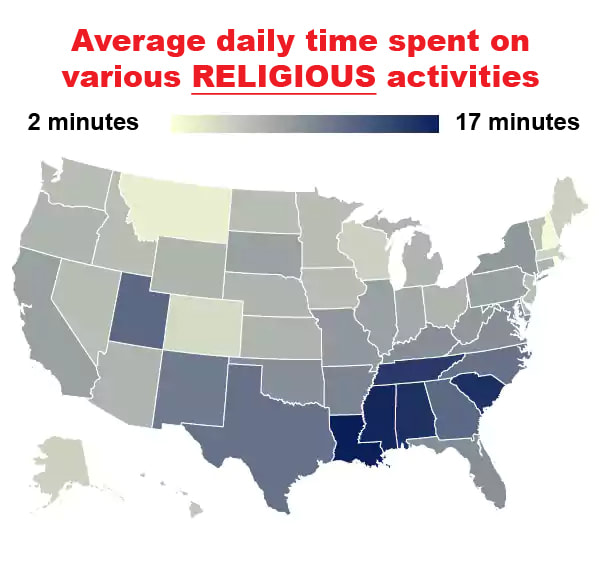
|

|

|
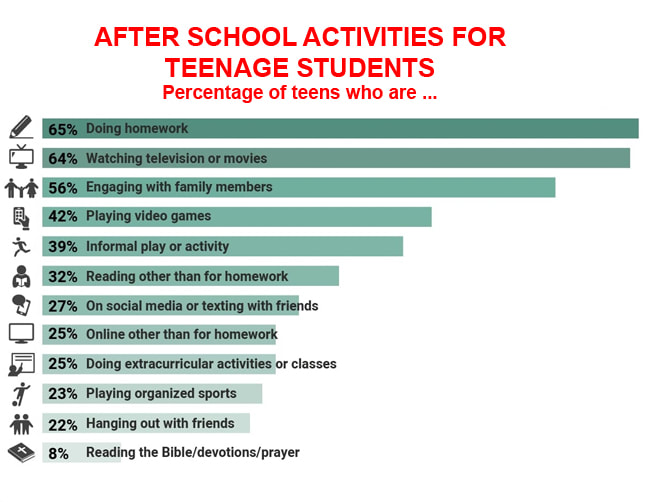
Currently, statistics show that 90 to 95% of youth will no longer practice the Faith regularly after finishing their schooling (high-school, college or university). In such an environment, can we say that most souls are saved? While among all Catholic age-groups―from young to old― 80% of Catholics no longer practice the Faith regularly, with attendance figures ranging from around 40% in some of the best countries, to as little as 2% or 3% in the worst countries. A large of number of Catholics believe you can be a good Catholics without going to Sunday Mass. Hardly any Catholics go to confession, yet almost all who attend Sunday Mass go to Holy Communion. Most Catholics―especially the younger ones―no longer believe in the Real Presence of Our Lord in the Holy Eucharist. Most Catholics believe there is nothing wrong in practicing contraception. Around half of the Catholic world accepts same sex relationships and marriages; divorce and remarriage; pre-marital cohabitation and fornication―and still think they are good Catholics! These are just some (not all) of the most common aberrations of Faith found in most Catholics today. They didn’t become like that overnight―it has been a progressive and gradual slide down the slippery slope of indifference, negligence, and disinterest in matters of Faith, preferring, instead, to be distracted, wooed and seduced by the pleasures and treasures of the world, of which the devil is the prince. God is no longer our focal point―and we are not even frightened about those facts.
The “New Age”―the “Now Age”―the “New Gospel”―the “Gospel of Now”
Our Catholic youth have “bought-into” the gospel of the world―they know it far better than they know Christ’s Gospel. The time spent studying and enthusing about the gospel of the world is 10, 20, 30 or 50 times more than the time spent studying Christ’s Gospel and the Faith. Today’s Catholic youth has very little interest in the Faith. They would find it repulsive and obnoxious if you were push their nose against the following quotes, or hold their feet to the fire of them―“Thou shalt love the Lord thy God with thy whole heart, and with thy whole soul, and with thy whole mind!” (Matthew 22:37)―“If any man will come after Me, let him deny himself, and take up his cross daily, and follow Me!” (Luke 9:23)― “Go sell what thou hast and give to the poor, and thou shalt have treasure in Heaven: and come follow Me!” (Matthew 19:21). “Unless you shall do penance, you shall all likewise perish!” (Luke 13:3)―“We ought always to pray, and not to faint! … Watch ye, therefore, praying at all times!” (Luke 18:1; 21:36). “Pray without ceasing!” (1 Thessalonians 5:17). In fact, not only do the Catholic youth find that repulsive―most Catholic adults find that repulsive too!
These are the “New-Age Catholics” or “Now-Age Catholics” of today, who will be the parents of tomorrow. We can clearly see the Laws of Thermodynamics in operation here. The First Law of Thermodynamics, also known as Law of Conservation of Energy, states that energy can be changed from one form to another, but it cannot be created or destroyed; energy can only be transferred or changed from one form to another. Thus, the energy that we should have for God and the Faith, is transferred to world and materialism. The energy that should be spent in reading spiritual and doctrinal books, is now spent in watching TV, using the Smartphone or Computer. The energy that should be spent praying and on penance, is now spent on playing and decadence. The Second Law of Thermodynamics is commonly known as the Law of Increased Entropy. The word “entropy” means “the tendency to disorder and the degree of disorder” in any given thing―thus you could call it the Law of Increased Decay and Disorder. Thus, the spiritual life becomes more and more disordered, decayed and broken with each successive generation. There is no regularity in going to Mass, no regularity in prayer, no regular penances and sacrifices, no regular spiritual reading and meditation, no regular examination of conscience―everything is sporadic and gradually winding-down. That is a perfect example of The Second Law of Thermodynamics, or The Law of Increased Entropy, or The Law of Increased Decay and Disorder.
The same is true, not only of the laity, but also of the clergy―many of whom have become increasingly worldly and materialistic, thus fulfilling Our Lady of La Salette’s comments: “Woe to the Princes of the Church who think only of piling riches upon riches, to protect their authority and dominate with pride. The priests, ministers of my Son, the priests, by their wicked lives, by their irreverence and their impiety in the celebration of the Holy Mysteries, by their love of money, their love of honors and pleasures, the priests have become cesspools of impurity ... The chiefs, the leaders of the people of God, have neglected prayer and penance, and the devil has bedimmed their intelligence. In convents, the flowers of the Church will decompose and the devil will make himself like the king of all hearts. For disorder and the love of carnal pleasures will be spread all over the Earth.”
Msgr. Stephen Rossetti (born 1951, now aged 67), a leader in the research into and promoting the wellness and spirituality of priesthood, has conducted scores of workshops for priests in the U.S. and abroad. In his booklet, Ten Steps to Priestly Holiness, written in 2009 and based upon research whereby he interviewed thousands of priests in the USA, he states that 2 in 10 (20%) priests said they are praying fifteen minutes or less a day; 5 out of 10 (50%) pray thirty minutes or less a day—and Holy Scripture says: “Pray without ceasing! … We ought to pray and faint not!” (1 Thessalonians 5:17; Luke 18:1). If the priests become spiritually shallow, the people will be even worse. The same applies to spiritually shallow parents and their children, and spiritually shallow teachers and their students—following the famous axiom: “A saintly priest produces a holy parish. A holy priest produces a fervent parish. A fervent priest produces a good parish. A good priest produces a lukewarm parish. A lukewarm priest produces a parish of devils.”
Msgr. Stephen Rossetti wrties: “We do not pray enough. Both my previous study of priestly spiritual practices and my latest [study], demonstrate that fact. For example, 20% of priests said they are praying fifteen minutes or less a day; 50% pray thirty minutes or less a day. 10% said they rarely or never go on an annual retreat, and 33% said they DO NOT pray most, or all, of the Liturgy of the Hours daily (which binds under pain of mortal sin). It is easy to fall into a secular notion of priestly efficacy—thinking that the harder we work the better priests we are and the more productive. Of course, this is not true. The Curé of Ars spent the early years of his parish life especially devoted directly to his own personal sanctification and closeness to God. It is more than likely that the special efficacy of his later ministry was the fruit of the Sacrament of priesthood, a special grace from God, but also his personal sanctity” (Msgr. Stephen Rossetti, Ten Steps to Priestly Holiness).
The consequences are inevitable, as St. Alphonsus Liguori warns: “What terrible punishments God reserves for those who, obliged to recite the Office, abstain from saying it either through wearisomeness, or in order to give themselves to worldly amusements.” The power of Divine Office is underestimated, undervalued, underused—as Our Lady said: “No one on the face of the Earth is aware whence comes the salvation of souls, the conversion of great sinners, the end of great scourges, the fertility of the land, the end of pestilence and wars, and the harmony between nations. All this is due to the prayers that rise up from monasteries and convents!” (Our Lady of Good Success). What Our Lady says of prayer rising out of monasteries and convents, is equally applicable to Catholic families, which have been compared, by not a few popes and spiritual writers, as being a kind of a “lay-monastery or convent”, a “domestic church” of sorts. Sadly, another mighty weapon has been weakened or even rendered impotent!
No Lack of Time―But Bad Use of Time
One might be tempted to argue that we do not have enough time to devote to the many spiritual things that we would like to do―such as praying, meditating, reading, daily examinations of conscience, visits to the Blessed Sacrament, making spiritual Communions, assisting at extra Masses, attending spiritual retreats and conferences, etc. However, it is truly disputable and doubtful that we would really LIKE to do those things―in theory perhaps, but in practice? Hmm! We can all talk a good talk―but when it comes to walking…?
The problem is not such much a “lack of time” as it is a “misuse of time” or an “abuse of time”. To this is added a “wrong sense of values”―whereby we often put the non-essential, secondary and tertiary things before the primary and essential things.
According to Common Sense Media, teenagers spend an average of 9-hours-a-day online, compared to about 6-hours for 8 to 12-year olds, and 50 minutes a day for children aged 8 and under. Robert Lustig, a professor of pediatrics at the University of Southern California and author of The Hacking of the American Mind, said at a conference in February of 2018, that children are definitely addicted: “It’s not a drug, but it might as well be. It works the same way … it has the same results.”
A Pew Research Center’s latest research in 2018, suggests that teens are self-aware about the problem—but unable to rein themselves in. That makes sense when you consider that neurobiological and hormonal changes in teen brains elevate their desire to feel a sense of belonging, to be respected and admired (and how hopeless adults are at tearing themselves away from their phones). A startling 44% of teens tell Pew that they often check their phones for messages or notifications as soon as they wake up; 28% say they check at least sometimes upon rising in the morning. You could say that the phone-check replaces checking-in with God by morning prayer first thing after rising. The study found that girls were more likely than boys to say they spend too much time on social media (47% vs. 35%), while boys were four times as likely to report spending too much time on video games (41% of boys vs. 11% of girls). The top emotion teenagers associated with not having access to their phones was anxiety (42%), with girls once again reporting more anxiety from phone deprivation than boys (49% to 35%).
Perhaps most interesting was Pew’s findings on how kids feel about their parents’ use of technology. While 72% of parents say their teenagers are sometimes or often distracted by their phone while having real-life conversations with people in front of them, more than half (51%) of teens say the same about their parents. Talking of “dual citizenship”―here you have “dual-communications”, talking to a real-life person while communicating electronically with someone or something else. About three-quarters of U.S. adults (77%) say they own a Smartphone. Smartphone ownership is more common among those who are younger or more affluent. For example, 92% of 18- to 29-year-olds say they own a Smartphone, compared with 42% of those who are ages 65 and older. Approximately 72% of people said they are rarely more than five feet away from their handset at any time. 79% of adult Smartphone users have their phones with them for 22 hours a day. 46% of Smartphone owners said their Smartphone is something “they couldn’t live without.” How does all this compare with time spent on the spiritual life? We all know the answer. What we all do NOT know are the consequences―for we never think that far ahead!
What do you think is the attitude of God to all this? The God Whom we are supposed to love with our whole mind, heart, soul and strength! We treat our electronic devices like we should be treating God! They have become our gods in the practice, even though in theory we vehemently say we love God! Actions speak louder than words―and we are certainly more active on our electronic devices than we are active in our spiritual exercise! In short―we have become idolatrous. God punished the Chosen People by a series of ‘captivities’ in the Old Testament―we are ‘captivated’ and made slaves of our electronic devices. The vast majority of time is given to them and not to God. Imagine how much the world would change if teenagers (and adults too for that matter), instead of spending an average of 9 hours a day on Smartphones and social media, would spend those 9 hours a day in spiritual things! The changes in the world and in individual lives would be almost miraculous!
Catholic parents have a lot to answer for―due to their negligence and aiding-and-abetting the introduction of and infatuation with these modern-day idols, which have almost destroyed what little love of God there was in souls in the first place! They have placed a massive scandal―(from the Latin scandalum, meaning “stumbling-block”)―in their families: “But he that shall scandalize one of these little ones that believe in Me, it were better for him that a millstone should be hanged about his neck, and that he should be drowned in the depth of the sea!” (Matthew 18:6). “And if thy right eye scandalize thee, pluck it out and cast it from thee. For it is expedient for thee that one of thy members should perish, rather than that thy whole body be cast into Hell! And if thy right hand scandalize thee, cut it off, and cast it from thee: for it is expedient for thee that one of thy members should perish, rather than that thy whole body be cast into Hell!” (Matthew 5:29-30). Well―the hands of many are a scandal (stumbling-block to the love of God) in the sense that the hand holds the Smartphone or manipulates the computer; and the eyes of many are a scandal (stumbling-block to the love of God) in that they are focused on the screens of those devices. If it taking up so much time and pulling you away from spending more time with God, “cut it off, and cast it from thee: for it is expedient for thee that one of thy members (electronic devices) should perish, rather than that thy whole body be cast into Hell!”
The Smartphone is, essentially, no different to the TV―it is even more capable than the TV in many respects. Yet, St. Padre Pio was vehemently opposed to the TV―what would he say of the Smartphone today? By the mid-1960s, the Capuchins in his monastery were permitted to watch TV, which did not please Padre Pio, who felt that the programs did not lead to virtues desirable in Christian living. He also feared that excessive television viewing was a factor in the destruction of family life―instead of interacting with one another, talking to each other, family members now tended to spend evenings staring gape-mouthed, like zombies, at the television set. He strongly advised anyone who asked his opinion not to buy a television set. When the subject was broached, he was known to say: “The devil is in it!” He realized it would destroy family life and told everyone not to buy one. Regarding movies and the cinema (or “’sin’-ema”), Padre Pio always gave the same answer: “The devil is in it!” Movies are more problematic than not. St. Padre Pio refused to view one, shouting (when they tried to take him to one): “The devil is in it!” Too often, the devil is in it. There is a prophecy―contested by some―that is attributed to the American religious sister, St. Elizabeth Ann Seton (1774-1821) had a vision she could not understand in the middle 1800’s: “Every American would have a black box in their home and the devil would enter through it.”
“Hah! Poo! Pah! Piffle!” you say, “What does Padre Pio know!!? It’s all harmless fun! Hey! You can’t be getting too serious about religion, you know!”
The “New Age”―the “Now Age”―the “New Gospel”―the “Gospel of Now”
Our Catholic youth have “bought-into” the gospel of the world―they know it far better than they know Christ’s Gospel. The time spent studying and enthusing about the gospel of the world is 10, 20, 30 or 50 times more than the time spent studying Christ’s Gospel and the Faith. Today’s Catholic youth has very little interest in the Faith. They would find it repulsive and obnoxious if you were push their nose against the following quotes, or hold their feet to the fire of them―“Thou shalt love the Lord thy God with thy whole heart, and with thy whole soul, and with thy whole mind!” (Matthew 22:37)―“If any man will come after Me, let him deny himself, and take up his cross daily, and follow Me!” (Luke 9:23)― “Go sell what thou hast and give to the poor, and thou shalt have treasure in Heaven: and come follow Me!” (Matthew 19:21). “Unless you shall do penance, you shall all likewise perish!” (Luke 13:3)―“We ought always to pray, and not to faint! … Watch ye, therefore, praying at all times!” (Luke 18:1; 21:36). “Pray without ceasing!” (1 Thessalonians 5:17). In fact, not only do the Catholic youth find that repulsive―most Catholic adults find that repulsive too!
These are the “New-Age Catholics” or “Now-Age Catholics” of today, who will be the parents of tomorrow. We can clearly see the Laws of Thermodynamics in operation here. The First Law of Thermodynamics, also known as Law of Conservation of Energy, states that energy can be changed from one form to another, but it cannot be created or destroyed; energy can only be transferred or changed from one form to another. Thus, the energy that we should have for God and the Faith, is transferred to world and materialism. The energy that should be spent in reading spiritual and doctrinal books, is now spent in watching TV, using the Smartphone or Computer. The energy that should be spent praying and on penance, is now spent on playing and decadence. The Second Law of Thermodynamics is commonly known as the Law of Increased Entropy. The word “entropy” means “the tendency to disorder and the degree of disorder” in any given thing―thus you could call it the Law of Increased Decay and Disorder. Thus, the spiritual life becomes more and more disordered, decayed and broken with each successive generation. There is no regularity in going to Mass, no regularity in prayer, no regular penances and sacrifices, no regular spiritual reading and meditation, no regular examination of conscience―everything is sporadic and gradually winding-down. That is a perfect example of The Second Law of Thermodynamics, or The Law of Increased Entropy, or The Law of Increased Decay and Disorder.
The same is true, not only of the laity, but also of the clergy―many of whom have become increasingly worldly and materialistic, thus fulfilling Our Lady of La Salette’s comments: “Woe to the Princes of the Church who think only of piling riches upon riches, to protect their authority and dominate with pride. The priests, ministers of my Son, the priests, by their wicked lives, by their irreverence and their impiety in the celebration of the Holy Mysteries, by their love of money, their love of honors and pleasures, the priests have become cesspools of impurity ... The chiefs, the leaders of the people of God, have neglected prayer and penance, and the devil has bedimmed their intelligence. In convents, the flowers of the Church will decompose and the devil will make himself like the king of all hearts. For disorder and the love of carnal pleasures will be spread all over the Earth.”
Msgr. Stephen Rossetti (born 1951, now aged 67), a leader in the research into and promoting the wellness and spirituality of priesthood, has conducted scores of workshops for priests in the U.S. and abroad. In his booklet, Ten Steps to Priestly Holiness, written in 2009 and based upon research whereby he interviewed thousands of priests in the USA, he states that 2 in 10 (20%) priests said they are praying fifteen minutes or less a day; 5 out of 10 (50%) pray thirty minutes or less a day—and Holy Scripture says: “Pray without ceasing! … We ought to pray and faint not!” (1 Thessalonians 5:17; Luke 18:1). If the priests become spiritually shallow, the people will be even worse. The same applies to spiritually shallow parents and their children, and spiritually shallow teachers and their students—following the famous axiom: “A saintly priest produces a holy parish. A holy priest produces a fervent parish. A fervent priest produces a good parish. A good priest produces a lukewarm parish. A lukewarm priest produces a parish of devils.”
Msgr. Stephen Rossetti wrties: “We do not pray enough. Both my previous study of priestly spiritual practices and my latest [study], demonstrate that fact. For example, 20% of priests said they are praying fifteen minutes or less a day; 50% pray thirty minutes or less a day. 10% said they rarely or never go on an annual retreat, and 33% said they DO NOT pray most, or all, of the Liturgy of the Hours daily (which binds under pain of mortal sin). It is easy to fall into a secular notion of priestly efficacy—thinking that the harder we work the better priests we are and the more productive. Of course, this is not true. The Curé of Ars spent the early years of his parish life especially devoted directly to his own personal sanctification and closeness to God. It is more than likely that the special efficacy of his later ministry was the fruit of the Sacrament of priesthood, a special grace from God, but also his personal sanctity” (Msgr. Stephen Rossetti, Ten Steps to Priestly Holiness).
The consequences are inevitable, as St. Alphonsus Liguori warns: “What terrible punishments God reserves for those who, obliged to recite the Office, abstain from saying it either through wearisomeness, or in order to give themselves to worldly amusements.” The power of Divine Office is underestimated, undervalued, underused—as Our Lady said: “No one on the face of the Earth is aware whence comes the salvation of souls, the conversion of great sinners, the end of great scourges, the fertility of the land, the end of pestilence and wars, and the harmony between nations. All this is due to the prayers that rise up from monasteries and convents!” (Our Lady of Good Success). What Our Lady says of prayer rising out of monasteries and convents, is equally applicable to Catholic families, which have been compared, by not a few popes and spiritual writers, as being a kind of a “lay-monastery or convent”, a “domestic church” of sorts. Sadly, another mighty weapon has been weakened or even rendered impotent!
No Lack of Time―But Bad Use of Time
One might be tempted to argue that we do not have enough time to devote to the many spiritual things that we would like to do―such as praying, meditating, reading, daily examinations of conscience, visits to the Blessed Sacrament, making spiritual Communions, assisting at extra Masses, attending spiritual retreats and conferences, etc. However, it is truly disputable and doubtful that we would really LIKE to do those things―in theory perhaps, but in practice? Hmm! We can all talk a good talk―but when it comes to walking…?
The problem is not such much a “lack of time” as it is a “misuse of time” or an “abuse of time”. To this is added a “wrong sense of values”―whereby we often put the non-essential, secondary and tertiary things before the primary and essential things.
According to Common Sense Media, teenagers spend an average of 9-hours-a-day online, compared to about 6-hours for 8 to 12-year olds, and 50 minutes a day for children aged 8 and under. Robert Lustig, a professor of pediatrics at the University of Southern California and author of The Hacking of the American Mind, said at a conference in February of 2018, that children are definitely addicted: “It’s not a drug, but it might as well be. It works the same way … it has the same results.”
A Pew Research Center’s latest research in 2018, suggests that teens are self-aware about the problem—but unable to rein themselves in. That makes sense when you consider that neurobiological and hormonal changes in teen brains elevate their desire to feel a sense of belonging, to be respected and admired (and how hopeless adults are at tearing themselves away from their phones). A startling 44% of teens tell Pew that they often check their phones for messages or notifications as soon as they wake up; 28% say they check at least sometimes upon rising in the morning. You could say that the phone-check replaces checking-in with God by morning prayer first thing after rising. The study found that girls were more likely than boys to say they spend too much time on social media (47% vs. 35%), while boys were four times as likely to report spending too much time on video games (41% of boys vs. 11% of girls). The top emotion teenagers associated with not having access to their phones was anxiety (42%), with girls once again reporting more anxiety from phone deprivation than boys (49% to 35%).
Perhaps most interesting was Pew’s findings on how kids feel about their parents’ use of technology. While 72% of parents say their teenagers are sometimes or often distracted by their phone while having real-life conversations with people in front of them, more than half (51%) of teens say the same about their parents. Talking of “dual citizenship”―here you have “dual-communications”, talking to a real-life person while communicating electronically with someone or something else. About three-quarters of U.S. adults (77%) say they own a Smartphone. Smartphone ownership is more common among those who are younger or more affluent. For example, 92% of 18- to 29-year-olds say they own a Smartphone, compared with 42% of those who are ages 65 and older. Approximately 72% of people said they are rarely more than five feet away from their handset at any time. 79% of adult Smartphone users have their phones with them for 22 hours a day. 46% of Smartphone owners said their Smartphone is something “they couldn’t live without.” How does all this compare with time spent on the spiritual life? We all know the answer. What we all do NOT know are the consequences―for we never think that far ahead!
What do you think is the attitude of God to all this? The God Whom we are supposed to love with our whole mind, heart, soul and strength! We treat our electronic devices like we should be treating God! They have become our gods in the practice, even though in theory we vehemently say we love God! Actions speak louder than words―and we are certainly more active on our electronic devices than we are active in our spiritual exercise! In short―we have become idolatrous. God punished the Chosen People by a series of ‘captivities’ in the Old Testament―we are ‘captivated’ and made slaves of our electronic devices. The vast majority of time is given to them and not to God. Imagine how much the world would change if teenagers (and adults too for that matter), instead of spending an average of 9 hours a day on Smartphones and social media, would spend those 9 hours a day in spiritual things! The changes in the world and in individual lives would be almost miraculous!
Catholic parents have a lot to answer for―due to their negligence and aiding-and-abetting the introduction of and infatuation with these modern-day idols, which have almost destroyed what little love of God there was in souls in the first place! They have placed a massive scandal―(from the Latin scandalum, meaning “stumbling-block”)―in their families: “But he that shall scandalize one of these little ones that believe in Me, it were better for him that a millstone should be hanged about his neck, and that he should be drowned in the depth of the sea!” (Matthew 18:6). “And if thy right eye scandalize thee, pluck it out and cast it from thee. For it is expedient for thee that one of thy members should perish, rather than that thy whole body be cast into Hell! And if thy right hand scandalize thee, cut it off, and cast it from thee: for it is expedient for thee that one of thy members should perish, rather than that thy whole body be cast into Hell!” (Matthew 5:29-30). Well―the hands of many are a scandal (stumbling-block to the love of God) in the sense that the hand holds the Smartphone or manipulates the computer; and the eyes of many are a scandal (stumbling-block to the love of God) in that they are focused on the screens of those devices. If it taking up so much time and pulling you away from spending more time with God, “cut it off, and cast it from thee: for it is expedient for thee that one of thy members (electronic devices) should perish, rather than that thy whole body be cast into Hell!”
The Smartphone is, essentially, no different to the TV―it is even more capable than the TV in many respects. Yet, St. Padre Pio was vehemently opposed to the TV―what would he say of the Smartphone today? By the mid-1960s, the Capuchins in his monastery were permitted to watch TV, which did not please Padre Pio, who felt that the programs did not lead to virtues desirable in Christian living. He also feared that excessive television viewing was a factor in the destruction of family life―instead of interacting with one another, talking to each other, family members now tended to spend evenings staring gape-mouthed, like zombies, at the television set. He strongly advised anyone who asked his opinion not to buy a television set. When the subject was broached, he was known to say: “The devil is in it!” He realized it would destroy family life and told everyone not to buy one. Regarding movies and the cinema (or “’sin’-ema”), Padre Pio always gave the same answer: “The devil is in it!” Movies are more problematic than not. St. Padre Pio refused to view one, shouting (when they tried to take him to one): “The devil is in it!” Too often, the devil is in it. There is a prophecy―contested by some―that is attributed to the American religious sister, St. Elizabeth Ann Seton (1774-1821) had a vision she could not understand in the middle 1800’s: “Every American would have a black box in their home and the devil would enter through it.”
“Hah! Poo! Pah! Piffle!” you say, “What does Padre Pio know!!? It’s all harmless fun! Hey! You can’t be getting too serious about religion, you know!”
DOUBLE DAY ARTICLE : Tuesday November 27th & Wednesday November 28th
ARTICLE 29
The Only Valid Passport to Heaven and the Correct Visas to Get You There!
ARTICLE 29
The Only Valid Passport to Heaven and the Correct Visas to Get You There!
No Passport, No Visas, No Chance!
Before we look at our passport to Heaven and the visas required to get there, let us look at earthly passports first and then draw analogies from there. A passport is proof of citizenship, and permits you to re-enter your home country after your trip abroad. However, your national passport does not automatically permit entry into every country without a visa. A visa is an official document, issued by a country that you wish to visit or pass through, which allows the bearer of the visa to legally enter that foreign country. Travelers may sometimes require transit visas in order to pass through a country that is not their destination country. Transit visas are typically required if you have a layover in a country of more than a few hours. Travel visas can be separated into two categories: immigrant and non-immigrant. Immigrant visas allow the bearer to reside permanently in the host country, whereas non-immigrant visas allow the bearer entry into the host country on a temporary basis. Countries have visa restrictions in order to check and control the flow of visitors in and out of the country and to prevent illegal immigration and other criminal activities. Forcing travelers to apply for a visa allows the authorities to vet potential visitors.
Passport Refusals and Revocations
A passport is not your property, but government property. The government is not obliged to issue a passport to everyone who applies for one. Passports can be denied for a number of reasons, such as:
(1) Being subject to foreign extradition requests ― handing over a person, accused or convicted of a crime, to the foreign state or country in which the crime was committed;
(2) Being subject to certain court orders and declarations;
(3) In default on an assistance loan from the Department of State―you must repay this loan first, or arrange to do so;
(4) If you owe child support;
(5) If a previous passport was revoked;
(6) If you get an IRS taxpayer notice in the mail about having a large overdue unpaid tax debt;
(7) If you are a minor involved in custody disputes, etc.
The government revokes (recalls or cancels) passports that were:
(1) Obtained illegally or through fraud;
(2) Altered or misused;
(3) Issued to people whose Certificate of Citizenship or Naturalization was canceled;
(4) Your passport may also be revoked or denied if the IRS reports to the State Department that you have a seriously delinquent tax debt.
In any of these revocations, you must surrender a revoked passport immediately.
Visa Refusals and Reasons
A visa application might be considered unsuccessful if the consular officer fails to get from the candidate all the needed information about him/her. Lacking to possess such information, the consular officer will be incapable to decide if the candidate qualifies to be given a visa. On the other hand, sometimes the consular might get information from the applicant that is unacceptable or beyond the fixed procedures. Sometimes the candidate is prone of illegitimate and/or dishonest activities. In all of the aforementioned cases the officer is led to DENY offering a visa to the applicant. Here are the most common reasons for failed visa applications:
(1) Past or Current Criminal Actions: The past and current circumstances and actions of the applicant matter a lot in the decision of the consular officer in issuing a visa. In such cases, the refusal might occur because the applicant is considered a threat to the public policy, internal security or public wealth of the country (i.e. terrorism, drug abuse, child abuse, addiction, other serious crimes).
(2) False Travel Document: There is a common destiny for all the applicants who attempt to present false travel documents to the embassy or consulate, trying to misrepresent their identity, using fake identity – and that destiny is an absolute visa denial and other accompanying unfavorable consequences.
(3) Insufficient Explanation For The Purpose And Circumstances Of The Planned Stay: Another motive for denying a visa is failing to have the required justification for your purpose of visit and conditions of the planned travel and stay. Such are the cases of: (a) Failing to present an employment and professional qualification that matches with the presented financial situation; (b) Incapacity to provide documents that support the purpose of travel and stay in the area; (c) The inability to offer unchanging declarations about the purpose of travel and stay―meaning that you give contradictory and fluctuating story-lines about the purpose of your visit.
(4) Damaged Passport: A reason for a visa refusal could be presenting a passport that is not kept in a good condition. Such case can be when passport pages are detaching or missing, when the cover of the passport is damaged and so on.
(5) Passport Invalidity: Alternative motive to lead the consular officer denying your visa application is presenting a passport that is not acceptable for the Embassy or Consulate. Such cases include the following: (a) Presenting a passport that does not have a valid period less than three months (b) Presenting a passport that does not possess two different blank visa pages, (c) Presenting a valid passport that is older than 10 years.
(6) Lack of Proof for Your Travel Itinerary: An additional reason, for visa application refusals, is failing to present the proper plan of your travel within the area.
(7) Invalid Letter of Reference: Another reason for a failed visa applications is a failure to provide a formal letter of reference that is authenticated by the author, which fails to show the original and authentic letterhead with the address and contact details of the company or the author issuing it, so that it can be checked and verified; or which has been written more than three months before the visa application date; or which lacks the authentic stamp and signature of the author.
(8) Insufficient Means Of Subsistence: Another reason for refusal is lacking or having insufficient proof of means of existence for the duration of stay in area, nor having enough funds for the return to home country. Such cases might involve.
(9) Unacceptable Birth Or Marriage Certificate: Another visa refusal reason is due to not being able to offer birth or marriage certificates that are acceptable and can be authenticated by the embassy or consulate.
(10) Invalid Travel Insurance: Another financially related reason for visa refusal is the inability to present the appropriate travel insurance coverage for the duration of stay in the area.
(11) Lacking to present a Proof of Accommodation: An additional factor that can lead to visa refusal is not being able to properly demonstrate you have a place to stay during your travel abroad.
(12) Unfavorable Visa Situation: Other reasons for visa refusal include (a) previous abuse of visa conditions, for example, overstaying beyond the time-limits of a previous visa; (b) failing to follow the work limits imposed by a previous visa; (c) illegally crossing over into a country for which you had no visa, etc.
Heaven's Passport and Visas
We obviously need some kind of ‘passport’ to get into Heaven, for Our Lord says: “For many, I say to you, shall seek to enter, and shall not be able!” (Luke 13:24). A lot of “do-gooders” will be refused entrance: “When the Master of the house shall be gone in and shall shut the door, you shall begin to stand without, and knock at the door, saying: ‘Lord! Open to us!’ And He answering, shall say to you: ‘I know you not, whence you are!’ Then you shall begin to say: ‘We have eaten and drunk in thy presence, and thou hast taught in our streets!’ And He shall say to you: ‘I know you not, whence you are! Depart from Me!’” (Luke 13:25-27). “Not everyone that saith to Me: ‘Lord! Lord!’ shall enter into the Kingdom of Heaven … Many will say to Me in that day: ‘Lord! Lord! Have not we prophesied in Thy Name, and cast out devils in Thy Name, and done many miracles in Thy Name? And then will I profess unto them: ‘I never knew you! Depart from Me!’” (Matthew 7:21-22). “Many are called, but few are chosen” (Matthew 22:14). In fact, everyone is called to Heaven, but very, very few have the right ‘documents’ in their possession when they arrive at the Gates of Heaven. Of all the persons who apply for passports and visas, 99.99% never imagine that their application will be refused! Of all the people in Hell today, how many really and truly thought that they would be sent to Hell? Hardly anybody! Don’t you think that we should take this matter VERY SERIOUSLY in view of the fact that most Catholics are refused entry to Heaven and are deported to Hell―with only a few of those who have been refused entry being sent to Purgatory.
The Road to Heaven (or Hell)
As regards the stages of our journey to Heaven, Fr. Garrigou-Lagrange, OP, who taught Ascetical and Mystical Theology at the Dominican Pontifical University of St. Thomas Aquinas, the Angelicum, in Rome, from 1909 to 1960―describes the journey through three spiritual stages which he likens to childhood, adolescence and adulthood. Other authors liken it to a gradual ascent up a mountain which has three plateaus and three sheer cliff faces. All of these methods are analogous―and so, let us consider another analogy, that of being pilgrims in this world on our way to Heaven. In your journey to Heaven, you have to pass through various ‘countries’ and do certain tasks in those countries and pick-up certain things―without which, you cannot progress any further.
This world is our place of exile―much like Egypt was for the Israelites from the time of Jacob to the time of Moses, as foretold by God to Abraham: “Know thou beforehand that thy seed shall be a stranger in a land not their own [Egypt], and they shall bring them under bondage, and afflict them four hundred years” (Genesis 15:13). After those four-hundred years in Egypt, they would spend forty-years wandering in the desert in their pilgrimage to the Promised Land, during which pilgrimage Moses spent forty-days on Mount Sinai receiving revelations from God and the Ten Commandments. Our Lord would later spend forty-days in the desert praying and fasting, which spills over into our forty-days of praying and fasting during Lent. Yet of the estimated 4 to 6 million Israelites that originally left Egypt, only 2 families were worthy to enter the Promised Land―the rest, by God’s punishment, died in their 40-year exile in the desert because of their disobedience to God. Not even Moses and Aaron made it to the Promised Land! Moses died on its borders―as a punishment for having doubted God before one of the miracles in the desert! In Deuteronomy 34:8 we read that the Jews mourned for thirty days following Moses’ death in the Plains of Moab. This area borders Israel, just east of the Jordan River. You could say that they lost their passports or visas on the road, or broke the terms of the visas. As St. Paul points-out:
“I would not have you ignorant, brethren, that our fathers were all under the cloud, and all passed through the sea. And all in Moses were baptized, in the cloud, and in the sea. And did all eat the same spiritual food. And all drank the same spiritual drink―and they drank of the spiritual rock that followed them, and the rock was Christ. But with most of them God was not well pleased―for they were overthrown in the desert! Now these things were done in a figure of us, that we should not covet evil things as they also coveted. Neither become ye idolaters, as some of them, as it is written: ‘The people sat down to eat and drink, and rose up to play.’ Neither let us commit fornication, as some of them committed fornication―and there fell, in one day, three and twenty thousand. Neither let us tempt Christ, as some of them tempted, and perished by the serpents. Neither do you murmur: as some of them murmured, and were destroyed by the destroyer. Now all these things happened to them in figure: and they are written for our correction, upon whom the ends of the world are come!” (1 Corinthians 10:1-11).
Even before the time of Abraham and Moses, at the time of the Great Flood, when mankind was punished for its sinfulness, “the rain fell upon the Earth forty days and forty nights” (Genesis 7:12) and Noe, having built the ark as God had commanded, set off on his journey or voyage, in the ark, to a different land. Our Lord refers to this, concerning the last days, where He speaks of the numbers who, having the right ‘passport’ and ‘visas’, will be taken up by the angels and the numbers, without the correct ‘documentation’ will be left behind: “But of that day and hour no one knoweth, not the angels of Heaven, but the Father alone. And as in the days of Noe, so shall also the coming of the Son of man be. For as in the days before the flood, they were eating and drinking, marrying and giving in marriage, even till that day in which Noe entered into the ark, and they knew not till the flood came, and took them all away; so also shall the coming of the Son of man be. Then two shall be in the field: one shall be taken, and one shall be left. Two women shall be grinding at the mill: one shall be taken, and one shall be left. Watch ye therefore, because ye know not what hour your Lord will come!” (Matthew 24:36-42).
God Wants to Grant Entry to Everyone―But On Condition!
Nobody is excluded from Heaven―but not everyone will get to Heaven. In fact, though God wants all to be saved, on a few will be saved! Scary, huh? It’s meant to be― “With fear and trembling work out your salvation!” (Philippians 2:12). “Be not deceived! God is not mocked! For what things a man shall sow, those also shall he reap. For he that soweth in his flesh, of the flesh also shall reap corruption. But he that soweth in the spirit, of the spirit shall reap life everlasting!” (Galatians 6:7-8). Our Lord says: “You cannot serve God and mammon!” (Matthew 6:24)―but we continue to do so, regardless of what He says. Our Lord says: “Thou shalt love the Lord thy God with thy whole heart, and with thy whole soul, and with thy whole mind! This is the greatest and the first commandment!” (Matthew 22:37-38)―but we have discovered that there are better things to love with our whole heart, soul and mind―and we plunge ourselves into them. Our Lord says: “If any man will come after Me, let him deny himself, and take up his cross daily, and follow Me!” (Luke 9:23)―but we throw away our crosses daily, murmur about them, and indulge ourselves as much as we can. Our Lord said: “Unless you shall do penance, you shall all likewise perish!” (Luke 13:3)―instead, we perish the thought of doing penance. Our Lord said: “If you love Me, keep My commandments” (John 14:15)―we love to break some of those commandments.
Is there any wonder that most Catholics are damned, even though God wants to save everyone. The point is―everyone CAN BE SAVED, but God is not going to change the rules for salvation or drop the price! Heck, come on! What on earth is this salvation we are talking about? It is nothing less than happiness for eternity, eternal life, perpetual health and joy, no sickness, no pain, no anxiety or worries, no fears, no suspicions, universal friendship, no hatred, no envy, no pride, no grudges, no anger, no revenge, no recriminations, no finger-pointing and finger-wagging, free-accommodation for eternity, free-food and drink for eternity (though some say we will no longer eat or sleep), free travel, free ‘health insurance’, the list could on eternally! And you are doing WHAT in return?!! You want to pay WHAT for all that?!!! You dare to murmur at God’s requests and conditions for ALL THAT AND MORE?!! What kind of a person are you?!!!
Murmuring and Moaning, Misusing and Abusing
Murmuring, moaning and complaining was exactly what the Chosen People did during the Exodus―which infuriated God: “The Lord said to Moses: ‘See that this people is stiff-necked! … Enter into the land that floweth with milk and honey. For I will not go up with thee, because thou art a stiff-necked people―lest I destroy thee in the way!’ And the people hearing these very bad tidings, mourned … And the Lord said to Moses: ‘Say to the children of Israel:” Thou are a stiff-necked people―I shall come up in the midst of thee and shall destroy thee!’”” (Exodus 32:9). Moses said to the Chosen People: “For I know thy obstinacy, and thy most stiff neck, While I am yet living, and going in with you, you have always been rebellious against the Lord: how much more when I shall be dead? … For I know that, after my death, you will do wickedly, and will quickly turn aside from the way that I have commanded you: and evils shall come upon you in the latter times, when you shall do evil in the sight of the Lord, to provoke him by the works of your hands!” (Deuteronomy 31:27-29). St. Stephen, the first martyr, even repeats the same message in the New Testament: “You stiff-necked and uncircumcised in heart and ears, you always resist the Holy Ghost―as your fathers did, so do you also!” (Acts 7:51).
Yet that is exactly what we do―we are stiff-necked and stubborn in face of God’s, Our Lady’s and the Church’s teachings and commands. We are told not to love the world―but we do. We are told to pray much―but we don’t. We are told not to serve both God and mammon―but we do. We are told to make many sacrifices―but we don’t. Yet we expect to pass through ‘passport-control’ at the Gate of Heaven without any problems! Insane! What is one of the definitions of insanity? To repeatedly do the same old thing expecting different results. We know that most Catholics are damned (as too are the non-Catholics), yet we insanely persist in doing the very same things that they did, expecting a different result. We fool ourselves saying: “O, but I wear the Scapular! O, but I say the Rosary! O, but I go to Mass! O, but I go to Confession and Communion!” Blind fool! Do you not realize that the vast majority of damned Catholics did some or all of these things?!! The problem being that they did not use, but abused these things. We can let these things almost become superstitions and not the Sacraments and sacramentals that they were intended to be. Instead of bring health, they poison us because of misuse and abuse of them.
Medicine Becomes Poison
We can let these things almost become superstitions and not the Sacraments and Sacramentals that they were intended to be. Instead of bringing health, they poison us, because we misuse and abuse of them. How many wear the Scapular almost superstitiously as a cloak for sin, thinking it to be some kind of magic remedy that all will guarantee their salvation, no matter how much they sin? St. Alphonsus Liguori says that the Hell of such people will be terrible! How many turn the praying of the Rosary into a sinful event―by praying distractedly, too quickly, etc. How many people make bad sacrilegious Confessions and Communions―far more than you would like think or imagine! St. Alphonsus Liguori was of the opinion that bad confessions were a frequent occurrence―and that was over 250 years ago! Just as was said of the Chosen People during the 40-Year Exodus, can also be said today of most Catholics: “I would not have you ignorant, brethren, that our fathers were all under the cloud, and all passed through the sea. And all in Moses were baptized, in the cloud, and in the sea. And did all eat the same spiritual food. And all drank the same spiritual drink―and they drank of the spiritual rock that followed them, and the rock was Christ. But with most of them God was not well pleased―for they were overthrown in the desert! Now these things were done in a figure of us, that we should not covet evil things as they also coveted. Neither become ye idolaters, as some of them, as it is written: ‘The people sat down to eat and drink, and rose up to play.’ Neither let us commit fornication, as some of them committed fornication―and there fell, in one day, three and twenty thousand. Neither let us tempt Christ, as some of them tempted, and perished by the serpents. Neither do you murmur: as some of them murmured, and were destroyed by the destroyer. Now all these things happened to them in figure: and they are written for our correction, upon whom the ends of the world are come!” (1 Corinthians 10:1-11).
Not All Passports Are Equal
As we see from the above, the Chosen People were given ‘passports’ by God to pass safely out of Egypt, to pass through the Red Sea, to pass through the desert and to secure entry into the Promised Land. The problem was that they broke the terms or conditions of being given their passports, and fell into dissatisfaction with their journey and its conditions, frequently complaining and murmuring, and at times falling into idolatry―and above all refusing to enter the Promised Land when they first got there. God revoked most of the passports and condemned almost all of the original emigrants from Egypt to die in the desert―only permitting their offspring to finally enter the Promised Land.
Passports are necessary for travel abroad, as they verify your identity and nationality. They grant the bearer safe passage and protection by their country of origin when traveling in a foreign land. Possession of a passport doesn’t necessarily guarantee entry into the country you would like to visit. At times you need to apply for a travel visa beforehand, in order to be allowed entry into your destination country. What can go wrong with your passport? The passport-issuing authority reserves the right to refuse or revoke your passport if they feel they have sufficient grounds for doing so. Your passport may be revoked for several reasons, such as if you lose your citizenship, if you have been charged with a crime, or if you provided false information of your passport application. Passports must usually be valid for at least six months from the start of your travel date. Your destination country may not let you enter if there is a risk that your passport will expire while you are travelling. Each country has different requirements for how long your passport must be valid.
You received your ‘heavenly passport’ at your Baptism. You could say that it is somewhat like an e-passport or electronic passport―which has an electronic chip inserted into one of the passport’s pages, containing all kinds of information. Your ‘electronic chip’ is sanctifying grace―which has to be present to make your passport valid. God―the issuing authority for the passport―will revoke and cancel your passport every time you commit a serious offence against God (mortal sin). At that point, you need to go to the passport renewal office (the Confessional) and re-apply for a reinstatement of your status, the reactivation of your ‘electronic chip’ (sanctifying grace) and pay the fine (penance). However, there are some folk who, after losing their ‘passport’ of grace, make false declarations in the ‘passport renewal office’ of the confessional―and even though they receive absolution (the passport book), there is no ‘electronic chip’ (sanctifying grace) inserted by God. They thus ‘proudly’ come away with an invalid passport, vainly thinking it to be valid―but it will not gain them entry to Heaven and, if they arrive at the Gates of Heaven in that state, then they will be deported to Hell.
No Entry to Heaven Without a Valid VIsa
Since your ‘heavenly passport’ was issued here on Earth, you need a visa in order to enter Heaven. Though some countries have mutual agreements that allow entry to each other’s countries without a visa, other countries require that you apply to them for a visa before being allowed to enter their country. There are no hard and fast rules for countries when determining visa policies. However, some typical considerations include diplomatic relations with the other country, the history of illegal immigration from the other country, and much more. Countries have visa restrictions in order to check and control the flow of visitors in and out of the country and to prevent illegal immigration and other criminal activities. Forcing travelers to apply for a visa allows the authorities to vet potential visitors. Commonly requested supporting documents for visa applications are: (1) Letter of invitation―which is a formal letter from the person you intend to visit stating that they are inviting you to visit them in that country; (2) Proof of financial support during the trip; (3) Proof of Travel insurance; (4) Proof of Airplane tickets; (5) Proof of purpose of travel, etc.
Bearing in mind that all analogies begin to limp at some point, you could, nevertheless, say that Heaven requires you to apply for a visa so that it prevents undesirable persons from entering unhindered. There are all kinds of visas―work visas; business visas; religious worker visas; student visas; working holiday visas; transit visas, etc. However, the “icing-on-the-cake” visa is a “permanent residence” visa, which allows for an indefinite stay in the country being visited. That is the visa we need for Heaven―permanent residency. Yet the obtaining of the ‘best visa’ is not a ‘piece-of-cake’, but more like a lot of penance and hard work―for, as Our Lord says: “The Kingdom of Heaven suffereth violence, and the violent bear it away” (Matthew 11:12), meaning that we have to fight hard to obtain that prize, as St. Paul writes: “Fight the good fight of Faith! Lay hold on eternal life, whereunto thou art called!” (1 Timothy 6:12) … “Know you not that they that run in the race, all run indeed, but one receiveth the prize? So run that you may obtain! … I therefore so run, not as at an uncertainty: I so fight, not as one beating the air, but I chastise my body, and bring it into subjection―lest perhaps, when I have preached to others, I myself should become a castaway!” (1 Corinthians 9:24-27).
However, permanent residents may lose their status if they fail to comply with residency or other obligations imposed on them. For example: (a) they leave the country beyond a maximum number of days―which varies among countries, anywhere from 3 or 6 months, to as much as 2 years; or (b) they become a threat to national security, or they commit serious crimes and become subject to deportation or removal from the country. Likewise, if we remove ourselves for any serious length of time from Heaven and heavenly things, to venture outside the parameters or borders of the ‘country’ of the Faith, in which we should be living, then we can very easily lose our heavenly ‘permanent resident’ status. The same would apply to living in a way that endangers the Faith and the grace in our souls.
Furthermore, your baptismal ‘passport’ did not come with working-visas for this world, nor holiday-visas for this world, not student-visas to study this world―the only visa for Earth that your baptismal ‘passport’ came with was a transit-visa, a visa that merely allows you to pass through this life without getting attached to it or building yourself a ‘paradise on Earth’. As Holy Scripture tells us: “We are sojourners before Thee, and strangers, as were all our fathers. Our days upon Earth are as a shadow, and there is no stay!” (1 Paralipomenon 29:15) … “All these died according to Faith, confessing that they are pilgrims and strangers on the Earth … They desire a better, that is to say, a heavenly country!” (Hebrews 11:13-15). Our Lord made it clear that we are not of this world, as He is not of this world―this world is not our home, but simply a place that we must pass through, in transit, on our way to our true home, Heaven: “And Jesus said to them: ‘You are from beneath, I am from above! You are of this world, I am not of this world!’” (John 8:23). “My kingdom is not of this world … My kingdom is not from here!” (John 18:36)―while to His followers He says: “If you had been of the world, the world would love its own: but because you are not of the world, but I have chosen you out of the world, therefore the world hateth you!” (John 15:19). He warns us against becoming entangled with the world that we should merely be passing-through: “He that received the seed among thorns, is he that heareth the word [of God], and the cares of this world and the deceitfulness of riches choketh up the word, and he becometh fruitless” (Matthew 13:22).
St. Peter refers to us as pilgrims who ought to be strangers to this world: “We have not received the spirit of this world, but the Spirit that is of God―that we may know the things that are given us from God!” (1 Corinthians 2:12). “I beseech you as strangers and pilgrims, to refrain yourselves from carnal desires which war against the soul” (1 Peter 2:11). “In time past you walked according to the course of this world, according to the prince of the power of this air, of the spirit that now worketh on the children of unbelief … You were, at that time, without Christ, being aliens from the conversation of Israel, and strangers to the testament, having no hope of the promise, and without God in this world” (Ephesians 2:2). “Bear not the yoke with unbelievers! For what participation hath justice with injustice? Or what fellowship hath light with darkness? And what concord hath Christ with Belial? Or what part hath the faithful with the unbeliever? And what agreement hath the temple of God with idols? For you are the temple of the living God; as God saith: ‘I will dwell in them, and walk among them; and I will be their God, and they shall be My people!’ Wherefore, ‘Go out from among them, and be ye separate!’ saith the Lord” (2 Corinthians 6:14-17).
You ‘baptismal passport’ only has a transit-visa for this Earth―if you break the conditions of that visa, you are risking being denied entry to Heaven when you get to the “Pearly Gates”! Yet few are the Catholics who have not transgressed the terms of that transit-visa―instead they have stopped their journey towards Heaven in favor of feathering their nest here on Earth! As Our Lord warned: “Lay not up to yourselves treasures on Earth―where the rust, and moth consume, and where thieves break through and steal. But lay up to yourselves treasures in Heaven―where neither the rust nor moth doth consume, and where thieves do not break through, nor steal. For where thy treasure is, there is thy heart also … No man can serve two masters. For either he will hate the one, and love the other: or he will sustain the one, and despise the other. You cannot serve God and mammon!” (Matthew 6:19-24).
Our entanglement with worldliness makes us friends of God’s enemies― “Love not the world, nor the things which are in the world. If any man love the world, the charity of the Father is not in him!” (1 John 2:15). “Adulterers! Know you not that the friendship of this world is the enemy of God? Whosoever therefore will be a friend of this world, becometh an enemy of God!” (James 4:4). Our spiritual adultery―loving the world while professing to love God―will find the door of Heaven shut in our face and our passport and citizenship to Heaven revoked: “Why call you Me, ‘Lord! Lord!’ and do not the things which I say?” (Luke 6:46). “Not everyone that saith to Me: ‘Lord! Lord!’ shall enter into the Kingdom of Heaven: but he that doth the will of My Father, Who is in Heaven, he shall enter into the Kingdom of Heaven. Many will say to me in that day: ‘Lord! Lord! Have not we prophesied in Thy Name, and cast out devils in Thy Name, and done many miracles in Thy Name?’ And then will I profess unto them: ‘I never knew you! Depart from Me, you that work iniquity!’ Everyone therefore that heareth these My words, and doth them, shall be likened to a wise man that built his house upon a rock, and the rain fell, and the floods came, and the winds blew, and they beat upon that house, and it fell not, for it was founded on a rock. And every one that heareth these My words, and doth them not, shall be like a foolish man that built his house upon the sand, and the rain fell, and the floods came, and the winds blew, and they beat upon that house, and it fell, and great was the fall thereof!” (Matthew 7:21-27).
“And a certain man said to Him: ‘Lord! Are they few that are saved?’ But He said to them: ‘Strive to enter by the narrow gate; for many, I say to you, shall seek to enter, and shall not be able! When the Master of the house shall be gone in, and shall shut the door, you shall begin to stand outside and knock at the door, saying: “Lord! Open to us!” And He answering, shall say to you: “I know you not, whence you are!” Then you shall begin to say: “We have eaten and drunk in Thy presence, and Thou hast taught in our streets!” And He shall say to you: “I know you not, whence you are! Depart from Me, all ye workers of iniquity!” There shall be weeping and gnashing of teeth, when you shall see Abraham and Isaac and Jacob, and all the prophets, in the kingdom of God, and you yourselves thrust out!’” (Luke 13:23-28).
Before we look at our passport to Heaven and the visas required to get there, let us look at earthly passports first and then draw analogies from there. A passport is proof of citizenship, and permits you to re-enter your home country after your trip abroad. However, your national passport does not automatically permit entry into every country without a visa. A visa is an official document, issued by a country that you wish to visit or pass through, which allows the bearer of the visa to legally enter that foreign country. Travelers may sometimes require transit visas in order to pass through a country that is not their destination country. Transit visas are typically required if you have a layover in a country of more than a few hours. Travel visas can be separated into two categories: immigrant and non-immigrant. Immigrant visas allow the bearer to reside permanently in the host country, whereas non-immigrant visas allow the bearer entry into the host country on a temporary basis. Countries have visa restrictions in order to check and control the flow of visitors in and out of the country and to prevent illegal immigration and other criminal activities. Forcing travelers to apply for a visa allows the authorities to vet potential visitors.
Passport Refusals and Revocations
A passport is not your property, but government property. The government is not obliged to issue a passport to everyone who applies for one. Passports can be denied for a number of reasons, such as:
(1) Being subject to foreign extradition requests ― handing over a person, accused or convicted of a crime, to the foreign state or country in which the crime was committed;
(2) Being subject to certain court orders and declarations;
(3) In default on an assistance loan from the Department of State―you must repay this loan first, or arrange to do so;
(4) If you owe child support;
(5) If a previous passport was revoked;
(6) If you get an IRS taxpayer notice in the mail about having a large overdue unpaid tax debt;
(7) If you are a minor involved in custody disputes, etc.
The government revokes (recalls or cancels) passports that were:
(1) Obtained illegally or through fraud;
(2) Altered or misused;
(3) Issued to people whose Certificate of Citizenship or Naturalization was canceled;
(4) Your passport may also be revoked or denied if the IRS reports to the State Department that you have a seriously delinquent tax debt.
In any of these revocations, you must surrender a revoked passport immediately.
Visa Refusals and Reasons
A visa application might be considered unsuccessful if the consular officer fails to get from the candidate all the needed information about him/her. Lacking to possess such information, the consular officer will be incapable to decide if the candidate qualifies to be given a visa. On the other hand, sometimes the consular might get information from the applicant that is unacceptable or beyond the fixed procedures. Sometimes the candidate is prone of illegitimate and/or dishonest activities. In all of the aforementioned cases the officer is led to DENY offering a visa to the applicant. Here are the most common reasons for failed visa applications:
(1) Past or Current Criminal Actions: The past and current circumstances and actions of the applicant matter a lot in the decision of the consular officer in issuing a visa. In such cases, the refusal might occur because the applicant is considered a threat to the public policy, internal security or public wealth of the country (i.e. terrorism, drug abuse, child abuse, addiction, other serious crimes).
(2) False Travel Document: There is a common destiny for all the applicants who attempt to present false travel documents to the embassy or consulate, trying to misrepresent their identity, using fake identity – and that destiny is an absolute visa denial and other accompanying unfavorable consequences.
(3) Insufficient Explanation For The Purpose And Circumstances Of The Planned Stay: Another motive for denying a visa is failing to have the required justification for your purpose of visit and conditions of the planned travel and stay. Such are the cases of: (a) Failing to present an employment and professional qualification that matches with the presented financial situation; (b) Incapacity to provide documents that support the purpose of travel and stay in the area; (c) The inability to offer unchanging declarations about the purpose of travel and stay―meaning that you give contradictory and fluctuating story-lines about the purpose of your visit.
(4) Damaged Passport: A reason for a visa refusal could be presenting a passport that is not kept in a good condition. Such case can be when passport pages are detaching or missing, when the cover of the passport is damaged and so on.
(5) Passport Invalidity: Alternative motive to lead the consular officer denying your visa application is presenting a passport that is not acceptable for the Embassy or Consulate. Such cases include the following: (a) Presenting a passport that does not have a valid period less than three months (b) Presenting a passport that does not possess two different blank visa pages, (c) Presenting a valid passport that is older than 10 years.
(6) Lack of Proof for Your Travel Itinerary: An additional reason, for visa application refusals, is failing to present the proper plan of your travel within the area.
(7) Invalid Letter of Reference: Another reason for a failed visa applications is a failure to provide a formal letter of reference that is authenticated by the author, which fails to show the original and authentic letterhead with the address and contact details of the company or the author issuing it, so that it can be checked and verified; or which has been written more than three months before the visa application date; or which lacks the authentic stamp and signature of the author.
(8) Insufficient Means Of Subsistence: Another reason for refusal is lacking or having insufficient proof of means of existence for the duration of stay in area, nor having enough funds for the return to home country. Such cases might involve.
(9) Unacceptable Birth Or Marriage Certificate: Another visa refusal reason is due to not being able to offer birth or marriage certificates that are acceptable and can be authenticated by the embassy or consulate.
(10) Invalid Travel Insurance: Another financially related reason for visa refusal is the inability to present the appropriate travel insurance coverage for the duration of stay in the area.
(11) Lacking to present a Proof of Accommodation: An additional factor that can lead to visa refusal is not being able to properly demonstrate you have a place to stay during your travel abroad.
(12) Unfavorable Visa Situation: Other reasons for visa refusal include (a) previous abuse of visa conditions, for example, overstaying beyond the time-limits of a previous visa; (b) failing to follow the work limits imposed by a previous visa; (c) illegally crossing over into a country for which you had no visa, etc.
Heaven's Passport and Visas
We obviously need some kind of ‘passport’ to get into Heaven, for Our Lord says: “For many, I say to you, shall seek to enter, and shall not be able!” (Luke 13:24). A lot of “do-gooders” will be refused entrance: “When the Master of the house shall be gone in and shall shut the door, you shall begin to stand without, and knock at the door, saying: ‘Lord! Open to us!’ And He answering, shall say to you: ‘I know you not, whence you are!’ Then you shall begin to say: ‘We have eaten and drunk in thy presence, and thou hast taught in our streets!’ And He shall say to you: ‘I know you not, whence you are! Depart from Me!’” (Luke 13:25-27). “Not everyone that saith to Me: ‘Lord! Lord!’ shall enter into the Kingdom of Heaven … Many will say to Me in that day: ‘Lord! Lord! Have not we prophesied in Thy Name, and cast out devils in Thy Name, and done many miracles in Thy Name? And then will I profess unto them: ‘I never knew you! Depart from Me!’” (Matthew 7:21-22). “Many are called, but few are chosen” (Matthew 22:14). In fact, everyone is called to Heaven, but very, very few have the right ‘documents’ in their possession when they arrive at the Gates of Heaven. Of all the persons who apply for passports and visas, 99.99% never imagine that their application will be refused! Of all the people in Hell today, how many really and truly thought that they would be sent to Hell? Hardly anybody! Don’t you think that we should take this matter VERY SERIOUSLY in view of the fact that most Catholics are refused entry to Heaven and are deported to Hell―with only a few of those who have been refused entry being sent to Purgatory.
The Road to Heaven (or Hell)
As regards the stages of our journey to Heaven, Fr. Garrigou-Lagrange, OP, who taught Ascetical and Mystical Theology at the Dominican Pontifical University of St. Thomas Aquinas, the Angelicum, in Rome, from 1909 to 1960―describes the journey through three spiritual stages which he likens to childhood, adolescence and adulthood. Other authors liken it to a gradual ascent up a mountain which has three plateaus and three sheer cliff faces. All of these methods are analogous―and so, let us consider another analogy, that of being pilgrims in this world on our way to Heaven. In your journey to Heaven, you have to pass through various ‘countries’ and do certain tasks in those countries and pick-up certain things―without which, you cannot progress any further.
This world is our place of exile―much like Egypt was for the Israelites from the time of Jacob to the time of Moses, as foretold by God to Abraham: “Know thou beforehand that thy seed shall be a stranger in a land not their own [Egypt], and they shall bring them under bondage, and afflict them four hundred years” (Genesis 15:13). After those four-hundred years in Egypt, they would spend forty-years wandering in the desert in their pilgrimage to the Promised Land, during which pilgrimage Moses spent forty-days on Mount Sinai receiving revelations from God and the Ten Commandments. Our Lord would later spend forty-days in the desert praying and fasting, which spills over into our forty-days of praying and fasting during Lent. Yet of the estimated 4 to 6 million Israelites that originally left Egypt, only 2 families were worthy to enter the Promised Land―the rest, by God’s punishment, died in their 40-year exile in the desert because of their disobedience to God. Not even Moses and Aaron made it to the Promised Land! Moses died on its borders―as a punishment for having doubted God before one of the miracles in the desert! In Deuteronomy 34:8 we read that the Jews mourned for thirty days following Moses’ death in the Plains of Moab. This area borders Israel, just east of the Jordan River. You could say that they lost their passports or visas on the road, or broke the terms of the visas. As St. Paul points-out:
“I would not have you ignorant, brethren, that our fathers were all under the cloud, and all passed through the sea. And all in Moses were baptized, in the cloud, and in the sea. And did all eat the same spiritual food. And all drank the same spiritual drink―and they drank of the spiritual rock that followed them, and the rock was Christ. But with most of them God was not well pleased―for they were overthrown in the desert! Now these things were done in a figure of us, that we should not covet evil things as they also coveted. Neither become ye idolaters, as some of them, as it is written: ‘The people sat down to eat and drink, and rose up to play.’ Neither let us commit fornication, as some of them committed fornication―and there fell, in one day, three and twenty thousand. Neither let us tempt Christ, as some of them tempted, and perished by the serpents. Neither do you murmur: as some of them murmured, and were destroyed by the destroyer. Now all these things happened to them in figure: and they are written for our correction, upon whom the ends of the world are come!” (1 Corinthians 10:1-11).
Even before the time of Abraham and Moses, at the time of the Great Flood, when mankind was punished for its sinfulness, “the rain fell upon the Earth forty days and forty nights” (Genesis 7:12) and Noe, having built the ark as God had commanded, set off on his journey or voyage, in the ark, to a different land. Our Lord refers to this, concerning the last days, where He speaks of the numbers who, having the right ‘passport’ and ‘visas’, will be taken up by the angels and the numbers, without the correct ‘documentation’ will be left behind: “But of that day and hour no one knoweth, not the angels of Heaven, but the Father alone. And as in the days of Noe, so shall also the coming of the Son of man be. For as in the days before the flood, they were eating and drinking, marrying and giving in marriage, even till that day in which Noe entered into the ark, and they knew not till the flood came, and took them all away; so also shall the coming of the Son of man be. Then two shall be in the field: one shall be taken, and one shall be left. Two women shall be grinding at the mill: one shall be taken, and one shall be left. Watch ye therefore, because ye know not what hour your Lord will come!” (Matthew 24:36-42).
God Wants to Grant Entry to Everyone―But On Condition!
Nobody is excluded from Heaven―but not everyone will get to Heaven. In fact, though God wants all to be saved, on a few will be saved! Scary, huh? It’s meant to be― “With fear and trembling work out your salvation!” (Philippians 2:12). “Be not deceived! God is not mocked! For what things a man shall sow, those also shall he reap. For he that soweth in his flesh, of the flesh also shall reap corruption. But he that soweth in the spirit, of the spirit shall reap life everlasting!” (Galatians 6:7-8). Our Lord says: “You cannot serve God and mammon!” (Matthew 6:24)―but we continue to do so, regardless of what He says. Our Lord says: “Thou shalt love the Lord thy God with thy whole heart, and with thy whole soul, and with thy whole mind! This is the greatest and the first commandment!” (Matthew 22:37-38)―but we have discovered that there are better things to love with our whole heart, soul and mind―and we plunge ourselves into them. Our Lord says: “If any man will come after Me, let him deny himself, and take up his cross daily, and follow Me!” (Luke 9:23)―but we throw away our crosses daily, murmur about them, and indulge ourselves as much as we can. Our Lord said: “Unless you shall do penance, you shall all likewise perish!” (Luke 13:3)―instead, we perish the thought of doing penance. Our Lord said: “If you love Me, keep My commandments” (John 14:15)―we love to break some of those commandments.
Is there any wonder that most Catholics are damned, even though God wants to save everyone. The point is―everyone CAN BE SAVED, but God is not going to change the rules for salvation or drop the price! Heck, come on! What on earth is this salvation we are talking about? It is nothing less than happiness for eternity, eternal life, perpetual health and joy, no sickness, no pain, no anxiety or worries, no fears, no suspicions, universal friendship, no hatred, no envy, no pride, no grudges, no anger, no revenge, no recriminations, no finger-pointing and finger-wagging, free-accommodation for eternity, free-food and drink for eternity (though some say we will no longer eat or sleep), free travel, free ‘health insurance’, the list could on eternally! And you are doing WHAT in return?!! You want to pay WHAT for all that?!!! You dare to murmur at God’s requests and conditions for ALL THAT AND MORE?!! What kind of a person are you?!!!
Murmuring and Moaning, Misusing and Abusing
Murmuring, moaning and complaining was exactly what the Chosen People did during the Exodus―which infuriated God: “The Lord said to Moses: ‘See that this people is stiff-necked! … Enter into the land that floweth with milk and honey. For I will not go up with thee, because thou art a stiff-necked people―lest I destroy thee in the way!’ And the people hearing these very bad tidings, mourned … And the Lord said to Moses: ‘Say to the children of Israel:” Thou are a stiff-necked people―I shall come up in the midst of thee and shall destroy thee!’”” (Exodus 32:9). Moses said to the Chosen People: “For I know thy obstinacy, and thy most stiff neck, While I am yet living, and going in with you, you have always been rebellious against the Lord: how much more when I shall be dead? … For I know that, after my death, you will do wickedly, and will quickly turn aside from the way that I have commanded you: and evils shall come upon you in the latter times, when you shall do evil in the sight of the Lord, to provoke him by the works of your hands!” (Deuteronomy 31:27-29). St. Stephen, the first martyr, even repeats the same message in the New Testament: “You stiff-necked and uncircumcised in heart and ears, you always resist the Holy Ghost―as your fathers did, so do you also!” (Acts 7:51).
Yet that is exactly what we do―we are stiff-necked and stubborn in face of God’s, Our Lady’s and the Church’s teachings and commands. We are told not to love the world―but we do. We are told to pray much―but we don’t. We are told not to serve both God and mammon―but we do. We are told to make many sacrifices―but we don’t. Yet we expect to pass through ‘passport-control’ at the Gate of Heaven without any problems! Insane! What is one of the definitions of insanity? To repeatedly do the same old thing expecting different results. We know that most Catholics are damned (as too are the non-Catholics), yet we insanely persist in doing the very same things that they did, expecting a different result. We fool ourselves saying: “O, but I wear the Scapular! O, but I say the Rosary! O, but I go to Mass! O, but I go to Confession and Communion!” Blind fool! Do you not realize that the vast majority of damned Catholics did some or all of these things?!! The problem being that they did not use, but abused these things. We can let these things almost become superstitions and not the Sacraments and sacramentals that they were intended to be. Instead of bring health, they poison us because of misuse and abuse of them.
Medicine Becomes Poison
We can let these things almost become superstitions and not the Sacraments and Sacramentals that they were intended to be. Instead of bringing health, they poison us, because we misuse and abuse of them. How many wear the Scapular almost superstitiously as a cloak for sin, thinking it to be some kind of magic remedy that all will guarantee their salvation, no matter how much they sin? St. Alphonsus Liguori says that the Hell of such people will be terrible! How many turn the praying of the Rosary into a sinful event―by praying distractedly, too quickly, etc. How many people make bad sacrilegious Confessions and Communions―far more than you would like think or imagine! St. Alphonsus Liguori was of the opinion that bad confessions were a frequent occurrence―and that was over 250 years ago! Just as was said of the Chosen People during the 40-Year Exodus, can also be said today of most Catholics: “I would not have you ignorant, brethren, that our fathers were all under the cloud, and all passed through the sea. And all in Moses were baptized, in the cloud, and in the sea. And did all eat the same spiritual food. And all drank the same spiritual drink―and they drank of the spiritual rock that followed them, and the rock was Christ. But with most of them God was not well pleased―for they were overthrown in the desert! Now these things were done in a figure of us, that we should not covet evil things as they also coveted. Neither become ye idolaters, as some of them, as it is written: ‘The people sat down to eat and drink, and rose up to play.’ Neither let us commit fornication, as some of them committed fornication―and there fell, in one day, three and twenty thousand. Neither let us tempt Christ, as some of them tempted, and perished by the serpents. Neither do you murmur: as some of them murmured, and were destroyed by the destroyer. Now all these things happened to them in figure: and they are written for our correction, upon whom the ends of the world are come!” (1 Corinthians 10:1-11).
Not All Passports Are Equal
As we see from the above, the Chosen People were given ‘passports’ by God to pass safely out of Egypt, to pass through the Red Sea, to pass through the desert and to secure entry into the Promised Land. The problem was that they broke the terms or conditions of being given their passports, and fell into dissatisfaction with their journey and its conditions, frequently complaining and murmuring, and at times falling into idolatry―and above all refusing to enter the Promised Land when they first got there. God revoked most of the passports and condemned almost all of the original emigrants from Egypt to die in the desert―only permitting their offspring to finally enter the Promised Land.
Passports are necessary for travel abroad, as they verify your identity and nationality. They grant the bearer safe passage and protection by their country of origin when traveling in a foreign land. Possession of a passport doesn’t necessarily guarantee entry into the country you would like to visit. At times you need to apply for a travel visa beforehand, in order to be allowed entry into your destination country. What can go wrong with your passport? The passport-issuing authority reserves the right to refuse or revoke your passport if they feel they have sufficient grounds for doing so. Your passport may be revoked for several reasons, such as if you lose your citizenship, if you have been charged with a crime, or if you provided false information of your passport application. Passports must usually be valid for at least six months from the start of your travel date. Your destination country may not let you enter if there is a risk that your passport will expire while you are travelling. Each country has different requirements for how long your passport must be valid.
You received your ‘heavenly passport’ at your Baptism. You could say that it is somewhat like an e-passport or electronic passport―which has an electronic chip inserted into one of the passport’s pages, containing all kinds of information. Your ‘electronic chip’ is sanctifying grace―which has to be present to make your passport valid. God―the issuing authority for the passport―will revoke and cancel your passport every time you commit a serious offence against God (mortal sin). At that point, you need to go to the passport renewal office (the Confessional) and re-apply for a reinstatement of your status, the reactivation of your ‘electronic chip’ (sanctifying grace) and pay the fine (penance). However, there are some folk who, after losing their ‘passport’ of grace, make false declarations in the ‘passport renewal office’ of the confessional―and even though they receive absolution (the passport book), there is no ‘electronic chip’ (sanctifying grace) inserted by God. They thus ‘proudly’ come away with an invalid passport, vainly thinking it to be valid―but it will not gain them entry to Heaven and, if they arrive at the Gates of Heaven in that state, then they will be deported to Hell.
No Entry to Heaven Without a Valid VIsa
Since your ‘heavenly passport’ was issued here on Earth, you need a visa in order to enter Heaven. Though some countries have mutual agreements that allow entry to each other’s countries without a visa, other countries require that you apply to them for a visa before being allowed to enter their country. There are no hard and fast rules for countries when determining visa policies. However, some typical considerations include diplomatic relations with the other country, the history of illegal immigration from the other country, and much more. Countries have visa restrictions in order to check and control the flow of visitors in and out of the country and to prevent illegal immigration and other criminal activities. Forcing travelers to apply for a visa allows the authorities to vet potential visitors. Commonly requested supporting documents for visa applications are: (1) Letter of invitation―which is a formal letter from the person you intend to visit stating that they are inviting you to visit them in that country; (2) Proof of financial support during the trip; (3) Proof of Travel insurance; (4) Proof of Airplane tickets; (5) Proof of purpose of travel, etc.
Bearing in mind that all analogies begin to limp at some point, you could, nevertheless, say that Heaven requires you to apply for a visa so that it prevents undesirable persons from entering unhindered. There are all kinds of visas―work visas; business visas; religious worker visas; student visas; working holiday visas; transit visas, etc. However, the “icing-on-the-cake” visa is a “permanent residence” visa, which allows for an indefinite stay in the country being visited. That is the visa we need for Heaven―permanent residency. Yet the obtaining of the ‘best visa’ is not a ‘piece-of-cake’, but more like a lot of penance and hard work―for, as Our Lord says: “The Kingdom of Heaven suffereth violence, and the violent bear it away” (Matthew 11:12), meaning that we have to fight hard to obtain that prize, as St. Paul writes: “Fight the good fight of Faith! Lay hold on eternal life, whereunto thou art called!” (1 Timothy 6:12) … “Know you not that they that run in the race, all run indeed, but one receiveth the prize? So run that you may obtain! … I therefore so run, not as at an uncertainty: I so fight, not as one beating the air, but I chastise my body, and bring it into subjection―lest perhaps, when I have preached to others, I myself should become a castaway!” (1 Corinthians 9:24-27).
However, permanent residents may lose their status if they fail to comply with residency or other obligations imposed on them. For example: (a) they leave the country beyond a maximum number of days―which varies among countries, anywhere from 3 or 6 months, to as much as 2 years; or (b) they become a threat to national security, or they commit serious crimes and become subject to deportation or removal from the country. Likewise, if we remove ourselves for any serious length of time from Heaven and heavenly things, to venture outside the parameters or borders of the ‘country’ of the Faith, in which we should be living, then we can very easily lose our heavenly ‘permanent resident’ status. The same would apply to living in a way that endangers the Faith and the grace in our souls.
Furthermore, your baptismal ‘passport’ did not come with working-visas for this world, nor holiday-visas for this world, not student-visas to study this world―the only visa for Earth that your baptismal ‘passport’ came with was a transit-visa, a visa that merely allows you to pass through this life without getting attached to it or building yourself a ‘paradise on Earth’. As Holy Scripture tells us: “We are sojourners before Thee, and strangers, as were all our fathers. Our days upon Earth are as a shadow, and there is no stay!” (1 Paralipomenon 29:15) … “All these died according to Faith, confessing that they are pilgrims and strangers on the Earth … They desire a better, that is to say, a heavenly country!” (Hebrews 11:13-15). Our Lord made it clear that we are not of this world, as He is not of this world―this world is not our home, but simply a place that we must pass through, in transit, on our way to our true home, Heaven: “And Jesus said to them: ‘You are from beneath, I am from above! You are of this world, I am not of this world!’” (John 8:23). “My kingdom is not of this world … My kingdom is not from here!” (John 18:36)―while to His followers He says: “If you had been of the world, the world would love its own: but because you are not of the world, but I have chosen you out of the world, therefore the world hateth you!” (John 15:19). He warns us against becoming entangled with the world that we should merely be passing-through: “He that received the seed among thorns, is he that heareth the word [of God], and the cares of this world and the deceitfulness of riches choketh up the word, and he becometh fruitless” (Matthew 13:22).
St. Peter refers to us as pilgrims who ought to be strangers to this world: “We have not received the spirit of this world, but the Spirit that is of God―that we may know the things that are given us from God!” (1 Corinthians 2:12). “I beseech you as strangers and pilgrims, to refrain yourselves from carnal desires which war against the soul” (1 Peter 2:11). “In time past you walked according to the course of this world, according to the prince of the power of this air, of the spirit that now worketh on the children of unbelief … You were, at that time, without Christ, being aliens from the conversation of Israel, and strangers to the testament, having no hope of the promise, and without God in this world” (Ephesians 2:2). “Bear not the yoke with unbelievers! For what participation hath justice with injustice? Or what fellowship hath light with darkness? And what concord hath Christ with Belial? Or what part hath the faithful with the unbeliever? And what agreement hath the temple of God with idols? For you are the temple of the living God; as God saith: ‘I will dwell in them, and walk among them; and I will be their God, and they shall be My people!’ Wherefore, ‘Go out from among them, and be ye separate!’ saith the Lord” (2 Corinthians 6:14-17).
You ‘baptismal passport’ only has a transit-visa for this Earth―if you break the conditions of that visa, you are risking being denied entry to Heaven when you get to the “Pearly Gates”! Yet few are the Catholics who have not transgressed the terms of that transit-visa―instead they have stopped their journey towards Heaven in favor of feathering their nest here on Earth! As Our Lord warned: “Lay not up to yourselves treasures on Earth―where the rust, and moth consume, and where thieves break through and steal. But lay up to yourselves treasures in Heaven―where neither the rust nor moth doth consume, and where thieves do not break through, nor steal. For where thy treasure is, there is thy heart also … No man can serve two masters. For either he will hate the one, and love the other: or he will sustain the one, and despise the other. You cannot serve God and mammon!” (Matthew 6:19-24).
Our entanglement with worldliness makes us friends of God’s enemies― “Love not the world, nor the things which are in the world. If any man love the world, the charity of the Father is not in him!” (1 John 2:15). “Adulterers! Know you not that the friendship of this world is the enemy of God? Whosoever therefore will be a friend of this world, becometh an enemy of God!” (James 4:4). Our spiritual adultery―loving the world while professing to love God―will find the door of Heaven shut in our face and our passport and citizenship to Heaven revoked: “Why call you Me, ‘Lord! Lord!’ and do not the things which I say?” (Luke 6:46). “Not everyone that saith to Me: ‘Lord! Lord!’ shall enter into the Kingdom of Heaven: but he that doth the will of My Father, Who is in Heaven, he shall enter into the Kingdom of Heaven. Many will say to me in that day: ‘Lord! Lord! Have not we prophesied in Thy Name, and cast out devils in Thy Name, and done many miracles in Thy Name?’ And then will I profess unto them: ‘I never knew you! Depart from Me, you that work iniquity!’ Everyone therefore that heareth these My words, and doth them, shall be likened to a wise man that built his house upon a rock, and the rain fell, and the floods came, and the winds blew, and they beat upon that house, and it fell not, for it was founded on a rock. And every one that heareth these My words, and doth them not, shall be like a foolish man that built his house upon the sand, and the rain fell, and the floods came, and the winds blew, and they beat upon that house, and it fell, and great was the fall thereof!” (Matthew 7:21-27).
“And a certain man said to Him: ‘Lord! Are they few that are saved?’ But He said to them: ‘Strive to enter by the narrow gate; for many, I say to you, shall seek to enter, and shall not be able! When the Master of the house shall be gone in, and shall shut the door, you shall begin to stand outside and knock at the door, saying: “Lord! Open to us!” And He answering, shall say to you: “I know you not, whence you are!” Then you shall begin to say: “We have eaten and drunk in Thy presence, and Thou hast taught in our streets!” And He shall say to you: “I know you not, whence you are! Depart from Me, all ye workers of iniquity!” There shall be weeping and gnashing of teeth, when you shall see Abraham and Isaac and Jacob, and all the prophets, in the kingdom of God, and you yourselves thrust out!’” (Luke 13:23-28).
DOUBLE DAY ARTICLE : Sunday November 25th & Monday November 26th
ARTICLE 28
The Last Sunday of the Year! Last Week of the Year! Last Times of the World!
Who the Hell Cares? Hell Does! Do you?
ARTICLE 28
The Last Sunday of the Year! Last Week of the Year! Last Times of the World!
Who the Hell Cares? Hell Does! Do you?
The Last Sunday, Last Week, Last Times Are Here At Last! Who Cares?
The Last Sunday and the Last Week of the Liturgical Year have arrived! The Gospel speaks of the Last Days of the World. Furthermore, as Our Lady of Fatima indicated, we are undoubtedly living in the Last Times of the World! However, these are the last things on the minds of most people. The last time I checked, nobody gave a damn about these things! Who the hell cares? The devil and Hell make sure nobody cares! They made sure that everyone was too busy with their heads, minds, hearts and efforts buried in the sands of worldly preoccupations—Halloween, Thanksgiving, Black Friday, putting-up Christmas lights, planning their pre-Christmas office and school parties, Christmas shopping, rehearsing for school Christmas plays and concerts, TV gazing, Internet gazing, social media gazing, navel gazing, fridge grazing, smartphone surfing, etc., etc.— in other words, living as though they had no care in the world, especially no care for God and His Word!
The Liturgy forms part of the “Word of God” and the Church―in Her wisdom and under guidance of the Holy Ghost—has assembled the Liturgy in such a way as to help Catholics focus on the business of saving their souls, which makes the frivolity, vanity, emptiness and worldliness of Thanksgiving season fade away into insignificance. As Our Lord said: “For what doth it profit a man, if he gain the whole world, and suffer the loss of his own soul? Or what exchange shall a man give for his soul?” (Matthew 16:26). The Liturgy contains the most relevant and most important readings and teachings calculated to help Catholics save their souls. The Liturgy is the “food of the soul” and food strengthens, heals and maintains life. As Socrates said: “Make food your medicine and medicine your food!” Our Lord later adds: “Not in bread alone doth man live, but in every word that proceedeth from the mouth of God” (Matthew 4:4).
As this Liturgical Year approaches it end―on December 1st this particular year of 2018―and a new Liturgical Year begins with the First Sunday of Advent on December 2nd (or, more strictly, with First Vespers of Advent on the evening of Saturday, December 1st)―will this finally be the year when you take out a serious Hellth Insurance, meaning, an insurance against Hell? Will this new Liturgical Year be the year in which you wake-up from your illusions about salvation―sentimentally feeling that most souls are saved by a lovey-dovey doormat God on Whom we can indefinitely wipe our sin-filthy-feet―and realize and accept the truth of the words of Holy Scripture, which say: “With fear and trembling work out your salvation!” (Philippians 2:12). “Be not deceived! God is not mocked! For what things a man shall sow, those also shall he reap. For he that soweth in his flesh, of the flesh also shall reap corruption. But he that soweth in the spirit, of the spirit shall reap life everlasting!” (Galatians 6:7-8). “Not everyone that saith to Me: ‘Lord! Lord!’ shall enter into the Kingdom of Heaven: but he that doth the will of My Father, Who is in Heaven, he shall enter into the Kingdom of Heaven!” (Matthew 7:21). “Why call you Me: ‘Lord! Lord!’ and do not the things which I say?” (Luke 6:46). “If you love Me, keep My commandments … He that hath My commandments, and keepeth them; he it is that loveth Me … If any one love Me, he will keep My word … He that loveth Me not, keepeth not My words … If you keep My commandments, you shall abide in My love” (John 14:15, 14:21-24; 15:10).
Last Liturgical Sunday and Last Days Gospel
The true perspective on life is that we are born to die―and our death is our birthday. We are “born to die” in several ways.
Firstly, through Original Sin came death and since we are born with Original Sin, we are “born to die”. Holy Scripture reminds us: “Wherefore as by one man sin entered into this world, and by sin death; and so death passed upon all men, in whom all have sinned … For the wages of sin is death!” (Romans 5:12; 6:23).
Secondly, we are “born to die” in the sense that once we are born, by grace, into the Mystical Body of Christ, we have to “die” to the world and the things of this world. “We that are dead to sin, how shall we live any longer therein? … So do you also reckon, that you are dead to sin, but alive unto God, in Christ Jesus our Lord” (Romans 6:2, 11). “We, being dead to sins, should live to justice!” (1 Peter 2:24).
Thirdly, we are “born to die” in the sense that God wants us to “die” to our self-will, our personal opinions, our prejudices, our preferences, our partialities―so that God’s will can work and live freely within us, unhindered: “Amen, amen I say to you, unless the grain of wheat falling into the ground die, then itself remaineth alone. But if it die, then it bringeth forth much fruit. He that loveth his life shall lose it; and he that hateth his life in this world, keepeth it unto life eternal” (John 12:24-25).
Fourthly, we are “born to die” to our attachments in this life, so that we can become better attached to God, for “Jesus said: ‘Thou shalt love the Lord thy God with thy whole heart, and with thy whole soul, and with thy whole mind! This is the greatest and the first commandment!’” (Matthew 22:37-38). “He that loveth father or mother more than Me, is not worthy of Me! And he that loveth son or daughter more than Me, is not worthy of Me. And he that taketh not up his cross, and followeth Me, is not worthy of Me!” (Matthew 10:37). “Lay not up to yourselves treasures on Earth … But lay up to yourselves treasures in Heaven … For where thy treasure is, there is thy heart also! ... No man can serve two masters. For either he will hate the one, and love the other: or he will sustain the one, and despise the other. You cannot serve God and mammon. Therefore I say to you, be not solicitous for your life, what you shall eat, nor for your body, what you shall put on. Is not the life more than the meat: and the body more than the raiment? … Be not solicitous therefore, saying, ‘What shall we eat?’ or, ‘What shall we drink?’ or, ‘With what shall we be clothed?’ For after all these things do the heathens seek. For your Father knoweth that you have need of all these things. Seek ye therefore first the kingdom of God, and his justice, and all these things shall be added unto you!” (Matthew 6:19-33). That is why St. Paul writes: “I count all things to be but loss for the excellent knowledge of Jesus Christ my Lord; for whom I have suffered the loss of all things, and count them but as dung, that I may gain Christ!” (Philippians 3:8). “God forbid that I should glory, save in the cross of our Lord Jesus Christ; by whom the world is crucified to me, and I to the world!” Galatians 6:14).
Speaking of Death…
The 2013 Global Birth Rate was … The 2013 Global Death Rate was …
• 19 births per 1,000 population • 8 deaths per 1,000 population or 1 death per 125 people
• 131.4 million births per year • 55.3 million people die each year
• 360,000 births per day • 151,600 people die each day
• 15,000 births each hour • 6,316 people die each hour
• 250 births each minute • 105 people die each minute
• Four births each second of every day • Nearly two people die each second
By the year 2016, the above statistics had changed very little―especially regarding death. Around 55 million people died in 2016―which is 8 deaths per 1,000 population, or 1 death per 125 people. Nearly half of all deaths were aged 70 years or older; 27% aged 50-69; 15% aged 15-49; only 1% aged 5-14; and around 10% were children under the age of 5. Therefore, if you are 70 or older, your waiting line shortens from 1-in-125 of all ages to around 1-in-60 of all ages.
There are few certainties in this life―but one of them is that we shall die, unless we are still living at Final Coming. However, that is likely to be beyond anyone’s age span who happens to be alive today. So, to all intents and purposes, it is certain that we shall all die. Another certainty is that there are only two possible permanent forwarding addresses for our mail―Heaven or Hell. It is certain that we shall all end up in one of those two places. Even though there is more than enough room for everyone in Heaven, most people prefer to go to Hell―though they don’t look upon it that way.
It is this focus on death―which many think is depressing (because they are overly attached to this world)―that the Church wants us to consider, especially in the last days of each Liturgical Year, from the period of the Feast of Christ the King (the last Sunday in October according to the Extraordinary Rite/Latin Mass, but which the modern Church now celebrates on the last Sunday of the Liturgical Year, which is today), and then continuing that focus on death through the Feasts of All Saints and the Poor Holy Souls in Purgatory (November 1st and 2nd), throughout the whole month of November until the last day of the Liturgical Year, which is the Saturday before the First Sunday of Advent.
The Church has called this focal point by the name of “The Four Last Things”―meaning (1) Death, (2) Judgment, (3) Heaven and (4) Hell. You could throw in Purgatory into the mix too―though, strictly speaking, it is an ante-chamber to Heaven. Very few in the modern Church want or like to focus on “The Four Last Things”―they look upon it morbid (except the Heaven part of it) and something that “kills” your appetite for the post-Mass coffee, cookies, cakes, candies and donuts!
Black Friday Catholics
Though Christ undoubtedly comes with the intention to save the world, we know that few are saved―or do we deliberately and complacently blind ourselves to that truth? The ones who deliberately and complacently blind themselves to this unpleasant truth are the “Compromising Catholics”, “Casual Catholics”, “Cosmetic Catholics”, “Closet Catholics”, “Convenience Catholics”, “Cafeteria Catholics”, “Cake, Cookie and Coffee Catholics”, “Cotton-Candy Catholics”, “Carnal Catholics”, “Contraceptive Catholics”, “Cohabiting Catholics”, “Casino Catholics”, “Cinema Catholics”, “Computer-Craving Catholics”, “Cyber-Catholics”, Cellphone Catholics”, “Commercialized Catholics”, “Consumer Catholics”, “Comfort-Craving Catholics”, etc. etc. All different shades and flavors of worldly Catholicism, that put God in second place to their preferred indulgence. All of these forms of ‘Catholicism’, or “Counter-Catholicism’, or “Counterfeit-Catholicism” are nothing but varying degrees of a “Protestant-Catholicism”―which, like Protestantism, picks and chooses what it want to follow and interprets everything subjectively and to their own personal advantage. Filled with commercialism of the spirit of “Black Friday”, they hunt for the best “religious deals” they can get.
They will go to confession to the most lax priest they can find. They will assist at the Masses of the fastest priests they can find. They will go to the Masses of priests who give the shortest sermons or least hard-hitting sermons. They will blend Traditional teaching with post-Second Vatican Council teaching―for example they might go the Latin Mass but follow Pope Paul VI’s 95% discounted ruling on Lenten Penance, which reduced fasting from 40 days to only 2 days―Ash Wednesday and Good Friday, and ‘strictly’ follow a one-hour-fast before Holy Communion rather than the traditional three-hour-fast. As for their Sunday spiritual diet―they want the shortest Mass, the least demanding and shortest sermon, and a lax priest in the confessional who turns a blind-eye and give short penances. You could, perhaps, call them “Black Friday Catholics”, who seek a cut-price Heaven for a pittance rather than penance. Who seek a “bargain-basement” Heaven, but most likely will end-up in a ‘basement’ they never bargained for! Of such folk, Our Lord says: “Leave them alone! They are blind, and leaders of the blind! And if the blind lead the blind, both will fall into the pit!” (Matthew 15:14). The only thing you will get “for a pittance” is the pit.
Good Friday Catholics
There were few disciples with Jesus on Calvary on Good Friday―and there are few Catholics with Him in Heaven. “A certain man said to Jesus: ‘Lord! Are they few that are saved?’ But Jesus said: ‘Strive to enter by the narrow gate; for many, I say to you, shall seek to enter, and shall not be able!’” (Luke 13:23-24) … “Enter ye in at the narrow gate: for wide is the gate, and broad is the way that leadeth to destruction, and many there are who go in thereat. How narrow is the gate, and strait is the way that leadeth to life: and few there are that find it! … Not everyone that saith to Me: ‘Lord! Lord!’ shall enter into the Kingdom of Heaven: but he that doth the will of My Father Who is in Heaven, he shall enter into the Kingdom of Heaven. Many will say to Me in that day: ‘Lord! Lord! Have not we prophesied in Thy Name, and cast out devils in Thy Name, and done many miracles in Thy Name?’ And then will I profess unto them: ‘I never knew you! Depart from Me, you that work iniquity!’” (Matthew 7:13-14; 21-23). “For many are called, but few are chosen!” (Matthew 22:14).
“And He [Jesus] said to all: ‘If any man will come after Me, let him deny himself, and take up his cross daily, and follow Me!’” (Luke 9:23). “He that loveth father or mother more than Me, is not worthy of Me! And he that loveth son or daughter more than Me, is not worthy of Me. And he that taketh not up his cross, and followeth Me, is not worthy of Me!” (Matthew 10:37-38). “For many walk, of whom I have told you often―and now tell you weeping―that they are enemies of the cross of Christ; whose end is destruction; whose God is their belly; and whose glory is in their shame; who mind earthly things!” (Philippians 3:18-19). “Unless you shall do penance, you shall all likewise perish” (Luke 13:3). “We ought always to pray, and not to faint! … Watch ye, therefore, praying at all times!” (Luke 18:1; 21:36). “Pray without ceasing!” (1 Thessalonians 5:17).
Those words above, should be engraved into our hearts and minds! They will keep us from that universal sin of presumption that rules the world today—imagining that God is a sweet, doting, pushover and that all (or most) souls will be saved! Are you a “Presumptuous Pete”? A “Complacent Charlie”? A “Half-Hearted Henry”? A “Lukewarm Lucy”? An “Indifferent Irene”? A “Weak-Willed Wilma”? A soldier, athlete or team, that is not nervous, not on-edge, not “on their toes”, but is overconfident, cock-sure and complacent—will lose their life, the war, the race or the championship. Holy Scripture tells us “With fear and trembling work out your salvation!” (Philippians 2:12) … “Know you not that they that run in the race, all run indeed, but one receiveth the prize? So run that you may obtain. And every one that striveth for the mastery, refraineth himself from all things: and they indeed that they may receive a corruptible crown; but we an incorruptible one! I, therefore, so run, not as at an uncertainty: I so fight, not as one beating the air―but I chastise my body, and bring it into subjection: lest perhaps, when I have preached to others, I myself should become a castaway!” (1 Corinthians 9:24-27).
If we want to attain Heaven half-heartedly, exerting little effort, fooling ourselves into thinking that God is an infinitely tolerant doormat―then we need only remind ourselves of the words of the Book of Apocalypse: “I know thy works, that thou art neither cold, nor hot. I would thou wert cold, or hot. But because thou art lukewarm, and neither cold, nor hot, I will begin to vomit thee out of my mouth. Because thou sayest―‘I am rich, and made wealthy, and have need of nothing!’―and knowest not, that thou art wretched, and miserable, and poor, and blind, and naked. I counsel thee to buy of me gold fire tried, that thou mayest be made rich; and mayest be clothed in white garments, and that the shame of thy nakedness may not appear; and anoint thy eyes with eye-salve, that thou mayest see. Such as I love, I rebuke and chastise. Be zealous therefore, and do penance!” (Apocalypse 3:15-19). Similarly, we vainly imagine ourselves to be spiritually richer than we really are; we imagine that there is nothing more we need to do than what we are already are doing―but what we do is insufficient and is done lukewarmly!
The Rock of Peter or Cotton-Candy-Hill?
The modern Church, on the whole, is an untrained soldier, an unfit athlete, an uncoached team, that is overconfident, cock-sure, and presumptively complacent about its salvation. The Church is no longer built upon rock, as Our Lord speaks about in the quote below, but, today, it is built on sand—or you could even say, built on jelly or jello. The Rock of Peter has become a Catholic Cotton-Candy Hill. Build your house on a rock, not on cotton-candy (candy-floss to the Brits). Don’t “buy-into” the common insurance policy, which is pretty much worthless, but get the best insurance policy you can find―which will obviously mean paying more―but as Our Lord said: “For what doth it profit a man, if he gain the whole world, and suffer the loss of his own soul? Or what exchange shall a man give for his soul?” (Matthew 16:26).
St. Augustine tells us: “Take care not to resemble the multitude―whose knowledge of God’s will only condemns them to more severe punishment.” (St. Augustine). “It is certain that few are saved” (Sermon 111; also Against Cresconius). “If you wish to imitate the multitude, then you shall not be among the few who shall enter in by the narrow gate” (St. Augustine, Sermon 224:1).
St. Thomas Aquinas adds: “There are a select few who are saved” (Summa Theologica, Ia, q.23, art.7, ad 3.) “Those who are saved are in the minority” (Summa Theologica, Ia, q.23, art.8, ad.3).
St. John of the Cross warns: “Behold how many there are who are called, and how few who are chosen! And behold, if you have no care for yourself, your perdition is more certain than your amendment, especially since the way that leads to eternal life is so narrow” (John of the Cross: Complete Works).
St. Alphonsus Maria Liguori points out that: “Everyone desires to be saved―but the greater part is lost” … “The greater part of men choose to be damned, rather than to love Almighty God” (St. Alphonsus Liguori, The Way of Salvation and Perfection, 311). “The saints are few, but we must live with the few if we would be saved with the few. O God, too few indeed they are; yet among those few I wish to be!” (St. Alphonsus Liguori, The Holy Eucharist, 494).
St. Philip Neri, the cheerful sanguine joker seriously adds: “So vast a number of miserable souls perish, and so comparatively few are saved!”
St. John Vianney, the Curé of Ars, like a sour-grape, says: “The number of the saved is as few as the number of grapes left after the vineyard-pickers have passed.”
St. Benedict Joseph of Labre a rich man who chose the insurance of poverty, says: “Yes, indeed, many will be damned; few will be saved… Meditate on the horrors of Hell [rather than the fun on the Smartphone] which will last for eternity, because of one easily-committed mortal sin. Try hard to be among the few who are chosen. Think of the eternal flames of Hell, and how few there are that are saved…I was watching souls going down into the abyss as thick and fast as snowflakes falling in the winter mist” (Life of the Servant of God, Benedict Joseph Labre).
Which Way? Broad or Narrow? Sweet or Sour? Buttery or Bitter?
We like things sweet, but bitter is better. Everyone wants to get to Heaven along “Easy Street”, but Our Lord says “How narrow is the gate, and strait is the way that leadeth to life: and few there are that find it!” (Matthew 7:14). Catholics expects and demand that the fight for Heaven be a pushover, but Our Lord says: “The Kingdom of Heaven suffereth violence, and the violent bear it away!” (Matthew 11:12). We want to get to Heaven laughing and joking, yet Holy Scripture says: “With fear and trembling work out your salvation” (Philippians 2:12). Everyone imagines that almost everyone goes to Heaven, yet Our Lord says: “Many, I say to you, shall seek to enter, and shall not be able!” (Luke 13:24). We think that we can get to Heaven without doing much penance for our sins, but Our Lord says: “No, I say to you: but unless you shall do penance, you shall all likewise perish!” (Luke 13:3). Catholics think just a few prayers a day suffice, but Our Lord and Holy Scripture say: “We ought always to pray, and not to faint” (Luke 18:1) and “Pray without ceasing!” (1 Thessalonians 5:17).
How true is the Word of God: “‘For My thoughts are not your thoughts: nor your ways My ways’, saith the Lord. ‘For as the Heavens are exalted above the Earth, so are My ways exalted above your ways, and My thoughts above your thoughts!’” (Isaias 55:8-9). “Do penance―for the Kingdom of Heaven is at hand!” (Matthew 4:17). “I gave her a time that she might do penance” (Apocalypse 2:21). “God hath given him place for penance, and he abuseth it unto pride!” (Job 24:23). “Work your work before the time, and He will give you your reward” (Ecclesiasticus 51:38).
Heaven’s ‘Hellth’ Insurance or Insurance Against Hell
Though, undoubtedly, most souls go to Hell―God does not want that! He offers everyone an insurance policy that can avoid that tragic end. Yet very few people like or accept the terms of the contract and do not want to pay the price or premium of the insurance policy.
As with insurance companies, there are many choices from which to pick from―some have low rates, some have high rates, some have partial coverage, others have total coverage. Now we all know the simple answer to the question: “How do you get to Heaven?”―the answer is simply: “Die in a state of sanctifying grace.” Sounds simple, huh? The answer is simple, the theory is simple, the achieving of it is not simple―or at least it doesn’t appear to be that simple, in view of the fact that most Catholic souls end up being damned. If you don’t believe that, then you need to read what Our Lord, Our Lady, the Saints and Holy Scripture says [click here to read].
We are not just talking about MOST PAGAN, PROTESTANT, ATHEIST souls being lost―which is a given, since “Outside the Catholic Church there is NO Salvation.” If any “by fluke” or by the prayers and sacrifices do make it, it is not because of the their false beliefs, but in spite of their false beliefs. No, we are not talking about most pagans, Protestants, atheists being damned―we are talking about most Catholics being damned―and not just Liberal, Modernist Catholics being damned while most Conservative and Traditionalist Catholics go happily to Heaven! No, most Catholics have always been damned―even before the Second Vatican Council―when ALL Catholics were so-called “Traditional”. Does that make you uneasy? It should do! If it doesn’t, then you are either a living saint, or insane, or you already have one foot in Hell and don’t give a damn! Holy Scripture doesn’t say “with fear and trembling work out your salvation” (Philippians 2:12) for nothing. Scripture is not joking when it says “Be not deceived, God is not mocked. For what things a man shall sow, those also shall he reap. For he that soweth in his flesh, of the flesh also shall reap corruption” (Galatians 6:7-8)―and hell, are we sowing in the flesh these days! Even way back in 1917, Our Lady revealed that it was sins of the flesh (including looking and thinking) that damned most souls to Hell―is 2018 more pure and virginal than 1917 was?
The year 2018 is probably thousands of times more “fleshly” than 1917 and the years before that were! How did people dress back then―compared to today? There was no TV, no internet, no Smartphone, no Social-Media, very few magazines and newspapers. The public censorship was ULTRA-rigorous compared to today. There was a strict moral censorship on what you wear publicly, what you could say publicly, what you could broadcast publicly, what you could do publicly, etc.―and even then most souls were being damned! Today, you could argue that we don’t even have 10% of the censorship we had back in 1917.
Whatever ‘insurance policies’ people may have against going to Hell, most certainly seem to be ineffective! Is yours any better? Maybe it is time to change ‘insurance companies’ and ‘change policies’? What is the best policy available? What does it cost? Well, since you asked―let us look at that question in some more detail.
The Obtaining and Preserving of Sanctifying Grace is the Goal
You can look at it from whatever angle you want―but the only way into Heaven is to have in your possession a ‘valid passport’ of Sanctifying Grace at the moment you reach Heaven’s borders and the Gate of Entry. It doesn’t matter who you are―rich or poor, well-known or unknown, intelligent or unintelligent, or what race you are from, black, white, brown or yellow, whether a Traditional Catholic, Conservative Catholic, Liberal Catholic or Modernist Catholic, or even some other religion or no religion―you must be in possession of Sanctifying Grace the moment you die and appear before God’s Judgment Seat. It doesn’t matter how many Masses you have attended, how many Rosaries you have prayed, how many spiritual books you have read, how well you know the Catechism, how much charity work you have done, how many medals, books and pamphlets you have distributed―all of that will be useless if you do not have Sanctifying Grace in your soul at the moment that you die. Though it is rare, nevertheless some bad people get to Heaven because, through the prayers and sacrifices of others, Sanctifying Grace has been purchased for them shortly before they die. Likewise, there have been some good persons, who have lived well for the best part of their lives, who lose Sanctifying Grace before they die and are therefore damned. You therefore need the best possible policy available.
St. Louis de Montfort puts it this way:
“Chosen soul, living image of God and redeemed by the Precious Blood of Jesus Christ, God wants you to become holy like Him in this life, and glorious like Him in the next (Matthew 5:48). It is certain that growth in the holiness of God is your vocation. All your thoughts, words, actions, everything you suffer or undertake, must lead you towards that end. Otherwise you are resisting God, in not doing the work for which He created you and for which He is even now keeping you in being. What a marvelous transformation is possible! Dust into light, uncleanness into purity, sinfulness into holiness, creature into Creator, man into God! A marvelous work, I repeat, so difficult in itself, and even impossible for a mere creature to bring about, for only God can accomplish it by giving His grace abundantly and in an extraordinary manner. The very creation of the universe is not as great an achievement as this.
“Chosen soul, how will you bring this about? What steps will you take to reach the high level to which God is calling you? The means of holiness and salvation are known to everybody, since they are found in the Gospel; the masters of the spiritual life have explained them; the saints have practiced them and shown how essential they are for those who wish to be saved and attain perfection. These means are―sincere humility, unceasing prayer, complete self-denial, abandonment to divine Providence, and obedience to the will of God.
“The grace and help of God are absolutely necessary for us to practice all these, but we are sure that grace will be given to all, though not in the same measure. I say “not in the same measure,” because God does not give His graces in equal measure to everyone (Romans 12:6), although in His infinite goodness He always gives sufficient grace to each. A person who corresponds to great graces performs great works, and one who corresponds to lesser graces performs lesser works. The value and high standard of our actions corresponds to the value and perfection of the grace given by God and responded to by the faithful soul. No one can contest these principles. It all comes to this, then. We must discover a simple means to obtain from God the grace needed to become holy. It is precisely this I wish to teach you. My contention is that you must first discover Mary if you would obtain this grace from God” (St. Louis de Montfort, The Secret of Mary, §3 to §6).
In Her Litany, Mary is called the “Mother of Divine Grace” and the “Gate of Heaven”
In the Litany of Our Lady―the Litany of Loreto―we come across the invocation: “Mother of Divine Grace.” Mary is the “Mother of Divine Grace” because she is the Mother of Jesus Christ, Who is God and the Author of All Grace. There are two types of Grace―Actual Grace and Sanctifying Grace. It is just as important to recognize and differentiate Actual Grace from Sanctifying Grace, just as it is important to recognize and differentiate between a $10 bill and a $100 bill, or a Canadian and United States dollar. Speaking of money―and we must remember that all analogies limp and are nor perfect comparisons―you could compare grace to money. You do not print the dollars or manufacture the coins―they are made by the government. Similarly, grace is ‘made in Heaven’ so to speak. Usually, if you do some work, you get paid in dollars and cents―similarly, if we do something good out of a love of God, we get paid, so to speak, with grace. We can save our money for a “rainy day” and we save Sanctifying Grace for Judgment Day―or we can abuse and lose our money by misspending it, just as we can abuse and lose Sanctifying Grace by serious sin. Most people want to be rich, but never make it―likewise, most people want to be saints (that is to say they want to go to Heaven, for only saints get to go to Heaven) but most people don’t make it. Sometimes, when we have abused and lost our money, we may go to the bank or someone else and ask for help―ask for money. Our Lady is our bank, Our Lady is that someone else that we can and must go to for grace―for God has made her the ‘banker’ and ‘distributor’ of all His grace.
Banking On Mary, Banking With Mary
St. Louis de Montfort, in another of his books, True Devotion to Mary, makes that point abundantly clear:
“It was only Mary who merited it and found grace before God (Luke 1:30) by the force of her prayers and the eminence of her virtues. The world was unworthy, says St. Augustine, to receive the Son of God directly from the Father’s hands. He gave Him to Mary in order that the world might receive Him through her … God the Son descended into her virginal womb to work in secret marvels of grace … It was His will to begin His miracles by Mary. He sanctified St. John in the womb of his mother, St. Elizabeth, but it was by Mary’s word. No sooner had she spoken than John was sanctified; and this was His first miracle of grace. At the marriage of Cana He changed the water into wine, but it was at Mary’s humble prayer; and this was His first miracle of nature … God the Father made an assemblage of all the waters and He named it the sea (“mare”). He made an assemblage of all His graces and he called it Mary (“Maria”). This great God has a most rich treasury in which He has laid up all that He has of beauty and splendor, of rarity and preciousness, including even His own Son: and this immense treasury is none other than Mary, whom the saints have named the Treasure of the Lord, out of whose plenitude all men are made rich. God the Son has communicated to His Mother all that He acquired by His life and His death, His infinite merits and His admirable virtues; and He has made her the treasurer of all that His Father gave Him for His inheritance. It is by her that He applies His merits to His members, and that He communicates His virtues, and distributes His graces. She is His mysterious canal; she is His aqueduct, through which He makes His mercies flow gently and abundantly. To Mary, His faithful spouse, God the Holy Ghost has communicated His unspeakable gifts; and He has chosen her to be the dispenser of all He possesses, in such wise that she distributes to whom she wills, as much as she wills, as she wills and when she wills, all His gifts and graces. The Holy Ghost gives no heavenly gift to men which He does not have pass through her virginal hands. Such has been the will of God, who has willed that we should have everything through Mary” (St. Louis de Montfort, True Devotion to Mary, §17 to §19, §23 to §25).
Reservoirs or Channels of Grace?
St. Francis de Sales stated that the surest way to Hell is to be a channel of grace — yes, a channel of grace! That is because a channel is merely that which something, like water, passes through without actually changing the channel. The channel is nothing more than a conduit. Judas was a channel for grace. All the bishops in Hell today were channels of grace. All the priest in Hell were channels of grace. Martin Luther, at one time, was a channel of grace. Our redemption was secured, in part, through the fact that these men were channels of grace. But their actions were evil. God can and does bring good effects from evil actions (“O Happy Fault” as the Liturgy says of Adam’s Original, because it brought us Christ the Redeemer), but that does not convert the evil choice into something good. The action remains evil in and of itself. What St. Francis de Sales counsels us to be are reservoirs AND channels―not mere channels of grace alone. Reservoirs fill up with grace, and then having reached capacity, spill over to others without losing any of the grace themselves―this is essentially what Our Lady―being “Full of Grace” she becomes a “Mediatrix of Grace.” Our plan of action, likewise, should strive to be “full of grace” to whatever our capacity allows, and then to allow that grace to spill over to others.
Neither must we fall into the other error of being just reservoirs of grace without sharing that grace with others. You could almost say that it leads to a ‘constipation’ of grace! A lake, in which there is no flow of water, quickly becomes stagnant. Take, for example, the Sea of Galilee and the Dead Sea in the Holy Land. Both ‘seas’ (they are actually lakes) are fed by the River Jordan. The Sea of Galilee is a freshwater lake teeming with life, whereas the Dead Sea, being made up of 35% salt, is about 10 times saltier than the oceans and no life can survive in the lake. Both receive the waters of the River Jordan―which could be said to be symbolic of the grace of Christ―but one lake is teeming with life, the other is dead to life. The chief reason for this is that the Dead Sea has no outlet streams―it is a dead end for the waters of the Jordan. Without any outlets, when freshwater reaches the Dead Sea, it has nowhere else to go. In the arid low-lying desert, the water that collects in the Dead Sea evaporates more quickly than water in the open ocean, leaving vast quantities of salt behind.
The same is true for the lakes and rivers of the human body. Your body is on average 60% water―and you could say that our kidneys and bladder are like lakes. This water needs to be flushed out and replaced all of the time―just like a lake. In your body, the excretory system (the rivers) helps to keep salts and urea from building up to dangerous levels and becoming toxic. The kidneys are two bean-shaped organs (lakes) that remove these toxins from your blood and produce urine to carry them from the body―just like outflowing streams from a lake. This waste then trickles down the ureters — thin tubes that connect the kidneys to the bladder―just like the Sea of Galilee is connected to the Dead Sea by the River Jordan. Your bladder is a container for your urine that holds it there until you are ready to go to the bathroom. When you are ready to get rid of this waste, your body relaxes a small muscle and the urine travels down the urethra — another small tube — and out of your body. Drinking lots of water (grace) will help this system of your body to stay healthy and to work properly. The kidneys of a healthy adult can process fifteen liters or 31 US pints (almost 4 gallons) of water a day.
To tie all this up with the strings of the Gospel, we can recall to mind the Parable of the Talents, where each servant was given a certain number of talents (which we could say symbolizes a certain amount of grace). He who received 5 talents, produced 5 more with what he had been given. He who received 2 talents, produced an additional two. However, he who received 1 talent, buried it in the ground and was chastised for not doing anything with it. In this same sense, St. Paul says: “We do exhort you, that you receive not the grace of God in vain!” (2 Corinthians 6:1). “By the grace of God, I am what I am; and His grace in me hath not been void, but I have labored more abundantly than all they!” (1 Corinthians 15:10).
Is Your Spiritual Hosepipe Connected?
A hosepipe is only a channel for water, it is not the immediate source of the water. The hosepipe must be connected to the source of water if it is to do its work. Likewise, we must be more than a mere hosepipe―just passing on to others what we have read or come across. We must take on board and profit from what we read, see, hear and experience―for our soul comes before the souls of others―as Our Lord said: “For what doth it profit a man, if he gain the whole world, and suffer the loss of his own soul? Or what exchange shall a man give for his soul?” (Matthew 16:26), to which Holy Scripture adds: “Receive the ingrafted word, which is able to save your souls! But be ye doers of the word, and not hearers only, deceiving your own selves! For if a man be a hearer of the word, and not a doer, he shall be compared to a man beholding his own reflection in a mirror. For he looked at himself, and then went his way, and soon forgot what manner of man he was. But he that hath looked into the perfect law of liberty, and hath continued therein, not becoming a forgetful hearer, but a doer of the work; this man shall be blessed. And if any man think himself to be religious, not bridling his tongue, but deceiving his own heart, this man’s religion is vain!” (James 1:21-26).
Floating or Drowning?
Are we helping others stay afloat? Or are we pushing them under the water? We are our the keepers of our ‘brothers’―even sinful ‘brothers’―and we cannot use Cain’s vain excuse: “Cain rose up against his brother Abel, and slew him. And the Lord said to Cain: ‘Where is thy brother Abel?’ And he answered: ‘I know not! Am I my brother’s keeper?’” (Genesis 4:8-9). Too often, we rise up against our ‘brother’ and slay him (or her) with our tongue―
“The tongue is a small part of the body, but it can cause great damage … With the tongue we praise our Lord and Father, and with it we curse human beings, who have been made in God’s likeness. Out of the same mouth come praise and cursing” (James 3:5-10). “A slippery mouth worketh ruin” (Proverbs 26:28). “With their tongues they acted deceitfully; the poison of asps is under their lips. Their mouth is full of cursing and bitterness; their feet are swift to shed blood” (Psalm 13:3). “The tongue is sharper than a knife” and “the pen is mightier than a sword” and “word penetrates more than a bullet.” As Holy Scripture says: “Their tongue a sharp sword!” (Psalm 56:5).“Their tongue is a piercing arrow” (Jeremias 9:8). “They have bent their tongue, as a bow, for lies” (Jeremias 9:3). “Let us strike him with the tongue” (Jeremias 18:18). “The stroke of a whip maketh a blue mark: but the stroke of the tongue will break the bones” (Ecclesiasticus 28:21). “Many have fallen by the edge of the sword, but not so many as have perished by their own tongue!” (Ecclesiasticus 28:22). St. Francis de Sales adds: “The body is poisoned through the mouth, even so is the heart through the ear; and the tongue which does the deed is a murderer, even when the venom it has infused is counteracted by some antidote preoccupying the listener’s heart.” Our tongue can be a channel for grace, or a channel for disgrace.
What’s Your HELLth Insurance Policy Premium?
How much are you paying? How much should you pay? How much do you want to pay? In the USA, Health Insurance policies can adjust the price of the premium based on the following factors:
● Age (the most expensive premium can only cost 3 times more than the least expensive premium based on age).
● Geographic location (premium prices in the marketplace may vary depending on where you live).
● Individual-only or family enrollment plans (the number of people covered on the plan will affect the premium costs).
● Tobacco use (premium costs for tobacco users can be no more than 1.5 times higher than premium costs of non-tobacco users).
● Plan category: There are five plan categories – Bronze, Silver, Gold, Platinum, and Catastrophic. The categories are based on how you and the plan share costs. Bronze plans usually have lower monthly premiums and higher out-of-pocket costs when you get care. Platinum plans usually have the highest premiums and lowest out-of-pocket costs.
Likewise, your spiritual HELLth Insurance will have you pay more or less, depending upon the habitual risks you take in your spiritual life.
● What spiritual ‘age’ are you? Are you in the Way of Beginners? The Way of the Proficient? Or the Way of the Perfect? The Beginners commit more sins and so must pay a higher premium. Those in the next two levels sin less and less, and so have less to pay.
● What is you ‘geographic location’ or where do you spend most of time and who with? Are you on the Smartphone all the time? Or in front of the TV? Or on the internet with your computer, laptop or tablet? Or talking on your phone a lot? Are you out socializing a lot? Or are you shopping for things often? Or at sports games and practices? Or busy with your hobbies and ‘must-do’ things? All of these things―depending on how much time they occupy―take you away from God, open you up to various temptations and gradually make you more and more worldly. Hence, your premium will be high.
● Will you be including others on you HELLth Insurance policy, or is it for you alone? Sometimes parents need to pray and sacrifice for their errant and sinful children as well as themselves―the more errant and sinful children you have on your HELLth Insurance policy, the more you are going to have to pay.
● As for tobacco users, could we change that to ‘tobacco smoke’ which in the spiritual life would be, what Pope Paul VI called, “The Smoke of Satan”. Satan means sin. Satan wants sin. Satan seeks to sell sin. Everyone has bought more or less of his sinful merchandise― “If we say that we have no sin, we deceive ourselves, and the truth is not in us! … If we say that we have not sinned, we make Him a liar, and His word is not in us!” (1 John 1:8-10). Obviously, the more sinful merchandise we have bought from Satan’s Supermarket that is loaded with discount―he discounts the gravity and fear of sin―the more we shall have to pay. Though we all sin every day―some are loaded with mortal sins, accumulated from years of frequent serious sin. Others may sin a lot, but venially. All of this comes into the reckoning that will produce your final premium cost.
● Plan Category: Spirtually, there could also be said to be five plan categories – (1) Habitual Mortal Sinner; (2) Lukewarm about the Spiritual Life; (3) Beginner in the Spiritual Life; (4) Progressing in the Spiritual Life; (5) Perfection in the Spiritual Life. The categories are based on how you “pay-into” your spiritual life. Habitual Mortal Sinners do very little at all about their Spiritual Life―they want lower monthly premiums but end-up with far higher out-of-pocket costs by way of God’s punishments, both in this life and the next. All of the other categories demand a greater and greater premium to be paid, but which results in less and less punishment, both in this life and the next.
Below is a chart, based on arbitrary calculations found in Fr. Schouppe’s book, Purgatory, where Schouppe bases himself on a standard suggested by a German Jesuit priest. Obviously, all sins are not of the same gravity―all mortal sins differ in gravity and all venial sins differ in gravity. These charts are only imaginary examples―but they should drive home hard the terrible cost of accumulating sins without paying for them here below―hoping, instead, to pay in Purgatory.
The Last Sunday and the Last Week of the Liturgical Year have arrived! The Gospel speaks of the Last Days of the World. Furthermore, as Our Lady of Fatima indicated, we are undoubtedly living in the Last Times of the World! However, these are the last things on the minds of most people. The last time I checked, nobody gave a damn about these things! Who the hell cares? The devil and Hell make sure nobody cares! They made sure that everyone was too busy with their heads, minds, hearts and efforts buried in the sands of worldly preoccupations—Halloween, Thanksgiving, Black Friday, putting-up Christmas lights, planning their pre-Christmas office and school parties, Christmas shopping, rehearsing for school Christmas plays and concerts, TV gazing, Internet gazing, social media gazing, navel gazing, fridge grazing, smartphone surfing, etc., etc.— in other words, living as though they had no care in the world, especially no care for God and His Word!
The Liturgy forms part of the “Word of God” and the Church―in Her wisdom and under guidance of the Holy Ghost—has assembled the Liturgy in such a way as to help Catholics focus on the business of saving their souls, which makes the frivolity, vanity, emptiness and worldliness of Thanksgiving season fade away into insignificance. As Our Lord said: “For what doth it profit a man, if he gain the whole world, and suffer the loss of his own soul? Or what exchange shall a man give for his soul?” (Matthew 16:26). The Liturgy contains the most relevant and most important readings and teachings calculated to help Catholics save their souls. The Liturgy is the “food of the soul” and food strengthens, heals and maintains life. As Socrates said: “Make food your medicine and medicine your food!” Our Lord later adds: “Not in bread alone doth man live, but in every word that proceedeth from the mouth of God” (Matthew 4:4).
As this Liturgical Year approaches it end―on December 1st this particular year of 2018―and a new Liturgical Year begins with the First Sunday of Advent on December 2nd (or, more strictly, with First Vespers of Advent on the evening of Saturday, December 1st)―will this finally be the year when you take out a serious Hellth Insurance, meaning, an insurance against Hell? Will this new Liturgical Year be the year in which you wake-up from your illusions about salvation―sentimentally feeling that most souls are saved by a lovey-dovey doormat God on Whom we can indefinitely wipe our sin-filthy-feet―and realize and accept the truth of the words of Holy Scripture, which say: “With fear and trembling work out your salvation!” (Philippians 2:12). “Be not deceived! God is not mocked! For what things a man shall sow, those also shall he reap. For he that soweth in his flesh, of the flesh also shall reap corruption. But he that soweth in the spirit, of the spirit shall reap life everlasting!” (Galatians 6:7-8). “Not everyone that saith to Me: ‘Lord! Lord!’ shall enter into the Kingdom of Heaven: but he that doth the will of My Father, Who is in Heaven, he shall enter into the Kingdom of Heaven!” (Matthew 7:21). “Why call you Me: ‘Lord! Lord!’ and do not the things which I say?” (Luke 6:46). “If you love Me, keep My commandments … He that hath My commandments, and keepeth them; he it is that loveth Me … If any one love Me, he will keep My word … He that loveth Me not, keepeth not My words … If you keep My commandments, you shall abide in My love” (John 14:15, 14:21-24; 15:10).
Last Liturgical Sunday and Last Days Gospel
The true perspective on life is that we are born to die―and our death is our birthday. We are “born to die” in several ways.
Firstly, through Original Sin came death and since we are born with Original Sin, we are “born to die”. Holy Scripture reminds us: “Wherefore as by one man sin entered into this world, and by sin death; and so death passed upon all men, in whom all have sinned … For the wages of sin is death!” (Romans 5:12; 6:23).
Secondly, we are “born to die” in the sense that once we are born, by grace, into the Mystical Body of Christ, we have to “die” to the world and the things of this world. “We that are dead to sin, how shall we live any longer therein? … So do you also reckon, that you are dead to sin, but alive unto God, in Christ Jesus our Lord” (Romans 6:2, 11). “We, being dead to sins, should live to justice!” (1 Peter 2:24).
Thirdly, we are “born to die” in the sense that God wants us to “die” to our self-will, our personal opinions, our prejudices, our preferences, our partialities―so that God’s will can work and live freely within us, unhindered: “Amen, amen I say to you, unless the grain of wheat falling into the ground die, then itself remaineth alone. But if it die, then it bringeth forth much fruit. He that loveth his life shall lose it; and he that hateth his life in this world, keepeth it unto life eternal” (John 12:24-25).
Fourthly, we are “born to die” to our attachments in this life, so that we can become better attached to God, for “Jesus said: ‘Thou shalt love the Lord thy God with thy whole heart, and with thy whole soul, and with thy whole mind! This is the greatest and the first commandment!’” (Matthew 22:37-38). “He that loveth father or mother more than Me, is not worthy of Me! And he that loveth son or daughter more than Me, is not worthy of Me. And he that taketh not up his cross, and followeth Me, is not worthy of Me!” (Matthew 10:37). “Lay not up to yourselves treasures on Earth … But lay up to yourselves treasures in Heaven … For where thy treasure is, there is thy heart also! ... No man can serve two masters. For either he will hate the one, and love the other: or he will sustain the one, and despise the other. You cannot serve God and mammon. Therefore I say to you, be not solicitous for your life, what you shall eat, nor for your body, what you shall put on. Is not the life more than the meat: and the body more than the raiment? … Be not solicitous therefore, saying, ‘What shall we eat?’ or, ‘What shall we drink?’ or, ‘With what shall we be clothed?’ For after all these things do the heathens seek. For your Father knoweth that you have need of all these things. Seek ye therefore first the kingdom of God, and his justice, and all these things shall be added unto you!” (Matthew 6:19-33). That is why St. Paul writes: “I count all things to be but loss for the excellent knowledge of Jesus Christ my Lord; for whom I have suffered the loss of all things, and count them but as dung, that I may gain Christ!” (Philippians 3:8). “God forbid that I should glory, save in the cross of our Lord Jesus Christ; by whom the world is crucified to me, and I to the world!” Galatians 6:14).
Speaking of Death…
The 2013 Global Birth Rate was … The 2013 Global Death Rate was …
• 19 births per 1,000 population • 8 deaths per 1,000 population or 1 death per 125 people
• 131.4 million births per year • 55.3 million people die each year
• 360,000 births per day • 151,600 people die each day
• 15,000 births each hour • 6,316 people die each hour
• 250 births each minute • 105 people die each minute
• Four births each second of every day • Nearly two people die each second
By the year 2016, the above statistics had changed very little―especially regarding death. Around 55 million people died in 2016―which is 8 deaths per 1,000 population, or 1 death per 125 people. Nearly half of all deaths were aged 70 years or older; 27% aged 50-69; 15% aged 15-49; only 1% aged 5-14; and around 10% were children under the age of 5. Therefore, if you are 70 or older, your waiting line shortens from 1-in-125 of all ages to around 1-in-60 of all ages.
There are few certainties in this life―but one of them is that we shall die, unless we are still living at Final Coming. However, that is likely to be beyond anyone’s age span who happens to be alive today. So, to all intents and purposes, it is certain that we shall all die. Another certainty is that there are only two possible permanent forwarding addresses for our mail―Heaven or Hell. It is certain that we shall all end up in one of those two places. Even though there is more than enough room for everyone in Heaven, most people prefer to go to Hell―though they don’t look upon it that way.
It is this focus on death―which many think is depressing (because they are overly attached to this world)―that the Church wants us to consider, especially in the last days of each Liturgical Year, from the period of the Feast of Christ the King (the last Sunday in October according to the Extraordinary Rite/Latin Mass, but which the modern Church now celebrates on the last Sunday of the Liturgical Year, which is today), and then continuing that focus on death through the Feasts of All Saints and the Poor Holy Souls in Purgatory (November 1st and 2nd), throughout the whole month of November until the last day of the Liturgical Year, which is the Saturday before the First Sunday of Advent.
The Church has called this focal point by the name of “The Four Last Things”―meaning (1) Death, (2) Judgment, (3) Heaven and (4) Hell. You could throw in Purgatory into the mix too―though, strictly speaking, it is an ante-chamber to Heaven. Very few in the modern Church want or like to focus on “The Four Last Things”―they look upon it morbid (except the Heaven part of it) and something that “kills” your appetite for the post-Mass coffee, cookies, cakes, candies and donuts!
Black Friday Catholics
Though Christ undoubtedly comes with the intention to save the world, we know that few are saved―or do we deliberately and complacently blind ourselves to that truth? The ones who deliberately and complacently blind themselves to this unpleasant truth are the “Compromising Catholics”, “Casual Catholics”, “Cosmetic Catholics”, “Closet Catholics”, “Convenience Catholics”, “Cafeteria Catholics”, “Cake, Cookie and Coffee Catholics”, “Cotton-Candy Catholics”, “Carnal Catholics”, “Contraceptive Catholics”, “Cohabiting Catholics”, “Casino Catholics”, “Cinema Catholics”, “Computer-Craving Catholics”, “Cyber-Catholics”, Cellphone Catholics”, “Commercialized Catholics”, “Consumer Catholics”, “Comfort-Craving Catholics”, etc. etc. All different shades and flavors of worldly Catholicism, that put God in second place to their preferred indulgence. All of these forms of ‘Catholicism’, or “Counter-Catholicism’, or “Counterfeit-Catholicism” are nothing but varying degrees of a “Protestant-Catholicism”―which, like Protestantism, picks and chooses what it want to follow and interprets everything subjectively and to their own personal advantage. Filled with commercialism of the spirit of “Black Friday”, they hunt for the best “religious deals” they can get.
They will go to confession to the most lax priest they can find. They will assist at the Masses of the fastest priests they can find. They will go to the Masses of priests who give the shortest sermons or least hard-hitting sermons. They will blend Traditional teaching with post-Second Vatican Council teaching―for example they might go the Latin Mass but follow Pope Paul VI’s 95% discounted ruling on Lenten Penance, which reduced fasting from 40 days to only 2 days―Ash Wednesday and Good Friday, and ‘strictly’ follow a one-hour-fast before Holy Communion rather than the traditional three-hour-fast. As for their Sunday spiritual diet―they want the shortest Mass, the least demanding and shortest sermon, and a lax priest in the confessional who turns a blind-eye and give short penances. You could, perhaps, call them “Black Friday Catholics”, who seek a cut-price Heaven for a pittance rather than penance. Who seek a “bargain-basement” Heaven, but most likely will end-up in a ‘basement’ they never bargained for! Of such folk, Our Lord says: “Leave them alone! They are blind, and leaders of the blind! And if the blind lead the blind, both will fall into the pit!” (Matthew 15:14). The only thing you will get “for a pittance” is the pit.
Good Friday Catholics
There were few disciples with Jesus on Calvary on Good Friday―and there are few Catholics with Him in Heaven. “A certain man said to Jesus: ‘Lord! Are they few that are saved?’ But Jesus said: ‘Strive to enter by the narrow gate; for many, I say to you, shall seek to enter, and shall not be able!’” (Luke 13:23-24) … “Enter ye in at the narrow gate: for wide is the gate, and broad is the way that leadeth to destruction, and many there are who go in thereat. How narrow is the gate, and strait is the way that leadeth to life: and few there are that find it! … Not everyone that saith to Me: ‘Lord! Lord!’ shall enter into the Kingdom of Heaven: but he that doth the will of My Father Who is in Heaven, he shall enter into the Kingdom of Heaven. Many will say to Me in that day: ‘Lord! Lord! Have not we prophesied in Thy Name, and cast out devils in Thy Name, and done many miracles in Thy Name?’ And then will I profess unto them: ‘I never knew you! Depart from Me, you that work iniquity!’” (Matthew 7:13-14; 21-23). “For many are called, but few are chosen!” (Matthew 22:14).
“And He [Jesus] said to all: ‘If any man will come after Me, let him deny himself, and take up his cross daily, and follow Me!’” (Luke 9:23). “He that loveth father or mother more than Me, is not worthy of Me! And he that loveth son or daughter more than Me, is not worthy of Me. And he that taketh not up his cross, and followeth Me, is not worthy of Me!” (Matthew 10:37-38). “For many walk, of whom I have told you often―and now tell you weeping―that they are enemies of the cross of Christ; whose end is destruction; whose God is their belly; and whose glory is in their shame; who mind earthly things!” (Philippians 3:18-19). “Unless you shall do penance, you shall all likewise perish” (Luke 13:3). “We ought always to pray, and not to faint! … Watch ye, therefore, praying at all times!” (Luke 18:1; 21:36). “Pray without ceasing!” (1 Thessalonians 5:17).
Those words above, should be engraved into our hearts and minds! They will keep us from that universal sin of presumption that rules the world today—imagining that God is a sweet, doting, pushover and that all (or most) souls will be saved! Are you a “Presumptuous Pete”? A “Complacent Charlie”? A “Half-Hearted Henry”? A “Lukewarm Lucy”? An “Indifferent Irene”? A “Weak-Willed Wilma”? A soldier, athlete or team, that is not nervous, not on-edge, not “on their toes”, but is overconfident, cock-sure and complacent—will lose their life, the war, the race or the championship. Holy Scripture tells us “With fear and trembling work out your salvation!” (Philippians 2:12) … “Know you not that they that run in the race, all run indeed, but one receiveth the prize? So run that you may obtain. And every one that striveth for the mastery, refraineth himself from all things: and they indeed that they may receive a corruptible crown; but we an incorruptible one! I, therefore, so run, not as at an uncertainty: I so fight, not as one beating the air―but I chastise my body, and bring it into subjection: lest perhaps, when I have preached to others, I myself should become a castaway!” (1 Corinthians 9:24-27).
If we want to attain Heaven half-heartedly, exerting little effort, fooling ourselves into thinking that God is an infinitely tolerant doormat―then we need only remind ourselves of the words of the Book of Apocalypse: “I know thy works, that thou art neither cold, nor hot. I would thou wert cold, or hot. But because thou art lukewarm, and neither cold, nor hot, I will begin to vomit thee out of my mouth. Because thou sayest―‘I am rich, and made wealthy, and have need of nothing!’―and knowest not, that thou art wretched, and miserable, and poor, and blind, and naked. I counsel thee to buy of me gold fire tried, that thou mayest be made rich; and mayest be clothed in white garments, and that the shame of thy nakedness may not appear; and anoint thy eyes with eye-salve, that thou mayest see. Such as I love, I rebuke and chastise. Be zealous therefore, and do penance!” (Apocalypse 3:15-19). Similarly, we vainly imagine ourselves to be spiritually richer than we really are; we imagine that there is nothing more we need to do than what we are already are doing―but what we do is insufficient and is done lukewarmly!
The Rock of Peter or Cotton-Candy-Hill?
The modern Church, on the whole, is an untrained soldier, an unfit athlete, an uncoached team, that is overconfident, cock-sure, and presumptively complacent about its salvation. The Church is no longer built upon rock, as Our Lord speaks about in the quote below, but, today, it is built on sand—or you could even say, built on jelly or jello. The Rock of Peter has become a Catholic Cotton-Candy Hill. Build your house on a rock, not on cotton-candy (candy-floss to the Brits). Don’t “buy-into” the common insurance policy, which is pretty much worthless, but get the best insurance policy you can find―which will obviously mean paying more―but as Our Lord said: “For what doth it profit a man, if he gain the whole world, and suffer the loss of his own soul? Or what exchange shall a man give for his soul?” (Matthew 16:26).
St. Augustine tells us: “Take care not to resemble the multitude―whose knowledge of God’s will only condemns them to more severe punishment.” (St. Augustine). “It is certain that few are saved” (Sermon 111; also Against Cresconius). “If you wish to imitate the multitude, then you shall not be among the few who shall enter in by the narrow gate” (St. Augustine, Sermon 224:1).
St. Thomas Aquinas adds: “There are a select few who are saved” (Summa Theologica, Ia, q.23, art.7, ad 3.) “Those who are saved are in the minority” (Summa Theologica, Ia, q.23, art.8, ad.3).
St. John of the Cross warns: “Behold how many there are who are called, and how few who are chosen! And behold, if you have no care for yourself, your perdition is more certain than your amendment, especially since the way that leads to eternal life is so narrow” (John of the Cross: Complete Works).
St. Alphonsus Maria Liguori points out that: “Everyone desires to be saved―but the greater part is lost” … “The greater part of men choose to be damned, rather than to love Almighty God” (St. Alphonsus Liguori, The Way of Salvation and Perfection, 311). “The saints are few, but we must live with the few if we would be saved with the few. O God, too few indeed they are; yet among those few I wish to be!” (St. Alphonsus Liguori, The Holy Eucharist, 494).
St. Philip Neri, the cheerful sanguine joker seriously adds: “So vast a number of miserable souls perish, and so comparatively few are saved!”
St. John Vianney, the Curé of Ars, like a sour-grape, says: “The number of the saved is as few as the number of grapes left after the vineyard-pickers have passed.”
St. Benedict Joseph of Labre a rich man who chose the insurance of poverty, says: “Yes, indeed, many will be damned; few will be saved… Meditate on the horrors of Hell [rather than the fun on the Smartphone] which will last for eternity, because of one easily-committed mortal sin. Try hard to be among the few who are chosen. Think of the eternal flames of Hell, and how few there are that are saved…I was watching souls going down into the abyss as thick and fast as snowflakes falling in the winter mist” (Life of the Servant of God, Benedict Joseph Labre).
Which Way? Broad or Narrow? Sweet or Sour? Buttery or Bitter?
We like things sweet, but bitter is better. Everyone wants to get to Heaven along “Easy Street”, but Our Lord says “How narrow is the gate, and strait is the way that leadeth to life: and few there are that find it!” (Matthew 7:14). Catholics expects and demand that the fight for Heaven be a pushover, but Our Lord says: “The Kingdom of Heaven suffereth violence, and the violent bear it away!” (Matthew 11:12). We want to get to Heaven laughing and joking, yet Holy Scripture says: “With fear and trembling work out your salvation” (Philippians 2:12). Everyone imagines that almost everyone goes to Heaven, yet Our Lord says: “Many, I say to you, shall seek to enter, and shall not be able!” (Luke 13:24). We think that we can get to Heaven without doing much penance for our sins, but Our Lord says: “No, I say to you: but unless you shall do penance, you shall all likewise perish!” (Luke 13:3). Catholics think just a few prayers a day suffice, but Our Lord and Holy Scripture say: “We ought always to pray, and not to faint” (Luke 18:1) and “Pray without ceasing!” (1 Thessalonians 5:17).
How true is the Word of God: “‘For My thoughts are not your thoughts: nor your ways My ways’, saith the Lord. ‘For as the Heavens are exalted above the Earth, so are My ways exalted above your ways, and My thoughts above your thoughts!’” (Isaias 55:8-9). “Do penance―for the Kingdom of Heaven is at hand!” (Matthew 4:17). “I gave her a time that she might do penance” (Apocalypse 2:21). “God hath given him place for penance, and he abuseth it unto pride!” (Job 24:23). “Work your work before the time, and He will give you your reward” (Ecclesiasticus 51:38).
Heaven’s ‘Hellth’ Insurance or Insurance Against Hell
Though, undoubtedly, most souls go to Hell―God does not want that! He offers everyone an insurance policy that can avoid that tragic end. Yet very few people like or accept the terms of the contract and do not want to pay the price or premium of the insurance policy.
As with insurance companies, there are many choices from which to pick from―some have low rates, some have high rates, some have partial coverage, others have total coverage. Now we all know the simple answer to the question: “How do you get to Heaven?”―the answer is simply: “Die in a state of sanctifying grace.” Sounds simple, huh? The answer is simple, the theory is simple, the achieving of it is not simple―or at least it doesn’t appear to be that simple, in view of the fact that most Catholic souls end up being damned. If you don’t believe that, then you need to read what Our Lord, Our Lady, the Saints and Holy Scripture says [click here to read].
We are not just talking about MOST PAGAN, PROTESTANT, ATHEIST souls being lost―which is a given, since “Outside the Catholic Church there is NO Salvation.” If any “by fluke” or by the prayers and sacrifices do make it, it is not because of the their false beliefs, but in spite of their false beliefs. No, we are not talking about most pagans, Protestants, atheists being damned―we are talking about most Catholics being damned―and not just Liberal, Modernist Catholics being damned while most Conservative and Traditionalist Catholics go happily to Heaven! No, most Catholics have always been damned―even before the Second Vatican Council―when ALL Catholics were so-called “Traditional”. Does that make you uneasy? It should do! If it doesn’t, then you are either a living saint, or insane, or you already have one foot in Hell and don’t give a damn! Holy Scripture doesn’t say “with fear and trembling work out your salvation” (Philippians 2:12) for nothing. Scripture is not joking when it says “Be not deceived, God is not mocked. For what things a man shall sow, those also shall he reap. For he that soweth in his flesh, of the flesh also shall reap corruption” (Galatians 6:7-8)―and hell, are we sowing in the flesh these days! Even way back in 1917, Our Lady revealed that it was sins of the flesh (including looking and thinking) that damned most souls to Hell―is 2018 more pure and virginal than 1917 was?
The year 2018 is probably thousands of times more “fleshly” than 1917 and the years before that were! How did people dress back then―compared to today? There was no TV, no internet, no Smartphone, no Social-Media, very few magazines and newspapers. The public censorship was ULTRA-rigorous compared to today. There was a strict moral censorship on what you wear publicly, what you could say publicly, what you could broadcast publicly, what you could do publicly, etc.―and even then most souls were being damned! Today, you could argue that we don’t even have 10% of the censorship we had back in 1917.
Whatever ‘insurance policies’ people may have against going to Hell, most certainly seem to be ineffective! Is yours any better? Maybe it is time to change ‘insurance companies’ and ‘change policies’? What is the best policy available? What does it cost? Well, since you asked―let us look at that question in some more detail.
The Obtaining and Preserving of Sanctifying Grace is the Goal
You can look at it from whatever angle you want―but the only way into Heaven is to have in your possession a ‘valid passport’ of Sanctifying Grace at the moment you reach Heaven’s borders and the Gate of Entry. It doesn’t matter who you are―rich or poor, well-known or unknown, intelligent or unintelligent, or what race you are from, black, white, brown or yellow, whether a Traditional Catholic, Conservative Catholic, Liberal Catholic or Modernist Catholic, or even some other religion or no religion―you must be in possession of Sanctifying Grace the moment you die and appear before God’s Judgment Seat. It doesn’t matter how many Masses you have attended, how many Rosaries you have prayed, how many spiritual books you have read, how well you know the Catechism, how much charity work you have done, how many medals, books and pamphlets you have distributed―all of that will be useless if you do not have Sanctifying Grace in your soul at the moment that you die. Though it is rare, nevertheless some bad people get to Heaven because, through the prayers and sacrifices of others, Sanctifying Grace has been purchased for them shortly before they die. Likewise, there have been some good persons, who have lived well for the best part of their lives, who lose Sanctifying Grace before they die and are therefore damned. You therefore need the best possible policy available.
St. Louis de Montfort puts it this way:
“Chosen soul, living image of God and redeemed by the Precious Blood of Jesus Christ, God wants you to become holy like Him in this life, and glorious like Him in the next (Matthew 5:48). It is certain that growth in the holiness of God is your vocation. All your thoughts, words, actions, everything you suffer or undertake, must lead you towards that end. Otherwise you are resisting God, in not doing the work for which He created you and for which He is even now keeping you in being. What a marvelous transformation is possible! Dust into light, uncleanness into purity, sinfulness into holiness, creature into Creator, man into God! A marvelous work, I repeat, so difficult in itself, and even impossible for a mere creature to bring about, for only God can accomplish it by giving His grace abundantly and in an extraordinary manner. The very creation of the universe is not as great an achievement as this.
“Chosen soul, how will you bring this about? What steps will you take to reach the high level to which God is calling you? The means of holiness and salvation are known to everybody, since they are found in the Gospel; the masters of the spiritual life have explained them; the saints have practiced them and shown how essential they are for those who wish to be saved and attain perfection. These means are―sincere humility, unceasing prayer, complete self-denial, abandonment to divine Providence, and obedience to the will of God.
“The grace and help of God are absolutely necessary for us to practice all these, but we are sure that grace will be given to all, though not in the same measure. I say “not in the same measure,” because God does not give His graces in equal measure to everyone (Romans 12:6), although in His infinite goodness He always gives sufficient grace to each. A person who corresponds to great graces performs great works, and one who corresponds to lesser graces performs lesser works. The value and high standard of our actions corresponds to the value and perfection of the grace given by God and responded to by the faithful soul. No one can contest these principles. It all comes to this, then. We must discover a simple means to obtain from God the grace needed to become holy. It is precisely this I wish to teach you. My contention is that you must first discover Mary if you would obtain this grace from God” (St. Louis de Montfort, The Secret of Mary, §3 to §6).
In Her Litany, Mary is called the “Mother of Divine Grace” and the “Gate of Heaven”
In the Litany of Our Lady―the Litany of Loreto―we come across the invocation: “Mother of Divine Grace.” Mary is the “Mother of Divine Grace” because she is the Mother of Jesus Christ, Who is God and the Author of All Grace. There are two types of Grace―Actual Grace and Sanctifying Grace. It is just as important to recognize and differentiate Actual Grace from Sanctifying Grace, just as it is important to recognize and differentiate between a $10 bill and a $100 bill, or a Canadian and United States dollar. Speaking of money―and we must remember that all analogies limp and are nor perfect comparisons―you could compare grace to money. You do not print the dollars or manufacture the coins―they are made by the government. Similarly, grace is ‘made in Heaven’ so to speak. Usually, if you do some work, you get paid in dollars and cents―similarly, if we do something good out of a love of God, we get paid, so to speak, with grace. We can save our money for a “rainy day” and we save Sanctifying Grace for Judgment Day―or we can abuse and lose our money by misspending it, just as we can abuse and lose Sanctifying Grace by serious sin. Most people want to be rich, but never make it―likewise, most people want to be saints (that is to say they want to go to Heaven, for only saints get to go to Heaven) but most people don’t make it. Sometimes, when we have abused and lost our money, we may go to the bank or someone else and ask for help―ask for money. Our Lady is our bank, Our Lady is that someone else that we can and must go to for grace―for God has made her the ‘banker’ and ‘distributor’ of all His grace.
Banking On Mary, Banking With Mary
St. Louis de Montfort, in another of his books, True Devotion to Mary, makes that point abundantly clear:
“It was only Mary who merited it and found grace before God (Luke 1:30) by the force of her prayers and the eminence of her virtues. The world was unworthy, says St. Augustine, to receive the Son of God directly from the Father’s hands. He gave Him to Mary in order that the world might receive Him through her … God the Son descended into her virginal womb to work in secret marvels of grace … It was His will to begin His miracles by Mary. He sanctified St. John in the womb of his mother, St. Elizabeth, but it was by Mary’s word. No sooner had she spoken than John was sanctified; and this was His first miracle of grace. At the marriage of Cana He changed the water into wine, but it was at Mary’s humble prayer; and this was His first miracle of nature … God the Father made an assemblage of all the waters and He named it the sea (“mare”). He made an assemblage of all His graces and he called it Mary (“Maria”). This great God has a most rich treasury in which He has laid up all that He has of beauty and splendor, of rarity and preciousness, including even His own Son: and this immense treasury is none other than Mary, whom the saints have named the Treasure of the Lord, out of whose plenitude all men are made rich. God the Son has communicated to His Mother all that He acquired by His life and His death, His infinite merits and His admirable virtues; and He has made her the treasurer of all that His Father gave Him for His inheritance. It is by her that He applies His merits to His members, and that He communicates His virtues, and distributes His graces. She is His mysterious canal; she is His aqueduct, through which He makes His mercies flow gently and abundantly. To Mary, His faithful spouse, God the Holy Ghost has communicated His unspeakable gifts; and He has chosen her to be the dispenser of all He possesses, in such wise that she distributes to whom she wills, as much as she wills, as she wills and when she wills, all His gifts and graces. The Holy Ghost gives no heavenly gift to men which He does not have pass through her virginal hands. Such has been the will of God, who has willed that we should have everything through Mary” (St. Louis de Montfort, True Devotion to Mary, §17 to §19, §23 to §25).
Reservoirs or Channels of Grace?
St. Francis de Sales stated that the surest way to Hell is to be a channel of grace — yes, a channel of grace! That is because a channel is merely that which something, like water, passes through without actually changing the channel. The channel is nothing more than a conduit. Judas was a channel for grace. All the bishops in Hell today were channels of grace. All the priest in Hell were channels of grace. Martin Luther, at one time, was a channel of grace. Our redemption was secured, in part, through the fact that these men were channels of grace. But their actions were evil. God can and does bring good effects from evil actions (“O Happy Fault” as the Liturgy says of Adam’s Original, because it brought us Christ the Redeemer), but that does not convert the evil choice into something good. The action remains evil in and of itself. What St. Francis de Sales counsels us to be are reservoirs AND channels―not mere channels of grace alone. Reservoirs fill up with grace, and then having reached capacity, spill over to others without losing any of the grace themselves―this is essentially what Our Lady―being “Full of Grace” she becomes a “Mediatrix of Grace.” Our plan of action, likewise, should strive to be “full of grace” to whatever our capacity allows, and then to allow that grace to spill over to others.
Neither must we fall into the other error of being just reservoirs of grace without sharing that grace with others. You could almost say that it leads to a ‘constipation’ of grace! A lake, in which there is no flow of water, quickly becomes stagnant. Take, for example, the Sea of Galilee and the Dead Sea in the Holy Land. Both ‘seas’ (they are actually lakes) are fed by the River Jordan. The Sea of Galilee is a freshwater lake teeming with life, whereas the Dead Sea, being made up of 35% salt, is about 10 times saltier than the oceans and no life can survive in the lake. Both receive the waters of the River Jordan―which could be said to be symbolic of the grace of Christ―but one lake is teeming with life, the other is dead to life. The chief reason for this is that the Dead Sea has no outlet streams―it is a dead end for the waters of the Jordan. Without any outlets, when freshwater reaches the Dead Sea, it has nowhere else to go. In the arid low-lying desert, the water that collects in the Dead Sea evaporates more quickly than water in the open ocean, leaving vast quantities of salt behind.
The same is true for the lakes and rivers of the human body. Your body is on average 60% water―and you could say that our kidneys and bladder are like lakes. This water needs to be flushed out and replaced all of the time―just like a lake. In your body, the excretory system (the rivers) helps to keep salts and urea from building up to dangerous levels and becoming toxic. The kidneys are two bean-shaped organs (lakes) that remove these toxins from your blood and produce urine to carry them from the body―just like outflowing streams from a lake. This waste then trickles down the ureters — thin tubes that connect the kidneys to the bladder―just like the Sea of Galilee is connected to the Dead Sea by the River Jordan. Your bladder is a container for your urine that holds it there until you are ready to go to the bathroom. When you are ready to get rid of this waste, your body relaxes a small muscle and the urine travels down the urethra — another small tube — and out of your body. Drinking lots of water (grace) will help this system of your body to stay healthy and to work properly. The kidneys of a healthy adult can process fifteen liters or 31 US pints (almost 4 gallons) of water a day.
To tie all this up with the strings of the Gospel, we can recall to mind the Parable of the Talents, where each servant was given a certain number of talents (which we could say symbolizes a certain amount of grace). He who received 5 talents, produced 5 more with what he had been given. He who received 2 talents, produced an additional two. However, he who received 1 talent, buried it in the ground and was chastised for not doing anything with it. In this same sense, St. Paul says: “We do exhort you, that you receive not the grace of God in vain!” (2 Corinthians 6:1). “By the grace of God, I am what I am; and His grace in me hath not been void, but I have labored more abundantly than all they!” (1 Corinthians 15:10).
Is Your Spiritual Hosepipe Connected?
A hosepipe is only a channel for water, it is not the immediate source of the water. The hosepipe must be connected to the source of water if it is to do its work. Likewise, we must be more than a mere hosepipe―just passing on to others what we have read or come across. We must take on board and profit from what we read, see, hear and experience―for our soul comes before the souls of others―as Our Lord said: “For what doth it profit a man, if he gain the whole world, and suffer the loss of his own soul? Or what exchange shall a man give for his soul?” (Matthew 16:26), to which Holy Scripture adds: “Receive the ingrafted word, which is able to save your souls! But be ye doers of the word, and not hearers only, deceiving your own selves! For if a man be a hearer of the word, and not a doer, he shall be compared to a man beholding his own reflection in a mirror. For he looked at himself, and then went his way, and soon forgot what manner of man he was. But he that hath looked into the perfect law of liberty, and hath continued therein, not becoming a forgetful hearer, but a doer of the work; this man shall be blessed. And if any man think himself to be religious, not bridling his tongue, but deceiving his own heart, this man’s religion is vain!” (James 1:21-26).
Floating or Drowning?
Are we helping others stay afloat? Or are we pushing them under the water? We are our the keepers of our ‘brothers’―even sinful ‘brothers’―and we cannot use Cain’s vain excuse: “Cain rose up against his brother Abel, and slew him. And the Lord said to Cain: ‘Where is thy brother Abel?’ And he answered: ‘I know not! Am I my brother’s keeper?’” (Genesis 4:8-9). Too often, we rise up against our ‘brother’ and slay him (or her) with our tongue―
“The tongue is a small part of the body, but it can cause great damage … With the tongue we praise our Lord and Father, and with it we curse human beings, who have been made in God’s likeness. Out of the same mouth come praise and cursing” (James 3:5-10). “A slippery mouth worketh ruin” (Proverbs 26:28). “With their tongues they acted deceitfully; the poison of asps is under their lips. Their mouth is full of cursing and bitterness; their feet are swift to shed blood” (Psalm 13:3). “The tongue is sharper than a knife” and “the pen is mightier than a sword” and “word penetrates more than a bullet.” As Holy Scripture says: “Their tongue a sharp sword!” (Psalm 56:5).“Their tongue is a piercing arrow” (Jeremias 9:8). “They have bent their tongue, as a bow, for lies” (Jeremias 9:3). “Let us strike him with the tongue” (Jeremias 18:18). “The stroke of a whip maketh a blue mark: but the stroke of the tongue will break the bones” (Ecclesiasticus 28:21). “Many have fallen by the edge of the sword, but not so many as have perished by their own tongue!” (Ecclesiasticus 28:22). St. Francis de Sales adds: “The body is poisoned through the mouth, even so is the heart through the ear; and the tongue which does the deed is a murderer, even when the venom it has infused is counteracted by some antidote preoccupying the listener’s heart.” Our tongue can be a channel for grace, or a channel for disgrace.
What’s Your HELLth Insurance Policy Premium?
How much are you paying? How much should you pay? How much do you want to pay? In the USA, Health Insurance policies can adjust the price of the premium based on the following factors:
● Age (the most expensive premium can only cost 3 times more than the least expensive premium based on age).
● Geographic location (premium prices in the marketplace may vary depending on where you live).
● Individual-only or family enrollment plans (the number of people covered on the plan will affect the premium costs).
● Tobacco use (premium costs for tobacco users can be no more than 1.5 times higher than premium costs of non-tobacco users).
● Plan category: There are five plan categories – Bronze, Silver, Gold, Platinum, and Catastrophic. The categories are based on how you and the plan share costs. Bronze plans usually have lower monthly premiums and higher out-of-pocket costs when you get care. Platinum plans usually have the highest premiums and lowest out-of-pocket costs.
Likewise, your spiritual HELLth Insurance will have you pay more or less, depending upon the habitual risks you take in your spiritual life.
● What spiritual ‘age’ are you? Are you in the Way of Beginners? The Way of the Proficient? Or the Way of the Perfect? The Beginners commit more sins and so must pay a higher premium. Those in the next two levels sin less and less, and so have less to pay.
● What is you ‘geographic location’ or where do you spend most of time and who with? Are you on the Smartphone all the time? Or in front of the TV? Or on the internet with your computer, laptop or tablet? Or talking on your phone a lot? Are you out socializing a lot? Or are you shopping for things often? Or at sports games and practices? Or busy with your hobbies and ‘must-do’ things? All of these things―depending on how much time they occupy―take you away from God, open you up to various temptations and gradually make you more and more worldly. Hence, your premium will be high.
● Will you be including others on you HELLth Insurance policy, or is it for you alone? Sometimes parents need to pray and sacrifice for their errant and sinful children as well as themselves―the more errant and sinful children you have on your HELLth Insurance policy, the more you are going to have to pay.
● As for tobacco users, could we change that to ‘tobacco smoke’ which in the spiritual life would be, what Pope Paul VI called, “The Smoke of Satan”. Satan means sin. Satan wants sin. Satan seeks to sell sin. Everyone has bought more or less of his sinful merchandise― “If we say that we have no sin, we deceive ourselves, and the truth is not in us! … If we say that we have not sinned, we make Him a liar, and His word is not in us!” (1 John 1:8-10). Obviously, the more sinful merchandise we have bought from Satan’s Supermarket that is loaded with discount―he discounts the gravity and fear of sin―the more we shall have to pay. Though we all sin every day―some are loaded with mortal sins, accumulated from years of frequent serious sin. Others may sin a lot, but venially. All of this comes into the reckoning that will produce your final premium cost.
● Plan Category: Spirtually, there could also be said to be five plan categories – (1) Habitual Mortal Sinner; (2) Lukewarm about the Spiritual Life; (3) Beginner in the Spiritual Life; (4) Progressing in the Spiritual Life; (5) Perfection in the Spiritual Life. The categories are based on how you “pay-into” your spiritual life. Habitual Mortal Sinners do very little at all about their Spiritual Life―they want lower monthly premiums but end-up with far higher out-of-pocket costs by way of God’s punishments, both in this life and the next. All of the other categories demand a greater and greater premium to be paid, but which results in less and less punishment, both in this life and the next.
Below is a chart, based on arbitrary calculations found in Fr. Schouppe’s book, Purgatory, where Schouppe bases himself on a standard suggested by a German Jesuit priest. Obviously, all sins are not of the same gravity―all mortal sins differ in gravity and all venial sins differ in gravity. These charts are only imaginary examples―but they should drive home hard the terrible cost of accumulating sins without paying for them here below―hoping, instead, to pay in Purgatory.
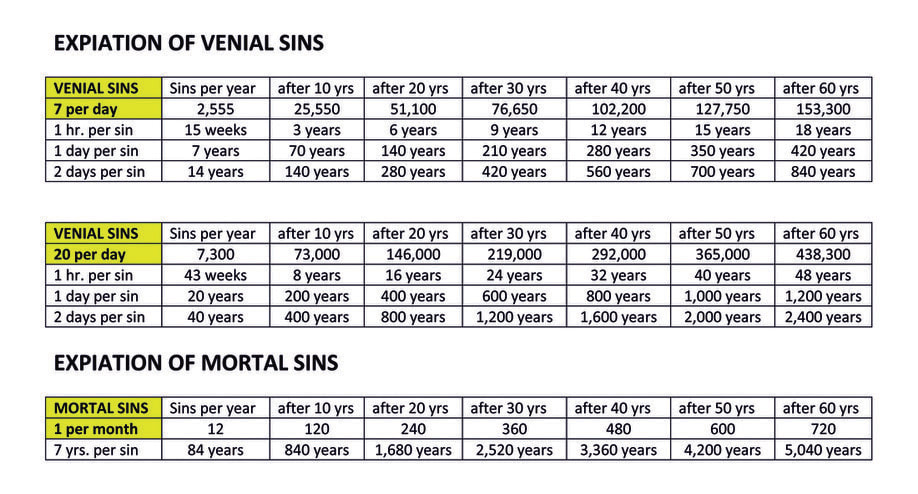
The devil will tell you that all of the above is imaginary and far too severe―that God is good and merciful, loving and understanding, Who likes nothing better than being a doormat for sinners. With each sin, that he places before us, he gives a litany of reasons why we should do it (all of them false, or half-truths at best). The ‘smoke of Satan’ creates a haze over the sin, so that we cannot see it clearly, and so we wander into it. All of this is under the cloak of Presumption―Satan wants us to presume upon God’s mercy and thus step in where angels fear to tread. After years and years of presumption―(and presumably bad confessions based on presumption)―when we finally approach our death, or are even our deathbed, then Satan blows away his satanic smoke to let us clearly see the gravity of what we have done for all those years, blinded by our laziness in learning the Faith and our lukewarmness in living the Faith. His sole purpose is to drive the soul to despair―and many do fall into despair and are thus damned.
The next article will look at the many ways that our HELLth Insurance Policy can expire or be invalidated―something which is a frequent occurrence―why else would so many Catholic souls be falling into Hell? Like snowflakes in a blizzard, say some of the saints―especially St. Teresa of Avila, “I had the greatest sorrow for the many souls that condemned themselves to Hell, especially those Lutherans ... I saw souls falling into Hell like snowflakes!” and St. Benedict Joseph Labre: “Yes, indeed, many will be damned; few will be saved… Meditate on the horrors of Hell which will last for eternity because of one easily-committed mortal sin. Try hard to be among the few who are chosen. Think of the eternal flames of Hell, and how few there are that are saved…I was watching souls going down into the abyss as thick and fast as snowflakes falling in the winter mist” and Blessed Anna Maria Taigi “The greater number of Christians today are damned. The destiny of those dying on one day is that very few ― not as many as ten ― went straight to Heaven; many remained in Purgatory; and those cast into Hell were as numerous as snowflakes in midwinter.”
Therefore, the next article will look at how to get a valid passport of grace, how to distinguish it from false passports, how to keep it from expiring, how to avoid losing it and how to get the visas you will need for your journey―hopefully to Heaven.
The next article will look at the many ways that our HELLth Insurance Policy can expire or be invalidated―something which is a frequent occurrence―why else would so many Catholic souls be falling into Hell? Like snowflakes in a blizzard, say some of the saints―especially St. Teresa of Avila, “I had the greatest sorrow for the many souls that condemned themselves to Hell, especially those Lutherans ... I saw souls falling into Hell like snowflakes!” and St. Benedict Joseph Labre: “Yes, indeed, many will be damned; few will be saved… Meditate on the horrors of Hell which will last for eternity because of one easily-committed mortal sin. Try hard to be among the few who are chosen. Think of the eternal flames of Hell, and how few there are that are saved…I was watching souls going down into the abyss as thick and fast as snowflakes falling in the winter mist” and Blessed Anna Maria Taigi “The greater number of Christians today are damned. The destiny of those dying on one day is that very few ― not as many as ten ― went straight to Heaven; many remained in Purgatory; and those cast into Hell were as numerous as snowflakes in midwinter.”
Therefore, the next article will look at how to get a valid passport of grace, how to distinguish it from false passports, how to keep it from expiring, how to avoid losing it and how to get the visas you will need for your journey―hopefully to Heaven.
Saturday November 24th
ARTICLE 27
Whose Business Are You Minding? Are You Minding Your Own Business?
ARTICLE 27
Whose Business Are You Minding? Are You Minding Your Own Business?
Mind Your Own Business!
Today, we can use—with tongue in cheek—the expression: “Are you minding your own business!” You will see why in a moment. “Mind your own business” is a common English saying which asks for a respect of other people’s privacy. It can mean that a person should stop meddling in what does not concern that person, etc. Though the expression is thought to have been “born” in the 1930s, we find the same idea in Holy Scripture in several locations.
One is where Our Lord says: “Why seest thou the splinter that is in thy brother’s eye; and seest not the plank that is in thy own eye? Or how sayest thou to thy brother: ‘Let me cast the splinter out of thy eye! ― and behold a plank is in thy own eye? Thou hypocrite! Cast out first the plank in thy own eye, and then shalt thou see to cast out the mote out of thy brother’s eye!” (Matthew 7:3-5). Perhaps in more modern parlance Our Lord would have said: “Why are you focused on the sins of everyone else? Can’t you see your own bigger sins? Why are you so concerned about correcting others? Can you not see that you are in even more need of correction? You hypocrite! Correct your own life first and then you will be better able to correct others! If you cannot even correct yourself, then you will lack all credibility in your attempts to correct others!”
Another instance is found with St. Paul, who writes: “Use your endeavor to be quiet, and that you do your own business, and work with your own hands, as we commanded you: and that you walk honestly towards them that are without; and that you want nothing of any man’s” (1 Thessalonians 4:11). A more modern translation reads as: “Make it your ambition to lead a quiet life. You should mind your own business and work with your hands, just as we told you”, or again: “Strive earnestly to live quietly and to attend to your own matters, and to work with your own hands, just as we commanded you.”
That is exactly what Our Lord Himself did! When Mary and Joseph had ‘lost’ the Child Jesus, they found Him again after three days, in the Temple of Jerusalem, among the teachers and doctors, asking them questions and amazing them with His own knowledge. When Mary asked Jesus why He had caused them this three-day-long sorrow by apparently going AWOL (absent without leave), Our Lord floored them with His reply: “How is it that you sought Me? Did you not know that I must be about My Father’s business?" (Luke 2:49). Whose business are we about?
Did You Know Today is Small Business Saturday!
As we said in yesterday’s article, we are currently smack-bang-in-the-middle of the secular world’s “Sacred Triduum” of “Black Friday”, “Business Saturday”, and “Cyber Monday.” Today’s worldly ‘feast’ is called “Small Business Saturday” which is an American shopping holiday held on the Saturday after US Thanksgiving during one of the busiest shopping periods of the year. Black Friday can be a full-contact sport. People line up at big stores like Wal-Mart, Target, Best Buy, Kohl’s, Dillard’s and Macy’s, foaming at the mouth and ready to throw haymakers in order to get the best possible deals on the latest gadgets, gizmos and accessories. While people generally devote the day after their spending frenzy as a sort of “shopping hangover recovery”, many tend to forget that the following day is Small Business Saturday.
Small Business Saturday was an idea created by the credit card giant American Express on November 27th, 2010―coincidentally the feast of Our Lady’s Miraculous Medal—and that is all it is, a mere coincidence—unless, of course, you look at Our Lady as being a small business dealing in the salvation of souls! The American Express campaign was launched in order to help small businesses gain additional exposure and to change the way consumers shop within their own community during the holiday season. In 2011, the day became official when Washington State mayors, governors, senators, and President Obama shared their support for Small Business Saturday.
As the day began to pick up more traction, in 2012 American Express encouraged all small business owners to take charge and promote their business. The credit card company offered small business owners free, personalized ads to spread across the web. That year, an estimated $5.5 billion was spent across the nation at independent businesses. By 2013, neighborhoods began celebrating the day, pledging support to the local businesses and organizations.
Participation in Small Business Saturday continues to grow year after year. As 2015 came around the corner, more than 95 million people shopped at small businesses on Small Business Saturday, an eight percent increase from 2014. In 2015, spending reached $16.2 billion. In 2016, Small Business Saturday reached record highs with 72% of U.S. consumers aware of the day and an estimated 112 million shoppers. 2017 marked the eighth year for Small Business Saturday and saw an estimated spend of $12.9 billion―which, though it is a lot, it still fades away alongside the $682 billion spent on Black Friday in 2017. This year, the numbers are expected to rise as more consumers continue to care just as much about the shopping experience as the gifts they’re purchasing. If only we were as fervent in ‘spending’ or saying our prayers as we are with spending money―imagine the gifts we could buy from Heaven’s Superstore!
Adam and Eve—the First Small Business (Failure)
We read in the Book of Genesis of the first ‘Small Business’ in history, when the Lord God took Adam and put him in the Garden of Eden to work it and take care of it (Genesis 2:15). We know, of course, that Adam and Eve entered into shady dealings with a crafty customer― “the serpent was more subtle than any of the beasts of the earth” (Genesis 3:1)—who was envious of their business, because his own ‘angelic business’ had failed earlier, bringing him a living Hell. Adam and Eve’s small business went spiritually bankrupt, but the Good Lord bailed them out and gave them another chance, though work was much harder the second time around: “With labor and toil shalt thou eat thereof all the days of thy life. Thorns and thistles shall it bring forth to thee; and thou shalt eat the herbs of the earth. In the sweat of thy face shalt thou eat bread till thou return to the earth, out of which thou wast taken: for dust thou art, and into dust thou shalt return!” (Genesis 3:17-19).
A Long History of Business Failures Commences
The family business of Adam and Eve―once it was bankrupt of grace and banished from leasing its business location in Paradise―seemed to be cursed with failure. Their sons, Cain and Abel, ended up as failures in each his own way. Abel, a good and conscientious son, was killed by his brother Cain, due to Cain’s envy of the products that Abel was giving God, which were superior to Cain’s. Hence, Abel failed to live up to his promise, while Cain was cursed by God for murderous madness. God asked Cain as to the whereabouts of Abel, Cain vainly protested: “Am I my brother’s keeper?” (Genesis 4:9). It is in those futile excusing words that we find the real and ultimate purpose of the business that everyone should be about—the business that everyone should be minding, the work that all should be engaged—the business of being our “brother’s keeper” in the broadest of senses. It is the business of souls—and everyone on this Earth is part of a small local business that is supposed to “mind” souls, or to be more precise, to seek, shepherd, and save souls.
Yet, this noble hope became a dismal failure, when, in the time of Noe, just about everyone in the world lost their jobs when God sent the Great Flood. He was so disgusted with how the business was being run, that He decided to fire (or drown) everyone and start all over again.
God soon found Himself disgusted once again, when pride took over the business and led the business in a wrong direction—trying to pridefully build a tower to pierce the Heavens, the Tower of Babel. Again, God sacked the lot and dispersed them, starting over once again.
Then God chose a select team with Abraham as their head—God would rebuild the soul-saving business around Abraham and his descendants. This too eventually led to failure, with much infighting, political maneuvering, treacherous acts, etc. The business eventually was taken over by the Egyptians and the once esteemed elite team of managers and workers, became mere slaves of the Egyptians.
Once again God tried to salvage the business, and hired Moses to lead the enslaved workforce out of slavery to re-establish the soul-saving business in another place, which was vaguely known as the “Promised Land.” However, failure was to strike once again, as several million labor force murmured and rebelled against the terms of the contract. The result was that God kept them on a minimal wage (manna and quails) in the desert until all the initial grumblers had all died—it took forty-years, but God did it.
When the soul-saving business was finally relocated in the Promised Land things initially went quite well for a short while, until the workforce became tired of God’s appointed Board of Directors (The Judges) and demanded that a single person, a Company President (king), take charge of the business. God reluctantly agreed and Saul was chosen as the first Company President—but things went downhill from there on. For the most part, with a few exceptions, the Presidents (kings)—far from being soul-savers—were more like soul-damners, leading the workforce into idolatry. To cut a long story short, the business eventually split in two, with the majority—ten departments (ten tribes of Israel) taking the northern territories, while the two remaining departments (tribes) controlled the southern territories. Eventually, the splintered soul-saving company underwent a forced takeover by a more powerful conglomerate—the Babylonians, who dispersed the workforce, relocated them elsewhere within its Empire, and destroyed the headquarters in Jerusalem.
Everyone Thought Our Lord’s Small Business Was a Failure!
The soul-saving business never really recovered from this until the time of Christ, when He tried to restart the soul-saving business from scratch, once again using a small business model to build upon. As Our Lord said―when still a child, after being lost and found by Mary and Joseph: “Did you not know, that I must be about My Father’s business?” (Luke 2:49). Yet after showing much early promise―you could say His version of “Black Friday” was “Palm Sunday”, when he attracted so many followers―nevertheless, His small business seemed to crash and fail in the following days, culminating with an apparent ‘bankruptcy’ on Good Friday, where He Himself was killed and most of His ‘directors’ and ‘employees’ fled the business.
Our Lord had repeatedly said, on many occasions, in what His small business would specialize: “I came not to judge the world, but to save the world” (John 12:47). “The Son of man came not to destroy souls, but to save!” (Luke 9:56). “For the Son of man is come to seek and to save that which was lost” (Luke 19:10). “Whosoever shall seek to save his life, shall lose it: and whosoever shall lose it, shall preserve it” (Luke 17:33). “For he that will save his life, shall lose it: and he that shall lose his life for My sake, shall find it” (Matthew 16:25). One of the members of the Lord’s Board of Directors, St. James, echoes those words, saying: “He must know that he who causes a sinner to be converted from the error of his way, shall save his soul from death, and shall cover a multitude of sins” (James 5:20). You could say that He was in “Trash Recycling” business!
Our Lord started a small soul-saving business that has grown into the gigantic soul-saving enterprise that it is today. Yet the soul-saving business is once again plagued by human failures coming from a too naturalistic and too humanistic approach, which lacks the spiritual vision of its Founder. Today’s quality of the Lord’s employees is abysmal, when compared to the quality of the initial employees recruited by Our Lord Himself, back in those small business days. It goes to show that no matter how good the Boss is, that is no guarantee that the workers will be good. Most of the employees, of the Lord’s soul-saving business, are reputedly told to go to Hell once death brings about their enforced retirement from the workforce. The Good Lord offered everyone a retirement scheme that was out of this world, but very few accept the terms of the offer, eventually wishing the hell they hadn’t done so!
Nevertheless, despite some abysmal failures, the business still stands while it totters. The main message is, surprisingly, still intact. The Church still says: “The supreme law is the salvation of souls”—even though the business ethics and dealings largely fail to put that theory into practice. Let us fast-forward to the 19th century and to St. John Bosco, who started a local branch of the soul-saving business in Turin, Italy.
St. John Bosco’s Small Business Grows
St. John Bosco, founded a religious congregation, much like a small business, which, like the mustard seed that Our Lord spoke of in His parable, grew from a little seed into a large plant. St. John Bosco took as his motto a phrase used by his chosen patron, St. Francis de Sales, from whom we derive the name Salesian—the Salesian Religious Order founded by St. John Bosco. The phrase was: “Da mihi animas caetera tolle ― Give me souls, take away the rest!” This short phrase captures the secret of his apostolic heart and summarizes the whole purpose of Our Lord’s Incarnation. St. John Bosco would say: “The most divine of all divine things is to cooperate with God for the salvation of souls; this is a sure path to the heights of holiness.” Once again, you could say that this is a “Trash Collection and Trash Recycling” business.
Dominic Savio Joins Don Bosco’s Business
St. Dominic Savio arrived in Turin, Italy, at Don Bosco‘s Oratory of St. Francis De Sales, in early October, 1854. He was twelve-and-a-half years old. Dominic paid Don Bosco a visit in his office a few days after his arrival. Dominic noticed a sign in a frame hanging over the door.
“What's the meaning of those words, Father?” asked the young Dominic.
Don Bosco explained: “That is a motto, Da mihi animas caetera tolle. It is Latin. Do you understand Latin?”
“No, Father” replied Dominic.
Don Bosco further explained: “It is a saying of St. Francis De Sales, our patron. I have taken it as my motto. It is translated as: ‘Give me souls: take away the rest!’”
Dominic did not fully understand meaning of the words, but a seed was planted in his heart.
Don Bosco Explained, “I am very concerned that I work hard to help people and myself, to save our souls by following Jesus, nothing else really matters!”
If you read the life of St. Dominic Savio, you will see how as a child, he was fervently and courageously concerned and active in the business of trying to save the souls of those among whom he lived, studied and worked—an example to all of us. If a child can do it—how much more should an adult be expected to do it! “Trash Collection and Trash Recycling” is every Catholic's business.
Our Lady at Fatima
Our Lady had the same business sense as her Divine Son. She wanted to recruit workers for her family business of saving souls, or ‘recycling trash’—just like her Son, Who said: “The Son of man came not to destroy souls, but to save!” (Luke 9:56). “For the Son of man is come to seek and to save that which was lost” (Luke 19:10). Souls are what mattered to Him—and it was souls that mattered for Our Lady. You can have all the wealth you want, but what good is that if you lose your soul? “What doth it profit a man if he gain the whole world and suffer the loss of his own soul?” (Matthew 16:26).
Just as, in Our Lord’s parable about the workers in the vineyard, where the master of the vineyard went out into the village market square to hire laborers for his vineyard, so too did Our Lady come to Fatima seeking to hire laborers for her Son’s business of saving souls. She lost no time in doing so and went straight to the point at her very first apparition to the three children—Lucia (aged 10), Francisco (aged 9) and Jacinta (aged 7)—asking them point blank: “Are you willing to offer yourselves to God and bear all the sufferings He wills to send you, as an act of reparation for the conversion of sinners? … Then you are going to have much to suffer, but the grace of God will be your comfort.”
The children willingly took the job offered to them! How embarrassing it is to read of the great efforts and great sacrifices that those children made in the business of saving souls! Read the accounts of their deeds! Going long periods without food and water. Saying many, many prayers throughout the day. Wearing penitential ropes, day and night, tied around their waists, that dug into their skin. “Trash Collection & Recycling” is not a pleasant job! What should adults be doing if mere children achieved such great things?
The Jobs Are Available!—Are There Any Takers?
Heaven will employ everyone, but not everyone wants to be employed! This has always been the case. We read in Holy Scripture: “God looked down from Heaven on the children of men: to see if there were any that did understand, or did seek God. All have gone aside, they are become unprofitable together, there is none that doth good, no not one” (Psalm 52:3-4). Another Psalm takes the same tone: “The Lord hath looked down from Heaven upon the children of men, to see if there be any that understand and seek God. They are all gone aside, they are become unprofitable together: there is none that doth good, no not one. Their throat is an open sepulcher; with their tongues they acted deceitfully; the poison of asps is under their lips. Their mouth is full of cursing and bitterness; their feet are swift to shed blood. Destruction and unhappiness in their ways: and the way of peace they have not known: there is no fear of God before their eyes. Shall not all they know that work iniquity, who devour My people as they eat bread? They have not called upon the Lord: there have they trembled for fear, where there was no fear” (Psalm 13:2-5).
Our Lord, in the New Testament, came to recruit workers for his soul-saving business, but there were few takers: “In Him was Life, and the Life was the Light of men. And the Light shineth in darkness, and the darkness did not comprehend it. He was in the world, and the world was made by Him, and the world knew Him not. He came unto His own, and His own received Him not. But as many as received Him, He gave them power to be made the sons of God” (John 1:4-12).
Our Lord invites the rich young man to sell all that he possesses, to give the proceeds to the poor, and then to come and follow Him, but the job offer was not taken: “And when Jesus was gone forth into the way, a certain man running up and kneeling before Him, asked Him: ‘Good Master, what shall I do that I may receive life everlasting?’ Jesus said to him: ‘If thou wilt enter into life, keep the commandments!’ But he answering, said to Him: ‘Master, all these things I have observed from my youth!’ And Jesus looking on him, loved him, and said to him: ‘One thing is wanting unto thee! If thou wilt be perfect, go, sell whatsoever thou hast and give to the poor, and thou shalt have treasure in Heaven, and come, follow Me!’ And when the young man had heard this word, being struck sad at that saying, he went away sorrowful: for he had great possessions” (Matthew 19:16-29; Mark 10:17-31).
God’s Soul-Saving Business Wants Doers, Not Theoreticians or Talkers
God has no place in his soul-saving business for theoretical believers who do not practice and live-out their beliefs—who merely “talk trash” but won't “collect and recycle trash”. Holy Scripture says: “What shall it profit, my brethren, if a man say he hath Faith, but hath not works? Shall Faith be able to save him? And if a brother or sister be naked, and want daily food: and one of you say to them: ‘Go in peace, be ye warmed and filled!’ yet give them not those things that are necessary for the body, what shall it profit? So Faith also, if it have not works, is dead in itself. But some man will say: ‘Thou hast Faith, and I have works!’ Show me thy Faith without works; and I will show thee, by works, my Faith. Thou believest that there is one God. Thou dost well: the devils also believe and tremble. But wilt thou know, O vain man, that Faith without works is dead? Was not Abraham our father justified by works, offering up Isaac his son upon the altar? Seest thou, that Faith did co-operate with his works; and by works Faith was made perfect? Do you see that by works a man is justified; and not by Faith only? [25] And in like manner also Rahab the harlot, was not she justified by works, receiving the messengers, and sending them out another way? For even as the body without the spirit is dead; so also Faith without works is dead!” (James 2:14-26).
Two Kinds of Doing
Doing something for God does not necessarily mean going out of your home to do it! St. Thérèse of Lisieux of the Infant Jesus (The Little Flower) was a patroness of missionaries, yet she did not leave the walls of her Carmelite convent. Our Lady herself achieved much during her time on Earth, but much of it was by her prayers and sacrifices—though she would also practice charity work too. At Fatima, Our Lady comes to recruit a workforce for her Son’s soul-saving business—and does she demand that everyone go out into the world and start saving souls? No! She first and foremost asks for the very same thing that she practiced above all—prayer and sacrifice. Of course, there will be need of those who are able to go out into the “front-line-of-battle” and directly work with souls, but there are two parts to an army—those who fight and those who supply the weapons, the ammunition, etc. Likewise in the Church and the business of saving souls—there are the active religious orders who go out and do the “fighting” for souls, and then, in the background, there are the contemplative religious orders who stay cloistered within the wall of the monastery or convent and supply the weapons and ammunition for the battle by their sacrifices and prayers.
Our Lady is the Ragpicker of Souls
Read St. Alphonsus Liguori’s magnificent book, The Glories of Mary, and you will clearly see that Mary is the “Ragpicker of Souls”, who goes around the world seeking-out the souls that her Son has left behind in justice, when seeking souls for Heaven. The following extracts―from merely the first chapter alone―show that truth and the remainder of the book is simply a reinforcement of that truth:
“If Jesus is the King of the universe, Mary is also its Queen. The title of ‘Queen’ differs from that of ‘Empress’―which implies severity and rigor―whereas ‘Queen’ signifyies compassion and charity towards the poor. The greatness of kings and queens consists in relieving the wretched, Whereas tyrants, when they reign, have their own good in view, kings should have that of their subjects at heart. For this reason it is that, at their consecration, kings have their heads anointed with oil, which is the symbol of mercy, to denote that, as kings, they should, above all things, nourish in their hearts feelings of compassion and benevolence towards their subjects. Kings should, then, occupy themselves principally in works of mercy, but not so as to forget the just punishments that are to be inflicted on the guilty. It is, however, not thus with Mary, who, although a Queen, is not a queen of justice, intent on the punishment of the wicked, but a queen of mercy, intent only on commiserating and pardoning sinners. And this is the reason for which the Church requires that we should expressly call her the Queen of Mercy.
“The Kingdom of God, consisting in justice and mercy, was divided by Our Lord―the Kingdom of Justice He reserved for Himself, and that of mercy he yielded to Mary, ordaining, at the same time, that all mercies that are dispensed to men should pass through the hands of Mary, and be disposed of by her at will. The Eternal Father made Jesus Christ the King of Justice, and consequently universal Judge of the world. God (so to speak) consecrated Mary Queen of mercy, anointing her with the oil of mercy and compassion towards us; and thus we can say with St. Bonaventure, ‘O Mary, thou art full of the unction of mercy and of the oil of compassion.’
“And who is ignorant of the power of the prayers of Mary with God? The law of clemency is on her tongue. Each of her prayers is, as it were, an established law for Our Lord, that he should show mercy to all for whom she intercedes. St. Bernard asks why the Church calls Mary the Queen of Mercy? And he replies, that it is because we believe that she opens the abyss of the mercy of God to whomsoever she wills, when she wills, and as she wills; so that there is no sinner, however great, who is lost if Mary protects him. But perhaps we may fear that Mary would not deign to interpose for some sinners, because they are so overloaded with crimes? ‘No,’ says Pope St. Gregory VII, “for the higher and more holy she is, the greater is her sweetness and compassion towards sinners, who have recourse to her with the desire to amend their lives.’ What fear, says St. Bernard, can the miserable have to approach this Queen of Mercy, for she inspires no terror, and shows no severity, to those who come to her, but is all sweetness and gentleness. Mary is not only willing to give, but she herself offers milk and wool to all: the milk of mercy to animate our confidence, and the wool of her protection against the thunderbolts of divine justice. And “who,” asks St. Bonaventure, ‘are the subjects for mercy, if not the miserable? And since thou art the Queen of Mercy,’ he continues, ‘and I am the most miserable of sinners, it follows that I am the first of thy subjects. How, then, O Lady, canst thou do otherwise than exercise thy mercy on me?’ ‘Say not, O holy Virgin,’ exclaims St. George of Nicomedia, ‘that thou canst not assist us on account of the number of our sins, for thy power and thy compassion are such, that no number of sins, however great, can outweigh them.’
“There is no one living on the Earth who does not partake of her compassion and favor. This was revealed by our Blessed Lady herself to St. Bridget, saying, ‘I am the Queen of Heaven and the Mother of Mercy; I am the joy of the just, and the door through which sinners are brought to God. There is no sinner on Earth so accursed as to be deprived of my mercy; for all, if they receive nothing else through my intercession, receive the grace of being less tempted by the devils than they would otherwise have been. No one, unless the irrevocable sentence has been pronounced (damnation), is so cast off by God that he will not return to him, and enjoy his mercy, if he invokes my aid. I am called by all the Mother of Mercy, and truly the mercy of my Son towards men has made me thus merciful towards them. Therefore miserable will he be, and miserable will he be to all eternity, who, in this life, having it in his power to invoke me, who am so compassionate to all, and so desirous to assist sinners, is miserable enough not to invoke me, and so is damned!’”
Smiling Ragpicker
There is an interesting book, The Smile of Ragpicker, by Father Paul Glynn (Ignatius Press), an Australian Marist Missionary, born in 1928, who spent 20 years in Japan as a Protestant learning the country's language and culture through Buddhist texts. He was in Japan during the Second World War, survived the Atomic Bomb blast on Nagasaki in 1945, converted to Catholicism, was ordained a priest in 1953.
In The Smile of Ragpicker,, Father Glynn tells the story of Servant of God Satoko Kitahara, a Japanese woman who became Catholic shortly after World War II. Satoko Kitahara was born in Japan on the feast of the Immaculate Heart of Mary, on August 22nd, 1929 (the year Our Lady of Fatima would appear to Sr. Lucia to demand that the pope consecrate Russia to the Immaculate Heart of Mary). She was born into an aristocratic family, descended from Samurai warriors and Shintō priests. The Kitahara's supported the Japanese war effort during the Second World War, with both her father and brother-in-law being sent to fight. Her older brother was summoned to work in the Nakajima Airplane Warehouse which prompted the teenage Kitahara to join him there, while still a young teenager, during the course of the war. Her time there was interrupted with frequent warning sirens due to continuous bombings and she even survived a U.S. bombing of the plant (sending her into deep shock), but contracted tuberculosis as a result of the attack. In the warehouse, she became appalled with the unchaste behavior of some of her colleagues and soon became disillusioned after reports of Japanese atrocities during the war were made public. Over time she came to believe that the Shintō religion provided nothing for her.
Being the daughter of a wealthy and prominent university professor, Satoko was raised―as all Japanese women were at the time―to eventually be a good wife and mother. Until she found a husband, though, her parents encouraged her to follow her intellectual interests where they led her―and so she studied to be a pharmacist. Her graduation, however, coincided with the end of Second World War, a time of profound disillusionment, confusion and soul-searching for the Japanese. Like many disillusioned young adults, she found herself questioning all the assumptions she had — not only about her nation, but about life.
It was during this time of reflection that she traveled from Tokyo to Yokohama to see a friend and literally, as we say “by chance”, came upon Sacred Heart Church. In church stood a statue of Our Lady of Lourdes. There was nothing special about it. In fact, its quality was standard, even poor. “This was the very first time I had ever seen a statue of the Blessed Mother,” Satoko later wrote. “Drawn―I know not why―to enter that church, I gazed on the statue, sensing the presence of a very attractive force that I could not explain.” At this time, her younger sister went to a school run by the Mercedarian Sisters―the Mercedarian Order (founded 1218) was initially instituted for the redemption of captives (“trash collection and recycling”?). Mother Carmel, the principal, said at a commencement Satoko attended, “God in His good providence has brought you to this school.” What was this “good providence”? Satoko wondered. Weeks later, Satoko visited the Mercedarian superior, Mother Angeles, and asked her about the meaning of life. Thus began weeks of catechesis, during which she found answers to the existential questions that had gnawed at her heart since the war’s end. This ended with her receiving the sacraments of initiation, starting with baptism on October 30th, 1949, the Solemnity of Christ the King, and culminating in confirmation on All Saints’ Day. For her baptism, she took the name Elizabeth, from Queen St. Elizabeth of Hungary, still renowned for the good she did for the poor. For confirmation, she took the name Mary.
It was not long until she harbored dreams of becoming a Mercedarian nun herself. To that end she arranged to have one of the nuns teach her the Spanish language (a requirement). Her dreams would soon be realized to the point she packed a black dress (in preparation for becoming a postulant) and tucked a train ticket beneath her pillow. But the dream became shattered before she left after developing a high fever in which a doctor would diagnose her with tuberculosis. The Mercedarians could not receive a new postulant in poor health which saddened Kitahara and made her unsure of what God's plan for her was to be.
Had Satoko faded into the Catholic woodwork, we would likely know nothing of her. The Lord had put it on her heart to serve, however, although she was unsure what to do. That is when God’s “good providence” put a Polish Franciscan brother into her path, time and again. Brother Zeno Zebrowski had followed St. Maximilian Kolbe to Japan and stayed after Father Kolbe had returned to Poland. Following his meeting Satoko, he took her to an encampment called “Ants Town.” This ramshackle collection of hovels made from scrap and salvage lumber and corrugated tin sat in a public park by Tokyo’s Sumida River. Japan was economically devastated after the war. It had depleted all of its natural resources. The Americans had fire- bombed whole sections of its major cities, leaving millions homeless, children orphaned, mothers widowed and otherwise productive men maimed. The destruction also wiped out industry, so there were hardly any jobs. People were destitute. To survive, many turned to an early form of recycling, whereby they would pick through garbage for anything salvageable to resell or turn into scrap, including cloth for rags. Hence the people who did this work were called “ragpickers.” They lived in communities such as Ants Town, but because the government considered these kinds of shantytowns as being havens for thieves, they would often conduct surprise raids, give residents a short time to gather their few possessions, and then burn the place to the ground.
This is how he became acquainted with Brother Zeno Żebrowski, who was a master at using promotion to help the poor. In turn, this is how Satoko came to be involved with the “ragpicker” community. This well-to-do young lady, fond of lovely kimonos and very Japanese in her love of cleanliness, was transformed into a person who lived among her city’s homeless outcasts, wore simple clothing, and wasn’t afraid to get dirty in the service of others. Prior to Christmas in 1950 the friar came to visit her with Matsui Toru who was one of the unofficial leaders of the settlement . Toru asked her to help entertain the children, for which she used her pianist abilities to both instruct and entertain them. Both she and Brother Zeno Żebrowski collaborated to minister to the ill, the displaced, and the orphaned. Kitahara dedicated herself to alleviating the suffering of those whom the war had victimized. But she realized that she would be able to better help them if she became like them. To that end she renounced her wealth and status to live with the homeless and the outcast. Kitahara also resorted to rag-picking. It was not long until she led children in rag-picking expeditions and one of the participating adults was her own mother. Kitahara died January 23rd, 1958, due to tuberculosis. Her process for canonization has started―she now passed from being titled “Servant of God” to being “Venerable”.
As with most people, becoming more Christ-like did not occur because some “switch” flipped. Her “putting off the old nature” (Ephesians 4:22) was an agonizingly gradual and sometimes extremely painful process. She went wherever Jesus led her, however, regardless of the consequences. All told, The Smile of a Ragpicker is an example of the very best sort of saint’s story―not just a story to be read, but a story to be lived―as we could find ourselves in a present-day version of “Ants Town” when the prophesied wars and chastisement finally erupt.
Today, we can use—with tongue in cheek—the expression: “Are you minding your own business!” You will see why in a moment. “Mind your own business” is a common English saying which asks for a respect of other people’s privacy. It can mean that a person should stop meddling in what does not concern that person, etc. Though the expression is thought to have been “born” in the 1930s, we find the same idea in Holy Scripture in several locations.
One is where Our Lord says: “Why seest thou the splinter that is in thy brother’s eye; and seest not the plank that is in thy own eye? Or how sayest thou to thy brother: ‘Let me cast the splinter out of thy eye! ― and behold a plank is in thy own eye? Thou hypocrite! Cast out first the plank in thy own eye, and then shalt thou see to cast out the mote out of thy brother’s eye!” (Matthew 7:3-5). Perhaps in more modern parlance Our Lord would have said: “Why are you focused on the sins of everyone else? Can’t you see your own bigger sins? Why are you so concerned about correcting others? Can you not see that you are in even more need of correction? You hypocrite! Correct your own life first and then you will be better able to correct others! If you cannot even correct yourself, then you will lack all credibility in your attempts to correct others!”
Another instance is found with St. Paul, who writes: “Use your endeavor to be quiet, and that you do your own business, and work with your own hands, as we commanded you: and that you walk honestly towards them that are without; and that you want nothing of any man’s” (1 Thessalonians 4:11). A more modern translation reads as: “Make it your ambition to lead a quiet life. You should mind your own business and work with your hands, just as we told you”, or again: “Strive earnestly to live quietly and to attend to your own matters, and to work with your own hands, just as we commanded you.”
That is exactly what Our Lord Himself did! When Mary and Joseph had ‘lost’ the Child Jesus, they found Him again after three days, in the Temple of Jerusalem, among the teachers and doctors, asking them questions and amazing them with His own knowledge. When Mary asked Jesus why He had caused them this three-day-long sorrow by apparently going AWOL (absent without leave), Our Lord floored them with His reply: “How is it that you sought Me? Did you not know that I must be about My Father’s business?" (Luke 2:49). Whose business are we about?
Did You Know Today is Small Business Saturday!
As we said in yesterday’s article, we are currently smack-bang-in-the-middle of the secular world’s “Sacred Triduum” of “Black Friday”, “Business Saturday”, and “Cyber Monday.” Today’s worldly ‘feast’ is called “Small Business Saturday” which is an American shopping holiday held on the Saturday after US Thanksgiving during one of the busiest shopping periods of the year. Black Friday can be a full-contact sport. People line up at big stores like Wal-Mart, Target, Best Buy, Kohl’s, Dillard’s and Macy’s, foaming at the mouth and ready to throw haymakers in order to get the best possible deals on the latest gadgets, gizmos and accessories. While people generally devote the day after their spending frenzy as a sort of “shopping hangover recovery”, many tend to forget that the following day is Small Business Saturday.
Small Business Saturday was an idea created by the credit card giant American Express on November 27th, 2010―coincidentally the feast of Our Lady’s Miraculous Medal—and that is all it is, a mere coincidence—unless, of course, you look at Our Lady as being a small business dealing in the salvation of souls! The American Express campaign was launched in order to help small businesses gain additional exposure and to change the way consumers shop within their own community during the holiday season. In 2011, the day became official when Washington State mayors, governors, senators, and President Obama shared their support for Small Business Saturday.
As the day began to pick up more traction, in 2012 American Express encouraged all small business owners to take charge and promote their business. The credit card company offered small business owners free, personalized ads to spread across the web. That year, an estimated $5.5 billion was spent across the nation at independent businesses. By 2013, neighborhoods began celebrating the day, pledging support to the local businesses and organizations.
Participation in Small Business Saturday continues to grow year after year. As 2015 came around the corner, more than 95 million people shopped at small businesses on Small Business Saturday, an eight percent increase from 2014. In 2015, spending reached $16.2 billion. In 2016, Small Business Saturday reached record highs with 72% of U.S. consumers aware of the day and an estimated 112 million shoppers. 2017 marked the eighth year for Small Business Saturday and saw an estimated spend of $12.9 billion―which, though it is a lot, it still fades away alongside the $682 billion spent on Black Friday in 2017. This year, the numbers are expected to rise as more consumers continue to care just as much about the shopping experience as the gifts they’re purchasing. If only we were as fervent in ‘spending’ or saying our prayers as we are with spending money―imagine the gifts we could buy from Heaven’s Superstore!
Adam and Eve—the First Small Business (Failure)
We read in the Book of Genesis of the first ‘Small Business’ in history, when the Lord God took Adam and put him in the Garden of Eden to work it and take care of it (Genesis 2:15). We know, of course, that Adam and Eve entered into shady dealings with a crafty customer― “the serpent was more subtle than any of the beasts of the earth” (Genesis 3:1)—who was envious of their business, because his own ‘angelic business’ had failed earlier, bringing him a living Hell. Adam and Eve’s small business went spiritually bankrupt, but the Good Lord bailed them out and gave them another chance, though work was much harder the second time around: “With labor and toil shalt thou eat thereof all the days of thy life. Thorns and thistles shall it bring forth to thee; and thou shalt eat the herbs of the earth. In the sweat of thy face shalt thou eat bread till thou return to the earth, out of which thou wast taken: for dust thou art, and into dust thou shalt return!” (Genesis 3:17-19).
A Long History of Business Failures Commences
The family business of Adam and Eve―once it was bankrupt of grace and banished from leasing its business location in Paradise―seemed to be cursed with failure. Their sons, Cain and Abel, ended up as failures in each his own way. Abel, a good and conscientious son, was killed by his brother Cain, due to Cain’s envy of the products that Abel was giving God, which were superior to Cain’s. Hence, Abel failed to live up to his promise, while Cain was cursed by God for murderous madness. God asked Cain as to the whereabouts of Abel, Cain vainly protested: “Am I my brother’s keeper?” (Genesis 4:9). It is in those futile excusing words that we find the real and ultimate purpose of the business that everyone should be about—the business that everyone should be minding, the work that all should be engaged—the business of being our “brother’s keeper” in the broadest of senses. It is the business of souls—and everyone on this Earth is part of a small local business that is supposed to “mind” souls, or to be more precise, to seek, shepherd, and save souls.
Yet, this noble hope became a dismal failure, when, in the time of Noe, just about everyone in the world lost their jobs when God sent the Great Flood. He was so disgusted with how the business was being run, that He decided to fire (or drown) everyone and start all over again.
God soon found Himself disgusted once again, when pride took over the business and led the business in a wrong direction—trying to pridefully build a tower to pierce the Heavens, the Tower of Babel. Again, God sacked the lot and dispersed them, starting over once again.
Then God chose a select team with Abraham as their head—God would rebuild the soul-saving business around Abraham and his descendants. This too eventually led to failure, with much infighting, political maneuvering, treacherous acts, etc. The business eventually was taken over by the Egyptians and the once esteemed elite team of managers and workers, became mere slaves of the Egyptians.
Once again God tried to salvage the business, and hired Moses to lead the enslaved workforce out of slavery to re-establish the soul-saving business in another place, which was vaguely known as the “Promised Land.” However, failure was to strike once again, as several million labor force murmured and rebelled against the terms of the contract. The result was that God kept them on a minimal wage (manna and quails) in the desert until all the initial grumblers had all died—it took forty-years, but God did it.
When the soul-saving business was finally relocated in the Promised Land things initially went quite well for a short while, until the workforce became tired of God’s appointed Board of Directors (The Judges) and demanded that a single person, a Company President (king), take charge of the business. God reluctantly agreed and Saul was chosen as the first Company President—but things went downhill from there on. For the most part, with a few exceptions, the Presidents (kings)—far from being soul-savers—were more like soul-damners, leading the workforce into idolatry. To cut a long story short, the business eventually split in two, with the majority—ten departments (ten tribes of Israel) taking the northern territories, while the two remaining departments (tribes) controlled the southern territories. Eventually, the splintered soul-saving company underwent a forced takeover by a more powerful conglomerate—the Babylonians, who dispersed the workforce, relocated them elsewhere within its Empire, and destroyed the headquarters in Jerusalem.
Everyone Thought Our Lord’s Small Business Was a Failure!
The soul-saving business never really recovered from this until the time of Christ, when He tried to restart the soul-saving business from scratch, once again using a small business model to build upon. As Our Lord said―when still a child, after being lost and found by Mary and Joseph: “Did you not know, that I must be about My Father’s business?” (Luke 2:49). Yet after showing much early promise―you could say His version of “Black Friday” was “Palm Sunday”, when he attracted so many followers―nevertheless, His small business seemed to crash and fail in the following days, culminating with an apparent ‘bankruptcy’ on Good Friday, where He Himself was killed and most of His ‘directors’ and ‘employees’ fled the business.
Our Lord had repeatedly said, on many occasions, in what His small business would specialize: “I came not to judge the world, but to save the world” (John 12:47). “The Son of man came not to destroy souls, but to save!” (Luke 9:56). “For the Son of man is come to seek and to save that which was lost” (Luke 19:10). “Whosoever shall seek to save his life, shall lose it: and whosoever shall lose it, shall preserve it” (Luke 17:33). “For he that will save his life, shall lose it: and he that shall lose his life for My sake, shall find it” (Matthew 16:25). One of the members of the Lord’s Board of Directors, St. James, echoes those words, saying: “He must know that he who causes a sinner to be converted from the error of his way, shall save his soul from death, and shall cover a multitude of sins” (James 5:20). You could say that He was in “Trash Recycling” business!
Our Lord started a small soul-saving business that has grown into the gigantic soul-saving enterprise that it is today. Yet the soul-saving business is once again plagued by human failures coming from a too naturalistic and too humanistic approach, which lacks the spiritual vision of its Founder. Today’s quality of the Lord’s employees is abysmal, when compared to the quality of the initial employees recruited by Our Lord Himself, back in those small business days. It goes to show that no matter how good the Boss is, that is no guarantee that the workers will be good. Most of the employees, of the Lord’s soul-saving business, are reputedly told to go to Hell once death brings about their enforced retirement from the workforce. The Good Lord offered everyone a retirement scheme that was out of this world, but very few accept the terms of the offer, eventually wishing the hell they hadn’t done so!
Nevertheless, despite some abysmal failures, the business still stands while it totters. The main message is, surprisingly, still intact. The Church still says: “The supreme law is the salvation of souls”—even though the business ethics and dealings largely fail to put that theory into practice. Let us fast-forward to the 19th century and to St. John Bosco, who started a local branch of the soul-saving business in Turin, Italy.
St. John Bosco’s Small Business Grows
St. John Bosco, founded a religious congregation, much like a small business, which, like the mustard seed that Our Lord spoke of in His parable, grew from a little seed into a large plant. St. John Bosco took as his motto a phrase used by his chosen patron, St. Francis de Sales, from whom we derive the name Salesian—the Salesian Religious Order founded by St. John Bosco. The phrase was: “Da mihi animas caetera tolle ― Give me souls, take away the rest!” This short phrase captures the secret of his apostolic heart and summarizes the whole purpose of Our Lord’s Incarnation. St. John Bosco would say: “The most divine of all divine things is to cooperate with God for the salvation of souls; this is a sure path to the heights of holiness.” Once again, you could say that this is a “Trash Collection and Trash Recycling” business.
Dominic Savio Joins Don Bosco’s Business
St. Dominic Savio arrived in Turin, Italy, at Don Bosco‘s Oratory of St. Francis De Sales, in early October, 1854. He was twelve-and-a-half years old. Dominic paid Don Bosco a visit in his office a few days after his arrival. Dominic noticed a sign in a frame hanging over the door.
“What's the meaning of those words, Father?” asked the young Dominic.
Don Bosco explained: “That is a motto, Da mihi animas caetera tolle. It is Latin. Do you understand Latin?”
“No, Father” replied Dominic.
Don Bosco further explained: “It is a saying of St. Francis De Sales, our patron. I have taken it as my motto. It is translated as: ‘Give me souls: take away the rest!’”
Dominic did not fully understand meaning of the words, but a seed was planted in his heart.
Don Bosco Explained, “I am very concerned that I work hard to help people and myself, to save our souls by following Jesus, nothing else really matters!”
If you read the life of St. Dominic Savio, you will see how as a child, he was fervently and courageously concerned and active in the business of trying to save the souls of those among whom he lived, studied and worked—an example to all of us. If a child can do it—how much more should an adult be expected to do it! “Trash Collection and Trash Recycling” is every Catholic's business.
Our Lady at Fatima
Our Lady had the same business sense as her Divine Son. She wanted to recruit workers for her family business of saving souls, or ‘recycling trash’—just like her Son, Who said: “The Son of man came not to destroy souls, but to save!” (Luke 9:56). “For the Son of man is come to seek and to save that which was lost” (Luke 19:10). Souls are what mattered to Him—and it was souls that mattered for Our Lady. You can have all the wealth you want, but what good is that if you lose your soul? “What doth it profit a man if he gain the whole world and suffer the loss of his own soul?” (Matthew 16:26).
Just as, in Our Lord’s parable about the workers in the vineyard, where the master of the vineyard went out into the village market square to hire laborers for his vineyard, so too did Our Lady come to Fatima seeking to hire laborers for her Son’s business of saving souls. She lost no time in doing so and went straight to the point at her very first apparition to the three children—Lucia (aged 10), Francisco (aged 9) and Jacinta (aged 7)—asking them point blank: “Are you willing to offer yourselves to God and bear all the sufferings He wills to send you, as an act of reparation for the conversion of sinners? … Then you are going to have much to suffer, but the grace of God will be your comfort.”
The children willingly took the job offered to them! How embarrassing it is to read of the great efforts and great sacrifices that those children made in the business of saving souls! Read the accounts of their deeds! Going long periods without food and water. Saying many, many prayers throughout the day. Wearing penitential ropes, day and night, tied around their waists, that dug into their skin. “Trash Collection & Recycling” is not a pleasant job! What should adults be doing if mere children achieved such great things?
The Jobs Are Available!—Are There Any Takers?
Heaven will employ everyone, but not everyone wants to be employed! This has always been the case. We read in Holy Scripture: “God looked down from Heaven on the children of men: to see if there were any that did understand, or did seek God. All have gone aside, they are become unprofitable together, there is none that doth good, no not one” (Psalm 52:3-4). Another Psalm takes the same tone: “The Lord hath looked down from Heaven upon the children of men, to see if there be any that understand and seek God. They are all gone aside, they are become unprofitable together: there is none that doth good, no not one. Their throat is an open sepulcher; with their tongues they acted deceitfully; the poison of asps is under their lips. Their mouth is full of cursing and bitterness; their feet are swift to shed blood. Destruction and unhappiness in their ways: and the way of peace they have not known: there is no fear of God before their eyes. Shall not all they know that work iniquity, who devour My people as they eat bread? They have not called upon the Lord: there have they trembled for fear, where there was no fear” (Psalm 13:2-5).
Our Lord, in the New Testament, came to recruit workers for his soul-saving business, but there were few takers: “In Him was Life, and the Life was the Light of men. And the Light shineth in darkness, and the darkness did not comprehend it. He was in the world, and the world was made by Him, and the world knew Him not. He came unto His own, and His own received Him not. But as many as received Him, He gave them power to be made the sons of God” (John 1:4-12).
Our Lord invites the rich young man to sell all that he possesses, to give the proceeds to the poor, and then to come and follow Him, but the job offer was not taken: “And when Jesus was gone forth into the way, a certain man running up and kneeling before Him, asked Him: ‘Good Master, what shall I do that I may receive life everlasting?’ Jesus said to him: ‘If thou wilt enter into life, keep the commandments!’ But he answering, said to Him: ‘Master, all these things I have observed from my youth!’ And Jesus looking on him, loved him, and said to him: ‘One thing is wanting unto thee! If thou wilt be perfect, go, sell whatsoever thou hast and give to the poor, and thou shalt have treasure in Heaven, and come, follow Me!’ And when the young man had heard this word, being struck sad at that saying, he went away sorrowful: for he had great possessions” (Matthew 19:16-29; Mark 10:17-31).
God’s Soul-Saving Business Wants Doers, Not Theoreticians or Talkers
God has no place in his soul-saving business for theoretical believers who do not practice and live-out their beliefs—who merely “talk trash” but won't “collect and recycle trash”. Holy Scripture says: “What shall it profit, my brethren, if a man say he hath Faith, but hath not works? Shall Faith be able to save him? And if a brother or sister be naked, and want daily food: and one of you say to them: ‘Go in peace, be ye warmed and filled!’ yet give them not those things that are necessary for the body, what shall it profit? So Faith also, if it have not works, is dead in itself. But some man will say: ‘Thou hast Faith, and I have works!’ Show me thy Faith without works; and I will show thee, by works, my Faith. Thou believest that there is one God. Thou dost well: the devils also believe and tremble. But wilt thou know, O vain man, that Faith without works is dead? Was not Abraham our father justified by works, offering up Isaac his son upon the altar? Seest thou, that Faith did co-operate with his works; and by works Faith was made perfect? Do you see that by works a man is justified; and not by Faith only? [25] And in like manner also Rahab the harlot, was not she justified by works, receiving the messengers, and sending them out another way? For even as the body without the spirit is dead; so also Faith without works is dead!” (James 2:14-26).
Two Kinds of Doing
Doing something for God does not necessarily mean going out of your home to do it! St. Thérèse of Lisieux of the Infant Jesus (The Little Flower) was a patroness of missionaries, yet she did not leave the walls of her Carmelite convent. Our Lady herself achieved much during her time on Earth, but much of it was by her prayers and sacrifices—though she would also practice charity work too. At Fatima, Our Lady comes to recruit a workforce for her Son’s soul-saving business—and does she demand that everyone go out into the world and start saving souls? No! She first and foremost asks for the very same thing that she practiced above all—prayer and sacrifice. Of course, there will be need of those who are able to go out into the “front-line-of-battle” and directly work with souls, but there are two parts to an army—those who fight and those who supply the weapons, the ammunition, etc. Likewise in the Church and the business of saving souls—there are the active religious orders who go out and do the “fighting” for souls, and then, in the background, there are the contemplative religious orders who stay cloistered within the wall of the monastery or convent and supply the weapons and ammunition for the battle by their sacrifices and prayers.
Our Lady is the Ragpicker of Souls
Read St. Alphonsus Liguori’s magnificent book, The Glories of Mary, and you will clearly see that Mary is the “Ragpicker of Souls”, who goes around the world seeking-out the souls that her Son has left behind in justice, when seeking souls for Heaven. The following extracts―from merely the first chapter alone―show that truth and the remainder of the book is simply a reinforcement of that truth:
“If Jesus is the King of the universe, Mary is also its Queen. The title of ‘Queen’ differs from that of ‘Empress’―which implies severity and rigor―whereas ‘Queen’ signifyies compassion and charity towards the poor. The greatness of kings and queens consists in relieving the wretched, Whereas tyrants, when they reign, have their own good in view, kings should have that of their subjects at heart. For this reason it is that, at their consecration, kings have their heads anointed with oil, which is the symbol of mercy, to denote that, as kings, they should, above all things, nourish in their hearts feelings of compassion and benevolence towards their subjects. Kings should, then, occupy themselves principally in works of mercy, but not so as to forget the just punishments that are to be inflicted on the guilty. It is, however, not thus with Mary, who, although a Queen, is not a queen of justice, intent on the punishment of the wicked, but a queen of mercy, intent only on commiserating and pardoning sinners. And this is the reason for which the Church requires that we should expressly call her the Queen of Mercy.
“The Kingdom of God, consisting in justice and mercy, was divided by Our Lord―the Kingdom of Justice He reserved for Himself, and that of mercy he yielded to Mary, ordaining, at the same time, that all mercies that are dispensed to men should pass through the hands of Mary, and be disposed of by her at will. The Eternal Father made Jesus Christ the King of Justice, and consequently universal Judge of the world. God (so to speak) consecrated Mary Queen of mercy, anointing her with the oil of mercy and compassion towards us; and thus we can say with St. Bonaventure, ‘O Mary, thou art full of the unction of mercy and of the oil of compassion.’
“And who is ignorant of the power of the prayers of Mary with God? The law of clemency is on her tongue. Each of her prayers is, as it were, an established law for Our Lord, that he should show mercy to all for whom she intercedes. St. Bernard asks why the Church calls Mary the Queen of Mercy? And he replies, that it is because we believe that she opens the abyss of the mercy of God to whomsoever she wills, when she wills, and as she wills; so that there is no sinner, however great, who is lost if Mary protects him. But perhaps we may fear that Mary would not deign to interpose for some sinners, because they are so overloaded with crimes? ‘No,’ says Pope St. Gregory VII, “for the higher and more holy she is, the greater is her sweetness and compassion towards sinners, who have recourse to her with the desire to amend their lives.’ What fear, says St. Bernard, can the miserable have to approach this Queen of Mercy, for she inspires no terror, and shows no severity, to those who come to her, but is all sweetness and gentleness. Mary is not only willing to give, but she herself offers milk and wool to all: the milk of mercy to animate our confidence, and the wool of her protection against the thunderbolts of divine justice. And “who,” asks St. Bonaventure, ‘are the subjects for mercy, if not the miserable? And since thou art the Queen of Mercy,’ he continues, ‘and I am the most miserable of sinners, it follows that I am the first of thy subjects. How, then, O Lady, canst thou do otherwise than exercise thy mercy on me?’ ‘Say not, O holy Virgin,’ exclaims St. George of Nicomedia, ‘that thou canst not assist us on account of the number of our sins, for thy power and thy compassion are such, that no number of sins, however great, can outweigh them.’
“There is no one living on the Earth who does not partake of her compassion and favor. This was revealed by our Blessed Lady herself to St. Bridget, saying, ‘I am the Queen of Heaven and the Mother of Mercy; I am the joy of the just, and the door through which sinners are brought to God. There is no sinner on Earth so accursed as to be deprived of my mercy; for all, if they receive nothing else through my intercession, receive the grace of being less tempted by the devils than they would otherwise have been. No one, unless the irrevocable sentence has been pronounced (damnation), is so cast off by God that he will not return to him, and enjoy his mercy, if he invokes my aid. I am called by all the Mother of Mercy, and truly the mercy of my Son towards men has made me thus merciful towards them. Therefore miserable will he be, and miserable will he be to all eternity, who, in this life, having it in his power to invoke me, who am so compassionate to all, and so desirous to assist sinners, is miserable enough not to invoke me, and so is damned!’”
Smiling Ragpicker
There is an interesting book, The Smile of Ragpicker, by Father Paul Glynn (Ignatius Press), an Australian Marist Missionary, born in 1928, who spent 20 years in Japan as a Protestant learning the country's language and culture through Buddhist texts. He was in Japan during the Second World War, survived the Atomic Bomb blast on Nagasaki in 1945, converted to Catholicism, was ordained a priest in 1953.
In The Smile of Ragpicker,, Father Glynn tells the story of Servant of God Satoko Kitahara, a Japanese woman who became Catholic shortly after World War II. Satoko Kitahara was born in Japan on the feast of the Immaculate Heart of Mary, on August 22nd, 1929 (the year Our Lady of Fatima would appear to Sr. Lucia to demand that the pope consecrate Russia to the Immaculate Heart of Mary). She was born into an aristocratic family, descended from Samurai warriors and Shintō priests. The Kitahara's supported the Japanese war effort during the Second World War, with both her father and brother-in-law being sent to fight. Her older brother was summoned to work in the Nakajima Airplane Warehouse which prompted the teenage Kitahara to join him there, while still a young teenager, during the course of the war. Her time there was interrupted with frequent warning sirens due to continuous bombings and she even survived a U.S. bombing of the plant (sending her into deep shock), but contracted tuberculosis as a result of the attack. In the warehouse, she became appalled with the unchaste behavior of some of her colleagues and soon became disillusioned after reports of Japanese atrocities during the war were made public. Over time she came to believe that the Shintō religion provided nothing for her.
Being the daughter of a wealthy and prominent university professor, Satoko was raised―as all Japanese women were at the time―to eventually be a good wife and mother. Until she found a husband, though, her parents encouraged her to follow her intellectual interests where they led her―and so she studied to be a pharmacist. Her graduation, however, coincided with the end of Second World War, a time of profound disillusionment, confusion and soul-searching for the Japanese. Like many disillusioned young adults, she found herself questioning all the assumptions she had — not only about her nation, but about life.
It was during this time of reflection that she traveled from Tokyo to Yokohama to see a friend and literally, as we say “by chance”, came upon Sacred Heart Church. In church stood a statue of Our Lady of Lourdes. There was nothing special about it. In fact, its quality was standard, even poor. “This was the very first time I had ever seen a statue of the Blessed Mother,” Satoko later wrote. “Drawn―I know not why―to enter that church, I gazed on the statue, sensing the presence of a very attractive force that I could not explain.” At this time, her younger sister went to a school run by the Mercedarian Sisters―the Mercedarian Order (founded 1218) was initially instituted for the redemption of captives (“trash collection and recycling”?). Mother Carmel, the principal, said at a commencement Satoko attended, “God in His good providence has brought you to this school.” What was this “good providence”? Satoko wondered. Weeks later, Satoko visited the Mercedarian superior, Mother Angeles, and asked her about the meaning of life. Thus began weeks of catechesis, during which she found answers to the existential questions that had gnawed at her heart since the war’s end. This ended with her receiving the sacraments of initiation, starting with baptism on October 30th, 1949, the Solemnity of Christ the King, and culminating in confirmation on All Saints’ Day. For her baptism, she took the name Elizabeth, from Queen St. Elizabeth of Hungary, still renowned for the good she did for the poor. For confirmation, she took the name Mary.
It was not long until she harbored dreams of becoming a Mercedarian nun herself. To that end she arranged to have one of the nuns teach her the Spanish language (a requirement). Her dreams would soon be realized to the point she packed a black dress (in preparation for becoming a postulant) and tucked a train ticket beneath her pillow. But the dream became shattered before she left after developing a high fever in which a doctor would diagnose her with tuberculosis. The Mercedarians could not receive a new postulant in poor health which saddened Kitahara and made her unsure of what God's plan for her was to be.
Had Satoko faded into the Catholic woodwork, we would likely know nothing of her. The Lord had put it on her heart to serve, however, although she was unsure what to do. That is when God’s “good providence” put a Polish Franciscan brother into her path, time and again. Brother Zeno Zebrowski had followed St. Maximilian Kolbe to Japan and stayed after Father Kolbe had returned to Poland. Following his meeting Satoko, he took her to an encampment called “Ants Town.” This ramshackle collection of hovels made from scrap and salvage lumber and corrugated tin sat in a public park by Tokyo’s Sumida River. Japan was economically devastated after the war. It had depleted all of its natural resources. The Americans had fire- bombed whole sections of its major cities, leaving millions homeless, children orphaned, mothers widowed and otherwise productive men maimed. The destruction also wiped out industry, so there were hardly any jobs. People were destitute. To survive, many turned to an early form of recycling, whereby they would pick through garbage for anything salvageable to resell or turn into scrap, including cloth for rags. Hence the people who did this work were called “ragpickers.” They lived in communities such as Ants Town, but because the government considered these kinds of shantytowns as being havens for thieves, they would often conduct surprise raids, give residents a short time to gather their few possessions, and then burn the place to the ground.
This is how he became acquainted with Brother Zeno Żebrowski, who was a master at using promotion to help the poor. In turn, this is how Satoko came to be involved with the “ragpicker” community. This well-to-do young lady, fond of lovely kimonos and very Japanese in her love of cleanliness, was transformed into a person who lived among her city’s homeless outcasts, wore simple clothing, and wasn’t afraid to get dirty in the service of others. Prior to Christmas in 1950 the friar came to visit her with Matsui Toru who was one of the unofficial leaders of the settlement . Toru asked her to help entertain the children, for which she used her pianist abilities to both instruct and entertain them. Both she and Brother Zeno Żebrowski collaborated to minister to the ill, the displaced, and the orphaned. Kitahara dedicated herself to alleviating the suffering of those whom the war had victimized. But she realized that she would be able to better help them if she became like them. To that end she renounced her wealth and status to live with the homeless and the outcast. Kitahara also resorted to rag-picking. It was not long until she led children in rag-picking expeditions and one of the participating adults was her own mother. Kitahara died January 23rd, 1958, due to tuberculosis. Her process for canonization has started―she now passed from being titled “Servant of God” to being “Venerable”.
As with most people, becoming more Christ-like did not occur because some “switch” flipped. Her “putting off the old nature” (Ephesians 4:22) was an agonizingly gradual and sometimes extremely painful process. She went wherever Jesus led her, however, regardless of the consequences. All told, The Smile of a Ragpicker is an example of the very best sort of saint’s story―not just a story to be read, but a story to be lived―as we could find ourselves in a present-day version of “Ants Town” when the prophesied wars and chastisement finally erupt.
Friday November 23rd
ARTICLE 26
"Black Friday" is "Good Friday" and Hell is Cheap!
ARTICLE 26
"Black Friday" is "Good Friday" and Hell is Cheap!
The “Sacred Triduum” or “Three Holy Days” Have Begun!
Huh? The “Sacred Triduum”? “Three Holy Days”? The “Sacred Triduum” for Christians consists of Holy Thursday, Good Friday and Holy Saturday—which falls in Holy Week, on the cusp of Easter. The world’s “Sacred Triduum” consists of “Black Friday”, “Business Saturday”, and “Cyber Monday” and is an overwhelmingly secular ant-Christian gateway to materialism (While you’re at it, you could even coin a new title and add “Shopping Sunday” or “Shopping Sinday” to those three—but then it would no longer be a triduum of three days!). The “give-away” prices are hard to resist, but then, Hell always was cheap! Most people are cramming into its “bargain basement.”
The Spiritual Loses to the Material
The general tone and flavor of once-spiritual Christian feasts and seasons has been flooded with anti-Christian values of a greedy desire for material goods, an unmortified indulgence is amusements, entertainment, fun and pleasure, a gluttonous consumption of food and drink—all of which, as the spiritual masters tell us, leads to sexual sins of thought, word and action—because if we do not and cannot control our physical appetites, then this overflows to our sexual appetites, which we find are even more difficult to control.
The World Feeds Our Greed and Gluttony
The world feeds both our physical and sexual appetites to gratification during this, the most festive season of the year—and let us face it: Our Lady, way back in 1917, said that sexual sins (not just actions, but thoughts, glances, reading, watching, looking, talking, etc.) are the sins that damn the most souls in this modern era. She said that long before the advent of television, internet, social media, widespread books and magazines, popular music, modern fashions, modern dancing, beachwear, etc. When the three children of Fatima asked Our Lady about the whereabouts of their friend Amelia—who had recently died aged around 18—Our Lady said that she would have to burn in Purgatory until the end of the world! Amelia’s sin? She was known to have been a little immodest (in 1917!!) and perhaps guilty of some impurity (1917)—how much worse is 101 years later, in 2018!!! How much more guilty are we today than Amelia was in 1917!
Our Appetites Have Increased!
Back in 1917, there was very little to have and to own by way of possessions—compared to what is available to the common person today, in 2018. The variety and quantity of food was far, far less than what is available in the stores today. There were no electronic goods, gizmos and convenient electrical appliances in 1917. In 1882 Thomas Edison helped form the Edison Electric Illuminating Company of New York, which brought electric light to parts of Manhattan, Ney York―but only one square mile and not for everyone within that square mile― there were 85 customers with a total of 400 light bulbs between them, served by 6 jumbo generators. Progress was slow. Most Americans still lit their homes with gas light and candles for another fifty years. Only in 1925 did half of all homes in the U.S. have electric power. If you lived in town in the 1930s, your house had probably electricity. In town, the more affluent families started using electric stoves, coffee makers, waffle irons, hot plates, electric roasters, and Waring Blenders during the 1930s. But if you lived in a farmhouse in the country, you did not have electricity.
The Sinful Daughters of Electricity
Once electricity arrived on the scene, it quickly gave birth to a large family, many of whom were the seductive occasions of sin. Television or TV is one example. Television sales took-off in the late 1940s, following the start of individual stations in the largest cities. Only in such heavily populated places was the relatively high cost of starting and operating a TV station considered economically viable. TV set ownership thus initially possessed a big-city or, more accurately, metropolitan-area bias. Yet do not for one second imagine that every household had a TV set! There were ONLY around 102,000 TV sets in the ENTIRE United States in early 1948, two-thirds of those TV sets were in the New York area, from which most of the first TV stations operated.
Another child of electricity was the PC (personal computer). Home computers were entering the market as a rarity in 1977, and becoming common during the 1980s. Yet in those ‘ancient’ days, much like electricity when it first became available to homes, only a few households had a computer. It was a rarity, unlike today. The first “mainframe” computers—too large for any home—would soon give birth to smaller computers, leading to the desktop computer, then the laptop computer, and then the computerized phones and tablets. The computer, though not an evil in itself, was to be the platform or forerunner of a series of ‘children’ or offspring, who would imitate it and build upon it—namely, the Internet, the Smartphone, computer Tablets, computer TV sets or Smart-Tvs, etc.
A later child of electricity was the Internet. On August 6th, 1991, the World Wide Web became publicly available—and what a web it has become! How many souls in Hell owe their presence there to the Internet? Not a few! The Internet—even though it has a FEW good qualities—has brought about LOTS of sin in general, and immodesty and impurity in particular—into the home (much like the TV).
All of these electronic “conveniences” have become a very convenient way for the devil and the world to bring the spirit of the world—which is not the spirit of God—into the home today. If “eyes are the window of the soul”—then these electronic gizmos (TV, Cable TV, Satellite TV, Streaming TV, Smart TV, Computer, Laptop, Tablet, Smartphone, etc. loaded with the Internet and its offspring of Social Media: Facebook, Twitter, Linkedin, Pinterest, Instagram, DeviantArt, BeMyEyes, NextDoor,etc.), then these electronic gizmos have become “the windows of the home”—and those windows are left open day and night! It is not for nothing that one of the major computer platforms is called “WINDOWS”!
Open Windows and Open Doors!
Parents used to take vigilant care on whom they allowed to enter their homes, for the sake of protecting the morals of their children—now, with these electronic gizmos, they and their children are open to invasion by anyone and anything, regardless of trying to take ‘preventative’ measures to protect the morals of the home from the immorality in the world. We are not just talking about sexual immorality, but of worldliness in general and a whole host of attitudes in particular, that cover topics such as bad language, bad music and lyrics, immodest dress, the Seven Deadly Sins (pride, greed, gluttony, anger, lust, envy, sloth), lying, mockery, materialism in general, erroneous philosophies of life, indifference to God and religion, questioning and doubting of the Faith, indirect and direct exposure to false religions, promotion of atheism and sinful lifestyles, etc.
If all of this does not please and appeal to the Catholic, it will still gradually weaken the Faith, on the basis of the principle or axiom of: “You cannot place and leave clothes in a smoky room, without them gradually taking on the smell of smoke”—much like you cannot continue to peel onions without your hands taking on the smell of onions. Even if the Catholic miraculously (by God’s grace) escapes drinking-in the mortal sins from these electronic gizmos, the Catholic will nevertheless drink-in many poisonous venial sins and be gradually “desensitized” and “acclimatized” to sin and worldliness in general. Living among all the present opulence and wealth of the world, gazing at all the so-called "goodies" in the stores and malls, only serves to feed our appetite for all those things, which we begin to desire and seek.
God, through His Holy Scriptures, warns us against this: “Lift not up thy eyes to riches” (Proverbs 23:5). “Let not the rich man glory in his riches” (Jeremias 9:23). “Charge the rich of this world not to be arrogant, nor to trust in the uncertainty of riches” (1 Timothy 6:17). “For in one hour great riches can come to nothing” (Apocalypse 18:17). “If riches abound, set not your heart upon them” (Psalm 61:11). “Watching for riches consumes the flesh, and thinking of riches drives away sleep” (Ecclesiasticus 31:1). “A covetous man shall not be satisfied with money: and he that loves riches shall reap no fruit from them” Ecclesiastes 5:9). “What advantage has the boasting of riches brought us?” (Wisdom 5:8). “The cares of the world, and the deceitfulness of riches, and the lusts after other things, entering in, choke the word of God, and it is made fruitless! They, who have heard the word of God, are choked with the cares and riches and pleasures of this life, and yield no fruit” (Mark 4:19; Luke 8:14). ““He that trusts in his riches shall fall!”(Proverbs 11:28). “One is, as it were, rich when he has nothing: and another is, as it were, poor when he has great riches” (Proverbs 13:7)."Better is a little to the just, than the great riches of the wicked." (Psalms 36:16). “Behold these are sinners; and yet abounding in the world they have obtained riches” (Psalms 72:12). “The riches which they have swallowed; they shall vomit up” (Job 20:15). “All the men of riches have found nothing in their hands” (Psalms 75:6). “Riches shall not profit in the day of revenge!” (Proverbs 11:4).
Rome Wasn’t Built in a Day, Catholic Aren’t Corrupted in a Day
As they say, “Rome wasn’t built in a day” and neither is the Catholic corrupted in a day. Yet that corruption—you had better believe it—is planned and put into effect by the devil and world. Our Lord does not call the devil “the prince of this world” for no reason at all! If he is a prince—rather than a mere citizen—then he has power, and he uses that power well, as we see from the fact that most souls are lost and end up being eternal citizens of that prince in his real princedom—Hell. Why on earth (or should we say, why the hell) does Holy Scripture say: “Know you not that the friendship of this world is the enemy of God? Whosoever therefore will be a friend of this world, becomes an enemy of God” (James 4:4). “Love not the world, nor the things which are in the world. If any man loves the world, the charity of the Father is not in him. For all that is in the world, is the concupiscence of the flesh, and the concupiscence of the eyes, and the pride of life, which is not of the Father, but is of the world” (1 John 2:15-16).
The World is Not a Friend, But an Enemy
Holy Scripture says these things because God know that our ENEMY is the WORLD—which is why Our Lord pointed-out: “If the world hate you, know ye, that it hath hated Me before you. If you had been of the world, the world would love its own: but because you are not of the world, but I have chosen you out of the world, therefore the world hateth you” (John 15:18-19). Yet, strangely enough, we DO NOT hate the world! We actually LIKE THE WORLD! We seek to MARRY THE WORLD to our Faith and its beliefs! Yet, this is NOT POSSIBLE, as Holy Scripture clearly states: “Children of Belial are gone out of the midst of thee and have said: ‘Let us go, and serve strange gods which you know not!’” (Deuteronomy 13:13) … “Bear not the yoke with unbelievers. For what participation hath justice with injustice? Or what fellowship hath light with darkness? And what concord hath Christ with Belial? Or what part hath the faithful with the unbeliever? And what agreement hath the temple of God with idols? For you are the temple of the living God; as God saith: ‘I will dwell in them, and walk among them; and I will be their God, and they shall be My people!’ Wherefore, ‘Go out from among them, and be ye separate!’ saith the Lord” (2 Corinthians 6:14-17).
Separation of Church and State, But No Separation of Catholic from the World
We naively or ignorantly accept the irreligious principle of “Separation of State from Church”, but we refuse to accept the religious principle of separating ourselves from the world. God says: “What concord hath Christ with Belial? Or what part hath the faithful with the unbeliever? And what agreement hath the temple of God with idols? Wherefore, ‘Go out from among them, and be ye separate!’ saith the Lord” (2 Corinthians 6:14-17). Yet we DO NOT separate ourselves from—and make all kinds of specious excuses for not separating ourselves as much as possible. Today—“Black Friday”—the temples of Belial (the stores) are filled with glistening-eyes worshipers. They drool before the altars (shelves) of the those temples (stores) which are filled with “the concupiscence of the flesh, and the concupiscence of the eyes, and the pride of life, which is not of the Father, but is of the world” (1 John 2:16).
This is nothing new! The Chosen People of old—during the Exodus from Egypt—did the very same thing. They became tired of the mortification of the desert wilderness that God had led them into on their way to the Promised Land, just as we get tired of being spiritual in the desert wilderness of worldliness. They hankered after the “fleshpots” of Egypt and wanted to turn back—as we hanker after the things of the world that we may have left and want to indulge in them all over again. They built their golden calf in the desert and were severely punished for that—and do we expect to go unpunished for loving our “golden calves” more than we love God?
St. Paul warns us of repeating that grave mistake: “For I would not have you ignorant, brethren, that our fathers were all under the cloud, and all passed through the sea. And all in Moses were baptized, in the cloud, and in the sea. And did all eat the same spiritual food, and all drank the same spiritual drink; and they drank of the spiritual rock that followed them, and the rock was [a figure of] Christ. But with most of them God was not well pleased: for they were overthrown in the desert. Now these things were done in a figure of us, that we should not covet evil things as they also coveted. Neither become ye idolaters, as some of them, as it is written: ‘The people sat down to eat and drink, and rose up to play!’ Neither let us commit fornication, as some of them committed fornication, and there fell in one day three and twenty thousand. Neither let us tempt Christ: as some of them tempted, and perished by the serpents. Neither do you murmur as some of them murmured, and were destroyed by the destroyer. Now all these things happened to them in figure: and they are written for our correction, upon whom the ends of the world are come. Wherefore he that thinketh himself to stand, let him take heed lest he fall. Let no temptation take hold on you!” (1 Corinthians 10:1-13).
Yeah! Yeah! Yeah!
You say: “Of course—I know all this! I’ve heard countless times before! I don’t need to be told of it over again, and again, and again!” Of course you know this! Yet when you drive your car—and you are heading down a steep hill—do you apply the brakes only once (at the top of the hill) or do keep the brake-pedal pressed down continually, or at least press it down “again and again and again”? We, in this most materialistic and most affluent period in all of the world’s history, are heading down a very steep hill—and we are going down fast—accelerating with each year! “Broad is the way that leadeth to destruction, and many there are who go in thereat!” (Matthew 7:13). If you do not want to crash through the gates of Hell, then the brakes must be applied and the horn must be sounded―“again and again and again”! Road signs that warn of dangers are left up day and night, and are not just posted for a day or two, so that we might see them “again and again and again”!
Holy Scripture says: “Preach the word: be instant in season, out of season: reprove, entreat, rebuke in all patience and doctrine. For there shall be a time, when they will not endure sound doctrine; but, according to their own desires, they will heap to themselves teachers, having itching ears: and will indeed turn away their hearing from the truth, but will be turned unto fables” (2 Timothy 4:1-4). So we preach “in season and out of season”.
Spiritual Zombies Become Material Slaves
Yet sometimes, we can drive like ‘zombies’—not really paying attention to the conditions of the road, nor the road signs, nor other cars that are on our route. We “see” but we “don’t see”—we are there, but not there. We notice things, but only some things—our minds and attention is elsewhere. We are thinking of other things, or we are too engrossed in the radio or music we are listening to as we drive, or we are talking on the phone, or even texting as we drive (oh, oh). The same applies to driving our Catholic ‘car’ (the body and soul, whereby our car is the body and driver is our soul). We are distracted by other things and are paying little attention to the road and how we drive. Danger! “He that loveth danger shall perish in it!” (Ecclesiasticus 3:27). Accidents DO happen! And most Catholics accidentally end-up in Hell! Why? Because they blindly ignore all the road signs warning of danger.
“O foolish people without understanding: who have eyes, and see not: and ears, and hear not!” (Jeremias 5:21). “Thou dwellest in the midst of a provoking house: who have eyes to see, and see not: and ears to hear, and hear not: for they are a provoking house” (Ezechiel 12:2). “They have not known, nor understood: for their eyes are covered that they may not see, and that they may not understand with their heart” (Isaias 44:18). “They are blind and leaders of the blind. And if the blind lead the blind, both will fall into the pit” (Matthew 15:14).
Most end-up in the pit! Many start-out on the road to Heaven, few make it! “Many are called, but few are chosen” (Matthew 20:16). Each falls into his or her preferred pit: lust, greed, gluttony, fun, entertainment, pleasures, gossip, lying, revealing sins, bad confessions, bad communions, religious indifference, religious neglect, religious ignorance, false religious beliefs, etc. As Our Lord warned: “And a certain man said to Him: ‘Lord! Are they few that are saved?’ But He said to them: ‘Strive to enter by the narrow gate; for many, I say to you, shall seek to enter, and shall not be able. Not everyone that saith to Me: ‘Lord! Lord!’ shall enter into the Kingdom of Heaven. Many will say to Me in that day: “Lord! Open to us!” And then will I profess unto them: “I never knew you! Depart from Me!” Then you shall begin to say: “Lord! Lord! We have eaten and drunk in thy presence, and thou hast taught in our streets! Have not we prophesied in Thy Name, and cast out devils in Thy Name, and done many miracles in Thy Name?” And then I will say to you: “I know you not, whence you are! Depart from Me, all ye workers of iniquity!” There shall be weeping and gnashing of teeth, when you shall see Abraham and Isaac and Jacob, and all the prophets, in the Kingdom of God, and you yourselves thrust out!’” (Luke 13:23-28; Matthew 7:21-23).
Black Friday Can Lead to Black Judgment Day!
The current peace that we have with the world and its worldliness is a “black mark” that will be held against us on Judgment Day. If we persist with that false peace between enemies, our outlook is both black and bleak! We are liable and likely to hear those words, just mentioned above, that will send us down below: “I never knew you! Depart from Me! I know you not, whence you are! Depart from Me, all ye workers of iniquity!” We will vainly say: “Lord! Lord! Let me in! Lord! Lord! We have eaten and drunk in the Thy Church! We have heard Thy teachings! We did many good things in Thy Name!” Yet Our Lord will point out to us that we also ate and drank in the ‘temples’ of worldliness; that we listened attentively to the gospel of the world; that we did many worldly things; that we loved the world (His enemy) and did not fight the world and overcome the world (at least in our own souls); that we attempted to do what He proclaimed was impossible, namely, to serve God and mammon; that we placed our treasure on Earth and not in Heaven; that we prayed with our lips and not out hearts; that we worshiped more in front of the TV and computer than the tabernacle, that we ignored the light of His teaching and preferred the darkness of the world, etc., etc.
All those things will be black marks against us. All of that will have blackened our soul. All this forebodes and black and bleak future―“because thou hast not known the time of thy visitation” (Luke 19:44). “Not everyone that saith to Me, ‘Lord! Lord!” shall enter into the Kingdom of Heaven: but he that doth the will of My Father Who is in Heaven, he shall enter into the Kingdom of Heaven. Many will say to Me in that day: ‘Lord! Lord! Have not we prophesied in Thy Name, and cast out devils in Thy Name, and done many miracles in Thy Name?’ And then will I profess unto them: ‘I never knew you! Depart from Me, you that work iniquity!’ Everyone therefore that heareth these My words, and doth them, shall be likened to a wise man that built his house upon a rock, and the rain fell, and the floods came, and the winds blew, and they beat upon that house, and it fell not, for it was founded on a rock. And every one that heareth these My words, and doth them not, shall be like a foolish man that built his house upon the sand, and the rain fell, and the floods came, and the winds blew, and they beat upon that house, and it fell, and great was the fall thereof!” (Matthew 7:21-27).
Our Lord wants us to do ALL that He commands us to do, and not just some things! He told His Apostles: “Going therefore, teach ye all nations … Teaching them to observe ALL things whatsoever I have commanded you!” (Matthew 28:19-20). Most Catholics prefer to observe only SOME of the things that the Church or Holy Scripture commands them to do. Yet, as the Church teaches, even if we do not commit mortal sins, but only venial sins—by making peace with our venial sins, we are merely preparing the way for some future mortal sin(s). For venial sin weakens the will and weakens the resistance of the soul to sin. “Black Friday” and its spirit of materialism, gluttony and lust for things, desire for more and more possessions enticingly offered at greatly reduced prices, ensnares souls that have been greatly weakened by having made peace with the enemy of God.
Our Lady forewarned us of this danger. “In these unhappy times, there will be unbridled luxury which will conquer innumerable frivolous souls who will be lost” (Our Lady of Good Success). “They will become attached to wealth and riches, which they will unduly strive to obtain” (Our Lady of La Salette)—which is St. Jacinta Marto of Fatima, shortly before her death warned: “Flee from riches and luxury―love poverty!”
People forget―if they ever bothered to learn in the first place―that the three stages of the spiritual life (also known as “The Three Ways” or “The Purgative, Illuminative and Unitive Way” or “The Ways of Beginners, the Proficients and the Perfect”) call for a progressive detachment from the things of this world―not a progressive attachment to them. This is proved by the words of Our Lord, who spoke to the rich young man who was already a beginner and keeping all the commandments: “If thou wilt be perfect, go sell what thou hast, and give to the poor―and thou shalt have treasure in Heaven―and come follow Me! And when the young man had heard this word, he went away sad: for he had great possessions” (Matthew 19:21-22).
The Purpose of Life is to “Get Back in the Black with God”
Very few souls are rich in grace. Most souls are spiritual poor. Most souls are “in the red” with God—meaning that they have run-up enormous debts with God by their sins. Some are even “bankrupt”—meaning that they have lost “sanctifying grace” and have no more money (grace) left in the bank (soul)—they are ready for the courts (final judgment) and sentencing (Hell).
Whether we are “in the red” or “bankrupt”, we desperately need to get back “in the black” with God—but the materialistic, worldly, greedy, self-indulgent spirit—epitomized by “Black Friday”—will do little or nothing about getting us “back in the black” where we need to be.
The teaching and spirit of the Church is more of “doing without” than “buying more and more.” Countless instances of Holy Scripture point out that truth to us:
► “Blessed are the poor in spirit: for theirs is the Kingdom of Heaven” (Matthew 5:3).
► “Amen, I say to you, that a rich man shall hardly enter into the Kingdom of Heaven! And again I say to you: It is easier for a camel to pass through the eye of a needle, than for a rich man to enter into the Kingdom of Heaven!” (Matthew 19:23-34).
► “If thou wilt be perfect, go sell what thou hast, and give to the poor―and thou shalt have treasure in Heaven―and come follow Me! And when the young man had heard this word, he went away sad: for he had great possessions” (Matthew 19:21-22).
► “And Jesus spoke a similitude to them, saying: ‘The land of a certain rich man brought forth plenty of fruits. And he thought within himself, saying: “What shall I do, because I have no room where to bestow my fruits?” And he said: “This will I do! I will pull down my barns, and will build greater; and into them will I gather all things that are grown to me, and my goods. And I will say to my soul: ‘Soul, thou hast much goods laid up for many years take thy rest; eat, drink, make good cheer!’” But God said to him: ‘Thou fool! This night do they require thy soul of thee! And whose shall those things be which thou hast provided?’ So is he that layeth up treasure for himself, and is not rich towards God. And He said to His disciples: ‘Therefore I say to you, be not solicitous for your life, what you shall eat; nor for your body, what you shall put on!’” (Luke 12:16-22).
► “Go to now, ye rich men, weep and howl in your miseries, which shall come upon you. Your riches are corrupted and your garments are moth-eaten. Your gold and silver is cankered: and the rust of them shall be for a testimony against you, and shall eat your flesh like fire. You have stored up to yourselves wrath against the last days!” (James 5:1-3).
“Black Friday” has become a “Good Friday” for the worldly, but that self-indulgent spirit of “Black Friday” on Earth will lead many to a “Good Fry-Day” in Hell once life ends. Hell is cheap! The desire, obsession and quest for the fruits of the "Wi-Fi" today will explain the "Why-They-Fry" tomorrow! The World-Wide-Web of today, may well ensnare most in Satan’s Hell-Wide-Web tomorrow! You may well get 40% off your worldly purchases today, but nobody promises you 40% off your stay in Purgatory or Hell tomorrow, as a result of your worldly materialism today!
Huh? The “Sacred Triduum”? “Three Holy Days”? The “Sacred Triduum” for Christians consists of Holy Thursday, Good Friday and Holy Saturday—which falls in Holy Week, on the cusp of Easter. The world’s “Sacred Triduum” consists of “Black Friday”, “Business Saturday”, and “Cyber Monday” and is an overwhelmingly secular ant-Christian gateway to materialism (While you’re at it, you could even coin a new title and add “Shopping Sunday” or “Shopping Sinday” to those three—but then it would no longer be a triduum of three days!). The “give-away” prices are hard to resist, but then, Hell always was cheap! Most people are cramming into its “bargain basement.”
The Spiritual Loses to the Material
The general tone and flavor of once-spiritual Christian feasts and seasons has been flooded with anti-Christian values of a greedy desire for material goods, an unmortified indulgence is amusements, entertainment, fun and pleasure, a gluttonous consumption of food and drink—all of which, as the spiritual masters tell us, leads to sexual sins of thought, word and action—because if we do not and cannot control our physical appetites, then this overflows to our sexual appetites, which we find are even more difficult to control.
The World Feeds Our Greed and Gluttony
The world feeds both our physical and sexual appetites to gratification during this, the most festive season of the year—and let us face it: Our Lady, way back in 1917, said that sexual sins (not just actions, but thoughts, glances, reading, watching, looking, talking, etc.) are the sins that damn the most souls in this modern era. She said that long before the advent of television, internet, social media, widespread books and magazines, popular music, modern fashions, modern dancing, beachwear, etc. When the three children of Fatima asked Our Lady about the whereabouts of their friend Amelia—who had recently died aged around 18—Our Lady said that she would have to burn in Purgatory until the end of the world! Amelia’s sin? She was known to have been a little immodest (in 1917!!) and perhaps guilty of some impurity (1917)—how much worse is 101 years later, in 2018!!! How much more guilty are we today than Amelia was in 1917!
Our Appetites Have Increased!
Back in 1917, there was very little to have and to own by way of possessions—compared to what is available to the common person today, in 2018. The variety and quantity of food was far, far less than what is available in the stores today. There were no electronic goods, gizmos and convenient electrical appliances in 1917. In 1882 Thomas Edison helped form the Edison Electric Illuminating Company of New York, which brought electric light to parts of Manhattan, Ney York―but only one square mile and not for everyone within that square mile― there were 85 customers with a total of 400 light bulbs between them, served by 6 jumbo generators. Progress was slow. Most Americans still lit their homes with gas light and candles for another fifty years. Only in 1925 did half of all homes in the U.S. have electric power. If you lived in town in the 1930s, your house had probably electricity. In town, the more affluent families started using electric stoves, coffee makers, waffle irons, hot plates, electric roasters, and Waring Blenders during the 1930s. But if you lived in a farmhouse in the country, you did not have electricity.
The Sinful Daughters of Electricity
Once electricity arrived on the scene, it quickly gave birth to a large family, many of whom were the seductive occasions of sin. Television or TV is one example. Television sales took-off in the late 1940s, following the start of individual stations in the largest cities. Only in such heavily populated places was the relatively high cost of starting and operating a TV station considered economically viable. TV set ownership thus initially possessed a big-city or, more accurately, metropolitan-area bias. Yet do not for one second imagine that every household had a TV set! There were ONLY around 102,000 TV sets in the ENTIRE United States in early 1948, two-thirds of those TV sets were in the New York area, from which most of the first TV stations operated.
Another child of electricity was the PC (personal computer). Home computers were entering the market as a rarity in 1977, and becoming common during the 1980s. Yet in those ‘ancient’ days, much like electricity when it first became available to homes, only a few households had a computer. It was a rarity, unlike today. The first “mainframe” computers—too large for any home—would soon give birth to smaller computers, leading to the desktop computer, then the laptop computer, and then the computerized phones and tablets. The computer, though not an evil in itself, was to be the platform or forerunner of a series of ‘children’ or offspring, who would imitate it and build upon it—namely, the Internet, the Smartphone, computer Tablets, computer TV sets or Smart-Tvs, etc.
A later child of electricity was the Internet. On August 6th, 1991, the World Wide Web became publicly available—and what a web it has become! How many souls in Hell owe their presence there to the Internet? Not a few! The Internet—even though it has a FEW good qualities—has brought about LOTS of sin in general, and immodesty and impurity in particular—into the home (much like the TV).
All of these electronic “conveniences” have become a very convenient way for the devil and the world to bring the spirit of the world—which is not the spirit of God—into the home today. If “eyes are the window of the soul”—then these electronic gizmos (TV, Cable TV, Satellite TV, Streaming TV, Smart TV, Computer, Laptop, Tablet, Smartphone, etc. loaded with the Internet and its offspring of Social Media: Facebook, Twitter, Linkedin, Pinterest, Instagram, DeviantArt, BeMyEyes, NextDoor,etc.), then these electronic gizmos have become “the windows of the home”—and those windows are left open day and night! It is not for nothing that one of the major computer platforms is called “WINDOWS”!
Open Windows and Open Doors!
Parents used to take vigilant care on whom they allowed to enter their homes, for the sake of protecting the morals of their children—now, with these electronic gizmos, they and their children are open to invasion by anyone and anything, regardless of trying to take ‘preventative’ measures to protect the morals of the home from the immorality in the world. We are not just talking about sexual immorality, but of worldliness in general and a whole host of attitudes in particular, that cover topics such as bad language, bad music and lyrics, immodest dress, the Seven Deadly Sins (pride, greed, gluttony, anger, lust, envy, sloth), lying, mockery, materialism in general, erroneous philosophies of life, indifference to God and religion, questioning and doubting of the Faith, indirect and direct exposure to false religions, promotion of atheism and sinful lifestyles, etc.
If all of this does not please and appeal to the Catholic, it will still gradually weaken the Faith, on the basis of the principle or axiom of: “You cannot place and leave clothes in a smoky room, without them gradually taking on the smell of smoke”—much like you cannot continue to peel onions without your hands taking on the smell of onions. Even if the Catholic miraculously (by God’s grace) escapes drinking-in the mortal sins from these electronic gizmos, the Catholic will nevertheless drink-in many poisonous venial sins and be gradually “desensitized” and “acclimatized” to sin and worldliness in general. Living among all the present opulence and wealth of the world, gazing at all the so-called "goodies" in the stores and malls, only serves to feed our appetite for all those things, which we begin to desire and seek.
God, through His Holy Scriptures, warns us against this: “Lift not up thy eyes to riches” (Proverbs 23:5). “Let not the rich man glory in his riches” (Jeremias 9:23). “Charge the rich of this world not to be arrogant, nor to trust in the uncertainty of riches” (1 Timothy 6:17). “For in one hour great riches can come to nothing” (Apocalypse 18:17). “If riches abound, set not your heart upon them” (Psalm 61:11). “Watching for riches consumes the flesh, and thinking of riches drives away sleep” (Ecclesiasticus 31:1). “A covetous man shall not be satisfied with money: and he that loves riches shall reap no fruit from them” Ecclesiastes 5:9). “What advantage has the boasting of riches brought us?” (Wisdom 5:8). “The cares of the world, and the deceitfulness of riches, and the lusts after other things, entering in, choke the word of God, and it is made fruitless! They, who have heard the word of God, are choked with the cares and riches and pleasures of this life, and yield no fruit” (Mark 4:19; Luke 8:14). ““He that trusts in his riches shall fall!”(Proverbs 11:28). “One is, as it were, rich when he has nothing: and another is, as it were, poor when he has great riches” (Proverbs 13:7)."Better is a little to the just, than the great riches of the wicked." (Psalms 36:16). “Behold these are sinners; and yet abounding in the world they have obtained riches” (Psalms 72:12). “The riches which they have swallowed; they shall vomit up” (Job 20:15). “All the men of riches have found nothing in their hands” (Psalms 75:6). “Riches shall not profit in the day of revenge!” (Proverbs 11:4).
Rome Wasn’t Built in a Day, Catholic Aren’t Corrupted in a Day
As they say, “Rome wasn’t built in a day” and neither is the Catholic corrupted in a day. Yet that corruption—you had better believe it—is planned and put into effect by the devil and world. Our Lord does not call the devil “the prince of this world” for no reason at all! If he is a prince—rather than a mere citizen—then he has power, and he uses that power well, as we see from the fact that most souls are lost and end up being eternal citizens of that prince in his real princedom—Hell. Why on earth (or should we say, why the hell) does Holy Scripture say: “Know you not that the friendship of this world is the enemy of God? Whosoever therefore will be a friend of this world, becomes an enemy of God” (James 4:4). “Love not the world, nor the things which are in the world. If any man loves the world, the charity of the Father is not in him. For all that is in the world, is the concupiscence of the flesh, and the concupiscence of the eyes, and the pride of life, which is not of the Father, but is of the world” (1 John 2:15-16).
The World is Not a Friend, But an Enemy
Holy Scripture says these things because God know that our ENEMY is the WORLD—which is why Our Lord pointed-out: “If the world hate you, know ye, that it hath hated Me before you. If you had been of the world, the world would love its own: but because you are not of the world, but I have chosen you out of the world, therefore the world hateth you” (John 15:18-19). Yet, strangely enough, we DO NOT hate the world! We actually LIKE THE WORLD! We seek to MARRY THE WORLD to our Faith and its beliefs! Yet, this is NOT POSSIBLE, as Holy Scripture clearly states: “Children of Belial are gone out of the midst of thee and have said: ‘Let us go, and serve strange gods which you know not!’” (Deuteronomy 13:13) … “Bear not the yoke with unbelievers. For what participation hath justice with injustice? Or what fellowship hath light with darkness? And what concord hath Christ with Belial? Or what part hath the faithful with the unbeliever? And what agreement hath the temple of God with idols? For you are the temple of the living God; as God saith: ‘I will dwell in them, and walk among them; and I will be their God, and they shall be My people!’ Wherefore, ‘Go out from among them, and be ye separate!’ saith the Lord” (2 Corinthians 6:14-17).
Separation of Church and State, But No Separation of Catholic from the World
We naively or ignorantly accept the irreligious principle of “Separation of State from Church”, but we refuse to accept the religious principle of separating ourselves from the world. God says: “What concord hath Christ with Belial? Or what part hath the faithful with the unbeliever? And what agreement hath the temple of God with idols? Wherefore, ‘Go out from among them, and be ye separate!’ saith the Lord” (2 Corinthians 6:14-17). Yet we DO NOT separate ourselves from—and make all kinds of specious excuses for not separating ourselves as much as possible. Today—“Black Friday”—the temples of Belial (the stores) are filled with glistening-eyes worshipers. They drool before the altars (shelves) of the those temples (stores) which are filled with “the concupiscence of the flesh, and the concupiscence of the eyes, and the pride of life, which is not of the Father, but is of the world” (1 John 2:16).
This is nothing new! The Chosen People of old—during the Exodus from Egypt—did the very same thing. They became tired of the mortification of the desert wilderness that God had led them into on their way to the Promised Land, just as we get tired of being spiritual in the desert wilderness of worldliness. They hankered after the “fleshpots” of Egypt and wanted to turn back—as we hanker after the things of the world that we may have left and want to indulge in them all over again. They built their golden calf in the desert and were severely punished for that—and do we expect to go unpunished for loving our “golden calves” more than we love God?
St. Paul warns us of repeating that grave mistake: “For I would not have you ignorant, brethren, that our fathers were all under the cloud, and all passed through the sea. And all in Moses were baptized, in the cloud, and in the sea. And did all eat the same spiritual food, and all drank the same spiritual drink; and they drank of the spiritual rock that followed them, and the rock was [a figure of] Christ. But with most of them God was not well pleased: for they were overthrown in the desert. Now these things were done in a figure of us, that we should not covet evil things as they also coveted. Neither become ye idolaters, as some of them, as it is written: ‘The people sat down to eat and drink, and rose up to play!’ Neither let us commit fornication, as some of them committed fornication, and there fell in one day three and twenty thousand. Neither let us tempt Christ: as some of them tempted, and perished by the serpents. Neither do you murmur as some of them murmured, and were destroyed by the destroyer. Now all these things happened to them in figure: and they are written for our correction, upon whom the ends of the world are come. Wherefore he that thinketh himself to stand, let him take heed lest he fall. Let no temptation take hold on you!” (1 Corinthians 10:1-13).
Yeah! Yeah! Yeah!
You say: “Of course—I know all this! I’ve heard countless times before! I don’t need to be told of it over again, and again, and again!” Of course you know this! Yet when you drive your car—and you are heading down a steep hill—do you apply the brakes only once (at the top of the hill) or do keep the brake-pedal pressed down continually, or at least press it down “again and again and again”? We, in this most materialistic and most affluent period in all of the world’s history, are heading down a very steep hill—and we are going down fast—accelerating with each year! “Broad is the way that leadeth to destruction, and many there are who go in thereat!” (Matthew 7:13). If you do not want to crash through the gates of Hell, then the brakes must be applied and the horn must be sounded―“again and again and again”! Road signs that warn of dangers are left up day and night, and are not just posted for a day or two, so that we might see them “again and again and again”!
Holy Scripture says: “Preach the word: be instant in season, out of season: reprove, entreat, rebuke in all patience and doctrine. For there shall be a time, when they will not endure sound doctrine; but, according to their own desires, they will heap to themselves teachers, having itching ears: and will indeed turn away their hearing from the truth, but will be turned unto fables” (2 Timothy 4:1-4). So we preach “in season and out of season”.
Spiritual Zombies Become Material Slaves
Yet sometimes, we can drive like ‘zombies’—not really paying attention to the conditions of the road, nor the road signs, nor other cars that are on our route. We “see” but we “don’t see”—we are there, but not there. We notice things, but only some things—our minds and attention is elsewhere. We are thinking of other things, or we are too engrossed in the radio or music we are listening to as we drive, or we are talking on the phone, or even texting as we drive (oh, oh). The same applies to driving our Catholic ‘car’ (the body and soul, whereby our car is the body and driver is our soul). We are distracted by other things and are paying little attention to the road and how we drive. Danger! “He that loveth danger shall perish in it!” (Ecclesiasticus 3:27). Accidents DO happen! And most Catholics accidentally end-up in Hell! Why? Because they blindly ignore all the road signs warning of danger.
“O foolish people without understanding: who have eyes, and see not: and ears, and hear not!” (Jeremias 5:21). “Thou dwellest in the midst of a provoking house: who have eyes to see, and see not: and ears to hear, and hear not: for they are a provoking house” (Ezechiel 12:2). “They have not known, nor understood: for their eyes are covered that they may not see, and that they may not understand with their heart” (Isaias 44:18). “They are blind and leaders of the blind. And if the blind lead the blind, both will fall into the pit” (Matthew 15:14).
Most end-up in the pit! Many start-out on the road to Heaven, few make it! “Many are called, but few are chosen” (Matthew 20:16). Each falls into his or her preferred pit: lust, greed, gluttony, fun, entertainment, pleasures, gossip, lying, revealing sins, bad confessions, bad communions, religious indifference, religious neglect, religious ignorance, false religious beliefs, etc. As Our Lord warned: “And a certain man said to Him: ‘Lord! Are they few that are saved?’ But He said to them: ‘Strive to enter by the narrow gate; for many, I say to you, shall seek to enter, and shall not be able. Not everyone that saith to Me: ‘Lord! Lord!’ shall enter into the Kingdom of Heaven. Many will say to Me in that day: “Lord! Open to us!” And then will I profess unto them: “I never knew you! Depart from Me!” Then you shall begin to say: “Lord! Lord! We have eaten and drunk in thy presence, and thou hast taught in our streets! Have not we prophesied in Thy Name, and cast out devils in Thy Name, and done many miracles in Thy Name?” And then I will say to you: “I know you not, whence you are! Depart from Me, all ye workers of iniquity!” There shall be weeping and gnashing of teeth, when you shall see Abraham and Isaac and Jacob, and all the prophets, in the Kingdom of God, and you yourselves thrust out!’” (Luke 13:23-28; Matthew 7:21-23).
Black Friday Can Lead to Black Judgment Day!
The current peace that we have with the world and its worldliness is a “black mark” that will be held against us on Judgment Day. If we persist with that false peace between enemies, our outlook is both black and bleak! We are liable and likely to hear those words, just mentioned above, that will send us down below: “I never knew you! Depart from Me! I know you not, whence you are! Depart from Me, all ye workers of iniquity!” We will vainly say: “Lord! Lord! Let me in! Lord! Lord! We have eaten and drunk in the Thy Church! We have heard Thy teachings! We did many good things in Thy Name!” Yet Our Lord will point out to us that we also ate and drank in the ‘temples’ of worldliness; that we listened attentively to the gospel of the world; that we did many worldly things; that we loved the world (His enemy) and did not fight the world and overcome the world (at least in our own souls); that we attempted to do what He proclaimed was impossible, namely, to serve God and mammon; that we placed our treasure on Earth and not in Heaven; that we prayed with our lips and not out hearts; that we worshiped more in front of the TV and computer than the tabernacle, that we ignored the light of His teaching and preferred the darkness of the world, etc., etc.
All those things will be black marks against us. All of that will have blackened our soul. All this forebodes and black and bleak future―“because thou hast not known the time of thy visitation” (Luke 19:44). “Not everyone that saith to Me, ‘Lord! Lord!” shall enter into the Kingdom of Heaven: but he that doth the will of My Father Who is in Heaven, he shall enter into the Kingdom of Heaven. Many will say to Me in that day: ‘Lord! Lord! Have not we prophesied in Thy Name, and cast out devils in Thy Name, and done many miracles in Thy Name?’ And then will I profess unto them: ‘I never knew you! Depart from Me, you that work iniquity!’ Everyone therefore that heareth these My words, and doth them, shall be likened to a wise man that built his house upon a rock, and the rain fell, and the floods came, and the winds blew, and they beat upon that house, and it fell not, for it was founded on a rock. And every one that heareth these My words, and doth them not, shall be like a foolish man that built his house upon the sand, and the rain fell, and the floods came, and the winds blew, and they beat upon that house, and it fell, and great was the fall thereof!” (Matthew 7:21-27).
Our Lord wants us to do ALL that He commands us to do, and not just some things! He told His Apostles: “Going therefore, teach ye all nations … Teaching them to observe ALL things whatsoever I have commanded you!” (Matthew 28:19-20). Most Catholics prefer to observe only SOME of the things that the Church or Holy Scripture commands them to do. Yet, as the Church teaches, even if we do not commit mortal sins, but only venial sins—by making peace with our venial sins, we are merely preparing the way for some future mortal sin(s). For venial sin weakens the will and weakens the resistance of the soul to sin. “Black Friday” and its spirit of materialism, gluttony and lust for things, desire for more and more possessions enticingly offered at greatly reduced prices, ensnares souls that have been greatly weakened by having made peace with the enemy of God.
Our Lady forewarned us of this danger. “In these unhappy times, there will be unbridled luxury which will conquer innumerable frivolous souls who will be lost” (Our Lady of Good Success). “They will become attached to wealth and riches, which they will unduly strive to obtain” (Our Lady of La Salette)—which is St. Jacinta Marto of Fatima, shortly before her death warned: “Flee from riches and luxury―love poverty!”
People forget―if they ever bothered to learn in the first place―that the three stages of the spiritual life (also known as “The Three Ways” or “The Purgative, Illuminative and Unitive Way” or “The Ways of Beginners, the Proficients and the Perfect”) call for a progressive detachment from the things of this world―not a progressive attachment to them. This is proved by the words of Our Lord, who spoke to the rich young man who was already a beginner and keeping all the commandments: “If thou wilt be perfect, go sell what thou hast, and give to the poor―and thou shalt have treasure in Heaven―and come follow Me! And when the young man had heard this word, he went away sad: for he had great possessions” (Matthew 19:21-22).
The Purpose of Life is to “Get Back in the Black with God”
Very few souls are rich in grace. Most souls are spiritual poor. Most souls are “in the red” with God—meaning that they have run-up enormous debts with God by their sins. Some are even “bankrupt”—meaning that they have lost “sanctifying grace” and have no more money (grace) left in the bank (soul)—they are ready for the courts (final judgment) and sentencing (Hell).
Whether we are “in the red” or “bankrupt”, we desperately need to get back “in the black” with God—but the materialistic, worldly, greedy, self-indulgent spirit—epitomized by “Black Friday”—will do little or nothing about getting us “back in the black” where we need to be.
The teaching and spirit of the Church is more of “doing without” than “buying more and more.” Countless instances of Holy Scripture point out that truth to us:
► “Blessed are the poor in spirit: for theirs is the Kingdom of Heaven” (Matthew 5:3).
► “Amen, I say to you, that a rich man shall hardly enter into the Kingdom of Heaven! And again I say to you: It is easier for a camel to pass through the eye of a needle, than for a rich man to enter into the Kingdom of Heaven!” (Matthew 19:23-34).
► “If thou wilt be perfect, go sell what thou hast, and give to the poor―and thou shalt have treasure in Heaven―and come follow Me! And when the young man had heard this word, he went away sad: for he had great possessions” (Matthew 19:21-22).
► “And Jesus spoke a similitude to them, saying: ‘The land of a certain rich man brought forth plenty of fruits. And he thought within himself, saying: “What shall I do, because I have no room where to bestow my fruits?” And he said: “This will I do! I will pull down my barns, and will build greater; and into them will I gather all things that are grown to me, and my goods. And I will say to my soul: ‘Soul, thou hast much goods laid up for many years take thy rest; eat, drink, make good cheer!’” But God said to him: ‘Thou fool! This night do they require thy soul of thee! And whose shall those things be which thou hast provided?’ So is he that layeth up treasure for himself, and is not rich towards God. And He said to His disciples: ‘Therefore I say to you, be not solicitous for your life, what you shall eat; nor for your body, what you shall put on!’” (Luke 12:16-22).
► “Go to now, ye rich men, weep and howl in your miseries, which shall come upon you. Your riches are corrupted and your garments are moth-eaten. Your gold and silver is cankered: and the rust of them shall be for a testimony against you, and shall eat your flesh like fire. You have stored up to yourselves wrath against the last days!” (James 5:1-3).
“Black Friday” has become a “Good Friday” for the worldly, but that self-indulgent spirit of “Black Friday” on Earth will lead many to a “Good Fry-Day” in Hell once life ends. Hell is cheap! The desire, obsession and quest for the fruits of the "Wi-Fi" today will explain the "Why-They-Fry" tomorrow! The World-Wide-Web of today, may well ensnare most in Satan’s Hell-Wide-Web tomorrow! You may well get 40% off your worldly purchases today, but nobody promises you 40% off your stay in Purgatory or Hell tomorrow, as a result of your worldly materialism today!