| Devotion to Our Lady |
|
CLICK ON ANY OTHER HOLY GHOST PAGE YOU WISH TO READ
Links will be activated as articles appear on those pages
HOLY GHOST HOMEPAGE (General Articles)
SERMONS ON THE HOLY GHOST
VIRTUES FOR PENTECOST
| INTRODUCTION TO THE SEVEN GIFTS OF THE HOLY GHOST (a very brief coverage of all seven Gifts) |
| Gift of Fear | Gift of Piety | Gift of Knowledge | Gift of Fortitude | Gift of Counsel | Gift of Understanding | Gift of Wisdom |
| THE TWELVE FRUITS OF THE HOLY GHOST (a brief coverage of all 12 Fruits) |
| PRAYERS TO THE HOLY GHOST | NOVENA TO THE HOLY GHOST |
Throughout the Octave of Pentecost, we will post various sermons by the Saints, or Blesseds,or Venerables or just popes, bishops and priests. These will cover all the various aspects related to the power, role and consequences of the work of Holy Ghost in our lives. May they bring you much inspiration and grace, while helping you spend this Octave of Pentecost in a truly profitable and fruitful manner.
CONTENTS
|
1. Pope St. Leo the Great ON THE HOLY GHOST
2. St. Augustine of Hippo ON THE HOLY GHOST 3. St. Basil the Great ON THE HOLY GHOST 4. St. Augustine of Hippo THE HOLY GHOST, GOD'S GIFT OF LOVE |
5. St. Augustine of Hippo BEING DRAWN BY LOVE
6. St. Thomas Aquinas (ON THE HOLY GHOST Part 1) 7. St. Thomas Aquinas (ON THE HOLY GHOST Part 2) 8. St. Thomas Aquinas (ON THE HOLY GHOST Part 3) |
SERMON 1
Pope St. Leo the Great, Father & Doctor of the Church
ON THE HOLY GHOST
Pope St. Leo the Great, Father & Doctor of the Church
ON THE HOLY GHOST
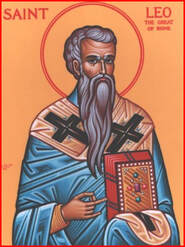
1. The Holy Ghost’s work did not begin at Pentecost, but was continued because the Holy Trinity is One in action and in will
Today’s festival, dearly-beloved, which is held in reverence by the whole world, has been hallowed by that advent of the Holy Ghost, which on the fiftieth day after the Lord’s Resurrection, descended on the Apostles and the multitude of believers , even as it was hoped. And there was this hope, because the Lord Jesus had promised that He should come, not then first to be the Indweller of the saints, but to kindle to a greater heat, and to fill with larger abundance the hearts that were dedicated to Him, increasing, not commencing His gifts, not fresh in operation because richer in bounty. For the Majesty of the Holy Ghost is never separate from the Omnipotence of the Father and the Son, and whatever the Divine government accomplishes in the ordering of all things, proceeds from the Providence of the whole Trinity. Therein exists unity of mercy and loving-kindness, unity of judgment and justice: nor is there any division in action where there is no divergence of will. What, therefore, the Father enlightens, the Son enlightens, and the Holy Ghost enlightens: and while there is one Person of the Sent, another of the Sender, and another of the Promiser, both the Unity and the Trinity are at the same time revealed to us, so that the Essence which possesses equality and does not admit of solitariness is understood to belong to the same Substance but not the same Person. 2. Each Person in the Trinity took part in our Redemption The fact, therefore, that, with the co-operation of the inseparable Godhead still perfect, certain things are performed by the Father, certain by the Son, and certain by the Holy Spirit, in particular belongs to the ordering of our Redemption and the method of our salvation. For if man, made after the image and likeness of God, had retained the dignity of his own nature, and had not been deceived by the devil’s wiles into transgressing through lust the law laid down for him, the Creator of the world would not have become a Creature, the Eternal would not have entered the sphere of time, nor God the Son, Who is equal with God the Father, have assumed the form of a slave and the likeness of sinful flesh. But because by the devil’s malice death entered into the world (Wisdom 2:24), and captive humanity could not otherwise be set free without His undertaking our cause, Who without loss of His majesty should both become true Man, and alone have no taint of sin, the mercy of the Trinity divided for Itself the work of our restoration in such a way that the Father should be propitiated, the Son should propitiate, and the Holy Ghost enkindle. For it was necessary that those who are to be saved should also do something on their part, and by the turning of their hearts to the Redeemer should quit the dominion of the enemy, even as the Apostle says, God sent the Spirit of His Son into our hearts, crying Abba, Father, Galatians 4:6, And where the Spirit of the Lord is, there is liberty (2 Corinthians 3:17), and no one can call Jesus Lord except in the Holy Spirit (1 Corinthians 12:3). 3. But this apportionment of functions does not mar the Unity of the Trinity If, therefore, under guiding grace, dearly-beloved, we faithfully and wisely understand what is the particular work of the Father, of the Son, and of the Holy Ghost, and what is common to the Three in our restoration, we shall without doubt so accept what has been wrought for us by humiliation and in the body as to think nothing unworthy about the One and Selfsame Glory of the Trinity. For although no mind is competent to think, no tongue to speak about God, yet whatever that is which the human intellect apprehends about the essence of the Father’s Godhead, unless one and the selfsame truth is held concerning His Only-begotten or the Holy Spirit, our meditations are disloyal, and beclouded by the intrusions of the flesh, and even that is lost, which seemed a right conclusion concerning the Father, because the whole Trinity is forsaken, if the Unity therein is not maintained; and that which is different by any inequality can in no true sense be One. 4. In thinking upon God, we must put aside all material notions When, therefore, we fix our minds on confessing the Father and the Son and the Holy Ghost, let us keep far from our thoughts the forms of things visible, the ages of beings born in time, and all material bodies and places. Let that which is extended in space, that which is enclosed by limit, and whatever is not always everywhere and entire be banished from the heart. |
The conception of the Triune Godhead must put aside the idea of interval or of grade , and if a man has attained any worthy thought of God, let him not dare to withhold it from any Person therein, as if to ascribe with more honor to the Father that which he does not ascribe to the Son and Spirit. It is not true Godliness to put the Father before the Only-begotten: insult to the Son is insult to the Father: what is detracted from the One is detracted from Both. For since Their Eternity and Godhead are alike common, the Father is not accounted either Almighty and Unchangeable, if He begot One less than Himself or gained by having One Whom before He had not.
5. Christ as Man is less than the Father, as God co-equal The Lord Jesus does, indeed, say to His disciples, as was read in the Gospel lection, if you loved Me, you would assuredly rejoice, because I go to the Father, because the Father is greater than I ; but those ears, which have often heard the words, I and the Father are One , and He that sees Me, sees the Father also , accept the saying without supposing a difference of Godhead or understanding it of that Essence which they know to be co-eternal and of the same nature with the Father. Man’s uplifting, therefore, in the Incarnation of the Word, is commended to the holy Apostles also, and they, who were distressed at the announcement of the Lord’s departure from them, are incited to eternal joy over the increase in their dignity; If you loved Me, He says, you would assuredly rejoice, because I go to the Father: that is, if, with complete knowledge you saw what glory is bestowed on you by the fact that, being begotten of God the Father, I have been born of a human mother also, that being invisible I have made Myself visible, that being eternal in the form of God I accepted the form of a slave, you would rejoice because I go to the Father. For to you is offered this ascension, and your humility is in Me raised to a place above all heavens at the Father’s right hand. But I, Who am with the Father that which the Father is, abide undivided with My Father, and in coming from Him to you I do not leave Him, even as in returning to Him from you I do not forsake you. Rejoice, therefore, because I go to the Father, because the Father is greater than I. For I have united you with Myself, and have become Son of Man that you might have power to be sons of God. And hence, though I am One in both forms, yet in that whereby I am conformed to you I am less than the Father, whereas in that whereby I am not divided from the Father I am greater even than Myself. And so let the Nature, which is less than the Father, go to the Father, that the Flesh may be where the Word always is, and that the one Faith of the catholic Church may believe that He Whom as Man it does not deny to be less, is equal as God with the Father. 6. Concerning this equality which the Son has with the Father and the Holy Ghost . Accordingly, dearly-beloved, let us despise the vain and blind cunning of ungodly heretics, which flatters itself over its crooked interpretation of this sentence, and when the Lord says, All things that the Father has are Mine (John 16:15), does not understand that it takes away from the Father whatever it dares to deny to the Son, and is so foolish in matters even which are human as to think, that what is His Father’s has ceased to belong to His Only-begotten, because He has taken on Him what is ours. Mercy in the case of God does not lessen power, nor is the reconciliation of the creature whom He loves a falling off of Eternal glory. What the Father has the Son also has, and what the Father and the Son have, the Holy Ghost also has, because the whole Trinity together is One God. But this Faith is not the discovery of earthly wisdom nor the conviction of man’s opinion: the Only-begotten Son has taught it Himself, and the Holy Ghost has established it Himself, concerning Whom no other conception must be formed than is formed concerning the Father and the Son. Because albeit He is not the Father nor the Son, yet He is not separable from the Father and the Son: and as He has His own personality in the Trinity, so has He One substance in Godhead with the Father and the Son, filling all things, containing all things, and with the Father and the Son controlling all things, to Whom is the honor and glory for ever and ever. Amen. |
SERMON 2
St. Augustine of Hippo, Father & Doctor of the Church
ON THE HOLY GHOST
St. Augustine of Hippo, Father & Doctor of the Church
ON THE HOLY GHOST
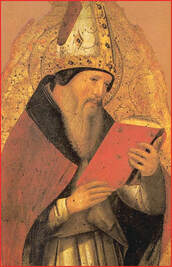
1. The Coming of the Holy Ghost with the Gift of Tongues foretells the Unity of the Church throughout all peoples
This is a solemn day for us, because of the Coming of the Holy Ghost; the fiftieth day from the Lord’s Resurrection, seven days multiplied by seven. But multiplying seven by seven we have forty-nine. One is then added: that we may be reminded of unity. What is the meaning of the Coming of the Holy Ghost? What did it accomplish? How did He tell us of His Presence; reveal It to us? By the fact that all spoke in the tongues of every nation. There were a hundred and twenty people gathered in one room; ten times twelve. The sacred number of the Apostles was multiplied ten times. What then, did each one upon whom the Holy Spirit descended speak in one of the tongues of each of the nations: to this man one language, to this man another, dividing as it were among themselves the tongues of all the nations? No, it was not so: but each man, singly, spoke in the tongue of every nation. One and the same man spoke the tongue of every nation: the unity of the Church amid the tongues of all the nations. See here how the unity of the Catholic Church spread throughout all nations is set before us. 2. The Holy Spirit not outside the Church. He therefore who possesses the Holy Spirit is in the Church, which speaks in the tongues of all nations. Whosoever is without this Church, has not the Holy Spirit. For this reason the Holy Spirit deigned to reveal Himself in the tongues of all nations, that each may understand, that he possesses the Holy Spirit who is nourished within the unity of the Church, which speaks in every tongue. One body, says Paul the Apostle, one body and one Spirit (Ephesians 4:4). Attend to this, you who are our members. A body is composed of many members, and one spirit gives life to all the members. By the human spirit, by which I am myself a man, I join together all my members: I command my members to move, I direct the eye to see, the ears to hear, the tongue to speak, the hand to work, the feet to walk. The duties of each member are different, but one soul joins all together. Many things are commanded, many done, but one commands, one is obeyed. What our spirit, that is, our soul, is to our own members, this the Holy Spirit is to the members of Christ, to the Body of Christ, which is the Church. And so, where the Apostle speaks of it as a body, let us not think of it as a dead body without life. One body, he says. But, I ask you, is this a living body? It is living. By what does it live? By one spirit. And one Spirit. Be watchful therefore, brethren, within our own body; and grieve for those who are cut off from the Church. As long as we live, while we are in our senses, let all members fulfill their duties among our own members. Should one member suffer anything, let all the members suffer with it (1 Corinthians 12:26). Yet, though it may suffer, because it is in the body, it cannot die. For what does to die mean but to lose the spirit? Now if a member be cut off from the body, does the soul follow it? It can still be seen what member it is: it is a finger, a hand, an arm, an ear; besides substance, it has form; but it has no life. So is it with a man separated from the Church. Seek if he has the sacrament. You learn he has. Look for baptism. You find it. The creed? You find it. This is the outward form; but unless inwardly you live by the Spirit, in vain do you glory in the outward form. 3. Unity is put before us in the Creation, and in the Birth of Christ. Dearly Beloved, God greatly commends unity. Let you dwell upon this, that in the beginning of creation, when God established all things, He placed the stars in the heavens and trees and all green things upon the Earth. He said: Let the Earth bring forth, and trees and all living things were brought forth. He said: Let the waters bring forth creeping things and flying things; and it was done. Let the Earth bring forth the living creature in its kind and cattle and beasts of the Earth; and it was done. Did God make the other birds from one bird? Did He make all the fish from one fish? All horses from one horse? All beasts from one beast? Did the Earth not produce many things at the same time? Did it not complete many created things with numerous offspring? |
Then He came to the creation of man, and He created one man; and from one man the human race. Nor did He will to create two separate beings, male and female, but one man; and from this one man He made woman (Gen. i. II). Why did He do this? Why did He begin the human race from one man, if not to commend unity to mankind? And the Lord Christ was born of one person. Virgin therefore is unity; let it hold fast to its integrity; let it preserve it uncorrupted.
4. Christ commends to the Apostles the Unity of the Catholic Church The Lord commends to the Apostles the unity of the Church. He shows Himself; and they think they are seeing a spirit. They are frightened. He gives them courage, when He says to them: Why are you troubled, and why do thoughts arise in your hearts? See my hands: handle and see; for a spirit hath not flesh and bones, as you see me to have. And see how as they wondered for joy He takes food; not from necessity, but for His purpose. He eats it before them. In the face of the unbelieving He commends to them the reality of His Body; He commends the Unity of the Church. For what does He say? Are not these the words I spoke to you, while I was with you, that all things must needs be fulfilled, which are written in the law of Moses, and in the prophets, and in the psalms, concerning me? Then he opened their understanding, the Gospel says, that they might understand the scriptures. And he said to them: thus it is written, and thus it behooved Christ to suffer, and to rise again from the dead the third day (Luke 24:44). Behold our Head. Behold our Head; but where are the members? Behold the Bridegroom; where is the Bride? Read the marriage contract; listen to the Bridegroom. You seek the Bride? Learn from Him. No one takes away from Him His Bride; no one puts another in Her place. Learn from Him. Where do you seek Christ? Amid the fabrications of men, or in the truth of the Gospels? He suffered, He rose the third day, He showed Himself to His Disciples. We now have Him; we ask where She is? Let us ask Him. It behooved Christ to suffer, and to rise again from the dead, the third day. Lo, this is now come to pass; already we have seen Him. Tell us, O Lord; tell us Thou, Lord, lest we fall into error. And that penance and remission of sins should be preached. in his name unto all nations, beginning at Jerusalem. It began at Jerusalem, and it has reached unto us. It is there, and it is here. For it did not cease there to come to us. It has grown forth not changed places. He commended this to us immediately after His Resurrection. He passed forty days with them. About to ascend to Heaven, He commended the Church to them again. The Bridegroom now about to depart entrusted His Bride to the care of His friends: not that she should love one among them, but that She might love Him as Her Spouse, and them as friends of the Bridegroom; but none of them as the Bridegroom. They are jealous for Him, the friends of the Bridegroom; and they will not suffer her to be corrupted by a wanton love. Men hate rather when they so love. Listen to the jealous friend of the Bridegroom, when he knew, through friends, that the Bride was in a way to being corrupted. He says: I hear there are schisms among you; and in part I believe it (1 Corinthians 11:18). Also, it hath been signified to me, my brethren, (you, by them that are of the house of Chloe, that there are contentions among you, that everyone of you says, I indeed am of Paul; and I am of Apollo; and I of Cephas; and I of Christ. Is Christ divided? Was Paul then crucified for you? Or were you baptized in the name of Paul? (1 Corinthians 1:11-13.) O friend of the Bridegroom! He refuses for himself the love of Another’s Spouse. He wills not to be loved in the place of the Bridegroom, that he may reign with the Bridegroom. The Church therefore has been entrusted to them (the friends of the Bridegroom). And when He was about to ascend into Heaven, He said so to those who thus asked Him about the end of the world: Tell us when shall these things be? And when shall be the sign of thy coming? And He said: It is not for you to know the times which the Father hath put in his own power. Hear, O disciple, what you have learned from your Master: But you shall receive the power of the Holy Ghost coming upon you. And it has come to pass. On the fortieth day He ascended into Heaven, and behold, coming upon this day, all who were present are filled with the Holy Ghost, and speak in the tongues of all nations. Once more unity is commended; by the tongues of all nations. It is commended by the Lord rising from the dead; it is confirmed this day in the Coming of the Holy Ghost. Amen. |
SERMON 3
St. Basil the Great, Father & Doctor of the Church
ON THE HOLY GHOST
St. Basil the Great, Father & Doctor of the Church
ON THE HOLY GHOST
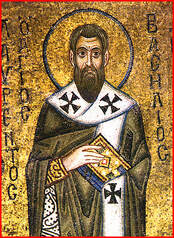
This excerpt is taken from the ninth chapter of St. Basil the Great’s (330-379) writings on the Holy Spirit. St. Basil is a Father and Doctor of the Church and this work is one of the first to meditate at length on the third person of the Trinity. It was written partly in defense of the divinity of the Holy Spirit, which was denied by some in Basil’s time.
Our Lord made a covenant with us, through Baptism, in order to give us eternal life. There is in Baptism an image both of death and of life, the water being the symbol of death, the Spirit giving the pledge of life. The association of water and the Spirit is explained by the twofold purpose for which Baptism was instituted, namely, to destroy the sin in us so that it could never again give birth to death, and to enable us to live by the Spirit and so win the reward of holiness. The water into which the body enters as into a tomb symbolizes death; the Spirit instills into us his life-giving power, awakening our souls from the death of sin to the life that they had in the beginning. This then is what it means to be born again of water and the Spirit: we die in the water, and we come to life again through the Spirit. To signify this death and to enlighten the baptized by transmitting to them knowledge of God, the great Sacrament of Baptism is administered by means of a triple immersion and the invocation of each of the three divine Persons. Whatever grace there is in the water comes not from its own nature but from the presence of the Spirit, since Baptism is not a cleansing of the body, but a pledge made to God from a clear conscience. As a preparation for our life after the resurrection, Our Lord tells us in the Gospel how we should live here and now. He teaches us to be peaceable, long-suffering, undefiled by desire for pleasure, and detached from worldly wealth. In this way we can achieve, by our own free choice, the kind of life that will be natural in the world to come. Through the Holy Spirit we are restored to paradise, we ascend to the Kingdom of Heaven, and we are reinstated as adopted sons. Thanks to the Holy Spirit we obtain the right to call God our Father, we become sharers in the grace of Christ, we are called children of light, blessing is showered upon us, both in this world and in the world to come. As we contemplate them even now, like a reflection in a mirror, it is as though we already possessed the good things our Faith tells us that we shall one day enjoy. If this is the pledge, what will the perfection be? If these are the first fruits, what will the full harvest be? Let us now investigate our common ideas concerning the Spirit, those which have been gathered from Holy Scripture concerning him, as well as those which we have received from the unwritten tradition of the Fathers. First of all we ask, who upon hearing the titles of the Spirit is not lifted up in soul, who does not raise his mind to the supreme nature? He is called “Spirit of God” (Matthew 12:28), “Spirit of truth which proceeds from the Father” (John 15:26), “right Spirit” (Psalm 50:12), “a leading Spirit” (Psalm 50:14). His proper and peculiar title is “Holy Spirit” ― which is a name specially appropriate to everything that is without a body, everything that is purely immaterial and indivisible. So Our Lord, when teaching the woman at the well ― who thought that God is an object of local worship ― that what is without a body cannot be confined, he said that God is a spirit (John 4:24). |
When we hear of a spirit, then, it is impossible to think of a nature which is confined, subject to change and variation, or at all like a creature. We are compelled to advance in our conceptions to the highest, and to think of an intelligent essence, in power infinite, in magnitude unlimited, unmeasured by times or ages, generous of his good gifts, to whom turn all things needing sanctification, after whom reach all things that live in virtue, as being watered by his inspiration and helped on toward their natural and proper end; perfecting all other things, but in himself lacking nothing; living not as one needing restoration, but as supplier of life; not growing by additions; but straightway full, self-established, omnipresent, origin of holiness, light perceptible to the mind, supplying, as it were, through himself, illumination to every faculty in the search for truth; by nature unapproachable, apprehended by reason of goodness, filling all things with his power, but communicated only to the worthy; not shared in one measure, but distributing his energy according to the proportion of Faith (Romans 12:6); in essence simple, in powers various, wholly present in each and being wholly everywhere; impassively divided, shared without loss of ceasing to be entire, after the likeness of the sunbeam, whose kindly light falls on him who enjoys it as though it shone for him alone, yet illumines land and sea and mingles with the air.
So, too, is the Spirit to everyone who receives it, as though given to him alone, and yet he sends forth grace sufficient and full for all humankind, and is enjoyed by all who share him, according not to the Spirit’s power, but to the capacity of our nature. Now the Spirit is not brought into intimate association with the soul by nearness in place. How indeed could there be a bodily nearness to the incorporeal? This kinship results from our withdrawal from the passions which, coming afterwards gradually on the soul from its friendship to the flesh, have alienated it from its close relationship with God. Only then, after a man is purified from the shame whose stain he took through his wickedness, and has come back again to his natural beauty, and as it were cleaning the Royal Image and restoring its ancient form, only thus is it possible for him to draw near to the Paraclete. And the Spirit, like the sun, will by the aid of your purified eye show you in himself the image of the invisible, and in the blessed spectacle of the image you shall behold the unspeakable beauty of the archetype. Through his aid hearts are lifted up, the weak are held by the hand, and they who are advancing are brought to perfection. Shining upon those that are cleansed from every spot, he makes them spiritual by fellowship with himself. Just as when a sunbeam falls on bright and transparent bodies, they themselves become brilliant too, and shed forth a fresh brightness from themselves, so souls wherein the Spirit dwells, illuminated by the Spirit, themselves become spiritual, and send forth their grace to others. Hence comes foreknowledge of the future, understanding of mysteries, apprehension of what is hidden, distribution of good gifts, the heavenly citizenship, a place in the chorus of angels, joy without end, abiding in God, being made like to God, and, highest of all, being made God. Such, then, to name but a few, are our ideas concerning the Holy Spirit, which we have been taught to hold concerning his greatness, his dignity, and his actions, by the sayings of the Spirit themselves [i.e. the Scriptures]. |
SERMON 4
St. Augustine of Hippo, Father & Doctor of the Church
THE HOLY GHOST, GOD'S GIFT OF LOVE
St. Augustine of Hippo, Father & Doctor of the Church
THE HOLY GHOST, GOD'S GIFT OF LOVE
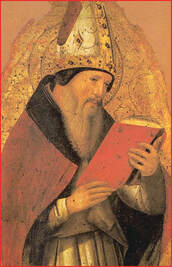
There is no gift of God more excellent than this. It alone distinguishes the sons of the eternal kingdom and the sons of eternal perdition. Other gifts, too, are given by the Holy Spirit; but without love they profit nothing. Unless, therefore, the Holy Spirit is so far imparted to each, as to make him one who loves God and his neighbor, he is not removed from the left hand to the right.
Nor is the Spirit specially called the Gift, unless on account of love. And he who has not this love, “though he speak with the tongues of men and angels, is sounding brass and a tinkling cymbal; and though he have the gift of prophecy, and know all mysteries and all knowledge, and though he have all faith, so that he can remove mountains, he is nothing; and though he bestow all his goods to feed the poor, and though he give his body to be burned, it profits him nothing.” How great a good, then, is that without which goods so great bring no one to eternal life! But love or charity itself―prophecy, nor knows all mysteries and all knowledge, nor gives all his goods to the poor, either because he has none to give or because some necessity hinders, nor delivers his body to be burned, if no trial of such a suffering overtakes him, brings that man to the kingdom, so that faith itself is only rendered profitable by love, since faith without love can indeed exist, but cannot profit. And therefore also the Apostle Paul says, “In Christ Jesus neither circumcision avails anything, nor uncircumcision, but Faith that works by love:” so distinguishing it from that Faith by which even “the devils believe and tremble.” Love, therefore, which is of God and is God, is specially the Holy Spirit, by whom the love of God is shed abroad in our hearts, by which love the whole Trinity dwells in us. And therefore most rightly is the Holy Spirit, although He is God, called also the gift of God. And by that gift what else can properly be understood except love, which brings to God, and without which any other gift of God whatsoever does not bring to God? |
Wherefore, if Holy Scripture proclaims that God is love, and that love is of God, and works this in us that we abide in God and He in us, and that hereby we know this, because He has given us of His Spirit, then the Spirit Himself is God, who is love.
Next, if there be among the gifts of God none greater than love, and there is no greater gift of God than the Holy Spirit, what follows more naturally than that He is Himself love, who is called both God and of God? And if the love by which the Father loves the Son, and the Son loves the Father, ineffably demonstrates the communion of both, what is more suitable than that He should be specially called love, who is the Spirit common to both? For this is the sounder thing both to believe and to understand, that the Holy Spirit is not alone love in that Trinity, yet is not specially called love to no purpose. We, however, on our side affirm that the human will is so divinely aided in the pursuit of righteousness, that―in addition to man’s being created with a free-will, and in addition to the teaching by which he is instructed how he ought to live―he receives the Holy Ghost, by whom there is formed in his mind a delight in, and a love of, that supreme and unchangeable good which is God, even now while he is still walking by Faith and not yet by sight (2 Corinthians 5:7); in order that by this gift to him of the earnest, as it were, of the free gift, he may conceive an ardent desire to cleave to his Maker, and may burn to enter upon the participation in that true light, that it may go well with him from Him to whom he owes his existence. A man’s free-will, indeed, avails for nothing except to sin, if he knows not the way of truth; and even after his duty and his proper aim shall begin to become known to him, unless he also take delight in and feel a love for it, he neither does his duty, nor sets about it, nor lives rightly. Now, in order that such a course may engage our affections, God’s love is shed abroad in our hearts, not through the free-will which arises from ourselves, but through the Holy Ghost, which is given to us (Romans 5:5). |
SERMON 5
St. Augustine of Hippo, Father & Doctor of the Church
BEING DRAWN BY LOVE
St. Augustine of Hippo, Father & Doctor of the Church
BEING DRAWN BY LOVE
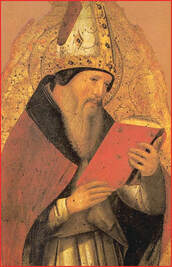
Do not think that you are drawn against your will; the soul is drawn, not willingly only, but lovingly. Neither must we be afraid lest men who are great weighers of words, and very far from understanding the things of God, should catch us up upon this Gospel doctrine of the Holy Scriptures, and should say to us: How can my Faith be willing if am drawn? I answer: You are not drawn as touching your will, but by pleasure. And, now, what is being drawn by pleasure? Delight yourself in the Lord, and He shall give you the desires of your heart (Psalm 34:4). There is pleasure in that heart to which the Bread, That came down from Heaven, is sweet.
The poet is allowed to say His special pleasure draws each, but pleasure, which so draws, is not a necessity, not a bond, but a delight―then how much more strongly, may we say that men are drawn to Christ, who delight in truth, who delight in blessedness, who delight in righteousness, who delight in life everlasting―since truth and blessedness, and righteousness and everlasting life are all to be found in Christ? Or have the bodily senses pleasure, and the spiritual senses none? If the spiritual sense has no pleasures, wherefore is it written: “And the children of men shall put their trust under the shadow of Tthy wings. They shall be abundantly satisfied with the fatness of Thy house, and Thou shalt make them drink of the river of Thy pleasures. For with Thee is the fountain of life, and in Thy light shall we see light!” (Psalm 35:8). Give me a lover, and he will catch my meaning; give me one who longs, give me one who hungers, give me a wanderer in this desert, a thirst and gasping for the fountains of the eternal Fatherland; give me such an one, and he will catch my meaning. If I talk to some cold creature, he will not catch my meaning. Such cold creatures were they of whom it is written: “The Jews then murmured at Him because He said, ‘I am the Bread Which came down from Heaven!’ And they said: ‘Is not this Jesus the son of Joseph, whose father and Mother we know? How is it then that He says: “I came down from Heaven?” Jesus therefore answered and said unto them: ‘Murmur not among yourselves! No man can come to Me, unless the Father, Who has sent Me, draw him!’” (John 6:41-44). |
But why does Christ speak of them whom the Father draws―since He Himself draws. Why was it His will to say: “No man can come to Me except the Father draw him?” If we are to be drawn, let us be drawn by Him to Whom, one that loved much, said: “Draw me, we will run after the savor of thy good ointments!” (Canticles 1:4).
But let us consider, my brethren, what He meant, and understand it as well as we can. The Father draws to the Son them who believe in the Son, because they are persuaded that He has God as His Father. God the Father begets to Himself a coequal Son; and whosoever is persuaded, and realizes unto himself by Faith, and thinks, that He, in Whom he believes, is equal to the Father, him the Father is drawing unto the Son. The heretic Arius―who believed that the Son was made―was not one of them whom the Father draws, since whosoever believes not that the Father is a Father by the begetting of a coequal Son, such an one knows not the Father. What say you, O Arius? What say you, O heretic? What is thy profession? What is Christ? He is not, says Arius, Himself God. Then, O Arius, the Father has not drawn you; you have not understood His dignity as a Father, to Whom you denies His Son. You deny the existence of the Son of God, the Father draws you not, and you arenot drawn to the Son, since the Son, of whom yhou speak, is merely just another son [existing only in thine imagination,] and not the really existent Son. Another heretic, Photinus said: “Christ is a mere man, and not God at all.” He who uttered those words was not one of them whom the Father draws. But whom has the Father drawn? The Father drew him who said: “Thou art the Christ, the Son of the living God” (Matthew 16:16-17). Show a sheep a green bough, and you draw him. Let a boy see some nuts, and he is drawn by them. As they run, they are drawn, drawn by taste, drawn without bodily hurt, drawn by a line bound to their heart. If, then, among earthly things, such as be sweet and pleasant draw such as love them, as soon as they see them, so that it is truth to say, His special pleasure draws each, does not that Christ, Whom the Father hath revealed, draw? What stronger object of love can a soul have than the Truth? |
SERMON 6
St. Thomas Aquinas, Doctor of the Church
ON THE HOLY GHOST (Part 1 of 3)
St. Thomas Aquinas, Doctor of the Church
ON THE HOLY GHOST (Part 1 of 3)
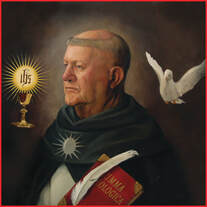
“Send forth Thy Spirit and they shall be created, and Thou shalt renew the face of the Earth.” (Psalm 103:30)
We should speak about Him without whom no one can speak rightly, about Him who gives speech and gives the power to speak copiously. And indeed, it is impossible to speak rightly without Him. Nor should one marvel at what is said: “Who can know the sense [sensum]” of the truth of God “unless he shall send His Spirit from the Most High?” (Wisdom 9:17). Without a feeling [sensu] for the truth, no one speaks what is true. In like manner, the Holy Spirit makes all the saints speak copiously, and for this reason Gregory says: “Those whom He fills, He makes wise.” The same thing is manifest today [on Pentecost], when “the apostles were filled with the Holy Spirit and began to speak in various tongues” (Acts 2:4). Therefore, even though we are mute, we shall ask that He who gives abundant speech shall give me words to speak. “Send forth Thy Spirit and they shall be created.” Today Holy Mother Church solemnly celebrates the sending of the Holy Spirit upon the Apostles—a sending which the Prophet besought, when moved by the Spirit of prophecy he said: “Send forth Thy spirit and they shall be created, and Thou shalt renew the face of the Earth.” These words give us four things to consider: (1) what is proper to the Holy Spirit himself, (2) His sending, (3) the power of the one sent, and (4) the matter receptive of this power. The Prophet says, then: “Send forth”: behold, the sending; “Thy Spirit”: behold, the Person sent; “and they shall be created, and Thou shalt renew”: behold, the effect of the one sent; “the face of the Earth”: behold, the matter receptive of this effect. What is proper to the Holy Spirit? First, I say that what is proper to the Holy Spirit is indicated when the prophet says: “Thy Spirit.” Notice that the name “spirit” seems to convey four things: subtleness of substance, perfection of life, impulse of motion, and hidden origin. So, first of all, the name “spirit” seems to convey subtleness of substance. For we are accustomed to call incorporeal substances “spirit.” Similarly, we call subtle bodies such as air or fire “spirit.” Hence we read in the last chapter of Luke’s Gospel: “See My hands and My feet, that it is I Myself; handle Me, and see; for a spirit has not flesh and bones as you see that I have” (Luke 24:39). And this is the way that “spirit” is distinguished from things that have heavy matter, things that are composed out of flesh and body. Secondly, the name “spirit” seems to convey perfection of life. For as long as animals have breath [spiritum] they are alive, and when their breath leaves them, they perish. “Thou takest away their breath, and they die and return to their dust” (Psalm 103:29). And in Genesis, Noe called into his boat “all flesh in which there was the breath of life [spiritus vitae].” Thirdly, the name “spirit” seems to convey impulse of motion, for it is in this way that we give the name “spirit” to winds. And in the Psalms it says about this: “He spoke and there arose a storm of wind [spiritus], the winds of storms shall be the portion of their cup.” Men are also said to act “with spirit” when they do something forcefully, as Isaias has it: “the spirit of the robust, like a whirlwind driving against the wall” (Isaias 25:4). Fourthly, the name “spirit” customarily names a hidden origin, as when someone, feeling troubled and not knowing the cause of what is troubling him, attributes it to a “spirit.” So we read in John: “The wind [spiritus] blows where it wills, and you hear the sound of it, but you do not know whence it comes or whither it goes” (John 3:8). In line with these four things, we can seek out what is proper to the Holy Spirit. Proceeding in reverse order, He is called “the Holy Spirit” on account of His being the hidden origin of things, impulse of motion, holiness of life, and subtleness of substance. First, I say that one thing proper to the Holy Spirit is His being the hidden origin of things. Faith teaches us and reason persuades us that all visible and changeable things have a hidden cause. What is that cause? God. Hence the Apostle says: “God is the one who created all things” (Hebrews 3:4). It is certain that whatsoever is other than God is created by God. But in what manner did God create all things? It was not by a natural necessity, as fire burns; rather, He produced all things by His own will: “All things whatsoever that He willed, He did” (Psalm 113:2-3). A craftsman makes a house by will, but is also urged on by necessity or usefulness—say, that he may earn a profit or dwell in that house. But God did not make the world from a will of needy desire, for He does not need our goods. Why, then, did He make the world? Surely not from a needy desire, but from a loving will. Here’s a comparison: an artisan who conceives a beautiful house in his mind, not because he needs to build it, but simply loving the house’s beauty—that artisan’s love would bring the house into being. But what is the cause and root of the production of hidden things? Surely love. Hence we read in the Book of Wisdom: “Thou lovest all the things which are, and Thou hast hated none of the things which Thou didst make” (Wisdom 11:25). And blessed Dionysius says that “divine love does not allow itself to be without seed.” |
This love is the Holy Spirit. For this reason, the account in Genesis of the beginning of creation says that “the Spirit of the Lord was borne over the waters” (Genesis 1:2), namely, in order to produce matter and bring things into being. Today we celebrate the feast of the Holy Spirit, the Spirit which is the source [principium] of being for all things. The Holy Spirit, whose property is love, therefore has [the note of being creation’s] hidden origin.
Secondly, “Holy Spirit” conveys impulse of motion. For we see in the world diverse motions: natural motions and, in men and angels, voluntary motions. Where do these diverse motions come from? They must come from a first mover, namely, from God. “Thou shalt change them and they shall be changed” (Psalm 101:27). And God moves by will. But what is the first motion of the will? Surely love. And what sort of activity belongs to love? I say: he who is moved by love rejoices by love over the thing loved and sorrows over what is contrary to it. Hence in the first chapter of Ezechiel we read: “Where the force of the Spirit was,” that is, the inclination of divine love, “there they were carried” (Ezechiel 1:12). And in truth, all things that are in the world are moved by the Holy Spirit, as the book of Esther testifies when it says: “There is no one who could resist His will” (Esther 13:9). This Holy Spirit whose feast we celebrate today is the source of all motion. Now, some things in the world are moved from within themselves, while some things are moved by others; the living are moved from within themselves, the lifeless are [only] moved by others. The source of all motion is alive, rather is life. Thus the Holy Spirit, in so far as He is the source of all motion, is life. “With Thee is the fountain of life” (Psalm 35:10). And because He is life, He therefore gives life. Great then is the Holy Spirit in all things that are, and move, and live. “In him, we live and move and have our being” (Acts 17:28). All things therefore have motion and being from the Holy Spirit. Thirdly, if we consider the subtleness of substance in the Holy Spirit, we shall see that He is love. And whose love? That of God, and of those who love God. It is of the very nature of [this] love that the Holy Spirit has subtleness of substance. And on the part of the one loved [amati], He is the love by which God loves God and by which the Father loves the Son. The Book of Wisdom says: “For there is in her,” meaning the wisdom of God, “the spirit of understanding,” which makes men understand. In Greek, “holy” signifies cleanness. Truly, the love by which a man loves bodily things is not clean, for since the lover is united by love to that which he loves, the lover is made unclean to the extent that he mixes himself up with such a thing. For just as silver is debased when mixed with an impure metal, so your soul is debased if is mixed up with inferior or lower things by love of them. But when your soul is joined to a higher thing, then the love is called holy. Now, there are some who want to be devoted to God and yet who neglect the salvation of their neighbor; such an attitude is not from the Holy Spirit. The Apostle Paul was solicitous over his neighbor’s salvation, for which reason he says: “I have become all things to all men, that I might be of profit to all” (1 Corinthians 9:22). Again, there are some who are manifold but deceitful. Not thus is the Holy Spirit, for He is manifold in such a way that He, remaining utterly one, bestows Himself upon diverse things. Again, He is subtle because He makes a man withdraw from earthly things and cling to God. “One thing have I asked of the Lord, that will I seek after: that I may dwell in the house of the Lord all the days of my life” (Psalm 26:4). “It is good for me to cling to God” (Psalm 72:28). Fourthly, this Holy Spirit not only gives being, being alive, and being in motion; nay more, He makes men holy. Hence the Apostle says: “He was predestined God in power, according to the Spirit of holiness” (Romans 1:4). No one is holy unless the Holy Spirit makes him holy. And how does He make someone holy? I say: He brings it about that what I have just been describing appears in all whom He makes holy, for He renders them subtle, and contemptuous of temporal things. As it says in John’s Gospel: “Do not love the world nor those things which are in the world. If anyone loves the world, the love of the Father is not in him” (1 John 2:15). Again, He bestows spiritual life upon those whom He makes holy, as it says in Ezechiel: “Behold I will place the spirit within you, and you shall live” (Ezechiel 37:5). The spiritual life owes its very existence to the Holy Spirit. “If you live by the Spirit, walk also by the Spirit” (Galatians 5:25). Again, the Holy Spirit, who makes people holy, by His own force moves them to work well. “He [the saint] comes as a rushing stream, which the wind [spiritus] of the Lord drives forward” (Isaias 59:19). Some men are lazy, and these do not seem to be driven by the Holy Spirit. Hence on that verse of Acts, “Suddenly a sound came from Heaven like the rush of a mighty wind, and it filled all the house where they were sitting” (Acts 2:2), the Gloss says: “the grace of the Holy Spirit knows nothing of slow efforts.” Again, the Holy Spirit leads them back to the hidden origin through which we are united to God; in the words of Isaias, “the Spirit of the Lord will carry you away to a place you do not know” (3 Kings 18:12), that is, to the heavenly inheritance. “Thy good Spirit shall lead me into the right land” (Psalm 142:10). What is proper to the Holy Spirit is now clear: He is the origin of living, of being, and of moving. |
SERMON 7
St. Thomas Aquinas, Doctor of the Church
ON THE HOLY GHOST (Part 2 of 3)
St. Thomas Aquinas, Doctor of the Church
ON THE HOLY GHOST (Part 2 of 3)
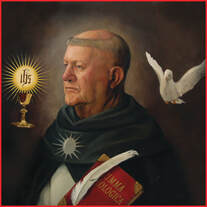
2. The sending of the Holy Spirit
Let us look into the second point, namely the sending of the Holy Spirit, which is marvelous and unknown to us, because the Holy Spirit is sent without needing to be sent, without change of Himself, without subjection, and without separation. I say, first, the Holy Spirit is sent without His needing to be sent. When someone is sent to a place so that an event may happen which could not happen unless he were sent, this would be a sending out of necessity. But this has no place in the sending of the Holy Spirit, whom the Book of Wisdom describes as “having every power, beholding all things” (Wisdom 7:23). What, then, is the reason for the sending of the Holy Spirit? Our neediness; and the necessity of this neediness of ours comes partly from human nature’s dignity, and partly from its deficiency. For the rational creature excels other creatures because it can actually reach the enjoyment of God, which no other earthly creature can do. “The Lord is my portion, said my soul” (Lamentations 3:24). Some seek their portion in this world, such as those who seek worldly honor or dignity. But the Psalmist says: “It is good for me to cling to God” (Psalm 72:28). You should consider that all things that are moved to some end must have something moving them toward that end. Those that are moved to a natural end have a mover in nature; but those that are moved to a supernatural end, namely to the enjoyment of God, must have a supernatural mover. Now, nothing can lead us to our end unless two things are presupposed, for someone is led to an end by two things—knowledge and love. The kind of knowledge in question is supernatural: “No eye hath seen, nor ear heard, nor hath it arisen in the heart of man, what God hath prepared for those who love Him” (1 Corinthians 2:9). “Never have they heard, nor perceived with ears, nor has eye seen, O God, without Thee, what Thou hast prepared for those who await Thee” (Isaias 64:4). Now, whatever a man knows, he knows either by discovering it himself or by learning from another. Vision serves discovery and hearing serves learning, and for this reason it is said that “eye hath not seen, nor ear heard,” showing that it [the final end] altogether transcends human knowledge. It exceeds human desire, too, and that is why Scripture says: “nor hath it arisen in the heart of man.” How, then, is man led to know it? It was necessary for heavenly secrets to be made known to men; it was necessary for the Holy Spirit to be invisibly sent, in order to move man’s affections so that he may tend toward that end. And thus it says: “Eye hath not seen.” How, then, do we know? “God has revealed it to us through His Spirit. For the Spirit examines all things, even the deep things of God” (1 Corinthians 2:10). “Who would be able to know Thy thought [sensum], unless Thou gave wisdom and sent the Holy Spirit from the Most High?” (Wisdom 9:17). Therefore the Holy Spirit is sent not owing to any need of His, but for the sake of our benefit. Again, the sending takes place without any change in Himself. There is change when a messenger is sent from place to place, but the Holy Spirit is sent without any change of place because He is the true God, unchangeable. “While remaining in Himself, He renews all things” (Wisdom 7:27). How, then, is He sent? He draws us to Himself, and in that way He is said to be sent, as the sun is said to be sent to someone when he comes to share in the sun’s brightness. So it is with the Holy Spirit, and for this reason Scripture says about uncreated Wisdom: “Send her from the heavens and from the seat of Thy greatness, that she may be with me” (Wisdom 9:10). Again: “He hath sent His own Spirit, crying out Abba, Father” (Galatians 4:5). These sendings are diffused “throughout all the nations” (Wisdom 7:27) and are carried into holy souls. When the “fullness of time” had come, the Son of God was sent in the flesh (Galatians 4:4), and thus it was becoming that the Holy Spirit, too, be visibly sent—but not in such a way that He took up a created nature into the unity of His Person, as the Son did with human nature. |
Again, the Holy Spirit is sent without subjection. Servants are sent by lords because they are subject to them. It was for this reason that certain heretics falsely believed that the Son and the Holy Spirit were lesser than the Father, namely, because they were sent by Him. But the Holy Spirit makes us free, and therefore He is no servant. He is sent by His own judgment, for “the Spirit blows where He wills” (John 3:8), and He is said to be “sent” only on account of the Father’s identity as origin.
We sometimes find [Scripture saying] that the Holy Spirit is sent by the Father, sometimes by the Son; but the Greeks do violence to this truth [in hoc faciunt uim], for they say that the Holy Spirit proceeds only from the Father, not from the Son, and in saying this they proceed in a simplistic manner [ruditer]. Where the Son speaks of the sending of the Holy Spirit, he adjoins the Son to the Father or the Father to the Son, for our Lord speaks in one place of “the Comforter, whom the Father will send in My Name” (John 14:26), and in another place He says: “When the Comforter comes, whom I will send to you from the Father” (John 15:26). “From the Father” indicates, therefore, authority of origin. Again, the Holy Spirit is sent without separation, because the Spirit of unity excludes separation. Hence the Apostle urges: “Take good care to preserve the unity of the Spirit in the bond of peace” (Ephesians 4:3). The Holy Spirit gathers together [congregat], as we are taught in John’s Gospel [when Jesus prays to the Father]: “That they may be one in us,” through the unity of the Holy Spirit, “as we also are one” (John 17:21-22). This union is begun in the present through grace, and will be consummated in the future through glory, to which may He lead us, who together with the Father and the Son lives and reigns, one God, for ever and ever. Amen. “Send forth Thy Spirit and they shall be created, and Thou shalt renew the face of the Earth.” This morning we spoke some words, as well as we were able to do, about what is proper to the Holy Spirit, and about His sending. Now it remains for us to speak about the effects of the Holy Spirit, and to whom it belongs to receive those effects. 3. The effects of the Holy Spirit Regarding what is set forth in the words of the Psalmist, we are given to understand a twofold effect of the Holy Spirit, namely, creation and renewal: “they shall be created, and Thou shalt renew the face of the Earth.” If we wish to take these words according as “creation” suggests the production-into-being of the things of nature, the Holy Spirit is in this way the Creator of all things, as Judith says: “Thou didst send forth Thy Spirit, and they were created” (Judith 16:17). But let us now speak of a different creation. As common usage has it, those who are promoted to a higher state, such as the episcopacy or another dignity, are said to be “created.” In this way all those who are promoted to be sons of God are said to be created, as if to say, promoted. Hence blessed James says: “[Of his own will he brought us forth by the word of truth] that we might be the beginning of His creation” (James 1:18). The Lord wished to establish a new creature, and so in the Book of Wisdom we read: “God created all things that they might exist” (Wisdom 1:14)—namely, in their natural existence; and He willed to re- create them, in order that they might exist in the existence of grace. The Apostles were the first-fruits of this re-creation. This re-creation is spoken of in Galatians: “In Christ Jesus neither circumcision nor uncircumcision is of any avail, but a new creature” (Galatians 6:15). What does this mean? Before, there were pagans [gentiles], and referring to this Paul says “uncircumcision”; after, there were circumcised Jews, yet this condition availed nothing unless they were re-created through the grace of Christ. This creation is the effect of the Holy Spirit. You should know that this re-creation is made up of steps. It can be looked at, first of all, with respect to the grace of charity; secondly, the wisdom of knowledge; thirdly, the harmony of peace; and fourthly, the constancy of firmness. Just as you see that when men are brought into natural existence the first thing they obtain is life, so it ought to be the same with the existence of grace. But through what does a man live in the existence of grace? Surely through charity. “We know that we have been carried over from death into life because we love the brethren” (1 John 3:14). Whoever does not love his brother, regardless of whatever sort of good work he may do, is dead. |
SERMON 8
St. Thomas Aquinas, Doctor of the Church
ON THE HOLY GHOST (Part 3 of 3)
St. Thomas Aquinas, Doctor of the Church
ON THE HOLY GHOST (Part 3 of 3)
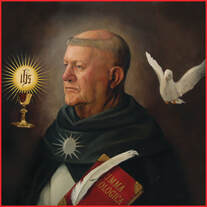
Charity is the life of the soul, for just as a body lives through its soul, so the soul lives through God, and God dwells in us through charity. “He who abides in charity abides in God, and God abides in him” (1 John 4:16). In today’s Gospel we heard: “If a man loves me, he will keep My word, and My Father will love him, and We will come to him and make our home with him” (John 14:23). But the man who does not do the will of God does not perfectly love Him, for “it belongs to friends to will and not will the same thing.” In the homily of today’s office, St. Gregory says: “Love’s proof is in love’s work.”
But you say: we just aren’t able to fulfill the commands of God. I say: you aren’t able to fulfill them by your own powers, but through the grace of God you certainly can do so! Hence the Evangelist adds: “My Father will love him”—God shall not fail a man—“and We will come to him,” that is, we will be present to him (John 14:23). By that presence [of God in our hearts], we [Christians] will be able to dedicate our powers to fulfilling God’s commands. Concerning this charity for fulfilling God’s commands, we read in Ephesians: “we are His workmanship, created in Christ Jesus in good works” (Ephesians 2:10). Where does this charity in us come from? The Holy Spirit. “The charity of God is poured into our hearts by the Holy Spirit who is given to us” (Romans 5:5). He who has a share of daylight has that light from the sun; in the same way he who has charity has it from the Holy Spirit. Therefore: “Send forth Thy Spirit, and they shall be created”—namely, in the being of the life of grace, through charity. You see that men, when they become true lovers, make efforts to know the will of God. “It belongs to friends to have one heart,” as it says in Proverbs, and God reveals His secrets to His friends. And this is the second step of the creation which is from the Holy Spirit: that they [who are re-created] may know God in wisdom. “But I have called you friends, for all that I have heard from My Father I have made known to you” (John 15:15). Hence, recognition of truth is also from the Holy Spirit. In today’s Gospel: “The Counselor, the Holy Spirit, whom the Father will send in my name, he will teach you all things, and bring to your remembrance all that I have said to you” (John 14:26). Now, however much a man may be taught exteriorly, it will profit him nothing unless the grace of the Holy Spirit is interiorly present. As the Gospel says, “The anointing will teach you concerning all things.” And He not only teaches the truth, but will even call it back to mind. [It is as if our Lord were saying:] “I myself am able to teach you, but you do not by this fact believe or want to fulfill what I teach. But He who brings it about that you believe and that you fulfill what you hear, He will call things back to mind.” The Holy Spirit does this because he inclines the heart to give assent and to carry out what it hears. Hence our Lord says: “Everyone who has heard and learned from my Father comes to me” (John 6:45). The third step of creation has to do with concord of peace. St. James distinguishes between earthly and heavenly wisdom, and taking up what is proper to heavenly wisdom he says: “The wisdom which is from above is first of all chaste, then peaceable, modest, easy to be persuaded, consenting to the good, full of mercy and good fruits, without judging, without dissimulation” (James 3:17). But earthly wisdom is unchaste because it causes the affection to be corrupted by the love of earthly things. Hence we read in one of the canonical epistles [in Canonica]: “Whatever they know of these things, by these things they are corrupted” (Jude 10). Again, earthly wisdom makes men peevish and quarrelsome, but the wisdom which is from above draws one to God, for it is “peaceable, modest, persuadable.” Quarrels arise from three things. First, when someone is not modest. As it says in Proverbs: “He who thrusts himself forward and makes himself big incites quarrels” (Proverbs 28:25). Again, some men are stubborn in their opinion, nor do they allow themselves to be persuaded of anything but what they have in their own head; heavenly wisdom, on the contrary, is “persuadable.” Again, worldly wisdom does not allow its wise men to come to an agreement with another, but heavenly wisdom brings about agreement among good men, and is therefore “peaceable.” But who is it that makes the peace? The Holy Spirit, for “he is not a God of dissension but of peace” (1 Corinthians 14:33). Hence it says in Ephesians: “Take good care to preserve the unity of the Spirit in the bond of peace” (Ephesians 4:3). The Lord exhorts us to preserve this peace when He says: “Peace I leave with you, my peace I give unto you; not as the world gives do I give unto you” (John 14:27). This peace is twofold. One is in the present—the peace in which we now live, yet in such a way that we must still fight off vices; such is the peace the Lord “left with us” right now. The other is the peace that shall be in the future, without fighting; and about this the Lord says: “not as the world gives do I give unto you.” Now, some want peace only to be able to enjoy good things [more easily]. The Book of Wisdom says about this: “Living in a great war of ignorance, they judged so many and so great evils to be peace” (Wisdom 14:22). But what is true peace? Augustine says that peace is “security of mind, tranquility of soul, simplicity of heart, the bond of love, and the fellowship of charity.” Peace has a threefold object: oneself, one’s neighbor, and God. Peace is needed with regard to oneself, so that reason may not be infected by errors or darkened by passions, and concerning this, Augustine says that peace is “security of mind.” There should also be tranquility in affection, and concerning this he says “tranquility of soul.” Again, there should be simplicity in intention, and concerning this he says “simplicity of heart.” Peace toward one’s neighbor is the “bond of love,” and peace with God is the “fellowship of charity.” Is not peace then utterly necessary for us? Surely it is. The Lord made His testament for the sake of peace, and those who do not want to keep the testament cannot receive the inheritance; thus those who do not want to keep peace cannot arrive at the heavenly inheritance. But what if someone were to say: “I want to have peace with God, but not with my neighbor”? The answer: such a thing is impossible. Hence a certain saint says: “No one can have peace with Christ who is out of harmony with a Christian.” Therefore, the third step of creation is the harmony of peace, and so the prophet Isaias declares: “I have created the fruit of the lips, peace” (Isaias 57:19). The fourth step is constancy of firmness, and this too is from the Holy Spirit. Hence the Apostle says to the Ephesians: “according to the riches of His glory, may He grant you to be strengthened with inner might through His Spirit in the inner man” (Ephesians 3:16). And in Ezechiel: “The Spirit entered into me and I stood upon my feet” (Ezechiel 2:2). And in the Gospel: “Let not your heart be troubled, nor let it be afraid” (John 14:27). And in the Book of Wisdom: “God created man incorruptible” (Wisdom 2:25). Therefore, the first effect of the Holy Spirit is that He creates. |
The second effect is a renewal which consists of four things: grace that cleanses, justice that is ever making progress, wisdom that illuminates, and glory that attains consummation.
I say that the effect of renewal through the Holy Spirit consists, first of all, of the grace that cleanses. Sin is a sort of old age of the soul, and a man is only freed from this old age through justifying grace, by which he is cleansed from sin. Hence the Apostle writes: “As Christ has risen from the dead, so also let us walk in newness of life” (Romans 6:4). Where does this newness come from? The Holy Spirit. So the same Apostle writes to Titus: “He saved us, not because of deeds done by us in righteousness, but in virtue of His own mercy, by the laver of regeneration and renewal in the Holy Spirit” (Titus 3:5). All sins are forgiven through that laver, and in this way man is renewed. Secondly, this renewal consists in the justice that is ever making progress. If one should walk, grow tired, and become weak, and then he rests, his powers seem to him to be renewed; and when a man works diligently, he is renewed when he gains further power for working. About this renewal Job says: “My glory shall be renewed, and the bow in my hand shall be repaired” (Job 29:20). The glory of the saints is the testimony of conscience. A man is renewed when he is quick to fight against vices. Isaias describes it: “They shall take wings as eagles, they shall fly and not fail” (Isaias 40:31), namely, for running in the way of God’s commandments (Psalm 118:32). But who causes this running? The Holy Spirit. “He led us out through the deep, as a horse in the wilderness that does not stumble, and the Spirit of the Lord was his leader” (Isaias 63:13-14). Thirdly, renewal comes about through the wisdom that illuminates. When a man comes to new knowledge of more of the good things of God, he is renewed. About this renewal it says in Colossians: “Put on the new man who is created according to God.” The “new man” [nouus homo] indicates Christ, because His was a novel [noua] kind of conception, “not from the seed of man, but from the Holy Spirit” ; a novel kind of birth, because His mother remained a virgin after birth; a novel kind of suffering [passio], because it was without guilt ; a novel kind of rising from the dead [resurrectio], because it was quick and renewing, for He rose quickly and in glory ; a novel kind of ascension, because he ascended by His own power, not by that of another, as did Enoch and Elias. And so it is said in Ecclesiasticus: “Show signs anew and work wonders” (Ecclesiasticus 36:6). And because all things are renewed through Christ, therefore on solemnities we use new vestments in church, that we may “sing to the Lord a new song” —as though to signify that he who is renewed by the exterior cleanness of his clothing is renewed interiorly in his mind by grace. By “stripping off the old man,” i.e., the habit of sins with its deeds, “and putting on” the habit of virtue which is not lacking in [good] deeds, “the new man,” i.e., the rational mind, will be renewed “in the knowledge of God” (Colossians 3:9-10). As Romans has it, “Put on the Lord Jesus Christ” (Romans 13:14). And from whom does that wisdom come? The Holy Spirit, as Job testifies: “As I see, there is a spirit in men, and the inspiration of the Almighty gives understanding. [They that are aged are not the wise men, neither do the ancients understand judgment]” (Job 32:8-9). Fourthly, renewal comes about through the glory that attains consummation, when the body is renewed, the oldness of punishment and guilt being taken away. We read about this in the prophet Isaias: “Behold, I create new heavens and a new Earth; [and the former things shall not be remembered or come into mind]” (Isaias 65:17). And where does this renewal come from? The Holy Spirit. He is the pledge of our inheritance, and it is He who leads us into the heavenly inheritance. He who needs to be created and renewed shall obtain this from the Holy Spirit. 4. The recipient of these effects But who receives that renewal? “The face of the Earth”: that is, the whole world, which at one time was filled with idolatry. Today, the Lord gave to the Apostles the gifts of the charisms. It was of them that the prophet Isaias said: “They who enter with force,” namely, the force of the Holy Spirit, “from Jacob shall fill the face of the Earth with seed” (Isaias 27:6). And “face of the Earth” refers to the human mind, for just as it is through the face that we see in a bodily manner, so it is through the mind that we see in a spiritual manner, as it says in Genesis: “God created man from the slime of the Earth and breathed into his face the breath of life” (Genesis 2:7). But in order that the human mind may receive that renewal, it should have four things: it should be clean, uncovered, directed, and stable and firm. Of the first, we read in Matthew: “But you, when you fast, anoint your head and wash your face” (Matthew 6:17), namely, with tears of compunction, and then you will be able to receive the renewal of the Holy Spirit. “Create in me a clean heart, O God, and renew a right spirit within me” (Psalm 50:12). Secondly, the face of the mind should be open and uncovered. The prophet says: “His face is covered with fatness” (Job 15:27). Some have the face of their mind covered over with the darkness of ignorance. [Job, on the contrary, asserts:] “Darkness has not covered my face” (Job 23:17). And the Apostle: “But we all beholding the glory of the Lord with open face,” namely, a face not covered over by affection for earthly things, “are transformed into the same image from glory to glory as by the Spirit of the Lord” (2 Corinthians 3:18). Thirdly, the face of the mind should be directed toward God, as we read in the prayer: “Now I turn my face toward Thee, and direct my eyes toward Thee” (Tobias 3:14). How do we turn our face toward God? By a right intention; it is thus that we obtain the renewal of the Holy Spirit. Hence it says in the Gospel of Luke: “He will give the good Spirit to those who ask Him” (Luke 11:13). Again, if you are turned [to God] through obedience, He will give the Holy Spirit to those who obey Him. Likewise, we should also turn our face toward our neighbor, as Tobias says to his son: “Do not turn your face away from any poor man, and the face of God will not be turned away from you” (Tobias 4:7). Hence the Apostles received the Holy Spirit when they were together (Acts 2:1-4). Fourthly, the face of the mind should be firm. It is written of Anna, mother of Samuel, “her countenance was no more changed in various ways” (1 Kings 1:18), and for this reason she received the Holy Spirit. And the book of Job says: “Surely then you will lift up your face without blemish; you will be secure, and will not fear” (Job 11:15). The Holy Spirit is given to persons like these. That is why it says in the Gospel: “And eating together with them, He charged them not to depart from Jerusalem, but to wait for the promise of the Father, which, He said, ‘You heard from Me, for John baptized with water, but before many days you shall be baptized with the Holy Spirit.’” But if they had gone away [from Jerusalem], they would not have received the Holy Spirit. “He who perseveres shall be saved” (Matthew 10:22; 24:13). In our prayers today, we shall ask the Lord to grant us this grace of perseverance. Amen. |